Return to Greece, 2016. Part Seven: Digging Deeper

This is the seventh post in a series about my trip to Greece, June 30-July 20, 2016 — an amazing journey of history, family and discovery. Previous posts can be found here.

The most important lesson I learned when traveling in Greece is:  never arrive anywhere between 1:00 and 4:00 in the afternoon. That rule makes scheduling easy — repositories in the morning; solo time in the afternoon; family time in the evening; dinner at 9 or 10:00 p.m. I had to tweak this a bit to squeeze in all I needed to do.
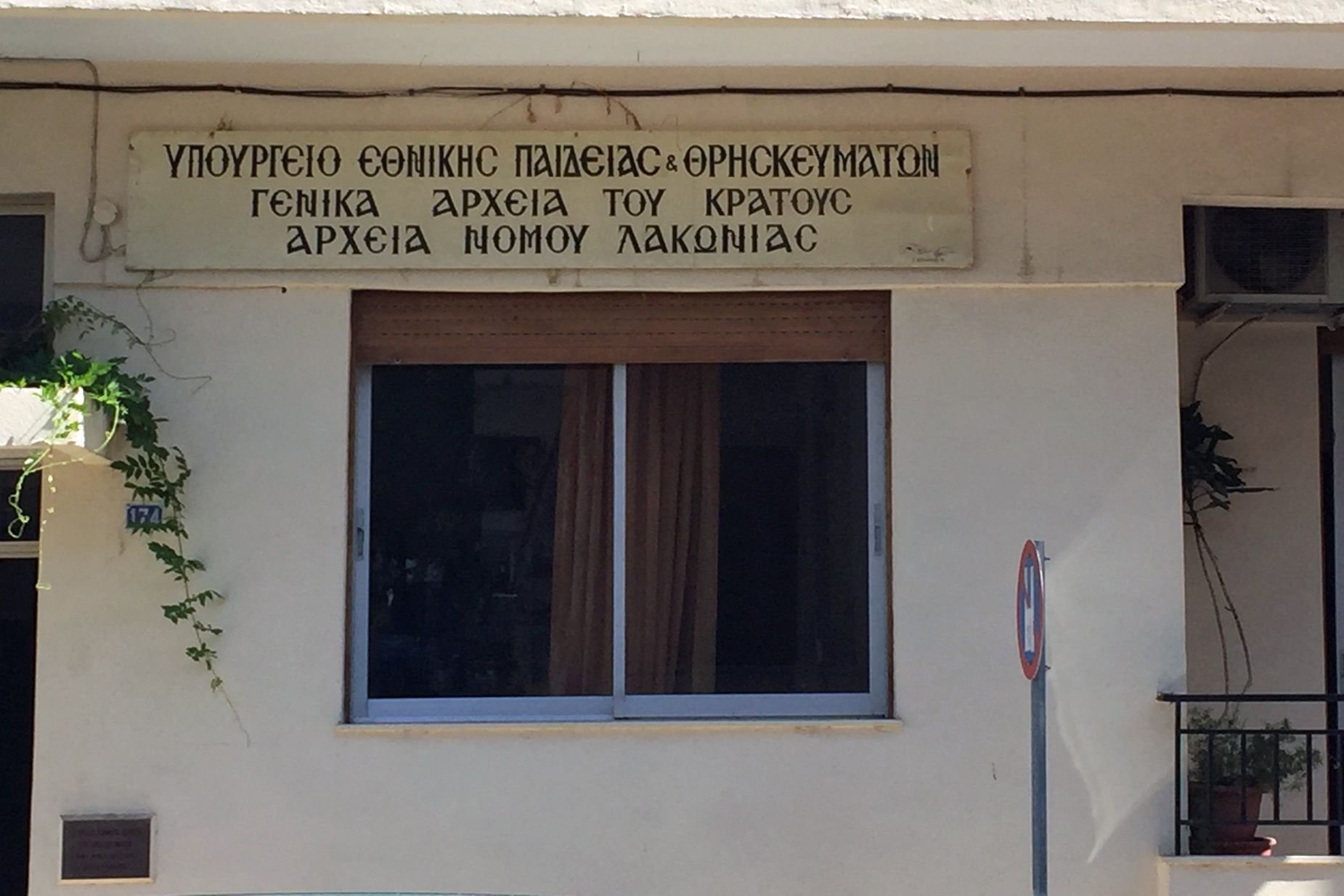
General Archives of Greece, Sparta office, July 2016

General Archives of Greece, Sparta office, July 2016

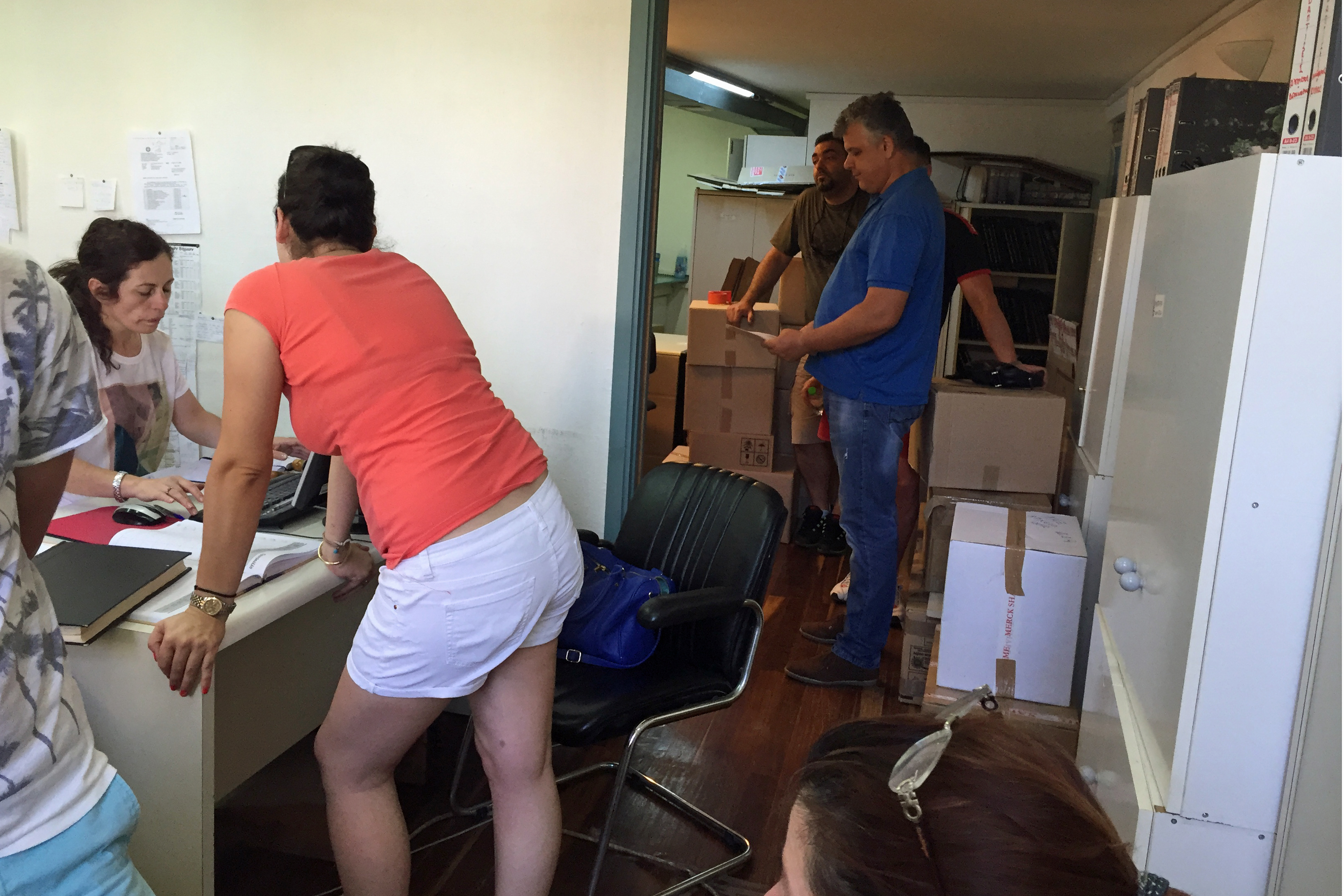
Archives in the mornings — there’s no better way to start the day! The Sparta Office is a treasure chest filled with nuggets of genealogical gems:  documents, books, records. When I arrive, I learn that my archivist friends are on overload: Mrs. Pepi Gavala and her assistants, Michail Sovolos and Maria Stellakou. They explained that many government offices are now closing or consolidating, and sending their records to the Archives. Boxes lined the hallway, waiting for these good people to catalog and store them. Mindful of their workload, I settled in the main room and begin to dig for gold.
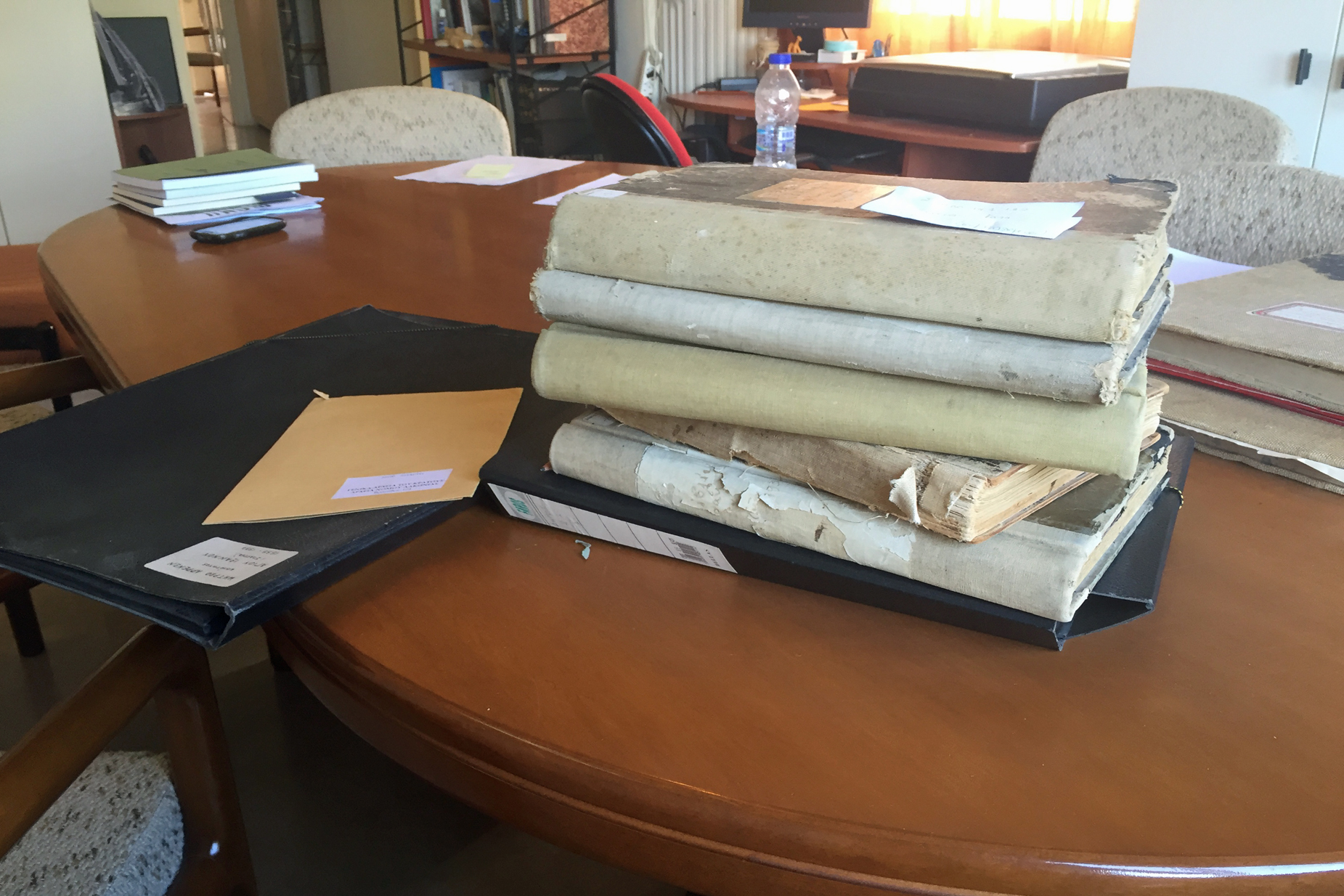
Research room, Sparta Office of the General Archives of Greece, July 2016

Research room, Sparta Office of the General Archives of Greece, July 2016

During my visit in 2014, I had obtained digital copies of the basic records for my family:  Male Registers (Mitroon Arrenon) and Family Registers (Dimotologion). I dug into these collections again for my newly-found surnames, and then for a few friends who had requested lookups. I asked Michalis for School Records from Agios Ioannis, and he brought me several books. I was very surprised to see that some of them had only girls’ names! As a Greek researcher quickly learns, there are few official records naming women. These truly are a treasure, as I can now begin to construct entire families, not just males. The school records for Agios Ioannis range from around 1900-1940; the exact tmeframe I need for my grandparents’ era. I stayed until 3:00 closing time, digitizing pages that listed my surnames. What a great find!
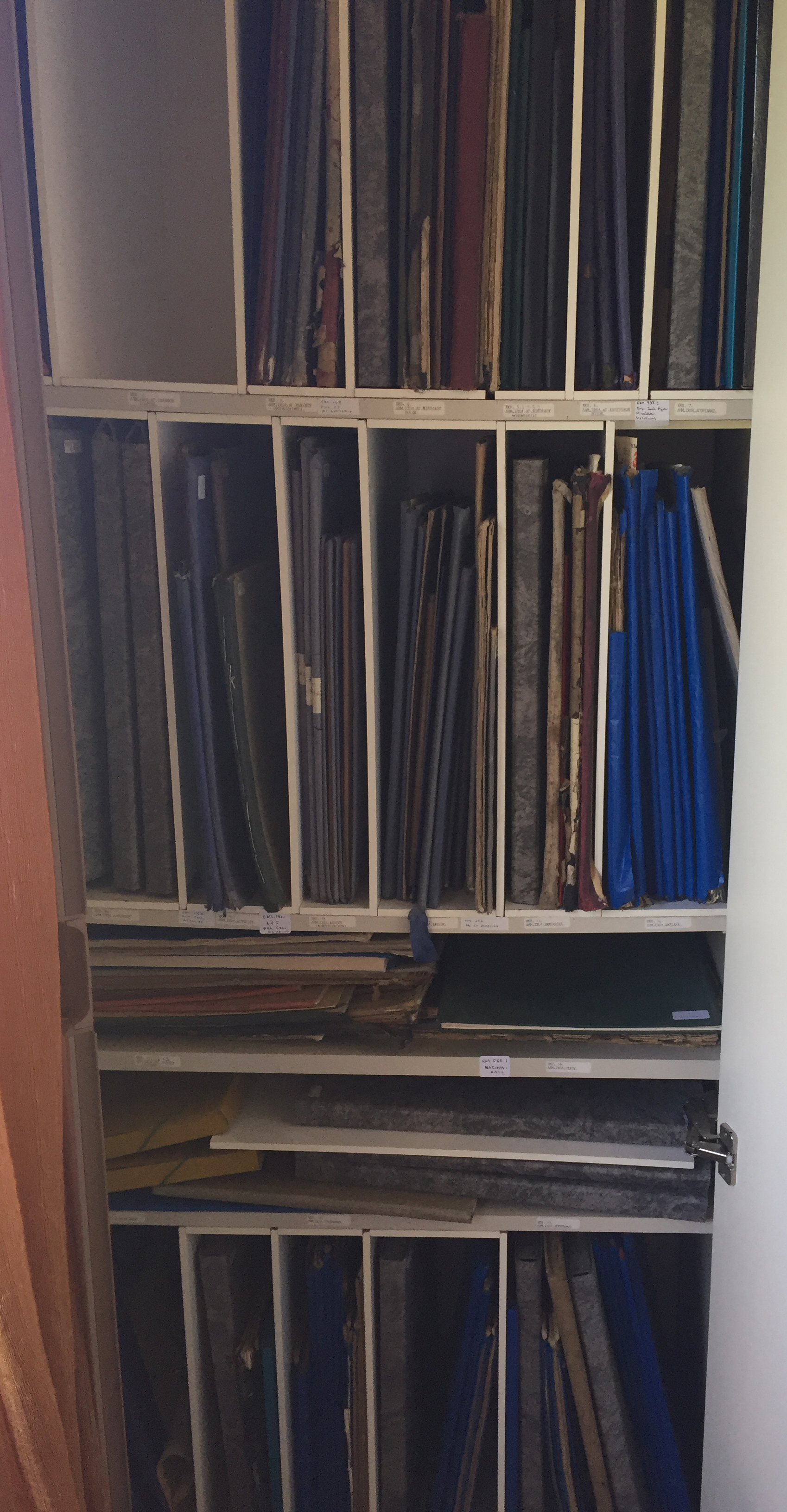
School Record Books, Agios Ioannis, Sparta Archives office, July 2016

School Record Books, Sparta Archives office, July 2016
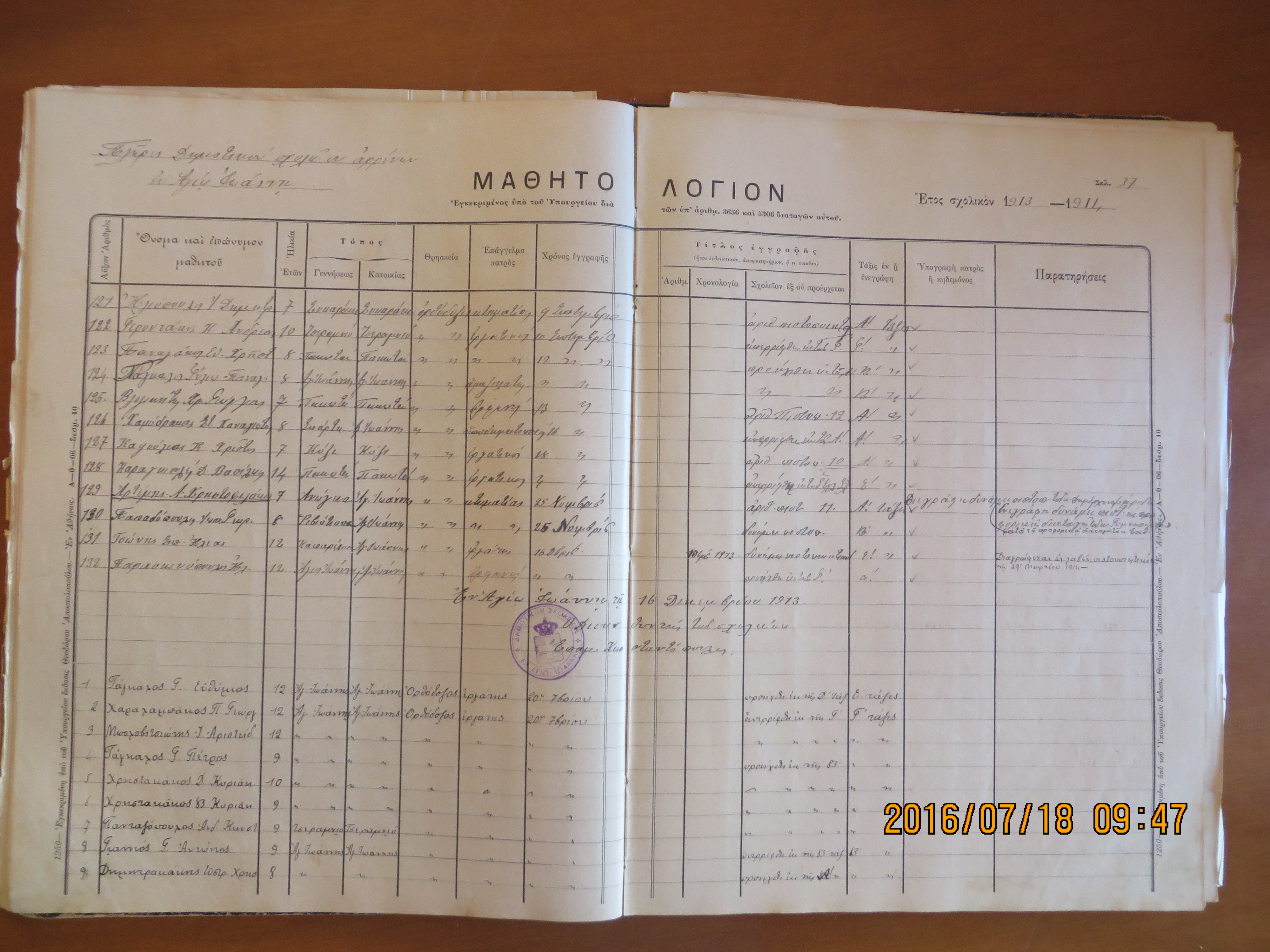
Example of a School Record for Agios Ioannis, GAK Sparta Office, July 2016

Example of a School Record for Agios Ioannis, GAK Sparta Office, July 2016

Gregory Kontos arrived in the early afternoon to join me for three days of research. It was hot, hot, hot! And every repository was closed, closed, closed. So we filled the empty 1:00-4:00 p.m. timeframe by going to a place that never closes — the cemetery. Up and down the rows we walked, Gregory reading surnames off the headstones while I snapped photos of the ones that were a “yes.” The sun was scorching this July mid-day and there was no breeze, but we persevered until every name on every grave was read. Then it was time to enter the osteofilakio (οστεοφυλάκιο), the ossuary building.
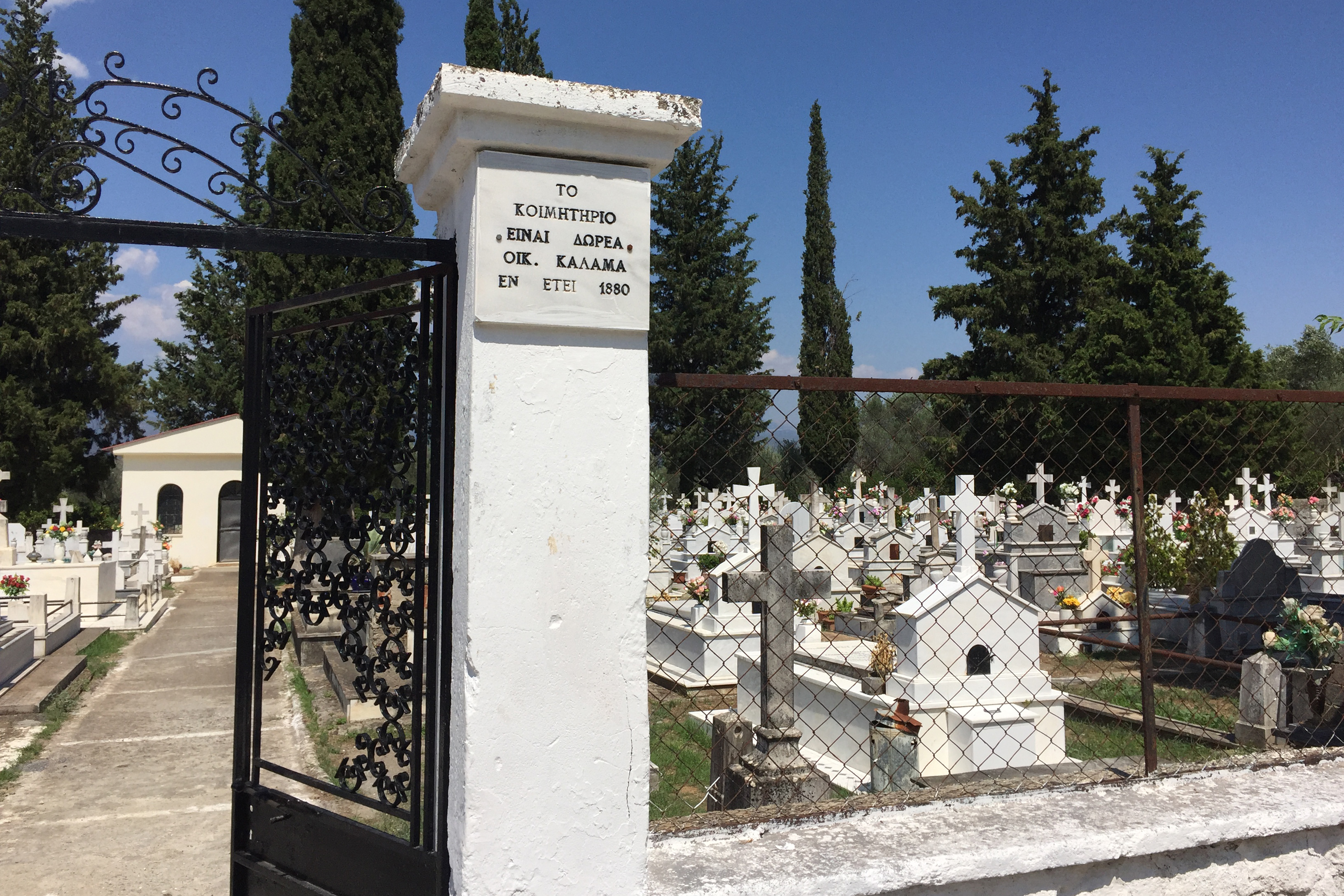
One of two cemeteries in Agios Ioannis, Sparta, July 2016

One of two cemeteries in Agios Ioannis, Sparta, July 2016

There is limited cemetery space in Greece; therefore, families “rent” a burial plot for three years after which the bones are exhumed and placed in an ossuary. Walking into the osteofilakio is an almost sacred experience. Boxes on shelves line the walls; each inscribed with a family name and holding the bones of the deceased. Icons, photos, flowers, candles and small bottles of oil are carefully arranged around the boxes. A spirit of peace permeates the building. This is holy ground.
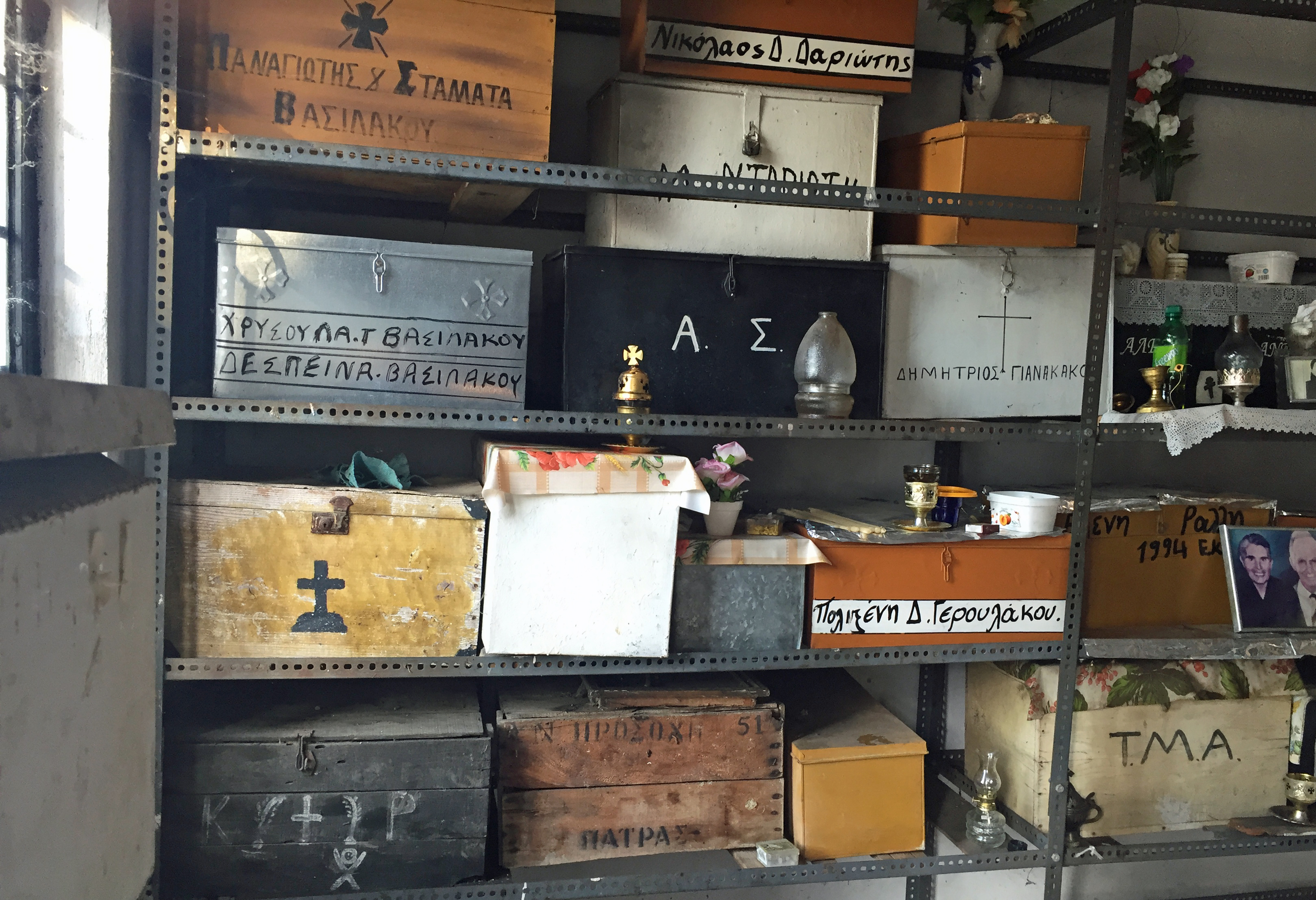
Ossuary house, Agios Ioannis Cemetery, July 2016

Ossuary house, Agios Ioannis Cemetery, July 2016

It was not until we left the cemetery and began driving towards town that we realized there are two cemeteries in Agios Ioannis. We returned the following afternoon and searched the second one. Next time I make a research plan, I have to make sure that I thoroughly vet all locations of potential resources.

Gregory and I had a full schedule for 1-1/2 days in Sparta: the Archives, two cemeteries, the Mitropolis, the Central Library, Amykles, and the Dimarheion (Town Hall). And of course, dinners with my family who have embraced him as one of us.

Prior to leaving for this trip, I had spotted a Facebook post about a newly published book about families from the village of Amykles. Since this is the birthplace of my Eliopoulos and Zarafonetis great-grandparents, I was very excited to meet Kaliopi Zarafonetis, the driving force behind this project. amykles-book-2 Gregory and I connected with Kaliopi in Amykles where she described the book’s genesis. There had been a village event which featured a display of old photographs. Everyone was surprised at the extent of the collection, but Kaliopi had the foresight to realize that these treasures would be lost if they were not preserved. Thus began her initiative to create the book. I was thrilled to see page after page of Eliopoulos and Zarafonetis families, most of which are most likely connected to mine. One of my great surprises was to learn that my cousin in Agios Ioannis had married a woman whose grandmother was a Zarafonetis from Amykles – a double connection!
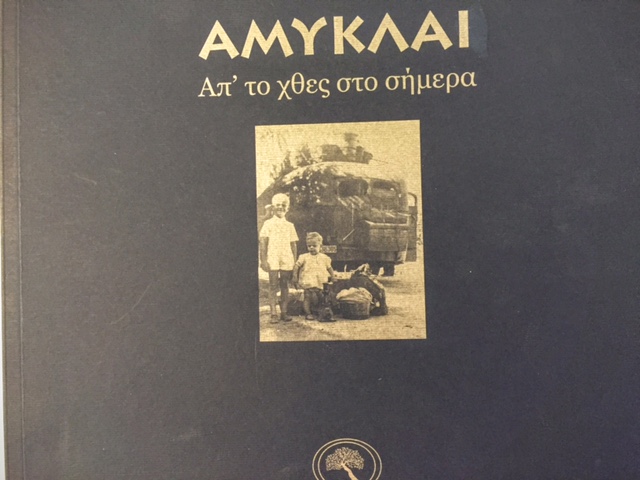
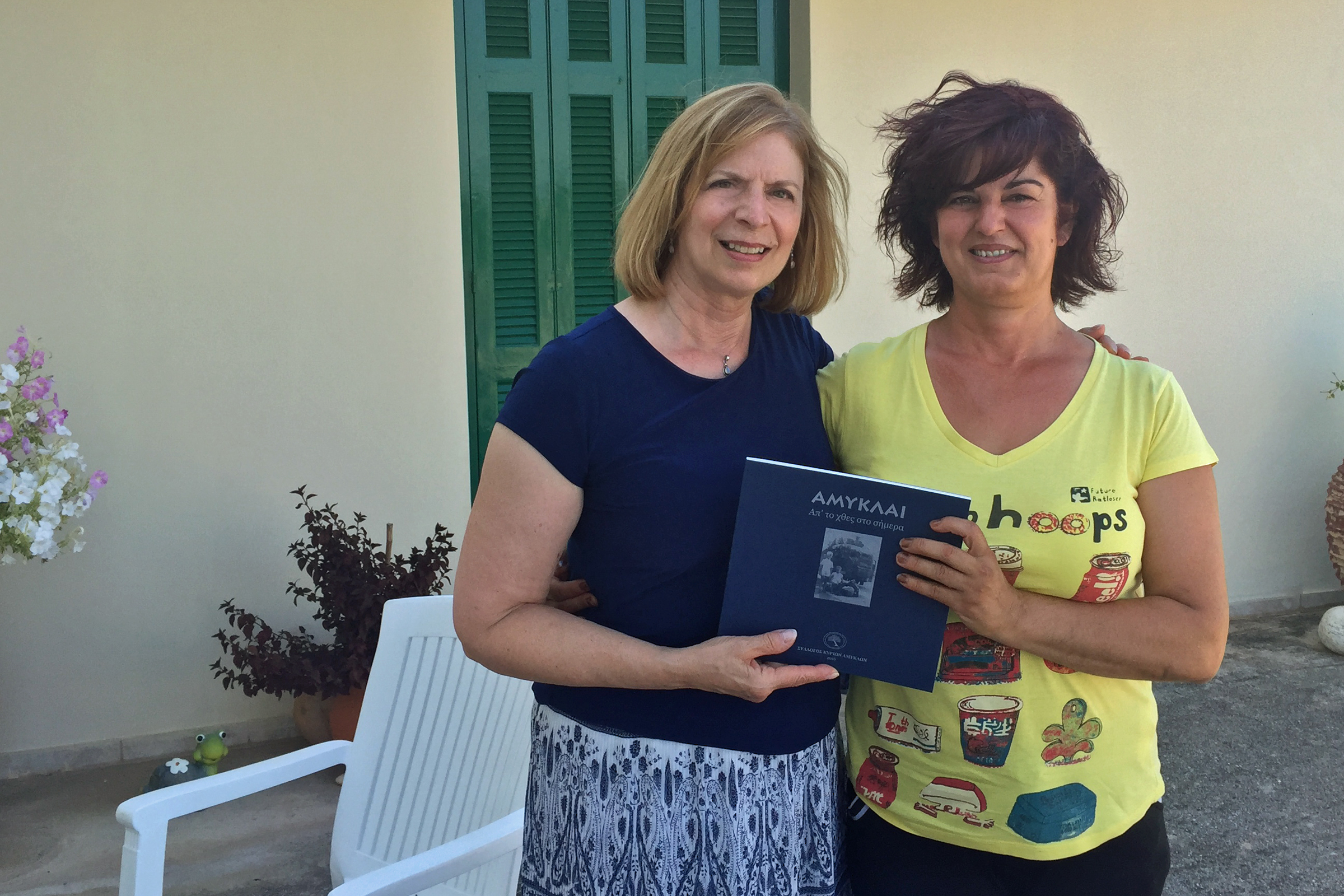
Carol Kostakos Petranek and Kaliopi Zarafonetis, Amykles, July 2016

Carol Kostakos Petranek and Kaliopi Zarafonetis, Amykles, July 2016

On to the repositories. I was on the hunt for death records for specific members of my family. My cousin, an attorney for the government in Sparta, had contacted a colleague in the Town Hall and we obtained the certificate for a member of the Linardakis family of Vordonia. I was surprised to learn that death records for Agios Ioannis are in the Town Hall of Magoula, not Sparta! Unfortunately, I did not make it there but it is the first item on Plan A for the next trip.

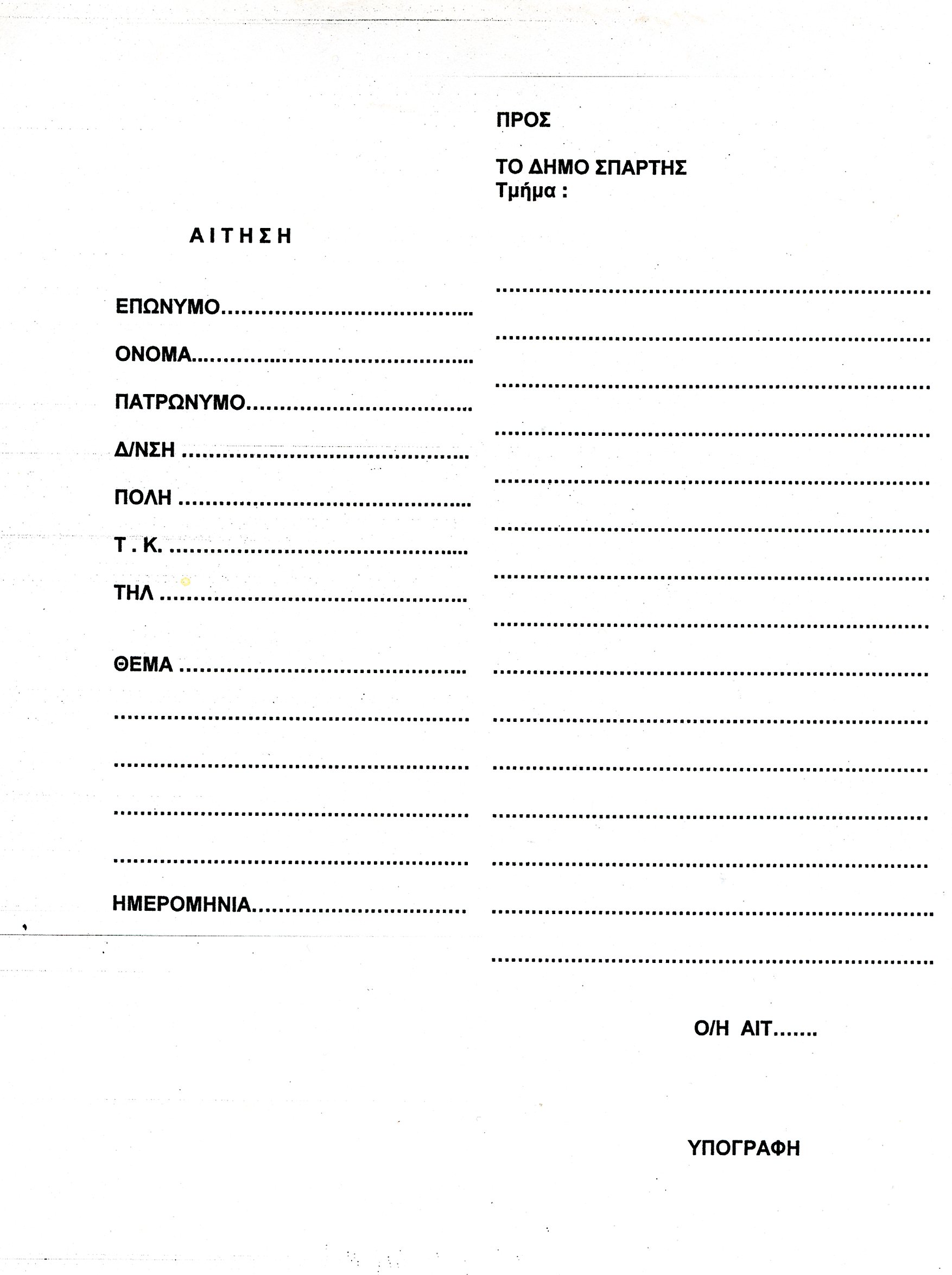
The Sparta Dimarheion has books of Male Registers and Town or Family Registers, as seen on the shelves in the photo below. However, clerks are busy handling daily government functions and research requests are often put aside. I did pick up a form to use for future mail-in requests.
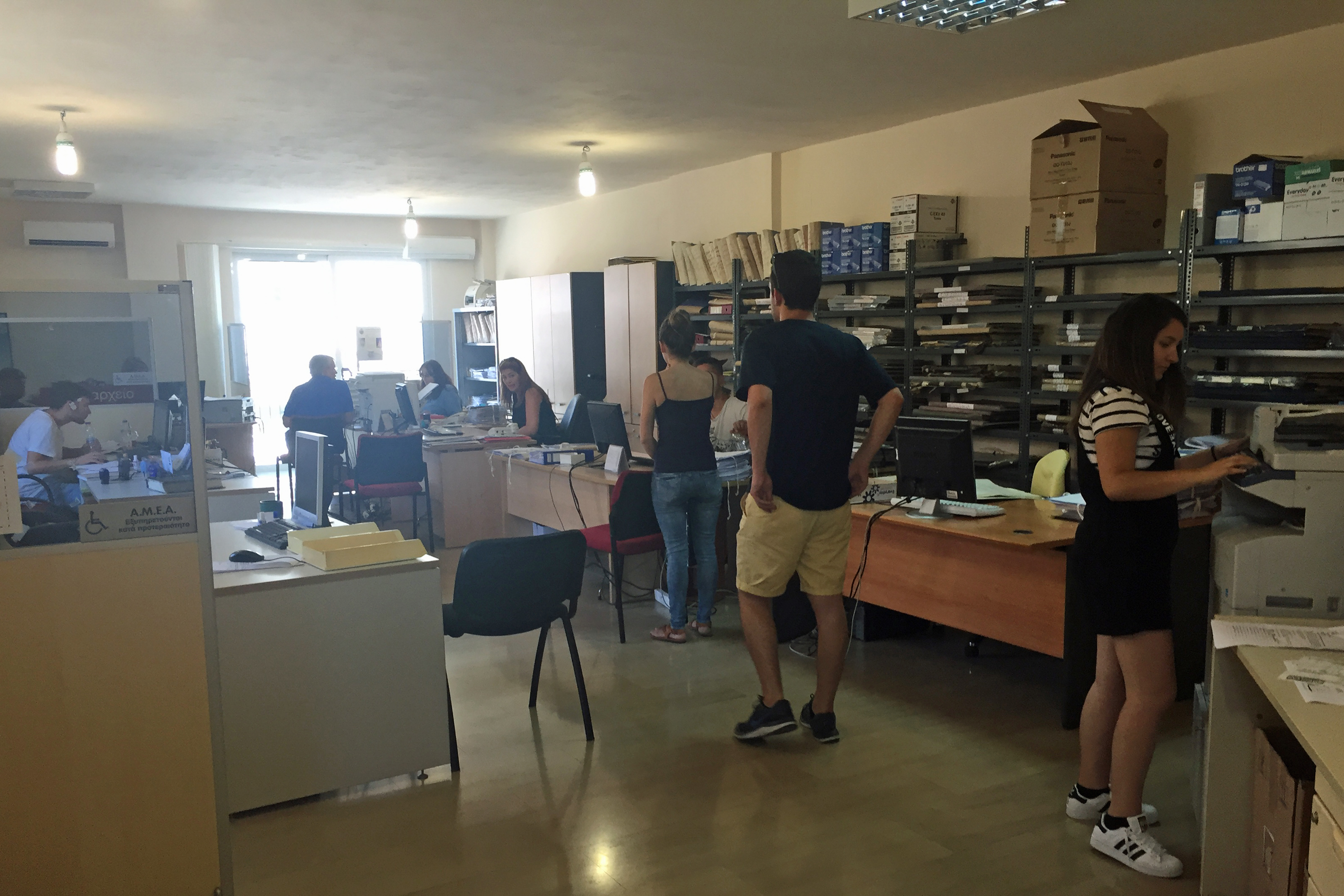
Sparta Dimarheion (Town Hall), July 2016
Sparta Dimarheion (Town Hall), July 2016

Record Request Form, Sparta Dimarheion, July 2016

Record Request Form, Sparta Dimarheion, July 2016

Our task at the Mitropolis in Sparta was to obtain specific pages of the Marriage Books for a friend. Although Gregory and I had been there in 2014, I was unsure if we would be granted access to the books again. My concerns were  unfounded. We were warmly greeted by a priest who brought us whatever we requested. When Gregory mentioned that the books were fragile and should be preserved, the priest replied that there had been discussions with the European Union about digitizing the records, but the talks had not come to fruition.
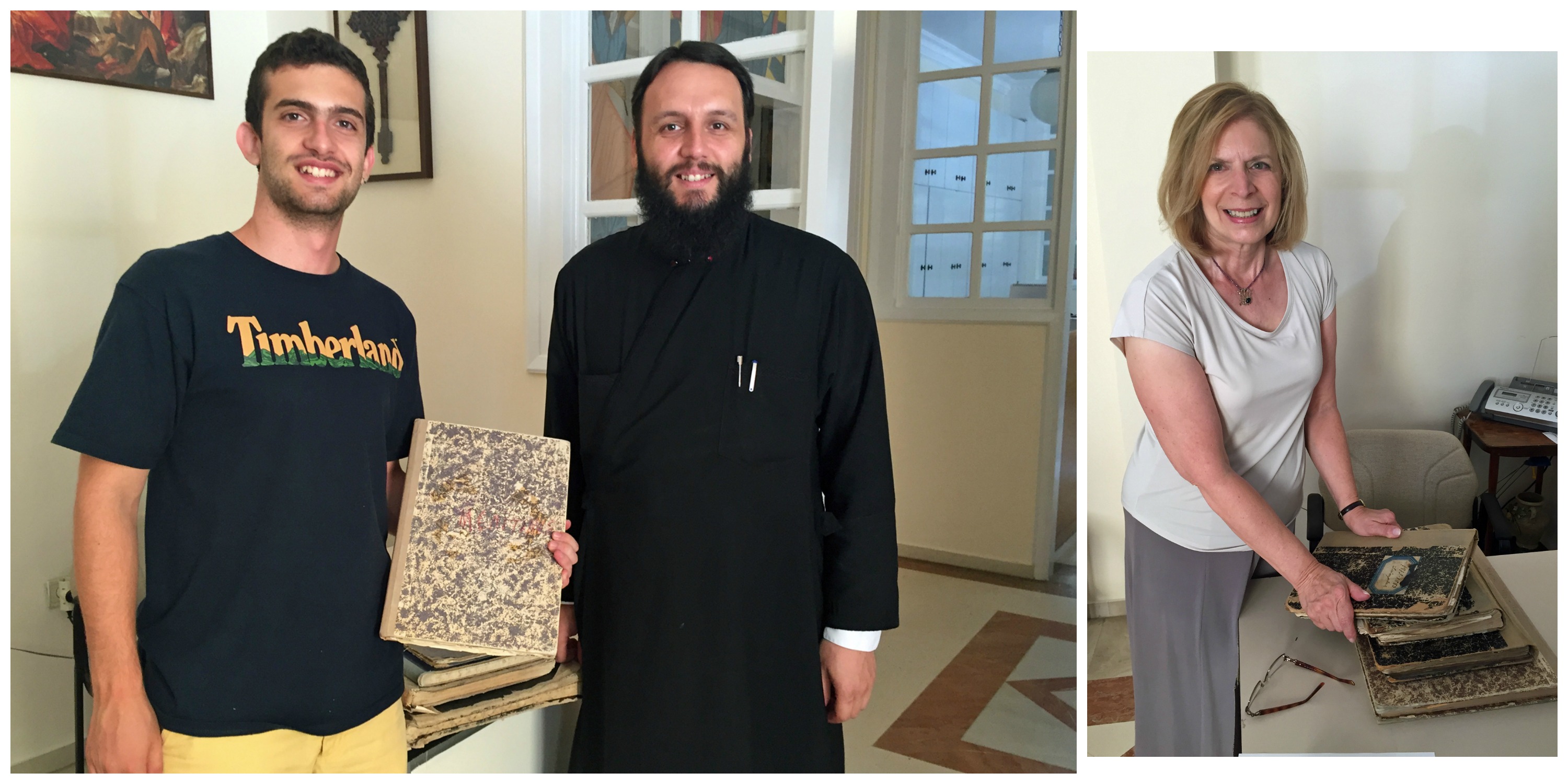
We were warmly greeted by a kind priest at the Mitropolis; Gregory Kontos and Carol Kostakos Petranek, Sparta, July 2016

A kind priest helped us at the Mitropolis; Gregory Kontos and Carol Kostakos Petranek, Sparta, July 2016

Then it was on to the Central Library of Sparta, located around the corner from the Mitropolis. This time our search was for history books of villages in Laconia, usually written by teachers during summer months. Giannis Michalakakos gave me the name of his colleague, Konstandinos Tzanetakos, who is a librarian there. We found Konstandinos in the section for Laconian history and he showed us the shelves that held many village histories.
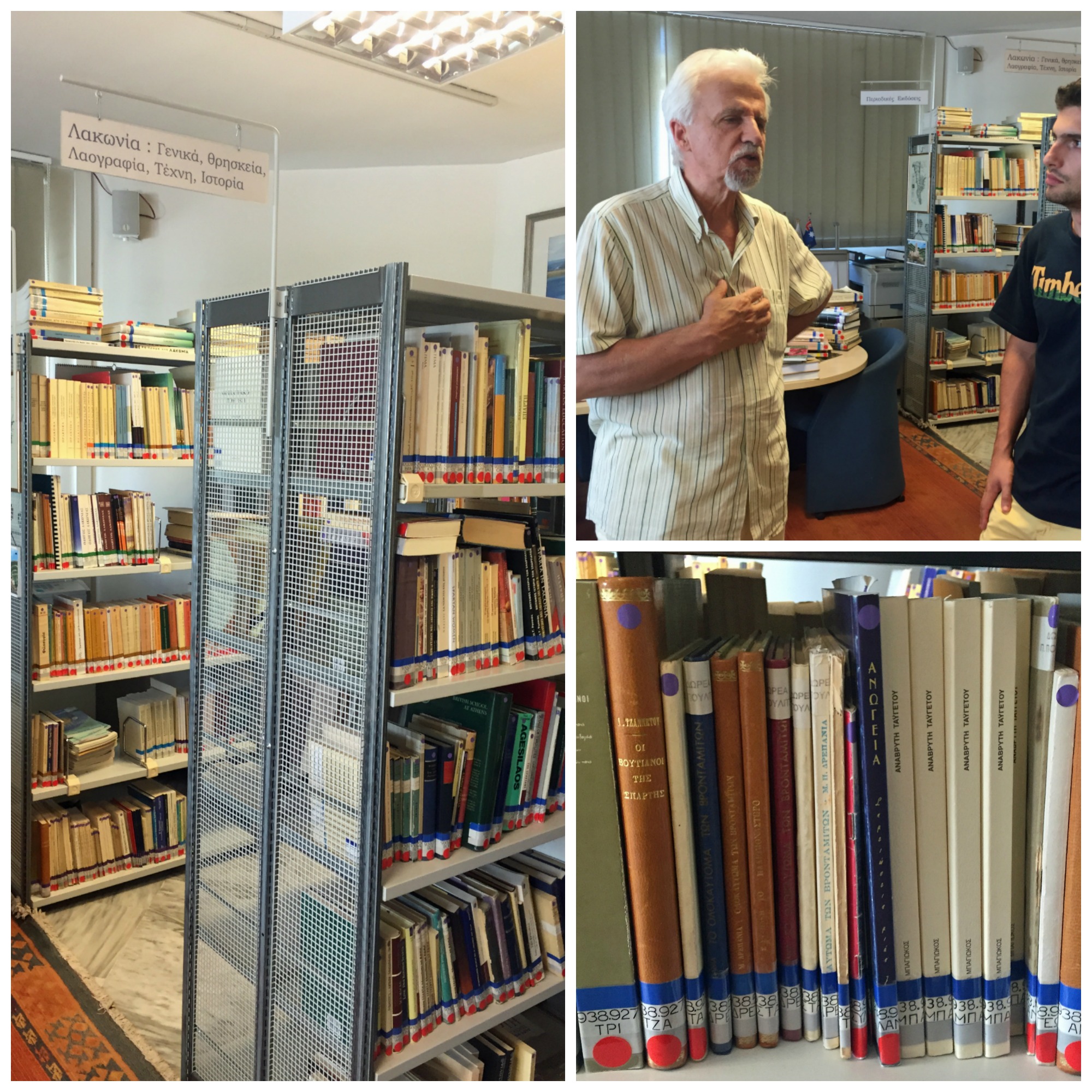
The Laconia History section of the Central Library of Sparta; with Konstandinos Tzanetakos and Gregory Kontos; July 2016

The Laconia History section of the Central Library of Sparta; with Konstandinos Tzanetakos and Gregory Kontos; July 2016

There were books for lots of Laconian villages, but none for Agios Ioannis. Giannis explained this was because Agios Ioannis had begun as a settlement beneath the towering Mystras castle, and that any noteworthy event had occurred in Mystras and not in its valley. I had harbored a secret hope that I would find something, but my friend was right. Anyone looking for a history book can call or email the library to see if there is a book for their village and if so, obtain the name, author and publisher. Most likely, our friends at the Laconia bookstores, Laconia Odos in Skala and Adouloti in Aeropolis, can then locate the book for purchase.

Our tasks in Sparta were completed, so Gregory and I headed to the west coast of Laconia to visit the Archives in Kalamata. Why there? I was hoping to find a clue — any clue — as to whether my Kostakos or Eftaxias family may have been in the Kalamata region before they headed northeast to Spartan villages. I had been told that my great-grandfather, Andreas Kostakos, could have come from Pyrgos (see previous post).

This was my first visit to Kalamata, a charming city by the sea.
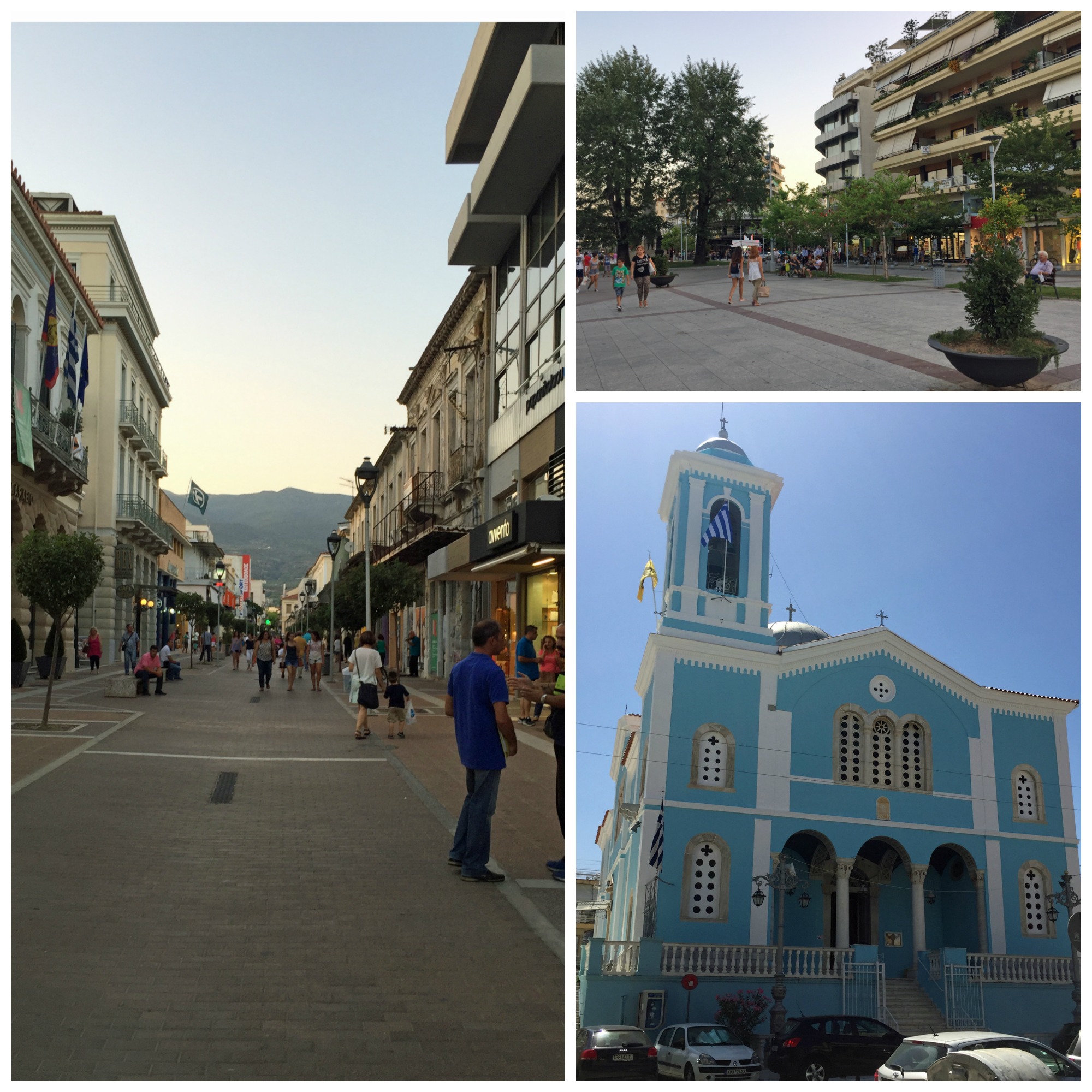
The city of Kalamata, Messinia, July 2016
The city of Kalamata, Messinia, July 2016

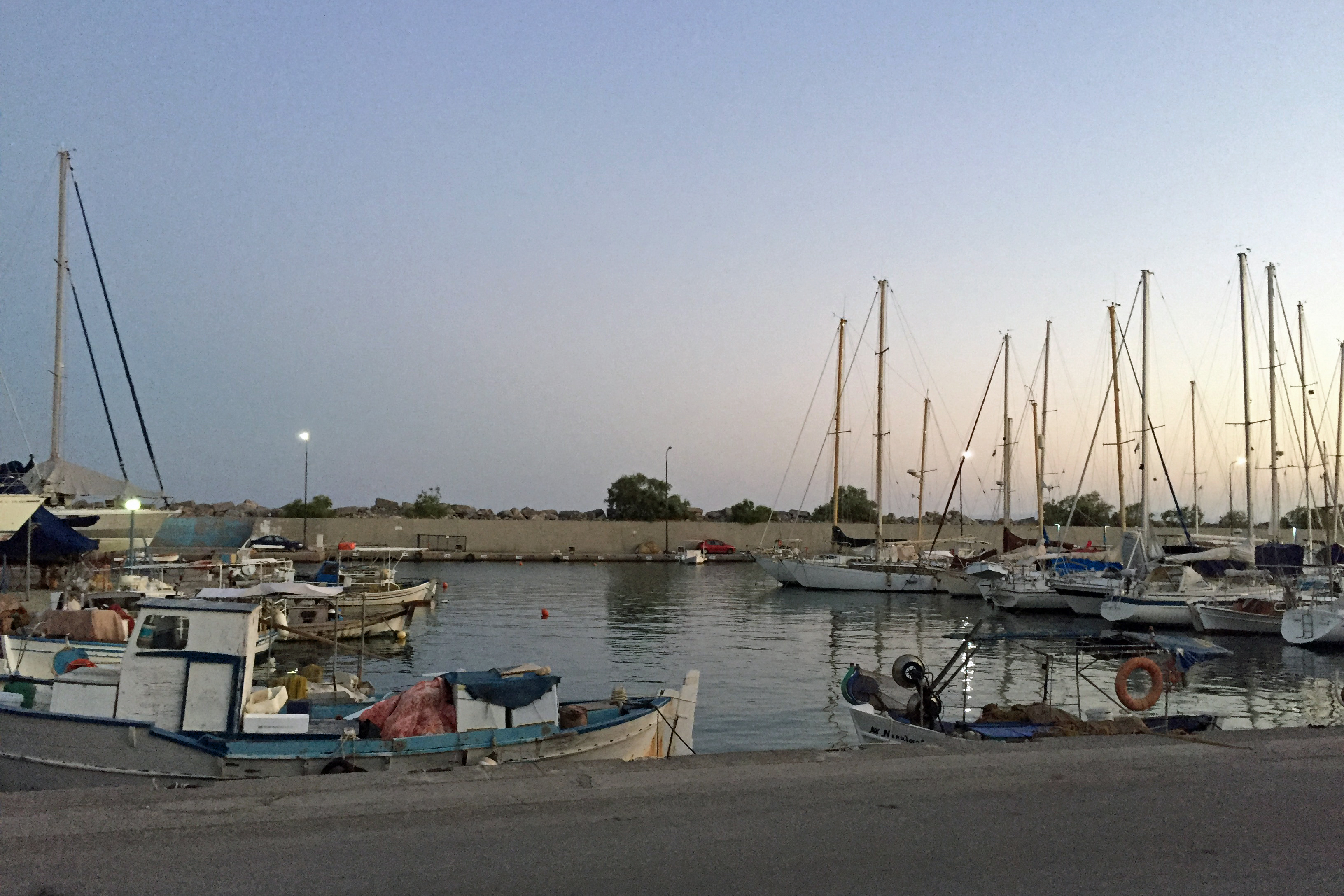
Waterfront, Kalamata, July 2016

Waterfront, Kalamata, July 2016

However, traffic in the city is a nightmare! The streets are one-way, very narrow, and very crowded. And horror of horrors — this is where I had my first car accident in Greece. It was a fender-bender at an intersection, and because we were moving so slowly, damage was minimal and no one was injured. But, I quickly realized the complexities of such a situation in a country where my language skills are not optimal. Calling the police and the car-rental agency, and talking with the other drivers could have been truly awful. Luckily, a passenger in the other car spoke perfect English and handled everything with grace and good humor. I was so grateful! Somehow I found my way back to the hotel and parked my car. I refused to let this mishap unnerve me, and I also refused to move the car until the day I left!
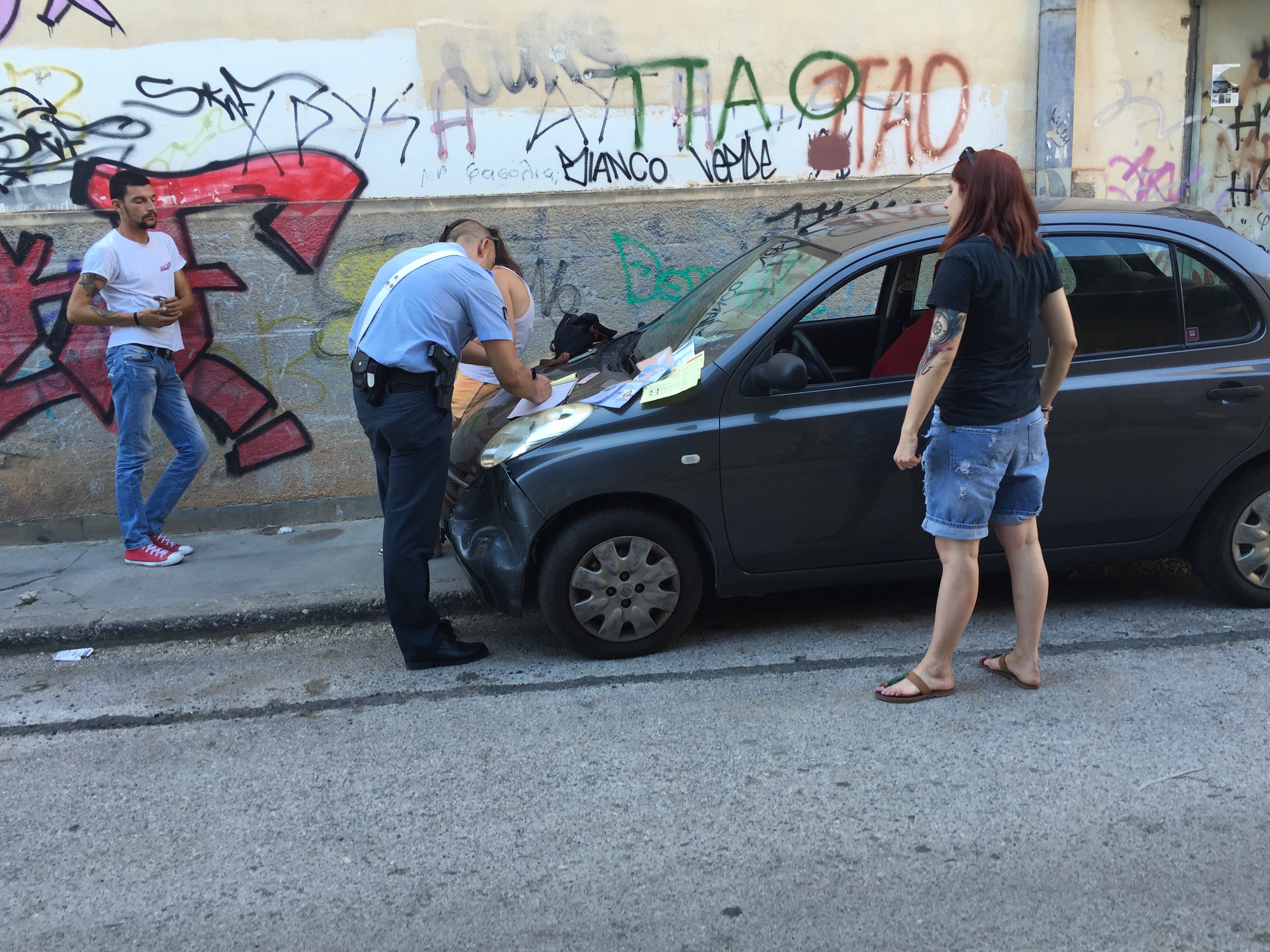
Accident! This is the car that hit mine in Kalamata, July 2016

Accident! This is the car that hit mine in Kalamata, July 2016

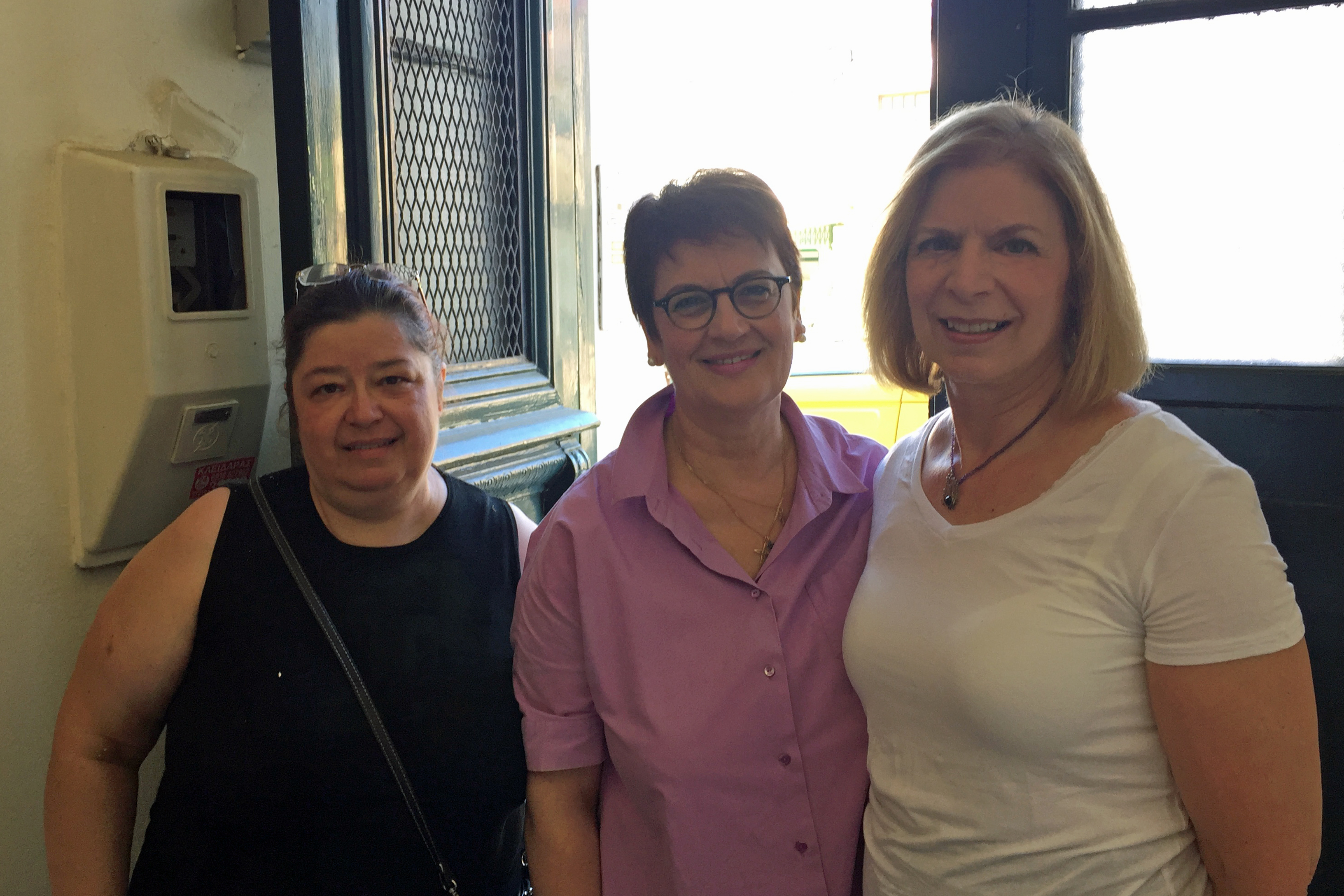
Gregory and I were very happy to meet in person our friend, Giota Siora. Giota is a Facebook friend on HellenicGenealogyGeek. Despite working full-time, she spends many hours online helping people with their research. For her devotion, she is greatly appreciated and respected.  Giota met us at the Kalamata Archives and introduced us to the Archivist, Anastasia Milioni, who also happens to be the wife of the mayor. This Archive has an extensive record collection for the Messinia Prefecture, including records of churches, land, houses, elementary schools, newspapers, military. The collection was greatly enhanced when Mrs. Milioni responded to a request from the GAK Central Office to ask local services to send their records to the Archives. Unfortunately, we were unable to do any research as the Archives is in the process of moving to a new location. Books were packed in boxes, and the office was essentially empty.
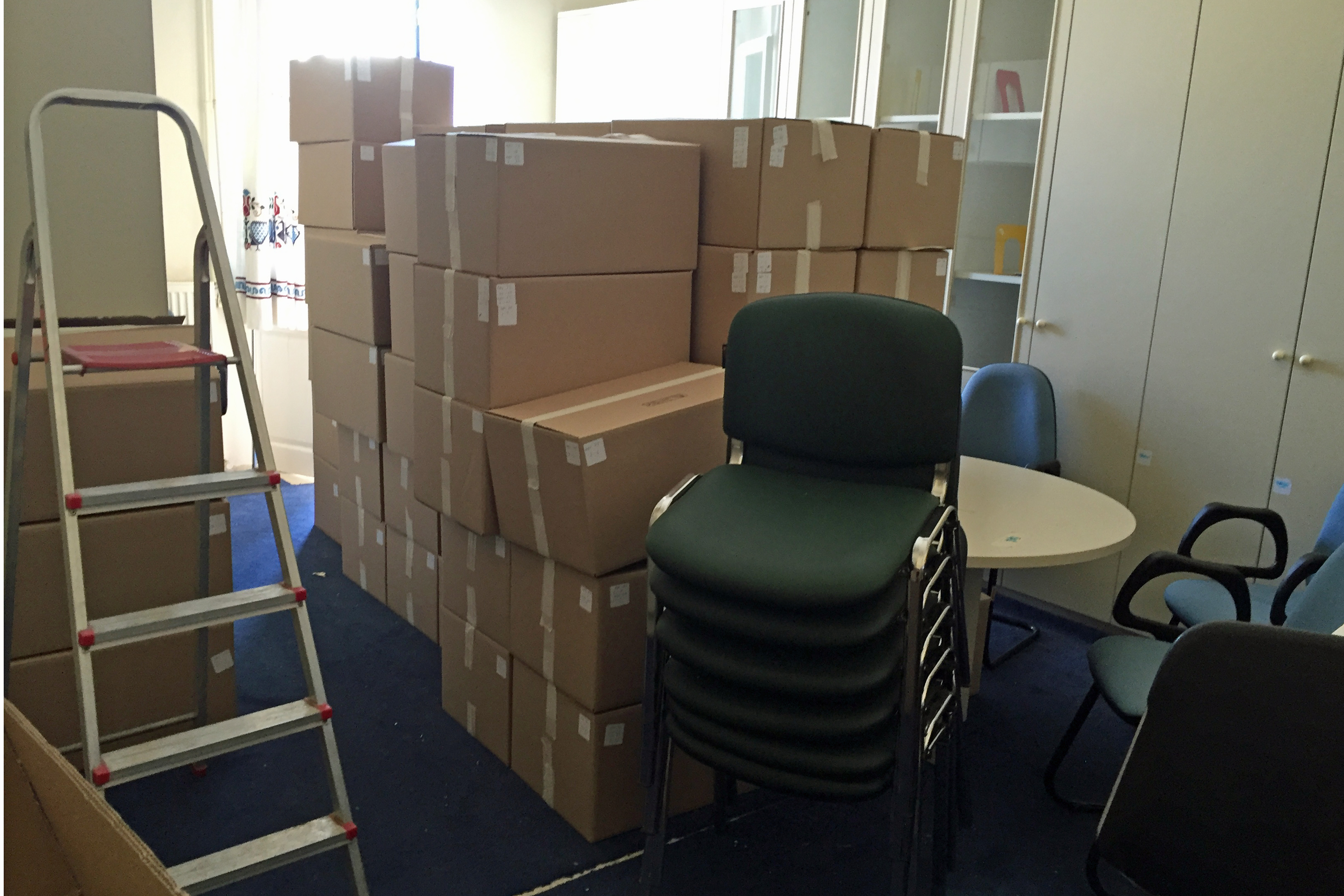
The Kalamata Archives is headed for a new home, July 2016
The Kalamata Archives is headed for a new home, July 2016

kalamata-archives-giota-siora-anastasia-milioni-archivist-carol

Giota Siora, Anastasia Milioni, Carol Kostakos Petranek, Kalamata Archives, July 216

When I inquired about possible records for the Eftaxias and Kostakos names, Mrs. Milioni did a computer search and found a few documents which look very promising. Two especially stood out:  a contract naming a Kostakos family in Anavriti, which could confirm oral tradition that the family had lived there prior to Agios Ioannis; and a contract for an Eftaxias family in Kalamata. After the office move, I will contact Mrs. Milioni and ask her to access these for me. I continue to be impressed with the kindness and professionalism of the Archivists in both Laconia and Messinia. They truly desire to be of help and will set aside whatever they are doing to be of assistance to researchers.

Giota suggested that we walk to the Dimarheion, or Town Hall, on the chance that we kalamata-dimarheion-signmight access records there. Visiting this municipal office, I was again reminded that clerks are extremely busy handling daily matters. Someone walking in and asking for records that are 150 years old are, at best, a distraction and at worst, an annoyance. This is especially true when there are six people standing in line, vying for a clerk’s attention. I was also reminded that the municipality has records only for its specific area of jurisdiction (unlike the Archives which has records for the entire prefecture).  Since I was looking for Pyrgos, a village not in the Kalamata jurisdiction, the clerk was not able to be of assistance. The lesson of that day was:  location is everything!
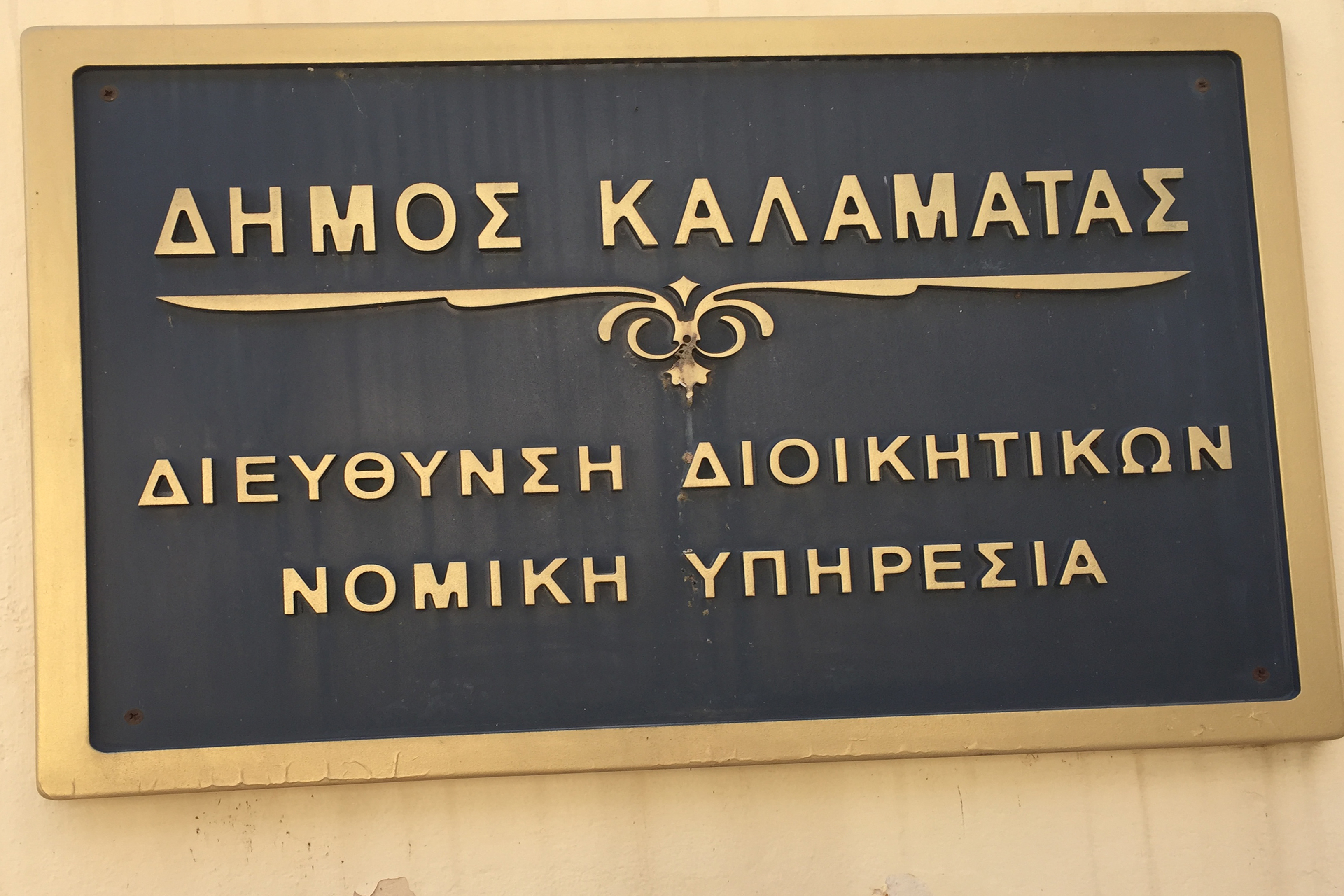
Dimarheion, Kalamata, July 2016

Town people waiting patiently for help on a Friday afternoon at the Dimarheion. The line stretched outside the door. Kalamata, July 2016

Every hour of my research trips are filled to the max. Sometimes “the force” is with me and I have amazing success; sometimes not, and the disappointment becomes a “learning experience.”  Nothing is lost; everything is gained. I love the ride!


Return to Greece, 2016. Part Six: It’s All About Family

This is the sixth post in a series about my trip to Greece, June 30-July 20, 2016 — an amazing journey of history, family and discovery. Previous posts can be found here.

Open arms with tight hugs. Kisses on both cheeks. Happy smiles and joyful reunions. This is how my family greets me when I return to Sparta. There are so many places to explore and discover; but for me this is the bottom line:  it’s all about family. Prior to my visits to Greece, the names and places on my pedigree chart were simply long names and dots on a map. Now, they are attached to real people who have become a vibrant and important part of my extended family.

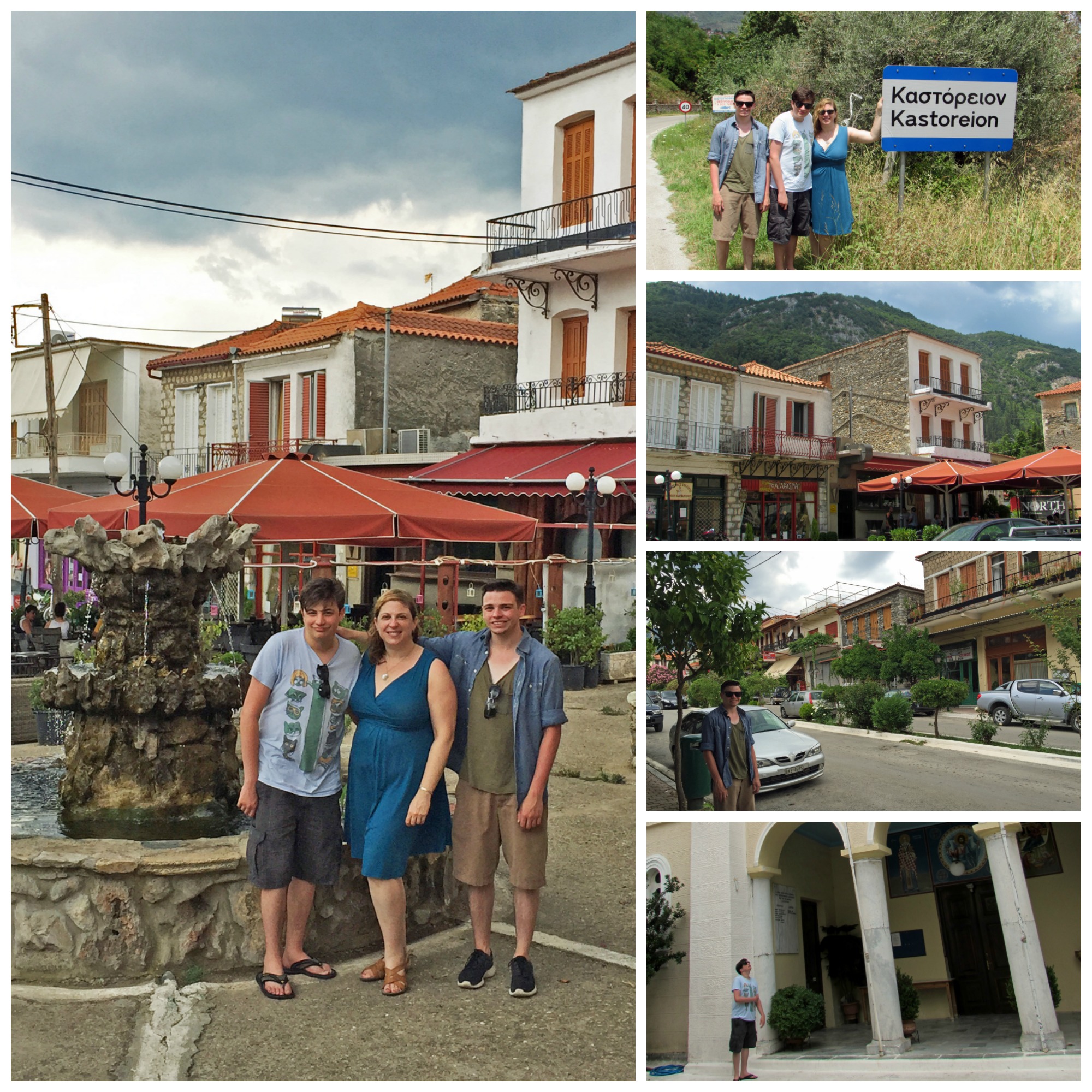
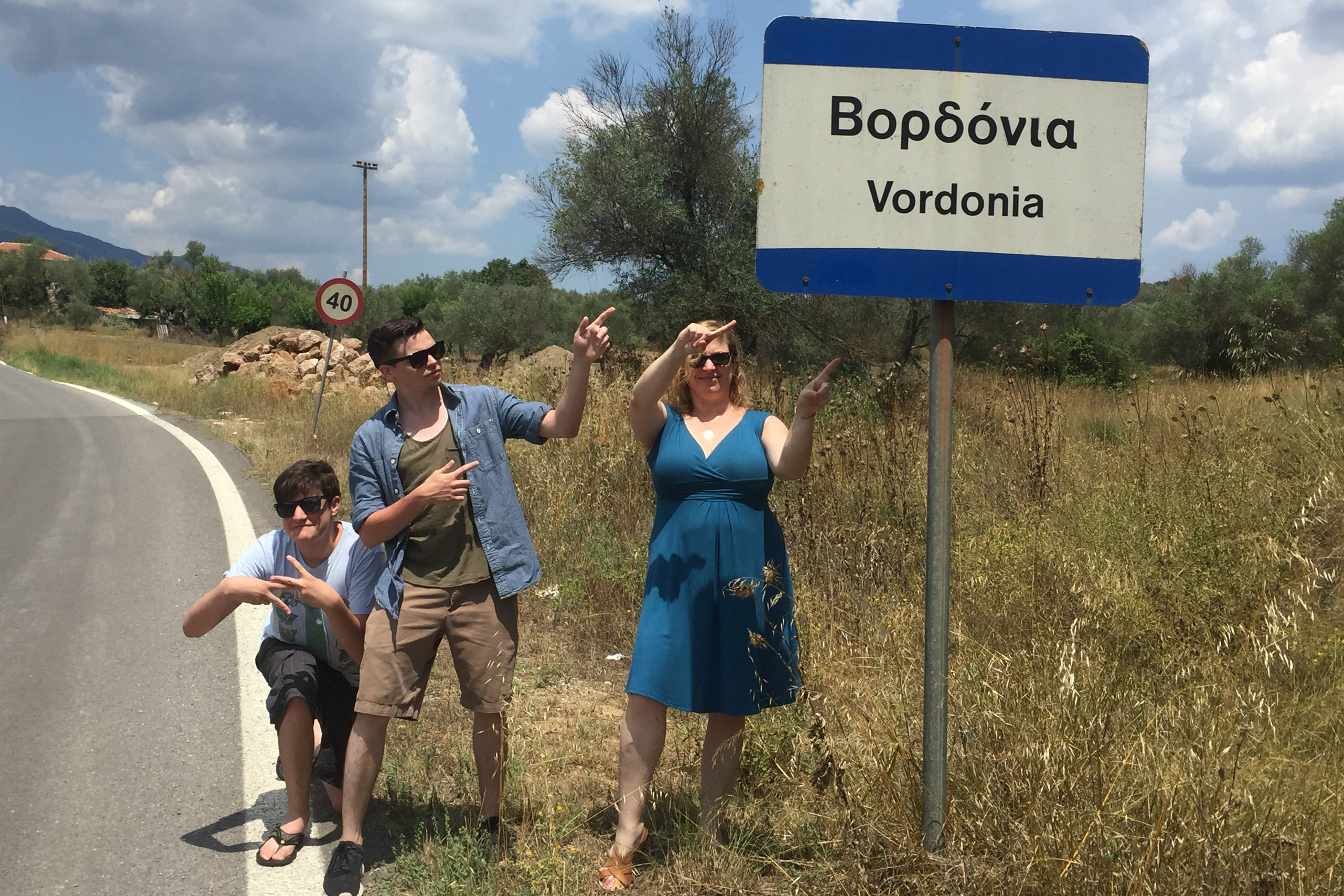
Joy is sharing what you love with whom you love. For me, joy is introducing my family to their roots — touring our villages and meeting our relatives. Kathy’s paternal grandparents are Kallianes from Kastania (now Kastoreion) and Linardakis from Vordonia. Although we don’t know of family now living there, we so enjoyed exploring the towns, peering into shops, watching chickens, dogs and cats roam their yards, and looking at stone and stucco houses that have sheltered countless families through countless years.

Kastoreion, Laconia. July 2016

Kastoreion, Laconia. ancestral village of the Kallianes family, July 2016

Vordonia, Laconia, July 2016

Andrew, Ben and Kathy at the Linardakis village of Vordonia, Laconia, July 2016

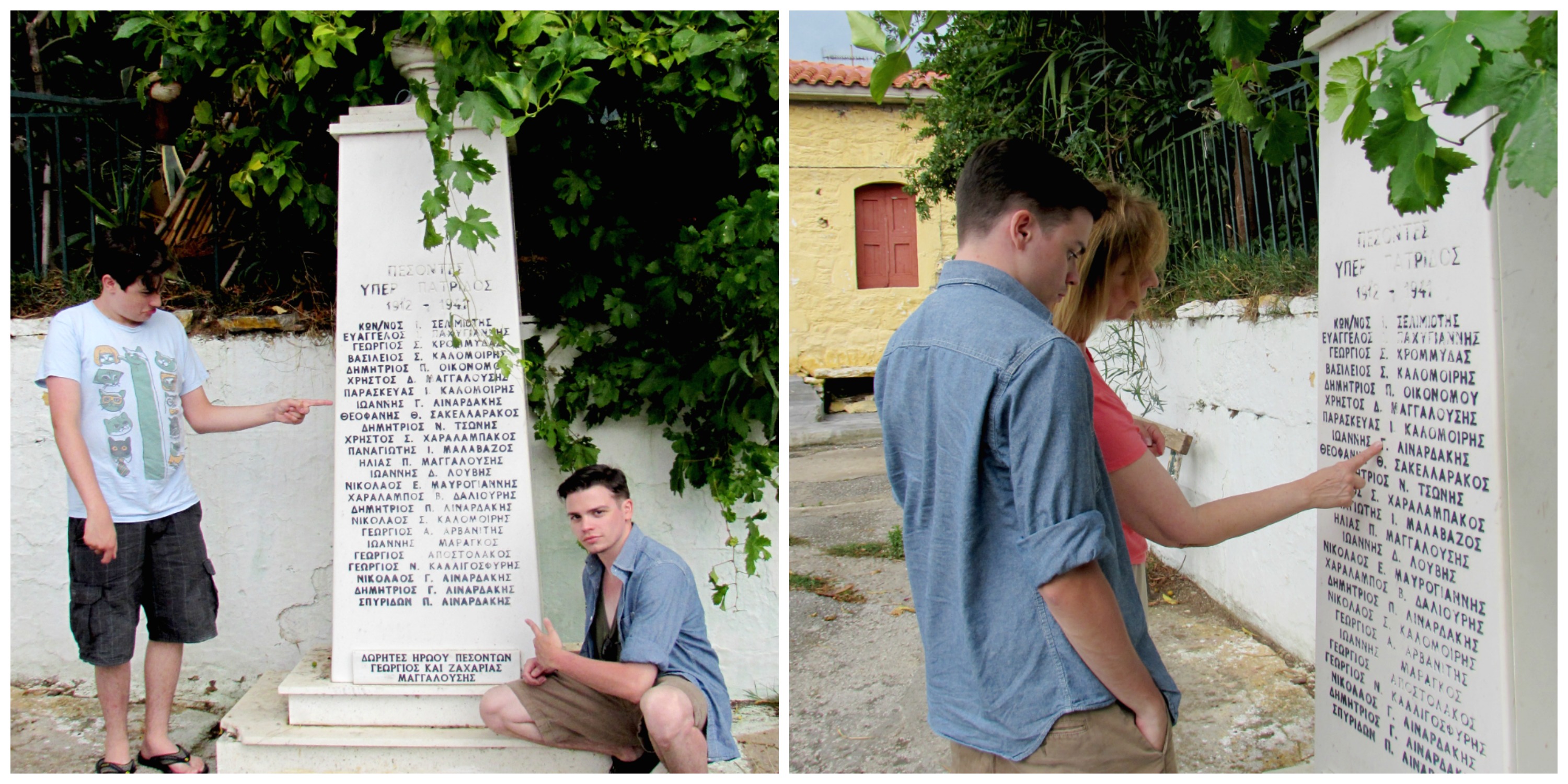
I love the monuments erected in every town that memorialize those who died in military service. My heart skips whenever I find an ancestral name etched in marble. Even if I cannot connect that individual to my line, I know that in these small villages, people with the same surname are almost certain to be related. While driving in Vordonia, we turned into a back street and unexpectedly were confronted by the village monument. stopping to examine it, I became emotional when I showed Ben and Andrew several men with the Linardakis surname.

Finding the Linardakis surname; Vordonia, July 2016

Finding the Linardakis surname; Vordonia, July 2016

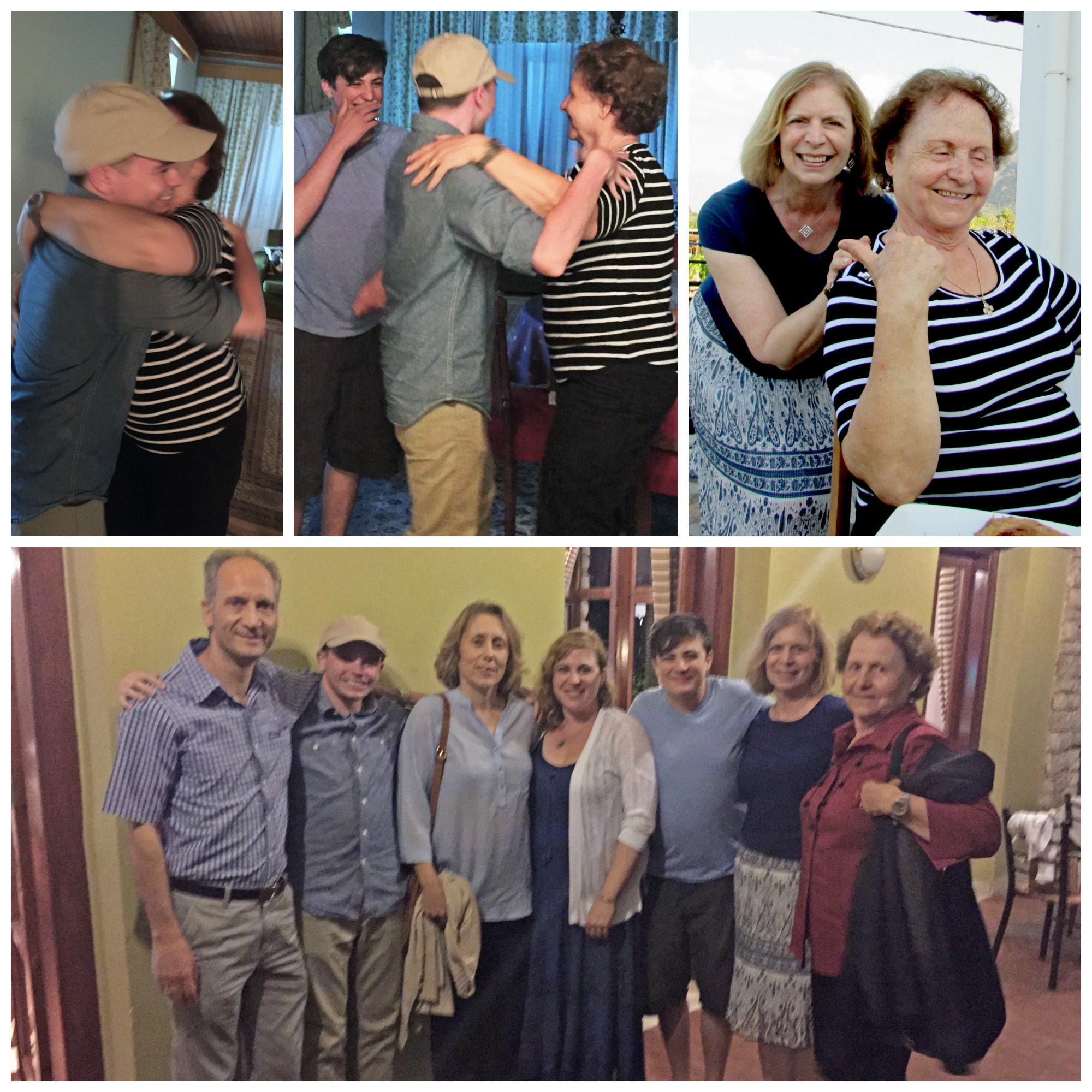
Visiting our Aridas and Kostakos familes in Agios Ioannis has endeared my grandchildren to their Spartan relatives and grounded them to the land of their ancestors. Bridging the Atlantic and meeting kin has widened their concept of family. Eating a meal in a house built by their ancestor in the mid-1800’s has brought them a sense of “rootedness” that is unparalleled. And best of all, they were warmly embraced and loved immediately by all who met them.

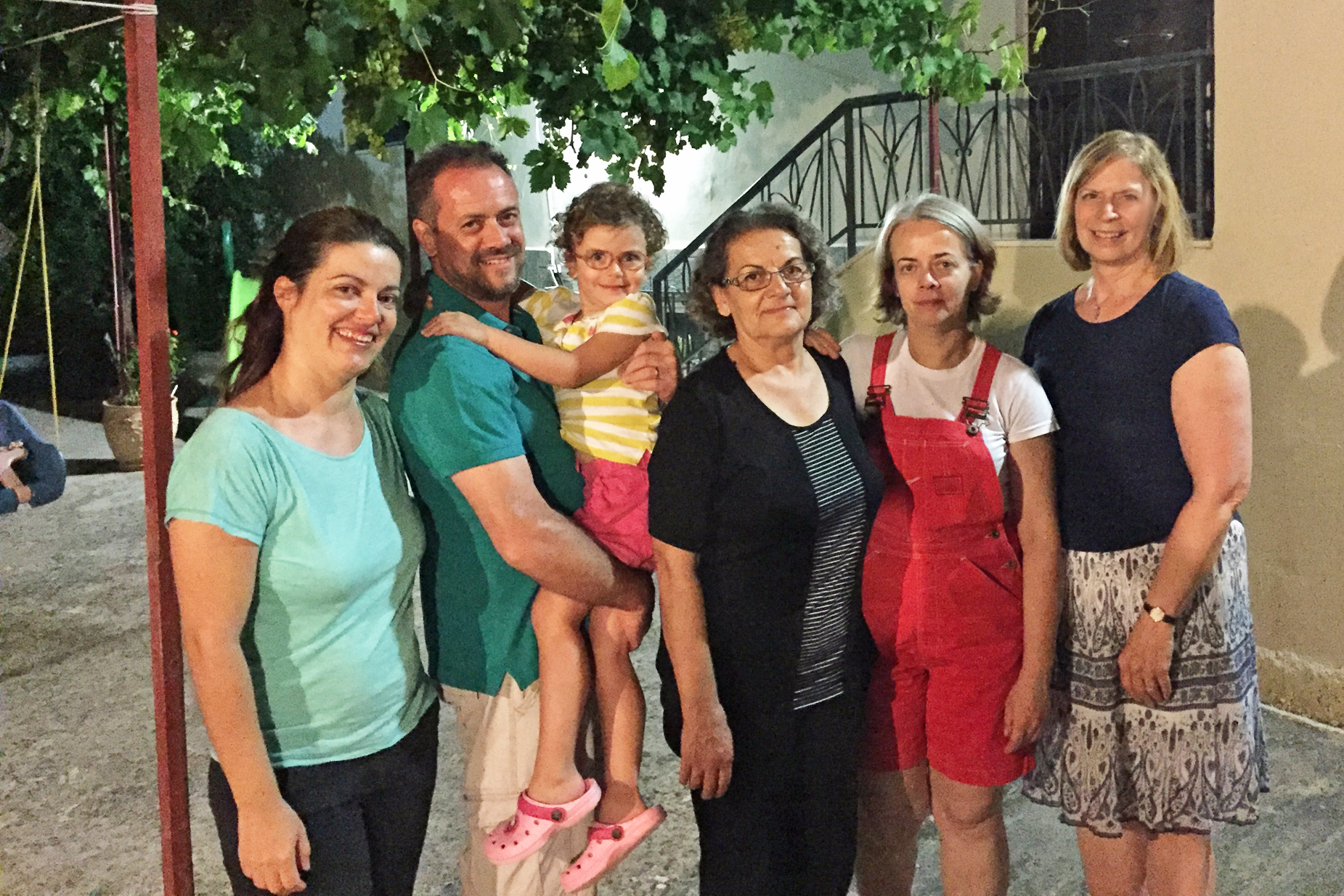
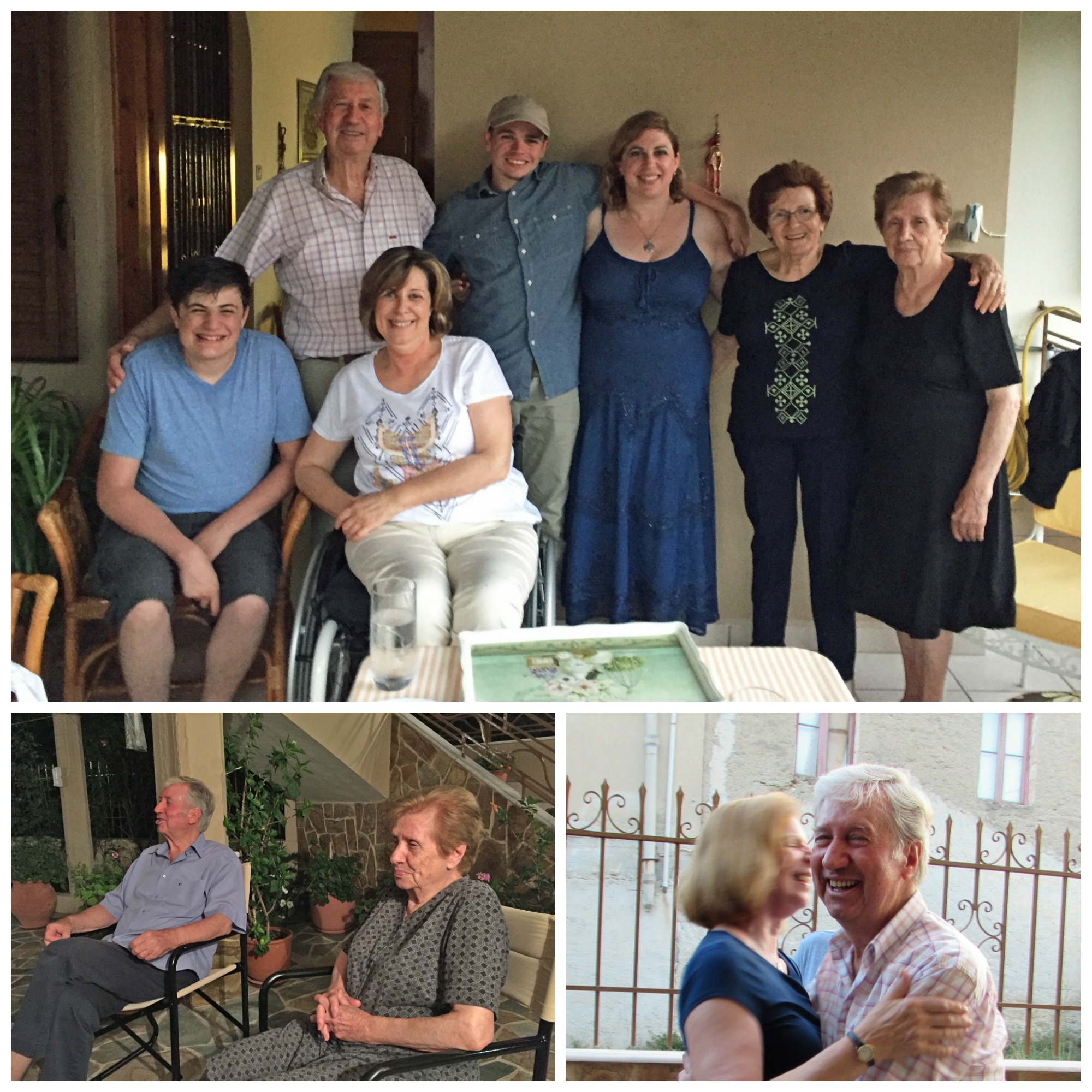
These are photos of my Kostakos and Aridas family in Agios Ioannis, Sparta. They are on my father’s side — my grandparents were John Andrew (Ioannis Andreas) Kostakos and Hariklia Aridas, both born in Agios Ioannis. On the Kostakos side, our common ancestor is Andreas Kostakos who was married twice: first to Anastasia, then to Poletimi Christakos. These two Kostakos families are descended from Andreas and Anastasia; I am descended from Andreas and Poletimi. On the Aridas line, our common ancestor is Michail Aridas and his wife, Stamatina.

Ioanna Kostakos Family, with Ben Soper, Andrew Soper, Kathy Lynard, Carol Kostakos Petranek, Peggy and Vassilis Vlachogiannis, Agios Ioannis, July 2016

Family of Ioanna Kostakos of Agios Ioannis. With Ben Soper, Andrew Soper, Kathy Lynard, Carol Kostakos Petranek, Peggy and Vassilis Vachaviolis, and Ioanna Kostakos, July 2016

family-kostakos-eleni-group-07-13

Family of Eleni Kostakos of Agios Ioannis. Natasa, Panos, Eleni, Eleni, Panorea, Carol Kostakos Petranek, July 2016

Family of George Aridas, Agios Ioannis. George, Roula, Adamandia Aridas; George's sister, Afroditi. July 2016

Family of George Aridas, Agios Ioannis. George, Roula, Adamandia Aridas; George’s sister, Afroditi. July 2016

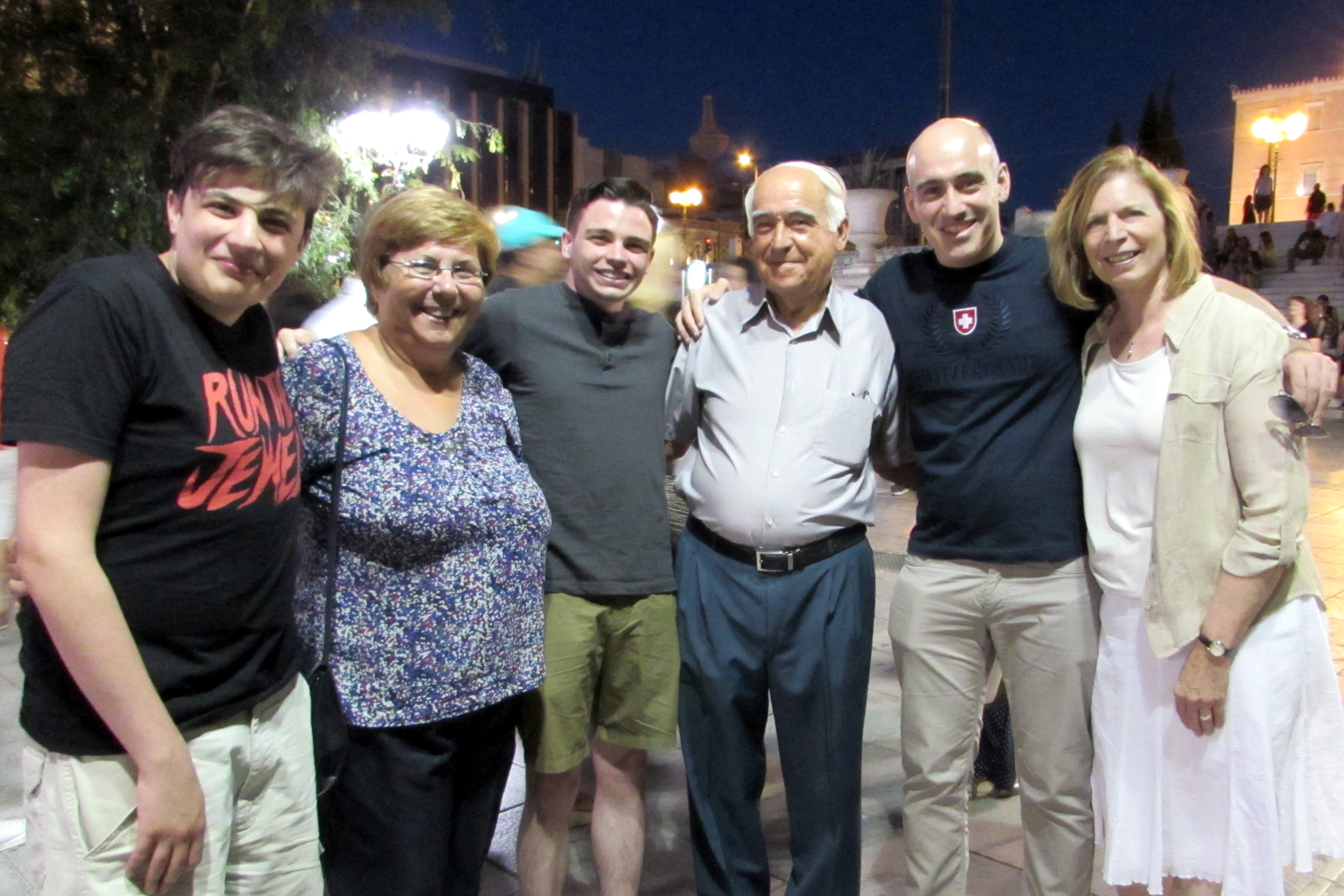
This is the Chelidonis Family of Athens. Nikos is my second cousin on my mother’s line. His mother was Tasia Eftaxia from Mystras; our common ancestor is Ioannis Eftaxias, born 1809. My grandmother, Angelina Eftaxias Papagiannakos, was Tasia’s aunt. Panagiotis found me on Facebook three years ago, and we met in person during my trip in 2014. We were so excited to connect our families, as neither of us knew that the other existed!

Family if Nikos Chelidonis, Athens. Viki, Nikos, Panagiotis. July 2016

Family if Nikos Chelidonis, Athens. Viki, Nikos, Panagiotis. July 2016

The Eftaxias family of Mystras has long roots in Mystras. My grandmother, Angelina Eftaxias is the aunt of Andreas (photo on left). Andreas’ son, Lewnidas, is a master stone mason and works on churches and other buildings throughout southern Laconia.

Andreas Eftaxias, his son. Lewnidas ad Afroditi. Mystras, July 2016

Andreas Eftaxias, his son. Lewnidas ad Afroditi. Mystras, July 2016

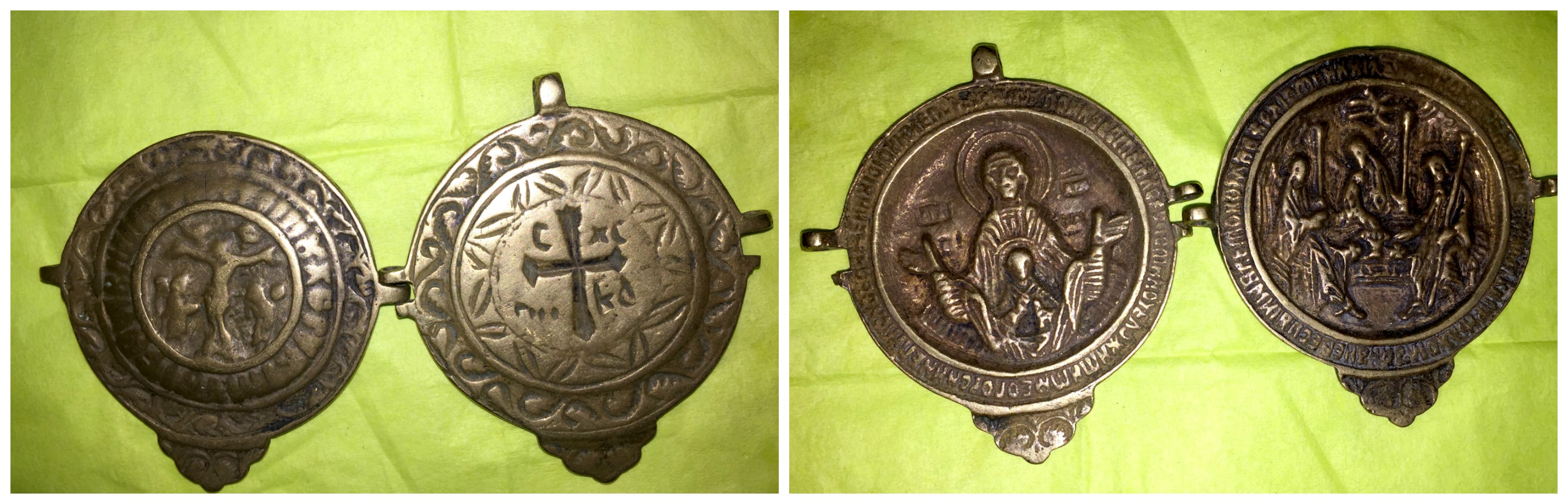
Lewnidas and Andreas told me that our first Eftaxias ancestor escaped from Constantinople during the Ottoman conquest in 1453! He and three friends fled together and settled in Mystras. Lewnidas showed me a bronze medallion that was brought by this ancestor and kept by the family for generations. I posted this photo on our HellenicGenealogyGeek Facebook page and knowledgeable friends there described the medallion: l-r: Christ on the cross; Byzantine cross with words, ” Ιησούς Χριστός Νικά”; the Holy Mother, Mary; and the Holy Trinity, possibly based on Rublev‘s painting of the same name.

Medallion dating to 1453, belonging to Eftaxias family; Mystras, July 2016

Medallion dating to 1453, belonging to Eftaxias family; Mystras, July 2016

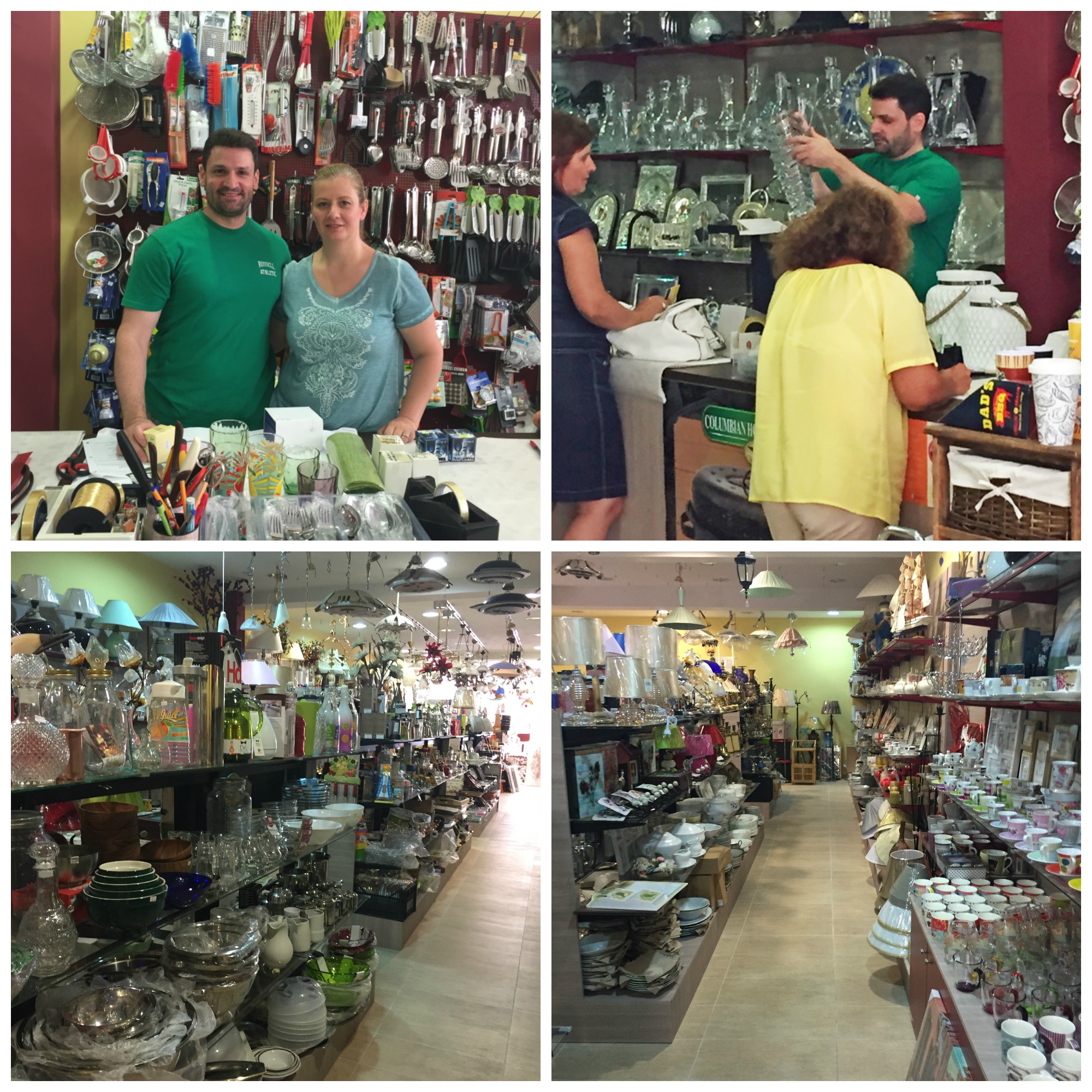
I was so thrilled to extend my family further on this trip. My new-found cousin, Dimitrios Papagiannakos, and his wife, Georgia, own a beautiful home goods store in Sparta which sells a myriad of items from cooking utensils to beautiful crystal. I think I gave Dimitrios quite a shock when I walked into his store and introduced myself as his cousin from America! I had brought photos of his Pappas family in the U.S., including a group shot taken at our Pappas Cousin’s Reunion. Working around his customers, we managed to have a spirited and lovely conversation about our families. My only regret was that his parents were out of town and I was unable to meet them. Next trip!

papagiannakos-store-collage

Dimitrios and Georgia Papagiannakos in their lovely home goods store, Sparta, July 2016

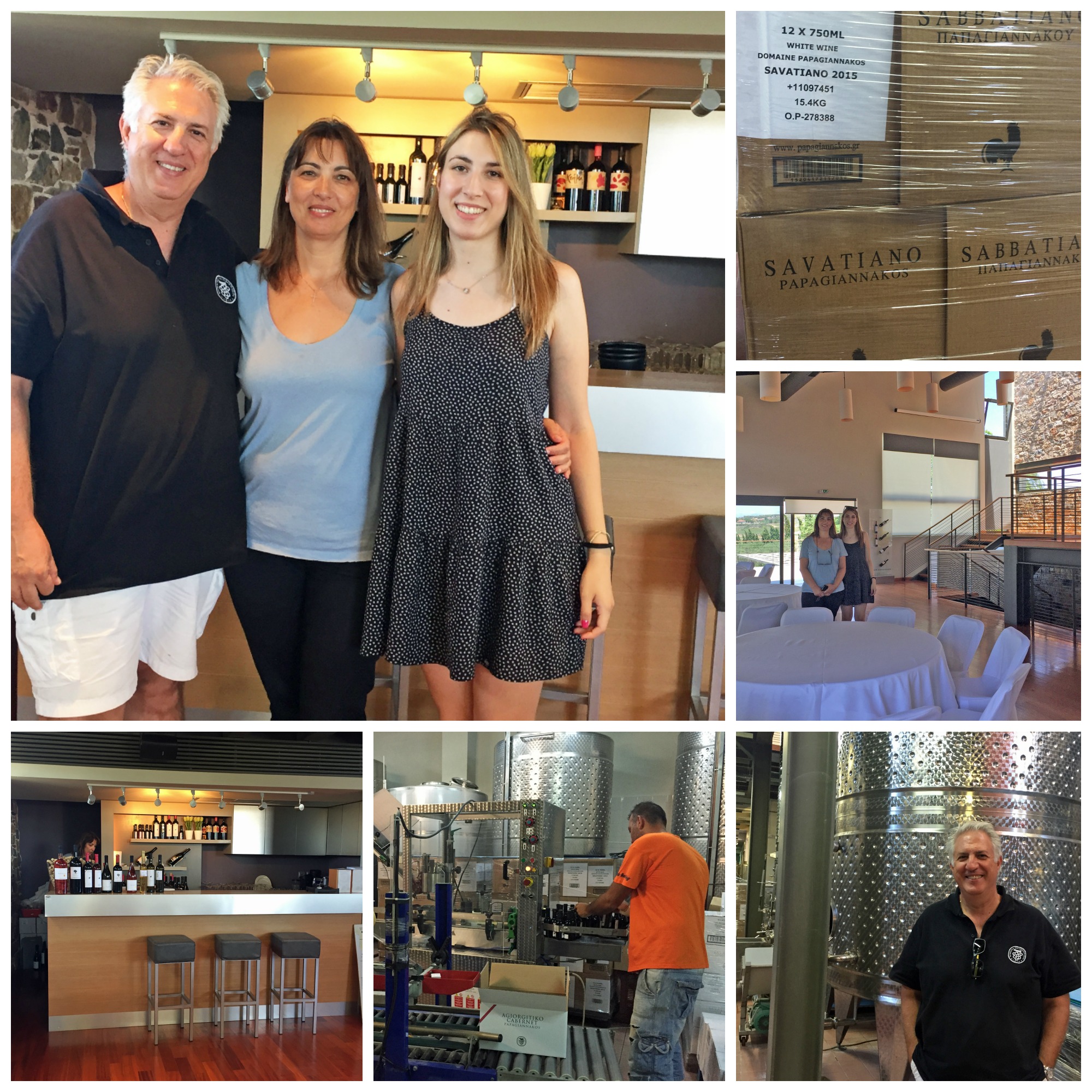
I also traveled to Markopoulos, northeast of Athens, to meet Vassilis Papagiannakos, owner of the Papagiannakos Winery. The winery was started by his grandfather, also named Vassilis, in 1919. Now managed by the 3rd generation of Papagiannakos’, Vassilis and his wife, Antonia, have expanded the business, developed new and award-winning wines, and constructed a beautiful edifice where business events, weddings and other activities are held. Although Vassilis and I do not know how–or if– we are related, we are looking to explore our family roots together.

papagiannakos-winery-collage

Vassilis and Antonia Papagiannakos and their daughter, Aggeliki. Papagiannakos Winery, Markopoulos, July 2016

Every trip to Greece strengthens my family ties. I love these cousins. They set an example of hard work, honesty and devotion to our family and our heritage. I am ever-grateful to have the means and the opportunity to introduce them to my own descendants. Together, we carry on traditions and relationships that honor our ancestors.

Papou’s House in Sheepshead Bay

I love going to the home of my Kostakos grandparents in Sheepshead Bay, Brooklyn. Sitting on a very rare double-wide lot, it was spacious and airy inside with beautifully manicured lawns and gardens surrounding it. I have happy childhood memories of exploring all of its nooks and crannies with my cousins.

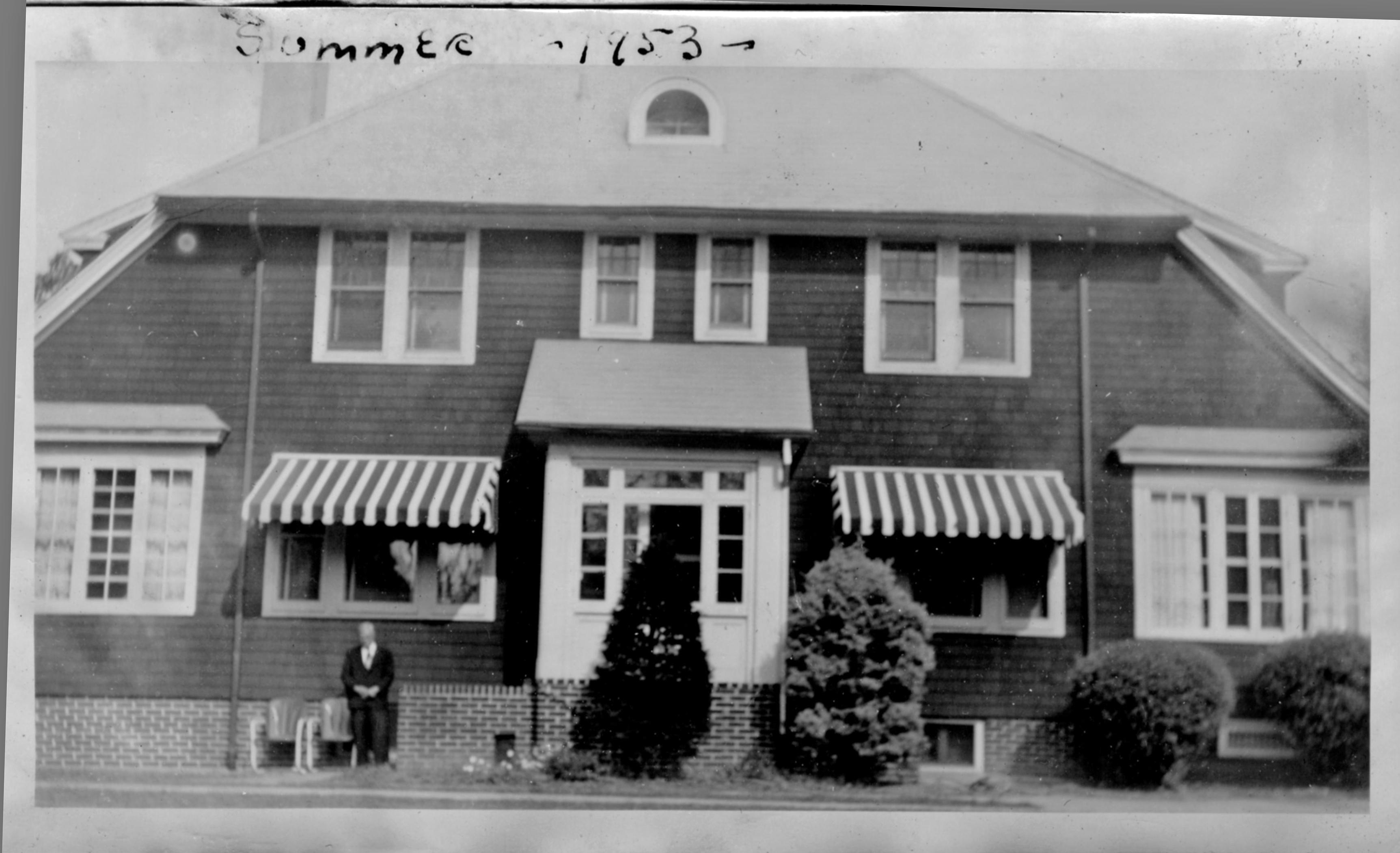
Last weekend as we were scanning my grandparents’ photos, we came across this rare treasure: a picture of my grandfather, John, standing proudly at the side of his house.

Andrew John Kostakos, standing on the side of his home at 2669 East 26th Street, Sheepshead Bay, Brooklyn, NY, 1953

John Andrew Kostakos, standing on the side of his home at 2669 East 26th Street, Sheepshead Bay, Brooklyn, NY, 1953

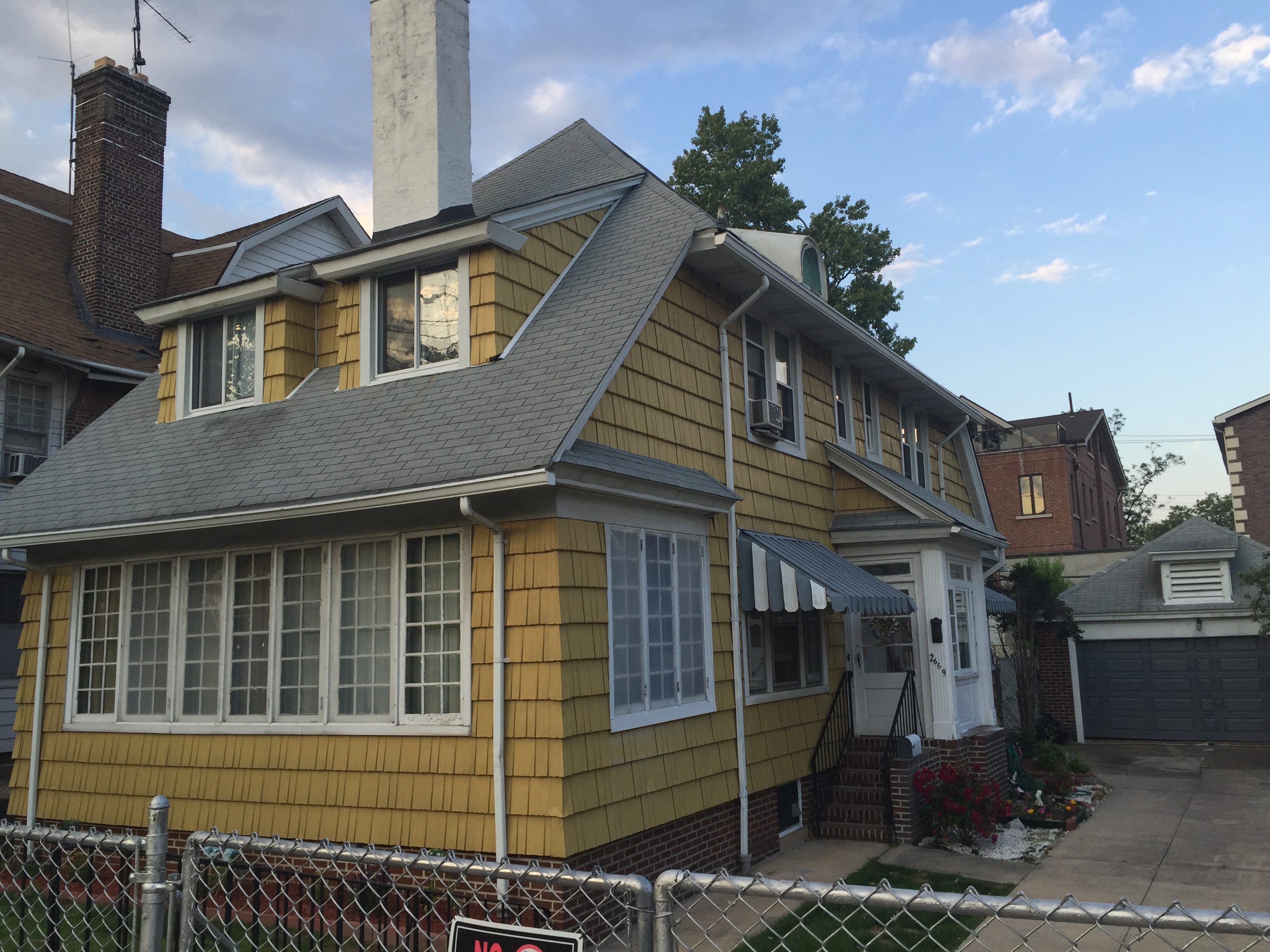
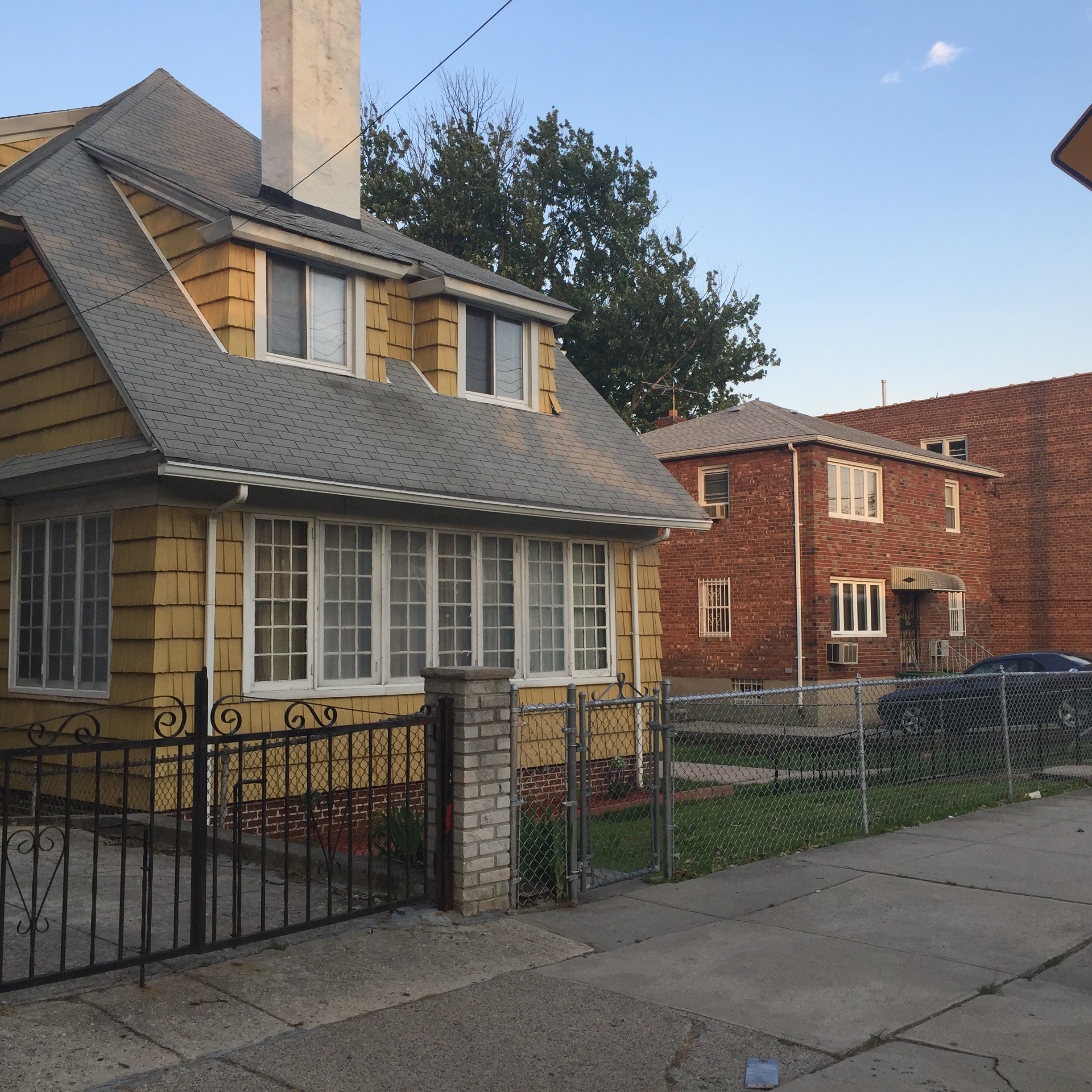
Looking at a similar view of house today (below), I honestly think it has lost some of its grandeur. The original color was a Williamsburg blue with hardwood siding which lent an air of aristocracy, not evident in the gold cedar shake shingles pictured below.

Sheepshead Bay House, side view, 2016

Sheepshead Bay House, side view, 2016

We calculated that Papou and Yiayia bought their home in 1950. We all agreed with my cousin, John, who said, “it was the most beautiful house I had ever walked into.” This home had amenities not seen in the average residence. On the first floor was a large living room enhanced with a three-dimensional fresco of three horses hanging over the fireplace. The fresco was raised, and it looked as if the horses were jumping out of the wall, headed right towards you. There was a dining room with a butler’s pantry, a breakfast room, a big beautiful kitchen, and as seen on the right above, a sun porch. There was even a wine cellar in the basement. The second floor had three bedrooms – a master bedroom and two smaller ones. John said, “the one thing I couldn’t get over was that the sink and toilet were in separate rooms from the tub,” a most unusual feature in the 1950’s.

Cousin Marianne remembered that there were crawl spaces all over the house; in the attic and even in bedroom closets. One day, she found a stash of Colorforms and Gulliver’s Travels cutouts as she was exploring.

The house sat on an unheard-of double lot situated three blocks from the Sheepshead Bay waterfront. As other homes were encircled in concrete, Papou’s house was surrounded by green, manicured lawns and flower gardens. We cousins sprinted around the property playing all types of games, not realizing as youngsters what a rare treat that was in the city.

John recalled hearing that our grandfather paid $25,000 for the house in 1950, bargaining the owner down from his asking price of $30,000. Looking ahead to the time when the big house would inevitably be too much to care for, Papou built a two-family brick house on the property in 1963. Eventually, this became the home of his daughter, Alice, who cared for both of her parents throughout their lives. My cousin, John, now lives in the apartment upstairs and he watches over Alice who lives on the first level. It is the home where we gathered last weekend for our scanfest.

Sheepshead Bay House (2)

Sheepshead Bay house with 2-story home on property, 2016

This house is my grandfather’s testament of attaining the American dream. As an illiterate 17-year-old orphaned immigrant from a village outside Sparta, Papou traveled on a ship alone, coming to the new world to join his older brother, Vasileios. Papou went from push-cart vendor to Coney Island kiosk owner, to proprietor of a successful seafood restaurant in Williamsburg and owner of many properties in Brooklyn and Long Island. His is a legacy that brings continued pride and inspiration to his many loving descendants.

Scanfest: Saving Yiayia’s Photos

When Hurricane Sandy flooded Sheepshead Bay, Brooklyn in October 2012,we worried about the water damage in our aunt’s basement and the reconstruction that would be required.

Gianna Doukas

Gianna Doukas

But, when my cousin’s daughter, Gianna, dashed to the house, she saw that something even more precious was in danger of being destroyed — my grandparents photo albums. She gathered up the water-logged treasures and spread them out on sheets and towels. She tried to separate the ones that had already begun to stick together, and to remove the ones that were in those awful “magnetic” photo albums. Although some photos were lost, thanks to Gianna, over 400 were saved.

My cousin, John, mentioned to me that he was concerned about the state of these pictures. Many had curled when they dried, some were getting black mold, and others were brittle. I offered to come to the house with a flat-bed scanner and digitize every one of them. Last weekend, I made the drive from Maryland to Brooklyn.

Verazzano Narrows Bridge linking New Jersey and New York

Verazzano Narrows Bridge linking New Jersey and New York

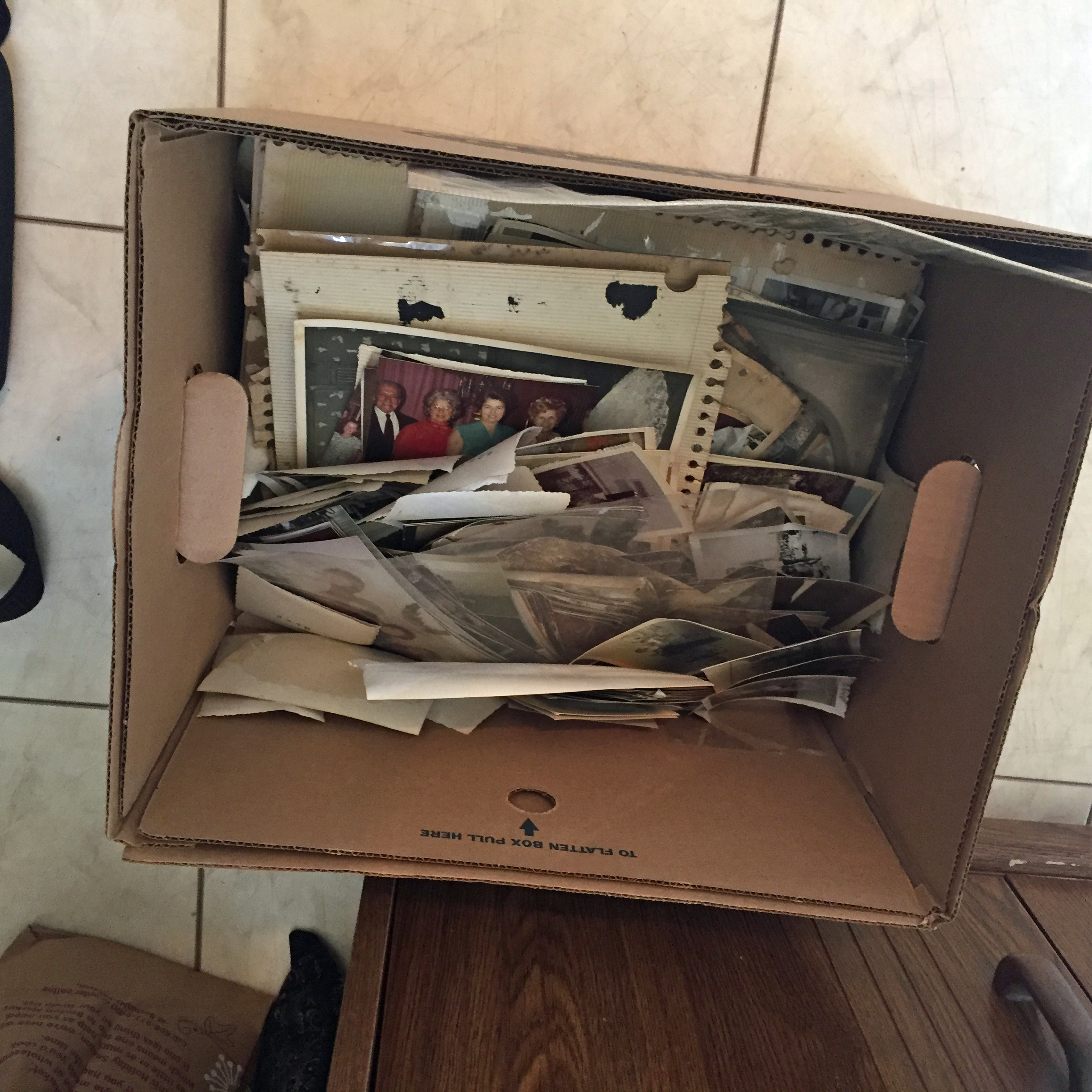
Our “scanfest” began on Saturday morning at the Sheepshead Bay home of my Aunt Alice Kostakos. When John retrieved the box of photos, it didn’t look like this would be such a big job, but it took 2 days and over 10 hours!

Kostakos family photos, rescued from the flood

Kostakos family photos, rescued from the flood

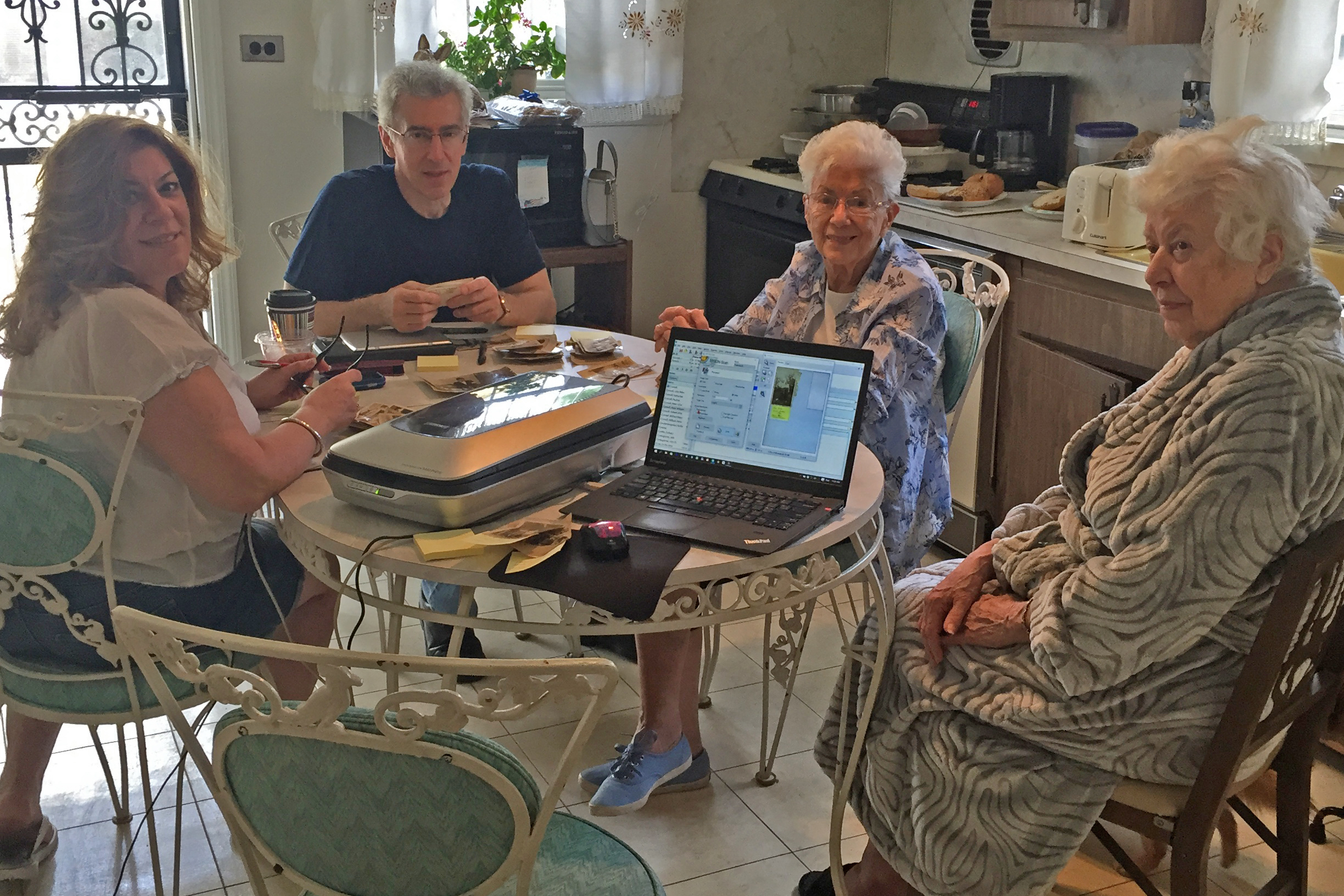
We set up shop at Aunt Alice Kostakos’ kitchen table and began by retrieving oldest  black and white photos.

Working hard! l-r: Marianne Doukas, John Stakis, Georgia Kostakos Doukas, Alice Kostakos. Kitchen of Alice's home, Sheepshead Bay, Brooklyn, June 11, 2016

Working hard! l-r: Marianne Doukas, John Stakis, Georgia Kostakos Doukas, Alice Kostakos. Kitchen of Alice’s home, Sheepshead Bay, Brooklyn, June 11, 2016

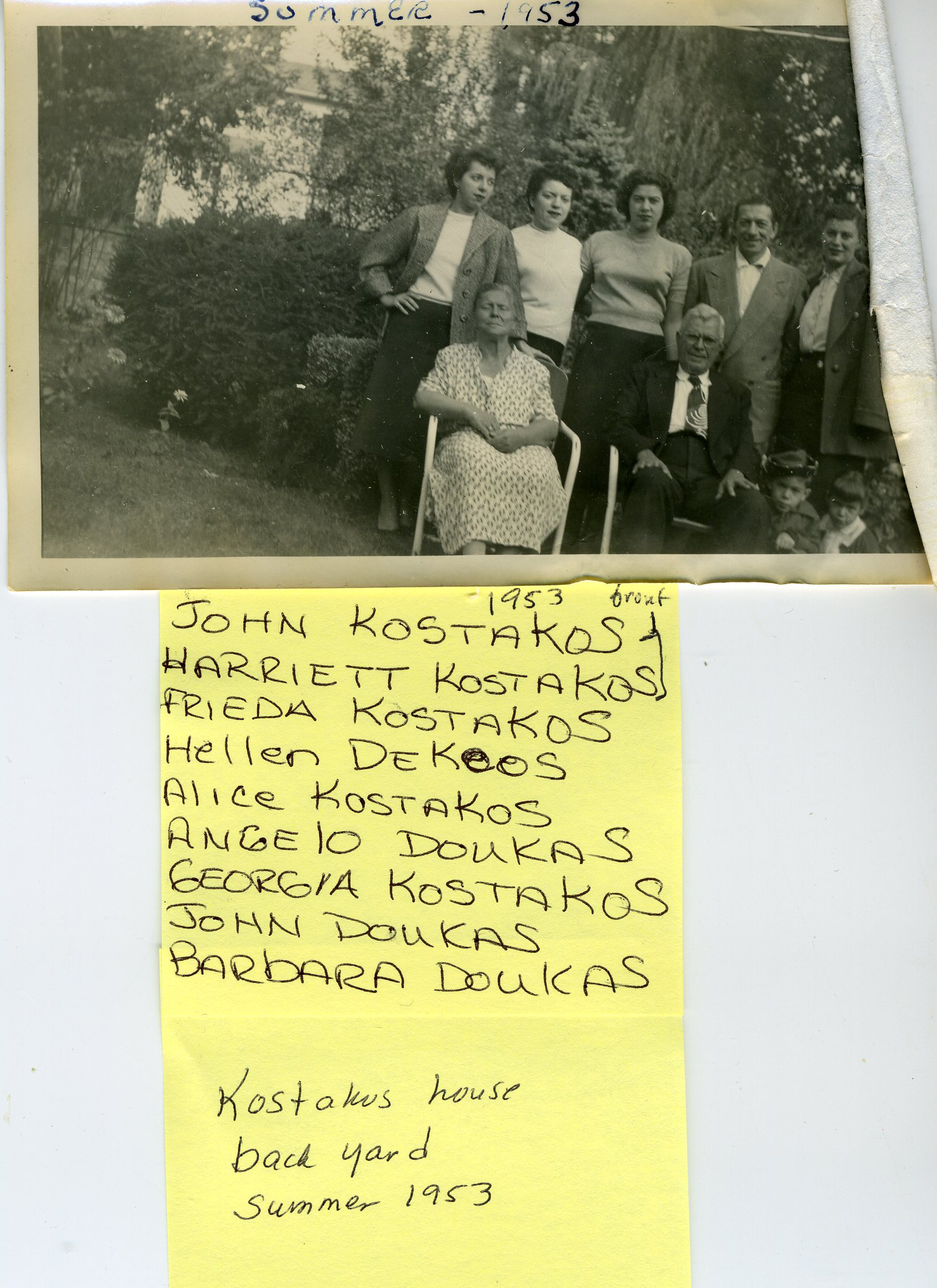
Thanks to Aunts Georgia and Alice, we were able to identify every person in every photo! We affixed post-it notes to the bottom of each, identifying people, dates and places. The photo and post-it note were then scanned as one image, ensuring that the information would not be separated from the picture. Over the coming months, I will crop each photo and add its identifying information into the metadata. This photo shows my grandparents sitting in front, Hariklia Aridas Kostakos and John Andrew Kostakos — surrounded by their children, grandchildren, and extended family members.

1953; Brooklyn; Kostakos home.

1953; Brooklyn; Kostakos home. My grandparents, Hariklia Aridas Kostakos and John Andrew Kostakos (front), surrounded by family.

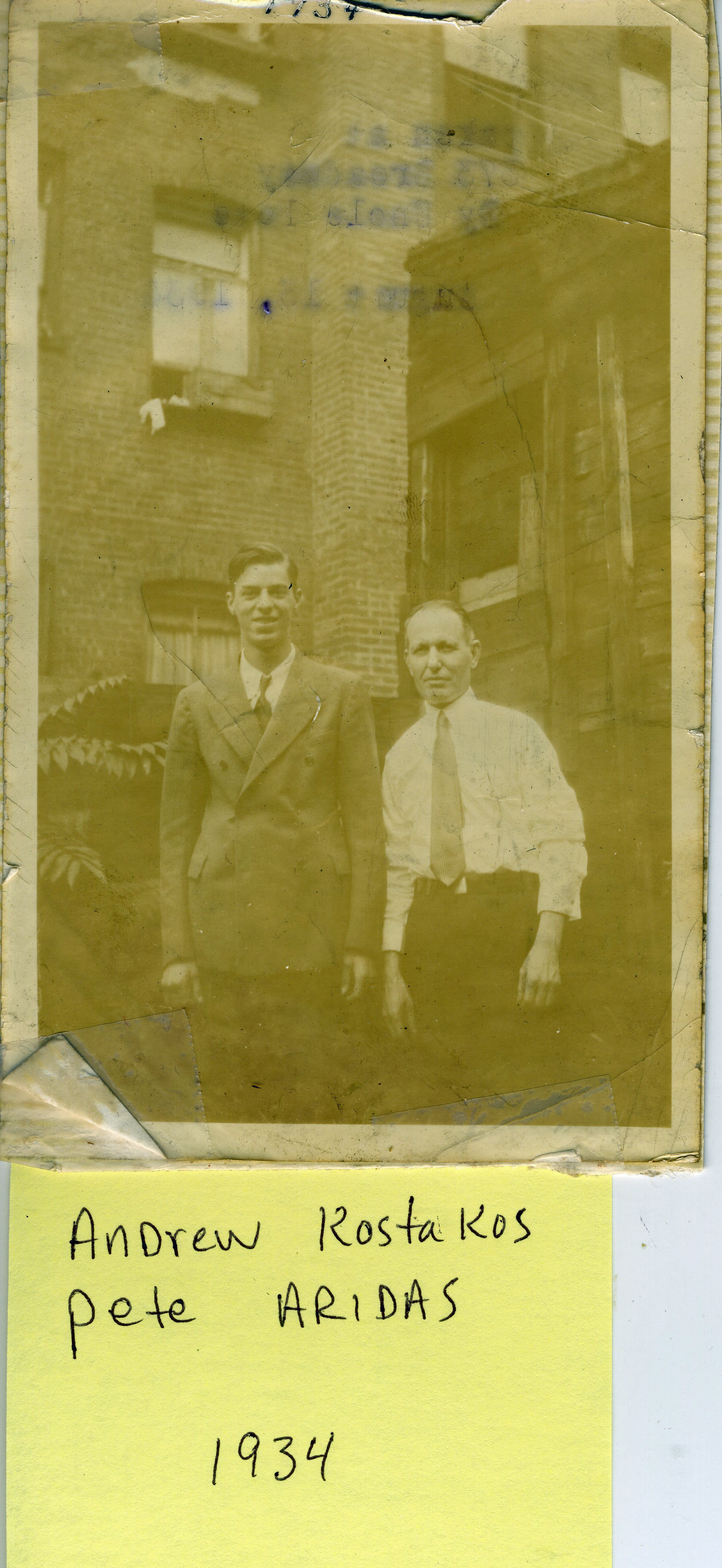
Every photo tells a story, and thanks to our Aunts, we heard many great ones. My family moved from Brooklyn when I was five, and one great blessing to me was hearing about many of the relatives in these pictures whose names I had heard, but whom I barely knew. This photo is among the earliest we found, dated 1934: on the left is my father (age 17) and my godfather, Peter Aridas, age 50). You can see how the ink on the back of the photo bled through when the photo was  wet.

My father, Andrew Kostakos (left) and my godfather, Peter Aridas (right), 1935, Brooklyn, NY

My father, Andrew Kostakos (left) and my godfather, Peter Aridas (right), 1934, Brooklyn, NY

We worked for eight hours on Saturday, and even ordered in lunch so we would not have to take time to go out. We enjoyed dinner at a Greek (of course!) restaurant at the waterfront on Saturday evening, and on Sunday morning, regrouped for day two. This time, we set up shop on Aunt Alice’s dining room table which gave us much more room to spread out.

Day two at the dining room table. l-r: Georgia Doukas, Marianne Doukas, Carol Kotakos Petranek, John Stakis, Alice Kostakos. Sheepshead Bay, Brooklyn. June 12, 2016

Day two at the dining room table. l-r: Georgia Doukas, Marianne Doukas, Carol Kotakos Petranek, John Stakis, Alice Kostakos. Sheepshead Bay, Brooklyn. June 12, 2016

By using both a flatbed scanner and a portable Flip-Pal scanner, we digitized 400 photos. These raw and unedited images are now online in a private Flickr account, with links sent to all of our cousins. It will take time to crop and electronically tag each photo, but everyone now has access to what we accomplished.

I’m headed to Sparta, Greece, at the end of the month, with the hopes of finding additional documents on my family. My long-term goal is to create a family history book, incorporating many of the photos we scanned and the documents I obtained, along with some family stories. The next generations — Gianna and beyond — will not know their ancestors unless our generation does its part.


Marriage: Andreas Kostakos & Politimi Christakos

Trying to read 1800’s Greek script is both exhilarating and frustrating. Recognizing a name gives me an adrenalin surge; struggling over a name sends me to chocolate.

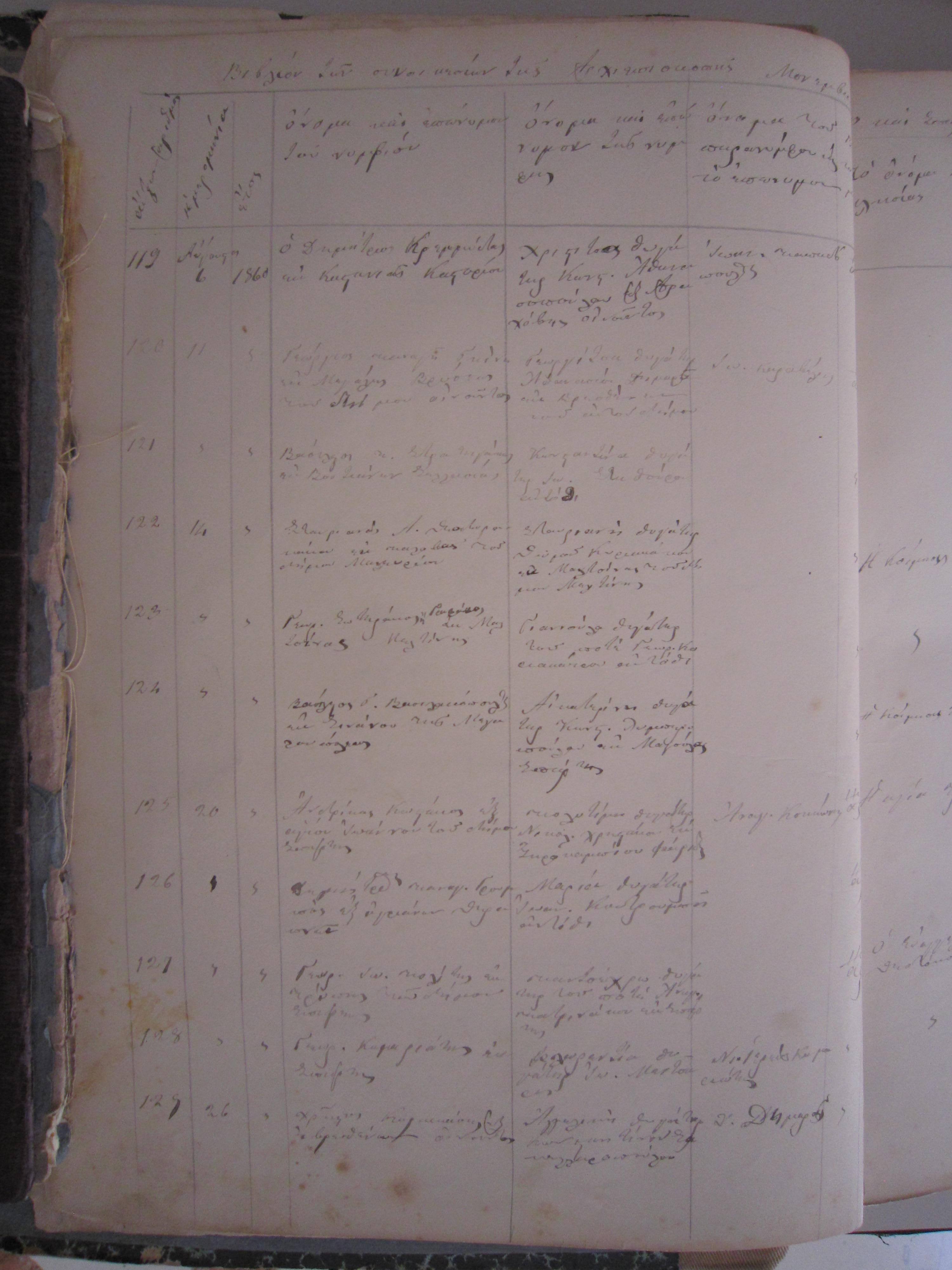
Two nights ago, I got the surge of a lifetime. I found an entry in the 1860 Marriage Book of the Mitropolis of Sparta for my great-grandparents, Andreas Kostakos and Politimi Christakos. My friend, Giannis Michalakakos, confirmed that I read the record correctly.

Mitropolis of Sparta, Marriage Book, 1860 Page 1: Date: August 20, 1860; Number: 125; 1st column: Andreas ( Andrikos) Kostakos of Agios Ioannis. 2nd column: Poletimi, daughter of Nikolaos Christakos of Xirokambi, Faridos.

Mitropolis of Sparta, Marriage Book, 1860
Page 1: Date: August 20, 1860; Number: 125; 1st column: Andreas ( Andrikos) Kostakos of Agios Ioannis.  2nd column: Politimi, daughter of Nikolaos Christakos of Xirokambi, Faridos.

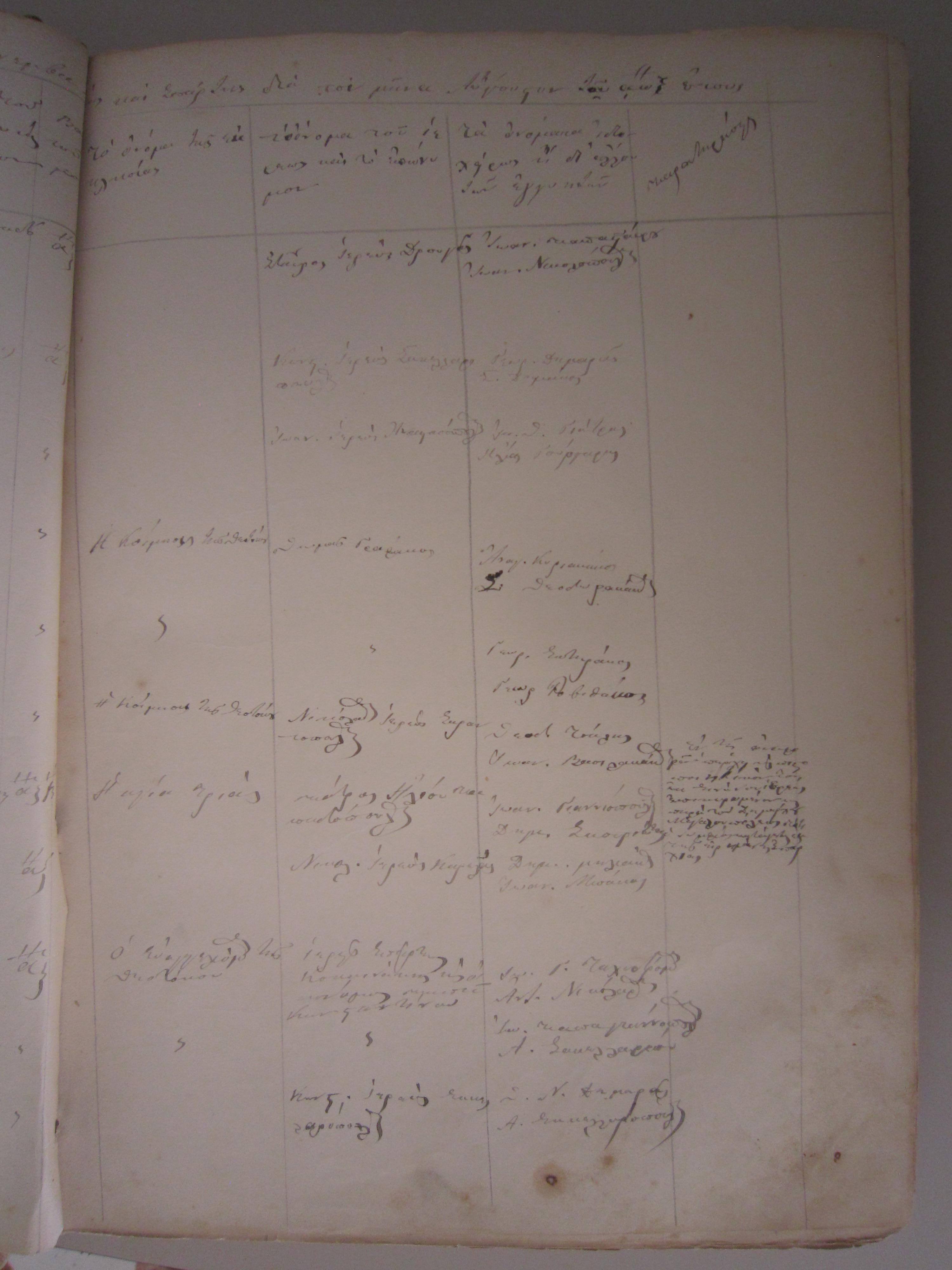
Page 2, Marriage of Andreas Kostakos and Poletimi Christakos

2nd page, 7th entry: 1st column: Church: Holy Trinity; second column: Priest’s name, Mitros Hlia Papadopoulos Witnesses: Ioannis Giannopoulos, Dimitris Skouriotis

After hours of struggling to read every name, I decided to try the tactic that my friend, Gregory Kontos, used when we were at the Mitropolis of Sparta in 2014. He looked in the column of the male’s name for the first name of someone I was seeking. If his eye caught that name, he then read the entire entry.

Interestingly, the name “Andreas” does not appear often in the villages of Sparta where I am researching:  the most common names are Panagiotis, Nikolaos, Georgios, Konstandinos. So…skimming down the left column of page one, looking for Andreas, made the search much easier and saved my eyes and my sanity.

As soon as I saw the capital “A,” I stopped. When the next name began with a “K,” my hopes soared. When I made out “Kostakos,” I rejoiced!

Enlarged image of Entry 125.

Enlarged image of Entry 125.

I knew that Andreas had two wives:  first, Anastasia; then Poletimi Christakos (my great-grandmother). Honestly, if I did not know Politimi’s name, I would have been stumped as I strained to read the female information in column 2. But, I could make out the letters, and then — a great bonus — I saw Poletimi’s father’s name, Nikolaos! This was a new and very exciting find, as I am now back one more generation!

This exhilarating discovery fostered a new mystery:  Andreas and Poletimi were married in 1860, but their first child, Antonia, was born in 1870. That’s 10 years — a very long time, especially in the pre-birth control era. Some hypothesis that Giannis and I mulled over:

  1. Politimi must have been raising Andreas’ children with Anastasia (my father had been told that they had 6 sons, but we only know of one, and his descendants are my cousins in Agios Ioannis today). Could the stress of raising a large family have affected Poletimi?
  2. There could have been stillborn children
  3. Children could have been born and died as infants
  4. There could have been female children born, who were not registered in any records

I am entering the area of lost information and the “great unknown;” and, speculation will not bring resolution. However, I am grateful beyond expression to have found this record.

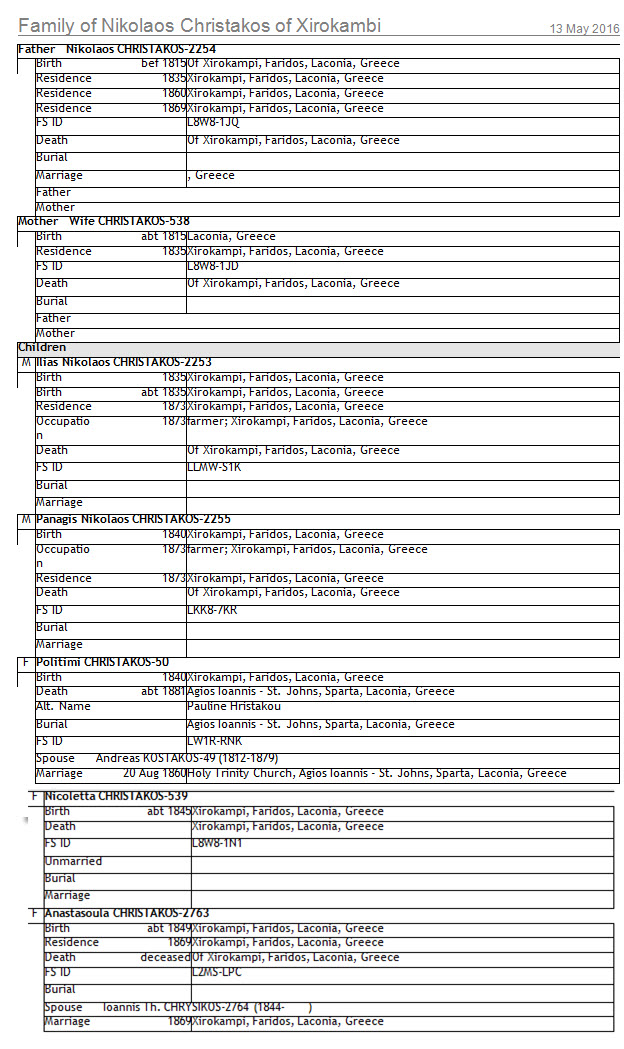
I have been collecting information on the surnames in my villages, and from various sources, I now am able to structure the family of my great-great grandfather, Nikolaos and”wife” Christakos. Oh, happy day!

Christakos, Nikolaos FamGrpSheet