Return to Greece, 2016. Part 8: Meandering in Mani

This is the eighth post in a series about my trip to Greece, June 30-July 20, 2016 — an amazing journey of history, family and discovery. Previous posts can be found here.

Mani. There’s something about this land that speaks to my soul. From the moment I left two years ago, I couldn’t wait to return. The forbidding mountains, expansive plains, and impenetrable stone structures exemplify resilience, fortitude, and never giving up. It is the land of some of my ancestral families. On my first trip to Greece years ago, a man at the Archives looked at my surnames and exclaimed, “Oh, your families are from Mani!” Then he looked at my husband and said without any humor, “Watch out! She’s a Maniot. She  comes from tough people.”

Since then, I have learned so much about these “tough people.” There’s a reason they are so strong and self-reliant. They have weathered the elements and tamed the forbidding soil. They repelled any potential invaders by using rustic, yet effective methods. The Turks never penetrated or conquered the Mani. Neither did the Nazis. The people hid in caves in the hills until danger passed, then returned to their villages and their simple lives. Although the spirit of independence from Ottoman rule had been simmering for years throughout Greece, the spark that ignited the Revolution was in Mani on March 17, 1821.

By al-Qamar - File:Peloponnese relief map-blank.svg, GFDL, https://commons.wikimedia.org/w/index.php?curid=36370154

By al-Qamar – File:Peloponnese relief map-blank.svg, GFDL, https://commons.wikimedia.org/w/index.php?curid=36370154

There are three regions in Mani:  “exo” or outer; “kato” or lower; “mesa” or inner. As the map clearly shows, the entire region is mountainous and sustains little vegetation except wild olive trees, cactus, and brush. Goats scrape by on the sparse grasses, and an occasional flat valley may support orange trees. Wild herbs such as sage and oregano fill the air with a tantalizing scent. Even during hot summers, cool breezes sweep the mountains.

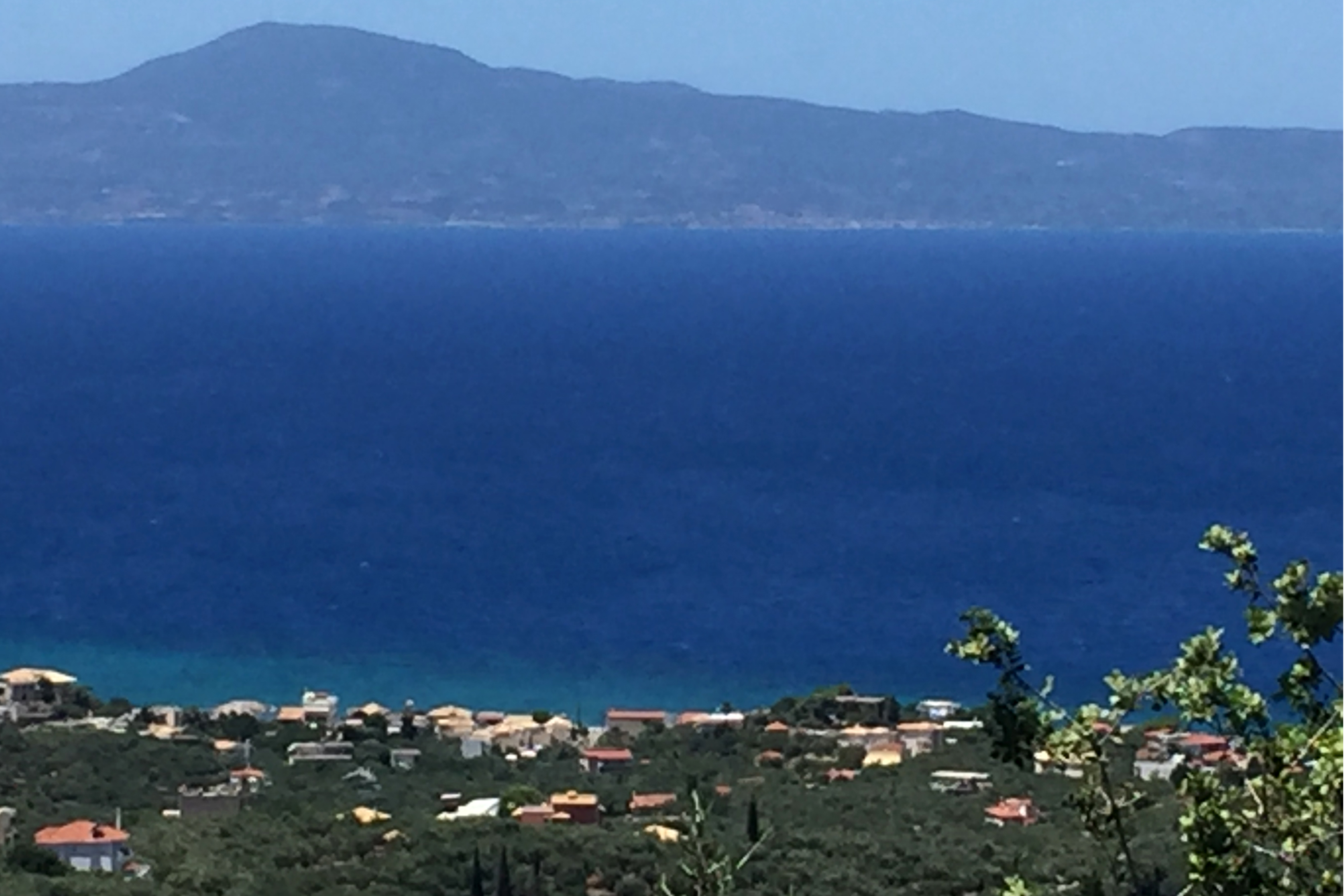
I fulfilled a dream by driving the beautiful, winding road from Kalamata to Areopoli. My GPS estimated the driving time at 1-1/2 hours, but it took me seven. All I did was stop, take photos, and savor every unique site and beautiful view. Being alone, I was able to absorb the atmosphere and revel in the rugged beauty of the land. I felt so peaceful and happy as I drove. I feel like I belong here.

Driving from Kalamata to Areopoli; the mountains, July 2016

Driving from Kalamata to Areopoli – the mountains. July 2016


kalamata-to-aeropoli-9-07-16

Driving from Kalamata to Areopoli – the sea. July 2016


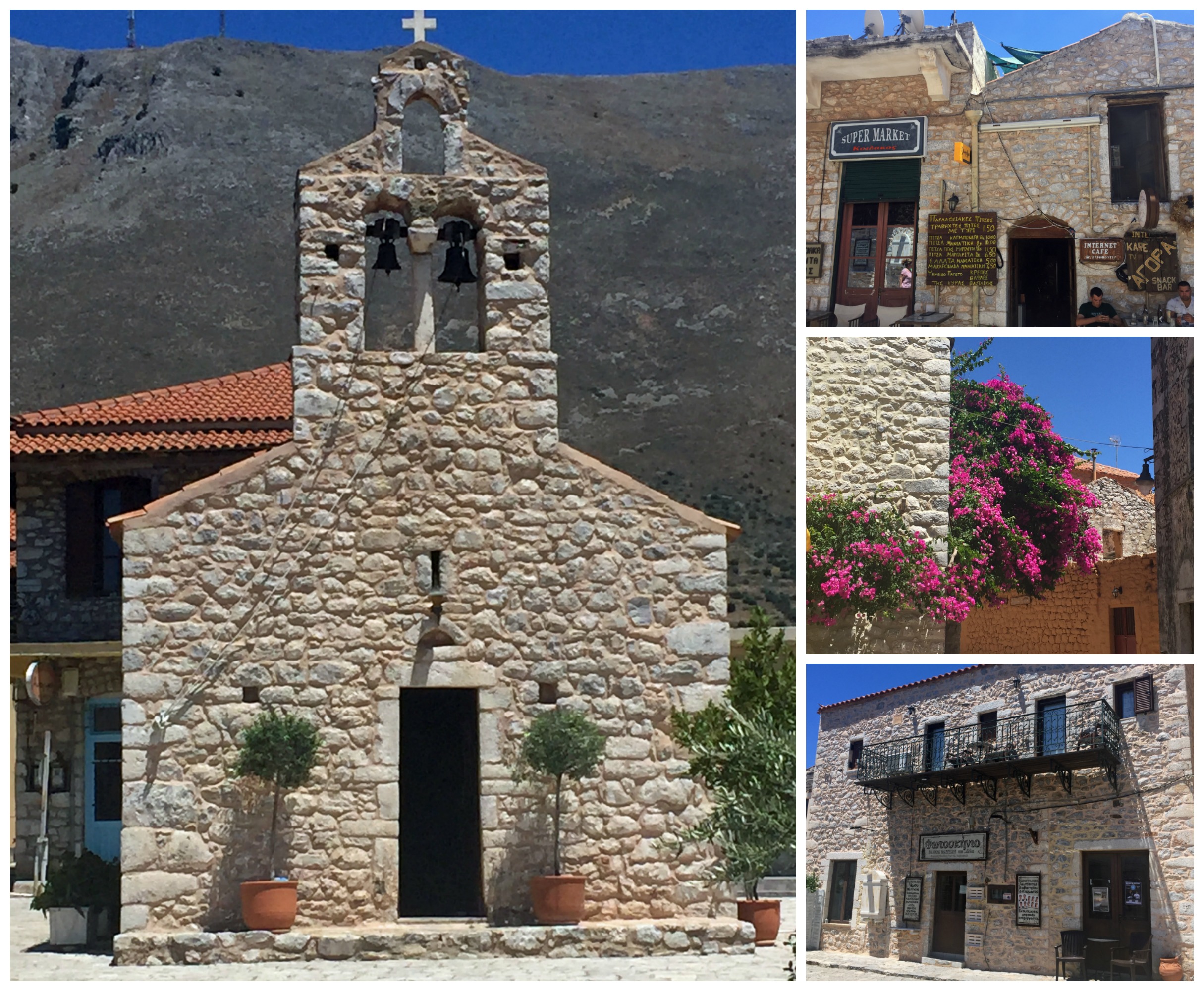
Kalamats to Areopoli - the buildings. July 2016

Kalamats to Areopoli – the buildings. July 2016

A major item on my Plan A was to visit the village of Pyrgos Lefktro in Messinia. I had been told by an elderly aunt that my great-grandfather, Andreas Kostakos, may have come to Sparta from “Pyrgos over the mountains.” This particular Pyrgos seems to be the most logical place. The village is literally at the top of the mountain. When the mountain road ended, I had to park my car and walk because the village “road” was actually a narrow cobblestone winding path, lined with what seemed like ancient stone homes. It was mid-afternoon when I arrived, so of course, not a soul was to be seen except a stray cat. I wandered all around the town, taking many pictures. I found the church, the cemetery, and even went into the osteofilakio (οστεοφυλάκιο), the ossuary building, and looked at the names on the boxes. I did not see anything that could possibly be Kostakos, but my great-grandfather would have left in the middle 1800’s. If he did come from here, there are no descendants remaining.

At the front of the village was a sign on a tree that read “500 years old”. It would have been in full leaf during my great-grandfather’s time.

500 year old tree, Pyrgos, Messinia. July 2016

500 year old tree, Pyrgos, Messinia. July 2016


Buildings in Pyrgos, which overlooks the sea. July 2016

Buildings in Pyrgos, which overlooks the sea. July 2016

There is a very old museum which was locked; there was no sign as to when it opens. I peered in the windows and was taken aback at the life-size figures in full costume, standing watch over the treasures of the village.

Museum in Pyrgos, Messinia. July 2016

Museum in Pyrgos, Messinia. July 2016

As I was leaving, I did see two elderly women sitting on a veranda. They beckoned me to join them. I asked if they had ever heard the Kostakos name in the village, but their answer was no. I wanted to ask what type of life they had led; what type of work their husbands did; how often they left the village to “go to town” (wherever that was, somewhere down the mountain). They had a hard time hearing me and my vocabulary is limited, so the conversation was limited to pleasantries. One of them blew me a kiss as I said goodbye.

Saying goodbye; Pyrgos, Messinia, July 2016

Saying goodbye; Pyrgos, Messinia, July 2016

Driving back down the mountain, I wondered if I may have come — literally — to the end of the road in trying to learn more about the origins of Andreas Kostakos. But I resolutely pushed that thought from my mind. I guess it’s the fighting Spartan and tough Maniot in me that just refuses to give up!

Continuing on the road to Areopoli, I found a settlement, Tzokeika, that is being reconstructed to portray a traditional Maniot village, including a tower, a church, individual homes and an olive press. How fascinating to walk through the buildings that are under construction! This is a living settlement, with people occupying houses. I spoke with a man who had moved in last year, and he was very enthusiastic about his new home, the beauty of the scenery, and the pleasures of living in a closely knit community.

The settlement of Tza

The settlement of Tzokeika, Messinia, July 2016


Tz

Tzokeika settlement, Messinia, July 2016

I was in Areopoli, the capital of Mani, by 7:00 p.m. It was Saturday evening and the town was filled to capacity with both locals and tourists. When I went to dinner at 11:00 p.m., I could not find an empty table. I love this village! It eneaeropoli-07-16rgizes me. The ambiance is lively, the buildings are beautifully maintained, and it is the home of a favorite bookstore, Adouloti (owned by Georgios Dimakogiannis). There are dozens of tavernas and cafes, and many unique shops. As are most Maniot villages, Areopoli is pure stone — buildings, roads, walkways. The starkness of the rock is punctuated by brilliantly colored flowers. It is a beautiful study in contrasts. Perched at the edge of the sea, the picturesque town is a visual and sensory delight.

Approaching Areopoli, a village by the sea. July 2016

Approaching Areopoli, a village by the sea. July 2016


Adouloti Mani Bookstore, Areopoli, July 2016

Adouloti Mani Bookstore, Areopoli, July 2016


Areopoli, July 2016

Areopoli, Laconia, July 2016


Areopoli, Laconia, July 2016

Areopoli, Laconia, July 2016

On the way back to Sparta, I stopped at Karavelas to see my friend, Margarita Thomakou, and visit her adopted village. Margarita and I had a delightful visit and a delicious lunch, made by her friend, Pietro. Pietro showed me a book about the history of the village. It is heartwarming to see that many villages in Laconia, even some of the smallest, have these wonderful histories.

Karvelas, Laconia, with Margarita Thomakou and Pietro, July 2016

Karvelas, Laconia, with Margarita Thomakou and Pietro, July 2016

My meanderings in Mani were almost over. The road to Sparta threaded through fertile plains, filled with orange and olive groves. Wild and lovely; fruitful and plentiful, this region of Laconia is truly the breadbasket of Greece.

On the road to Sparta, July 2016

On the road to Sparta, July 2016


Return to Greece, 2016. Part Six: It’s All About Family

This is the sixth post in a series about my trip to Greece, June 30-July 20, 2016 — an amazing journey of history, family and discovery. Previous posts can be found here.

Open arms with tight hugs. Kisses on both cheeks. Happy smiles and joyful reunions. This is how my family greets me when I return to Sparta. There are so many places to explore and discover; but for me this is the bottom line:  it’s all about family. Prior to my visits to Greece, the names and places on my pedigree chart were simply long names and dots on a map. Now, they are attached to real people who have become a vibrant and important part of my extended family.

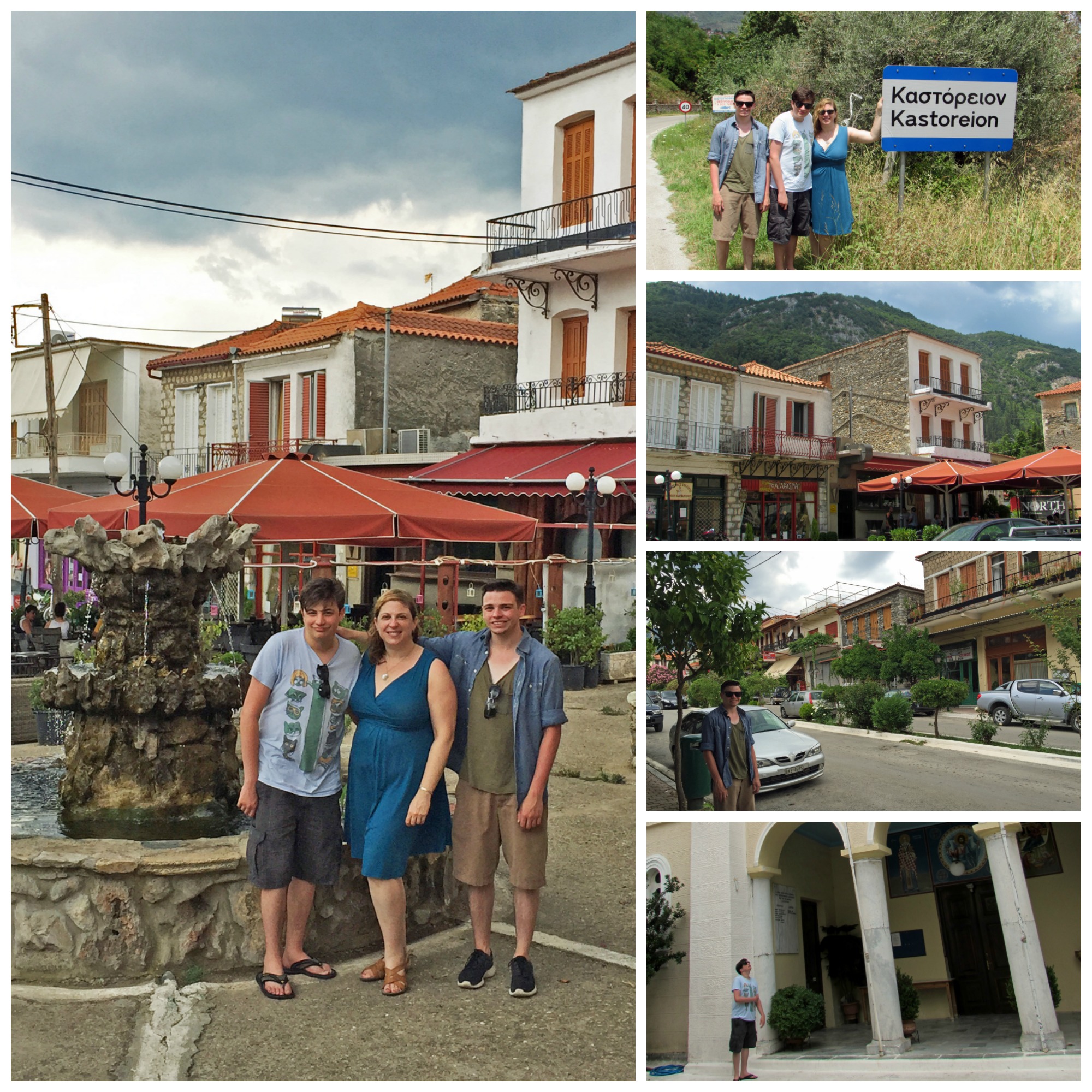
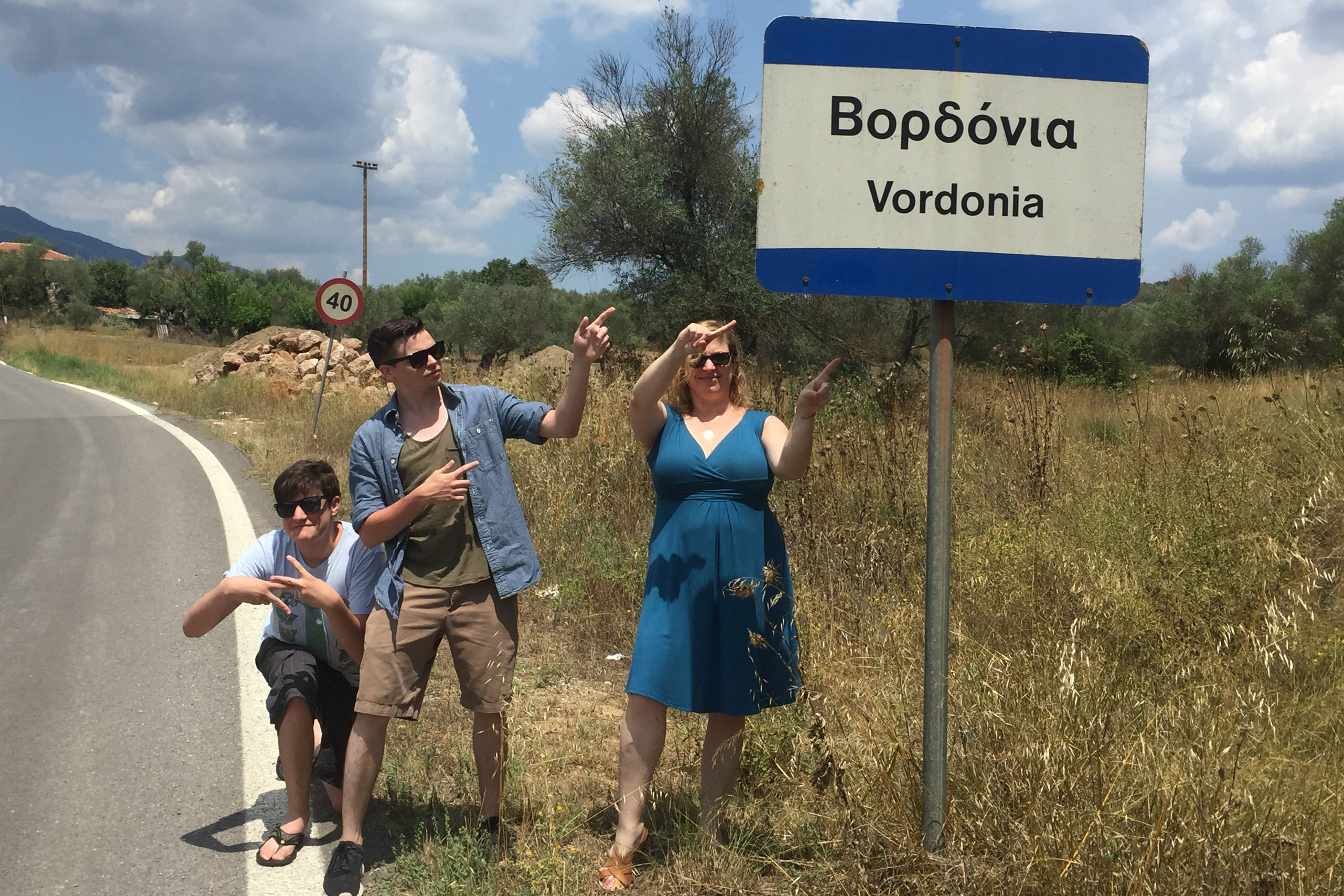
Joy is sharing what you love with whom you love. For me, joy is introducing my family to their roots — touring our villages and meeting our relatives. Kathy’s paternal grandparents are Kallianes from Kastania (now Kastoreion) and Linardakis from Vordonia. Although we don’t know of family now living there, we so enjoyed exploring the towns, peering into shops, watching chickens, dogs and cats roam their yards, and looking at stone and stucco houses that have sheltered countless families through countless years.

Kastoreion, Laconia. July 2016

Kastoreion, Laconia. ancestral village of the Kallianes family, July 2016

Vordonia, Laconia, July 2016

Andrew, Ben and Kathy at the Linardakis village of Vordonia, Laconia, July 2016

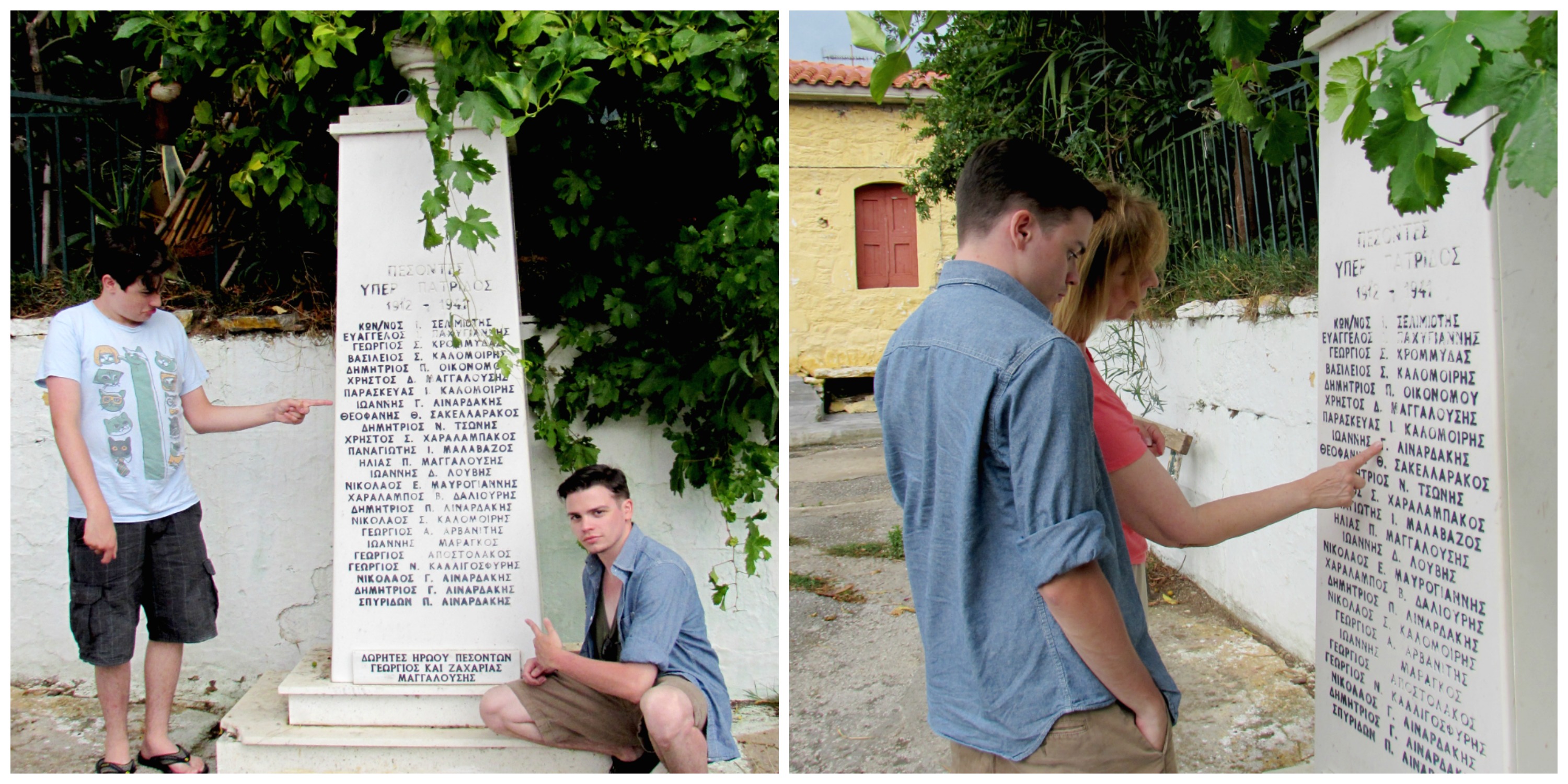
I love the monuments erected in every town that memorialize those who died in military service. My heart skips whenever I find an ancestral name etched in marble. Even if I cannot connect that individual to my line, I know that in these small villages, people with the same surname are almost certain to be related. While driving in Vordonia, we turned into a back street and unexpectedly were confronted by the village monument. stopping to examine it, I became emotional when I showed Ben and Andrew several men with the Linardakis surname.

Finding the Linardakis surname; Vordonia, July 2016

Finding the Linardakis surname; Vordonia, July 2016

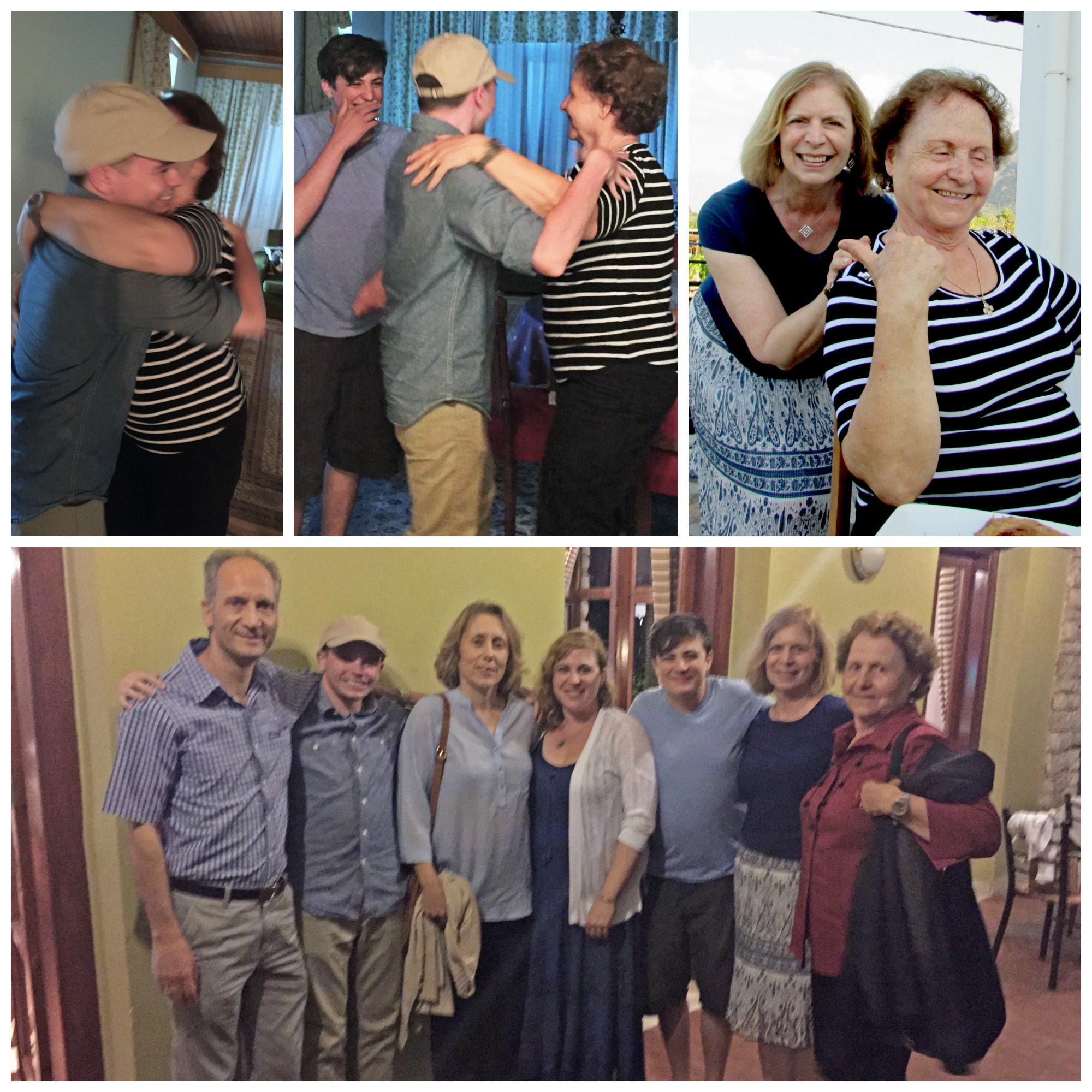
Visiting our Aridas and Kostakos familes in Agios Ioannis has endeared my grandchildren to their Spartan relatives and grounded them to the land of their ancestors. Bridging the Atlantic and meeting kin has widened their concept of family. Eating a meal in a house built by their ancestor in the mid-1800’s has brought them a sense of “rootedness” that is unparalleled. And best of all, they were warmly embraced and loved immediately by all who met them.

These are photos of my Kostakos and Aridas family in Agios Ioannis, Sparta. They are on my father’s side — my grandparents were John Andrew (Ioannis Andreas) Kostakos and Hariklia Aridas, both born in Agios Ioannis. On the Kostakos side, our common ancestor is Andreas Kostakos who was married twice: first to Anastasia, then to Poletimi Christakos. These two Kostakos families are descended from Andreas and Anastasia; I am descended from Andreas and Poletimi. On the Aridas line, our common ancestor is Michail Aridas and his wife, Stamatina.

Ioanna Kostakos Family, with Ben Soper, Andrew Soper, Kathy Lynard, Carol Kostakos Petranek, Peggy and Vassilis Vlachogiannis, Agios Ioannis, July 2016

Family of Ioanna Kostakos of Agios Ioannis. With Ben Soper, Andrew Soper, Kathy Lynard, Carol Kostakos Petranek, Peggy and Vassilis Vachaviolis, and Ioanna Kostakos, July 2016

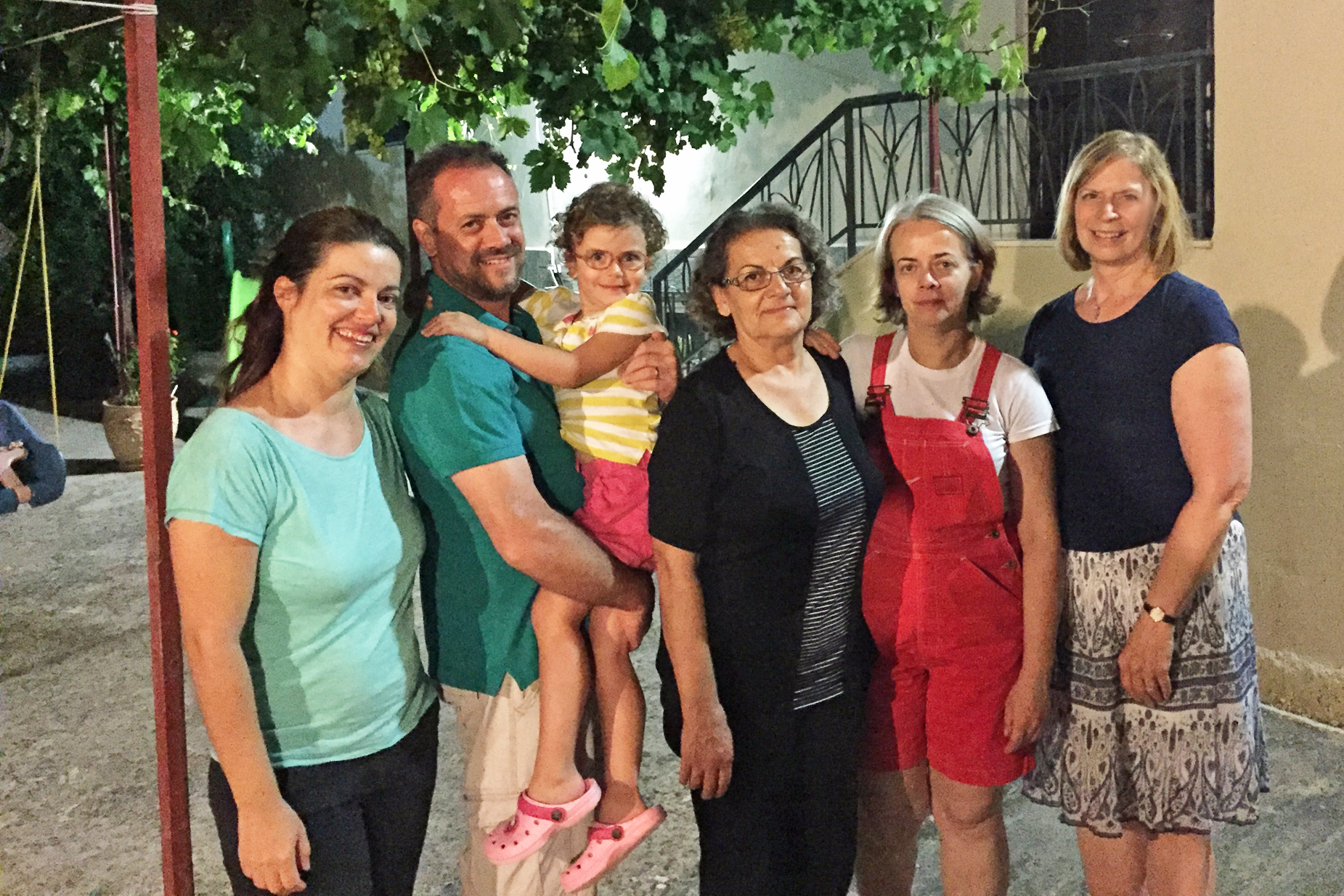
family-kostakos-eleni-group-07-13

Family of Eleni Kostakos of Agios Ioannis. Natasa, Panos, Eleni, Eleni, Panorea, Carol Kostakos Petranek, July 2016

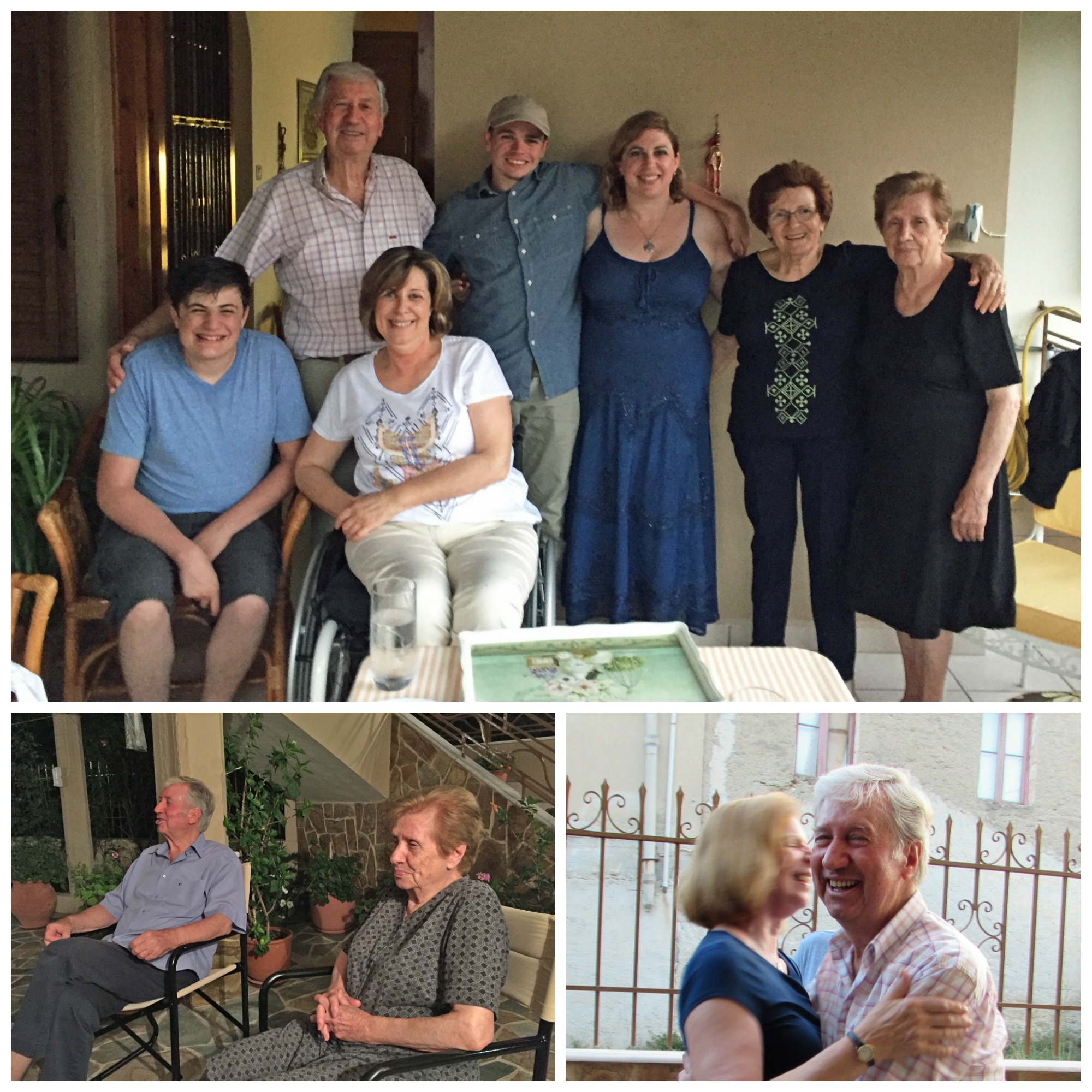
Family of George Aridas, Agios Ioannis. George, Roula, Adamandia Aridas; George's sister, Afroditi. July 2016

Family of George Aridas, Agios Ioannis. George, Roula, Adamandia Aridas; George’s sister, Afroditi. July 2016

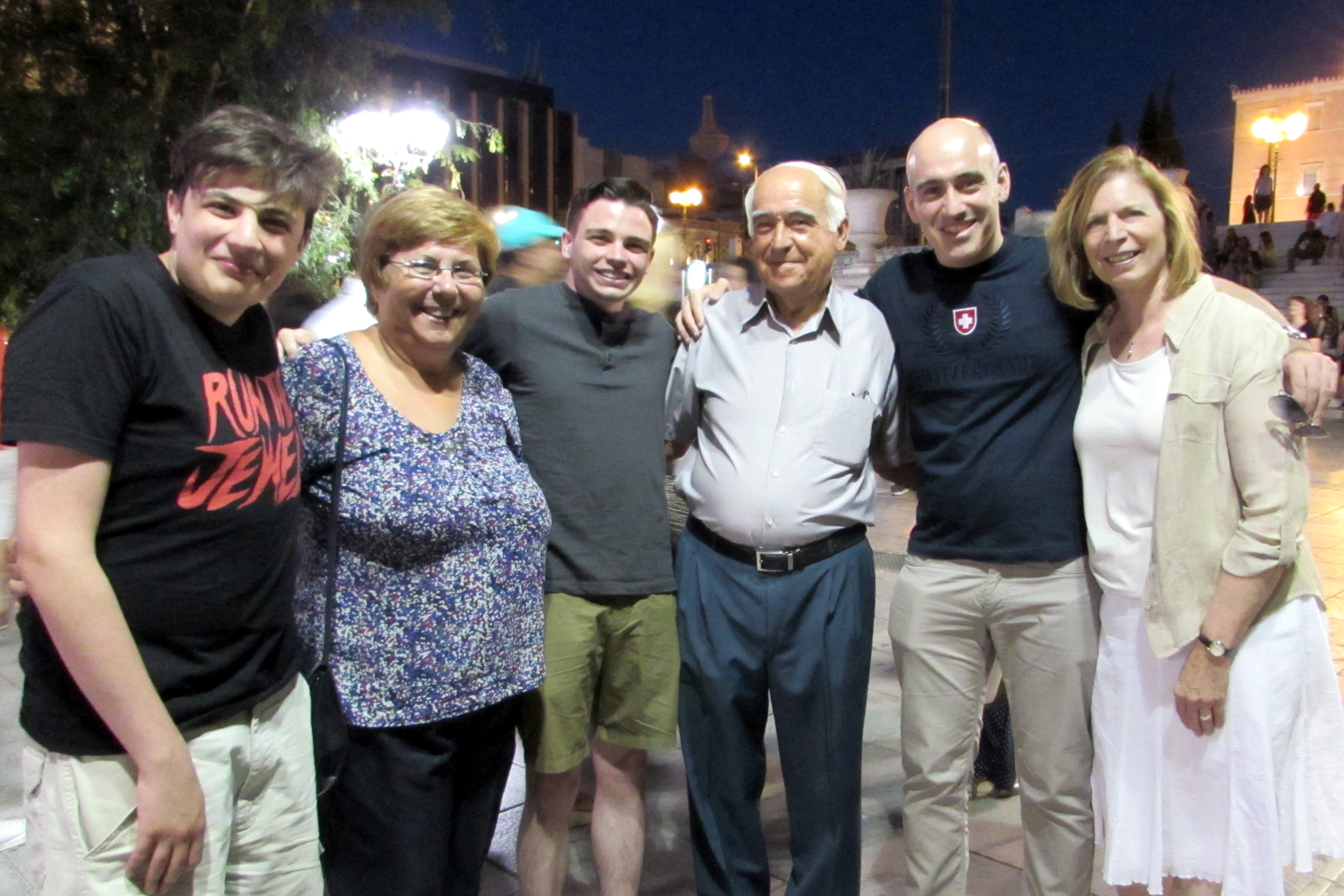
This is the Chelidonis Family of Athens. Nikos is my second cousin on my mother’s line. His mother was Tasia Eftaxia from Mystras; our common ancestor is Ioannis Eftaxias, born 1809. My grandmother, Angelina Eftaxias Papagiannakos, was Tasia’s aunt. Panagiotis found me on Facebook three years ago, and we met in person during my trip in 2014. We were so excited to connect our families, as neither of us knew that the other existed!

Family if Nikos Chelidonis, Athens. Viki, Nikos, Panagiotis. July 2016

Family if Nikos Chelidonis, Athens. Viki, Nikos, Panagiotis. July 2016

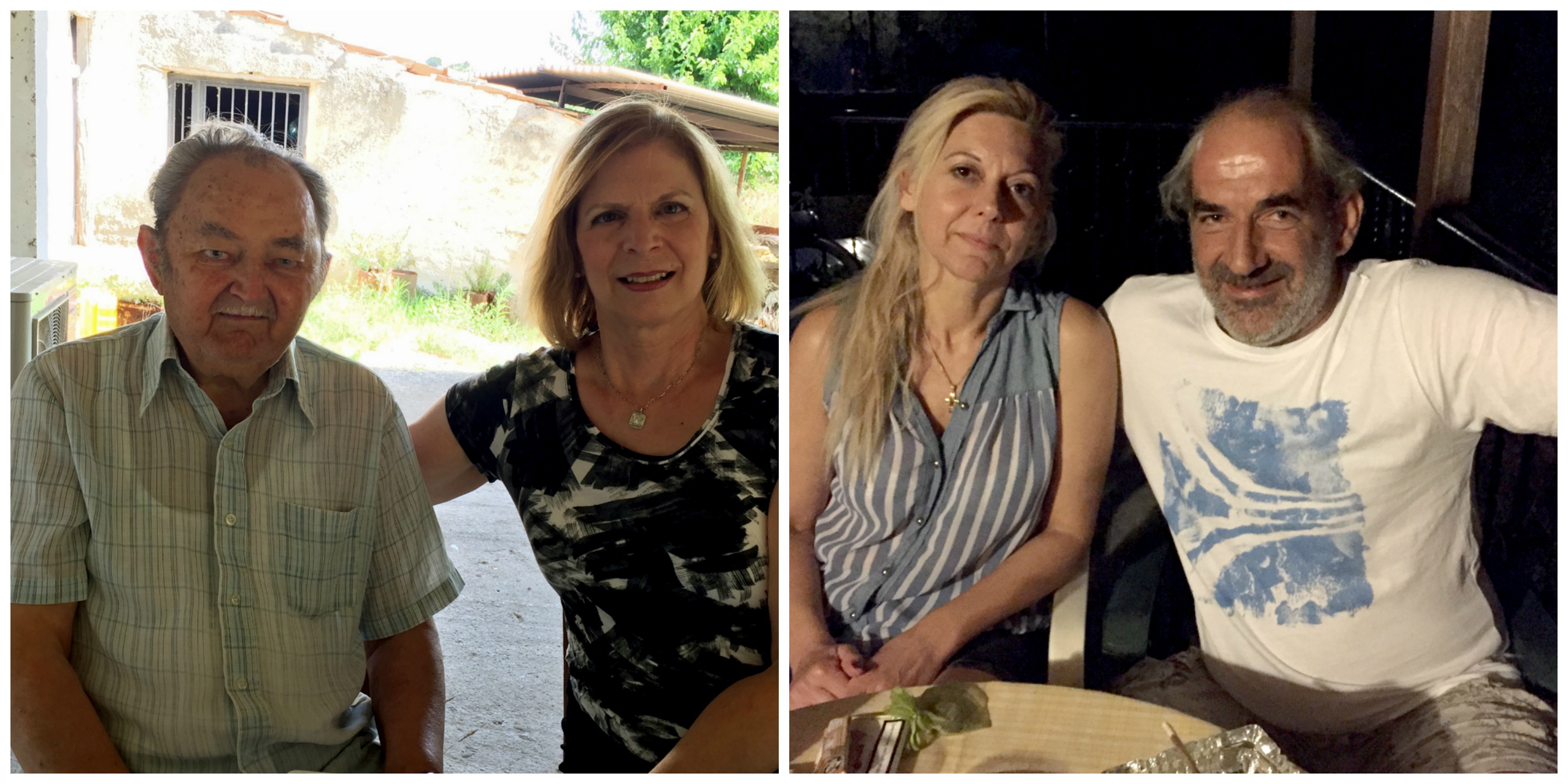
The Eftaxias family of Mystras has long roots in Mystras. My grandmother, Angelina Eftaxias is the aunt of Andreas (photo on left). Andreas’ son, Lewnidas, is a master stone mason and works on churches and other buildings throughout southern Laconia.

Andreas Eftaxias, his son. Lewnidas ad Afroditi. Mystras, July 2016

Andreas Eftaxias, his son. Lewnidas ad Afroditi. Mystras, July 2016

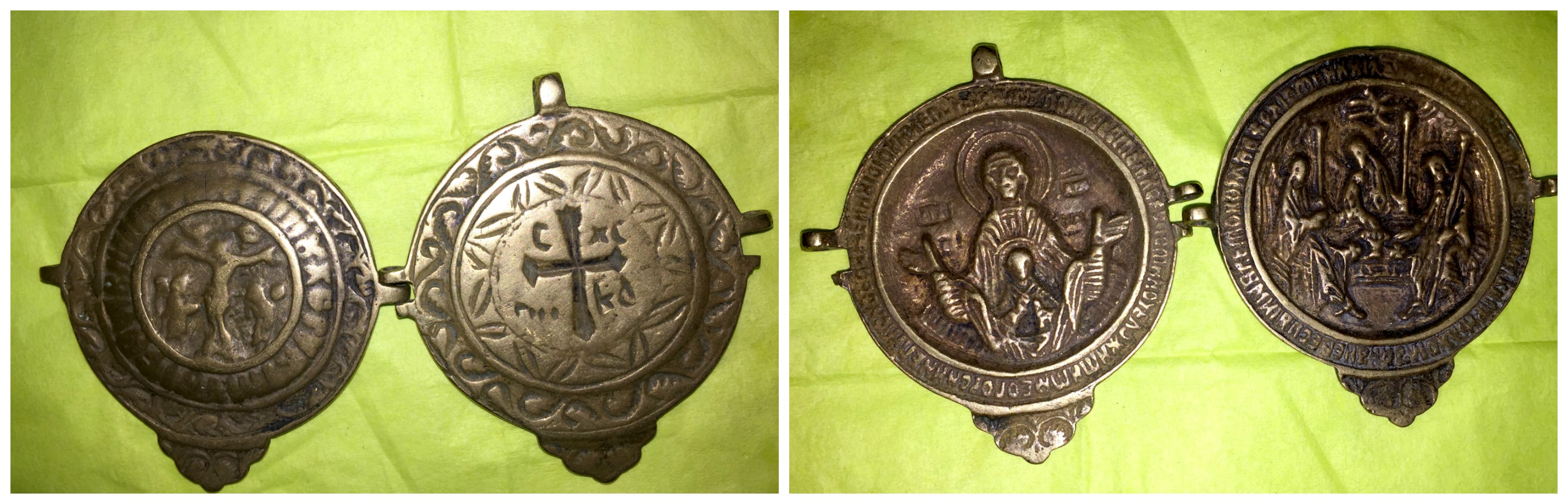
Lewnidas and Andreas told me that our first Eftaxias ancestor escaped from Constantinople during the Ottoman conquest in 1453! He and three friends fled together and settled in Mystras. Lewnidas showed me a bronze medallion that was brought by this ancestor and kept by the family for generations. I posted this photo on our HellenicGenealogyGeek Facebook page and knowledgeable friends there described the medallion: l-r: Christ on the cross; Byzantine cross with words, ” Ιησούς Χριστός Νικά”; the Holy Mother, Mary; and the Holy Trinity, possibly based on Rublev‘s painting of the same name.

Medallion dating to 1453, belonging to Eftaxias family; Mystras, July 2016

Medallion dating to 1453, belonging to Eftaxias family; Mystras, July 2016

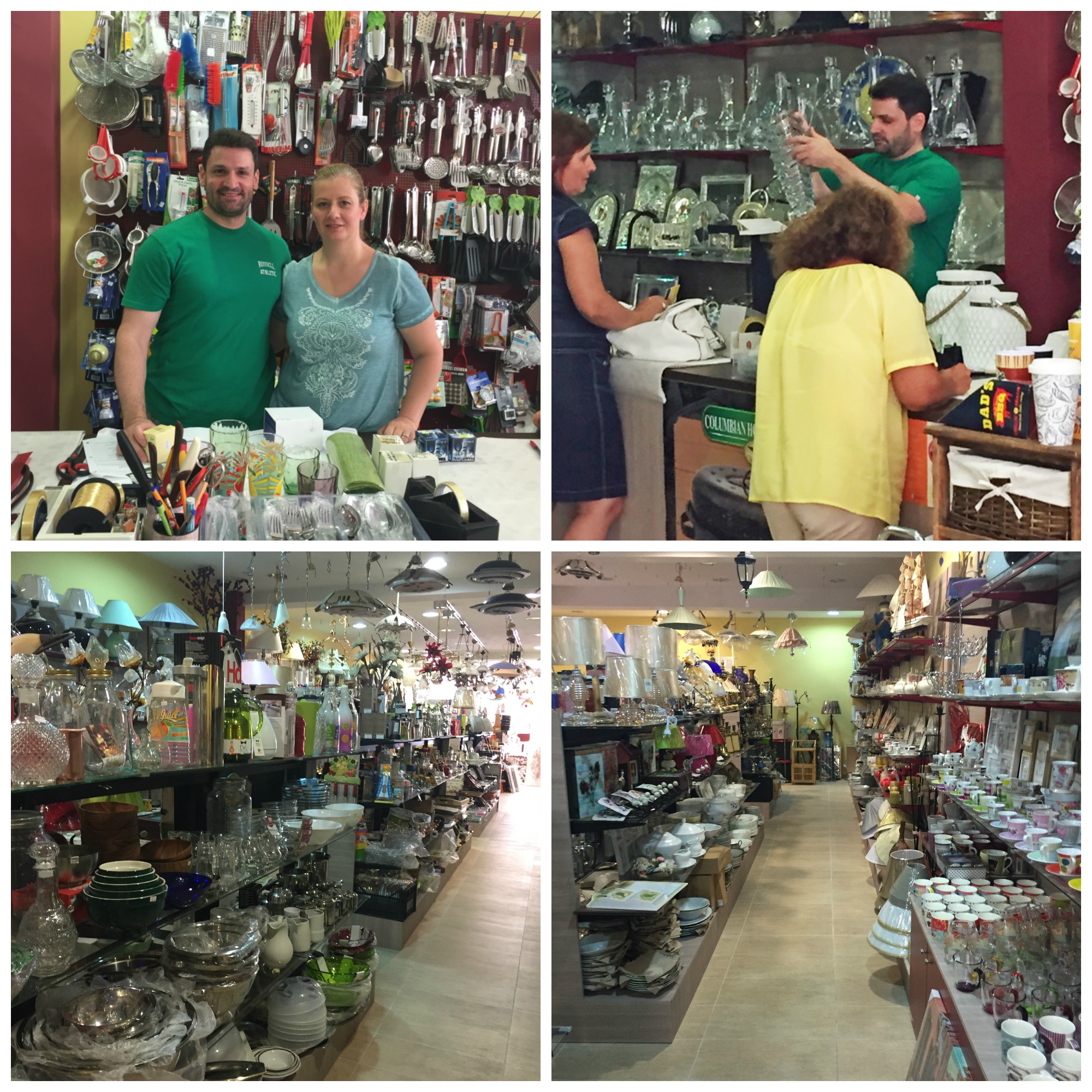
I was so thrilled to extend my family further on this trip. My new-found cousin, Dimitrios Papagiannakos, and his wife, Georgia, own a beautiful home goods store in Sparta which sells a myriad of items from cooking utensils to beautiful crystal. I think I gave Dimitrios quite a shock when I walked into his store and introduced myself as his cousin from America! I had brought photos of his Pappas family in the U.S., including a group shot taken at our Pappas Cousin’s Reunion. Working around his customers, we managed to have a spirited and lovely conversation about our families. My only regret was that his parents were out of town and I was unable to meet them. Next trip!

papagiannakos-store-collage

Dimitrios and Georgia Papagiannakos in their lovely home goods store, Sparta, July 2016

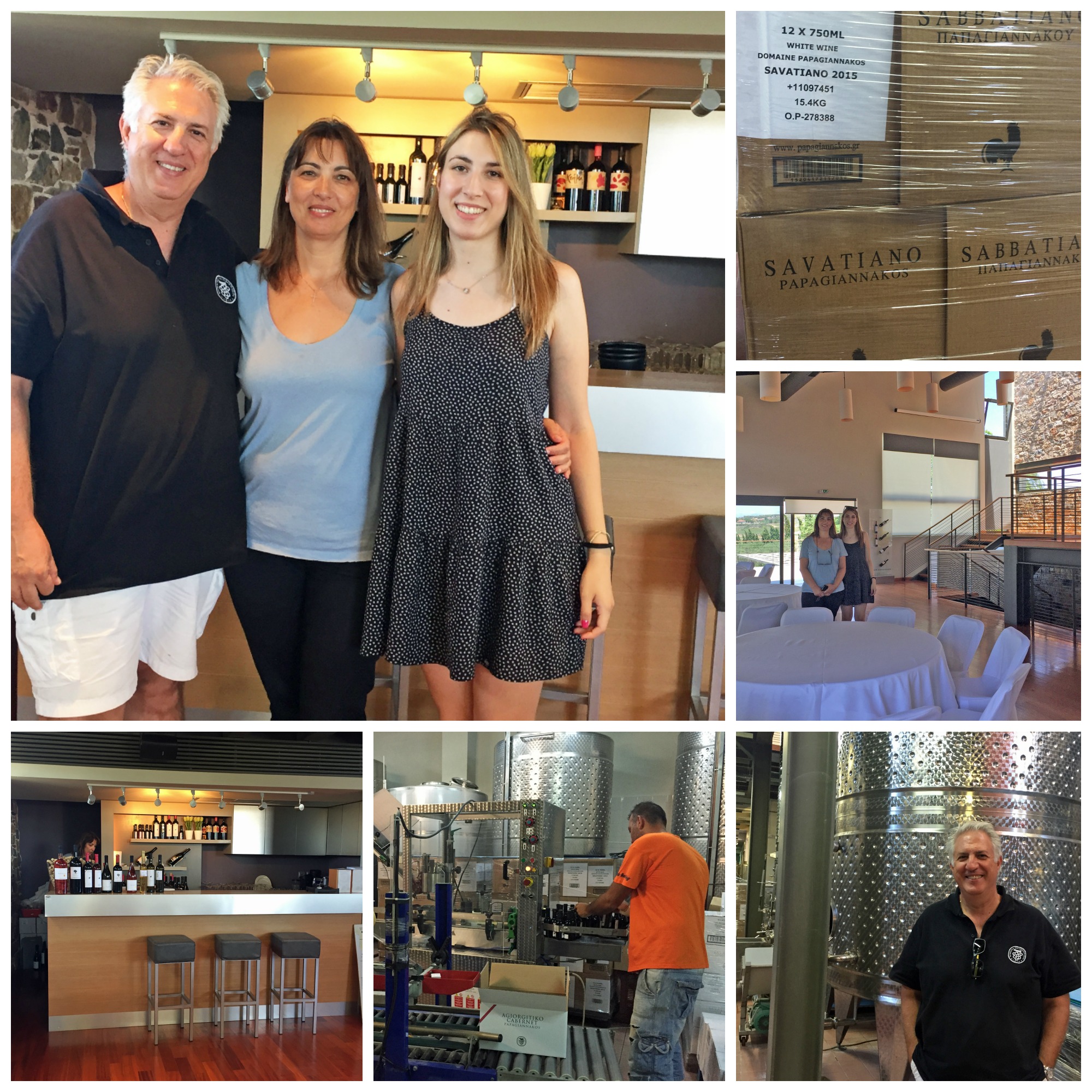
I also traveled to Markopoulos, northeast of Athens, to meet Vassilis Papagiannakos, owner of the Papagiannakos Winery. The winery was started by his grandfather, also named Vassilis, in 1919. Now managed by the 3rd generation of Papagiannakos’, Vassilis and his wife, Antonia, have expanded the business, developed new and award-winning wines, and constructed a beautiful edifice where business events, weddings and other activities are held. Although Vassilis and I do not know how–or if– we are related, we are looking to explore our family roots together.

papagiannakos-winery-collage

Vassilis and Antonia Papagiannakos and their daughter, Aggeliki. Papagiannakos Winery, Markopoulos, July 2016

Every trip to Greece strengthens my family ties. I love these cousins. They set an example of hard work, honesty and devotion to our family and our heritage. I am ever-grateful to have the means and the opportunity to introduce them to my own descendants. Together, we carry on traditions and relationships that honor our ancestors.

Return to Greece, 2016. Part Five: Always have a Plan B!

This is the fifth post in a series about my trip to Greece, June 30-July 20, 2016 — an amazing journey of history, family and discovery. Previous posts can be found here.

When giving presentations about genealogy research trips, I always counsel people to have a “Plan B”–just in case. Almost anything can happen when you are away on a trip, especially overseas:  an office can close early, a festival in town may shutter all public repositories, a clerk can be uncooperative–or, in a more positive scenario, you could find a new piece of information that sends you in a different direction than anticipated.

All of this happened to me on a Monday morning in Athens. Except, I did not have a Plan B.

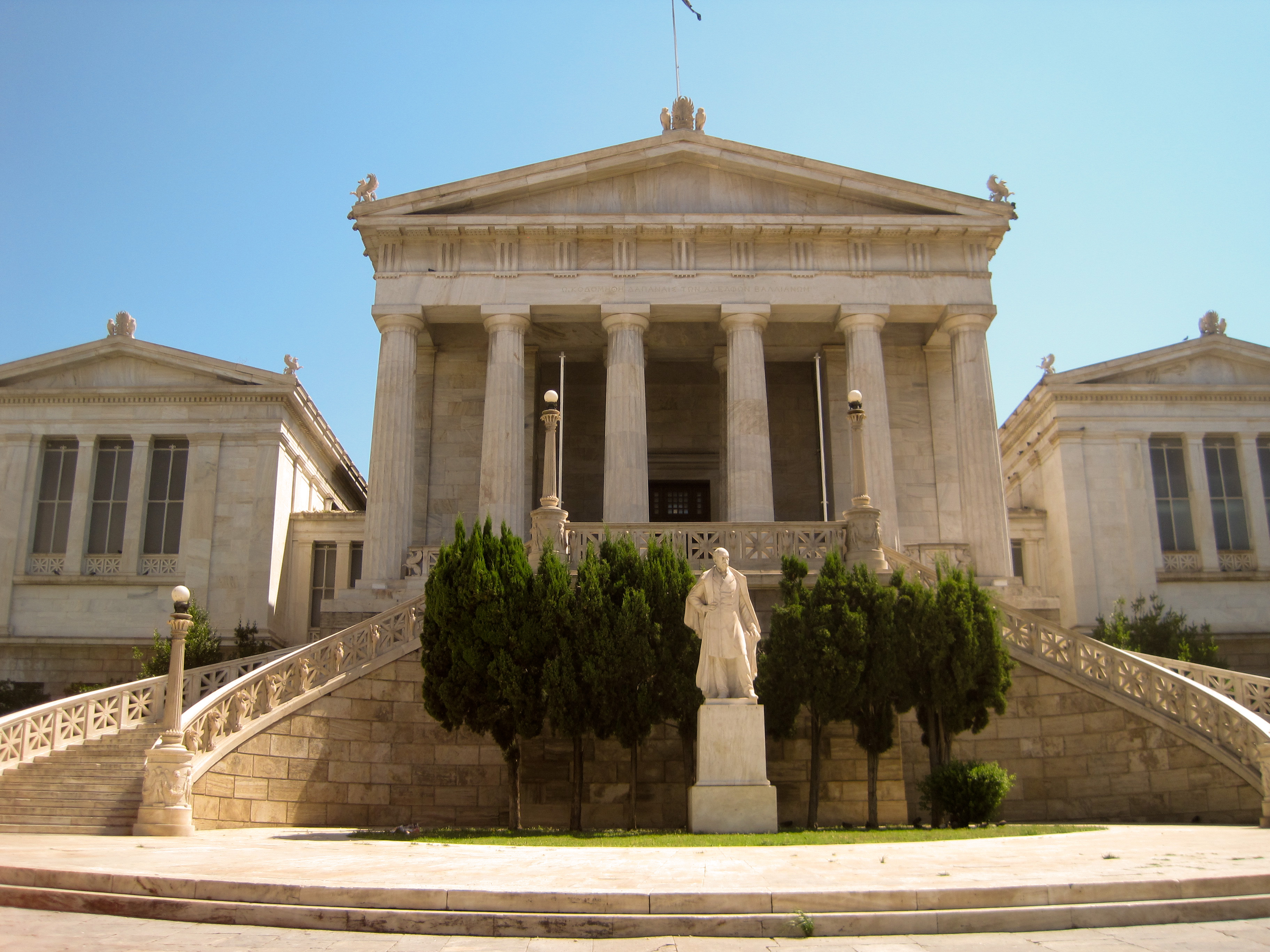
My Plan A was to research at the National Library in Athens with my friend, Giannis Michalakakos. We were seeking Aristeia records*  for several men who could possibly be related to me. Giannis had contacted the Library in advance and even changed his work schedule to make this visit.
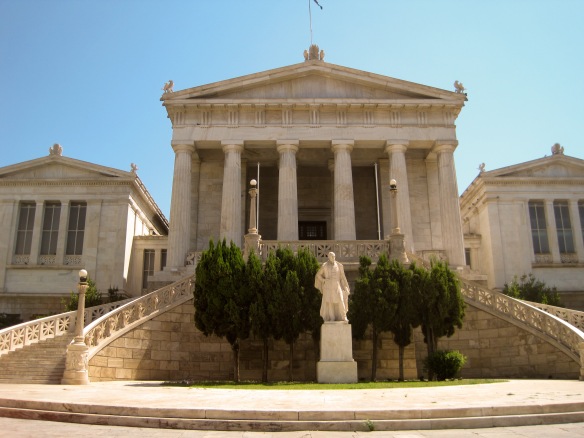
National Library, Athens. Photo, Creative Commons

National Library, Athens. Photo, Creative Commons

As we ascended the marble steps, I was excited to go inside this impressive building and see what treasures were awaiting our discovery.

The answer was:  none.

We found the front doors locked, yet saw many people within. Confused, we knocked several times; one man came to the door and waved us away. It was then that we noticed a sign:  the library was closed all day for a staff meeting. That was unexpected! We looked at each other, a bit disoriented. What to do now? Giannis gave the classic Greek answer: Let’s go for coffee. Seated outdoors in the brilliant sunlight, we lamented this unfortunate turn of events. Then I looked directly into Giannis’ eyes and said, “We need a Plan B.” He perked up.”I have a Plan B,” he replied. “Let’s go to the University Library and find the book about Xirokambi. I’m sure your ancestors are in it.”

I remembered our previous conversation about this book. Written by Theodore S. Katsoulakos, it is the history of the village of Xirokambi and its families. My maternal great-grandmother, Poletimi Christakos, was born in Xirokambi, so I jumped at this unexpected turn of events. “Let’s go!” We left without ordering drinks and headed for the Athens subway.
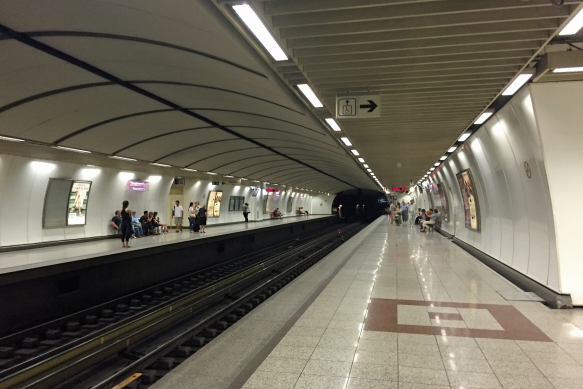
Subway station, Athens. July 2016

Subway station, Athens. July 2016

I was impressed with the sleek, modern new station that had been built for the 2004 Olympics. Three transfers later, we arrived at the stop leading to Giannis’ alma mater. As we walked a distance in the mid-summer heat, I began to wilt, both physically and emotionally. What if this turned out to be a wasted morning?

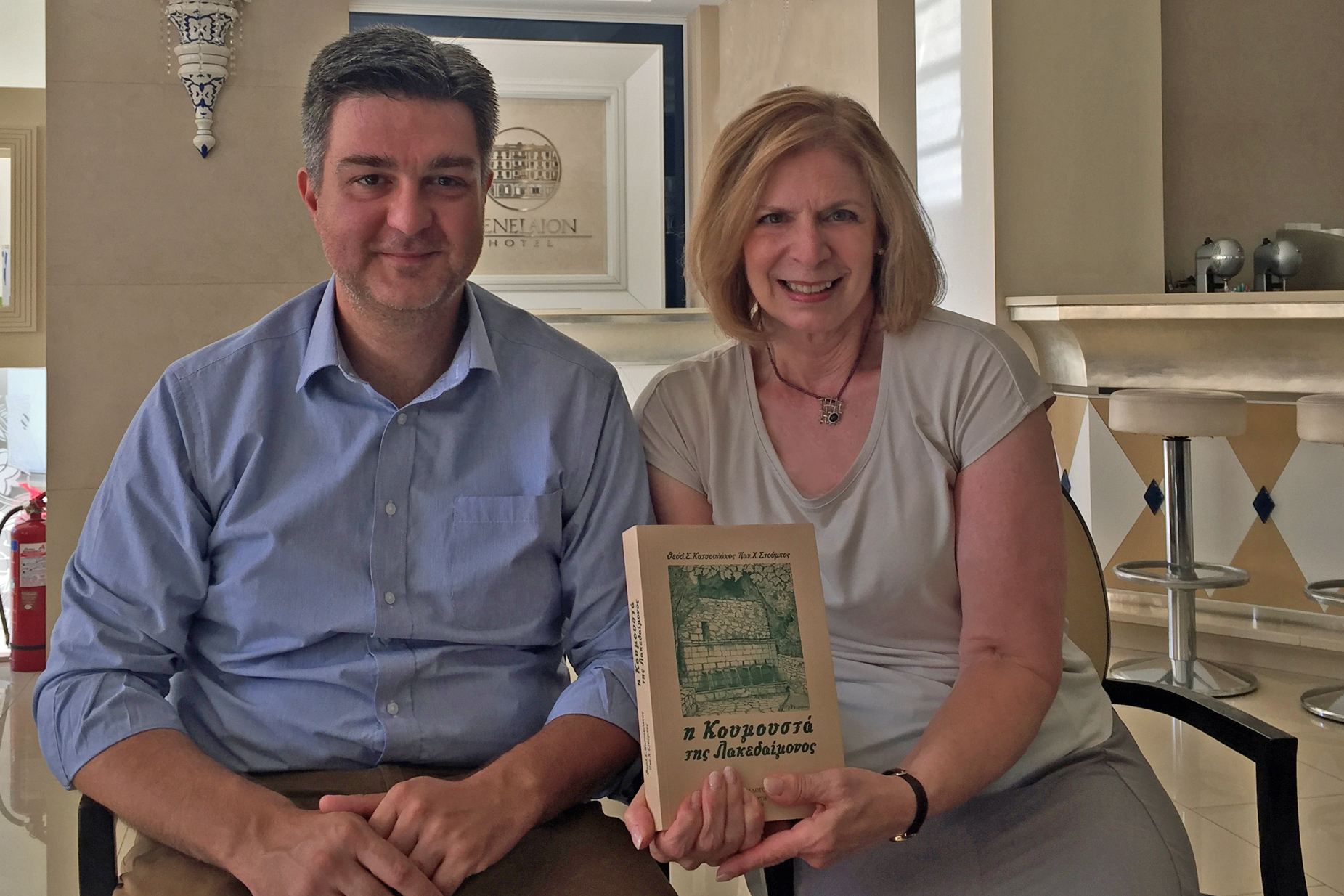
We entered the Library and Giannis immediately headed to the exact shelf where the book resided. Koumasta of Lakedaimonos, Theodore E. Katsoulakos and Panagiotis X. Stoumbos, published 2012Taking it to a table, he flipped to the index, found entries for Χριστάκος (Christakos) and quickly scanned the pages. The history of this family was laid out before us:  Christos Rizos had arrived in Xirokambi (a village within the region of Koumousta) in 1761! From Christos, the name morphed into Christakos (akos – son of; son of Christos).
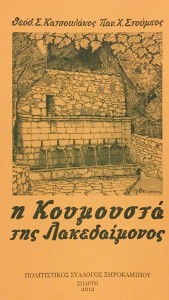
Excited and astounded at this wealth of information, I began taking photos of pages where the Christakos name was listed. That was an exercise in futility, as the name was scattered throughout the 400+ book. I put my camera on the table and with great emotion said, “I must have a copy of this book to take home with me.”

Kind soul that he is, Giannis offered to call his friend, Dimitris Katsoulakos, son of the author. Arrangements to meet were made; and a few hours later, Dimitris came to my hotel in Athens, book in hand.
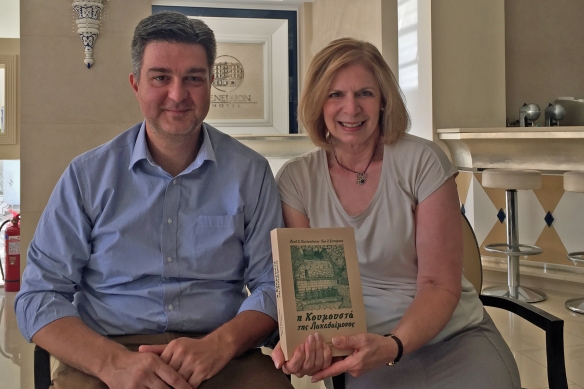
Dimitris Katsoulakos and Carol Kostakos Petranek, Athens, July 2016

Dimitris Katsoulakos and Carol Kostakos Petranek, Divani Palace Hotel, Athens, July 2016

To say I was thrilled to hold this volume in my hands is a gross understatement. This was a priceless treasure to me! Dimitris and I talked for almost two hours about his father, the research process, and the history of Koumousta and Xirokambi. We arranged my visit to Xirokambi to meet his father and walk the streets of my Christakos ancestors.

Xirokambi is a charming village, 17 kilometers south of Sparta, lying in the shadows of the Taygetos mountains. Accompanied by my friend, Joanne Dimis-Dimitrakakis, I headed straight for the village square where I met the esteemed professor, Theodore S. Katsoulakos.

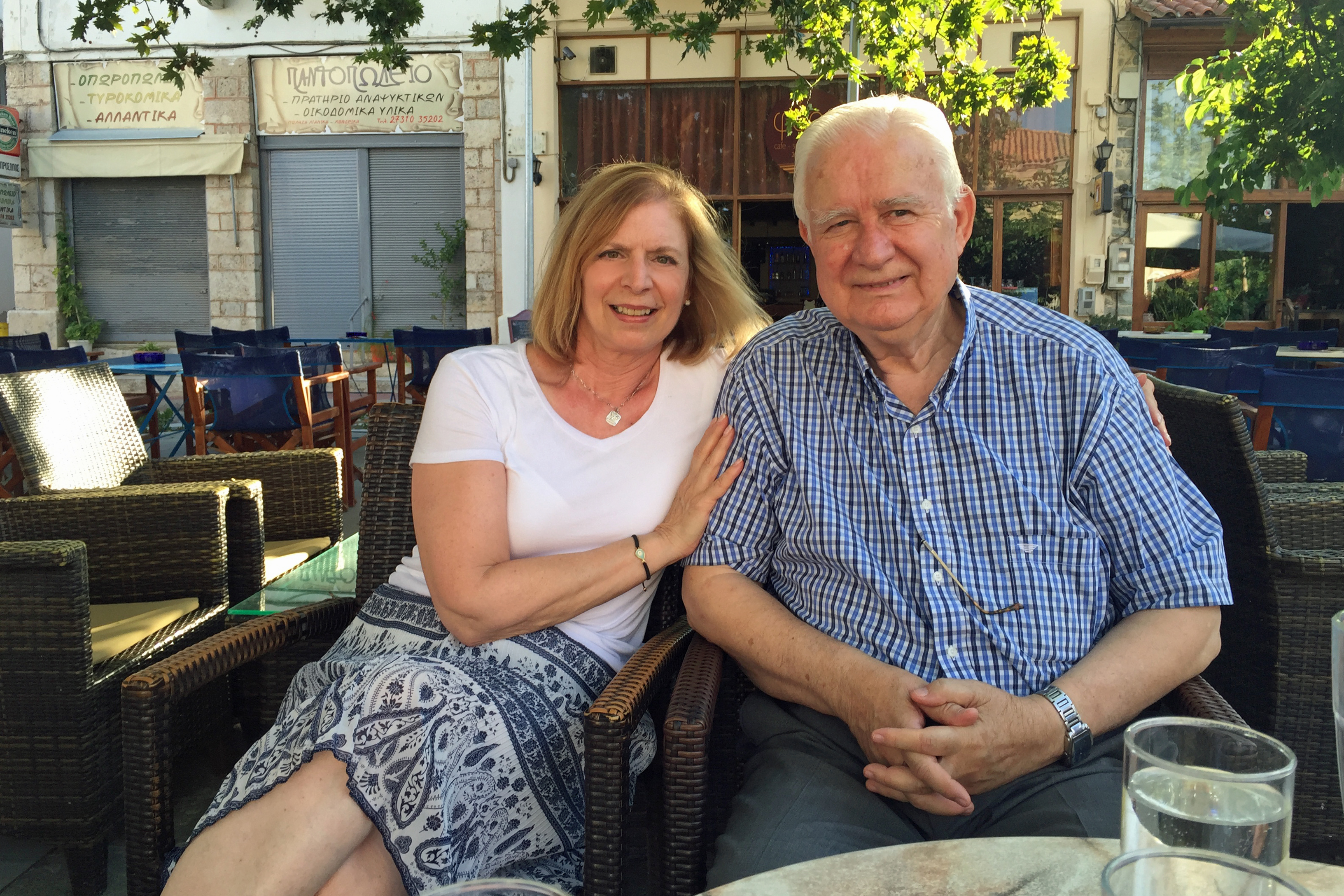
Theodore Katsoulakos and Carol Kostakos Petranek, Xirokambi, July 2016

Professor Theodore S. Katsoulakos and Carol Kostakos Petranek, Xirokambi, July 2016

I had so many questions! How long did it take to write the book? Where did he get the materials? Why did he start this project? The answers were as honest and forthright as this wonderful man.

It took 20 years to write the history of Koumousta. This was a joint effort between the professor, Theodore S. Katsoulakos, and the village shepherd, Panagiotis X. Stoumbos. Although both men had long roots in Xirokambi, Panagiotis knew the old stories. The two men would talk, write notes, and collaborate on the details. Theodore was passionate about this project. His desire was to preserve and pass on the rich history of the area for future generations. He researched in Archives, libraries, and the local monasteries of which there are two:  Golas and Zerbitsis. I was stunned to hear that monasteries had records other than those of a religious nature! Monks kept meticulous records of the families, activities and history of the surrounding area. One can only imagine the untold stories and historic events sequestered in the libraries of hundreds of monasteries throughout Greece!

Our visit was enlightening and great fun. I could have spent hours talking with Theodore. He is articulate, kind, gentle, and intelligent. I asked him to sign my book, and to my delight he wrote: “History does not make you smart for once, but wise forever.” Brilliant counsel from a brilliant and esteemed friend.

Just when I thought the day could not get better, Dimitris offered to give us a tour. Joanne and I piled into his car and drove throughout the village. Stone houses and lush gardens make Xirokambi both picturesque and very liveable.

Xirokambi Platea, July 2016

Xirokambi Plateia, July 2016

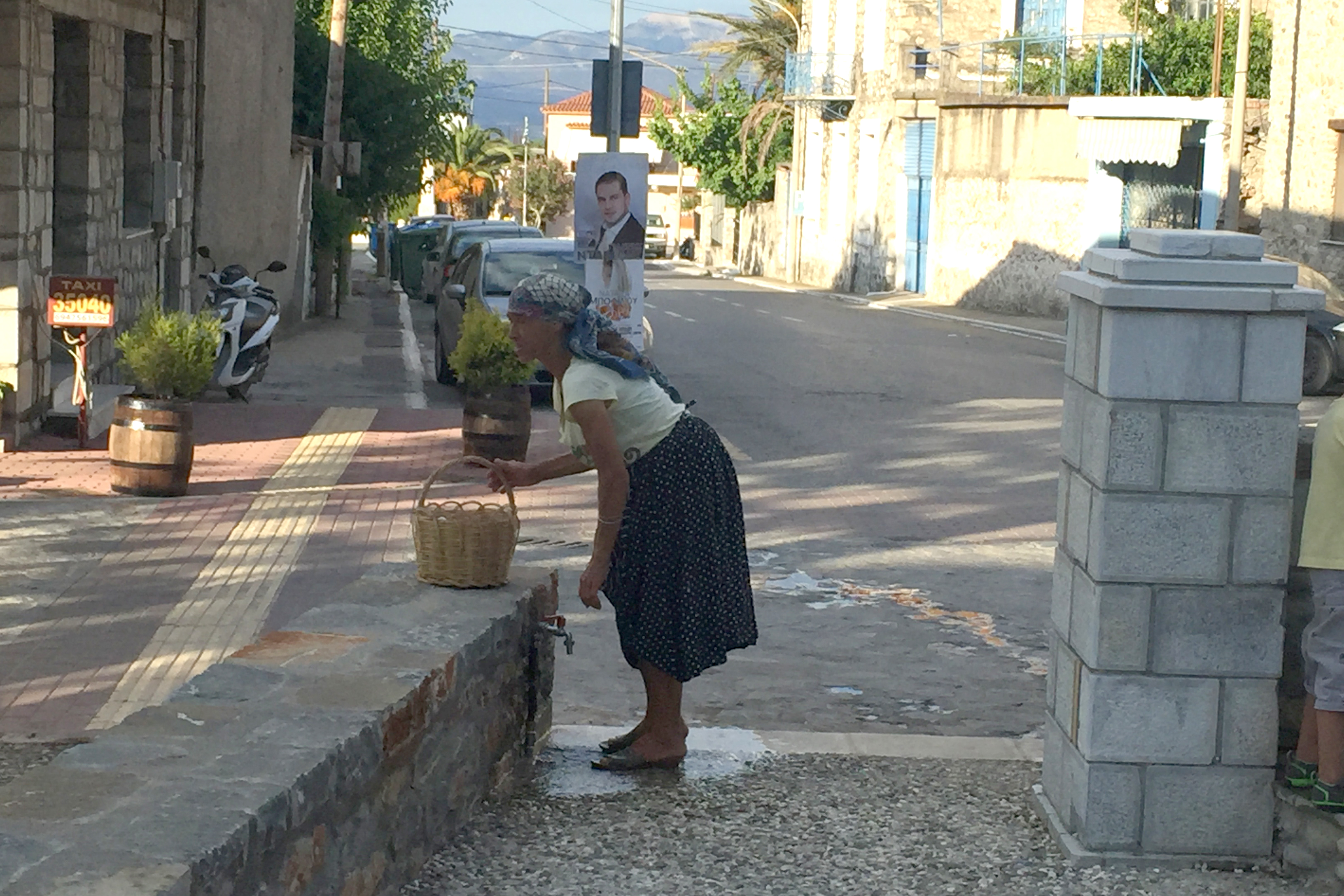
I was somewhat surprised to see an old lady filling bottles at a fountain in the plateia. When she saw me taking her photo, she actually hissed at me and waved me away!
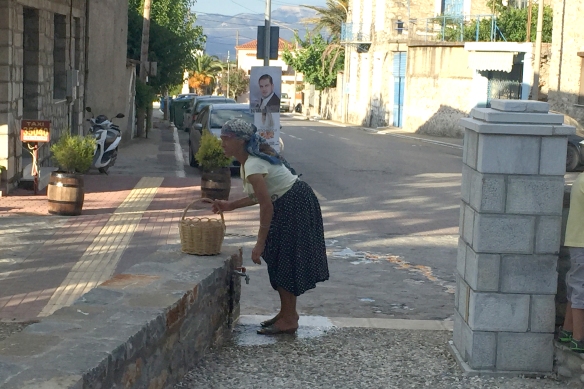
Fountain in Platea, Xirokambi, July 2016

Fountain in Platea, Xirokambi, July 2016

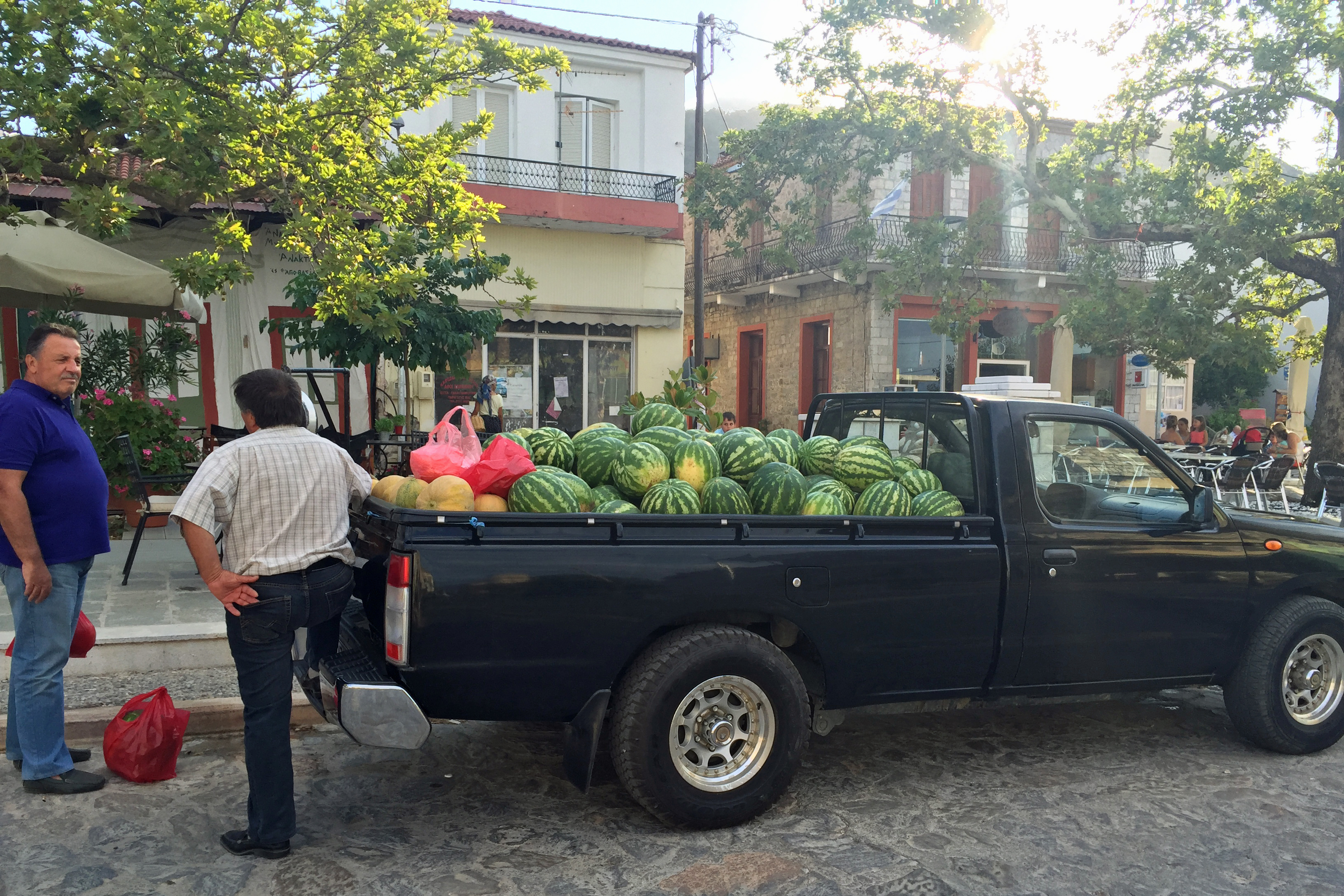
The local fruit and vegetable vendor makes his rounds.

Fruits and vegetables, Xirokambi, July 2016

Fruits and vegetables, Xirokambi, July 2016

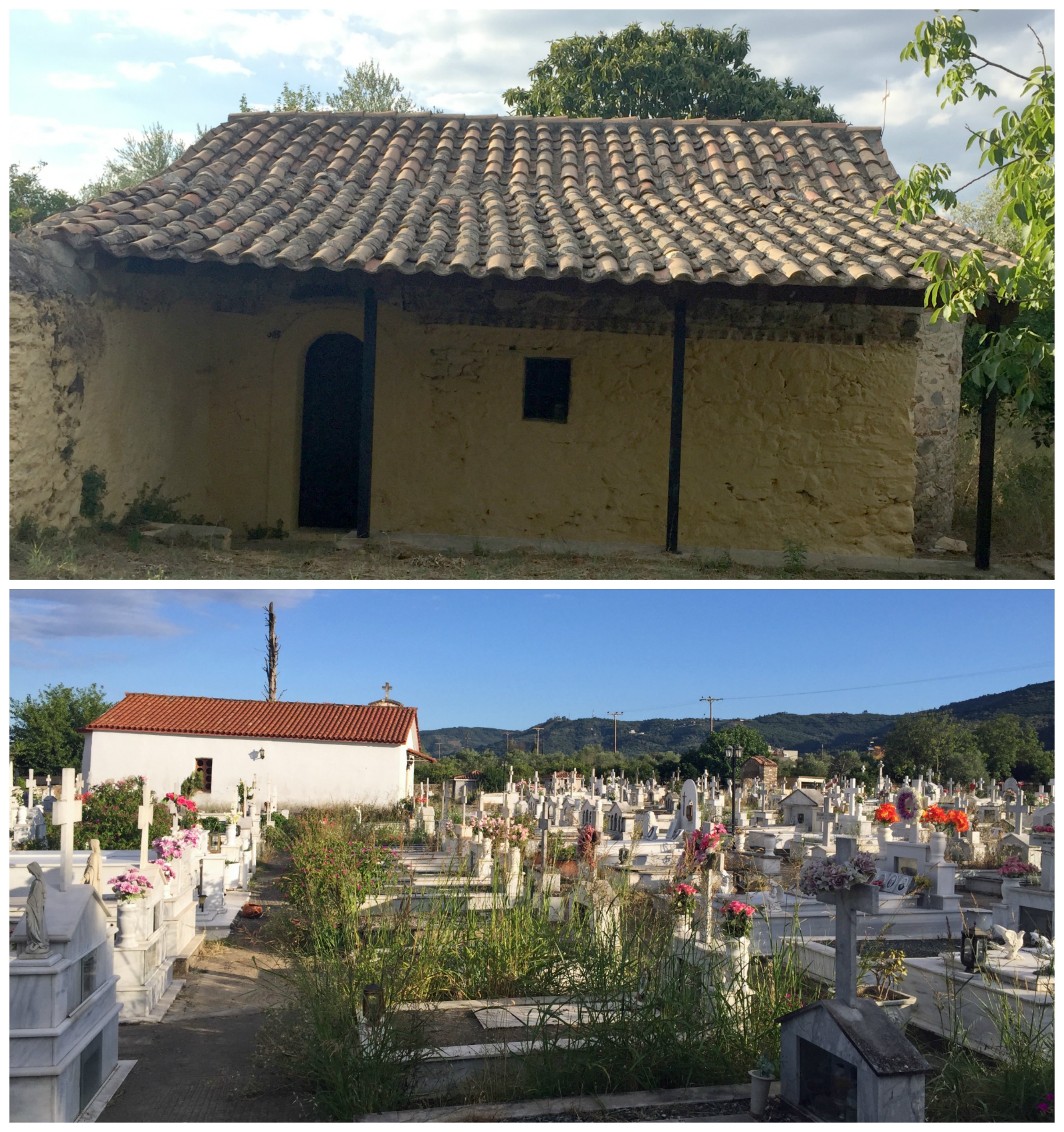
The oldest church was built around 1500 A.D. and there are four cemeteries which I must explore on my next visit.
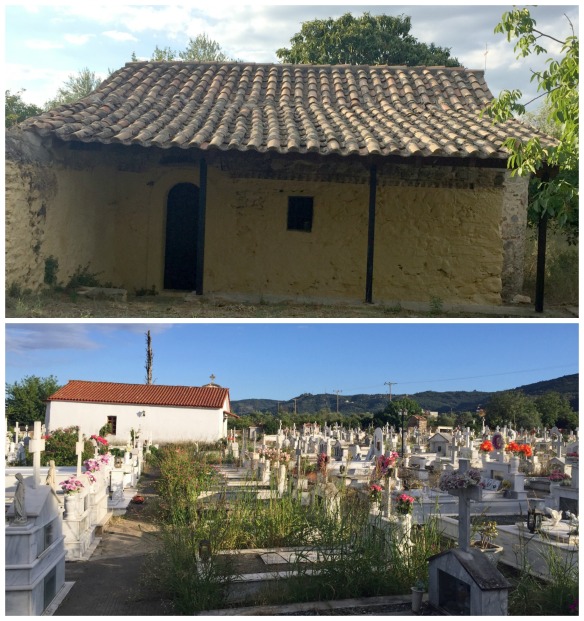
Church built in the 1500's; one of four cemeteries. Xirokambi, July 2016

Church built in the 1500’s; one of four cemeteries. Xirokambi, July 2016

The town’s amphitheater was recently built and is actively used for festivals and plays. Several youth were rehearsing for an upcoming performance.

Amphitheater at Xirokambi, July 2016

Amphitheater at Xirokambi, July 2016

Among the most historic sites of the village is the Bridge of Xirokambi. Built over the Rasinas River and at the edge of the Anakolo Gorge, this bridge was constructed 2,000 years ago during the Hellenistic period. There is a well-trodden path over the mountains that leads to Kalamata, one of the few routes to the Messinian Gulf over the forbidding Taygetos mountains. I asked Dimitris if my great-great-grandfather, Nikolaos Christakos, might have walked this path, to which he replied, “Most certainly!”

Hellenistic Bridge and path to the Gulf of Messinia and Kalamata, Xirokambi, July 2016

Hellenistic Bridge and path to the Gulf of Messinia and Kalamata, Xirokambi, July 2016

I have often contemplated the unexpected turn of events that dashed my Plan A. If the Library had been open, I would have been thrilled with whatever documentation we found, whether or not I could trace the men to my ancestral lines. However, I would never have found Koumasta and the history of the Christakos family. I would have missed meeting wonderful new friends and experiencing the thrill of literally walking in my ancestors’ footsteps.

But on my next trip, I will make a Plan B–just in case.

___

*Aristeia is an award given to men who fought valiantly in the Revolution of 1821.

Faris is a quarterly newsletter with information and history about Xirokambi. It has been published for the past 50 years, and issues are available online at: http://micro-kosmos.uoa.gr/faris/teuxi.htm
Return to Greece, 2016. Part Four: Santorini, Heaven on Earth

This is the fourth post in a series about my trip to Greece, June 30-July 20, 2016 — an amazing journey of history, family and discovery. Previous posts can be found here.

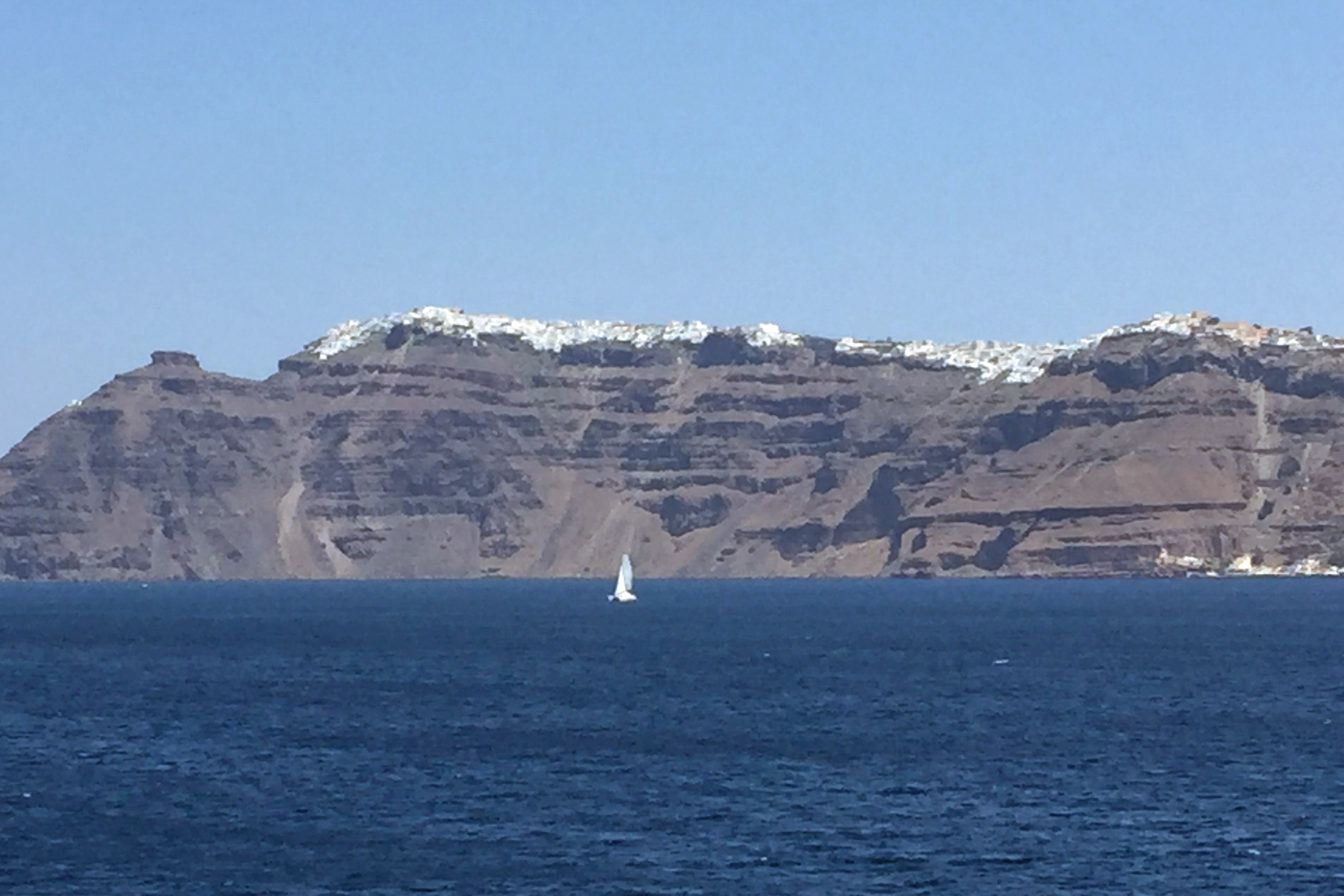
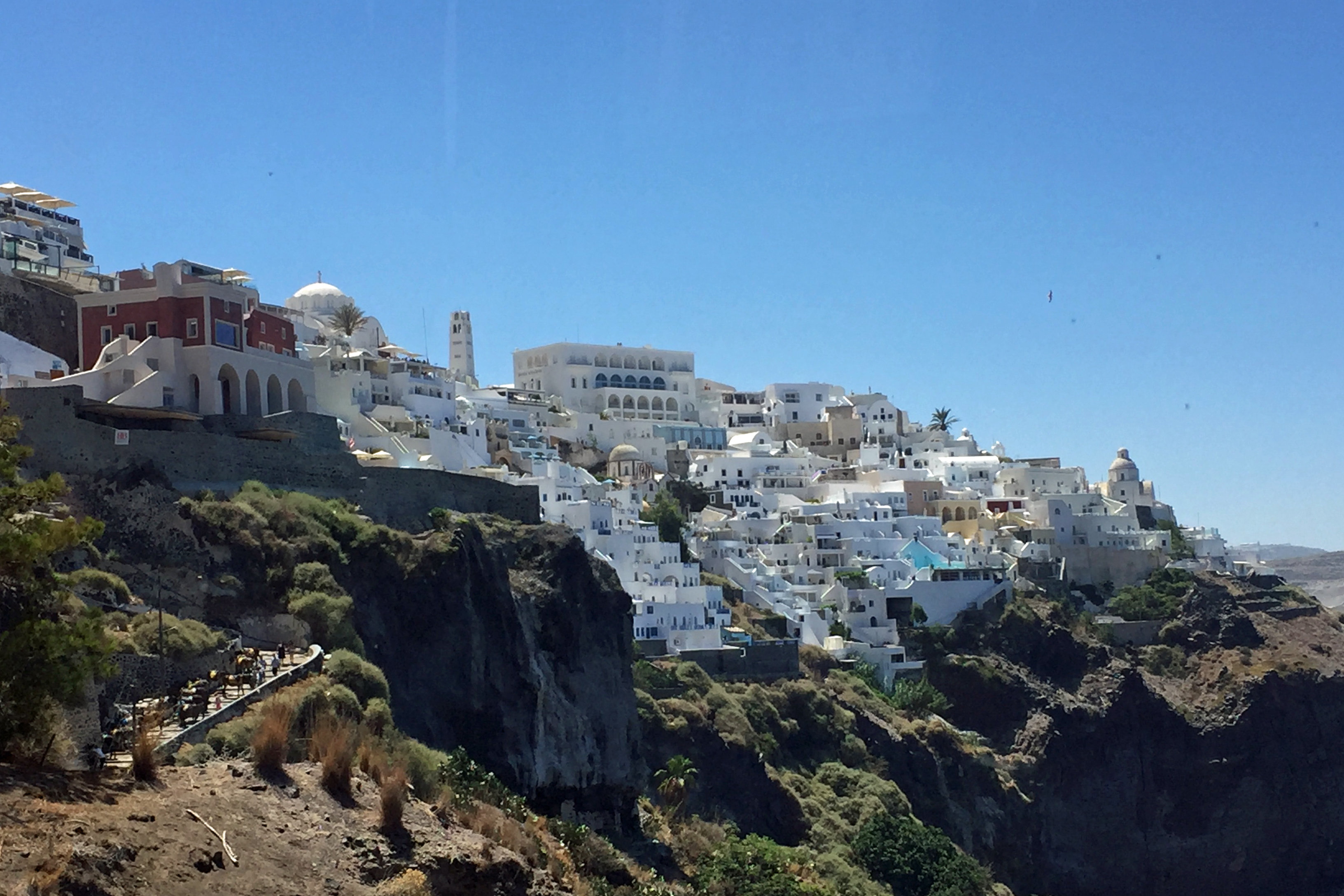
Approaching Santorini by ferry, my first thought was, “What beautiful snow-capped mountains!” Wrong! These were not mountains, but pure white buildings perched on top of this unique volcanic island.

Santorini 1a by water

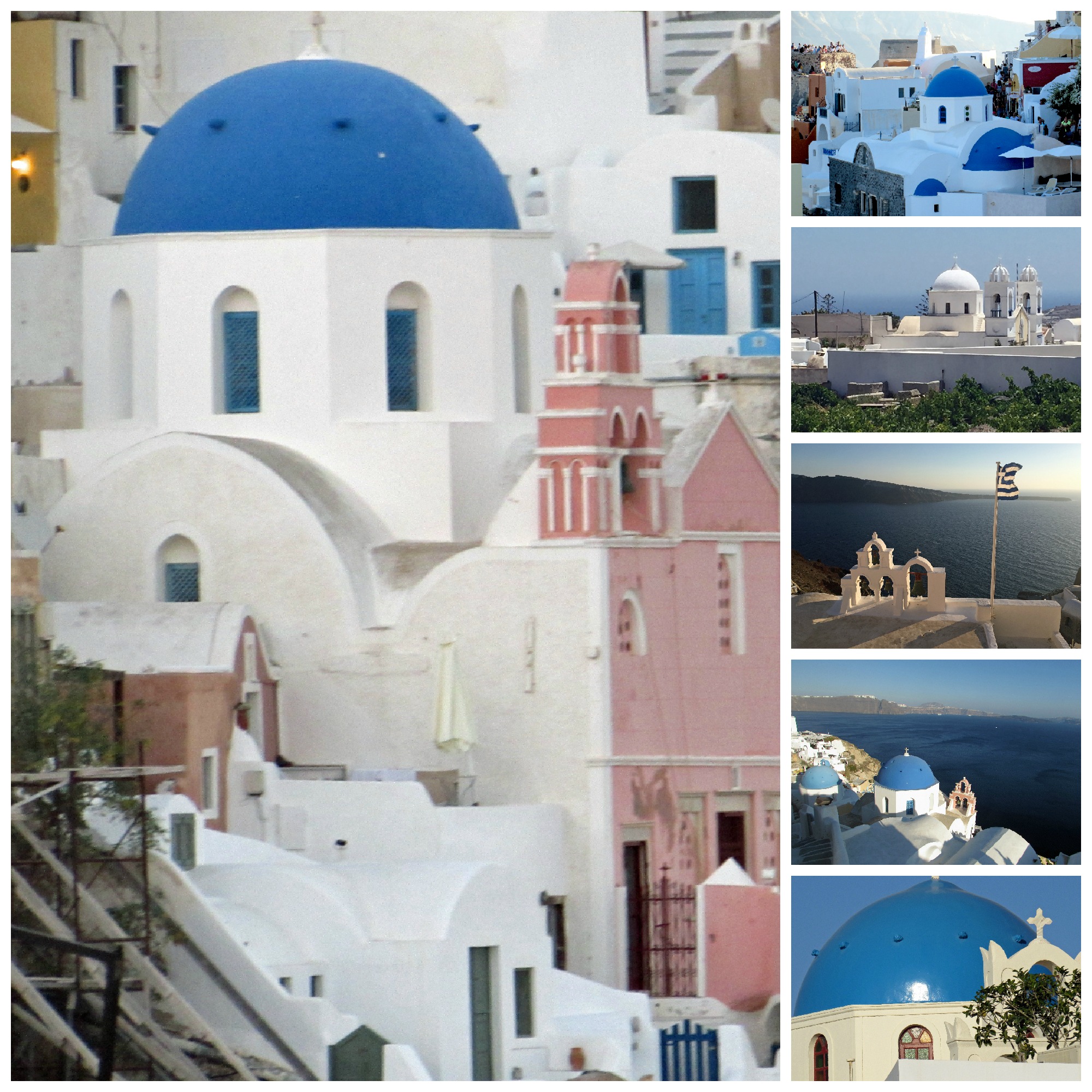
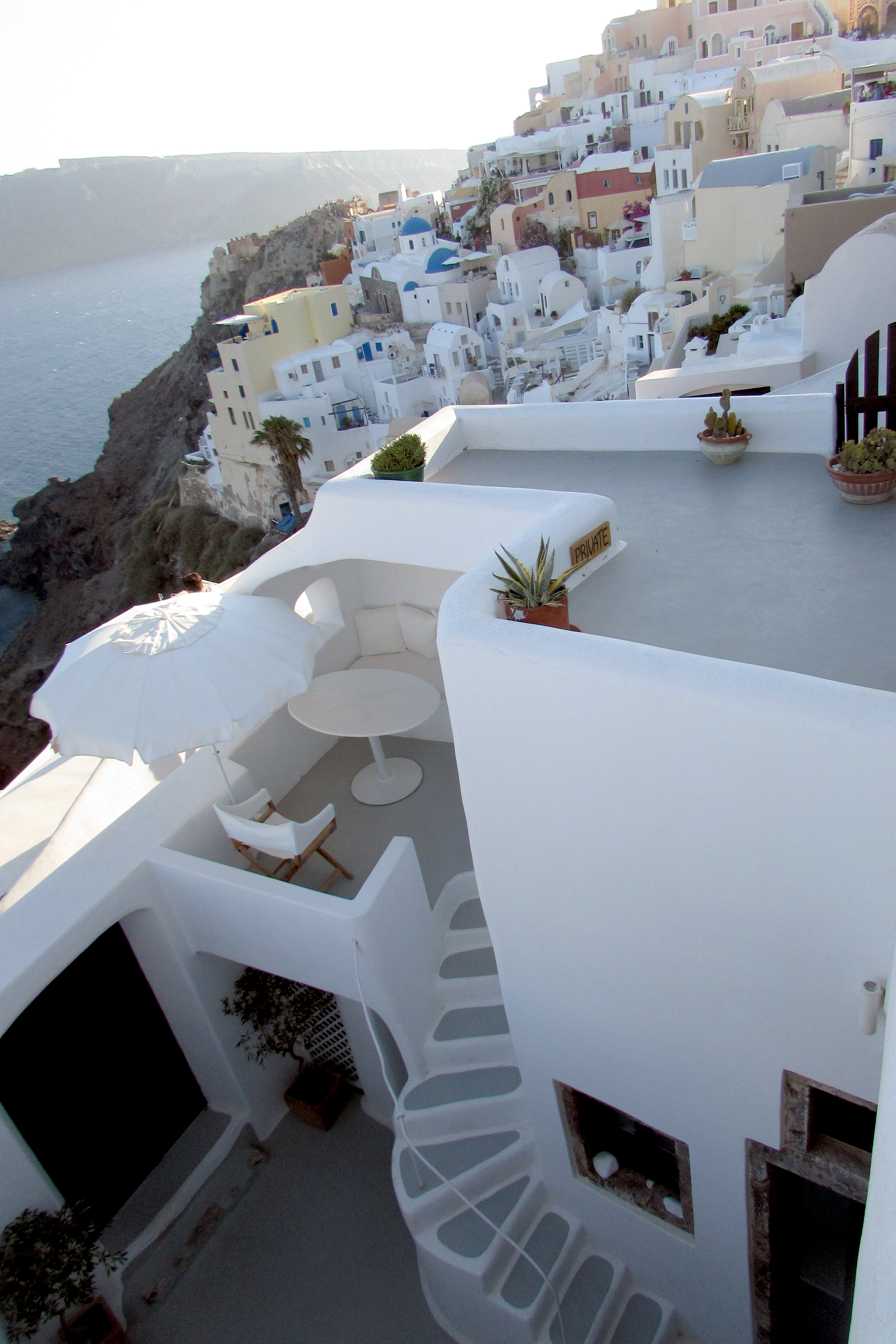
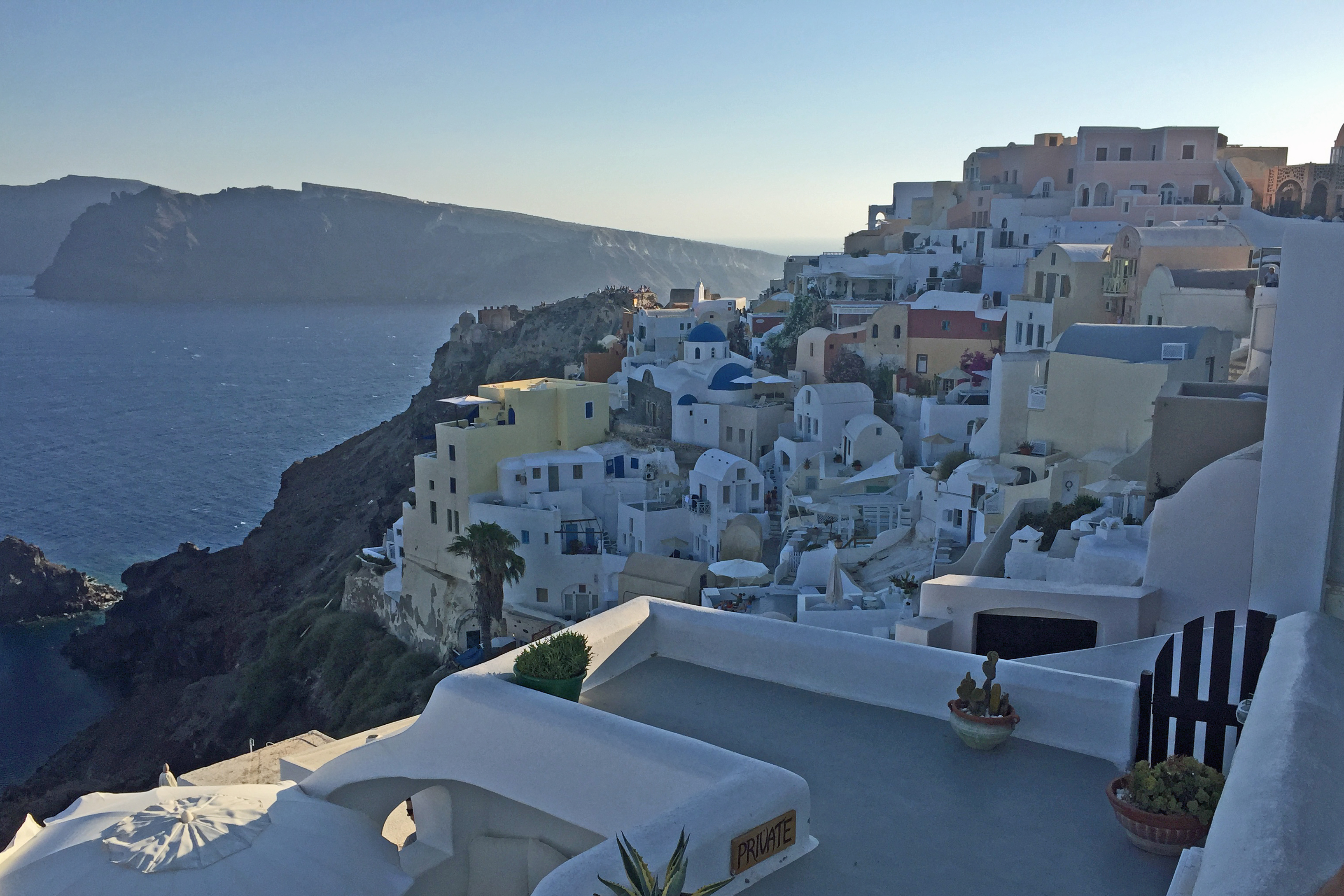
How can I possibly describe Santorini? It is truly a paradise — heaven on earth. Pristine. Breathtakingly beautiful. A feast for the eyes. There really are not sufficient adjectives! Seeing the pure white buildings and bold blue church domes against the barren mountains and blue, blue sea brings delight to the eyes and the soul.

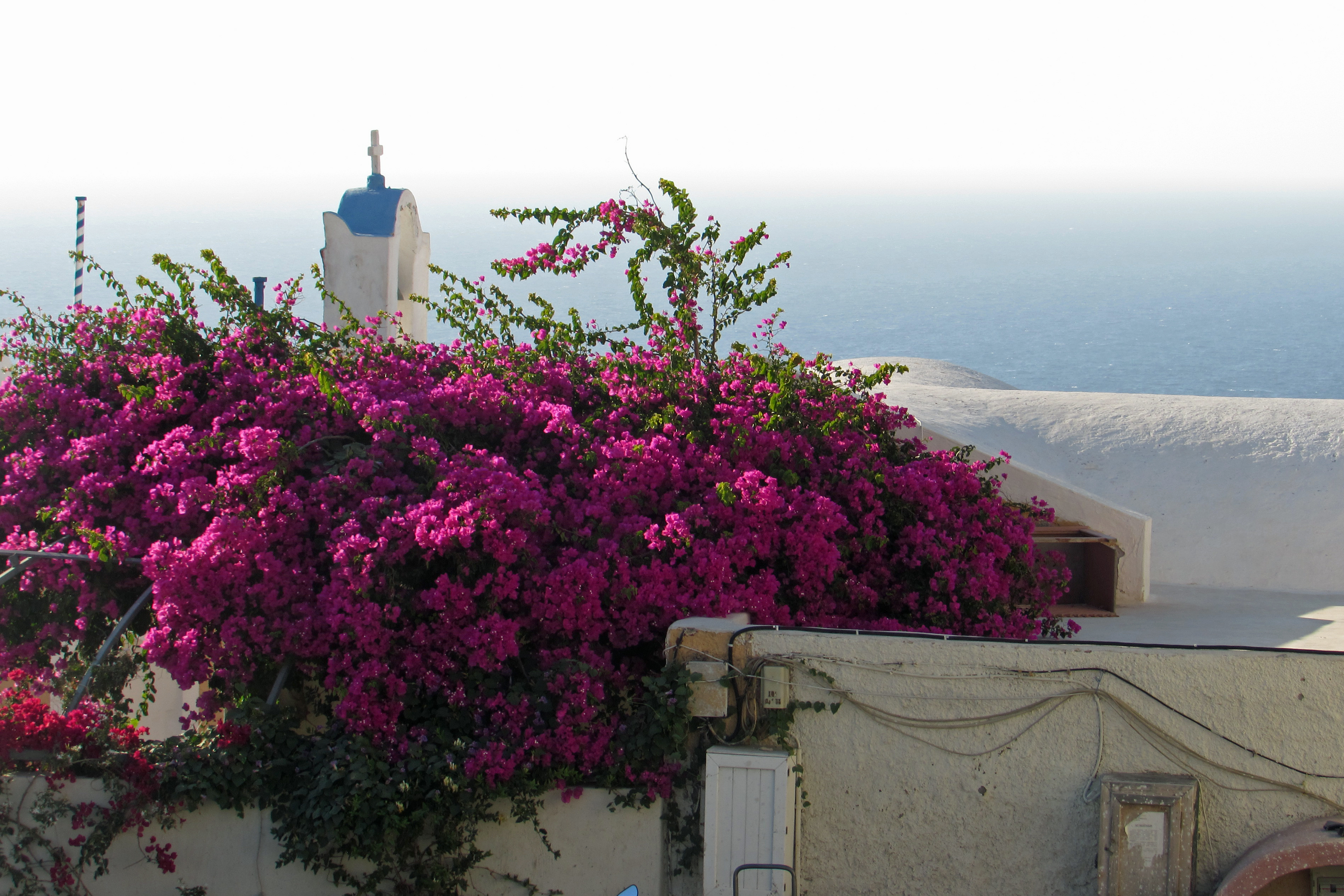
Our first introduction was the drive up the mountain from the port, (I brought my rental car). We saw amazing views and photo op at every switchback mountain curve. Just when you think you can’t see anything more spectacular, the road turns and you are swept into yet another picture-perfect scene. The blue and white pallet is punctuated by brilliant flowers.

Hilltop view, Santorini, July 2016

Hilltop view of Fira, Santorini, July 2016

Santorini 49

Brilliant flowers bring a splash of color to the white and blue pallet

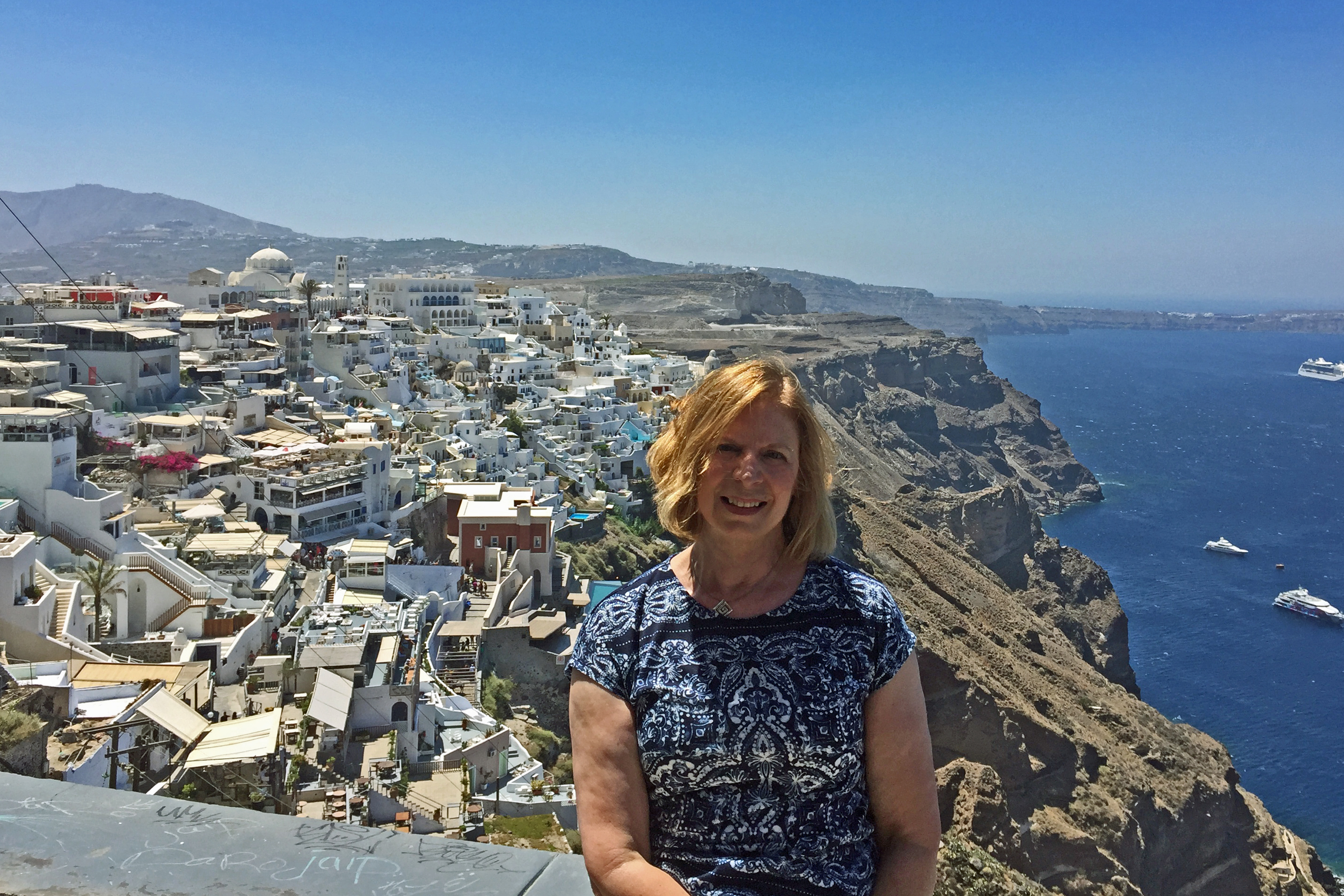
Me in Santorini! July 2016

Me in Santorini! July 2016

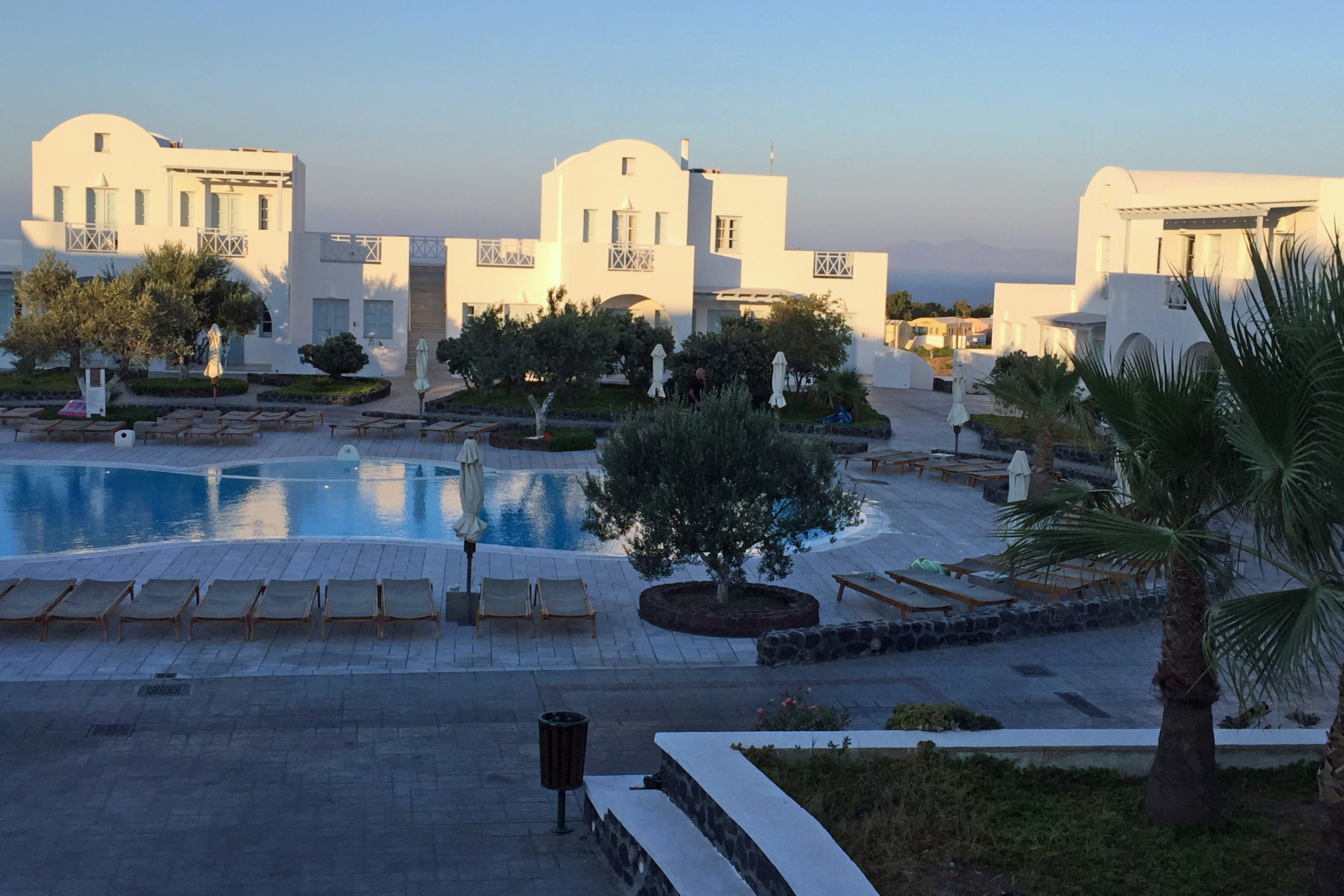
When we arrived at our accommodations, I couldn’t believe my eyes. This was a resort hotel and spa with three pools, clubhouses, and lovely bungalow rooms. And it was half the price of other hotels on the island!

Santorini hotel 07-03

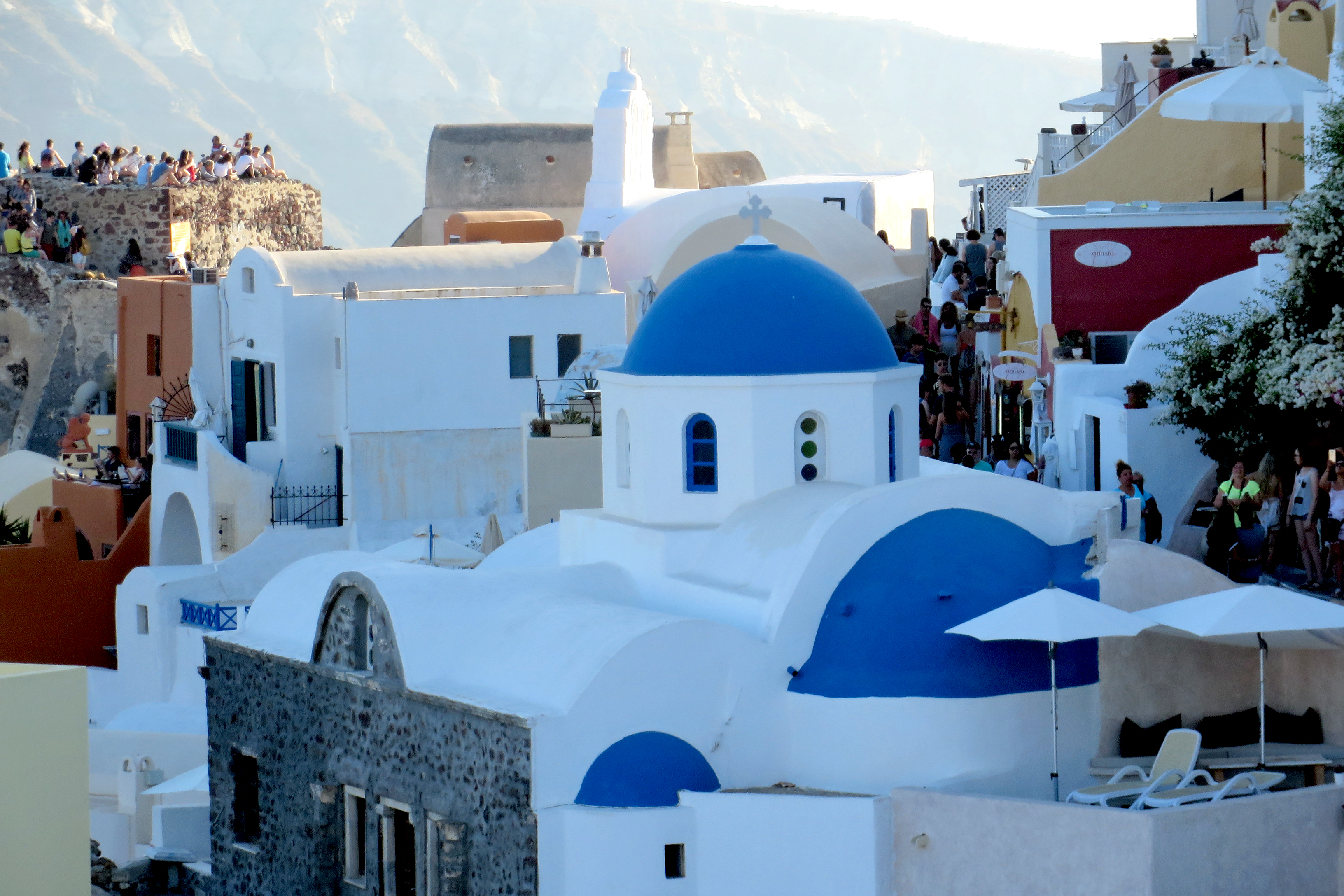
There are over 450 churches in Santorini. An entire book could be written on them. Almost invariably, they are white and blue-domed, yet each is unique and inspiring.

The churches on the island are stunning. Despite the similar design, each is unique. Santorini, July 2016

The churches on the island are stunning. Despite the similar design, each is unique. Santorini, July 2016

The capital is Fira (or Thira), perched atop a cliff overlooking the caldera (or bowl-shaped bay). We were immediately transported into another world of winding alleys, adorable shops, and the prettiest views of the sea. The outdoor restaurants and tavernas are perched at perfect spots to enjoy the sunset and cool breezes.

The magic of Fira at sunset. Santorini, July 2016
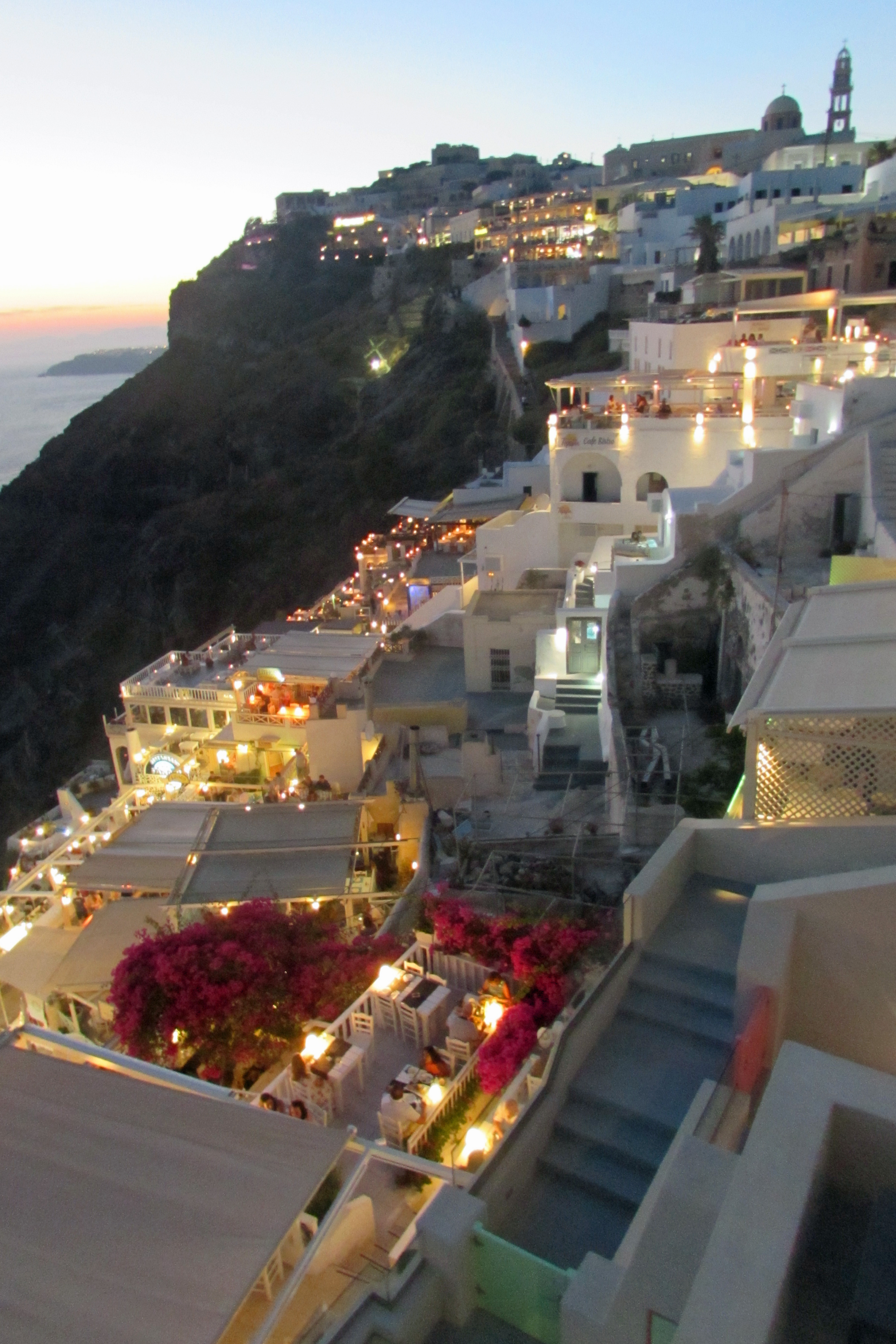
The magic of Fira at sunset. Santorini, July 2016
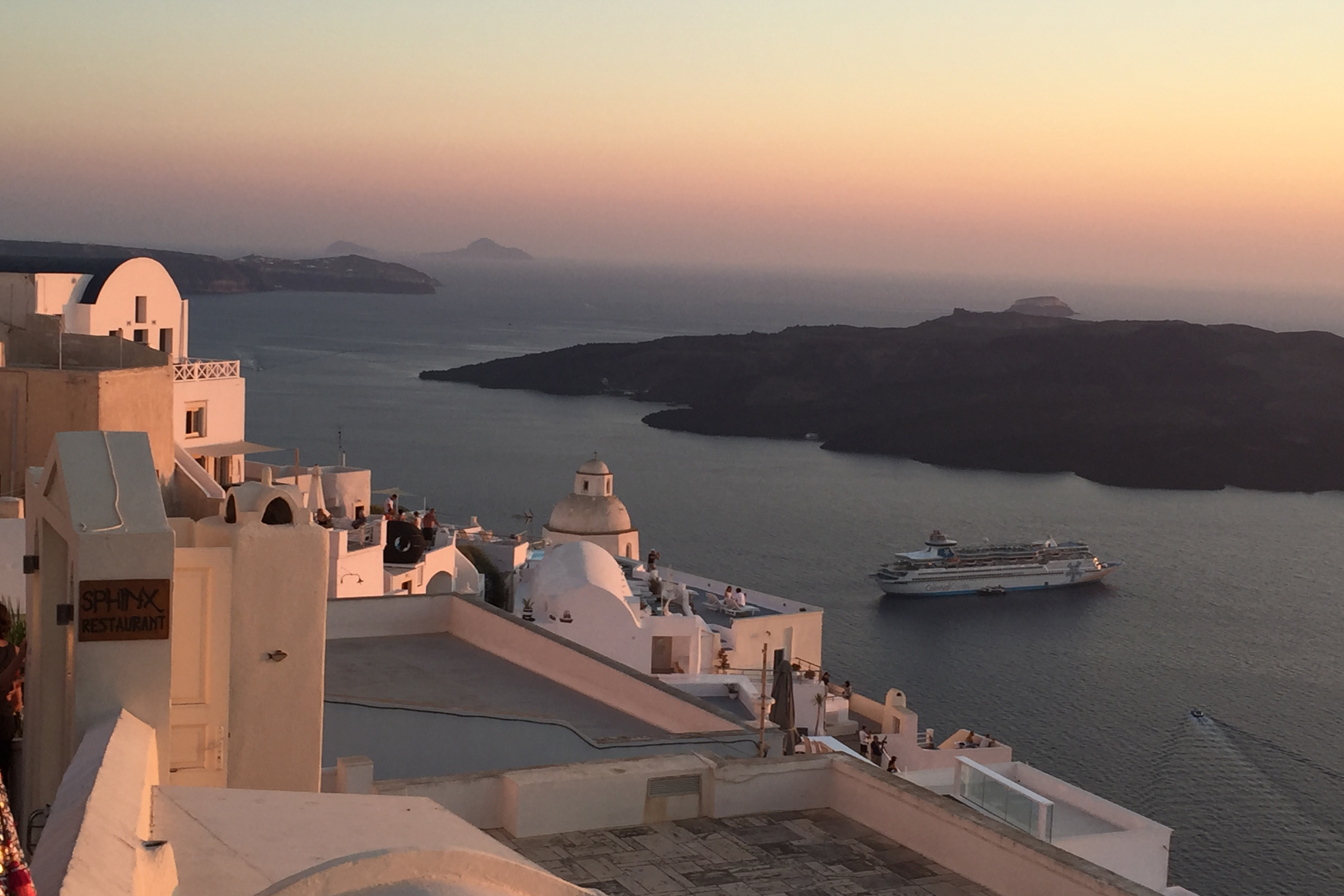
The serenity of Fira at sunset. Santorini, July 2016

The serenity of Fira at sunset. Santorini, July 2016

Our tour guide, Eleni, introduced us to the archaeological site of Akrotiri which has Santorini Akrotiri 5 07-04been under continuous excavation since 1967. It is meticulously preserved and we were able to visualize life in this prehistoric settlement which dates from 4th century B.C. It was one of the most important ports of its era, eventually evacuated in the late 17th century B.C. when a series of earthquakes brought massive destruction to Santorini.

Excavations at Akrotiri, Santorini, July 2016

Excavations at Akrotiri, Santorini, July 2016

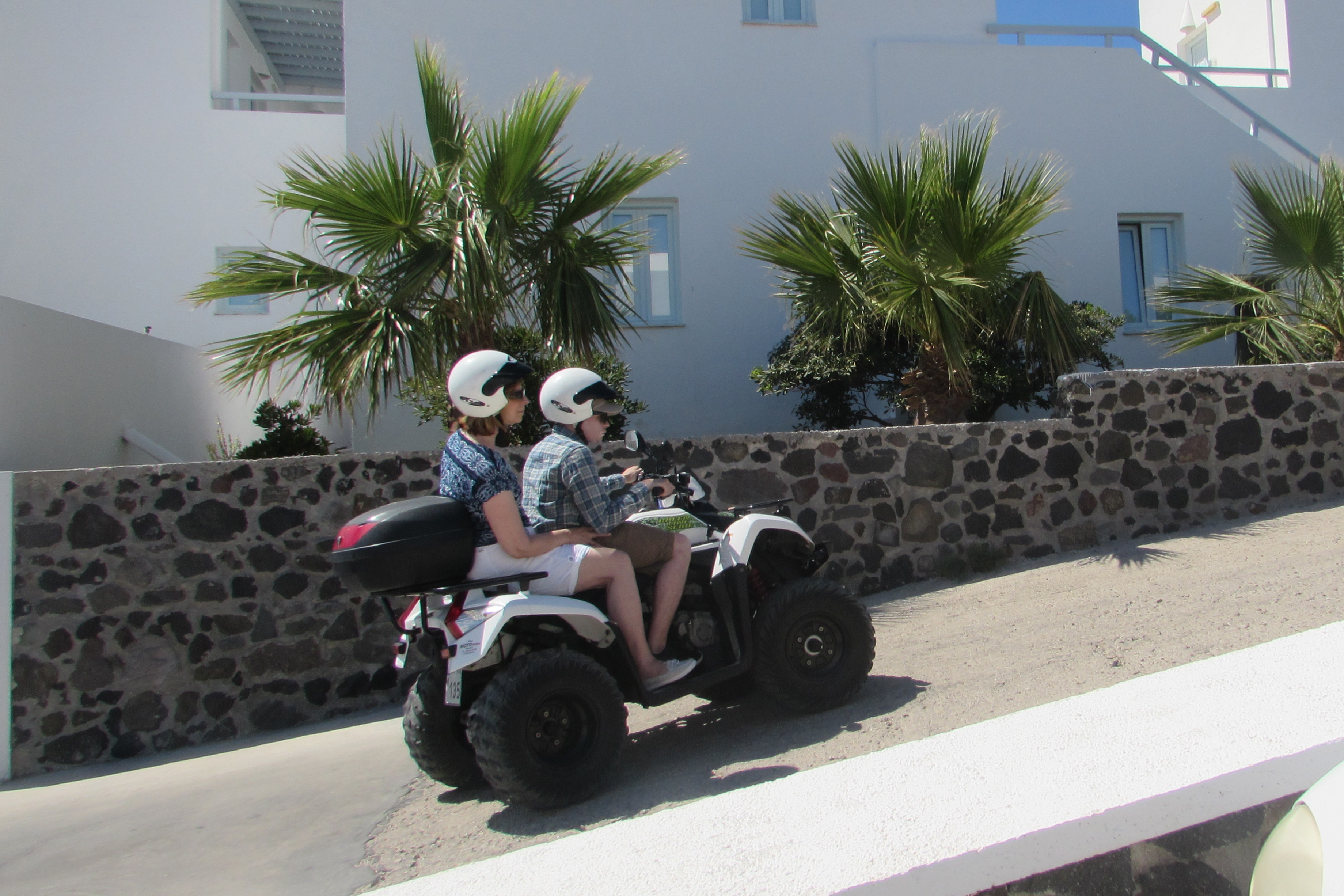
Getting around on motorcycles and all-terrain-vehicles (ATVs) are the easiest and fastest (although not safest) modes of transportation. Sharing the hairpin turns with cars and full-size tourist buses can be almost suicidal. It takes a certain attitude adjustment to navigate the roads with novice motorcycle tourists!

Ben and me, Santorini, July 2016

Ben and me, Santorini, July 2016

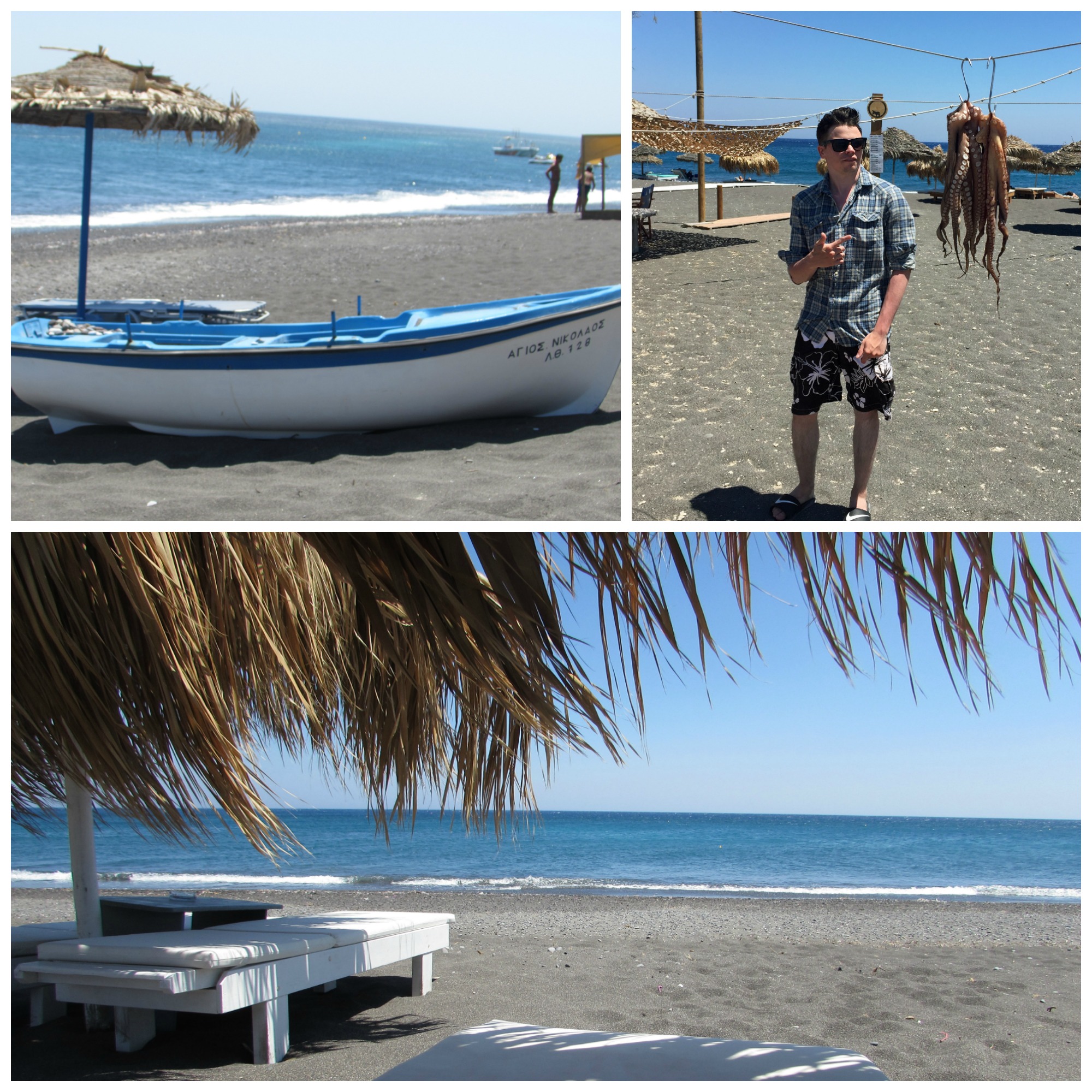
And, of course — the beaches! This was my first time seeing a black beach, pebble-filled with tiny specimens of volcanic material. Bring flip-flops as it is extremely hot to walk on the black rocks! The sparkling, crystal Aegean Sea and quaint seaside tavernas provide an ambiance that envelopes one in total relaxation, both physical and mental.

Santorini Beach Collage

Taverna on the black beach, Santorini, July 2016

Taverna on the black beach, Santorini, July 2016

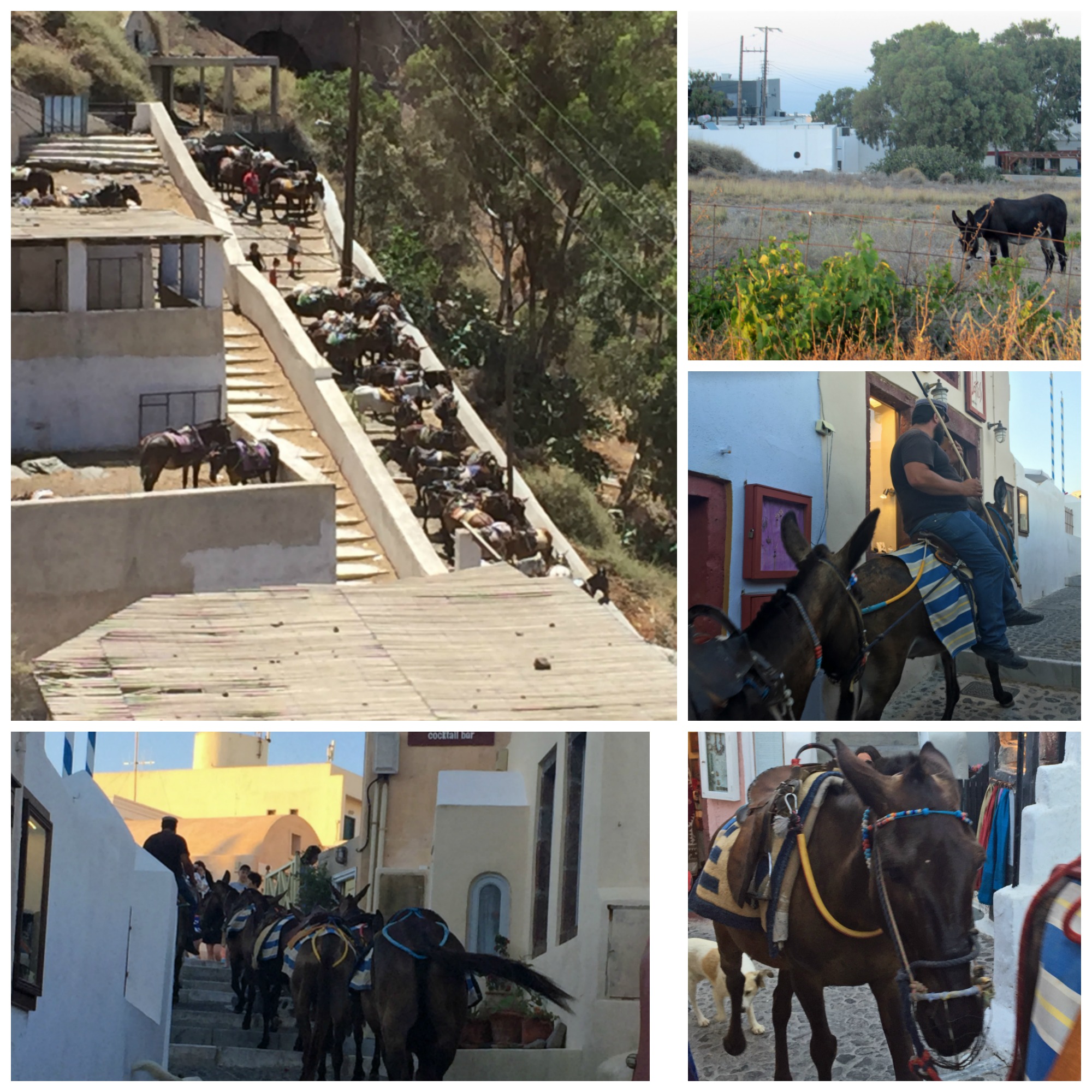
It wouldn’t be Santorini without donkeys! Whether in the fields, making their way up the steep hills with packs, or being guided by their master, these animals provide the perfect touch of nature in this perfect place.

Donkeys remain an integral part of the island. Oia, July 2016

Donkeys remain an integral part of the island. Oia, July 2016

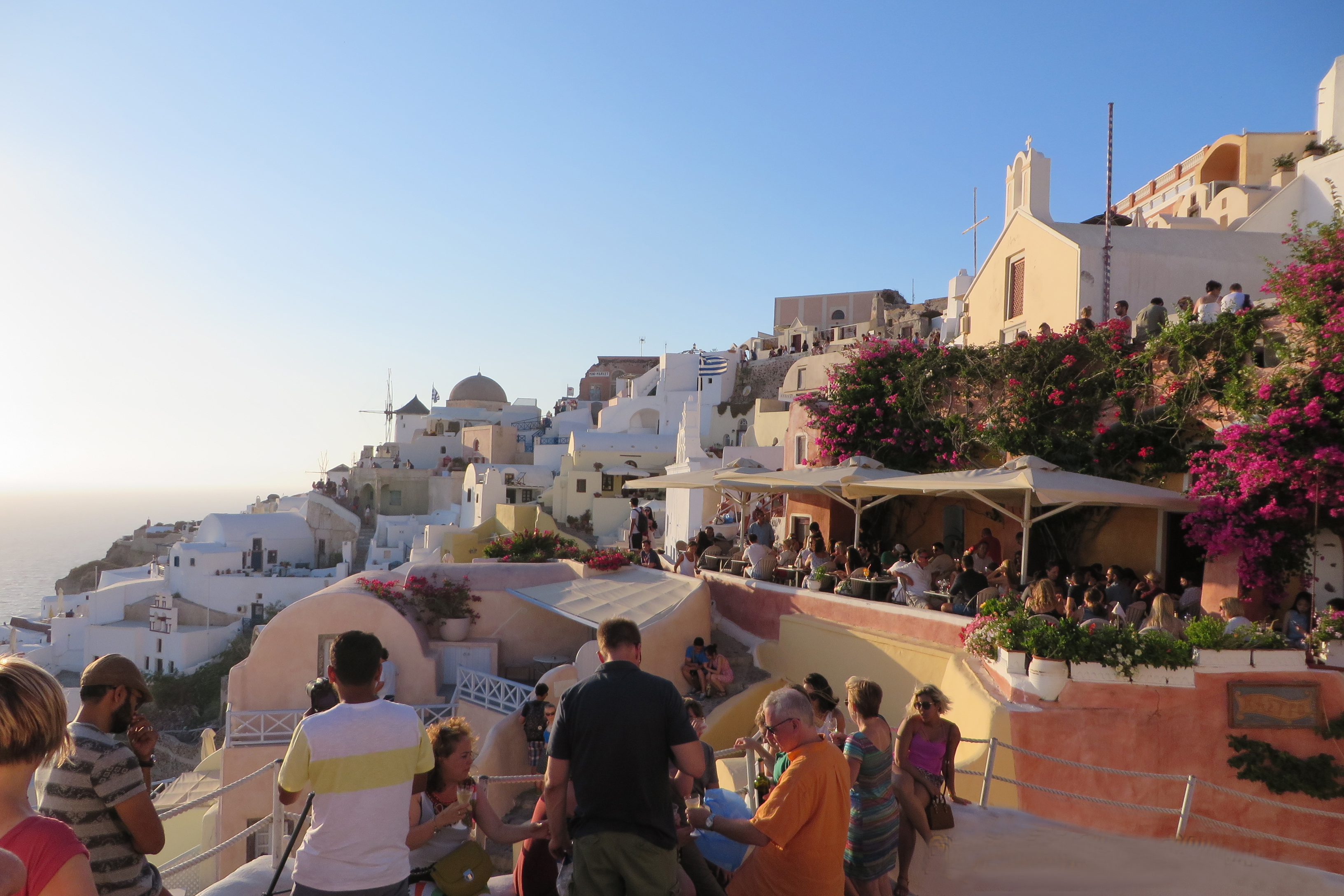
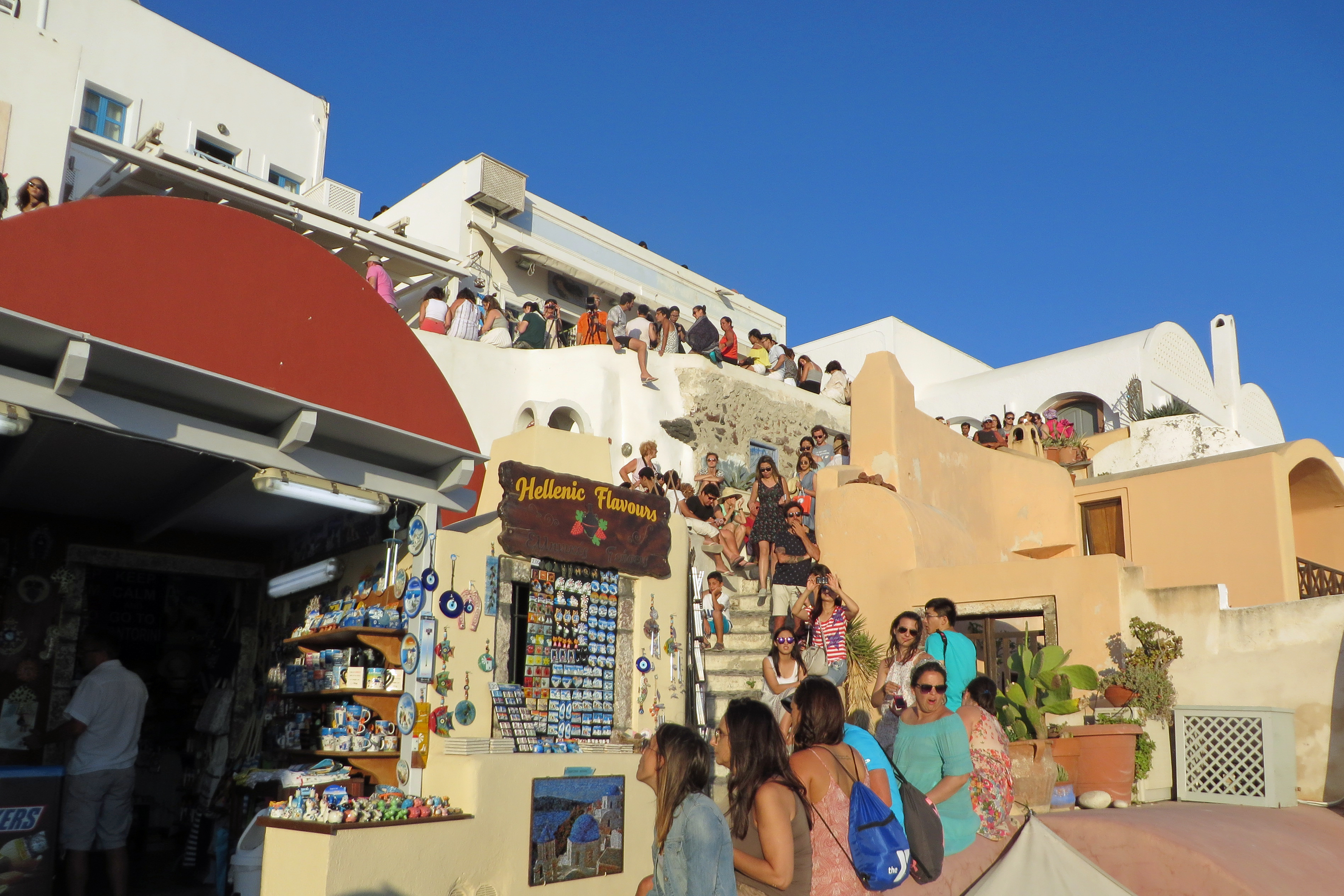
Oia, amazing Oia! Tourists throng its tiny alleyways and sprawl over every inch of walkable space to explore its whimsical shops and experience its out-of-this-world sunsets.

Bookshop on Oia, July 2016

Bookshop on Oia, July 2016

Despite the crowds and tourists with selfie-sticks, it is worth every push and jostle just to be there. We learned that brides will transport their entire wedding entourage to Oia, simply to have a wedding album of spectacular photos. After being there, I can understand why.

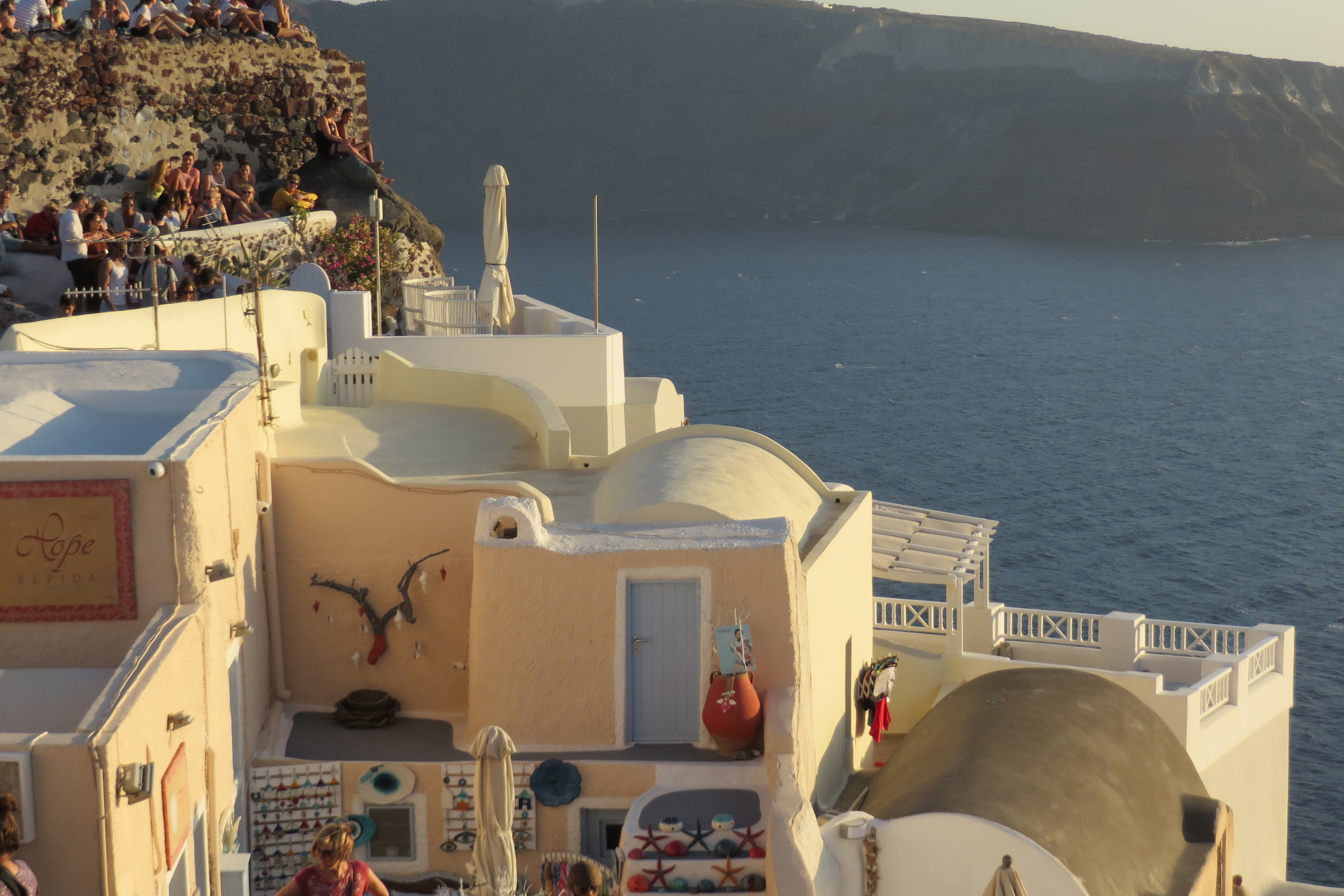
I wonder what it's like to live here? Oia, July 2016

I wonder what it’s like to live here? Oia, July 2016

City on a hill, Oia, July 2016

City on a hill, Oia, July 2016

Headed for the view. Oia, July 2016

Headed for the view. Oia, July 2016

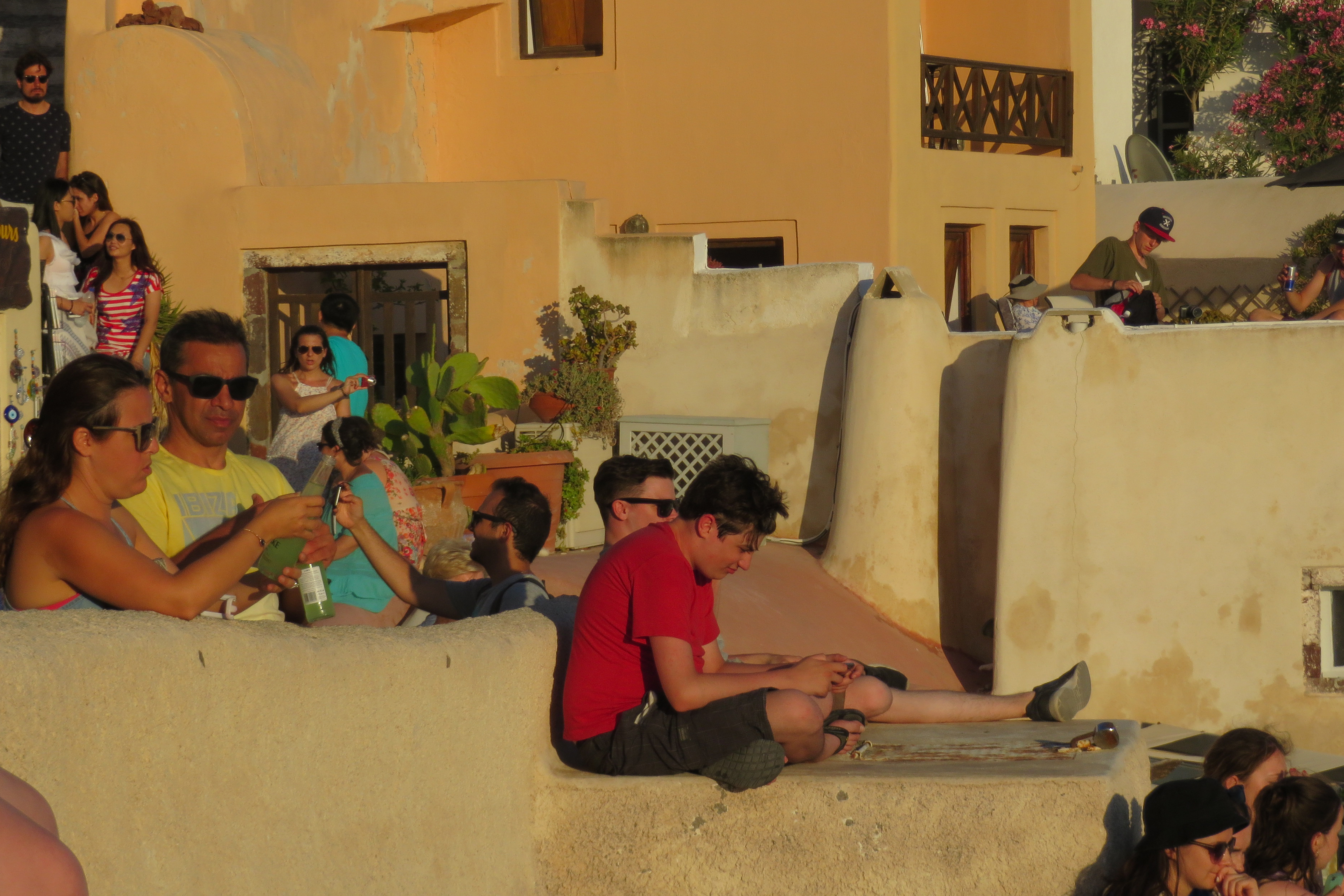
Every available spot is taken, Oia, July 2016

Perched at the top, Oia, July 2016

Every available spot is taken, Oia, July 2016

Every available spot is taken, Oia, July 2016

Jockeying for position to view the sunset, Oia, July 2016

Jockeying for position, Oia, July 2016

Getting close, but not yet sunset, Oia, July 2016

Getting close, but not yet sunset, Oia, July 2016

Andrew and Ben, patiently waiting. Oia, July 2016

Andrew and Ben, patiently waiting. Oia, July 2016

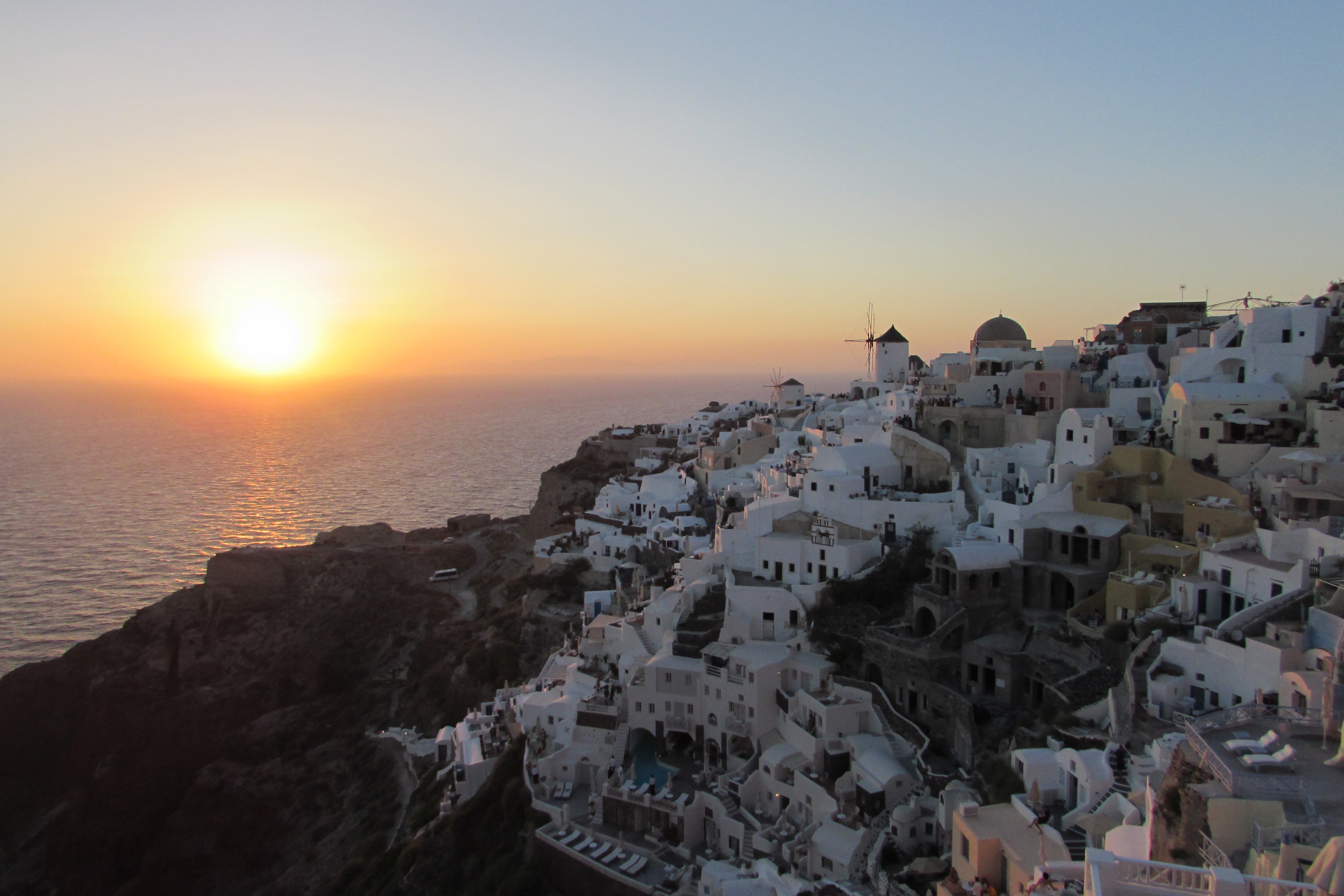
It's worth the wait! Oia, July 2016

It’s worth the wait! Oia, July 2016

It was so hard to leave, but we are so blessed to have been to heaven on earth!

So blessed to be here! Oia, July 2016

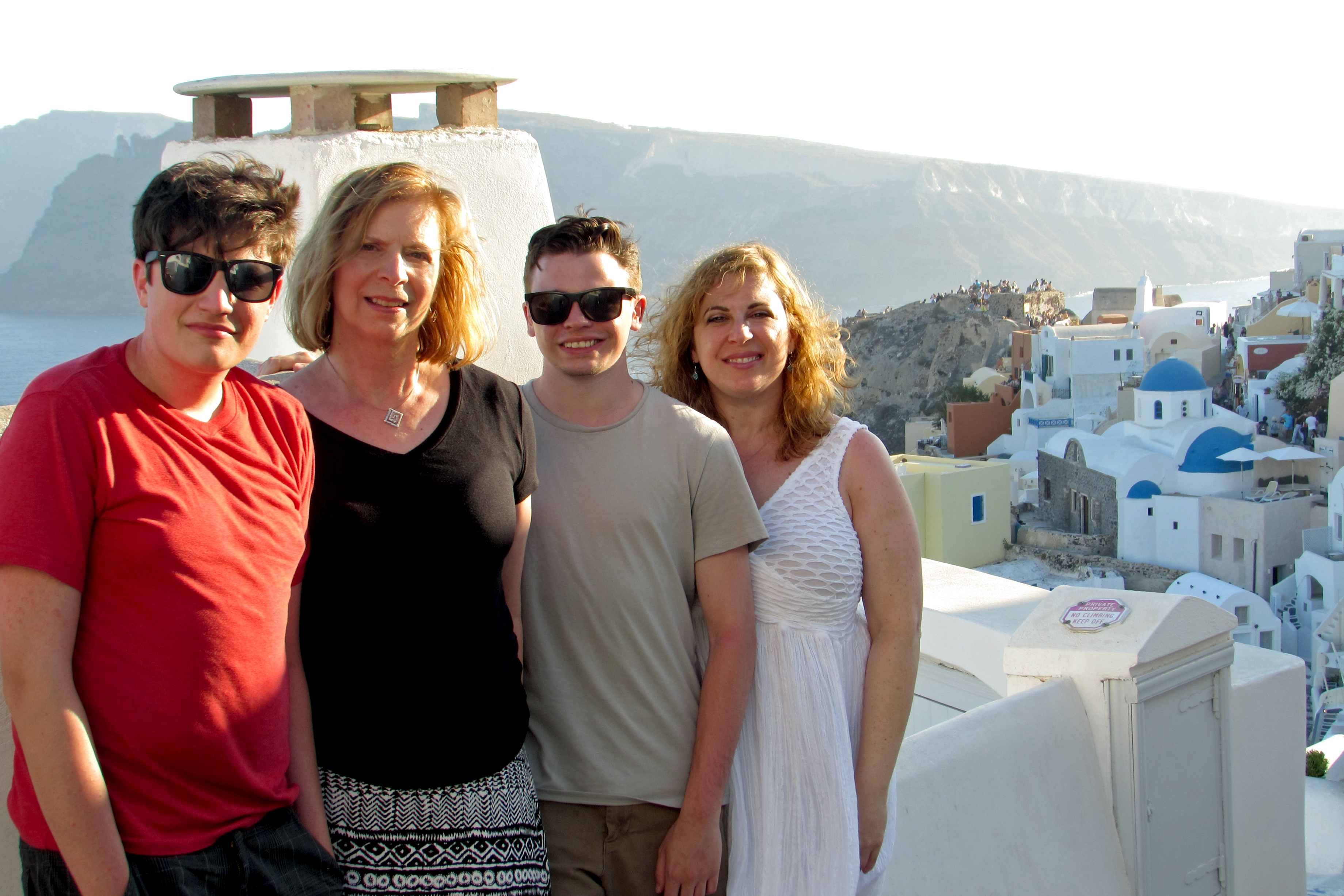
So blessed to be here! Oia, July 2016

Return to Greece, 2016. Part Two: Acropolis Museum & Plaka

This is the second post in a series about my trip to Greece, June 30-July 20, 2016 — an amazing journey of history, family and discovery. Previous posts can be found here.

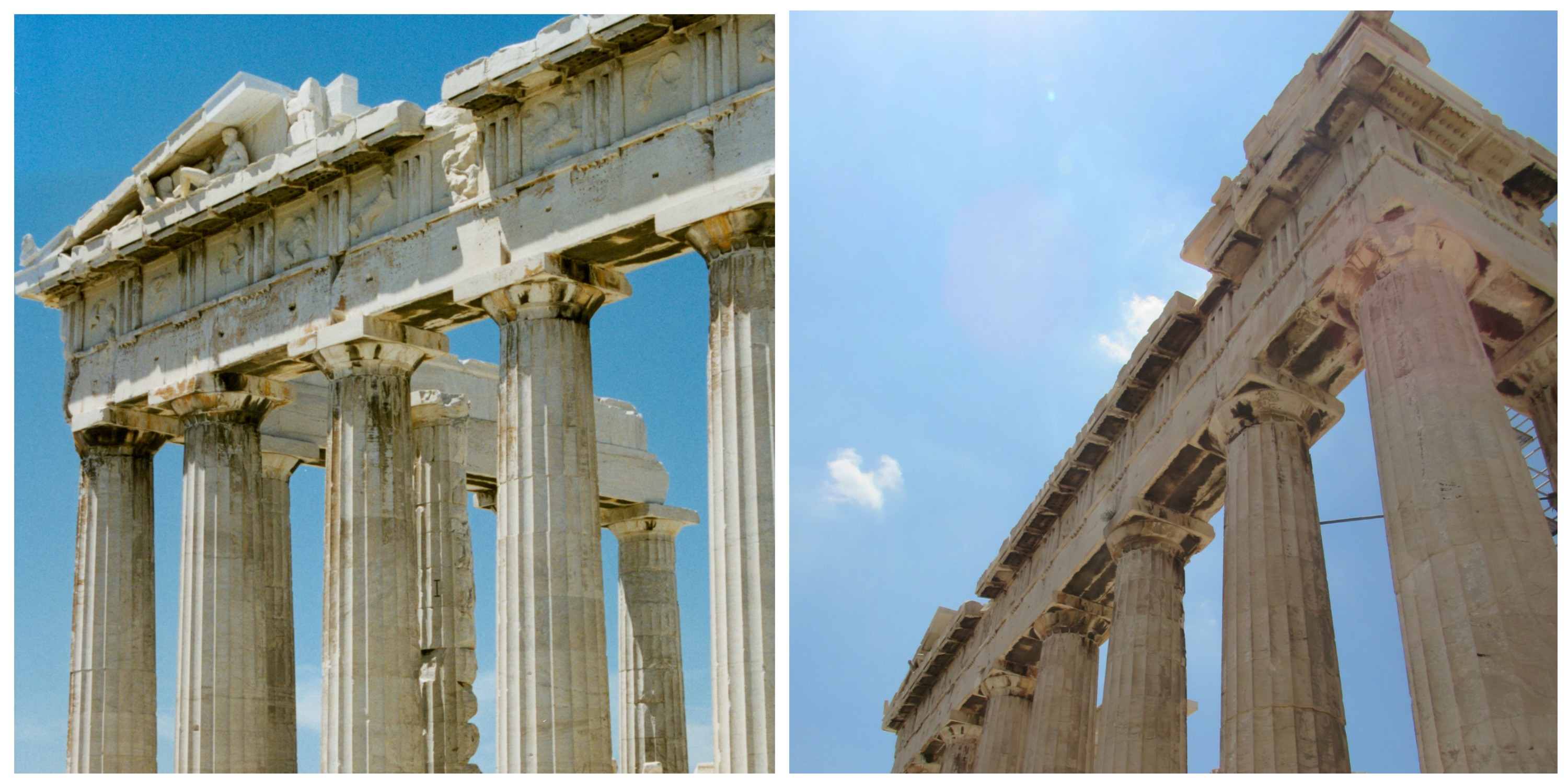
The Acropolis Museum is the beautiful new home of the artifacts, friezes, statues and archaeological treasures that graced the Acropolis’ magnificent edifices. During my first trip to Greece in the 1996, fragments of the friezes graced the top of the Parthenon, enabling me to visualize its magnificence during its days of glory. Now, only the columns remain.

left: Parthenon, 1996; right: Parthenon 2016

left: Parthenon, 1996; right: Parthenon 2016

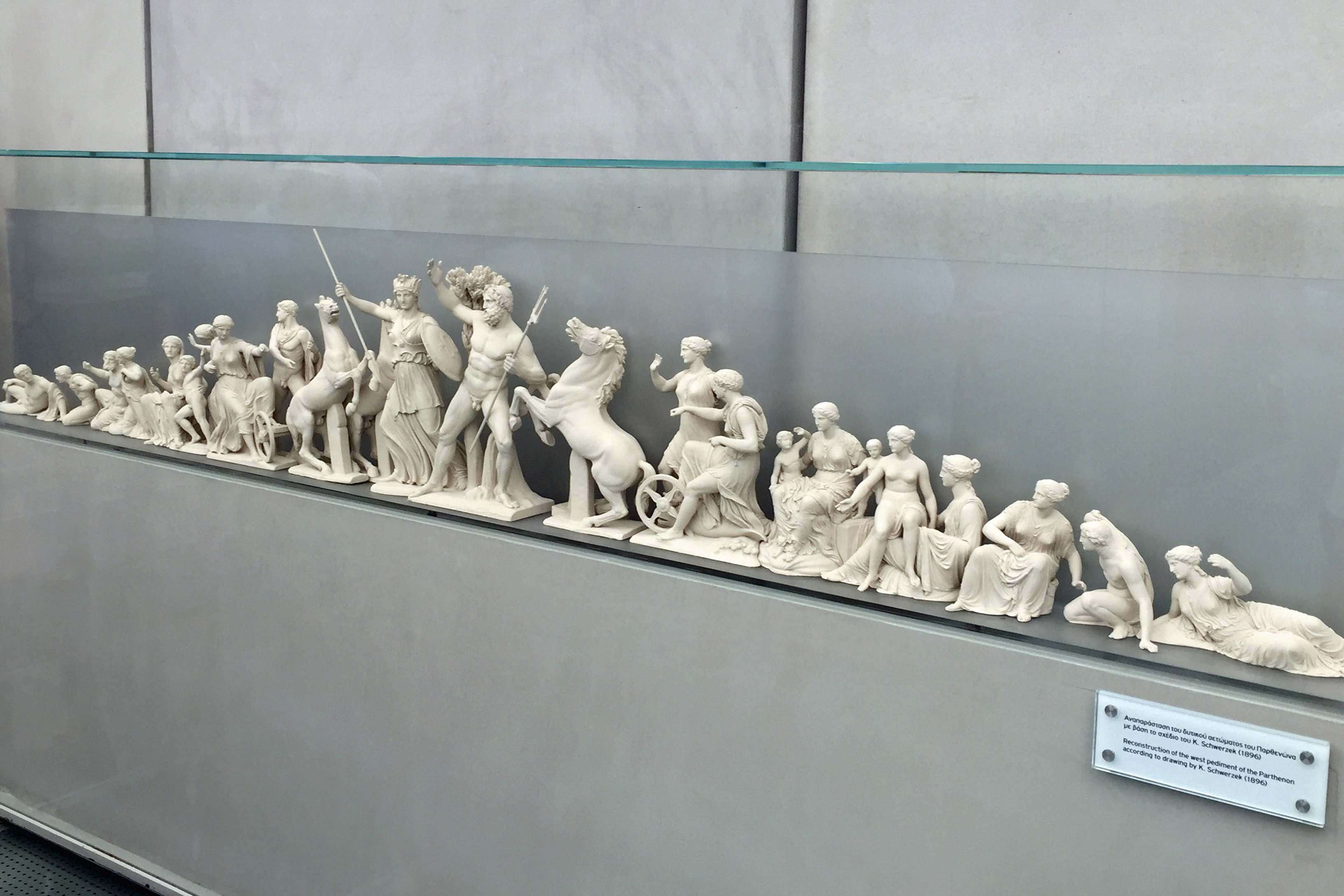
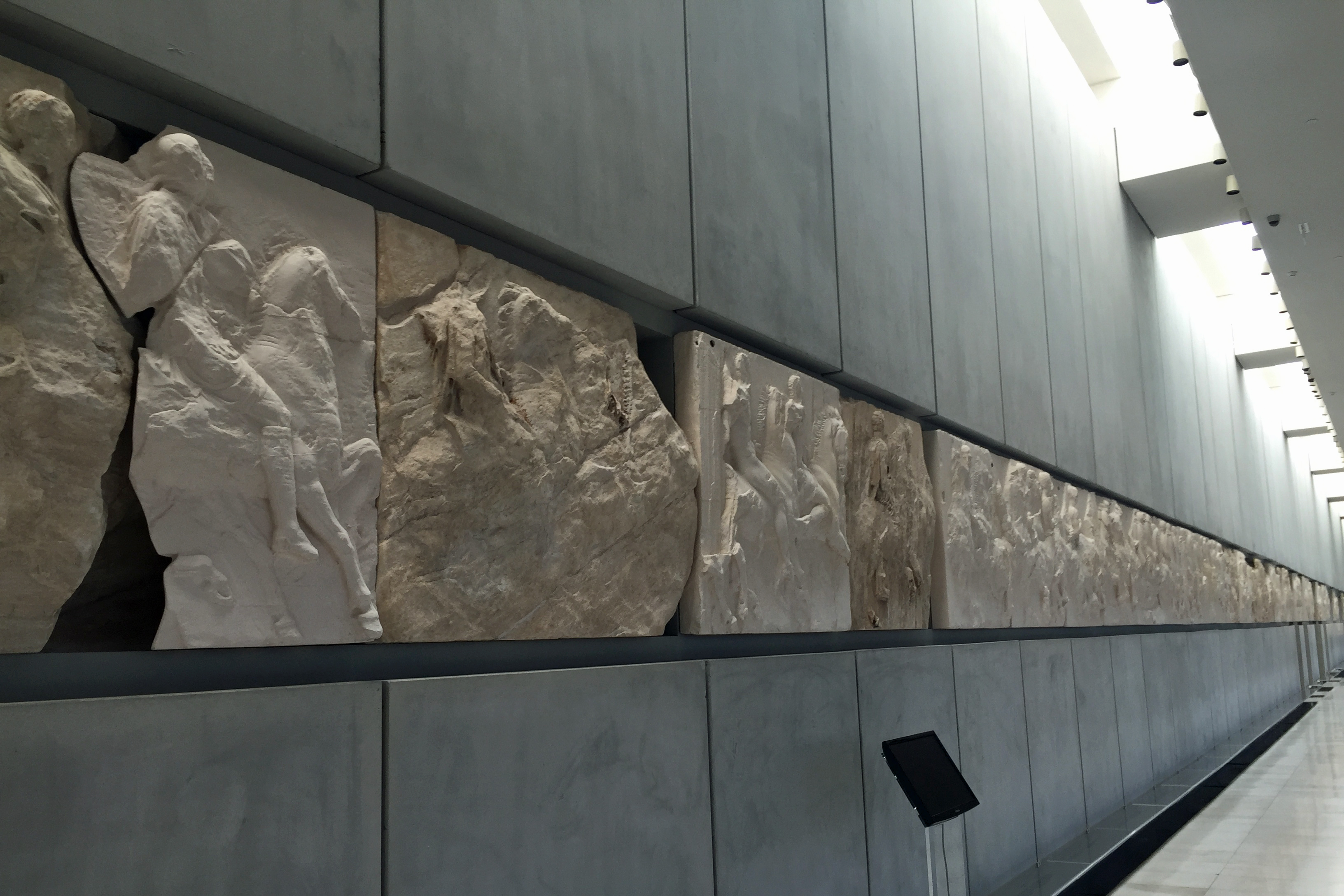
The Museum has 50 meters of the original frieze, with 80 meters in the British Museum. How sad that so many pieces remain outside Greece!

Frieze, replica. July 2016

Frieze, replica. Acropolis Museum, July 2016

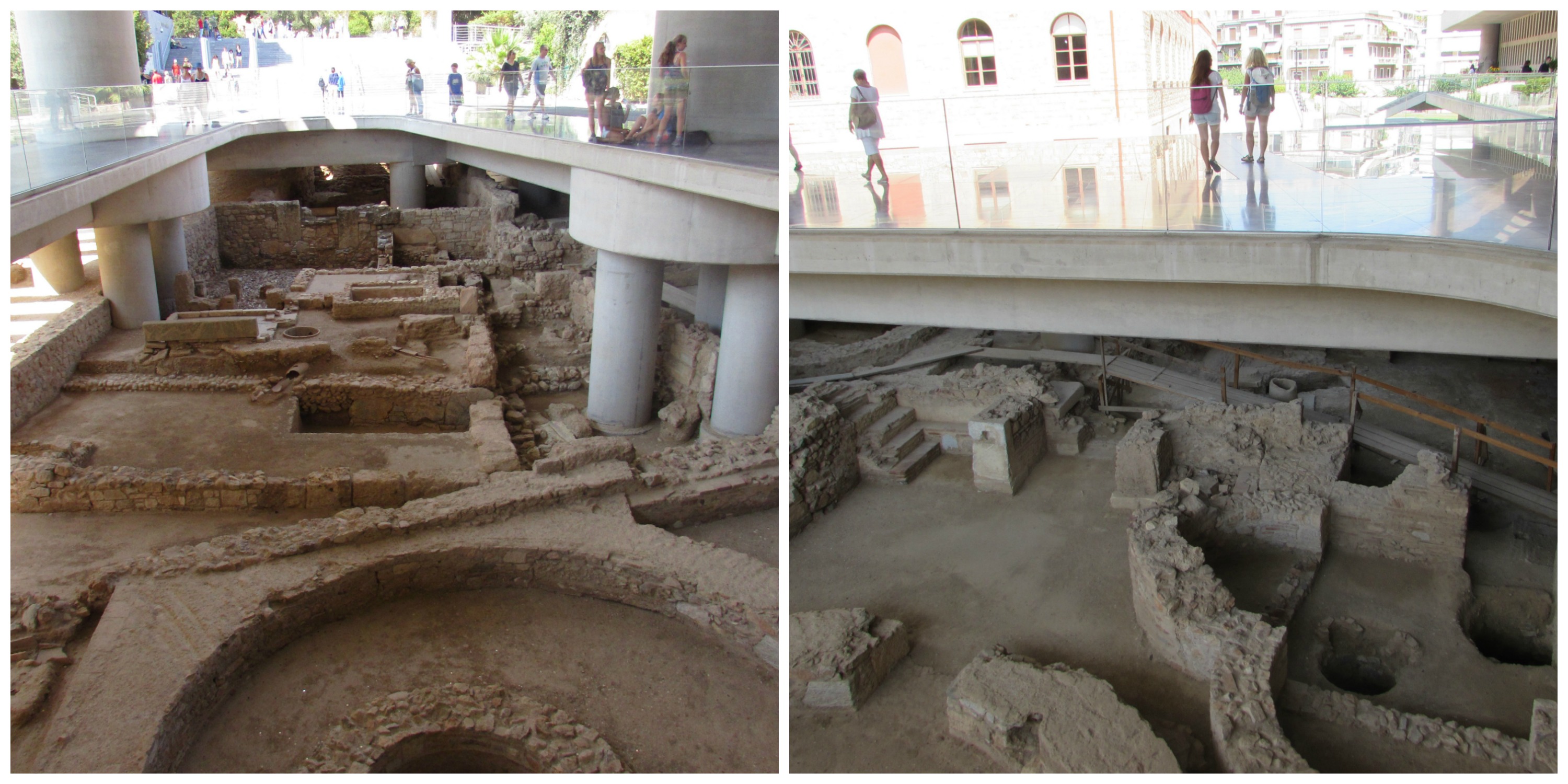
Just walking up to the Museum is an archaeological wonderland. A clear glass pathway reveals the treasures beneath; remnants of everyday life, millennia ago, have been meticulously preserved. It made me wonder how man could build on top of the historical cache below.

Under the Acropolis Museum, July 2016

Under the Acropolis Museum, July 2016

Wandering through the halls and viewing the displays is a historical feast. The photos below are but a sampling of the riches within. Photography is not allowed in most sections of the Museum, so our pictures are very limited. However, the Museum’s website has many magnificent photos:  http://www.theacropolismuseum.gr/en.

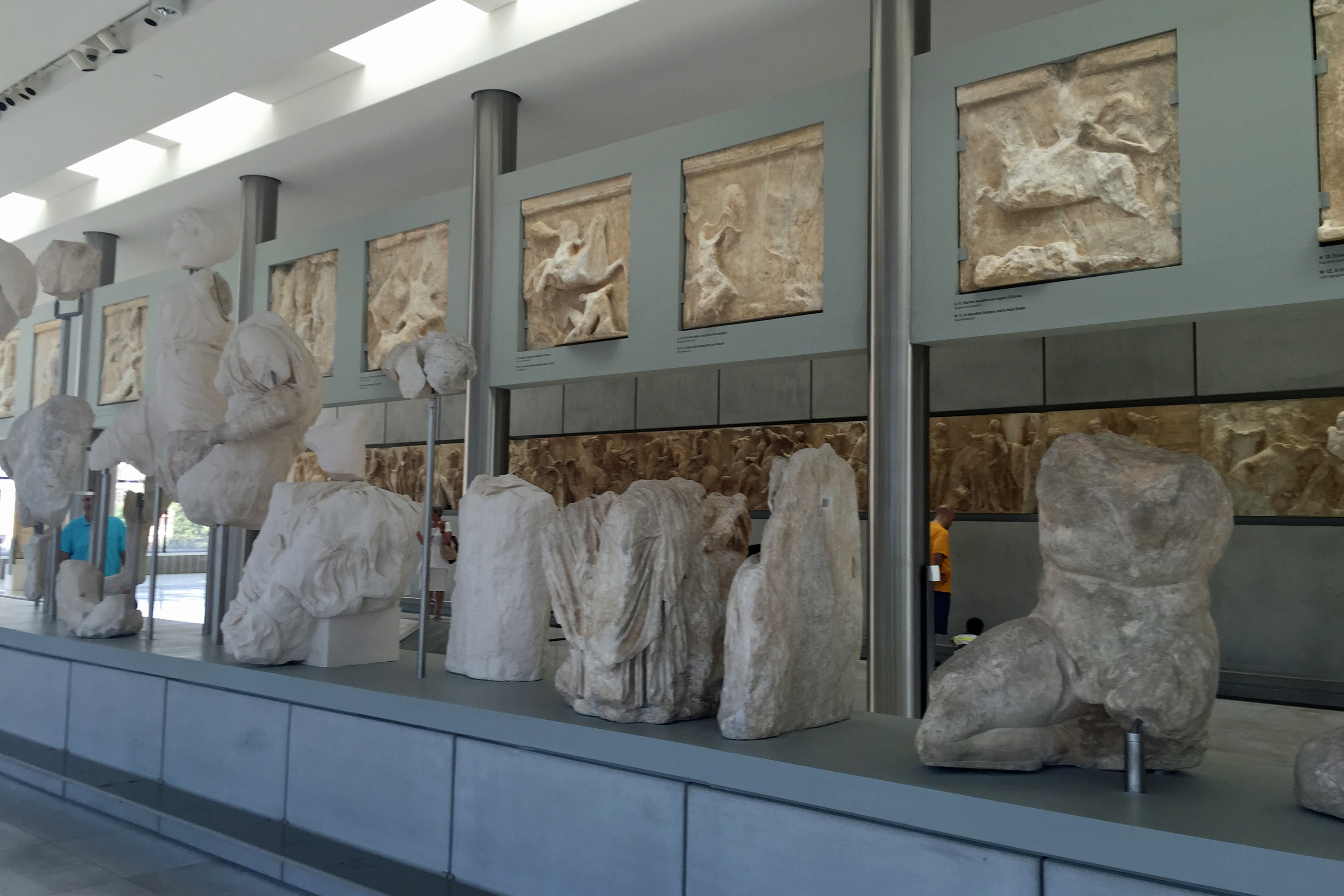
The Metopes and artifacts, July 2016

Artifacts, July 2016

The Metopes, depicting battle scenes; July 2016

The Metopes, depicting battle scenes; July 2016


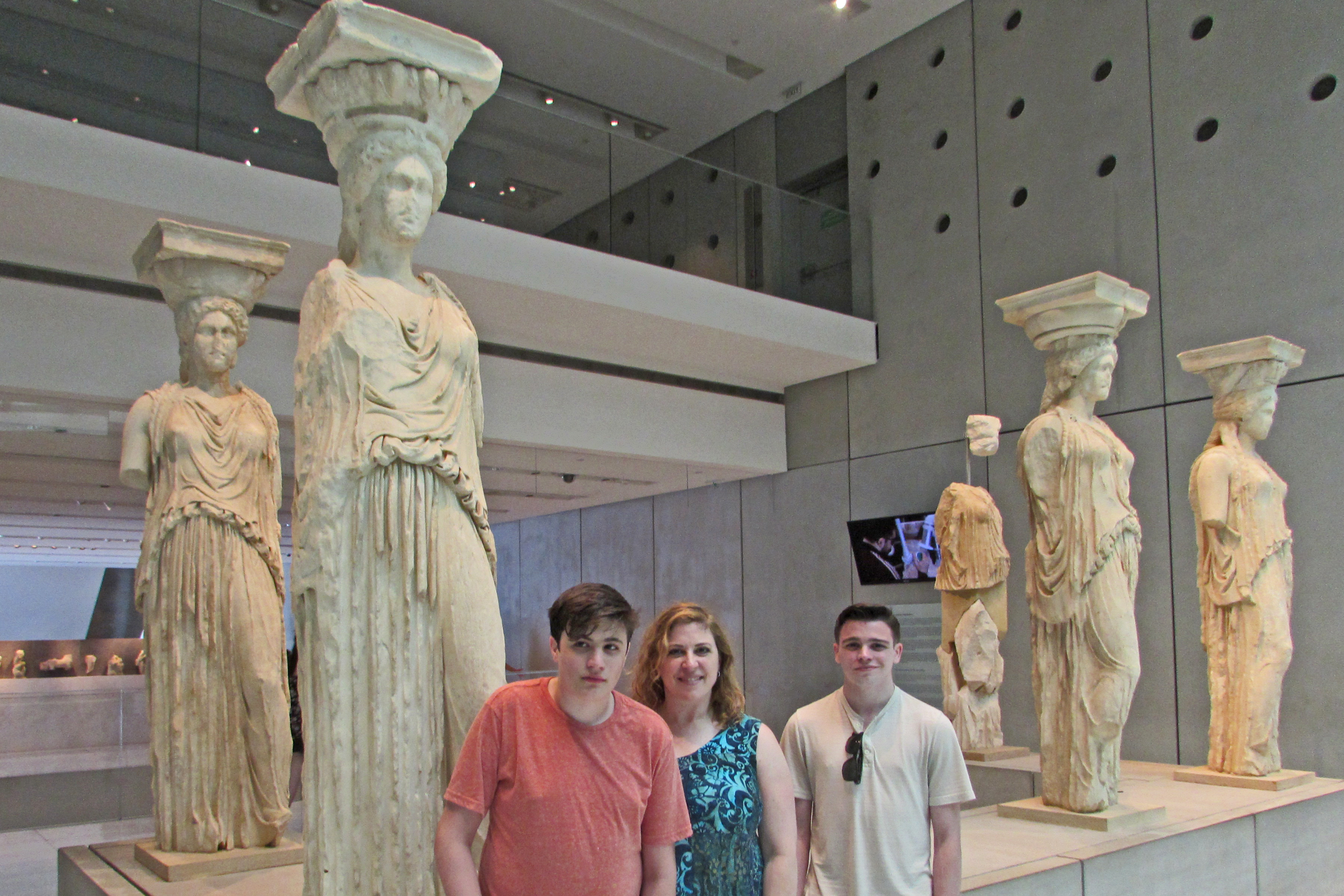
Andrew Soper, Kathy Lynard, Ben Soper in front of the Karyatides, July 2016

Andrew Soper, Kathy Lynard, Ben Soper in front of the Karyatides, July 2016


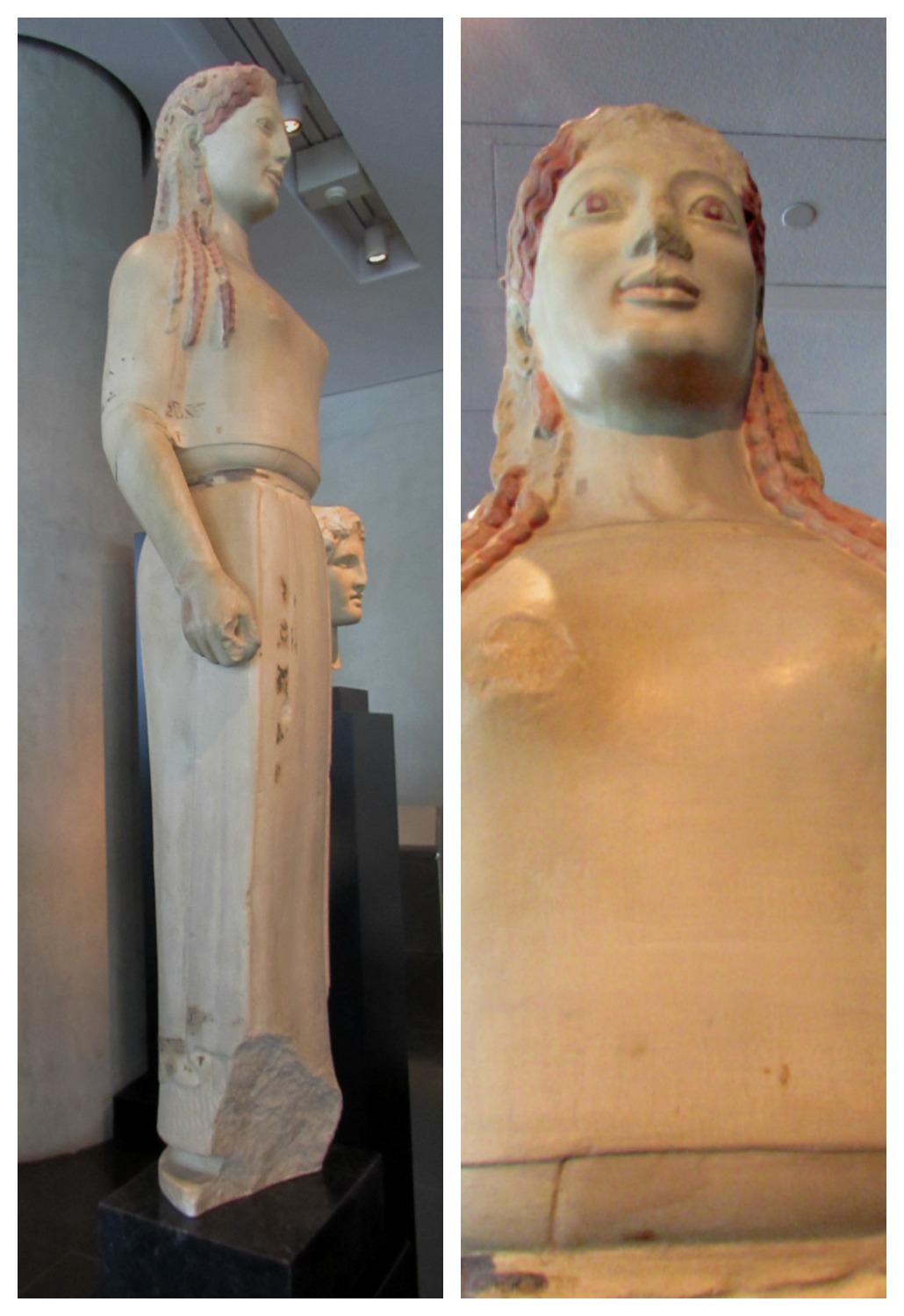
Ancient beauty, July 2016

Ancient beauty, July 2016

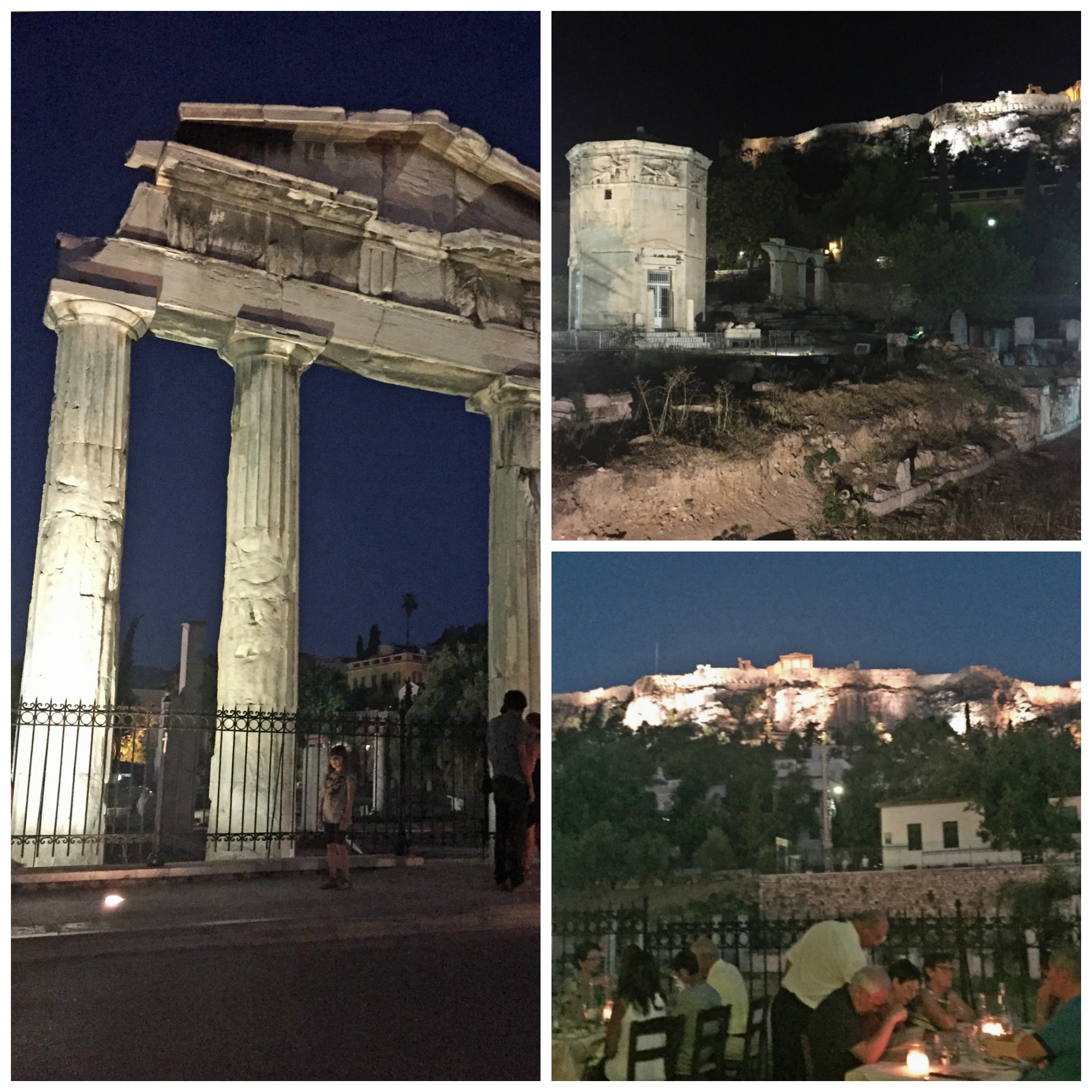
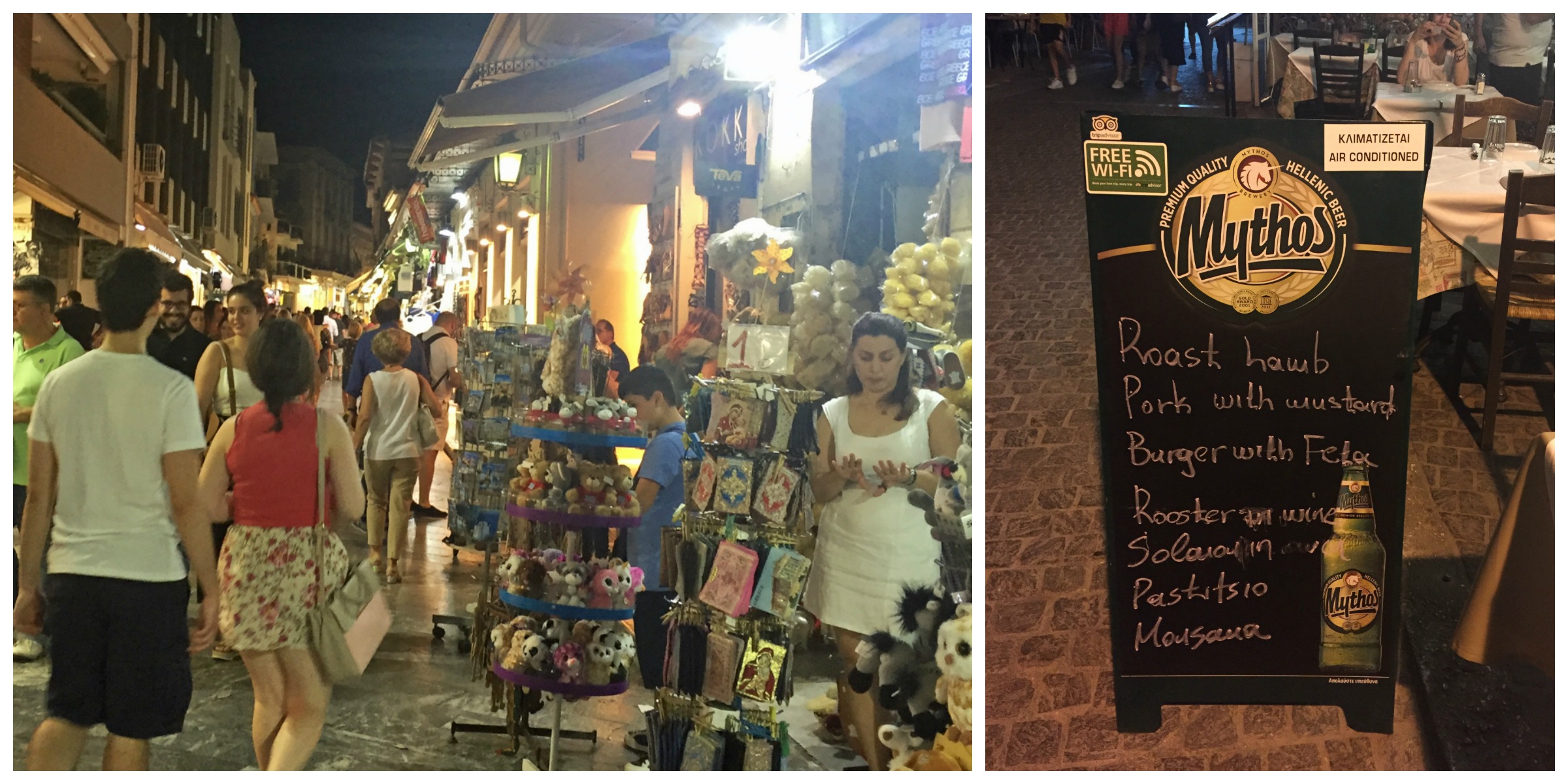
Windows encasing the museum provide astounding views of the area around the Acropolis, known as the Plaka. Waiting until the cool of evening to explore the Plaka is a wise move in July! The area is filled with hundreds of shops and tavernas. Both tourists and locals throng the area long into the night; shops don’t close until midnight and the tavernas stay open long after. You can buy anything from trinkets to precious jewelry to replicas of ancient artifacts. Accenting the streets are yet more monuments–a constant reminder of where you are and what this city has been, as well as what it is today.

A constant reminder of where you are! Plaka, July 2016

A constant reminder of where you are! Plaka, July 2016

Plaka, July 2016

Plaka, July 2016