Return to Greece, 2016. Part One: Athens

This iAcropolis flag 07-01s the first in a series of posts about my trip to Greece, June 30-July 20, 2016 — an amazing journey of history, family and discovery. This trip builds upon the research I conducted during my previous visit in 2014; those posts can be read here.  

The Acropolis never fails to move me. Through its 2,500 year history, the structures (Parthenon, Erechtheion, Propylaia, and temple of Athena Nike) have stood as beacons of majesty and edifices of glory.
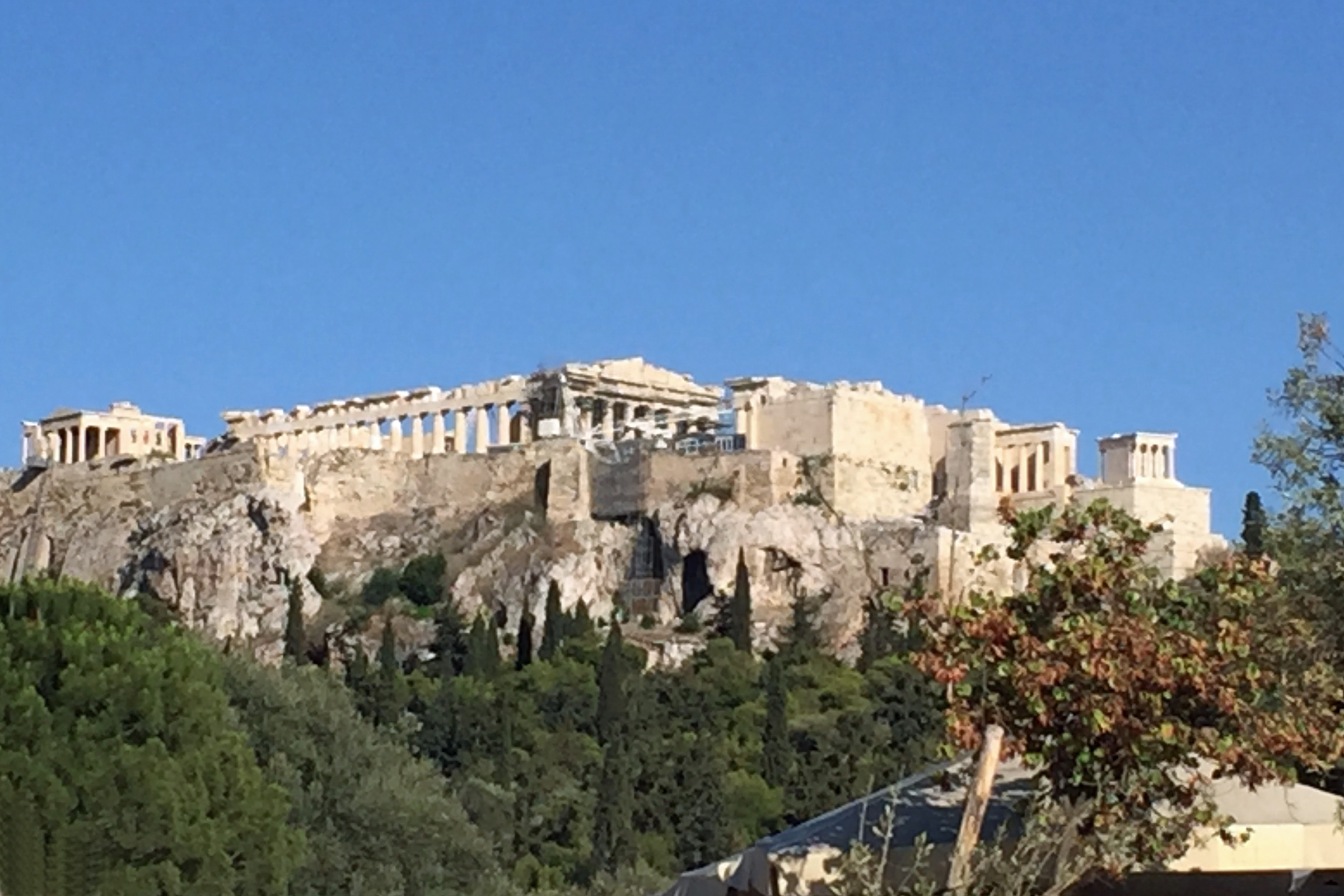
Acropolis, July 2016

Acropolis, July 2016

I am beyond thrilled to have the opportunity to bring my Greek grandchildren to the land of their ancestors. My daughter, Kathy, joined me as she did in 2014. Last time, we took her daughters, Elli and Christine; this time we brought her older sons, Ben and Andrew.
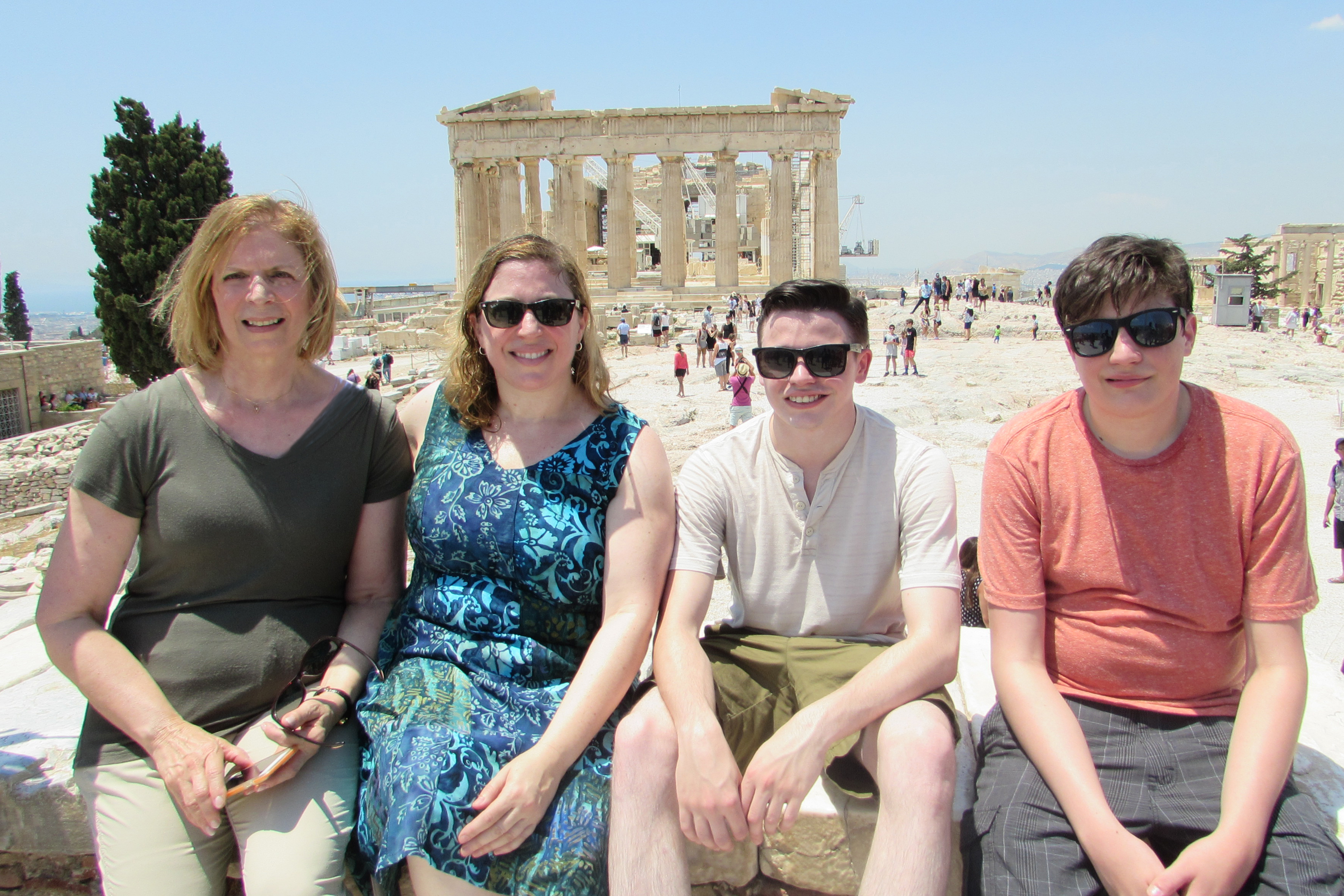
l-r: Carol Kostakos Petranek, Kathryn Lynard, Ben Soper, Andrew Soper, July 2016
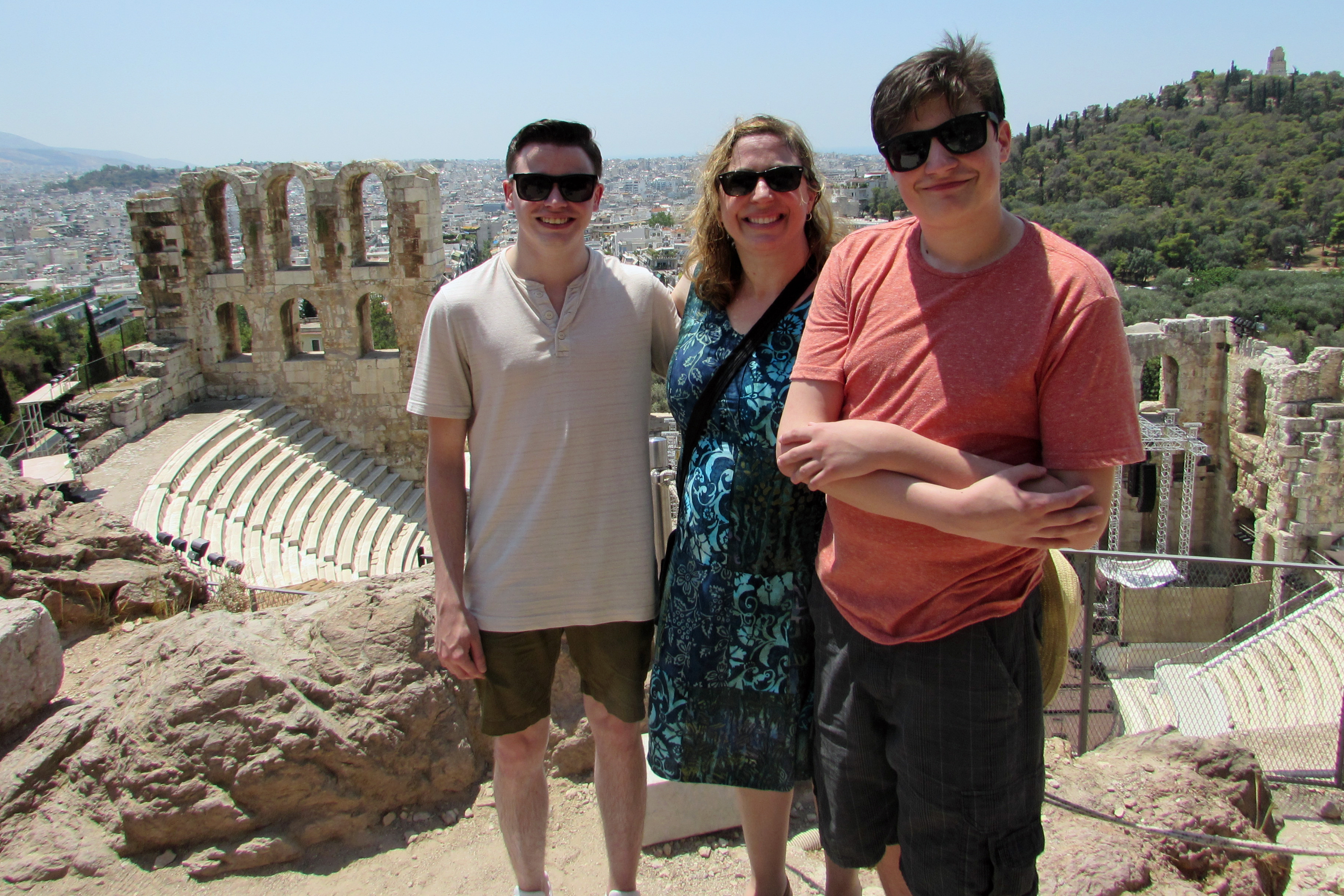
l-r: Carol Kostakos Petranek, Kathryn Lynard, Ben Soper, Andrew Soper, July 2016

Acropolis Andrew,Ben,Kathy 1

l-r: Ben Soper, Kathy Lynard, Andrew Soper, July 2016

Although it was just two years ago that I stood on these grounds, I was elated to return and absorb the spirit that radiates from every column and piece of marble. I feel the “collective unconscious” of this land (Joseph Conrad, Heart of Darkness); the pride of the Greek people; their triumphs, defeats and revivals.

Immersion in history is comprehending the timelessness of the human experience; connecting oneself with the whole of mankind. It is astounding and humbling–never to be dismissed or forgotten.
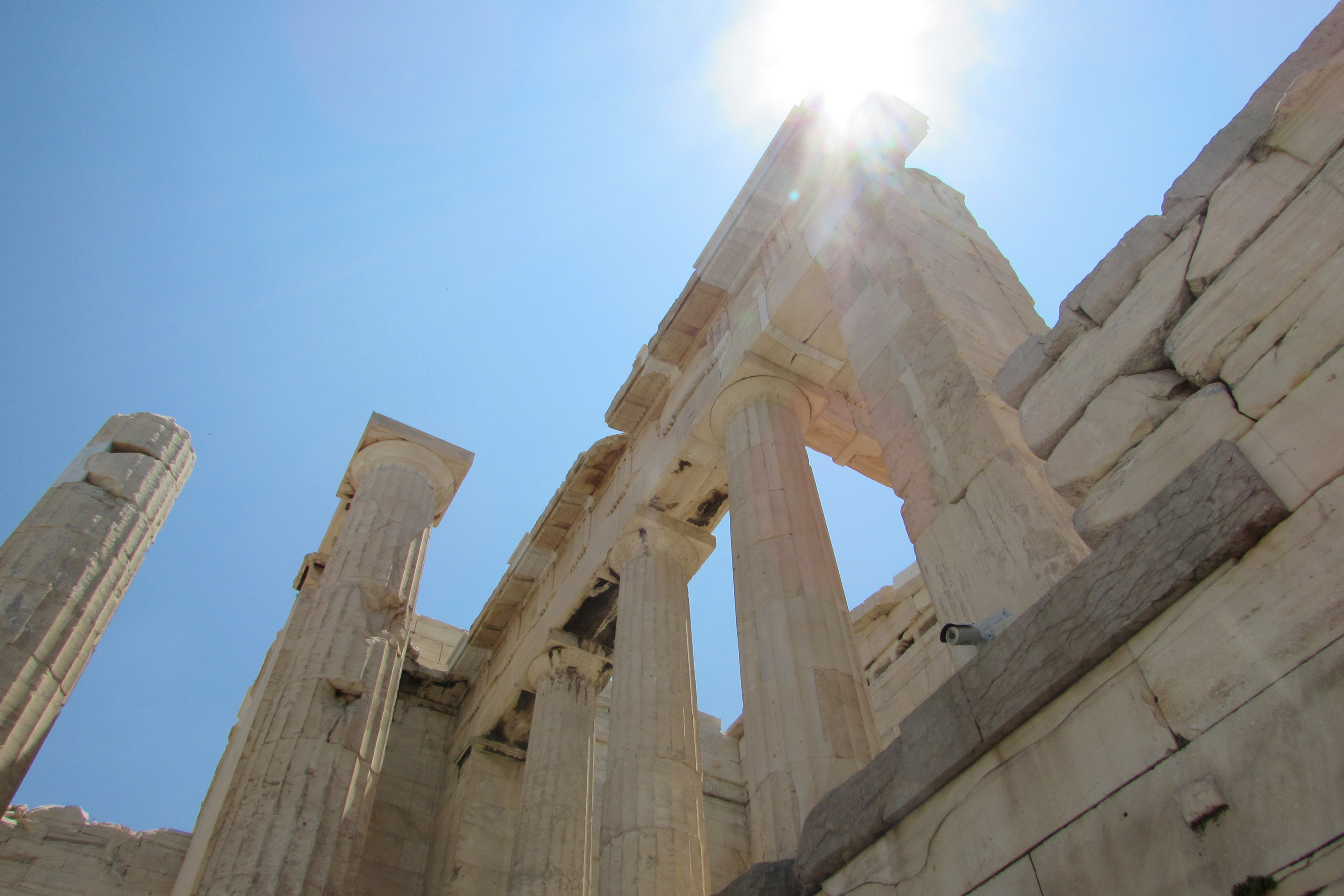
Acropolis 11

Sunlight on the Acropolis; photo by Kathy Lynard, July 2016
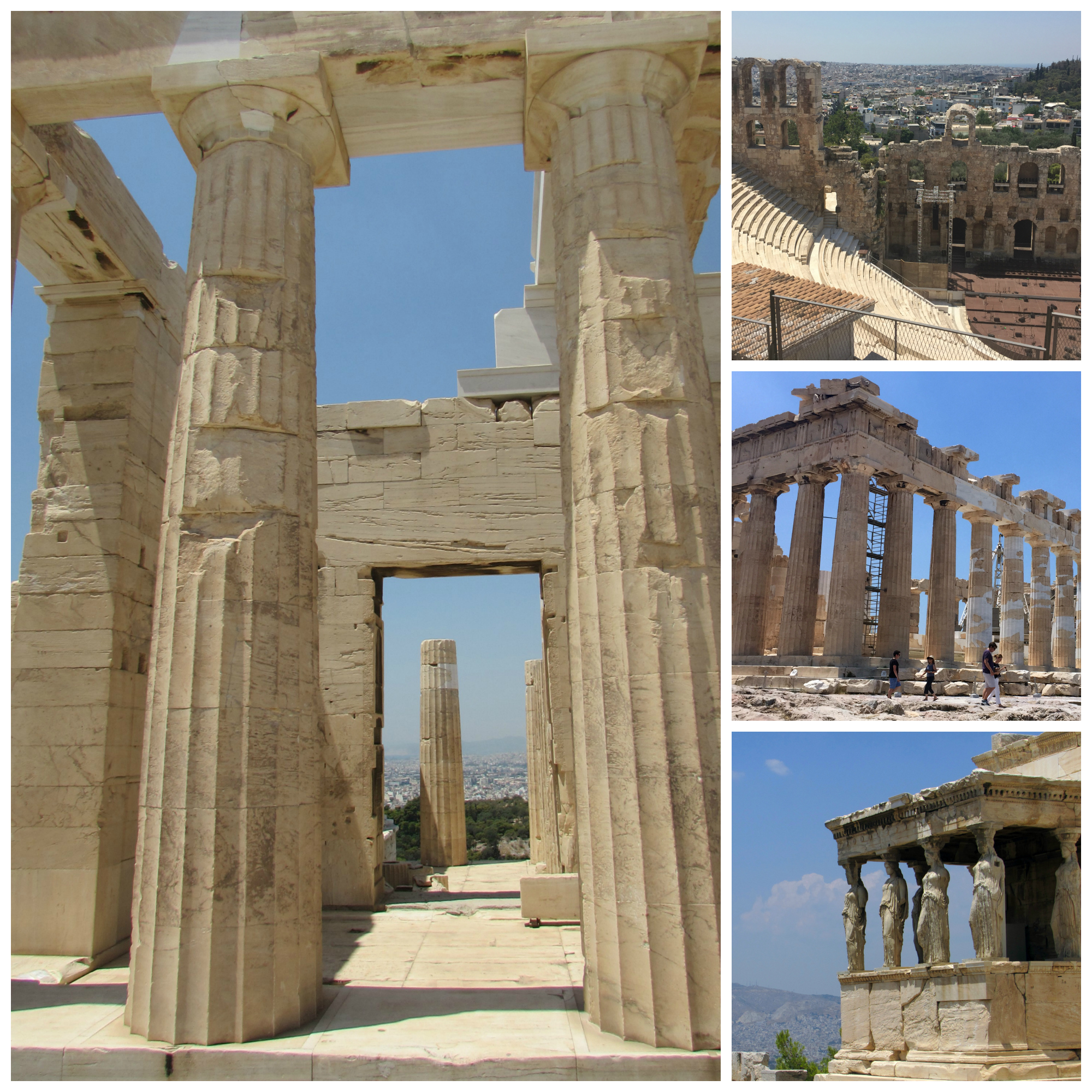
Acropolis collage

Pure majesty, July 2016

Acropolis 31

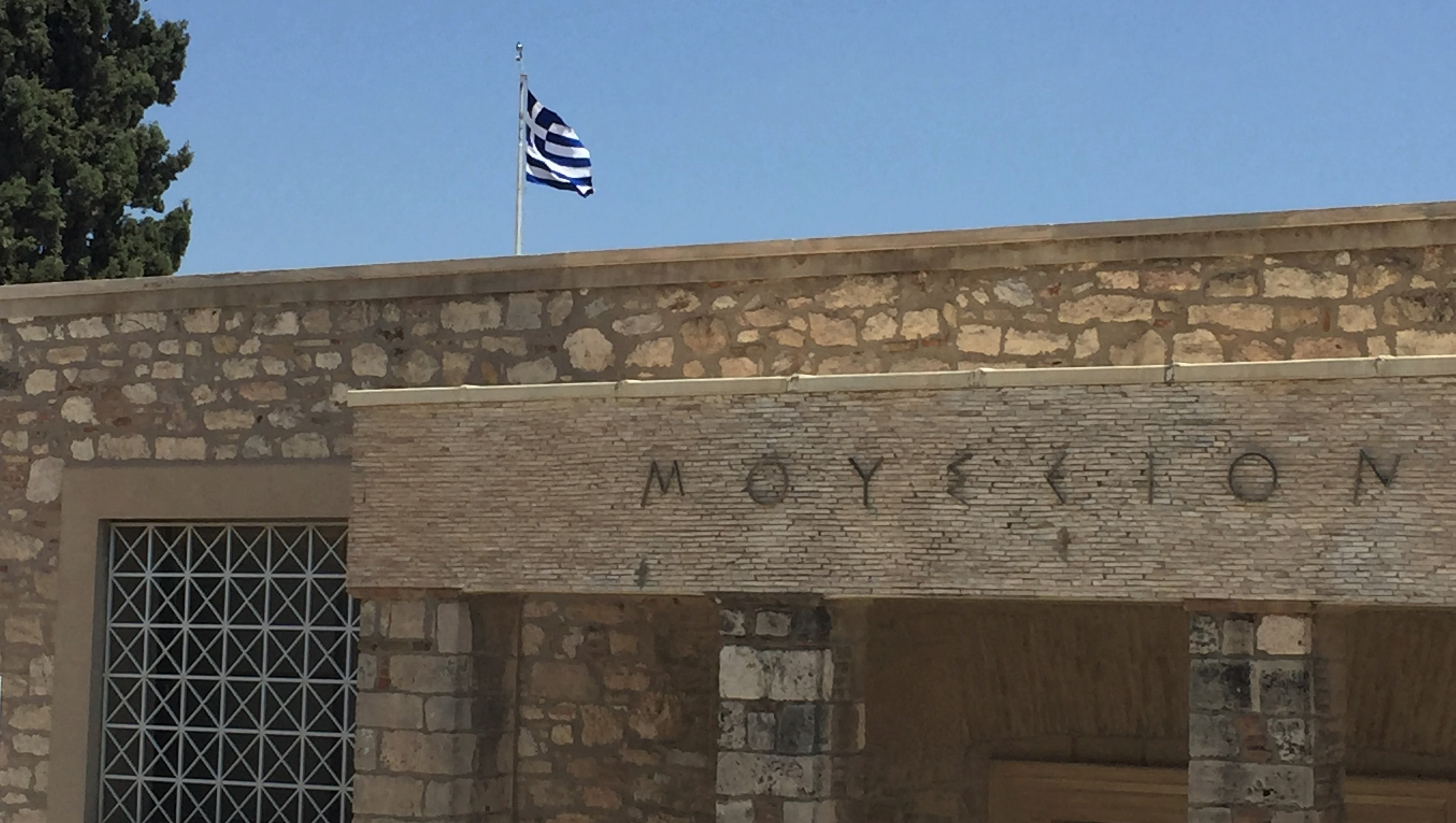
Old Museum on Acropolis site; July 2016
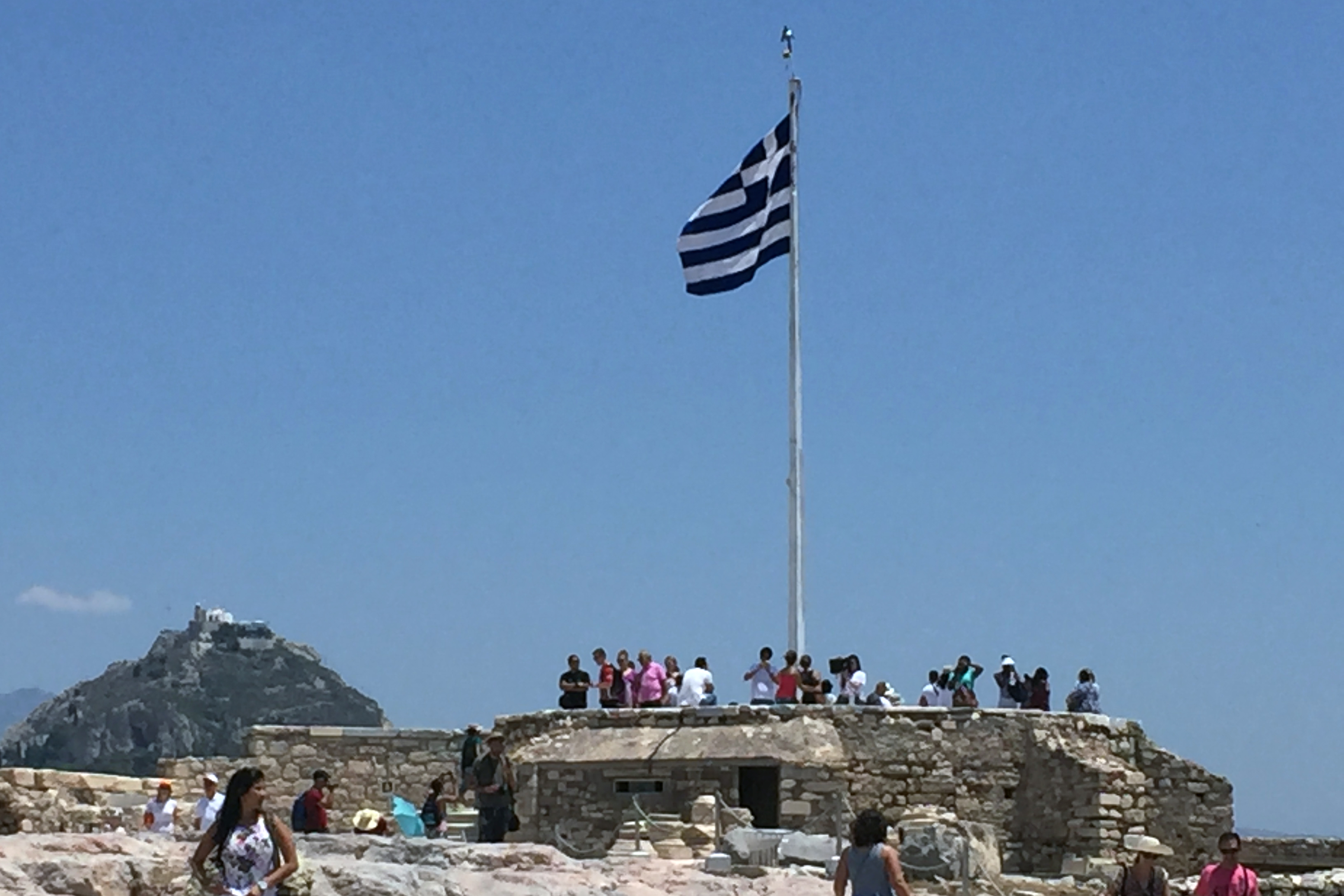
Acropolis b 07-01

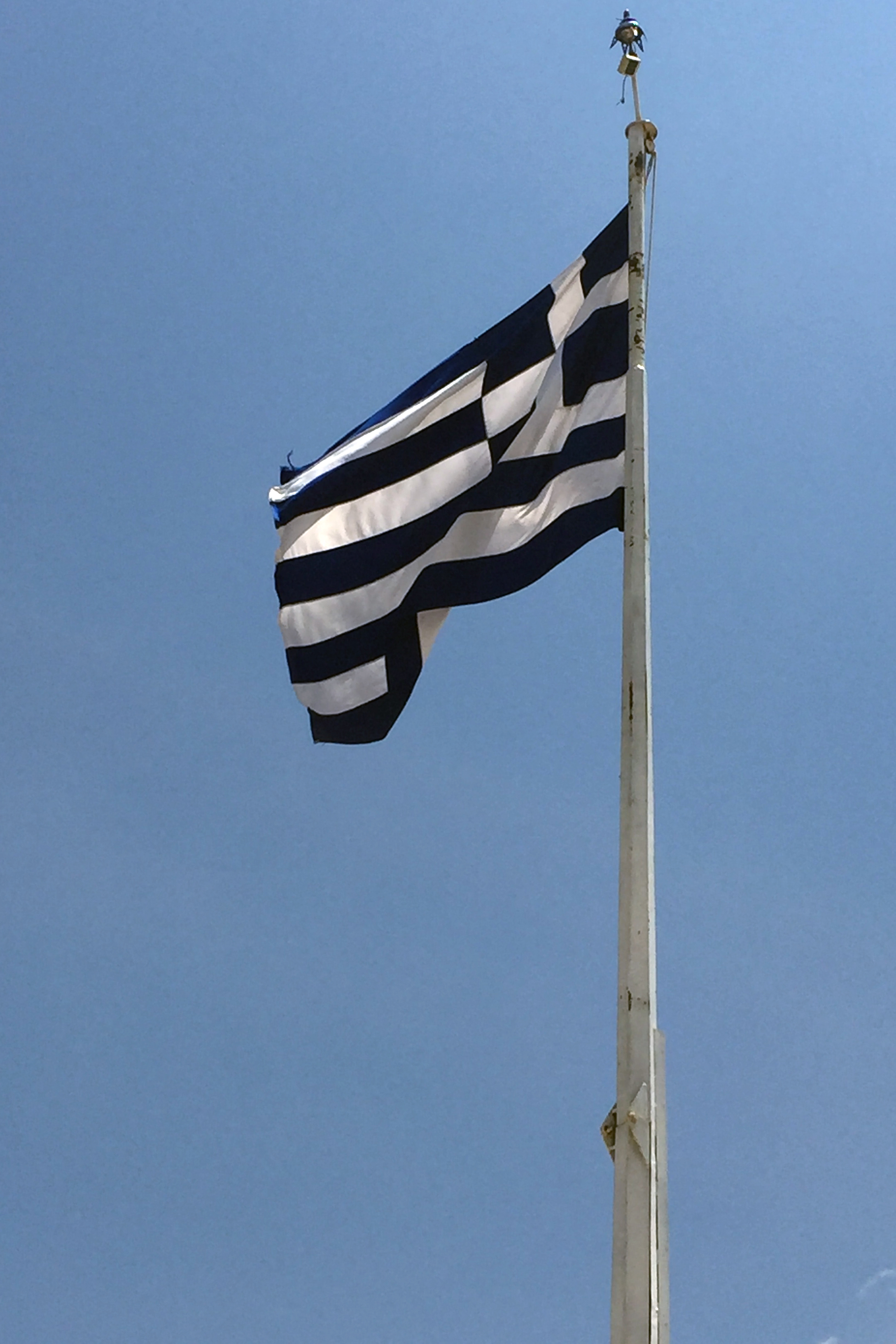
The flag of Greece flies proudly on the Acropolis, July 2016

Greece in July is hot! I quickly learned that 40 Celsius is 104 degrees Farenheit! It doesn’t matter that the heat is dry; I found myself wilting in the sun. Rather than walk, we decided to hop on a tour bus to take us around the city — a wise and refreshing choice.

Athens is a mixture of old and new; classic and modern. The contrast of stately Grecian columns with flat, square, concrete residential buildings is glaring. Sadly, graffiti covers many statues and buildings, detracting from their elegance. Churches are everywhere, as are motorcycles. Driving in the twisting, narrow streets is a nightmare. Several times, my GPS and Google Maps were as lost as I was!
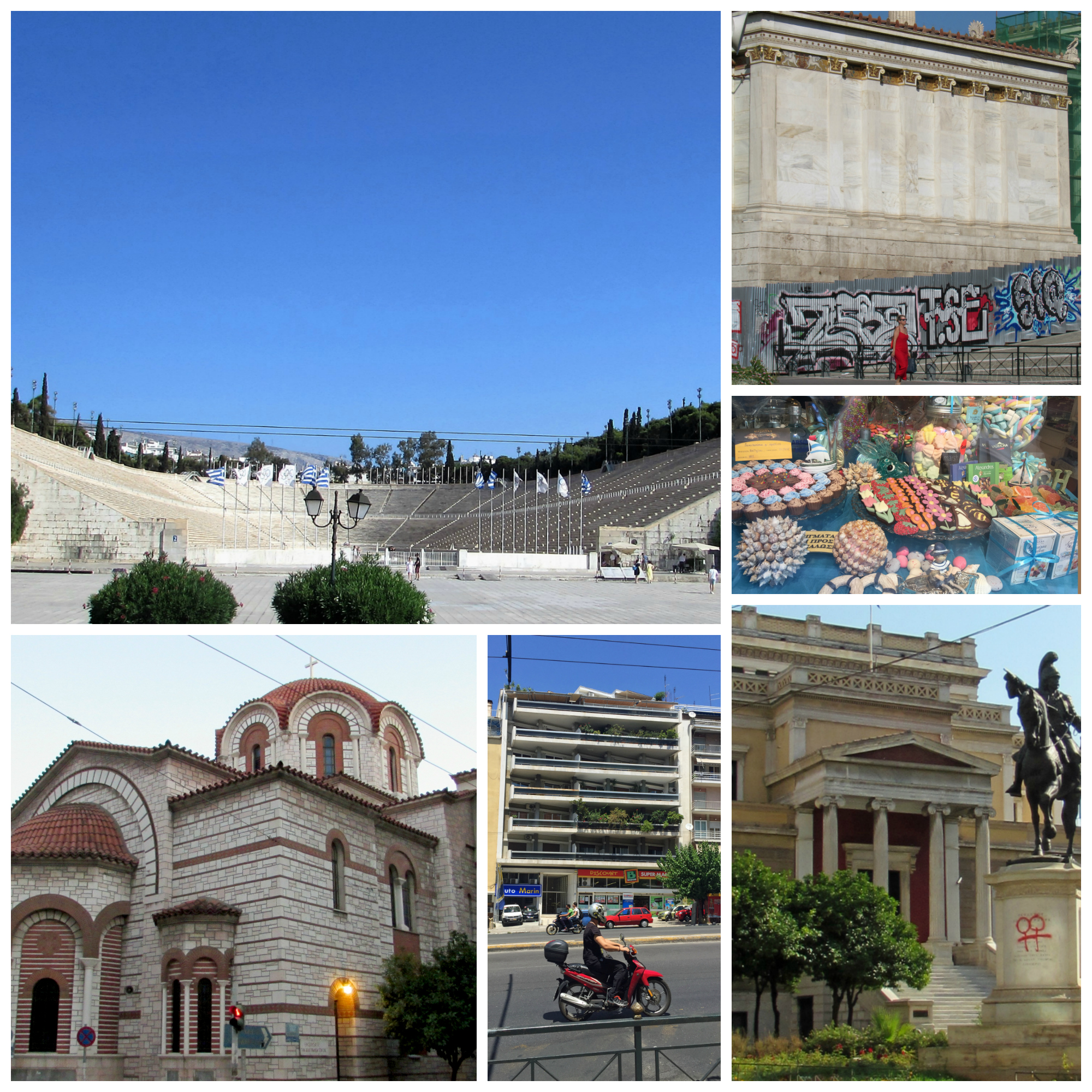
Athens City

Athens City, July 2016

Many families in all parts of Greece have apartments in Athens. Work, school, and the need to conduct business in the city has created a massive urban sprawl, radiating from the city center into the foothills.
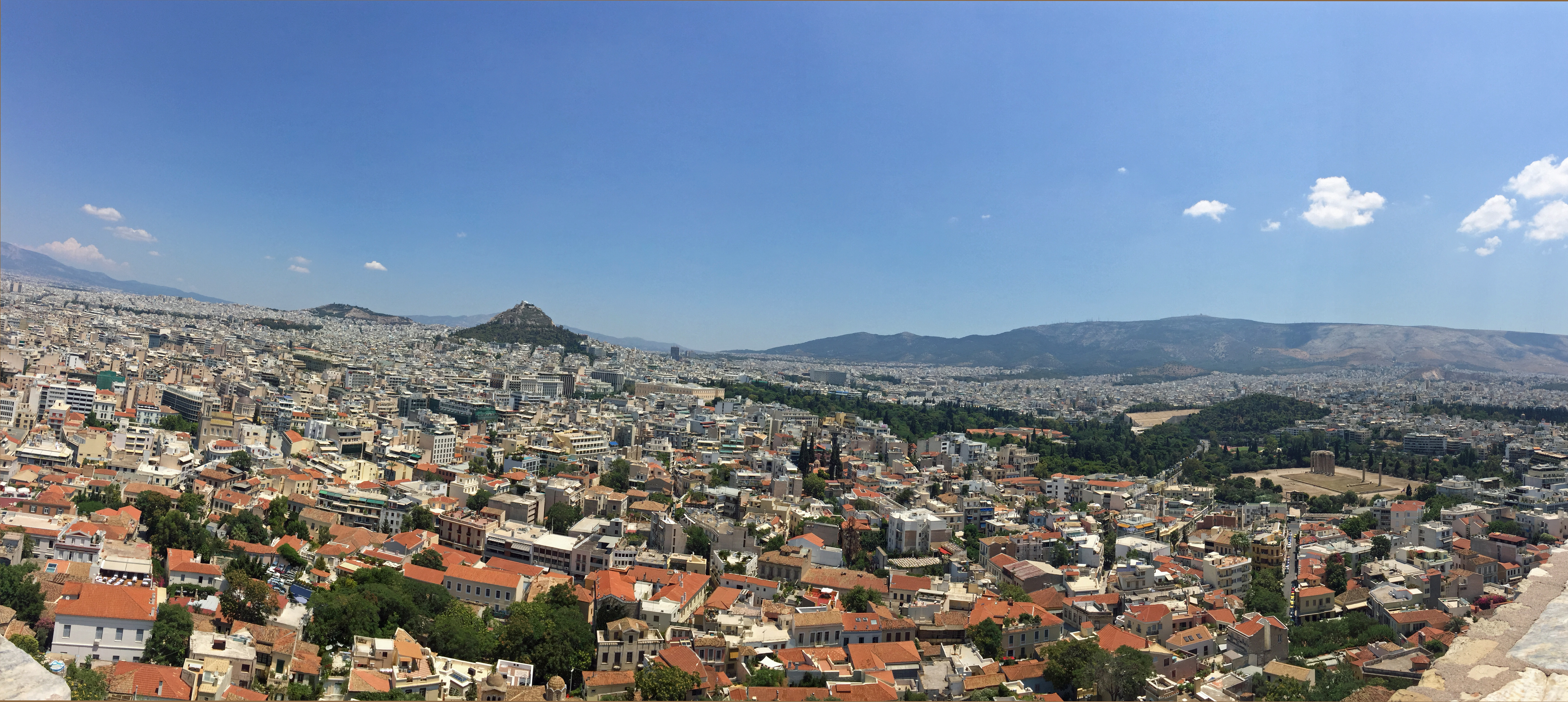
Overlooking Athens, July 2016

Overlooking Athens, July 2016

Monastiraki Square, in the center of Athens and adjacent to the Plaka, is a lively place to spend an evening. Our friends, Gregory Kontos and Giannis Michalakakos, met us for drinks and dinner. The rooftop restaurant gave us a breathtaking view.
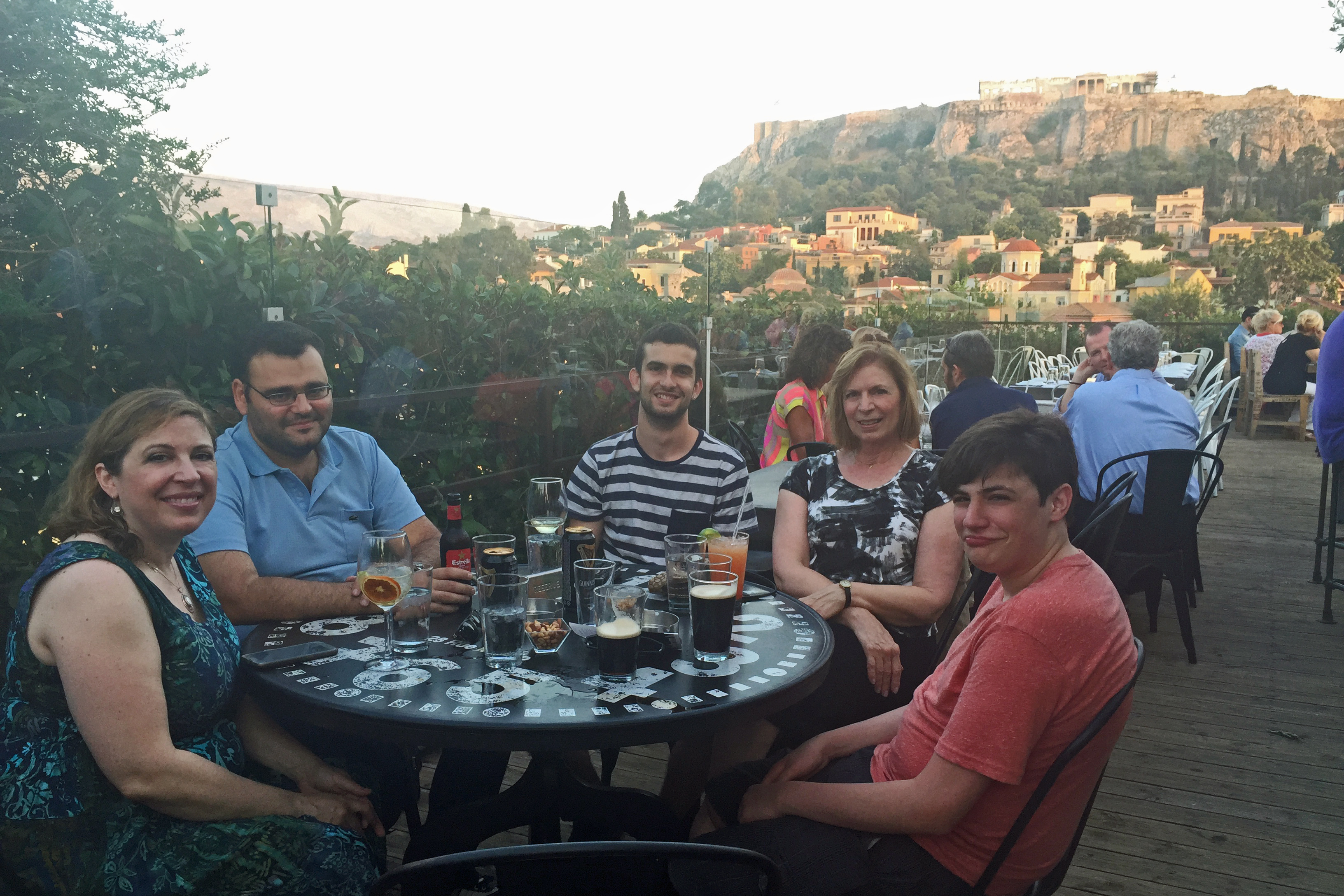
Drinks at dusk, Monastariki Square. l-r: Kathy Lynard, Giannis Michalakakos, Gregory Kontos, Carol Kostakos Petranek, Andrew Soper, July 2016

Drinks at dusk, Monastariki Square. l-r: Kathy Lynard, Giannis Michalakakos, Gregory Kontos, Carol Kostakos Petranek, Andrew Soper, July 2016

And just when you think it can’t get any more beautiful, night falls on the city.
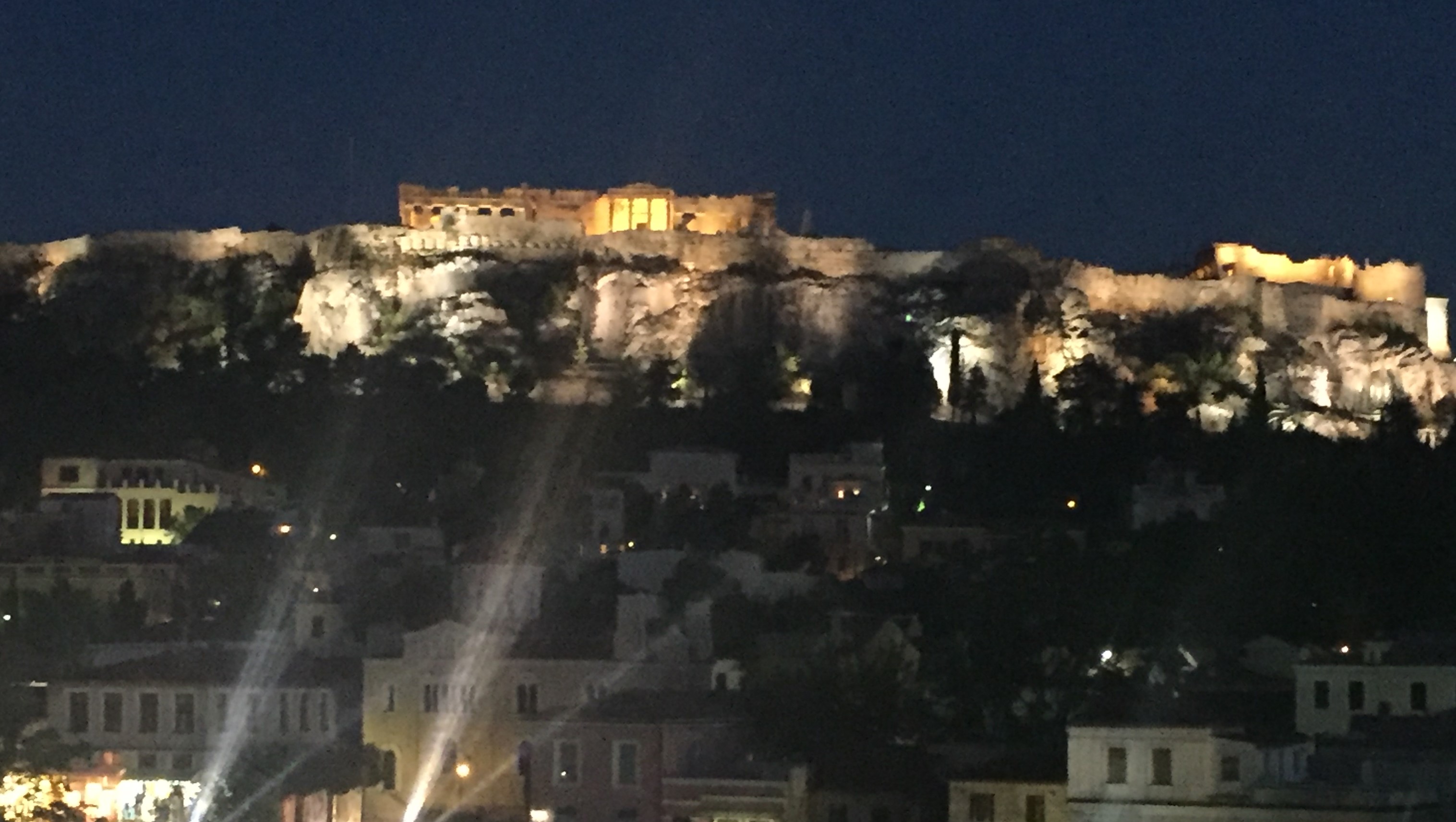
Acropolis night (2)

View of the Acropolis from Monastiraki Square, July 2016


Papou’s House in Sheepshead Bay

I love going to the home of my Kostakos grandparents in Sheepshead Bay, Brooklyn. Sitting on a very rare double-wide lot, it was spacious and airy inside with beautifully manicured lawns and gardens surrounding it. I have happy childhood memories of exploring all of its nooks and crannies with my cousins.

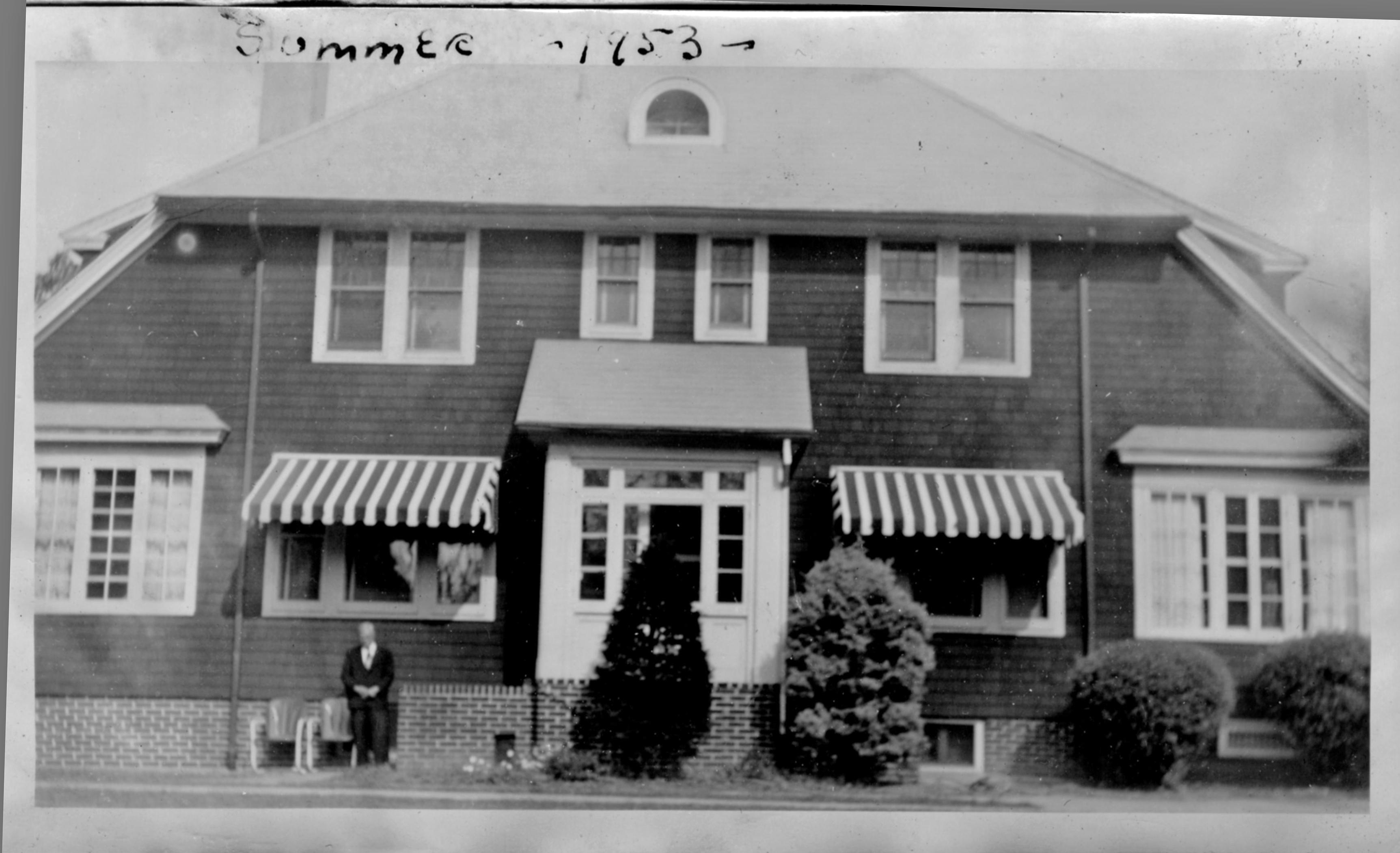
Last weekend as we were scanning my grandparents’ photos, we came across this rare treasure: a picture of my grandfather, John, standing proudly at the side of his house.

Andrew John Kostakos, standing on the side of his home at 2669 East 26th Street, Sheepshead Bay, Brooklyn, NY, 1953

John Andrew Kostakos, standing on the side of his home at 2669 East 26th Street, Sheepshead Bay, Brooklyn, NY, 1953

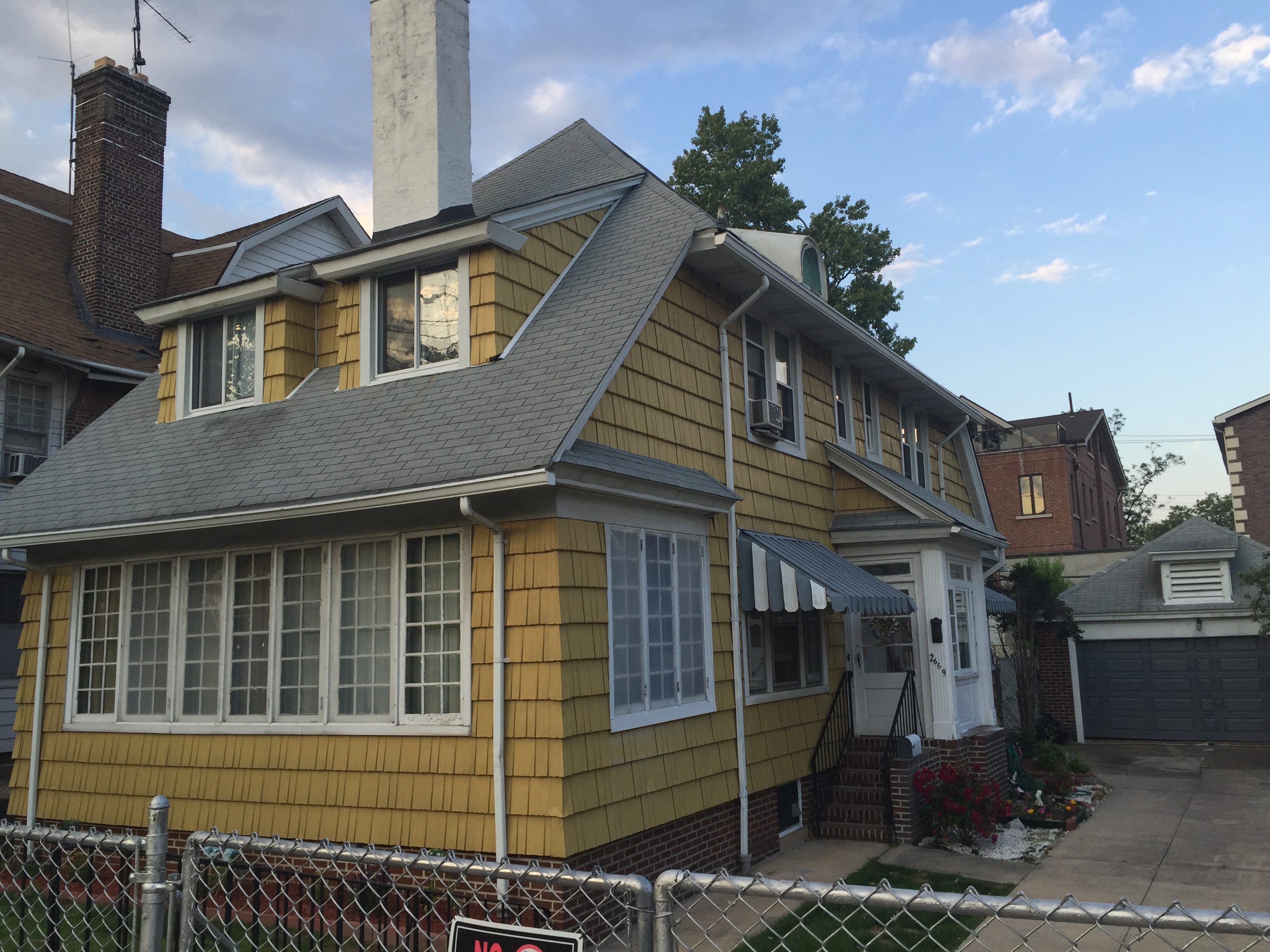
Looking at a similar view of house today (below), I honestly think it has lost some of its grandeur. The original color was a Williamsburg blue with hardwood siding which lent an air of aristocracy, not evident in the gold cedar shake shingles pictured below.

Sheepshead Bay House, side view, 2016

Sheepshead Bay House, side view, 2016

We calculated that Papou and Yiayia bought their home in 1950. We all agreed with my cousin, John, who said, “it was the most beautiful house I had ever walked into.” This home had amenities not seen in the average residence. On the first floor was a large living room enhanced with a three-dimensional fresco of three horses hanging over the fireplace. The fresco was raised, and it looked as if the horses were jumping out of the wall, headed right towards you. There was a dining room with a butler’s pantry, a breakfast room, a big beautiful kitchen, and as seen on the right above, a sun porch. There was even a wine cellar in the basement. The second floor had three bedrooms – a master bedroom and two smaller ones. John said, “the one thing I couldn’t get over was that the sink and toilet were in separate rooms from the tub,” a most unusual feature in the 1950’s.

Cousin Marianne remembered that there were crawl spaces all over the house; in the attic and even in bedroom closets. One day, she found a stash of Colorforms and Gulliver’s Travels cutouts as she was exploring.

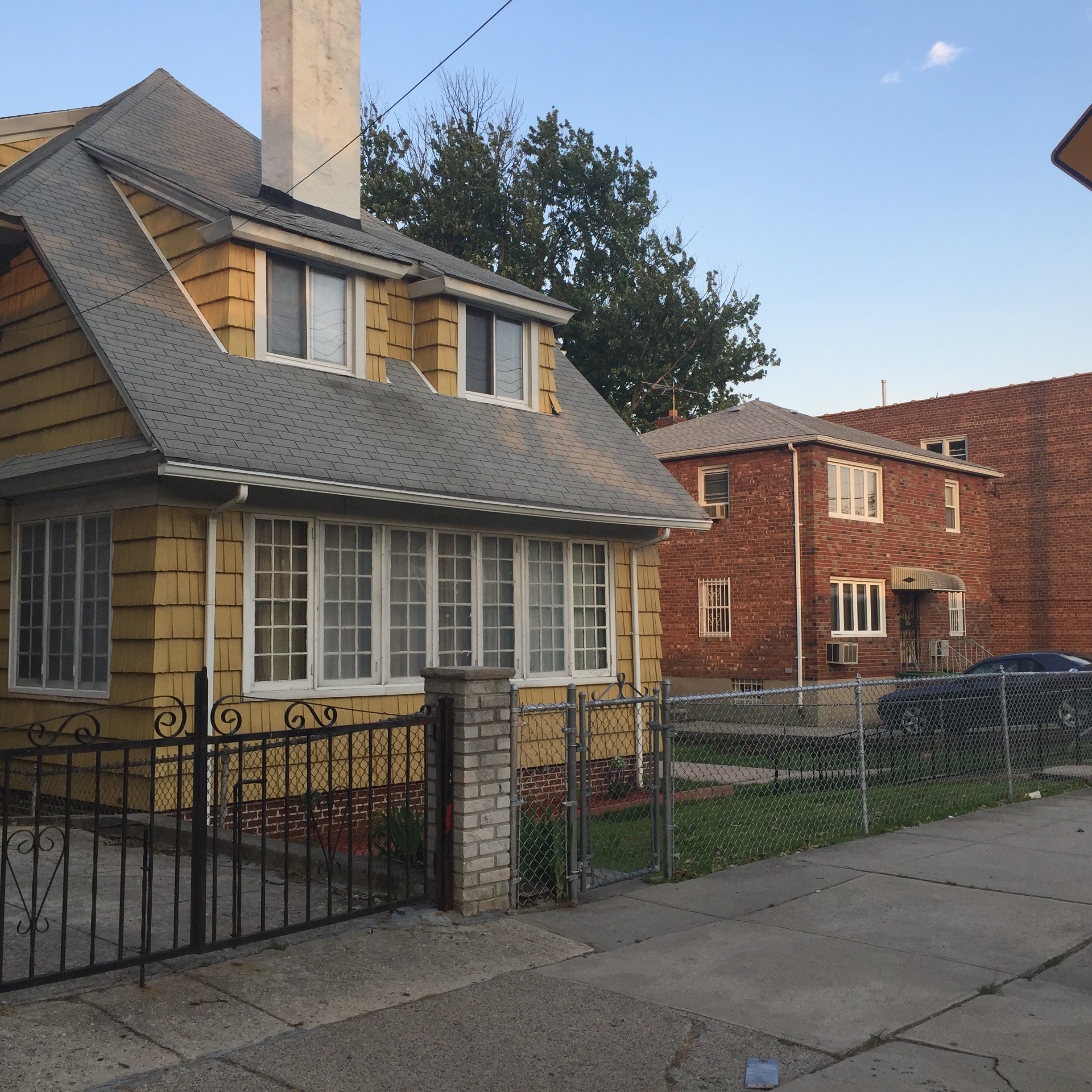
The house sat on an unheard-of double lot situated three blocks from the Sheepshead Bay waterfront. As other homes were encircled in concrete, Papou’s house was surrounded by green, manicured lawns and flower gardens. We cousins sprinted around the property playing all types of games, not realizing as youngsters what a rare treat that was in the city.

John recalled hearing that our grandfather paid $25,000 for the house in 1950, bargaining the owner down from his asking price of $30,000. Looking ahead to the time when the big house would inevitably be too much to care for, Papou built a two-family brick house on the property in 1963. Eventually, this became the home of his daughter, Alice, who cared for both of her parents throughout their lives. My cousin, John, now lives in the apartment upstairs and he watches over Alice who lives on the first level. It is the home where we gathered last weekend for our scanfest.

Sheepshead Bay House (2)

Sheepshead Bay house with 2-story home on property, 2016

This house is my grandfather’s testament of attaining the American dream. As an illiterate 17-year-old orphaned immigrant from a village outside Sparta, Papou traveled on a ship alone, coming to the new world to join his older brother, Vasileios. Papou went from push-cart vendor to Coney Island kiosk owner, to proprietor of a successful seafood restaurant in Williamsburg and owner of many properties in Brooklyn and Long Island. His is a legacy that brings continued pride and inspiration to his many loving descendants.

Scanfest: Saving Yiayia’s Photos

When Hurricane Sandy flooded Sheepshead Bay, Brooklyn in October 2012,we worried about the water damage in our aunt’s basement and the reconstruction that would be required.

Gianna Doukas

Gianna Doukas

But, when my cousin’s daughter, Gianna, dashed to the house, she saw that something even more precious was in danger of being destroyed — my grandparents photo albums. She gathered up the water-logged treasures and spread them out on sheets and towels. She tried to separate the ones that had already begun to stick together, and to remove the ones that were in those awful “magnetic” photo albums. Although some photos were lost, thanks to Gianna, over 400 were saved.

My cousin, John, mentioned to me that he was concerned about the state of these pictures. Many had curled when they dried, some were getting black mold, and others were brittle. I offered to come to the house with a flat-bed scanner and digitize every one of them. Last weekend, I made the drive from Maryland to Brooklyn.

Verazzano Narrows Bridge linking New Jersey and New York

Verazzano Narrows Bridge linking New Jersey and New York

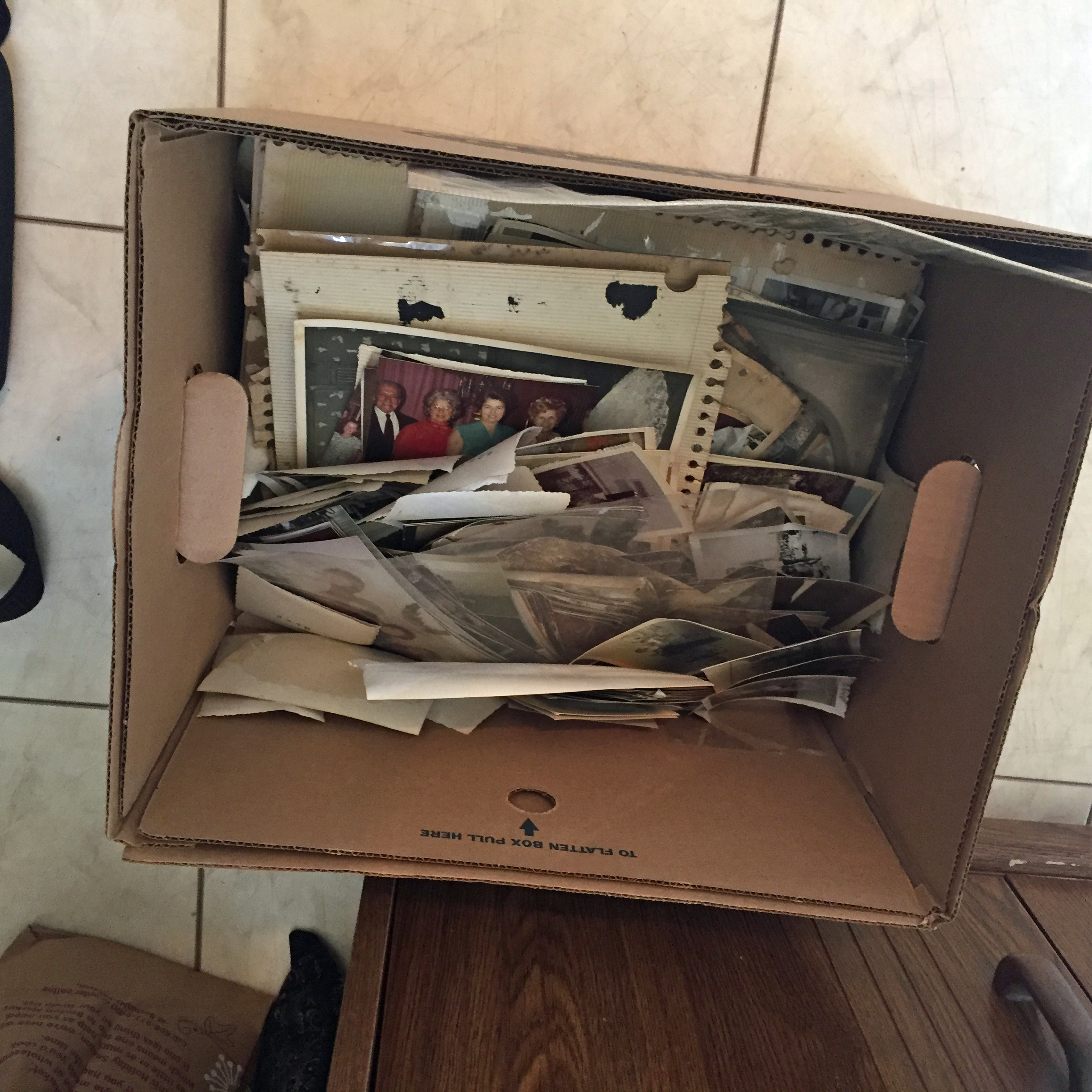
Our “scanfest” began on Saturday morning at the Sheepshead Bay home of my Aunt Alice Kostakos. When John retrieved the box of photos, it didn’t look like this would be such a big job, but it took 2 days and over 10 hours!

Kostakos family photos, rescued from the flood

Kostakos family photos, rescued from the flood

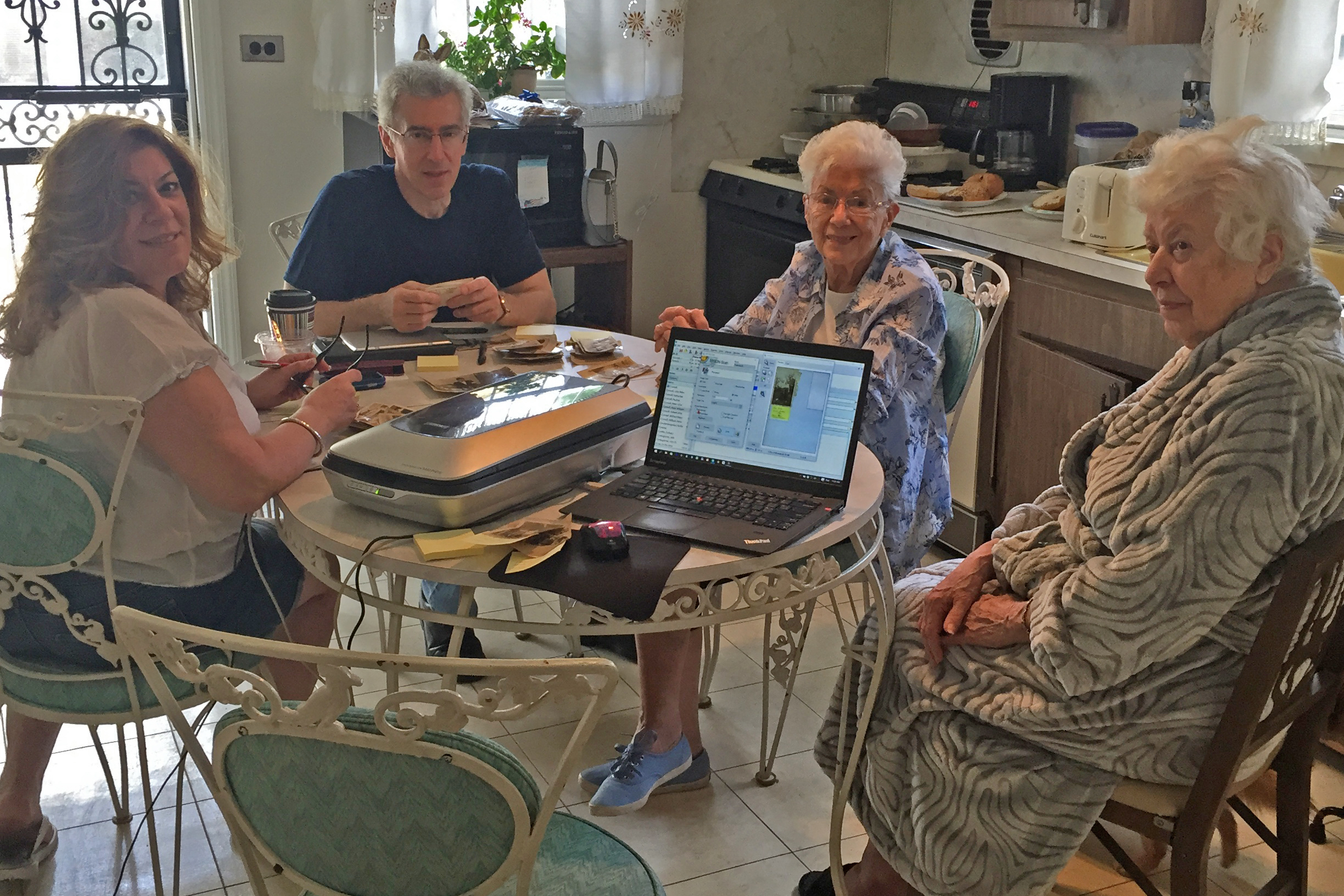
We set up shop at Aunt Alice Kostakos’ kitchen table and began by retrieving oldest  black and white photos.

Working hard! l-r: Marianne Doukas, John Stakis, Georgia Kostakos Doukas, Alice Kostakos. Kitchen of Alice's home, Sheepshead Bay, Brooklyn, June 11, 2016

Working hard! l-r: Marianne Doukas, John Stakis, Georgia Kostakos Doukas, Alice Kostakos. Kitchen of Alice’s home, Sheepshead Bay, Brooklyn, June 11, 2016

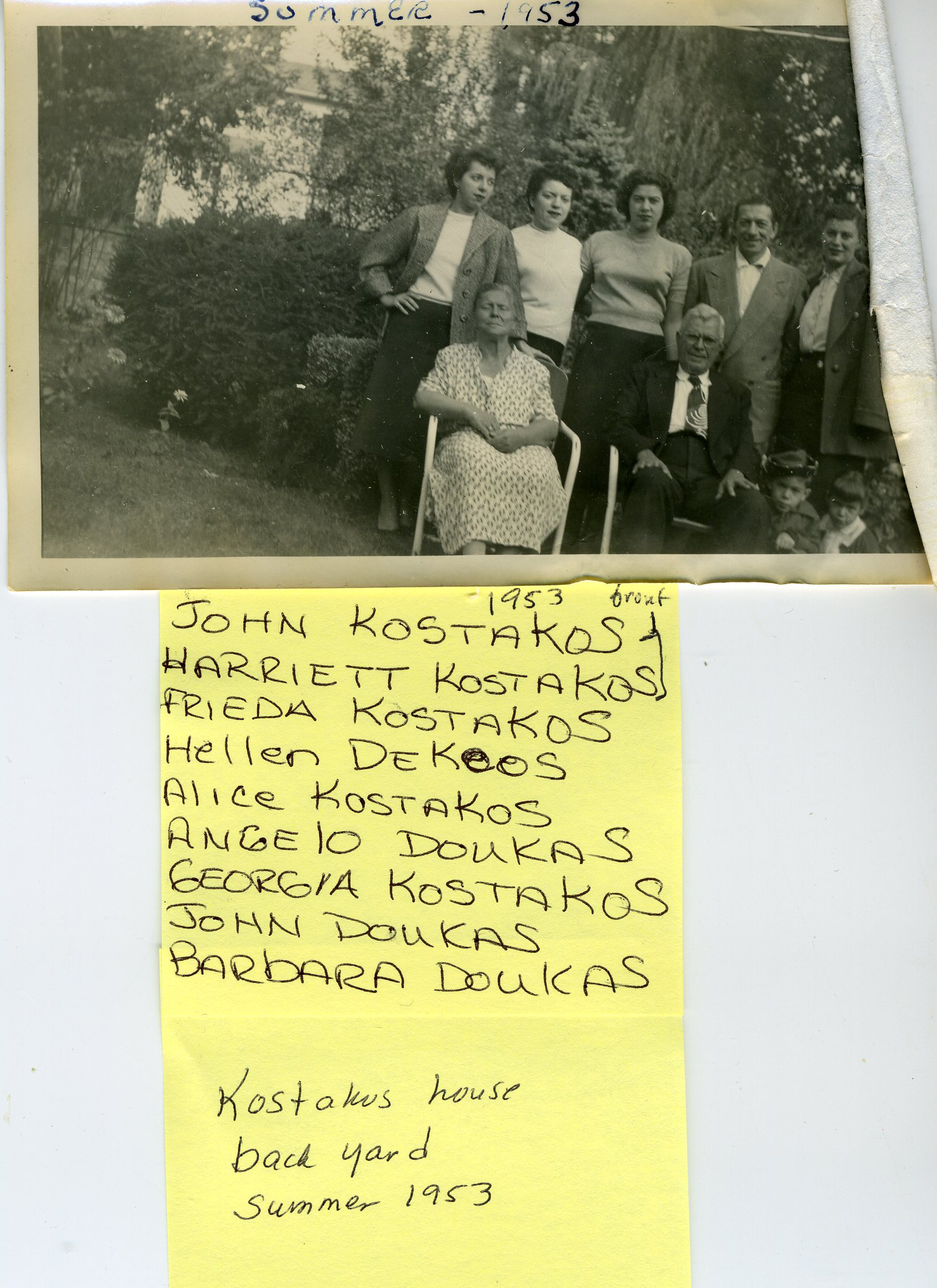
Thanks to Aunts Georgia and Alice, we were able to identify every person in every photo! We affixed post-it notes to the bottom of each, identifying people, dates and places. The photo and post-it note were then scanned as one image, ensuring that the information would not be separated from the picture. Over the coming months, I will crop each photo and add its identifying information into the metadata. This photo shows my grandparents sitting in front, Hariklia Aridas Kostakos and John Andrew Kostakos — surrounded by their children, grandchildren, and extended family members.

1953; Brooklyn; Kostakos home.

1953; Brooklyn; Kostakos home. My grandparents, Hariklia Aridas Kostakos and John Andrew Kostakos (front), surrounded by family.

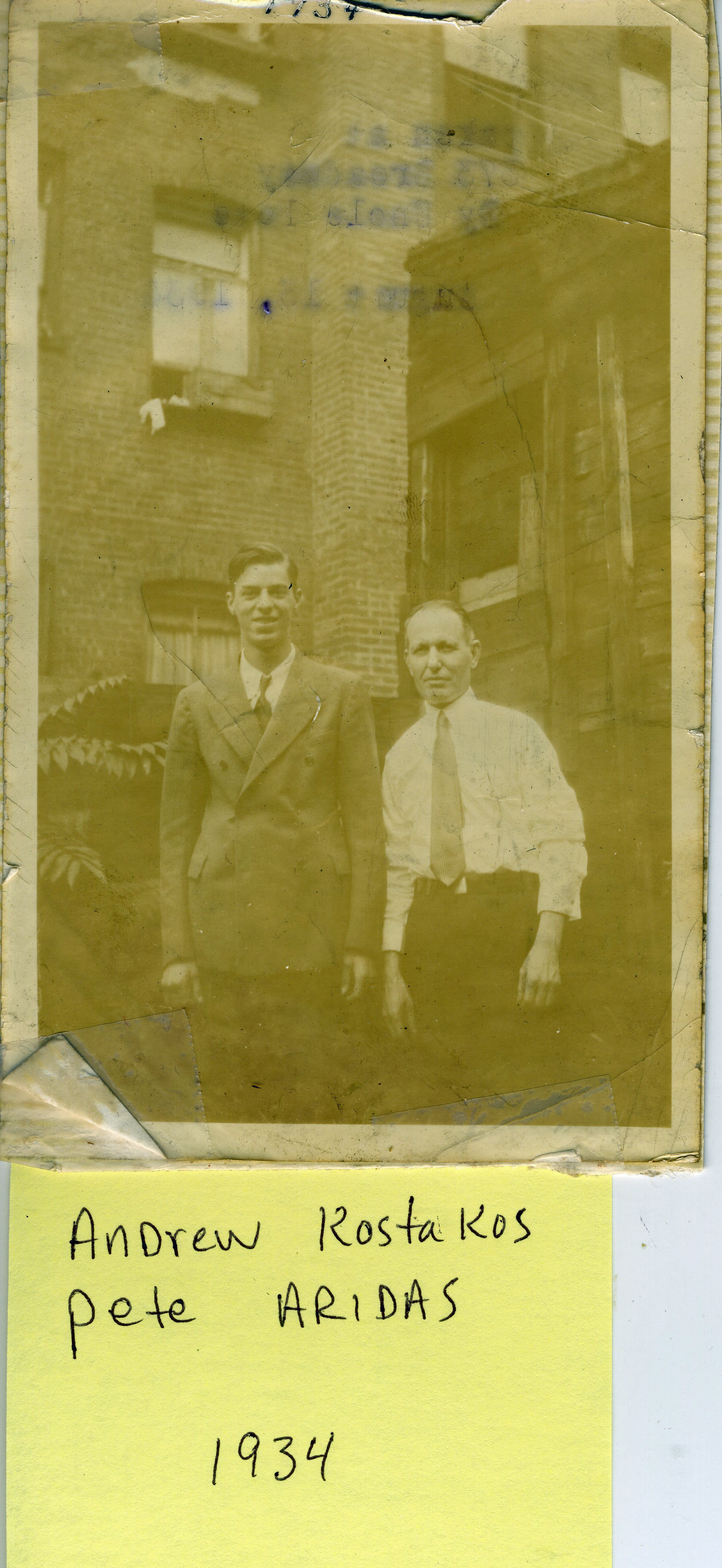
Every photo tells a story, and thanks to our Aunts, we heard many great ones. My family moved from Brooklyn when I was five, and one great blessing to me was hearing about many of the relatives in these pictures whose names I had heard, but whom I barely knew. This photo is among the earliest we found, dated 1934: on the left is my father (age 17) and my godfather, Peter Aridas, age 50). You can see how the ink on the back of the photo bled through when the photo was  wet.

My father, Andrew Kostakos (left) and my godfather, Peter Aridas (right), 1935, Brooklyn, NY

My father, Andrew Kostakos (left) and my godfather, Peter Aridas (right), 1934, Brooklyn, NY

We worked for eight hours on Saturday, and even ordered in lunch so we would not have to take time to go out. We enjoyed dinner at a Greek (of course!) restaurant at the waterfront on Saturday evening, and on Sunday morning, regrouped for day two. This time, we set up shop on Aunt Alice’s dining room table which gave us much more room to spread out.

Day two at the dining room table. l-r: Georgia Doukas, Marianne Doukas, Carol Kotakos Petranek, John Stakis, Alice Kostakos. Sheepshead Bay, Brooklyn. June 12, 2016

Day two at the dining room table. l-r: Georgia Doukas, Marianne Doukas, Carol Kotakos Petranek, John Stakis, Alice Kostakos. Sheepshead Bay, Brooklyn. June 12, 2016

By using both a flatbed scanner and a portable Flip-Pal scanner, we digitized 400 photos. These raw and unedited images are now online in a private Flickr account, with links sent to all of our cousins. It will take time to crop and electronically tag each photo, but everyone now has access to what we accomplished.

I’m headed to Sparta, Greece, at the end of the month, with the hopes of finding additional documents on my family. My long-term goal is to create a family history book, incorporating many of the photos we scanned and the documents I obtained, along with some family stories. The next generations — Gianna and beyond — will not know their ancestors unless our generation does its part.


Marriage: Andreas Kostakos & Politimi Christakos

Trying to read 1800’s Greek script is both exhilarating and frustrating. Recognizing a name gives me an adrenalin surge; struggling over a name sends me to chocolate.

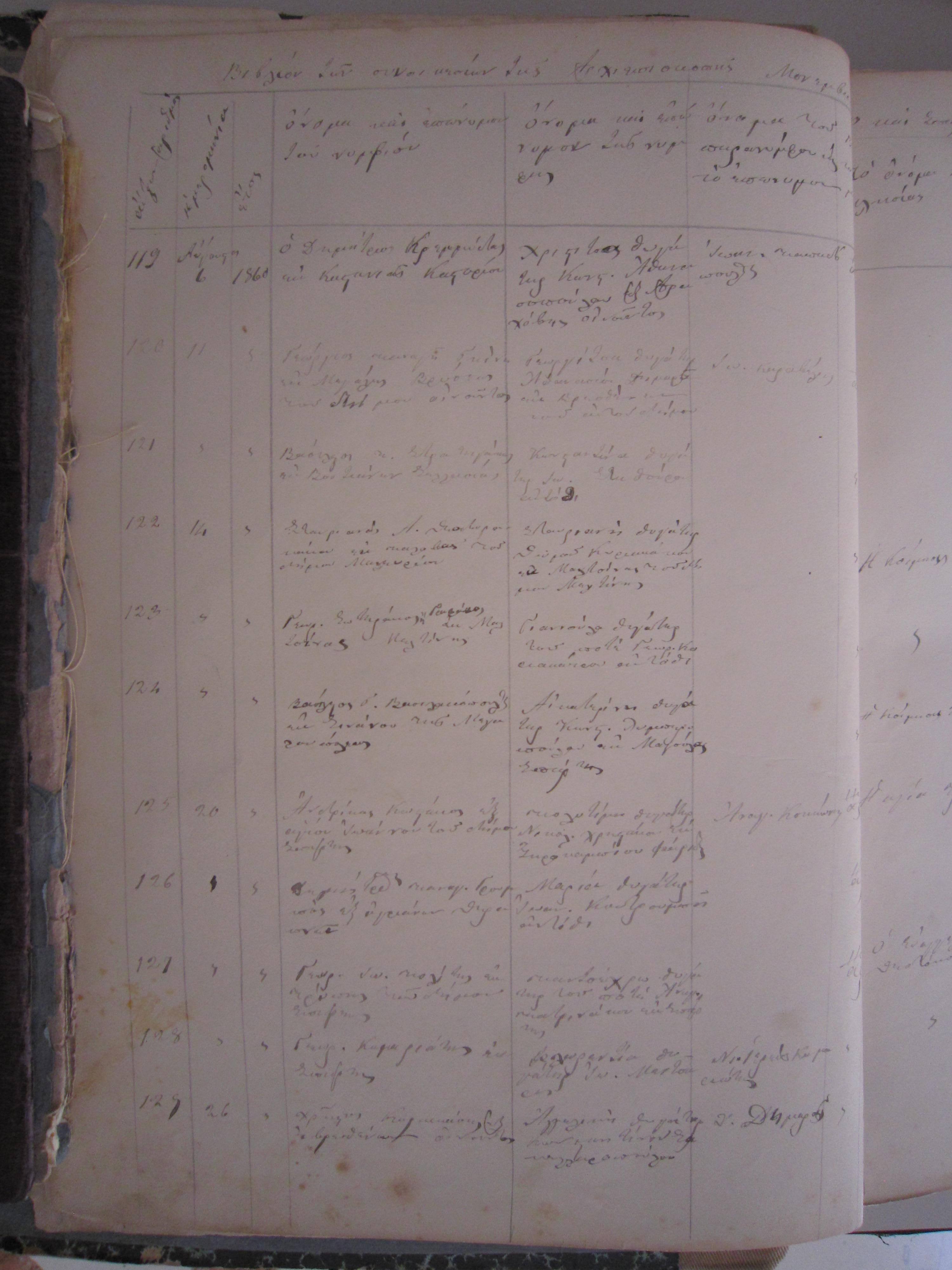
Two nights ago, I got the surge of a lifetime. I found an entry in the 1860 Marriage Book of the Mitropolis of Sparta for my great-grandparents, Andreas Kostakos and Politimi Christakos. My friend, Giannis Michalakakos, confirmed that I read the record correctly.

Mitropolis of Sparta, Marriage Book, 1860 Page 1: Date: August 20, 1860; Number: 125; 1st column: Andreas ( Andrikos) Kostakos of Agios Ioannis. 2nd column: Poletimi, daughter of Nikolaos Christakos of Xirokambi, Faridos.

Mitropolis of Sparta, Marriage Book, 1860
Page 1: Date: August 20, 1860; Number: 125; 1st column: Andreas ( Andrikos) Kostakos of Agios Ioannis.  2nd column: Politimi, daughter of Nikolaos Christakos of Xirokambi, Faridos.

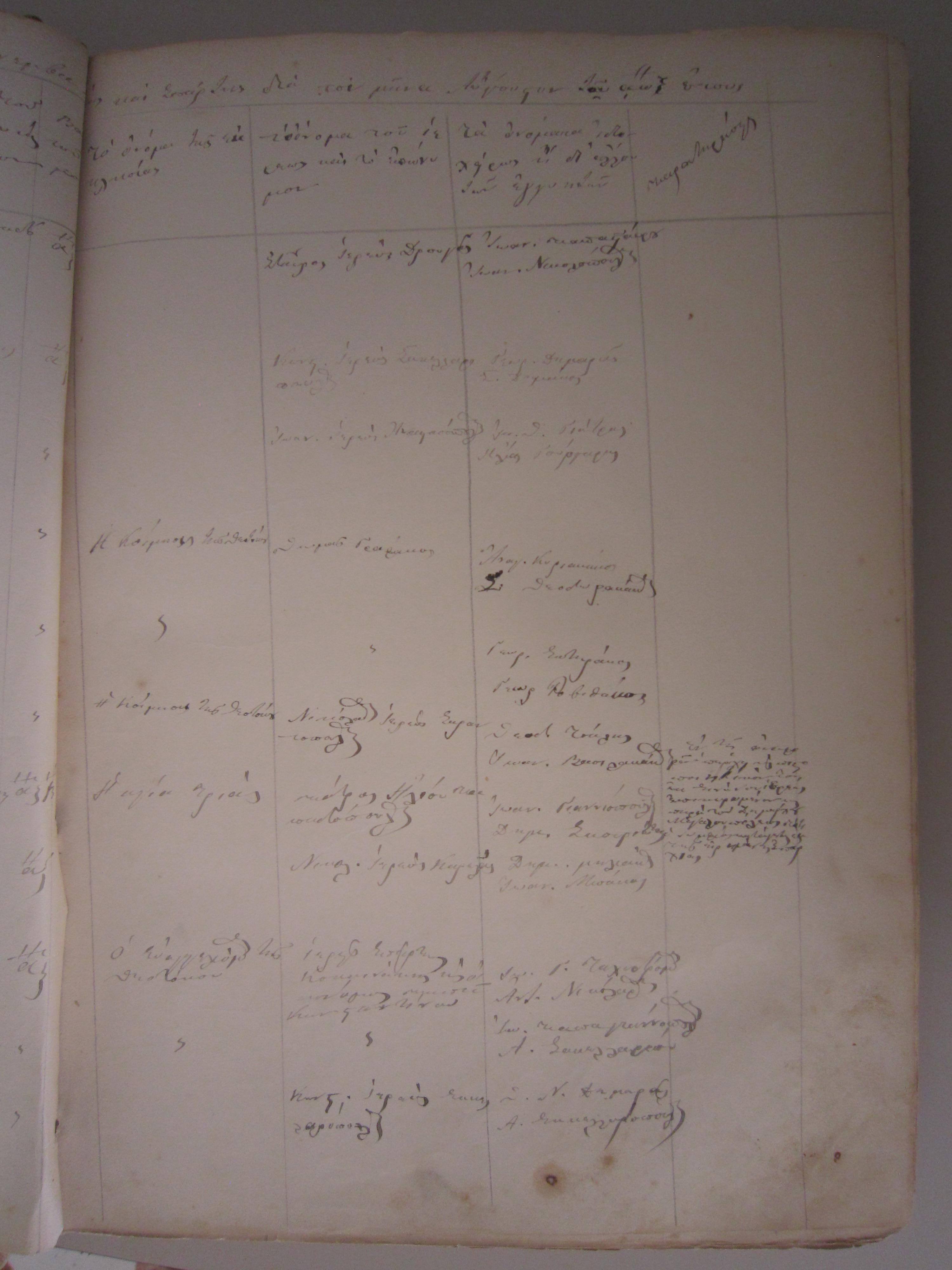
Page 2, Marriage of Andreas Kostakos and Poletimi Christakos

2nd page, 7th entry: 1st column: Church: Holy Trinity; second column: Priest’s name, Mitros Hlia Papadopoulos Witnesses: Ioannis Giannopoulos, Dimitris Skouriotis

After hours of struggling to read every name, I decided to try the tactic that my friend, Gregory Kontos, used when we were at the Mitropolis of Sparta in 2014. He looked in the column of the male’s name for the first name of someone I was seeking. If his eye caught that name, he then read the entire entry.

Interestingly, the name “Andreas” does not appear often in the villages of Sparta where I am researching:  the most common names are Panagiotis, Nikolaos, Georgios, Konstandinos. So…skimming down the left column of page one, looking for Andreas, made the search much easier and saved my eyes and my sanity.

As soon as I saw the capital “A,” I stopped. When the next name began with a “K,” my hopes soared. When I made out “Kostakos,” I rejoiced!

Enlarged image of Entry 125.

Enlarged image of Entry 125.

I knew that Andreas had two wives:  first, Anastasia; then Poletimi Christakos (my great-grandmother). Honestly, if I did not know Politimi’s name, I would have been stumped as I strained to read the female information in column 2. But, I could make out the letters, and then — a great bonus — I saw Poletimi’s father’s name, Nikolaos! This was a new and very exciting find, as I am now back one more generation!

This exhilarating discovery fostered a new mystery:  Andreas and Poletimi were married in 1860, but their first child, Antonia, was born in 1870. That’s 10 years — a very long time, especially in the pre-birth control era. Some hypothesis that Giannis and I mulled over:

  1. Politimi must have been raising Andreas’ children with Anastasia (my father had been told that they had 6 sons, but we only know of one, and his descendants are my cousins in Agios Ioannis today). Could the stress of raising a large family have affected Poletimi?
  2. There could have been stillborn children
  3. Children could have been born and died as infants
  4. There could have been female children born, who were not registered in any records

I am entering the area of lost information and the “great unknown;” and, speculation will not bring resolution. However, I am grateful beyond expression to have found this record.

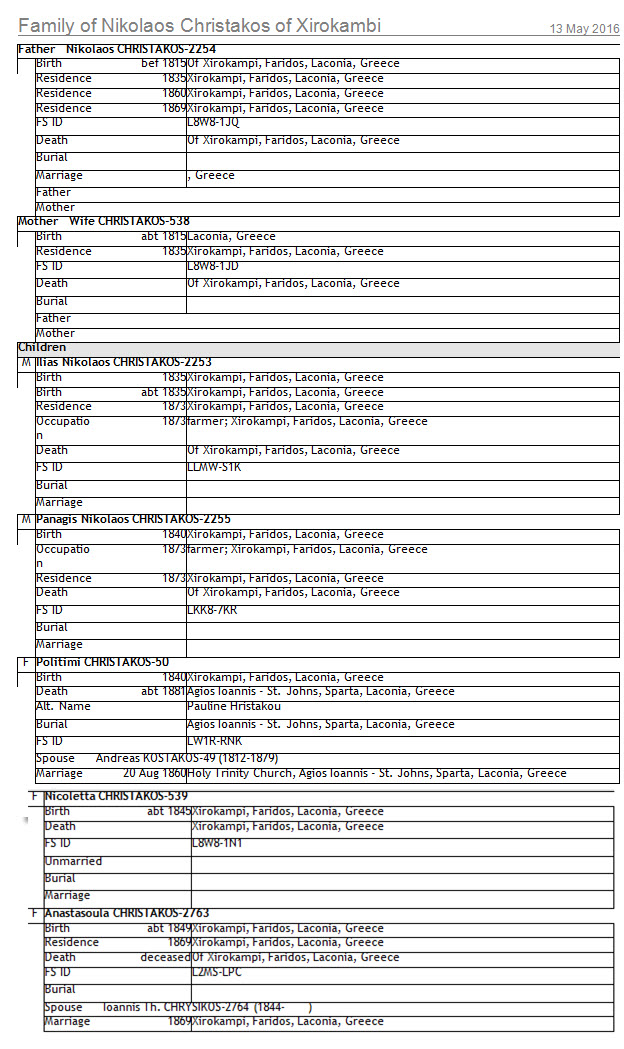
I have been collecting information on the surnames in my villages, and from various sources, I now am able to structure the family of my great-great grandfather, Nikolaos and”wife” Christakos. Oh, happy day!

Christakos, Nikolaos FamGrpSheet


Easter in Heaven

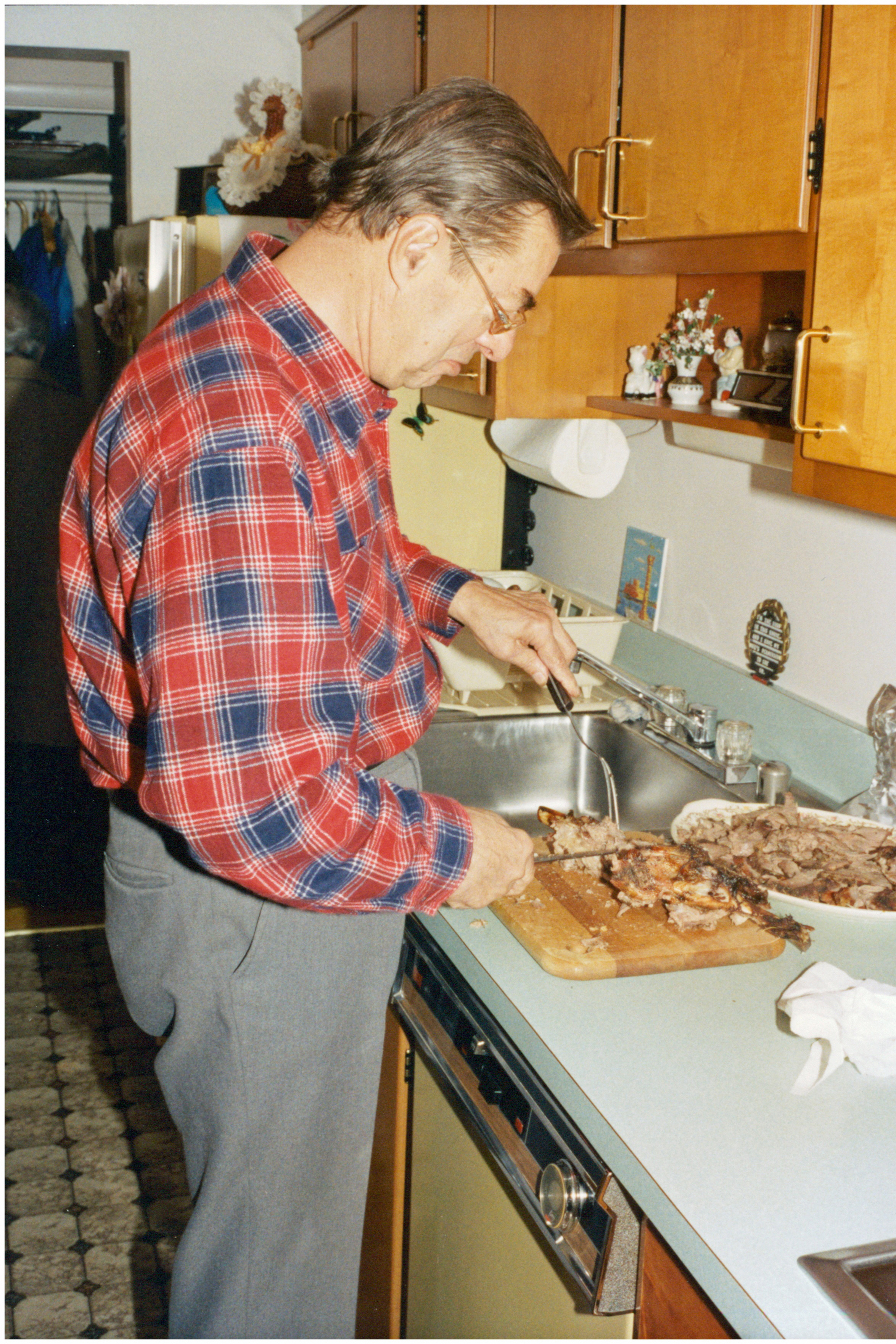
My family often celebrated Greek Easter at the home of my parents or my mother’s sister (Bertha Pappas Pouletsos and her husband, Nick). It was always Dad’s job to carve the lamb.

Andrew Kostakos carving Easter lamb, 1992.

Andrew Kostakos carving Easter lamb, 1992, Kensington, Maryland

When Aunt Bertha and Uncle Nick traveled from Long Island to our house in Maryland, the celebration was even more special.

Catherine Kostakos, Carol Kostakos Petraek, Bertha Pappas Pouletsos, Mabel Mercer Wirth, 1981, Kensington, Maryland

Catherine Kostakos, Carol Kostakos Petraek, Bertha Pappas Pouletsos, Mabel Mercer Petranek Wirth, 1981, Kensington, Maryland

Andrew Kostakos, Bertha Pappas Pouletsos, Gary Petranek, 1978, Kensington, Maryland

Andrew Kostakos, Bertha Pappas Pouletsos, Gary Petranek, 1978, Kensington, Maryland

I grew up living close to Aunt Bertha and Uncle Nick in the small community of Hillsdale, New Jersey. My brother and I shared many special times with our cousins, John and Louis; and to this day, we refer to our mothers as “two peas in a pod.” Mom and Bertha were the best of sisters and the best of friends.

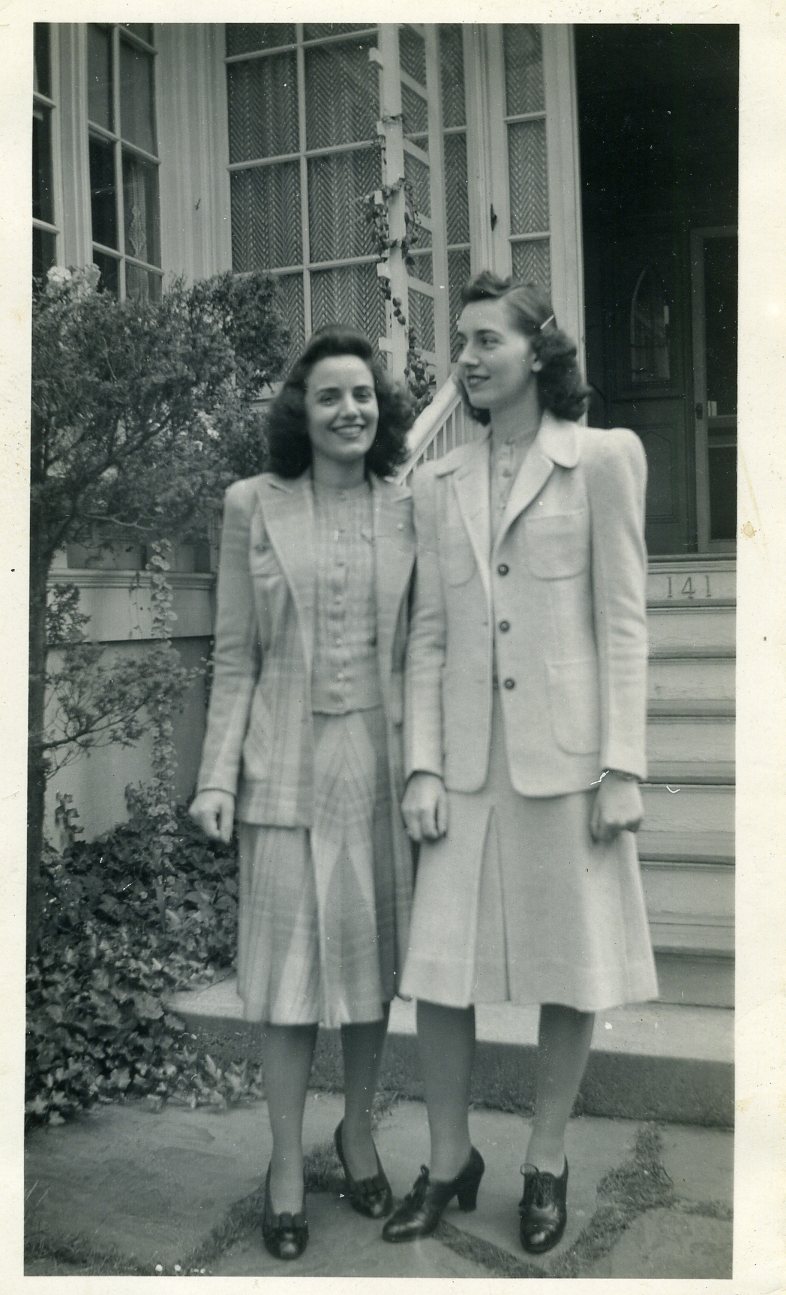
Bertha and Catherine Pappas, Hoboken, New Jersey, about 1945

Bertha and Catherine Pappas, about 1944-45, Hoboken, New Jersey

Old photos unleash a plethora of memories for me — a lifetime of family gatherings and activities. After the deaths of Mom, Dad, Aunt Bertha and Uncle Nick, my Easter table was bereft of these beloved people. However, I found consolation in knowing that my grandparents’ table was now complete — mother and father with their sons and daughters — a loving family on earth, now reunited in heaven.

My parents and their siblings traveled to be together on holidays, and now it is my turn. Yesterday, Gary and I drove to Lewes, Delaware, to have Greek Easter with cousin Louie Pouletsos, his wife, Debbie, and their children, Nikki and Maddison. We shared memories of our parents and even poked a little fun at our mothers. We missed them.

l-r: Louis, Maddison, Nicki, Debbie Pouletsos; Gary Petranek, Lewes, Delaware, 2016

l-r: Louis, Maddison, Nicki, Debbie Pouletsos; Gary Petranek, 2016, Lewes, Delaware

2016 Easter, Carol-Gary Petranek, Debbie-Lou Pouletsos

Carol and Gary Petranek, Debbie and Louie Pouletsos, 2016, Lewes, Delaware

As our parents celebrate in Easter heaven, we now carry on their traditions on earth. We cling to familial and cultural patterns as our anchor of tradition, and to the Savior as our anchor of faith.

  • Our traditional Easter dinner of roast lamb symbolizes the Lamb of God, Jesus Christ.
  • Our recitation of “Christos Anesti,” (Christ has Risen) attests to the reality of the resurrection.
  • Bright red eggs “kokkina avga” on the table symbolize the blood of Christ that was shed for each of us.
  • The breaking of eggs symbolizes Christ breaking the bands of death and coming forth from the tomb. Each person takes a red egg and cracks the ends with another person. This proceeds around the table until one individual is left with an unbroken egg, and he/she can expect to have good luck throughout the year.
  • Partaking of the “tsoureki,” or Easter bread, reminds us that Jesus Christ is the Bread of Life. (John 6:48: “I am that bread of life.”)

It is tempting to speculate how our departed families will celebrate Easter in heaven. One thing I know is that they will:  “Now if we be dead with Christ, we believe that we shall also live with him.” (Romans 6:8)

Christos anesti to you and your family!