Greece 2017. Part Six: Theologos

This is my maternal great-grandmother, Stathoula Zaharakis, of Theologos. How I wish I could have met her. Her eyes pierce my soul and her look of strength and determination inspire me.

I have written previously in this blog about my search for her and the Zaharakis family of Theologos. One of my biggest research “to do” items this summer was to visit Theologos and learn more about the family. Much to my delight, this has happened in a way that was beyond my wildest dreams.

The seeds for success began with Facebook. I had found a Zaharakis family in the U.S. with roots in Theologos. Georgia Zaharakis of Sparta actively commented on the posts, and I “friended” her. The moment we met in Sparta, there was an instant connection.

Within 48 hours of meeting face-to-face, I was driving with Georgia and her mother to Theologos to celebrate the saint day of Agia Paraskevi. To reach the village, we drove for five kilometers up a narrow one-lane road with hairpin turns until we arrived at the very top of the mountain, a breathtaking sight overlooking the village.

View from the mountain top, overlooking Theologos. July 2017

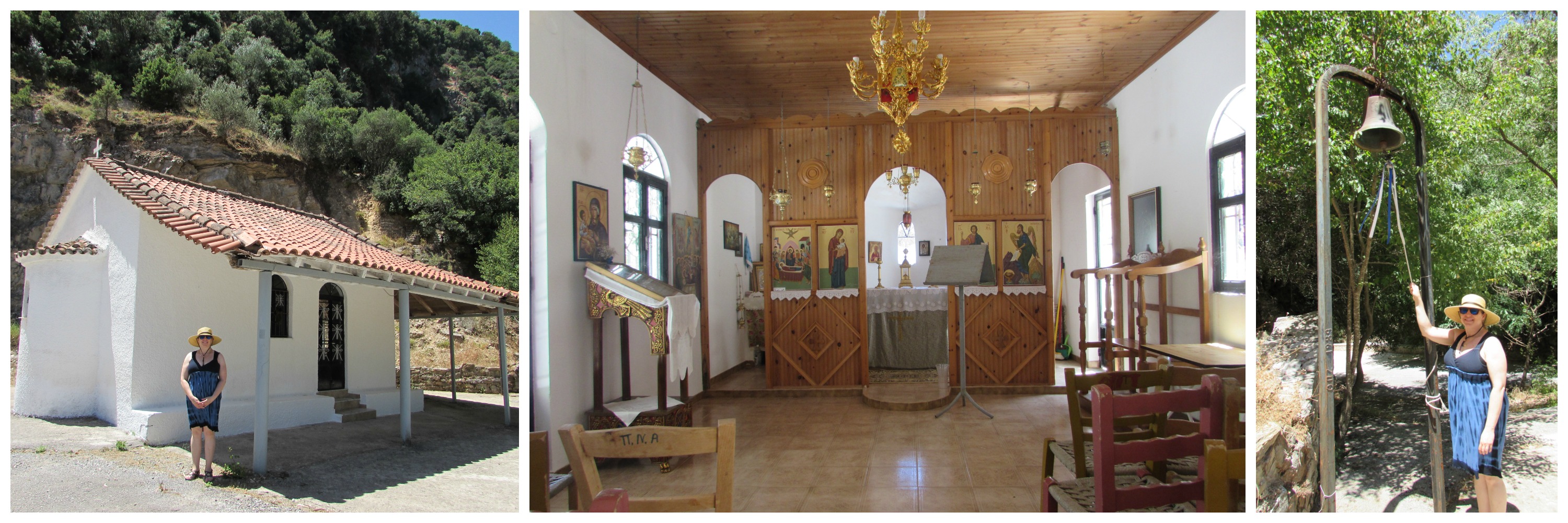
The church of Agia Paraskevi was built in the late 1800’s at the pinnacle of the mountain. It is very small but the interior is beautiful. Liturgies are chanted there only once a year for the festival of its patron saint, or at the request of a family. The original church bell hangs on a nearby tree. Its clapper is missing and to hear it ring, children hit it with pine cones.

Agia Paraskevi icon and church; church bell. Theologos, Laconia. July 2017

After the liturgy, villagers gathered for coffee and sweets outside the church. As I walked the grounds, my mind wandered back 150 years and I envisioned Stathoula also celebrating this feast day at this very place. At that moment, I felt so very close to her.

Coffee time, Agia Paraskevi Church, Theologos, July 2017

Georgia had told me that there were many members of the Zaharakis family living in Theologos. Imagine my thrill when she began introducing me to new cousins!

l-r: me, Georgia Zaharakis, Kanella Zaharaki Koutrobi, Pavlos Zaharakis

As one cousin introduced me to another, I was embraced with the warmth and affection that permeates Greek families. Georgia proposed having a Zaharakis family reunion, and all agreed to meet at the platea the following Monday evening. I arrived early to visit the cemetery and the Zaharakis gravestones. The sign indicated that the cemetery was dated 1893. It is likely that Stathoula’s parents would have been buried there, but by now, any old graves are long gone.

Cemetery, Theologos, Laconia. July 2017

The Zaharakis family reunion was a joy beyond description. Young and old arrived at the platea, chatting animatedly and excited to be together. I had printed out Family Group Sheets in Greek, and people clustered around Georgia to relate their family information. We have yet to sort out all the information, but for a family historian, this was a thrilling sight to behold.

Capturing the Zaharakis family history, Theologos, July 2017

The family told me that not only was this the first time all the Zaharakis’ met together, but it was also the very first reunion of any family held in the village! A restaurant on the platea provided endless food and drinks, and the festivities lasted into the night.

One of the tables of the Zaharakis family of Theologos, July 2017

Many Greek villages have organizations known as syllogos , which work to preserve the history and culture of the village. A new women’s syllogos for Theologos was recently formed with Georgia as the organizer and president. One of their goals is to convert an old stone schoolhouse, no longer in use, into a museum. As a descendant from this village, I joined immediately and offered to be of help to them. In this day and age, being across the ocean does not hamper collaboration!

l-r: Georgia Dounia, Georgia Zaharakis, me; Women’s Syllogos of Theologos, July 2017

Logo: Syllogos Women, Agios Ioannis Theologos, Love.

All that happened in Theologos was as a dream to me. I am now connected with the descendants of the Zaharakis family and I have many new “sisters” in the Syllogos. Online research has its place, but so many blessings come when we can visit our ancestral homeland.

The Zaharakis / Zacharakis Families of Theologos, Oinountos, Laconia

The family of my great-grandmother, Stathoula Zaharakis, has been an elusive mystery to me. Her photo, which is on my desk, reminds me daily to think of her as well as all those who came before me.

Stathoula Zaharaki Eftaxias

Stathoula Zaharaki Eftaxias

Her face haunts me at times. How did she feel as she sent all three of her daughters to the U.S. so they could marry and have a better life? She had no sons; who took care of her as she aged? My mother said that she died as she was preparing to come to the U.S. to visit her daughters and their families in the mid-1950’s. How heartbreaking!

When Gregory Kontos and I were at the Greek Orthodox Mitropolis in Sparta in 2014, he found the marriage record for Stathoula and Konstandinos Ioannis Eftaxias.

Marriage Record, Konstandinos Ioannis Eftaxias and Stathoula Zaharaki, February 16, 1891, line 68. Translation of Marriage Record received from the Holy Diocese of Monemvasias & Spartis Certifies that: As it appears on the books of Marriages of the Office of the Holy Diocese Monemvasias & Spartis a licence -number 68 - was issued on 16 February 1891, for Konstantinos Eutaxiarhis, resident of Mystra - of the former municipality Spartis in second marriage, and for Stathoula Zaharaki daughter of Dimitrios, resident of Theologos -of the former municipality Sellasias in first marriage. The holy matrimony was officiated by the local priest S. Dimitrakopoulou.

Marriage Record, Konstandinos Ioannis Eftaxias and Stathoula Zaharaki, February 16, 1891, line 68. Received from the Holy Diocese of Monemvasias & Spartis.
Certifies that:
As it appears on the books of Marriages of the Office of the Holy Diocese Monemvasias & Spartis a licence -number 68 – was issued on 16 February 1891, for Konstantinos Eftaxias, resident of Mystra – of the former municipality Spartis in second marriage, and for Stathoula Zaharaki daughter of Dimitrios, resident of Theologos -of the former municipality Sellasias in first marriage. The holy matrimony was officiated by the local priest S. Dimitrakopoulou.

From this marriage record, I learned that Stathoula’s father was Dimitrios. I knew that the family lived in Theologos, Oinountos – just north of Sparta.

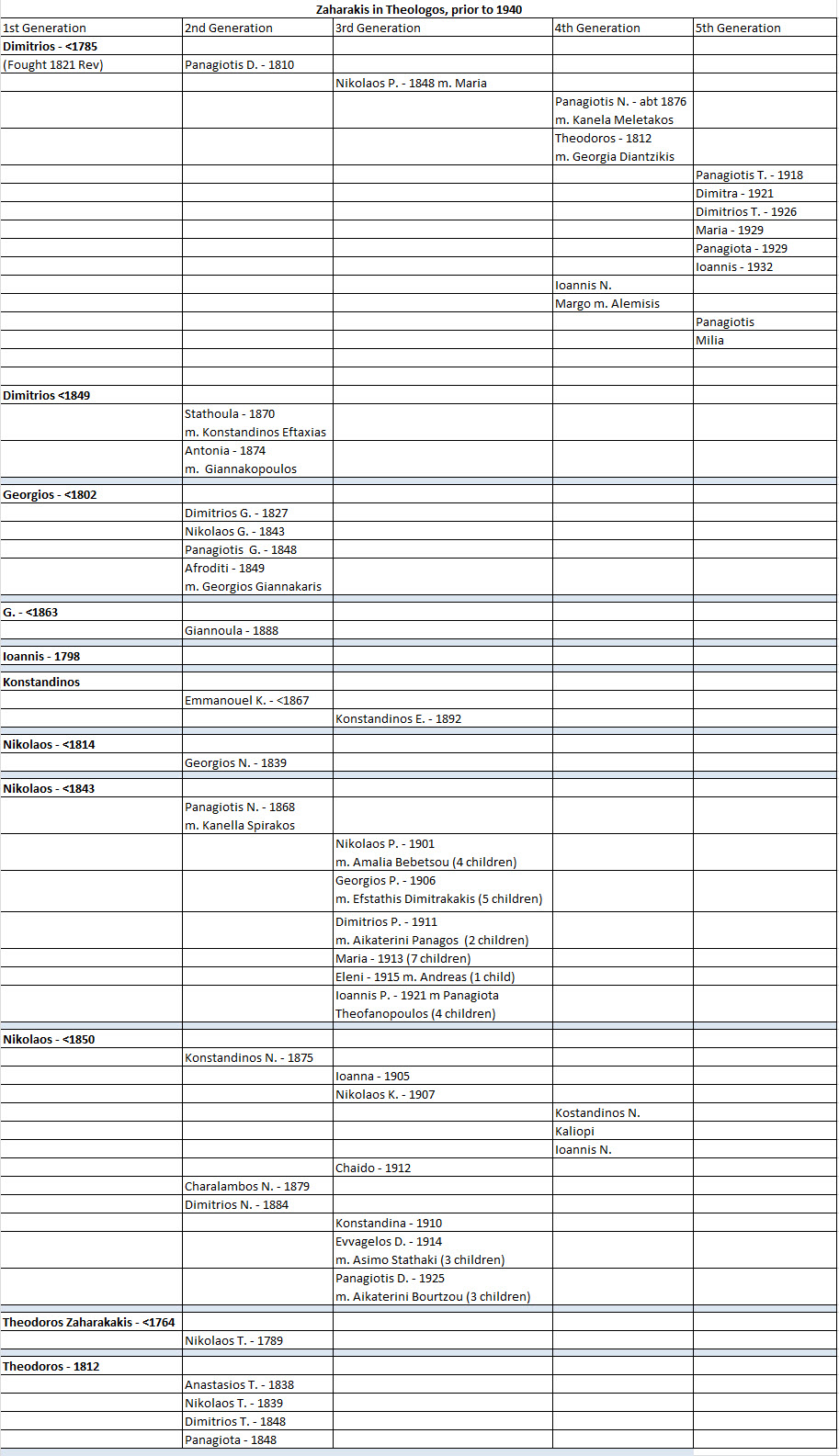
At the office of the General Archives of Greece in Sparta, Gregory and I digitized pages from the Dimotologion Koinothtos (Town Register) of Theologos which listed the Zaharakis families. I can’t believe that I overlooked the Male Register – a critical component to understand father/son relationships! Until I return to the Archives next summer, I have only the Dimotologia, Election Lists of 1872 & 1844, and information sent by family members to organize the structure of the Zaharakis family prior to 1940. I know the Male Registers will eventually provide missing information.

Zaharakis Families in Theologos, Pre-1940

Zaharakis Families in Theologos, Pre-1940. < symbolizes “before”

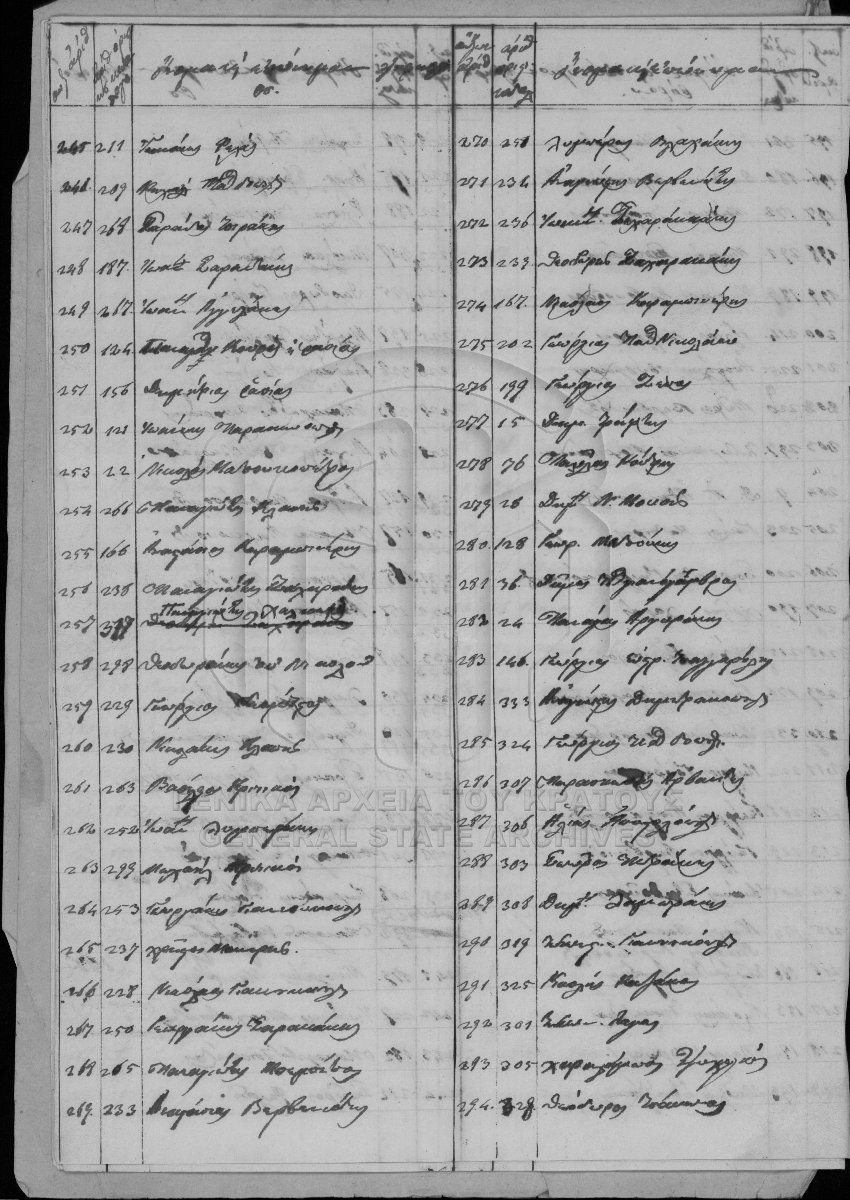
As I worked through the various resources, I learned an important detail about the 1844 Election Lists: there is an index at the beginning of each municipality. In the image below, notice two columns of numbers to the left of each name. The first number is the line number in the index; the second number is the line in the record itself. In this image on line 272 (right column, 3rd down) is Ioannis Zaharakis or Zaharakakis; the number 236 indicates the line in the record where his registration is recorded. (see next image)

1844 Election Lists, Laconia, File 22, image 1209 Index

1844 Election Lists, Laconia, File 22, image 1209, Theologos. Index.

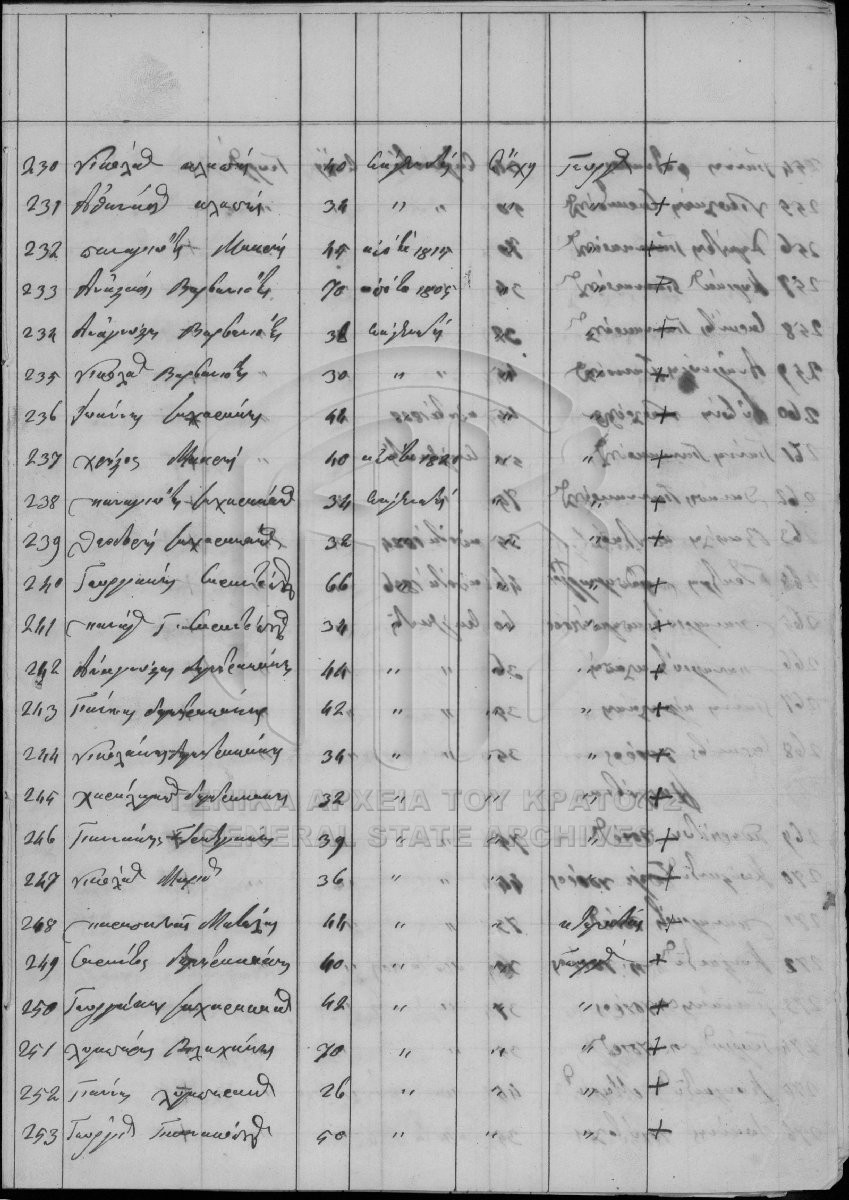
This is an image of the voter registration page. Ioannis is found on line 236, which reads: Ioannis Zaharakis, age 46, farmer.

1844 Election Lists Laconia, File 22, Image 1222 Theologos.

1844 Election Lists Laconia, File 22, Image 1222 Theologos.

Also found on both of these pages are:
Index line 256/Record line 238 – Panagiotis Zaharakakis, age 34, farmer
Index line 273/Record line 239 – Theodoros Zaharakakis, age 32, farmer
Index line 267/Record line 250 – Georgios Zaharakis, age 42, farmer

Big important note: Thank you, Gregory Kontos, for finding these names for me. You have my undying gratitude forever! I can read records that are typewritten, but the handwritten ones are Greek to me.

I will update this post after my next trip to the Archives in Sparta in July 2016. This time I’ll have the Male Registers and I will be able to further corroborate and correct what I have documented.

If anyone has information that can shed further light on these families, or give a better translation of the handwritten Greek, I would be most grateful!

Now I can put this aside to enjoy the holidays. Merry Christmas!


Research and Remembrances, Part 5

Ancestral Villages 

A new highway from Corinth south to Sparta bypasses the villages, making the journey speedy and smooth. Except for the road signs in Greek, I could have been in almost any mountainous country. The highway stopped in Tripolis and the last section into Sparta was closed until officials decided how the tolls would be divided among neighboring jurisdictions (I understand it did open shortly after my visit). But I didn’t mind — I was happy to detour onto the winding roads that immersed me into the Grecian countryside. Each village, surrounded by towering mountains, was unique:  the town squares, the narrow streets lined with houses and shops, the churches and fields, reflected the hard work and the independent spirit of its inhabitants.

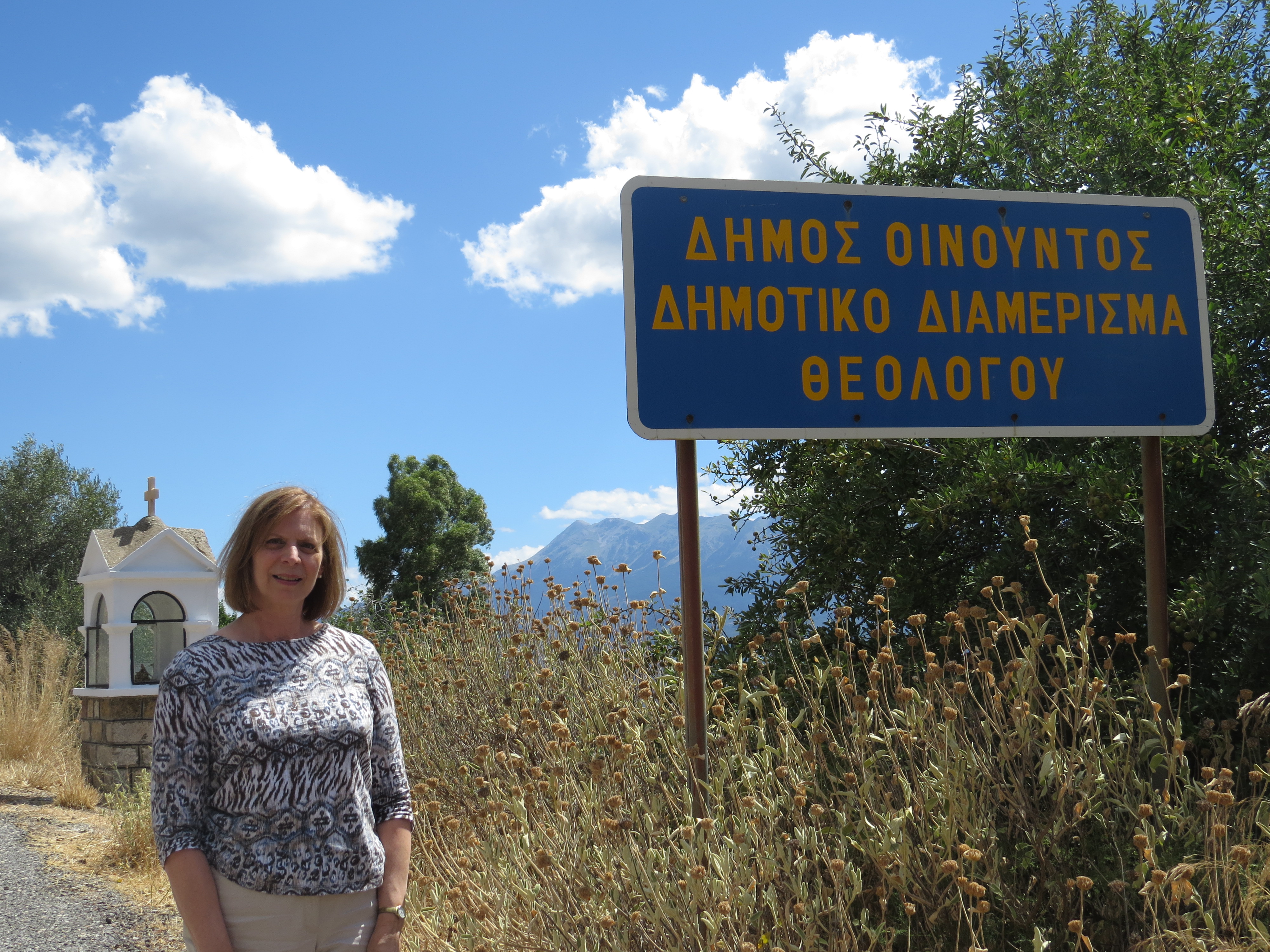
Theologos, Oinountos  

Theologos (19)

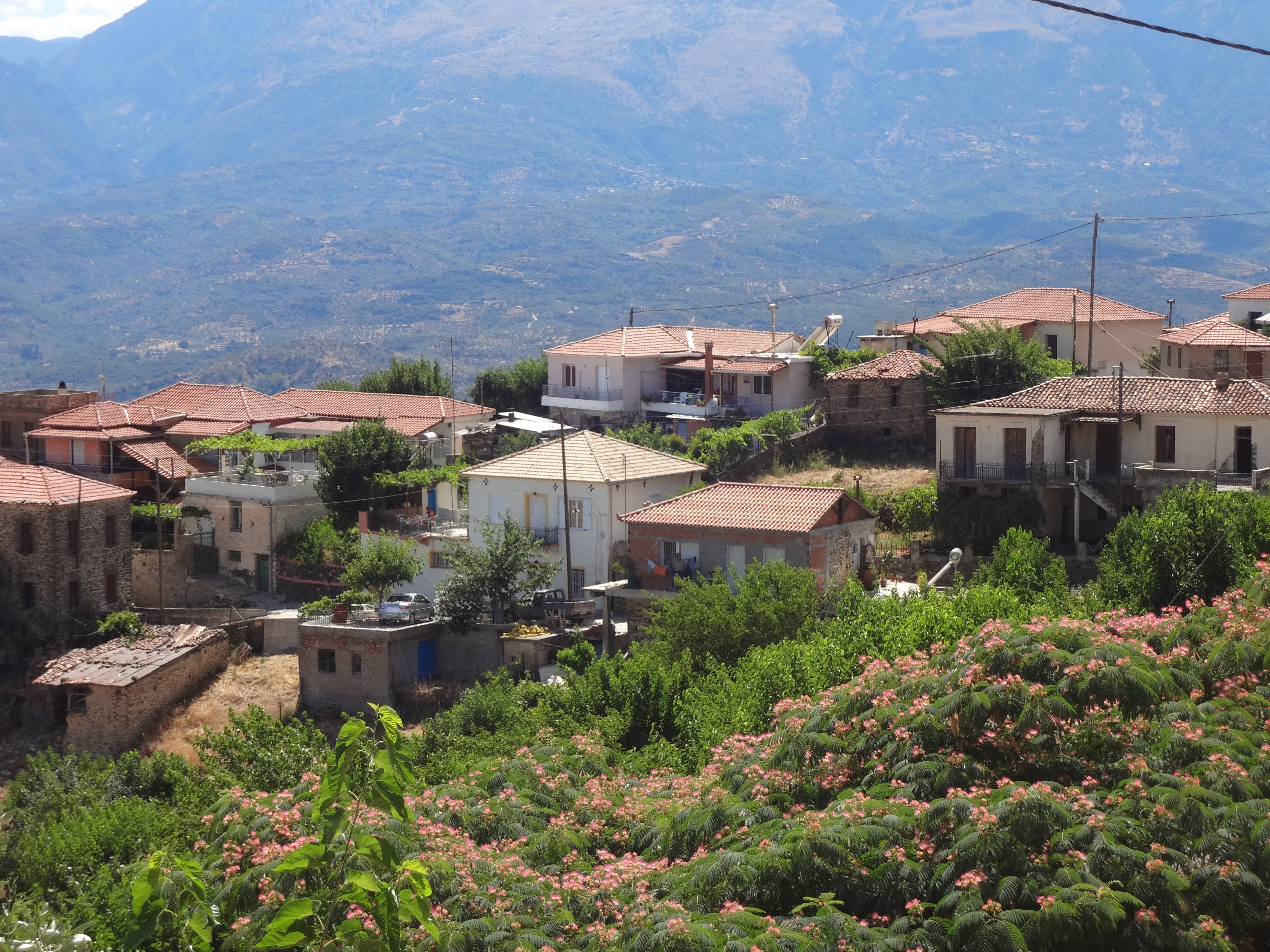
I entered Theologos, the village of my maternal great-grandmother, Stathoula Zaharakis, on a quiet afternoon.

Theologos (3)

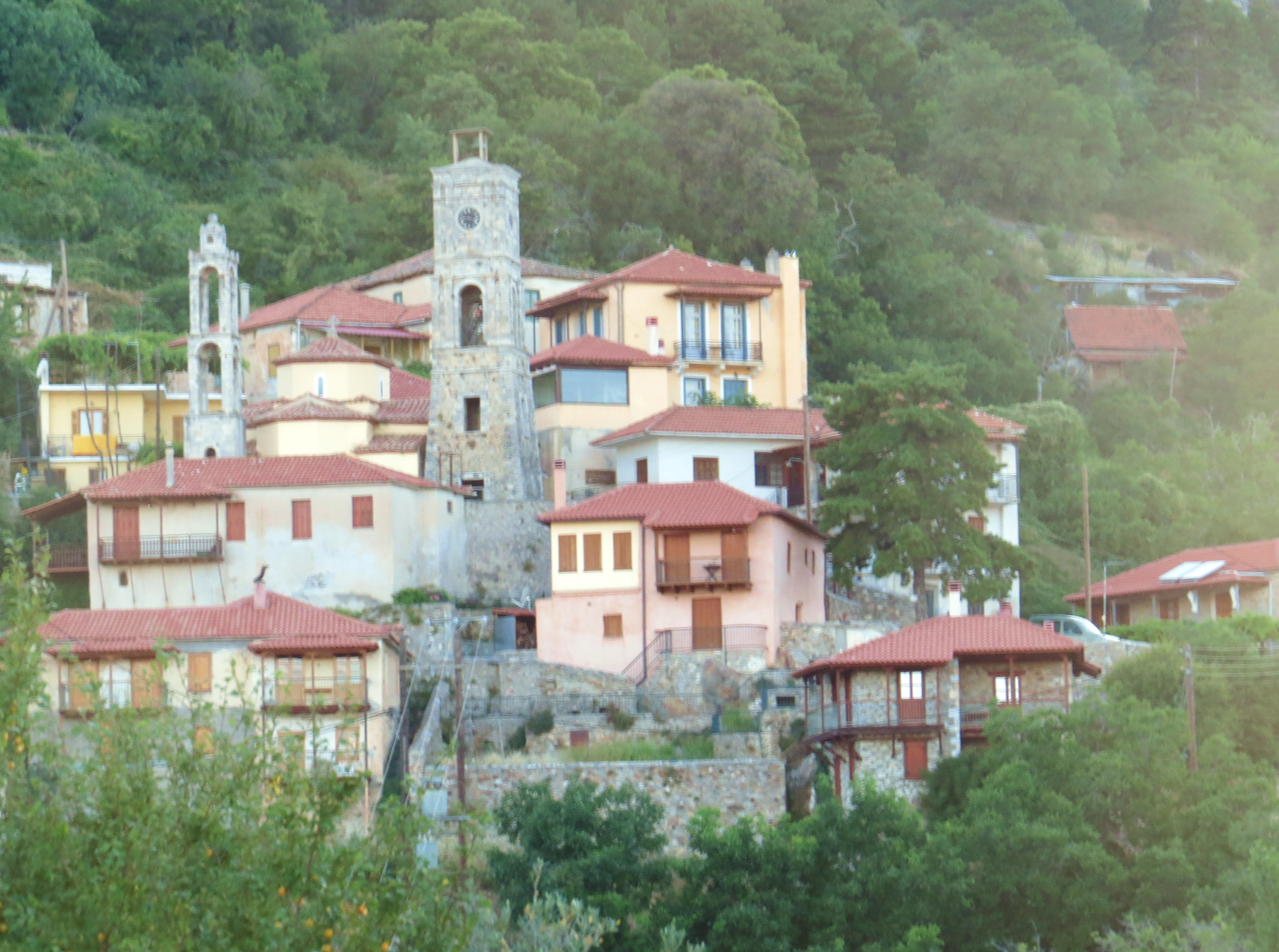
We had traveled a narrow, steep road into this lovely town. Nestled below the towering Parnon mountains, it looked both cozy and inviting.

Theologos (2)

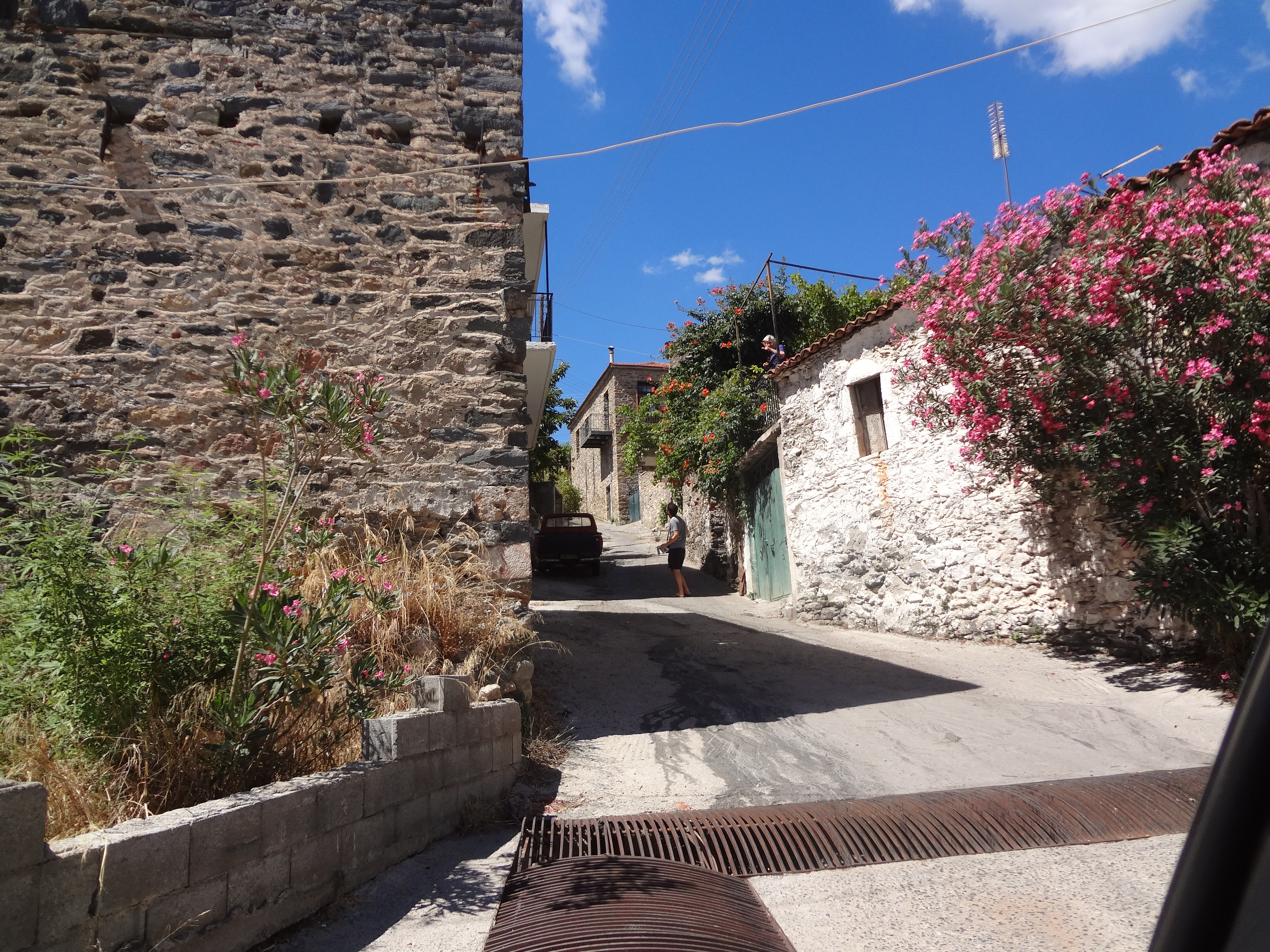
It was siesta time, and the streets were deserted. The peace and tranquility of a beautiful day filled my soul and helped me imagine my ancestors walking the streets.

Theologos (4)

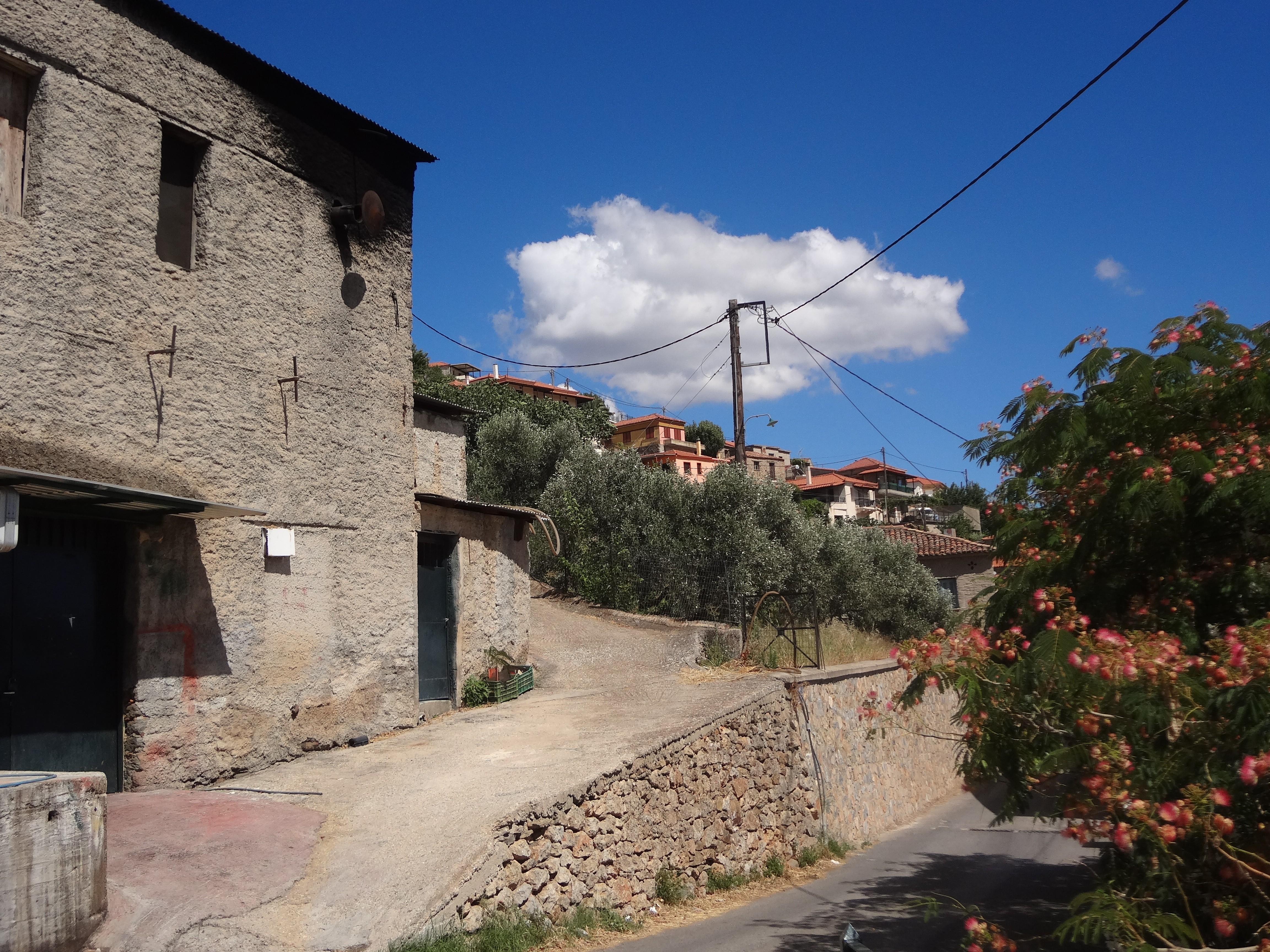
Homes in mountain villages are built on terraces, which enable you to see each one. The flowering bushes and trees provided a beautiful contrast to the stark stone buildings.

Theologos (7)

It is not unusual for even the smallest village to have more than one church. I love the way this small church was built to conform to its surroundings.

Theologos (12)

The larger church was built on the west end of the town square.

Theologos (8a)


The original plaque on the front corner of this church reads that it was built in 1879-1880 by the families of Theologos. With my gr-grandmother Stathoula’s birth being in 1870, this means that her parents would have helped build this church and worshiped in it!


Theologos town square  Collage

The town square has an enormous tree that provides both a focal point and much-needed shade on a hot day. The plaque reads: “The generation that lived in Theologos during the years 1879-1880 planted this sycamore tree and watered it but God made it grow.” I closed my eyes and imagined by Zaharakis gr-gr grandparents at the tree-planting ceremony – surely they were there! I felt very, very close to them as I stood on the ground where they had lived.

Theologos (21a)

It is heartwarming to see that every village has a monument honoring those who died in the service of their country. This one in the Theologos town square bears the names of:  Dim. H. Mouses, Pan. N. Kefalas, Andr. N. Synolinos, Nikol. K. Kefalas, Bas. P. Sarantopoulos, Dim. N. Manousos, Anar. K. Galatas.

Agios Ioannis

Three of my four grandparents were born in Agios Ioannis (Sparta): Papagiannakos, Kostakos, Aridas/Mihalakakos. This village lies in the fertile valley of the plains of Sparta, overshadowed by the rugged and forbidding Taygetos mountains. My family history continues in this village, as I wrote in an earlier post about visiting my relatives here.

Agios Ioannis (1 Papagiannakos school) (7)

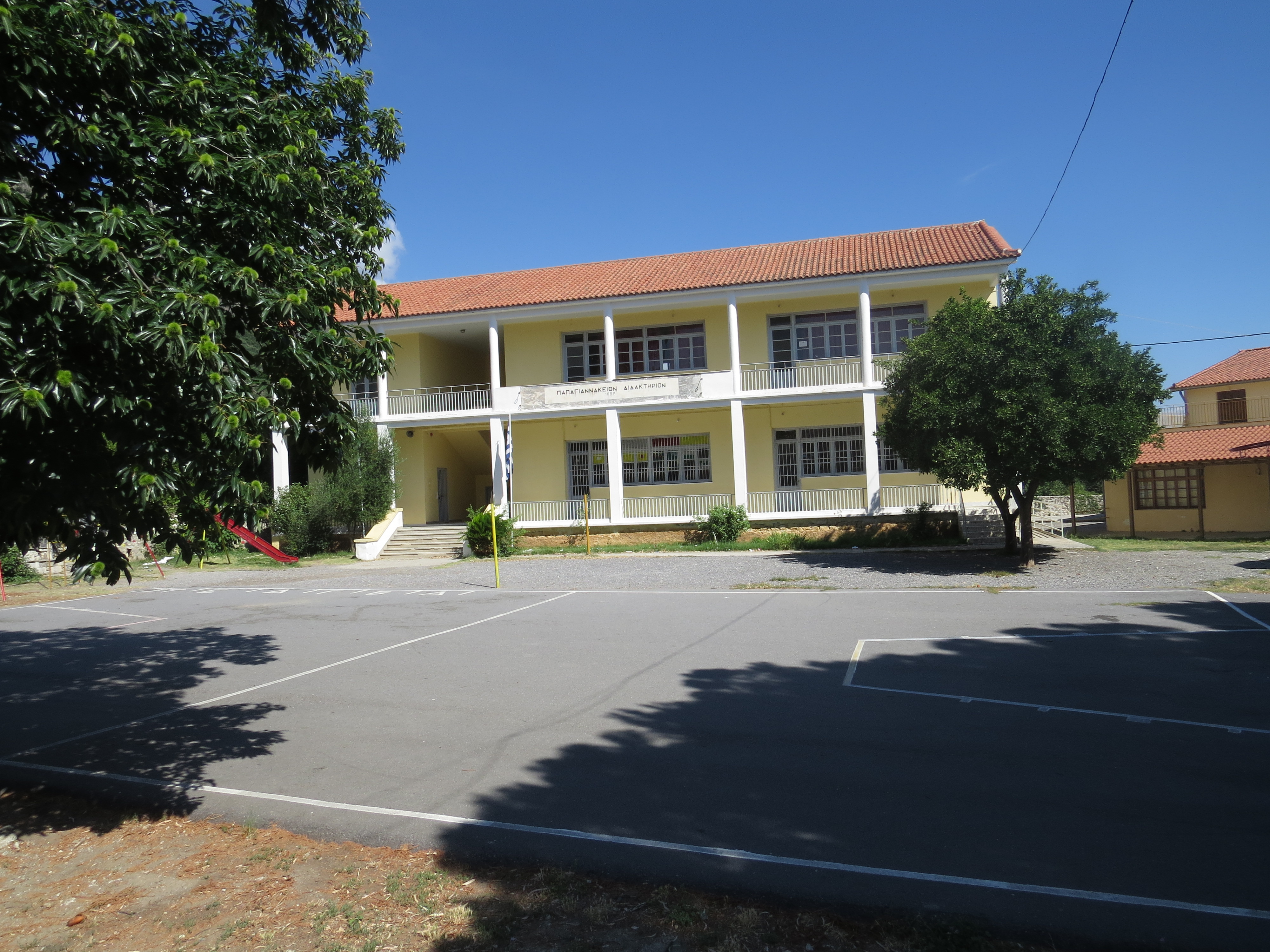
Demetrios Nikolaos Papagiannakos (1897-1945), who emigrated to America and became a most successful restaurateur, built this school in Agios Ioannis which bears his name.

Agios Ioannis (2 building built by Kostakos)

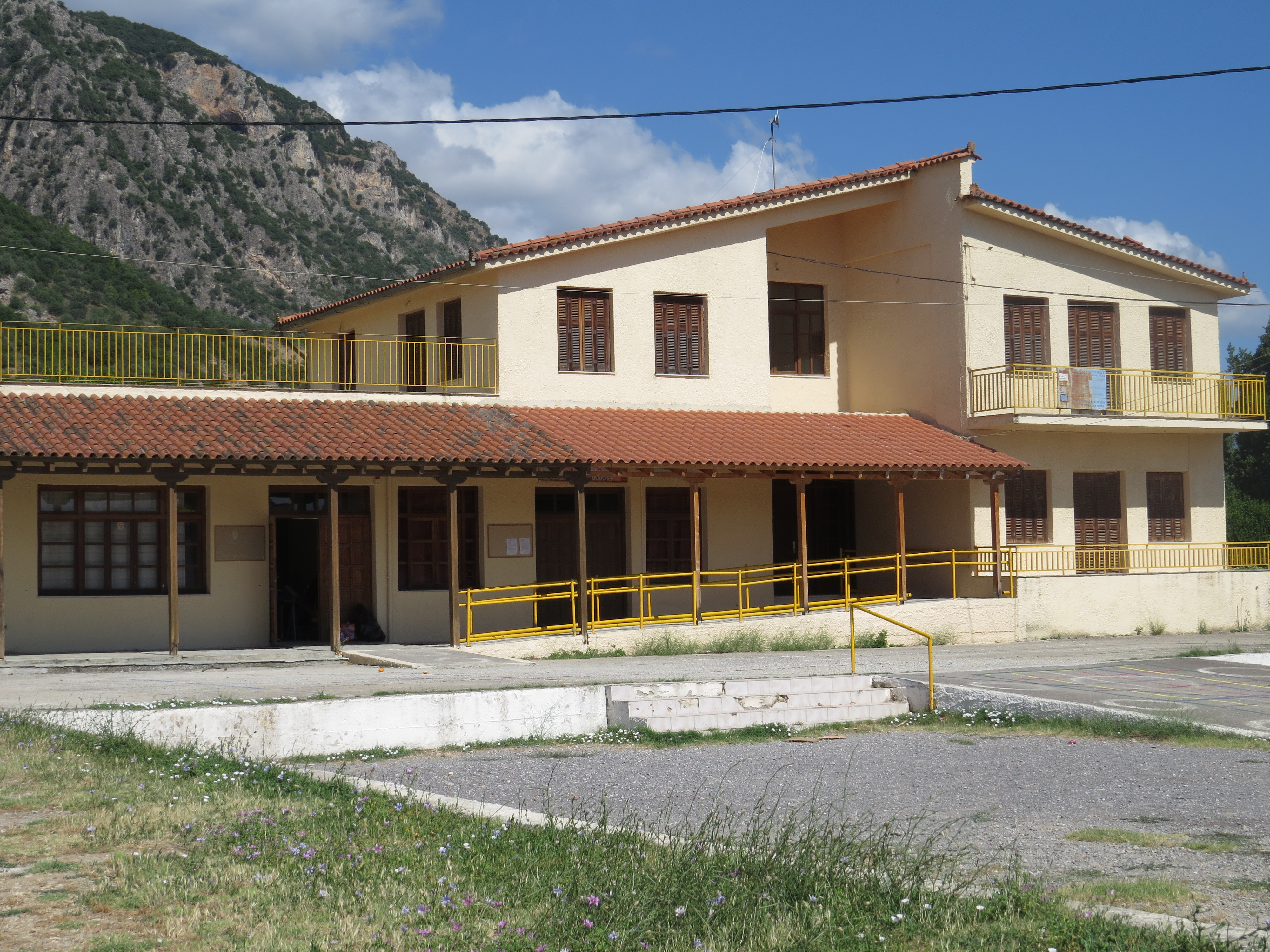
My second cousin, Grigorios Georgios Kostakos (1927-2001) was mayor and provided the means and the incentive to build this structure which is used for town meetings and other events.

Agios Ioannis - Maltsiniotis tower-home (6)

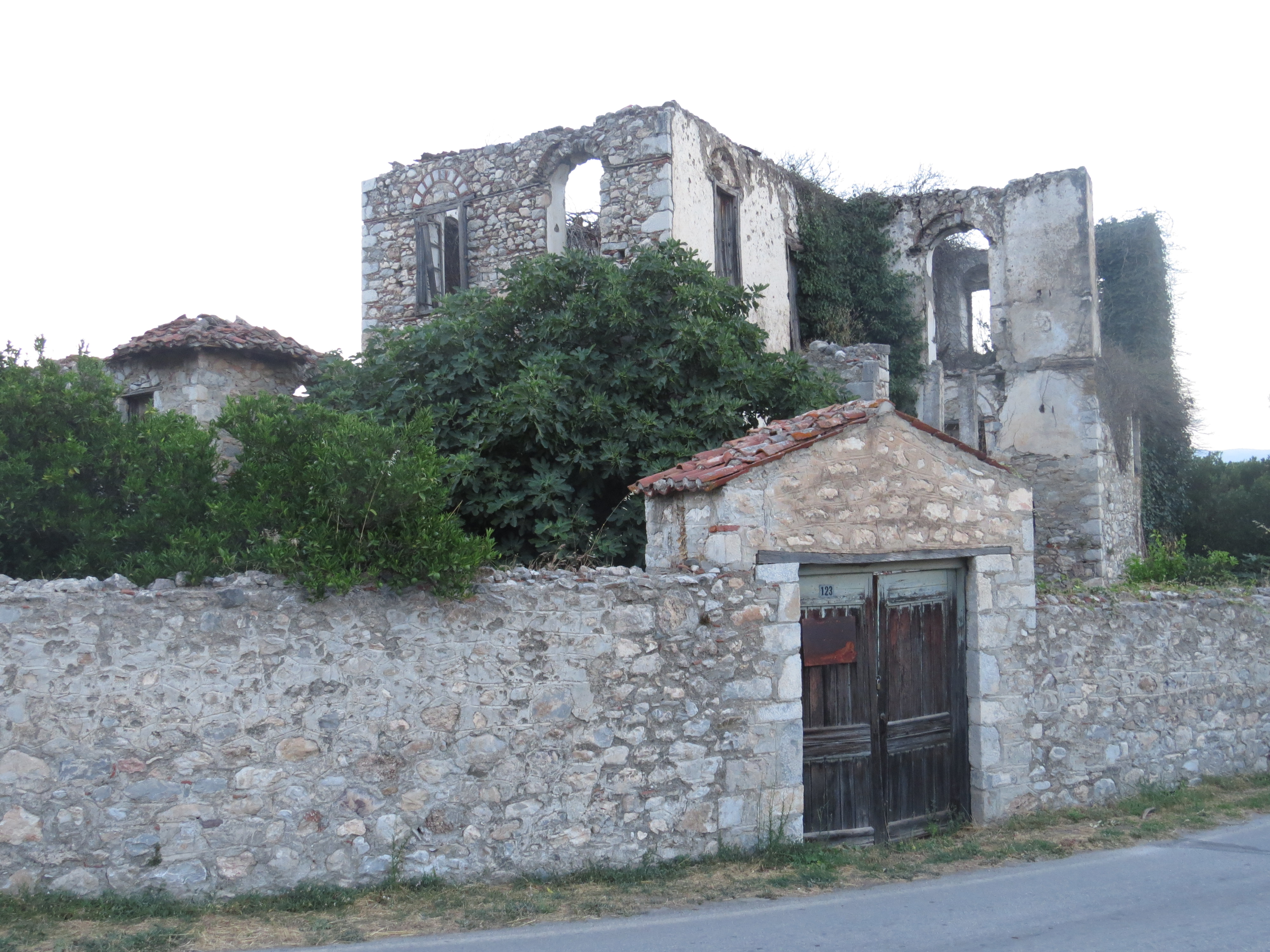
This house, which is adjacent to the Papagiannakos School, was built by the Maltsiniotis family. Its structure is evocative of the towers found in Mani, which is where the family originated. There is speculation that the Papagiannakos family may have been a branch of the Maltsiniotis family, but that has yet to be proven.

Agios Ioannis monument Collage

The memorial tower for Agios Ioannis lists several surnames in my family.

Mystras  

The ancient city of Mystras, which was the seat of the Byzantine Empire in the Peloponnese, is the ancestral village of my grandmother, Aggeliki Eftaxias. It is built on a side of the Taygetus mountain overlooking Sparta. Mystras (10)

The majestic castle buildings and churches, built in 1249, dominate the landscape and and give the  visitor a glimpse into the world of its founder, the prince of Achaia, William of Villehardouin. Mystras was occupied by the Byzantines, the Turks and the Venetians, and was eventually abandoned in 1832.

Mystras (22)

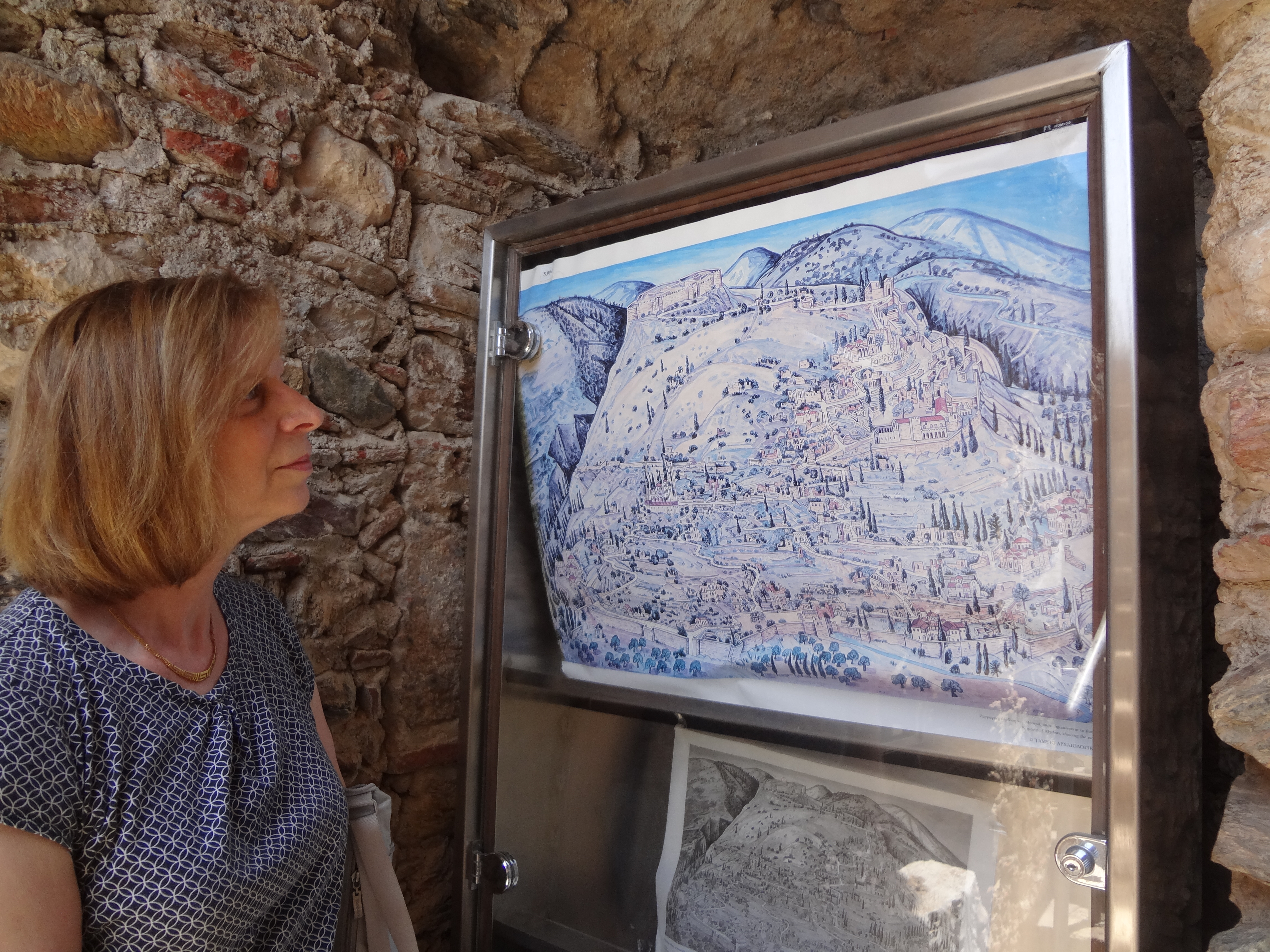
This map, on the wall by the ticket office, shows the layout of the city during its prime years.

Mystras Collage

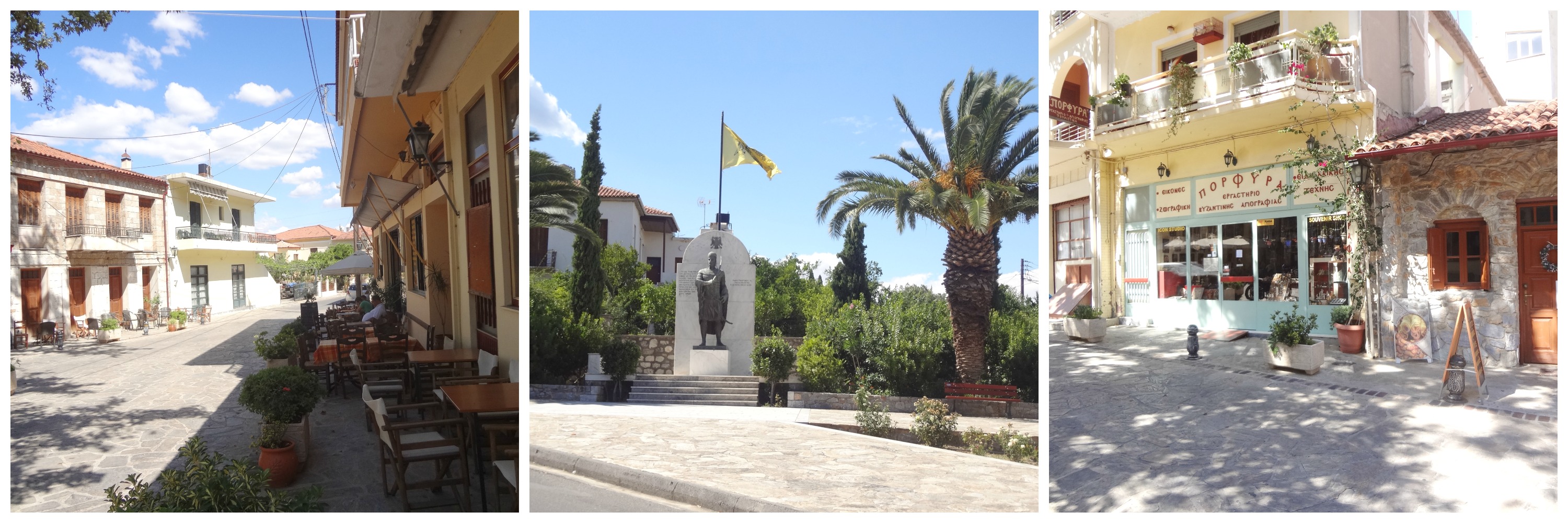
The village of Mystras is charming, with small shops and a mixture of architectural designs. I delighted in spending the night in this wonderful place where my Eftaxias family still lives.

Anavriti 

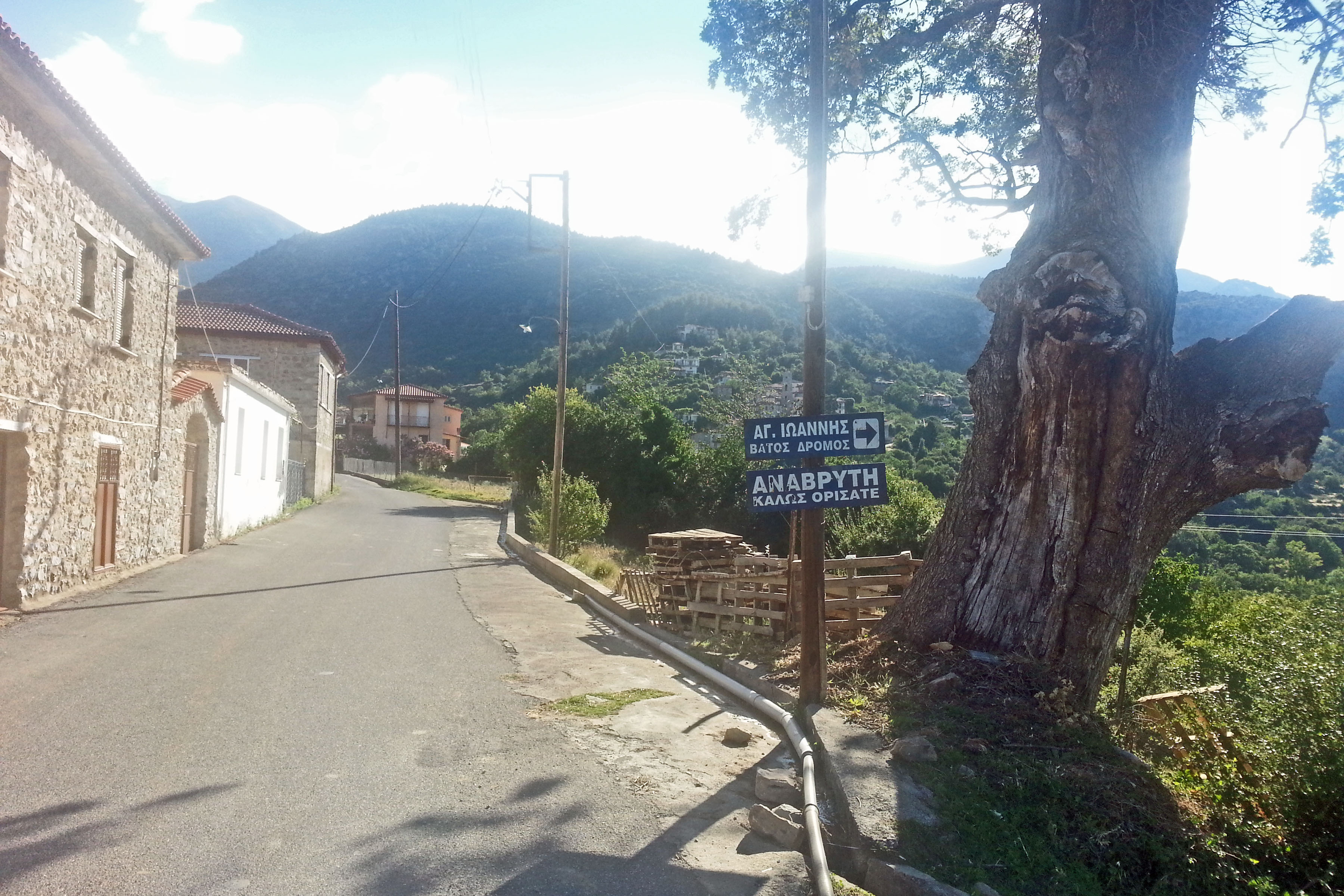
At the peak of a mountain in the Taygetus range, overlooking Sparta, is the village of Anavriti. The “old road,” a narrow, hairpin-turn switchback road, has thankfully been replaced by one that is newly paved and slightly wider. Even so, it was frightening to wind across the face of the mountain at an almost vertical climb.

Anavriti CollageIt is easy to see why there are so many “icon boxes” on these twisting roads, which are erected by families to memorialize the spot where a loved one died.

Anavriti (11)

The village is literally perched at the very top of the mountain! How did people ever build on this terrain?

Anavriti (20a)-path to AgIoannis

This photo shows the way to a trail leading down the mountain from Anavriti to Agios Ioannis, making it very convenient for the two populations to mingle! I am attempting to tie Kostakos families from Anavriti into my bloodline; also, there are several Anavriti families that married into mine which give me a link to this village.

Vordonia  

Slightly north of my villages is the town of Vordonia, home to the Linardakis family.

Vordonia (1)

My daughter, Kathy, was thrilled to visit the ancestral home of her paternal grandfather, George Lynard/Linardakis, who immigrated to Washington D.C. when he was a teenager.

Vordonia Church Collage

We found a tiny but charming church and imagined that the Linardakis family may have met in a building such as this.

Vordonia Monument Collage

The ornate memorial touched our hearts and reminded us that every life is precious.

Vordonia (51)As we drove many miles through many villages, we more clearly understood the difficulties of travel in the days before automobiles. People walked or rode donkeys up and down steep and rugged goat trails, and a simple visit to a neighboring village could have been an all-day trek! As I study the records of villages, I now realize why almost all people married within a local geographic boundary — and, why some never left their village.