Return to Greece, 2016. Part 8: Meandering in Mani

This is the eighth post in a series about my trip to Greece, June 30-July 20, 2016 — an amazing journey of history, family and discovery. Previous posts can be found here.

Mani. There’s something about this land that speaks to my soul. From the moment I left two years ago, I couldn’t wait to return. The forbidding mountains, expansive plains, and impenetrable stone structures exemplify resilience, fortitude, and never giving up. It is the land of some of my ancestral families. On my first trip to Greece years ago, a man at the Archives looked at my surnames and exclaimed, “Oh, your families are from Mani!” Then he looked at my husband and said without any humor, “Watch out! She’s a Maniot. She  comes from tough people.”

Since then, I have learned so much about these “tough people.” There’s a reason they are so strong and self-reliant. They have weathered the elements and tamed the forbidding soil. They repelled any potential invaders by using rustic, yet effective methods. The Turks never penetrated or conquered the Mani. Neither did the Nazis. The people hid in caves in the hills until danger passed, then returned to their villages and their simple lives. Although the spirit of independence from Ottoman rule had been simmering for years throughout Greece, the spark that ignited the Revolution was in Mani on March 17, 1821.

By al-Qamar - File:Peloponnese relief map-blank.svg, GFDL, https://commons.wikimedia.org/w/index.php?curid=36370154

By al-Qamar – File:Peloponnese relief map-blank.svg, GFDL, https://commons.wikimedia.org/w/index.php?curid=36370154

There are three regions in Mani:  “exo” or outer; “kato” or lower; “mesa” or inner. As the map clearly shows, the entire region is mountainous and sustains little vegetation except wild olive trees, cactus, and brush. Goats scrape by on the sparse grasses, and an occasional flat valley may support orange trees. Wild herbs such as sage and oregano fill the air with a tantalizing scent. Even during hot summers, cool breezes sweep the mountains.

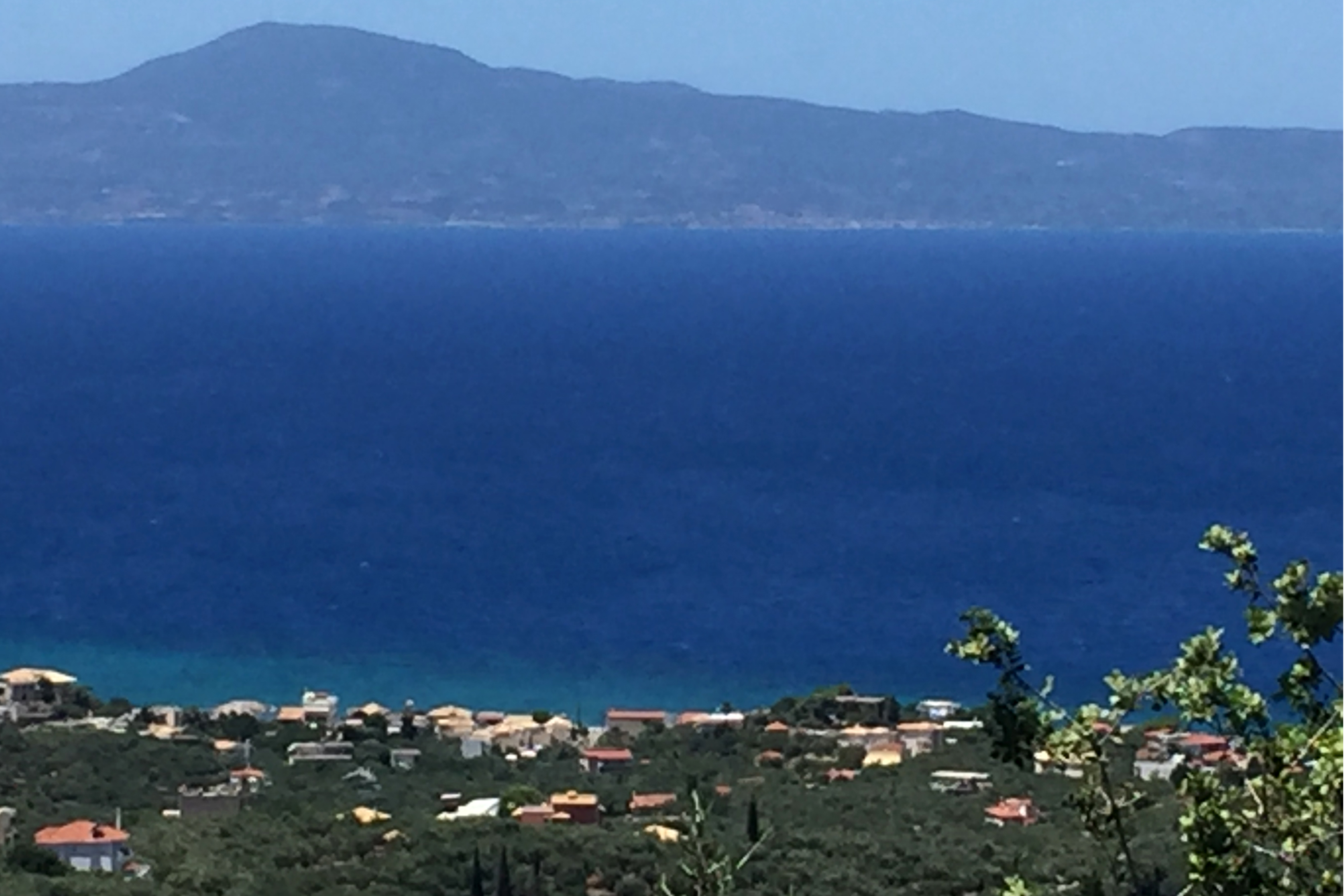
I fulfilled a dream by driving the beautiful, winding road from Kalamata to Areopoli. My GPS estimated the driving time at 1-1/2 hours, but it took me seven. All I did was stop, take photos, and savor every unique site and beautiful view. Being alone, I was able to absorb the atmosphere and revel in the rugged beauty of the land. I felt so peaceful and happy as I drove. I feel like I belong here.

Driving from Kalamata to Areopoli; the mountains, July 2016

Driving from Kalamata to Areopoli – the mountains. July 2016


kalamata-to-aeropoli-9-07-16

Driving from Kalamata to Areopoli – the sea. July 2016


Kalamats to Areopoli - the buildings. July 2016

Kalamats to Areopoli – the buildings. July 2016

A major item on my Plan A was to visit the village of Pyrgos Lefktro in Messinia. I had been told by an elderly aunt that my great-grandfather, Andreas Kostakos, may have come to Sparta from “Pyrgos over the mountains.” This particular Pyrgos seems to be the most logical place. The village is literally at the top of the mountain. When the mountain road ended, I had to park my car and walk because the village “road” was actually a narrow cobblestone winding path, lined with what seemed like ancient stone homes. It was mid-afternoon when I arrived, so of course, not a soul was to be seen except a stray cat. I wandered all around the town, taking many pictures. I found the church, the cemetery, and even went into the osteofilakio (οστεοφυλάκιο), the ossuary building, and looked at the names on the boxes. I did not see anything that could possibly be Kostakos, but my great-grandfather would have left in the middle 1800’s. If he did come from here, there are no descendants remaining.

At the front of the village was a sign on a tree that read “500 years old”. It would have been in full leaf during my great-grandfather’s time.

500 year old tree, Pyrgos, Messinia. July 2016

500 year old tree, Pyrgos, Messinia. July 2016


Buildings in Pyrgos, which overlooks the sea. July 2016

Buildings in Pyrgos, which overlooks the sea. July 2016

There is a very old museum which was locked; there was no sign as to when it opens. I peered in the windows and was taken aback at the life-size figures in full costume, standing watch over the treasures of the village.

Museum in Pyrgos, Messinia. July 2016

Museum in Pyrgos, Messinia. July 2016

As I was leaving, I did see two elderly women sitting on a veranda. They beckoned me to join them. I asked if they had ever heard the Kostakos name in the village, but their answer was no. I wanted to ask what type of life they had led; what type of work their husbands did; how often they left the village to “go to town” (wherever that was, somewhere down the mountain). They had a hard time hearing me and my vocabulary is limited, so the conversation was limited to pleasantries. One of them blew me a kiss as I said goodbye.

Saying goodbye; Pyrgos, Messinia, July 2016

Saying goodbye; Pyrgos, Messinia, July 2016

Driving back down the mountain, I wondered if I may have come — literally — to the end of the road in trying to learn more about the origins of Andreas Kostakos. But I resolutely pushed that thought from my mind. I guess it’s the fighting Spartan and tough Maniot in me that just refuses to give up!

Continuing on the road to Areopoli, I found a settlement, Tzokeika, that is being reconstructed to portray a traditional Maniot village, including a tower, a church, individual homes and an olive press. How fascinating to walk through the buildings that are under construction! This is a living settlement, with people occupying houses. I spoke with a man who had moved in last year, and he was very enthusiastic about his new home, the beauty of the scenery, and the pleasures of living in a closely knit community.

The settlement of Tza

The settlement of Tzokeika, Messinia, July 2016


Tz

Tzokeika settlement, Messinia, July 2016

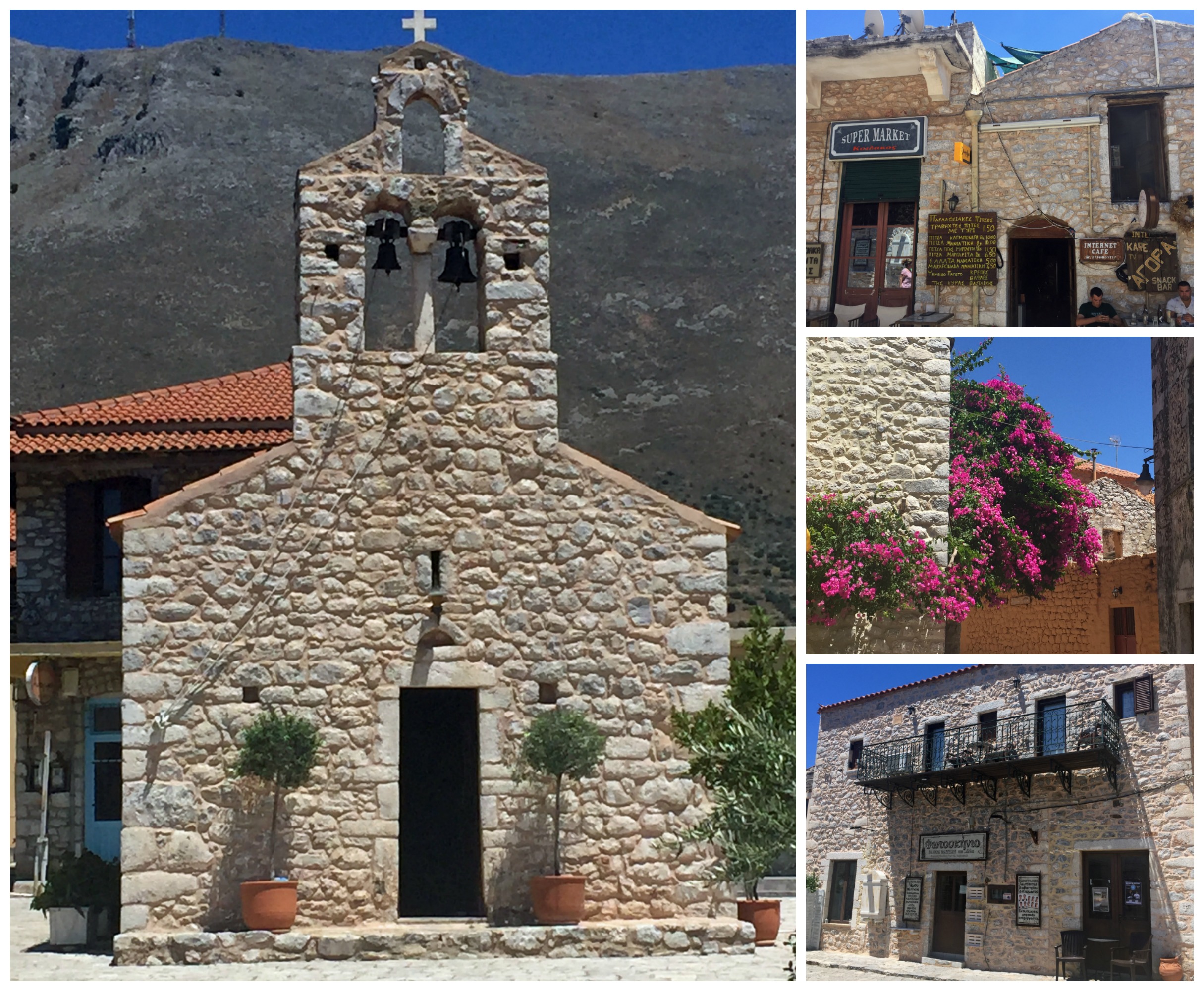
I was in Areopoli, the capital of Mani, by 7:00 p.m. It was Saturday evening and the town was filled to capacity with both locals and tourists. When I went to dinner at 11:00 p.m., I could not find an empty table. I love this village! It eneaeropoli-07-16rgizes me. The ambiance is lively, the buildings are beautifully maintained, and it is the home of a favorite bookstore, Adouloti (owned by Georgios Dimakogiannis). There are dozens of tavernas and cafes, and many unique shops. As are most Maniot villages, Areopoli is pure stone — buildings, roads, walkways. The starkness of the rock is punctuated by brilliantly colored flowers. It is a beautiful study in contrasts. Perched at the edge of the sea, the picturesque town is a visual and sensory delight.

Approaching Areopoli, a village by the sea. July 2016

Approaching Areopoli, a village by the sea. July 2016


Adouloti Mani Bookstore, Areopoli, July 2016

Adouloti Mani Bookstore, Areopoli, July 2016


Areopoli, July 2016

Areopoli, Laconia, July 2016


Areopoli, Laconia, July 2016

Areopoli, Laconia, July 2016

On the way back to Sparta, I stopped at Karavelas to see my friend, Margarita Thomakou, and visit her adopted village. Margarita and I had a delightful visit and a delicious lunch, made by her friend, Pietro. Pietro showed me a book about the history of the village. It is heartwarming to see that many villages in Laconia, even some of the smallest, have these wonderful histories.

Karvelas, Laconia, with Margarita Thomakou and Pietro, July 2016

Karvelas, Laconia, with Margarita Thomakou and Pietro, July 2016

My meanderings in Mani were almost over. The road to Sparta threaded through fertile plains, filled with orange and olive groves. Wild and lovely; fruitful and plentiful, this region of Laconia is truly the breadbasket of Greece.

On the road to Sparta, July 2016

On the road to Sparta, July 2016


Return to Greece, 2016. Part Seven: Digging Deeper

This is the seventh post in a series about my trip to Greece, June 30-July 20, 2016 — an amazing journey of history, family and discovery. Previous posts can be found here.

The most important lesson I learned when traveling in Greece is:  never arrive anywhere between 1:00 and 4:00 in the afternoon. That rule makes scheduling easy — repositories in the morning; solo time in the afternoon; family time in the evening; dinner at 9 or 10:00 p.m. I had to tweak this a bit to squeeze in all I needed to do.
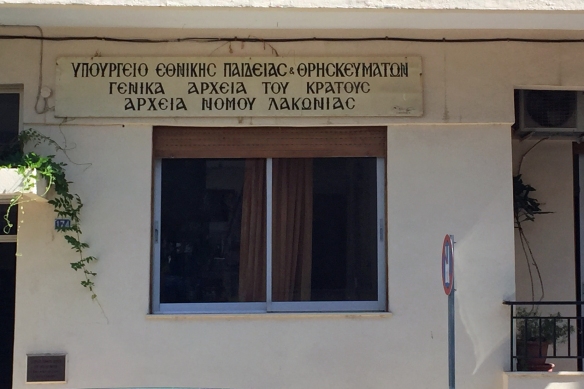
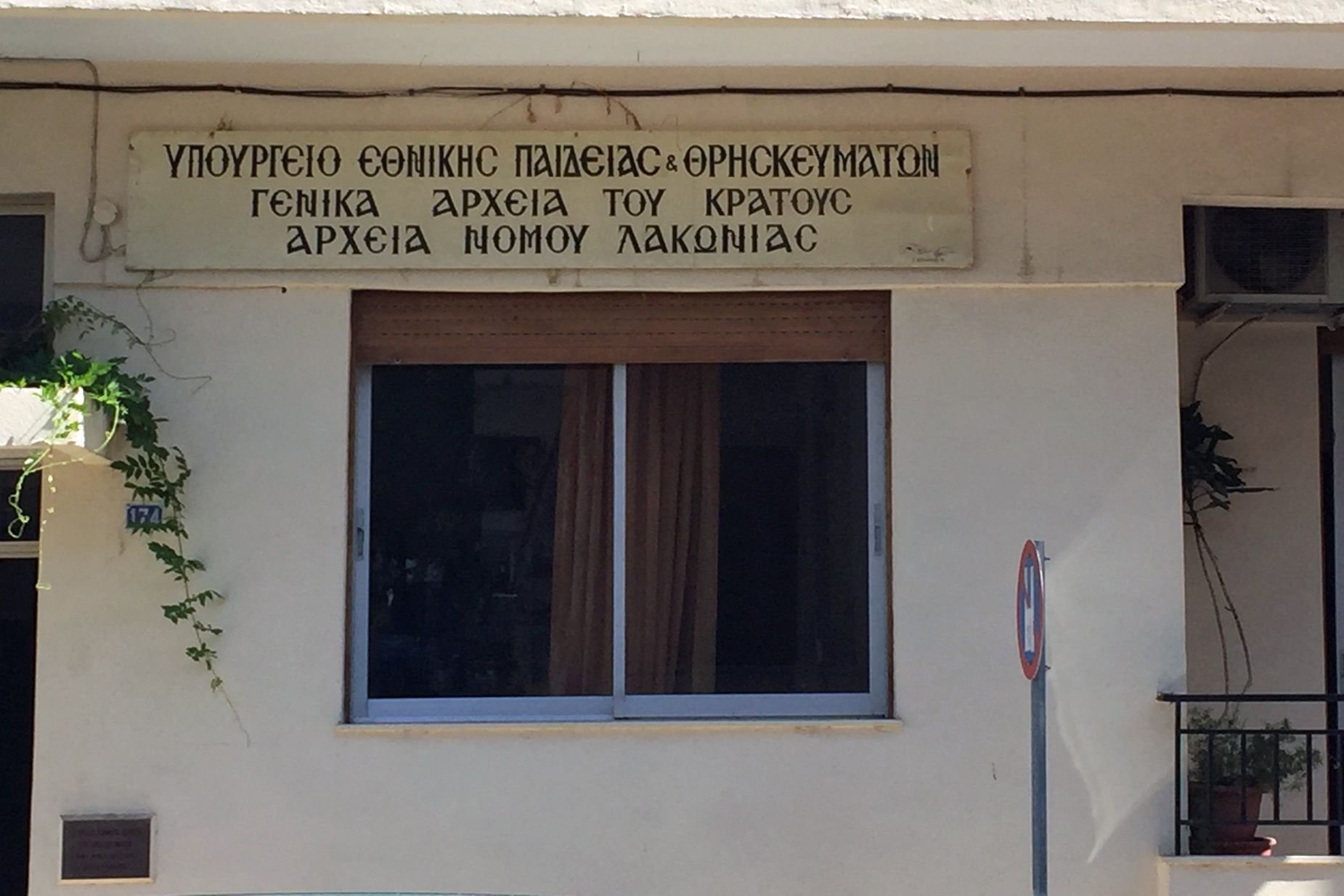
General Archives of Greece, Sparta office, July 2016

General Archives of Greece, Sparta office, July 2016

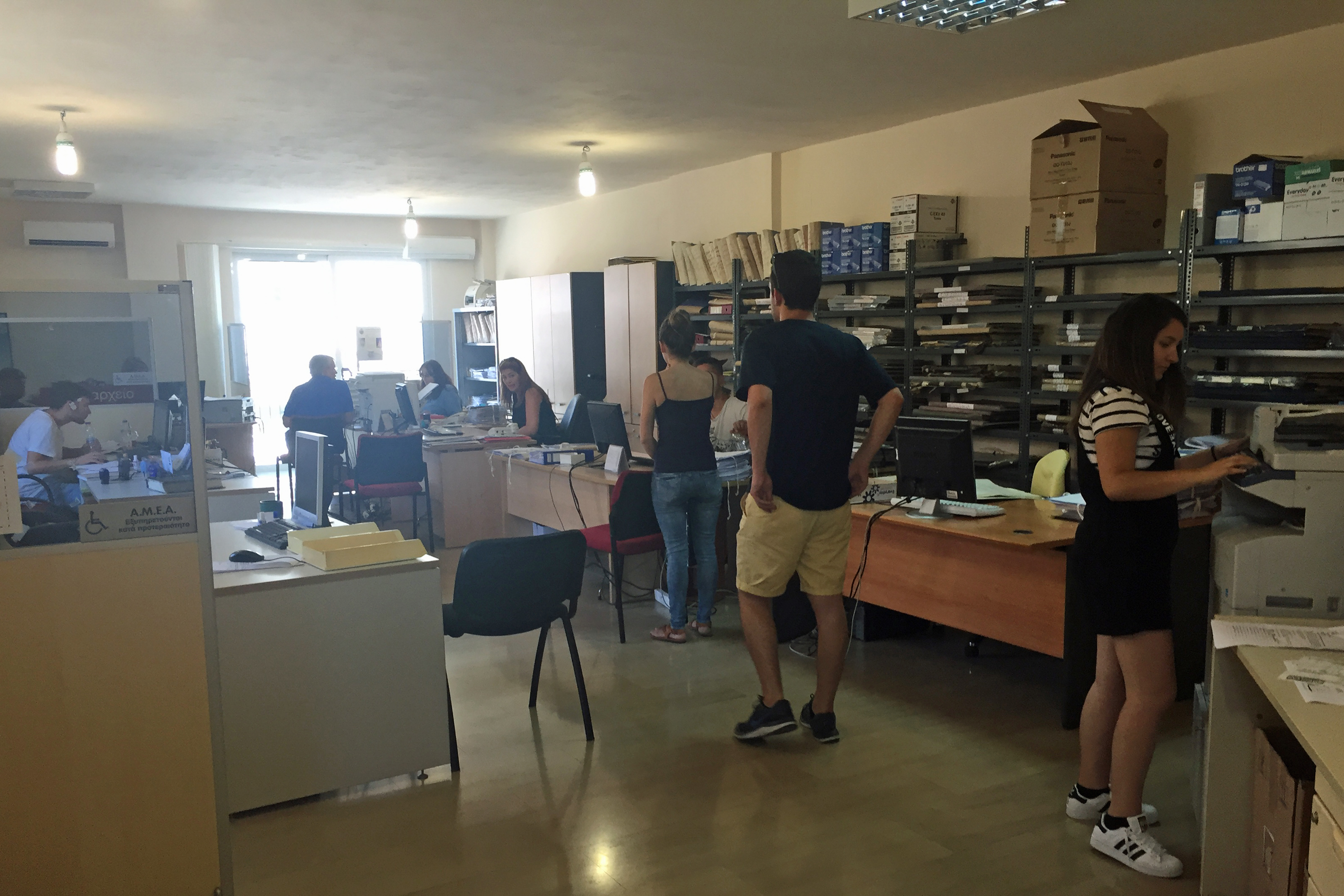
Archives in the mornings — there’s no better way to start the day! The Sparta Office is a treasure chest filled with nuggets of genealogical gems:  documents, books, records. When I arrive, I learn that my archivist friends are on overload: Mrs. Pepi Gavala and her assistants, Michail Sovolos and Maria Stellakou. They explained that many government offices are now closing or consolidating, and sending their records to the Archives. Boxes lined the hallway, waiting for these good people to catalog and store them. Mindful of their workload, I settled in the main room and begin to dig for gold.
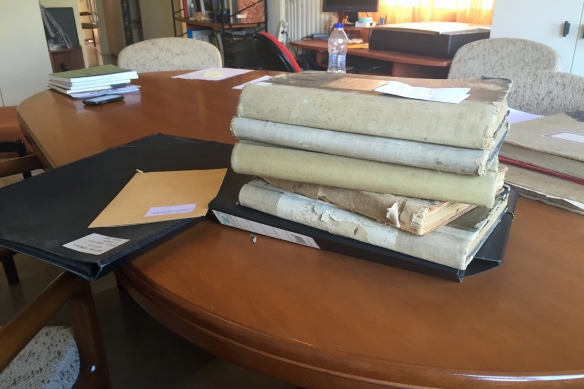
Research room, Sparta Office of the General Archives of Greece, July 2016

Research room, Sparta Office of the General Archives of Greece, July 2016

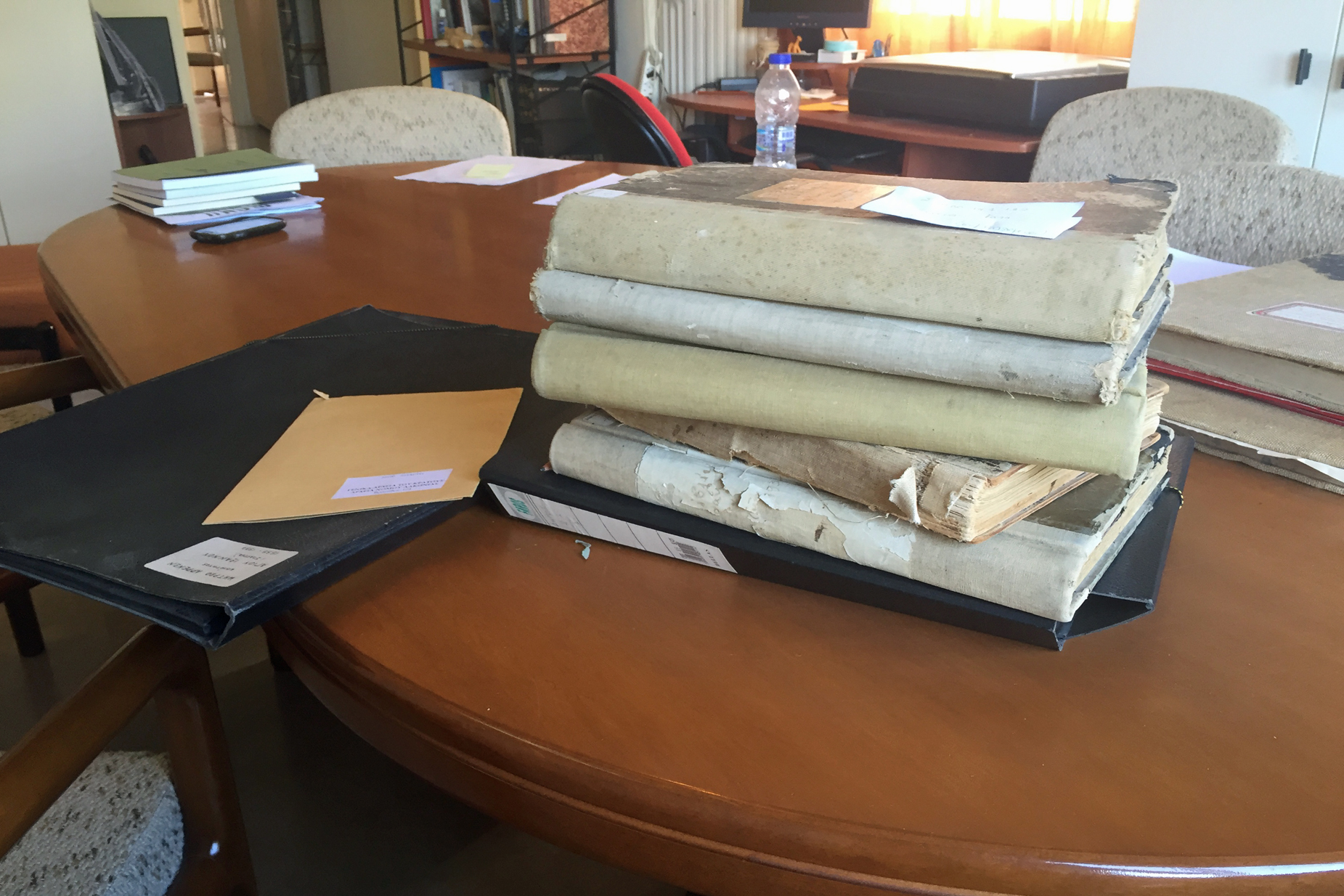
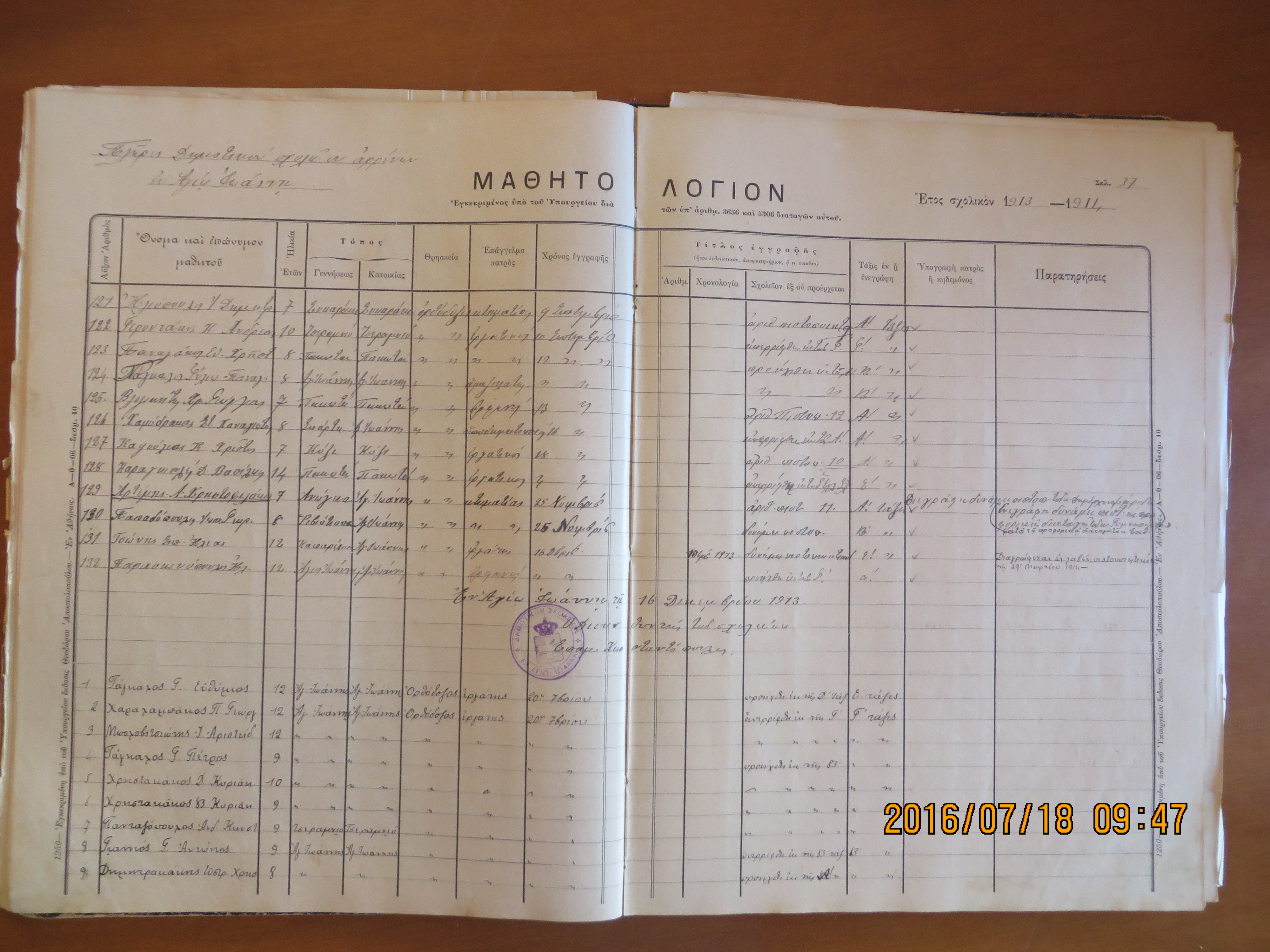
During my visit in 2014, I had obtained digital copies of the basic records for my family:  Male Registers (Mitroon Arrenon) and Family Registers (Dimotologion). I dug into these collections again for my newly-found surnames, and then for a few friends who had requested lookups. I asked Michalis for School Records from Agios Ioannis, and he brought me several books. I was very surprised to see that some of them had only girls’ names! As a Greek researcher quickly learns, there are few official records naming women. These truly are a treasure, as I can now begin to construct entire families, not just males. The school records for Agios Ioannis range from around 1900-1940; the exact tmeframe I need for my grandparents’ era. I stayed until 3:00 closing time, digitizing pages that listed my surnames. What a great find!
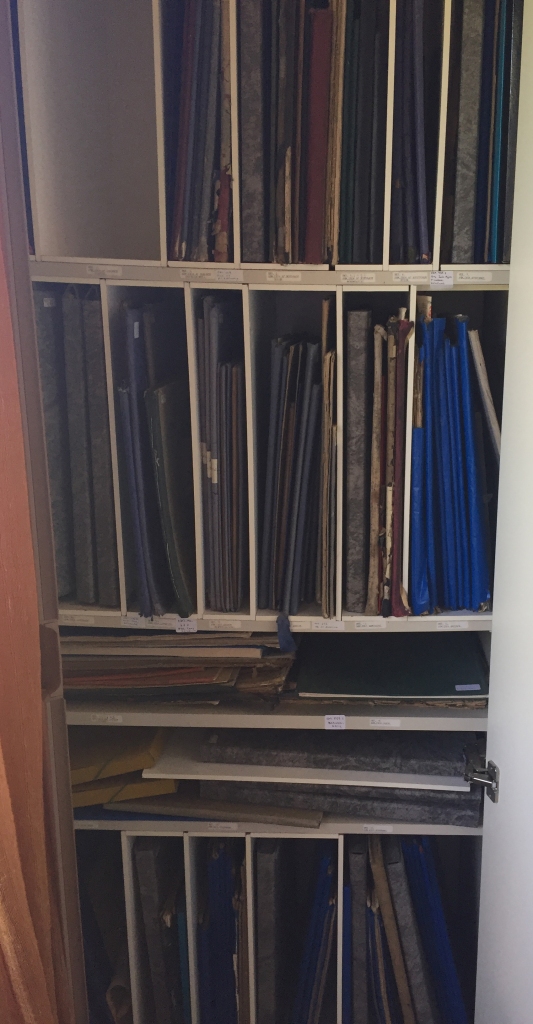
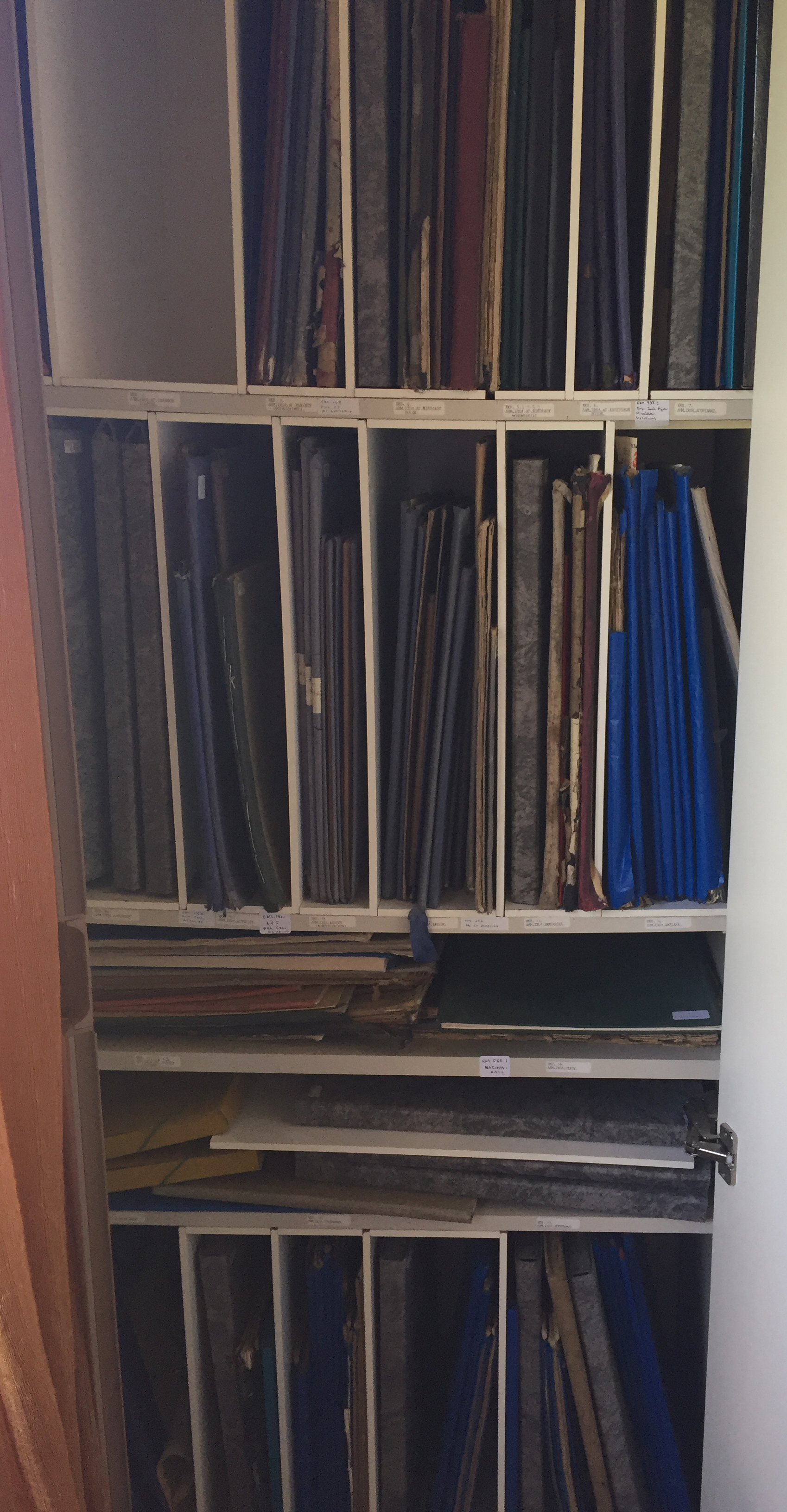
School Record Books, Agios Ioannis, Sparta Archives office, July 2016

School Record Books, Sparta Archives office, July 2016
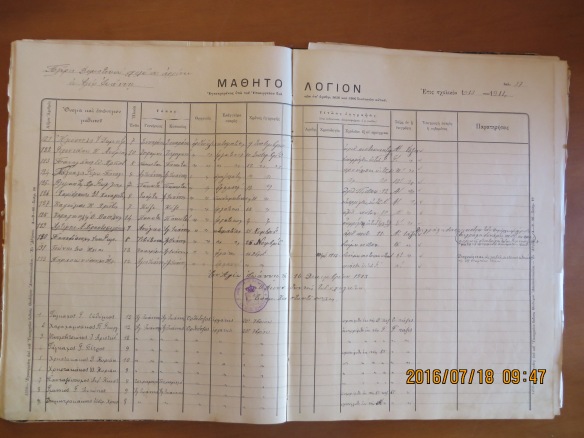
Example of a School Record for Agios Ioannis, GAK Sparta Office, July 2016

Example of a School Record for Agios Ioannis, GAK Sparta Office, July 2016

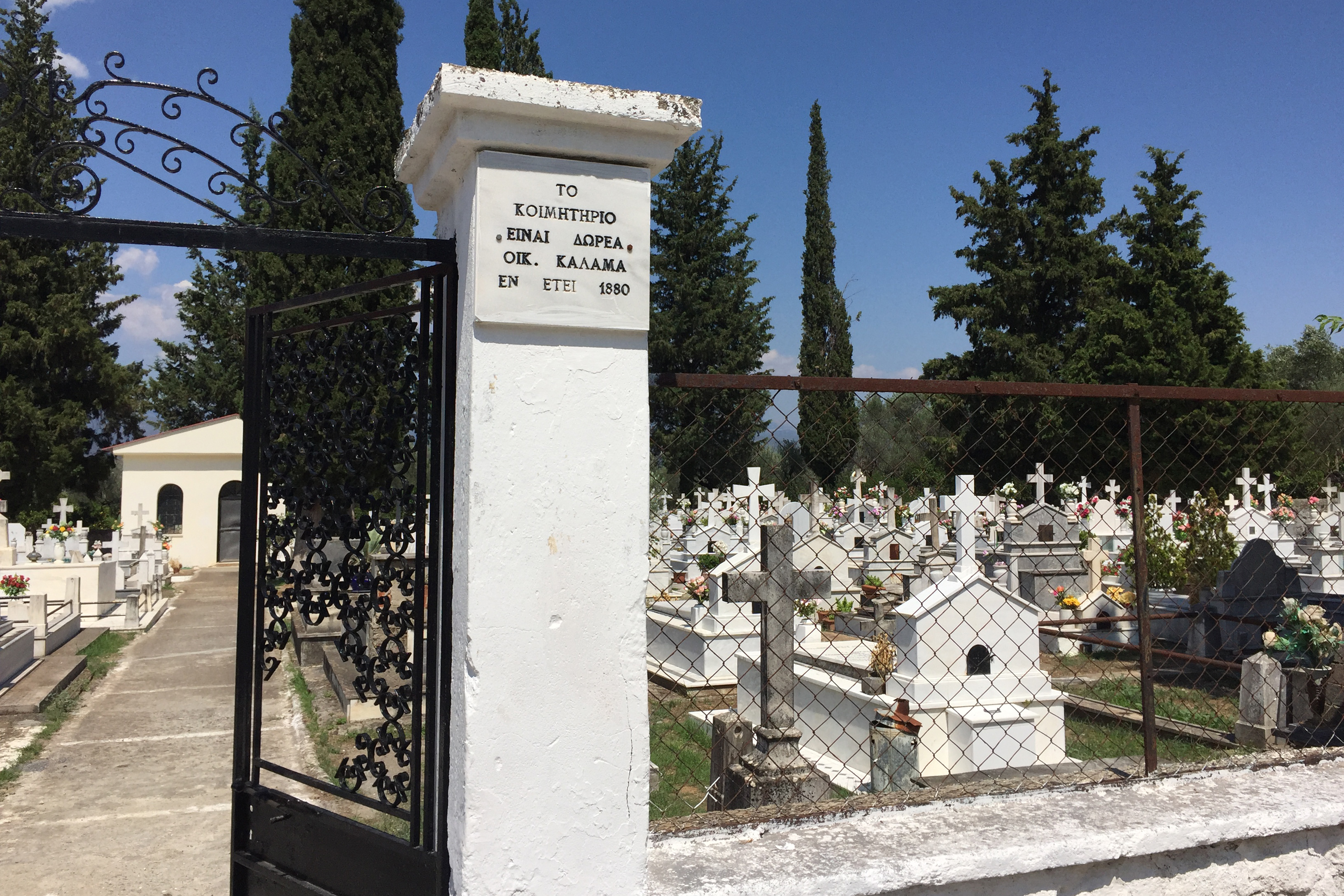
Gregory Kontos arrived in the early afternoon to join me for three days of research. It was hot, hot, hot! And every repository was closed, closed, closed. So we filled the empty 1:00-4:00 p.m. timeframe by going to a place that never closes — the cemetery. Up and down the rows we walked, Gregory reading surnames off the headstones while I snapped photos of the ones that were a “yes.” The sun was scorching this July mid-day and there was no breeze, but we persevered until every name on every grave was read. Then it was time to enter the osteofilakio (οστεοφυλάκιο), the ossuary building.
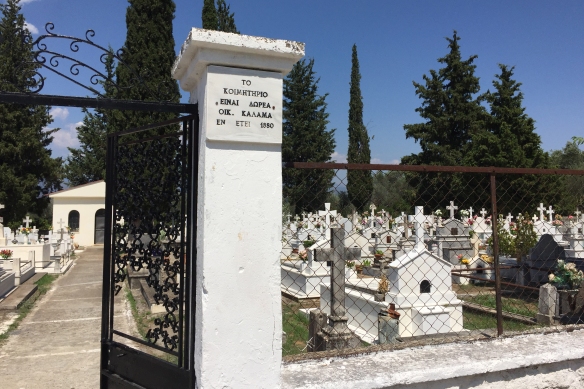
One of two cemeteries in Agios Ioannis, Sparta, July 2016

One of two cemeteries in Agios Ioannis, Sparta, July 2016

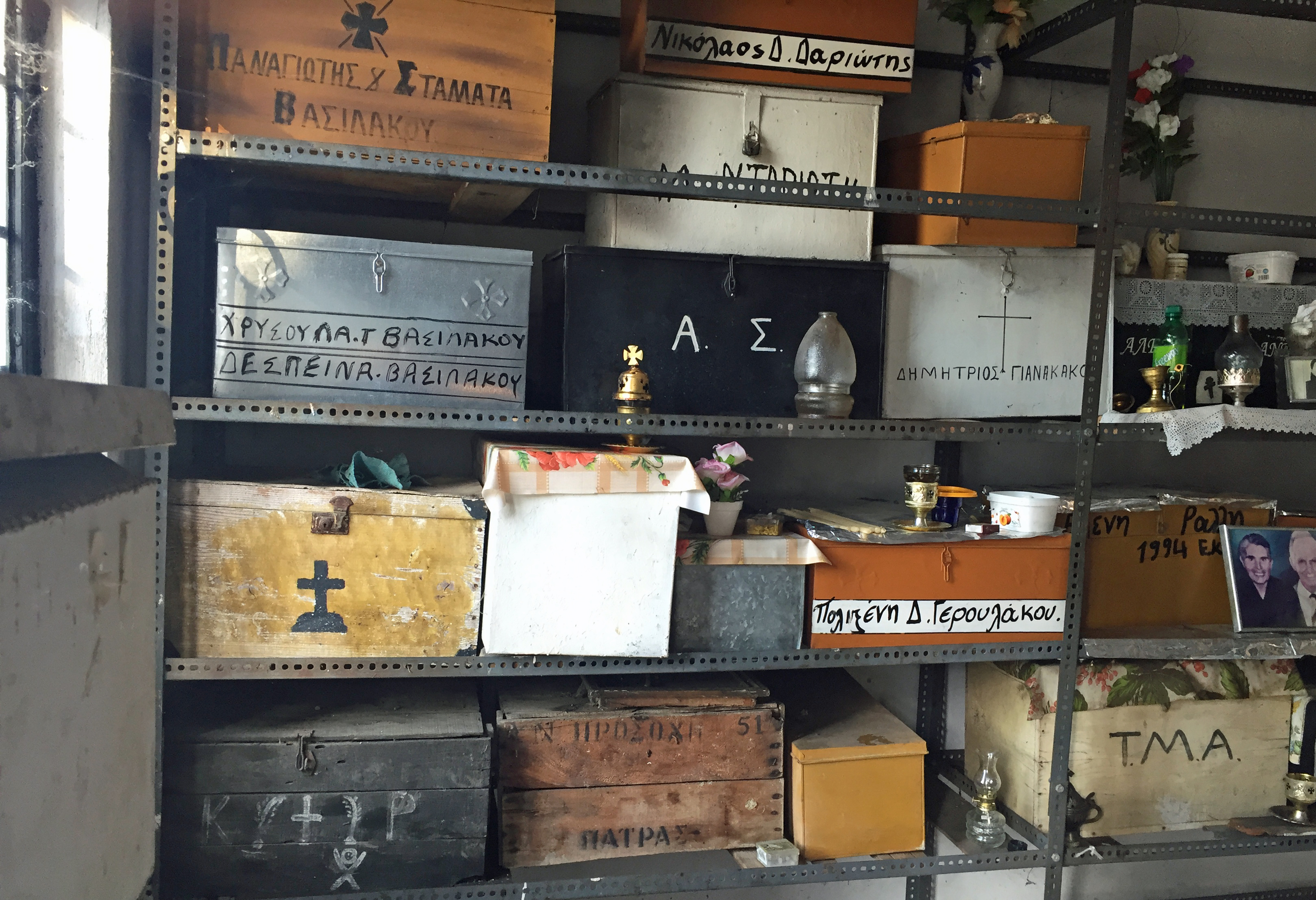
There is limited cemetery space in Greece; therefore, families “rent” a burial plot for three years after which the bones are exhumed and placed in an ossuary. Walking into the osteofilakio is an almost sacred experience. Boxes on shelves line the walls; each inscribed with a family name and holding the bones of the deceased. Icons, photos, flowers, candles and small bottles of oil are carefully arranged around the boxes. A spirit of peace permeates the building. This is holy ground.
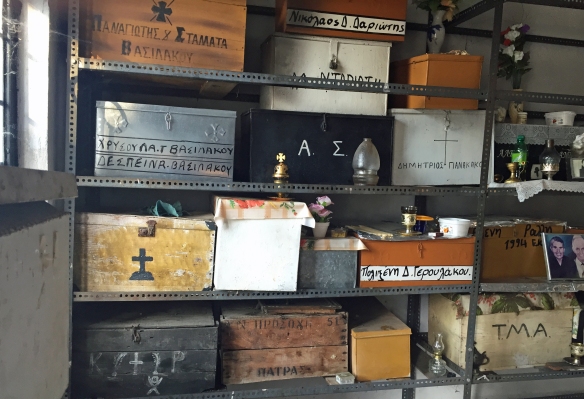
Ossuary house, Agios Ioannis Cemetery, July 2016

Ossuary house, Agios Ioannis Cemetery, July 2016

It was not until we left the cemetery and began driving towards town that we realized there are two cemeteries in Agios Ioannis. We returned the following afternoon and searched the second one. Next time I make a research plan, I have to make sure that I thoroughly vet all locations of potential resources.

Gregory and I had a full schedule for 1-1/2 days in Sparta: the Archives, two cemeteries, the Mitropolis, the Central Library, Amykles, and the Dimarheion (Town Hall). And of course, dinners with my family who have embraced him as one of us.

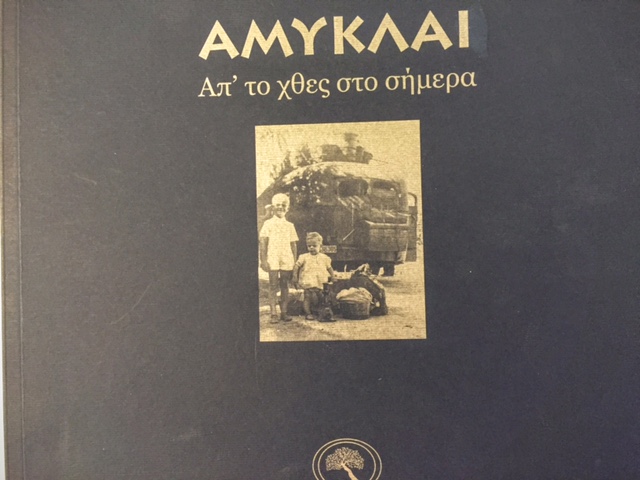
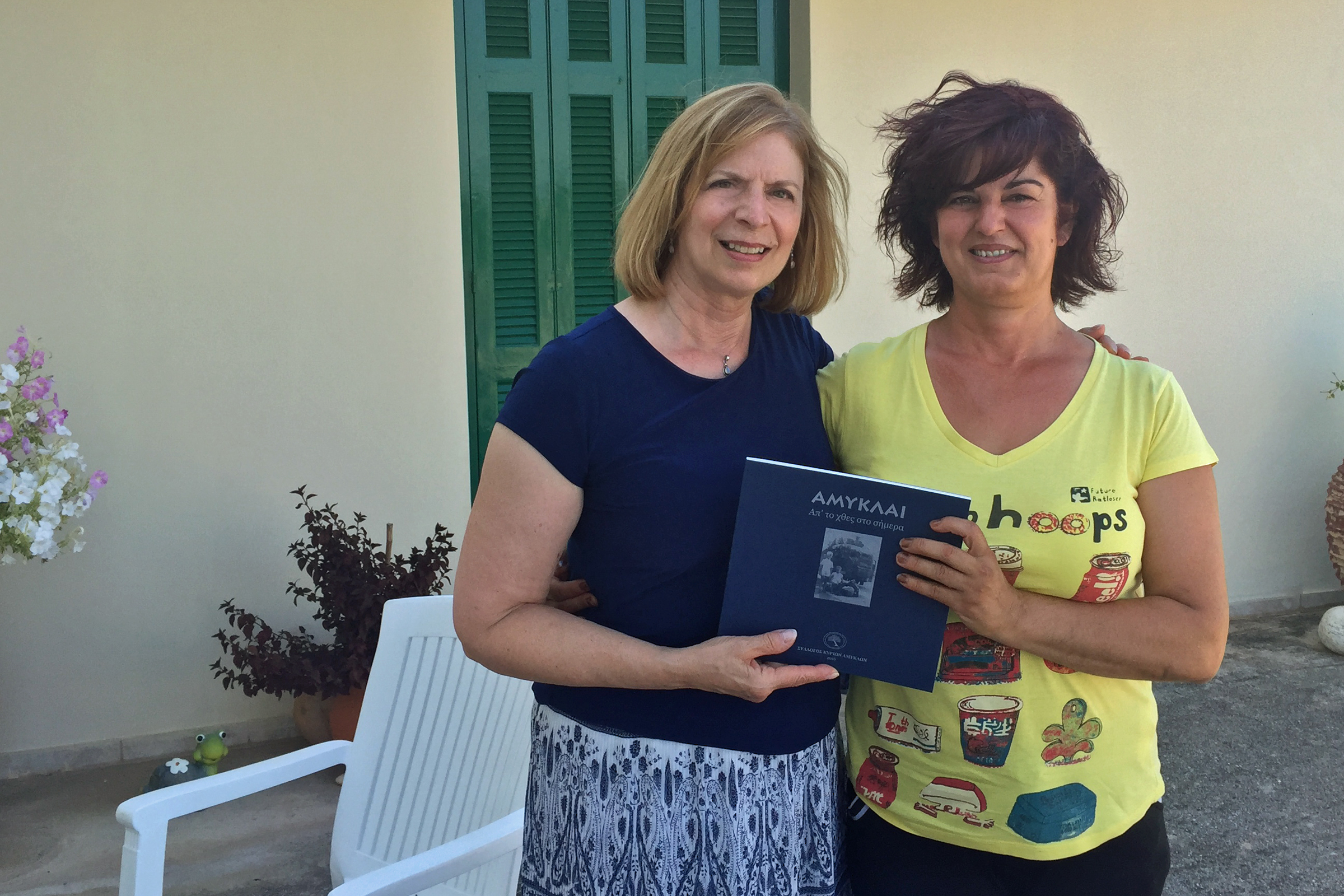
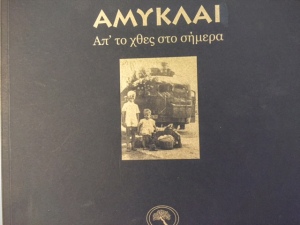
Prior to leaving for this trip, I had spotted a Facebook post about a newly published book about families from the village of Amykles. Since this is the birthplace of my Eliopoulos and Zarafonetis great-grandparents, I was very excited to meet Kaliopi Zarafonetis, the driving force behind this project. amykles-book-2 Gregory and I connected with Kaliopi in Amykles where she described the book’s genesis. There had been a village event which featured a display of old photographs. Everyone was surprised at the extent of the collection, but Kaliopi had the foresight to realize that these treasures would be lost if they were not preserved. Thus began her initiative to create the book. I was thrilled to see page after page of Eliopoulos and Zarafonetis families, most of which are most likely connected to mine. One of my great surprises was to learn that my cousin in Agios Ioannis had married a woman whose grandmother was a Zarafonetis from Amykles – a double connection!
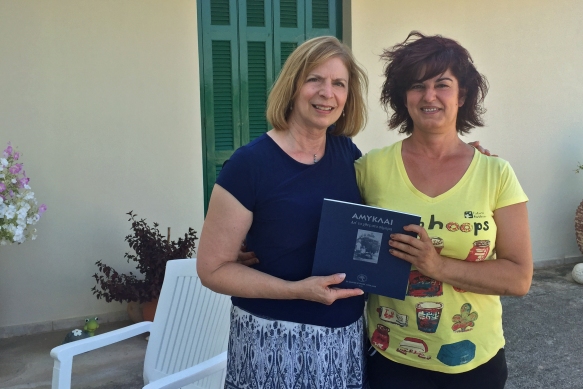
Carol Kostakos Petranek and Kaliopi Zarafonetis, Amykles, July 2016

Carol Kostakos Petranek and Kaliopi Zarafonetis, Amykles, July 2016

On to the repositories. I was on the hunt for death records for specific members of my family. My cousin, an attorney for the government in Sparta, had contacted a colleague in the Town Hall and we obtained the certificate for a member of the Linardakis family of Vordonia. I was surprised to learn that death records for Agios Ioannis are in the Town Hall of Magoula, not Sparta! Unfortunately, I did not make it there but it is the first item on Plan A for the next trip.

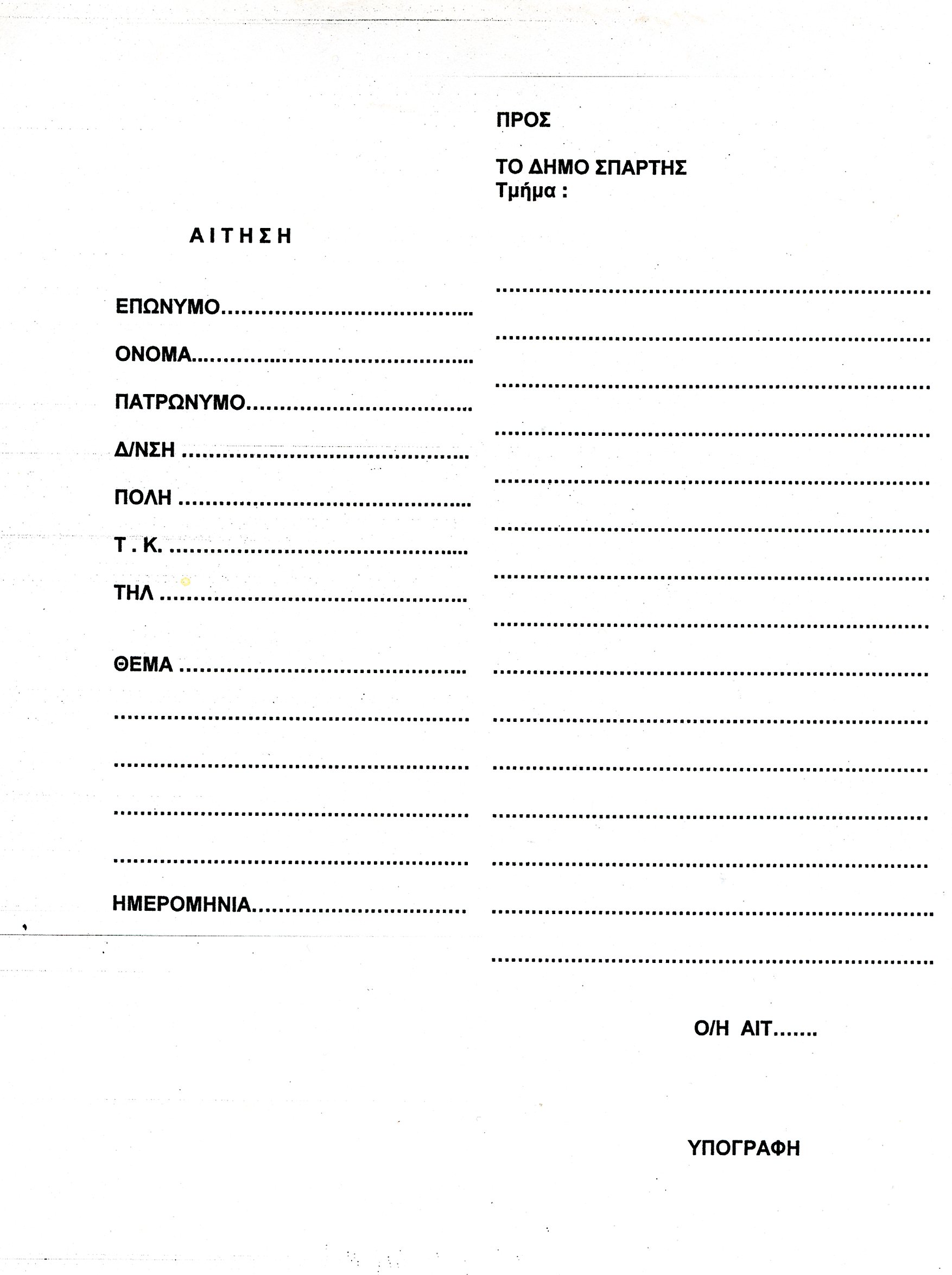
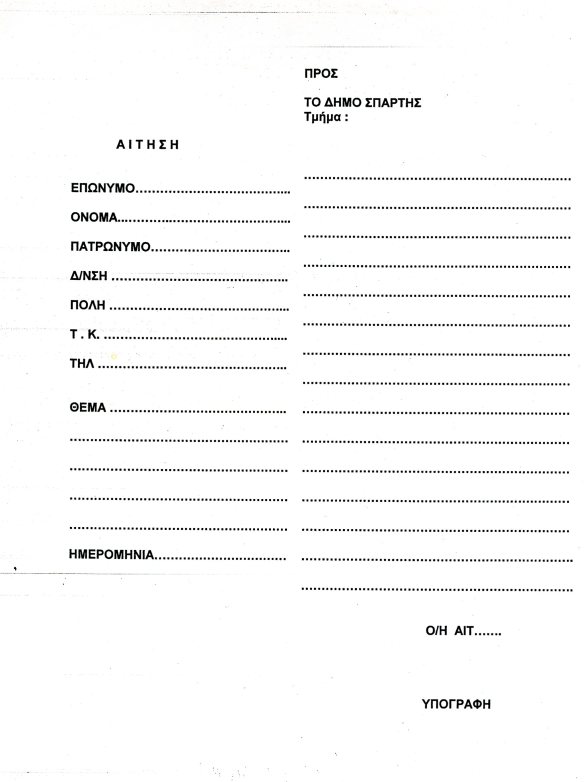
The Sparta Dimarheion has books of Male Registers and Town or Family Registers, as seen on the shelves in the photo below. However, clerks are busy handling daily government functions and research requests are often put aside. I did pick up a form to use for future mail-in requests.
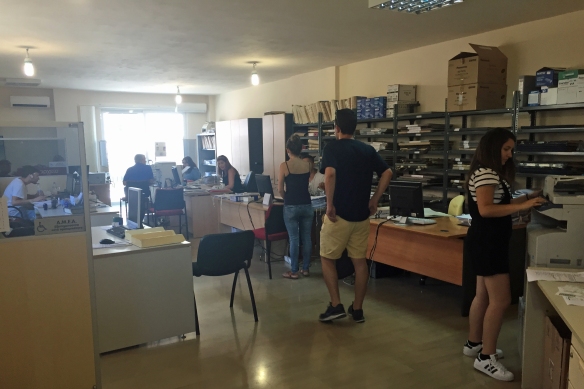
Sparta Dimarheion (Town Hall), July 2016
Sparta Dimarheion (Town Hall), July 2016

Record Request Form, Sparta Dimarheion, July 2016

Record Request Form, Sparta Dimarheion, July 2016

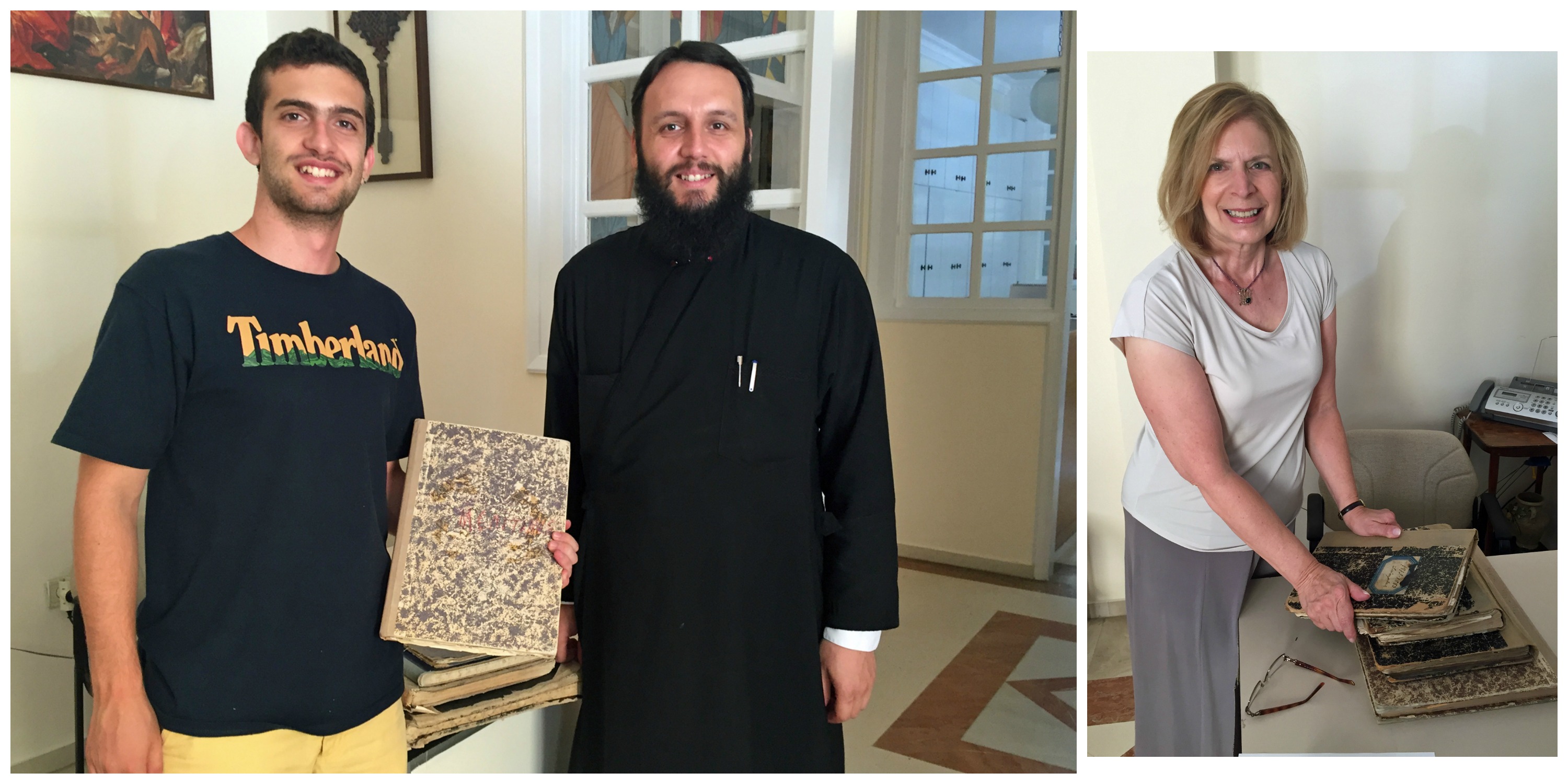
Our task at the Mitropolis in Sparta was to obtain specific pages of the Marriage Books for a friend. Although Gregory and I had been there in 2014, I was unsure if we would be granted access to the books again. My concerns were  unfounded. We were warmly greeted by a priest who brought us whatever we requested. When Gregory mentioned that the books were fragile and should be preserved, the priest replied that there had been discussions with the European Union about digitizing the records, but the talks had not come to fruition.
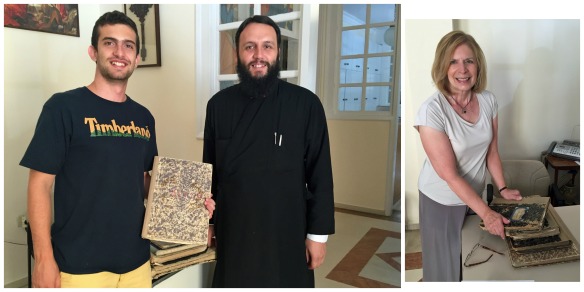
We were warmly greeted by a kind priest at the Mitropolis; Gregory Kontos and Carol Kostakos Petranek, Sparta, July 2016

A kind priest helped us at the Mitropolis; Gregory Kontos and Carol Kostakos Petranek, Sparta, July 2016

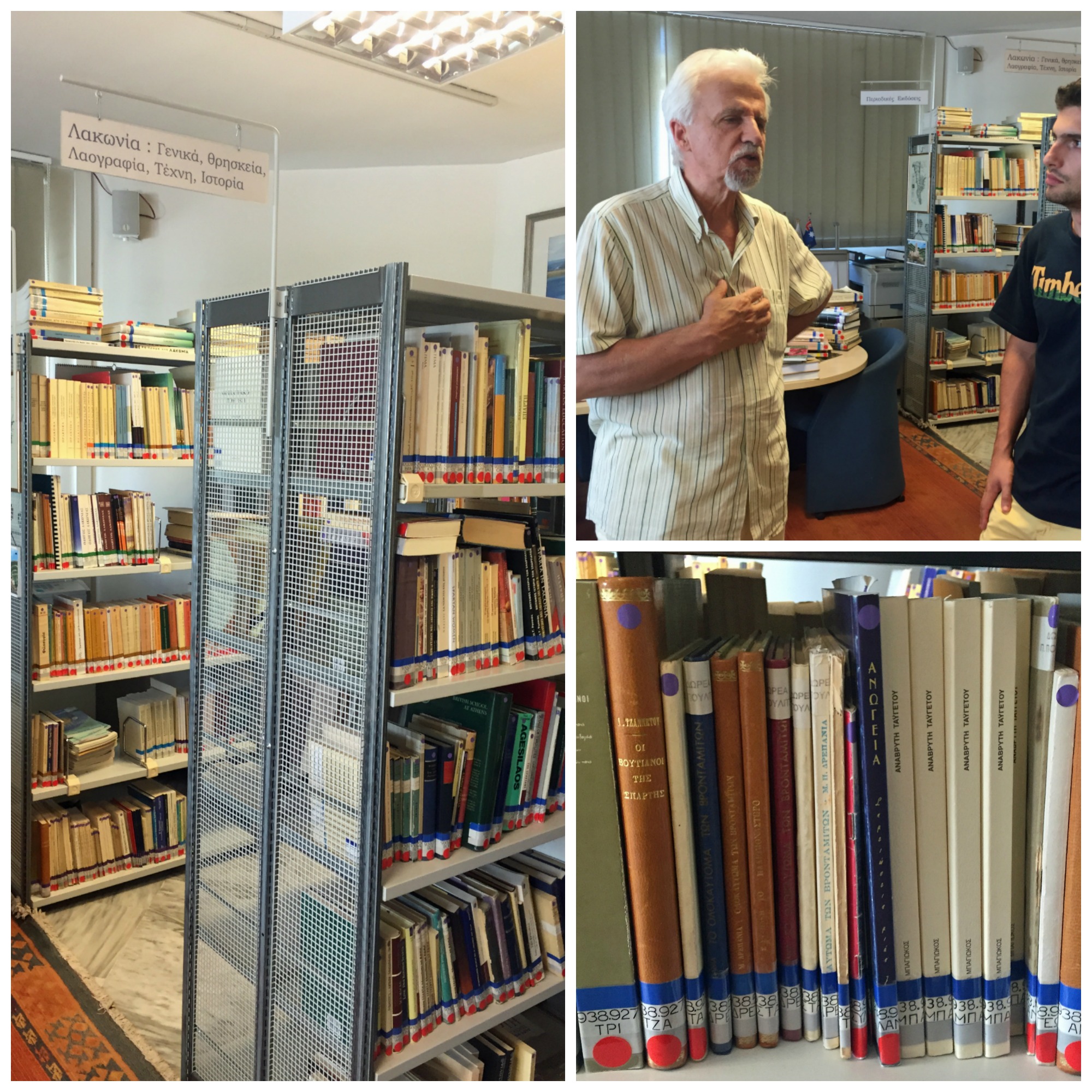
Then it was on to the Central Library of Sparta, located around the corner from the Mitropolis. This time our search was for history books of villages in Laconia, usually written by teachers during summer months. Giannis Michalakakos gave me the name of his colleague, Konstandinos Tzanetakos, who is a librarian there. We found Konstandinos in the section for Laconian history and he showed us the shelves that held many village histories.
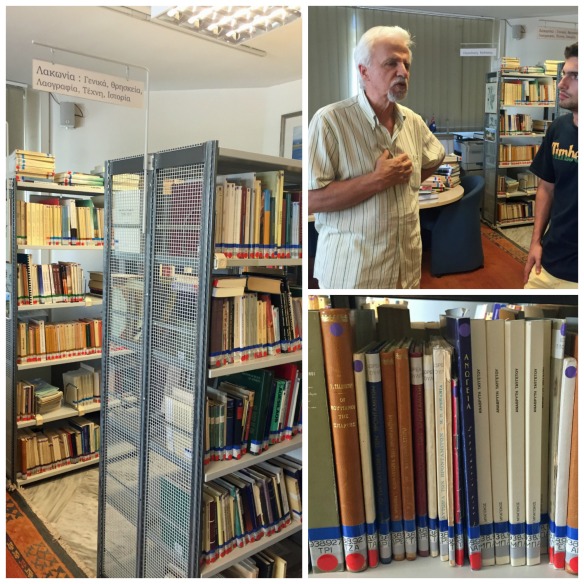
The Laconia History section of the Central Library of Sparta; with Konstandinos Tzanetakos and Gregory Kontos; July 2016

The Laconia History section of the Central Library of Sparta; with Konstandinos Tzanetakos and Gregory Kontos; July 2016

There were books for lots of Laconian villages, but none for Agios Ioannis. Giannis explained this was because Agios Ioannis had begun as a settlement beneath the towering Mystras castle, and that any noteworthy event had occurred in Mystras and not in its valley. I had harbored a secret hope that I would find something, but my friend was right. Anyone looking for a history book can call or email the library to see if there is a book for their village and if so, obtain the name, author and publisher. Most likely, our friends at the Laconia bookstores, Laconia Odos in Skala and Adouloti in Aeropolis, can then locate the book for purchase.

Our tasks in Sparta were completed, so Gregory and I headed to the west coast of Laconia to visit the Archives in Kalamata. Why there? I was hoping to find a clue — any clue — as to whether my Kostakos or Eftaxias family may have been in the Kalamata region before they headed northeast to Spartan villages. I had been told that my great-grandfather, Andreas Kostakos, could have come from Pyrgos (see previous post).

This was my first visit to Kalamata, a charming city by the sea.
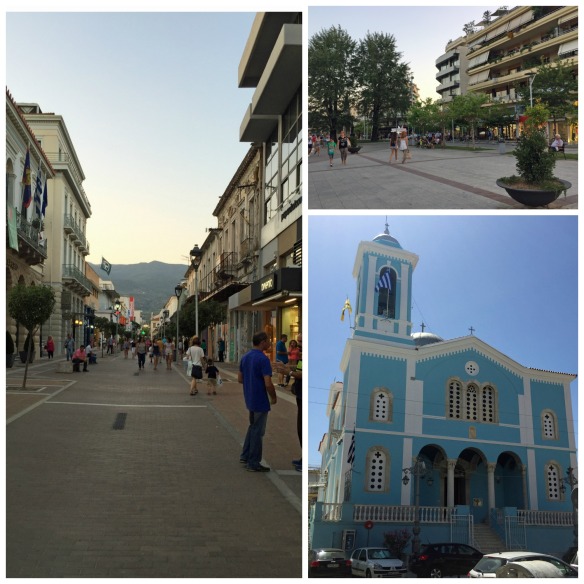
The city of Kalamata, Messinia, July 2016
The city of Kalamata, Messinia, July 2016

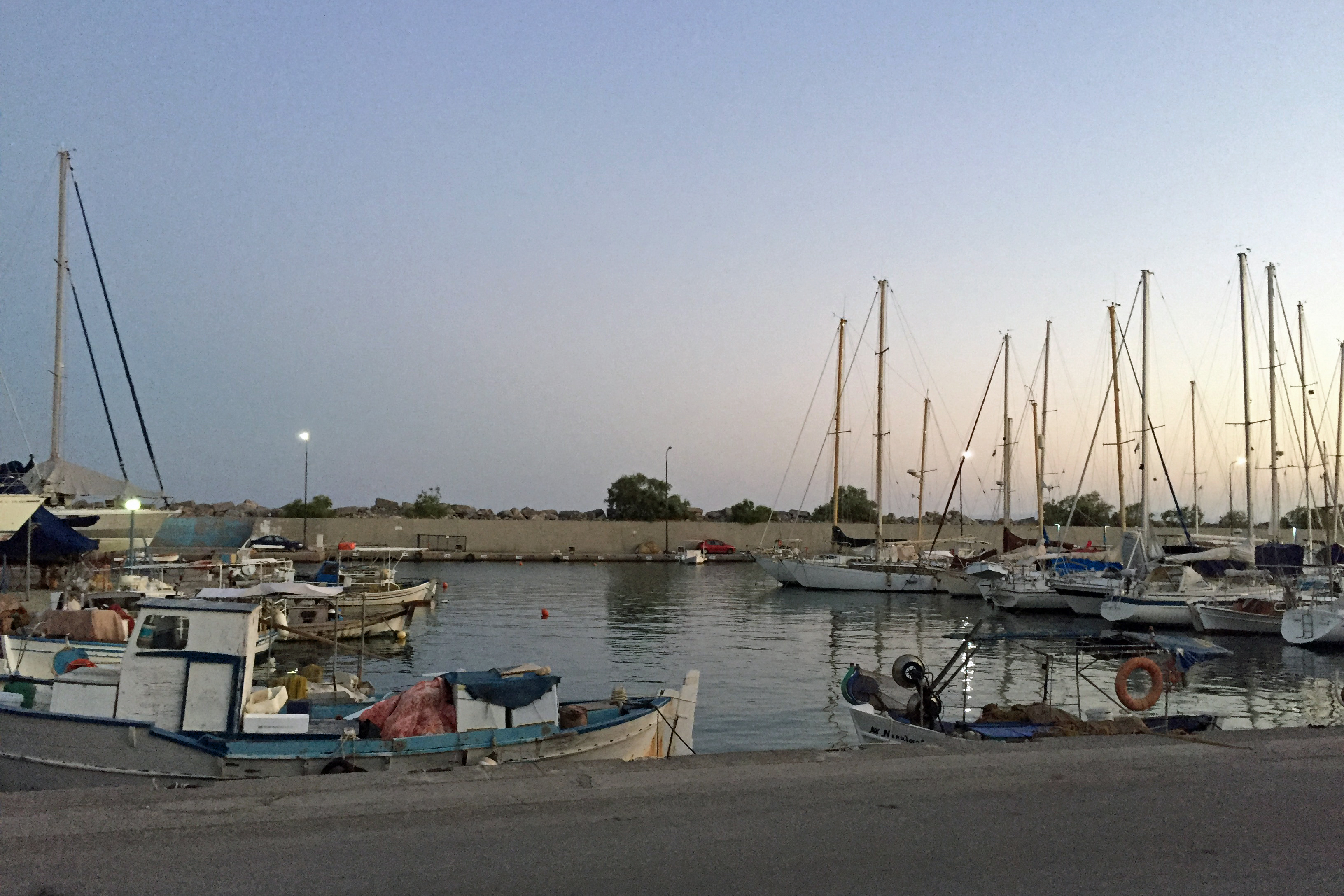
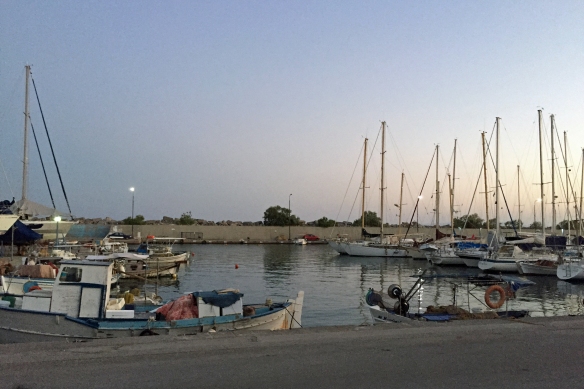
Waterfront, Kalamata, July 2016

Waterfront, Kalamata, July 2016

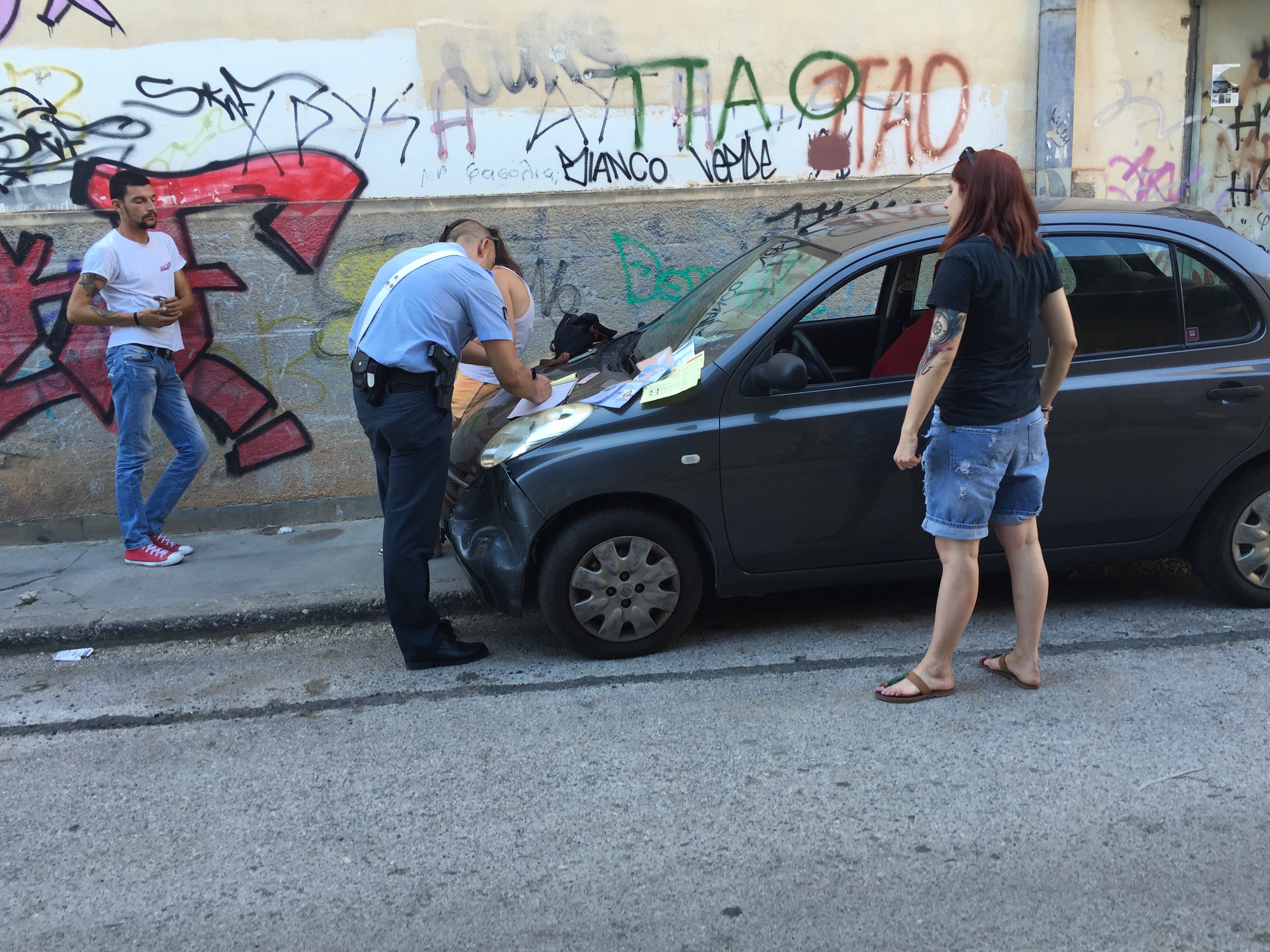
However, traffic in the city is a nightmare! The streets are one-way, very narrow, and very crowded. And horror of horrors — this is where I had my first car accident in Greece. It was a fender-bender at an intersection, and because we were moving so slowly, damage was minimal and no one was injured. But, I quickly realized the complexities of such a situation in a country where my language skills are not optimal. Calling the police and the car-rental agency, and talking with the other drivers could have been truly awful. Luckily, a passenger in the other car spoke perfect English and handled everything with grace and good humor. I was so grateful! Somehow I found my way back to the hotel and parked my car. I refused to let this mishap unnerve me, and I also refused to move the car until the day I left!
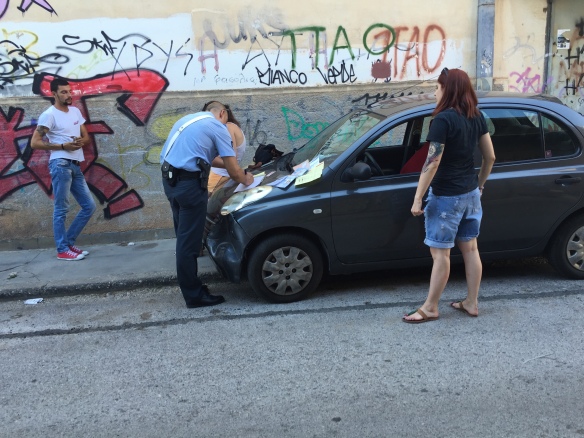
Accident! This is the car that hit mine in Kalamata, July 2016

Accident! This is the car that hit mine in Kalamata, July 2016

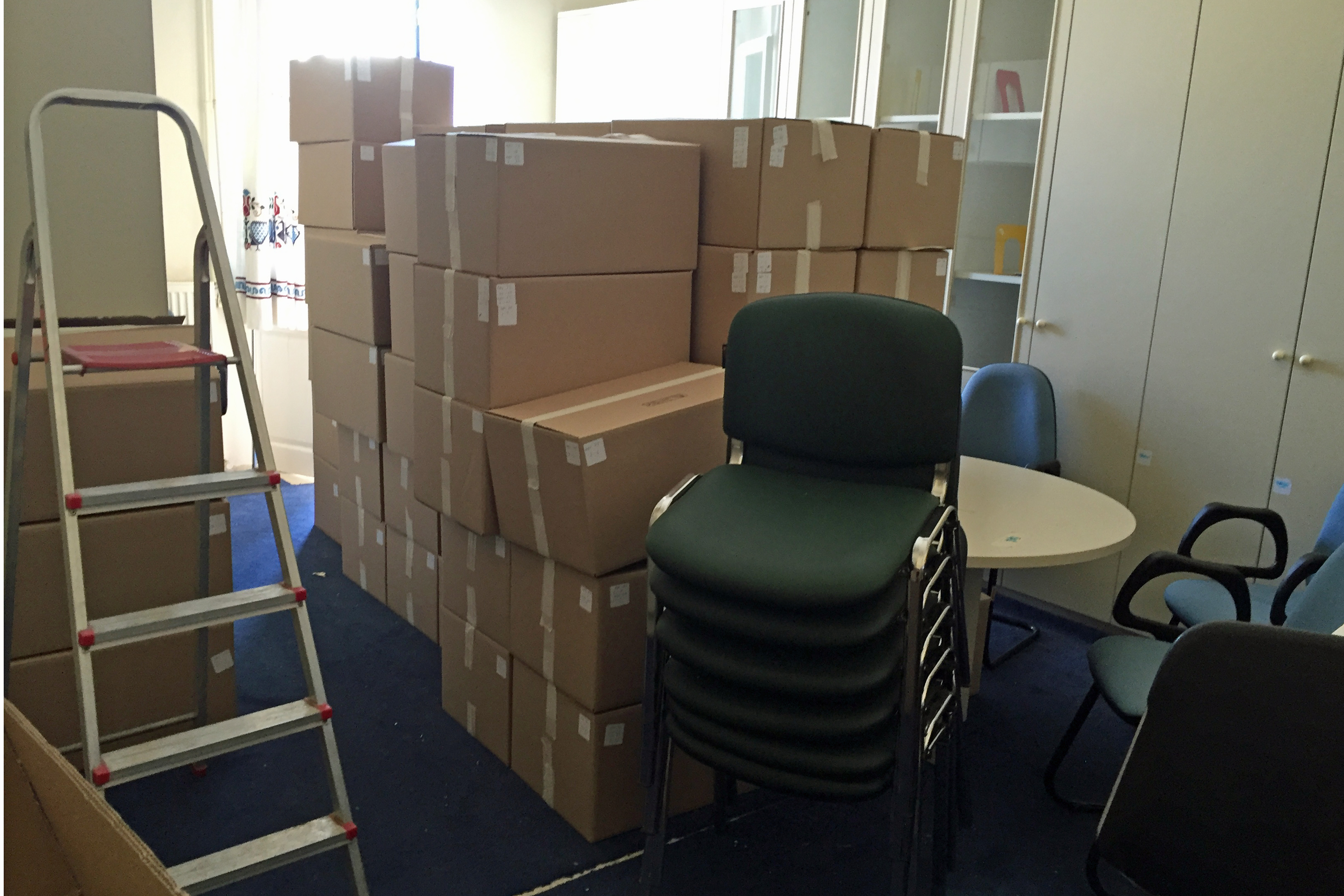
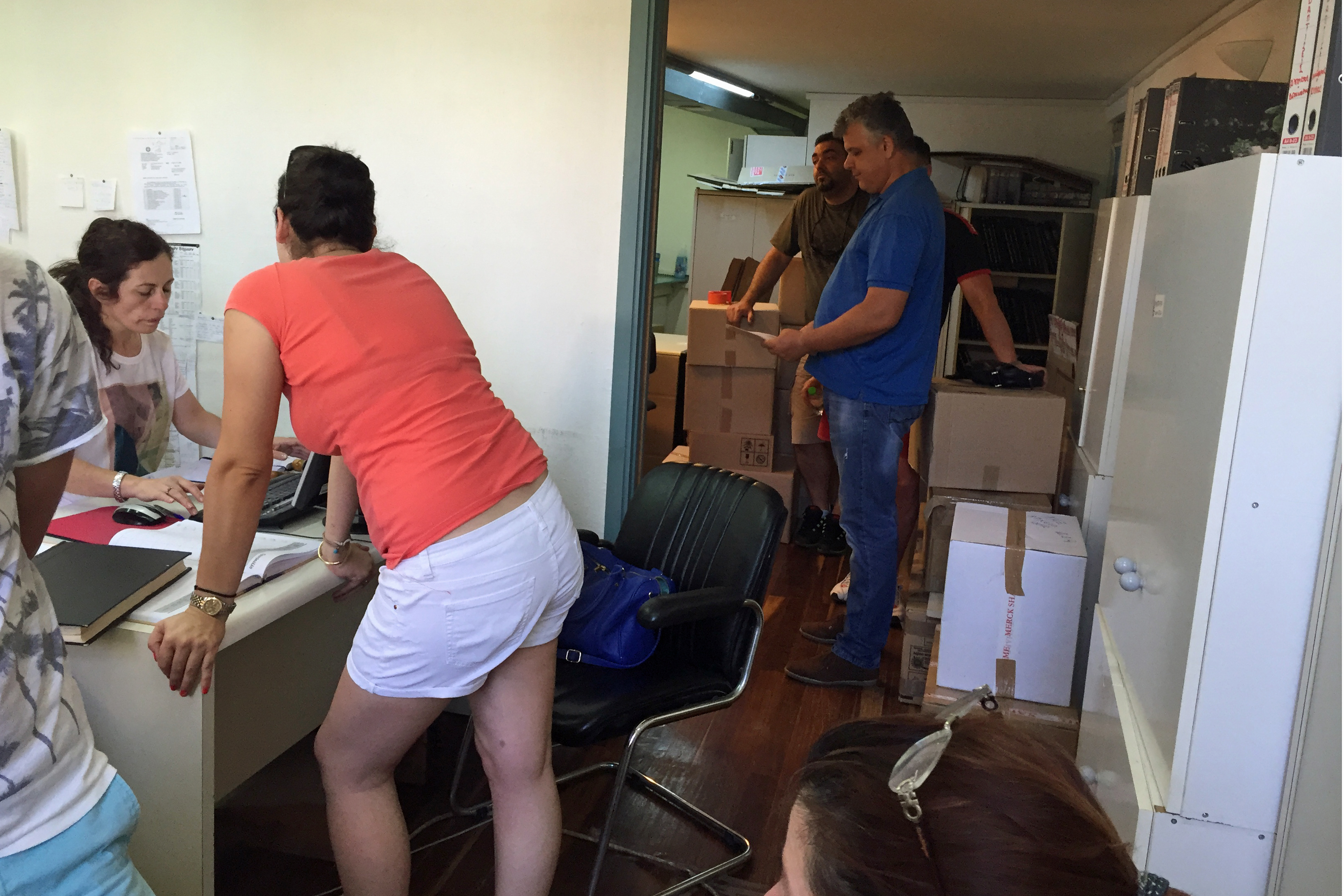
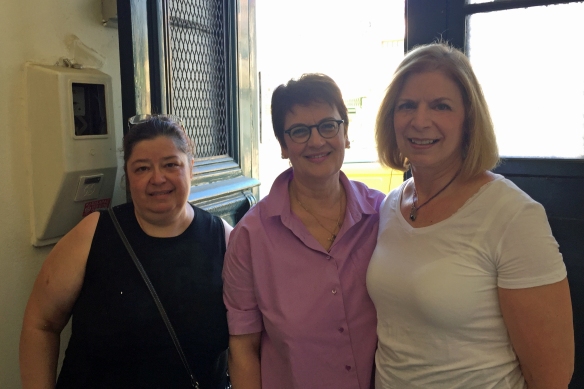
Gregory and I were very happy to meet in person our friend, Giota Siora. Giota is a Facebook friend on HellenicGenealogyGeek. Despite working full-time, she spends many hours online helping people with their research. For her devotion, she is greatly appreciated and respected.  Giota met us at the Kalamata Archives and introduced us to the Archivist, Anastasia Milioni, who also happens to be the wife of the mayor. This Archive has an extensive record collection for the Messinia Prefecture, including records of churches, land, houses, elementary schools, newspapers, military. The collection was greatly enhanced when Mrs. Milioni responded to a request from the GAK Central Office to ask local services to send their records to the Archives. Unfortunately, we were unable to do any research as the Archives is in the process of moving to a new location. Books were packed in boxes, and the office was essentially empty.
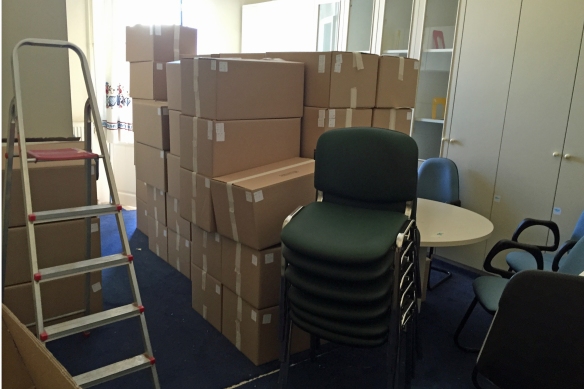
The Kalamata Archives is headed for a new home, July 2016
The Kalamata Archives is headed for a new home, July 2016

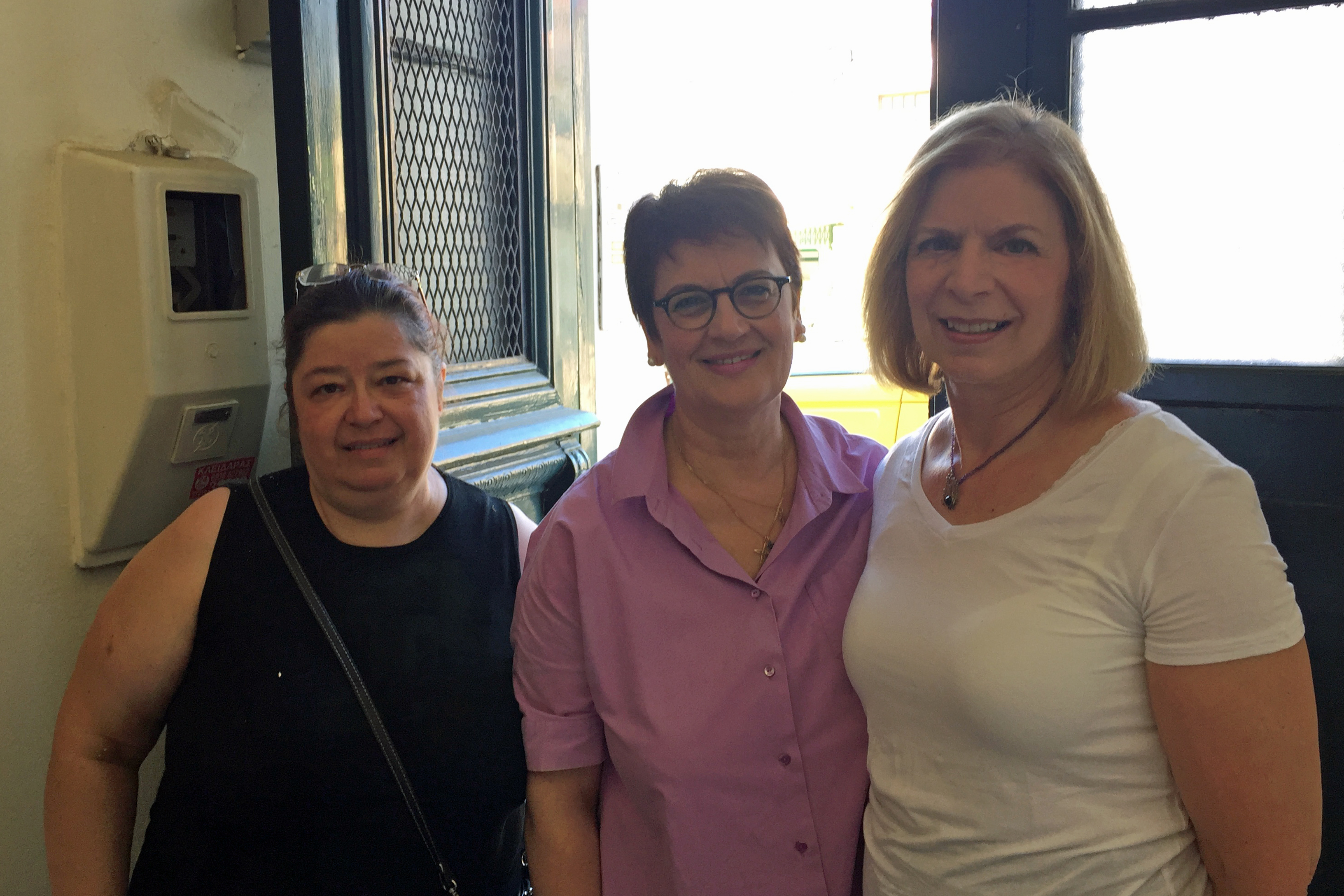
kalamata-archives-giota-siora-anastasia-milioni-archivist-carol

Giota Siora, Anastasia Milioni, Carol Kostakos Petranek, Kalamata Archives, July 216

When I inquired about possible records for the Eftaxias and Kostakos names, Mrs. Milioni did a computer search and found a few documents which look very promising. Two especially stood out:  a contract naming a Kostakos family in Anavriti, which could confirm oral tradition that the family had lived there prior to Agios Ioannis; and a contract for an Eftaxias family in Kalamata. After the office move, I will contact Mrs. Milioni and ask her to access these for me. I continue to be impressed with the kindness and professionalism of the Archivists in both Laconia and Messinia. They truly desire to be of help and will set aside whatever they are doing to be of assistance to researchers.

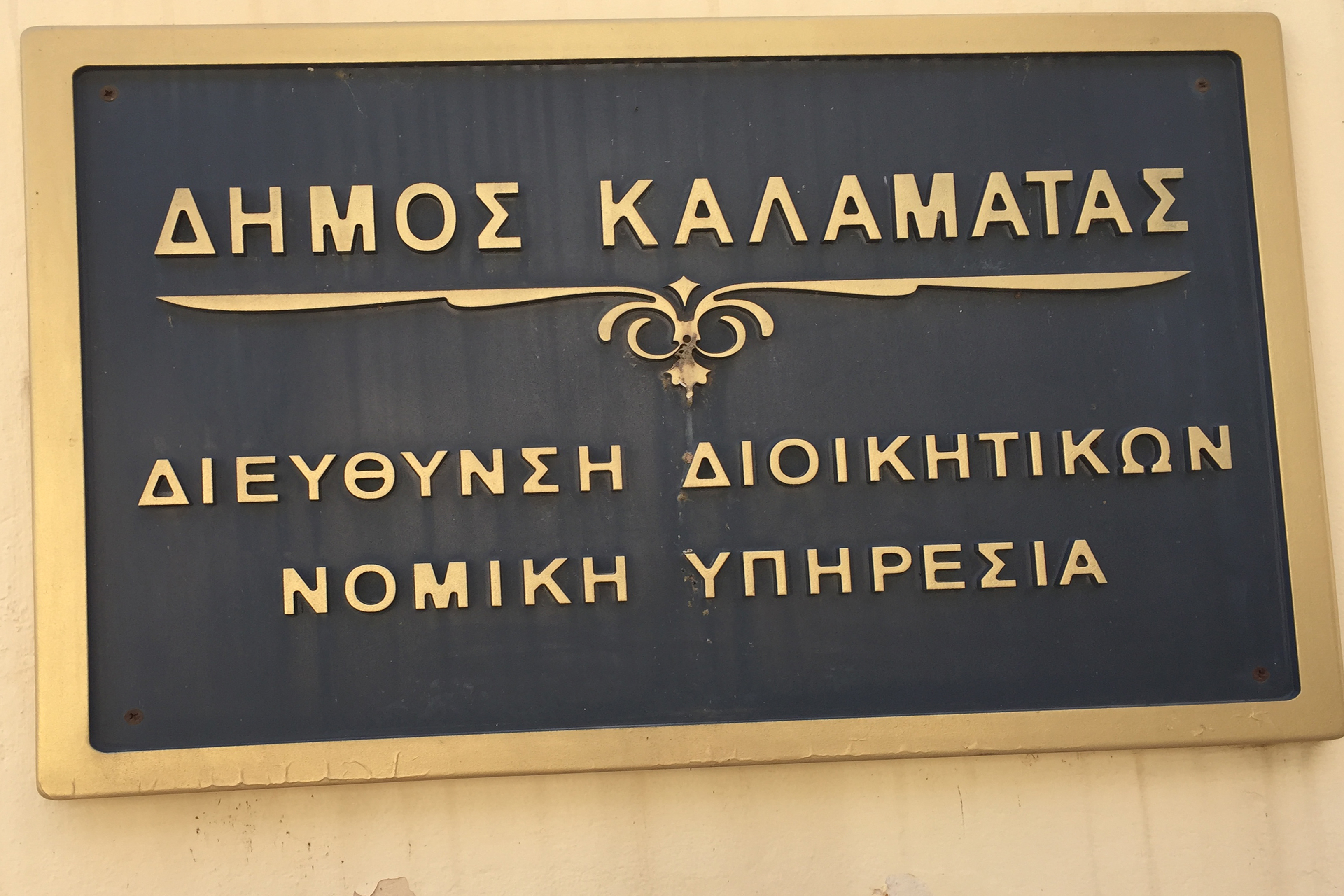
Giota suggested that we walk to the Dimarheion, or Town Hall, on the chance that we kalamata-dimarheion-signmight access records there. Visiting this municipal office, I was again reminded that clerks are extremely busy handling daily matters. Someone walking in and asking for records that are 150 years old are, at best, a distraction and at worst, an annoyance. This is especially true when there are six people standing in line, vying for a clerk’s attention. I was also reminded that the municipality has records only for its specific area of jurisdiction (unlike the Archives which has records for the entire prefecture).  Since I was looking for Pyrgos, a village not in the Kalamata jurisdiction, the clerk was not able to be of assistance. The lesson of that day was:  location is everything!
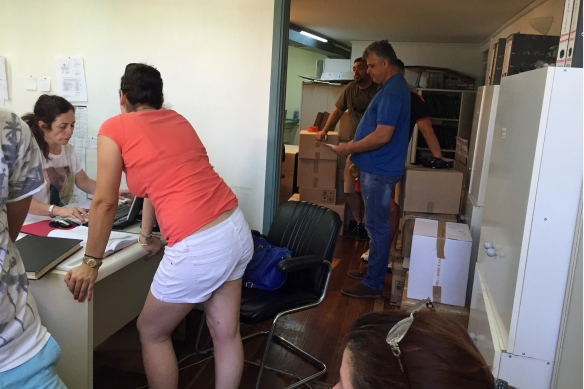
Dimarheion, Kalamata, July 2016

Town people waiting patiently for help on a Friday afternoon at the Dimarheion. The line stretched outside the door. Kalamata, July 2016

Every hour of my research trips are filled to the max. Sometimes “the force” is with me and I have amazing success; sometimes not, and the disappointment becomes a “learning experience.”  Nothing is lost; everything is gained. I love the ride!
 

Return to Greece, 2016. Part Six: It’s All About Family

This is the sixth post in a series about my trip to Greece, June 30-July 20, 2016 — an amazing journey of history, family and discovery. Previous posts can be found here.

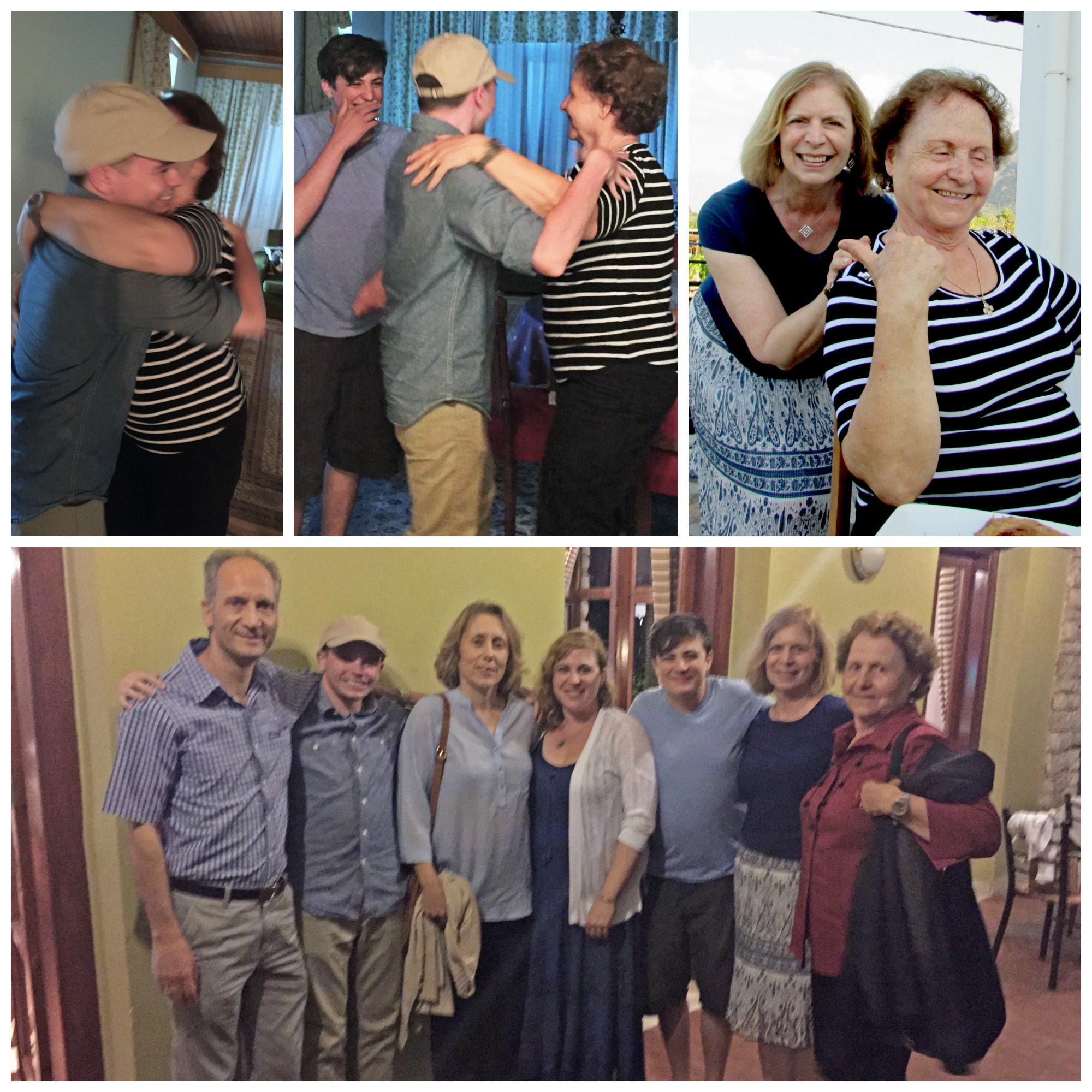
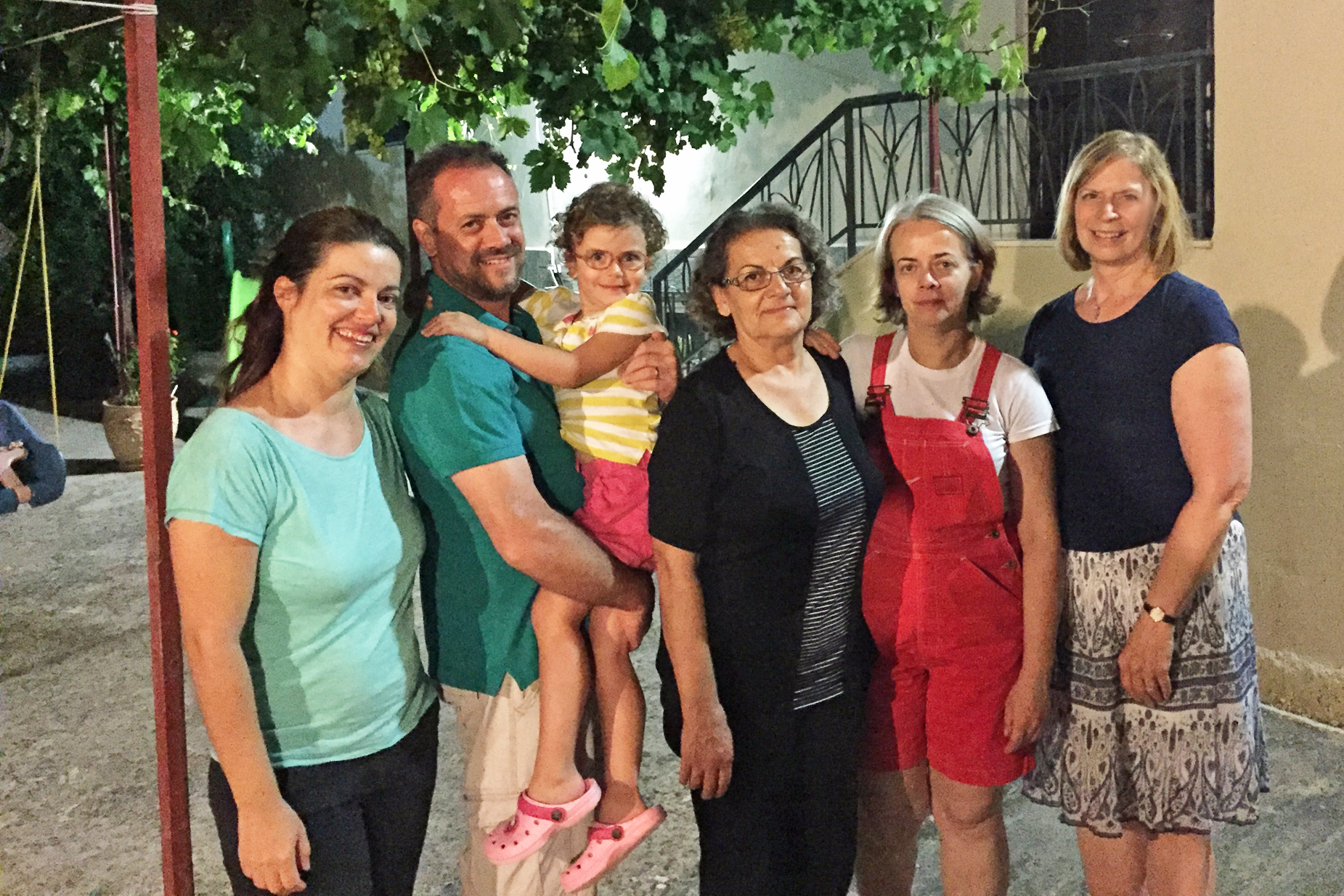
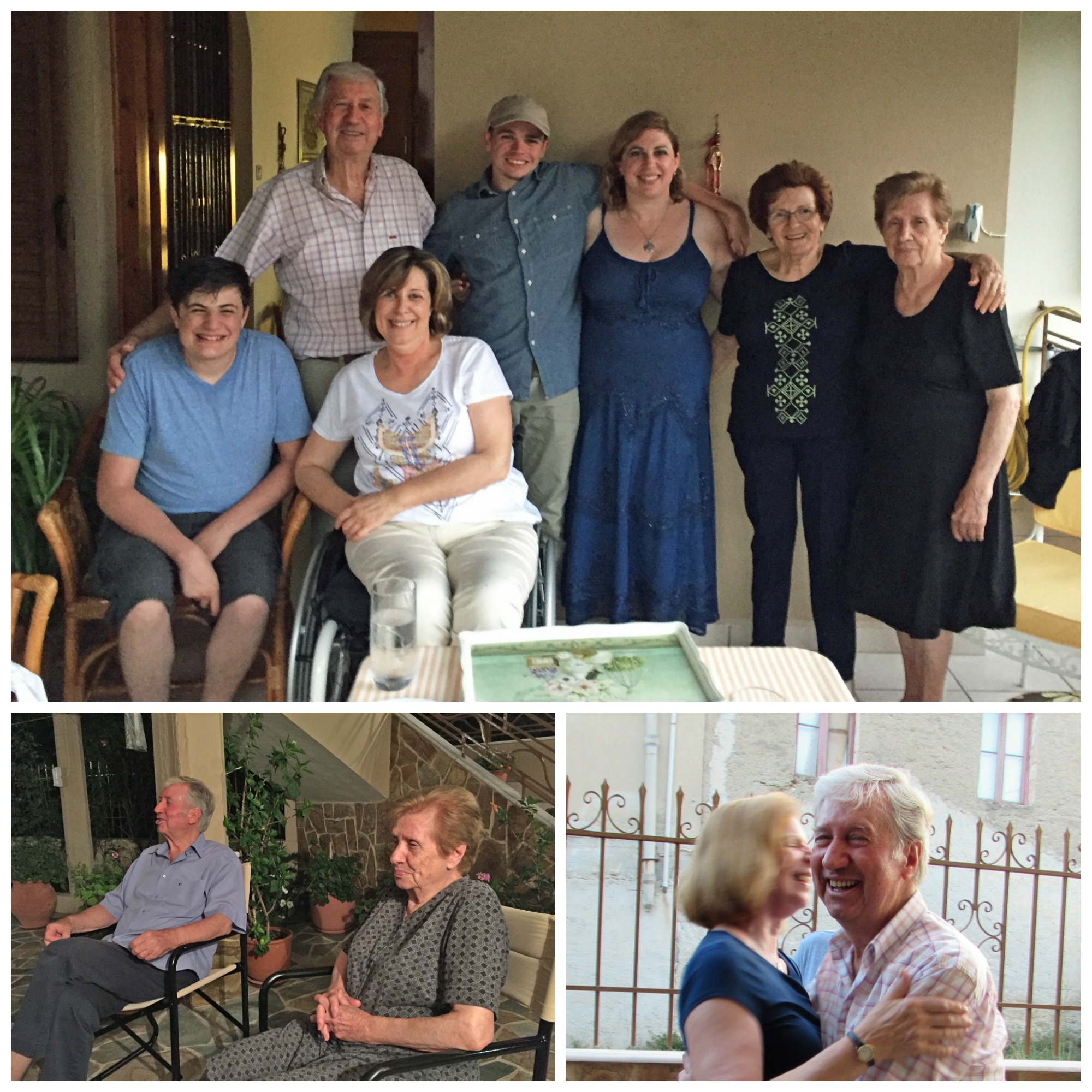
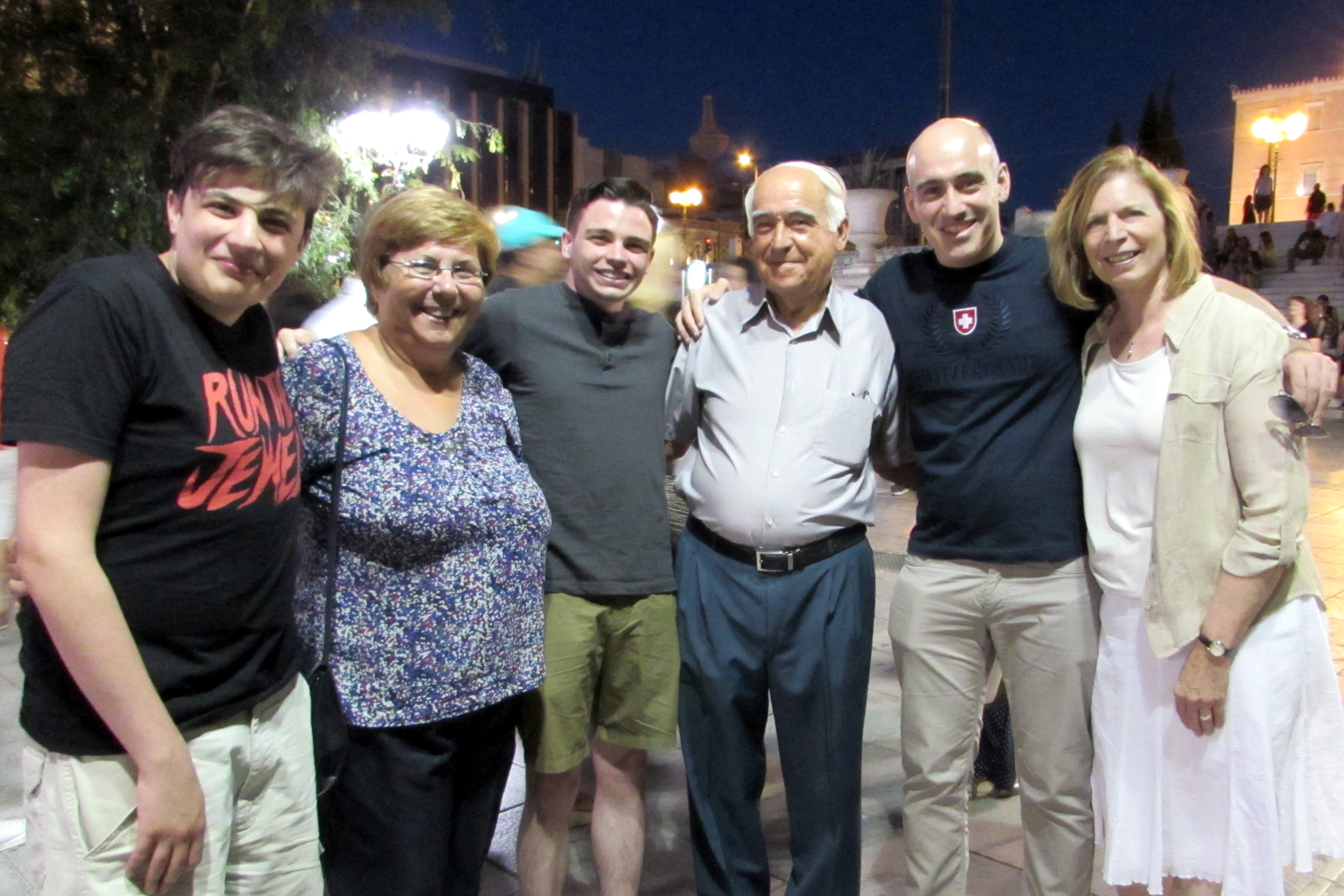
Open arms with tight hugs. Kisses on both cheeks. Happy smiles and joyful reunions. This is how my family greets me when I return to Sparta. There are so many places to explore and discover; but for me this is the bottom line:  it’s all about family. Prior to my visits to Greece, the names and places on my pedigree chart were simply long names and dots on a map. Now, they are attached to real people who have become a vibrant and important part of my extended family.

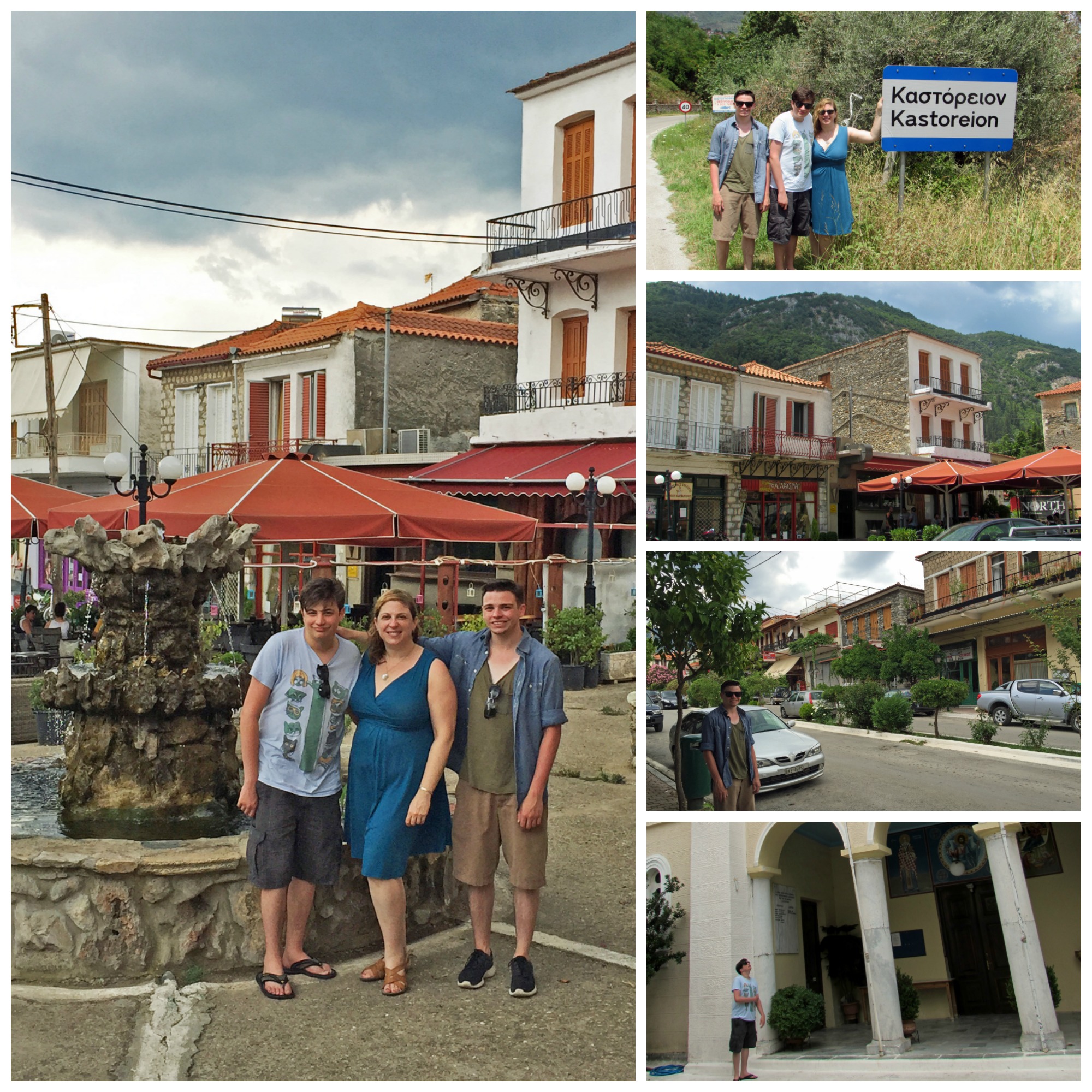
Joy is sharing what you love with whom you love. For me, joy is introducing my family to their roots — touring our villages and meeting our relatives. Kathy’s paternal grandparents are Kallianes from Kastania (now Kastoreion) and Linardakis from Vordonia. Although we don’t know of family now living there, we so enjoyed exploring the towns, peering into shops, watching chickens, dogs and cats roam their yards, and looking at stone and stucco houses that have sheltered countless families through countless years.

Kastoreion, Laconia. July 2016

Kastoreion, Laconia. ancestral village of the Kallianes family, July 2016

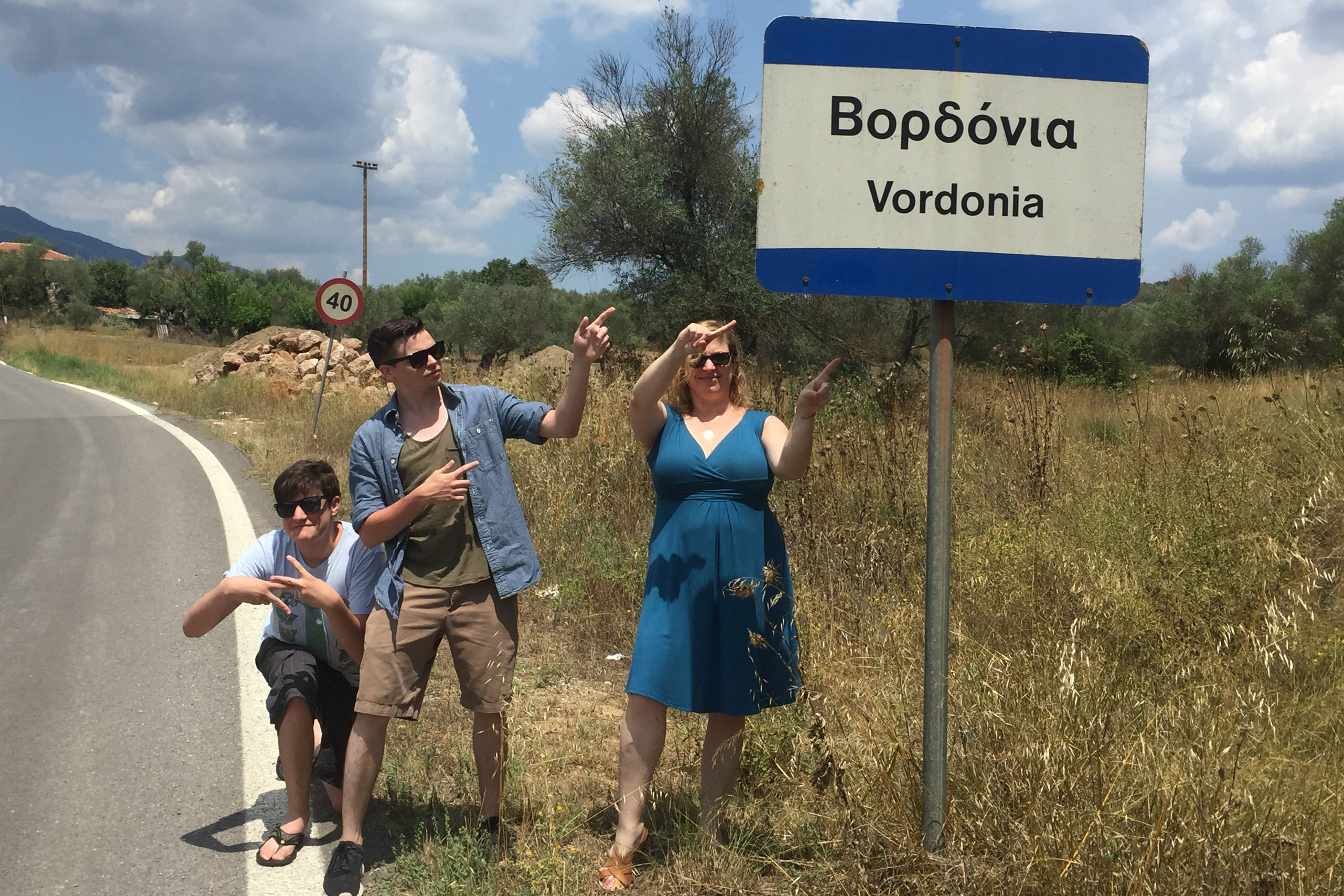
Vordonia, Laconia, July 2016

Andrew, Ben and Kathy at the Linardakis village of Vordonia, Laconia, July 2016

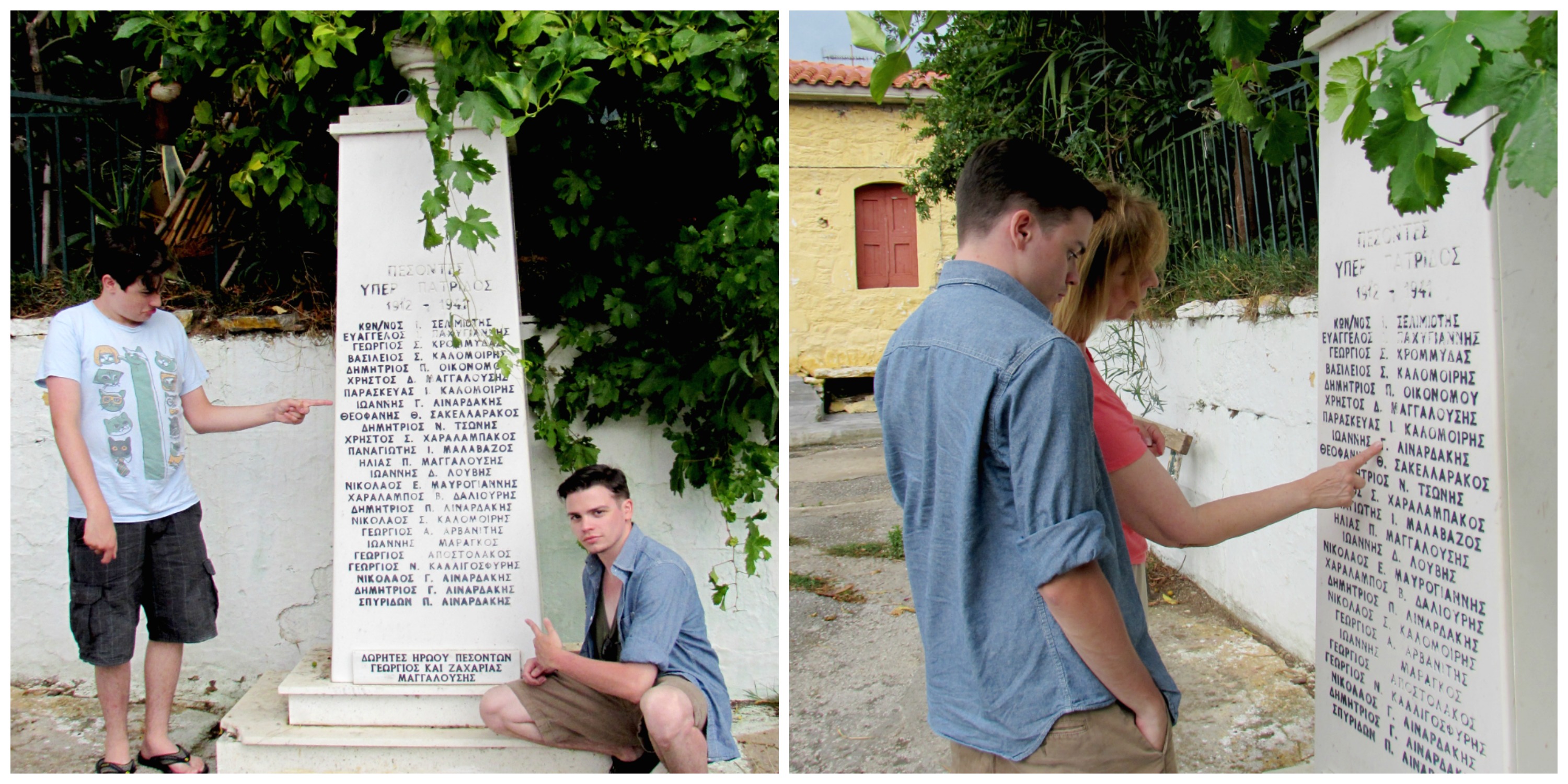
I love the monuments erected in every town that memorialize those who died in military service. My heart skips whenever I find an ancestral name etched in marble. Even if I cannot connect that individual to my line, I know that in these small villages, people with the same surname are almost certain to be related. While driving in Vordonia, we turned into a back street and unexpectedly were confronted by the village monument. stopping to examine it, I became emotional when I showed Ben and Andrew several men with the Linardakis surname.
Finding the Linardakis surname; Vordonia, July 2016

Finding the Linardakis surname; Vordonia, July 2016

Visiting our Aridas and Kostakos familes in Agios Ioannis has endeared my grandchildren to their Spartan relatives and grounded them to the land of their ancestors. Bridging the Atlantic and meeting kin has widened their concept of family. Eating a meal in a house built by their ancestor in the mid-1800’s has brought them a sense of “rootedness” that is unparalleled. And best of all, they were warmly embraced and loved immediately by all who met them.

These are photos of my Kostakos and Aridas family in Agios Ioannis, Sparta. They are on my father’s side — my grandparents were John Andrew (Ioannis Andreas) Kostakos and Hariklia Aridas, both born in Agios Ioannis. On the Kostakos side, our common ancestor is Andreas Kostakos who was married twice: first to Anastasia, then to Poletimi Christakos. These two Kostakos families are descended from Andreas and Anastasia; I am descended from Andreas and Poletimi. On the Aridas line, our common ancestor is Michail Aridas and his wife, Stamatina.

Ioanna Kostakos Family, with Ben Soper, Andrew Soper, Kathy Lynard, Carol Kostakos Petranek, Peggy and Vassilis Vlachogiannis, Agios Ioannis, July 2016

Family of Ioanna Kostakos of Agios Ioannis. With Ben Soper, Andrew Soper, Kathy Lynard, Carol Kostakos Petranek, Peggy and Vassilis Vachaviolis, and Ioanna Kostakos, July 2016

family-kostakos-eleni-group-07-13

Family of Eleni Kostakos of Agios Ioannis. Natasa, Panos, Eleni, Eleni, Panorea, Carol Kostakos Petranek, July 2016

Family of George Aridas, Agios Ioannis. George, Roula, Adamandia Aridas; George's sister, Afroditi. July 2016

Family of George Aridas, Agios Ioannis. George, Roula, Adamandia Aridas; George’s sister, Afroditi. July 2016

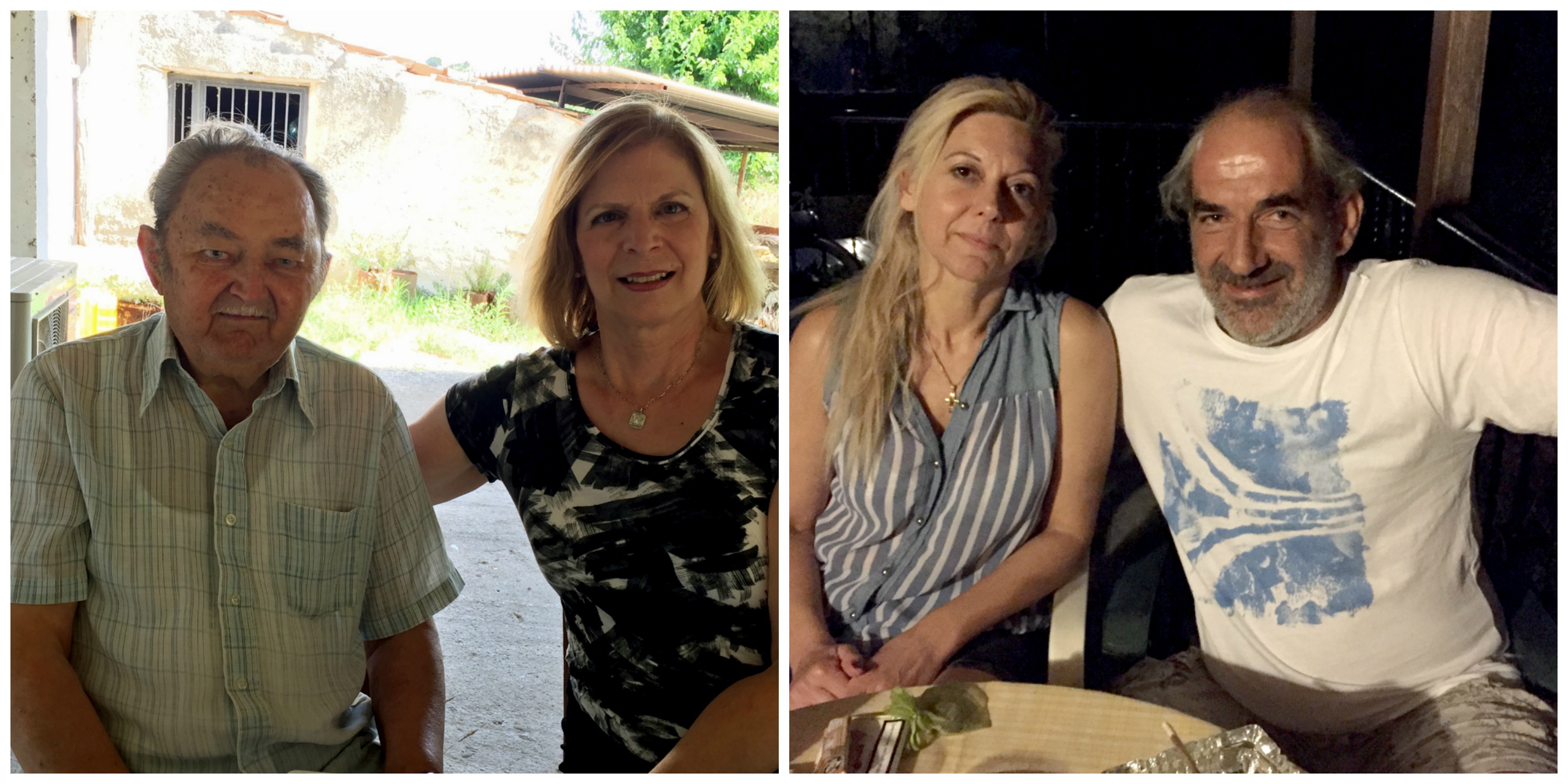
This is the Chelidonis Family of Athens. Nikos is my second cousin on my mother’s line. His mother was Tasia Eftaxia from Mystras; our common ancestor is Ioannis Eftaxias, born 1809. My grandmother, Angelina Eftaxias Papagiannakos, was Tasia’s aunt. Panagiotis found me on Facebook three years ago, and we met in person during my trip in 2014. We were so excited to connect our families, as neither of us knew that the other existed!

Family if Nikos Chelidonis, Athens. Viki, Nikos, Panagiotis. July 2016

Family if Nikos Chelidonis, Athens. Viki, Nikos, Panagiotis. July 2016

The Eftaxias family of Mystras has long roots in Mystras. My grandmother, Angelina Eftaxias is the aunt of Andreas (photo on left). Andreas’ son, Lewnidas, is a master stone mason and works on churches and other buildings throughout southern Laconia.

Andreas Eftaxias, his son. Lewnidas ad Afroditi. Mystras, July 2016

Andreas Eftaxias, his son. Lewnidas ad Afroditi. Mystras, July 2016

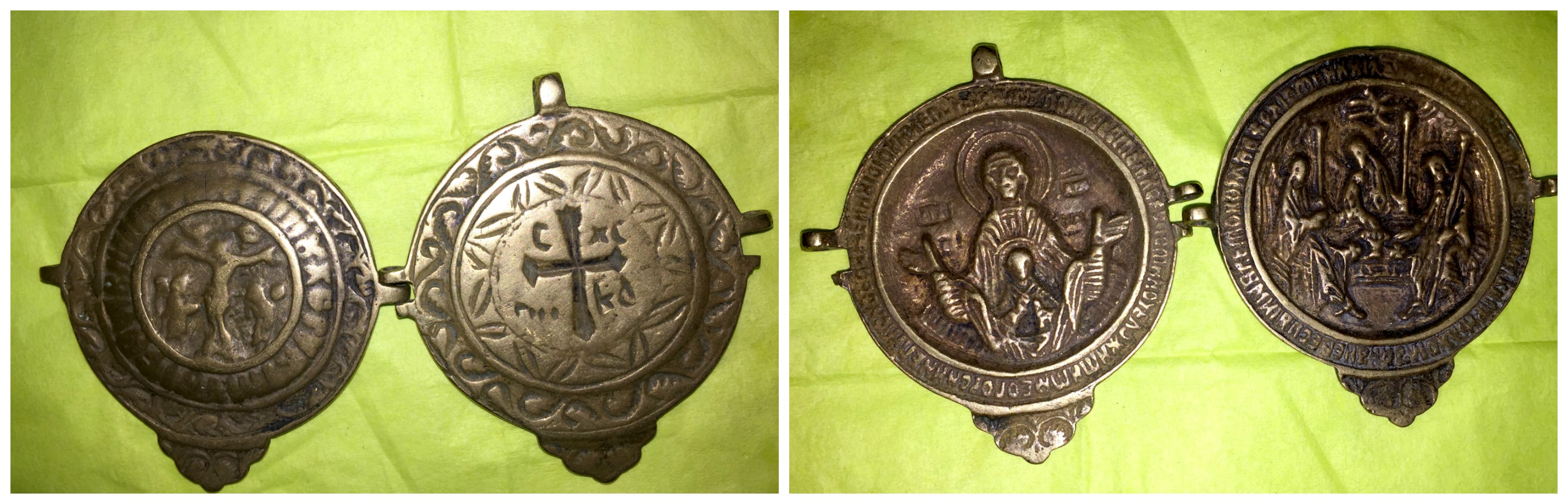
Lewnidas and Andreas told me that our first Eftaxias ancestor escaped from Constantinople during the Ottoman conquest in 1453! He and three friends fled together and settled in Mystras. Lewnidas showed me a bronze medallion that was brought by this ancestor and kept by the family for generations. I posted this photo on our HellenicGenealogyGeek Facebook page and knowledgeable friends there described the medallion: l-r: Christ on the cross; Byzantine cross with words, ” Ιησούς Χριστός Νικά”; the Holy Mother, Mary; and the Holy Trinity, possibly based on Rublev‘s painting of the same name.

Medallion dating to 1453, belonging to Eftaxias family; Mystras, July 2016

Medallion dating to 1453, belonging to Eftaxias family; Mystras, July 2016

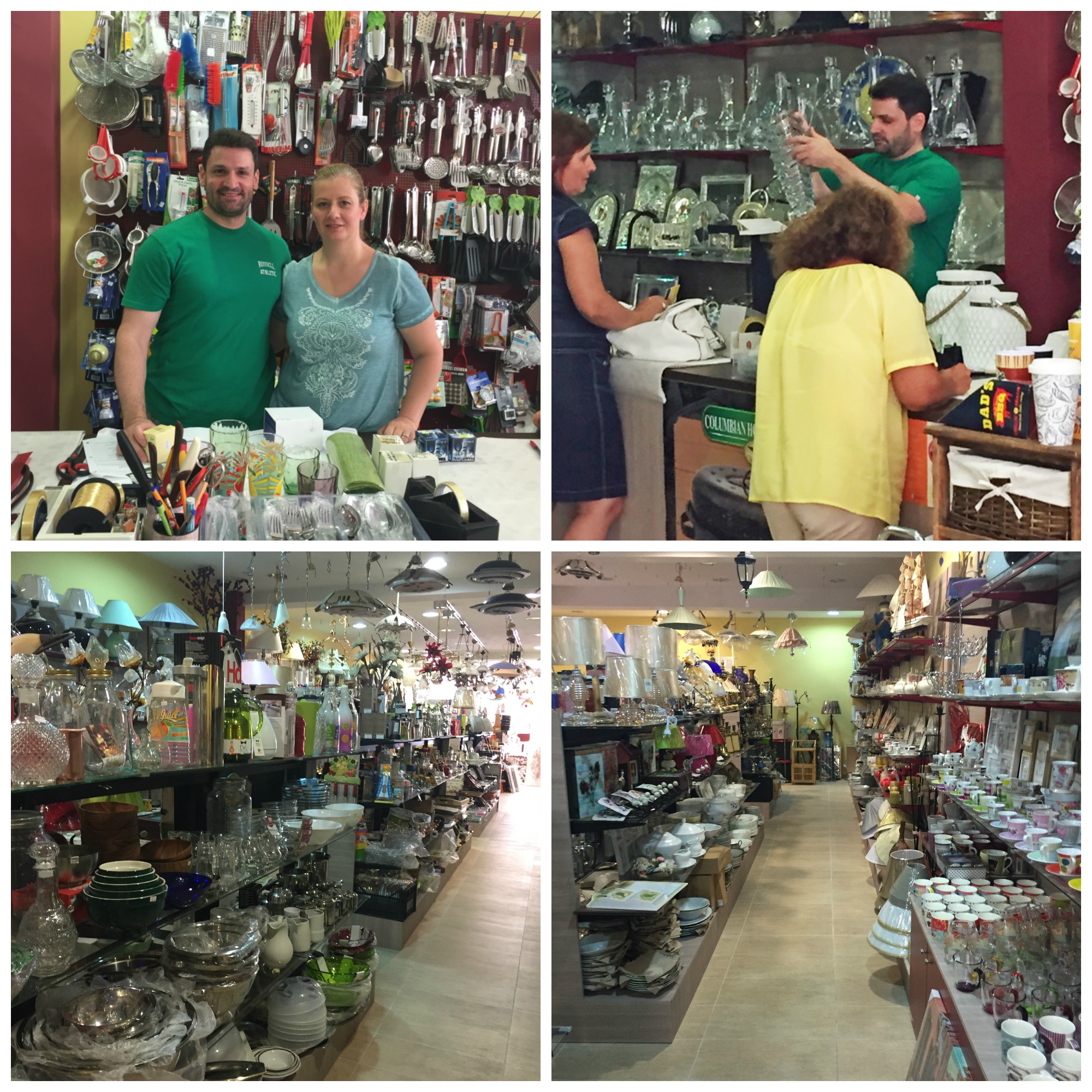
I was so thrilled to extend my family further on this trip. My new-found cousin, Dimitrios Papagiannakos, and his wife, Georgia, own a beautiful home goods store in Sparta which sells a myriad of items from cooking utensils to beautiful crystal. I think I gave Dimitrios quite a shock when I walked into his store and introduced myself as his cousin from America! I had brought photos of his Pappas family in the U.S., including a group shot taken at our Pappas Cousin’s Reunion. Working around his customers, we managed to have a spirited and lovely conversation about our families. My only regret was that his parents were out of town and I was unable to meet them. Next trip!

papagiannakos-store-collage

Dimitrios and Georgia Papagiannakos in their lovely home goods store, Sparta, July 2016

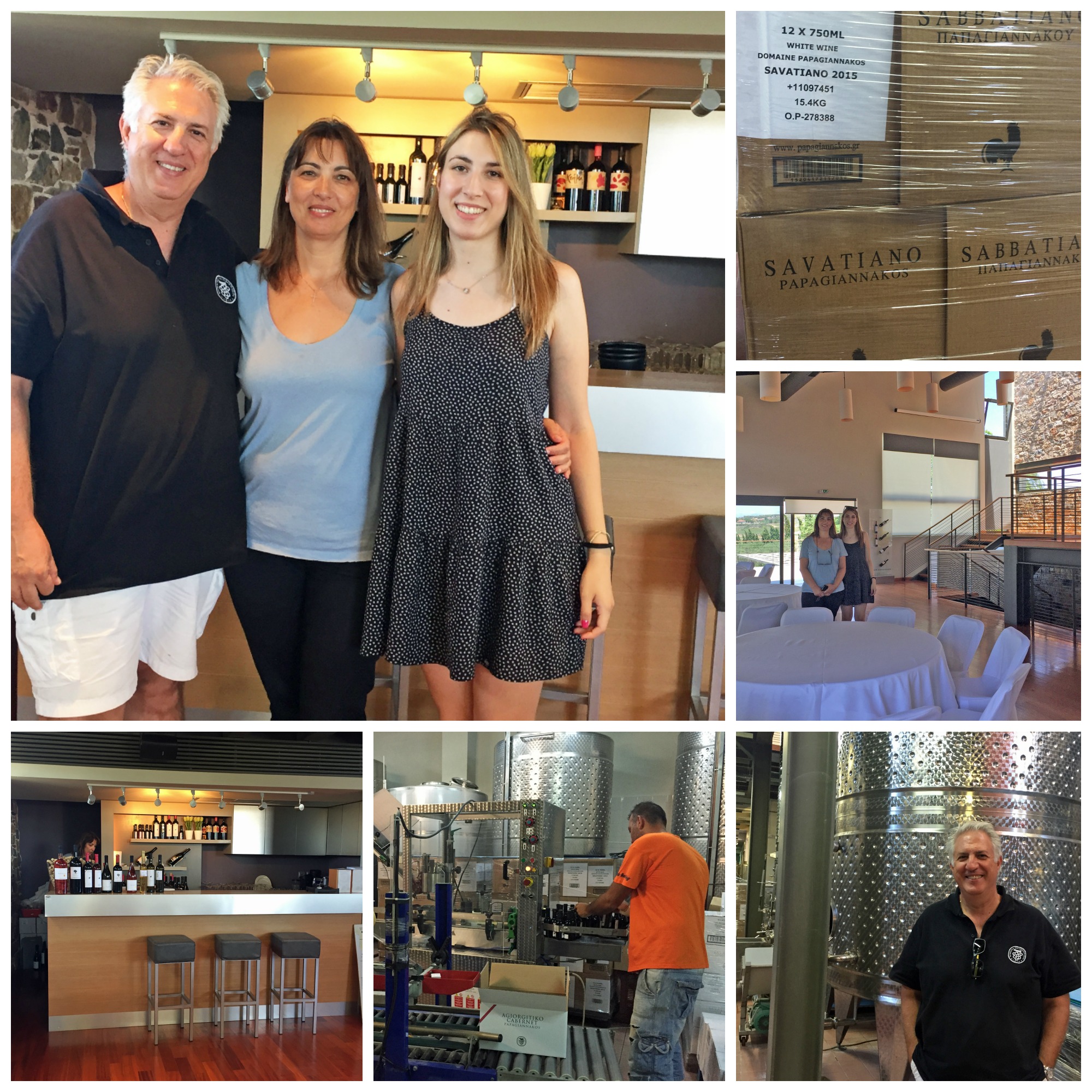
I also traveled to Markopoulos, northeast of Athens, to meet Vassilis Papagiannakos, owner of the Papagiannakos Winery. The winery was started by his grandfather, also named Vassilis, in 1919. Now managed by the 3rd generation of Papagiannakos’, Vassilis and his wife, Antonia, have expanded the business, developed new and award-winning wines, and constructed a beautiful edifice where business events, weddings and other activities are held. Although Vassilis and I do not know how–or if– we are related, we are looking to explore our family roots together.

papagiannakos-winery-collage

Vassilis and Antonia Papagiannakos and their daughter, Aggeliki. Papagiannakos Winery, Markopoulos, July 2016

Every trip to Greece strengthens my family ties. I love these cousins. They set an example of hard work, honesty and devotion to our family and our heritage. I am ever-grateful to have the means and the opportunity to introduce them to my own descendants. Together, we carry on traditions and relationships that honor our ancestors.

The new road from Athens to Sparta

During my first visit to Sparta years ago, the main road from Athens to Sparta was winding and narrow, making the trip long (over 4 hours) but picturesque as I drove over the Corinth Canal and through the many villages.

In 2014, a new road extended from Athens to Tripoli. It bypassed Corinth and the villages to Tripoli. It was a breeze to drive the smoothly paved, new superhighway; however, I had to exit onto local roads to continue from Tripoli to Sparta.

Now, the new highway is competed, cutting the travel time down to 2-1/2 hours. Today (April 8, 2016), Eleftharia online posted a video of the new road with this brief description (google translated):  Within the next ten days awaiting delivery motorway Lefktro – Sparta (A71), which will reduce the distance of laconic capital from Kalamata, Tripoli and Athens. The Eleftheriaonline.gr visited the motorway and publish shots of the new road, the statue of Leonidas, the municipal stadium, but also a panoramic view of Sparta …

Finished just in time for my next visit! I loved seeing the new road I will soon be traversing. Enjoy the view with me!


The Zaharakis / Zacharakis Families of Theologos, Oinountos, Laconia

The family of my great-grandmother, Stathoula Zaharakis, has been an elusive mystery to me. Her photo, which is on my desk, reminds me daily to think of her as well as all those who came before me.

Stathoula Zaharaki Eftaxias

Stathoula Zaharaki Eftaxias

Her face haunts me at times. How did she feel as she sent all three of her daughters to the U.S. so they could marry and have a better life? She had no sons; who took care of her as she aged? My mother said that she died as she was preparing to come to the U.S. to visit her daughters and their families in the mid-1950’s. How heartbreaking!

When Gregory Kontos and I were at the Greek Orthodox Mitropolis in Sparta in 2014, he found the marriage record for Stathoula and Konstandinos Ioannis Eftaxias.

Marriage Record, Konstandinos Ioannis Eftaxias and Stathoula Zaharaki, February 16, 1891, line 68. Translation of Marriage Record received from the Holy Diocese of Monemvasias & Spartis Certifies that: As it appears on the books of Marriages of the Office of the Holy Diocese Monemvasias & Spartis a licence -number 68 - was issued on 16 February 1891, for Konstantinos Eutaxiarhis, resident of Mystra - of the former municipality Spartis in second marriage, and for Stathoula Zaharaki daughter of Dimitrios, resident of Theologos -of the former municipality Sellasias in first marriage. The holy matrimony was officiated by the local priest S. Dimitrakopoulou.

Marriage Record, Konstandinos Ioannis Eftaxias and Stathoula Zaharaki, February 16, 1891, line 68. Received from the Holy Diocese of Monemvasias & Spartis.
Certifies that:
As it appears on the books of Marriages of the Office of the Holy Diocese Monemvasias & Spartis a licence -number 68 – was issued on 16 February 1891, for Konstantinos Eftaxias, resident of Mystra – of the former municipality Spartis in second marriage, and for Stathoula Zaharaki daughter of Dimitrios, resident of Theologos -of the former municipality Sellasias in first marriage. The holy matrimony was officiated by the local priest S. Dimitrakopoulou.

From this marriage record, I learned that Stathoula’s father was Dimitrios. I knew that the family lived in Theologos, Oinountos – just north of Sparta.

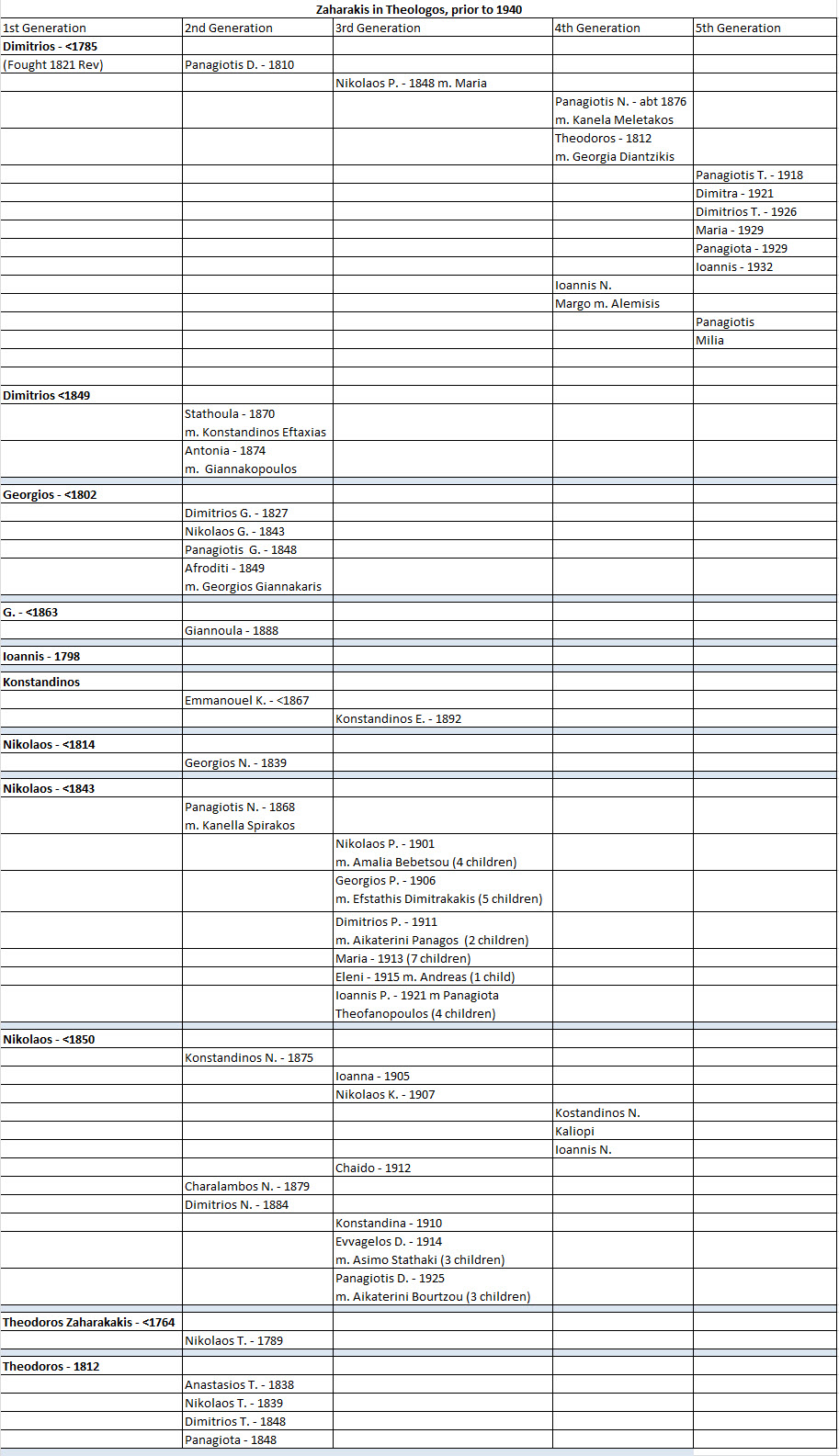
At the office of the General Archives of Greece in Sparta, Gregory and I digitized pages from the Dimotologion Koinothtos (Town Register) of Theologos which listed the Zaharakis families. I can’t believe that I overlooked the Male Register – a critical component to understand father/son relationships! Until I return to the Archives next summer, I have only the Dimotologia, Election Lists of 1872 & 1844, and information sent by family members to organize the structure of the Zaharakis family prior to 1940. I know the Male Registers will eventually provide missing information.

Zaharakis Families in Theologos, Pre-1940

Zaharakis Families in Theologos, Pre-1940. < symbolizes “before”

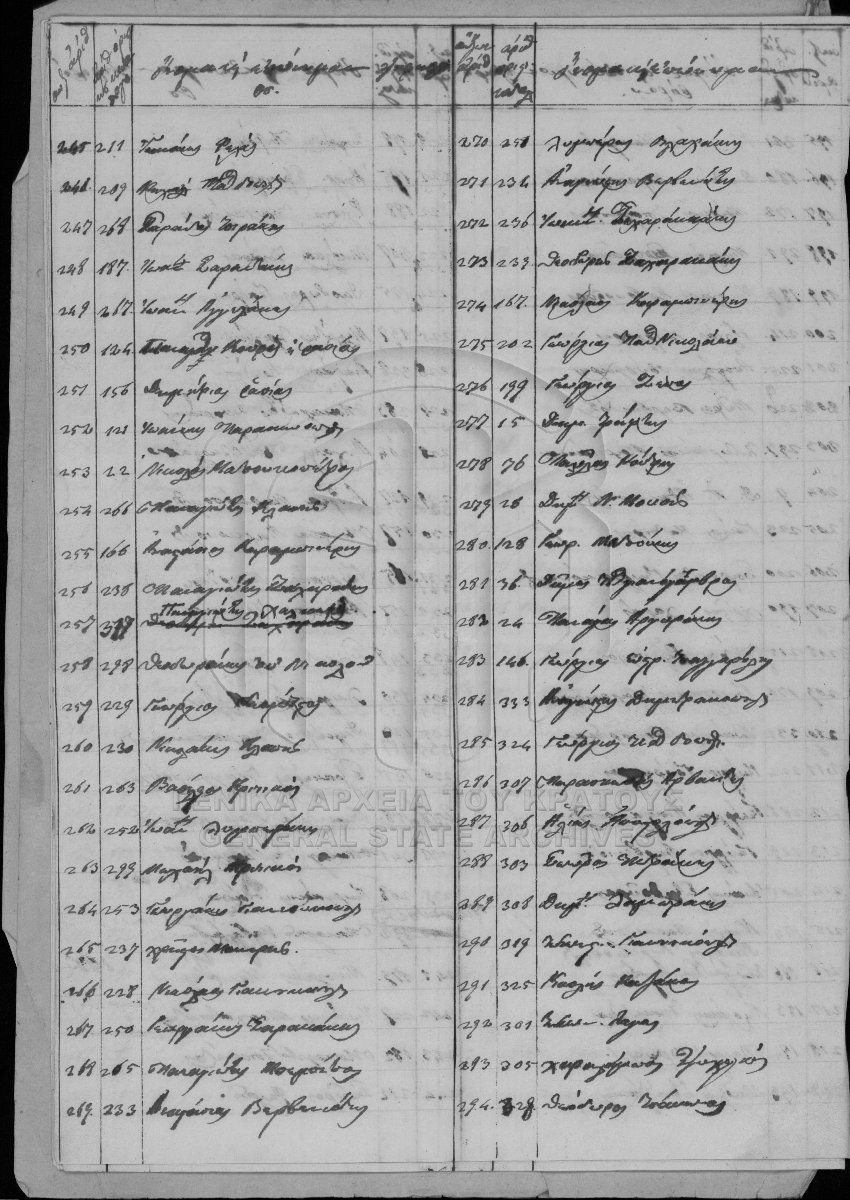
As I worked through the various resources, I learned an important detail about the 1844 Election Lists: there is an index at the beginning of each municipality. In the image below, notice two columns of numbers to the left of each name. The first number is the line number in the index; the second number is the line in the record itself. In this image on line 272 (right column, 3rd down) is Ioannis Zaharakis or Zaharakakis; the number 236 indicates the line in the record where his registration is recorded. (see next image)

1844 Election Lists, Laconia, File 22, image 1209 Index

1844 Election Lists, Laconia, File 22, image 1209, Theologos. Index.

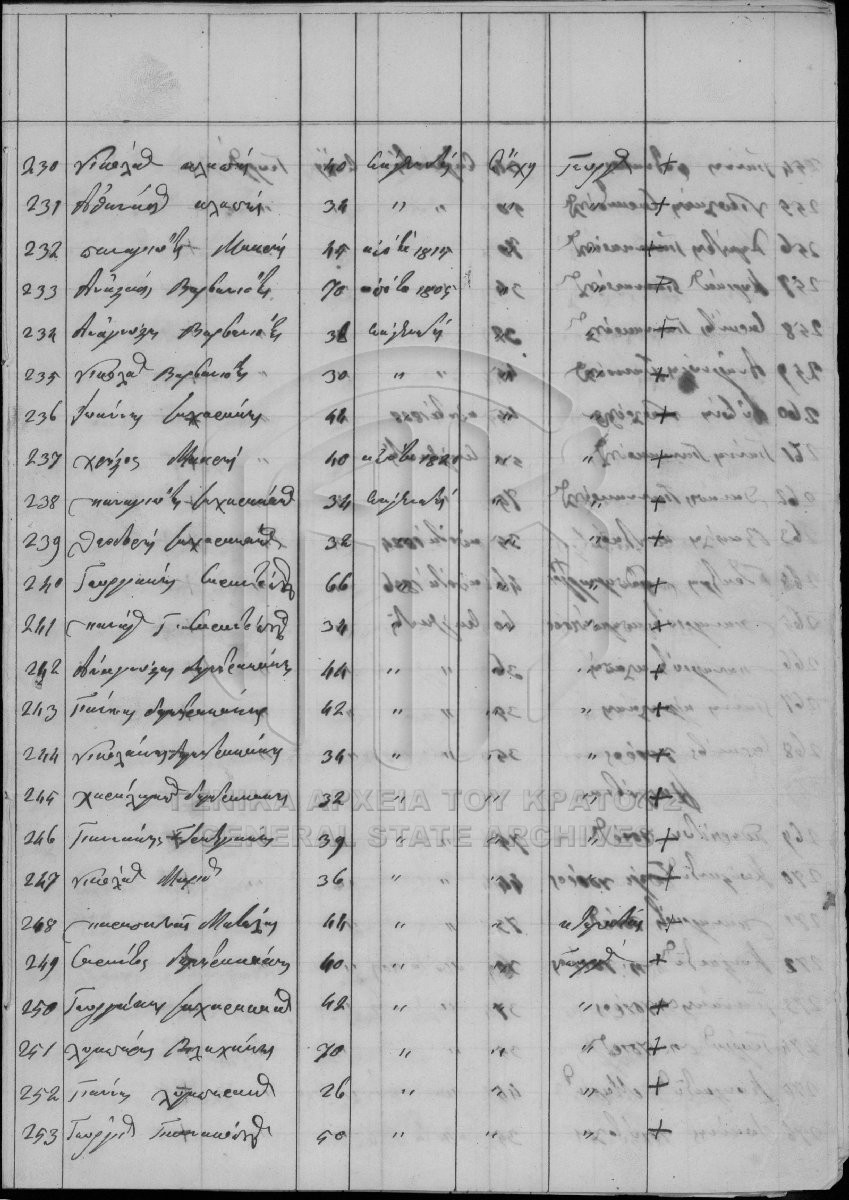
This is an image of the voter registration page. Ioannis is found on line 236, which reads: Ioannis Zaharakis, age 46, farmer.

1844 Election Lists Laconia, File 22, Image 1222 Theologos.

1844 Election Lists Laconia, File 22, Image 1222 Theologos.

Also found on both of these pages are:
Index line 256/Record line 238 – Panagiotis Zaharakakis, age 34, farmer
Index line 273/Record line 239 – Theodoros Zaharakakis, age 32, farmer
Index line 267/Record line 250 – Georgios Zaharakis, age 42, farmer

Big important note: Thank you, Gregory Kontos, for finding these names for me. You have my undying gratitude forever! I can read records that are typewritten, but the handwritten ones are Greek to me.

I will update this post after my next trip to the Archives in Sparta in July 2016. This time I’ll have the Male Registers and I will be able to further corroborate and correct what I have documented.

If anyone has information that can shed further light on these families, or give a better translation of the handwritten Greek, I would be most grateful!

Now I can put this aside to enjoy the holidays. Merry Christmas!