Unknown's avatar

About Spartan Roots

I am of Greek ancestry with roots in villages near Sparta. My paternal grandparents and maternal grandfather were born in Agios Ioannis (St. Johns), and my maternal grandmother was born in Mystras. I love family history research and have been tracing my roots for many years. I was born in Brooklyn, New York and was raised in a predominantly Greek neighborhood close to extended family. I live in the Washington D.C. metropolitan area and work as a volunteer Co-Director of the Washington, D.C. Family History Center and a genealogy aide/project aide at the National Archives in Washington, D.C. I am always updating and adding new information. Please contact me - I would love to hear from you!

How to Navigate the State General Archives of Greece Website for Digitized Images

The website of the General Archives of Greece has a specific area where digital images are being uploaded:  http://arxeiomnimon.gak.gr/index.html.  This site is not easy to navigate, but with patience and the help of an English translation button on the right side of the website, it can be done.

A pdf file with step-by-step directions can be accessed here.

As can be expected, most of the files are in Greek script. However, there is a valuable collection of Electoral Rolls from the late 1800’s which has been typewritten in Greek — and the names are easy to read. This collection contains lists of men who were eligible to vote. It is sorted by Nomos (County), then Districts and Municipalities. Instructions for accessing this collection titled “Election Materials from the Vlachogiannis Collection” is found at the end of the document. A direct link to this collection is: http://arxeiomnimon.gak.gr/browse/index.html?cid=586603

A sample page of the Election Rolls is below. The Nomos is Lakonia, the village is Agios Ioannis (Sparta). The columns are:  1: line number, 2: first and last name of the voter, 3: voter’s birth year, 4: name of voter’s father, 5: voter’s occupation.

My great-grandfather, Panagiotis Papagiannakos, is on line 1975.

1872 Electoral Rolls, Agios Ioannis, Papagiannakos

1872 Electoral Rolls, Agios Ioannis, Panagiotis Papagiannakos, line 1975


Greek Microfilms at the FamilySearch Library

Various record collections from areas in Greece have been microfilmed and are available to the public through the FamilySearch Library and its more than 4,700 Family History Centers throughout the world. To locate the one closest to you, click here.

To find a Greek microfilm,  you will need to know the village, district, and county of your ancestor. The following explains the geographic divisions in Greece:

Greece is divided geographically into 9 main regions:
1.  Central Greece and Euvoia
2.  Peloponnese
3.  Ionian islands
4.  Thessaly
5.  Epirus
6.  Macedonia
7.  Thrace
8.  Aegean Islands
9.  Crete

Each of these 9 main regions is divided into “Counties” called Nomos.

Each of the nomos is divided into “Districts” called Eparhia.

Each Eparhia is divided into “Municipalities” called Dimos. A Dimos may include surrounding villages.

Prior to 1999, there was a division called “Community” or Koinotis. In 1999, all “communities” were dissolved and incorporated into the larger “Municipalities” or Dimos.

In order to determine if the FamilySearch Library has a Greek film of interest to you, you will need to identify the following information:

1.  The village
2.  The Dimos (municipality) to which the village belonged when the record was created
3.  The Eparhia (district) to which the Dimos belonged when the record was created.
4.  The Nomos (county) to which the Eparhia (municipality) belonged when the record was created.

You must also know the full, original Greek surname; for example: not Pappas, but Papadopoulos.

Records That May Give You Name & Village

  • Census (1900, 1910, 1920, 1930 ask specific immigration & naturalization questions)
  • Marriage (U.S. and Greek Church)
  • Baptismal Records (Greek Church)
  • Immigration (Passenger Ship)
  • Naturalization (Declaration of Intention & Petition for Naturalization)
  • Social Security Application (original and computerized)
  • World War I & II registration cards
  • Death Certificate (beware of informant’s possible misinformation)
  • Obituary
  • Tombstones
  • Photographs

After you have determined the original Greek surname and village, check to see if FamilySearch has a digitized microfilm for your location. Check the FamilySearch catalog for Greece.

Digital images can be viewed at any FamilySearch Center. Find the one closest to you at this link.

Surnames from the Mitroon Arrenon of Mystras, Laconia

I am researching several ancestral lines in Mystras, including that of my maternal grandmother, Aggeliki Eftaxias. During my visit to the General State Archives office in Sparta in July 2014, I digitized several pages of the Mitroon Arrenon (Male Register) for this city. The earliest year in these registers is 1824. Interestingly, this is right in the midst of the Greek War of Independence (1821-1829).

The surnames below are extracted from the pages that I obtained, which is not the complete record. Villages included in these records are: Mystras, Vlachohori, Varsinikos, Pikoulianika, Parori, Katochora, Diaselos.

The Sparta Archives office can assist you with further research. The email address is: mail@gak.lak.sch.gr. Maria Stellakou, Michalis Sovolos, and Pepi Gavala are exceptional archivists and dear friends.

Surnames from Mitroon Arrenon of Mystras

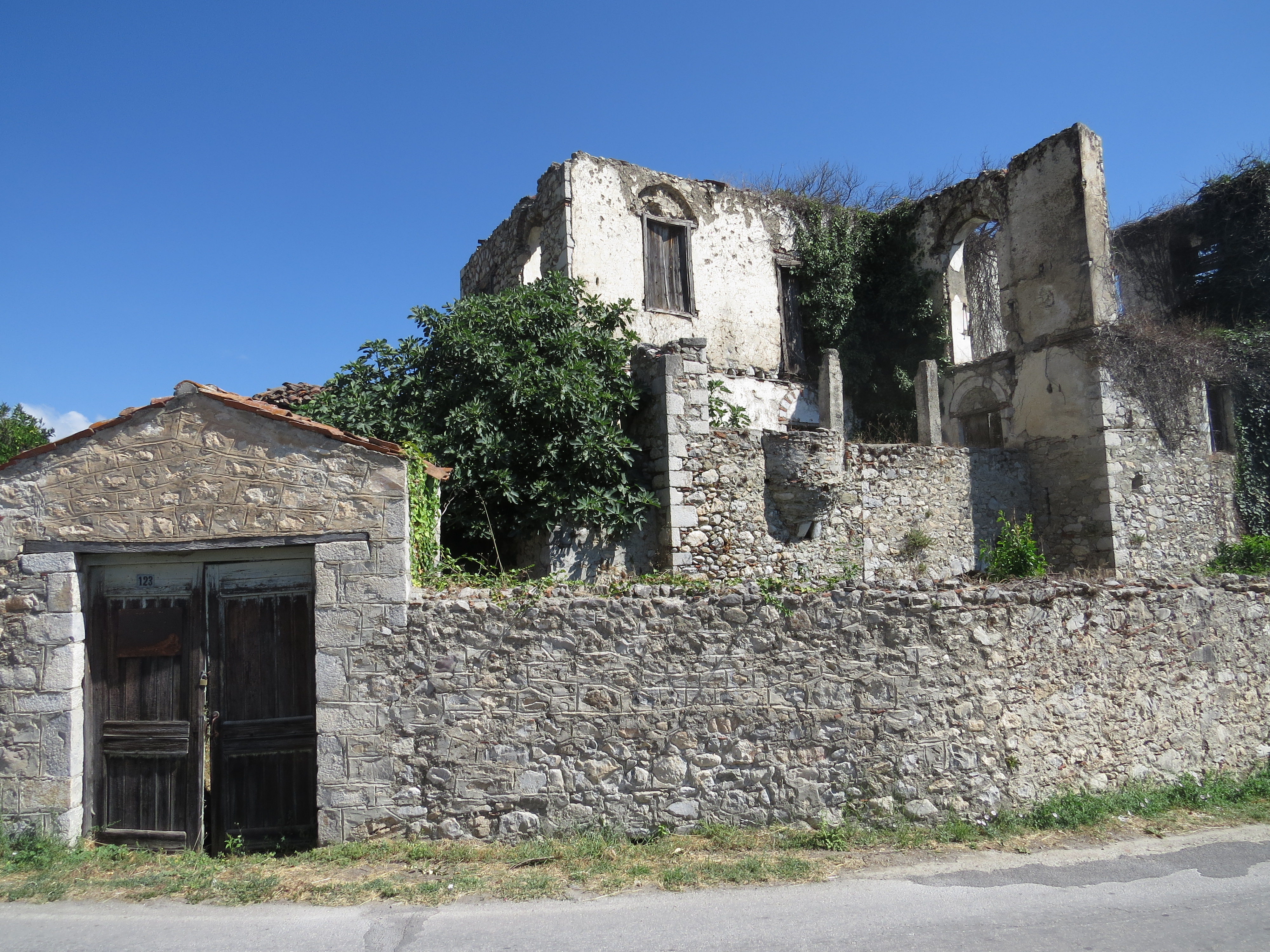
Maltsiniotis House in Agios Ioannis, Sparta

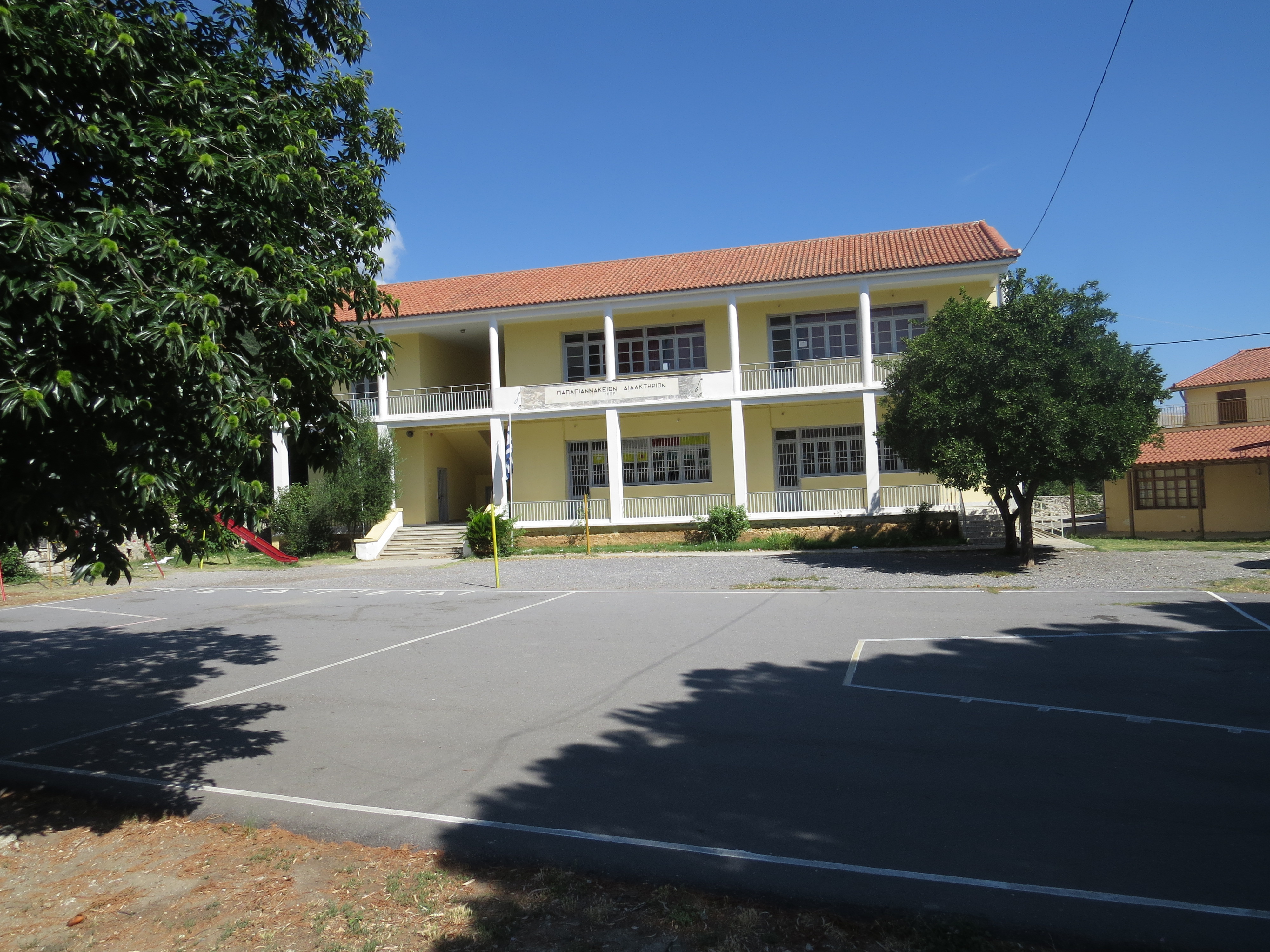
This is the Maltsiniotis house located in Agios Ioannis. My cousin, Father Eugene Pappas, was told by Demetrios Papagiannakos (“Jimmy” Pappas 1875-1948) that there is a blood connection between the Maltsiniotis and the Papagiannakos families. Possibly, the Maltsiniotis name was the precursor to the Papagiannakos name because a member of the Maltsiniotis family became a priest whose name became “Father John”. I haven’t found anything that can prove this interesting story, except that the Maltsiniotis house and the Papagiannakos School (built by this same Jimmy Pappas) share the same property. So, whether the connection is blood or business remains unclear.

The house is a replica of the amazing stone towers found in Mani, which is another clue that the family/families traveled north towards Sparta from the southern Peloponnese, most likely after the Revolution of 1821. It surely was a grand structure in its day! Wouldn’t it be amazing to restore it?

Maltsiniotis Tower Home, Agios Ioannis, Sparta. July 2014

Maltsiniotis Tower Home, Agios Ioannis, Sparta. July 2014

Papagiannakos School, built by Demetrios Papagiannakos (Jimmy Pappas)

Papagiannakos School, built by Demetrios Papagiannakos (Jimmy Pappas). Agios Ioannis, Sparta, July 2014

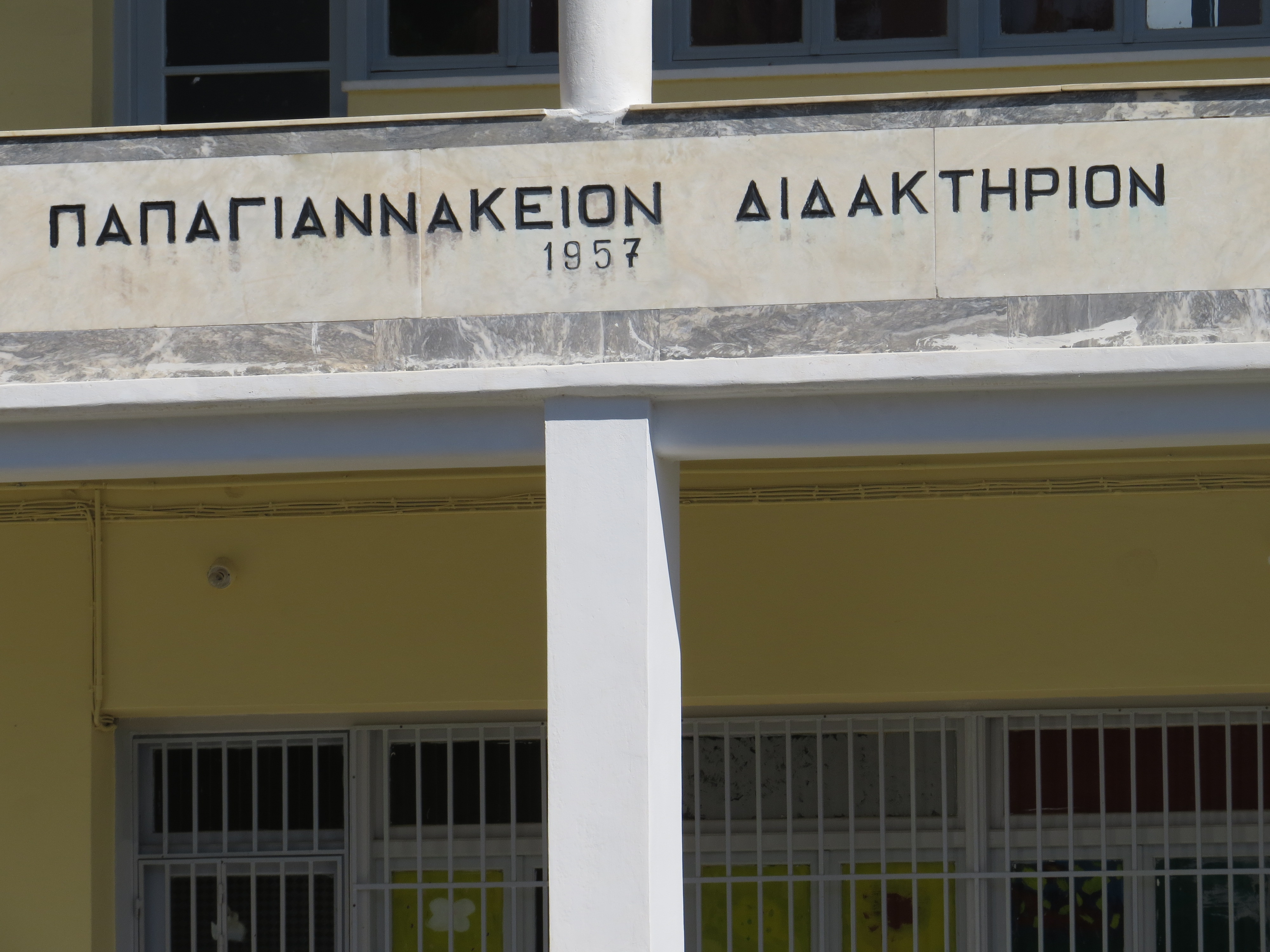
Sign on Papagiannakos School. Agios Ioannis, Sparta. July 2014

Sign on Papagiannakos School. Agios Ioannis, Sparta. July 2014

Facebook Page for Agios Ioannis, Sparta

I took the plunge this week and started a Facebook page for my ancestral village of Agios Ioannis, Sparta: https://www.facebook.com/groups/1062961957066883/

I’m hoping that this FB page will become a real-time forum for many people with ties to this village. So many Greek people interested in family history are connecting through various FB pages, helping each other with translations, names, historical information and even photo identification! It’s a miracle of our times and a blessing to so many seeking help and looking to reunite with or find new members of their families.

The FB pages I regularly monitor are:
HellenicGenealogyGeek:  https://www.facebook.com/groups/118224528189671
Mystra:   https://www.facebook.com/groups/mystra/
Anavriti:  https://www.facebook.com/groups/99924502254
Hellenic Genealogy Resources:  https://www.facebook.com/groups/101120679980726
Chian and Diaspora Genealogy (Island of Chios – not my area, but my friend, Debbie Sideratos Petrides, is an amazing researcher for Chios):  https://www.facebook.com/groups/367147546743555