Reviving the Soul of a Village

The plateia is the heart and soul of every Greek village. Anchored by its peoples’ beloved Greek Church, amply shaded a huge plane tree, proudly displaying the marble War Memorial honoring its dead and surrounded by businesses and cafes, it is the central gathering point of the village. In the beautiful mountain village of Theologos, Lakonia, the plateia is very special to me as it is where members of my Zacharakis family meet for summer reunions.

Zacharakis reunion at the plateia in Theologos, July 2017

During my last visit in 2023, I noticed with sadness that some buildings on the plateia were abandoned and in serious disrepair. Gone were places to gather indoors on a rainy or wintry day, to celebrate a baptism or mourn a death, to hold a bazaar or community event, or to house the Women’s Association of St. John Theologian1. The empty buildings made it seem as if the plateia had lost part of its soul.

Imagine my surprise—and my delight—when I received a message from my cousin, Georgia Zacharaki1, stating that a large building on the plateia had been donated from the city to the village, but it was in need of major renovations. “It is a wonderful venue and the location is perfect,” wrote Georgia, who is President of the Women’s Association. She and the Association members organized an initiative to raise funds and repair the building.
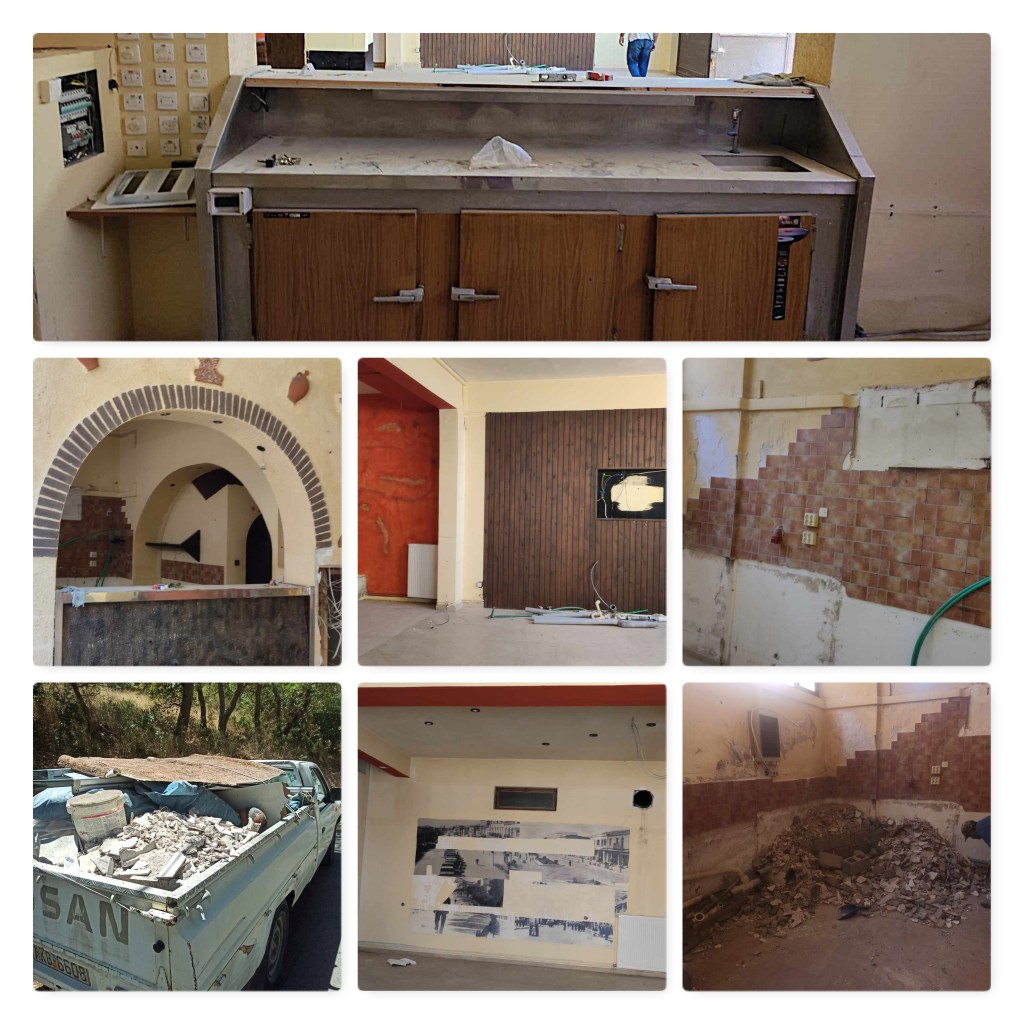
These photos show the interior during demolition. Truckloads of debris were removed.

Much work needed to be done: interior walls, electrical work, and a complete overhaul of the kitchen area. When Georgia and I met in Sparta in early September, renovations were well underway. By late October, the project was near completion. So much work was done so quickly! The rooms are sparkling, bright, and beautiful.
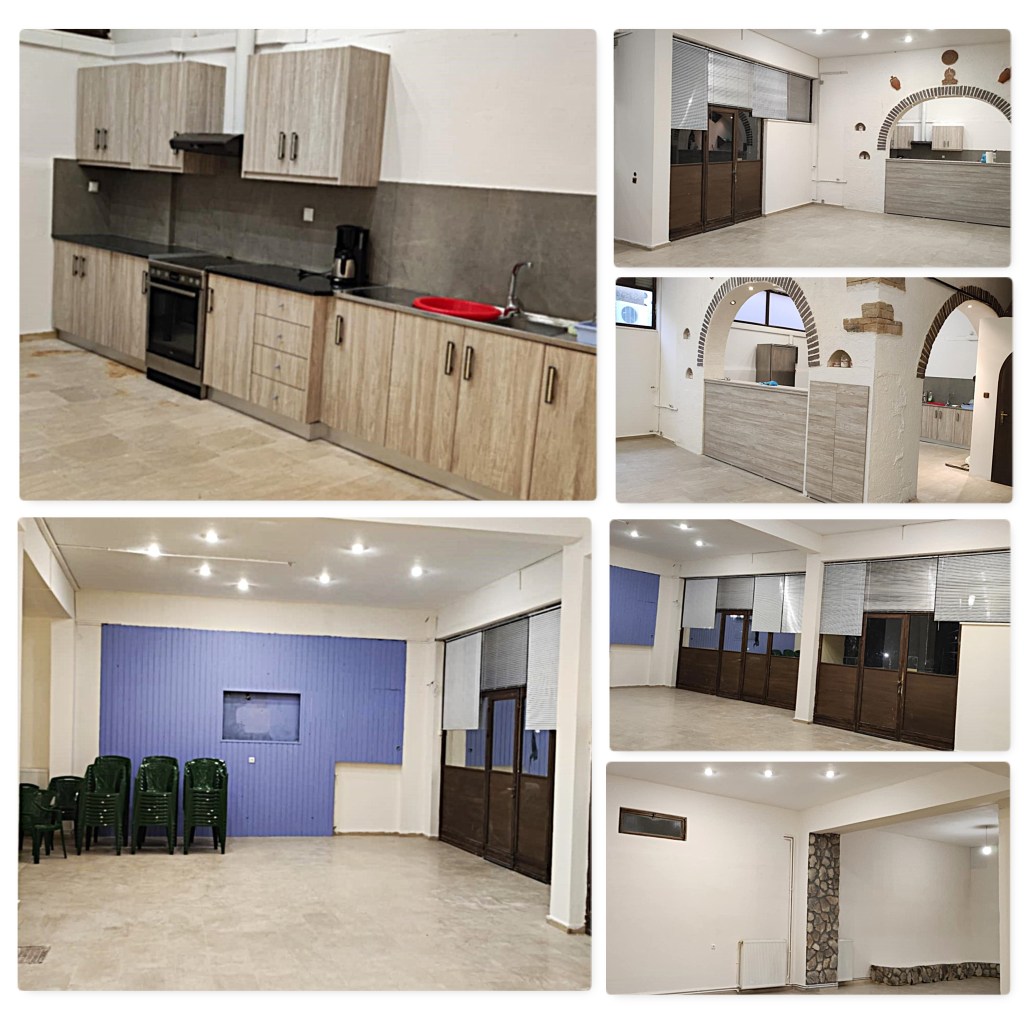
The beautifully renovated venue

Donations of money, large and small, came from people in Greece and America. There were also many contributions of needed items such as appliances, kitchen utensils, blinds, glasses, coffee cups, etc. “If we had to pay for everything and did not have volunteer work and donations in money and materials, the cost to us would have been close to $10,000,” Georgia noted. Thus, every euro and every item was gratefully received and sincerely appreciated.

By the first of November, the venue was ready for use. A dedication ceremony was scheduled for Sunday, November 3. Women of the Association gathered happily in the new kitchen to prepare for the event by baking traditional Greek sweets such as diples and baklava.

Baking in the new kitchen to prepare for the dedication.
Delicious homemade sweets were lovingly made and beautifully packaged for those at the dedication
The room was gaily decorated for the dedication

The dedication on November 3, 2024, was joyfully attended by over 120 people throughout the area. The blessing on the venue was offered by the beloved village priest, Father Panagiotis Kotsios (below, left). He was joined by Archimandrite Ierotheos Varvitsiotis of the Monastery of Panagia Faneromeni of Anavryri (below, right) and Archimandrite Rafael Tsaltas of the Monastery of Panagia Koubari of Paleopanagia (below center; also representative of His Eminence Bishop Efstathios of the Metropolis of Monemvasia and Sparta).

Additional noted guests were three members of Parliament; two Deputy Mayors of Sparta; the representative of the Mayor, Deputy Mayor Mr. Antonakos; the former Mayor of Sparta, Mr. Valioti; and the Board of Directors of the Daughters of Penelope Sparta2.

The attendance of so many local dignitaries indicated that the strength, resourcefulness and abilities of the Women’s Association merited their support and recognition.
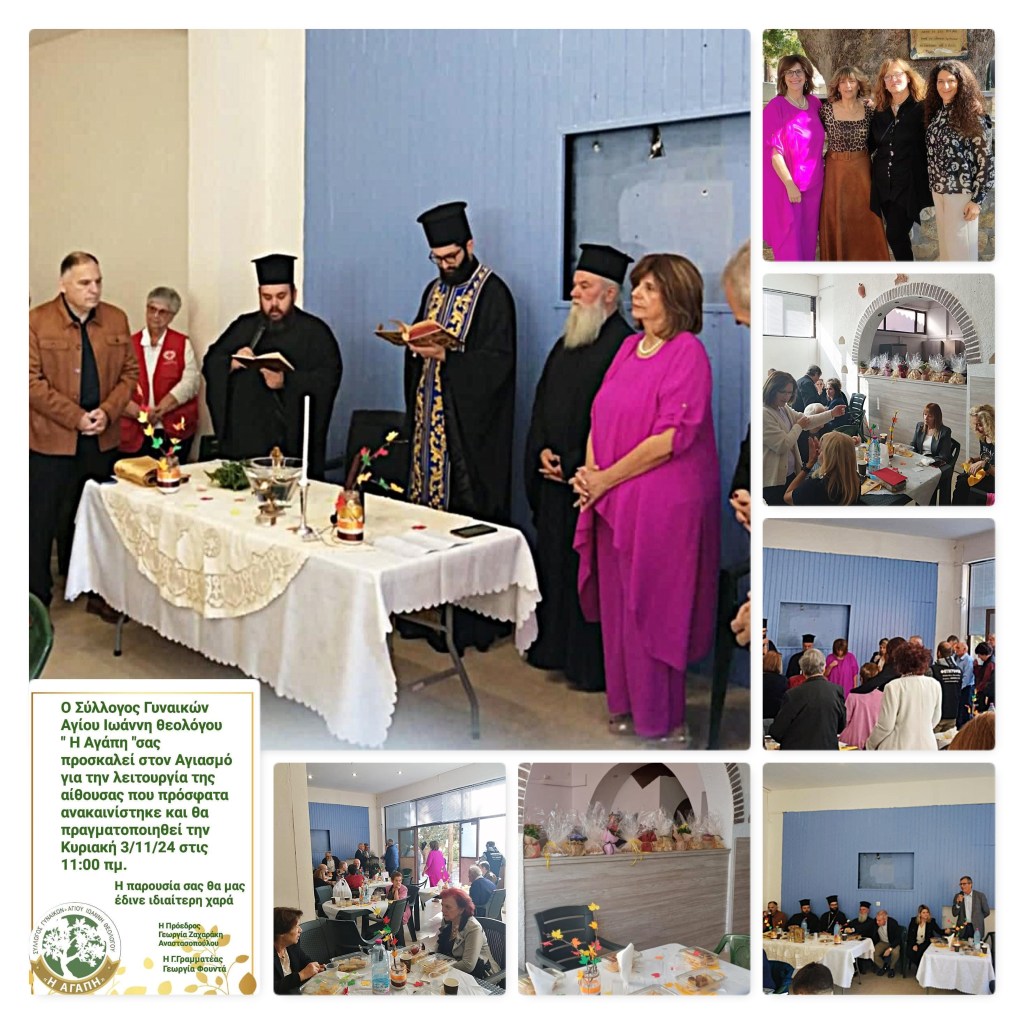
Although the main renovations are completed, additional work is required. Money is needed to install a heating system and to fix a water pipe. At the dedication, 20 trays of homemade sweets were raffled off and additional fundraising will occur. With cold, mountain winter months now arriving, a heating system is a necessity for the 300 permanent residents to gather indoors.

I am saddened that so many charming villages in Greece are abandoned and neglected as residents leave for employment in cities. However, I am relieved and elated that the soul of beautiful Theologos has been revived.

If you desire to make a donation to help towards purchasing a heating system, please contact me at: spartanroots1@gmail.com. Any amount will be gratefully accepted by our friends–and my family–in beautiful Theologos.

Theologos, a charming village at 1,860 feet at the top of the Mt. Parnon range, has about 300 permanent residents. Many with roots in the village now live in Sparta and surrounding areas.

1Georgia Zacharaki is a founding member of the Women’s Association of Agios Ioannis Theologos, and a former Deputy Mayor of Sparta.
2“The women’s association is named Γυναικών Αγ.Ιωάννη θεολόγου Ηαγάπη — in English: the Women’s Association of Agios Ioannis Theologos Agapi (love). Because the village is named after the Apostle John Theologos who was Christ’s beloved as He appointed him as Virgin Mary’s son after Jis crucifixion and he preached Jesus’ word which that of LOVE, we named our association LOVE. The association was formed in 2017.” Georgia Zacharaki to Carol Kostakos Petranek, October 22, 2024.
3The Daughters of Penelope is a worldwide association formed in 1929 to promote Hellenism, Education, Civic Responsiblity, Philanthropy, and Family & Individual Excellence.

Visiting the Villages: Theologos and the Zacharakis Reunion

The road leading to Theologos winds around a verdant mountain, filled with thousands of olive trees. “The trees on this mountain belong to the families of the village,” my cousin, Nikos explains. “Years ago [around the early 1900s], just a few families owned all of these trees. Now, every family has an olive grove.” I stared out the car window, looking for a some type of sign or marker to delineate one owner’s property from another. I saw none. So I asked, “How do the families know which trees are theirs?” Nikos smiled. “Every family known how many trees they have, and exactly where they are.”

At one time, there were two olive processing plants in this small village. In recent years when stricter safety regulations were passed, the facilities closed and people now take their harvest to Sparta.

Left: a former oil processing plant in Theologos; upper right: mountainside with the olive groves of Theologos; center: Dimos Οinountos, Theologou; bottom right: stone used in olive press

The homes of the families are constructed of stone, and they are literally built into the mountainside. Houses remain in families for generations. They are beautifully maintained and constantly being updated with modern conveniences. Living on a mountain means that there are steps everywhere, and they are steep! You can’t leave your house, or enter another, without walking up a flight. The village roads are precipitous and narrow, yet people are adept at maneuvering and parking their cars and trucks. The plateia appears to have the only flat surface in the village.

Houses, steps, and the flat plateia

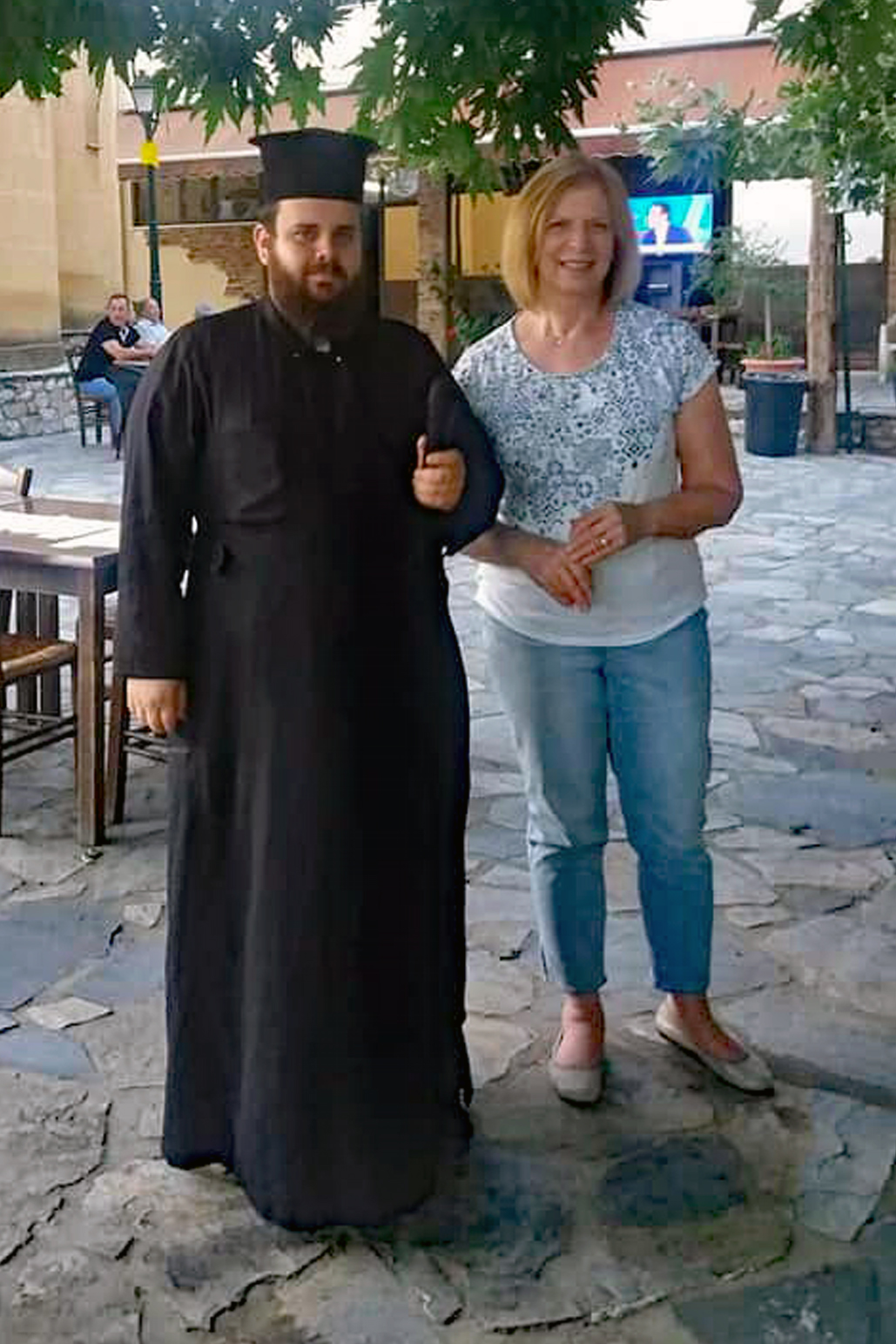
The village priest, “Papa” Panagiotis Kotsos, presides over the church of Agios Ioannis Theologos. It is incredibly beautiful and filled with historic icons. I was honored to be shown several holy relics, too sacred to photograph. It’s amazing that a small village church at the top of a mountain would have such treasures.

The Church of Agios Ioannis Theologos and its priest, “Papa” Panagiotis Kotsos

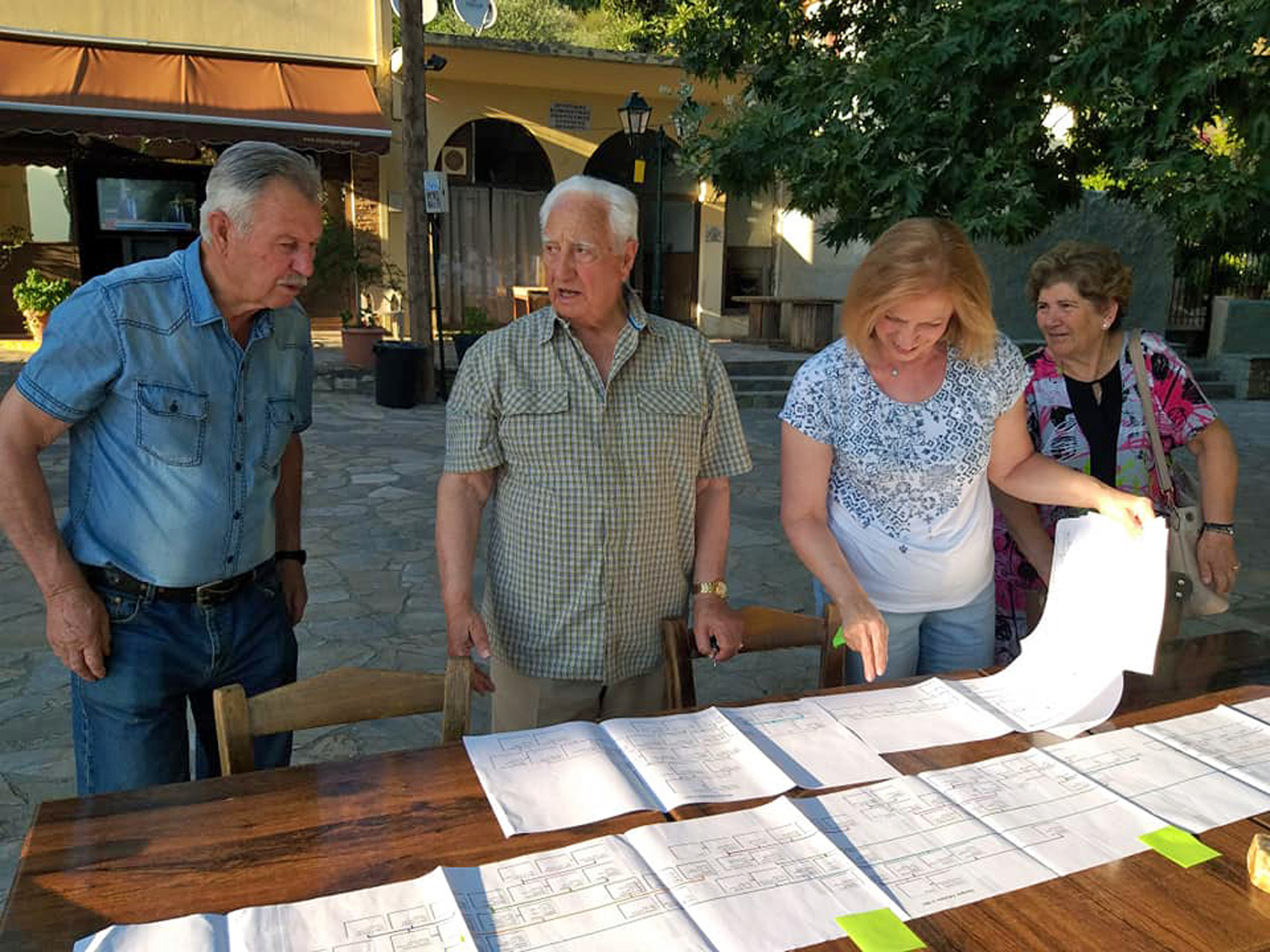
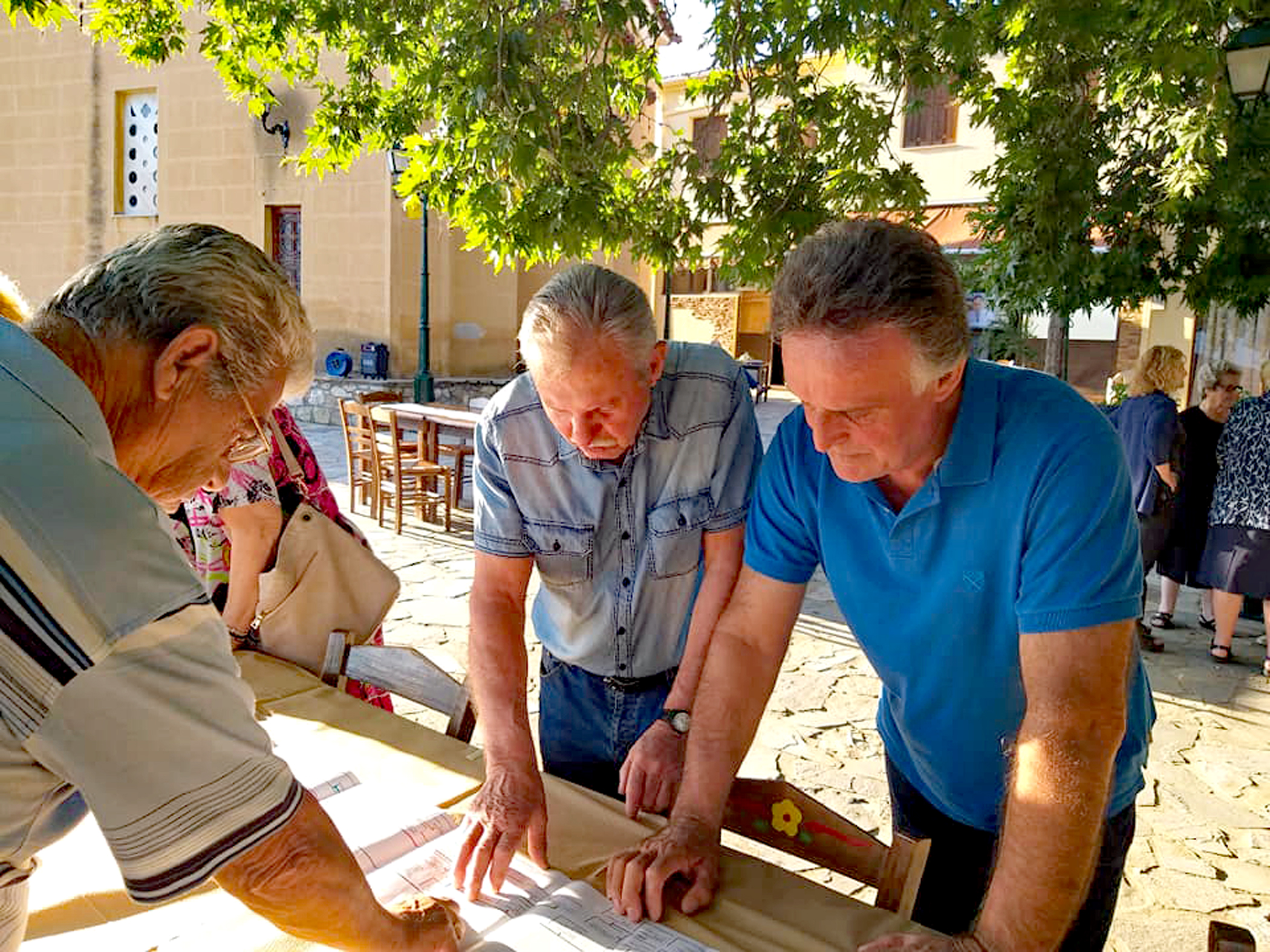
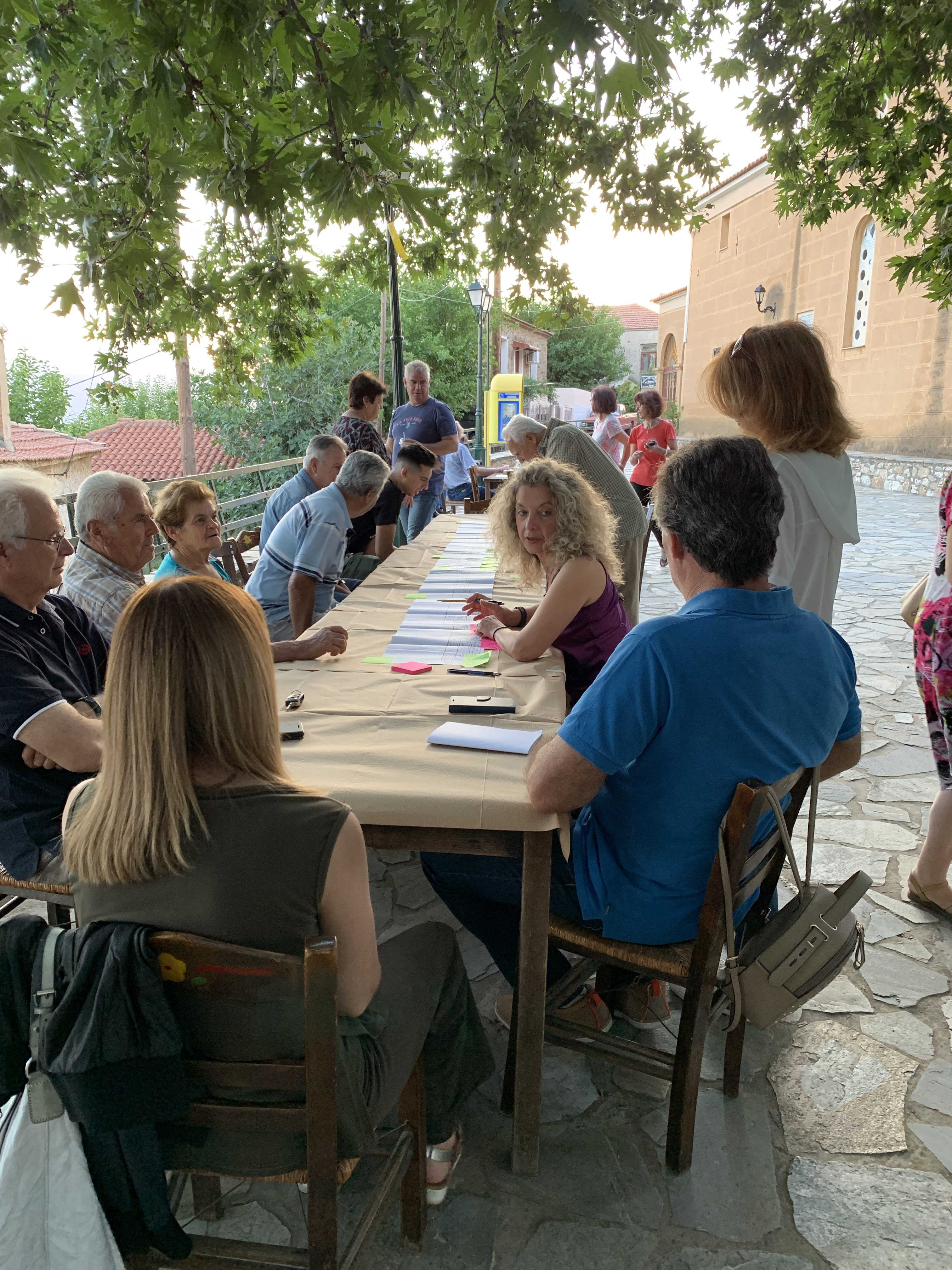
What I love most about returning to the village is to gather with my cousins of the Zacharakis family. My great-grandmother, Stathoula Zacharakis, was born in Theologos1. As I researched her lineage, I created a family tree which documents the various branches of the family. Whenever I visit, I bring the “updated” Zacharakis tree which is spread out along the benches at the perimeter of the plateia. People add and correct information, and we enjoy an evening of reunion and reminiscing. It has become a joyful tradition.

Checking out the family tree! June 23, 2023
Back left-right: Antonios Karagiannis, Aggelos Sarantakis, Niki Zacharakis Sarantakis, Asimina Zacharakis, Pepi Vartsaki Zacharakis, Nikos Zacharakis, Panagiota Zacharakis. Front left-right: Ioanna Karagiannis, Panagiotis Karagiannis, Argyro Bebetsos, Anthi Karagiannis, Lygeri Zacharakis Zacharakis, Anastasia Kantzioris, Rozi Kritsepis Zacharakis, John Rakis, Carol Kostakos Petranek, Alexandra Rakis, Konstantina Dariotis Zacharakis, Roula Zacharakis, Pavlos Zacharakis, Amalia Iliopoulos Zacharakis

I love these dear people and am so very grateful for their kinship and friendship. Being together in an ancestral village brings a feeling of generational connectedness. Our ancestors walked these streets, built the churches, and gathered in the plateia. Now it is our turn.


1Previous Spartan Roots posts about the Zacharakis family:
Stories from the Village: Theologos
Putting Together the Zacharakis Family Tree
The Zacharakis Family of Theologos
Greece 2017. Part Six: Theologos
Ioannis Zacharakis, Hero from Theologos

Stories from the village: Theologos

Around the time of the Greek Revolution of 1821, seven brothers left Crete and traveled to the Peloponnese. They scattered and settled in various areas. Three found their new home in a village 7 km north of Sparta, and the Zacharakis family of Theologos was formed. Theologos is situated 5 km straight up to the top of a mountain. Due to its height and spectacular views, the village is known as “the balcony of Lakonia.”

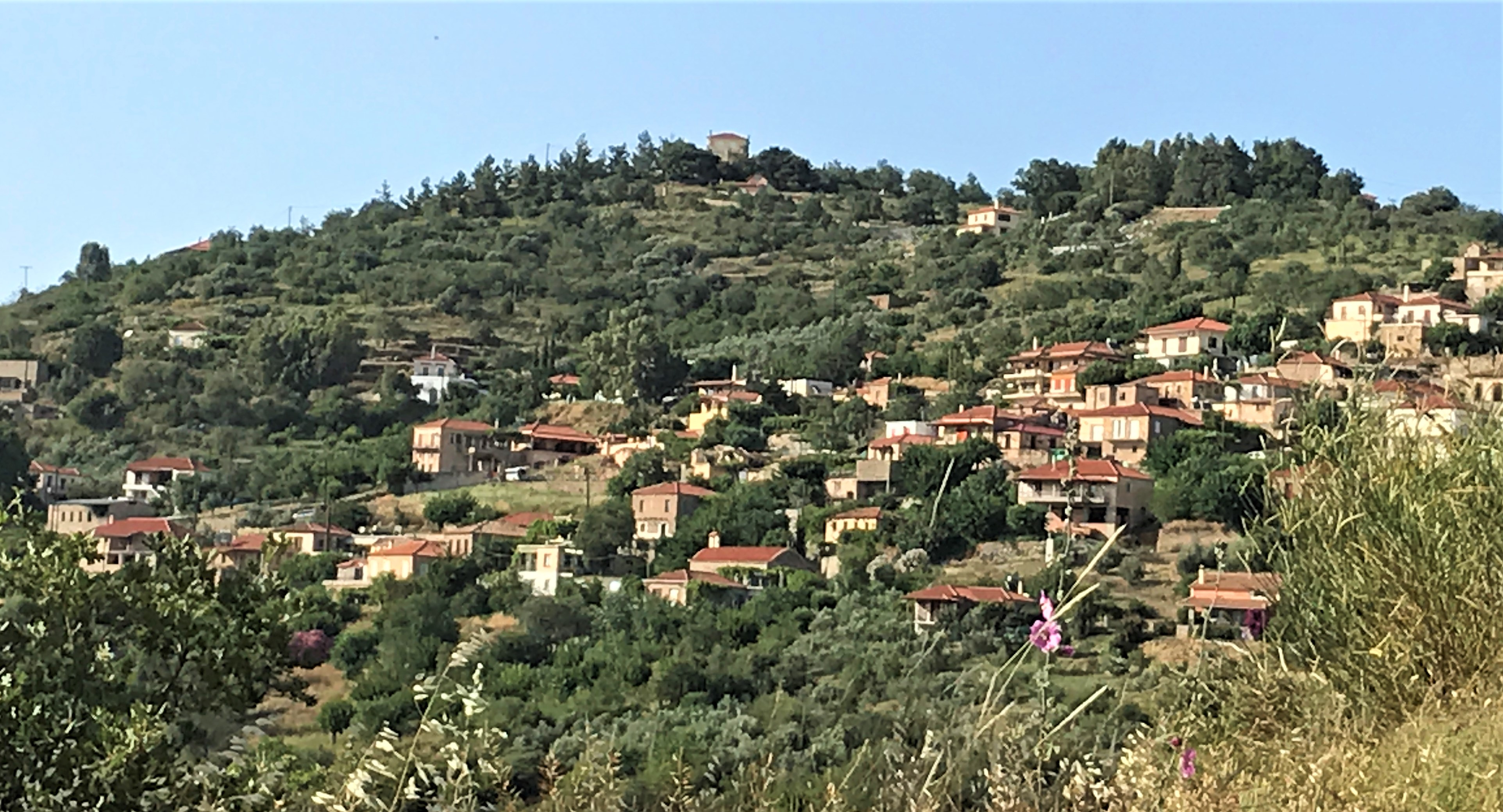
View of Theologos from the home of Georgia Zacharakis Dariotis

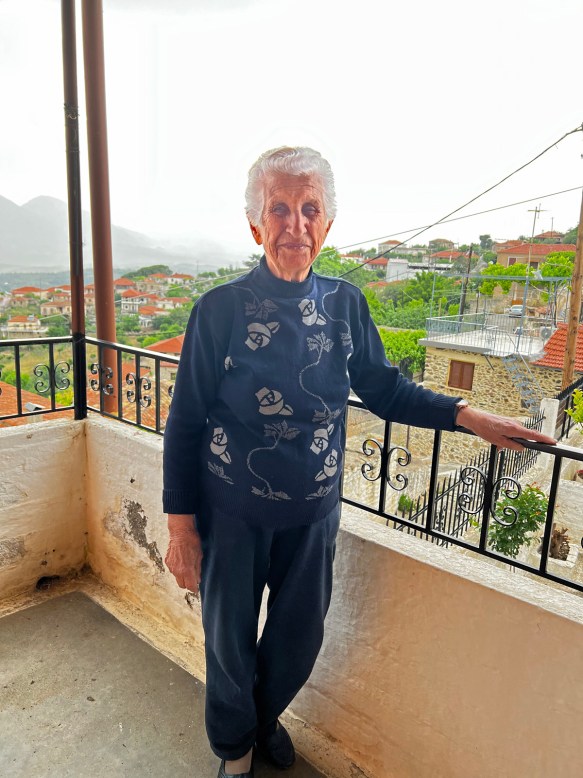
My great-great grandfather, Dimitrios Zacharakis, was among the earliest born in the village, circa1832. What type of life did he and his descendants experience? What were their occupations and their traditions? I asked my cousins to introduce me to the oldest member of the family, Georgia Zacharakis. At 93 years old, she is strong, sharp and sprightly. She continues to maintain the sprawling 100-year-old stone house that she shared with her husband (now deceased), Ioannis Athanasios Dariotis.

Georgia Zacharakis Dariotis on the balcony of her home
Theologos, June 1, 2023

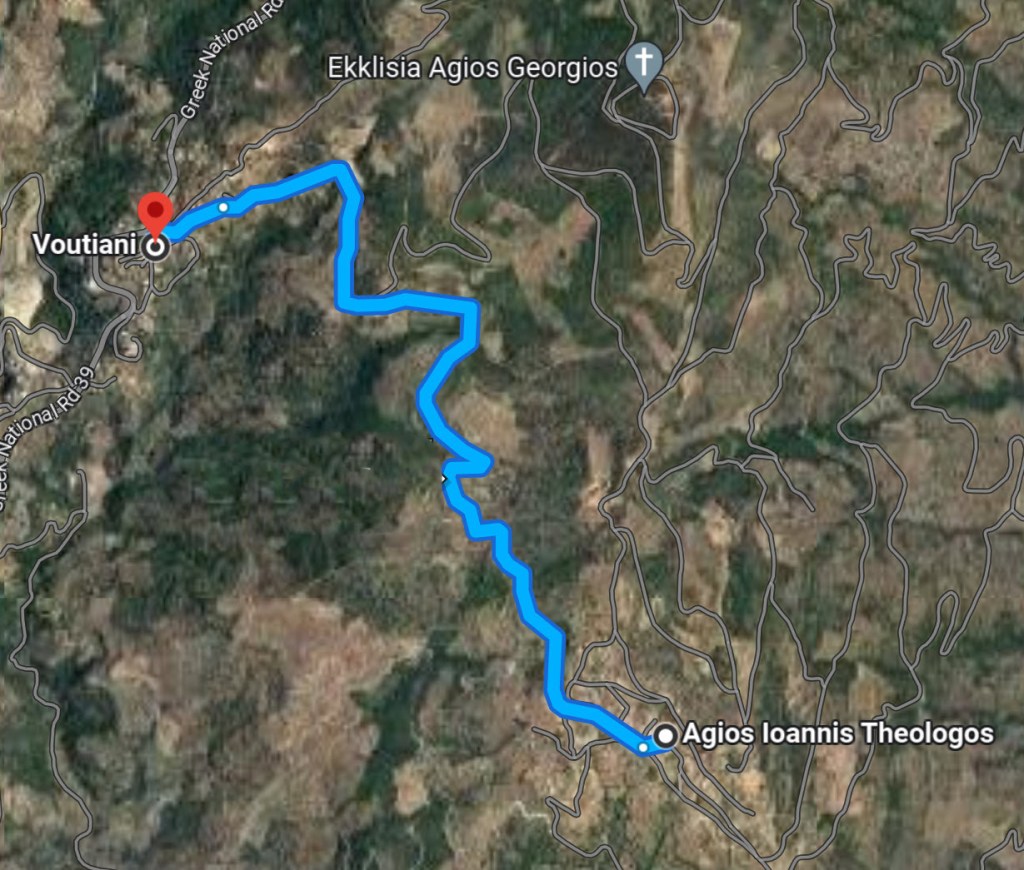
Through her reminisces, Georgia brought the past into the present. Village life was as rugged as its mountain. Transportation was by horse or donkey. It was not until 1970 that a narrow, switchback, paved road to Theologos was constructed. Prior to then, people rode animals or walked 4 km over winding mountain paths to the nearby village of Voutiani which had the only road on the mountain. It led to the city of Sparta where people could shop, conduct business, and access doctors or government facilities. There, horses and donkeys were kept in a χάνι (chani), a house with a large inner courtyard, where travelers and their animals camped and spent the night.1 After returning to Voutiani, people walked the 4 km back to Theologos, and this time their animals — or their arms — were laden with the goods and items purchased. The return trip was all uphill and done barefoot. Shoes were a luxury, not a necessity.

The mountain path from Theologos to Voutiani

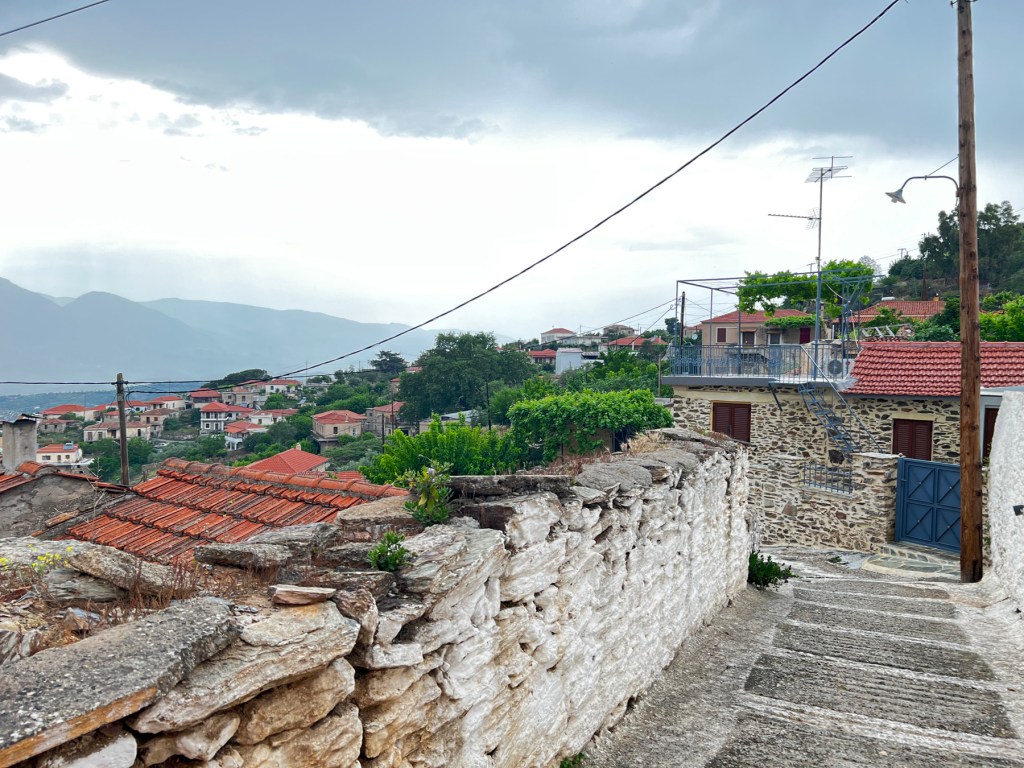
Homes were built of stone and, until recently, had no modern conveniences. Nestled in the cliffs, steep steps led to every house.

Steps leading to Georgia’s home

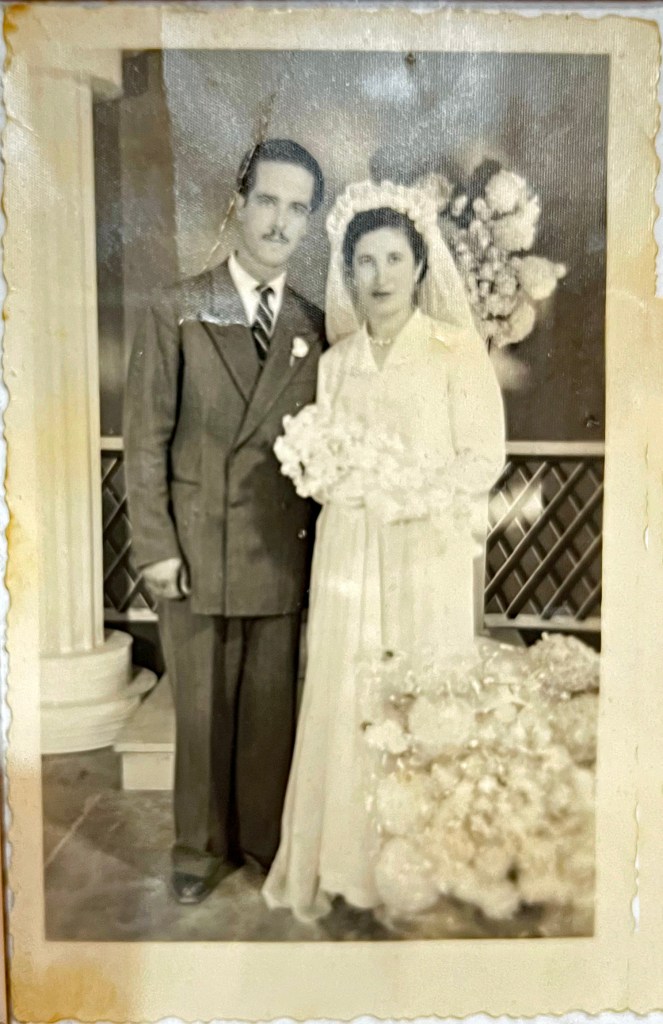
Village families were very close and considered themselves one unit. Because they knew each other well, marriages among their children did not present unexpected surprises such as alcoholism, illness or mistreatment of spouse or children. Marriages were arranged by a matchmaker (either male or female), who received money for their services. Georgia said, with a sparkle in her eyes, that although match with a man from Agios Ioannis, Sparta was being considered for her, she refused it — preferring a man from Theologos. She married Ioannis Dariotis in 1953.

Ioannis and Georgia, June 28, 1953

Both men and women labored ceaselessly. The primary occupation was growing olives. For a time, only about ten families owned all the olive trees that fill the mountainside of Theologos. The rest of the men were laborers, working in the groves. As time passed, almost every family eventually owned at least one grove. Olive oil production was such a large business that two processing plants were built; currently, neither is operational. The villagers now bring their olives into Sparta for processing. Even today, the olive harvest season is long, lasting from October to April, because of the large amount of olives grown on the mountain.

One of two olive oil production facilities in Theologos

A few village men were woodworkers and carpenters or stone masons. Every building is constructed of stone, hewn from the mountain. Georgia’s father, Nikolaos, was a woodworker. Her husband, Ioannis, did not have an occupation when they married, and he worked with Nikolaos to learn the woodworking trade. Ioannis’ father was a farrier, making horseshoes and shoeing the animals in a courtyard at the front of Georgia and Ioannis’ house.

Courtyard where Ioannis Dariotis shoed horses

Children were born at home under the care of the village midwife, Chaido Synodinou (early-mid 1900s). A new mother was granted no reprieve from her tasks: cooking, cleaning, and childcare. Georgia’s mother, Amalia Bebetsos Zacharakis, boiled “bad” oil to make soap for washing clothes and bodies, and sold the product to earn a little money.

In addition to household chores, women harvested wheat and toiled in the fields. After the wheat was threshed, it was baked into bread in an outdoor oven.

Georgia opens the door to the oven, now housed indoors in a separate room

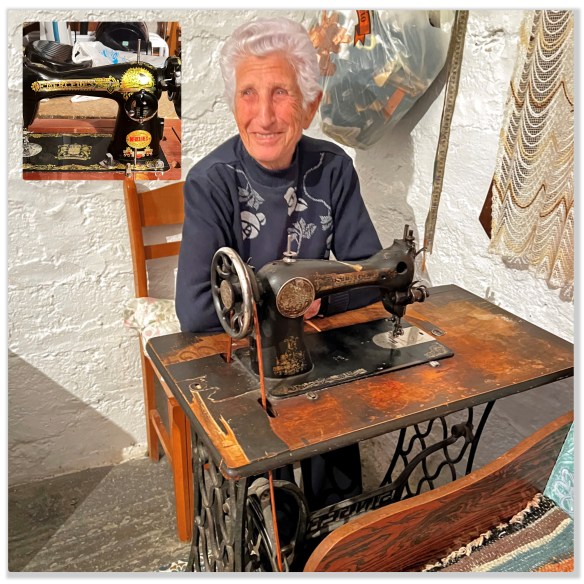
Seeing the hardships endured by village women, Georgia’s father encouraged her to make a better life. With his blessing and support, Georgia studied dressmaking in Sparta and became an outstanding seamstress. She made clothing for men, women and children. She also constructed clothing and vestments for priests, which are both ornate and meticulously embroidered. Georgia’s love of sewing has not subsided, and she took great joy in showing us her two sewing machines.

Georgia in her sewing room. She is sitting at the treadle machine which is operated by her feet; the electric machine is inserted upper left.

Georgia’s brother, Pavlos, and her nephew, Nikolaos, shared memories of growing up in Theologos. People were very poor. When their fathers worked in the fields, they took only bread to eat, leaving the cheese at home for the children. Everyone — children and adults — went barefoot.

Nikolaos, Pavlos, Georgia Zacharakis

Children had handmade toys. Balls were made from old clothing tightly stuffed into socks. Stones were lined up, and the homemade balls were rolled to move them. Sticks of varying sizes were placed on a ledge with half of the stick extended over the edge. The stick was hit hard, and the one whose broken half flew the farthest won the game. Children played leap frog and “heads or tails” with a stone or small coin. Primary school was a one-room building in the village; secondary school was in Sparta.

In the mid-1900s, when children grew into young adults, they left the village to attend college in other areas of Greece. Some returned to the village; many did not. Around the time of the great emigration (early 1900s), men went overseas in search of new opportunities. They walked or took a horse and cart to the nearest port, Gytheion; from there, they boarded small ships to Piraeus and other ports for the journey across the Atlantic. After settling in a new land, they invited their siblings, cousins, and villagers to join them. They brought their sisters to be married, thus relieving parents of the burden of providing a dowry and finding husbands who could give their daughters a better life.
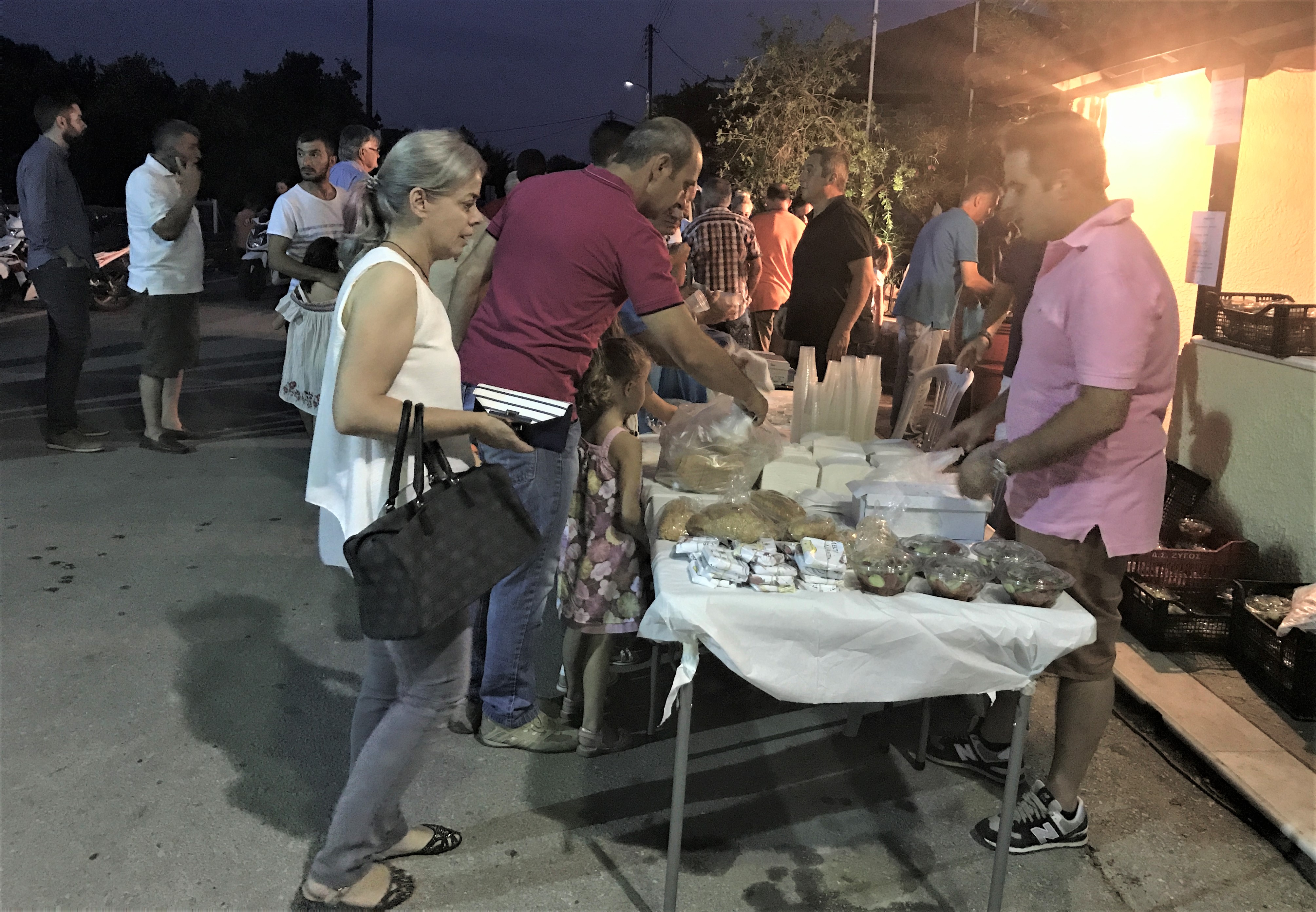
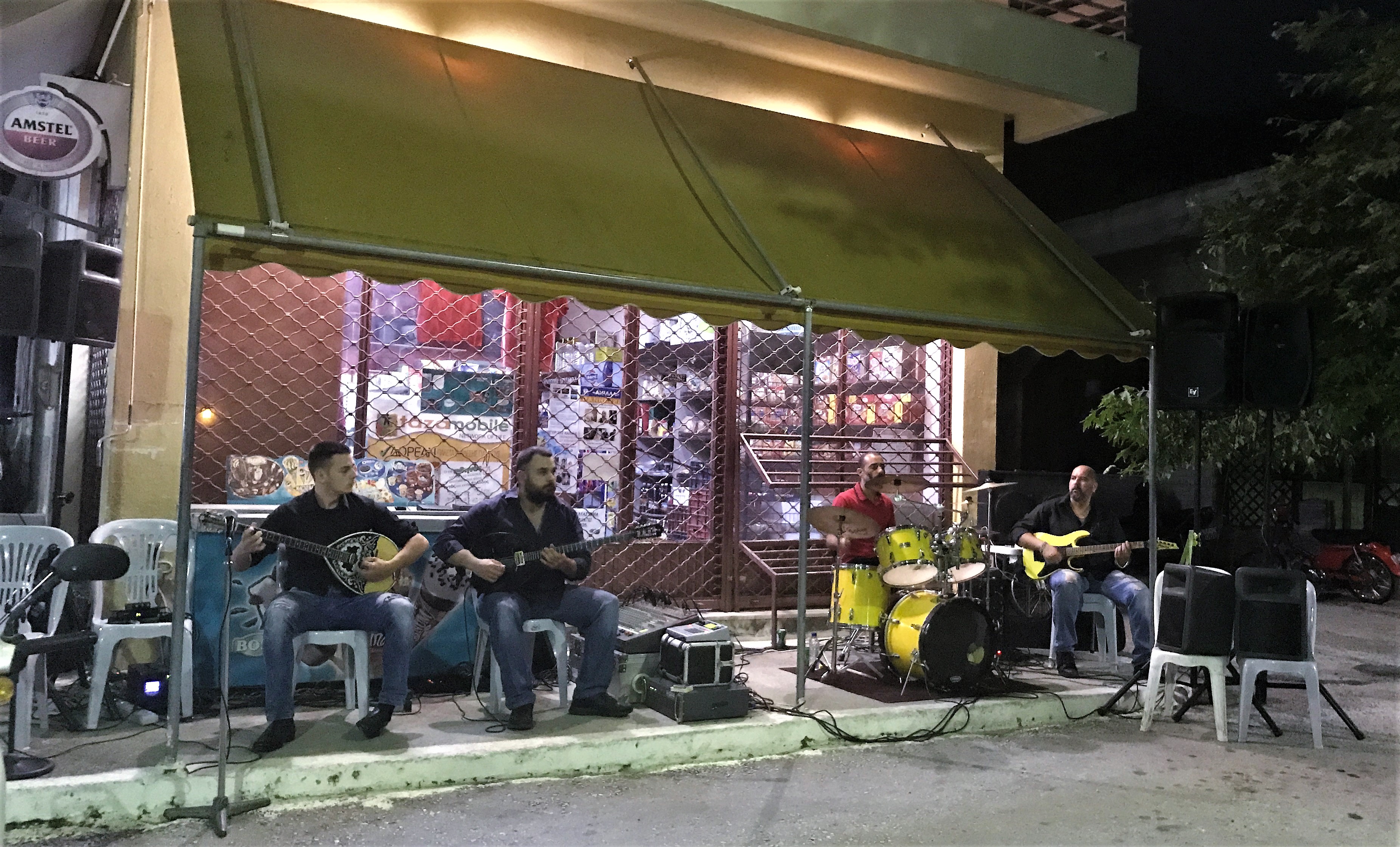
Today, the population of Theologos is about 200 people. Soon, our Zacharakis cousins will gather for a reunion and to enjoy being together. Many are waiting to see the updated family tree which I have compiled using civil and church records. As the plateia (town square) fills, I know our ancestors will rejoice when they see us, their descendants, uniting in remembrance of them.
1Dictionary of Standard Modern Greek

Greece 2019 – Putting Together the Zacharakis Family Tree

Stathoula Zaharaki Eftaxias

This is my maternal great-grandmother, Stathoula Zacharakis Eftaxias. Her photo sits on my desk and every day, she inspires me to keep going with my research.

Stathoula was born in the village of Theologos, Laconia which is 10 kilometers from Sparta and 6 kilometers up a mountain. Her parents were Dimitrios Zacharakis of Theologos, and Giannoula Zarafonitis of Amykles.

For the past two summers, we have had Zacharakis cousins’ reunions in the platea of Theologos. Last year, they asked me to bring their family tree. This year, I did.

Pavlos, John and Joanna discuss their family tree

Preparing this information sent me hunting for the Zacharakis name in:  Male Registers (Mitroon Arrenon), Town Registers (Dimotologion), Election Lists of 1872, and school, church and marriage records at the village, town hall and metropolis levels. I think I have all the bases covered for vital records from Theologos. What I am missing, though, is a history book of the village. Librarians at the Central Library of Sparta said that one does not exist but I will keep looking.

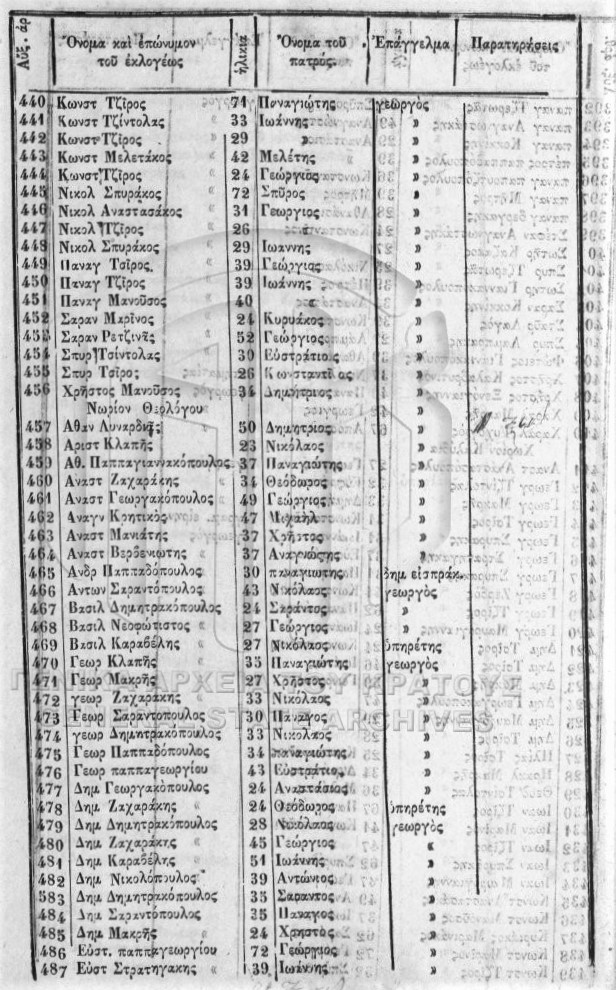
I maintain all my data in a RootsMagic genealogy database and Excel spreadsheets, and I enter every name that I find, whether or not I can connect him/her to a specific line. For example, the 1872 Election Lists give a man’s name, birth year, father’s name and occupation. But if his father is Theodoros and there are several Theodoros’ in the village, I sometimes can’t determine which one he belongs to.

1872 Election List for  Theologos. Zaharakis family:  line 460: Anastasios, age 34, son of Theodoros; line 472: Georgios, age 33, son of Nikolaos; line 480: Dimitrios, age 45, son of Georgios.

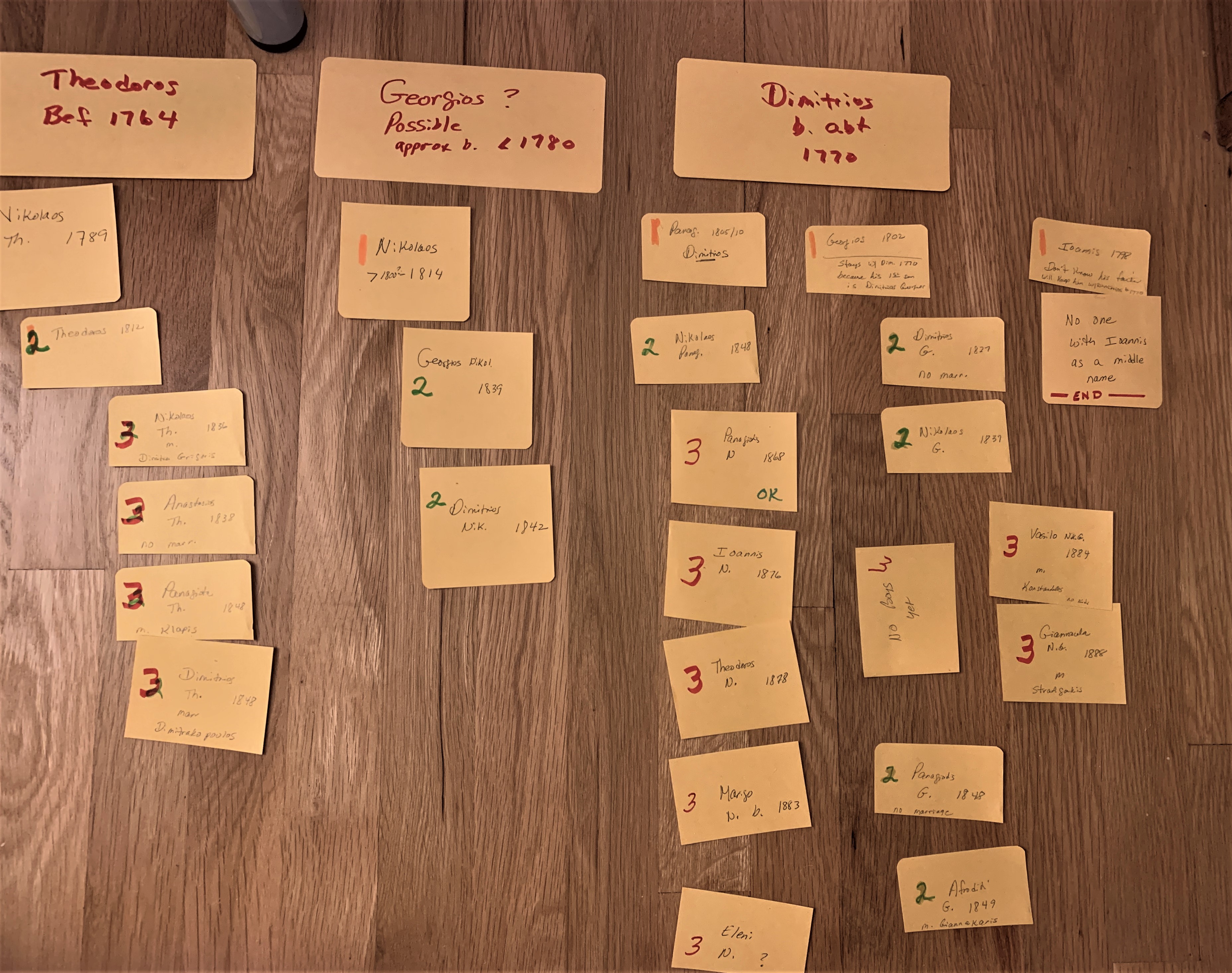
I especially ran into problems with the earliest generations. In this Election List, were Theodoros, Nikolaos and Dimitrios brothers or cousins? I spent hours staring at computer screens, flipping between spreadsheets and multiple family group sheets to determine what made sense. When I became utterly confused, I tried a different tactic:  paper.

Sorting out the Zaharakis generations–on paper!

I began by writing on paper the men’s first names, fathers’ initials and birth years. Then using birth years, I sorted them into generations moving from youngest to oldest. The tactile experience of holding a pen, writing a name, and moving pieces of paper around until the families made sense helped everything “click” in my brain. After just a few minutes, the descendants were in place.

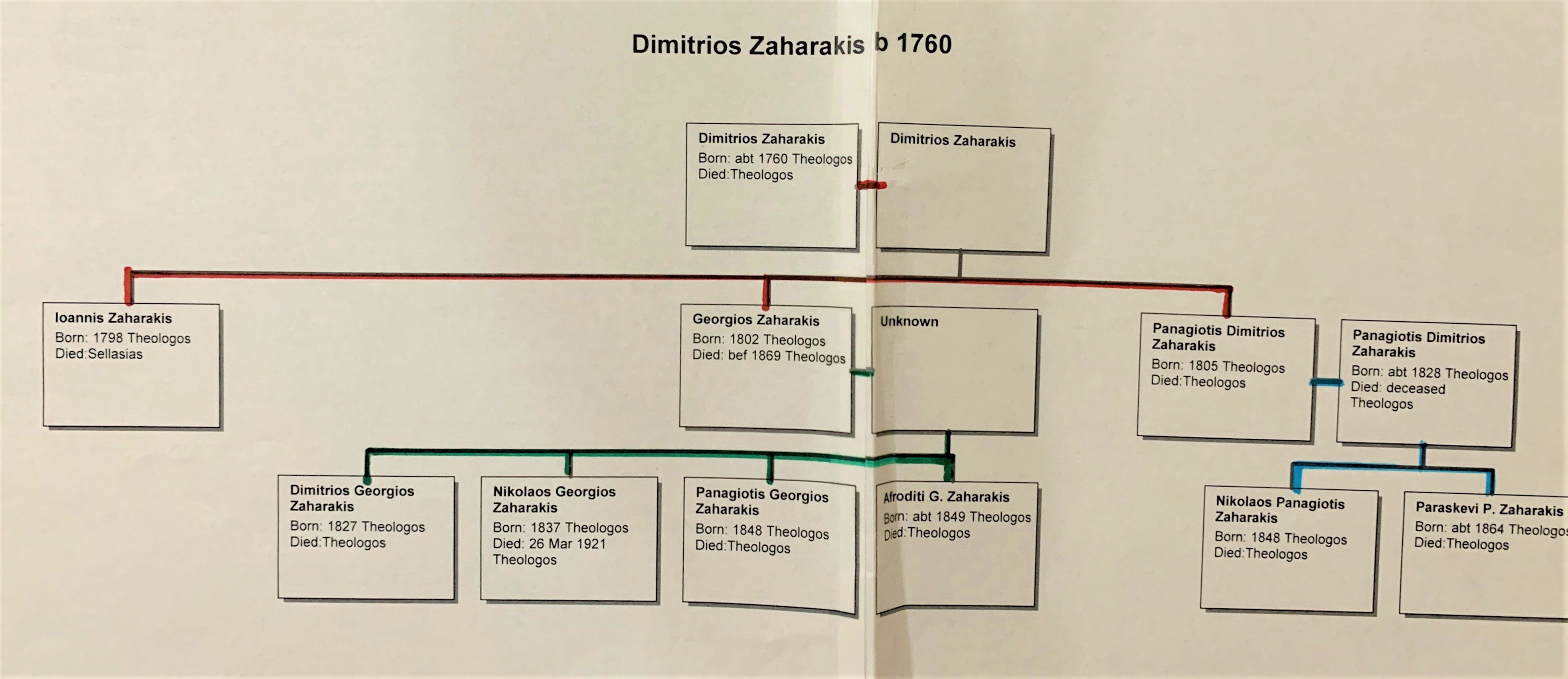
Example of one chart using Dimitrios born c. 1760

Using RootsMagic and lots of tape, I printed and put together the following trees:

  • Dimitrios, born abt. 1760
  • Theodoros, born abt. 1764
  • Ioannis, born abt. 1798 (no known descendants, but he received an Aristeia award for fighting in the 1821 Revolution; blogpost here)
  • Georgios, born abt. 1802
  • Panagiotis, born abt. 1805
  • Nikolaos, born abt. 1814
  • Konstandinos, born abt. 1842
  • Dimitrios, born 1844 (my maternal great-great grandfather)
  • Dimitrios, born c.1848

Certainly the three youngest are sons of the oldest, but who belongs to who? We won’t know in this life; the paper trail has stopped.

As the cousins looked for their names on the trees, I asked them to correct and add information.

Pavlos and his son, Thanassis, examine their tree

It was interesting to see that everyone there, except three people including me, were descended from Panagiotis born 1805. That tree was on the longest table and had the most activity.

The largest tree was for the descendants of Panagiotis Zaharakis, born abt. 1805

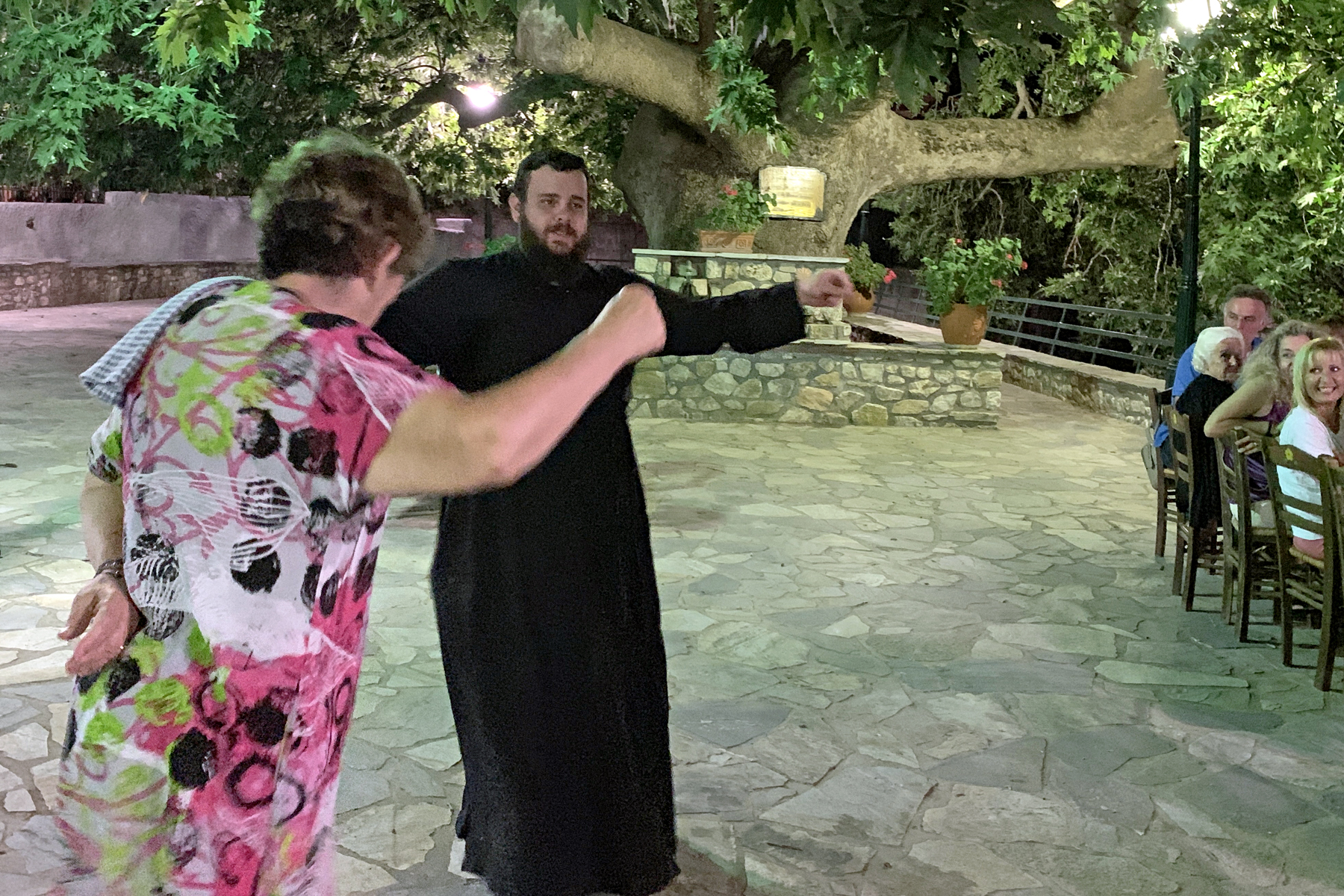
I am very grateful for the support of the village priest, Papa Panagiotis Kotsos, who was the host of the evening. He contacted family, shared information on the church Facebook page, and got people dancing. He is young and fun!

Papa Panagiotis Kotsos, host of the evening

Papa Panagiotis leads the Greek dancing

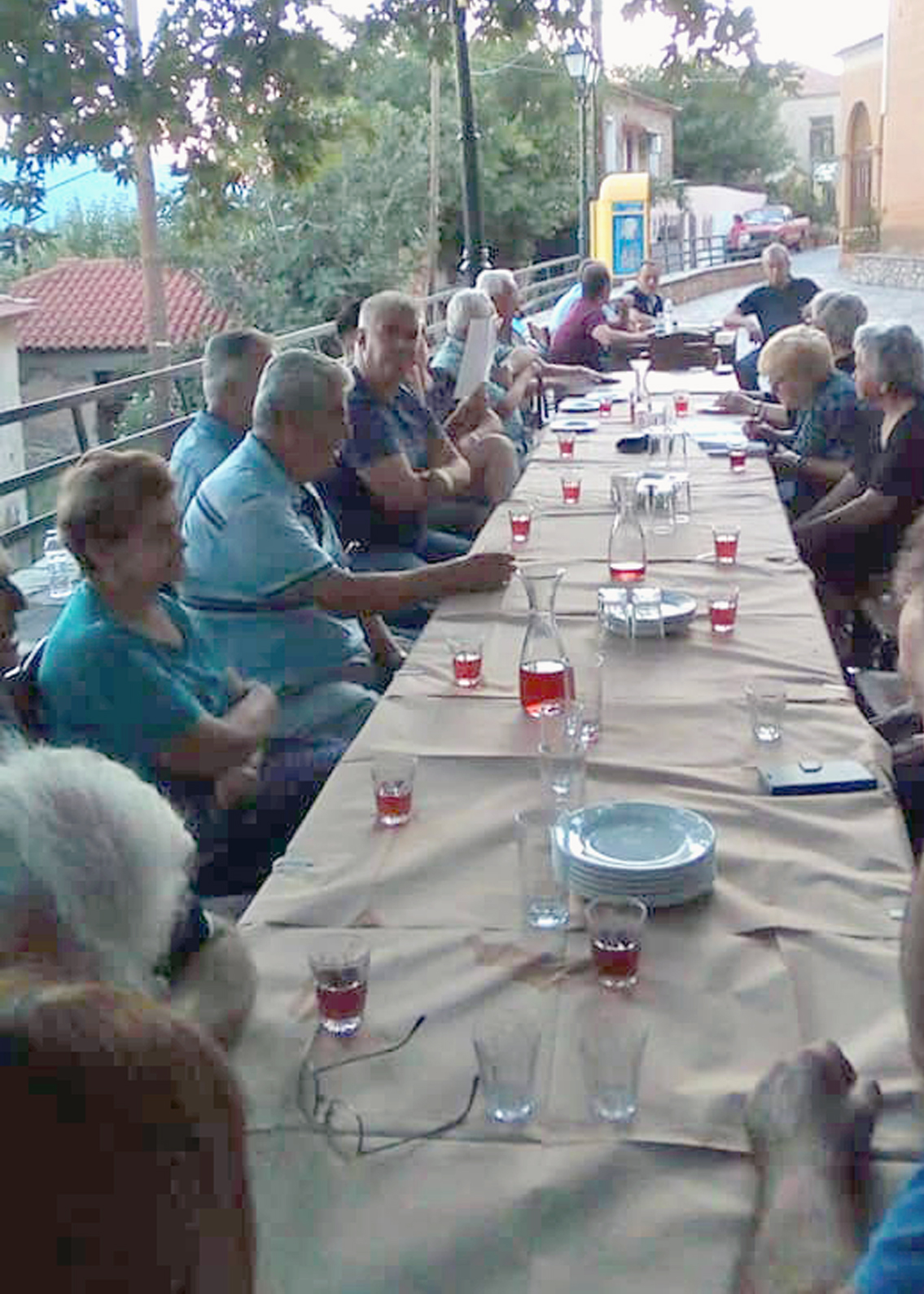
And of course there is food!

Waiting for dinner

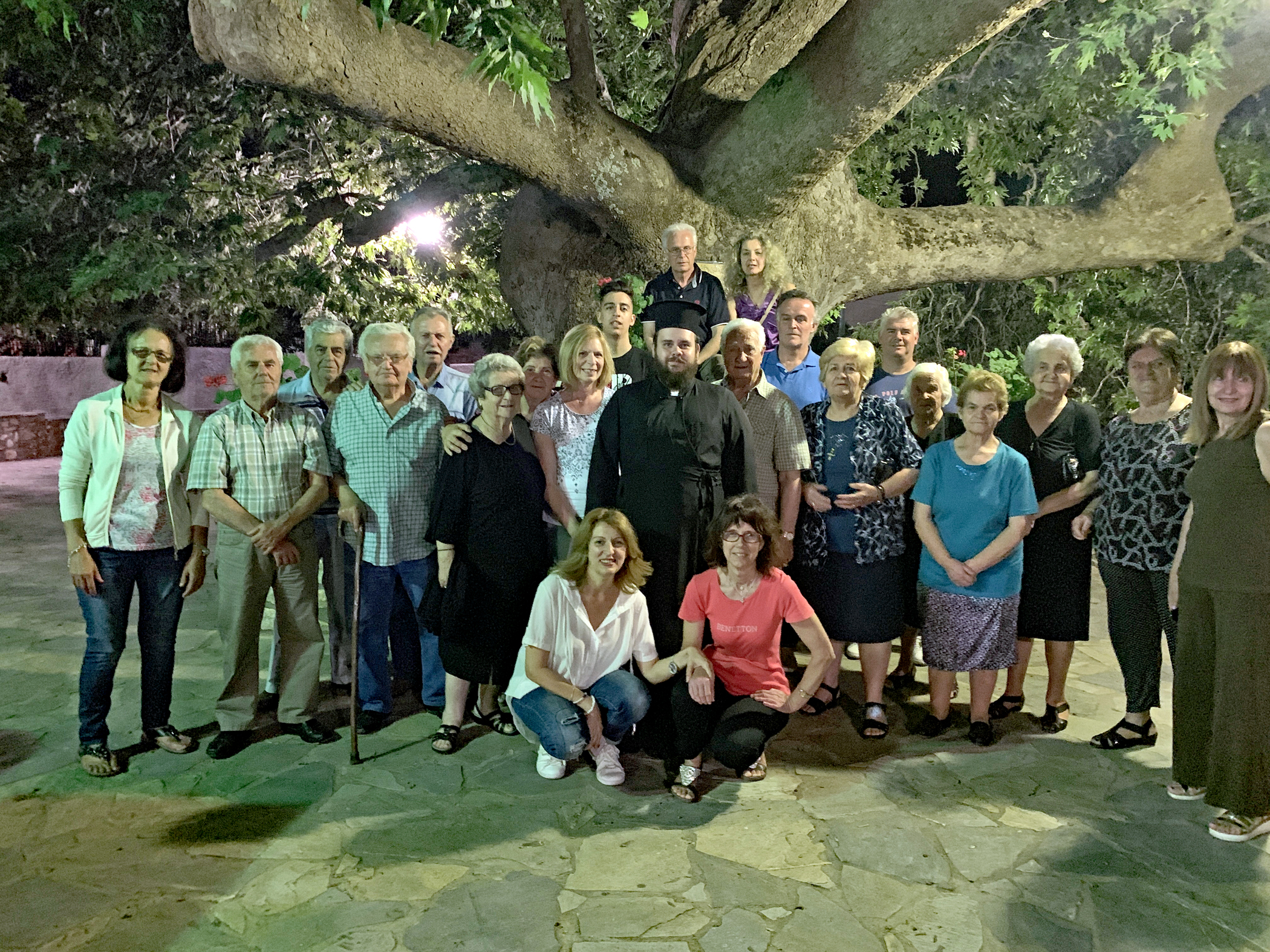
And a group photo 🙂

Zacharakis Reunion in Theologos, July 2019

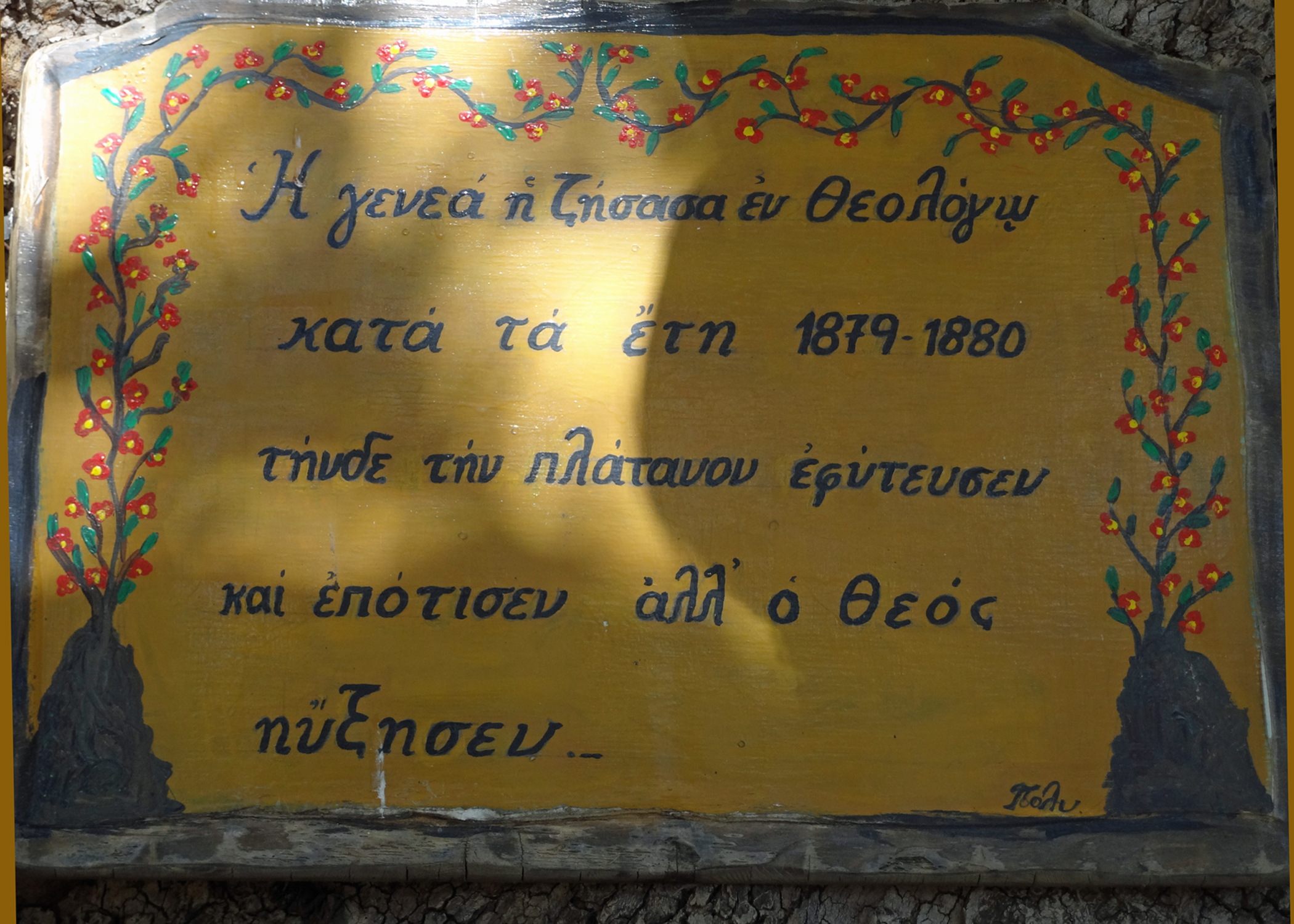
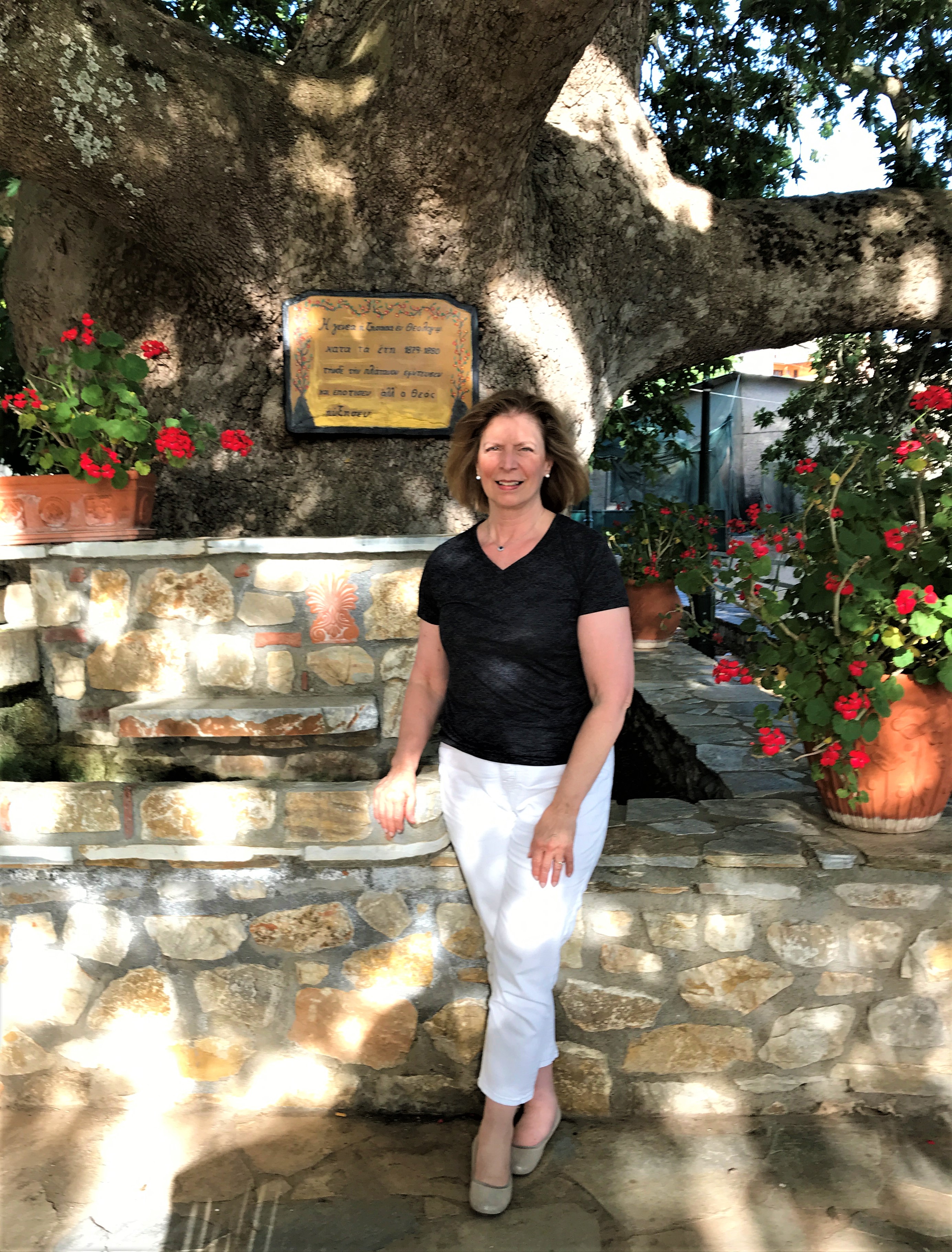
The large tree behind us has a plaque which reads:  “The generation that lived in Theologos during the years 1879-1880 have planted this sycamore tree and watered it but God made it grow.”

Plaque on the sycamore tree in the platea of Theologos

My great-grandmother, Stathoula, was born in 1870. She was a child when her parents, Dimitrios and Giannoula, helped plant the tree. Now we, the descendants of the earliest Zacharakis’, can gather under it and share the joy of family.

Πανηγύρι (Panegyri) – It’s Time for Village Festivals

Music, dancing, food and friends–the perfect combination for a festive summer evening. This is panegyri  time and posters announcing village festivals are found everywhere.

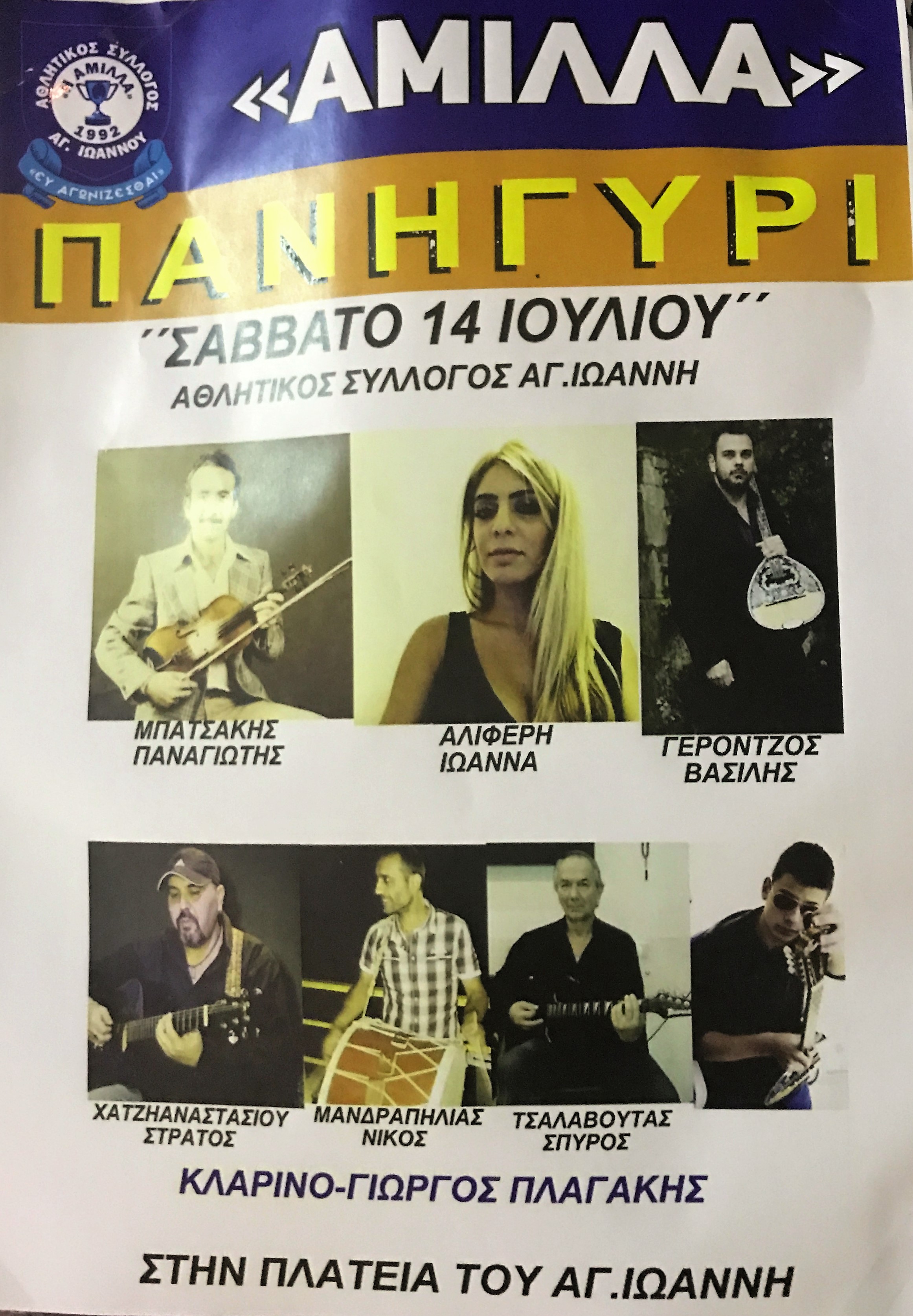
Agios Ioannis, July 14, 2018

Each village has a church, and each church is named after a saint. Thus, each village holds its panegyri at the time of the church saint’s nameday or, if the nameday falls during a colder month, the festival is held in spring or summer. I attended panegyris in Amykles, Theologos and Agios Ioannis–three ancestral villages.

The photos and videos below depict the pure enjoyment of these festivities.

AGIOS IOANNIS (Sparta)

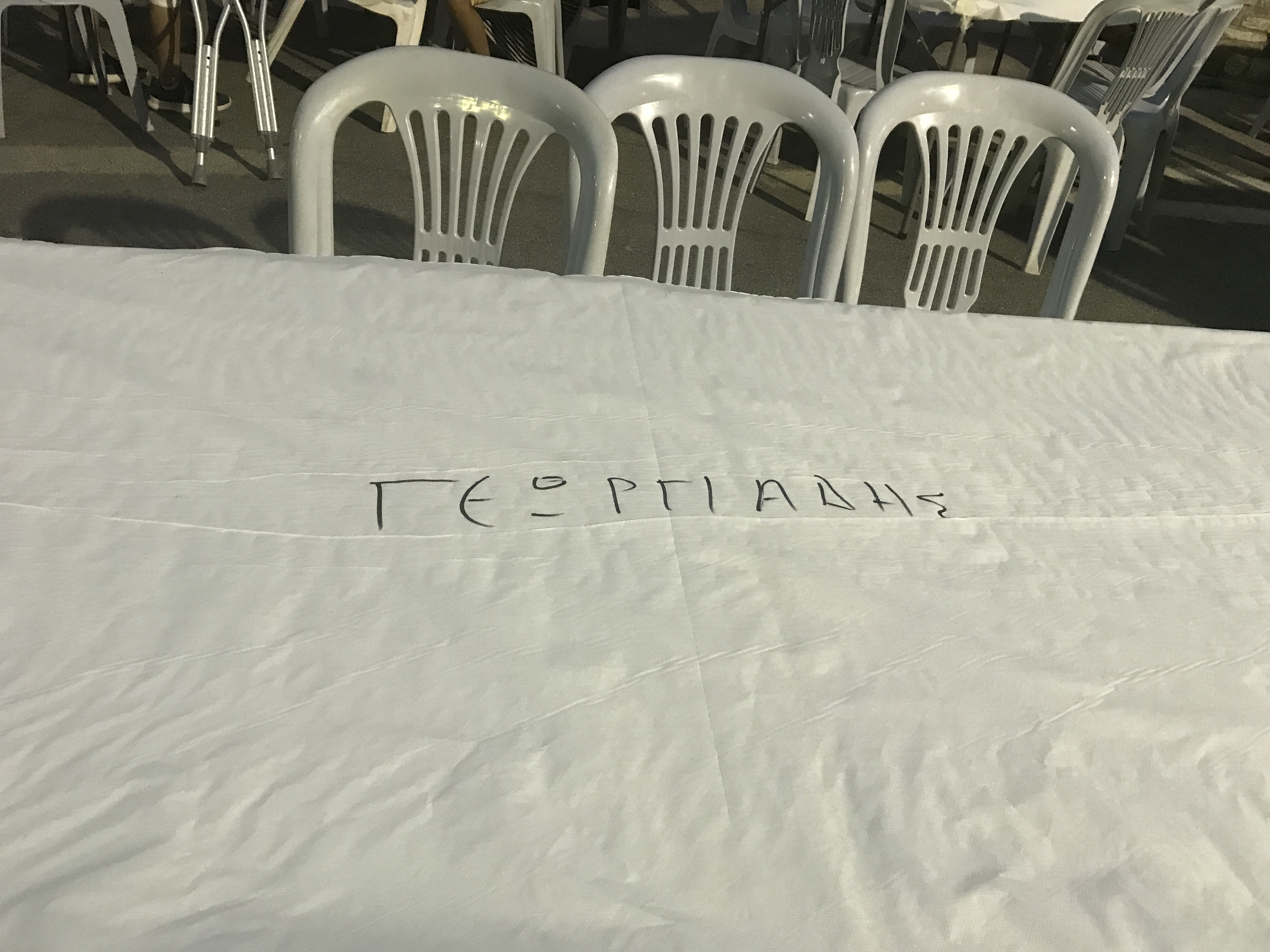
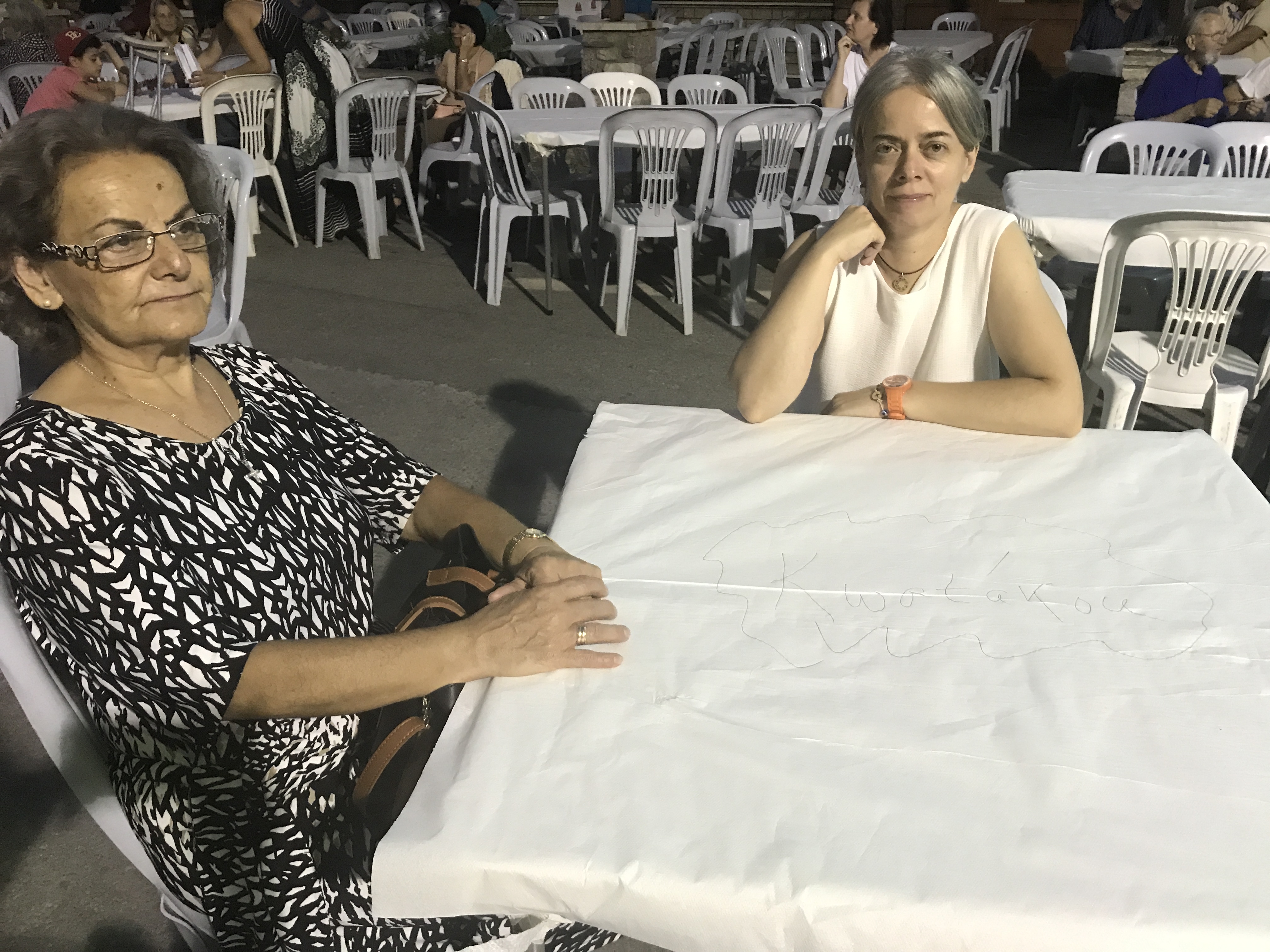
This is my “home village” — birthplace of three of my grandparents: Andreas  Kostakos, Hariklia Aridas, and Ilias Papagiannakos. I attended its panegyri with my cousins, Eleni and Panorea Kostakos. Eleni was anxious to arrive early as she was concerned that we would not get a table. When we walked into the platea (town square) at 8:00, I thought her worries were not valid as the area was empty. That is, until I saw that people had “reserved” their places by scrawling their names across the paper tablecloths!

The Georgiades family has marked its spot!

Eleni (left) and Panorea Kostakos are holding our table; I wrote our surname on the cloth

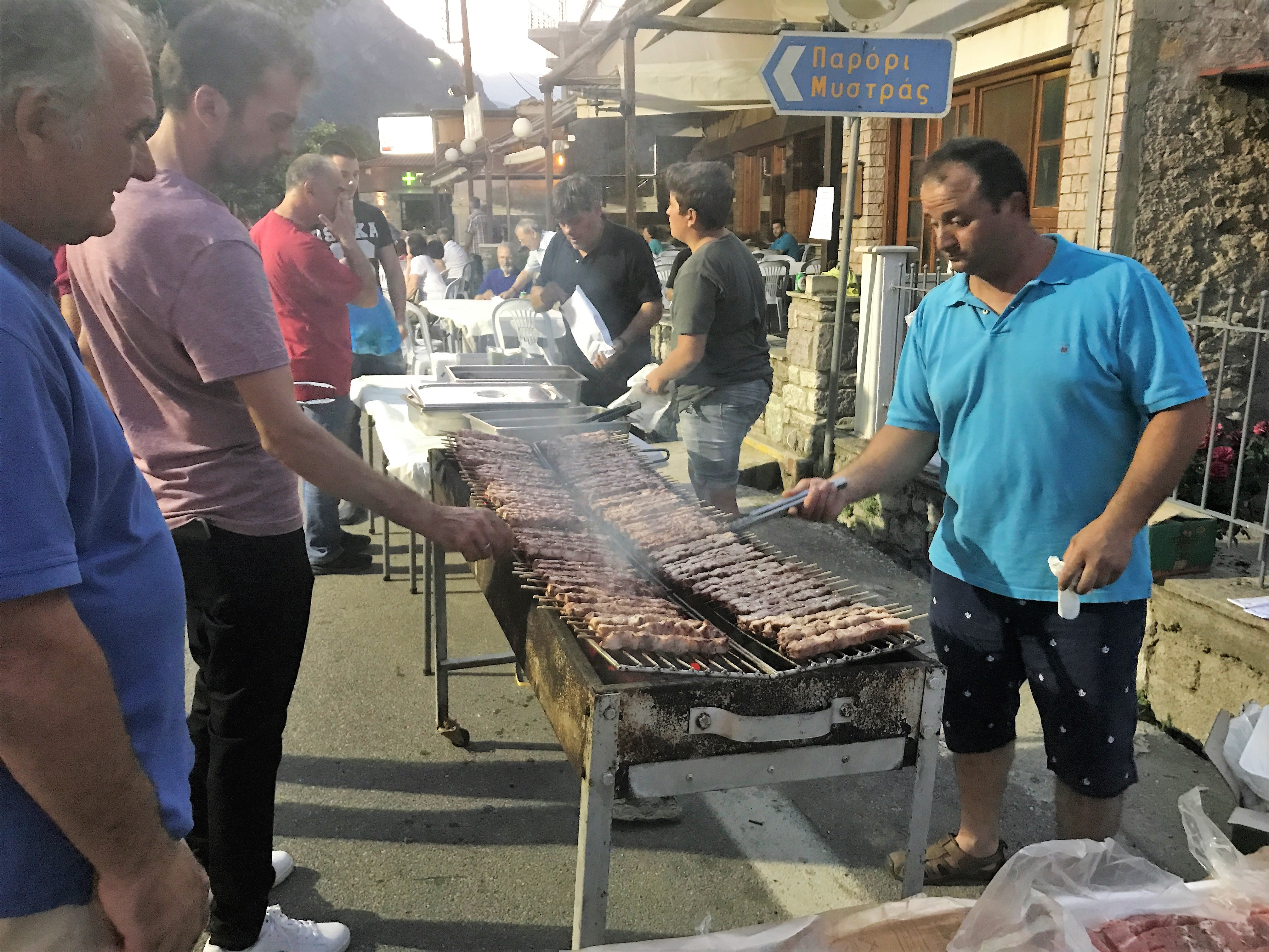
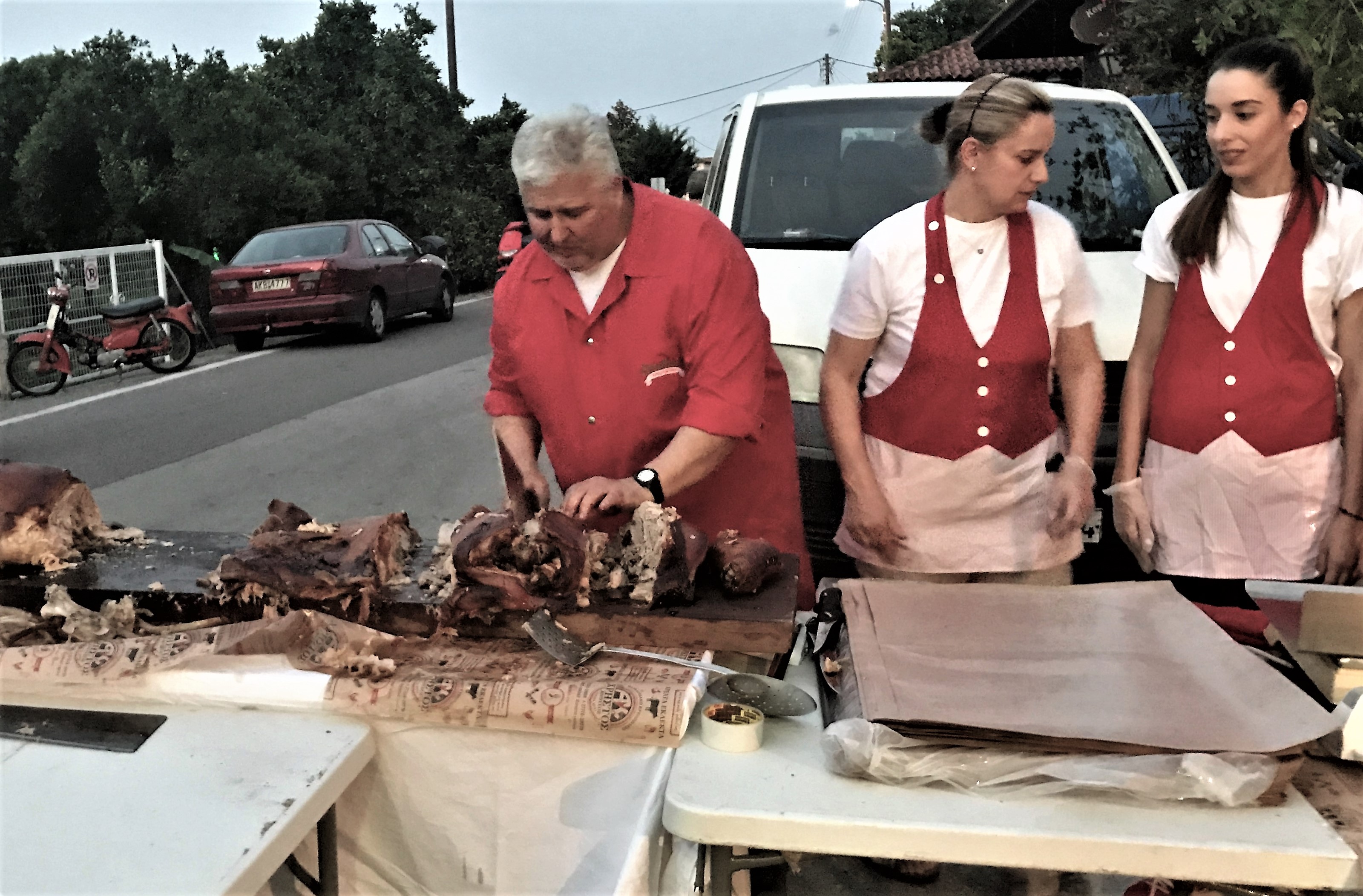
Food vendors worked throughout the evening. The tantalizing smell of souvlaki, roasted corn, smoked ham and Greek desserts enticed long lines of hungry partygoers.

Souvlaki, the staple of Spartan diets

Roasted and smoked ham

Panorea in the dessert line

Live music, singers and dancing brought villagers together to celebrate their heritage and their village.

Traditional Greek music enhances the festivities

And of course, there is dancing!

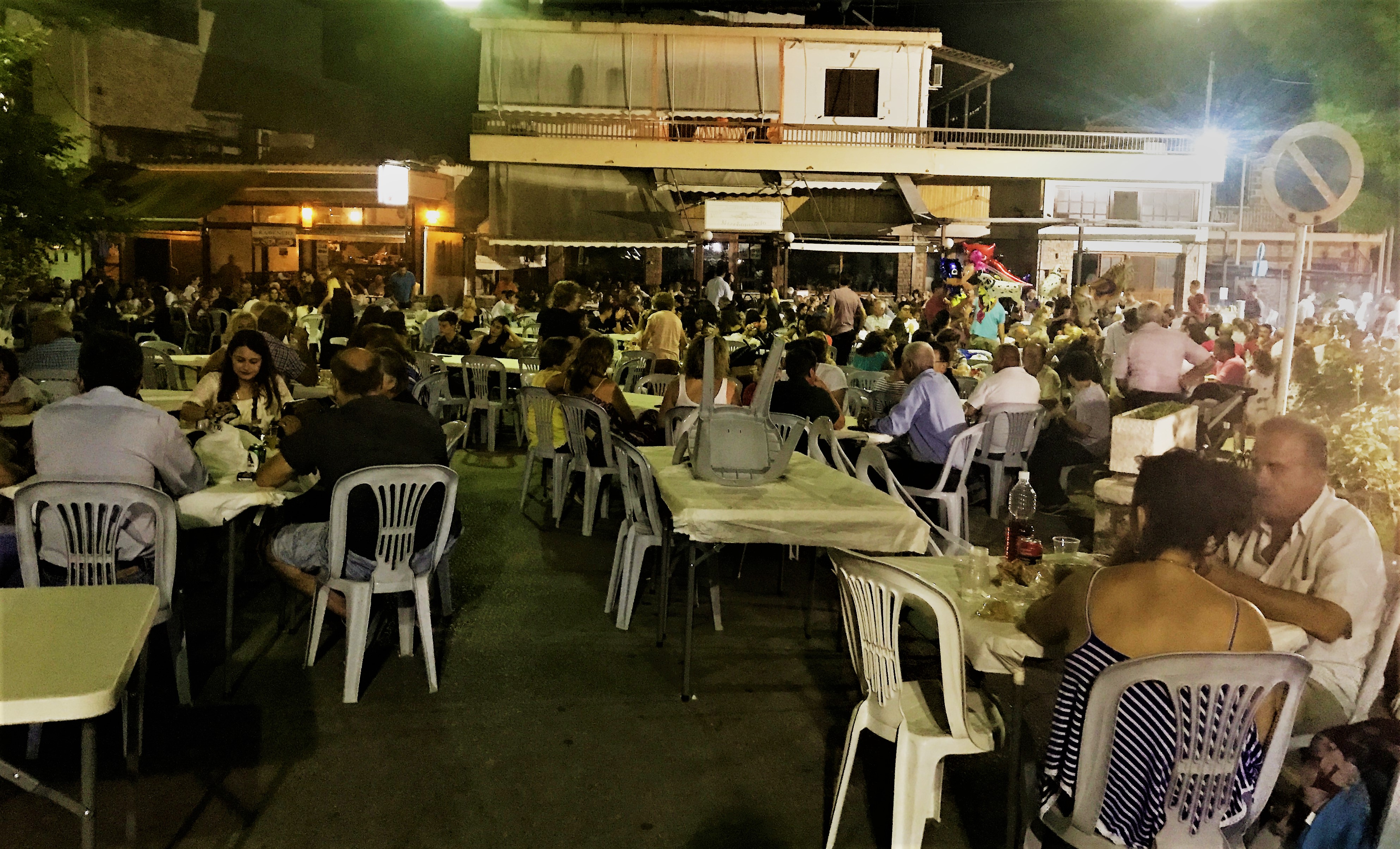
The platea quickly filled to capacity as families and friends table-hopped. The decibel level of voice and music increased significantly as the night progressed.

The platea is filled

THEOLOGOS

This is the village of my great-grandmother, Stathoula Zaharakis, daughter of Dimitrios Zaharakis of Theologos and Giannoula Zarafonitis of Amykles. Situated 6 km straight up a mountain, it is quaint and beautiful.

Theologos nestled in the mountains

Me, under the sprawling tree of the Theologos platea.

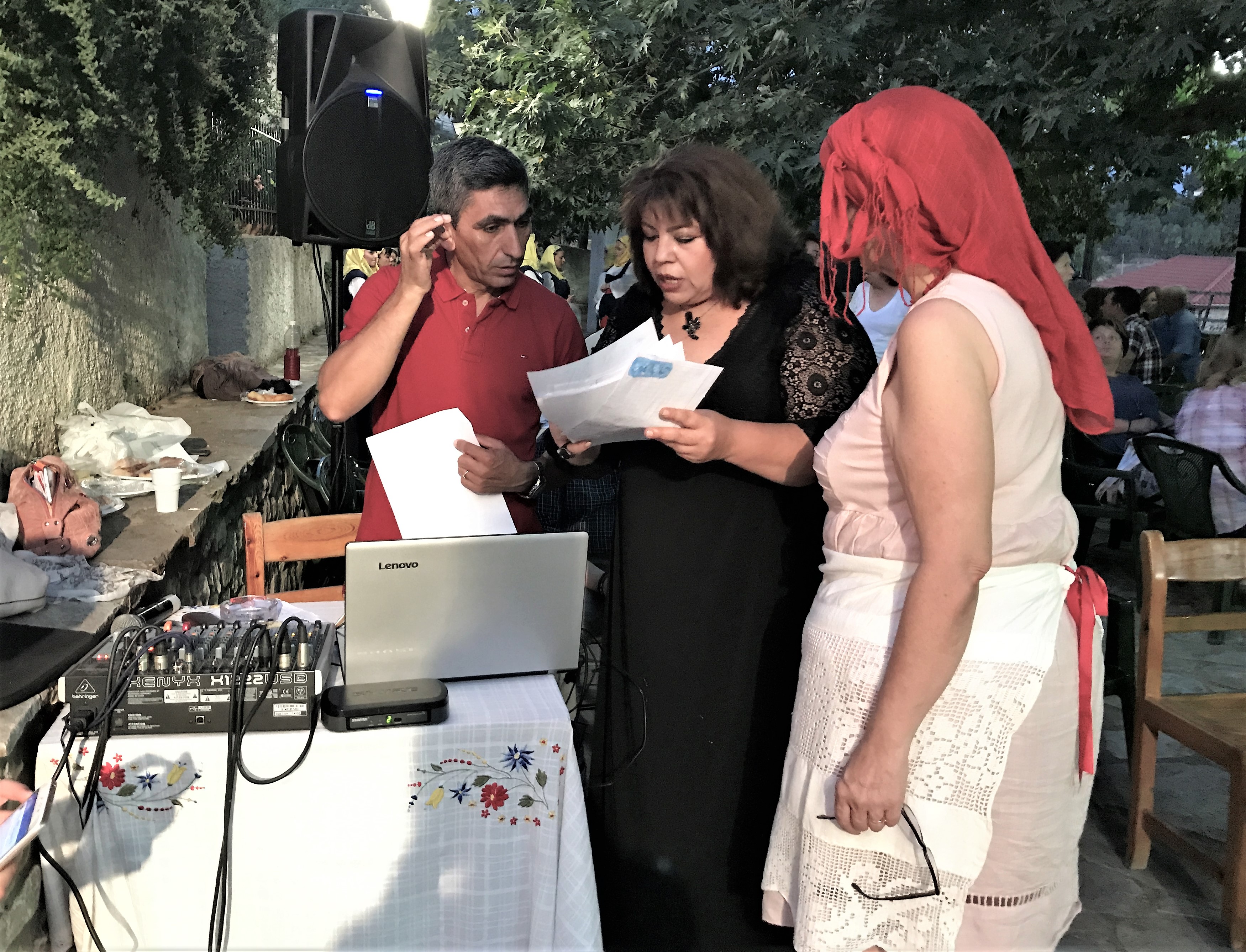
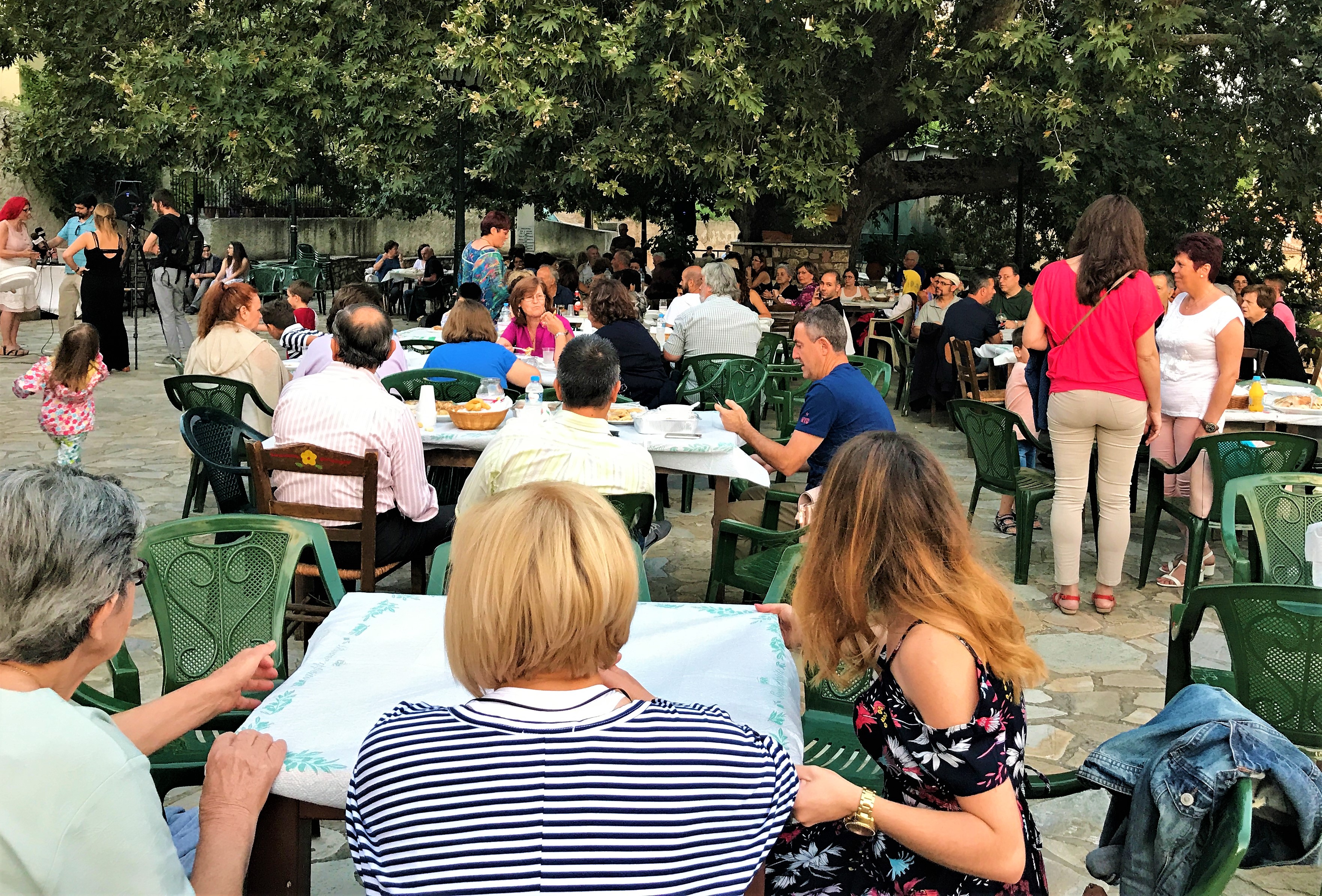
Last year, my cousin, Georgia Zaharakis, organized a Women’s Syllogos of Theologos to preserve and maintain the culture and heritage of the village and I joined their sisterhood. On July 8, the syllogos held a panegyri.  I offered to help and was given the job of working with the tech crew. Being part of this was great fun, even though I scrambled to keep up with instructions given in rapid-fire Greek.

The technical crew, going over last minute details: l-r: Vassilis, Dimitra, Georgia.

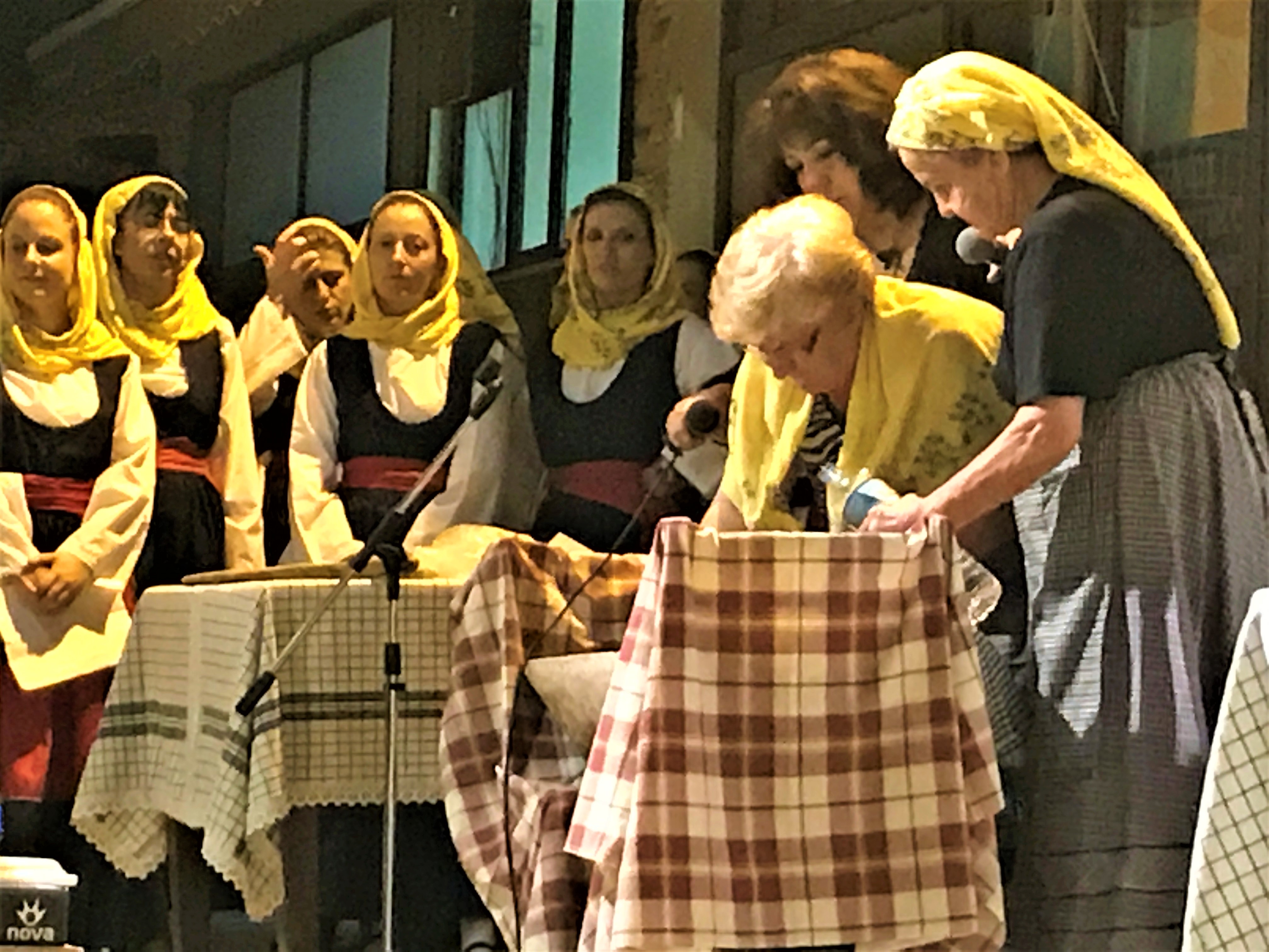
The theme was centered on the grain harvest and making of bread. Video, literary readings and bread-making demonstrations brought the “feast of wheat” to life.

Village women demonstrate bread making

Over 300 people attended; the platea filled throughout the night

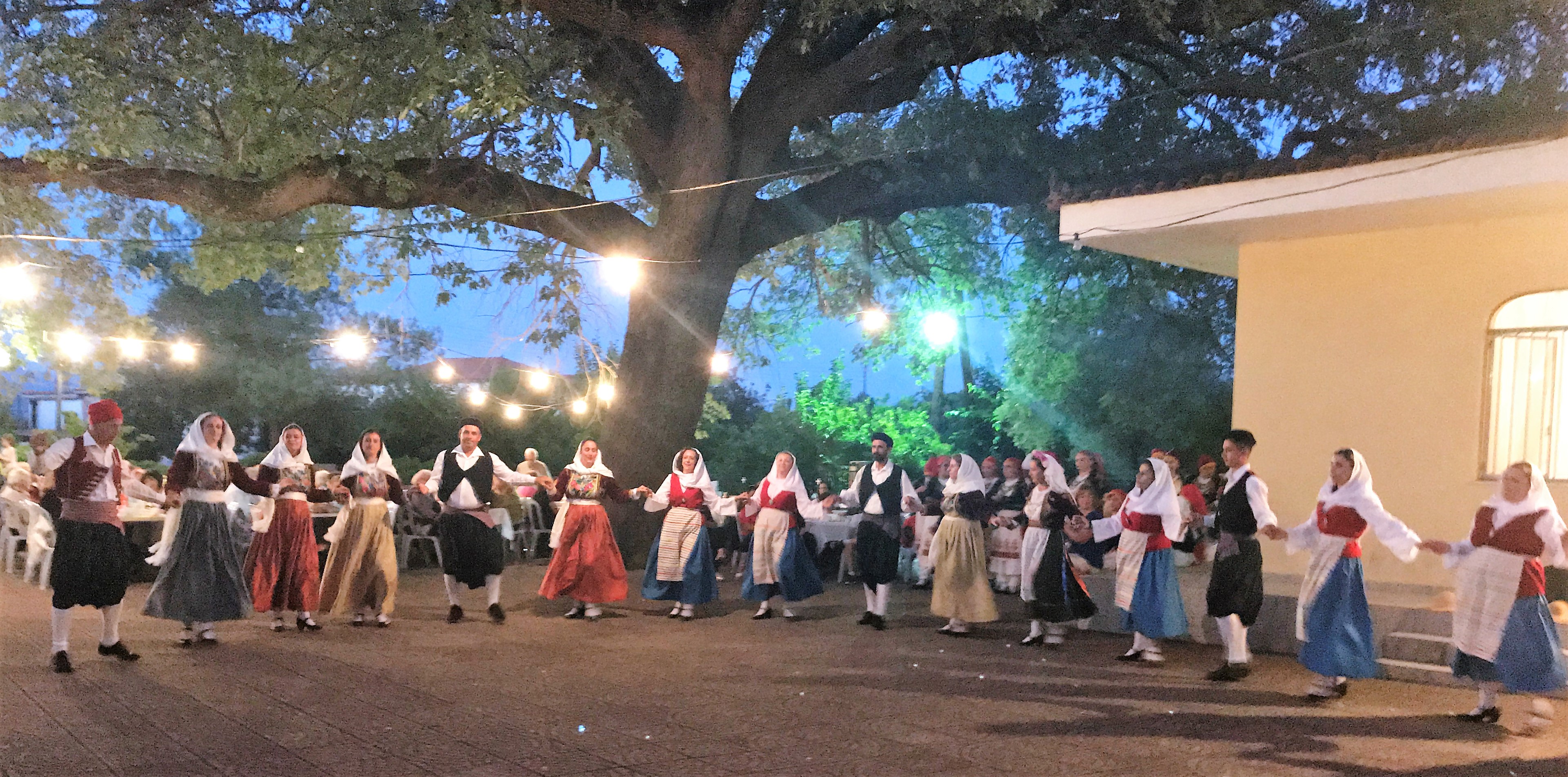
Women in traditional costumes, led by Vassilis Andronis, performed dances from all over the country.

And of course, the entire village also joined in!

The news media picked up this story; video and photos can be found here.

AMYKLES

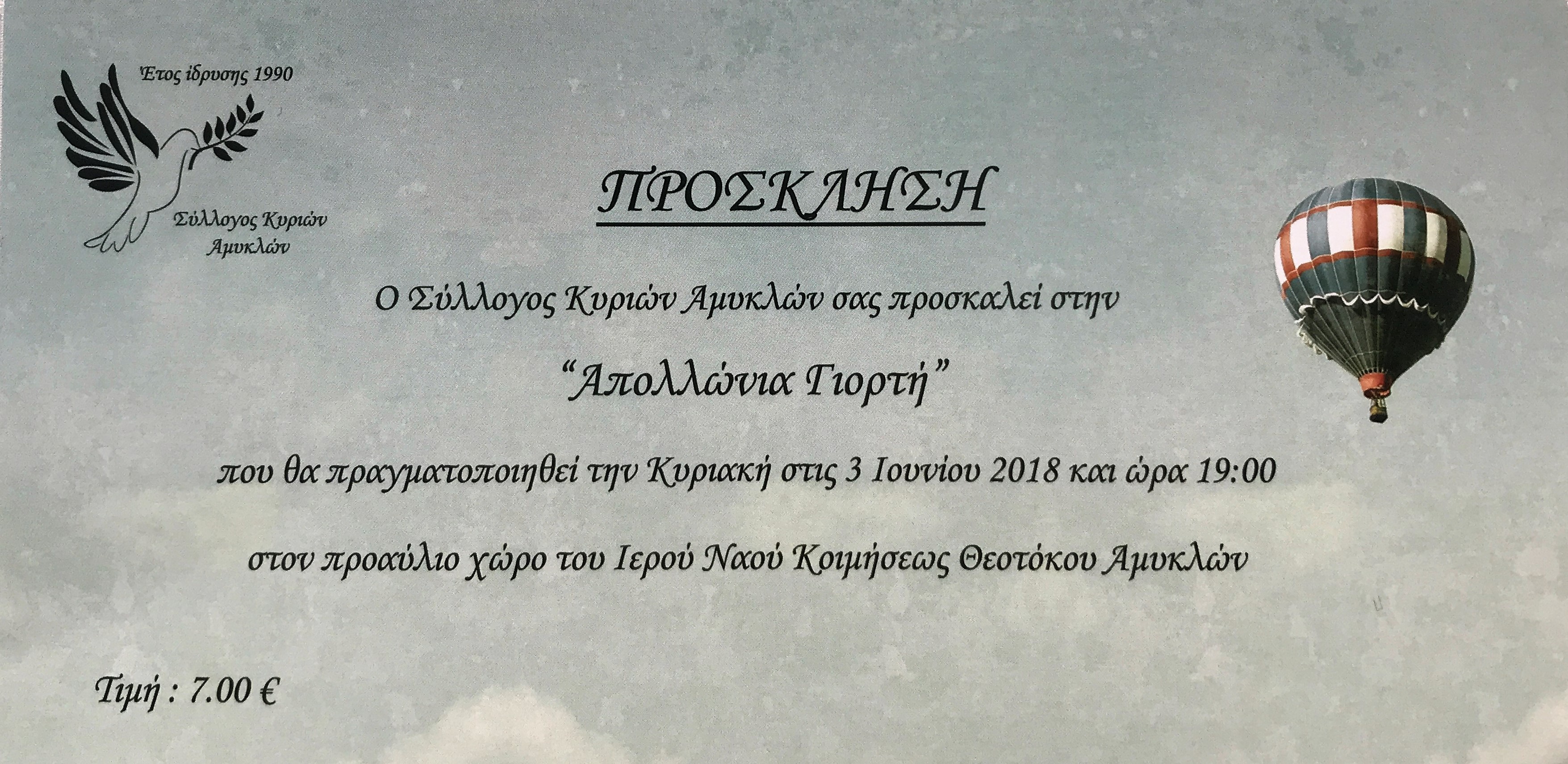
The ancient and historic village of Amykles was the home of my great-grandmother, Giannoula Zarafonitis. I visited Amykles early in my trip and wrote a post here. The syllogos of Amykles held a festival on June 3 to raise money to help the poor.

Invitation to Amykles festival, June 3, 2018

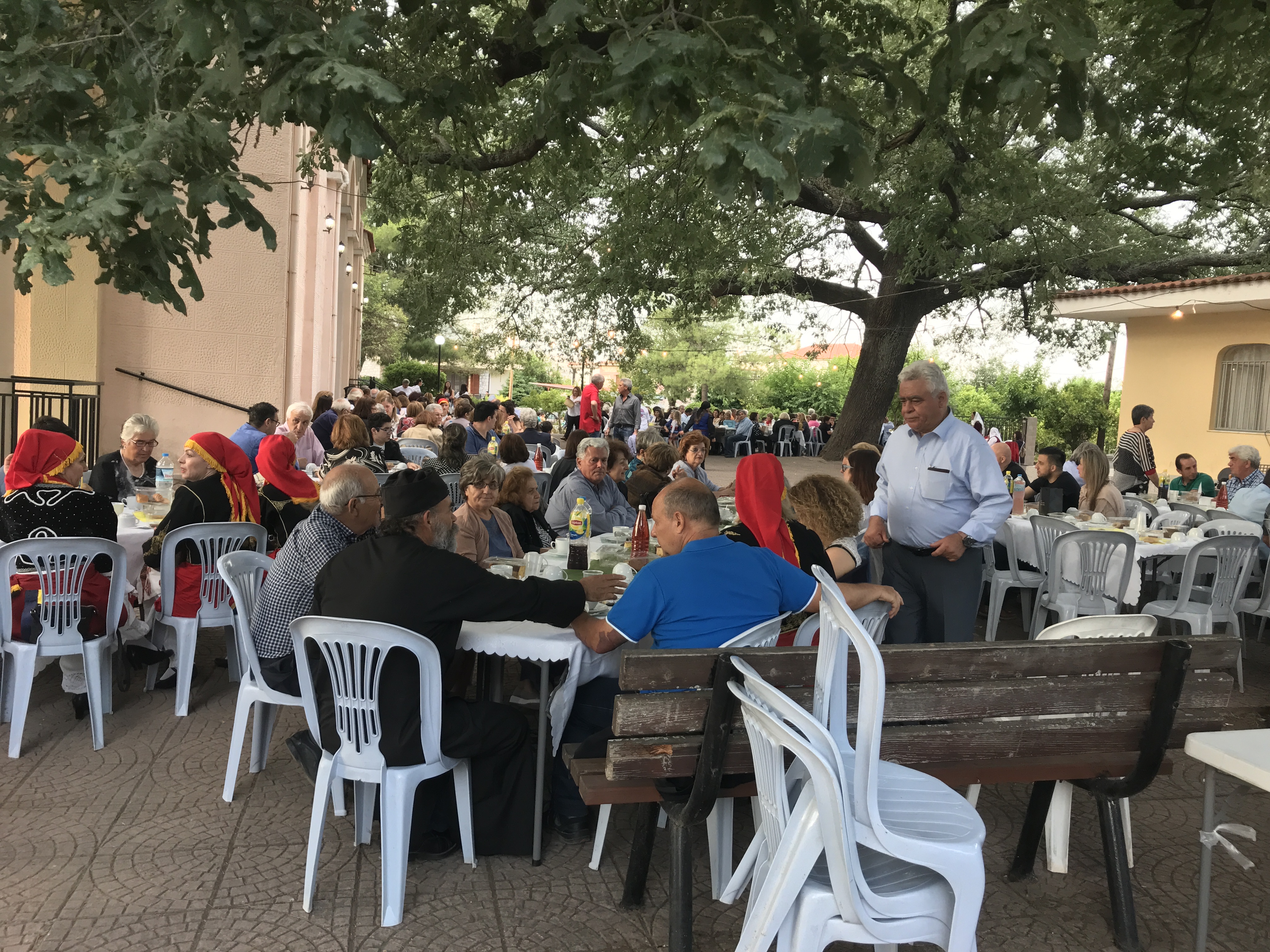
Under the shadow of the church, people congregated. A choir sang, and costumed men and women danced.

Amykles Panegyri

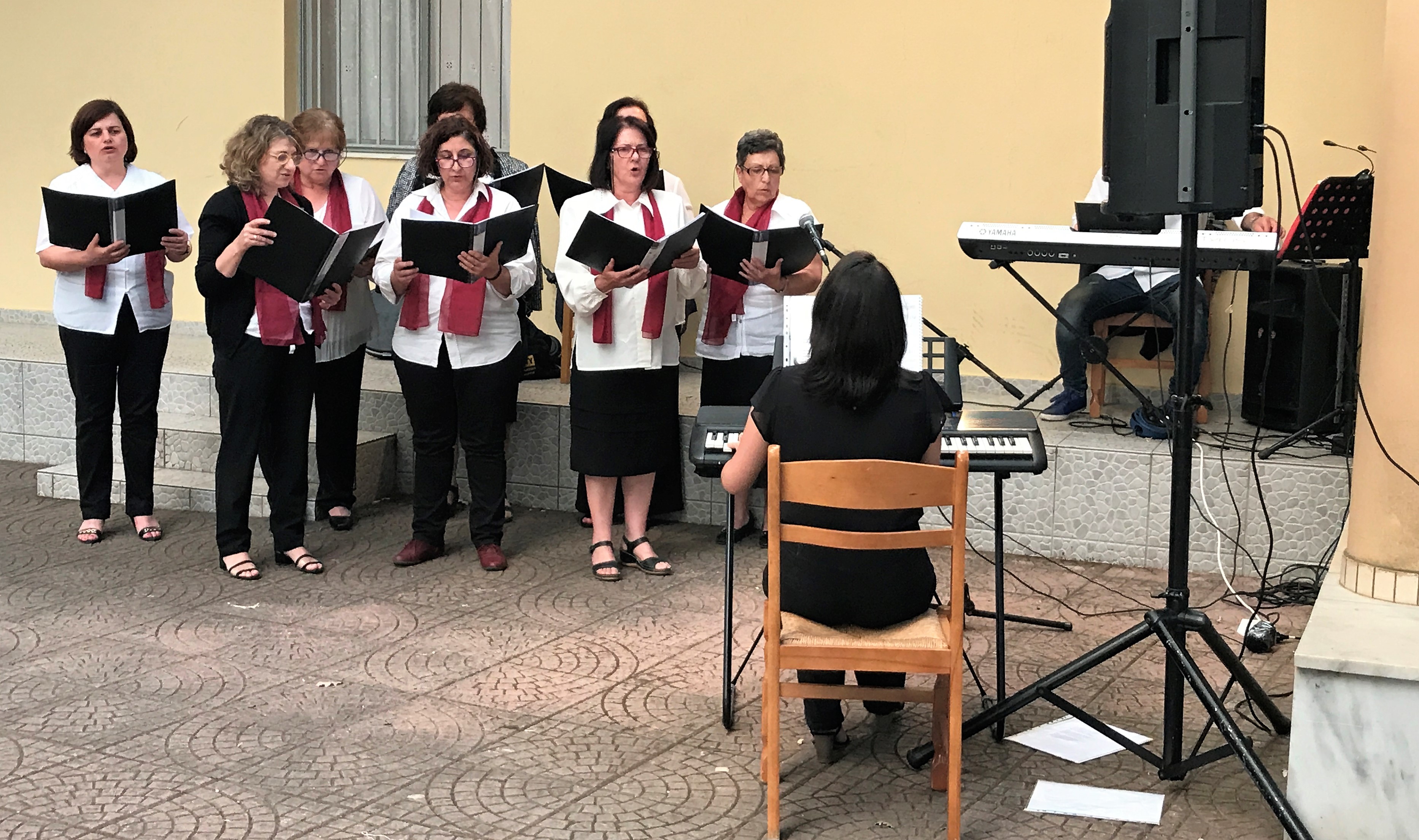
Amykles choir

Men and women engage in traditional dance

These panegyris are an important part of the social fabric of Greece. Villagers are extremely proud of their Laconian heritage and the traditions of their village. As I joined these festivals, I remembered that I was participating in the same rituals as my grandparents and great-grandparents. Doing so is one of the joys of “going home.”