A Walk Through History: The “Greek Circle” at Woodlawn Cemetery

On a clear and lovely day this June, Nicholas Prevas took me to the sacred and historic resting place of the earliest Greek immigrants in Baltimore, Maryland. We were welcomed by flocks of geese as we drove the gently winding road past a rippling lake to the “Greek Circle,” situated at the pinnacle of Woodlawn Cemetery. So named because the 1,000 square foot parcel of land is in the shape of a circle, this hallowed ground holds the stories of families who left their rural villages and thrived in the teeming city of Baltimore in the early 1900s.
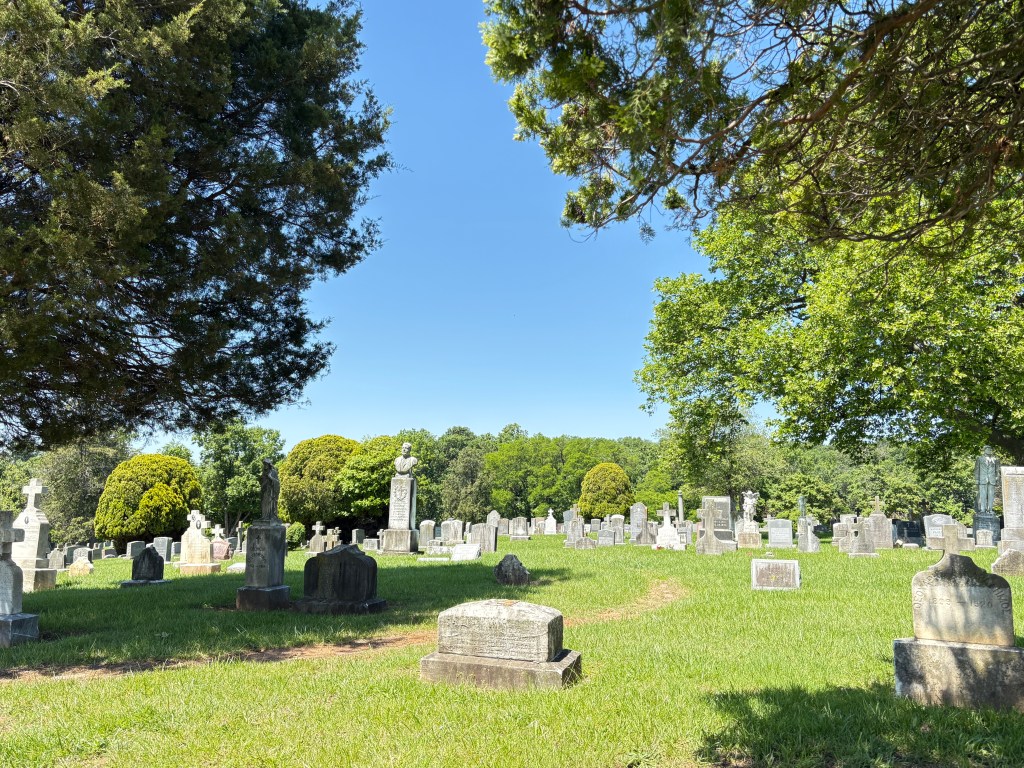
The Greek Circle, June 2, 2025. Note the bricks nestled in the ground, marking the circle.

Nick is the Parish Historian of the Greek Orthodox Cathedral of the Annunciation which owns the Greek Circle. The parishioners of the Church, which was established in 1906, secured this plot in January 1912. The Greek Circle was the first of four parcels (collectively known as the Greek Section) purchased by the Church in the North Avon area of Woodlawn.

page v, Gone But Not Forgotten, A Definitive History of the Greek Section of Woodlawn Cemetery
by Nicholas M. Prevas, Parish Historian, Greek Orthodox Cathedral of the Annunciation, 2001

The Greek Circle is arranged in rows of five. This fascinating diagram of burials is from the Archives of the Woodlawn Cemetery Company.
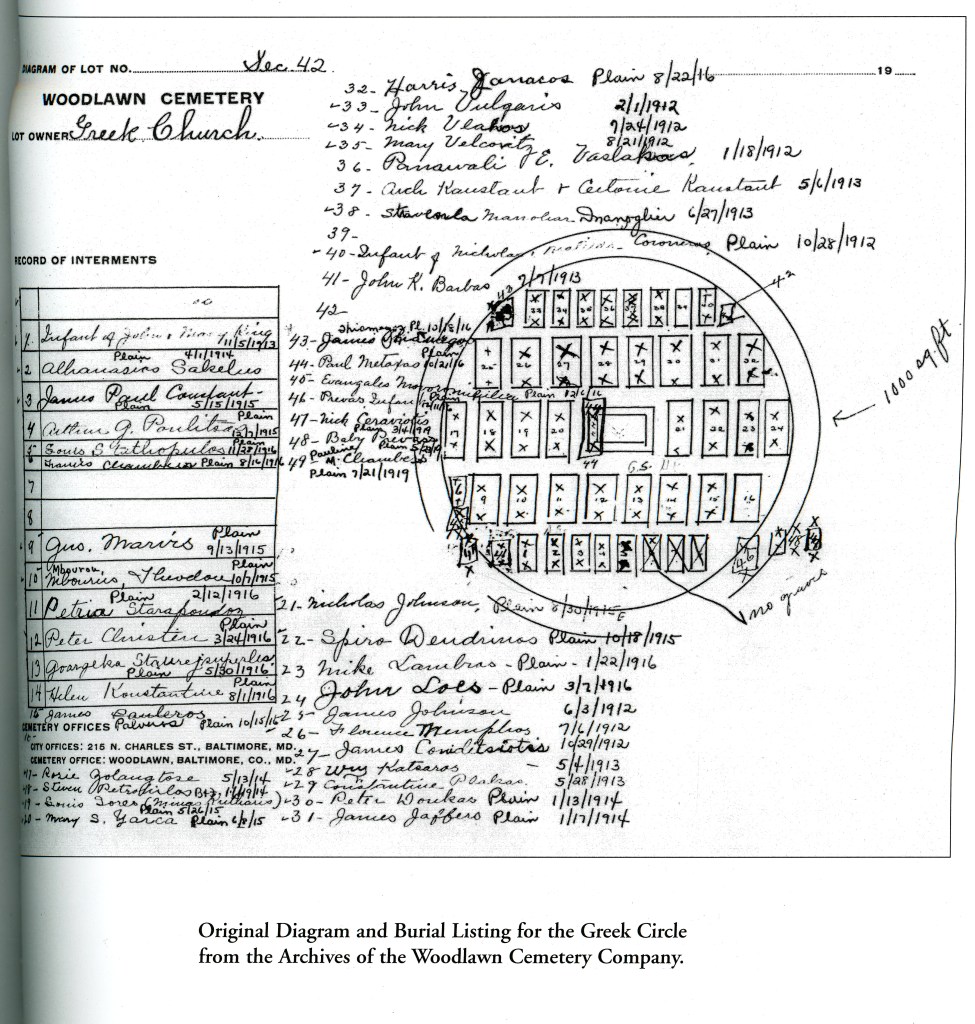
page 119, Gone But Not Forgotten, A Definitive History of the Greek Section of Woodlawn Cemetery
by Nicholas M. Prevas, Parish Historian, Greek Orthodox Cathedral of the Annunciation, 2001

As we stood before each headstone, Nick told me the stories of the families. All were immigrants, many from Lakonian villages. They were pillars of the community, forming the backbone of the Cathedral of the Annunciation and making significant contributions to their Baltimore neighborhoods. Despite their successes and prosperities in their new homeland, they were not immune to the vicissitudes and tragedies of mortality: accidents, drownings, and infant deaths permeated their lives. The Greek Circle holds 45 interments; of those, 25 are children under the age of 18. I could sense the spirits of these people and almost feel sorrows of their families as I stood before each grave. It was a holy moment for me.

In honor of the lives and in memory of those at rest in the Greek Circle, their names, ages, and dates of interment are listed below.

Row 1:
Kerasiotis, Nicholas, age 3 days – March 4, 1919
Barbas, John K., age 9 months – July 7, 1913
Kousouris [King], Christopher J., stillborn – November 5, 1913
Sakelos, Athanasios, age 11 mos., 29 days – April 1, 1914
Constant, James B., age 9 months – May 15, 1915
Poulitsas, Athanasios G., age 8 months – December 7, 1915
Stathopoulos, Leonidas H., age 2-1/2 months – May 28, 1916
Prevas, Infant, stillborn – December 11, 1916
Prevas, Infant, age 2 days – May 23, 1919
Chambers, Pauline Mary, age 3 days – July 21, 1919

Row 2:
Chambers, Frances, age 12 days – August 16, 1916
Mavromihalis, Evangelos, age 1 year – December 6, 1916
Mavris, Constantine, age 46 – September 13, 1915
Mbourzos, Theodore, age 29 – October 7, 1915
Stavropoulos, Patra, age 30 – February 12, 1916
Christen, Peter, age 70 – March 24, 1916
Stavropoulos, Georgia, age 65 – May 30, 1916
Konstantopoulou, Eleni K., age 37 – August 1, 1916
Pavleros, Dimitrios, age 15 – October 15, 1916

Row 3:
Zogalsin, Rose, age 20 – May 13, 1914
Petrohilos, Stylianos, age 39 – November 19, 1914
Kritharis, Minas, age 21 – May 26, 1915
Yarca, Marie S., age 45 – June 8, 1915
Metaxas, Paul, age 55 – October 21, 1916
Johnson, Nicholas, age 52 – August 30, 1916
Dendrinos, Spiros, age 35 – October 18, 1915
Lambros, Michael, age 17 – January 22, 1916
Leos, John, age 23 – March 7, 1916

Row 4:
Mamais, Dimitrios, age 72 – June 3, 1912
Nifakos, Efrosene S., age 16 – July 8, 1912
Koniditsiotis, Dimitrios, age 60 – October 29, 1912
Katsaros, Vasilios P., age 23 – May 4, 1913
Plakas, Constantine, age 38 – May 28, 1913
Doukas, Petros K., age 14-1/2 – January 13, 1914
Kouroupis, Michael, age 35 – October 16, 1929
Zafirakis, Dimitrios, age 29 – January 17, 1914
Gianakis, Harry, age 31 – August 22, 1916

Row 5:
Thiamengos, Dimitrios E., age 4 years – October 18, 1916
Vulgaris, John J., age 1 year – February 1, 1912
Vlahos, Nicholas, age 1 year – July 24, 1912
Velcovitz, Maria, age 3 months – August 21, 1912
Vasilakos, Epaminondas E., age 2 – January 18, 1912 (1st burial in Greek Circle)
Konstantopoulos, Antonia, age 1 day – May 6, 1913
Konstantopoulos, Areti, age 22 days – May 6, 1913
Manolias, Stavroula G., age 4 months – June 27, 1913
Coroneos, Infant, stillborn – October 28, 1912

Woodlawn Cemetery burials can be accessed at FindAGrave: https://www.findagrave.com/cemetery/81791/woodlawn-cemetery

A Note of Appreciation:
Nicholas Prevas, the Parish Historian of the Greek Orthodox Cathedral of the Annunication, has selflessly dedicated years of his life to documenting and preserving the history of the Church and its members. He has authored three comprehensive volumes: History of the Greek Orthodox Cathedral of the Annunciation (1982), House of God…Gateway to Heaven (2007), and Gone But Not Forgotten, A Definitive History of the Greek Section of Woodlawn Cemetery (2001) which has been referenced in this post.

In this book, Nicholas has meticulously written the history of the Greek Circle and the entire Greek Section at Woodlawn Cemetery. Every burial is recorded with notations from both parish and cemetery records. He has included biographical sketches and photos of many families whose members are interred in the cemetery. These photos are of the earliest immigrant families, making them both rare and precious. Nick’s work is historically significant and genealogically vital. The Baltimore Greek community is blessed to have Nick in its “circle,” and I am blessed to have him as a cherished friend. Copies of Nick’s books can be purchased through the author.

Nicholas Prevas stands at the commemorative plaque of the Greek Circle, June 2, 2025

Conference Time!

Hellenic Genealogy Conferences are fabulous events. Participants have the opportunity to learn how to begin or progress in their research skills, and to network with each other.

It is no secret that Greek genealogy is not easy–there are issues regarding language translation, lack of digital records, and missing/incomplete record collections in Greece.

However, it CAN be done! Our Hellenic Genealogy Geek Facebook page has 19,300 members as of today! That’s a huge group! There are thousands of people who are diligently seeking their Hellenic roots, and we work together to help each other.

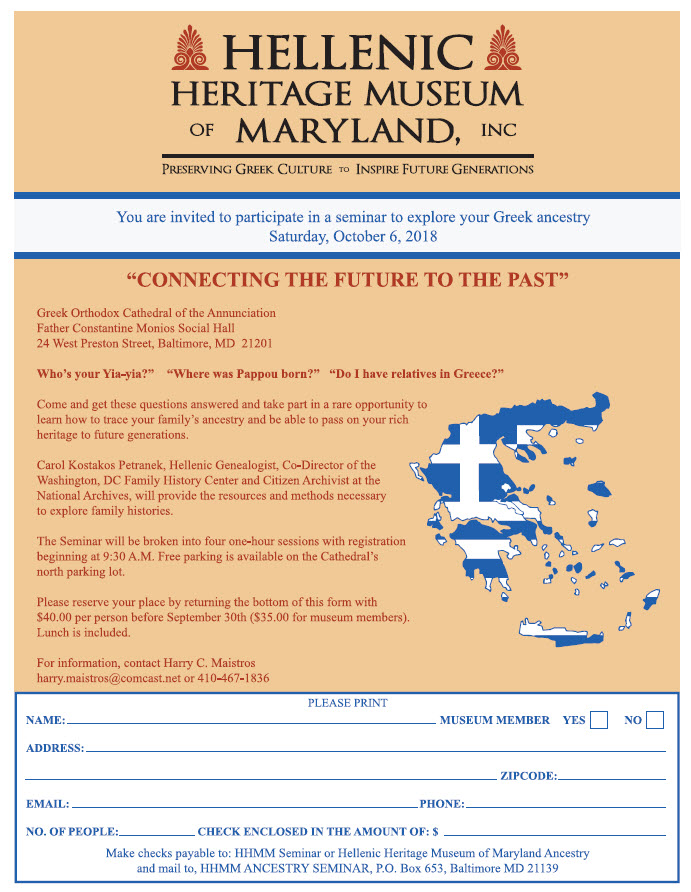
In October, there are two all-day conferences which will focus on teaching Greek genealogy research skills:  one in Baltimore, and one in Philadelphia. Details are below. Please join us, and share this post with others who would like to learn more.

Saturday, October 6:  Baltimore
Sponsor: Hellenic Heritage Museum of Maryland
Where: Greek Orthodox Cathedral of the Annunciation, 24 West Preston Street, Baltimore MD 21201
Time:  9:30-5:00
Cost:  $40 which includes lunch
Contact:  Harry Maistros at harry.maistros@comcast.net

Topics:
Getting Started: Research Strategies, Greek Genealogy Toolkit, Research Help

Using U.S. Records to Prepare for Research in Greece: learn which records can
help you find your original surname and village of origin

Passenger Ship, Naturalization and Alien Registration Records

Civil and Church Records in Greece:  what is available? what information do they
contain? how to access?

Putting It All Together:  Organizing and sharing your research

Presenters: 
Carol Kostakos Petranek
Antigoni Ladd

Saturday, October 13:  Philadelphia
Sponsor:  St. George Greek Orthodox Cathedral
Where:  St. George Cathedral, 256 South 8th Street, Philadelphia, PA 19107
Time:  9:00 – 5:00
Cost:  $20
Contact:  Barbara Lyngarkos, Event Coordinator
blyngarkos@illuminationsinc.com


Website with information and registration:
http://events.r20.constantcontact.com/register/event?oeidk=a07efaiha2eacf36714&llr=n448eqkab


Agenda:

Introduction to Greek Genealogy

How to Use U.S. Records to Prepare for Research in Greece {Census – Marriage – Passenger Ship-Naturalization (very brief; full discussion in separate section) – Social Security Applications – World War I and II Draft Registration Cards – Death Certificates – Obituaries – Cemetery Records / Tombstones – Personal Letters, Documents – Photographs)

Locating and Using Passenger Ship, Naturalization & Alien Registration Records

Ancestry DNA – Testing

Ancestry DNA – Analysis

Research in Greece – Civil Records (Male Registers – Town Registers – Election Lists – Contracts and Dowries)

Research in Greece – Church Records (Records in local churches – Records in Mitropolis offices)

Planning a Research Trip and Wrap-Up

Presenters:
Carol Kostakos Petranek
Georgia Stryker Keilman
Nicole Zizos Gulledge 


Mini-Classes at a Festival!

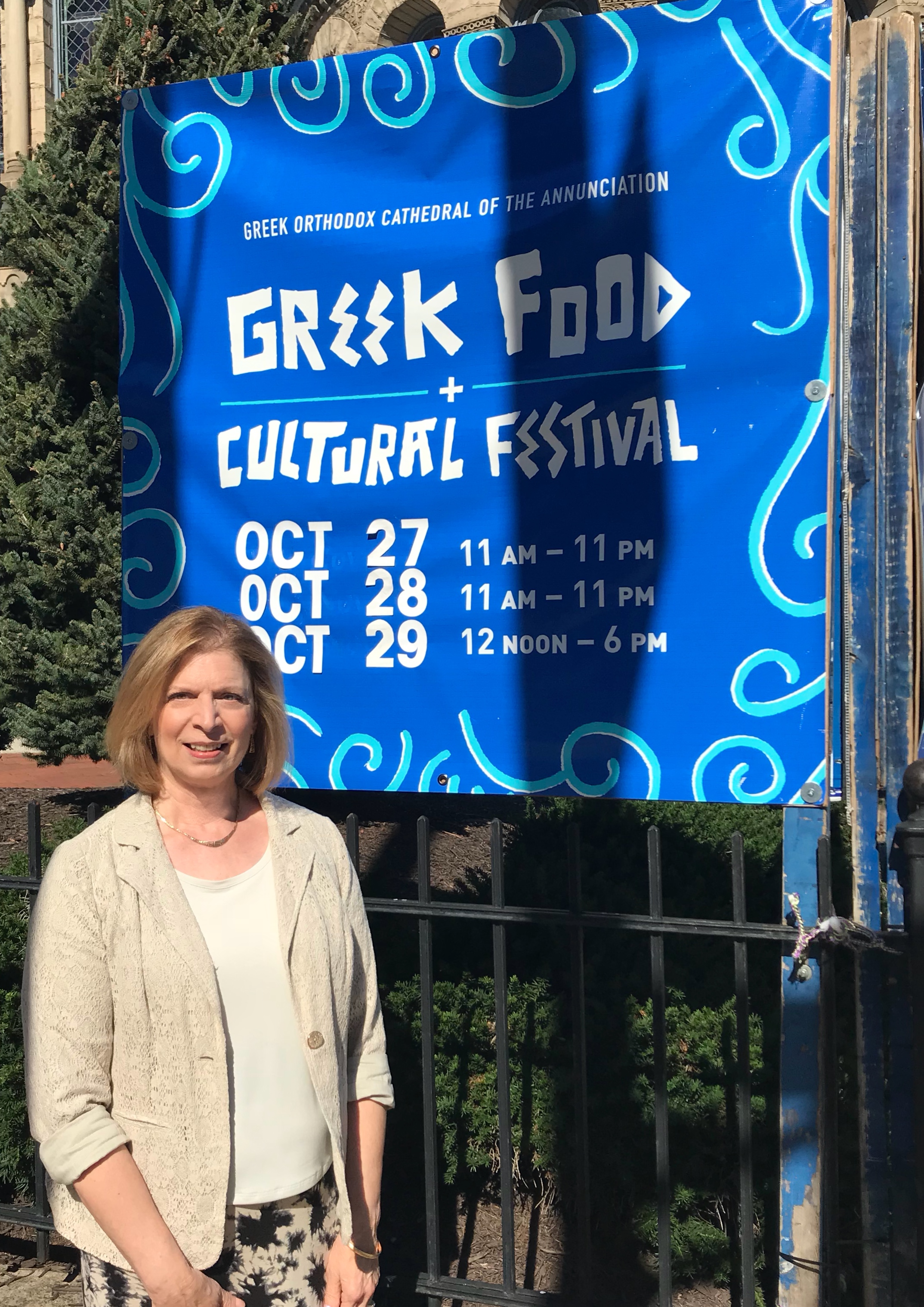
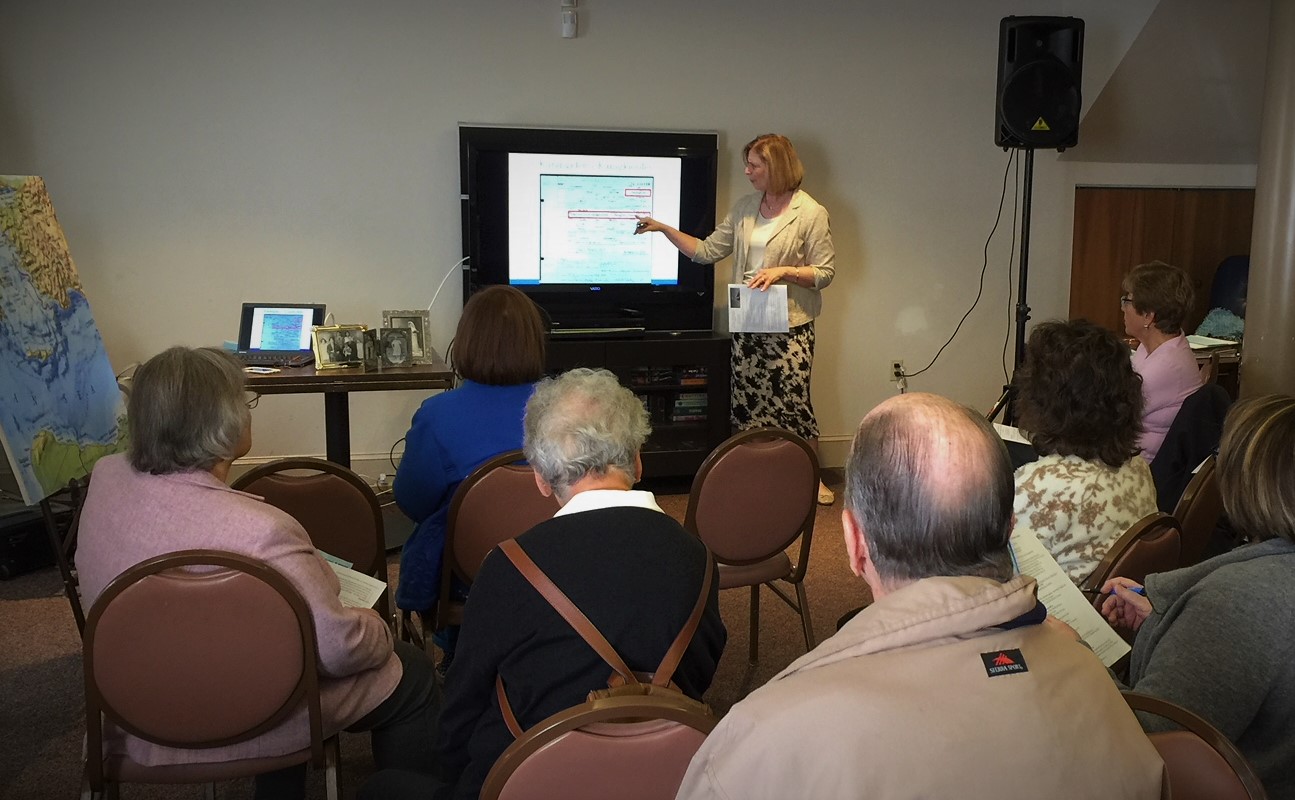
Greek festivals are all about food, dancing, and fun–not the usual venue for genealogy lectures. But, during its Festival last weekend, the Annunciation Cathedral in Baltimore, Maryland offered its visitors and parishioners something different–mini-classes (20-30 minutes) about beginning Greek genealogy. I was honored to be invited to give these presentations.

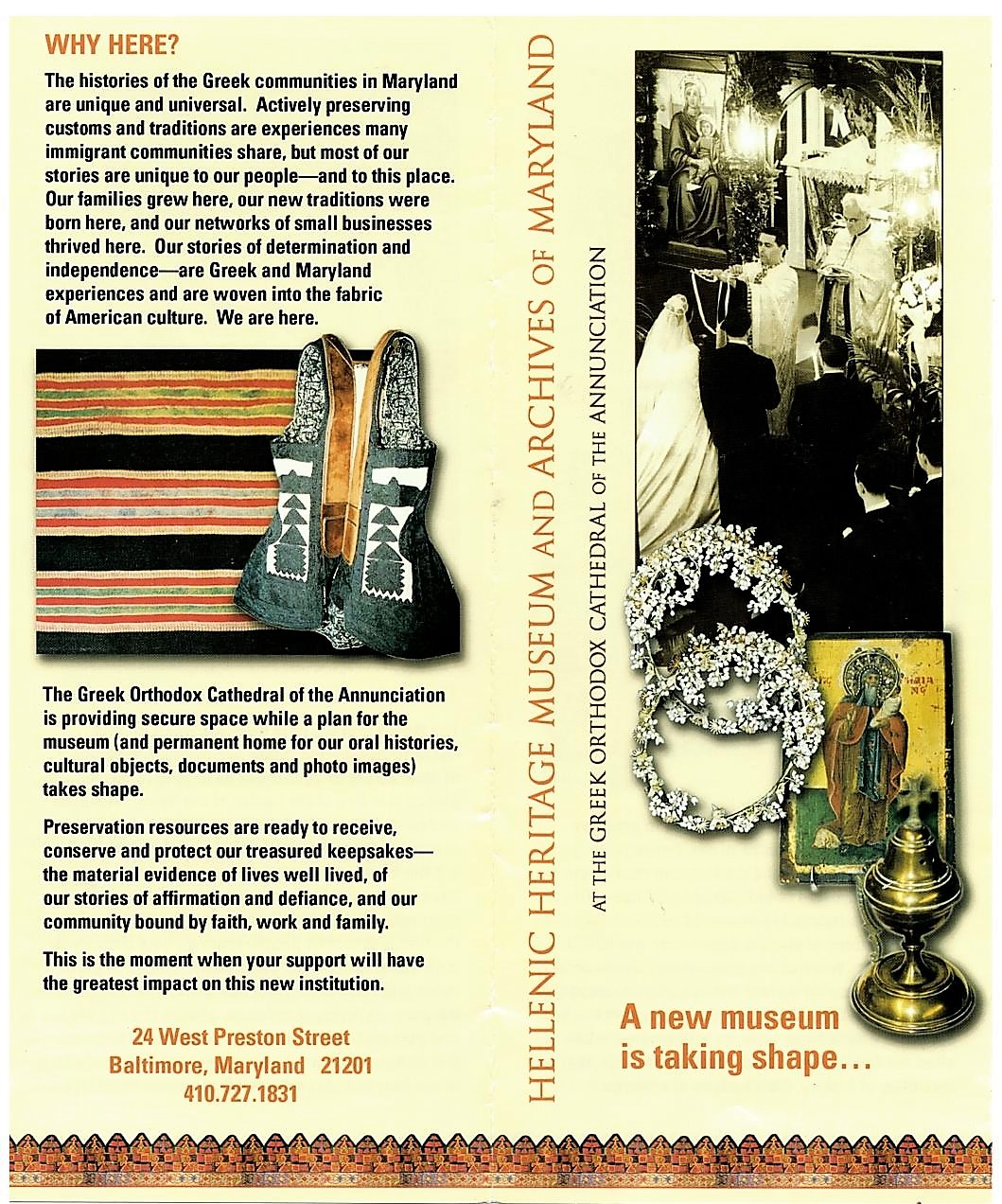
This idea came from the directors of the Hellenic Heritage Museum and Archives of Maryland, an organization working to document and preserve the rich Greek heritage in Baltimore.

Part of the Museum’s exhibit for the Festival included photos of early Baltimore Greek families; and a brief talk about “Finding Your Yiayia” fit perfectly with the theme. Joining me was Antigoni Ladd of Westminster, Maryland, who spearheaded a project to document the founding families of Westminster:

I had a lot to cover in 30 minutes: U.S. documents that may reveal a family’s original surname and village of origin; what types of documents are found in Greek Archives and Town Halls and how to access them; Orthodox Church records; planning a research trip. During conferences, each of these topics take a full hour. But I talked fast and provided attendees with a two-page handout with links to the most relevant websites. This handout can be downloaded here.

I gave five presentations over three days; about 50 people attended in total. They ranged in age and area of origin. Several had families from Asia Minor; some from the Peloponnese; some from the islands. But all were surprised and delighted to learn that records do exist and are accessible.

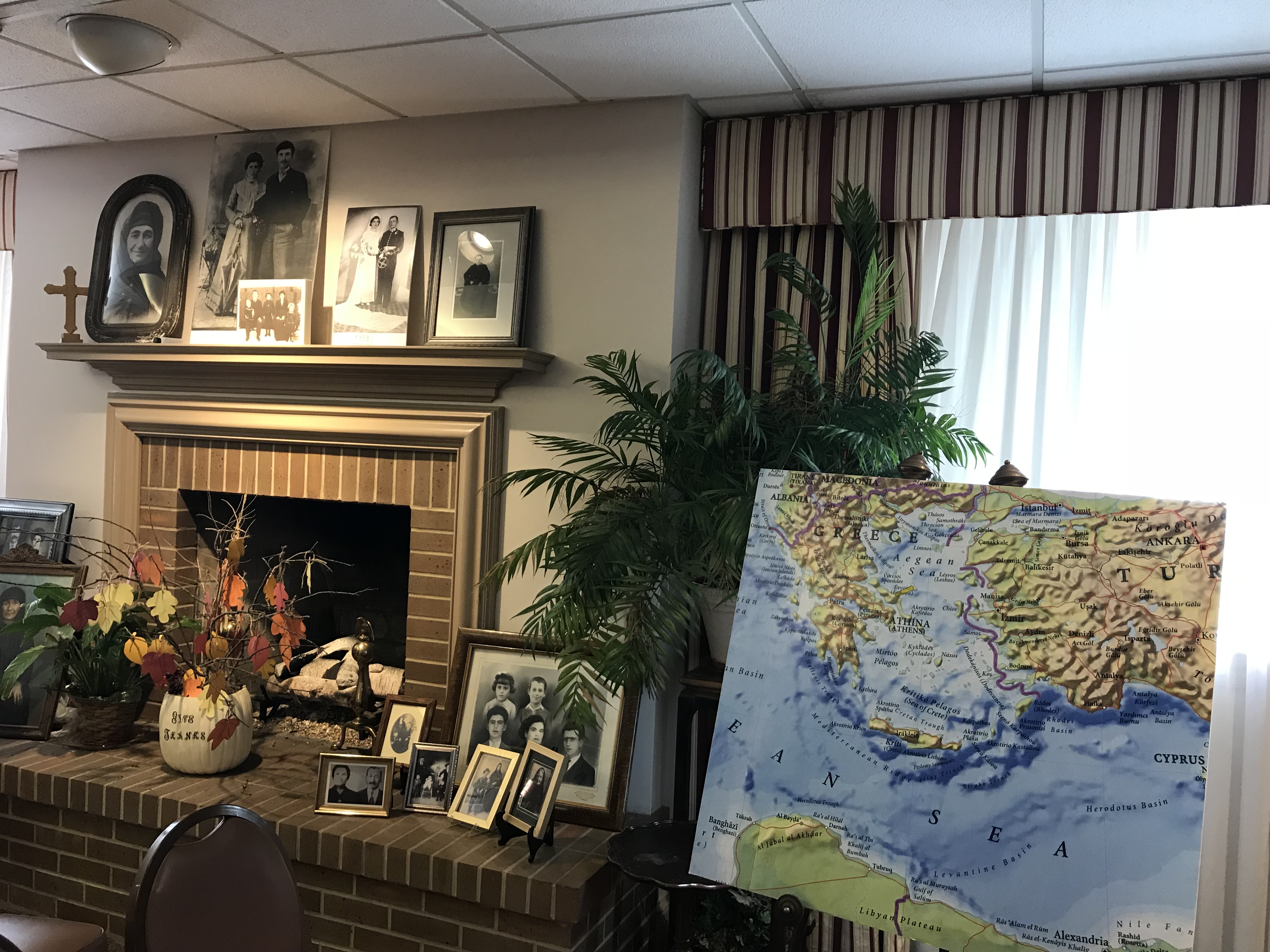
These are some of the family photos brought by parishioners to honor their ancestors.

Nicholas Prevas, who has been the official historian of the Annunciation Cathedral since he was 20 years old, wrote two extensive histories of the Cathedral and has been lauded as setting the standard for such works.

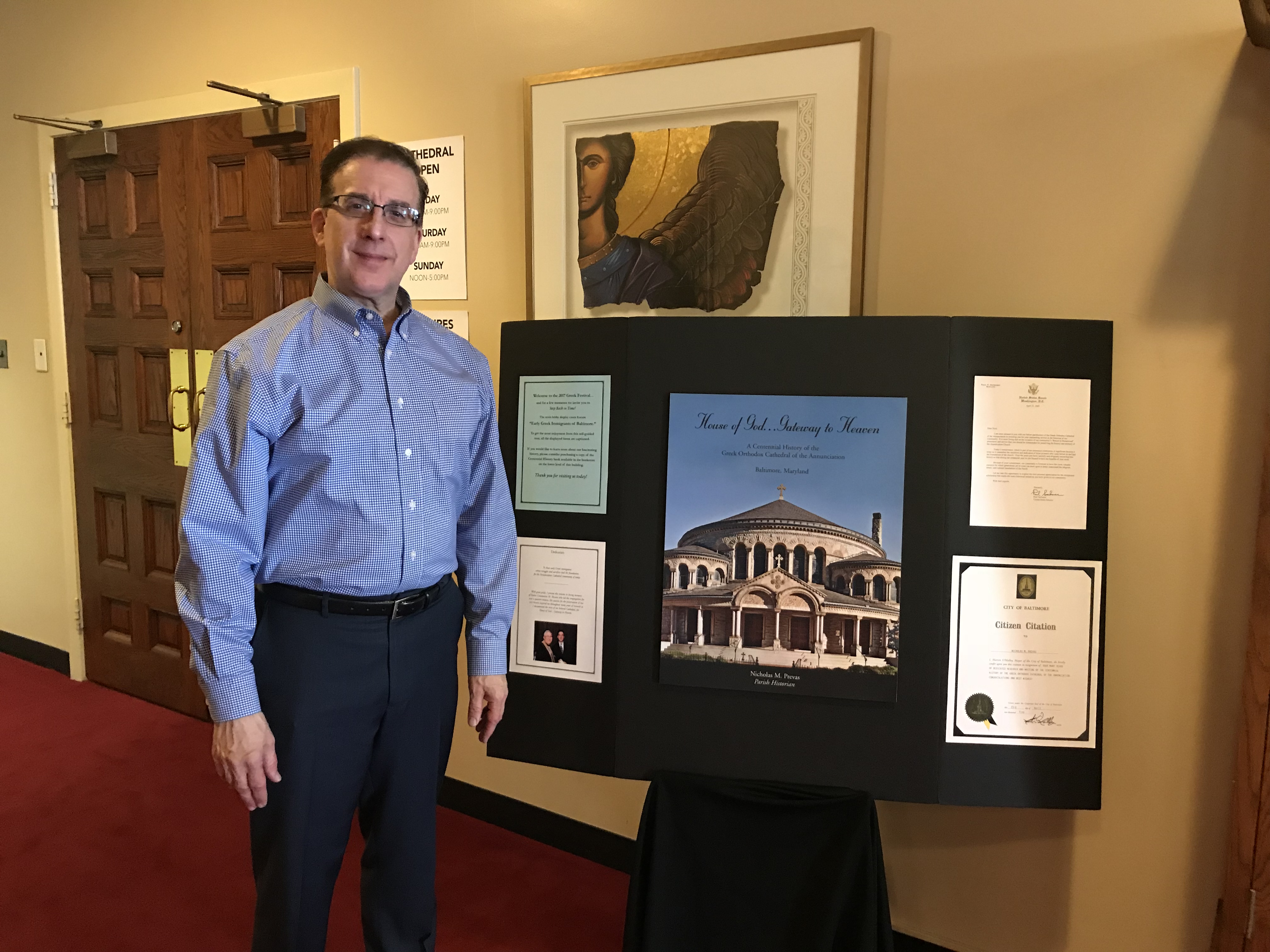
Nicholas Prevas with a display featuring his book, House of God…Gateway to Heaven

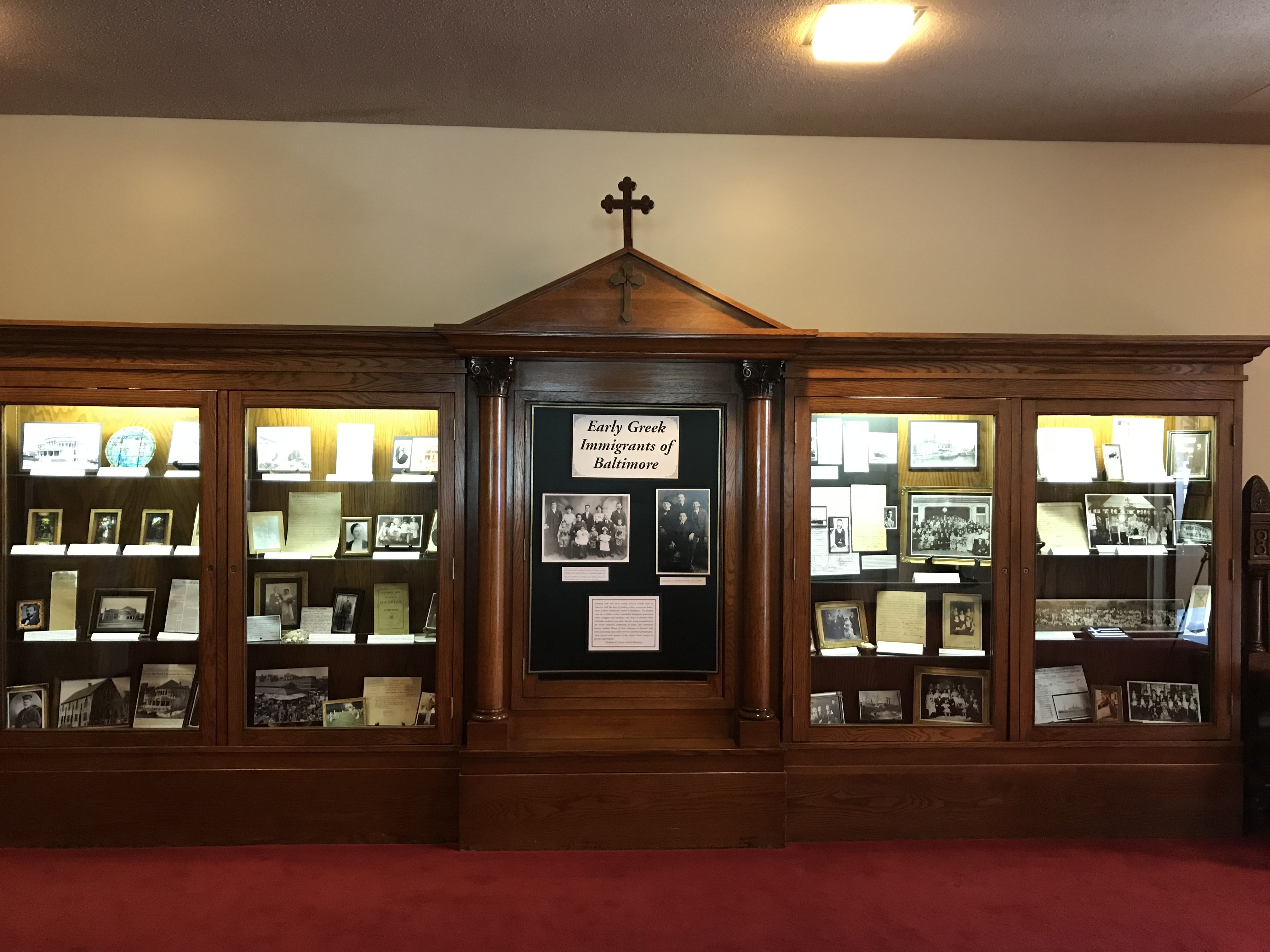
Every year, Nicholas creates an outstanding display of photos and documents to honor Baltimore Greek families. This display is replaced annually with new items and a new theme. These beautiful cases line the hallway leading to the chapel where they are enjoyed by thousands of people throughout the year.

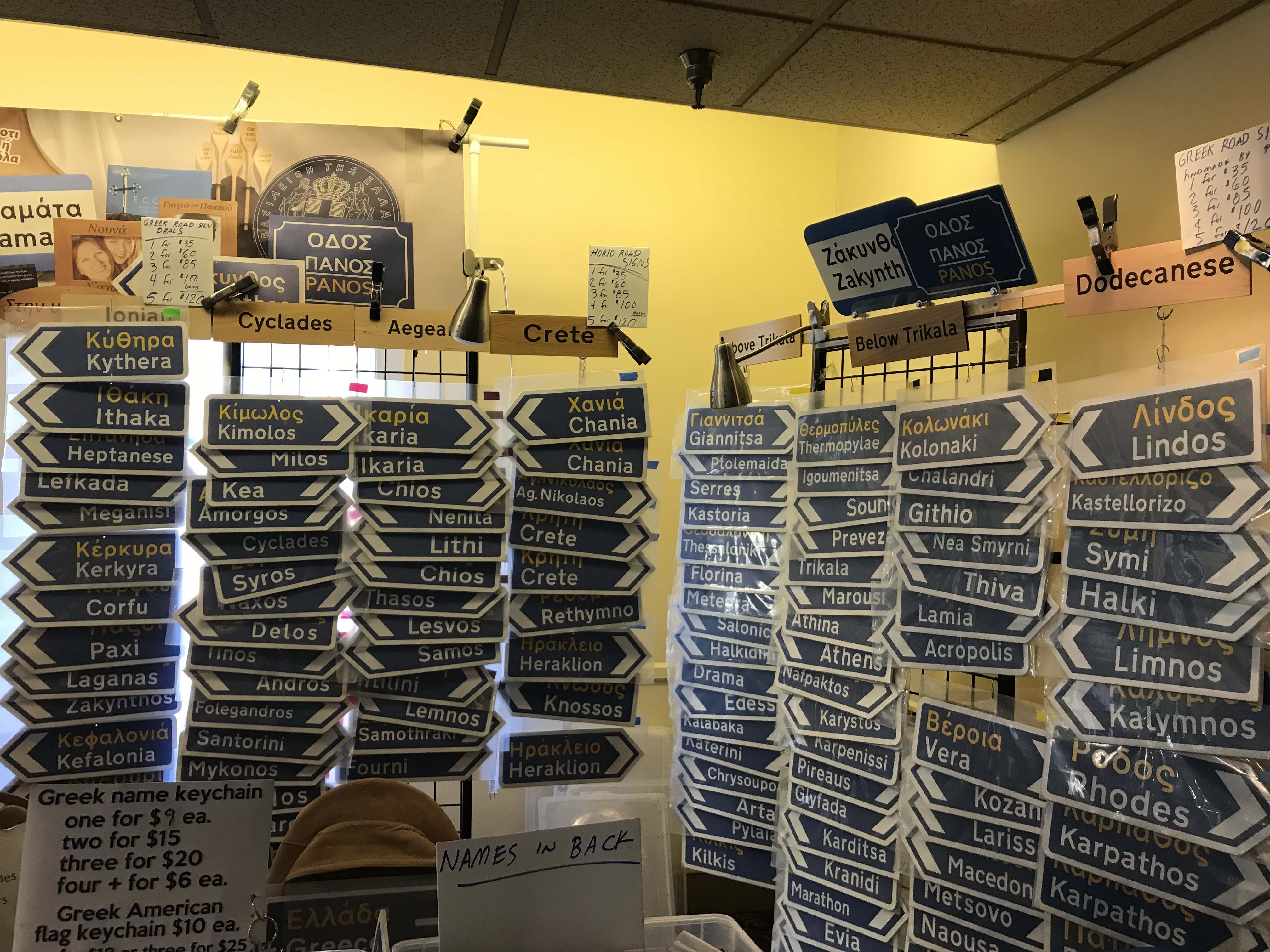
Greek festivals are a source of enjoyment for the entire community. I stood in a food line behind a young man from the neighborhood who said that he waits all year for the food and music. Churches depend on festivals to bring in revenue and to enhance regional relationships. This year, Panos from kantyli.com traveled from Chicago to set up a vendor table with items that were popular and fun.

Greek road signs, created by Panos at kantyli.com

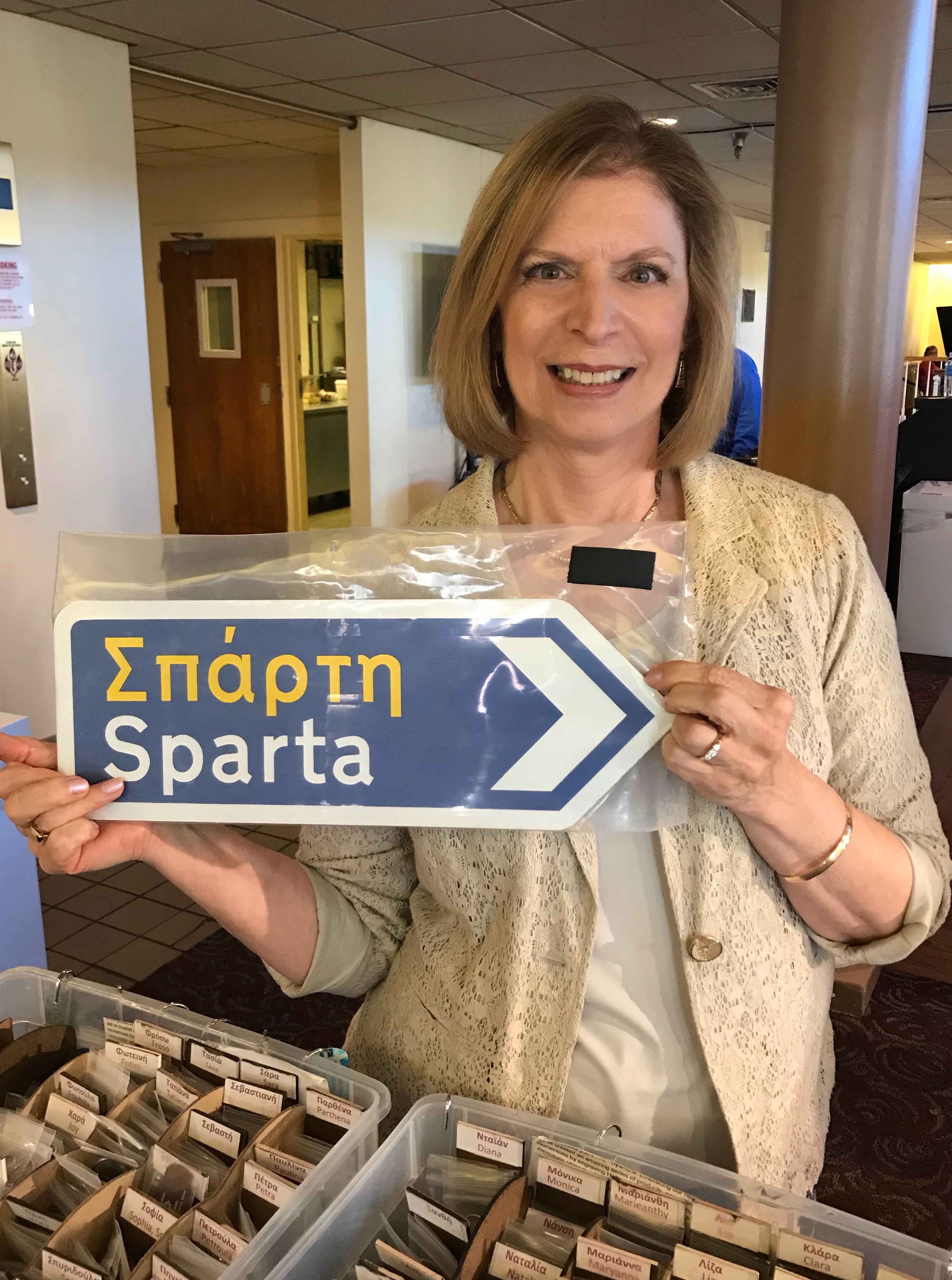
Of course, I had to get one from Sparta! In the box on the table are keychains with names written in Greek.

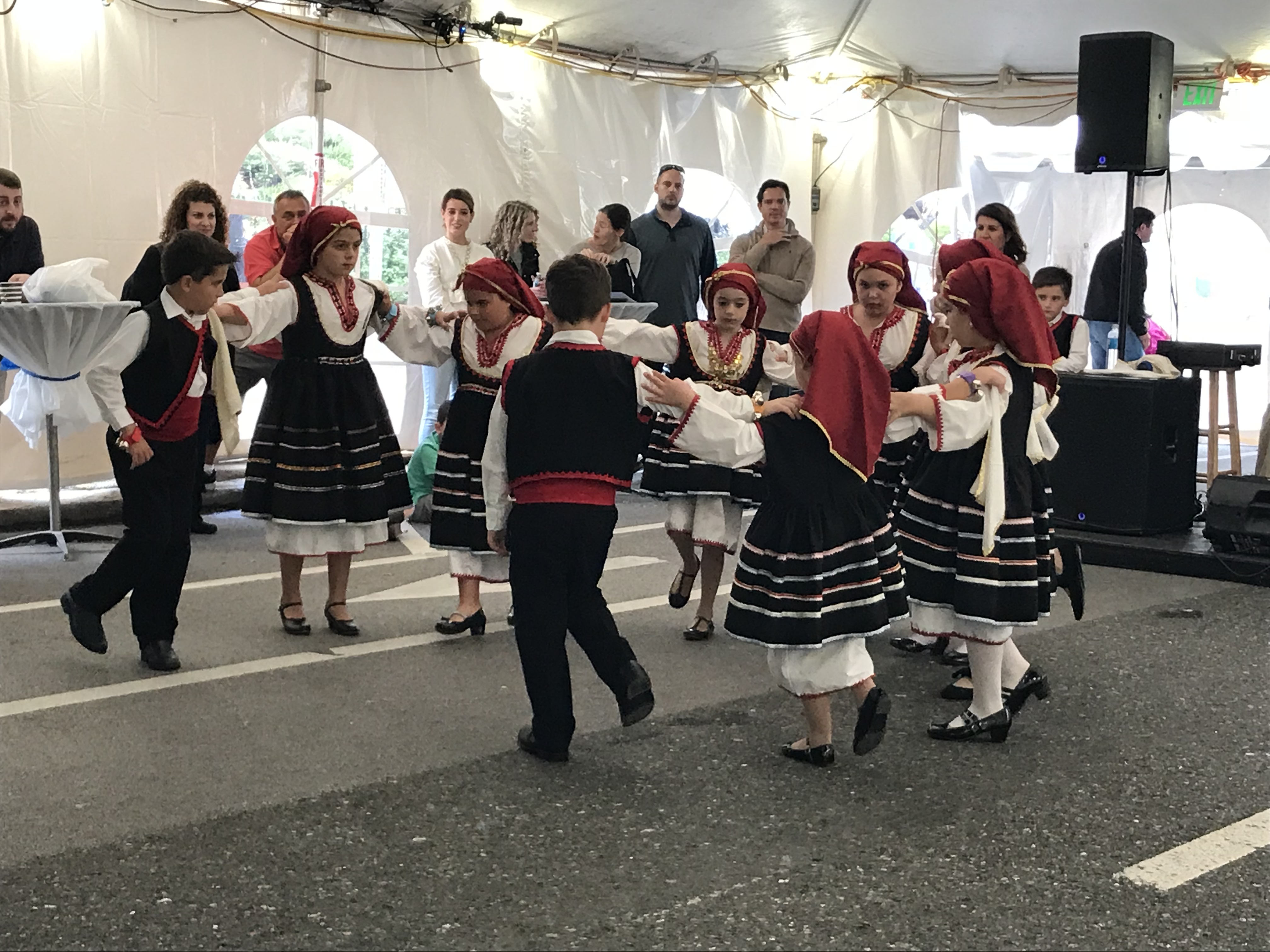
And what is a festival without dancing and music? These brightly costumed children stole the show.

I hope that the idea of holding mini-classes during Festivals catches on. It’s a low-key and easy way to introduce people to the basics, and to broaden their perspectives on family history. The jovial environment and ethnic surroundings provide the perfect backdrop for enhancing a desire to learn more about our heritage.

Collecting Cousins

On November 7, I went to Orlando, Florida to teach 4 classes at the Central Florida Genealogy Conference. Although my classes were well attended, the one on “Researching Your Greek Ancestry” attracted two people. Nevertheless, I was happy to be able to give them individualized help in the areas they need to research.

Carol Petranek, teaching at the Central Florida Genealogy Conference

Carol Petranek, teaching at the Central Florida Genealogy Conference

While in Florida, I took full advantage of connecting with new cousins. On Friday evening, I met Maria Lambrakos Skordilis and her son, Peter, for dinner in Ybor City (downtown Tampa). Peter, Sophia and I are DNA cousins, and according to GEDmatch Peter and I are about 4.6 generations from our “most recent common ancestor” (MCRA); Sophia and I are 4.8.

Sophia Skordilis, her son, Peter and Carol Petranek. Tampa, Florida, November 2015

Sophia Skordilis, her son, Peter and Carol Petranek. Tampa, Florida, November 2015

We share Brooklyn, New York roots: Peter and I were both baptized at St. Constantine & Helen Church, which is also where Sophia was married. We recognized many Greek Brooklynite names, but as hard as we tried, we couldn’t determine our common ancestor. Sophia’s pedigree includes the surnames Lambrakos, Papastratis, Stratakos, Lambrianakos and Doukas. These families are from Gorani, about  6 miles south or a 1/2 hour drive from Sparta and Agios Ioannis. I’m thinking that Sophia and I are related through my maternal line, as she looks as if she could be a twin to one of my cousins. Even our waitress commented that there is a strong resemblance between us!

Agios Ioannis, Sparta to Gorani

Agios Ioannis, Sparta to Gorani

On Saturday evening after the conference, I visited with George Topalidis whom I had met at our Hellenic Genealogy Conference in Salt Lake City on September 26. We were discussing plans for a similar conference in Tarpon Springs, Florida next fall.

George and Eva Capous Topalidis, Carol Petranek; Orlando, Florida, November 2015

George and Eva Capous Topalidis, Carol Petranek; Orlando, Florida, November 2015

Was I ever surprised to learn that George’s wife, Eva, and I also share Brooklyn connections! Her family is from Anavriti, the village next to Agios Ioannis (honestly, I think everyone in Brooklyn has ties to Anavriti!) Her father’s family is Capous; her mother’s line is Chrisomalis. We started comparing notes and I learned that her Chrisomalis family married into my grandmother Aridas’ family, and that she is thus a cousin to one of my 2nd cousins. Huh? What are the chances???

On Sunday morning, I had brunch with my 2nd cousin, Jim Stavracos and his lovely wife, Maria. This was the first time we met. Jim’s grandmother, Antonia Kostakos Stavracos, is the sister of my paternal grandfather, John Andrew Kostakos. Of course, Jim and I are Brooklyn-born although both of us left the city as young children. He grew up in Baltimore and I grew up in New Jersey, then Maryland.

Carol Petranek, Jim and Maria Stavracos. Orlando, Florida; November 2015

Carol Petranek, Jim and Maria Stavracos. Orlando, Florida; November 2015

I had found Antonia’s death certificate and her husband, Peter’s naturalization records which I brought to Jim. He filled me in on many family stories and shared photographs. He said he has a photo of Antonia holding a shotgun, standing in front of the family home in Greece. I sure hope he can find that one!

I am so excited to meet these new family members and look forward to collecting more cousins!

On another note…last Monday evening, I gave a presentation at the Carroll County, Maryland Genealogy Society and met a woman named Antigoni Lefteris (Eleftheriou) Ladd. Her family is from Trikala, a city in north central Greece. They emigrated and settled in the town of Westminister in western Maryland.

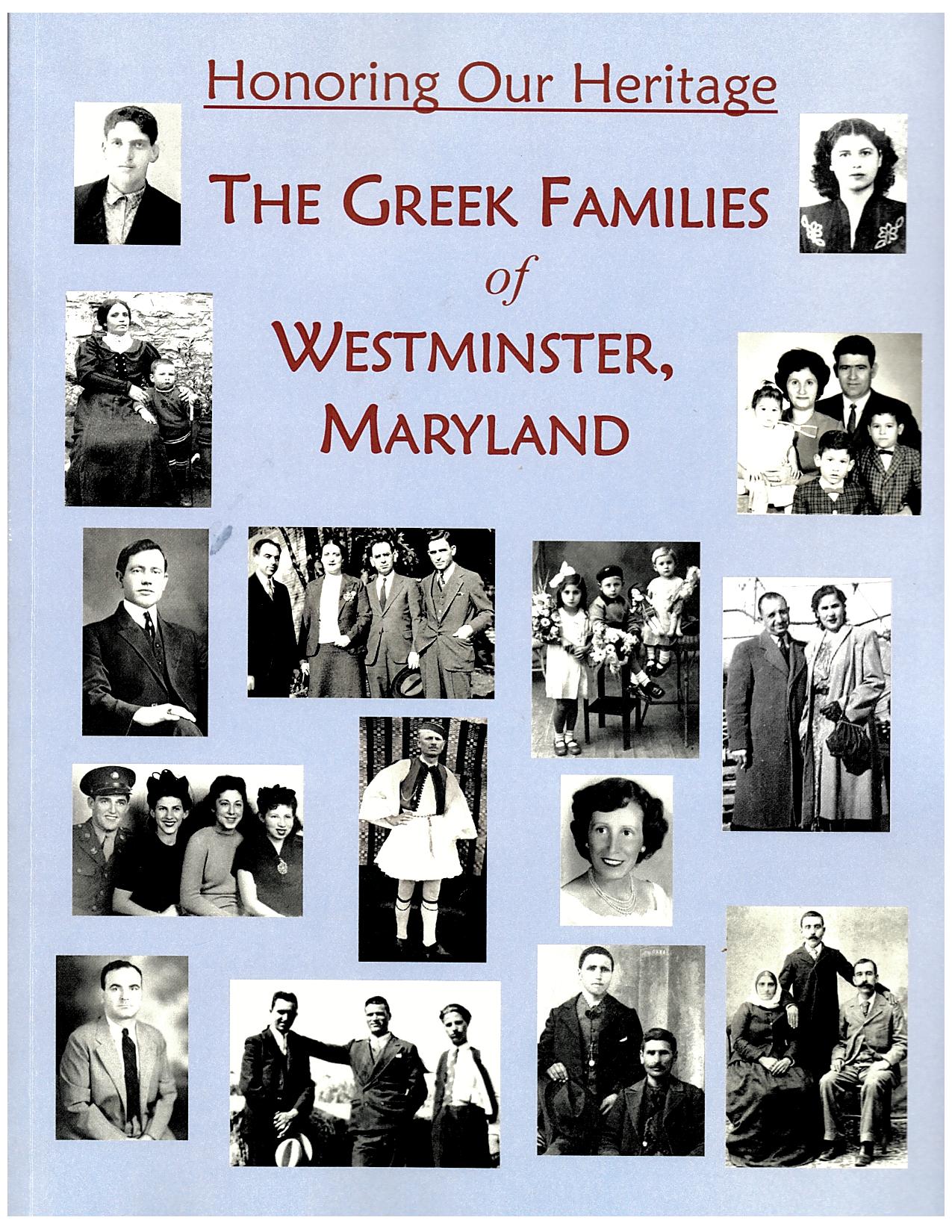
Antigoni Leftheris Ladd, Carol Petranek; Westminster, Maryland; November 2015. Antigoni is the editor of The Greek Families of Westminster, Maryland.

Antigoni Leftheris Ladd, Carol Petranek; Westminster, Maryland; November 2015. Antigoni is the editor of The Greek Families of Westminster, Maryland.

In April 2013, Antigoni became involved in an initiative begun by Westminster’s physician, Dr. Dean Griffin, to collect and preserve the stories of local Greek families. From these first-person narratives, photos and news articles, a community history evolved and is now preserved in the fascinating book, Honoring Our Heritage, The Greek Families of Westminster, Maryland. The following families comprise the heart of the book: Amprazes, Sirinakis, Haralampoulos, Koretos, Bourexis, Lefteris, Letras, Nickolas (Nikolaou), Pappas (Batayiannis), Samios, Sharkey (Chakou).

Antigoni became the editor of this project, and it was her persistence and dedicated effort that culminated its publication in August 2015. I love this book! It is so inspiring and heartwarming to see the stories of these Greek families memorialized and preserved for the generations to come.

More of us need to follow Antigoni’s example. With each generation, we slip further away from our immigrant ancestors. Their stories will be lost to future generations if we don’t write what we know and collect what we can find. That is a tragedy which we can prevent — but only if we choose to act.