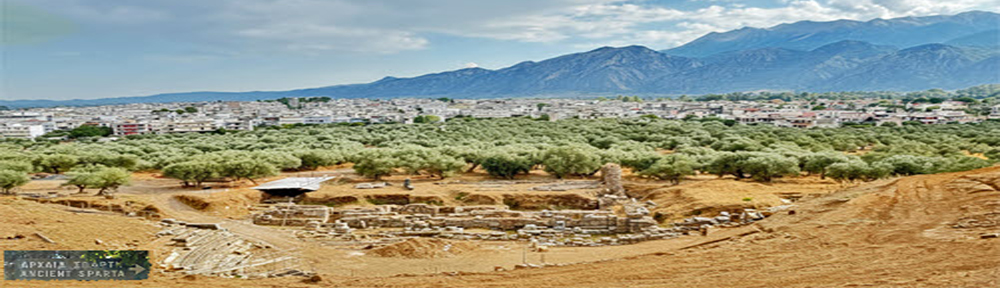
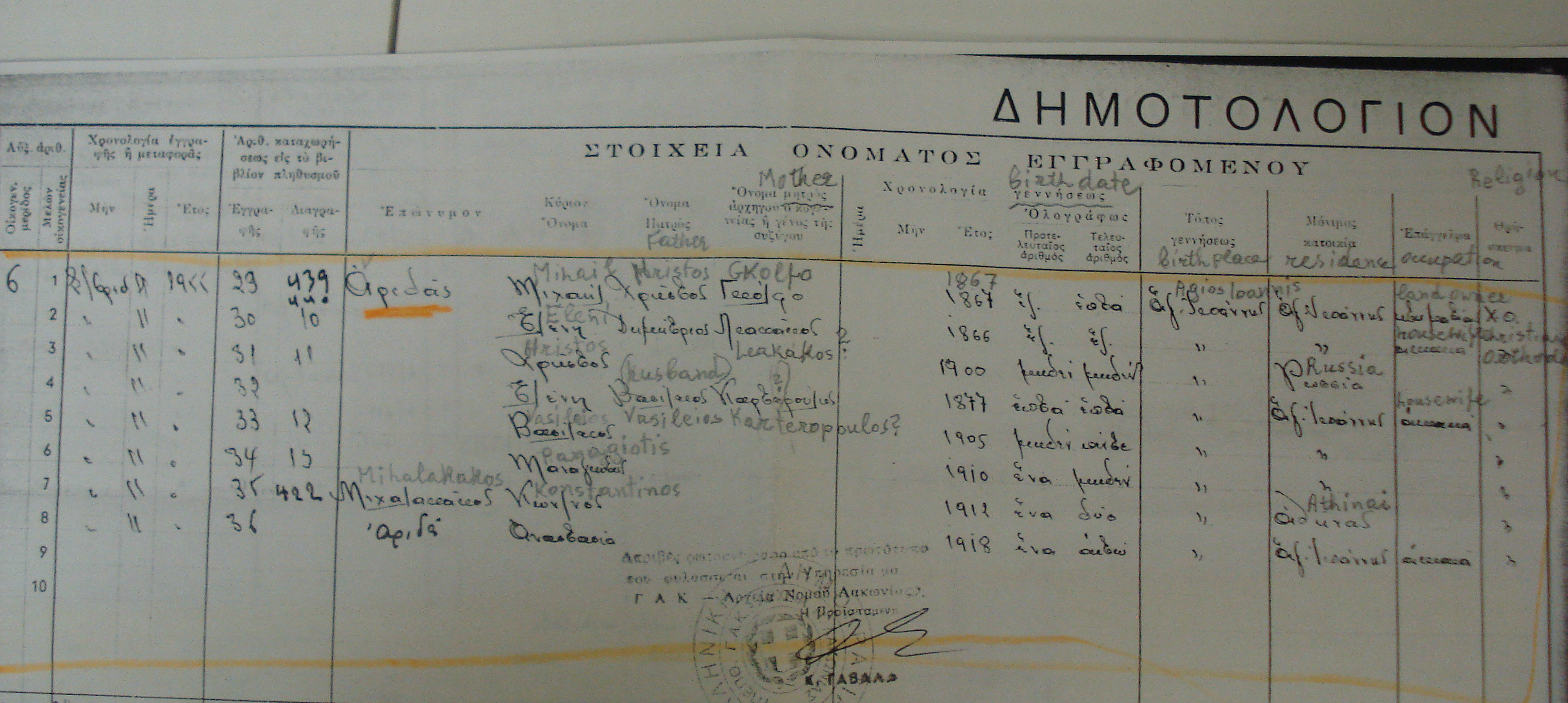
My paternal grandmother, Hariklia Aridas (Χαρικλεια Αριδας), was born in the village of Agios Ioannis (St. Johns), just outside Sparta. As I began my research, people would comment that Aridas was an unusual Greek name — one they had not come across in the past. My curiosity was raised, especially when I received a Town Register from St. Johns that listed an Aridas family and saw that one of the names in this family was Konstandinos Mihalakakos (see below). I just assumed that Konstandinos was a relative who was living with the family.
Until… sometime later, I connected online with another Aridas descendant who sent me an email with the following: “As for Kosta Mihalakakos, that is Kosta Aridas. My uncle wrote my mother back in the late 940’s that he had uncovered the real name for Aridas as Mihalakakos. He said that one of the ancestors had long legs (αριβας) which is what Aridas translates to from arida (leg). It was a nickname that stuck.”
Well, that is fascinating information but now I’m really stumped. Who knows how far back the name was changed, and in which village the family was living when it was changed? Did all of the family change their name, or only the descendants of the “ancestor with the long legs?”
So, where do I go from here? Do I look for both Mihalakakos and Aridas names? I think that’s a good start. There are few digitized online records through the Greek Archives (http://arxeiomnimon.gak.gr/index.html). I looked at the 1872 Electoral Rolls from Agios Ioannis, and there is no Aridas or Mihalakakos listed. Not a good sign. For now, I’m stumped. Stay tuned…


 Spartan Roots (Σπαρτιατικές Ρίζες)