Full Circle

Spending two months in Sparta and Agios Ioannis this summer has turned my heart more deeply to this land. I love the vitality of the city and the peaceful nature of the village. This is where it all began for me, as it is the birthplace of my four grandparents. It continues to be the residence of my cousins, and my “home away from home.”

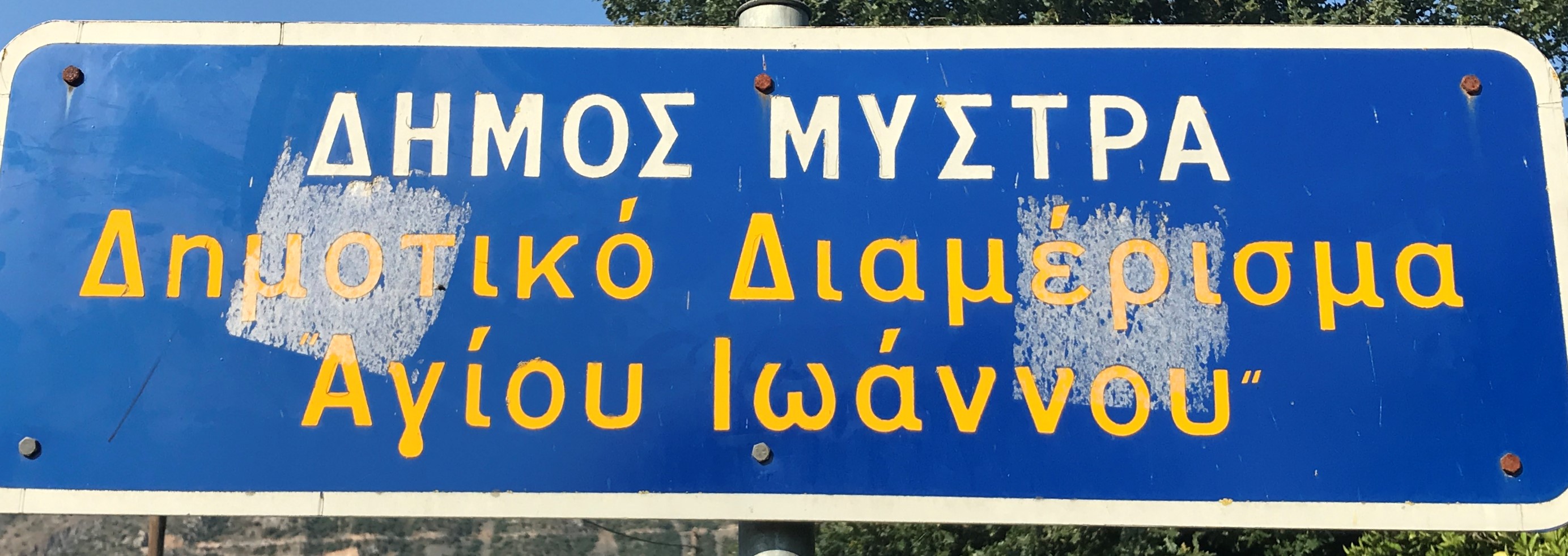
Dimos Mystra – Municipal District – Agiou Ioannou

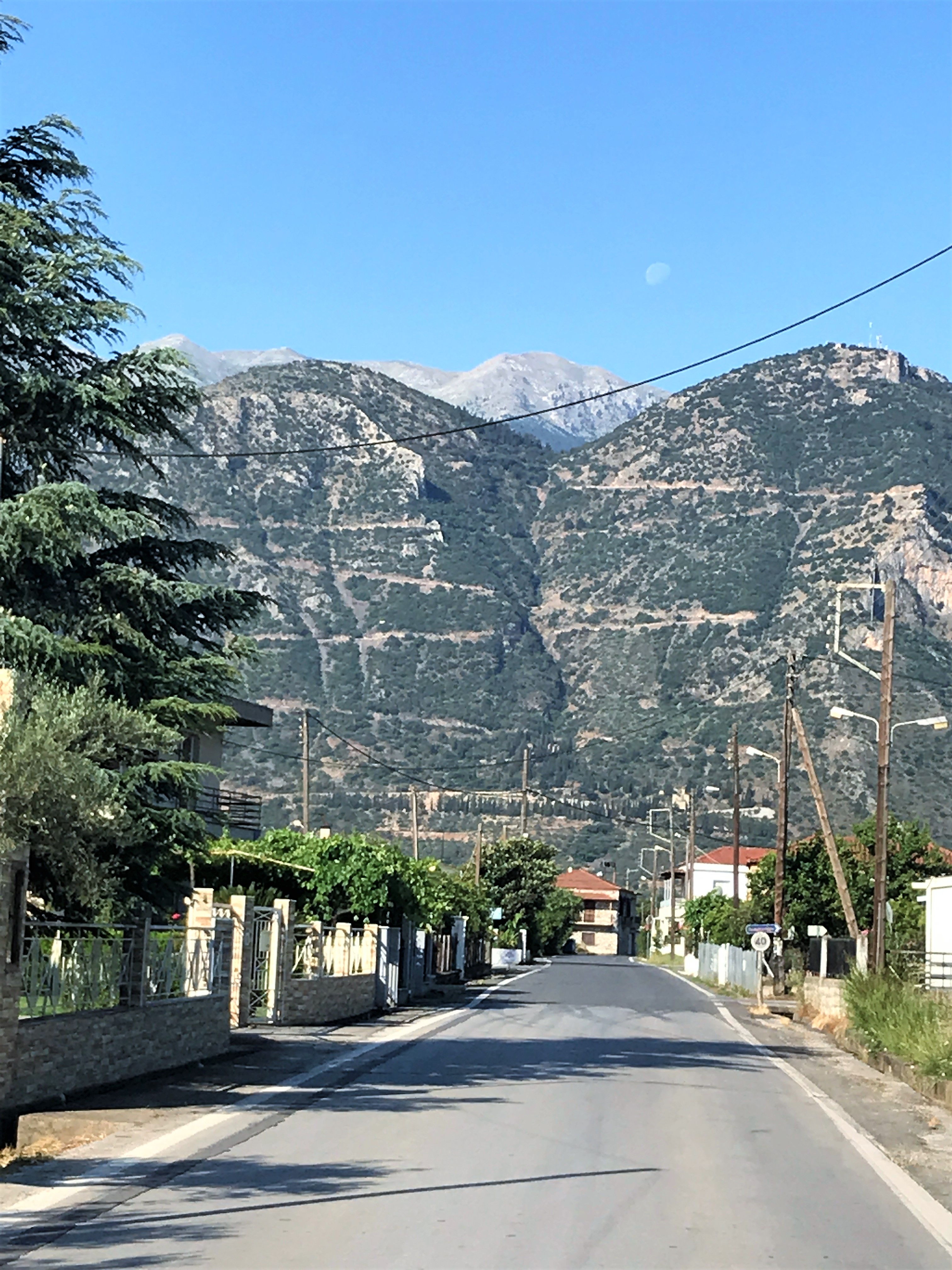
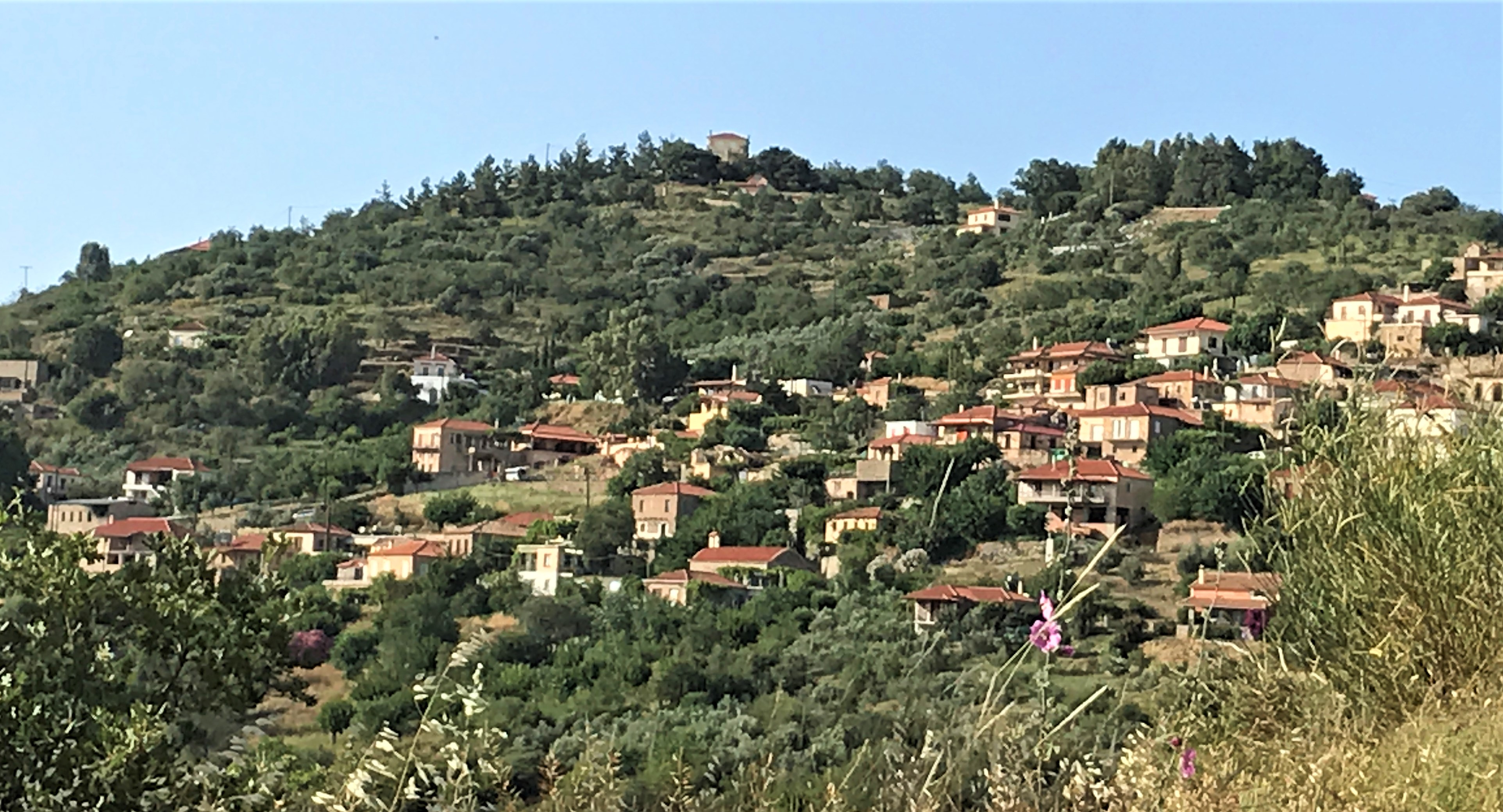
I enjoyed many happy evenings in Agios Ioannis, visiting with family and absorbing the spirit that permeates the stone homes and verdant orchards. Agios Ioannis is nestled in the plains of Sparta, under the towering Taygetos mountains. What appears to be a ribbon across the mountain is actually the road to the village of Anavryti, situated at the very top on the right.

Road into Agios Ioannis, from Sparta

My Kostakos, Aridas and Papagiannakos grandparents hail from Agios Ioannis. These families have had a profound influenced in the village. Some remained and served; others emigrated yet “gave back,” never forgetting their origins.

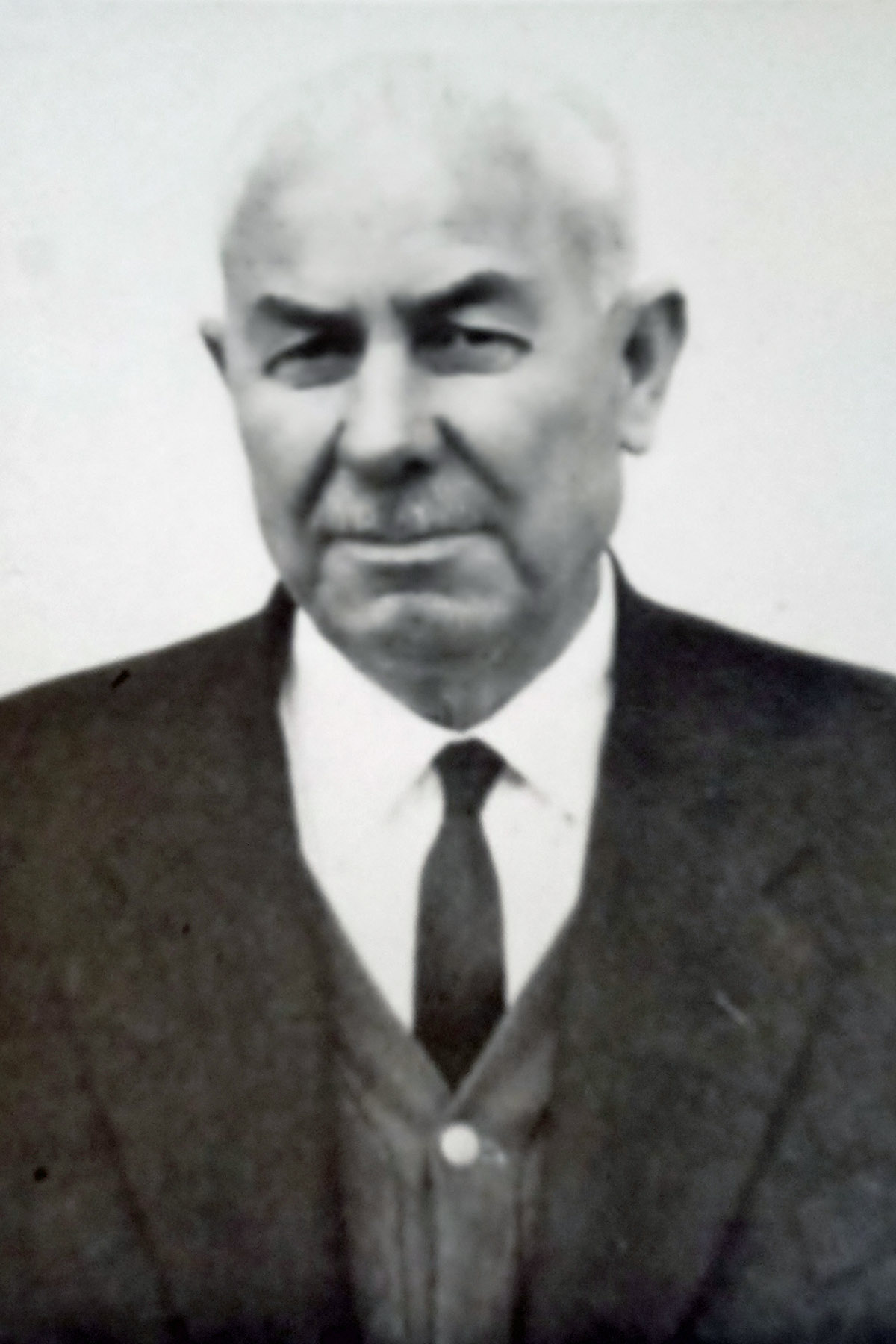
The Aridas family owned and operated the regional bus line. My granduncle, Aristedes Georgios Aridas, was the proprietor who provided a vital service for the town’s residents. Aristedes lived in Agios Ioannis his entire life, and his descendants continue to live in the beautiful home which he had built.

Aristedes Georgios Aridas, 1905-1992

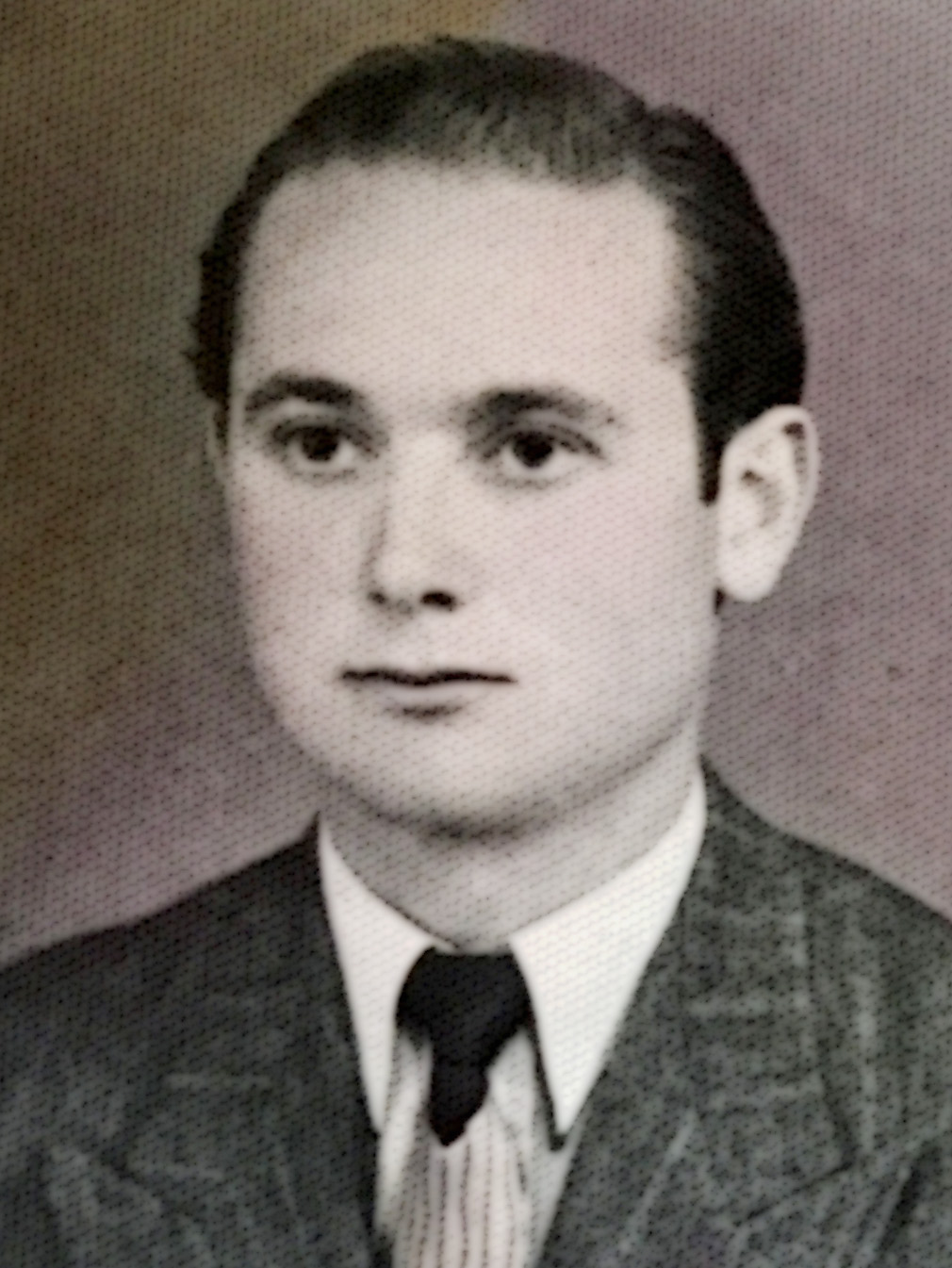
My second cousin, Grigorios Georgios Kostakos, also remained in Agios Ioannis and did not emigrate. He was very active in village affairs and held positions on the town council. He constructed the municipal building which now has many uses, including a preschool which his Kostakos cousins attend today.

Grigorios Georgios Kostakos, 1927-2001

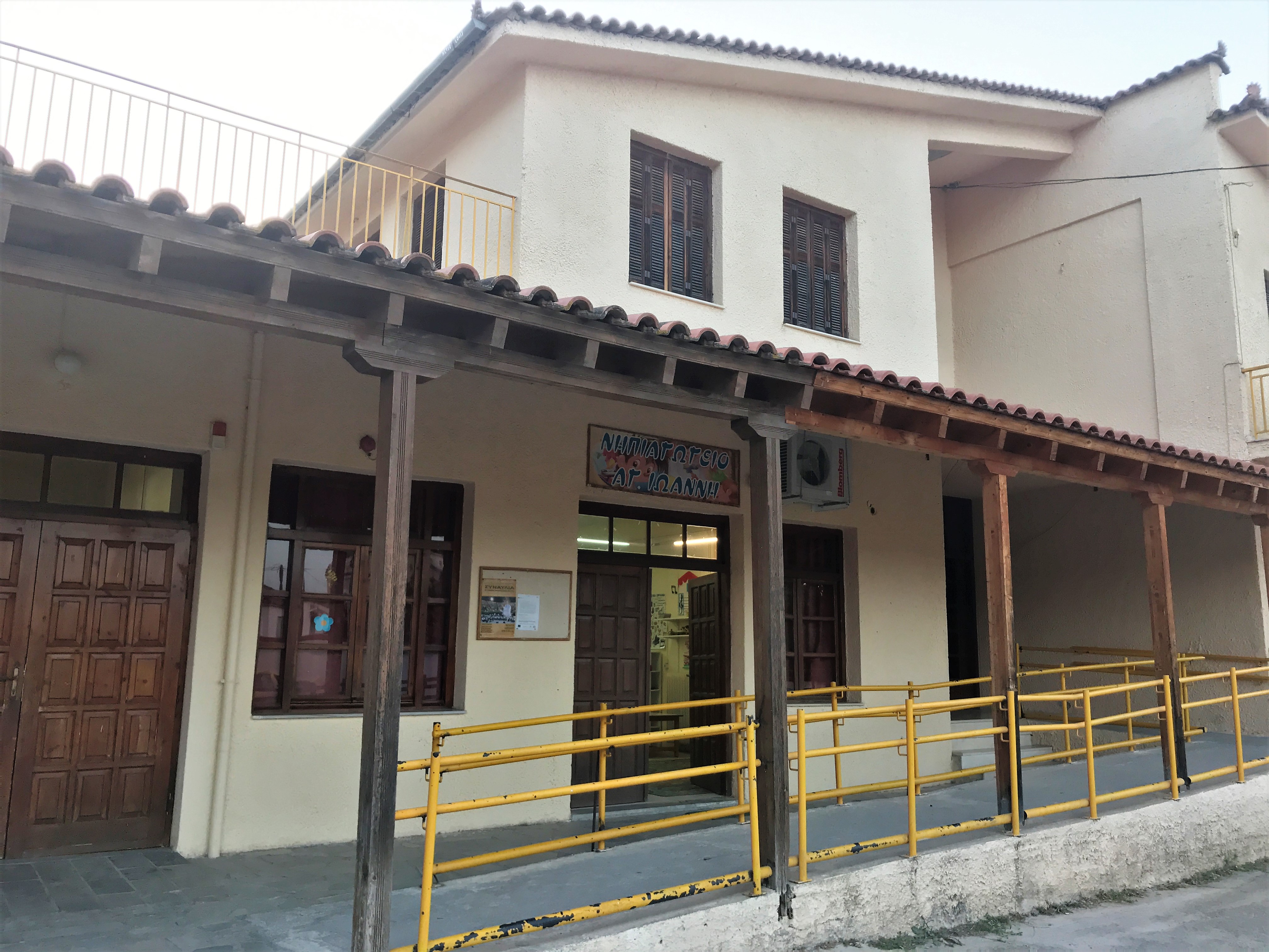
This is the Agios Ioannis municipal building which Grigorios had constructed, and which has served the community for many years.

Agios Ioannis Municipal Building

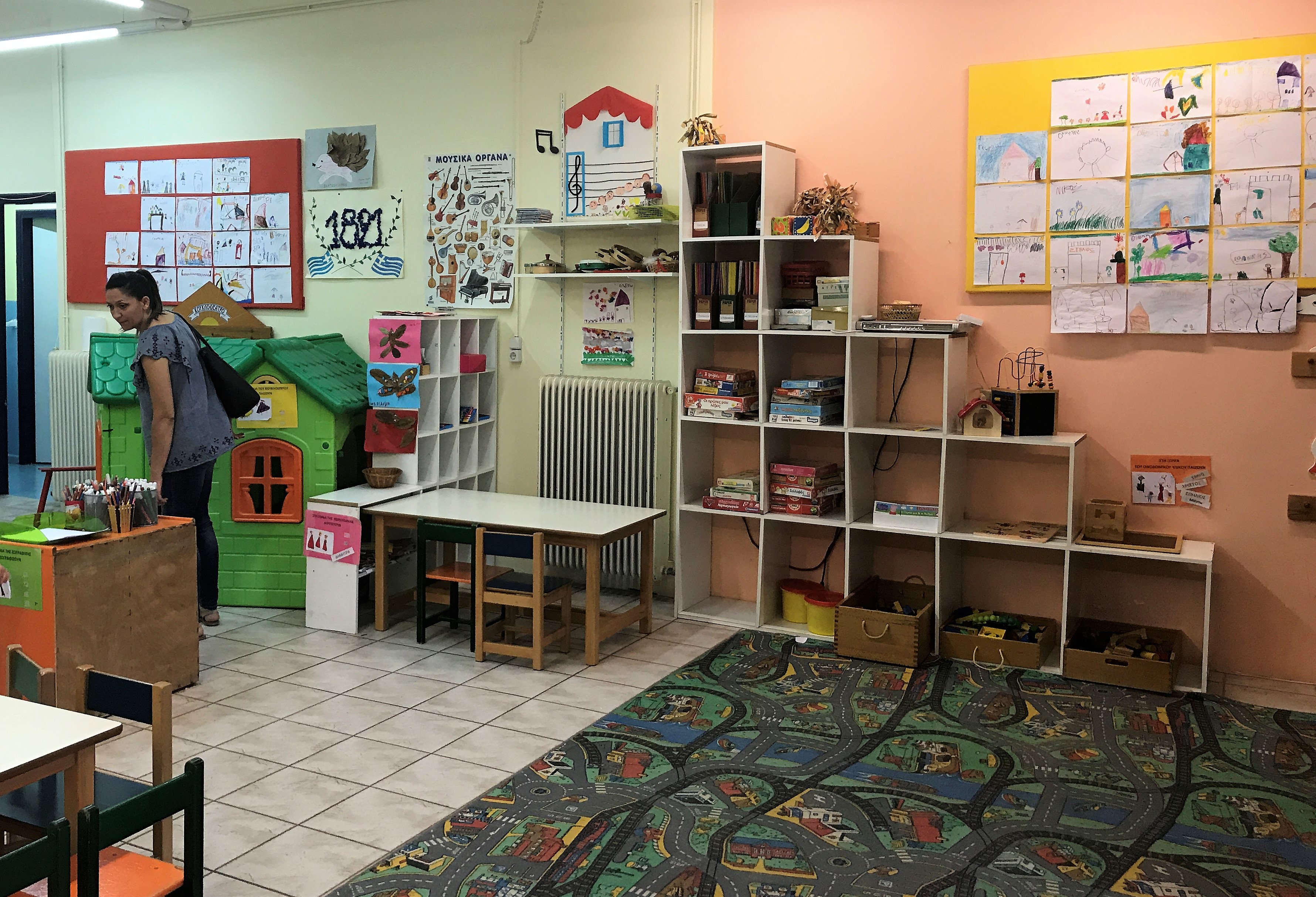
This room in the municipal building is now used as a preschool, and where the children of Georgios’ extended family now attend.

Preschool room in the Agios Ioannis municipal building

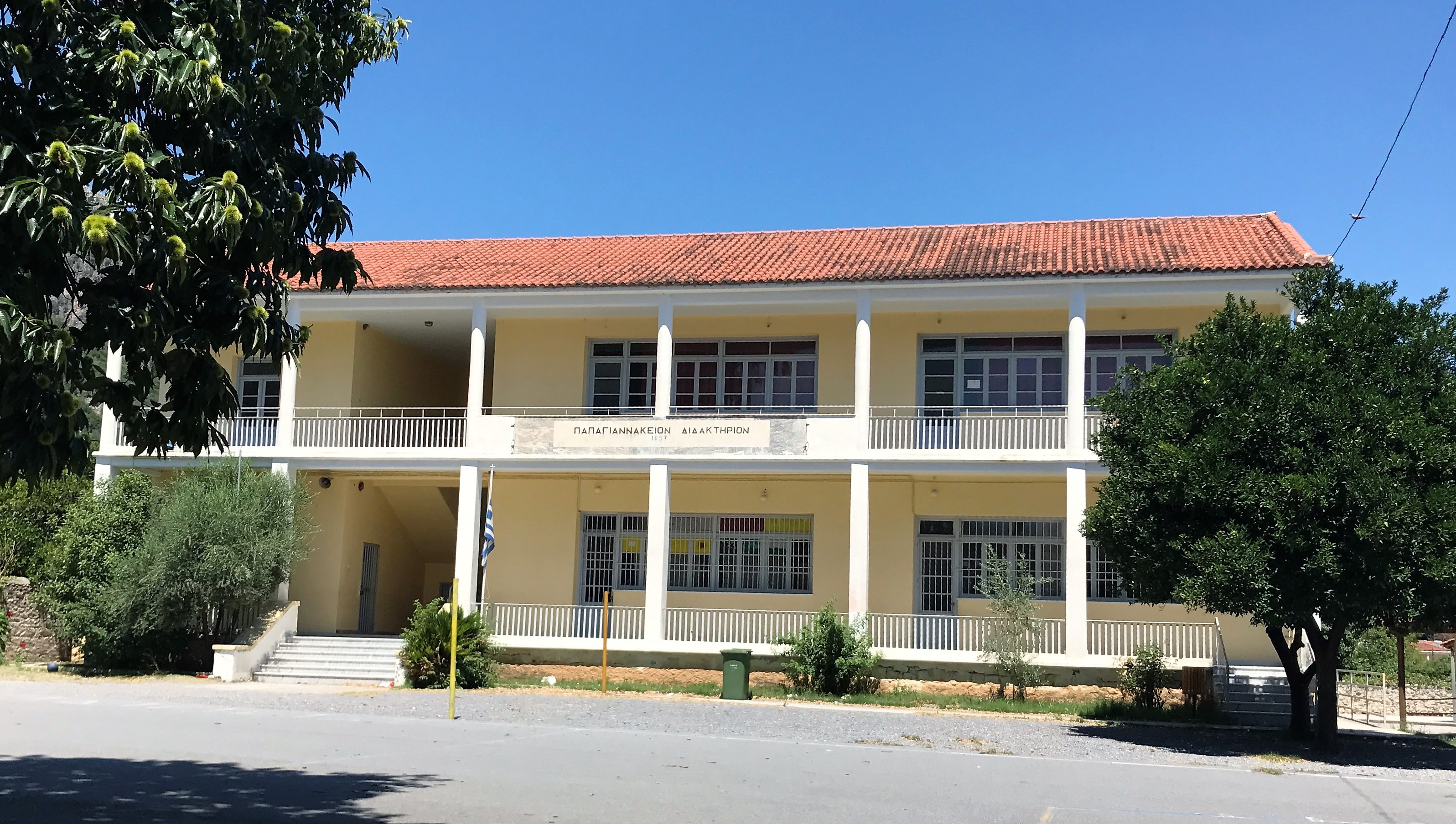
Dimitrios Nikolaos Papagiannakos, (known as Jimmy Pappas) emigrated in 1914 at the age of 18 with several men (and relatives) from his village: Georgios Grigorios Kostakos, Constantinos Kolokotas, Christos Papagiannakos and Panagiotis Cavouris. Jimmy became a successful restaurateur in Brooklyn, NY. He returned regularly to Agios Ioannis, and had an earnest desire to provide children with a quality education. In 1957, he constructed the Papagiannakos School which continues to serve the needs of children in Agios Ioannis and neighboring villages.

The Papagiannakos School, built in 1957

My cousins–Jimmy’s family–attended here, as now do their children. I think Jimmy would be truly pleased to know that his contribution to the community continues, and that his dream is fulfilled.

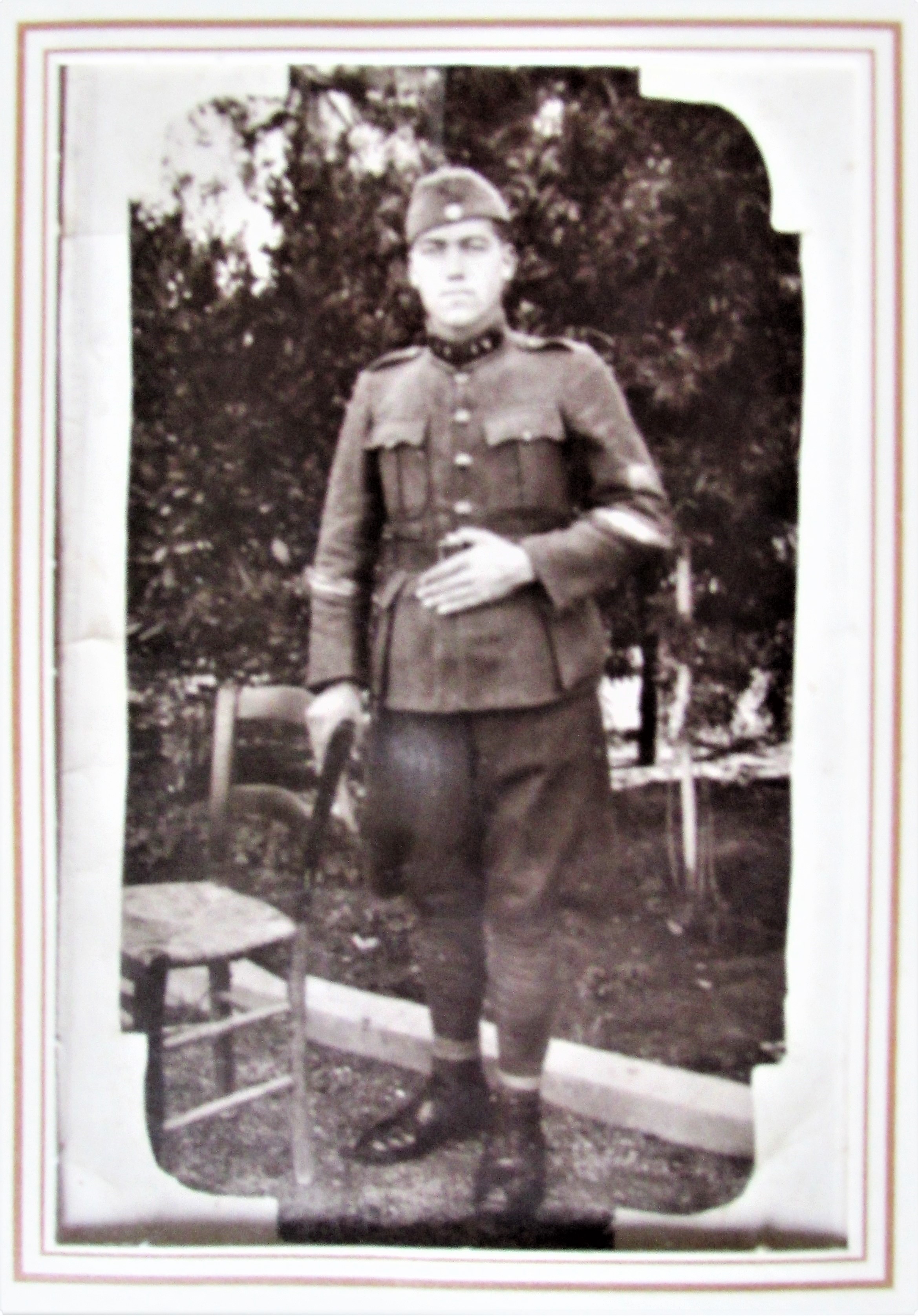
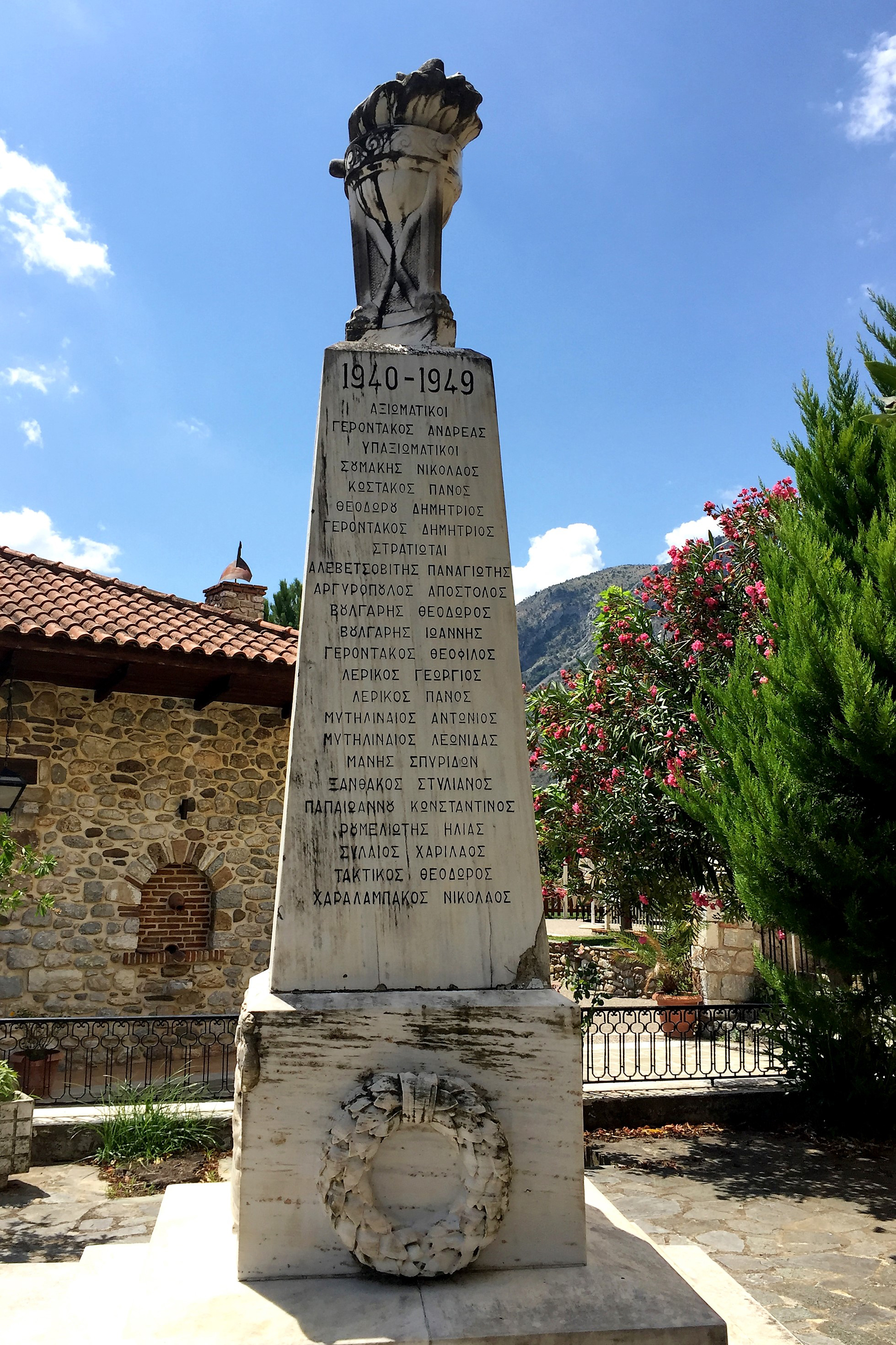
Every village has a “war memorial,” inscribed with the names of those who died in battle, or in the Greek Civil War. It is sobering to stand in front of these, but even more so when you see your own family names. My first cousin once removed, Panos Kostakos, was killed execution-style by the Nazis in Mystras.

Panagiotis Grigorios Kostakos, 1913-1944

His is the third name from the top.

World War II War Monument

So we come “full circle,” from my grandparents to my generation, and to the ones continuing forward. Visiting an ancestral village brings me this perspective of beginnings and continuation. It is a comprehension that cannot be experienced virtually–you must go to understand.

In my last post, “Telos,” I wrote that my work of marriage record preservation in the Sparta Mitropolis this summer was part of my desire to offer service, and to “give back” in gratitude for my heritage and ancestral land. This post recognizes a few members of my family for the services they so willingly gave. They have influenced me profoundly. I recognize and honor their examples, and am proud to follow in their footsteps.


Πανηγύρι (Panegyri) – It’s Time for Village Festivals

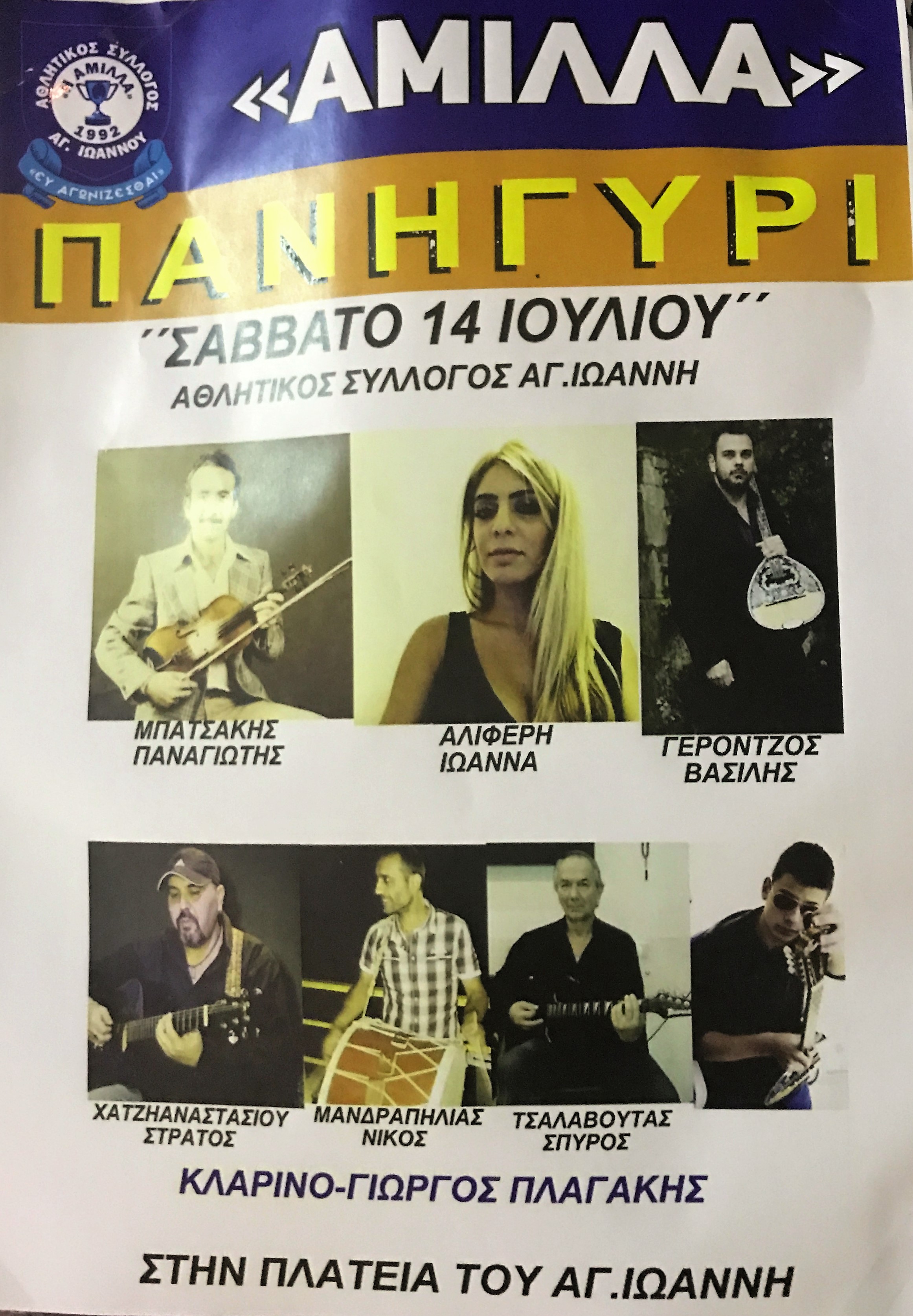
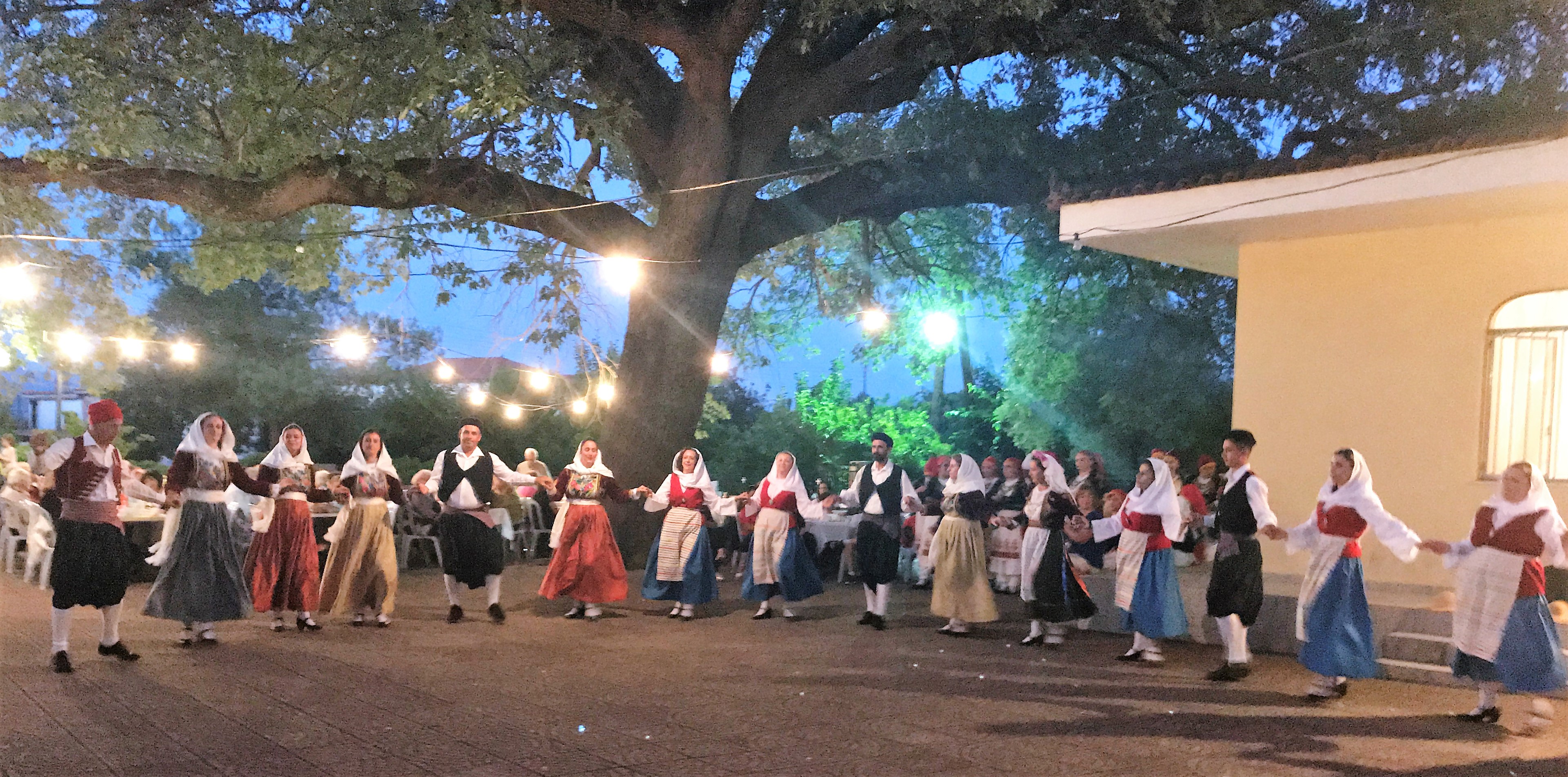
Music, dancing, food and friends–the perfect combination for a festive summer evening. This is panegyri  time and posters announcing village festivals are found everywhere.

Agios Ioannis, July 14, 2018

Each village has a church, and each church is named after a saint. Thus, each village holds its panegyri at the time of the church saint’s nameday or, if the nameday falls during a colder month, the festival is held in spring or summer. I attended panegyris in Amykles, Theologos and Agios Ioannis–three ancestral villages.

The photos and videos below depict the pure enjoyment of these festivities.

AGIOS IOANNIS (Sparta)

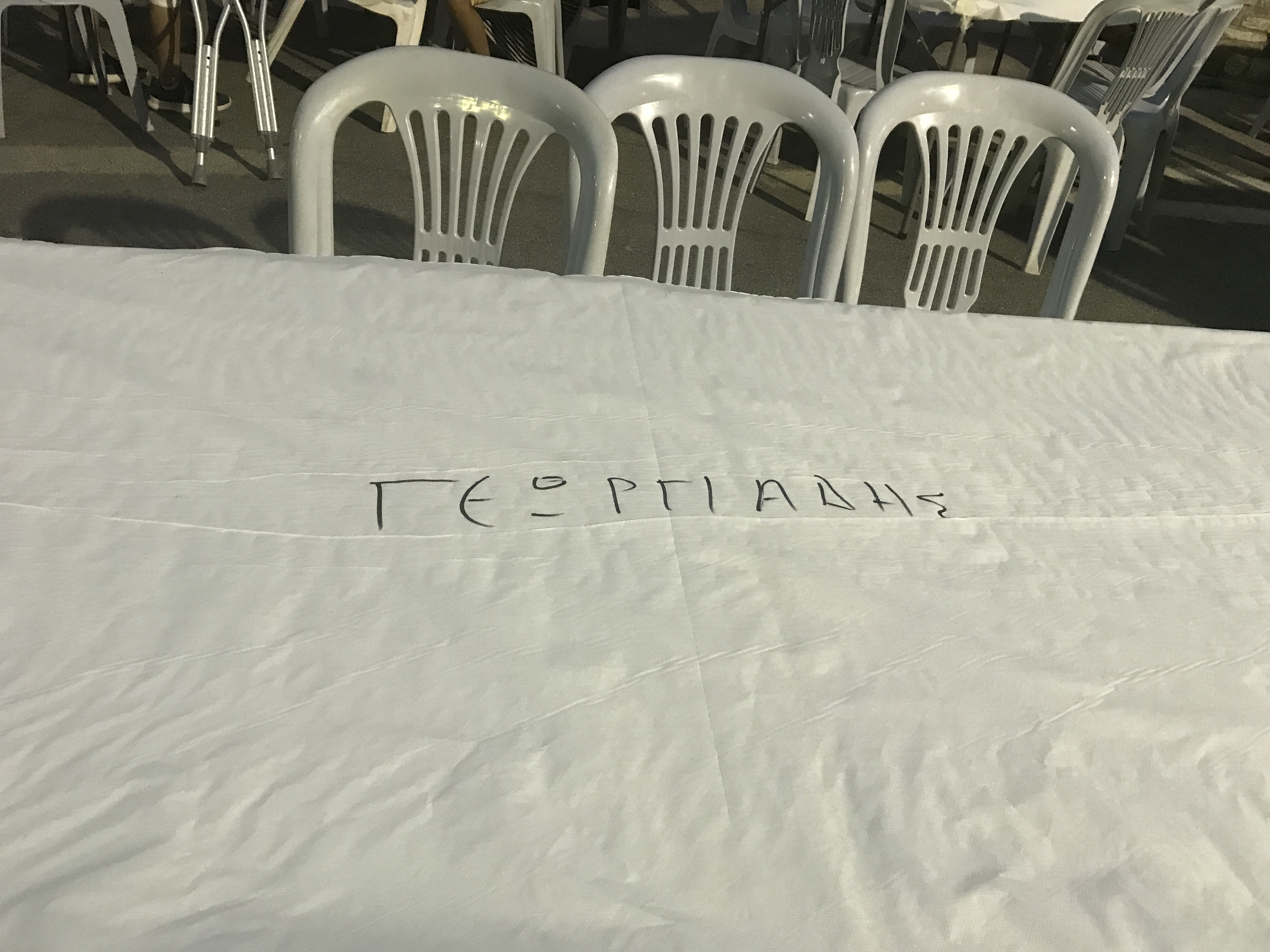
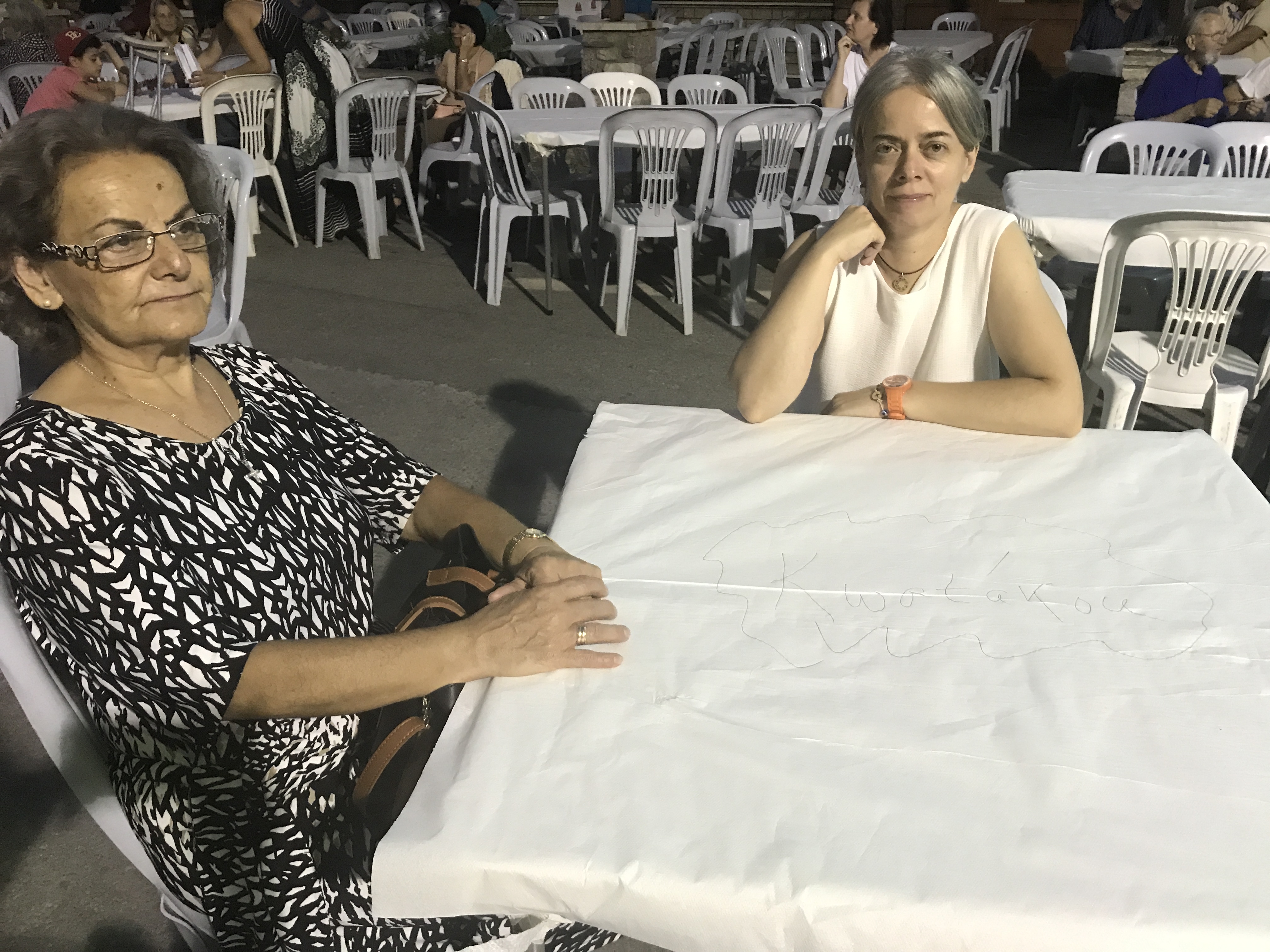
This is my “home village” — birthplace of three of my grandparents: Andreas  Kostakos, Hariklia Aridas, and Ilias Papagiannakos. I attended its panegyri with my cousins, Eleni and Panorea Kostakos. Eleni was anxious to arrive early as she was concerned that we would not get a table. When we walked into the platea (town square) at 8:00, I thought her worries were not valid as the area was empty. That is, until I saw that people had “reserved” their places by scrawling their names across the paper tablecloths!

The Georgiades family has marked its spot!

Eleni (left) and Panorea Kostakos are holding our table; I wrote our surname on the cloth

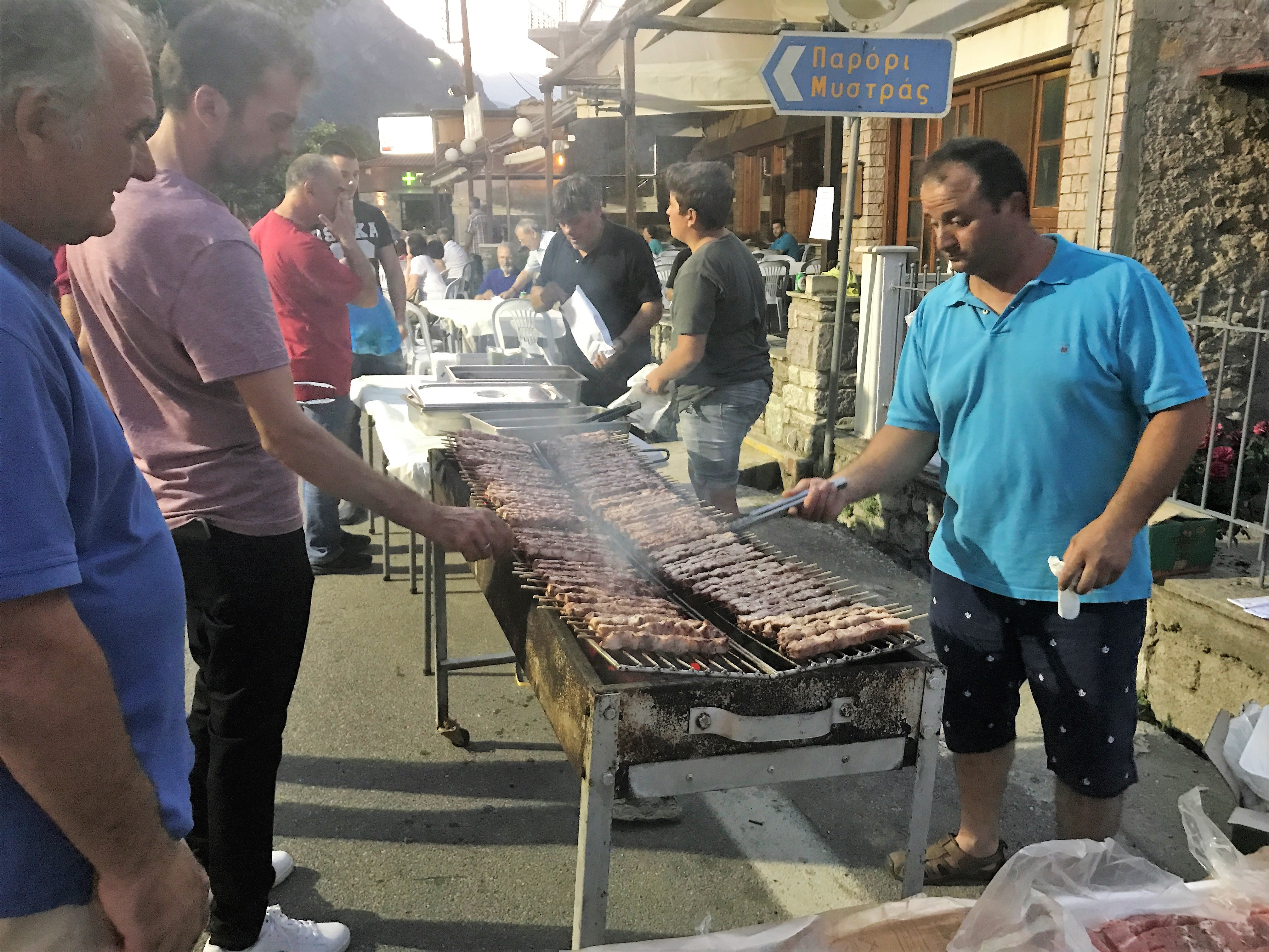
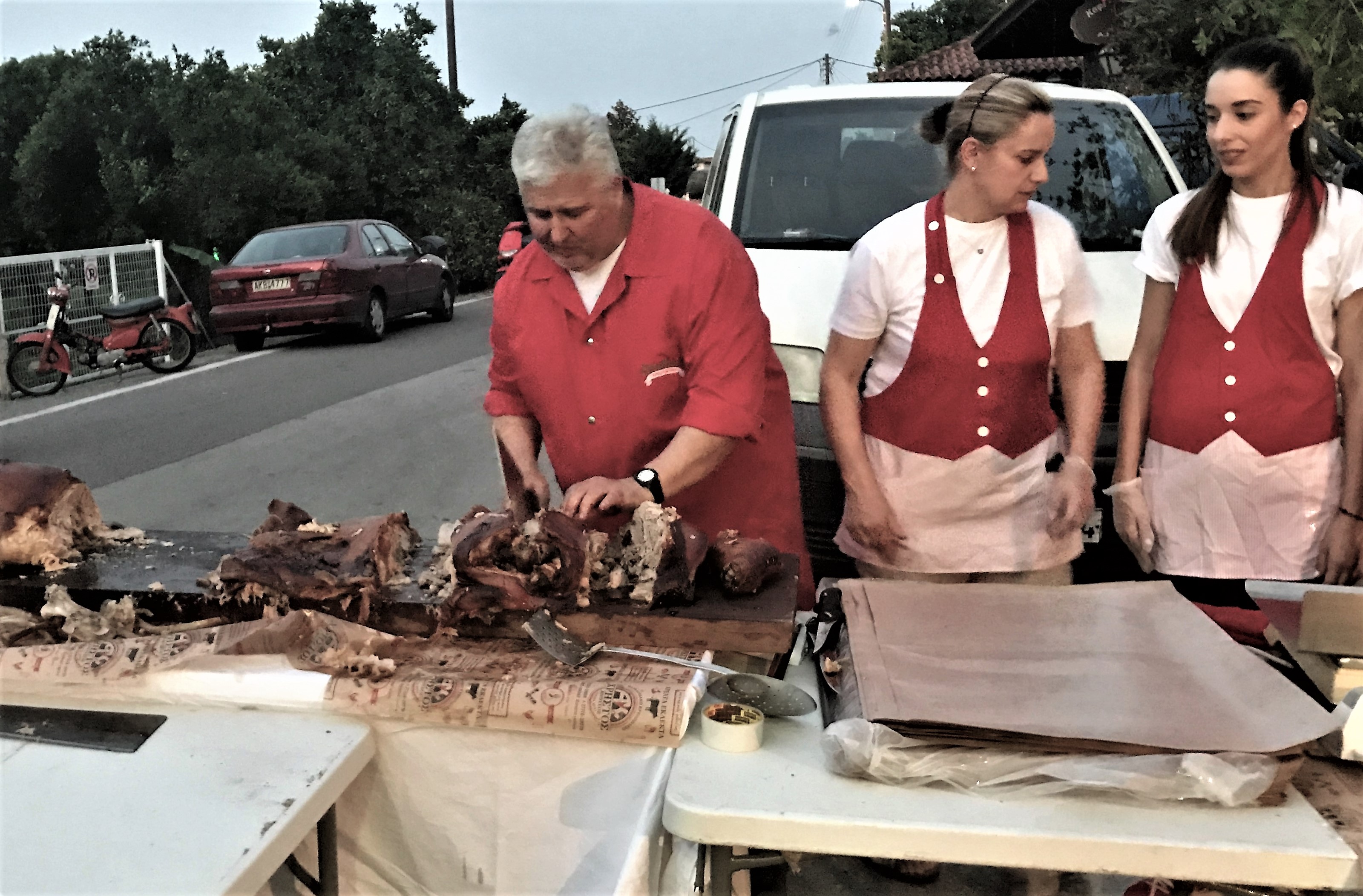
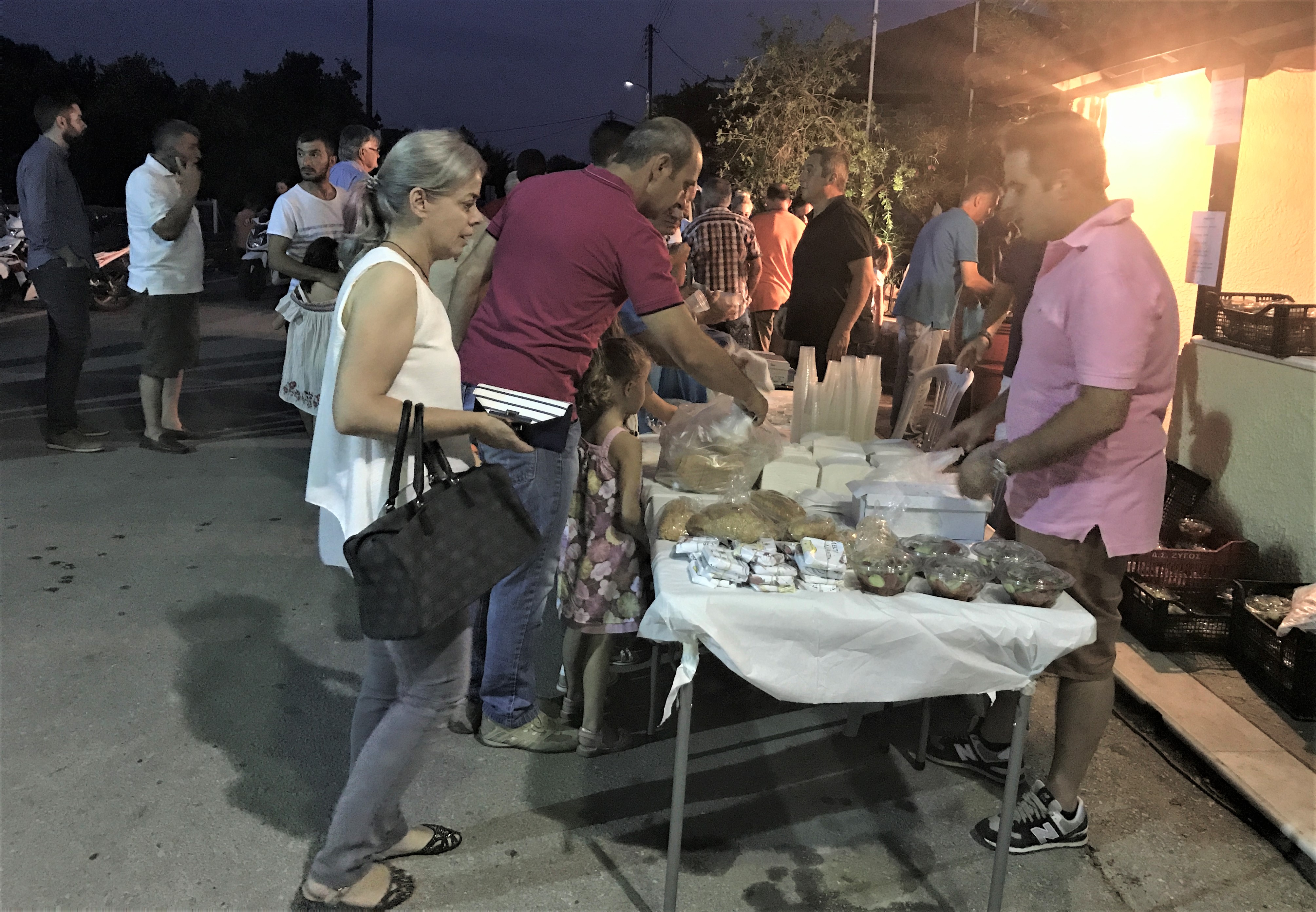
Food vendors worked throughout the evening. The tantalizing smell of souvlaki, roasted corn, smoked ham and Greek desserts enticed long lines of hungry partygoers.

Souvlaki, the staple of Spartan diets

Roasted and smoked ham

Panorea in the dessert line

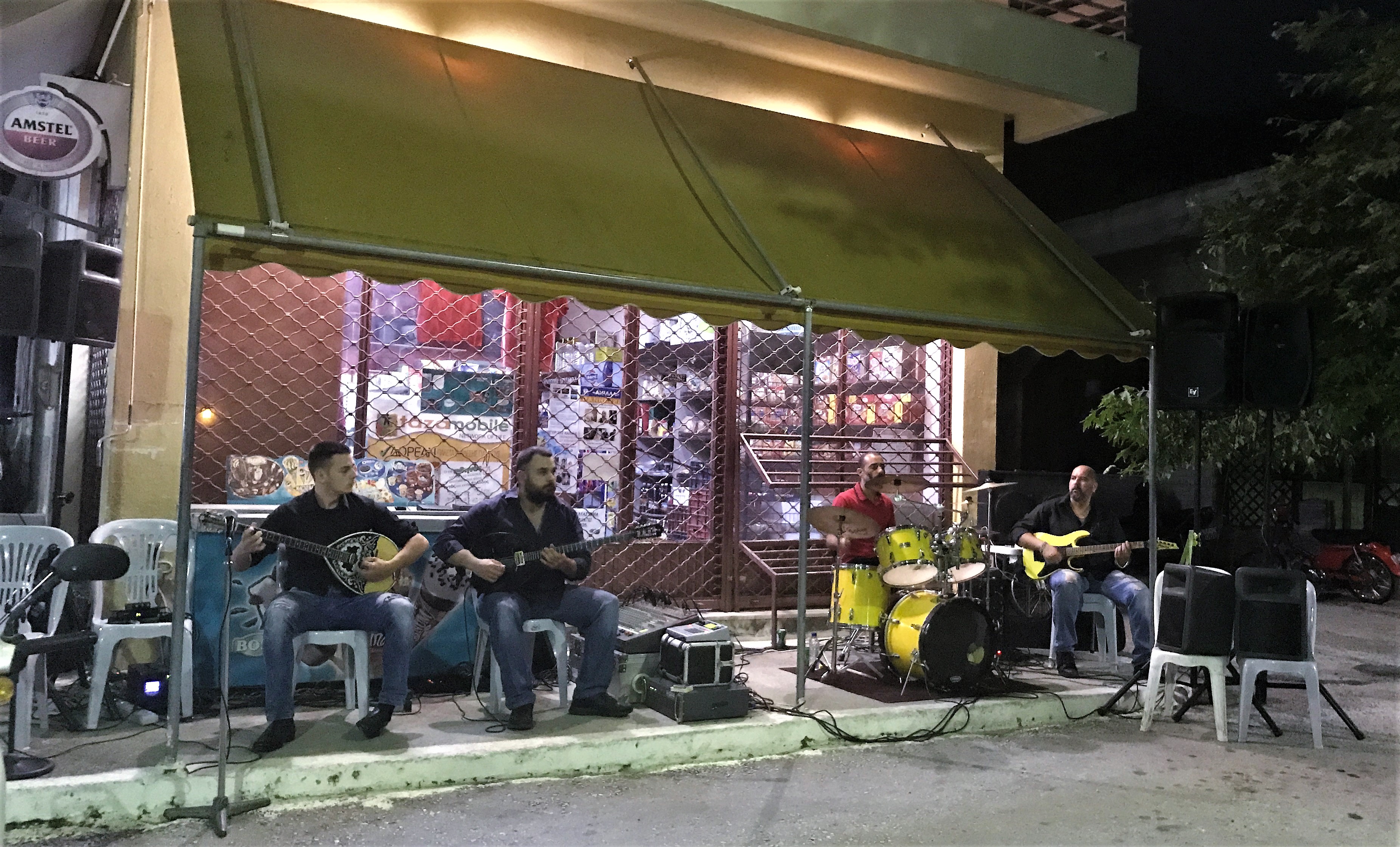
Live music, singers and dancing brought villagers together to celebrate their heritage and their village.

Traditional Greek music enhances the festivities

And of course, there is dancing!

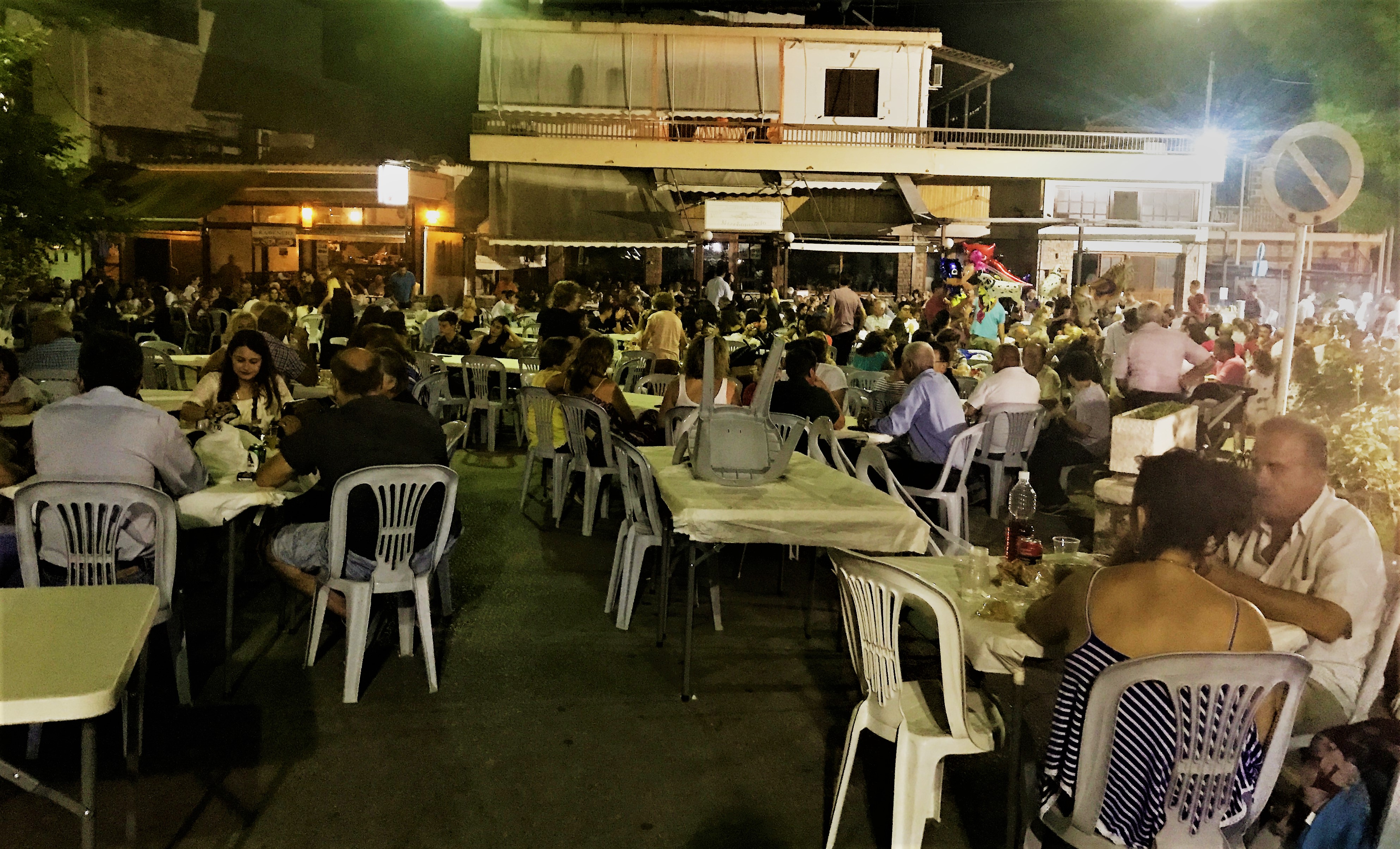
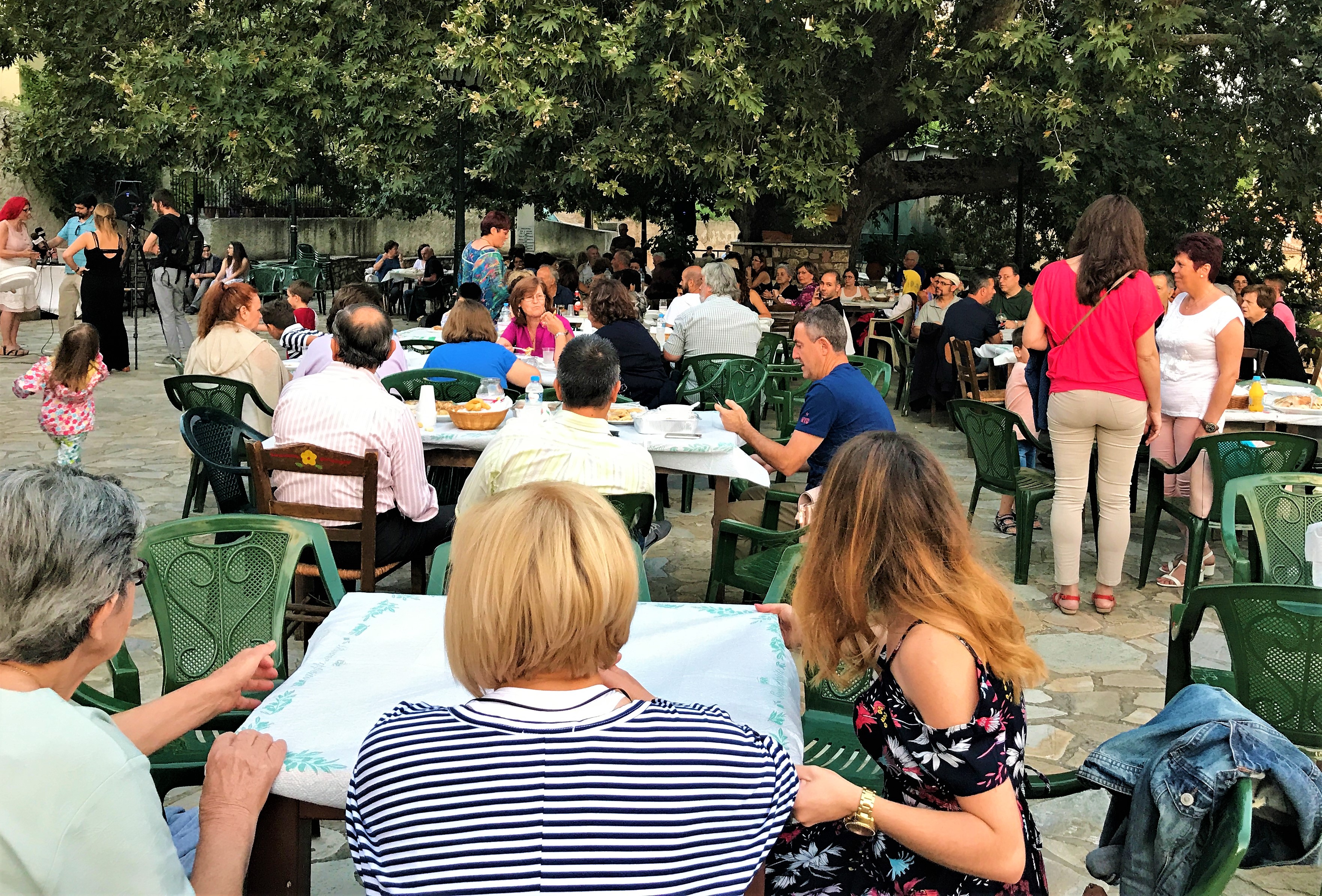
The platea quickly filled to capacity as families and friends table-hopped. The decibel level of voice and music increased significantly as the night progressed.

The platea is filled

THEOLOGOS

This is the village of my great-grandmother, Stathoula Zaharakis, daughter of Dimitrios Zaharakis of Theologos and Giannoula Zarafonitis of Amykles. Situated 6 km straight up a mountain, it is quaint and beautiful.

Theologos nestled in the mountains

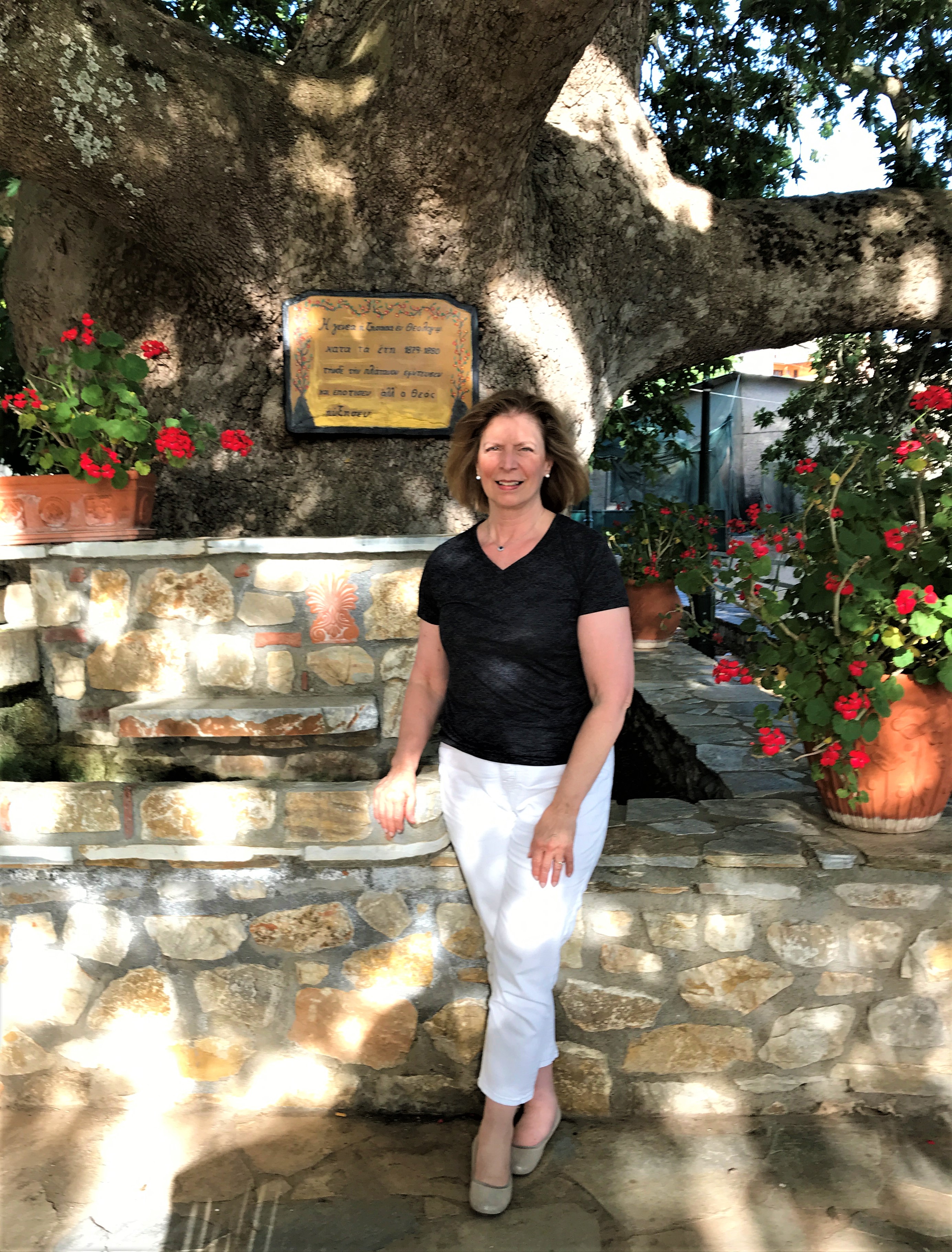
Me, under the sprawling tree of the Theologos platea.

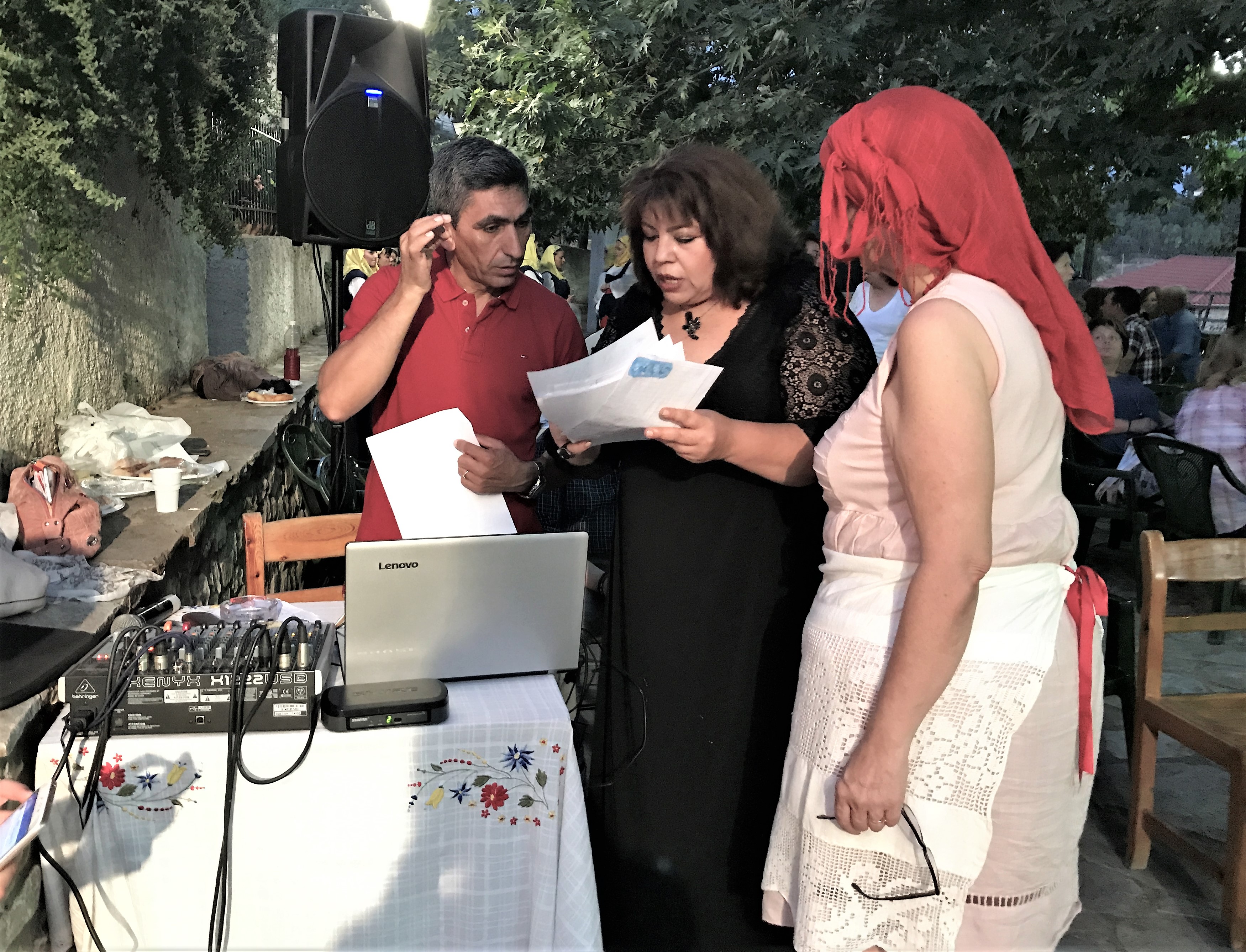
Last year, my cousin, Georgia Zaharakis, organized a Women’s Syllogos of Theologos to preserve and maintain the culture and heritage of the village and I joined their sisterhood. On July 8, the syllogos held a panegyri.  I offered to help and was given the job of working with the tech crew. Being part of this was great fun, even though I scrambled to keep up with instructions given in rapid-fire Greek.

The technical crew, going over last minute details: l-r: Vassilis, Dimitra, Georgia.

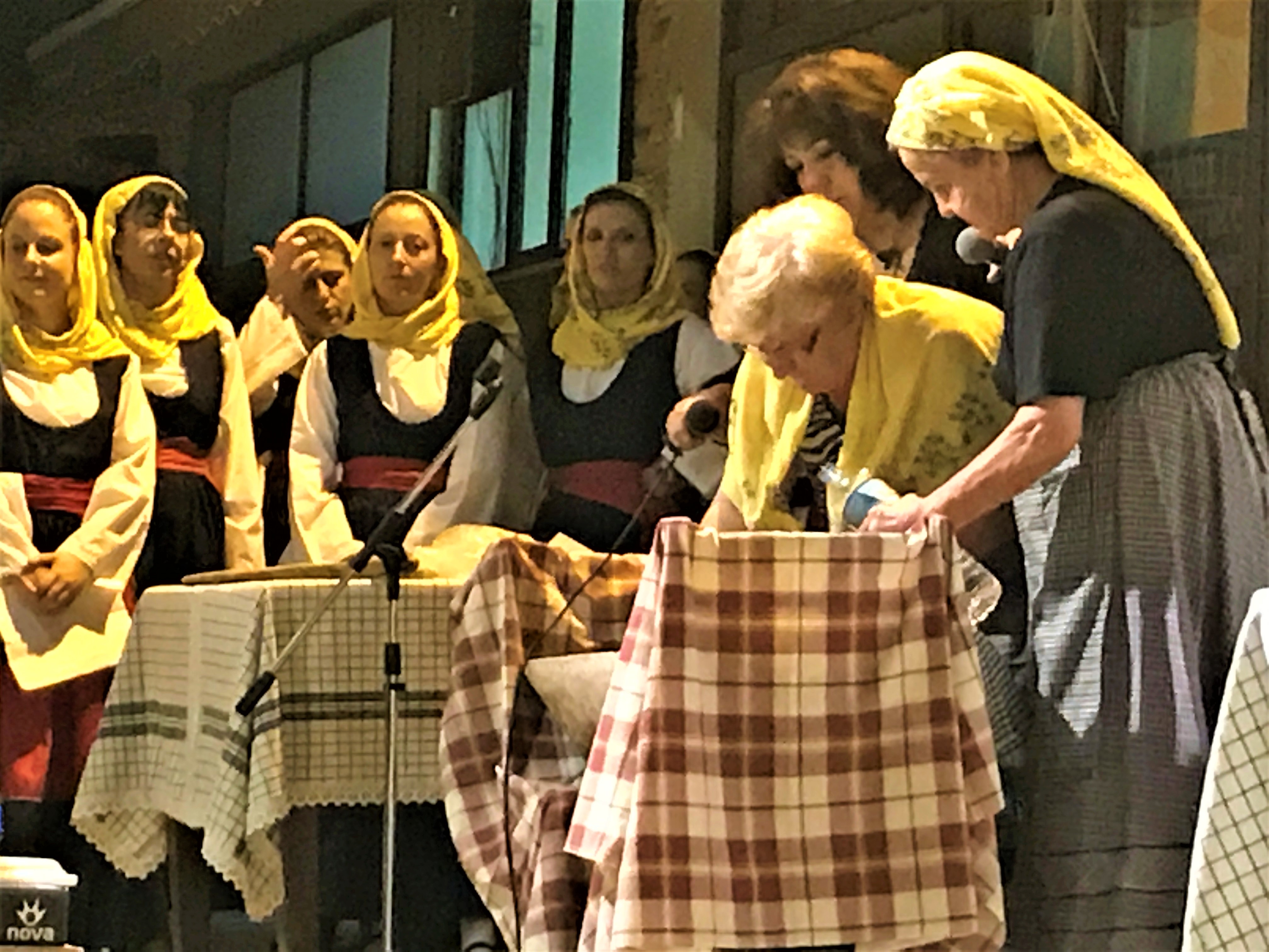
The theme was centered on the grain harvest and making of bread. Video, literary readings and bread-making demonstrations brought the “feast of wheat” to life.

Village women demonstrate bread making

Over 300 people attended; the platea filled throughout the night

Women in traditional costumes, led by Vassilis Andronis, performed dances from all over the country.

And of course, the entire village also joined in!

The news media picked up this story; video and photos can be found here.

AMYKLES

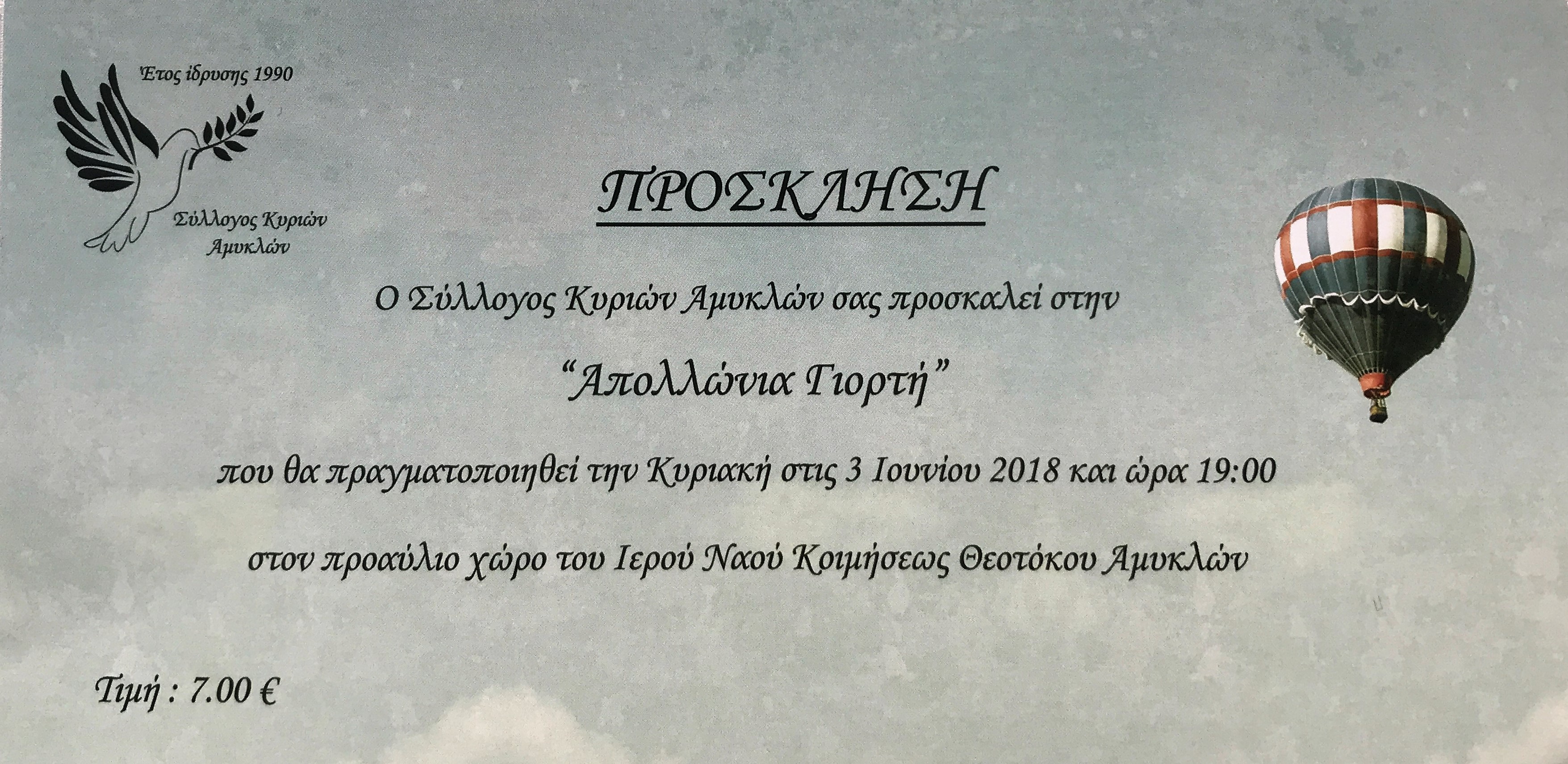
The ancient and historic village of Amykles was the home of my great-grandmother, Giannoula Zarafonitis. I visited Amykles early in my trip and wrote a post here. The syllogos of Amykles held a festival on June 3 to raise money to help the poor.

Invitation to Amykles festival, June 3, 2018

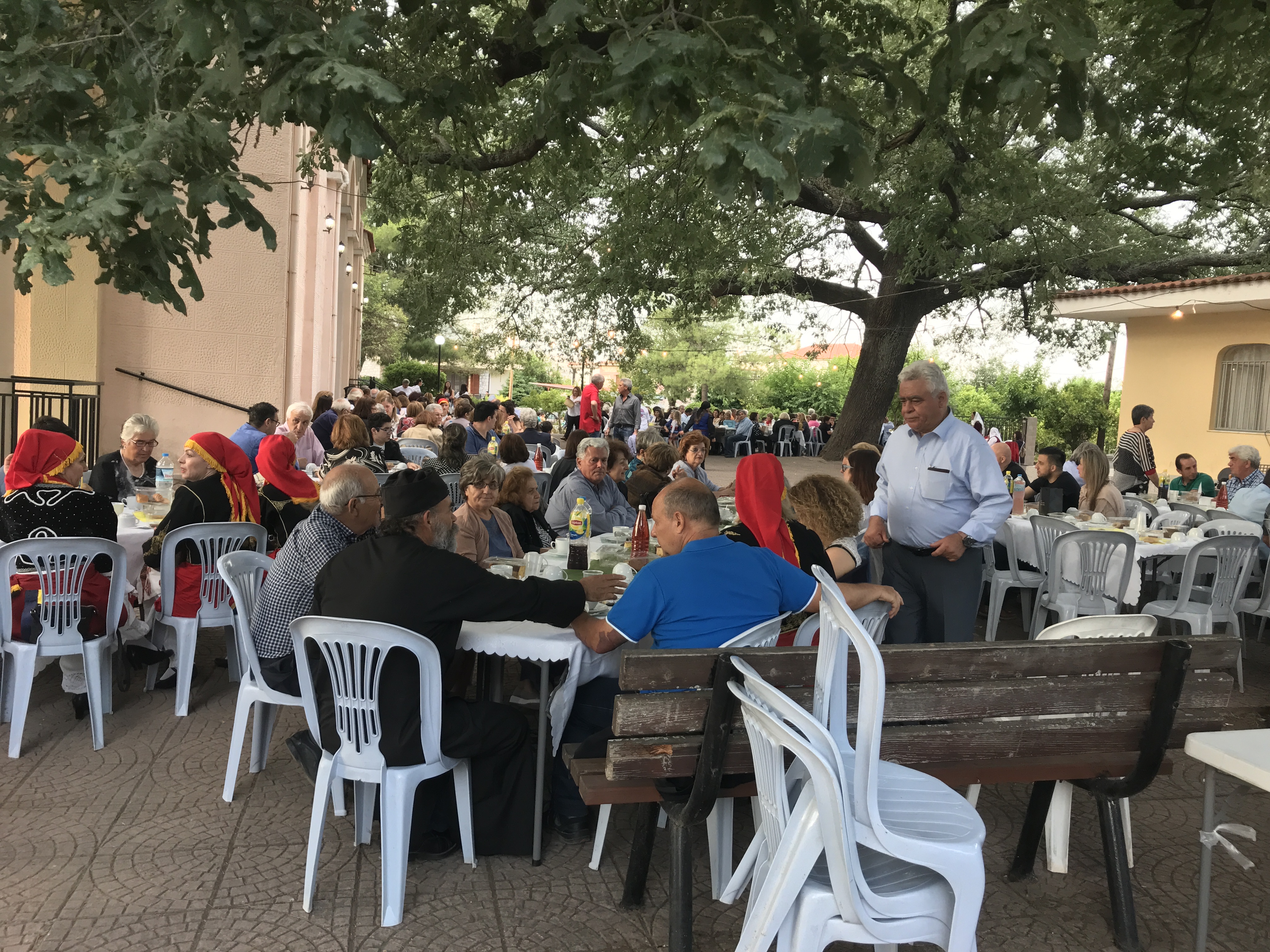
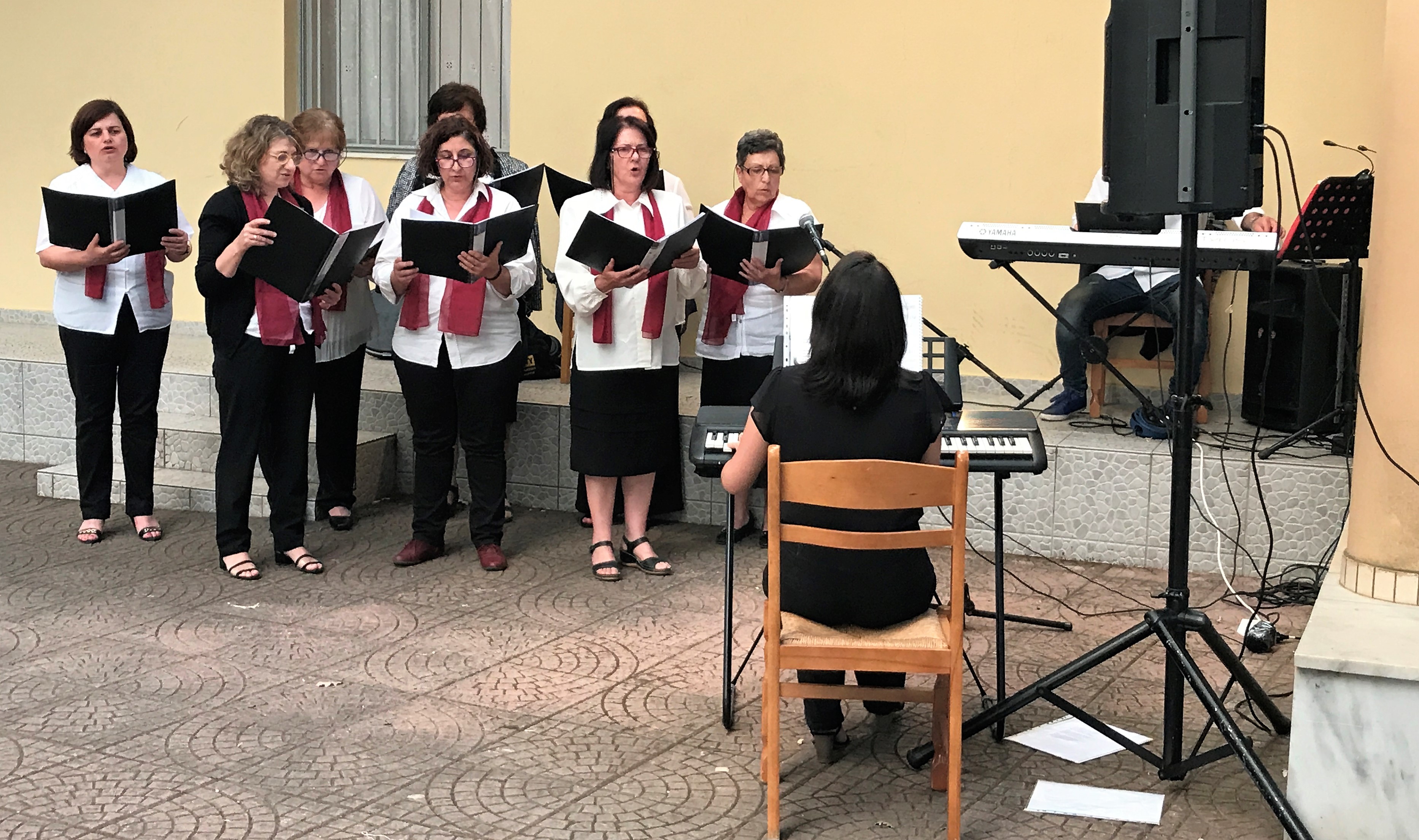
Under the shadow of the church, people congregated. A choir sang, and costumed men and women danced.

Amykles Panegyri

Amykles choir

Men and women engage in traditional dance

These panegyris are an important part of the social fabric of Greece. Villagers are extremely proud of their Laconian heritage and the traditions of their village. As I joined these festivals, I remembered that I was participating in the same rituals as my grandparents and great-grandparents. Doing so is one of the joys of “going home.”


How Do They Call You? Πως σε λένε;

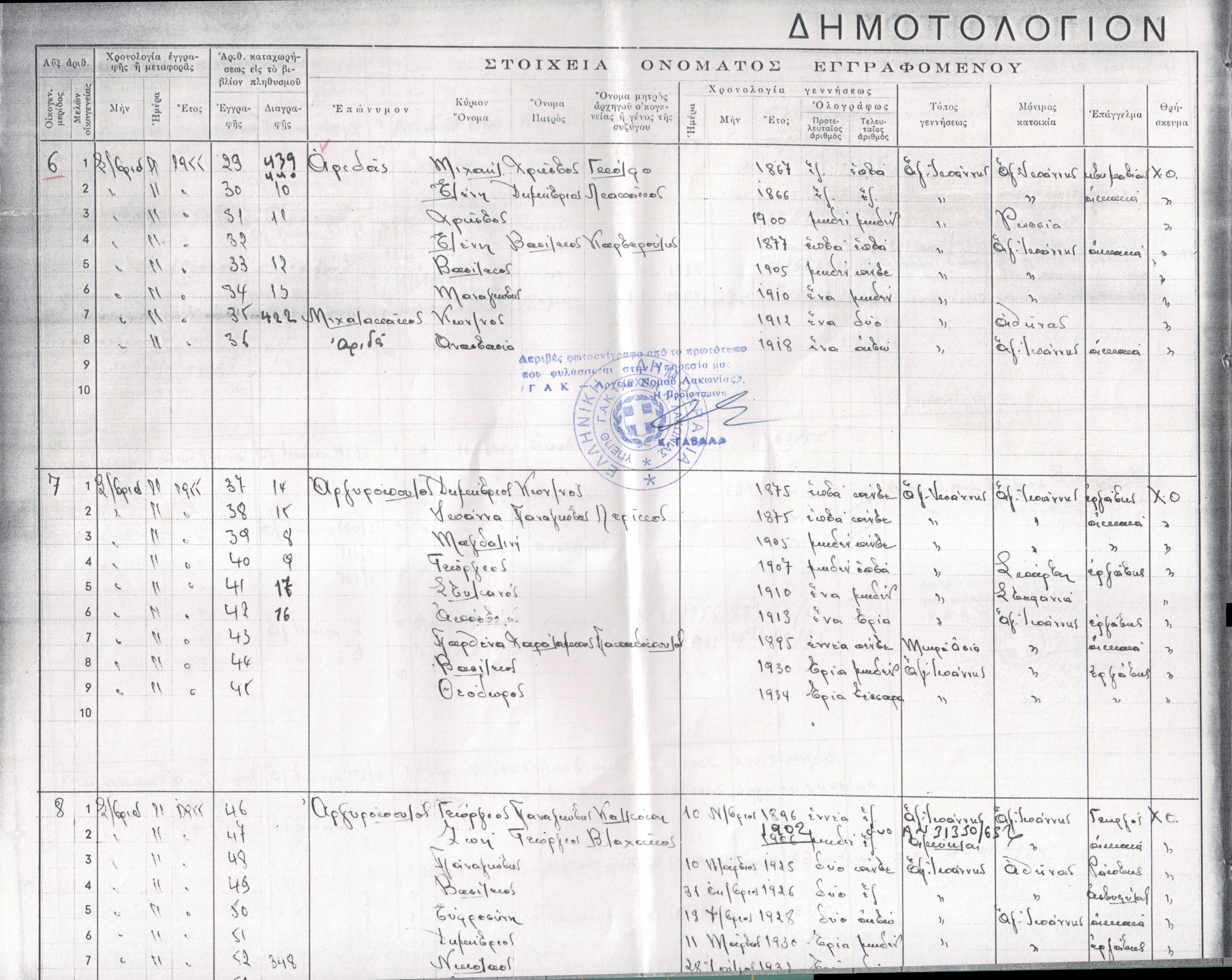
My dive into the bewildering world of ever-evolving Greek surnames started in October 2008, when I received this Town Register from the Sparta Archives office:

Agios Ioannis, Dimotologion (Town Register) Family #6, Aridas, page 1 of 2

The first entry, family #6, is the household of Michail Chistos Aridas of Agios Ioannis, relatives of my paternal grandmother, Harikleia Aridas Kostakos:

Aridas, Michail; father: Christos, mother: Gkolfo, born 1867
Aridas, Eleni; father: Dimitrios Liakakos, born 1866
Aridas, Christos, born 1900
Aridas, Eleni; father: Vasileos Karteroulis, born 1877
Aridas, Vasileios, born 1905
Aridas, Panagiotis, born 1910
Michalakakos, Konstandinos, born 1912
Aridas, Anastasia, born 1918

I was surprised to see that  Michail had two wives: Eleni Liakakos and Eleni Karteroulis, with their respective children listed under the name of their birth mother. But I was stunned to see the name Konstandinos Michalakakos. Who is he, and why is he in this family? My first thought was that he is a cousin, an uncle, or even a friend living in Michail’s household.

Wrong! He is Michail’s son.

My first lead came from an Aridas relative whose mother visited Agios Ioannis in the 1950s. She was told that Michalakakos was the original name and Aridas had begun as a nickname or paratsoukli (παρατσόυκλι) for an ancestor who had long legs. The Collins Greek-English dictionary verified the translation, with definition (b) leg.

Last summer in Agios Ioannis, one of my Aridas cousins verified that the names were used interchangeably. However, he was certain that Aridas was the original name and Michalakakos (son of Michail) was a spin-off; and that Konstandinos chose to use Michalakakos because that name was “more professional and respectful” in his work as a theologian in Athens.

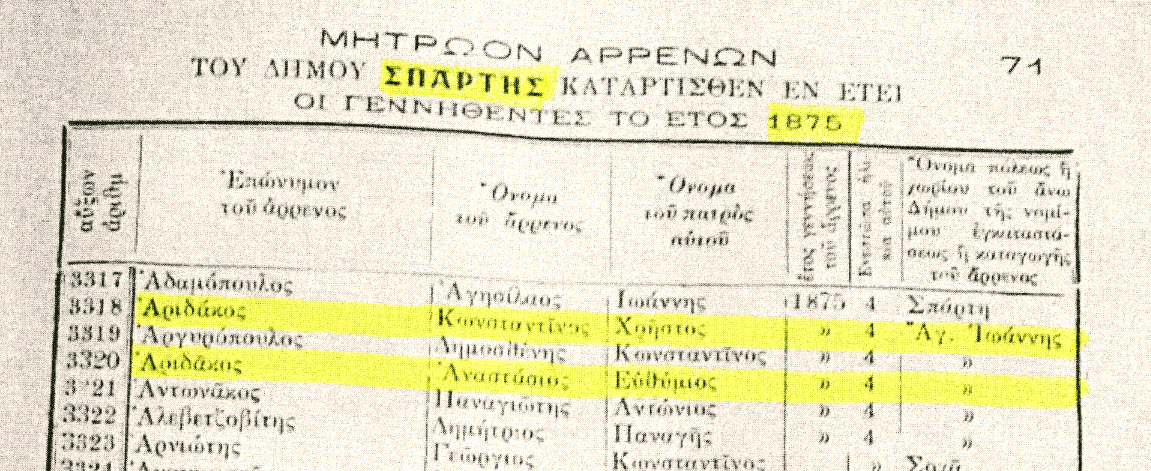
And there is yet another derivative of the name– “Aridakos” (son of Arida) as shown in this 1875 Male Register: line 3318: Konstandinos Aridakos, son of Christos, and line 3320: Anastasios Aridakos, son of Efthymios.

Mitroon Arrenon, 1875, Sparta, Greece.

Question: which name is correct?
Answer: all of them!

And how can that be? Giannis Michalakakos (no relation) remarked: “In Greece, we ask: πως σε λένε; how do they call you?”  Those words — πως σε λένε — struck me powerfully, as my mind processed that people are generally asked, “how do they call you?” NOT “what is your name?”

So, a person can reply any way he chooses: call me the son of Michael (Michalakakos), or call me the son of Aridas (Aridakos) or simply, call me Aridas.

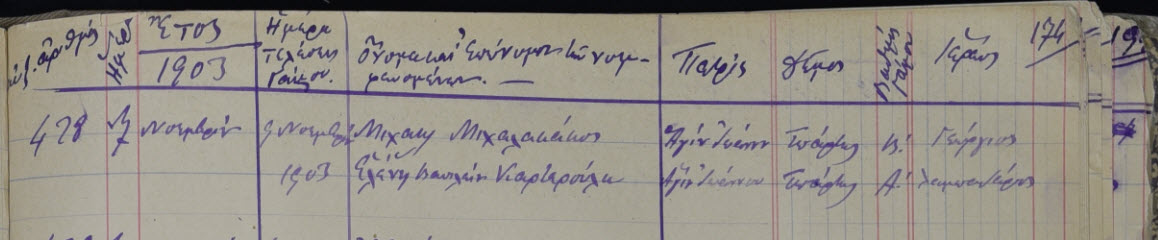
Following the paper trail of Michail Christos proves that this practice was customary. He is named Aridas in the Town Register above, in his Male Register, and on his passenger ship record. But in his marriage record of 1903 he designates himself as Michail Michalakakos.

Sparta Mitropolis Marriage Index Book; Sparta: Oct 1899-Sept 1907; page 174; #478: 9 November 1903; Michail Michalakakos and Eleni Vaseleios Karteroulis; second marriage for him; first marriage for her; both from Agios Ioannis, Sparta.

Interestingly but not surprisingly, some of Michail’s children followed his pattern of using whichever name they wanted, whenever they chose.

Aikaterini: (not in the above Town Register): her 1913 passenger ship record uses Aridas; her marriage record uses Mihalakakou and lists her father as Mike Mihalakakon.

Gkolfo:  her 1921 passenger ship record uses Aridas; her marriage record uses Mihalakakos and lists her father as Mihael Mihalakakos.

Konstandinos:  Male Register uses Michalakakos with a notation regarding a surname change; Agios Ioannis school records use Aridas; Town Register uses Aridas.

Anastasia: Town Register uses Aridas; school records use Michalakakos.

Efrosyni:  consistently used the Aridas surname, but this news article reveals that as late as 1950, Michail was known as both Aridas and Michalakakos. (Efrosyni married Nikolaos Revelos):

Efrosyni Aridas Revelos visit to her Michalakakos family in Agios Ioannis

Digging deeper into all members of the Aridas family produced many documents, both Greek and U.S., which verify the interchangeable use of the three names.

This example is a marriage record for Efthymios Michail Michalakakos who is the son of Michail Efthymios Aridas, another branch of the Aridas family in Agios Ioannis:

Mitropolis of Sparta, Marriage Index Book: Sparta, 1866-1872; Year: 1871; Entry #302
License Date: October 30, 1871; Groom: Efthymios Michalakakos; no father listed; residence: Agios Ioannis; Bride: Stamatiki Karnazakou; father: Ilias; residence: Agios Ioannis

Πως σε λένε? You get to choose!

Which name is the original family name? The jury is still out. It is understood that surnames (as are defined today) did not become standardized in Greece until after the 1900’s. Anything before then is fluid, and determined by the practices of each family and its individual members.

Πως σε λένε? I am slowly learning to think like a native Greek. Understanding the culture, the history and the language is vital. And, it lessens frustration and expands acceptation.

This article, published in the National Herald, adds additional insights into this topic:
Demetrios is now Jimmy.

Postscript: November 2, 2019: Since writing this original post, I have learned of two additional reasons for double surnames.

  1. Children who were raised by people other than their birth parents (known as “soul children”) may have two surnames–their birth surname and their surrogate parents’ surname. These could be children who were orphaned or given up by a parent who could not care for him/her; or a couple may have adopted a child.
  2. I found a man who appeared to have three surnames when he was called for military service in 1886.*


Hellenic Genealogy Geek Facebook page members clarified that there are only two surnames, Καψής ή Παναναγιωτόπουλος, the soldier’s name is Ανδρέας, and his father’s name is Γιαννάκη ή Παρασκευα. This makes more sense than having three surnames! In summary, don’t be surprised to find alternate names for both the surname and the given name.

An excellent article describing the origin of Greek surnames can be found here.

*Source:  this entry is found in the Φ.Ε.Κ. Government Gazette, 1886; location: Faron, Patreon, Achaiolidas (Αχαιοηλιδος Πατρεων Φαρον).

School Records from Sparta: Finding Your Ancestors as Children

I love old photos–a moment frozen in time, an instant transport into the past. One collection that is especially endearing to me is the work of Swiss photographer, Fred Boissonnas, who traveled throughout Greece in the early 1900’s and photographed everyday life (see more photos here).

Edessa [Greece], 1908. by Frédéric Boissonnas, Public Domain, https://commons.wikimedia.org/w/index.php?curid=16659783


Seeing his photos of children and families fills me with curiosity about the early years of my grandparents, born in the late 1800’s. Last summer, I found School Records for their village of Agios Ioannis (St. Johns, Sparta) at the General Archives of Greece, Sparta office.

Mathitologion, Agios Ioannis, Volume E.K.P. 2.1.1

With gratitude to the kind and helpful staff who encouraged me to take digital images, I now have photos of some pages where members of my ancestral family are recorded. These documents are replete with insights into the families of the village in the early 1900’s.

Mathitologion, Agios Ioannis, School Year 1908-1909; page 11; Volume E.K.P. 21.1.

In this image, page 11 lists students for the school year 1908-1909. Because my great-grandmother, Afroditi Lerikos, was born in Agios Ioannis, I was looking for members of the Lerikos family. I found one on line 103: student: Lerikos, Anastasios, father: Dimitrios; age 7; born: Alaimbey; residence: Alaimbey; religion: Orthodox; father’s occupation: worker; student in class B. (Click on image to enlarge.)

Along with information about Anastasios such as his age and place of birth, this entry verifies that his father’s name was Dimitrios whose occupation was a “worker.” It also proves that the Lerikos family lived in Alaimbey which is a neighborhood or small hamlet of Agios Ioannis. This is an important fact when I am looking for records–I should be searching first and specifically for Alaimbey, and then for Agios Ioannis.

If a child attended school for more than one year, comparing his information in each successive school record helps me verify a specific birth year. In some books, the age of the child is given in years such as this example; in others, the birth year of the child is given. Either way, an exact birth year can be ascertained.

It’s All About Location!

Records in Greece are location-specific. My colleagues and I repeat, almost as a mantra, the following to new researchers: You have to know the original surname, and you have to know the village of origin.

In school records, I have found instances where children were born in one village, but resided and went to school in another. Knowing the exact birth location is critical. If I am looking for a baptismal record, I must look for a church in the village of birth. Looking for a church in the child’s village of residence will not yield the record. For records later in the child’s life, I would search his/her village of residence.

In the 1920’s, a new column with the heading “District Registered” was added. This signifies the district where boys only are registered in the Mitroon Arrenon (Male Register). This piece of data becomes critical in locating records, because I now know in which jurisdiction to look for information about the smaller villages. For example, Alaimbey is grouped with Agios Ioannis. However, records for the neighboring village, Sikaraki, are split:  some are found in Sparta books and some in Agios Ioannis books. (Confusing, I know! But important.)

The following record for Ilias Nikolaos Panagakos shows that he was born in Parori, resided in Kalami in 1932, but is registered in Mystra. This leads me to search in three villages! (Click on image to enlarge.)

About the Parents…

School records record the name of the student’s father (mothers are not named) and gives his occupation. These two facts are essential in being able to differentiate between “men of the same name.” Naming traditions dictate that there can be several boys, about the same age, with the same name, in the same village.

It is both helpful and revealing to compare a father’s occupational information given in school records to that found in a Dimotologion (Town Register). Following a student through several years of school records, one can see if the occupation of the father changes. It is not uncommon to see that some men have two or even three different occupations. In the agrarian society of early 1900’s Sparta, most men were workers, farmers, landowners, or shepherds. But school records have revealed innkeepers, chauffeurs, wine producers, merchants, grocers, basket makers, masons and muleteers (I had to look that one up; it is a person who drives mules). Now that I know the names and occupations of the village families, I can visualize these people buying, selling, and bargaining with each other. This brings the village to life!

There are two occupations that especially caught my attention:  “orphan” and “immigrant.”

When a father’s occupation was listed as orphan, it meant that the father of the student was deceased, but not necessarily the mother (remember, women are not named or categorized in these records; also, the column description specifically states “father’s occupation”). I have seen instances where, for example, in the school year 1908-1909 a child’s father’s occupation was landowner, but in the school year 1909-1910, the occupation was orphan. This gives me a year of death for the father, an important fact that can be difficult to find!

When a father’s occupation was listed as immigrant, this reveals that he is living overseas, most likely in the U.S. or Canada in the early 1900’s.  The records indicate which school year the father was working in the village, and which year(s) he was listed as an immigrant. This gives me a specific timeframe to look for passenger ship records, which document where he was going and whom he was “going to” on the other side of the Atlantic. Knowing this migratory pattern is critical to understanding if, or when, the family eventually left Greece.

When my paternal grandfather, John Kostakos (Ιωάννης Κωστάκος) emigrated to Brooklyn, New York, he settled near his relatives and compatriots. I was excited to find their names in the village school records. These people grew up together, went to school together, and reestablished old ties in a new land. Very often, men arranged for their sisters to marry their schoolmates from the χωριό. Their relationships, forged as children, supported them throughout life.

About the Girls

Searching for female ancestors in Greece is extremely difficult as there are few civil records where they are named. However, girls who attended school are in the school registers, and their information is just as detailed as that of the boys. Distinguishing a girl’s name is easy because of the diminutive which is used both in given names and surnames. For example, Vasileios for a male; Vasiliki for a female;  Lerikos for a male; Lerikou for a female.

Metsovo on Tap, 1913; photographer: Fred Boissonnas; http://www.lifo.gr/team/lola/34138

In the earlier school records, girls are listed together at the end of the roster so they are easy to find. As time went on their names were integrated within the roster, so looking at the diminutive is essential to correctly identify daughters and sons.

About the Family

Both boys and girls started school at age six or seven. It is interesting to see who attended for only one or two years; and who attended for several. How was it decided as to which child/children in a family went to school and which ones did not?  Girls are students, so it was not a matter of sex or preconceived assumptions that girls stayed home to work while boys received an education. It is essential to examine records of every available school year so as not to miss a child who attended sporadically or limitedly.

Scrolling through the school registers of a specific village, the number of families living in that village quickly becomes evident. As I extracted family names, I could easily put together families by looking at father’s name, child’s birth year and village. Below is an example from my spreadsheet–these children share the same surname but it is omitted for privacy.

School Record Spreadsheet

Through my searches in Male Registers, Town Registers and Election Lists, I thought that I had a fairly complete picture of my early 1900 ancestors from Agios Ioannis. However, I came across four children of the same father who was not in my database. Through school registers, I was able to discover and piece together a family that somehow had been omitted in other records.

Despite occupations, wars and tumultuous periods, children continued to go to school. School records prove that some forms of everyday live prevailed, even under a cloud of fear or foreboding. Village histories, as well as civil records, document that education–even in remote areas–was available and important. The information in school records brings a new and exciting dimension to understanding the lives of my ancestors.
Andreas Kostakos: Hiding in Plain Sight

How many years does one search to find a record–any record–that proves the existence of a great-grandfather? At what point does a  “reasonable” researcher give up?

As a researcher (the reasonable part is questionable) and an eternal optimist, my answer is: never! Never, never, never give up. Newly found and newly digitized records are becoming available continuously; social media is bringing together people who collaborate and help each other; DNA is expanding the “cousin” pool.

All of these stars aligned in the sky to bring forth documentation for my great-grandfather, Andreas Kostakos.

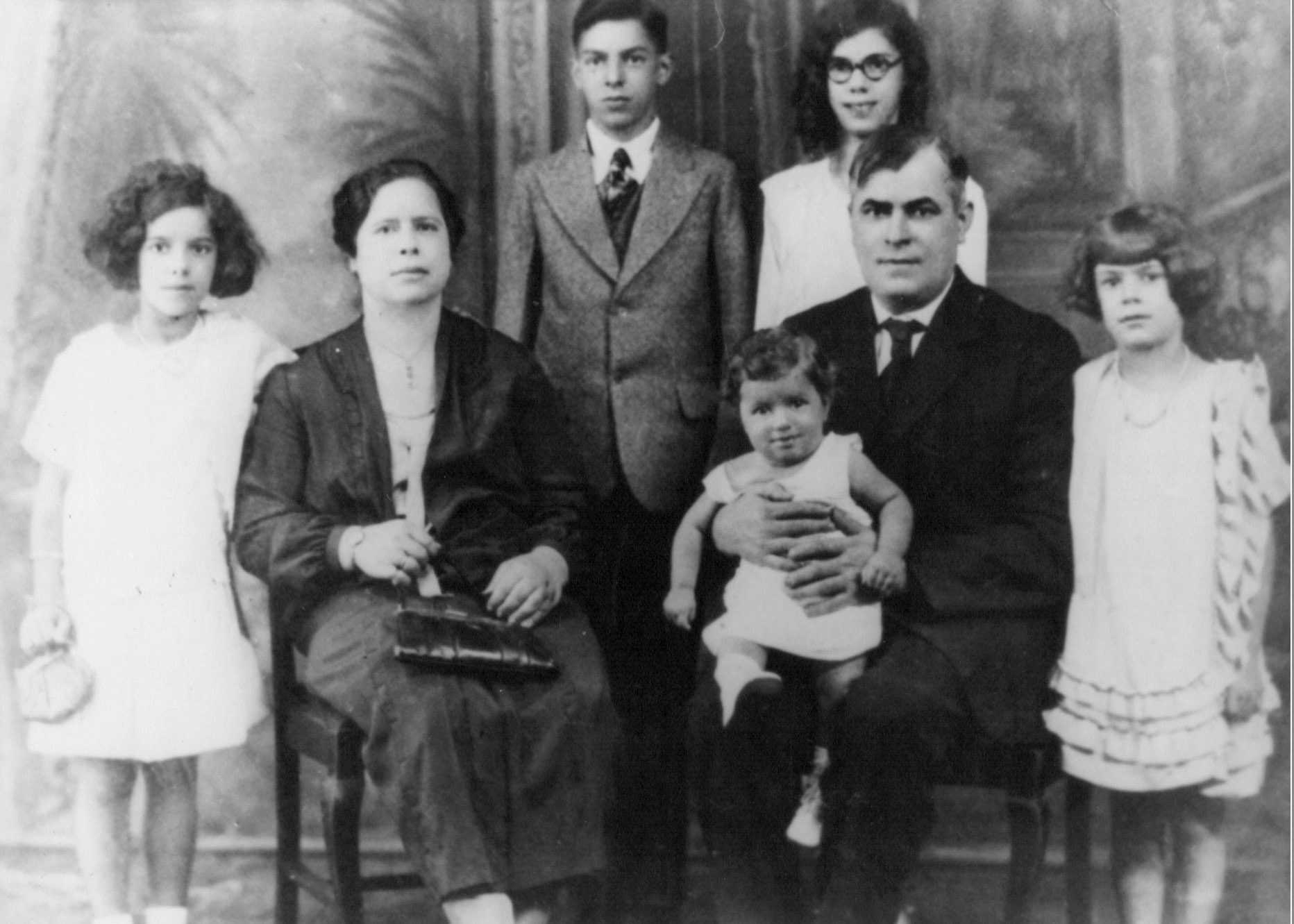
Andreas, I have now learned, was born in 1809 in Agios Ioannis (St. Johns), Sparta, Laconia, Greece. Andreas had two wives, Anastasia–by which he had perhaps six sons, only one of whose descendants we know; and Poletimi Christakos–by which he had five additional children including my grandfather, Ioannis (John). This is the only family photo of my grandfather, Ioannis with my grandmother, Hariklia Aridas Kostakos and their children. My father, Andrew, was the oldest.

l-r standing: Frieda, Andrew, Pauline, Georgia. Seated: Hariklia, Alice, John

Family of Ioannis Andreas Kostakos, about 1930, Brooklyn, New York. l-r standing: Frieda, Andrew (my father), Pauline, Georgia. Seated: Hariklia, Alice, Ioannis.

For years, I have looked for records for Andreas in Agios Ioannis and surrounding villages of Sparta. I sent letters to the Archives in Sparta (excellent support but no Andreas Kostakos found) and the Mayor’s office (no response). Three years ago, my friend and research companion, Gregory Kontos, introduced me to the Election Registers online at the Digital Collection of the Greek Archives. These Registers were created in every village to record the names of men who were at least 21 years old and eligible to vote. The Registers from 1872 are typewritten and easy to read. The older ones, which can date back to 1844, are handwritten and almost indecipherable to a non-native reader.

That collection was my first initiation into trying to read old Greek handwriting. This is not for the faint-hearted, but it is possible. Over the years, I have learned to read some modern Greek writing but the older script is downright intimidating. I never went back to look at the Ladas collection. Until yesterday.

My friend and historian/researcher, Giannis Michalakakos, was working on a genealogy case for a client whose roots were from a village near Sparta. While reviewing the Lada Election Lists for 1844, he saw an entry that he knew was my family. Imagine my shock – joy – disbelief when he called and said that he found the name “Kostakos, And” in Agios Ioannis! My hands were actually trembling when I clicked on this link that took me to the page for file 22, image 99, line 1205: http://arxeiomnimon.gak.gr/browse/resource.html?tab=tab02&id=13499&start=80

General Archives of Greece, Election Material from the Collection of Lada (1844), File 22 - village of Agios Ioannis File 22, Image 99; Line 1205, Year of Record: 1844, Last name: Kostakos; First name: And.; Male; Age 35; How long lived in the village/resident: αυτόχθων aftochon (indigenous) is from Agios Ioannis; Has money or property? Yes; Occupation: landowner.

General Archives of Greece, Election Material from the Collection of Lada (1844), File 22 – village of Agios Ioannis.  File 22, Image 99; Line 1205, Year of Record: 1844, Last name: Kostakos; First name: And.; Male; Age 35; How long lived in the village/resident: αυτόχθων aftochon (indigenous) is from Agios Ioannis; Has money or property? Yes; Occupation: landowner.

On line 1205 is the entry for “And. Kostakos,” age 35:

File 22, Image 99, Line 1205

File 22, Image 99, Line 1205

Giannis and I agreed that “And” was the abbreviation for “Andrew.” His age is listed as 35 in 1844, which puts his birth year at 1809–within two years of a “guess-timate” I had calculated years ago. The 6th column records the length of time the individual was a resident of the village. Andreas is listed as being αυτόχθοω (aftochon) which means “indigenous.” Giannis explained that Andreas, as indigenous, was in Agios Ioannis from the beginning of the existence of the state, i.e., since Greece became an independent nation after the Revolution of 1821.

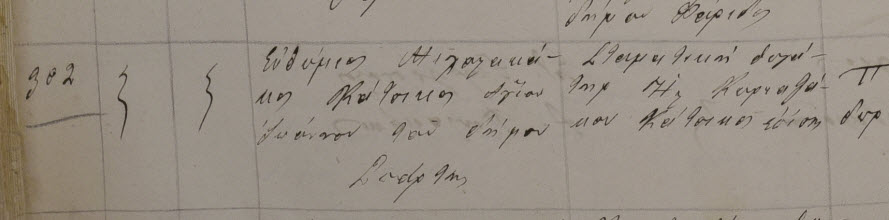
During my trip to Sparta in 2014, Gregory and I had visited the Greek Orthodox Church Mitropolis of Sparta to research in marriage records. Amazingly, we found, in the Index Book of Marriages, the entry for Andreas and Poletimi who were married on August 20, 1860. This was the first “official” document that proved Andreas actually existed. Unfortunately, it did not give the ages of the couple; thus, the newly-found Election Register has provided definitive information on Andreas’ birth year and birth place.

Mitropolis of Sparta, Index of Marriages, Number 125, Date: August 20, 1860; Andreas Kostakos of Agios Ioannis and Poletimi, daughter of Nikolaos Christakos of Xirokambi, Faridos.

Mitropolis of Sparta, Index of Marriages, Number 125, Date: August 20, 1860; Andreas Kostakos of Agios Ioannis and Poletimi, daughter of Nikolaos Christakos of Xirokambi, Faridos.

But this new record raises a new research challenge:  years ago, my elderly aunt, a descendant of Andreas and Anastasia, told me that Andreas came to the Sparta region from “Pyrgos over the mountains” after the 1821 Revolution to find work (see prior post). That comment had shifted my research focus from Laconia to Messinia, the location of Pyrgos Lefktro–a village which is literally over the Taygetos mountains. My hunt so far has not yielded a Kostakos family; yet, even if I find one I cannot know if the Kostakos is related to me.  Kostakos is a patronymic name (Kost-akos literally means son of Kostas); many surnames evolved from patronymics; and there are untold numbers of men named Kostas/Konstandinos in the southern Peloponnese. I hope that DNA will be the next link to connect me with “lost” branches of my family.

Research results? Many years, many efforts.

Without the help of Giannis and Gregory, my research would remain stalled.

Without the digitization of the Election Lists, my research would remain stalled.

Without social media and DNA connections, my research would remain stalled.

Whenever I become frustrated in this quest, I take a step back and look at the totality of the situation: there was no “Greece” during 400 years of Turkish occupation; in the late 1800’s, a new government was being created; life was predominantly rural; people were largely illiterate; recordkeeping was, at best, rudimentary. In retrospect, it is quite amazing that any records have survived. It is encouraging that some have been digitized and are now online.

I continue to have faith that, if there is a written document to prove the existence of of one of my ancestors, at some point in time–with the help of a friend, with the discovery of a new record collection, through a DNA connection–it will find its way to me.