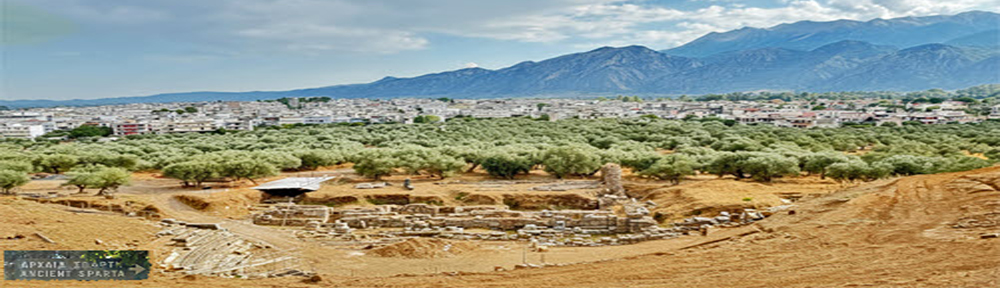
Someday — in Greece!

Last year, I had the opportunity to meet Ann Barsi when I gave a presentation about FamilySearch.org to an Italian cultural group. She has spent 40 years extracting church records in her husband’s village of Pieve di Controne in Italy. These records go back more than 500 years! Ann has just published a book about the history of the area which includes genealogies of all of the original families. Anyone with roots in this village can email her and receive a family tree going back 10-12 generations!

I just had to write Ann’s story. Her work fills me with inspiration and her ability to access these records fills me with longing to be able to do this work for my Greek ancestors. With the help and enthusiasm of Gary’s cousin, David, we have done a similar work — we have been able to trace my husband’s Czech maternal line back to the 1600’s, also through church records in the Czech Archives.

It is possible to learn to read these old records in a foreign language. Ann did it, and I am learning to do it in Czech with David’s help. Truly, it is not impossible to build an ancestral line generation by generation, going back hundreds of years. The only impediment is lack of records.

It is clear to all genealogists that access to religious records is a key component in successfully compiling accurate family trees. Whenever I have written to a Diocese in Greece to ask for information, I have received an immediate and courteous response. Their desire to be helpful is unquestioned and gratefully acknowledged. The problem lies in the fact that we cannot browse the records. We can ask for a specific birth or marriage information, but oftentimes this is unknown. Thus, having the capability to look, page by page, through the records is critical to success. Currently, this is not possible.

Our Jewish friends have a poignant phrase, filled with hope and joyful anticipation — someday in Jerusalem. I will never lose hope that someday I will be able to access church records to find my family through the centuries — someday in Greece!

I hope you enjoy reading about Ann’s work. It was a joy for me to interview her and write this article: Pieve di Controne.

Tombstone Tuesday

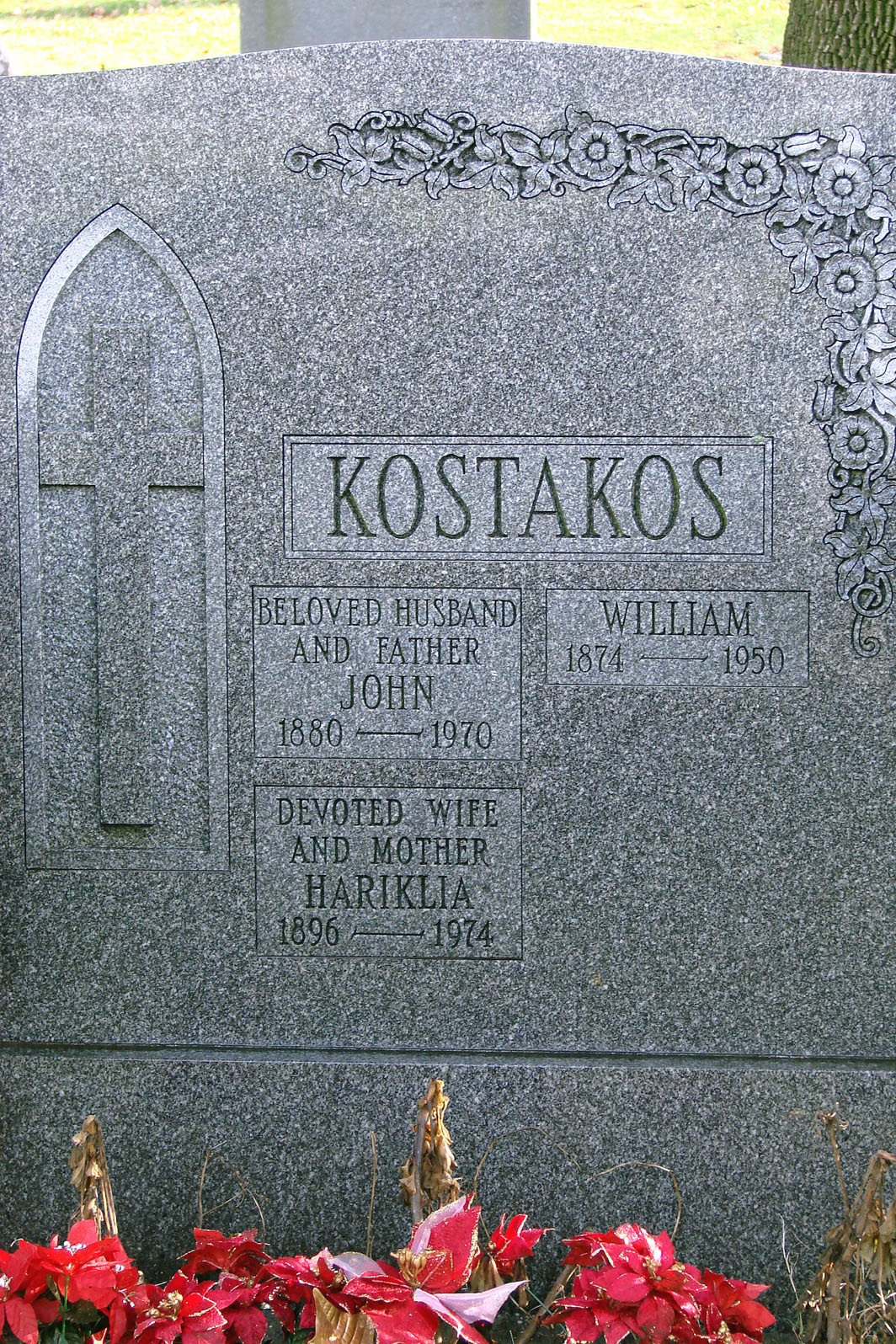
This is the tombstone of my grandparents, John Andrew Kostakos (1879-1970) & Hariklia Aridas Kostakos (1894-1974) and my granduncle William Kostakos (1873-1951). They are buried in Mt. Olivet Cemetery, Queens, New YorkKostakos,John,Hariklia,William

Birpatakos (Μπιρμπατάκος) Mitroon Arrenon

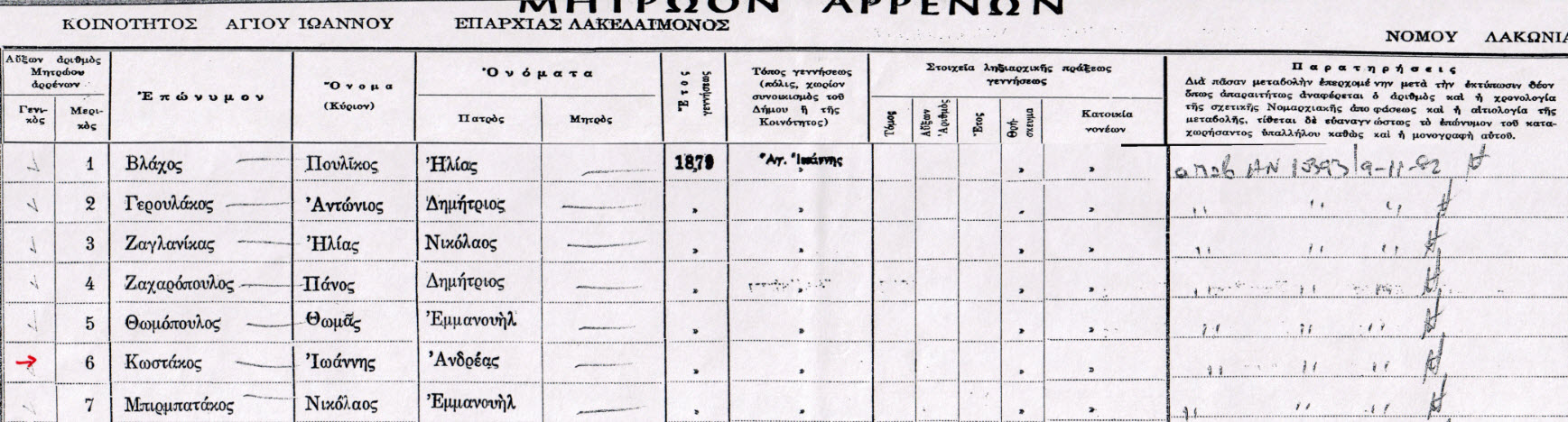
Recently, I purchased a Flip-Pal scanner which has been a terrific tool for digitally scanning the over-sized pages which I received from the Greek Archives office in Sparta. As I began to scan the Mitroon Arrenon (Male Registers), I reviewed each page to see if I had missed any surnames that are in my family line. As I looked at each line in the image below, I was aghast to find that I had overlooked this name on line 7:  Μπιρμπατακος, Νικολαος (Birpatakos, Nikolaos), born 1879, father’s name Emmanouel.

This is the husband of Tasoula Kostakos, my grandaunt and the sister of my paternal grandfather! Furthermore, Nikolaos is listed immediately below my grandfather, John Andew Kostakos (on line 6)!

Birpatakos, Nikolaos m Tasoula Kostakos, Mitroon Arrenon

As I thought about how I could have possibly overlooked this initially, two things came to mind.  First, I was so excited to find my grandfather’s name that I mentally “checked out” of everything else on that page. Second, the English letter, “B”, is spelled “Mp” in Greek (this is because the Greek letter “B” is translated into the English letter “V” — totally confusing!). My mind knew I did not have any names starting with “M” in this village, so when I saw the “Mp” on line 7, I didn’t even bother to read the surname.

As soon as I caught this oversight, I went through every other Mitroon Arrenon that I had received, and sure enough, I found some other surnames that I had missed the first time around.

Lesson learned — read everything at least twice when you first receive it. Then, a few months later, read it all again!

This is proof that sometimes we create our own “brick walls” because we don’t review our prior research. We are continually learning and building upon new information that we receive, and going back to see what we have can reveal new insights and unearth valuable clues.

In this case, I “found” someone’s record that I already had!

Papagiannakos in Lakonia

For the past month, I have been researching Papagiannakos records in preparation for a meeting with Father Eugene Pappas (Papagiannakos), priest at Three Hierarchs Church in Brooklyn, and a “cousin” to my mother. Both his family and mine descend from two different Nikolaos Papagiannakos’ from Agios Ioannis (born in the early 1800’s), but we have not yet been able to go back far enough to find our common ancestor.  Hurricane Sandy derailed my visit with Father Eugene as Brooklyn is now under water, but my research continues.

After extracting Papagiannakos names from villages around Sparta in Electoral Rolls of 1872, Mitroon Arrenon, and other documents, I found that prior to 1900 in Agios Ioannis, there were two Ioannis’ and at least five or possibly seven Nikolaos’. I also found Papagiannakos in Therapni, Tsintzina and Zoupena.

I plotted all these families on a Google map. I put purple pins in each of the villages where a Papagiannakos family lived. Click on the pin and you will see a pop-up window showing the families in that village: 

Here is a list of the families I have found so far:

AGIOS IOANNIS:  1815-1941

1815-1900: Families (fathers and sons)

1.  Ioannis 4 had 1 son, Georgios born either 1875 or 1880

2.  Ioannis 5 had 2 sons: Spyridon born 1890/91 and Evvagelos born 1895

Nikolaos – There were at least 5 and possibly 7 families with Nikolaos as father:

  1. Nikolaos 1 (may be same person as Nikolaos 4, as sons are 4 yrs apart). His son was Panagiotis born 1841 (this is my great-grandfather)
  2. Nikolaos 2, married to Georgia Piperis; they had 8  sons born 1889-1910  (this is Father Eugene’s ancestral family)
  3. Nikolaos 3, born 1815 (may be same person as Nikolaos 1, 6 or 7, as he is 20, 22, or 26 when the sons were born)
  4. Nikolaos 4 (may be same person as Nikolaos 1, as sons are 4 yrs apart); his son was Ioannis born 1845
  5. Nikolaos 5 had one son, Theodoros, born 1901
  6. Nikolaos 6 had one son, Ioannis 2, born 1837
  7. Nikolaos 7 had one son, Ioannis 1, born 1835

1901-1941: Families (fathers and sons)

  1. Andreas, with 6 children born 1931-1941
  2. Aristedes, with 4 children born 1929-1940
  3. Konstandinos, with 6 children born 1927-1935
  4. Christos, with 2 children born 1901-1904

THERAPNI: 1867

Father: no name, son Dimitrios b 1867 (source: School Archives)

TSINTZINA:  1830-1840

Dimitrios had 3 sons, Ioannis b 1830, Georgios b 1837, Panagiotis b 1840

ZOUPENA:  1886-1891

Father: G, had one son, Ilias b 1886

Father: P, had one son, Christofos b 1891

Although I am grateful for the records that exist and have allowed me to research to this point, I am anxiously awaiting more information. Using several sets of records allows me to compare and contrast dates, names and locations at different times. Church records would be the golden key that ties families together. Perhaps there will come a day when they will be readily available in Greece as they are in other countries.

Now that I have finished looking in the general area of Sparta, I will look farther south in Lakonia and perhaps into Messinia, into the Mani region, to see if, when and where the Papagiannakos name appears. I’m looking for migration patterns. Meanwhile, I will keep looking for additional records to help me sort out the Nikolaos’, and be able to go back another generation or two to find the common ancestor.

Then, I’ll start on another surname! This work is never done 🙂


Remembering Mom on the First Anniversary of Her Death

Catherine Kostakos with me, March 1948

One year ago today — October 5, 2011 — my mother passed from earth life into heaven, joining my father, her siblings and parents, and untold numbers of family members. Although Mom was in excellent physical health prior to her death, dementia had caused significant cognitive changes and much anxiety for her and our family.

In March 2011, Mom was coping with the loss of her car and her independence after having a minor accident. She had been especially agitated for a couple of weeks. One afternoon, to my surprise and relief, she told me in a calm voice, “I talked to your father last night. He told me not to worry, that everything would be all right.” Mom’s decline was especially rapid after that day, culminating in her death six months later.

Her passing was much harder on me than I ever anticipated. After months of sadness, I decided to undertake the monumental task of digitizing her photo albums — more than 1,000 pictures. Amazingly, this arduous task became a primary source of healing. As I handled each photo, I looked into the faces of my parents and loved ones. Seeing their happy faces lifted my spirits; touching these tangible reminders of their earthly life made me feel close to them. As I worked on this project week after week, something miraculous happened — my sadness lifted and my heart was healed. This was such a profound experience for me that I wrote this article, “Their Pictures Are My History,” which was published in an online magazine.

Sunday will be Mom’s one-year memorial service at Sts. Constantine and Helen Greek Orthodox Church in the Washington DC area. As I prepare emotionally and spiritually for this and other remembrances, I know that Mom and Dad are still helping me in unseen ways, especially in the genealogical connections that have been made in the past year. I can’t help but think that Mom has rallied the troops “on the other side,” causing them to prompt their living family members to find my online trees and email me with new information. But that’s a post for another day.

Thank you, Mom, for giving me life, love, guidance and support while you were here, and for continuing to be close to me each day. I hope my life will be a testament and reflection of the importance of good parents and the values of a strong family.

(I’ve posted a few photos of my parents and me as an infant here)