The concept of “chain migration” was firmly established during the great wave of immigration in the early 1900s. In a post which I wrote for the website of my village, Agios Ioannis, Sparta, many villagers traveled together on the S.S. Themistokles from Piraeus to Ellis Island.
Among the emigrants were my paternal grandmother, Harikleia Arida. Please read the post here.
When our Greek ancestors left their rural villages to escape poverty and pursue opportunities in America, they entered strange and bewildering new worlds in cities such as Chicago and New York. Those who left first, the “pioneers,” paved the way to assist their compatriots who followed. They learned rudimentary English, found employment and housing, and determined how to navigate legal systems and political alliances. They became the primary “links” in the ever-evolving chain of migration.
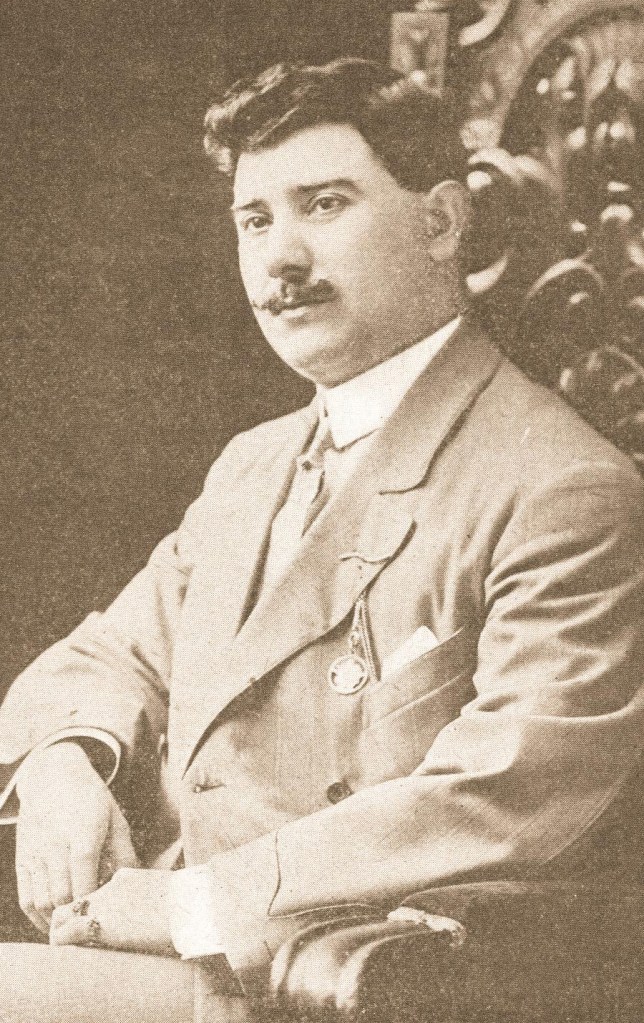
One such pioneer was Nicholas Calamaras. He and three brothers were among the earliest men to emigrate from the mountaintop Spartan village of Anavryti. In 1895, they made their way to Bordeaux, France, and from there to New York City. Through ingenuity and industriousness, they accumulated enough money to start their own businesses, send money home, and bring family members to the U.S.
Nicholas Calamaras
Nicholas, however, went one step further. In 1914, he founded and funded an organization to assist newcomers in the bustling New York Greek community: The Greek-American League.
There were many such organizations formed wherever Greeks settled. All aided newcomers by forming the nexus of the immigrant community: organizing a church to practice their Orthodox faith, learning English, catching up on news of their villages, arranging marriages for their sisters/daughters/nieces. However, the Greek-American League – which Nicholas led for 20 years – took one major leap forward: it represented its members in the political arena.
While operating his tiny candy shop in Manhattan, Nicholas was a tireless advocate for the Greek community, extending his influence to local, state and even national politics. Between 1912 and 1934, he worked to support political candidates favorable to Greek issues: law enforcement, business permits, employment, immigration, deportations, export permits, and more. Purporting to represent hundreds of thousands of individuals, churches, businesses and publications, he wielded political power that demanded respect. Although Nicholas did not hold public office, his influence was acknowledged by politicians both locally and nationally until his death in 1939.
Nicholas’ story and the work of The Greek American League would have been lost to history had it not been for two generations of family members who retained his papers. Recently, Dean Calamaras discovered the collection and and set about to catalog and interpret the documents. His work has culminated in the historically important book, The Baron of Second Avenue: Nicholas Calamaras and the Archive of the Greek-American League, A Glimpse into the Greek Immigration Experience in New York.
This book is the first account of the activities of the Greek-American League. It displays the full contents of Nicholas’ archive – correspondence and legal papers 1912-1934, sorted by category, and the writer’s description of their social, historical and political context. Thus, the primary source information in this volume is priceless. Also included are: an annotated Index to all those documents, a separate index of over 100 Greek names appearing in documents, and a selection of pictures highlighting Nicholas’ life and achievements.
Although available on Amazon and at selected bookstores, this paperback book is most economically purchased on the author’s web site: www.calamarasbooks.com for $34.95 + $6.70 shipping.
This volume has enlightened my understanding of the impact of immigrants within their communities, and the power that can be wielded when they are organized and led by a person who is both indominatable and charitable. It is a fascinating read.
I am grateful to Dean for sharing his publication journey with me, and for giving me permission to write this post and print the list of surnames which appear in this book.
Alphabetical Index of Greek Surnames Cited In Documents of the Greek-American League
Alexandrou K Anagnostopoulos Argyrios Anagnostopulos Sp Antovick John Apostolou John Arapis John Bellios Tom Bilitsis P Bilitsis Takis Braun Thom Calamaras George Calamaras P Calamaras Peter Calamaras Speros N Caparell Peter Carrusula G Catsanos N Catsanos Nick Chrisomalis Char Chrisomalis P Theo Chrisomalis William Christin Em Chrysomallis James Euth Chrissomalis Ch Chryssomallis Char S Chryssomallis St Clidas Thomas Cokkalis Apostol Cominos Nicholas Constantino Jamis Coumantaros NS Couvaris Theros Cumantaros George Darmis John Demas Demetreos Dourakos Basiliki Economakis Christ Eleftherion Dimitrios Eliopoulos Sotirio Farmakis Jim Fellouris John Felluris John Gamanos Calias Ganos Milt Garner Takis Garnier Peter Gavaris George Georgiadis P Gerakaris Louis Ghotos Jack Golesteano SM Gregorakos John Gregoriades GI Gregory Steve Kolias N Laskas Em Lelos Athanasios & son Leras J Macrides Christoforos Macrides Margou Macrides Mike Macrides Timocles Makridou Marionga Mangel Gus Manos Steve Memar Ern Mesologites CG Michaelidis Bill Morfogenis Bessie Morghan Nick Nastas John Panafiotis Papanastasiou Pappadopoulos Apostollos Pappadopoulos Nicholas Pappanastatiou D Pappas Nick Pappas Steve Pappas Thom Pappatheodoru John Paranikas Con Pelitsis P. Pottaris Bill Rockas S Rompos John Scopas Tom Spiropoulos Pan Stamoulis Mathew P Stefanides ID Stelakos Panag Theo Stratos Steve Thebner Emanuel Tinger Ch Toskos Ioan Touris SA Tragas Louis Triantafillakos Thom Tsirikos James Tsirikos Louis Tsirikos Theodore Varvalides Theo. Vasiliadis C Vasilades C Vouros Windisch Charles A Zannos Arris Zesefianos Panteles
[NOTE: In his remembrance, Mr. Kapsalis refers to the invading army as Αραπάδες, which translates to “Arab.” However, Ibrahim’s father was ruler of Egypt and his army was composed of Egyptians/Ottomans; therefore, Greek Ancestry has corrected the translation of the term to “Egyptians.”]
War, enemy invasion, and scorched earth constitute the grim scenery in Ukraine today. Somehow this reminded me of a story told to me by the late Ilias Kokkoros, known also by the nickname “Tsaparis,” from Potamia, in the 1970s.
We would go to Potamia with my parents on our donkey from neighboring Gorani, my village, to gather olives from the olive groves we had there. We would gather the “pachni” (olive harvest) in the yard of uncle Lias’s house for protection against theft. I remember him very well; he was a respectable elderly man of advanced age (“I’m approaching a century,” he would tell me proudly), gentle, full of kindness. He was also a relative from my mother’s family, and the love and respect was mutual.
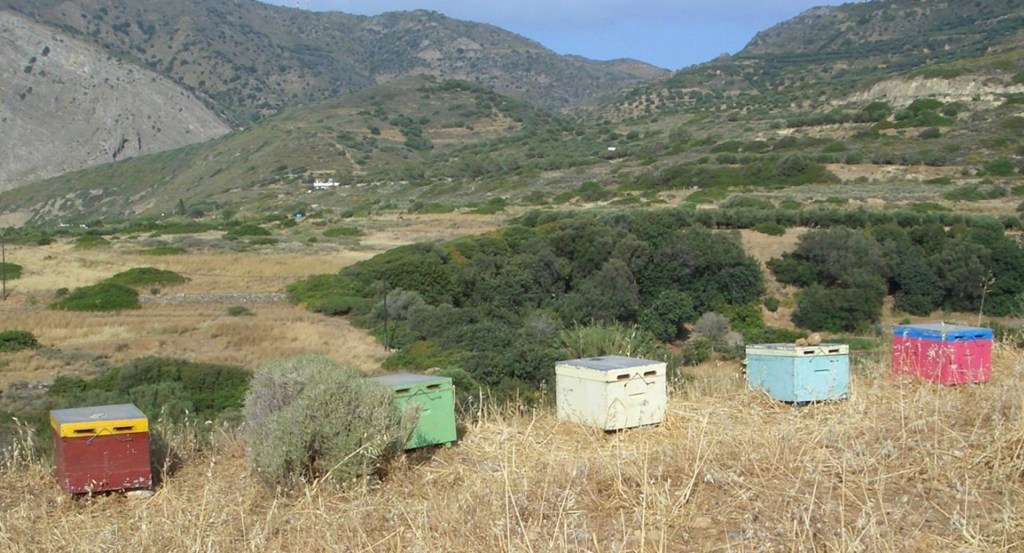
Among his many stories, one has been imprinted in my memory and concerns the Struggle of 1821. He remembered when, still a child, his grandmother had told him about those years: To the revolutionary Goranites (his village of origin) came the rumor that we were not alone in the struggle, that help would come and “Fragkia.” The battles were going well, with victories but also discord (how strange…) among the Greeks, until in 1825 came the terrible news that Ibrahim Pasha had landed in the Peloponnese with myriads of troops who burned and destroyed everything in their path. The army also passed through Laconia, destroying villages and countryside. A large part of it reached Gorani. Upon arriving there, the Egyptians burned all the houses, but the residents had managed to hide in the surrounding forests. After the destruction, the army planned to march toward the nearby mountain villages of Kourtsouna and Arna. However, they had not accounted for the Goranites, who planned and implemented a diabolical attack. Throughout the night, they gathered and put into burlap sacks hundreds of “beehives”¹.
Beehives in Lakona, Greece
Before dawn, the Goranites raiders took strategic positions, at a safe distance, on the slope along a narrow path at the foot of their mountain village, which led to a crossing at the Gerakaris river, through which the army would pass. Each one held, still closed, a sack with a beehive. The bees, feeling trapped and captive, had already become agitated and were buzzing with anger. The sun had risen just a bit when the Egyptians appeared and began to enter the path. When they were about to reach the river crossing, the Goranites swiftly opened the sacks and hurled them at the enemy. Chaos erupted! The agitated bees attacked anything that moved. The Egyptians, caught by surprise, suffered the merciless stings of the bees and, in a frenzy, scattered to the four winds. Some took the downhill path, jumping over brambles and terraces, others fell into the river, and the swarms of bees followed behind. Swollen, they disappeared, going back down to the flatland. Naturally, they didn’t dare set foot in the area again. The Goranites had taken revenge as sweet as… honey for the destruction of their village.
May the soul of Uncle-Lias rest in peace, for he preserved this unknown episode of the fight for freedom through the tales of his grandmother.
A century and a half later, I read in the newspapers of the time (1975) that the “weapon” with bees was also used in the forests of Vietnam by the Viet Cong guerrillas of North Vietnam against American patrols. It seems that the first users, the Goranites, didn’t bother to patent their invention.
___
¹ At that time, the beehives we know today didn’t exist. Beehives were kept in woven baskets made of reed, and the honeycombs were made by the bees themselves. Consequently, they had heightened reflexes if some external factor shook the beehive.
___
I (Carol Kostakos Petranek) am honored to receive permission from the Katsoulakos family to translate and share articles from The Faris. Translation verification and corrections have been made by GreekAncestry.net. This is the twenty-second article of the ongoing series. Previous articles can be viewed here.
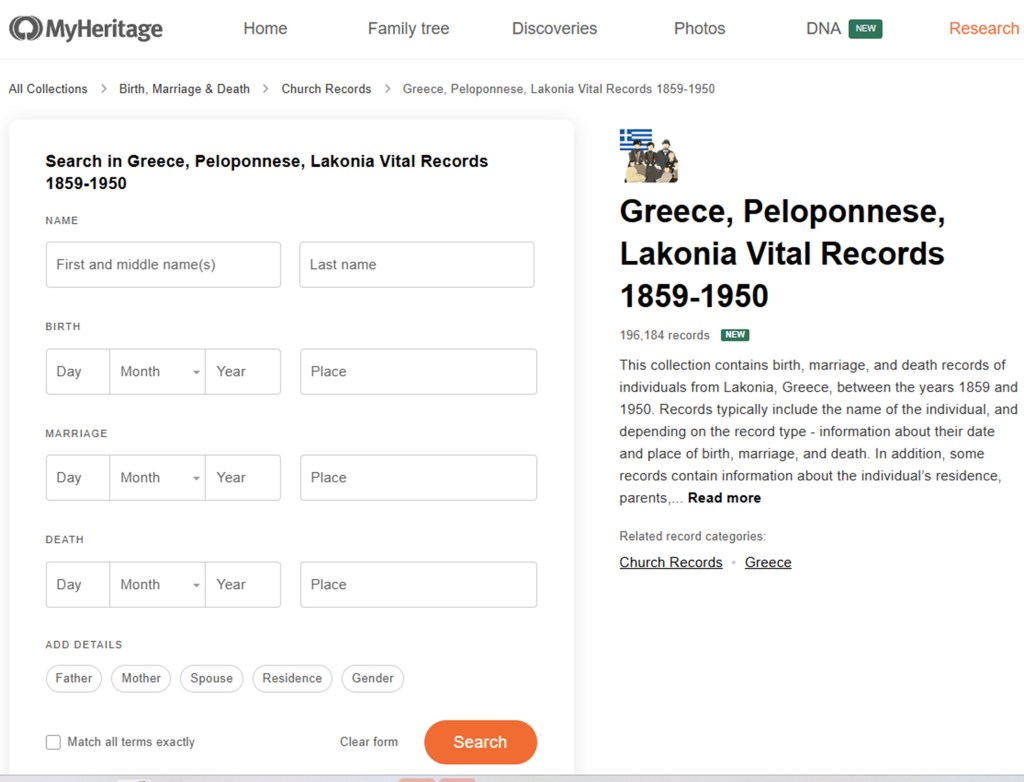
A modern miracle has upended traditional Greek genealogical research. Now, for the first time, a comprehensive collection of birth, marriage and death information from many rural Greek village churches in Lakonia has been made available on the internet.
Greek church records are historically not found outside the village. Normally, you would have to visit the village in person, locate and then meet the priest, and convince him to allow you to look at the books. Most rural village priests do not speak English; thus, you would need to bring an interpreter. Then, you must then be able to read the entries to find your ancestor’s name.
In 2019, part one of the miracle happened: In his wisdom, His Eminence Efstathios, Metropolitan of Monemvasia and Sparta, welcomed and encouraged digital preservation of both the Metropolis archive of marriage records in 2017 & 2018, and Lakonian village church books in 2019. He also approved their online publication at MyHeritage. At the Bishop’s directive, priests from 139 Lakonian villages brought their birth, marriage, and death books to the Metropolis. I spent seven weeks working in the Metropolis conference room to digitize these precious volumes (see post here).
In 2020, part two of the miracle happened: a small group of dedicated people at GreekAncestry.net had the skills to both decipher the handwriting of the priests and to create indexes of the names and vital data. They read every entry and carefully typed the information into a database. Deciphering old handwriting from the 1800s can challenge even the most highly skilled paleographer! Gregory Kontos, founder of Greek Ancestry, then developed a transliteration formula to transcribe the names into English. The images and indexes were transmitted to our colleagues at MyHeritage for processing and preparation for publication.
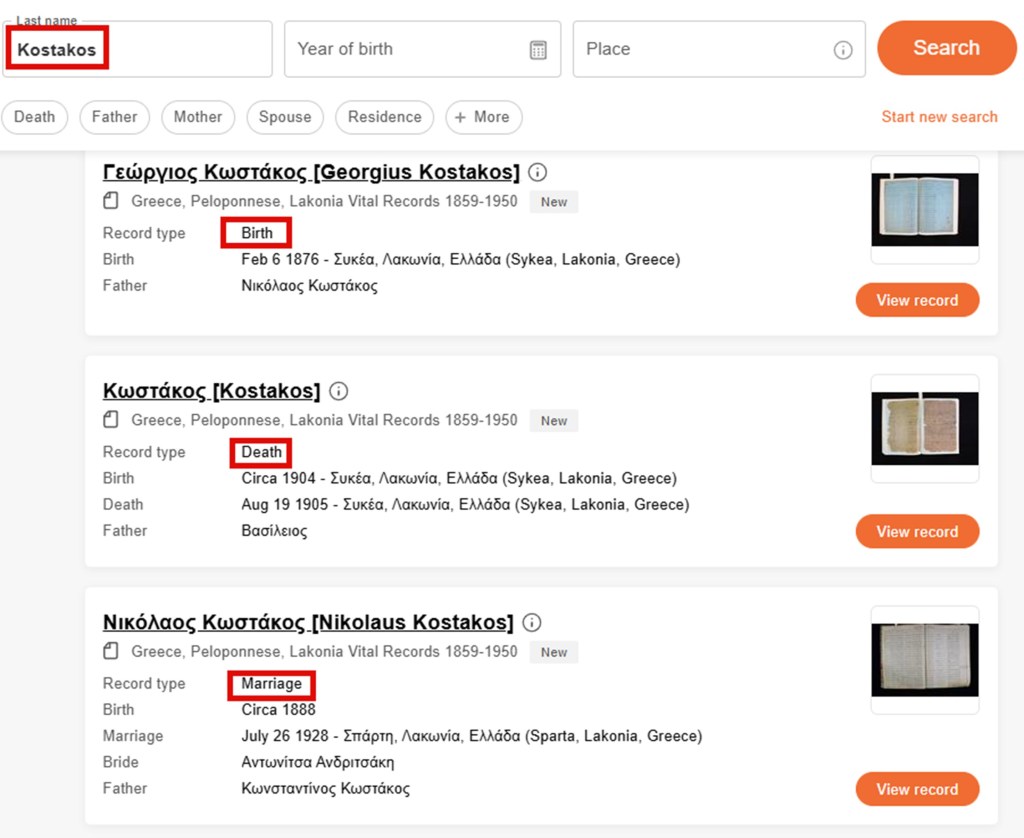
The collection can be searched by name in either Greek or English. In the example below, I typed in English only the surname Kostakos without designating a village or type of record. Birth, marriage and death records for the surname Kostakos in any village are given.
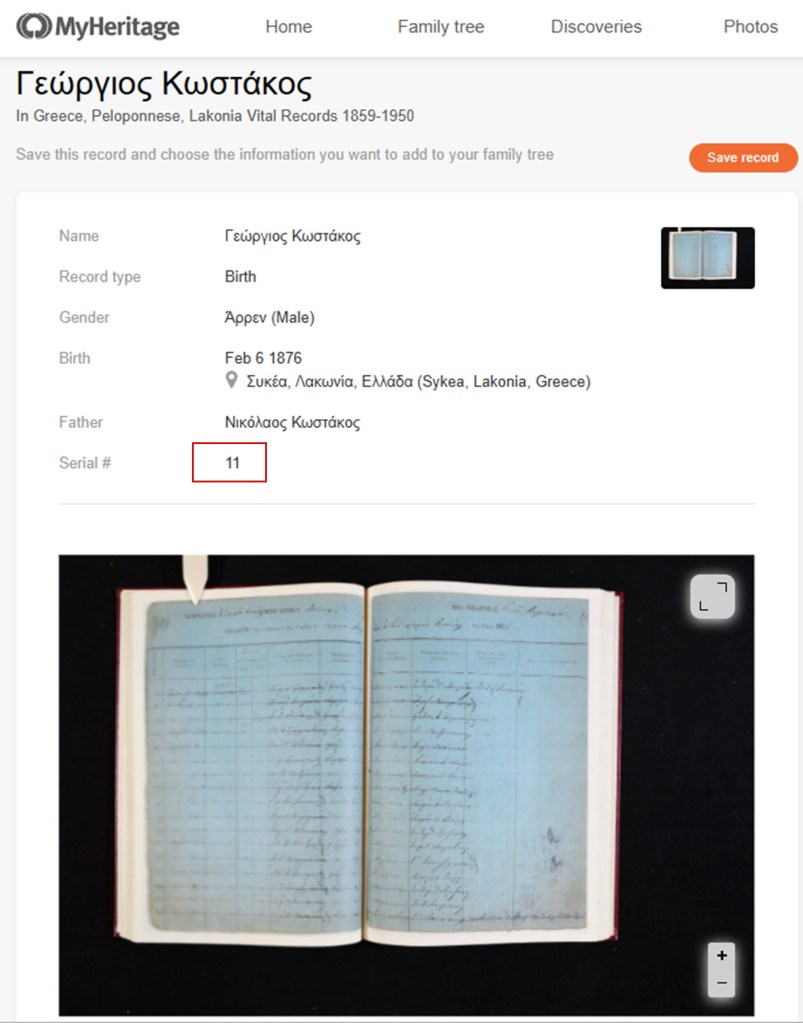
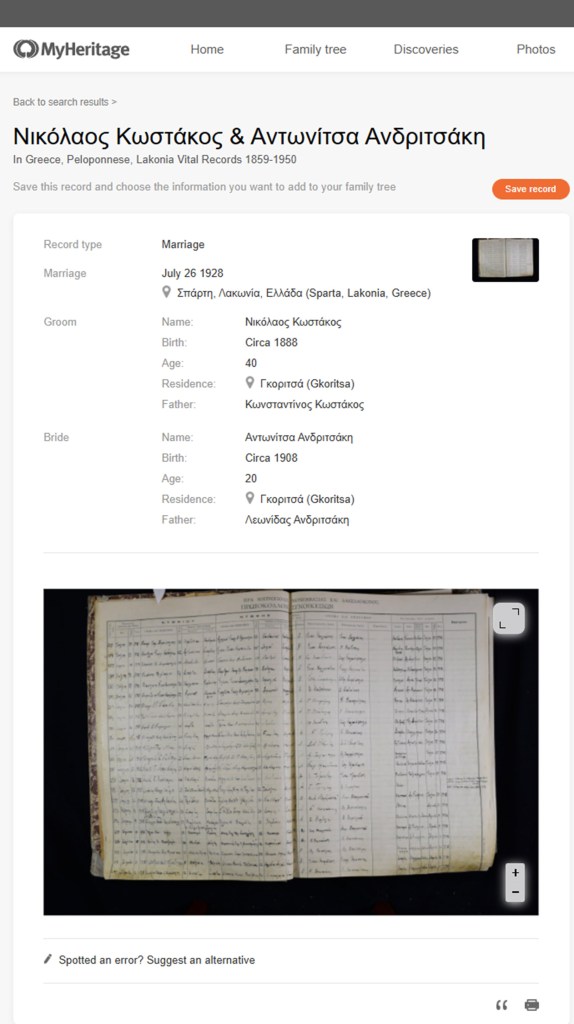
Below are images of each of these three records.
BIRTH: Line 11: February 6, 1876, Georgios Kostakos, son of Nikolaos, village of SykeaDEATH: August 19, 1905: [no given name] Kostakos, age 1 year, son of Vaselios, village of SykeaMARRIAGE: Line 286 July 26, 1928 in Sparta; Nikolaos Kostakos, age 40, father: Konstantinos, village: Gkoritsa and Antonitsa Andritsaki, age 20, father: Leonidas, village: Gkoritsa
If you are seeking all the records from a specific village, type only the village name in the search box. In the example below, I entered the village of Anavryti. There are 3,444 results.
There are 3,444 results for the village of Anavryti
The image below gives an English translation of the headings of each type of church book.
If you cannot find an ancestor’s record:
There are restrictions placed on records to protect the privacy of living people. If you cannot find a record, he or she may have been born, married, or died during a timeframe when the record is restricted for publication. This is especially relevant to birth records.
Date Restrictions (records created after these dates are NOT available online) Births: 1920 Deaths: 1950 Marriages: 1935
Books in many villages have been lost. As I wrote in my 2019 post, some of these villages are hundreds of years old but their records are recent. When I asked the priests what happened to their missing books, I was told that they had deteriorated due to age, moisture, mold, insect or water damage, and were then were thrown away. Some were used to start fires, others were destroyed during wars. It was heartbreaking for me to see that only a few churches have records which date prior to 1900. Most village books begin around 1912, when the Greek Orthodox Church issued standardized books.
Please consult the following list to see which books are available for each village. Should you wish to contact a village priest, a list of all the churches under the jurisdiction of the Metropolis of Sparta can be found here.
Villages
Books
Years *pre-1900
Afissou, Sparta
Birth, Baptism
1913-65
Birth, Baptism
1972-2018
Death
1913-2018
Marriage
1913-2017
Ag. Apostolos Voion, Neapolis
Birth, Baptism
1959-2015
Birth, Baptism
2017-19
Death
1958-2016
Death
2017-19
Marriage
1958-2014
Marriage
2017-17
Ag. Dimitrios, Monemvasia
Birth, Baptism
1971-2019
Death
1916-2019
Marriage
1916-2017
Ag. Georgios Voion, Neapolis
Birth, Baptism
1970-2018
Death
1982-2019
Marriage
1970-2017
Ag. Nikolaos Voion, Neapolis
Birth, Baptism
1944-72
Birth, Baptism
1972-2017
Death
1948-2019
Marriage
1953-2019
Aggelona, Molaoi
Birth, Baptism
1912-69
Birth, Baptism
1971-2018
Death
1912-91
Death
2010-2019
Marriage
1995-2016
Agios Dimitrios Zarakas, Molaoi
Birth, Baptism
1955-91
Birth, Baptism
1977-2018
Death
1923-55
Death
1946-2000
Marriage
1920-87
Marriage
2002-19
Agios Ioannis, Monemvasia
Birth, Baptism
1912-71
Birth, Baptism
1971-2013
Birth, Baptism
2014-19
Death
1912-2013
Death
2013-19
Marriage
1914-2013
Marriage
2013-19
Agios Ioannis, Sparta
Birth & Baptism
1878-1978 *
Birth & Baptism
1913-1955
Birth & Baptism
1951-1961
Birth, Baptism
1981-2019
Death
1913-1980
Death
1982-2019
Marriage
1914-1981
Marriage
1982-2019
Agios Konstandinos – Regkozena, Kastoreio
Baptism
1983-87
Baptism
1998-2018
Birth, Baptism
1972-2002
Marriage
2014-15
Agios Nikolaos, Charisio Sparta
Birth, Baptism
1939-72
Birth, Baptism
1972-2018
Death
1949-2012
Marriage
1949-74
Marriage
1975-2019
Agios Nikolaos, Monemvasias
Birth, Baptism
1924-79
Birth, Baptism
1972-2017
Death
1917-2018
Marriage
1924-2016
Agios Nikonas Sparta
Birth, Baptism
1938-48
Birth, Baptism
1948-87
Birth, Baptism
1968-73
Birth, Baptism
1972-86
Death
1947-58
Death
1984-2011
Marriage
1948-1986
Marriage
1948-49
Birth, Baptism
1986-2019
B-M-D
1907-20
Death
2012-19
Marriage
1987-2019
Agios Spyridon, Sparta
Birth, Baptism
1970-2017
Death
1967-2017
Marriage
1967-2017
Agios Vasileios, Sparta
Birth, Baptism
2003-2019
Death
2005-15
Marriage
2006-18
Agoriani, Kastoreio
Baptism
2009-2018
Birth, Baptism
1972-2016
Death
1952-2019
Death
2003-2019
Marriage
1951-2018
Alaibei, Panygyritsa, Skala
Birth, Baptism
1923-24
Birth, Baptism
1951-2018
Marriage
1957-2018
Alepochori, Geraki
Birth, Baptism
1970-2000
Death
1913-2006
Death
2010-
Marriage
1987-2010
Alevrou, Kastoreio
Birth, Baptism
1913-2014 (1969-2014 missing)
Birth, Baptism
1971-2019
Death
1914-2019
Marriage
1913-2015
Amykles, Sparta
Baptism
2017-2019
Death
2005-2019
Marriage
1994-2019
Marriage
2014-2019
Anavryti, Sparta
Birth, Baptism
1913-1946
Birth, Baptism
1955-
Birth, Baptism
1955-1970
Birth, Baptism
1913-1946
Death
1913-1950
Death
1913-1968
Death
1987-2019
Marriage
1913-1949
Marriage
1913-1983
Marriage
1984-2017
Anogeia, Xirokambi
Birth, baptism
1869-1921 *
Birth, baptism
1913-1954
Death
1913-1955
Marriage
1913-1980
Apidea, Vlahioti
Baptism
varied
Birth, Baptism
1913-96
Birth, Baptism
1972-2019
Death
1913-2019
Marriage
1914-2019
Apideas Agios Ioannis, Vlahioti
Birth, Baptism
1968-2017
Death
1969-2018
Marriage
1970-2006
Arachova (Karyes or Karyon), Vresthenon
Birth, Baptism
1913-2017
Marriage
1907-12
Marriage
1912-2018
Arkasadas, Xirokambi
Birth, Baptism
1913-1971
Birth, Baptism
1971-2015
Death
1913-2018
Marriage
1913-2014
Asopos, Asopo
Birth, Baptism
1952-75
Birth, Baptism
1970-2017
Death
1952-79
Death
1979-2019
Marriage
1955-2010
Marriage
2011-2019
Asteri (Bryniko), Vlachioti
Birth, Baptism
1918-2017
Death
1916-2018
Marriage
1921-2018
Chrysafa, Sparta
Birth, baptism
1912-1923
Birth, baptism
1913-1957
Birth, baptism
1955-1970
Death
1915-1966
Marriage
1914-1993
Dafni, Sparta
Birth, Baptism
1915-47
Birth, Baptism
1947-71
Birth, Baptism
1971-2018
Death
1947-2019
Marriage
1947-2018
Daimonia, Elikas
Birth, Baptism
1914-96
Birth, Baptism
1955-2017
Death
1913-97
Death
1997-2018
Marriage
1913-95
Marriage
1997-2018
Elafonisos, Neapolis
Birth, Baptism
1971-2019
Death
1966-2019
Marriage
1915-33 & 1947-72
Marriage
1972-2019
Elaias, Molaoi
Birth, Baptism
1977-2018
Death
1958-2019
Marriage
1995-2019
Elika, Elikas
Birth, Baptism
1913-71
Birth, Baptism
1971-2019
Death
1922-2011
Death
2012-2019
Marriage
1922-2018
Elos (Douraly), Vlachioti
Birth, Baptism
1913-54
Birth, Baptism
1955-2007
Birth, Baptism
2008-18
Death
1913-2008
Death
2009-19
Marriage
1914-2008
Marriage
2009-18
Faraklo, Neapolis
Birth, Baptism
1913-53
Birth, Baptism
1952-2014
Birth, Baptism
1970-2017
Death
1913-2018
Marriage
1913-97
Foinikio, Asopo
Birth, Baptism
1966-2018
Death
1966-2009
Marriage
1966-2018
Georgitsi, Kastoreio
Birth, Baptism
1913-54
Birth, Baptism
1916-58
Birth, Baptism
2010-2017
B-M-D
1954-2019
Death
1907-2019
Death
1913-55
Marriage
1912-1950
Geraki, Geraki
Birth
1948-2019
B-M-D
B 1860-86; M 1860-78; D 1860-77 *
Death
1913-1977
Death
2003-2019
Marriage
1913-1979
Gkoritsa, Geraki
Birth, Baptism
1913-50
Birth, Baptism
1952-72
Birth, Baptism
1971-2018
Death
1977-2019
Marriage
1953-2002
Marriage
2002-2019
Glykogrisi (Bezani), Vlahioti
Birth, Baptism
1913-59
Birth, Baptism
1971-2018
Death
1913-81
Death
1991-2008
Death
2009-19
Marriage
1913-61
Marriage
1980-2017
Gorani, Xirokambi
Baptism
1991-97
Baptism
1998-2018
Birth, Baptism
1933-70
Death
1912-45
Death
1999-2019
Marriage
2014-18
Misc
Gounari, Sparta
Birth, Baptism
1947-1978
Birth, Baptism
1979-2010
Death
1947-2019
Marriage
1948-2005
Gouves, Vlachioti
Birth, Baptism
1915-67
Death
1915-58
Marriage
1937-60
Grammousa, Skala
Birth, Baptism
1985-2015
Death
1985-2019
Marriage
1987-2018
Harakas, Molaoi
Birth, Baptism
2006-18
Death
2006-18
Marriage
1988-94
Ierakas, Molaoi
Birth, Baptism
1997-2017
Death
1912-54
Death
1954-86
Death
1986-2000
Death
2000-2019
Marriage
1953-67
Marriage
1986-2018
Kalivia Soha, Sparta
Birth, Baptism
1914-1971
Birth, Baptism
1972-2019
Death
1920-2019
Death
2019-
Marriage
1916-2012
Marriage
2010-2019
Kallonis, Geraki
Birth, Baptism
1972-2018
Death
1988-2018
Marriage
1952-2013
Kalogonia, Sparta
Birth, Baptism
1915-69
Birth, Baptism
1967-2018
Death
1969-2019
Marriage
1913-69
Marriage
1969-2018
Kaminia, Xirokambi
Birth, Baptism
1912-71
Birth, Baptism
1971-2015
Death
1913-80
Marriage
1913-2011
Kampos Voion, Neapolis
B-M-D
1913-52
Birth, Baptism
1954-74
Birth, Baptism
1971-2016
Birth, Baptism
2017-18
Death
1954-2017
Death
2017-18
Marriage
1955-2016
Marriage
2017-18
Karavas, Vresthenon
Birth, Baptism
1973-91
Birth, Baptism
1976-78
Birth, Baptism
various
Death
1976-2019
Marriage
1979-2017
Marriage
various
Karitsa, Geraki
Baptism
2005-07
Death
1996-2019
Marriage
2008-17
Kastanias Voion, Neapolis
Birth, Baptism
1970-2015
Death
1949-2019
Marriage
1948-2015
Kastorion / Κastania ΚΑΣ
Birth, Baptism
1972-2019
Death
1913-59
Death
1959-2019
Marriage
1913-2017
Kastorion-Kastania, Kastoreio
Birth, Baptism
1913-38
Birth, Baptism
1940-54
Birth, Baptism
1955-71
Kastri, Kastoreio
Birth, Baptism
1912-71
Birth, Baptism
1972-2014
Death
1913-2019
Marriage
1914-2011
Kefala, Geraki
Birth, Baptism
1916-71
Birth, Baptism
1972-2017
Death
1916-2019
Marriage
1916-2019
Kladas, Vresthenon
Birth, Baptism
1913-1971
Birth, Baptism
1971-2019
Death
1915-2019
Marriage
1914-2019
Koniditsa, Vresthenon
Birth, Baptism
1912-72
Birth, Baptism
1972-2013
Death
1913-2019
Marriage
1913-2017
Koulentia (Ellinikou), Elikas
Birth, Baptism
1888-1913 *
Birth, Baptism
1915-54
Birth, Baptism
1955-71
Birth, Baptism
1972-2017
Death
1916-2018
Marriage
1915-2005
Koupia, Molaoi
Birth, Baptism
1957-2016
Death
1958-2017
Marriage
1956-2009
Kremasti, Molaoi
Birth, Baptism
1916-38
Birth, Baptism
1939-53
Birth, Baptism
1954-57
Birth, Baptism
1957-71
Birth, Baptism
1982-2018
Death
1916-18
Death
1971-2019
Marriage
1916-91
Marriage
1994-2018
Krokees/Levetsova, Skala
Birth, Baptism
1929-55
Birth, Baptism
1954-2017
Birth, Baptism
1885-1929 *
Death
1946-2017
Death
2018-2019
Death
1914-44
Marriage
2012-2017
Marriage
1914-2011
Kyparissi Zarakos, Molaoi
Birth, Baptism
1913-71
Birth, Baptism
1972-2017
Death
1913-2019
Marriage
1914-2018
Lachion Voion, Neapolis
Birth, Baptism
1913-2018
Death
1914-2019
Marriage
1901-1915
Marriage
1913-2017
Lagio, Skala
Birth, Baptism
1985-2016
Death
1986-2019
Marriage
2003-14
Lampokambros, Molaoi
Birth, Baptism
1951-81
Birth, Baptism
1999-2017
Death
1996-2014
Marriage
1923-93
Marriage
2006-11
Lefkohoma, Sparta
Birth, Baptism
1972-
Lefkoma (Kydonia & Karaspai), Sparta
Birth, Baptism
1914-70
Death
1926-2019
Leimonas, Skala
Birth, Baptism
1972-2018
Death
1920-2019
Marriage
2006-17
Liantina, Xirokambi
Birth, Baptism
1913-69
Birth, Baptism
1972-89
Death
1916-60
Marriage
1916-85
Lira, Elikas
Birth, Baptism
1913-71
Birth, Baptism
1972-2014
Death
1913-2019
Marriage
1913-2018
Logganikos, Kastoreio
Birth, Baptism
1973-2018
Death
2015-
Marriage
1993-2019
Loggastra, Sparta
Birth, Baptism
1913-59
Birth, Baptism
1959-42
Birth, Baptism
1959-68
Birth, Baptism
1968-2003
Death
1913-2010
Death
1956-2015
Marriage
1913-2003
Marriage
1957-83
Machmoutbei-Amykles, Sparta
Birth, Baptism
1913-71
Birth, Baptism
1972-2002
Birth, Baptism
2004-2018
Death
2005-2019
Marriage
1940-2002
Marriage
2005-2019
Magoula (Agia Irini), Sparta
Birth, Baptism
1946-2009
Birth, Baptism
2009-2015
Death
1946-2018
Marriage
1946-2018
Magoula (Koimisi tis Theotokou) Sparta
Birth, Baptism
1908-34
Birth, Baptism
1934-48
Birth, Baptism
1970-2009
Birth, Baptism
2009-2019
Death
1913-65
Death
1966-2019
Makrinada, Vlahioti
Birth, Baptism
1984-2016
Death
1973-2018
Marriage
1991-98
Megali Vrysi, Vresthenon
Birth, Baptism
1944-95
Birth, Baptism
1974-2017
Death
1944-2018
Marriage
1944-2004
Mesochori, Neapolis
Birth, Baptism
1910-2018
Death
1935-2019
Marriage
1910-2018
Metamorfosi (Katavothra), Molaoi
Birth, Baptism
1912-52
Birth, Baptism
1955-2018
Death
1913-55
Death
1955-2019
Marriage
1912-55
Marriage
1955-2018
Mitropolitikou I. Naou, Sparta
Birth, Baptism
1913-55
Birth, Baptism
1952-69
Molaoi, Molaoi
Birth, Baptism
1913-54
Birth, Baptism
1913-55
Death
1927-83
Marriage
1913-55
Monemvasia, Monemvasia
Birth, Baptism
1912-70
Birth, Baptism
1971-2019
Death
1912-86
Death
2000-19
Marriage
1913-97
Marriage
2001-2018
Mystras, Sparta
Baptism
1938-72
Birth
1882-87 *
Birth, Baptism
1860-85 *
Birth, Baptism
1913-1972
Birth, Baptism
1917-1977
Birth, Baptism
1972-2019
Birth, Baptism (Kato Hora)
1913-1940
Death
1885-98 *
Death
1916-1991
Death
2017-
Death
1913-2016
Death (Kato Hora)
1913-1939
Marriage
1883-89 *
Marriage
1917-1970
Marriage
1913-2019
Marriage (Kato Hora)
1913-1939
Β-Μ-D
1906-1914
Mytrea, Vlachioti
Birth, Baptism
1914-71
Birth, Baptism
1972-2018
Death
1913-2019
Marriage
1914-2018
Neapoli, Neapolis
Baptism
1962-68
Birth, Baptism
1912-42
Birth, Baptism
1941-55
Birth, Baptism
1955-60
Birth, Baptism
1970-2018
Death
1912-42
Death
1941-1984
Death
1985-2019
Marriage
1912-42
Marriage
1941-1994
Marriage
1994-2018
Niata, Molaoi
Birth, Baptism
1914-35, 80-88
Birth, Baptism
1914-48
Birth, Baptism
1948-56
Birth, Baptism
1949-2018
Death
1913-79
Death
1981-2019
Marriage
1960
Marriage
1913-78
Marriage
1948, 57-65
Marriage
1979-2018
Nomia, Monemvasia
Baptism
1995-2009
Birth, Baptism
1924-53
Birth, Baptism
1952-2004
Birth, Baptism
1972-2018
Death
1925-2019
Marriage
1924-2019
Pakia, Molaoi
Birth, Baptism
1915-55
Birth, Baptism
1971-2017
Death
1913-55
Death
1955-2019
Marriage
1913-54
Marriage
1955-2017
Palaiochori, Xirokambi
Birth, Baptism
1916-1971
Palaiopanagia, Xirokambi
Birth, Baptism
1918-1945
Birth, Baptism
1954-2016
Death
1913-1952
Death
2003-2018
Marriage
1913-1945
Pantanassa, Neapolis
Birth, Baptism
1912-71
Birth, Baptism
1972-2005
Birth, Baptism
2005-18
Death
1913-2005
Death
2006-18
Marriage
1913-2004
Marriage
2006-18
Papadianikon, Asopo
Birth, Baptism
1955-97
Birth, Baptism
1996-99
Birth, Baptism
1997-2019
Death
1955-57
Death
1960-2000
Death
1997-2019
Marriage
1955
Marriage
1960-2001
Marriage
1997-2019
Pardaliou, Kastoreio
Birth, Baptism
1938-2010
Death
1928-2019
Marriage
1930-2017
Parori, Sparta
Birth, baptism
1911-1979
Birth, baptism
1972-2011
Birth, baptism
2011-2018
Death
1913-2011
Death
2011-2018
Marriage
1914-2010
Marriage
2012-2017
Pellana, Kastoreio
Birth, Baptism
1912-54
Birth, Baptism
1955-85
Death
1912-92
Death
1920-2016
Death
1993-2019
Marriage
1913-95
Perivolion, Kastoreio
Baptism
2018-2018
Birth, Baptism
1894-1999 *
Death
1894-2018 *
Marriage
1894-2015 *
Pikoulianika, Sparta
Birth, Baptism
1913-1972
Birth, Baptism
1975-2019
Death
1916-2019
Marriage
1916-2019
Platana, Sparta
Baptism
1984-97
Baptism
1999-2015
Birth, Baptism
1972-2014
Death
1984-2019
Marriage
1985-2006
Marriage
1987-2006
Polovitsa, Xirokambi
Birth, Baptism
1913-66; 2002, 03, 05, 15
Death
1912-2018
Marriage
1914-2010
Potamia, Xirokambi
Birth, Baptism
1950-2018
Marriage
1950-2017
Reicheas, Molaoi
Baptism
1980
Birth, Baptism
1946-54
Birth, Baptism
1946-62
Birth, Baptism
1963-70
Birth, Baptism
2011-18
Death
1951-70
Death
2011-19
Marriage
1991
Marriage
1948-65
Marriage
1968-74
Marriage
2011-16
Riviotissi, Sparta
Birth, Baptism
1972-2018
Death
1957-2019
Marriage
1985-2018
Riza-Vafeio, Sparta
Birth, Baptism
2004-
Death
2005-
Marriage
2005-
Sellasia, Vresthenon
Birth, Baptism
1940-71
Birth, Baptism
1971-2018
Death
1965-2017
Marriage
1986-2017
Sikaraki, Sparta
Birth, Baptism
1947-78
Birth, Baptism
1969-75
Birth, Baptism
1979-2016
B-M-D
1920-47
Death
1982-2019
Marriage
1982-2017
Skala, Skala
Birth, Baptism
1954-72
Birth, Baptism
1969-2019
Death
1957-1968
Death
1990-2019
Death
1994-2002
Death
2002-2019
Marriage
1939-68
Marriage
1968-2000
Marriage
1995-2002
Marriage
2000-2019
Marriage
2002-2018
Sklavohori (Amykles), Sparta
Birth, Baptism
1955-2018
Birth, Baptism
1916-48
Death
1919-2003
Death
2017-2019
Marriage
1914-1989
Skoura, Sparta
Birth, Baptism
1911-1971
Birth, Baptism
1970-2017
Death
1913-2019
Marriage
1913-2017
Stefania, Skala
Birth, Baptism
1986-2018
Death
1988-2019
Marriage
1988-2019
Sykea, Molaoi
Birth, Baptism
1860-1906 *
Birth, Baptism
1912-39
Birth, Baptism
1939-2009
Birth, Baptism
1963-2019
Birth, Baptism
1978-2019
Death
1859-1913 *
Death
1912-81
Death
1981-2019
Marriage
1912-2007
Marriage
1964-2018
Marriage
1979-2017
Talanta, Elikas
Birth, Baptism
1960-83
Birth, Baptism
1972-85
Birth, Baptism
1986-2015
Death
1933-60
Death
1960-88
Death
1985-2019
Marriage
1961-2018
Theologos, Kalyvia Vresthenon
Birth, Baptism
1917-1978
Birth, Baptism
1972-2016
Death
1917-2017
Marriage
1917-2003
Theologos, Vresthenon
Birth, baptism
1972-2013
Birth, Baptism
1973-2019
Death
1913-2017
Marriage
1913-2016
Marriage
1913-2016
Marriage
1907-1912
Trapezontis, Sparta
Birth, Baptism
1934-95
Birth, Baptism
2005-19
Death
1936-97
Death
2005-16
Marriage
1992-2011
Tripi, Sparta
Birth, Baptism
1917-2018
Death
1913-78; 1985 (1); 1905 (1)
Death
1981-2019
Marriage
1913-2018
Tsasi, Filisi, Peristeri, Skala
Baptism, Marriage
1948-52
Birth, Baptism
1952-80
Birth, Baptism
1980-2016
Death
1910-23
Death
1980-2019
Marriage
1910-30
Marriage
1930-64
Marriage
1979-2013
Tseramio, Sparta
Birth, Baptism
1970-2017
Death
1972-2018
Marriage
1972-2018
Tsouni – Kokkinorahi, Vresthenon
Birth, Baptism
1912-2019
Death
1912-2019
Marriage
1914-2019
Vamvakou, Vresthenon
Birth, Baptism
1914-55
Birth, Baptism
1955-70
Birth, Baptism
1971-99
Death
1914-2004
Marriage
1914-2004
Marriage
1914-78
Varsova, Sparta
Birth, Baptism
1912-2017
Death
1913-2019
Marriage
1913-2018
Varvitsa, Vresthenon
Birth, Baptism
1924-1978
Birth, Baptism
1972-2000
Vasilaki (Tarapsa), Xirokambi
Birth, Baptism
1911-91
Birth, Baptism
1997-2018
Marriage
1953-75
Marriage, Death
1912-2016
Vasiliki, Xirokambi
Baptism
1983-2010
Birth, Baptism
1971-73
Death
1973-76
Marriage
various
Vassara, Vresthenon
Birth, Baptism
1901-1957
Birth, Baptism
1957-2019
Death
1913-1956
Death
1957-2019
Marriage
1913-1956
Marriage
1957-2015
Velanidia, Neapolis
Birth, Baptism
1915-38
Birth, Baptism
1939-69
Birth, Baptism
1969-71
Birth, Baptism
1971-2003
Birth, Baptism
2004-18
Death
1915-74
Death
2004-19
Marriage
1915-2003
Marriage
2004-13
Velies, Monemvasia
Birth, Baptism
1970-2018
Death
1947-2019
Marriage
1943-2015
Verdaeiika, Kastoreio
Death
2013-2013
Vlachioti, Vlachioti
Birth, Baptism
1912-52
Birth, Baptism
1949-81
Birth, Baptism
1981-2019
Death
1912-78
Death
1978-2003
Death
2003-19
Marriage
1912-78
Marriage
1978-2002
Marriage
2003-18
Vordonia, Kastoreio
Baptism
1976-1979
Baptism
1982-90
Baptism
1991-2017
Birth, Baptism
1934-1954
Birth, Baptism
1954-75
Birth, Baptism
1972-2013
Death
2011-2019
Marriages
1978-2011
Marriages
1978-90
Marriages
2005-2017
Marriages
1992-2012
Voutiani, Vresthenon
Baptism
1899-1921 *
Birth
1899-1920 *
Birth, Baptism
1913-72
Birth, Baptism
1972-2017
Death
1899-1921 *
Death
1913-2019
Marriage
1900-1920
Marriage
1914-2018
Vresthena, Vresthenon
Birth, Baptism
1972-2018
Birth, Baptism
1982-2019
Death
1913-81
Marriage
1913-2019
Vrondamas, Geraki
Birth, Baptism
1972-2018
Death
1978-2019
Marriage
1972-2018
Vroulia (Sellasia), Vresthenon
Baptism
1892-1910 *
Baptism
1893-1907 *
B-M-D
1872-1907 *
Xirokambi, Xirokambi
Birth & Baptism
1879-1889; 1892-1901; 1903-1906; 1907-1912 *
Birth & Baptism
1913-2014
Birth & Baptism
1963-1958; 1961-1971
Death
1913-2018
Marriage
1893-2015 *
Zarafona (Kallithea), Geraki
Birth, Baptism
2004-15
Death
2010-19
Marriage
2002-19
Zerbitsa Monastery, Xirokambi
Baptism
1975-87
Baptism
1988-91
Baptism
1991-92
Baptism
1994-96
Baptism
1996-98
Baptism
1999-2009
Baptism
2009-2019
Zoupena, Geraki
Baptism
1984-98
Baptism
1999-2017
Birth, Baptism
1914-47; 1964
Birth, Baptism
1966-84
Birth, Baptism
1971-2017
Death
1966-2004
Death
2005-19
Marriage
2001-12
Marriage
2014-2018
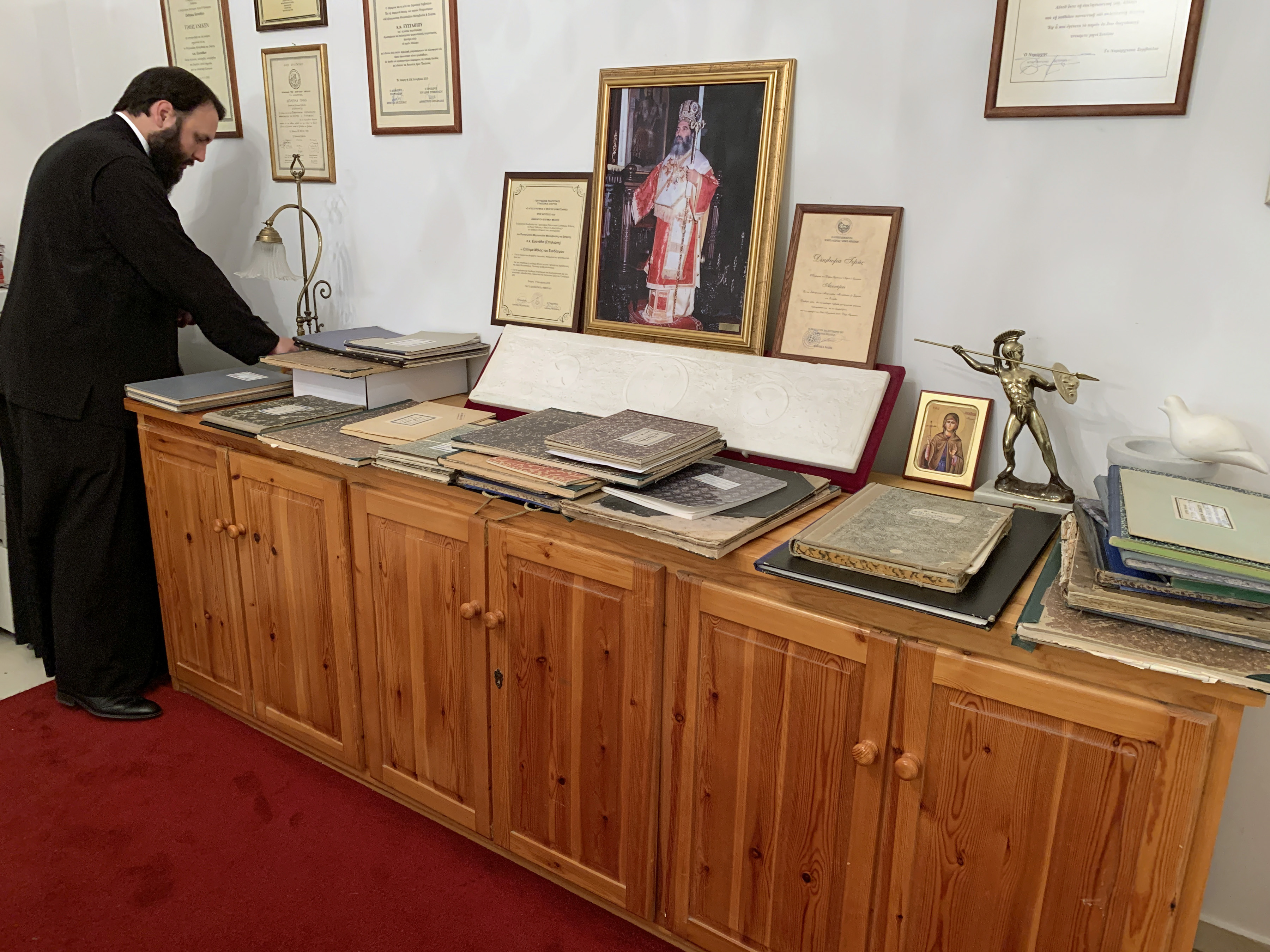
Father Seraphim examines books to be digitized; Metropolis of Sparta, 2019
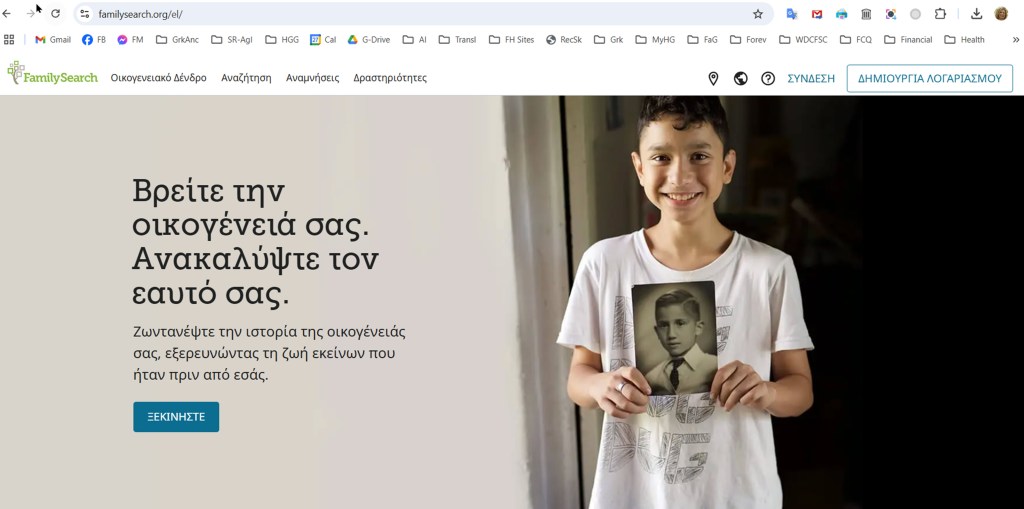
Today, FamilySearch has published its website in the Greek language! For our Greek-speaking friends throughout the world, and especially for those in Greece, this opens doors of discovery for your family history. The url is: familysearch.org/el. Congratulations to the technical specialists and IT engineers who made this possible!
FamilySearch is the largest FREE website in the world. Its collections of digital images from Greece is unsurpassed, and these can be accessed at any of the over 5,000 FamilySearch Centers worldwide.
I especially like using the FamilySearch tree. Each person has his/her own “page” which serves as a personalized memorial site. This is where I upload photos, documents and stories about each ancestor to his or her page. For example, this is the page for my paternal grandfather, John Andew Kostakos (Ιωάννης Ανδρέας Κώστακος). As you scroll through the tabs at the top of the page, you will see the Sources, Notes and Memories that document his life. The “About” page is a synopsis of all the information about him. Everything I have about my grandfather is posted on his page and is accessible to researchers now and in the years to come.
With all of the unrest in the world today, it is critically important that we preserve the work we are doing to document the lives of our ancestors. This preservation should be both personal (i.e., digitizing documents and sharing with family and uploading to a personal online account) as well as universally accessible (uploading to a reputable online genealogy website so that our research can be accessed by others both now and in the future).
I choose to use FamilySearch as my primary online genealogy website for these reasons: 1. FamilySearch International is a non-profit organization. It has always been–and will always remain–free of charge to use.
2. FamilySearch will never go away. Other genealogy websites are owned by investors and thus are subject to being divested, sold or eliminated. FamilySearch is a service provided by The Church of Jesus Christ of Latter-day Saints to everyone, regardless of tradition, culture, or religious affiliation. FamilySearch resources help millions of people around the world discover their heritage and connect with family members.
3. The FamilySearch tree is a collaborative tree, which enables people worldwide to share information about their common ancestor(s). Anyone can upload a photo or document, or share a source of information, to a person’s page in the tree (see example above of my grandfather, John Andrew Kostakos). By sharing data, we can work together to ensure that correct information is always available for an ancestor.
4. FamilySearch has many thousands of digitized images from Archives and repositories in Greece which are not found on any other website. The catalog for Greece can be found here.
5. The FamilySearch Wiki Greece page is an excellent resource to find historical documents in Greece, and to learn methodologies for researching in Greece.
I encourage you to explore FamilySearch as a provider of research documents and as a repository to preserve your family history research.










 Spartan Roots (Σπαρτιατικές Ρίζες)