My research trips are super-intensive. This is due in part to my personality, and in part to the limited working hours at Greek repositories. Archives and libraries’ hours of operation are 8:00 a.m. until 2:30 p.m., and unlike shops, they do not reopen after 6:30. None are open on Saturdays, not even the Central Library of Sparta.
So, my weekday work schedule looks like this:
7:00 – wake up
8:00 – be at the repository
2:30 – leave (or get kicked out)
2:30-6:00 – go someplace that is open: a cemetery, an archaeological or historical site, or take a drive through a village. It’s beastly hot in mid-afternoon in July, but I won’t waste three precious hours.
6:00-midnight – change clothes, visit family or friends for dinner which usually begins around 9:00
Honestly, I came home more tired than when I left. But I also came home with tons of new information.
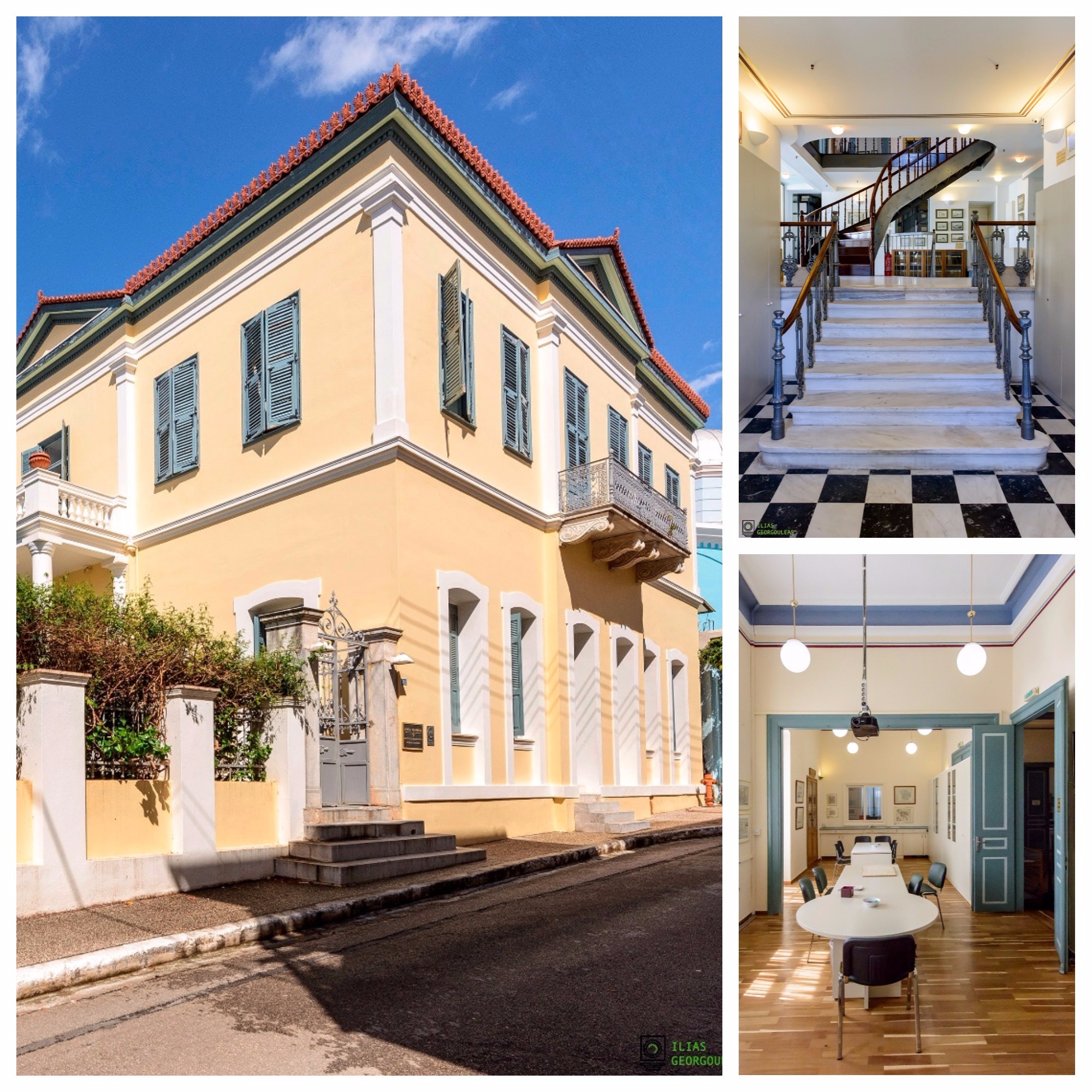
I was anxious to return to the Archives in Kalamata. During my visit of July 2016, the office was moving to a new location and everything was packed in boxes, which made research impossible. I was thrilled to see its new home: a stunning neoclassical building constructed in the 1880’s and rebuilt after the earthquake of 1986.

General Archives of Greece, Kalamata, Messinia
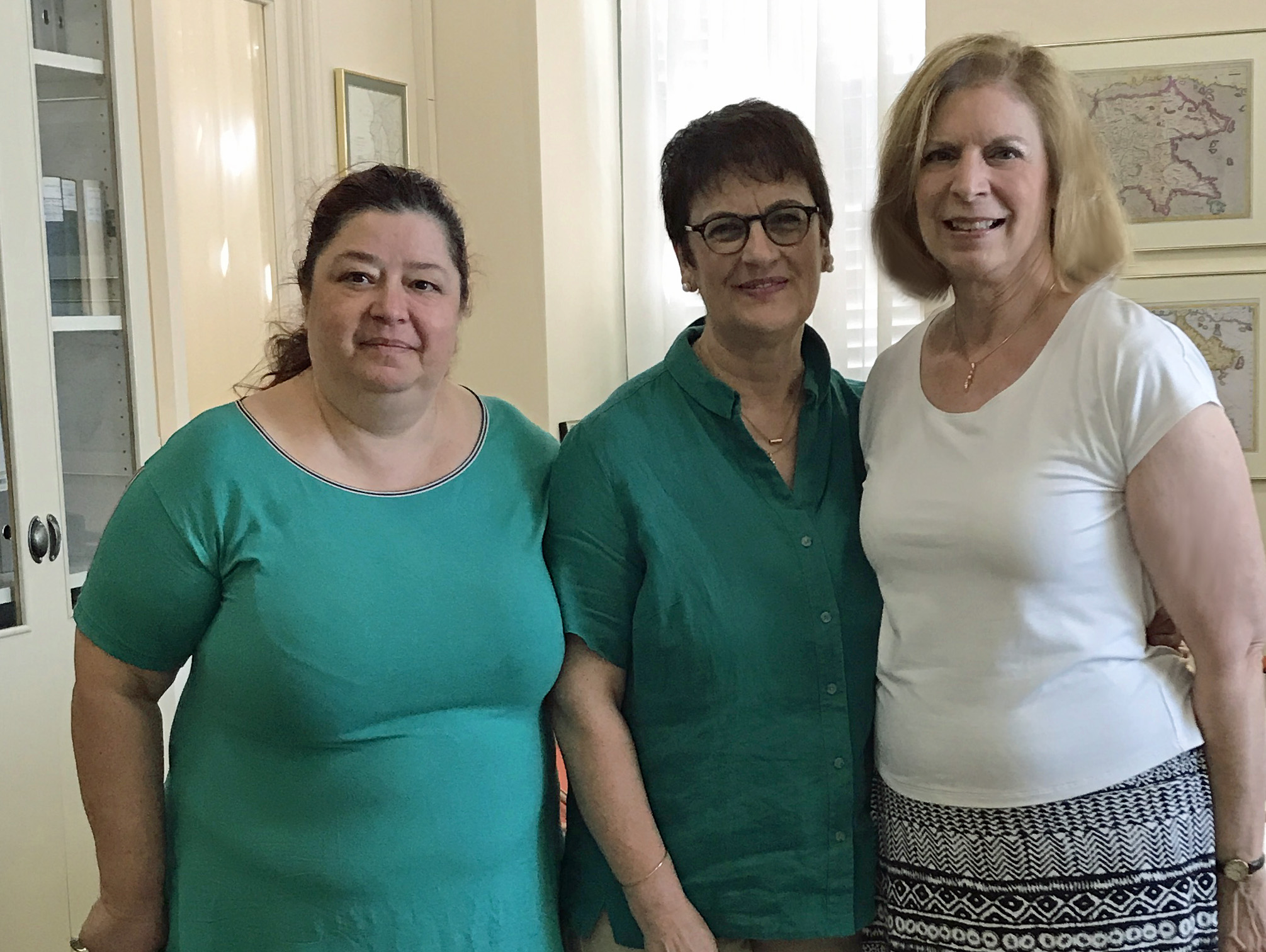
I am ever grateful for the help and kindness of my friend, Giota Siora, who met me in Kalamata and escorted me to the Archives. Giota knows the archivist, Anastasia Milioni, who was eager to assist us in any way possible. My goal was to search for information about two families with possible early ties to the Kalamata region: Eftaxias (prior to relocating to Mystras) and Zaharakis (prior to relocating to Theologos).

GAK, Kalamata: Giota Siora; Anastasia Milioni, Archivist; Carol Kostakos Petranek, July 2017
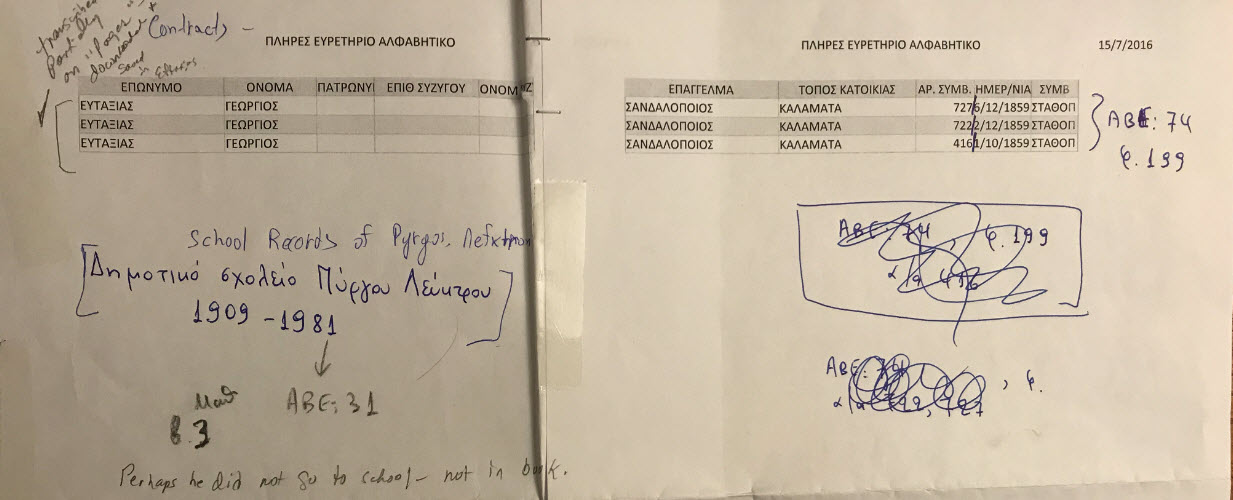
In 2016, Mrs. Milioni had given me a print-out of contracts with the Eftaxias name. There were three for Georgios Eftaxias who was in Kalamata in 1859.

Eftaxias contracts, 1859. General Archives of Greece, Kalamata, Messinia
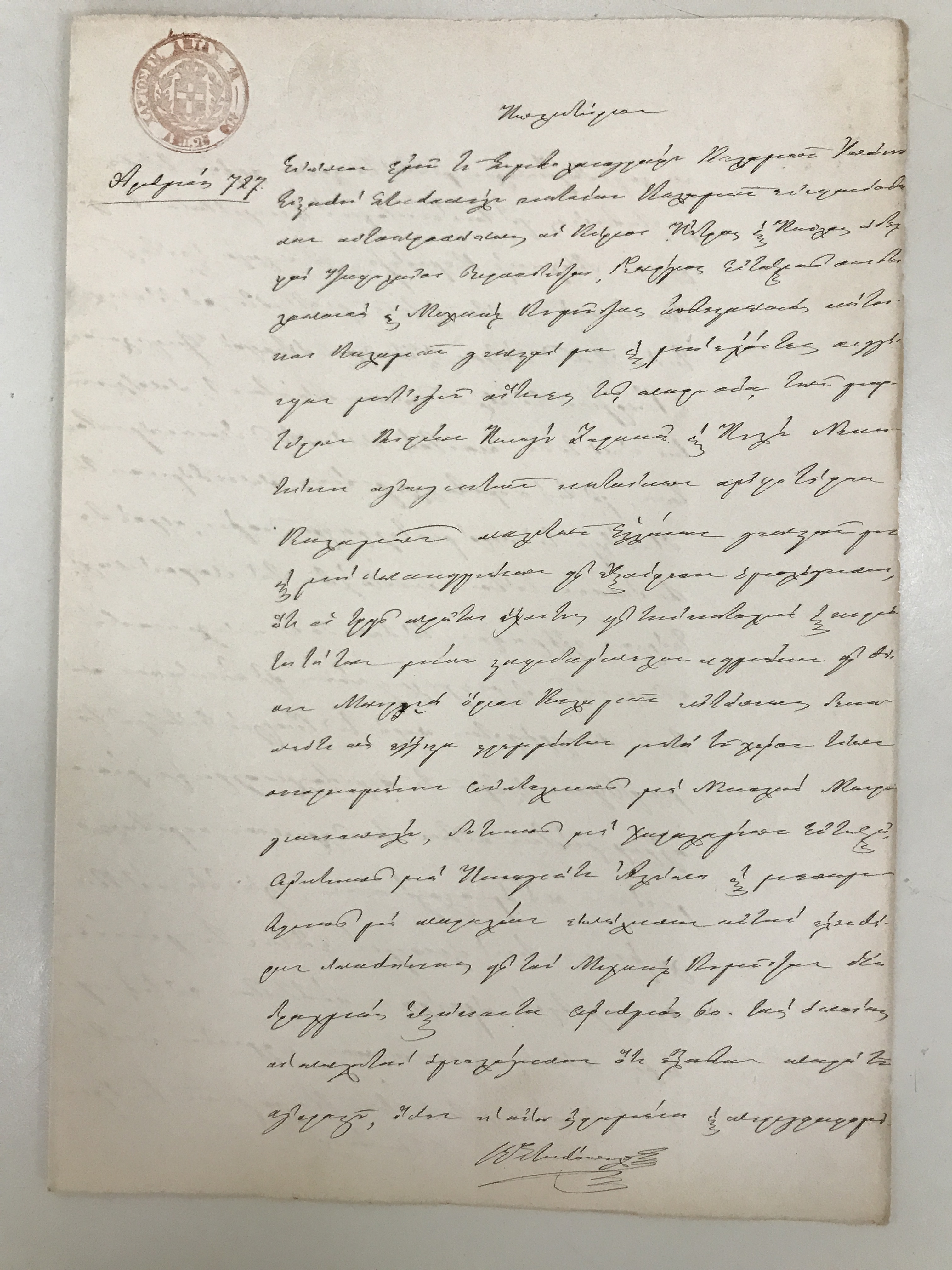
After the contracts were retrieved, Giota amazed me with her ability to read the documents. They were not written in typical old Greek script, but in a specific type of calligraphy used by lawyers and high government officials in the 1800’s.
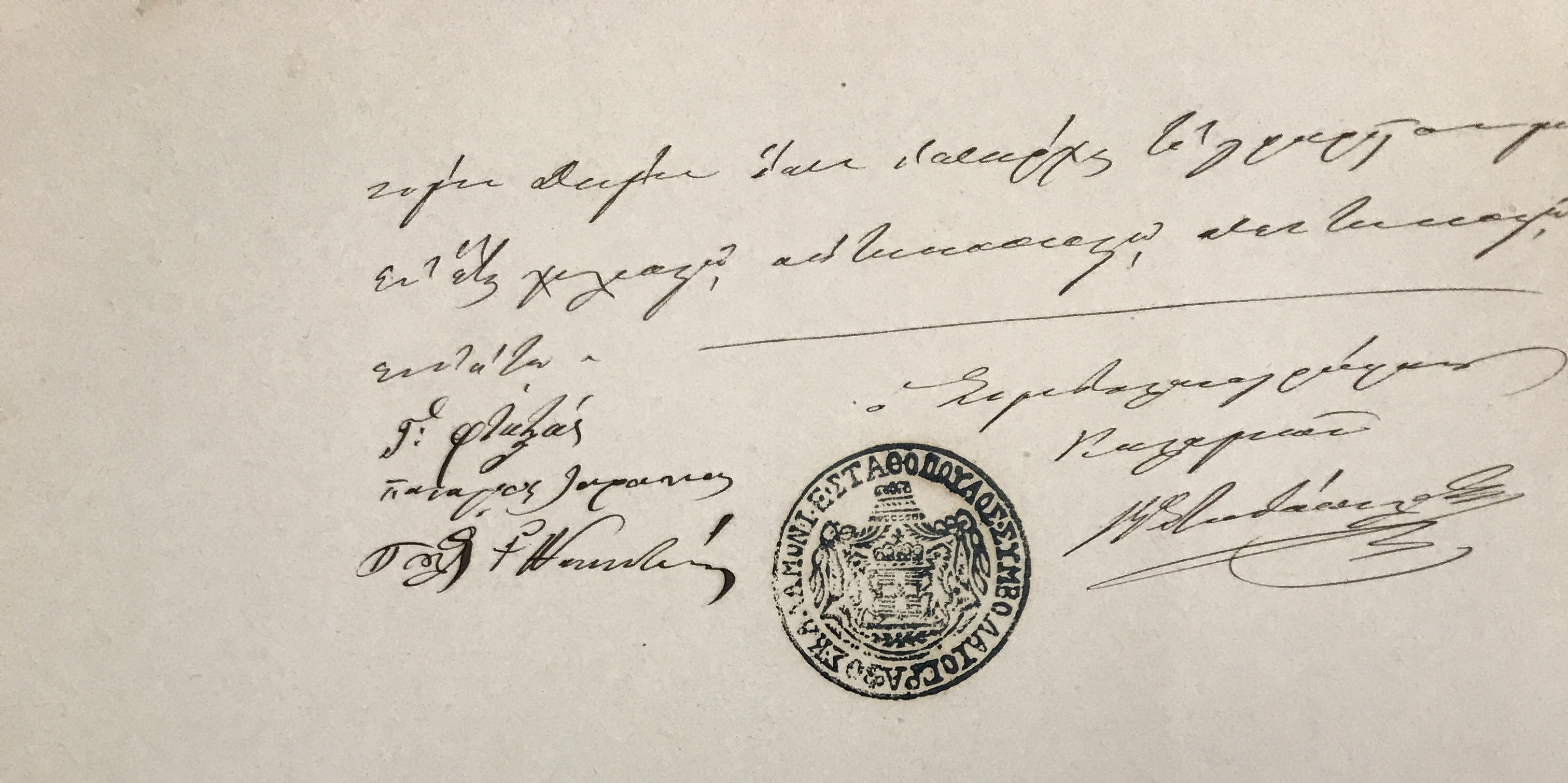
Below are page one and the signature page of Contract 727 for Georgios Eftaxias, along with a synopsis by Giota.

Eftaxias, Georgios; Contract 727 p.1. Kalamata, Messinia. July 2017

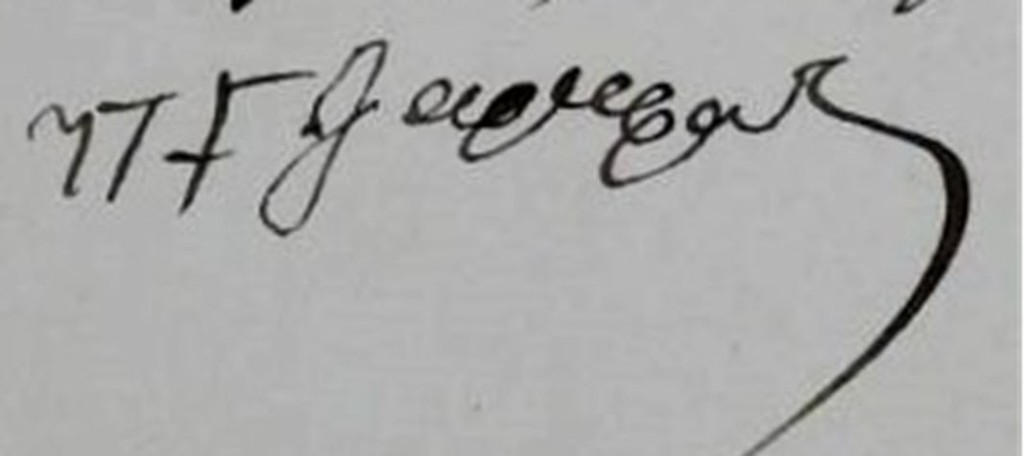
Eftaxias, Georgios; Contract 727 p.3 – signatures.. Kalamata, Messinia. July 2017
Contract 727 Georgios Eftaxias in Kalamata 1859
Final payment on land purchase
Georgios Eftaxias bought a field at Mavria (on the border of Messinia and Laconia). He paid 60 drachmas on the balance due. He bought the land from Michail Koumoutsas who was a lime maker. One of the owners of land bordering his is Haralambos Eftaxias.
With three contracts for Georgios Eftaxias, I now have proof that a family was in Kalamata. But is this my family? Possibly yes, possibly no.
- I have an Eftaxias “DNA cousin,” Peter, who was born in a village adjacent to Mystras. His father said that their Eftaxias family came from Kalamata. This is definitely his family. Since we have a genetic connection, this is one point on the “yes” side.
- The very name, Eftaxias, has ecclesiastical connotations. Gregory Kontos sent me this definition: the one that is in charge of the good order of the church: good=ευ order=τάξη. So, this could be an example of families who had worked in a church and adopted the position title as a surname. This is one point on the “no” side.
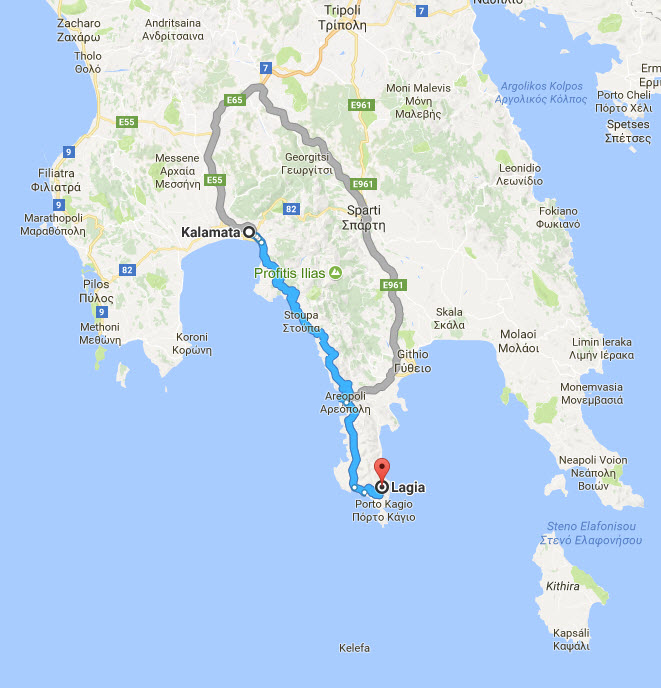
Another twist: the Election Lists of 1875 show a Michalis Eftaxias who was born around 1800, fought in the Revolution, and lived in Lagia. That is 117 km from Kalamata, a 39-hour walk! Is it possible these two families are related? Not impossible, but perhaps improbable. This could be an example of the second bullet–someone working in a church, taking the ευταξη title as a surname.
So, the definite answer to my question is, “I don’t know.”
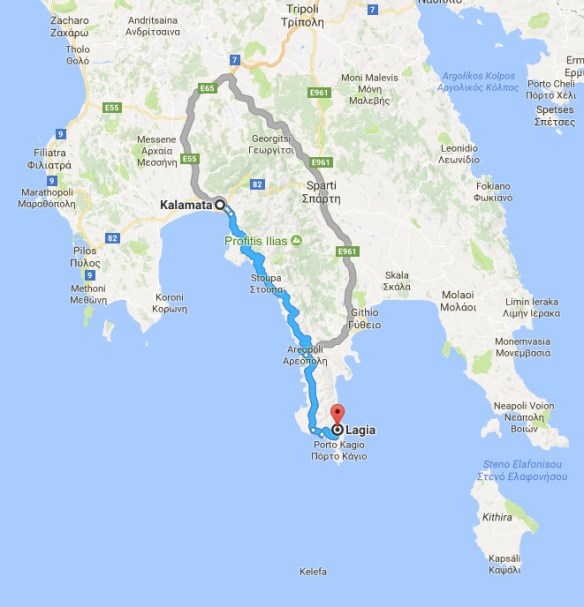
Lagia to Kalamata is 117 kilometers
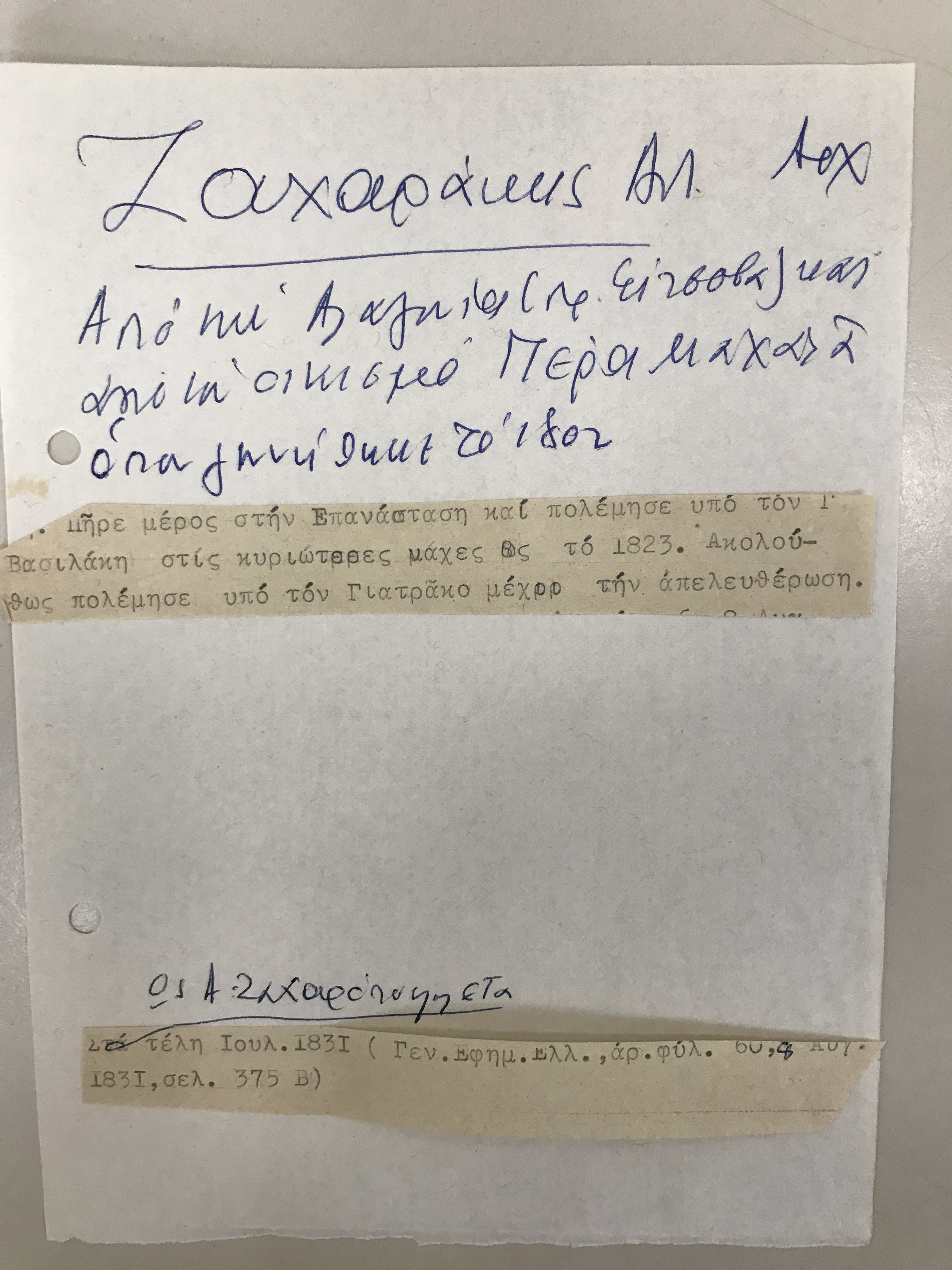
The Archives in Kalamata has a one-of-a-kind collection created by Μίμη Iλ. Φερέτος (Dimitris or Mimi Il. Feretos). Giannis Michalakakos described Mr. Feretos as a journalist and writer who gathered information on fighters of the 1821 Revolution. In the early 1900’s, he interviewed people who had fought (or whose relatives fought) in the War of Independence. Mr. Feretos created a surname index which include brief notes and reference sources to find the original documentation. The GAK in Kalamata has a bookcase filled with Mr. Feretos’ notebooks. They are arranged in alphabetical order, and Giota easily found the Eftaxias and Zaharakis surnames.
This is a copy of one of the Feretos pages for Zaharakis. I found it fascinating to see how Mr. Feretos compiled and annotated information, long before the computer age.
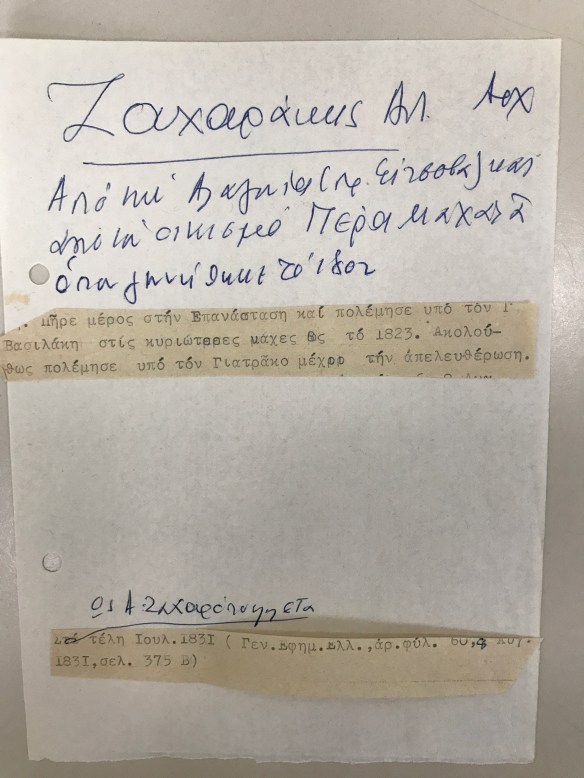
Zaharakis surname, notes from the files of Mimis Il. Feretos, GAK Kalamata, July 2017
A simple translation of this document, with my thanks to Giannis: M. Zaharakis, born in Sitsova [now known as Alagonia on the border of Messinia and Laconia]. He fought in the Revolution under George Vasilakos, in the main battles until 1823. Afterwards, he fought in the war under the Giatrakos family. In some documents, he is referred to as Zaharopoulos.
This document reveals two important things: first, M. Zaharakis is not my family; he was born in a region far from Theologos at a time when my Zaharakis are found in documents in Theologos. Second, M. Zaharakis was also known as Zaharopoulos. This is a critical piece of information because there is a long-standing (and frustrating!) pattern of Greeks changing their names. Having written proof that Zaharakis and Zaharopoulos in Kalamata are the same family, saves years and tears for the serious researcher.
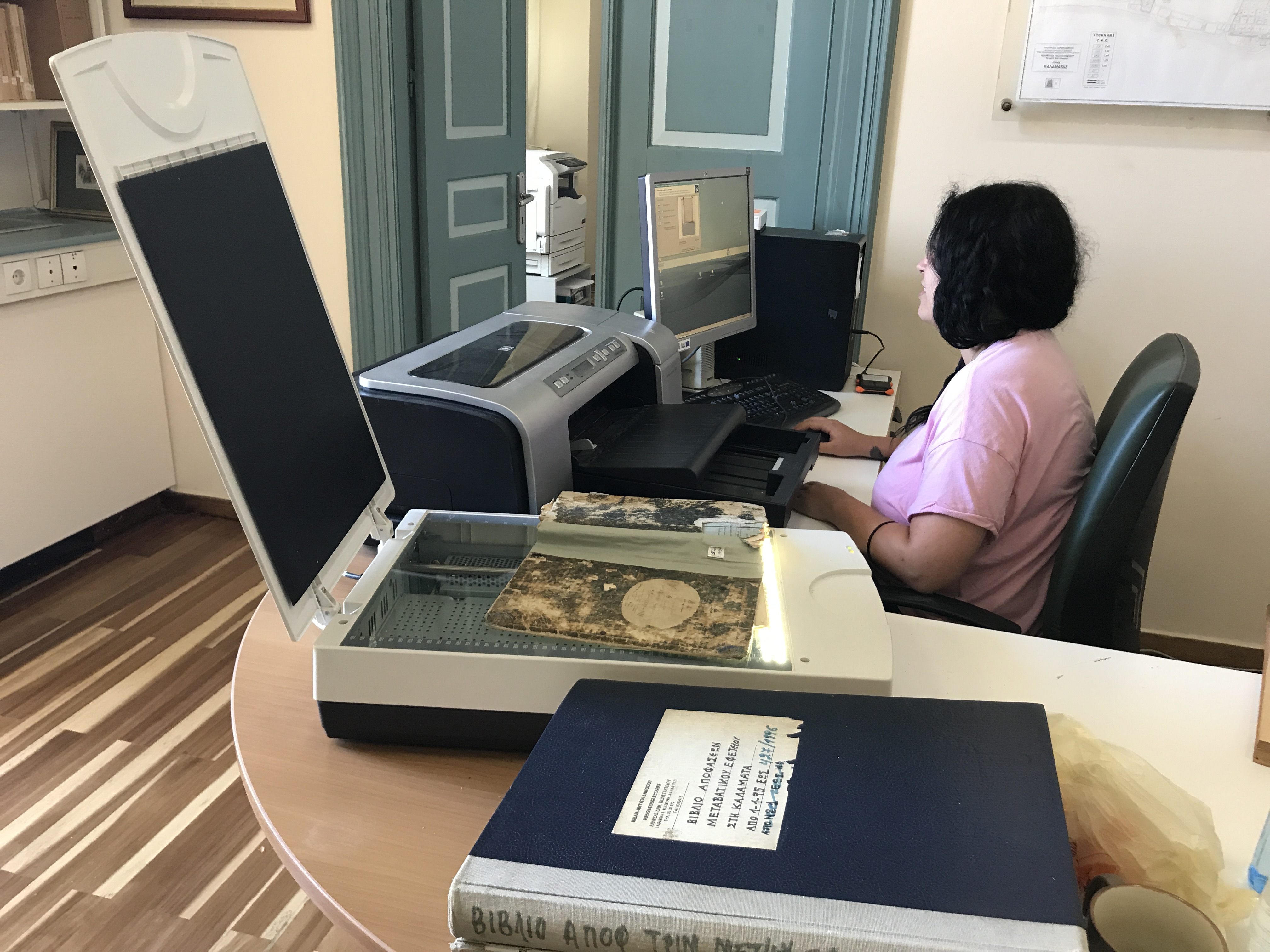
For anyone researching in Messinia, the Archives in Kalamata is an essential repository. The staff is actively digitizing as much of its collection as possible. They are friendly, helpful and supportive in every way.

Digitization underway at the Messinia Archives in Kalamata
Here are links to access the Archives website; its online digital collections; and its YouTube channel.This link is especially helpful, as it shows the collections in the Archives.
Was my research trip to Kalamata a success? Yes! I did not find the definitive information I was seeking to link my families in Laconia to the ones in Kalamata. However, I explored a new Archive, discovered the Feretos collection, found documentation to prove (and disprove) some of my theories. I visited the Kalamata Museum, filled with incredible antiquities and artifacts. Most importantly, I spent a delightful day with Giota, who inspires me with her continual desire to help and teach. Thank you, my friend!








 Spartan Roots (Σπαρτιατικές Ρίζες)