Journal of Lakonia Studies at the Library of Congress, Part 2

In October 2024, I delivered the first twelve of twenty-three volumes of the Lakonia Studies journals to the Library of Congress. Last week, I delivered volumes thirteen through twenty-three. They are now housed in the European Reading Room under the supervision of Dr. Nevila Pahumi1 who oversees the Greece and Cyprus collections.

Carol Kostakos Petranek delivers Lakonia Studies Journals, September 19, 2025
The architectural design of the European Reading Room reflects the classic beauty of the Library

As I explained in this 2024 post, Dr. Pahlumi is most enthusiastic about securing primary sources for the Library’s collections. Historians in their native lands who can walk the grounds, speak with local specialists, and access materials not available outside their countries are the ones who write with first-hand knowledge and accuracy. Their works are eagerly sought by researchers worldwide who visit the Library seeking such materials.
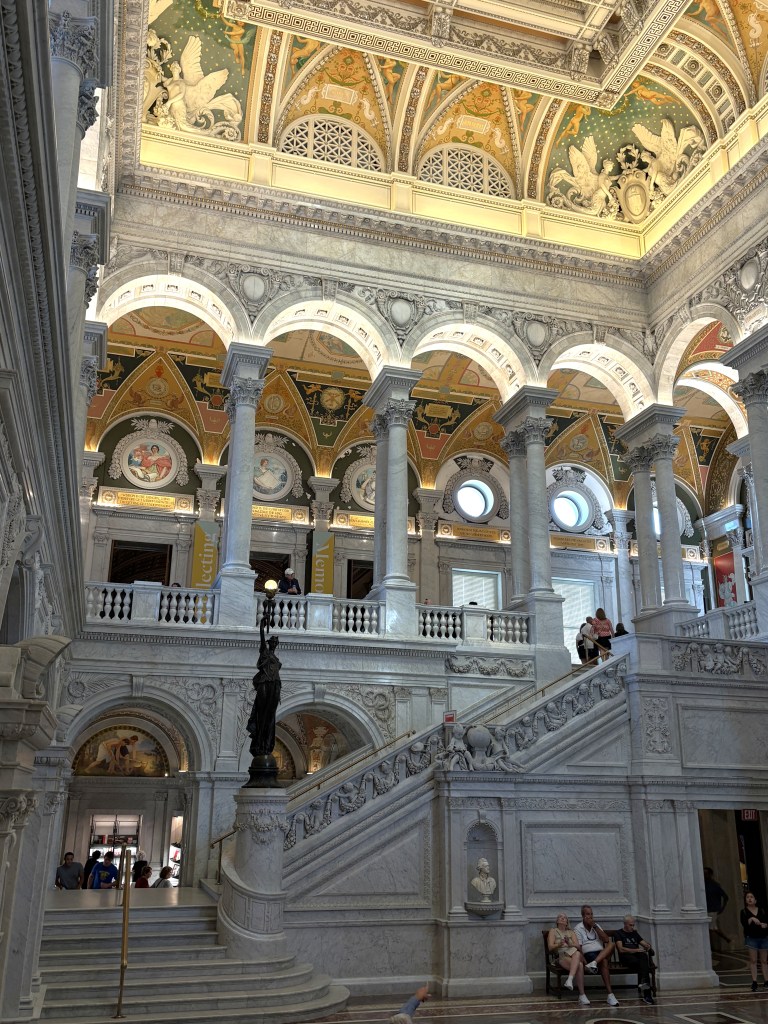
The classical beauty of the Library captivates those who enter

This pdf document lists the Table of Contents for each of the twenty-three volumes of Lakonia Studies2. It is 47 pages–too long to add a typed copy to this post. If there are articles of interest to you, the volume(s) can be purchased from the Lakonia Studies organization for 20 euros per book.

Next year, I will deliver the supplements to the journals. Those books are just as large and comprehensive as the original volumes!
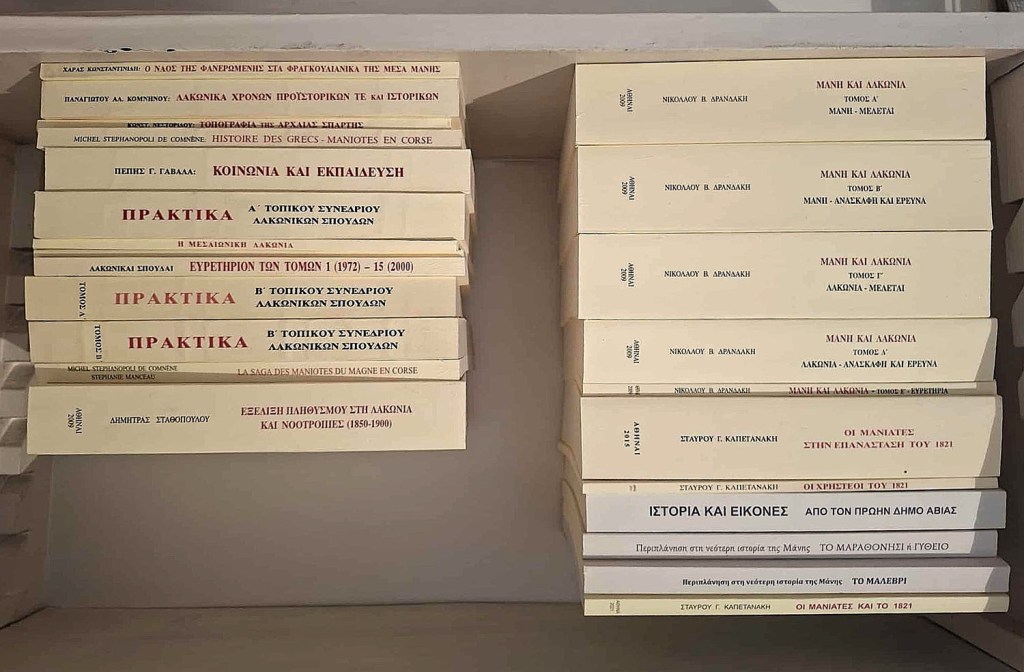
Lakonia Studies Supplements

Contact the organization for more information or to purchase a volume:
e-mail: etlasp@gmail.com.

And if you are in Athens, make an appointment to visit the office and the staff.
63 Charilaou Trikoupi, 4th floor, 104 81, Athens
Office hours: Monday – Wednesday – Friday 11.30 am – 1.00 pm
Telephone: 210-3304422
6936-734920 (Sokrates Kougeas – president)
6974-343619 (Despina Koutsari – general secretary)

These books should be in the hands of researchers worldwide. If you know of an organization, library or repository that would welcome this incredible collection, please contact either the Lakonia Studies organization or me. Our Spartan historians deserve to be referenced and respected for their exclusive and preeminent works.


1Dr. Pahumi is the Reference Librarian for Latin American, Caribbean, and European Division and oversees the Greece and Cyprus collections at the Library of Congress in Washington, D.C.
2The English version was translated using the Greek Genealogy Assistant chatbot which I created in ChatGPT5. My Greek language skills are elementary, and although I reviewed the translations which appear accurate, there may have errors.

Bite-Sized Greek Genealogy: Free Companion Booklet Now Available

My colleague, Georgia Stryker Keilman of Hellenic Genealogy Geek and I have thoroughly enjoyed creating the video series, “Bite-Sized Greek Genealogy.” These short presentations are our way of sharing what we have learned in researching our Greek family history. We also hope these videos will help others avoid making the same mistakes as we did, and to avoid the myriad of pitfalls that we encountered.

Education for any topic is critical for success! Therefore, we are taking this series one step further.

With the videos now complete, we embarked on writing a booklet to capture the notes and talking points that accompanied our slide presentations. This booklet is now complete and is available as a free download at this link.

The booklet is structured according to the contents of each video. Each chapter contains links to the relevant videos and additional references and website links which correlate to the topic.

SECTION I:
Episode 1: Tips about Names and Villages, page 3

SECTION II: SEARCHING IN U.S. RECORDS, pages 7-11
Episode 2: How to Find Your Grandfather’s Greek Name
Episode 3: How to Find Your Ancestor’s Village of Origin
Episode 4: How to Find Your Grandmother’s Greek Maiden Name

SECTION III: RESEARCHING IN GREEK RECORDS, pages 12-40
Episode 5: How to Find Birth Information in Greece (3 videos)
Episode 6: How to Find Marriage Information in Greece
Episode 7: How to Find Death Information in Greece

SECTION IV: APPENDIX
Greek Document Locator, Parts 1 &2
Greek Word List

The entire Bite-Sized Greek Genealogy video series can be viewed at the Hellenic Genealogy Geek YouTube channel.

Please share this post with those researching their Greek ancestors. We appreciate any feedback and ideas for future videos: spartanroots1@gmail.com.

Journal of Lakonia Studies Now at the Library of Congress

Primary source materials are the essence of historical research. Distinguished historians, linguists, scientists, archaeologists and cultural specialists of Sparta have written extensively about the historical evolution of our region and the lives of our people.

Now, their work is accessible to researchers worldwide at the Library of Congress (“Library”). This morning, I was both thrilled and honored to deliver to Nevila Pahumi, Ph.D.1 twelve of the twenty-three journals published by the Society of Lakonia Studies (“Society”). Next summer, I will bring her the remaining volumes and supplements.

Nevila Pahumi, Ph.D., enthusiastically accepts Lakonia Studies Volumes 1-12
Library of Congress, Washington, D.C. October 25, 2024

I first met Dr. Pahumi in February, 2022, when Gregory Kontos of GreekAncestry and I visited the Library to examine their collection of Directories for Cyprus. It was during our discussion that I became aware of the Library’s eagerness to access primary source materials. During my yearly visits to Sparta, I continue to look for books and other manuscripts that are locally sourced and written, and which would meet the interests of the Library’s researchers. In 2023, I brought Dr. Pahumi all published issues of the Faris (Φαρις) newsletter of Xirokampi, which are filled with recollections of villagers, research by historians, and local poems, stories and anecdotes.

I have long known of the mission and publications of the Society of Lakonia Studies through my historian colleagues and friends, Dimitris Katsoulakos and Giannis Michalakakos. But it was not until last summer, when I spent one month working at the Central Library of Sparta and reviewing the Lakonia Studies journals, that I thought of bringing them to the Library of Congress. My deepest gratitude to Dimitris and Giannis for helping to make this concept a reality!

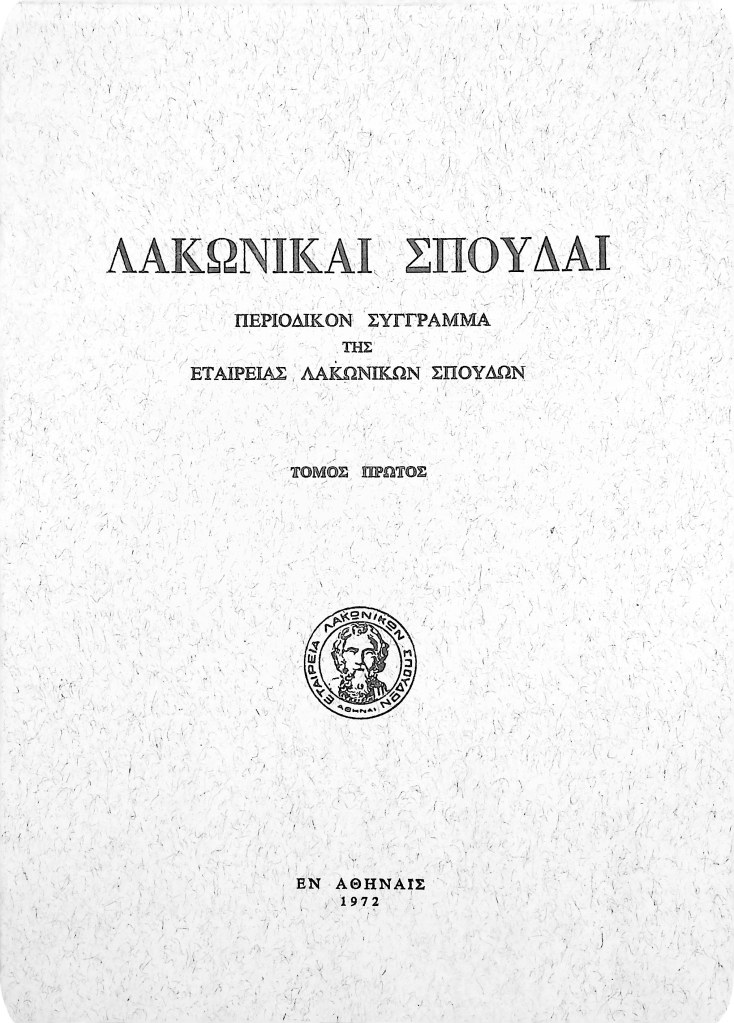
The Society of Lakonia Studies has a 58-year history. It was organized in 1966 in Athens under the initiative of Dikaios V. Vagiakakos with the mission of developing and promoting scientific research about Lakonia. Topics focus on: history, archaeology, linguistics, folklore, philosophy, law, portraiture, anthropology, painting, architecture. Authors present their scholarly work at the Society’s yearly conferences held in Athens. Their writings are subsequently published in the journal Λακωνικαί Σπουδαί or Lakonian Studies. Clicking on the title of each volume will reveal its Table of Contents. These articles are historically important, meticulously researched, and truly fascinating to read.

Volume 1, published 1972 in Athens

The Society is housed in Athens at 63 Charilaou Trikoupi, 4th floor. Office hours are Monday – Wednesday – Friday from 11:30 am – 1:00 pm; phone: 210-3304422; email: etlasp@gmail.com. Its library is accessible to anyone interested.

Lakonia Studies Office, Athens

This announcement is on the Lakonia Studies website:

Thursday, September 26, 2024
SIXTH CONFERENCE OF THE SOCIETY OF LACONIAN STUDIES
The Society of Laconian Studies will organize in November 2025 in Sparta (the exact date will be announced in the near future) the 6th Congress of Laconia Studies on the subject: Laconia 330 AD. – 1830.
We ask those interested in participating to send a summary (up to 300 words) of their presentations by March 1, 2025 to the email address: etlasp@gmail.com.
More information about the conference will be posted on the website of the Society of Laconic Studies http://www.etlasp.gr/
The organizing committee: Sokratis Kougeas  & Dimitris Katsoulakos


1Dr. Pahumi is the Reference Librarian for Latin American, Caribbean, and European Division at the Library of Congress in Washington, D.C.,

Perhaps the Solutions of the Future are Hidden in Tradition

by Tasos Kon. Frangis
published in the Faris Newsletter, Issue #77, December 2023, pages 20-21

In the previous issue of our newspaper, we devoted a few pages from the Spartan Journal of 1900, an annual publication with information, studies, statistics, and other topics about the Province of Lacedaemonia at the beginning of the twentieth century. Today, it constitutes an important source for historical research.

In the brief introduction to that article, we promised to return for a further examination, a reflection on the “Products” chapter, which contains information on the agricultural activity, about which, admittedly, we knew little.

So, let’s look again at what the farmers produced in those times. The main products were: oil, citrus fruits, silk, grain, wine, figs, and legumes. Annual average production:

  • olive oil, 2,000,000 okades1, the majority of which was exported;
  • citrus fruits, 10-12,000,000 oranges and 1,000,000 mandarins, most of which were destined for the Russian markets;
  • silk, 50,000 okades of dry cocoons and 200,000 okades of fresh cocoons;
  • cereals, 5,500,000 okades, enough for local consumption for six months;
  • wine, approximately 1,700,000 okades;
  • figs, 160,000 okades;
  • legumes, 50,000 okades.
  • In smaller quantities,
  • In smaller quantities, they also produced walnuts, chestnuts, etc.
2018 display of the silk industry in Sparta, created by the Lakonia office
of the General State Archives of Greece; photo by Carol Kostakos Petranek

Since then, approximately 120 years later, within the boundaries of the-then Province of Lacedaemonia, the production of olive oil and edible olives remains, along with small quantities of citrus fruits, vegetables, and wine.

The remaining cultivations vanished, and how could it be otherwise? After so many years, migration and urbanization stripped the countryside and enlarged the big urban centers. So, we have arrived at the present day where discussions about the future of agricultural production take place under complex conditions and the threat of the present climate crisis. Already, there are numerous signs predicting difficulties and significant problems.

The circles of discussions, analysis, and ideas are divided. Some turn to the search for a new model, while others, who have observed for years the dysfunction of the current model, join with those who call for the revival of traditional cultivations… Example: the Peloponnese Region has already decided to implement a pilot program to produce first quality silk on 30 hectares in each of the regional units of Laconia, Messenia, and Arcadia.

For this purpose, in uncultivated and riverbank areas along the Eurotas and Pamisos Rivers, four to five farmers will be selected and properly trained. During the implementation of the program, the Region will ensure the distribution of the product and a satisfactory income to the producers. Since the sericulture activity is recognized as environmentally friendly, no kind of environmental permit is required. Also, no planning permit is required for the construction of rearing chambers, warehouses, etc.

The contributors to the project are optimistic about its success, as the demand for the product is high both in the domestic market and in the European Union. “Faris” requested the opinion of our fellow citizens, who have been involved in the textile and fashion industry for a long time, regarding the feasibility of the program. They told us that “such an enterprise would only fail due to mismanagement”…


I (Carol Kostakos Petranek) am honored to receive permission from the Katsoulakos family to translate and share articles from The Faris. Translation verification and corrections have been made by GreekAncestry.net. This is the sixteenth article of the ongoing series. Previous articles can be viewed here.

  1. Oka / okades is a former unit of weight in Turkey and neighboring countries, equal to about 2.75 pounds (1.25 kilograms) ↩︎

Summer, harvest, war, and “slab casting ” 

by Theofanis G. Kalkanis
published in The Faris Newsletter, Issue 79, December 2023, page 8-9

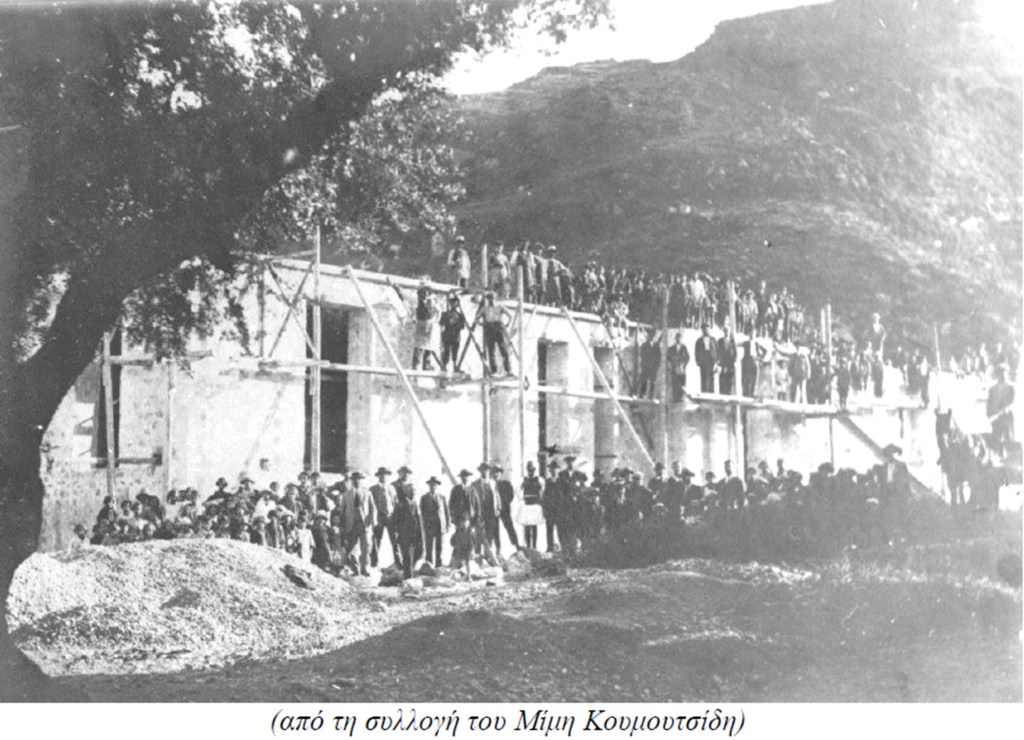
With the occasion of an old photograph I recently saw from the construction of the School Building in Xirokampi in 1927, I had some thoughts and observations as an engineer. At the same time, I remembered that until the 1970s in our villages (and not only), those who had built a house said the phrase of the title in every instance.

In the photograph, a crowd of people is depicted on the walls of the half-constructed building up to the first floor. They seem to celebrate the progress of the construction by wearing their best attire or even foustanellas. Some hold their tools and wear workers’ aprons. Everyone poses. Around the school, there is wood scaffolding. Piles of gravel and a few stones are scattered everywhere, but there is no lift [elevator] or machinery anywhere. Only a cart pulled by a horse. Obviously, the day of putting the concrete base of the first floor of the school will follow.

I thought about what would happen that day! Like every such day, many eyewitnesses remember that putting a cement building slab (also) in our villages, before the 1970s, required the mobilization of many artisans and workers. The whole village. It also required the coordination of many technical and manual tasks, culminating in a laborious and noisy effort (or celebration) for a day, with almost no mechanical support.

Each time, the processes of arranging the space preceded the placement of the concrete base, always done by hand using common tools, measurements with the paseto, [a folded wooden measuring stick], wooden supports, and moldings nailed with hammers. Molds to make metal rods [to reinforce the concrete] were created with concrete sticks that were cut and shaped on the spot by the craftsmen.

On the day of the slab casting, a crowd of workers with shovels made the mixture from cement and sand. Another larger group of workers carried “on their shoulders” bins of mud, climbing up to the level of the slab through narrow and shaky improvised stairs and scaffolding that slipped through the mud. Others smoothed the fluid mud with straight boards. Time was critical for the cement to set. So, with shouts coordinated by the elders, they created a feverish enthusiasm that encouraged the carriers to move quickly without stopping.

In contrast, today the same process is carried out quickly and nonstop by many mechanical means, with hoists, cranes, and tools operated by a few operators. However, it lacks the excitement and enthusiasm of the old “tilers.” Besides, in the past, the casting of the slab was boosted and completed soon by the anticipation of an informal, standing feast that followed, with dozens of herrings and countless jugs of wine passed from mouth to mouth. I think that what was happening then compared to what is happening today is a typical example of a “paradigm” shift for technology.

Returning to the photo, which was the trigger for this note, I remind you that the construction of the School Building in Xirokampi (1927-1929) was the fulfillment of a “vow” made by our compatriots who had fought in Asia Minor between 1918 and 1922 and returned alive.


I (Carol Kostakos Petranek) am honored to receive permission from the Katsoulakos family to translate and share articles from The Faris. Translation verification and corrections have been made by GreekAncestry.net. This is the thirteenth article of the ongoing series. Previous articles can be viewed here.