Greece 2017. Part Two: Athens & The War Museum

No matter how many times I come to Athens, I am enthralled with the city–its beauty, vibrancy, and timelessness. Athens is the epitome of classicism and the locus of history. It pulsates with an energy that is thrilling and contagious. No one leaves without being changed.

Ruins dot the neighborhoods and surprise you at every turn. The city is built upon layers of antiquity. Excavations for renovations or new buildings provide continuing sources of artifacts. When I asked a friend why the smaller pieces are not safely placed in museums, she commented that there are too many archaeological relics everywhere to preserve; thus, many are left exposed and unattended.

Ruins in an Athens residential neighborhood

The Acropolis towers over Athens, a constant reminder of where you are and with whom you are mingling.  Although Greeks can be divisive in their politics, they are united in their pride. Even the unschooled know their country’s history and innumerable contributions to democracy, literature, art and science.

Acropolis, Athens

Nestled under the Acropolis, both the Plaka and Monastiraki Square are hubs of vendors, craftspeople, shops and cafes. There is a surprise at every turn of the winding streets. From dawn to midnight, natives and tourists mingle to barter over trinkets, food, works of art; and to eat and drink in innumerable venues.

The Plaka, Athens

Knowing my love of history, my friend, Giannis, wanted me to experience the past from a different perspective. He took me to the War Museum of Athens, established in 1964 to honor those who fought for freedom from ancient times to post World War II. He promised that I would learn much about history; and, although “war is not my thing,” he was right. The past opened before me in manner unparalleled. Photos, paintings, statues and exhibits portrayed a country under continuous invasion and occupation, with everyday people struggling to maintain their lives and safeguard their families. I have never seen so many guns, rifles, swords, and other tools of destruction in one place!

After I recovered from the shock of seeing thousands of weapons, I focused on the displays in each room. Many of us had ancestors who fought during the Revolution of 1821. Some received Aristeia awards which are earned by soldiers for exemplary actions in battle. Aristeia comes from the word άριστος (aristos) which is defined as “excellent.” In Greek warfare, an aristeia (αριστείο) is an award of great prestige and distinction. I was thrilled to see these medals on display.

Awards: (left) Aristeia for the Revolution of 1821; (right) 1843 Constitution

One family story that I am trying to verify is a link between my Papagiannakos and the Maltsiniotis families. In 1887, the Maltsiniotis brothers established an armaments company which was later merged into Pyrkal, one of the oldest defense companies in Greece. Imagine my shock when Giannis pointed out these displays that were clearly marked with the Maltsiniotis name!
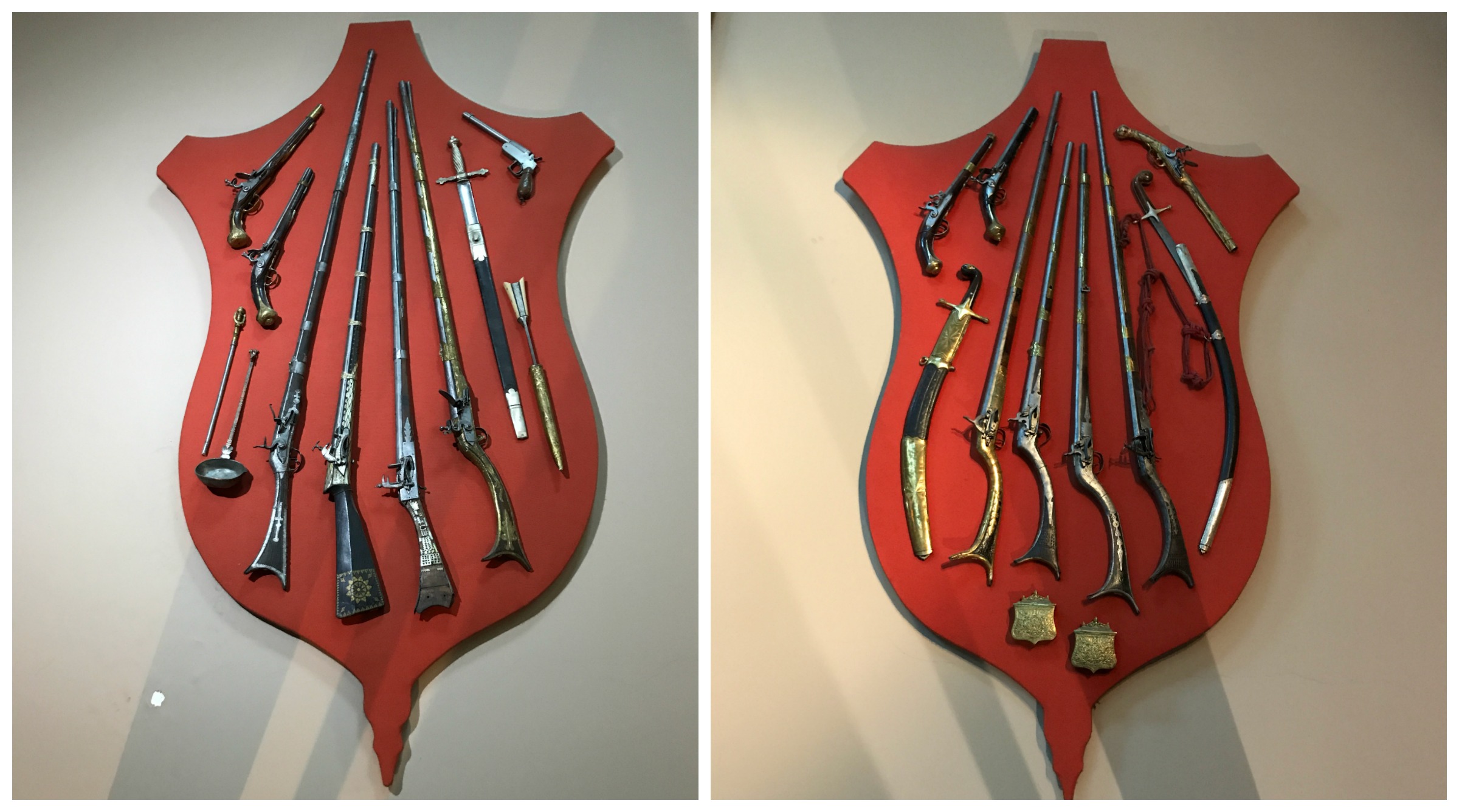
Maltsiniotis armaments

One photograph, thankfully unrelated to war, caught my feminist attention. In 1952, shortly after the end of the Greek Civil War (1949), women gained the right to vote. This picture captured that historic moment, and I felt the triumph of the “silent majority” who were silent no longer.
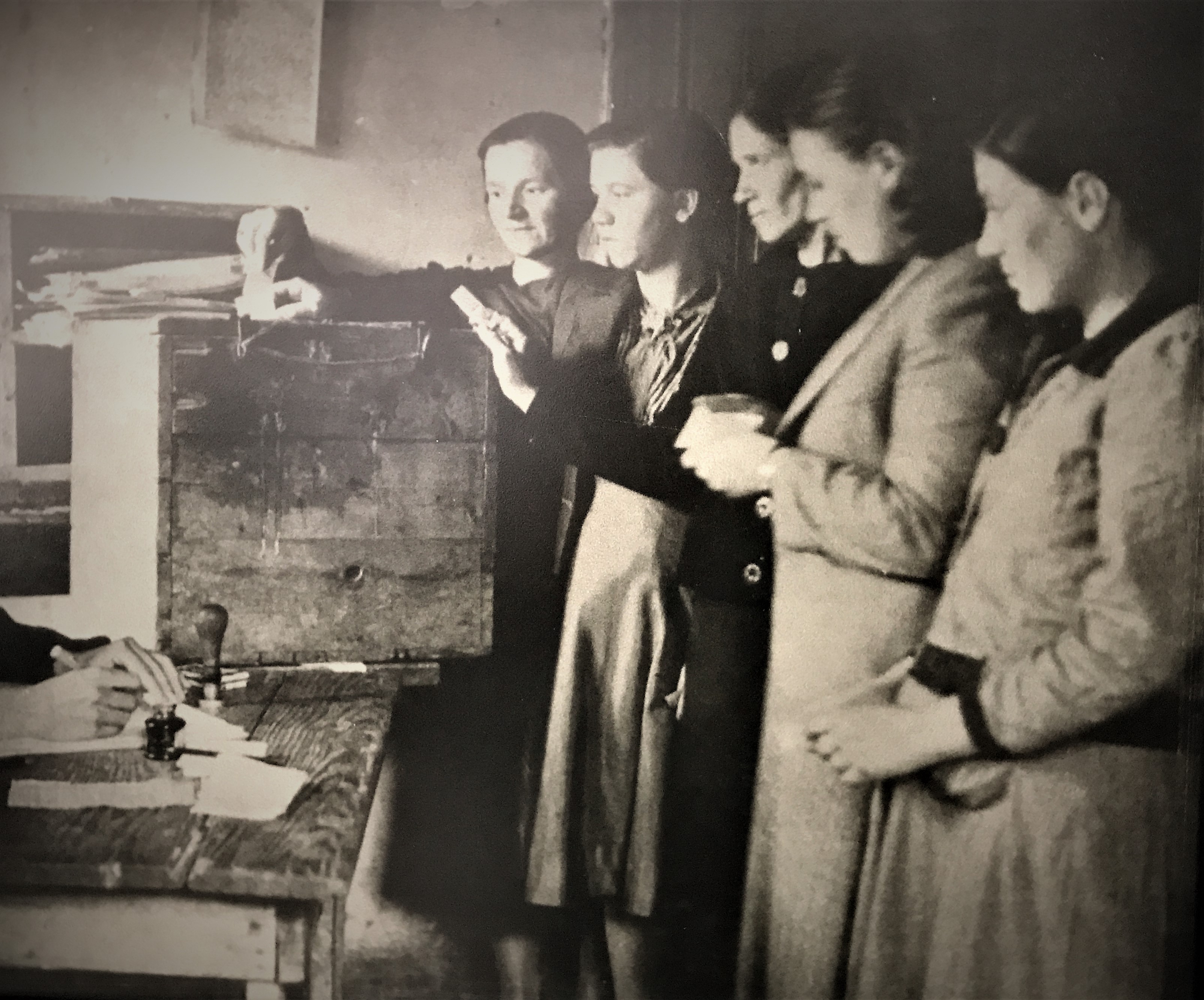
Women voting for the first time in 1952

When men left to fight, women emerged as fierce protectors of the homeland. I am enthralled with the story behind the painting of this strong Maniate woman, holding a scythe in her right hand. During the 1821 Revolution, there was an invasion in Diro, Mani (in the southern Peloponnese). The men were gone, fighting in the battle of Verga, and the women and children were left to tend the fields. When 1,500 Ottoman soldiers attempted to conquer Diro, church bells rang to rally the citizens. Women ran from their fields with scythes in hands. They fought off the invaders and forced them to retreat back to the sea, thus stopping the armies of Ibrahim and preventing an invasion. I love how this woman’s eyes shine with fervor and determination. No one was going to take her land!

Woman of Mani, 1821 Revolution

This is the plaque further describing this amazing story of heroism.

Plaque describing the Maniate women halting the invasion of Ibrahim, June 1826

As I walked each room of the War Museum and studied the myriad of displays, I was reminded that this is but one small country which has been through countless wars and invasions. Hundreds of photographs and paintings depict faces haunted and places destroyed. How senseless war is!

Every visit to Athens is a new lesson in history and culture. I am ever grateful to friends and family who ensure that I will leave with a renewed appreciation and understanding of my ancestral land.

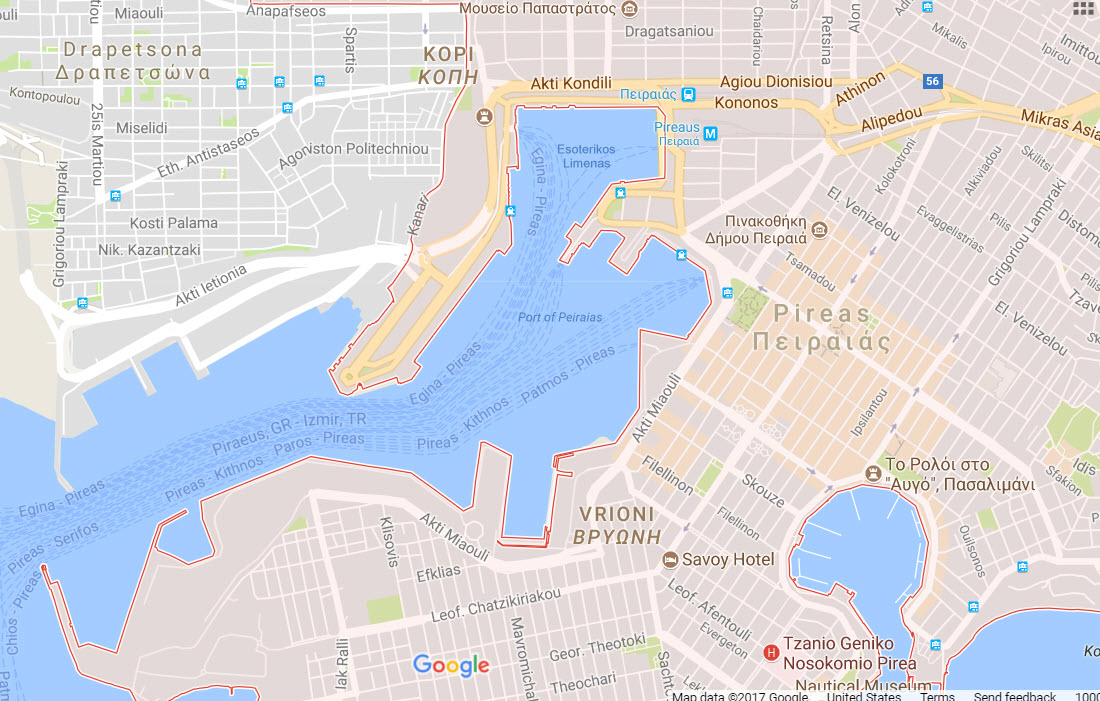


Greece 2017. Part One: Piraeus

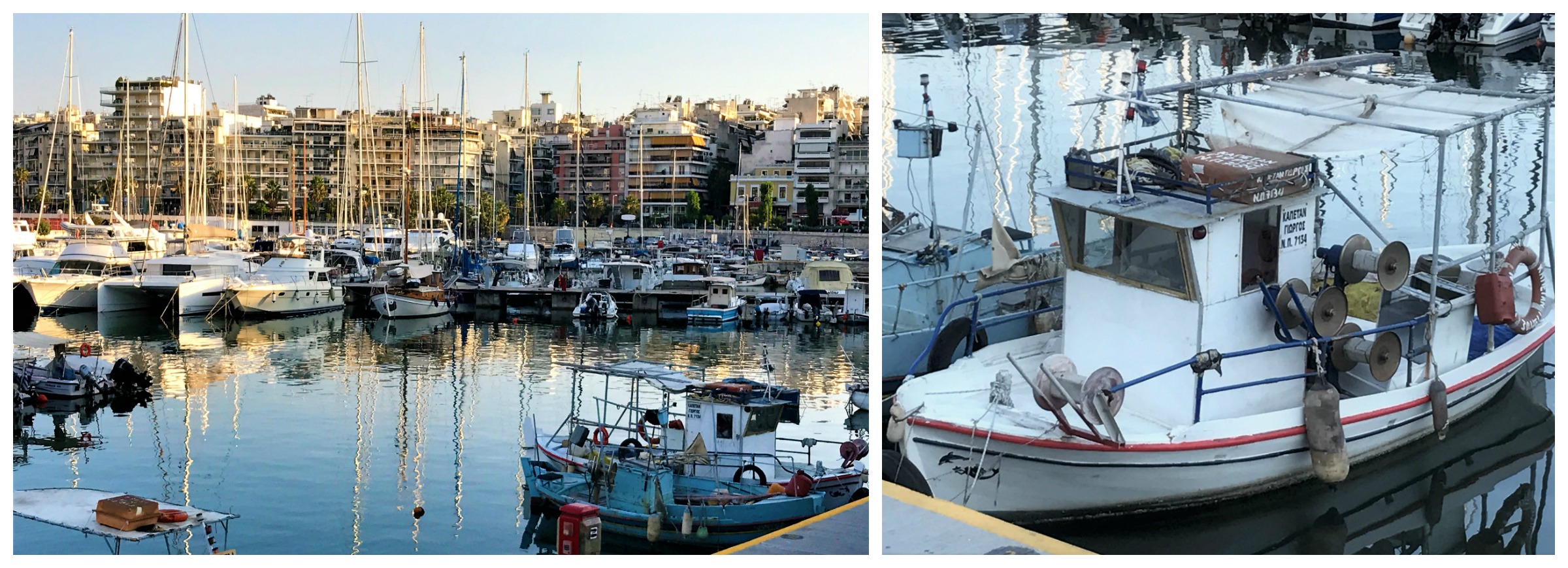
The port of Piraeus is a lively and bustling community of winding streets, hotels, apartments, and shops. As the maritime gateway to Athens, its three harbors stretch for miles around the shoreline, providing numerous docks for cruise ships, fishing boats, and private yachts. Its history begins in the 5th century B.C. when it was designated as the trade center of Athens, seven miles north. Today, it is the largest passenger port in Europe and the second largest in the world.

Piraeus Harbor

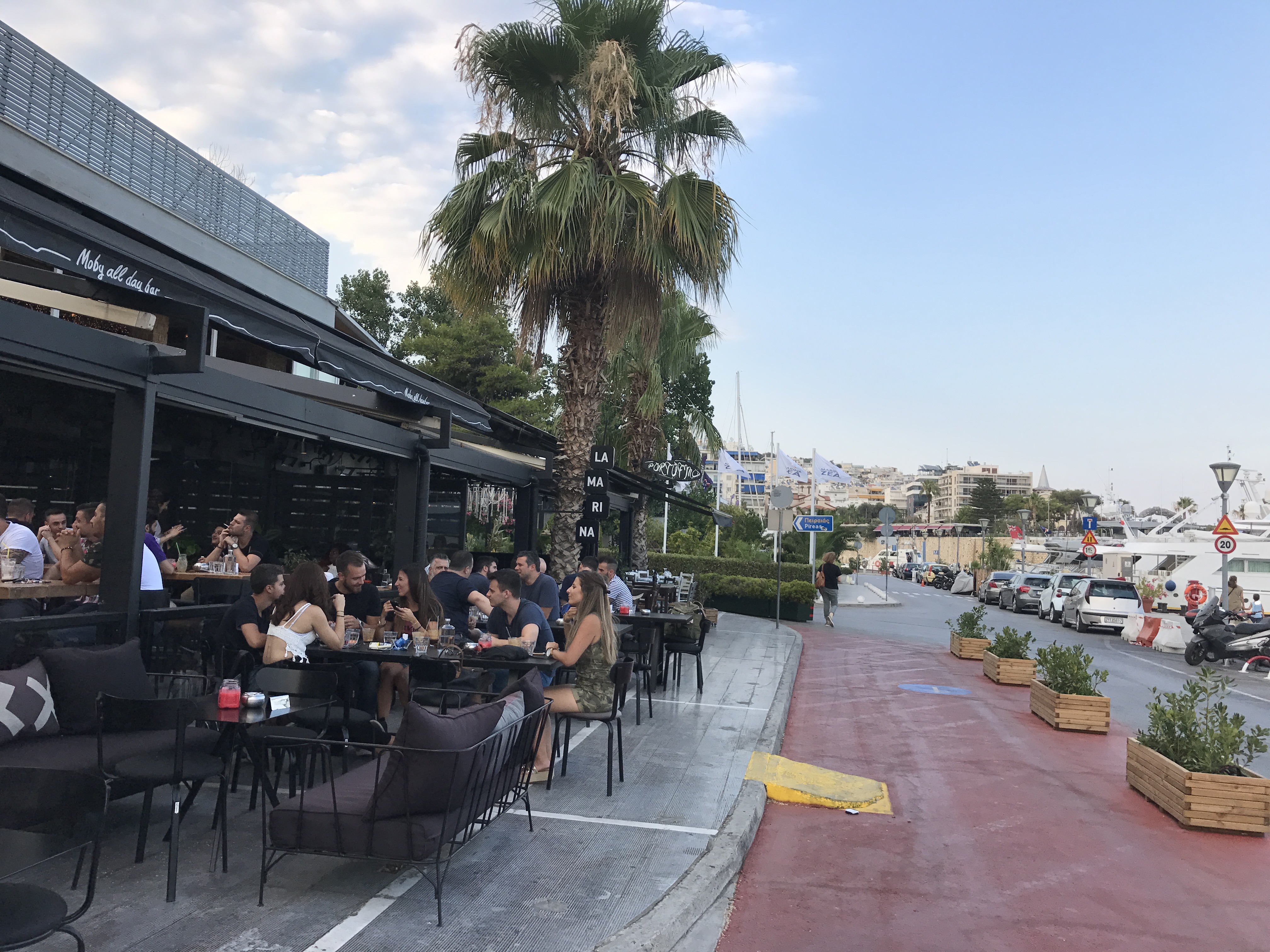
The waterfront is a most picturesque spot to stroll and explore. Countless cafes and restaurants beckoned me to stop and enjoy the view. At 7:30, my friend, Giannis, and I met at an outdoor bar, overlooking the water. We talked for hours about history, genealogy, and village life. At dinner time, 9:45 (!),we moved to a sidewalk table and enjoyed traditional souvlaki while harbor life swirled around us.

One of thousands of restaurants along the Piraeus waterfront.

Piraeus harbor

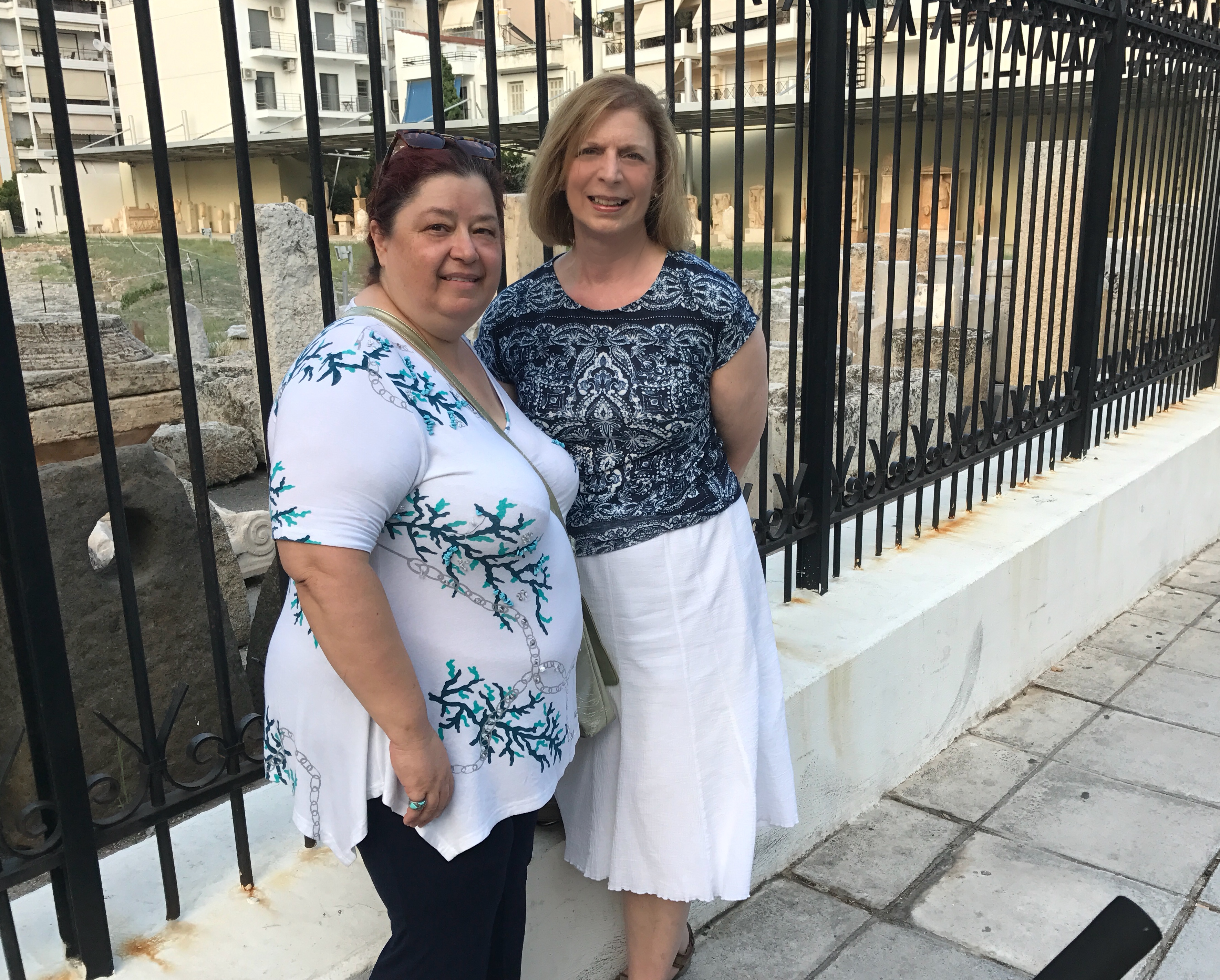
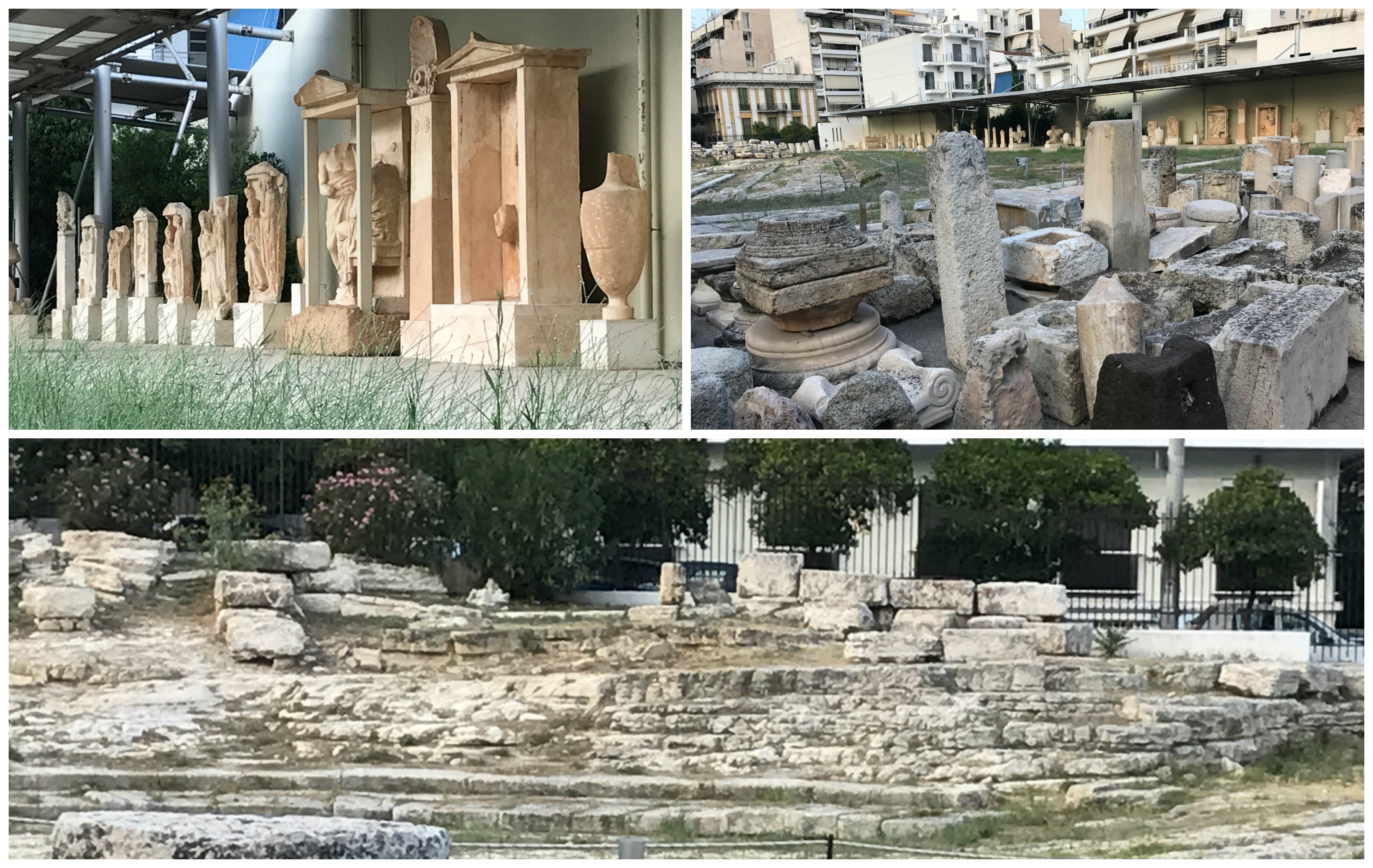
But the sites of Piraeus go beyond the nautical and encompass the archaeological.  While visiting with my friend, Giota, I was stunned to see ruins in open areas–precious relics which I assumed would be safely ensconced in a museum. Wrong! There are so many ancient treasures in Greece that there are not enough museums to hold them. The artifacts in these photos were “protected” by an iron fence and situated in a residential area.

Giota Siora and me, Piraeus, July 2017

Archaeological treasures as seen on a street in Piraeus

It is hard for me to wrap my head around the history which permeates everyday life in Greece. To natives, history is not facts read in a book; it stares them in the face wherever they turn. It is a pillar that is passed on the way to work, or a statue that is seen outside an apartment window. It is the anchor of Greek identity and the substance which forms its collective unconscious, and mine.

Village History Books in the Library of Sparta

The paper record trail has stopped, and you are stumped. Where to go now? You’ve obtained any and all documents available from the Archives (local and online), the Town Hall (Dimarheion), the village churches and the Greek Orthodox Mitropolis. You’ve taken a DNA test and are wading through the results, but you and your matches can’t go back far enough to find your common ancestor.

You are tempted to give up, but it’s not yet time to close the books on your research — in fact, it’s time to open them. The library awaits.

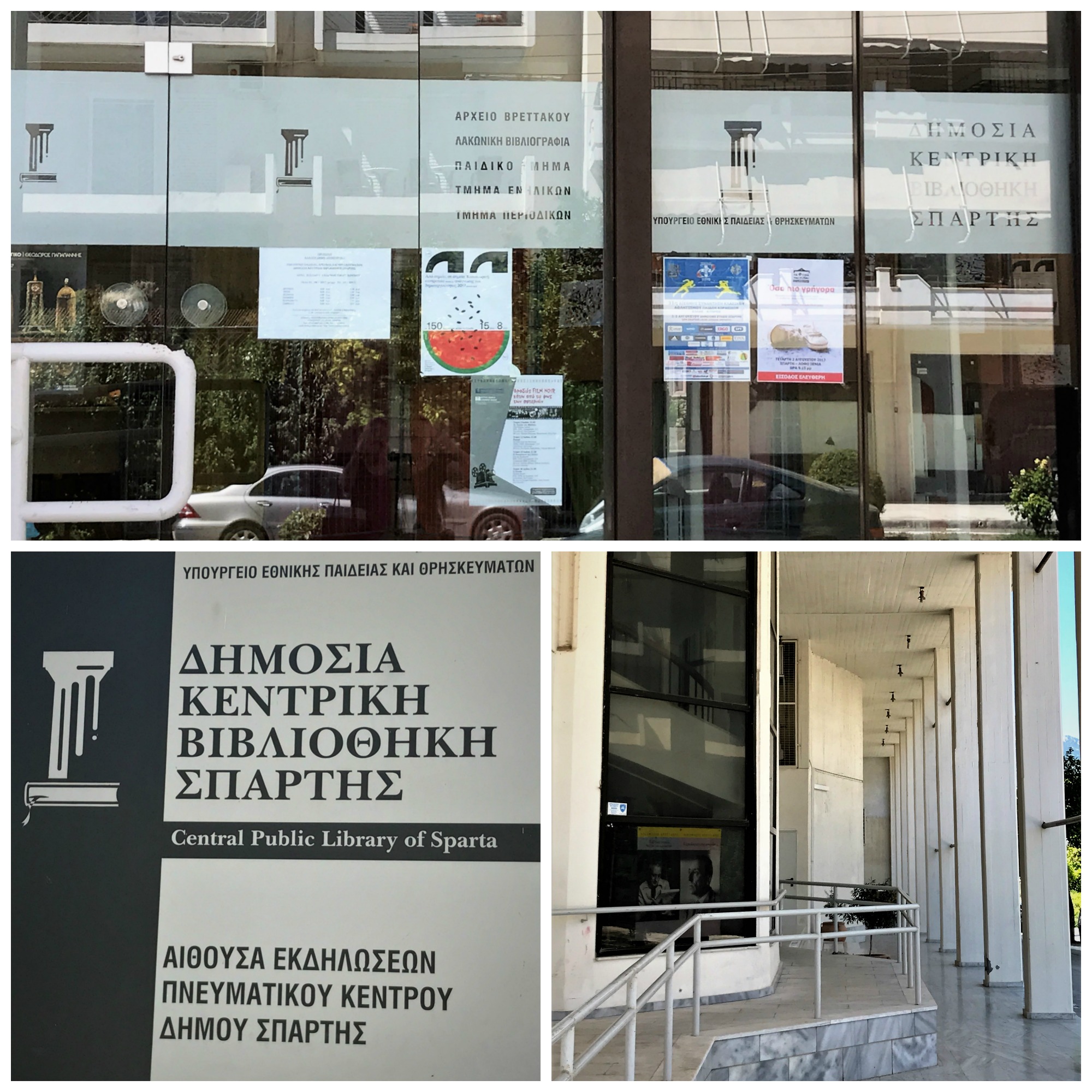
Central Library of Sparta

If you are researching in the Sparta region, there is a resource you have not yet tapped. The Central Library of Sparta has an impressive collection of village history books. These have been researched and written by schoolteachers, historians, or simply people with a deep love of their ancestral home. They have labored for years to document stories and compile family trees. Their goal is to preserve the history and pass on the legacy of their village, whether large or small, historically relevant or not. They do not want the past to be lost to time.

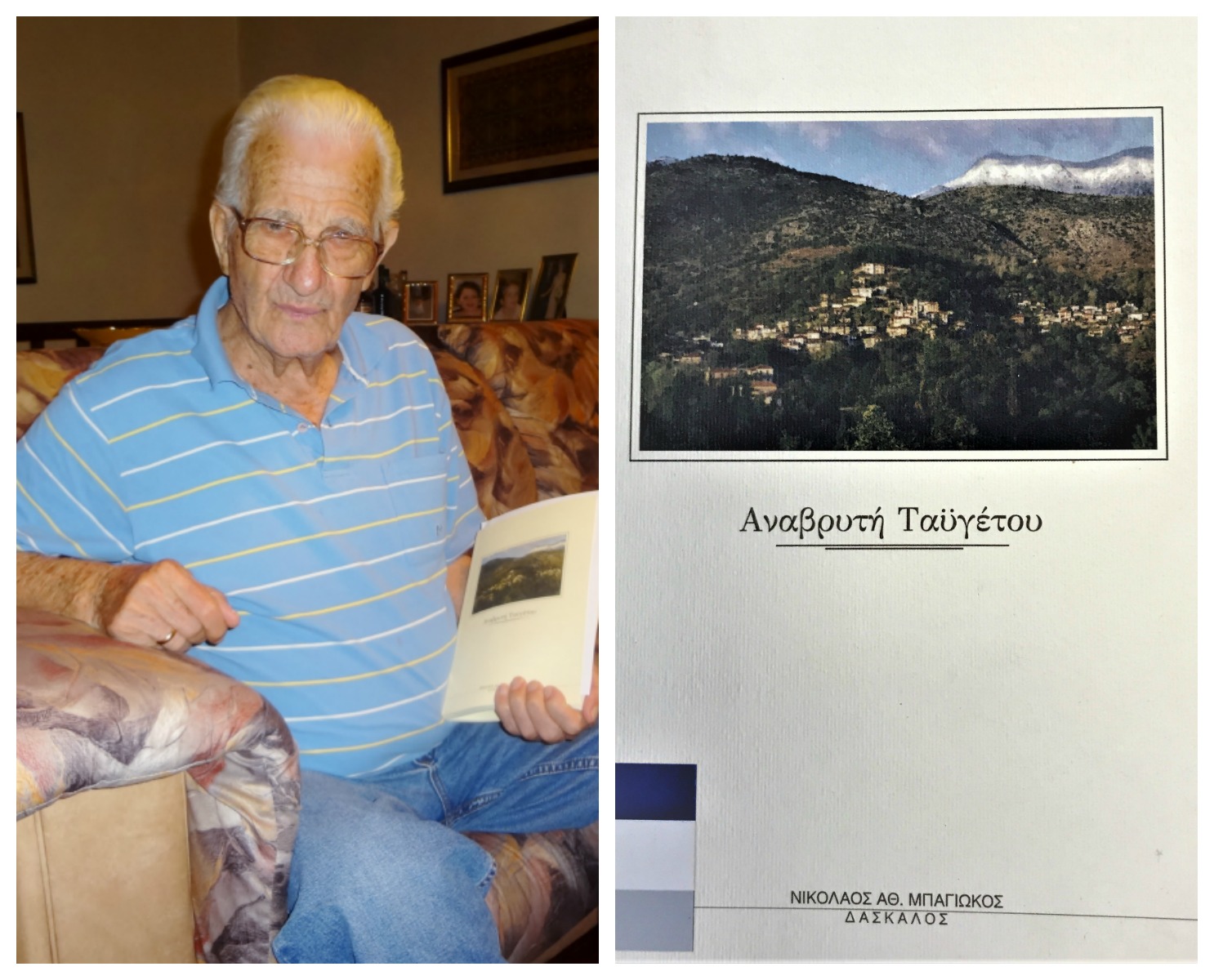
In July 2014, Gregory Kontos and I met such a dedicated historian. His name was Nikolaos Ath. Bagiokos, a schoolteacher in Anavryti who dedicated twenty years to researching and writing the history of Anavryti and its families.  During summers when school was out, he painstakingly located any and all extant records as well as previously written histories of Anavryti. He compiled this information into his life’s work, Anavryti Taygetos. As we visited with him in his home, he expressed joy that a woman from America would travel across the ocean to learn about her roots and seek out those who could teach her. I asked him, “Why did you spend 20 years to research and write this book?” His response was simple but firmly spoken:  “I wanted to write the book so people in future can know about their families.”

When I was in Sparta this past July, I learned that Mr. Bagiokos, lovingly referred to as Ο Δάσκαλος (the teacher), passed away shortly after I met him in 2014. However, he will be remembered and honored by all who read his book and learn the stories of their families which will not be found in vital records.

Nikolaos Ath. Bagiokos with his book, Anavryti Taygetos

These village history books are priceless. They provide a glimpse into everyday life in the village as well as customs, folklore, songs, poetry. Some contain biographical sketches of prominent families or earliest settlers. All shed new light on the world of our ancestors.

I know personally of their worth:  in July 2016, my research into my Christakos family of Xirokambi skyrocketed to a new level when a friend introduced me to the book, Koumousta of Lacedaimonos. It was through this book that I learned the genesis of the family — information that the authors gleaned through oral histories and painstaking research, not to be duplicated anywhere else.

Because these books are so valuable to a researcher, I made an inventory of the ones kept at Library of Sparta during my visit there in July 2017. I took a photo of every book cover, its title page and index (if there was one). Unfortunately, only a few books included indexes, which makes it necessary to review every page to see if specific surnames are mentioned. As I perused each volume, I found that all have names of families. Thus, if there is a book from your village, it is worth the effort to obtain a copy. If the book cannot be purchased, you can view it and digitize it at the Library.

My inventory captures the books on the shelves, but it is not the entire collection. There is a catalog, somewhat outdated (2007) which lists additional books kept elsewhere in the library.

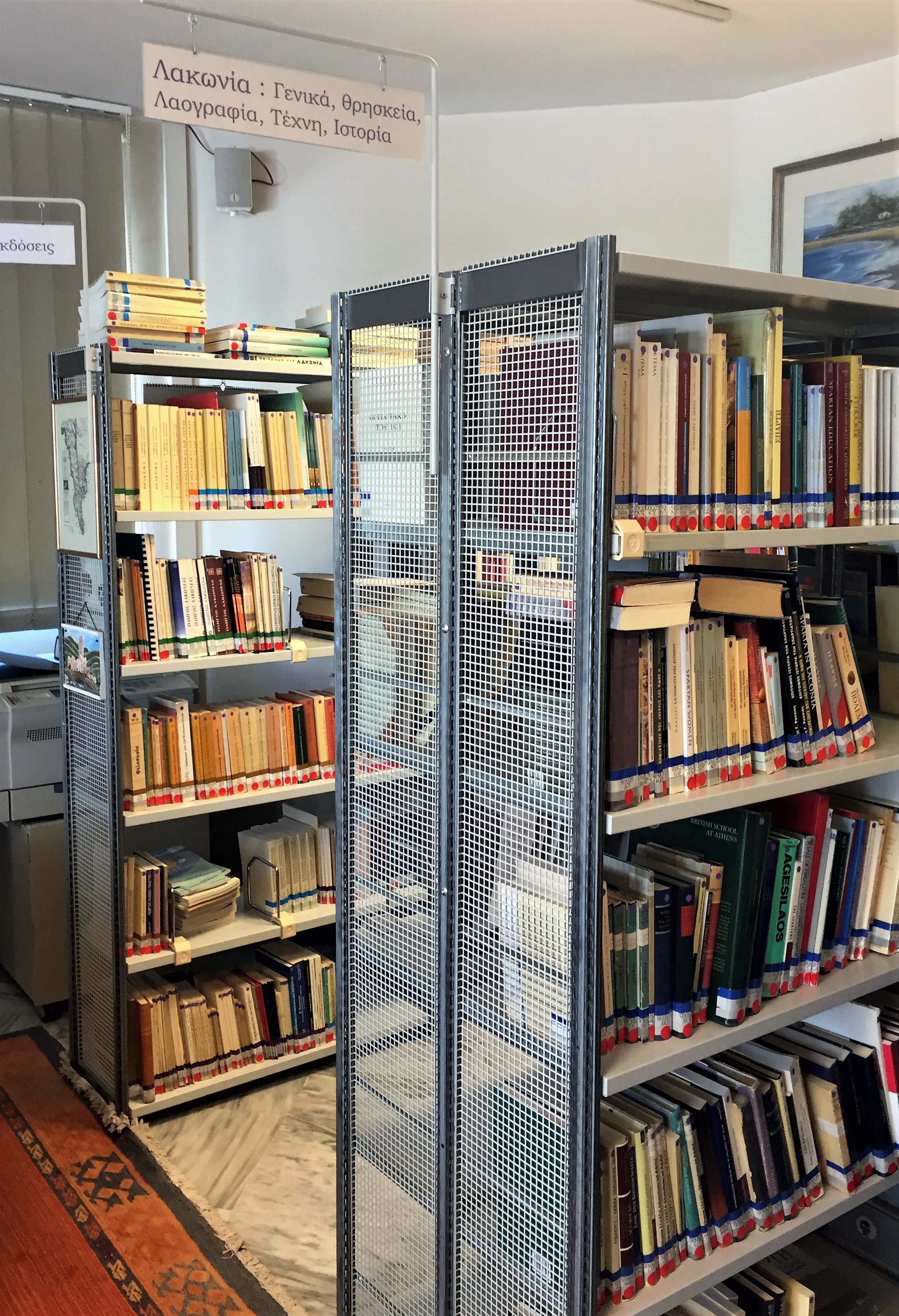
Laconia History Section, Central Library of Sparta

Below is a list of titles and authors of books kept on the shelves as shown in the photo above. Most of these books are out of print. However, you may be able to contact the author or publisher to obtain a copy.

If you would like to see the title page and publishing information on any of these books, click this link to open a Dropbox folder. The books are in alphabetical order by title; most books will have 2-3 images; e.g., there is one book on the village of Agoriani but it has three images of its cover and title pages:  Agoriani (1), Agoriari (2), Agoriari (3).

I obtained a catalog of all village history books at the library–most of these are not on the shelves or in the list below. To view a pdf file of the catalog, click this link.

Remember — having names and dates will fill a pedigree chart, but having stories of your ancestors will fill your heart.

Agoriani Papadogiannis, Dimitrios Ath.
Agoriani and Voreia Vergadou, Georgios Ath.
Amykles Antonakos, Sarantos
Amykles Anagnostopoulos, Georgios D.
Anavryti Pikoula, G.
Anavryti, Taygetos Bagiokos, Nikolaos Ath.
Ano Glykovrvrysi, The Roots of Our Village Papapostolos, Chysafo
Anogeia Lambrakos, Ilias G.
Apidea Kalodimas, Nikolaos E.
Arcadia Zaharopoulos, Ioan. Z.
Ardouvista, Androuvista of Exo Mani Vagiakos, Dikaios V.
Arna Prokopidis, Harilaos Ant.
Asimi Georgouli, Polychroni B.
Barsinikos Moutoulas, Pantelis
Chrysafa Lambrinakos, Giannis
Dafni Milonakos, Stavros L.
Dimitsanas Giannaropoulos, Ioannas K.
Elafonisi Mentis, Konstandinos S.
Falanthou, Villages of Gritsopoulos, Tasos Ath.
Georgitsi and Georgitsiani, A Village, A History Koutsis, Giannis A.
Georgitsi, the Beautiful Koutsis, Giannis A.
Geraki Moutsopoulos, N.K. and Dimitrokallis, G.
Geraki, Album none
Geraki, Byzantine LaFontaine, Jacqueline
Geraki, Excursion Palaiologos, Pavlos et al
Geraki, History Gritsopoulos, Tasos Ath.
Geraki, History and Memories Poulitsa, Panagiotis I.
Geraki, The Oils of Poulitsa, Panagiotis Il.
Geraki, Woven in none
Gkiotsali and Agios Dimitrios Batsakis, Kon. S. and Pragalos, Dim. A.
Goranus Plagianni, Kosta Styl.
Haraka Skagkos, Nektarios I.
Kalamata Anaplioti, Gianni
Karyes Machairas, Panos Styl.
Karyes – Arachova Pitsiou, Kosta M.
A Man from Kastania Remembers Kontos, Ioannis G.
Kavo Malia Arvanitis, Takis
Kerasias, Arcadia Stafanos, Anast. G.
Kokkinorrachi Athanasoulis, Dimitrios C.
Krokees Rozakos, Nikos I.
Krokees, Carnival Women’s Syllogos of Krokees
Krokees, Levetsova Liakakos, Petros
Kynouria Geronta, Rania
Kythira Kalligeros, Emmanouel P.
Leukoma of Molaois Moschovakos, Ioannis Sot.
Logkanikos by Georgakaki Georgakaki, Stavros Pan.
Logkanikos by Souchleris Souchleris, Leonidas
Lukia Avloulos, Stavros
Megali Vrysi of the Past Grigori, Chari Ath.
Melitinis Mihalou, Georgios
Metamorfosi Koutsogiannopoulos, G. D.
Molaoi Moschovakos, Ioannis Sot.
Palaiopanagia, Anogeia & Xirokambi Katsafanas, Dimitris G.
Paliomonastiro Stathaki, Stathi D.
Patrida Kountouri, Petros G.
Pellana, Ancient Smyrios, Athanasios G.
Pellana, In the Footsteps of Menelaous and Helen
Petrina Poulimenakos, Aris
Plytra & Karavvostasi Vlahaki-Proia, Matina
Sellasias, Administrative, Population Kapetanakis-Stathopoulos, Dimitra
Sellasias, Emigrants to Ellis Island Kapetanakis-Stathopoulos, Dimitra
Stemnitsa Theofili, Georgios Ant.
Tainaro Koutsilieri, Anargyros
Trapezontis, Kabourakiou History and Folklore Vasilakos, Vasileios et al
Tripolitsas Gritsopoulos, Tasos Ath.
Tsakona Tsakona, Stratis G.
Tsintzina (2 versions) Moutoulas, Pantelis
Tsouni Grigoris, Charis Ath.
Vardonia & the Turko-Vardouniotes Kapsali, Gerasimos
Varvitsa and Skoura Poumelioti, Poth. Georg.
Varvitsa and surrounding villages Mathaios, Nikos L.
Varvitsa by Bortsos Bortsos, Dimitrios Petros
Vassara Theofilis, Giagkos
Vatika Arvanitis, Takis
Vatika, My Homeland Kasouli-Simeonoglou, Aspasia
Vatika, The Fossil Forest Alevizou, Stavroula
Veroia Koufos, Nikolaos I.
Voia Arvanitis, Takis Chr.
Voutiani Trikilis, Takis
Voutiani, Sparta Tzannetos, Ioannis Konstantinos
Vresthena Spiliakou, Spiliou P.
Vrontamas Drepania, Manolis
Vrontamas, The Holocaust of Drepania, Manolis
When I Was a Child, 1939-1945 Diamantakos, Nikos
Xirokambi Laskaris, Dimitrios G.
Zaraka, Folklore Poumeliotis, Panagiotis Georg.
Zarax Petroleka, Konst.
Zarnatas, Messinia Tsilivi, Nikos Ath.

Archives of Sparta: Mitroon Arrenon (Male Registers)

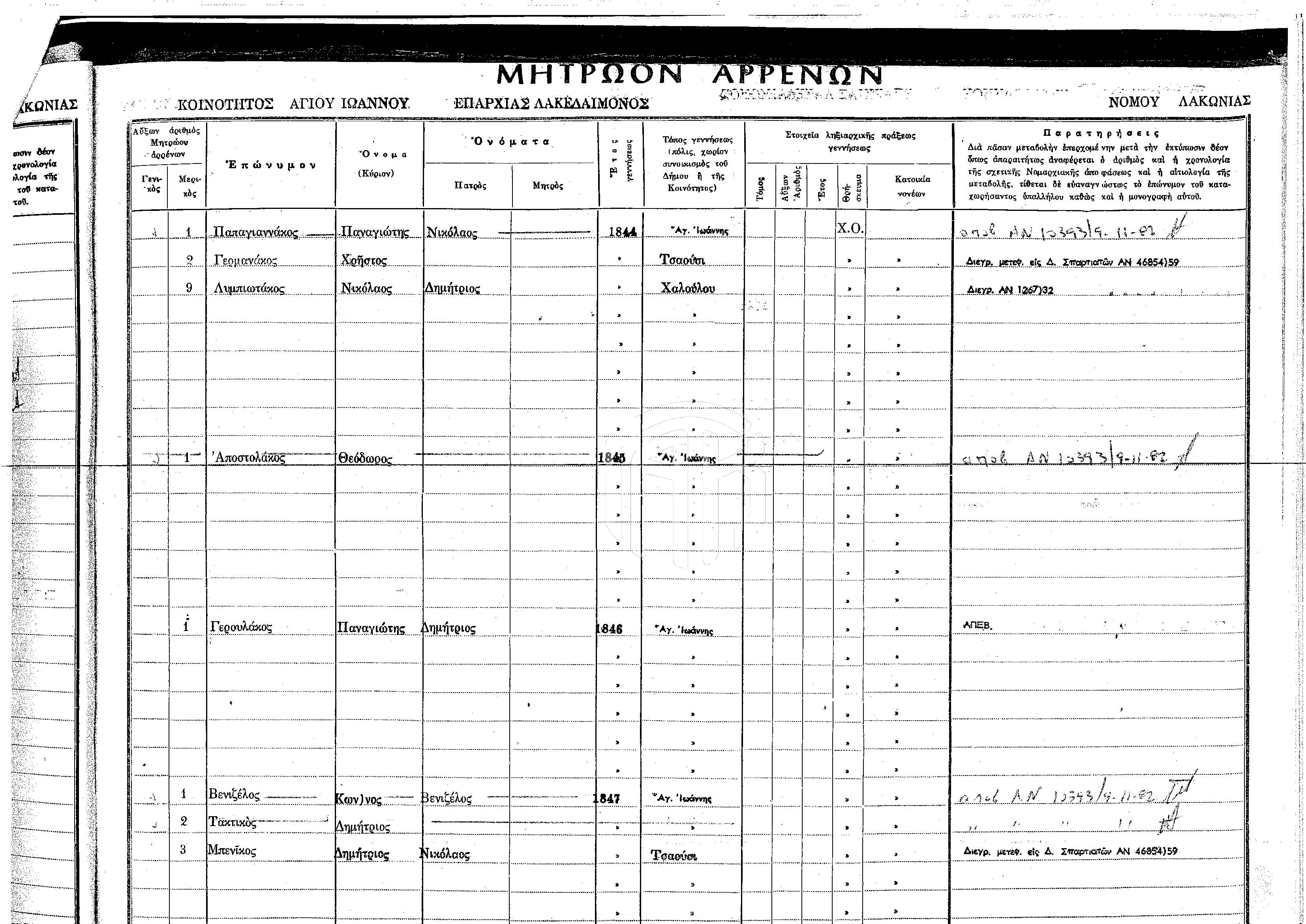
After the Revolution of 1821 when the land of Hellas victoriously overthrew 400 years of Ottoman Rule, the “new” country of Greece began to form a central government. As a means of enumerating males who would pay taxes and serve in the military, the Mitroon Arrenon or Male Register was instituted. Every village was required to maintain a list of male births, the year and place of birth, father’s name and father’s occupation. Over time, these official government registers have also substituted as official birth records.

They are a most valuable and very important genealogical resource.

Mitroon Arrenon, Agios Ioannis, Sparta: 1844-1847

Mitroon Arrenon can be found in the Dimarheion (Town Hall) of the municipality in which the village is located. Some regional offices of the General Archives of Greece may also have copies for villages in their area of jurisdiction. If you are taking a research trip, you must locate these records because, except for rare cases, they are not digitized or found online in the regional Archive offices mentioned above, or at the Dimarheion websites.

My previous post, Reading a Town Register and a Male Register, gives further information on how to read a Male Register.

The Sparta office of the General Archives of Greece has some Mitroon Arrenon in their collection. They can be contacted at:  mail@gak.lak.sch.gr. The staff can read and speak English. Be sure that you include an approximate birth year of your male ancestor, along with his original surname and exact village of birth. Remember that records are created in specific villages, as shown by the list below.

Mitroon Arrenon Records in the Sparta Archive Office
(Note: smaller villages, hamlets and neighborhoods will be found in the record of the larger, closest town)
Anavryti:  1839-1923
Agios Ioannis: 1835-1930
Alepochori, Geronthon: 1830-1950
Alikon, Messi: 1845-1915
Ano Volarion: 1865-early 1900’s
Aeropoli: 1837-1915
Archontikou, Melitinis: 1844-1915
Vatheia, Messi: 1836-1914
Vachou, Laconia: 1839-1915
Vresthena: 1831-1924 and 1925-1939
Geraki, Geronthron: 1826-1914
Germas, Teos: 1836-1915
Gerolimenos, Teos: 1845-1914
Gytheio: 1836-1915
Dafni: 1837-1935
Exo Nyfi: 1841-1915
Karitsa, Geronthron: 1841-1914
Karvela, Teos: 1814-1913
Kelefas, Teos: 1830-1915
Konakion, Teos: 1829-1914
Kotronos: 1831-1914
Kittas, Messi: 1845-1913
Kounou, Teos: 1831-1915
Kryoneriou, Oitylo: 1846-1913
Mystra: 1824-1915
Pyrgos, Oitylo: 1845-1914
Lymperdou, Malevriou: 1842-1915
Minas, Oitylo: 1845-1915
Neo Oitylo: 1834-1915
Neohori, Gytheio: 1840-1915
Dritsis: 1865-1901
Oitylo: 1840-1915
Sidokastron: 1845-1915
Skamnaki: 1825-1915
Sparta: currently not available
Trachilas: 1830-1915
Tzerovas: 1839-1912

If you need a village that is not on this list, or a different year range for a village that is on this list, you will need to visit the Dimarheion (Town Hall) that houses the records for that village.

Archives of Sparta: Dimotologion (Town Register) Records

I have returned from month-long productive (and exhausting!) research trip to Sparta and there are many posts to write about the resources I have consulted and the records I have obtained.

However, I am starting with the Dimotologion (Town Register) Records that are found at the General Archives of Greece, Sparta office.

Sparta Office, General Archives of Greece

One of the most helpful record collections to help identify families are these Town Registers. They are similar to a U.S. Census record, as they list the husband, wife, and children of each family in a village, the parents’ names of the husband and wife; years and places of birth, occupation, citizenship and other information. These records were created in the mid-1950’s. I find that the birth years of the parents were in the late 1800’s, and the children’s births were in the early-mid 1900’s. If you can find your grand or great-grandparents in a Dimotologion, you will have much information to proceed on your research.

My previous post which gives examples of Dimotologion records, and explains how to read and interpret them, can be found here.

During the two week period that I spent in the Sparta Archives, I made a list of all of the Town Registers that are available in their office. These records are created and kept by village. Therefore, you must know the original name of your family and the exact village of origin.  Researchers can send a request to the Archive Office (mail@gak.lak.sch.gr) to ask if their family is found in the Dimotologion; however, do not submit a request unless you have this specific information. Oftentimes, immigrants would give the nearest large city as their place of origin when in actuality they were from a small village near the city. If you see “Sparta” as the place of origin, keep digging until you have the exact village and original surname! The list  below will help you further understand the importance of knowing the village name.

Village List of Dimotologion (Town Registers) in the Sparta Archives Office
(Note: smaller villages, hamlets and neighborhoods will be found in the record of the larger, closest town)
Aggelona
Agias Eirinis
Agios Vasileios
Agios Georgios
Agios DImitrios
Agios Ioannis Monemvasia
Agios Ioannis Sparta
Agios Konstantinos
Agios Nikolaos
Agios Anavrgiron
Agios Apostolon
Agorianis
Agrianos
Agia (Chania Koutoumous)
Alepochori
Aleirous
Alikon
Ampelochorio
Amykles
Anavryti
Ano Kastanias Voion
Ano Boularion
Anogeion
Apidias
Areopoli
Arna
Archontiko
Asteriou
Asopou
Afissiou
Chrisafo
Chosiari
Daimonias
Dafnis – Kaminion
Dafniou
Drosopigis
Drialou
Drimou
Elaias
Ellinikou Koulentia
Exo Nyfi
Foinikiou
Geraki
Germas
Gerolimena
Georgitsi
Gkoritsa
Glikorvisis
Gorani
Gouvon
Gytheion
Kareas
Karitsa
Kastoriou
Kelefas
Kefala
Kozi-Kokkinorrachi-Riviotissa, Sykaraki, Charision
Konakion
Koniditsa
Kounou
Kremasti
Krinis
Krokeion
Lagia
Lagiou
Lachiou Voion
Leimona
Leikochomatos
Logkaniko
Logkastra
Magoula
Melissas
Melitinis (Zelinas)
Metamorfosis
Minas
Molaoi
Monembasia
Myrteas
Mystras
Neapolis
Neo Oitylo
Neochori
Niaton
Nomion
Oitylo
Pakia
Palaiopanagia
Paliovrisis
Panitsas (Myrsini)
Pantanassas
Papadianiko
Parori
Pellana
Perivolion
Peristeriou (Tsasi)
Perpainis (Kaloni)
Petrina
Platana
Potamia
Prosilio
Pyrgos Dirou
Selegoudiou
Sellasias
Skamnaki
Skouras
Skoutari
Soustiani
Sparta
Spartias
Tsikalion
Vatheia
Vamvakou
Varvitsa
Vasilakiou
Vassara
Vachou
Velanidion
Velion
Vlachioti
Vordonia
Voutiani
Vresthena
Vrontama
Xirokambi