Support Greek Archives

The severe financial crisis in Greece has resulted in extreme budget cuts to government agencies, and Greek archival repositories are currently significantly underfunded. In many cases, archivists have to purchase archival materials and cover needed expenses with their own funds.

This situation poses a significant threat to the preservation of historical documents and cultural ephemera under the purview of regional archive offices.

As one who has spent many hours researching at the Sparta Archives office, I see first-hand the impact of the budget crisis on regional archive offices. It truly saddens and even frightens me to know that precious historical and genealogical documents are being threatened by lack of funds. What will happen if our records are gone? These are the citadels of our Greek heritage! Realizing the threat that our history and cultural heritage face, action is being taken to contribute to the preservation of our archives

Thus, I am working with one of my colleagues, Gregory Kontos, in the Support Greek Archives initiative. To help these agencies, we must donate materials and not money, because Greek tax law hinders the donation of monetary funds to government agencies. However, the donation of supplies is acceptable. We are contacting regional archive offices to inquire which items are of greatest need. These may include archival boxes, paper, glue, gloves, tape etc. But there are other needs as well. One archive is in desperate need of a computer. Another needs the services of a conservator to help preserve their oldest records.

After speaking with the archivist, a GoFundMe page for that office will be initiated. All moneys collected will be used to purchase the items specifically requested by the archivist, thus ensuring that each office will receive what is most needed.  To repeat — a campaign starts ONLY if an Archives Office expresses its interest in our activities and informs us of the supplies needed. After raising the funds, we order the supplies and have them shipped to the office.

This week, we have started the following initiatives:

Soon, GoFundMe-Arcadia will be launched.

We have created a Support Greek Archives website where information and details will be posted and a Support Greek Archives Facebook page and Twitter feed.

Please follow us, and if you are able, help support the archive of your choice. Please send me an email if there is a specific archive that you would like us to contact.

Together, we can support the Regional Offices of the General State Archives of Greece as they continue their mission to preserve documents and assist researchers. Thank you.

Greek Genealogy Conferences – A Place for Learning

Nick Kampoulis with the Greek Reporter newspaper, interviewed me last week regarding the assistance that can be received at Greek genealogy conferences. The article begins:

More and more people from Greek Communities around the world are becoming increasingly interested in finding ways to explore their past, so that they will eventually be able to find their roots and their ancestors who left Greece to start a completely new life in the United States, Canada, Australia, the UK or elsewhere.

What was the main reason they left Greece? Was it war? Poverty? The hope of a better life? What were the living conditions in their villages back in late 1800’s and early 1900’s?

These are some of the questions the Hellenic Genealogy Conferences try to give answers to.

The full article can be read here.

Please join us in Philadelphia on October 13! A link to the conference registration is here.

Full Circle

Spending two months in Sparta and Agios Ioannis this summer has turned my heart more deeply to this land. I love the vitality of the city and the peaceful nature of the village. This is where it all began for me, as it is the birthplace of my four grandparents. It continues to be the residence of my cousins, and my “home away from home.”

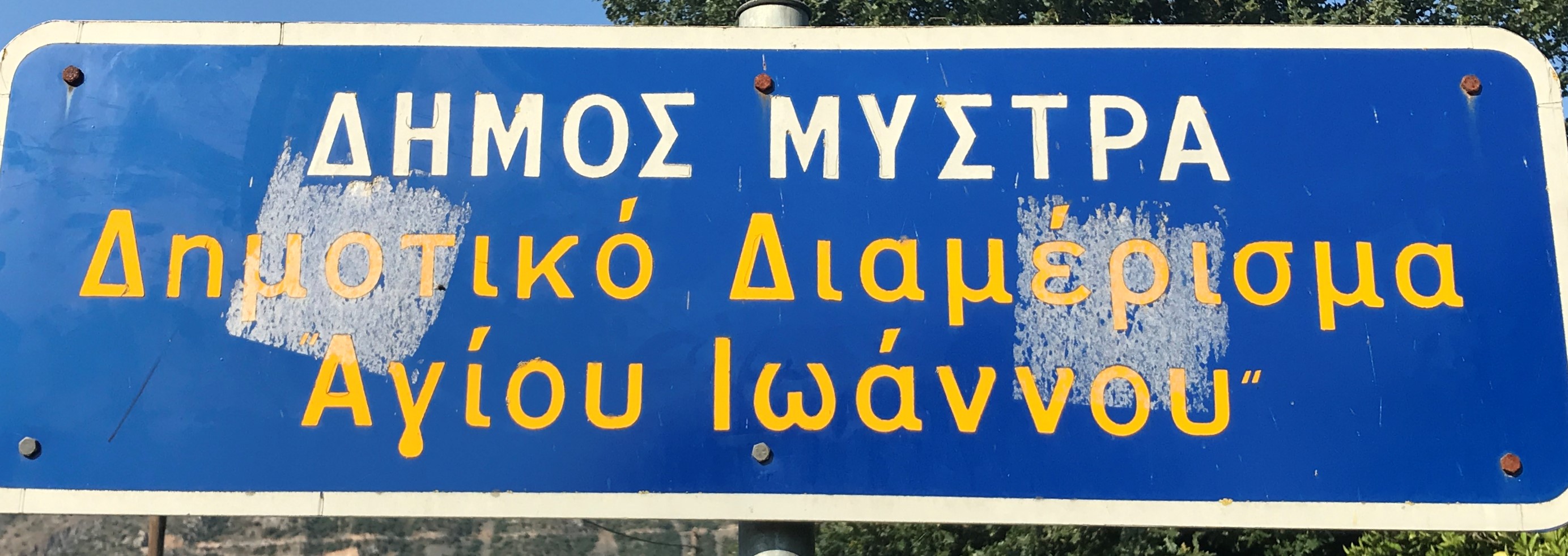
Dimos Mystra – Municipal District – Agiou Ioannou

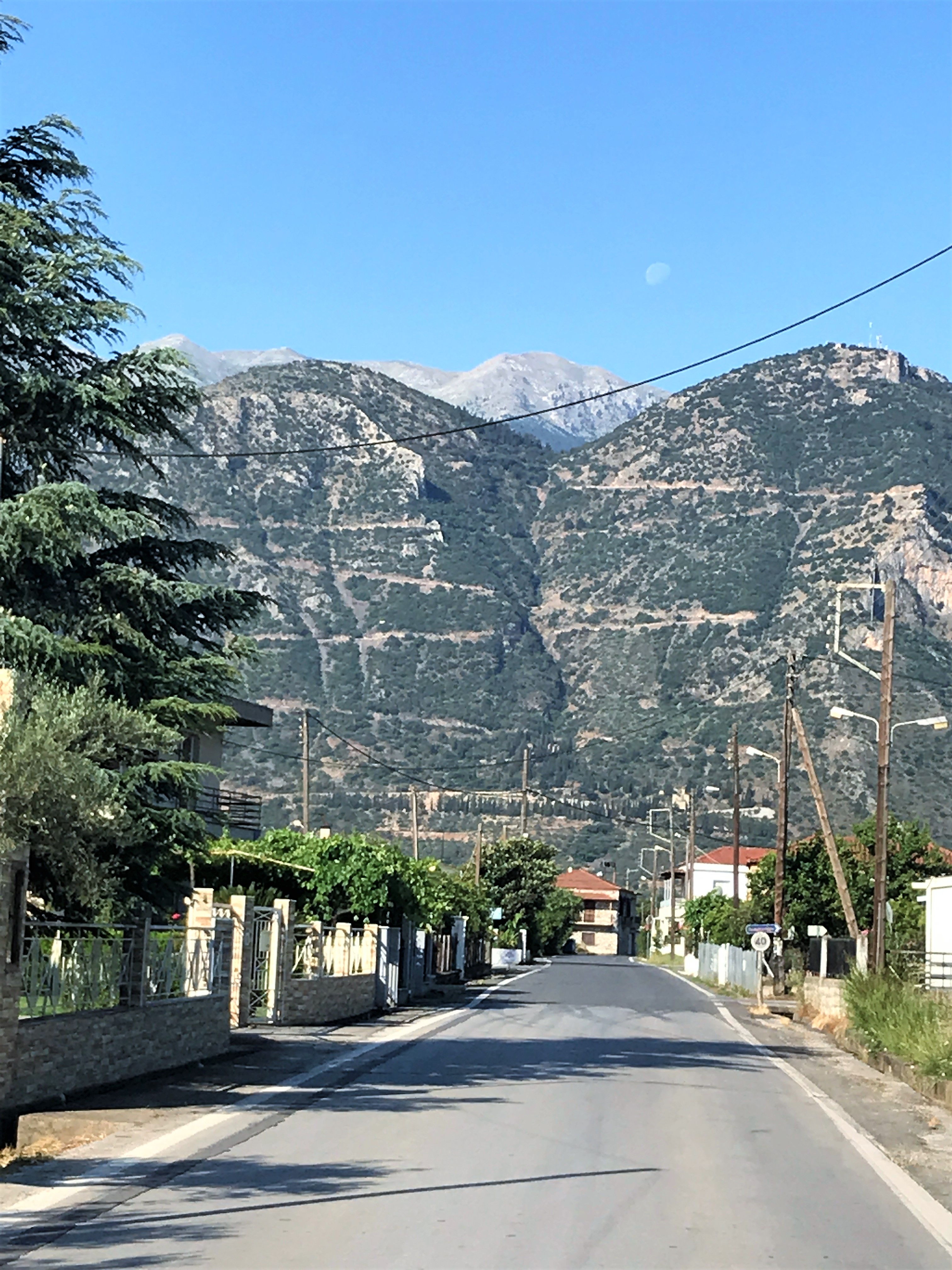
I enjoyed many happy evenings in Agios Ioannis, visiting with family and absorbing the spirit that permeates the stone homes and verdant orchards. Agios Ioannis is nestled in the plains of Sparta, under the towering Taygetos mountains. What appears to be a ribbon across the mountain is actually the road to the village of Anavryti, situated at the very top on the right.

Road into Agios Ioannis, from Sparta

My Kostakos, Aridas and Papagiannakos grandparents hail from Agios Ioannis. These families have had a profound influenced in the village. Some remained and served; others emigrated yet “gave back,” never forgetting their origins.

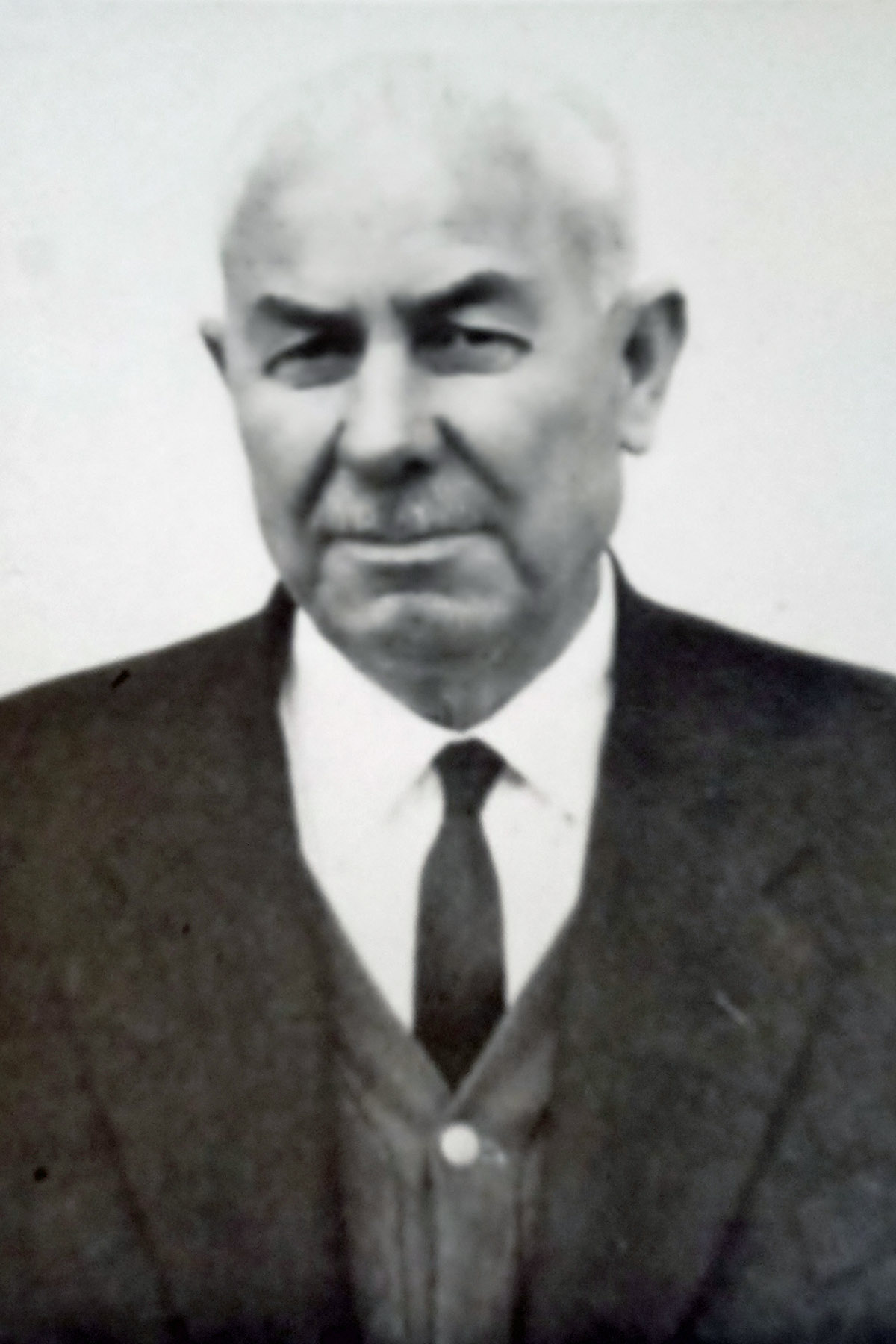
The Aridas family owned and operated the regional bus line. My granduncle, Aristedes Georgios Aridas, was the proprietor who provided a vital service for the town’s residents. Aristedes lived in Agios Ioannis his entire life, and his descendants continue to live in the beautiful home which he had built.

Aristedes Georgios Aridas, 1905-1992

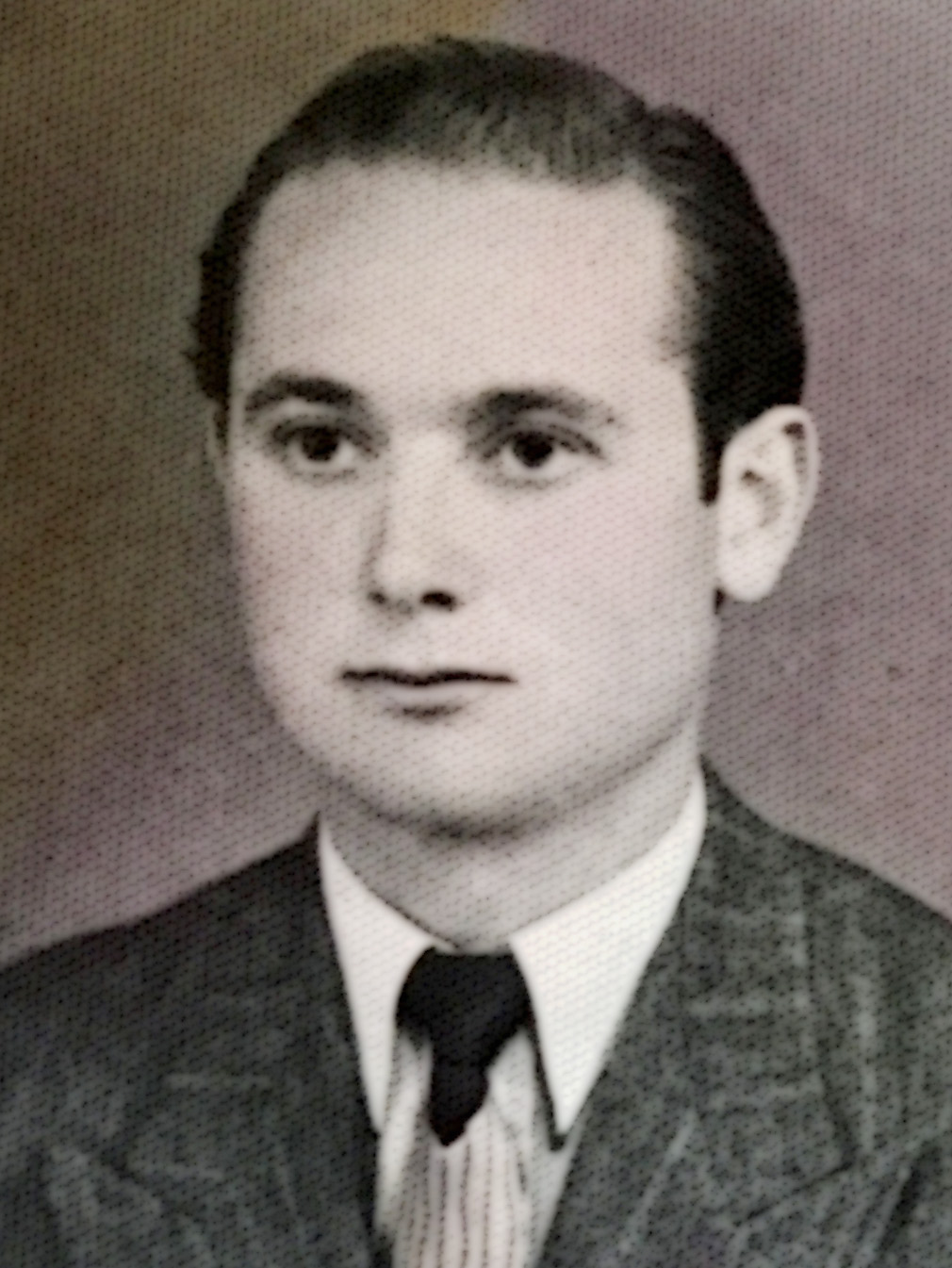
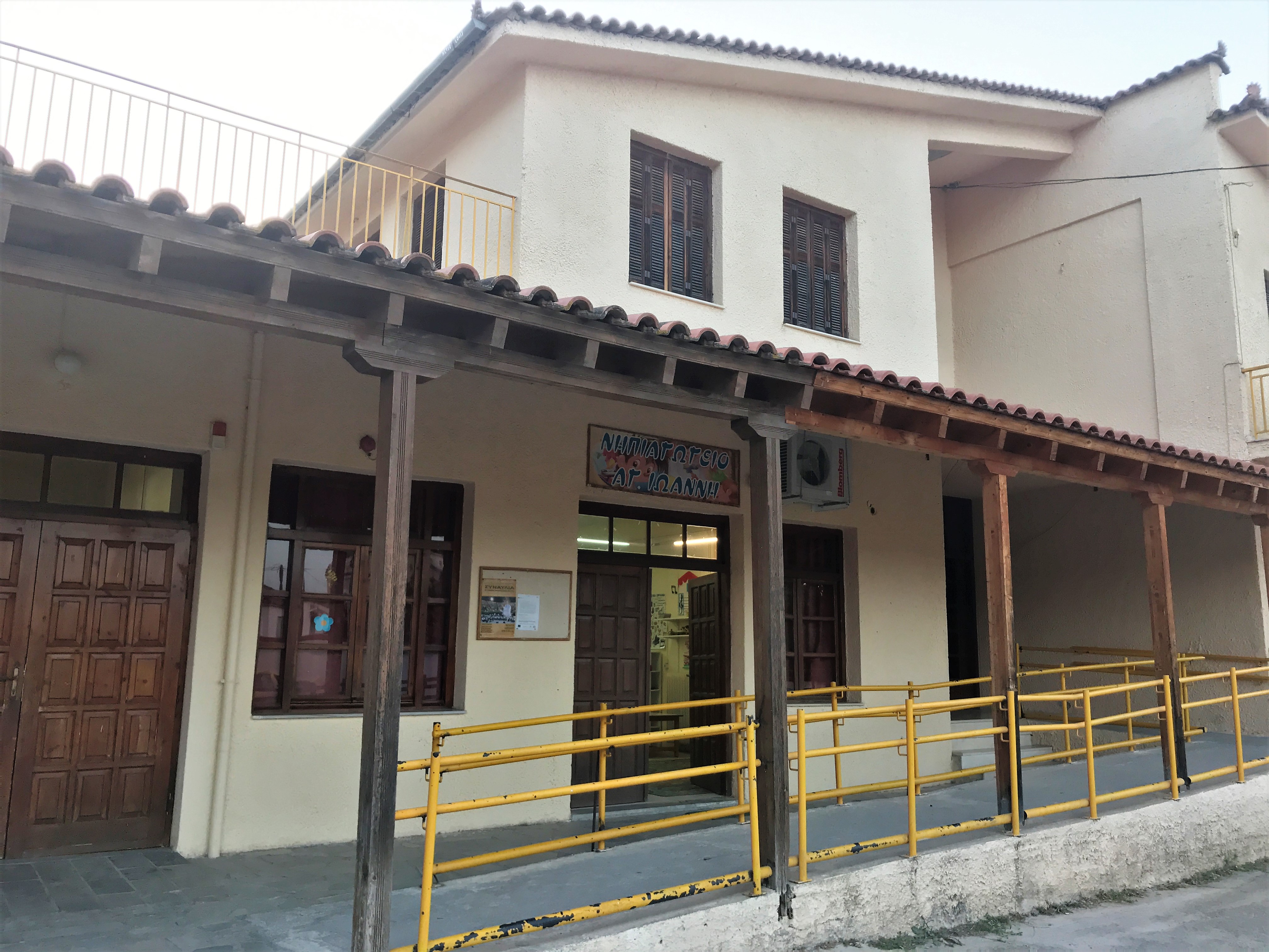
My second cousin, Grigorios Georgios Kostakos, also remained in Agios Ioannis and did not emigrate. He was very active in village affairs and held positions on the town council. He constructed the municipal building which now has many uses, including a preschool which his Kostakos cousins attend today.

Grigorios Georgios Kostakos, 1927-2001

This is the Agios Ioannis municipal building which Grigorios had constructed, and which has served the community for many years.

Agios Ioannis Municipal Building

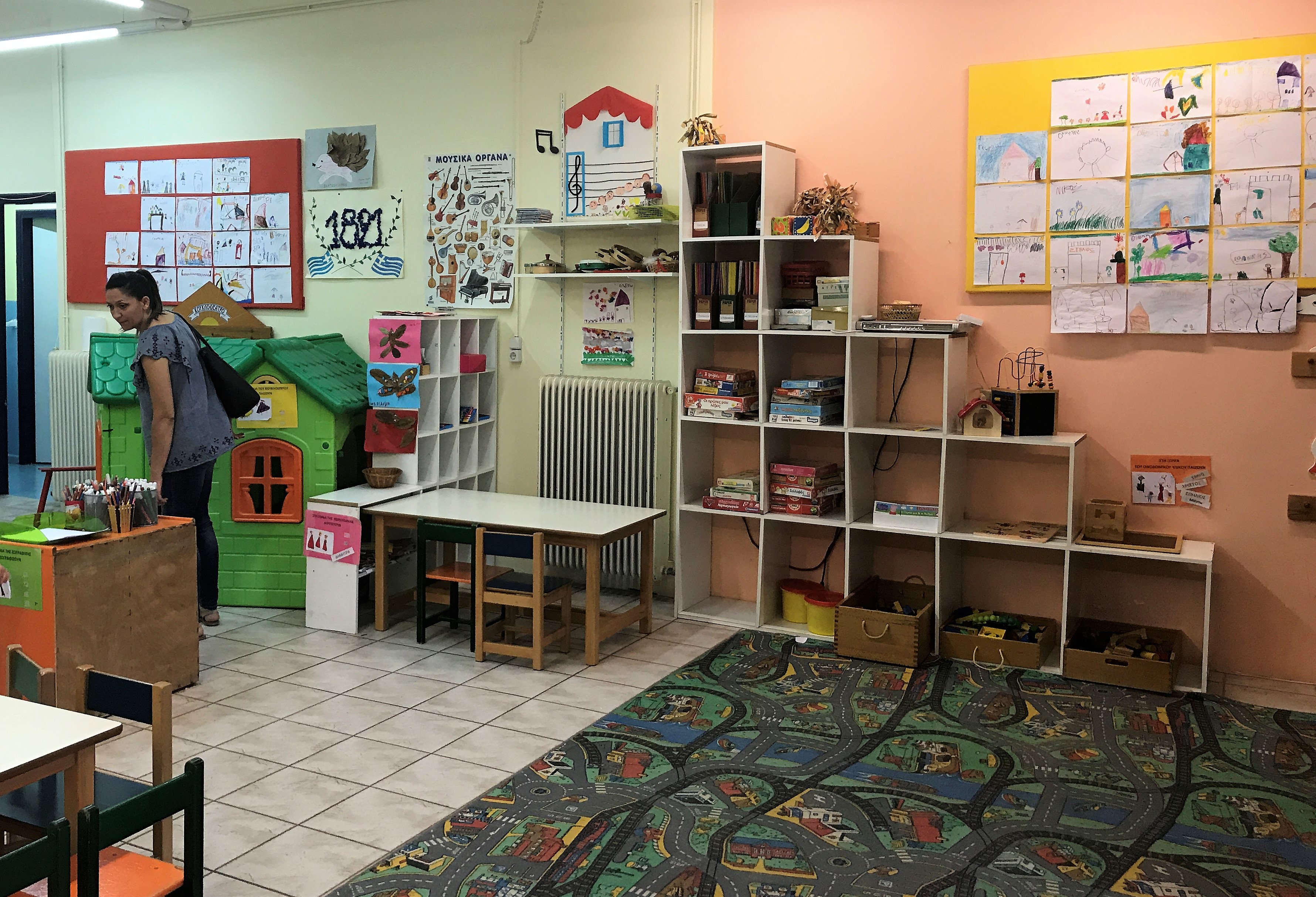
This room in the municipal building is now used as a preschool, and where the children of Georgios’ extended family now attend.

Preschool room in the Agios Ioannis municipal building

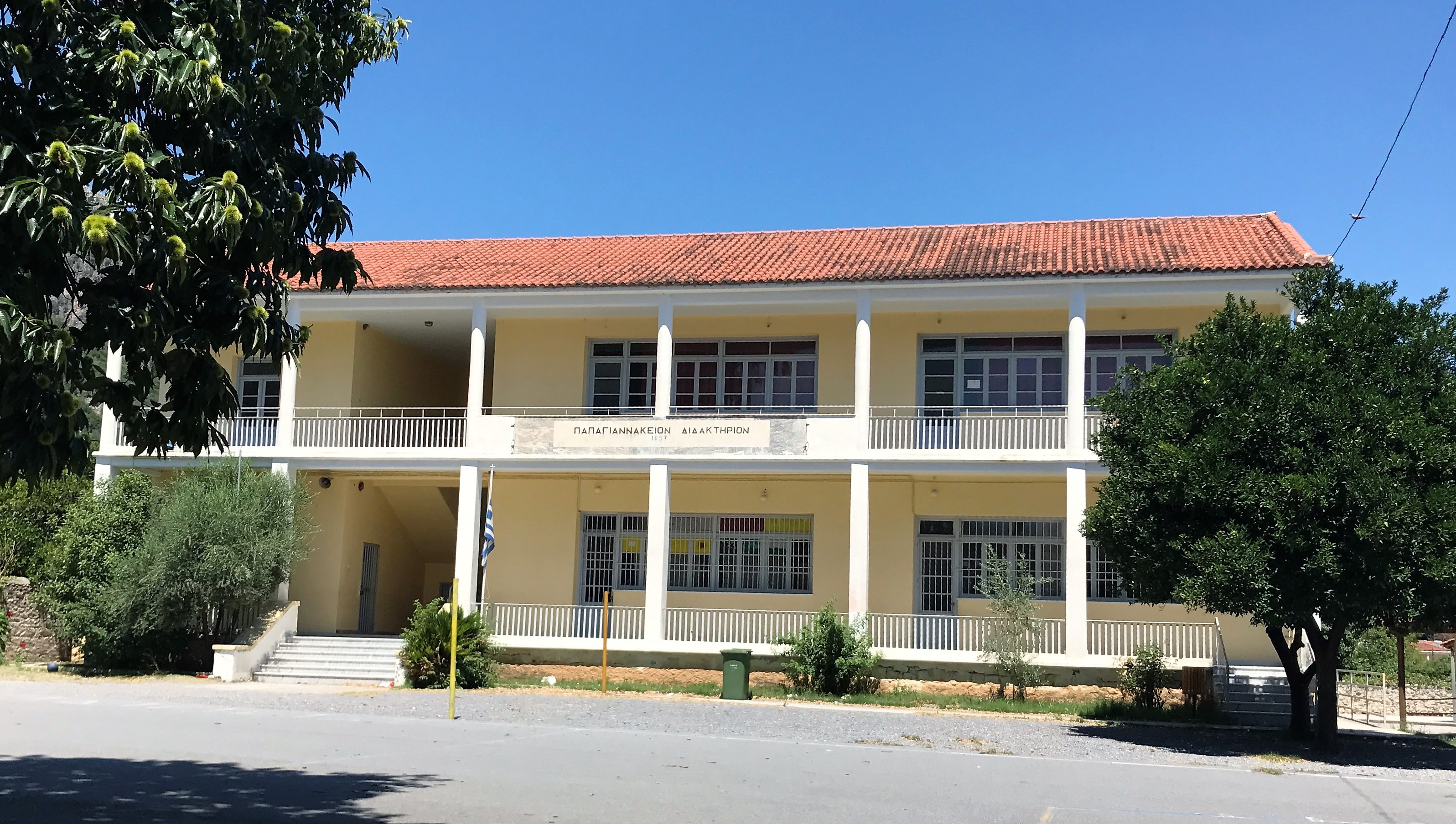
Dimitrios Nikolaos Papagiannakos, (known as Jimmy Pappas) emigrated in 1914 at the age of 18 with several men (and relatives) from his village: Georgios Grigorios Kostakos, Constantinos Kolokotas, Christos Papagiannakos and Panagiotis Cavouris. Jimmy became a successful restaurateur in Brooklyn, NY. He returned regularly to Agios Ioannis, and had an earnest desire to provide children with a quality education. In 1957, he constructed the Papagiannakos School which continues to serve the needs of children in Agios Ioannis and neighboring villages.

The Papagiannakos School, built in 1957

My cousins–Jimmy’s family–attended here, as now do their children. I think Jimmy would be truly pleased to know that his contribution to the community continues, and that his dream is fulfilled.

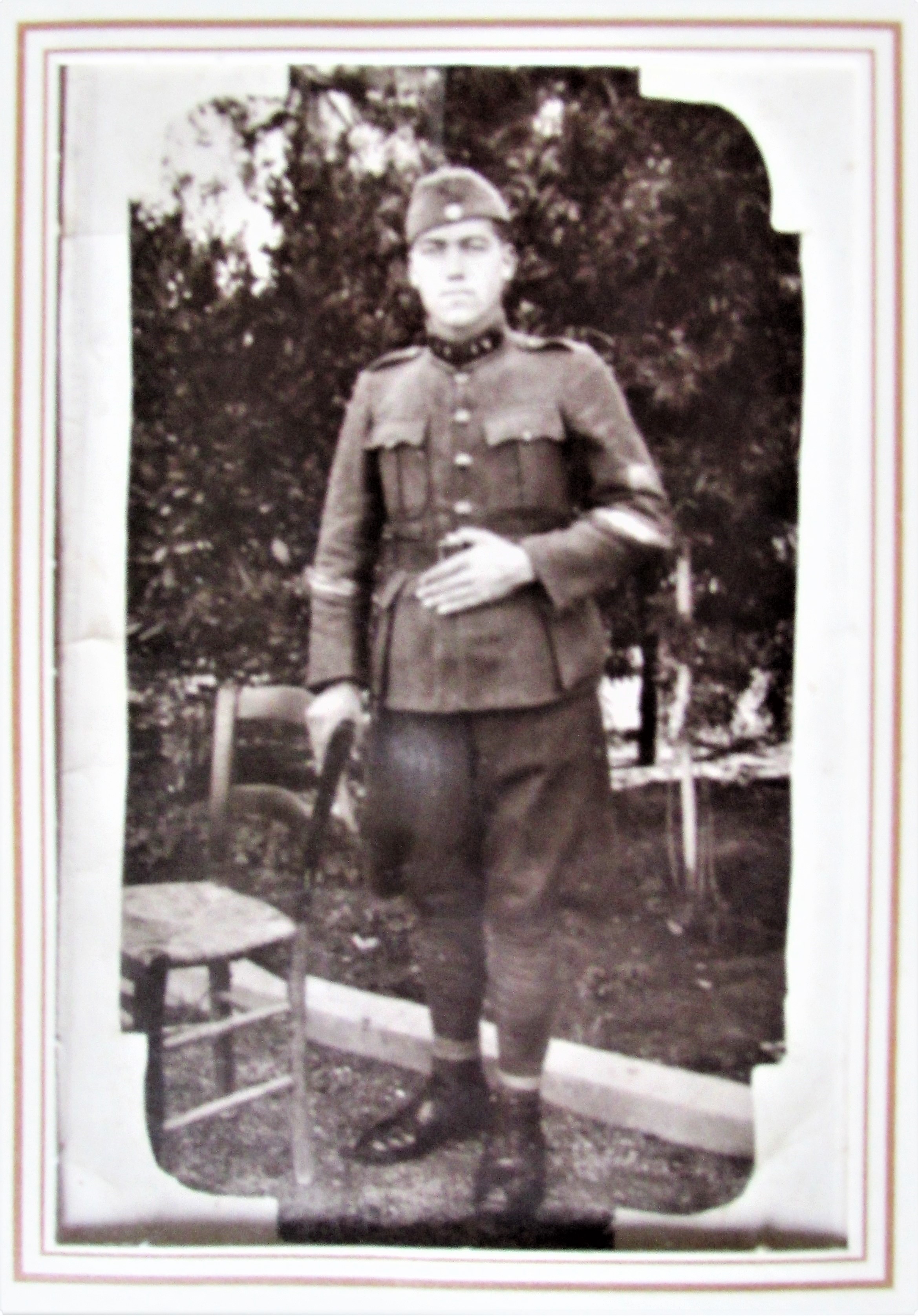
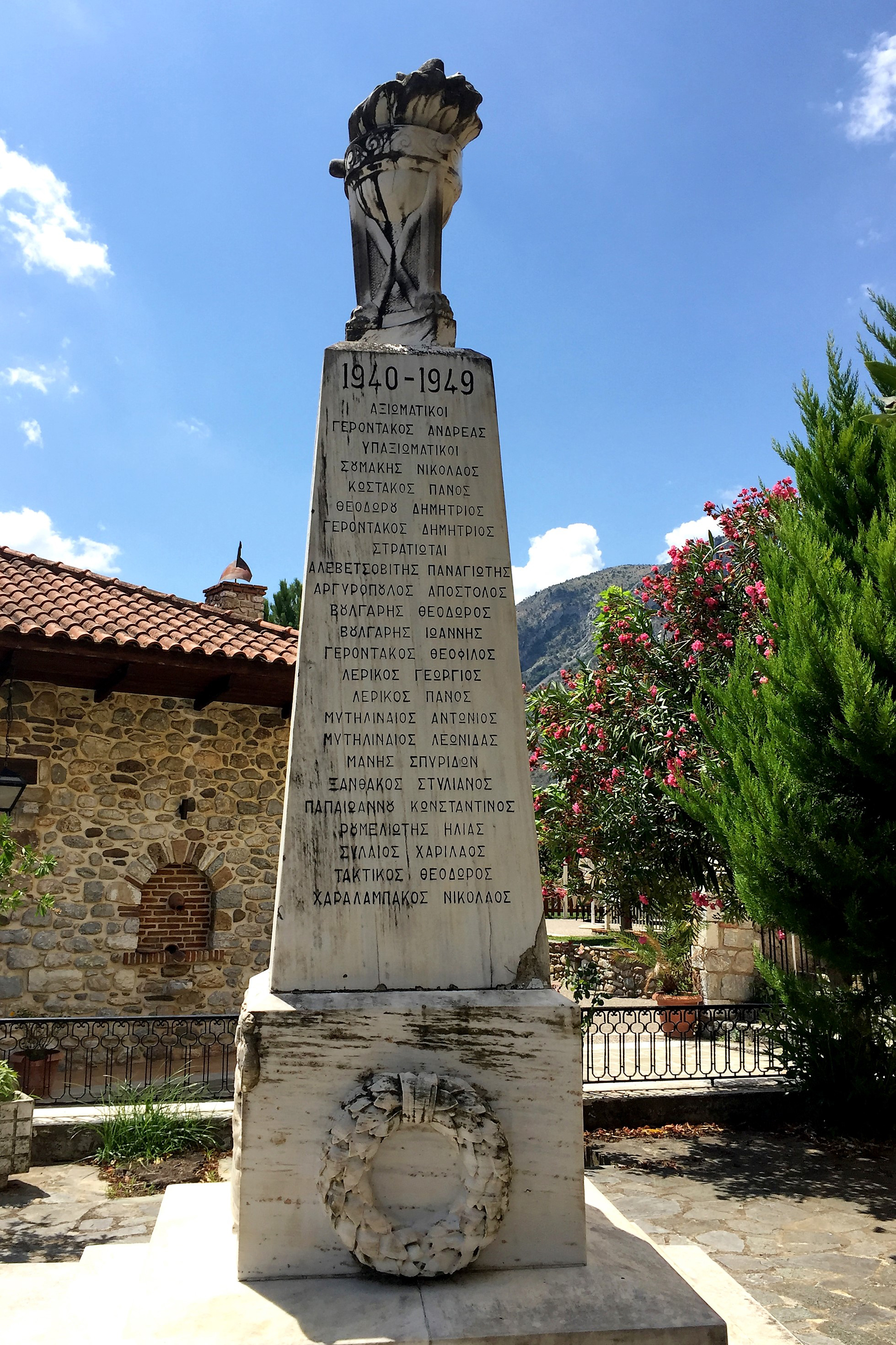
Every village has a “war memorial,” inscribed with the names of those who died in battle, or in the Greek Civil War. It is sobering to stand in front of these, but even more so when you see your own family names. My first cousin once removed, Panos Kostakos, was killed execution-style by the Nazis in Mystras.

Panagiotis Grigorios Kostakos, 1913-1944

His is the third name from the top.

World War II War Monument

So we come “full circle,” from my grandparents to my generation, and to the ones continuing forward. Visiting an ancestral village brings me this perspective of beginnings and continuation. It is a comprehension that cannot be experienced virtually–you must go to understand.

In my last post, “Telos,” I wrote that my work of marriage record preservation in the Sparta Mitropolis this summer was part of my desire to offer service, and to “give back” in gratitude for my heritage and ancestral land. This post recognizes a few members of my family for the services they so willingly gave. They have influenced me profoundly. I recognize and honor their examples, and am proud to follow in their footsteps.


Six Dots to Marriage

Do you have a family tree that looks like this?

If you were in Greece and planning to marry a person who had the same last name and  who was from the same village, this diagram might be on your marriage license. It represents the abbreviated pedigree charts of the engaged couple and would indicate whether their marriage could be performed by the Orthodox Church.

Marriages are not permitted between people who are closer than  six dots to each other (approximately third cousins). To simplify understanding the relationship, the village priest could create this chart which would show the couple’s connection to each other, back to their common ancestor.

This is how we would read the chart:  count the number of dots between the groom and the bride, including their common ancestor. If the groom was the second generation dot and the bride was the second generation dot, the 5-dot connection meant that no marriage could occur.

If the groom was the second generation dot and the bride was the third generation dot, a marriage could occur because the couple has a 6-dot connection.

This is the document which revealed this interesting and important rule.

Sparta Marriage Record, Marriage #199, year 1930

In this letter requesting permission for marriage, the bride, Anastasia, is a 4th generation dot (left side) and the groom, Vaselios, is a 3rd generation dot (right side). Counting up the triangle to the common ancestor and down, there is a 7 dot connection. This meets the minimum of 6 and the marriage can be performed.

I love that the priest put an arched row of tiny dots to ensure that the chart could not be misread. Documents like this are a reason why I love digging into old records!

Arxontiko Taygeti: A Haven and A Cousin

Some time ago, I had identified one of my paternal great-grandfathers as Panagiotis Lerikos of Agios Ioannis, Sparta. Recently, I found his marriage record and discovered his wife’s name–Eleni Dimitrakakis of Mystras. That piece of genealogical information has turned a friendship into a “cousinship.”

Joanne Dimis-Dimitrakakis and I met virtually on Facebook as we were each researching our family history. We met in person in July 2016, when she invited me to her guest house, Arxontiko Taygeti, during my stay in Sparta. It had just been completely renovated and opened for visitors.

Arxontiko Guest House

A beautiful retreat from the heat and noise of Sparta, Arxontiko is situated near the top of the Taygetos mountains overlooking the city of Mystras.

 On the road to Arxontiko overlooking Mystras

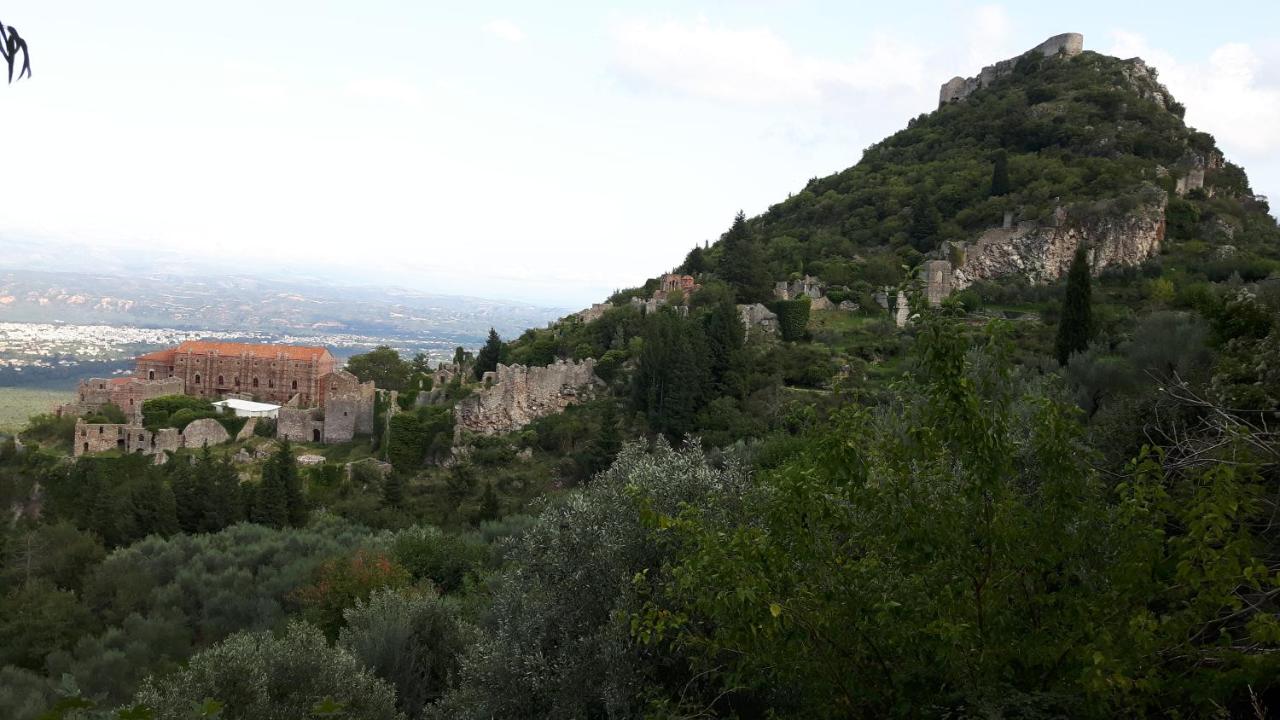
Arxontiko was originally built by Joanne’s great-grandfather (and most likely one of my relatives), Kyriakos Dimitrakakis in the mid-1800’s. Situated in the mountain village of Taygeti, the view from several balconies overlooks the Byzantine castle of Mystras and the entire valley of Evrotas.

The Byzantine Castle of Mystras as seen from the balcony of Arxontiko

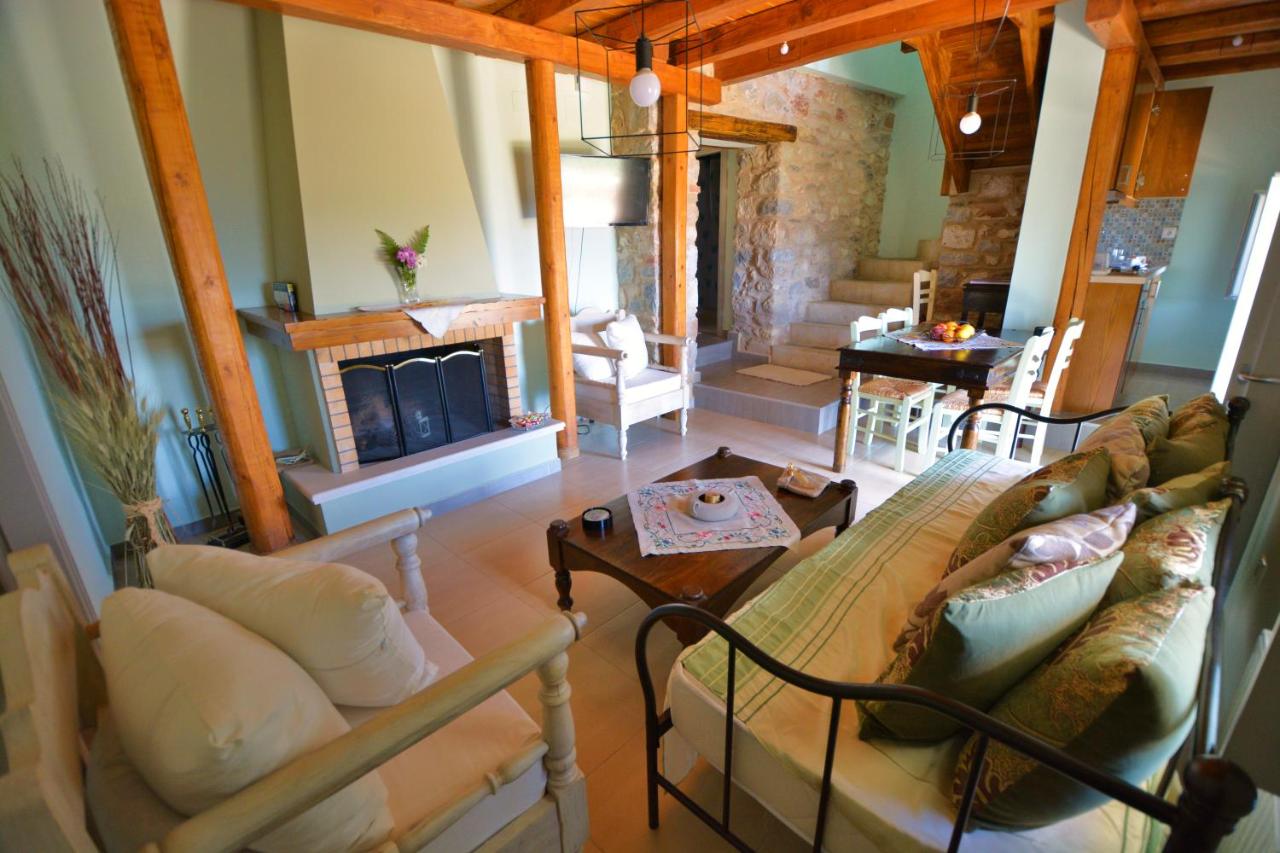
Although Joanne and I visit frequently in Mystras, I love to be in her guest house. It is beautifully decorated and boasts every modern convenience, including fast wifi (sometimes hard to access in Sparta).The architectural details make each apartment cozy and inviting.

Cozy and lovely!

Joanne welcomes visitors from all over the world who enjoy the hiking, the fresh (and cool!) mountain air, the lovely home and her warm and joyful hospitality. “An amazing guest house with exceptional views, warm hospitality and an outstanding hostess,” recently commented a guest.  So true!

Truly a “warm” welcome!

This evening, Joanne and I met in Arxontiko to have dinner and discuss our Dimitrakakis family connection. Over time, I had collected documents from Mystras and its surrounding small villages, and shared them with her. In turn, she gave me a book written about the families of Taygeti (formerly known as Barsinikos). She explained that Barsinikos was the Ottoman name for the village near the top of the  mountains, and in 1955, the Greek government ordered that Turkish village names be abolished and renamed. Thus, Taygeti was established.

The Dimitrakakis connection with Joanne reinforces my almost insatiable desire to gather documentation, books, and historical records about the villages immediately surrounding Sparta–and not just my ancestral towns. People from neighboring settlements married, and you never know who will be your next new cousin!