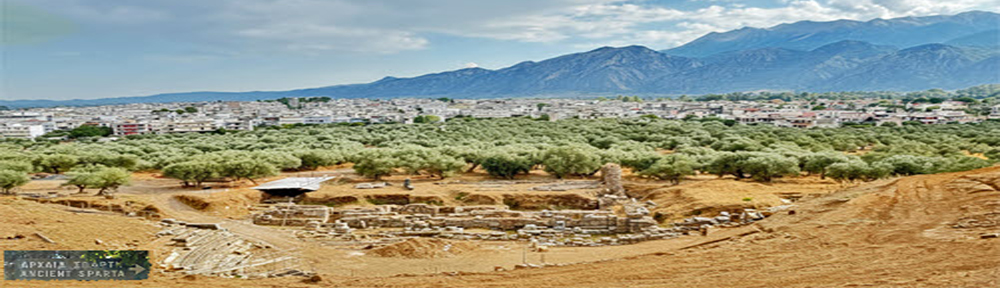
Lakonian Emigration

This summer in Areopoli, Mani, I visited the one-of-a-kind Adouloti Mani bookstore. The owner, Georgios Dimakogiannis, is also a publisher and his store is a treasure for anyone seeking information about the southern Peloponnese and Mani in particular.

In his magazine, Adouloti Mani – Laconia Odos, Issue 3, 2019, was an article about emigration from Lakonia in the early 1900’s. That was the experience of all four of my Spartan grandparents, and I wanted very much to read the story. I tackled the translation using a dictionary and online translators. It is by no means exact and it is somewhat redacted, but it certainly illuminated for me the realities of their experience. I scanned the original article and it can be accessed here. If you read Greek, you may prefer to read that untouched version which also has additional photos.


Lakonian Emigration

by Donald-George McPhail  (author, researcher, historian)
published in Adouloti Mani – Laconia Odos, Issue 3, 2019

From 1896 to 1921, more than 400,000 inhabitants emigrated from Greece. The legend of America as the “land of promise” and as a refuge for emigrants around the world  undoubtedly permeated Laconia. The years of misery that plagued the predominantly rural population—agricultural disasters, government mismanagement, uncertainty and insecurity, frequent military drafts, and grief over the loss of the war in Thessaly–caused thousands of Greeks to board foreign ships and emigrate. They left haunted by poverty, with the sorrows of their homeland in their hearts, and trusted that things will change in the New World. They believed that in this way they would pay off their homes, marry off  their sisters, and help their parents, their families, and their villages. They hoped that in a few years they would return rich, honored and equipped for a better life.

Emigration was also due to the fact that the demand for labor was greater in America and the wages paid were much higher than in the immigrant’s home country. The Greeks who immigrated to overseas countries had no qualifications other than physical fitness. They were illiterate, naive and innocent deprived people who had no awareness of their power, nor of course their rights.

Greek Immigration to the USA

  1. First Immigration: 1873-1899; 15,000
  2. The Great Wave: 1900-1917; 450,000
  3. The Last Exodus: 1918-1924; 70,000
  4. The Era of Restrictions: 1925-1946; 30,000


Preparation for Departure

The trials of the poor and destitute migrants, who cared little for amenities they had never tasted, began long before the trip. Most were unaware of the great difficulties that awaited them in the New World, which hundreds of immigration brokers presented as the Promised Land.  The trip required a lot of money, and the loan agents were looking for security. So, among the emigrants  were many small farmers with mortgaged land.  Even for the very poor and the landless, there was a way. They were bound by employment contracts and so they paid off their fares, as slaves literally, by working in the railways or mines.

Usually the departures of the ocean liners, especially the Greek ones, were festive. The decks were packed by immigrants who waved their handkerchiefs to those who led them, along with the curious crowds who thronged the pier. The band of the municipality played, the ship’s whistles blew, and flags decorated the ship and pier. Last greetings were exchanged with those poor immigrants who had left their hometown and had lived for a few hours in Gythio and Kalamata.

Before 1907, the Greek transatlantic wave to America was overseen by foreign steamer companies until the establishment of the first Greek passenger line. The ports of departure were Piraeus and Patras. Subsequent Greek ocean liners were generally poor, small, slow-moving, and badly traveled trips without even the minimum comforts of a boat.

Life on Board

Judging by the horrible living conditions during the journey on the ships, especially those from 1907 to 1937, immigrants were considered as “cargo.” The third-class steerage areas beneath the main deck were packed with rows of iron or wooden double beds. Passengers were literally on top of each other in desperately narrow spaces. From the very first day, the crowds, the exuding fumes of vomit, the smell of passenger bodies and the lack of elementary cleanliness caused the atmosphere to be suffocating.

The bunks were filled with straw or seaweed. There were no chairs, stools, or  tables. Luggage, clothes, utensils and all belongings had to somehow fit  between the narrow beds. Separation of women passengers was impossible. In their quest for isolation, women hung clothes around their beds to create a rudimentary curtain. The women had the opportunity to dress before eating breakfast and leaving their compartments. They could not arrive late or there would be no food available. Usually, they were not as harassed by their male passengers as by the crew men.

Upon boarding, each passenger was given a spoon, a fork and a tin cup. When breakfast was announced, everyone crowded into an open area as there was no dedicated dining room except for a space with a few tables and benches where women and children would usually sit. The men had to go through the serving area and then find some place to eat, or go out on the windswept open deck.

For ventilation, the law provided for two small “windshields” for every fifty passengers. These “windshields” ended up on the main deck, which was usually a short distance from the surface of the sea, causing third-class passengers to be sprayed with frozen ocean water.

Baths were taken on open decks between seats and compartments.  Showers were in small iron “cabins” and the water was seawater. Needless to say, passengers rarely used them. They were used for washing dishes and clothes, without soap or towels and with cold salty water.

The ticket issuing agencies described the food as healthy and nutritious.  In reality, however, it was so poorly cooked that many found it inedible. The only exception to the whole trip was the last meal before arrival, a supper that could smell like delicacies such as fried potatoes.  The farewell dinner dinner was intended to give pleasure to the next day’s arrival and inspection by the health authorities.

Various states had been slow to adopt provisions for the proper transport of passengers, resulting in steamboat companies exploiting the unfortunate immigrants. An American law stipulated that each passenger could have no less than 2.83 cubic meters. Two children under eight years were counted for one passenger. If this space was not available, the ship’s master had to pay a $50 fine per passenger, but there was never any control by authorities and no relevant fines were imposed.
Arrival

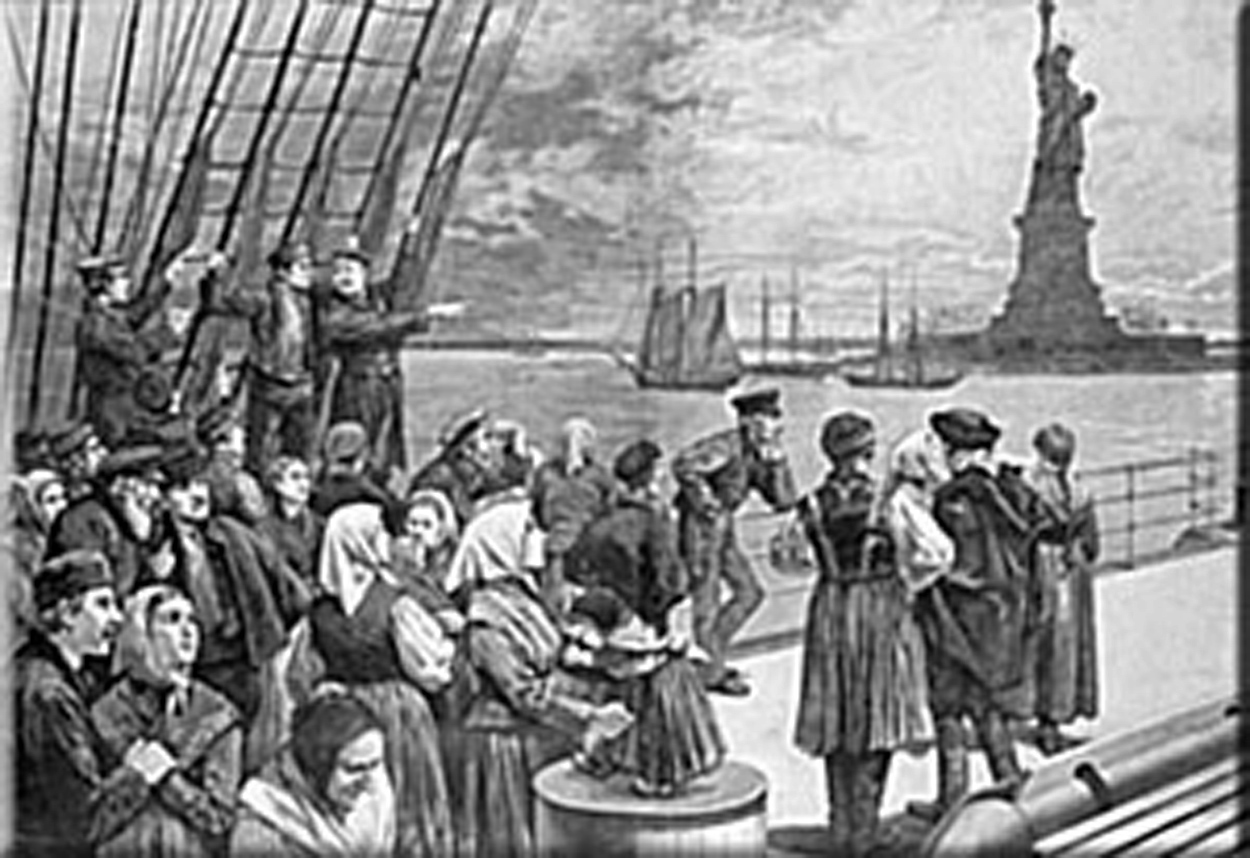
When the ship anchored in America, a fleet of small boats encircled the ocean liner. Men from the Immigration and the Public Health Services boarded the ship and quickly passed through the first and second class cabins, giving a cursory inspection of the passengers in those seats. They then went down to the “fragrant” compartments where the third-class passengers were to examine each traveler. This was the most time-consuming part of their job. When the Public Health people reboarded their boat to go to other vessels, the ship raised the anchor and  slowly headed to the port of New York Harbor, traveling through the fumes of the tugboat towing it.

Upon  arrival, the immigrants’ day was just beginning. After an endless wait on the ship for the checks to be completed, they began to finally descend the staircase of the ship, loaded with their luggage. So overloaded, they headed to the Aliens Service boats waiting for them to take them to the famous Ellis Island known to the Greek immigrants as “Castigari” (from Castle Garden).

Ellis Island
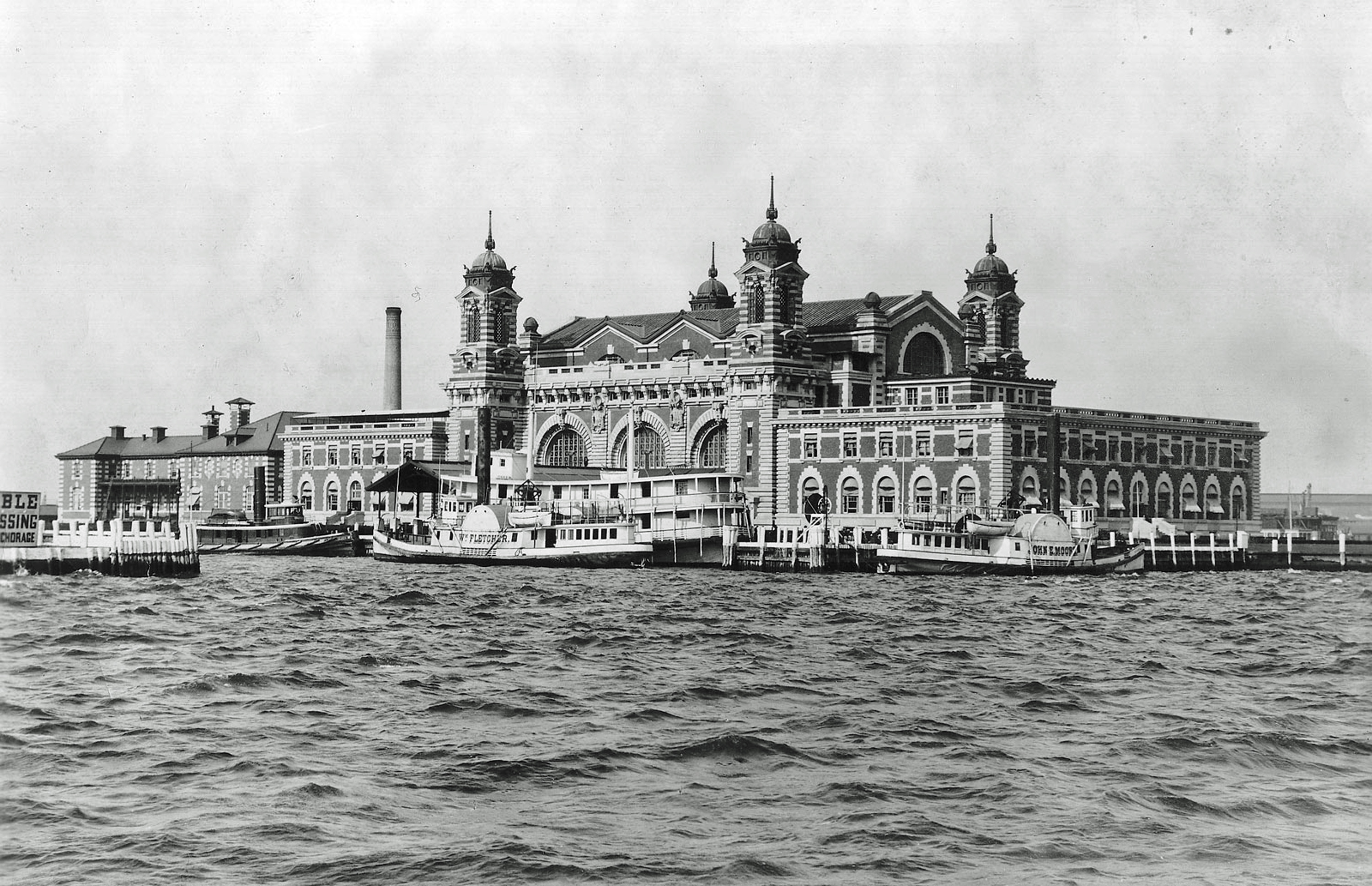
Ellis Island, off Manhattan, was the main hub for immigrants arriving in America from the late 19th and the first half of the 20th centuries. There, immigrants were put to the final test, undergoing medical examinations to approve their entry into the United States.  There was tight control for medical conditions that were contagious. Most passed the check and then forgot the hassles of traveling. But if someone was ill or unbalanced he was obliged to return to the port and surrender to the steamship company for repatriation. These unfortunates were sent back to their homeland at company expense, a fact which made steamship companies careful when selecting passengers.

When stringent requirements for trachoma and other contagious diseases were understood, health authorities in Greece examined travelers and checked for trachoma because eye disease would prevent entrance into America. Ophthalmologists in Greece were stationed in Ageranos, Mani and elsewhere in Laconia where prospective immigrants went to make sure they had no contagious conditions or, if they did, to make them well.

Dispersion

The immigrants, after endless suffering, were finally admitted onto the new Promised Land where other adventures began for them. Most newcomers, at least in the early years, stayed in New York and New Jersey. There were small hotels and small shops owned by Greeks, who welcomed them when they were unloaded from the boats that brought them to the south of Manhattan from the Ellis Island. The city was expensive and most had less than thirty dollars in their pockets, so they were in a hurry to continue their journey.

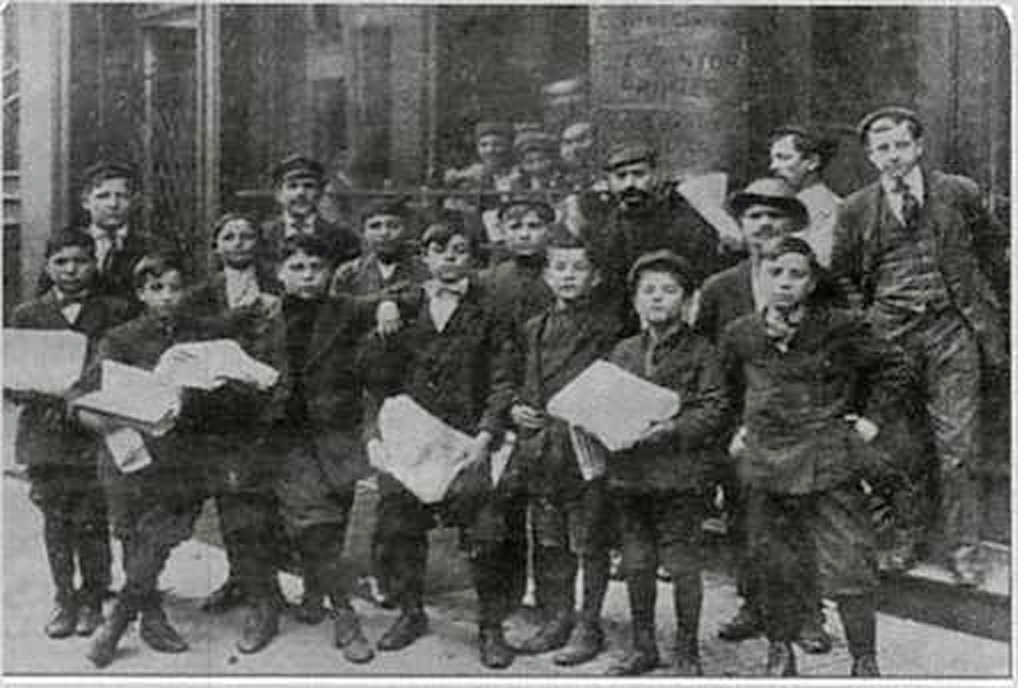
The Greeks who progressed in America were mostly employed in textiles, heavy industry, coal mines and railroads. They often worked for twelve hours and lived in unhealthy homes, cramped in small rooms. Life for Greeks working in the mines and on the railroads was especially difficult. They lived in tents or wooden huts and their diet was very poor. The savage exploitation of underage children, who worked as “blackboots” [the shoeshine business operated by  compatriots] prompted the intervention of American and Greek consular officers.
I don’t think there is a Lakonian that doesn’t have a relative, even a remote one, in America. At the beginning of the previous century, thousands with the hope for a better tomorrow left for the distant continent.

On the Internet, the Ellis Island archives are available, the small island in New York in which all immigrants were registered. While researching for immigrants to America, I worked with this website and found information about Ligerian residents who immigrated to America between 1892 and 1924. For those who don’t know, Ligereas (Λυγερέας) is the smallest local district of the municipality of Gythio and is my wife’s village. I found details of the Ligerian immigrants where their disembarkation was recorded at Ellis Island, a few hours before they were “sucked” into the new land. I found over 190 residents in 32 arrivals reports which contained valuable information that even today’s descendants did not know.

[END OF ARTICLE]

Photo Credits:  All photos are from Mr. McPhail’s original article.
Note:  Mr. McPhail is half Scot, half Greek and he married a Greek lady from Mani. He never went back to England he raised his family ​in Greece. His full name in Greek is written as Ντόναλντ-Γεώργιος Μακφαίηλ. (Many thanks to Marina Haramis for this information)

 

Papou’s “Pistopoitiko”

A pistopoitiko (πιστοποιητικό) is a document issued by an authorized agent attesting to the proof of a fact. In Greece, these are predominantly used to certify birth (πιστοποιητικό γεννήσεως), marriage ( πιστοποιητικό γάμου) or death (πιστοποιητικό θανάτου). Thus, it is likely that a genealogist will encounter this document at some point in the research process.

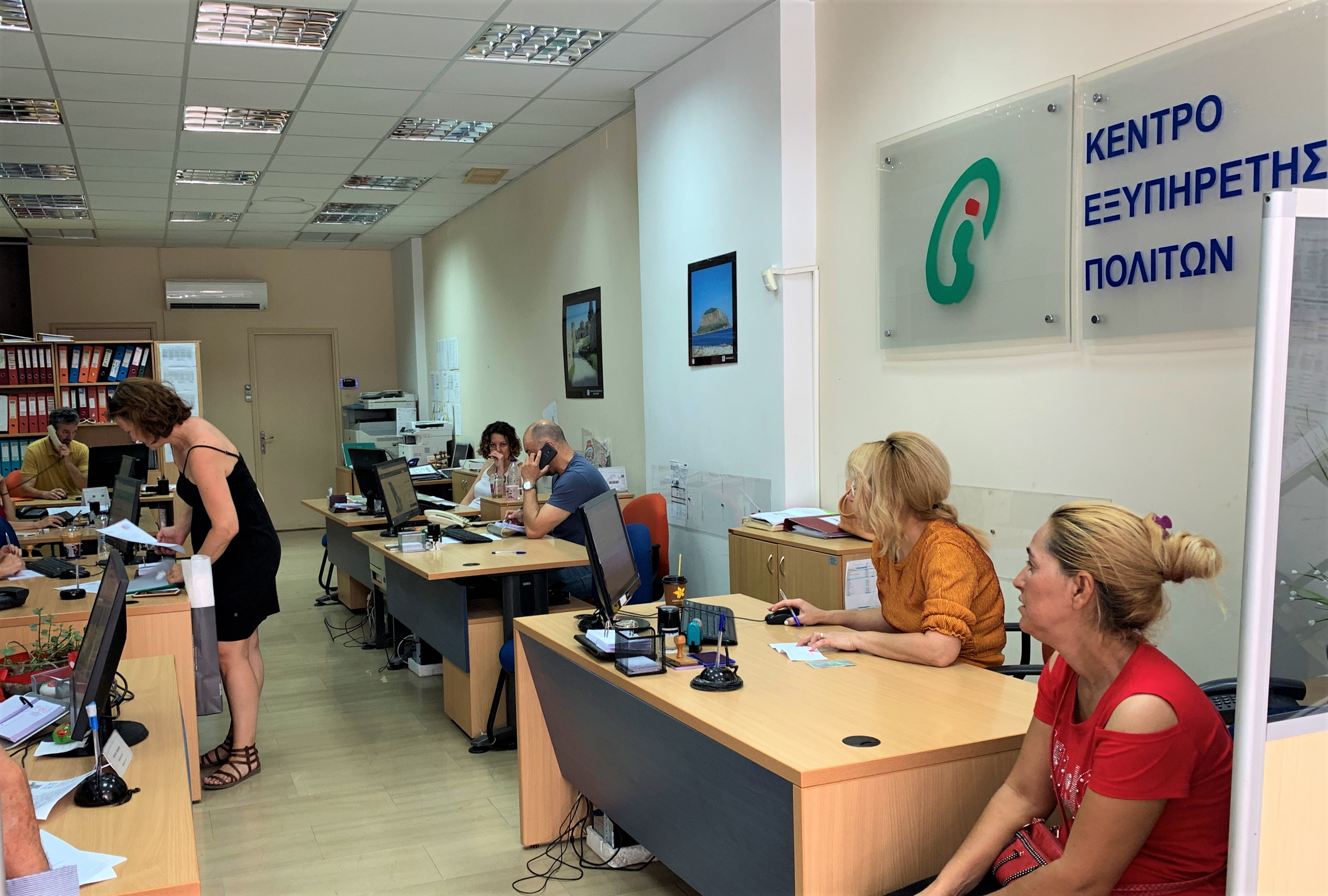
For anyone seeking Greek citizenship, the pistopoitiko of birth for a parent or grandparent is mandatory. It certifies that the ancestor is registered as a citizen in Greece and proves the applicant’s Greek heritage. Knowing that it is an important genealogical record and could be of future value to my family, I went to the KEP (Citizen’s Service Center) in Sparta to obtain a pistopoitiko for my paternal grandfather, John Andrew Kostakos (Ioannis Andreas Kostakos – Ιωάννης Ανδρέας Κωστάκος).

KEP Office, Sparta, Greece

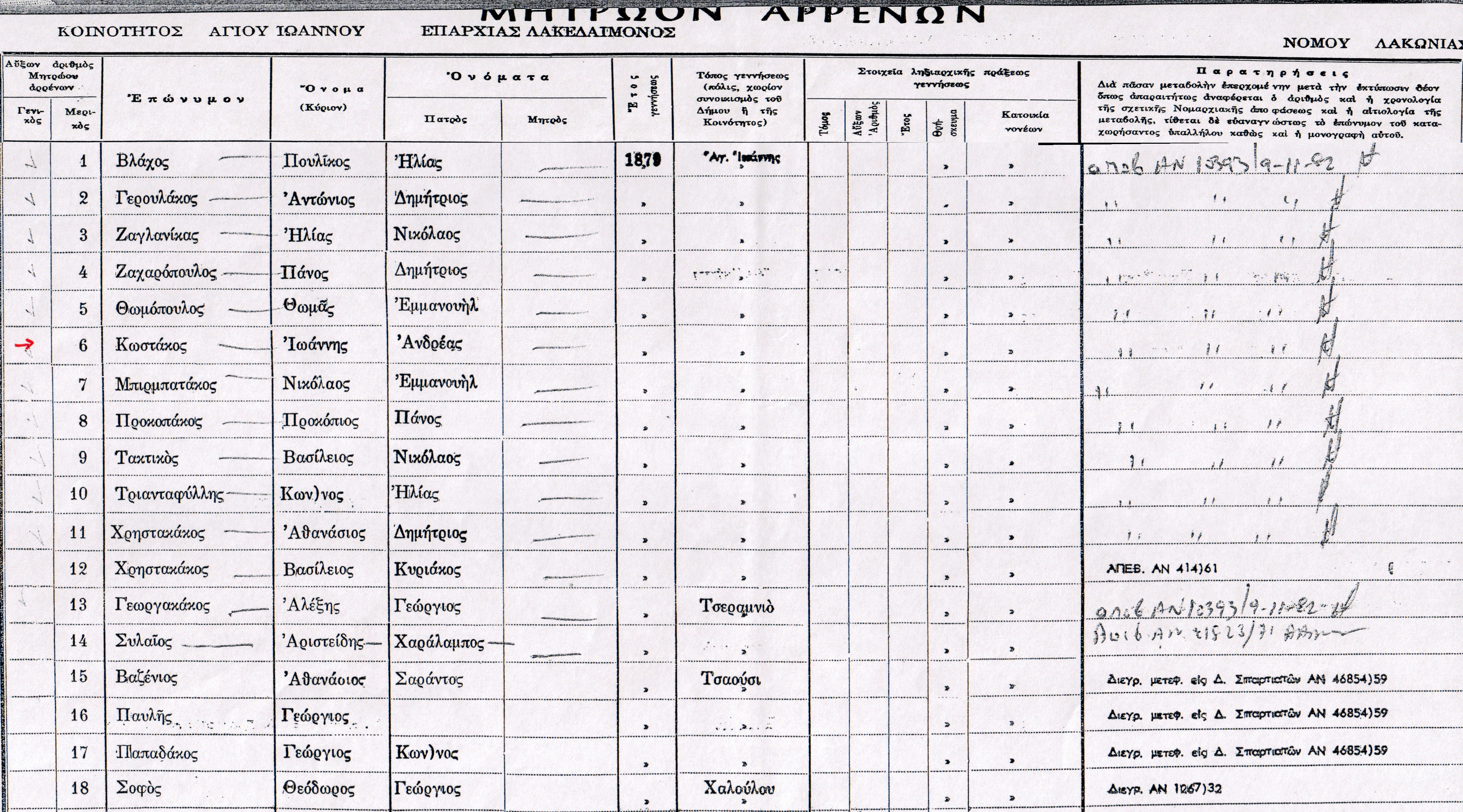
Before a pistopoitiko of birth can be issued, a copy of the Male Register (Μιτρώοv Αρρένον ) listing the ancestor must be procured. These can usually be found at a regional office of the General State Archives of Greece. If the Archive office does not have the Male Register for your ancestor’s village, it will be at the Mayor’s office (Dimarheion), the Civil Registry Office (Lixarheion) or the KEP.

One of the first documents I obtained in Greece years ago was the Mitroo Arrenon for my papou Kostakos. He was born in 1879 in Agios Ioannis, and his name is on line 6 below.

Mitroon Arrenon, village of Agios Ioannis, year 1879

I brought a copy of this to Greece with me, and I’m glad I did. It made the process very easy because I did not have to locate it at the Archives or the KEP office.

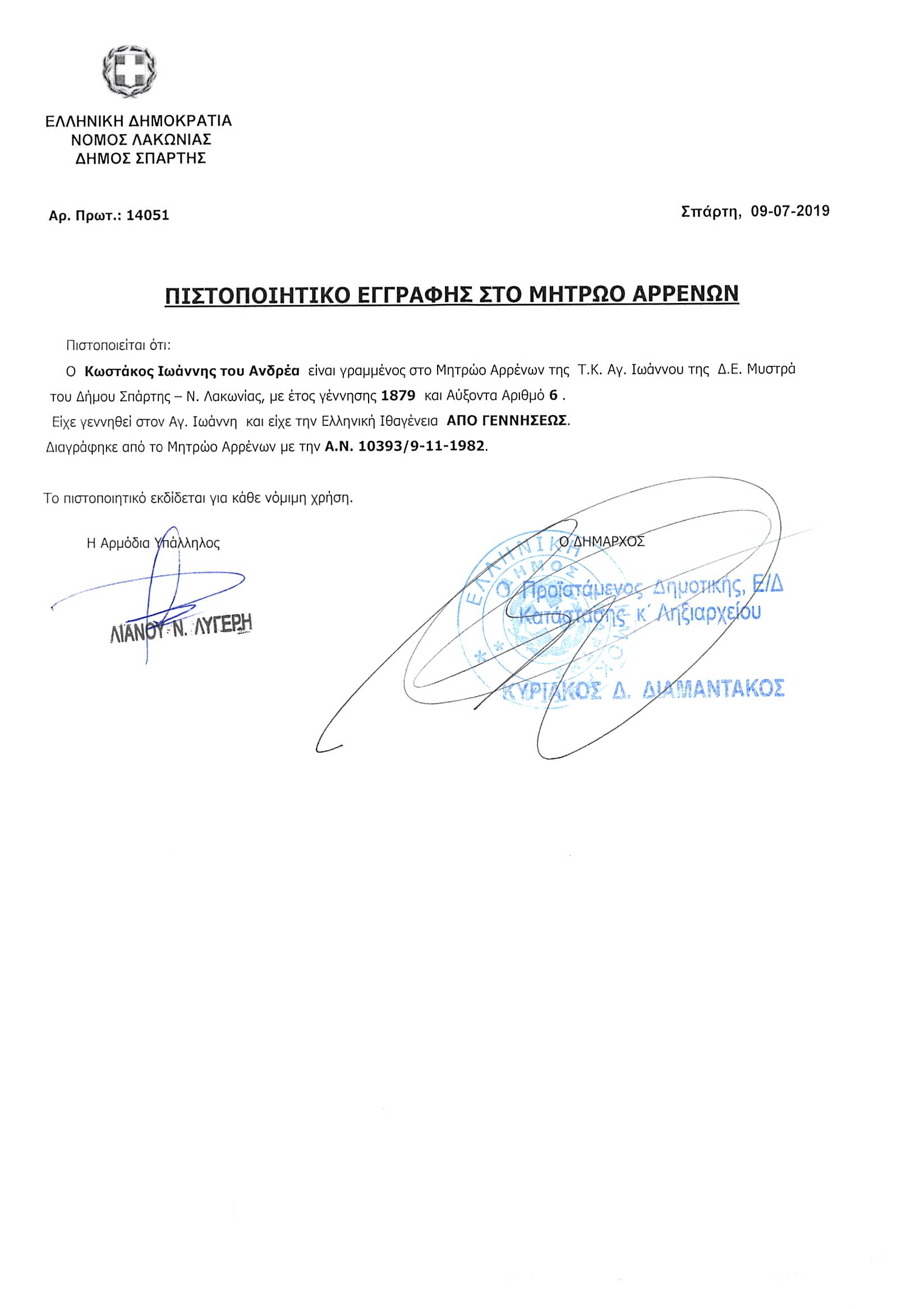
At the KEP, the first question asked was:  “for what purpose do you need a pistopoitiko?” I replied “for Greek citizenship,” because I knew that was an acceptable response whereas “genealogical research” may not be. I was then asked the name, birth year and village of my grandfather so that a search for his Male Register could commence. This is when I took out the copy and handed it to the clerk. She asked if I obtained the copy from the KEP, and I said no, that it was from the Archive office. She examined it carefully and looked at me several times; I wondered if it was an acceptable copy. Without a word, she turned to her computer and began typing. This is what she handed me:

Pistopoitiko of Birth, John Andrew Kostakos. Obtained at the Sparta KEP office, July 2019.

Translation:
Certification that:  Kostakos, Ioannis of Andreas is written in the Mitroo Arrenon of the village of Agios Ioannnis of the Municipality of Mystra of the Dimos Sparta, Nomos Lakonias, with the birth year of 1879 and serial number 6. He was born in Agios Ioannis and is of Greek nationality by birth. His name was deleted from the Mitroo Arrenon with A.N. 10393/9-11-1982. This pistopoitiko is issued for legal use. The document is signed by an official, and also by the mayor, Kyriakos D. Diamantakos.

Being in Sparta, having the Mitroon Arrenon, and going in person to the KEP made the acquisition of this document an easy process. From a remote location, one could obtain the Mitroo through the regional archive, then contact the KEP office in the area of one’s ancestral village, send the Mitroo, and request a pistopoitiko. Alternatively, the entire process of obtaining both the Mitroo and the pistopoitiko can be done solely through the KEP. The issue is always, will the KEP office respond in a timely manner.

My recommendation is:  if you will be in Greece and you want a pistopoitiko of birth, marriage, or death, plan time in your visit to obtain this in person. Having such a document in your possession may someday be important to you or a member of your family. I am thrilled to have this certification of birth for my papou.

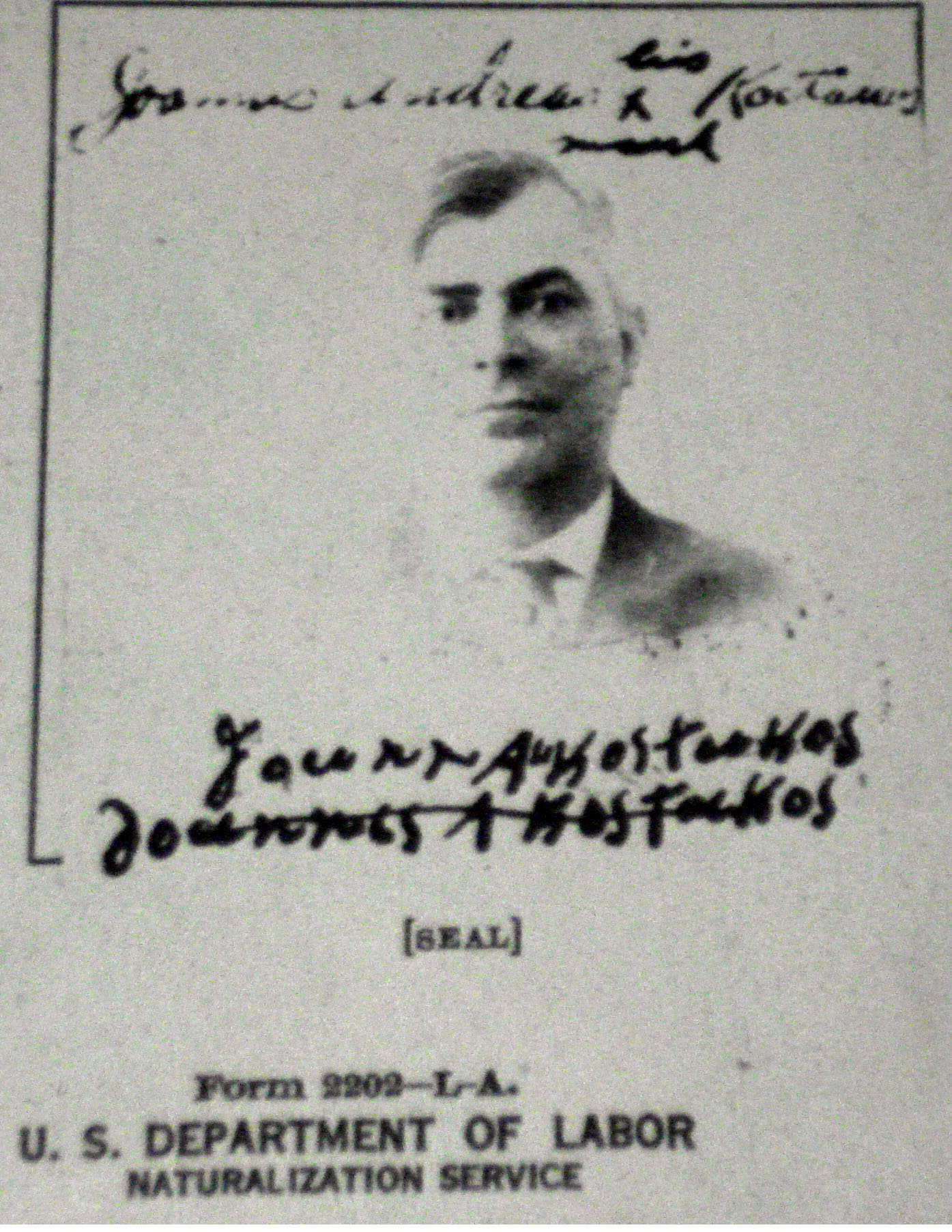
John Andrew Kostakos; my grandfather’s photo from his naturalization papers, 1931


Greece 2019 – Putting Together the Zacharakis Family Tree

Stathoula Zaharaki Eftaxias

This is my maternal great-grandmother, Stathoula Zacharakis Eftaxias. Her photo sits on my desk and every day, she inspires me to keep going with my research.

Stathoula was born in the village of Theologos, Laconia which is 10 kilometers from Sparta and 6 kilometers up a mountain. Her parents were Dimitrios Zacharakis of Theologos, and Giannoula Zarafonitis of Amykles.

For the past two summers, we have had Zacharakis cousins’ reunions in the platea of Theologos. Last year, they asked me to bring their family tree. This year, I did.

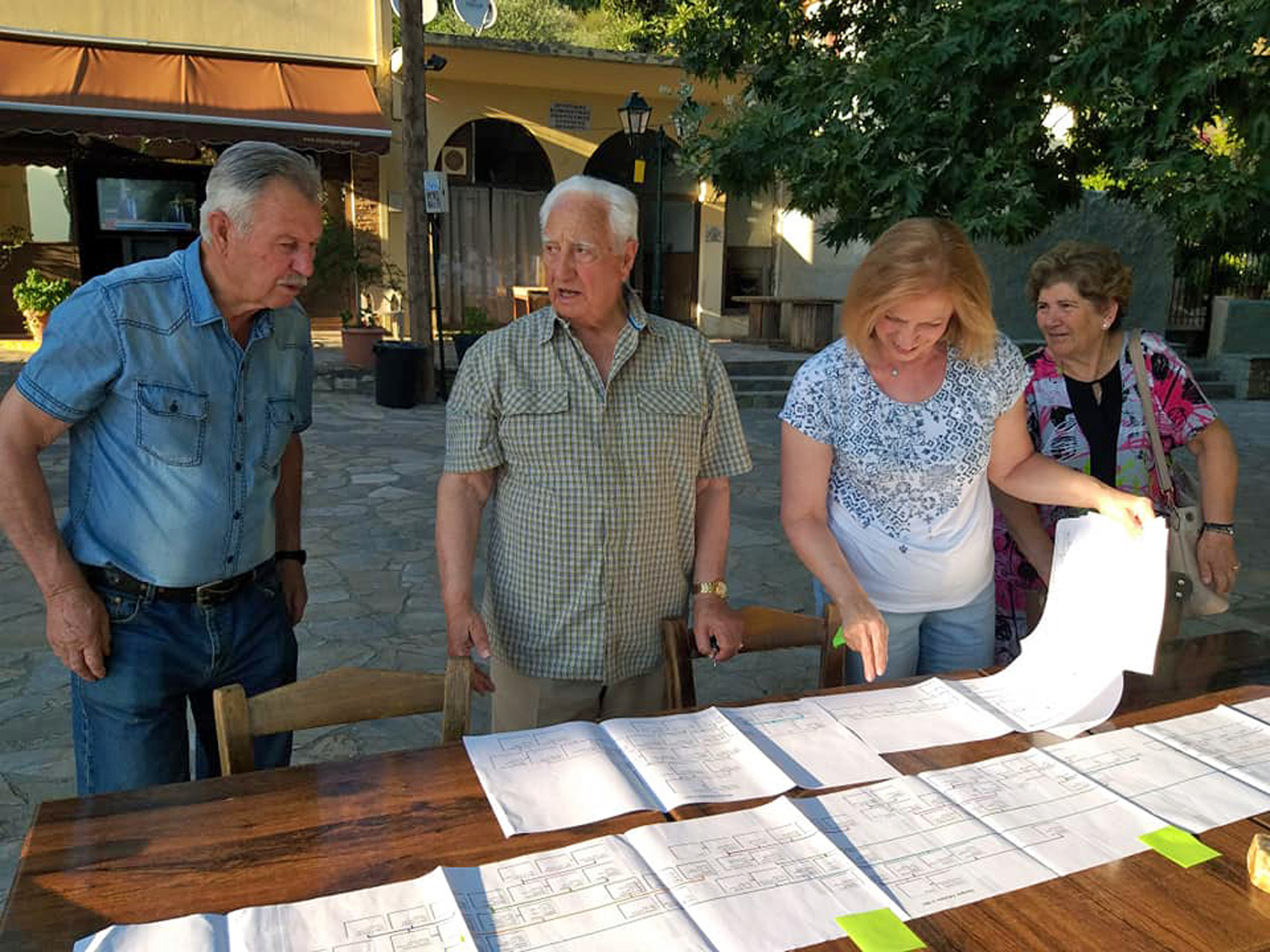
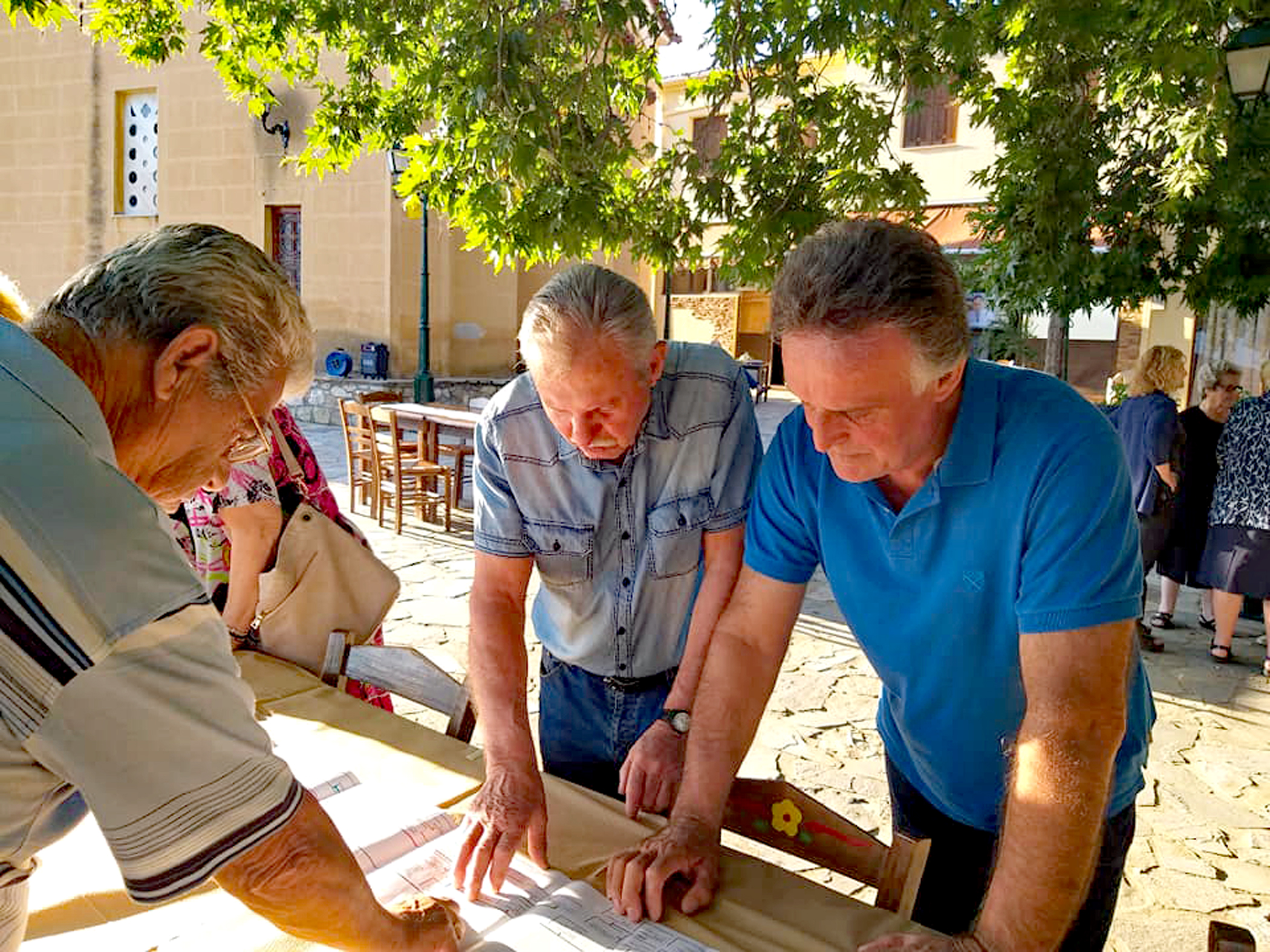
Pavlos, John and Joanna discuss their family tree

Preparing this information sent me hunting for the Zacharakis name in:  Male Registers (Mitroon Arrenon), Town Registers (Dimotologion), Election Lists of 1872, and school, church and marriage records at the village, town hall and metropolis levels. I think I have all the bases covered for vital records from Theologos. What I am missing, though, is a history book of the village. Librarians at the Central Library of Sparta said that one does not exist but I will keep looking.

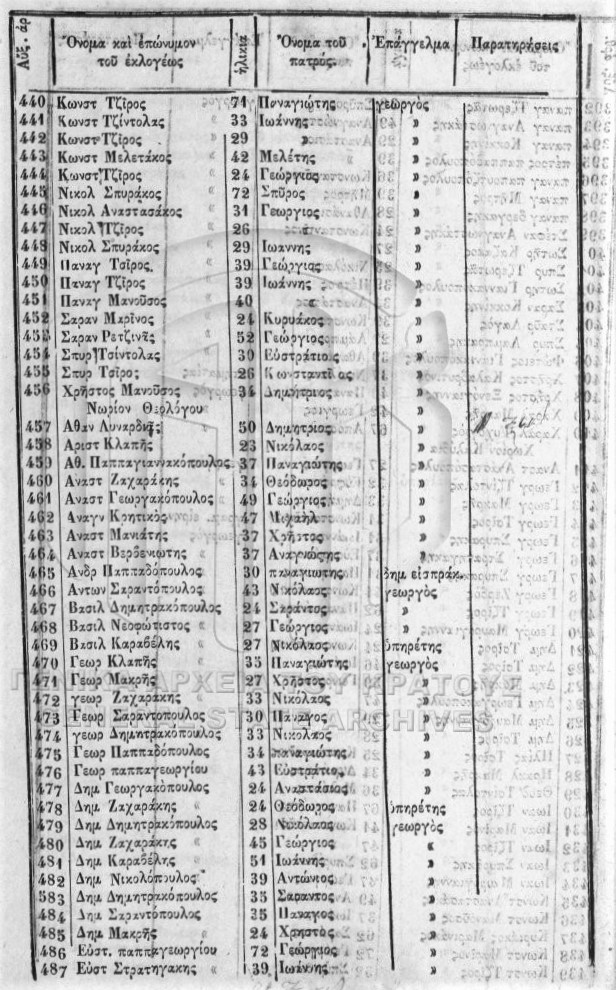
I maintain all my data in a RootsMagic genealogy database and Excel spreadsheets, and I enter every name that I find, whether or not I can connect him/her to a specific line. For example, the 1872 Election Lists give a man’s name, birth year, father’s name and occupation. But if his father is Theodoros and there are several Theodoros’ in the village, I sometimes can’t determine which one he belongs to.

1872 Election List for  Theologos. Zaharakis family:  line 460: Anastasios, age 34, son of Theodoros; line 472: Georgios, age 33, son of Nikolaos; line 480: Dimitrios, age 45, son of Georgios.

I especially ran into problems with the earliest generations. In this Election List, were Theodoros, Nikolaos and Dimitrios brothers or cousins? I spent hours staring at computer screens, flipping between spreadsheets and multiple family group sheets to determine what made sense. When I became utterly confused, I tried a different tactic:  paper.

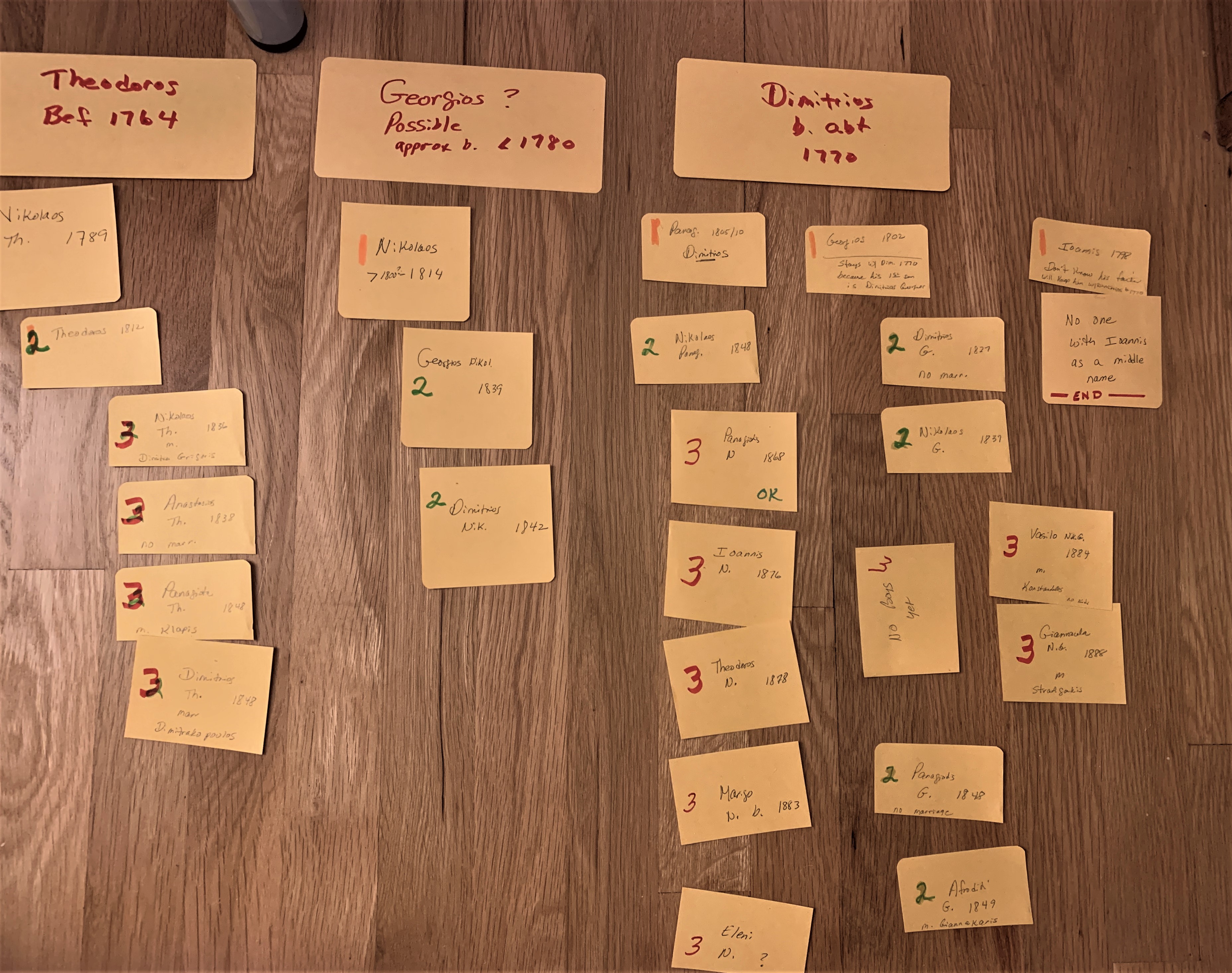
Sorting out the Zaharakis generations–on paper!

I began by writing on paper the men’s first names, fathers’ initials and birth years. Then using birth years, I sorted them into generations moving from youngest to oldest. The tactile experience of holding a pen, writing a name, and moving pieces of paper around until the families made sense helped everything “click” in my brain. After just a few minutes, the descendants were in place.

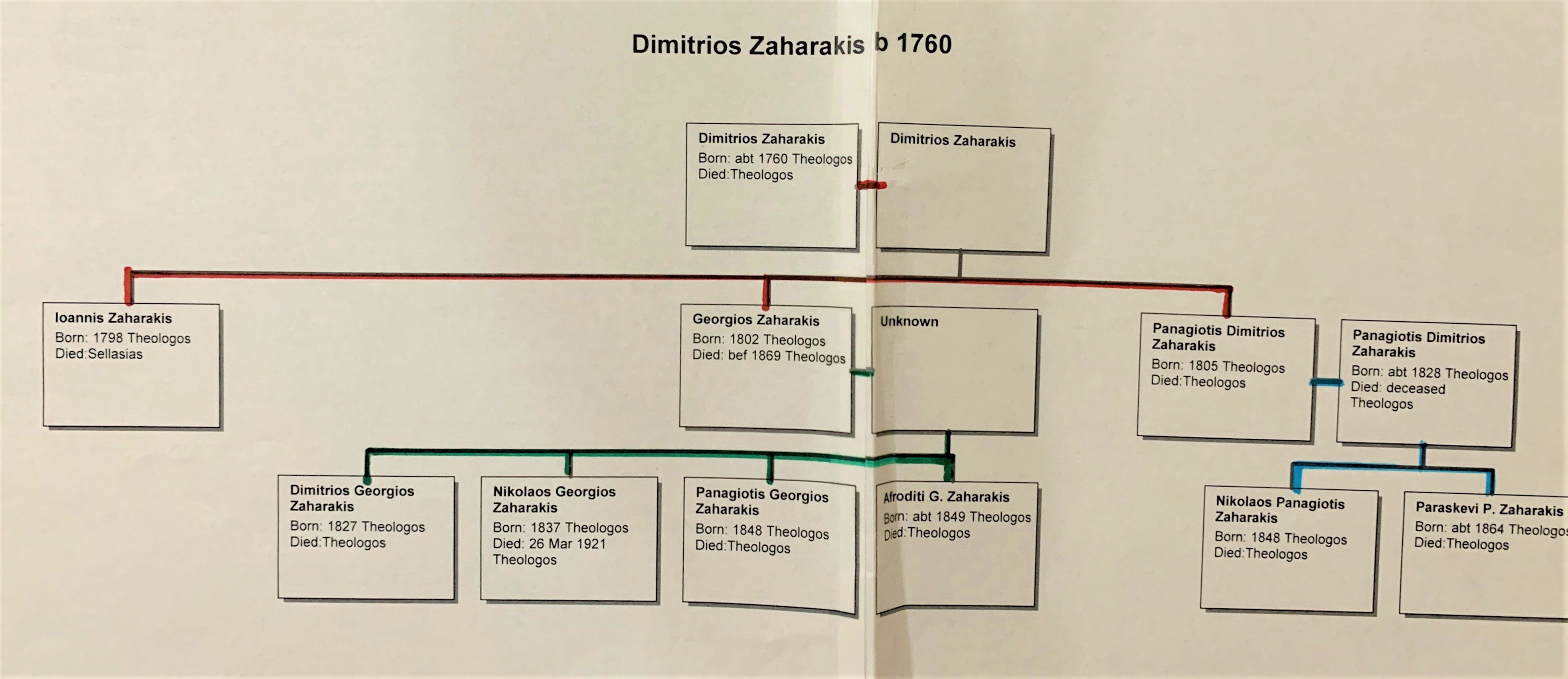
Example of one chart using Dimitrios born c. 1760

Using RootsMagic and lots of tape, I printed and put together the following trees:

  • Dimitrios, born abt. 1760
  • Theodoros, born abt. 1764
  • Ioannis, born abt. 1798 (no known descendants, but he received an Aristeia award for fighting in the 1821 Revolution; blogpost here)
  • Georgios, born abt. 1802
  • Panagiotis, born abt. 1805
  • Nikolaos, born abt. 1814
  • Konstandinos, born abt. 1842
  • Dimitrios, born 1844 (my maternal great-great grandfather)
  • Dimitrios, born c.1848

Certainly the three youngest are sons of the oldest, but who belongs to who? We won’t know in this life; the paper trail has stopped.

As the cousins looked for their names on the trees, I asked them to correct and add information.

Pavlos and his son, Thanassis, examine their tree

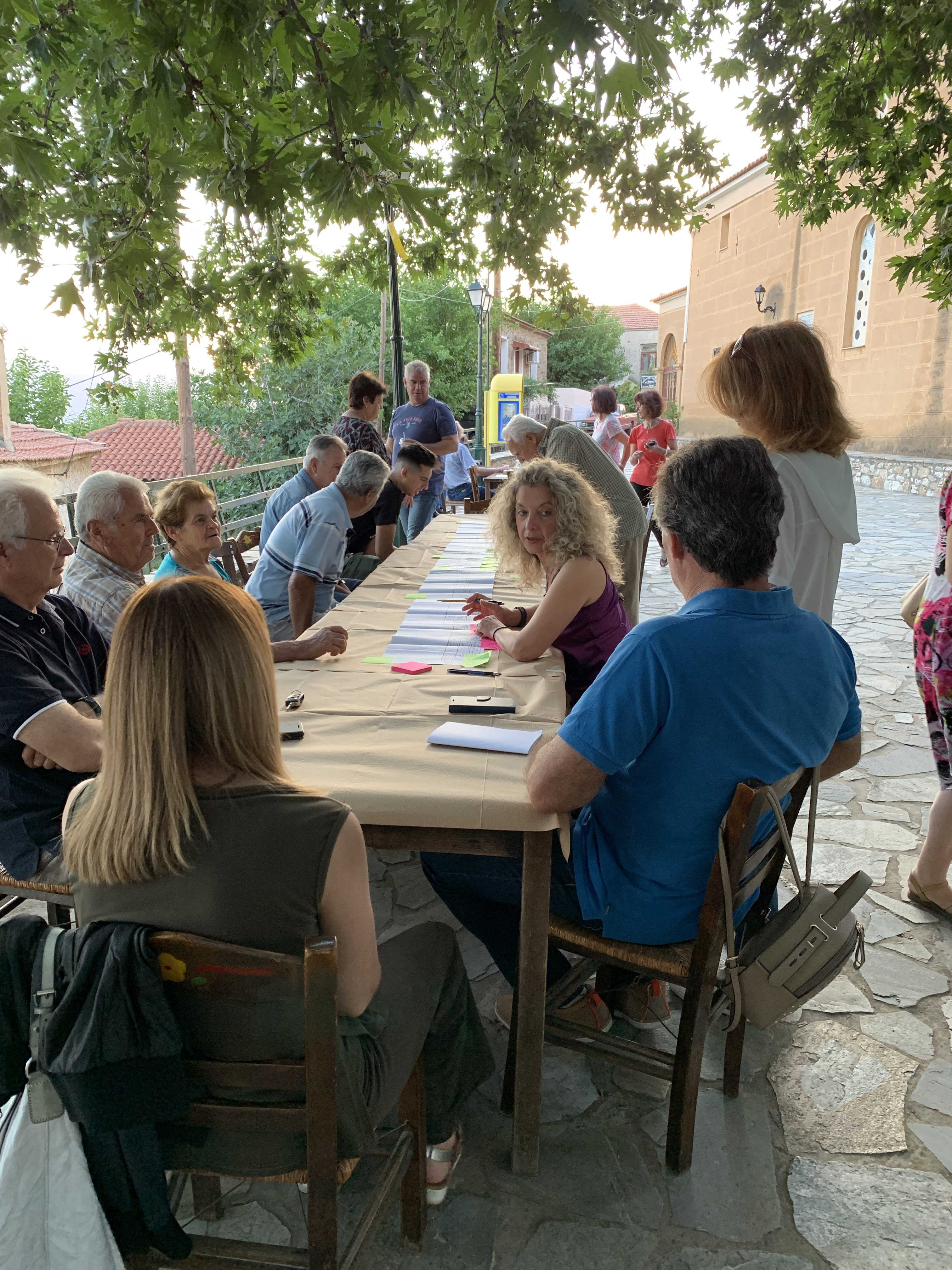
It was interesting to see that everyone there, except three people including me, were descended from Panagiotis born 1805. That tree was on the longest table and had the most activity.

The largest tree was for the descendants of Panagiotis Zaharakis, born abt. 1805

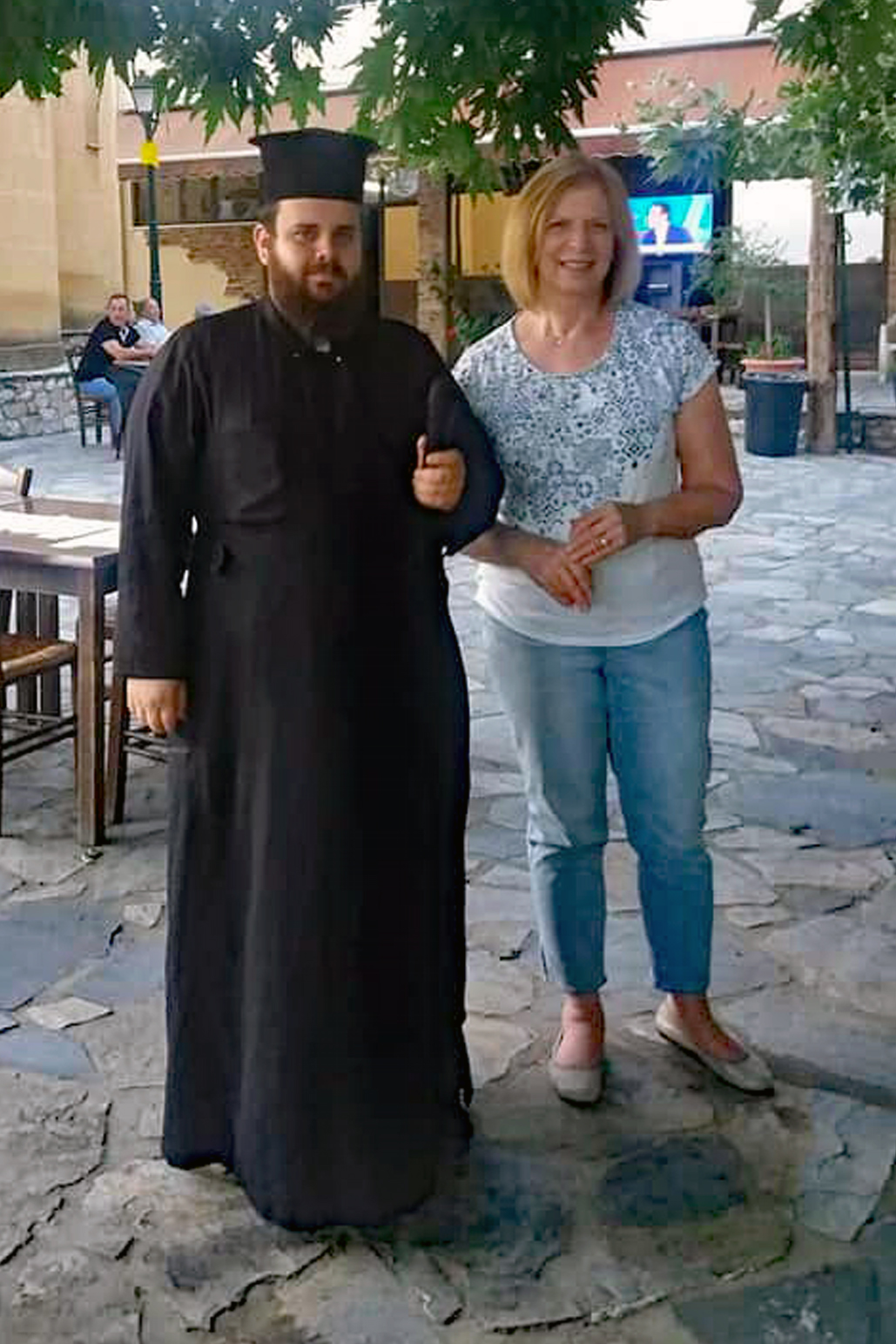
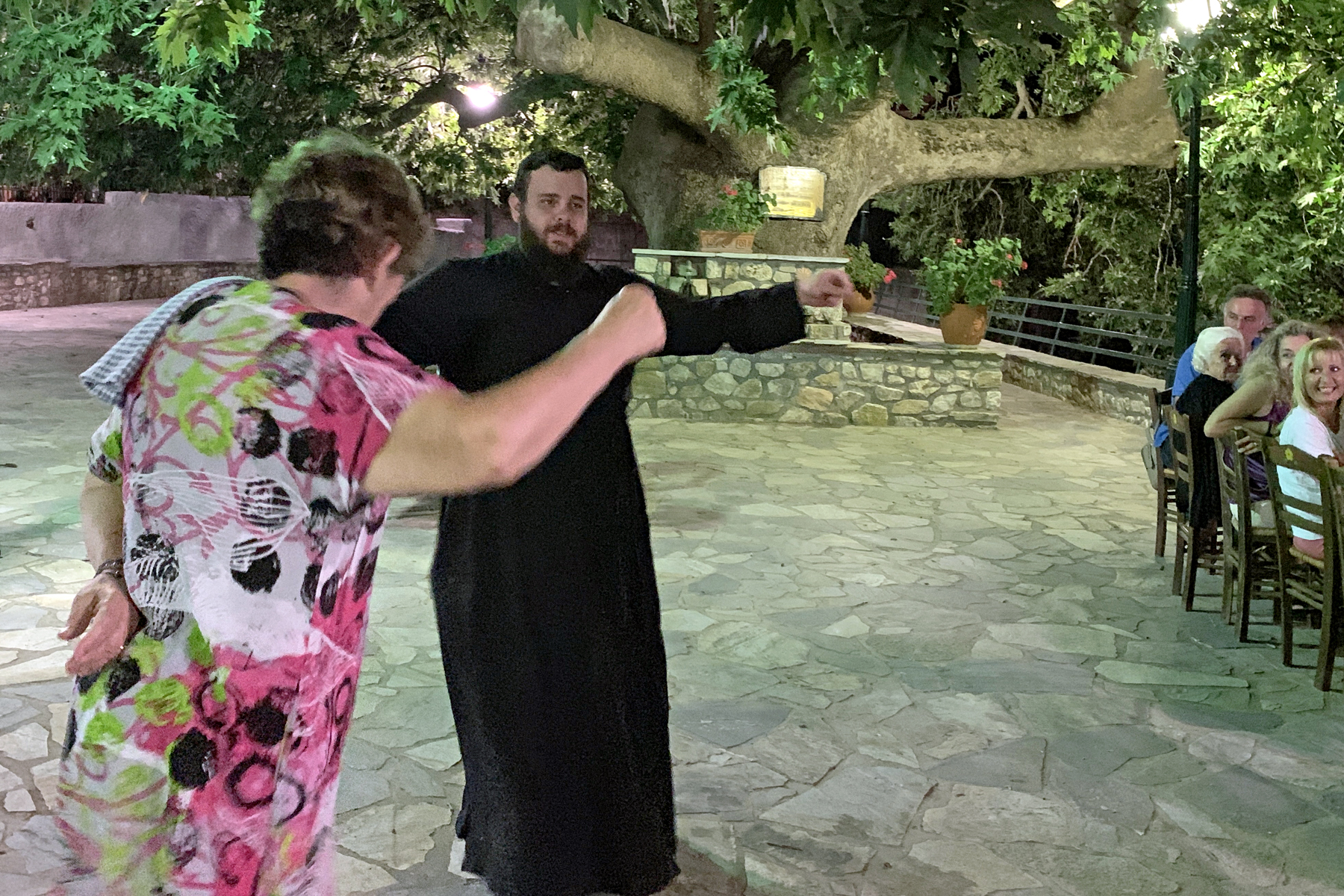
I am very grateful for the support of the village priest, Papa Panagiotis Kotsos, who was the host of the evening. He contacted family, shared information on the church Facebook page, and got people dancing. He is young and fun!

Papa Panagiotis Kotsos, host of the evening

Papa Panagiotis leads the Greek dancing

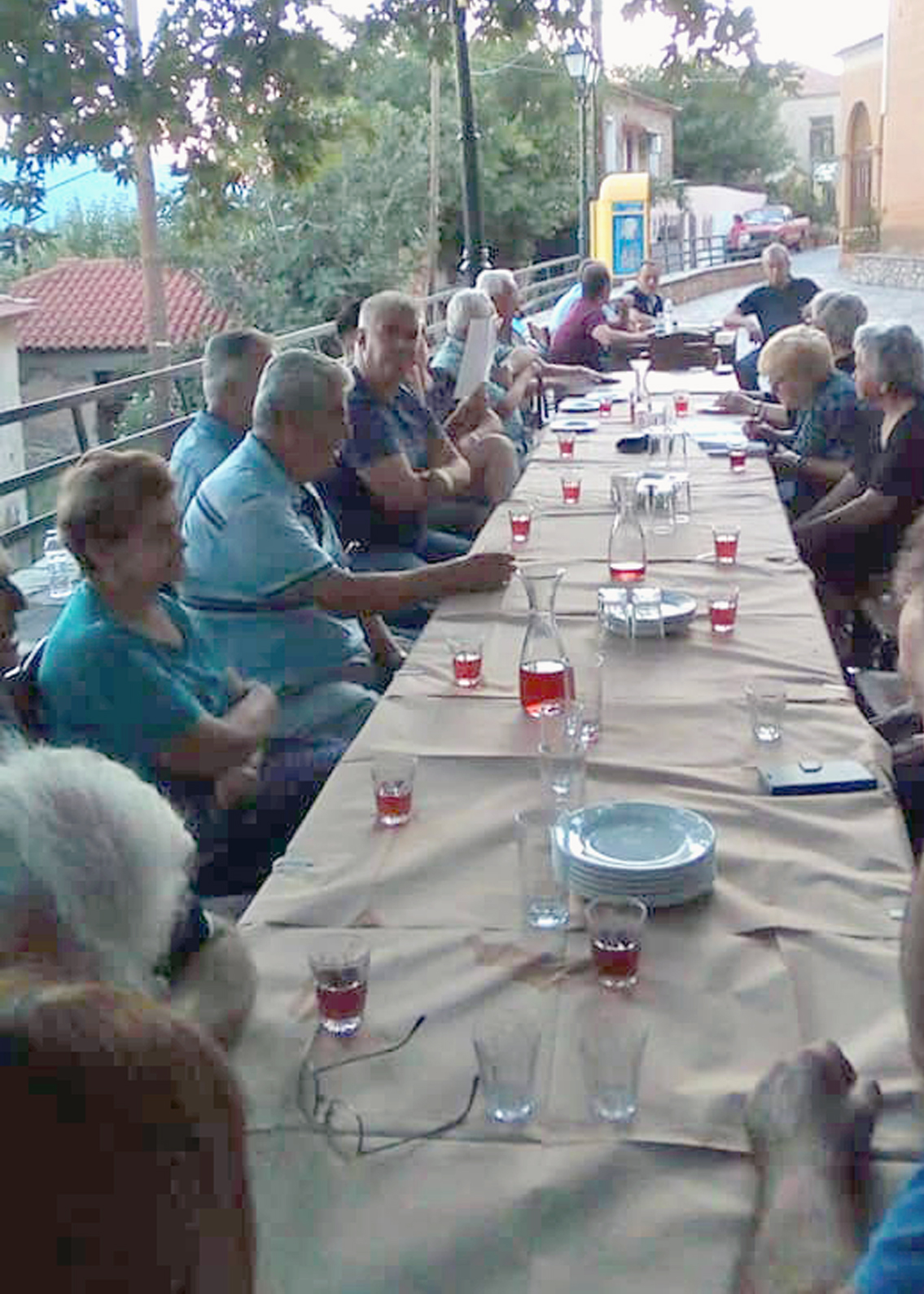
And of course there is food!

Waiting for dinner

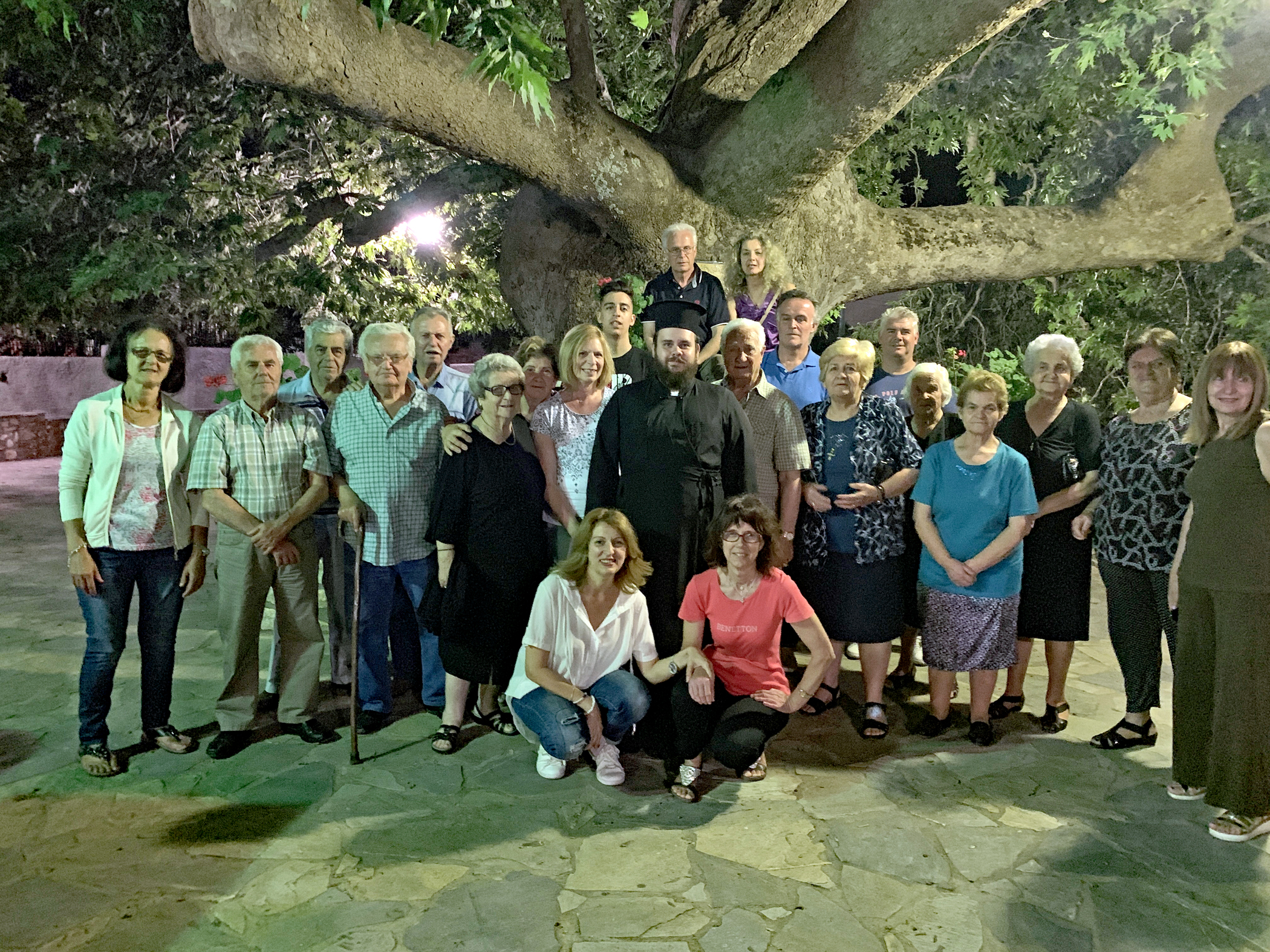
And a group photo 🙂

Zacharakis Reunion in Theologos, July 2019

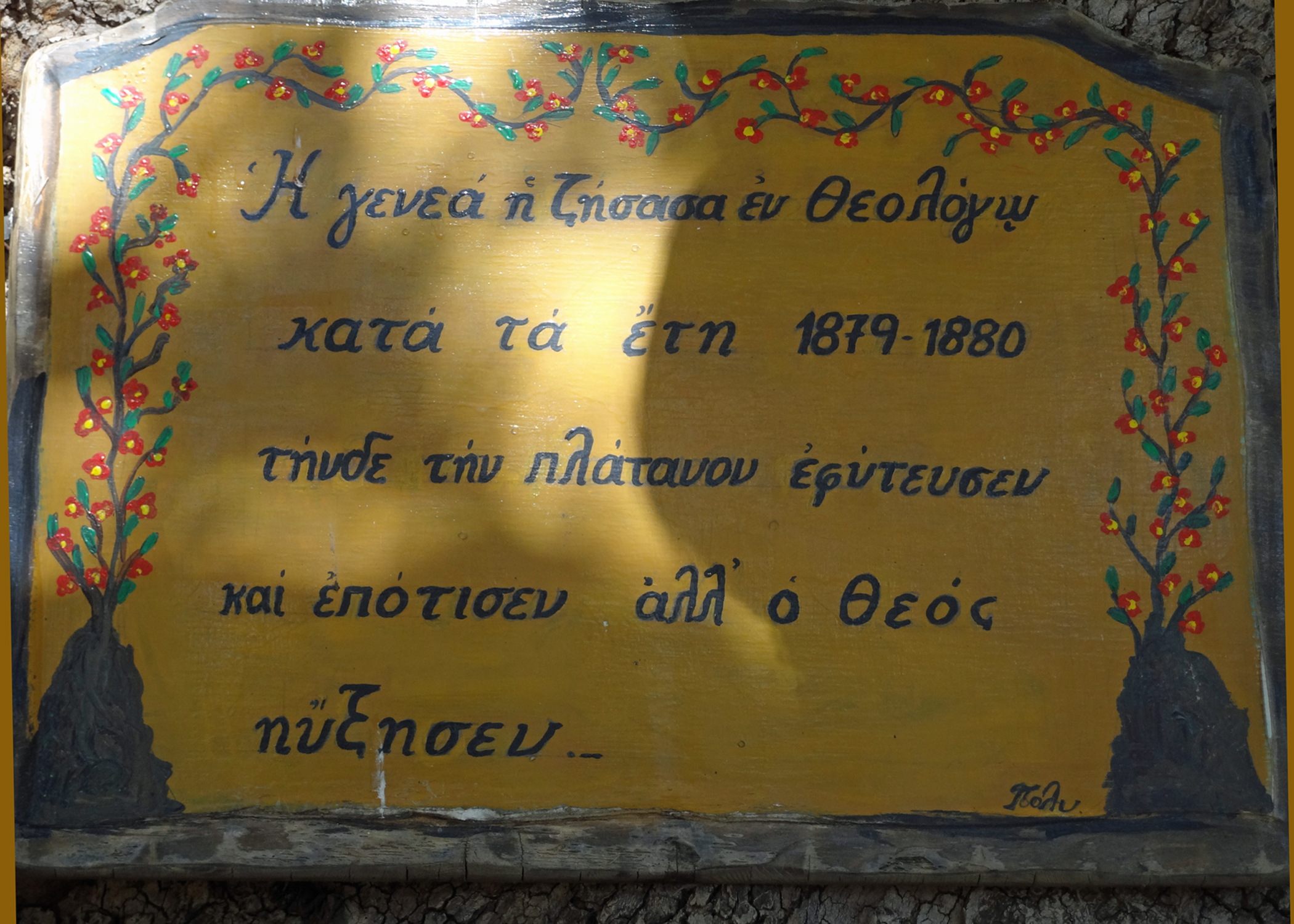
The large tree behind us has a plaque which reads:  “The generation that lived in Theologos during the years 1879-1880 have planted this sycamore tree and watered it but God made it grow.”

Plaque on the sycamore tree in the platea of Theologos

My great-grandmother, Stathoula, was born in 1870. She was a child when her parents, Dimitrios and Giannoula, helped plant the tree. Now we, the descendants of the earliest Zacharakis’, can gather under it and share the joy of family.

Greece 2019 – Greece in Mosaics

How to capture the uniqueness of this country, in an art form that is timeless and authentic to Greece? Dimitra Columvakou has one answer–mosaic designs. An ancient art stretching back 4,000 years, I have seen masterful pieces in museums throughout Greece. But I never expected to visit a studio, and I was excited to find one in Xirokambi, 10 minutes from Sparta.

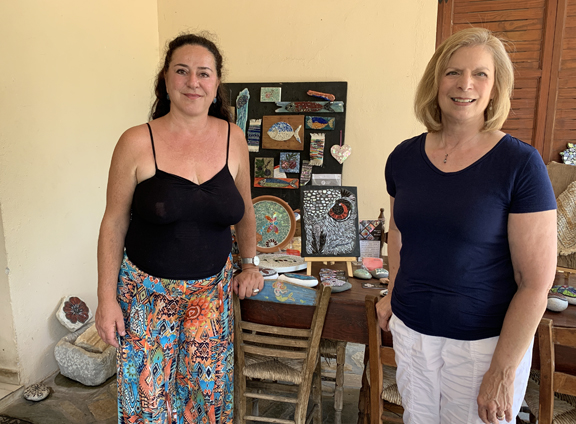
With Dimitra Columvakou at her studio in Xirokambi, Laconia.

I first connected with Dimitra through her page on Facebook and have long admired her art. She had begun mosaic design in Canada, but it was not until she returned to Greece in 1996 and settled in Xirokambi that she established a studio. She finds inspiration in art, nature and culture which are reflected in every piece.

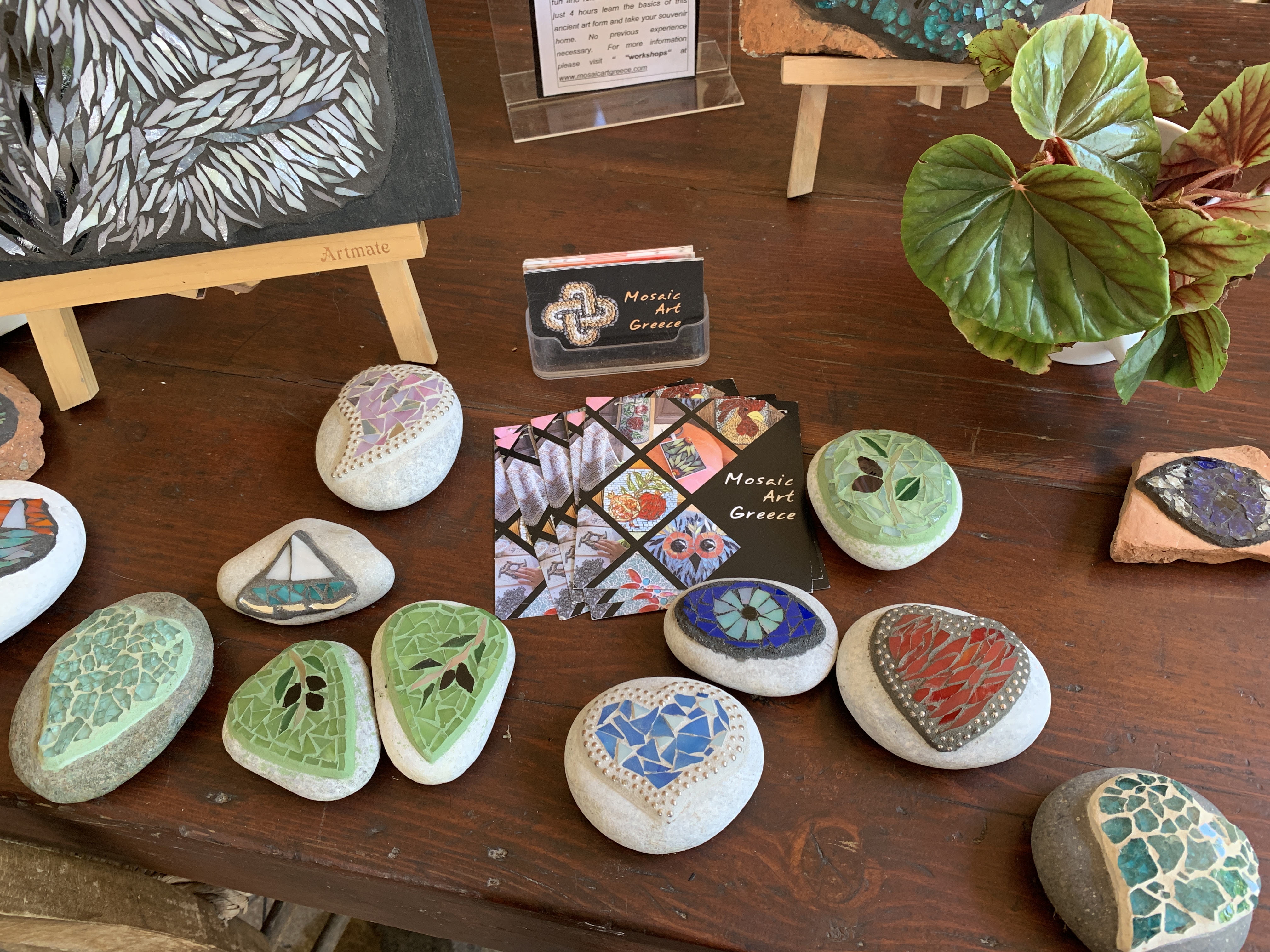
Some of Dimitra’s designs

Dimitra works in pebble  and glass. She creates designs on rocks, tile, wood, pottery, cloth, and even frying pans. No two pieces are alike. Each takes hours to construct. Pebbles and glass are handpicked and meticulously arranged. This is an art form that combines beauty and functionality; mosaics are found not only as art but on floors, walls and footpaths.

Birdbath designed and constructed by Dimitra

Dimitra told me that each stone, tile or other item, “speaks” to her and she creates a design unique to that item’s shape, size and color. As a quilter, I understand exactly what she means. An artist doesn’t force her will upon nature; instead, she allows nature to direct the creative process. And in the end, a unique work of art is formed.

More of Dimitra’s art

Dimitra’s creations extend to jewelry

Every year, my Pappas/Papagiannakos family gathers for a cousins reunion and Dimitra’s work will be there. Unfortunately, stone is heavy and I have twelve items to buy; fortunately, Dimitra has time to create small pieces for me. I can’t wait to give my cousins such unusual and authentic Greek gifts.

Some gift items for my cousins’ reunion. More are being created.

Dimitra’s work is found throughout Greece and abroad. She holds weekly workshops in Xirokambi and Kalamata. I hope that next summer, time will allow me to try my hand at this new form of art and learn from this extraordinarily talented woman.

To find Dimitra:
email: info@votsalota.com
Mosaic Art website
Mosaic Art Greece on Facebook
Mosaic Art Greece on Pinterest 
Read an interview with Dimitra here.

Greece 2019 – Barsinikos–On Top of the World

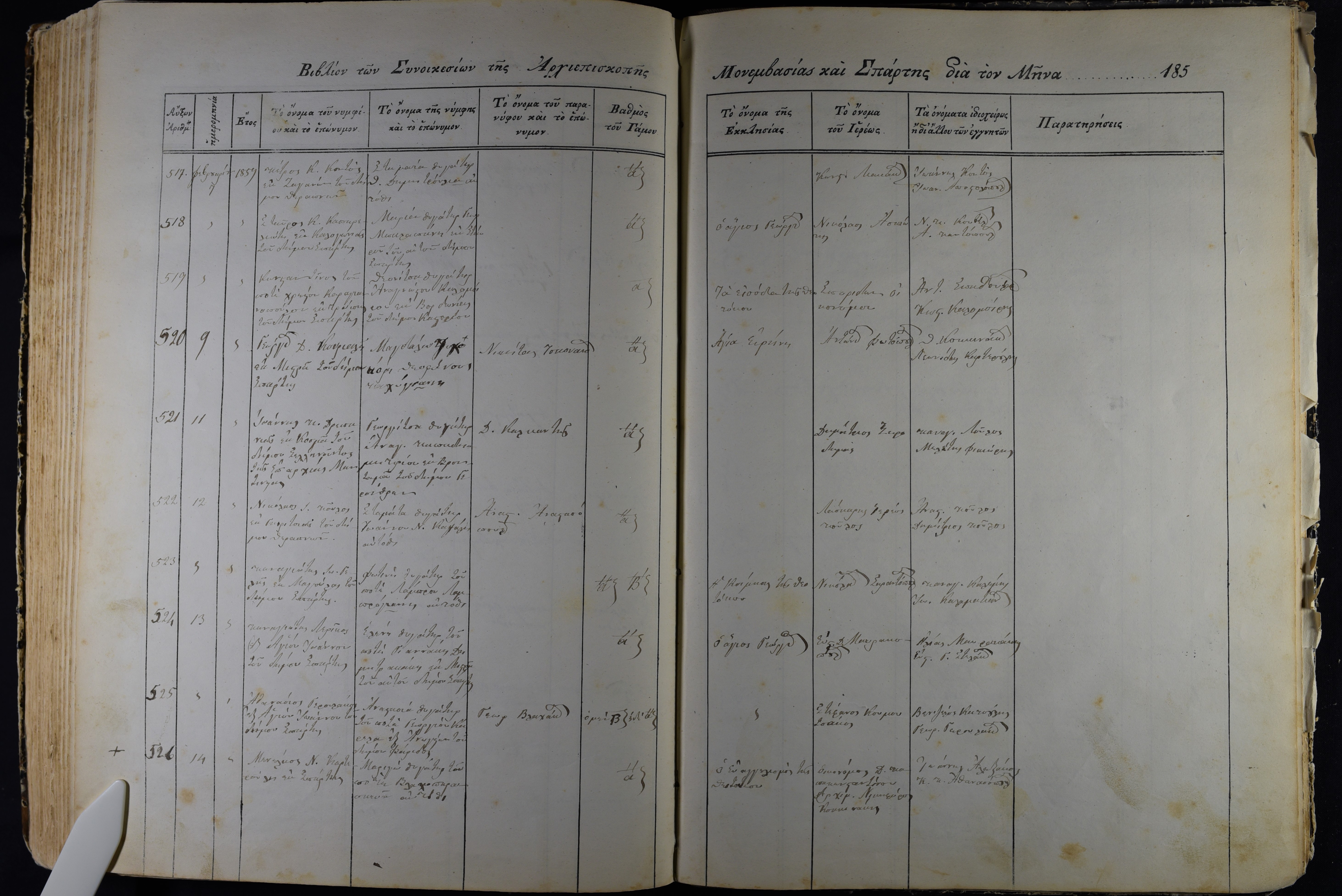
On February 13, 1859, Panagiotis S. Lerikos of Agios Ioannis, Sparta, married Eleni Dimitrakakis, daughter of Giannakis, of Barsinikos. They are one set of my paternal great-great-grandparents.

Mitropolis of Sparta, Marriage Index Book; Book: Sparta, 1852-1859; Entry #524; License Date: February 13, 1859 Marriage Date: not given; Groom: Panagiotis Lerikos, no father listed; residence: Agios Ioannis; Bride: Eleni Dimitrakakis, father: Giannakis; residence: Mystras Church: Agios Georgios; First marriage for both bride and groom; Photographed by Carol Kostakos Petranek, July 2017

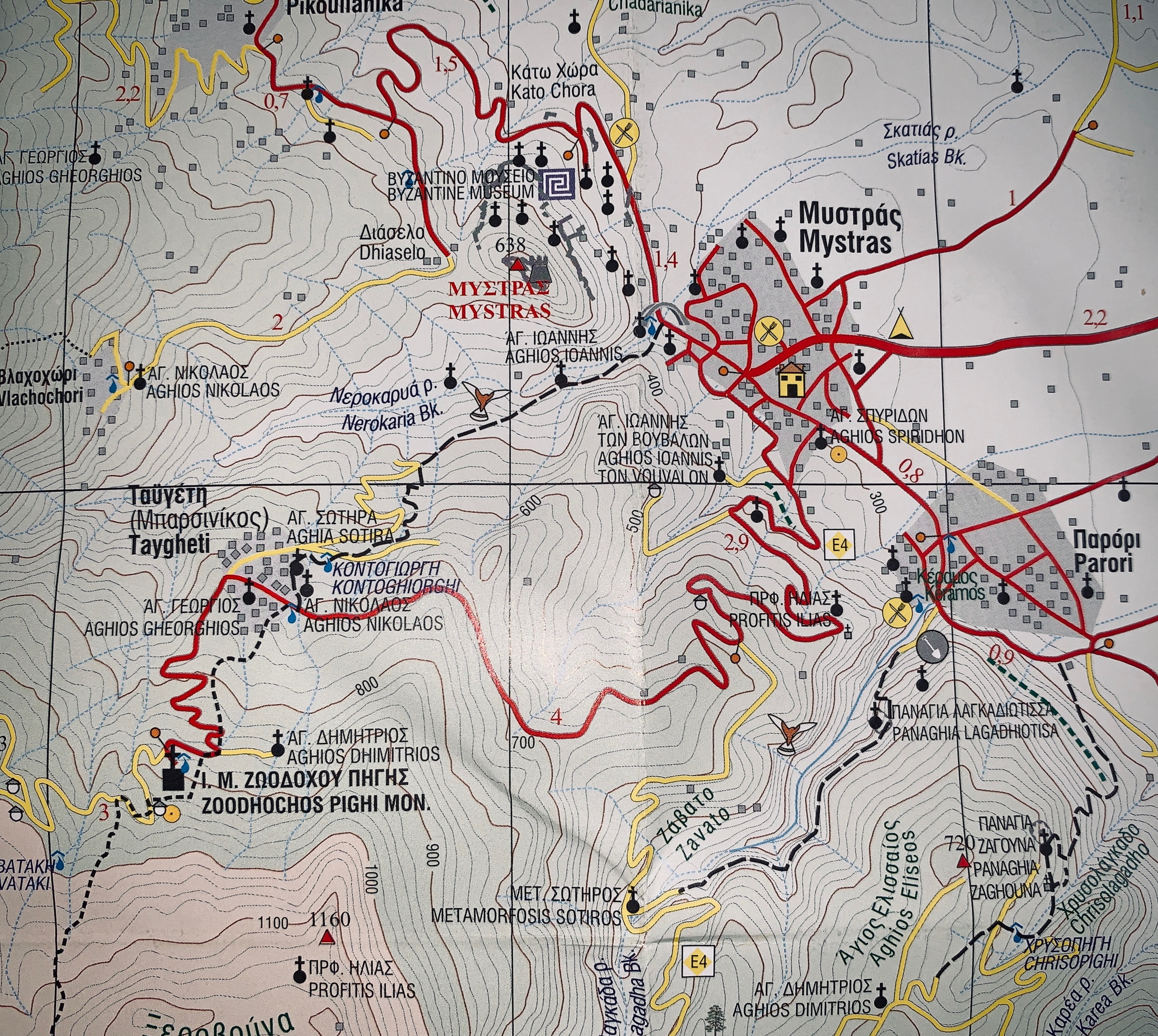
With this union, my family tree climbed further up the towering Taygetos mountains to the tiny village of Barsinikos where the Dimitrakakis family were original inhabitants. Barsinikos was the Ottoman name, changed to Taygeti in 1955 when the Greek government ordered the abolition of Turkish village names. Follow the red switchback road southwest of Mystras on the map below to see the location; goat and sheep trails eventually became paths, which today are roads, paved and unpaved. Yes, I do drive that road and yes, it is scary!

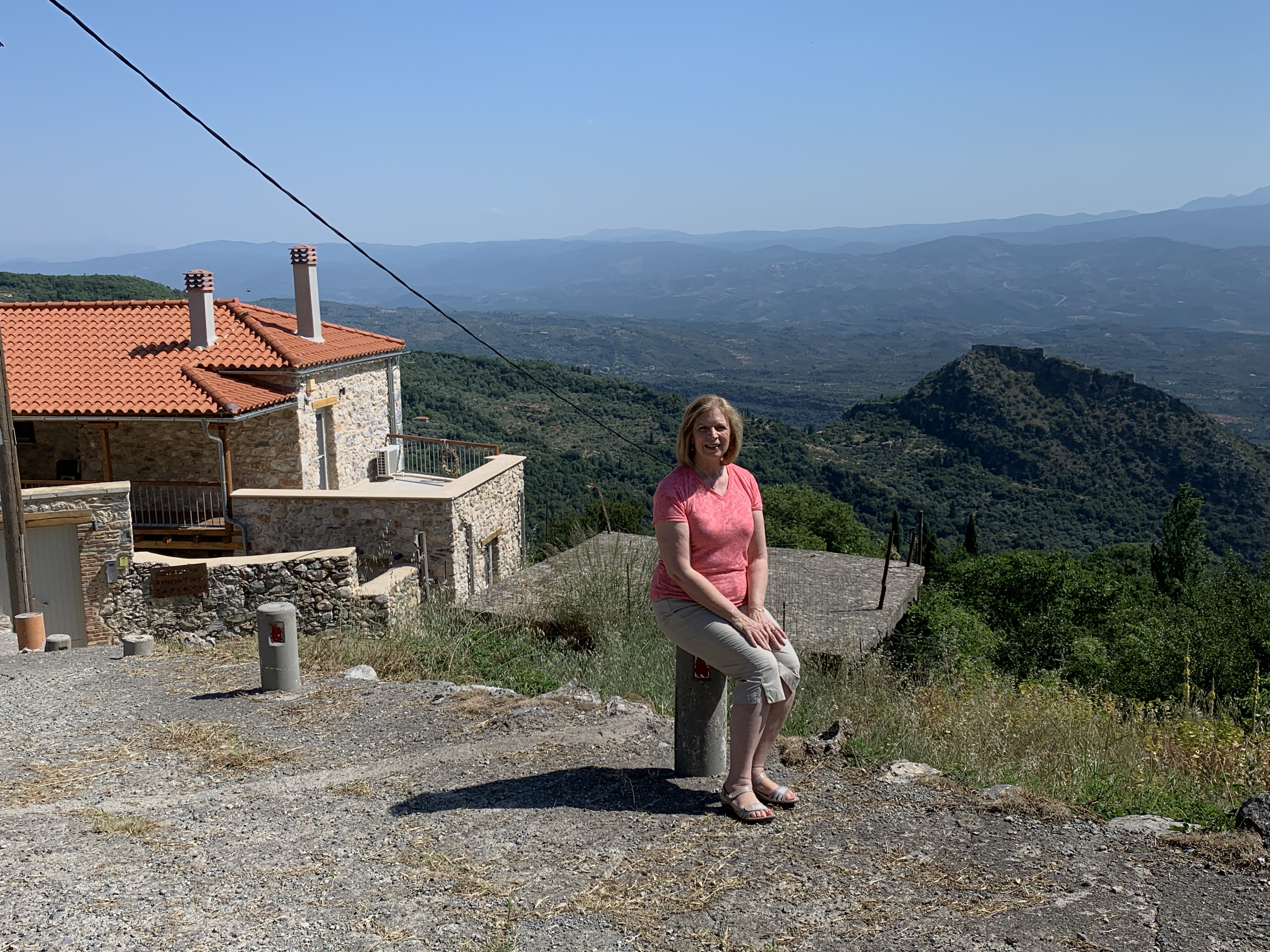
I visited my “new” cousin, Joanne Dimitrakakis who was born in Barsinikos, and spent a peaceful afternoon on top of the world.

Outside Joanne’s guest house, Arxontiko Taygeti, overlooking Sparta

We had lunch at the home of Christos Kakaletris, descendant of another original Barsinikos family. During Ottoman occupation, natives fled into the highest possible locations for refuge. Although there was forage for their sheep and goats, there was no flat land to cultivate crops. The mountain winters and inhospitable terrain must have brought challenges that we cannot imagine. After the Revolution of 1821 when it was safe to leave, they migrated from these upper mountain settlements into lower villages:  Barsinikos families relocated to Mystras, Parori and Magoula.

Lunch with Joanne and Christos at his ancestral home in Barsinikos. This is the second floor. The lower level was a taverna operated by his father and grandfather.

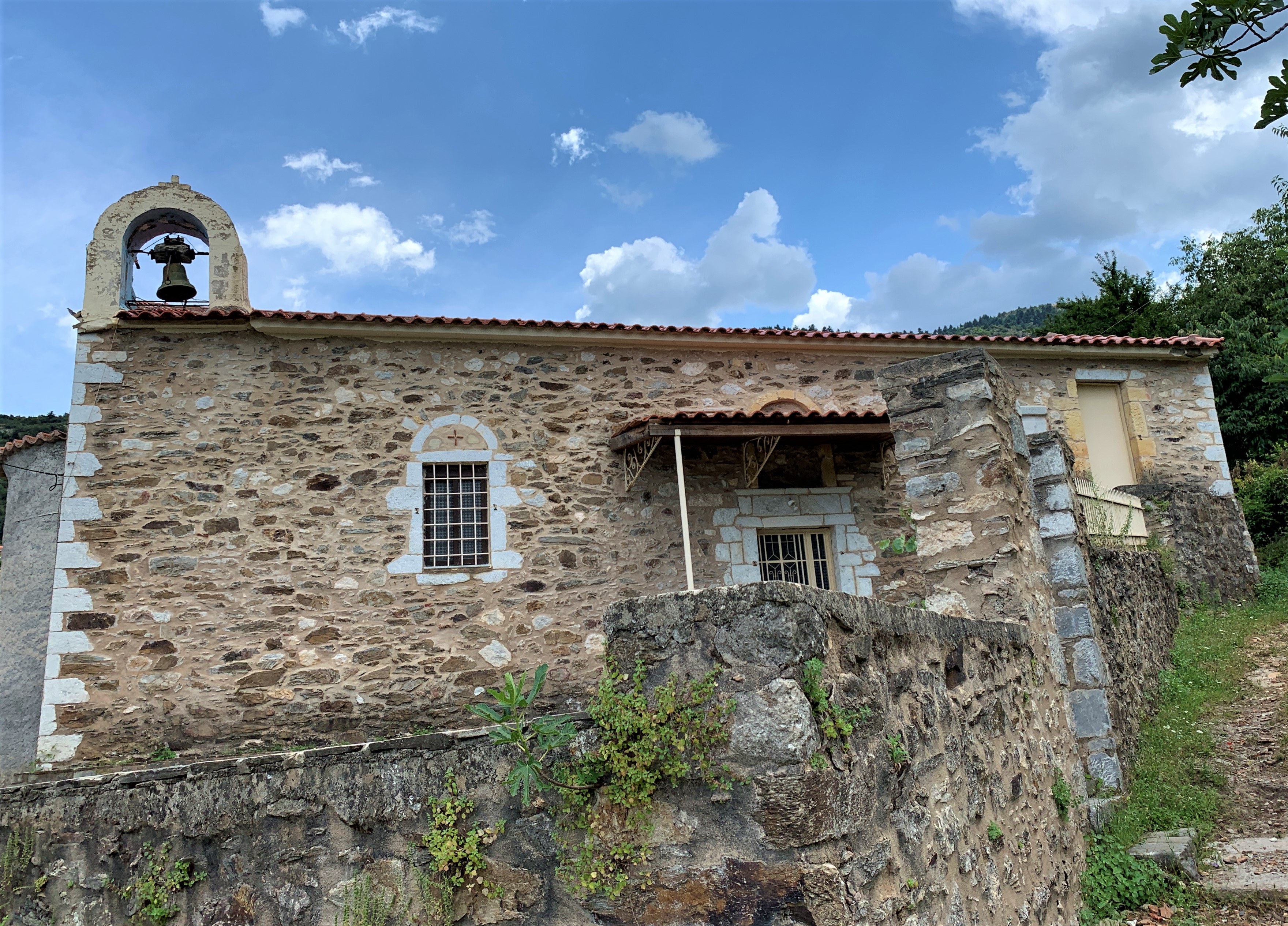
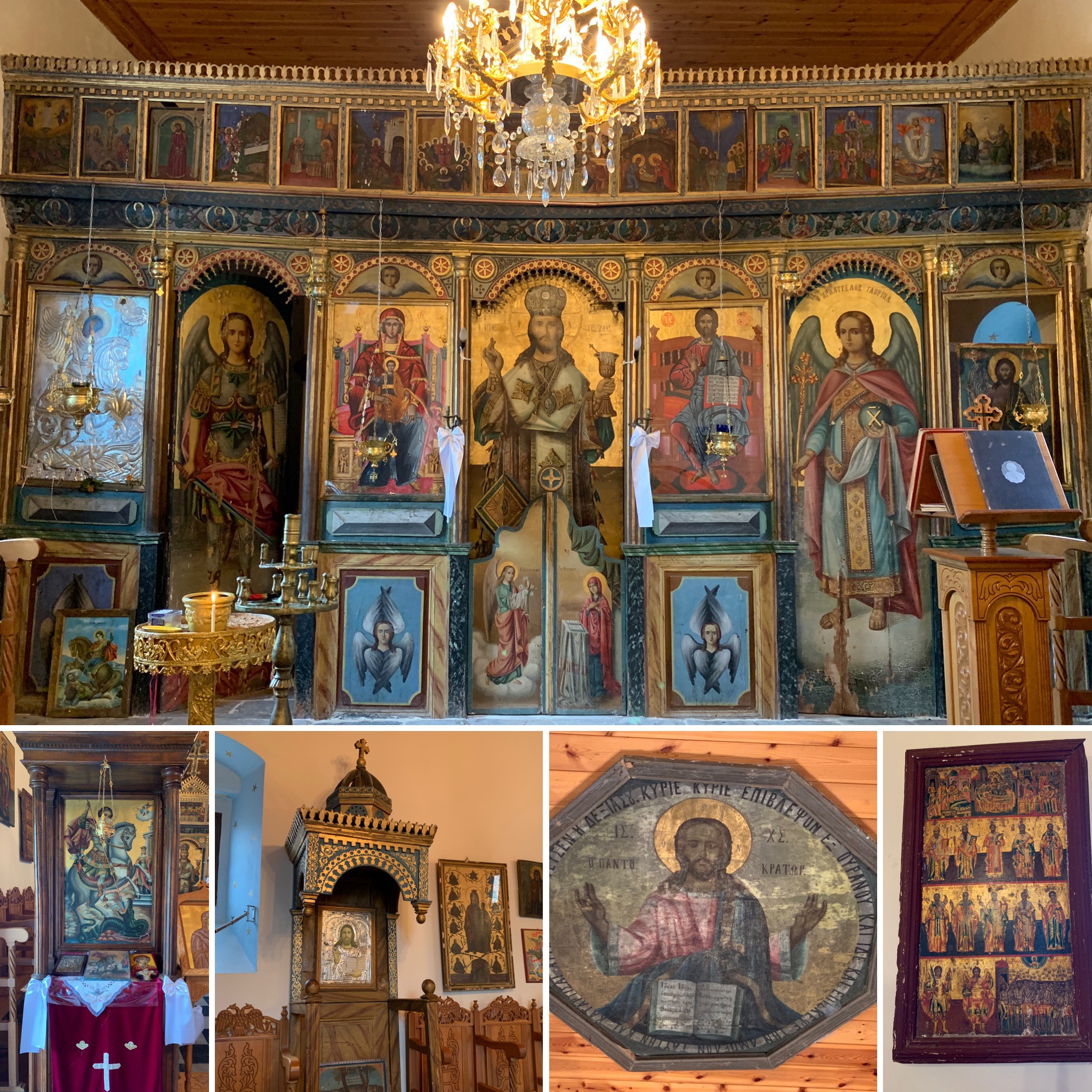
The marriage record above gives Eleni’s residence as Mystras; however, the Church of Agios Georgios is in Barsinikos. It is evident, then, that her family was originally from Barsinikos (as she married there), but she had already left and was living in Mystras by 1859. The original church which the Dimitrakakis family would have helped to establish was one small room, and this larger church was built in the early 1900s. There is a date of August 1918 on an icon frame.

Agios Georgios Church, Barsinikos.

Collage of interior of Agios Georgios Church, Barsinikos

Notation on frame of an icon with the date of August 1918

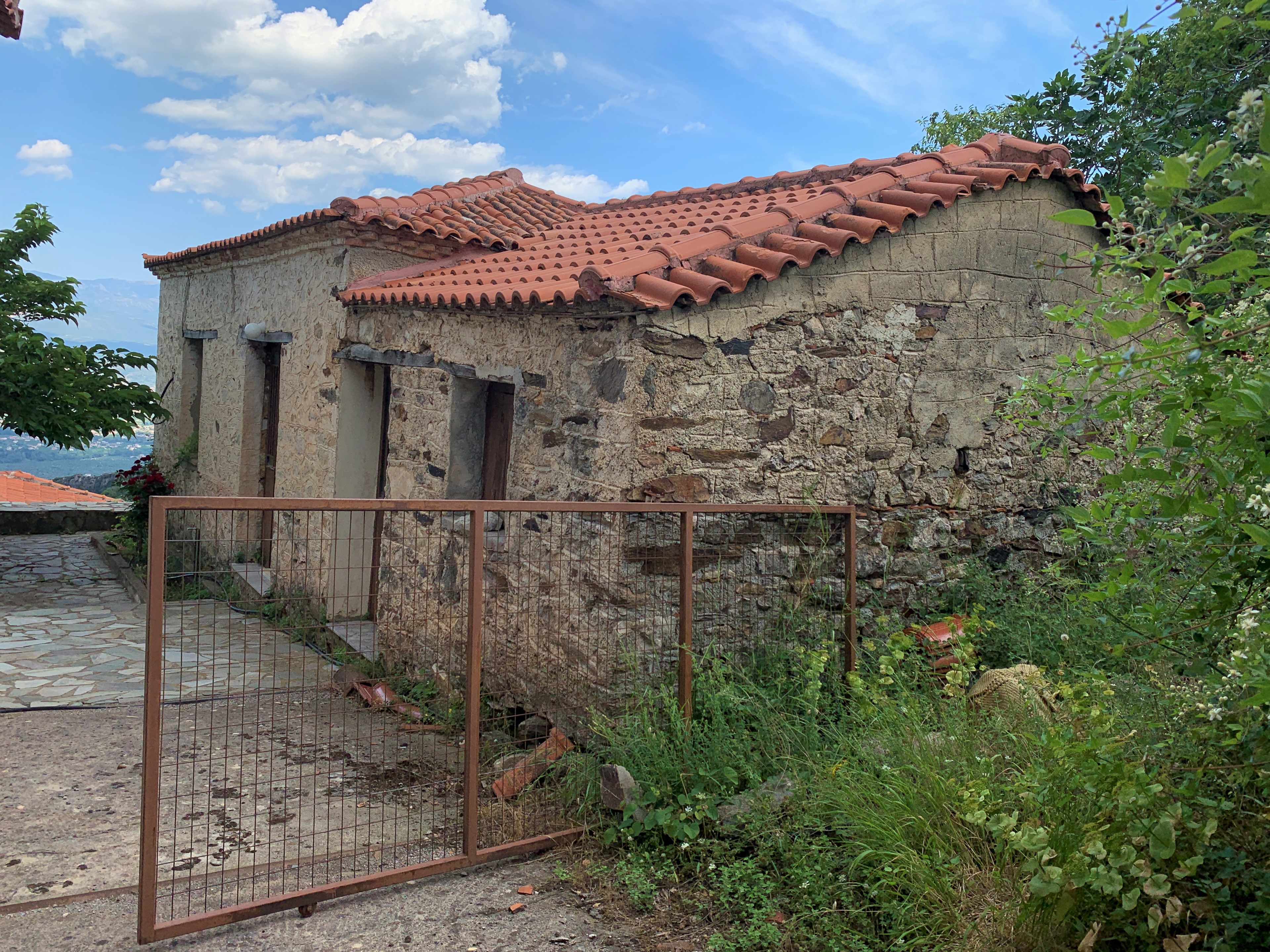
Along with the requisite church, Barsinikos had a one-room schoolhouse which Joanne attended as a child. It closed in 1965 due to lack of students.

Barsinikos schoolhouse

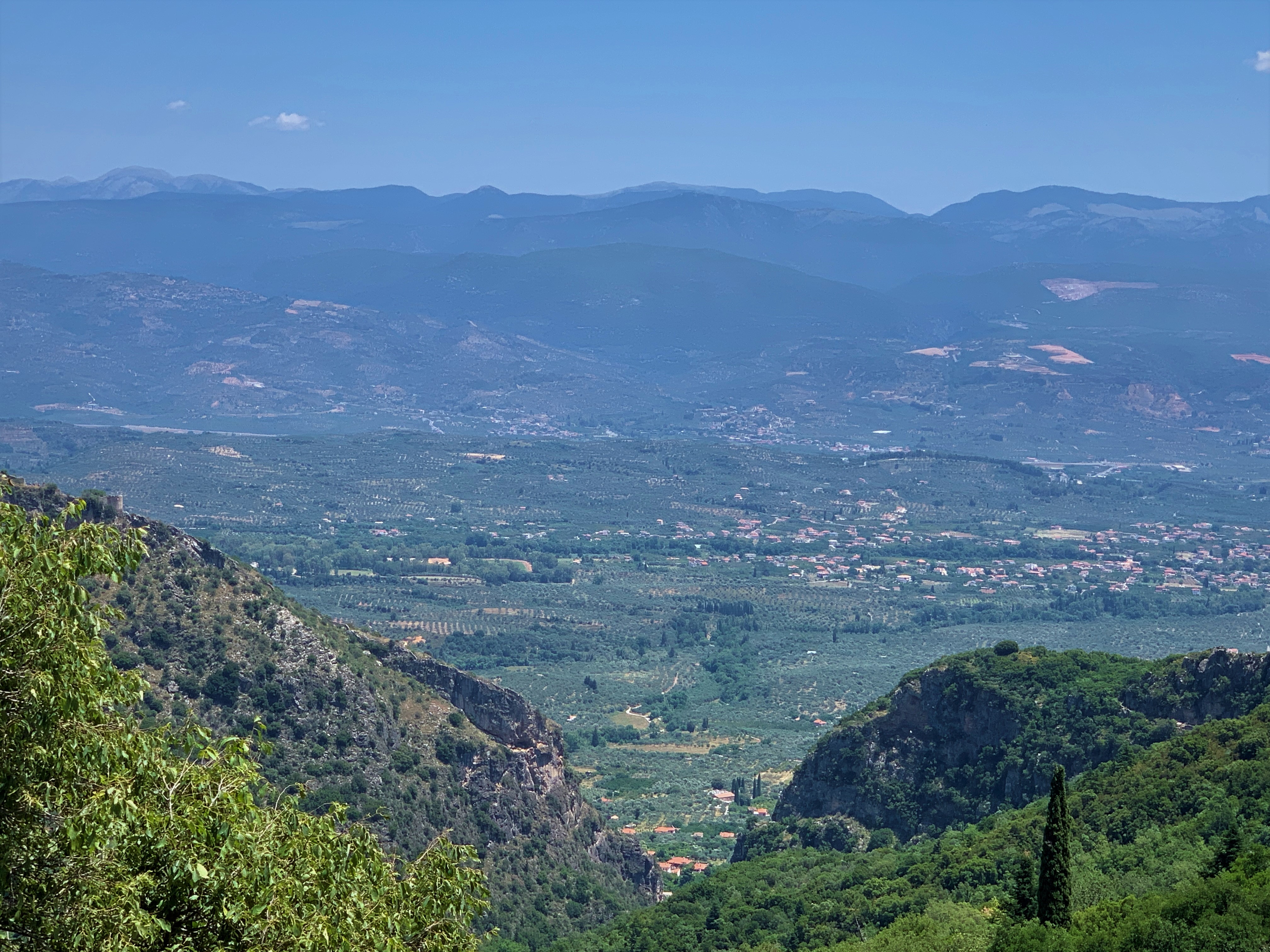
Although the families of Barsinikos have left and the village is now deserted, many like Christos and Joanne have kept their ancestral homes. During religious holidays, summers and festivals, people return. They sit on verandas and absorb the breathtaking vistas and cool mountain air which sustained their parents and grandparents. Although life has changed, their heritage is preserved.

View from Christos’ veranda; Sparta is below