Ancestral Villages
A new highway from Corinth south to Sparta bypasses the villages, making the journey speedy and smooth. Except for the road signs in Greek, I could have been in almost any mountainous country. The highway stopped in Tripolis and the last section into Sparta was closed until officials decided how the tolls would be divided among neighboring jurisdictions (I understand it did open shortly after my visit). But I didn’t mind — I was happy to detour onto the winding roads that immersed me into the Grecian countryside. Each village, surrounded by towering mountains, was unique: the town squares, the narrow streets lined with houses and shops, the churches and fields, reflected the hard work and the independent spirit of its inhabitants.
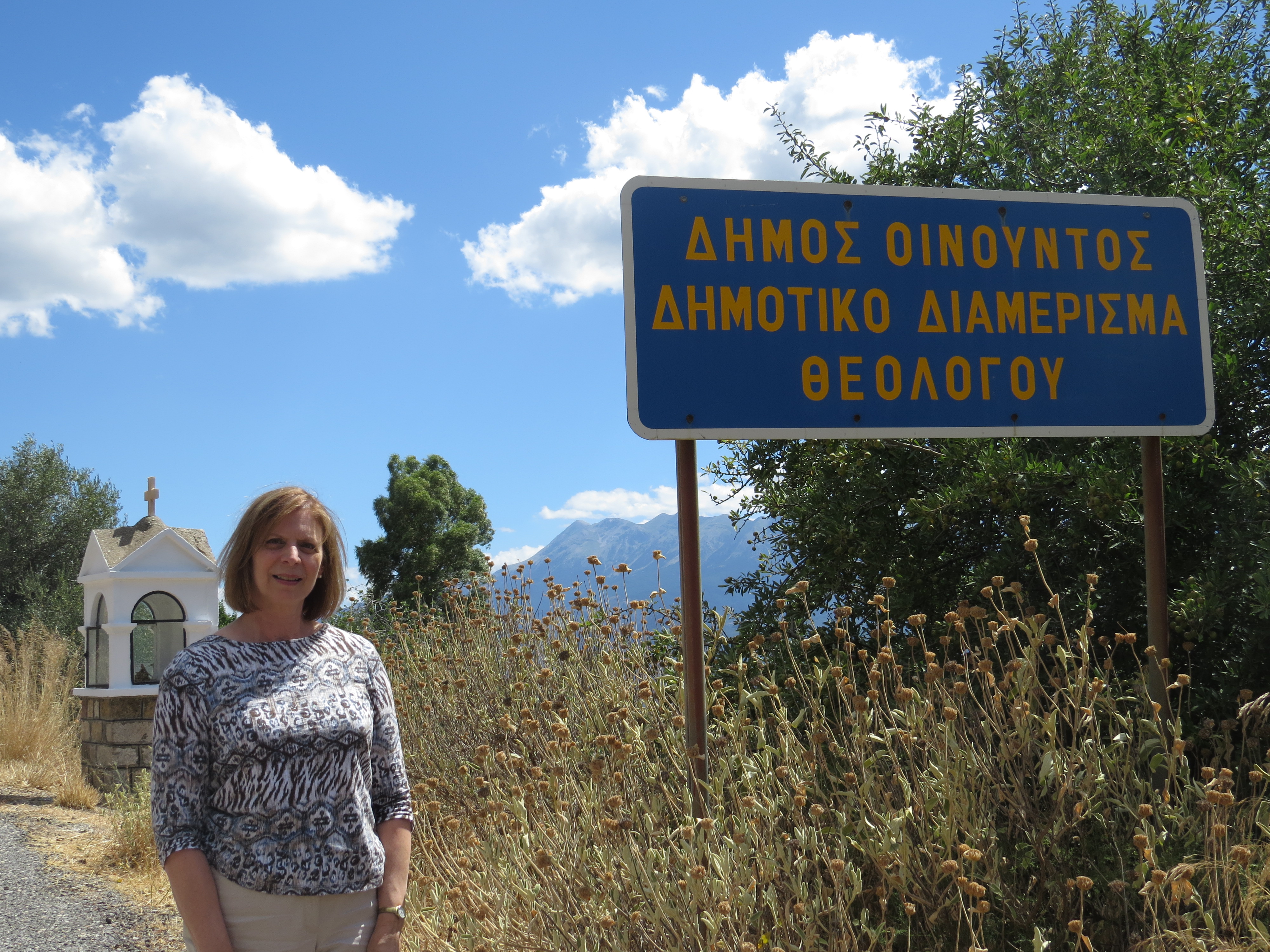
Theologos, Oinountos
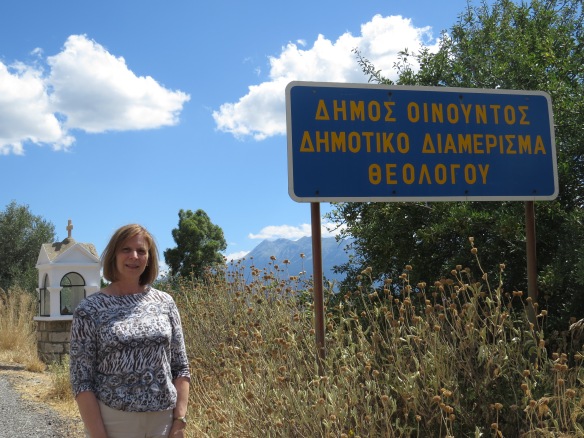
I entered Theologos, the village of my maternal great-grandmother, Stathoula Zaharakis, on a quiet afternoon.
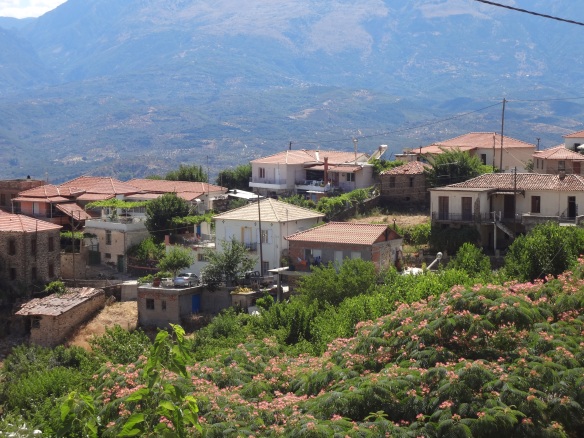
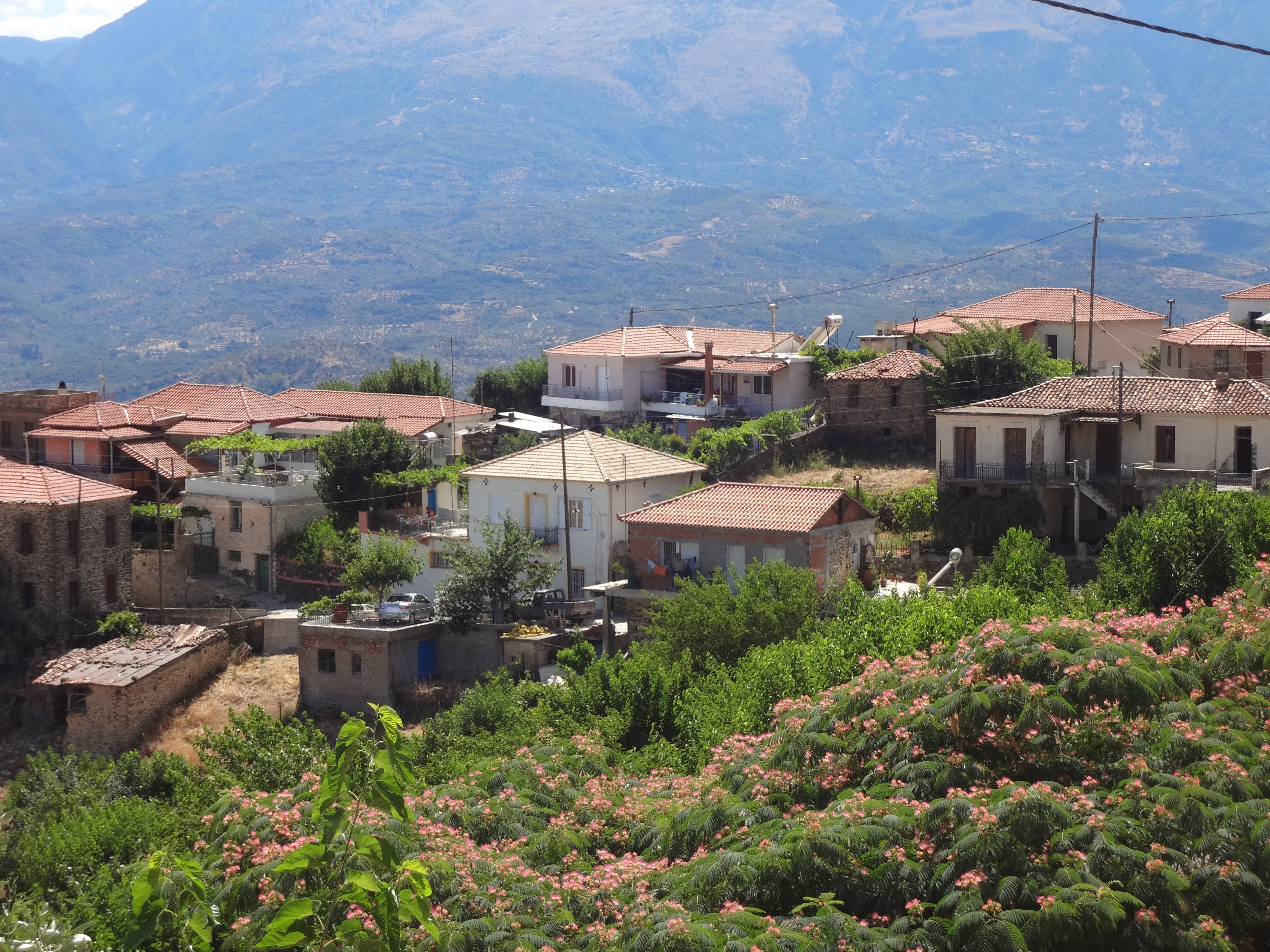
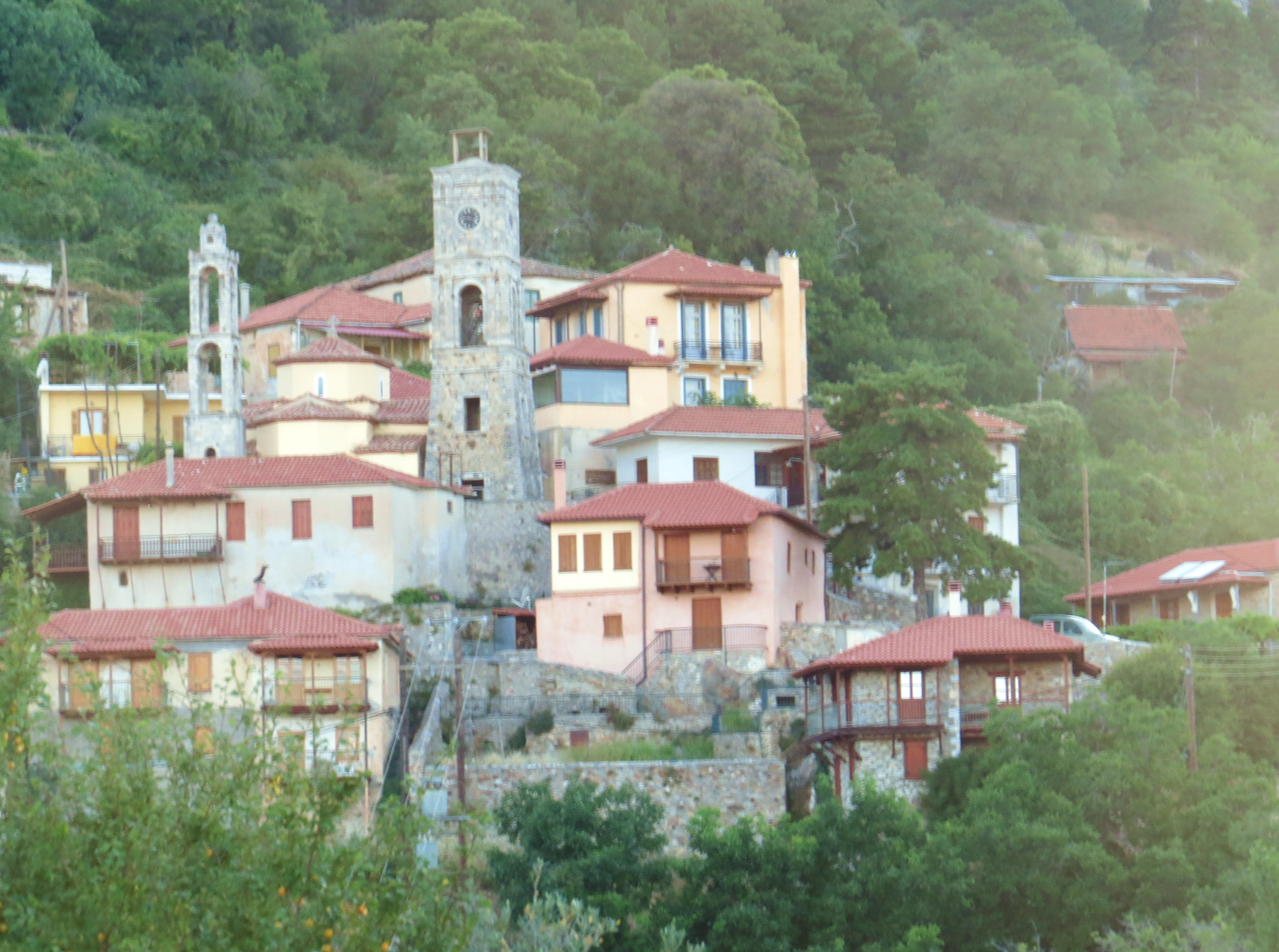
We had traveled a narrow, steep road into this lovely town. Nestled below the towering Parnon mountains, it looked both cozy and inviting.
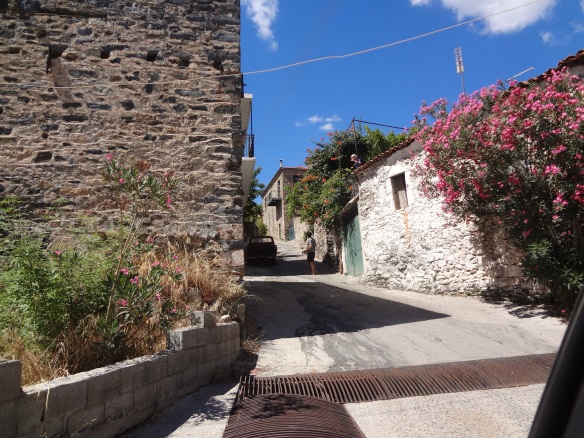
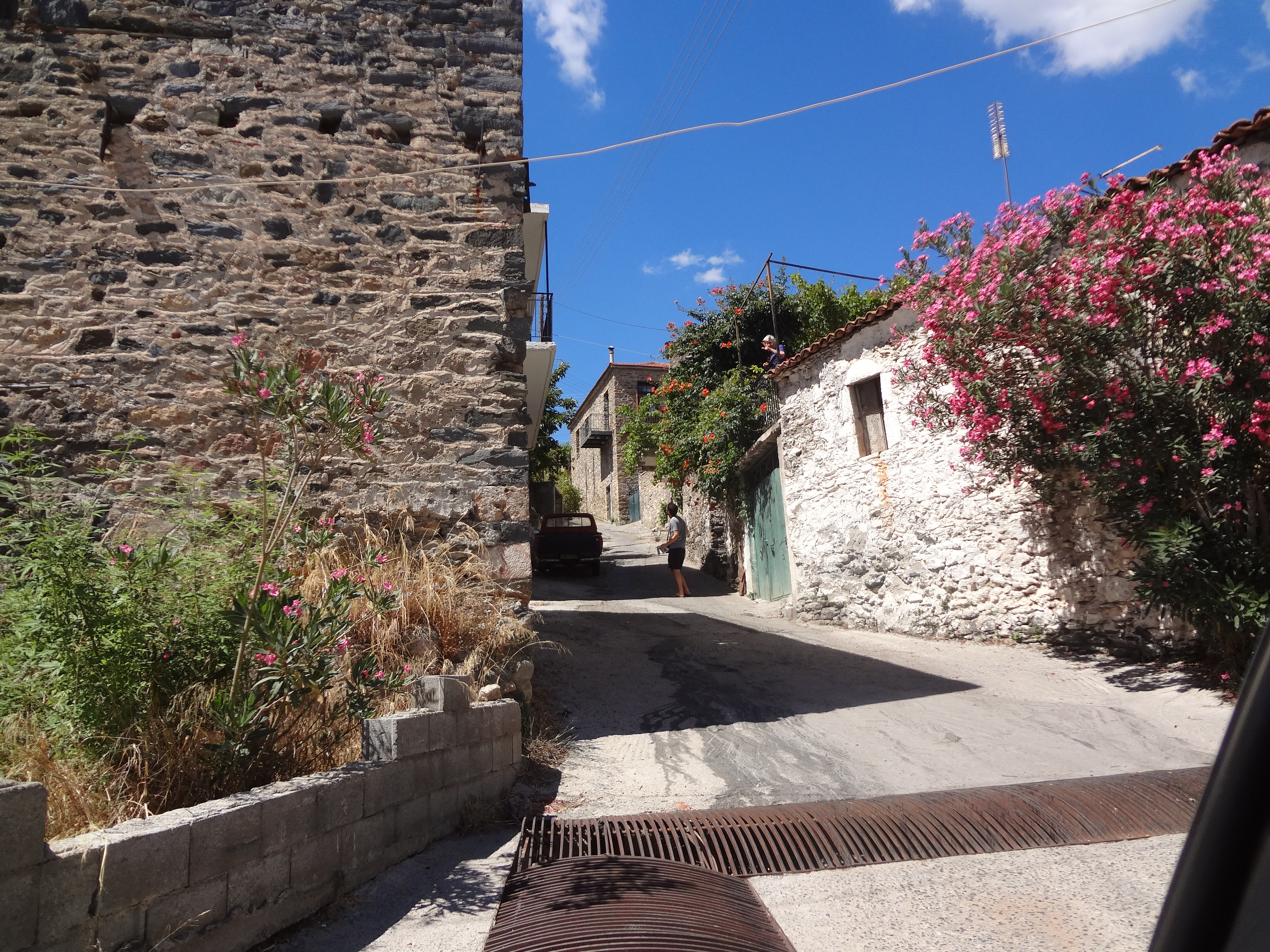
It was siesta time, and the streets were deserted. The peace and tranquility of a beautiful day filled my soul and helped me imagine my ancestors walking the streets.
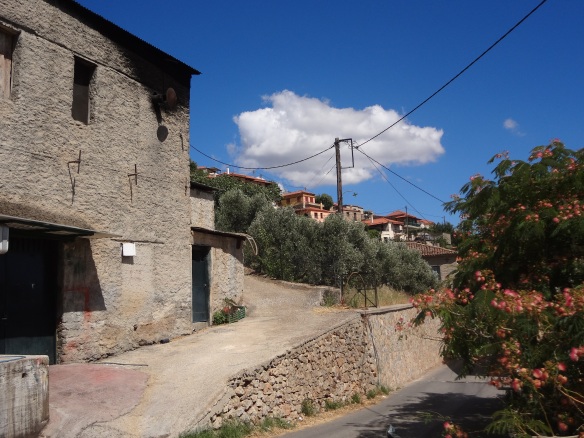
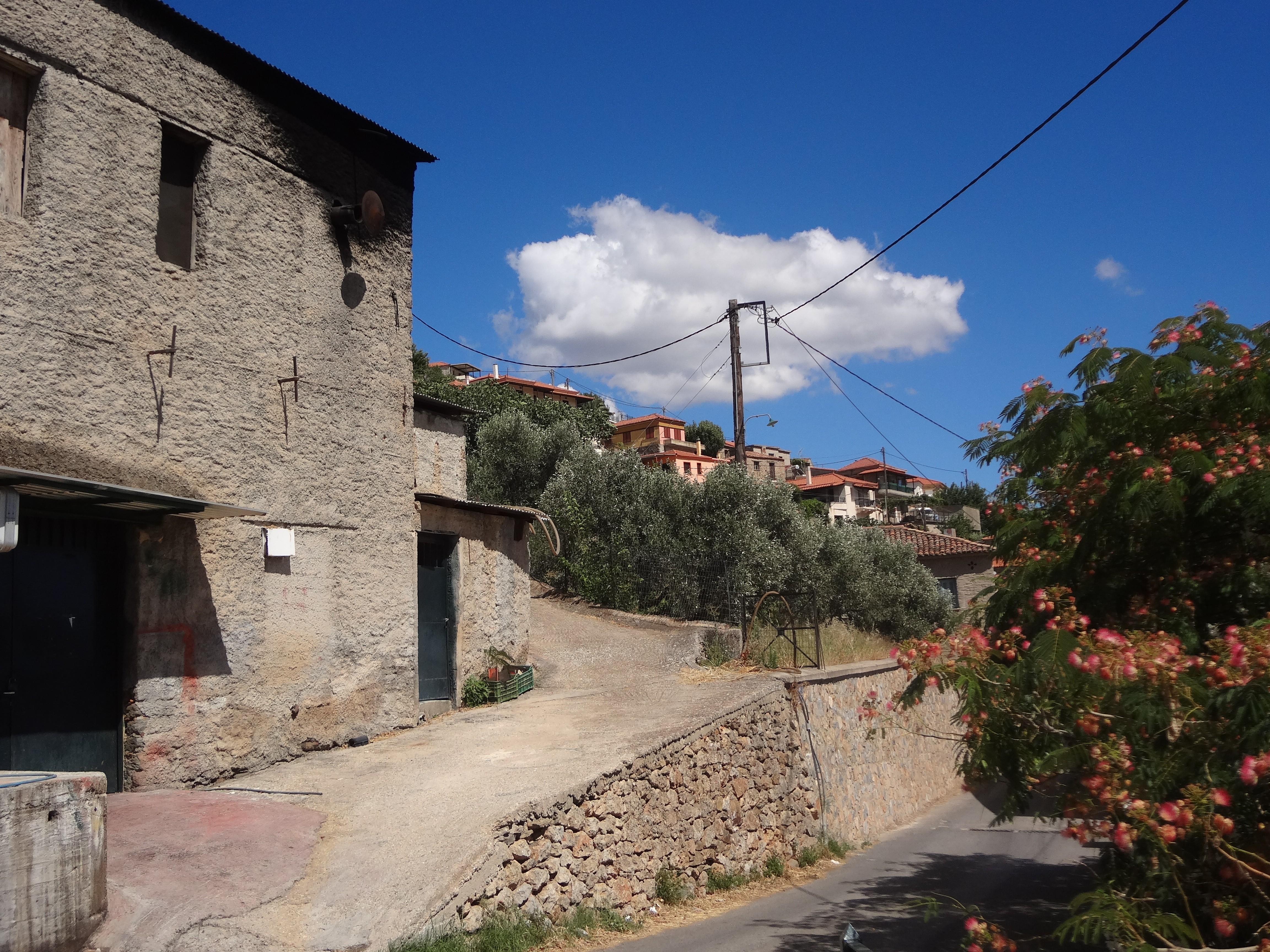
Homes in mountain villages are built on terraces, which enable you to see each one. The flowering bushes and trees provided a beautiful contrast to the stark stone buildings.
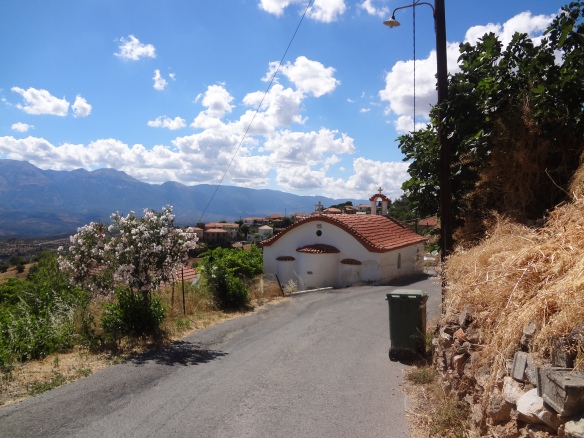
It is not unusual for even the smallest village to have more than one church. I love the way this small church was built to conform to its surroundings.
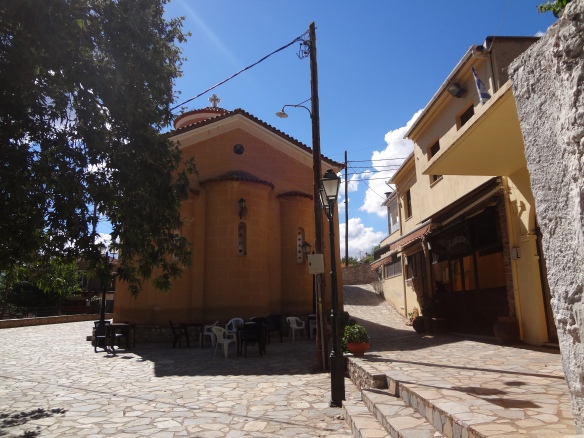
The larger church was built on the west end of the town square.
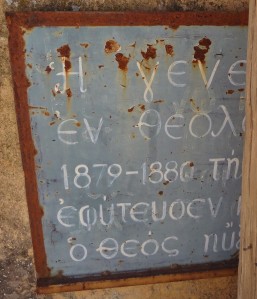
The original plaque on the front corner of this church reads that it was built in 1879-1880 by the families of Theologos. With my gr-grandmother Stathoula’s birth being in 1870, this means that her parents would have helped build this church and worshiped in it!
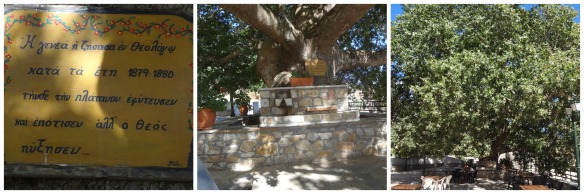
The town square has an enormous tree that provides both a focal point and much-needed shade on a hot day. The plaque reads: “The generation that lived in Theologos during the years 1879-1880 planted this sycamore tree and watered it but God made it grow.” I closed my eyes and imagined by Zaharakis gr-gr grandparents at the tree-planting ceremony – surely they were there! I felt very, very close to them as I stood on the ground where they had lived.
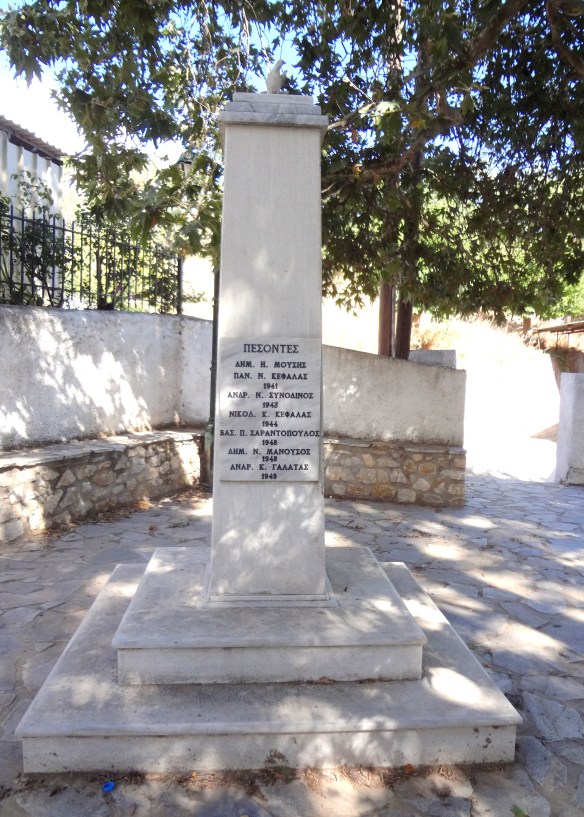
It is heartwarming to see that every village has a monument honoring those who died in the service of their country. This one in the Theologos town square bears the names of: Dim. H. Mouses, Pan. N. Kefalas, Andr. N. Synolinos, Nikol. K. Kefalas, Bas. P. Sarantopoulos, Dim. N. Manousos, Anar. K. Galatas.
Agios Ioannis
Three of my four grandparents were born in Agios Ioannis (Sparta): Papagiannakos, Kostakos, Aridas/Mihalakakos. This village lies in the fertile valley of the plains of Sparta, overshadowed by the rugged and forbidding Taygetos mountains. My family history continues in this village, as I wrote in an earlier post about visiting my relatives here.
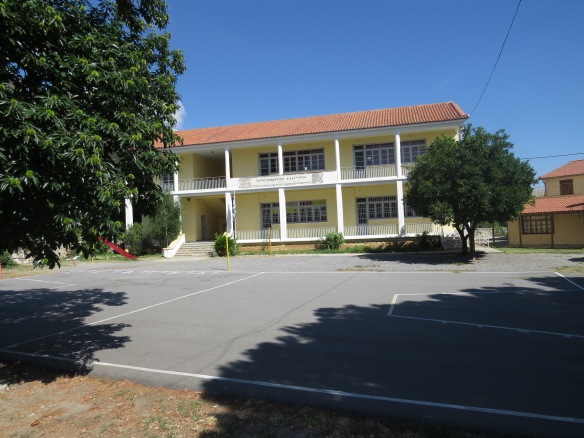
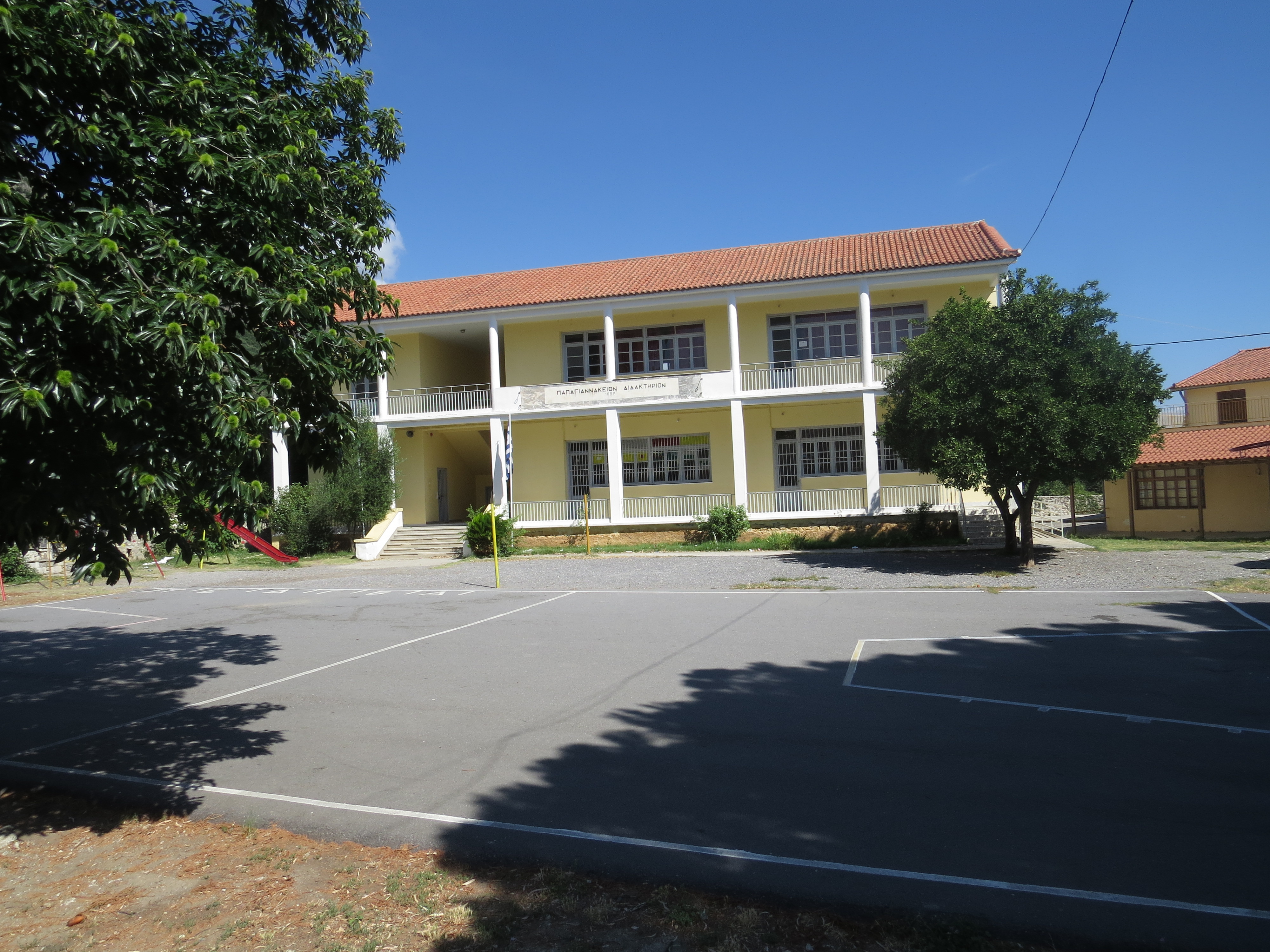
Demetrios Nikolaos Papagiannakos (1897-1945), who emigrated to America and became a most successful restaurateur, built this school in Agios Ioannis which bears his name.
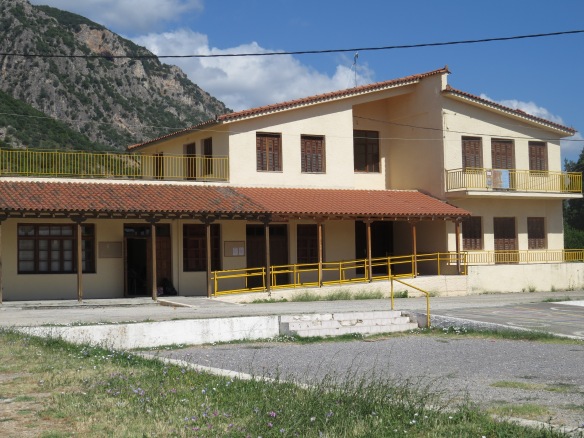
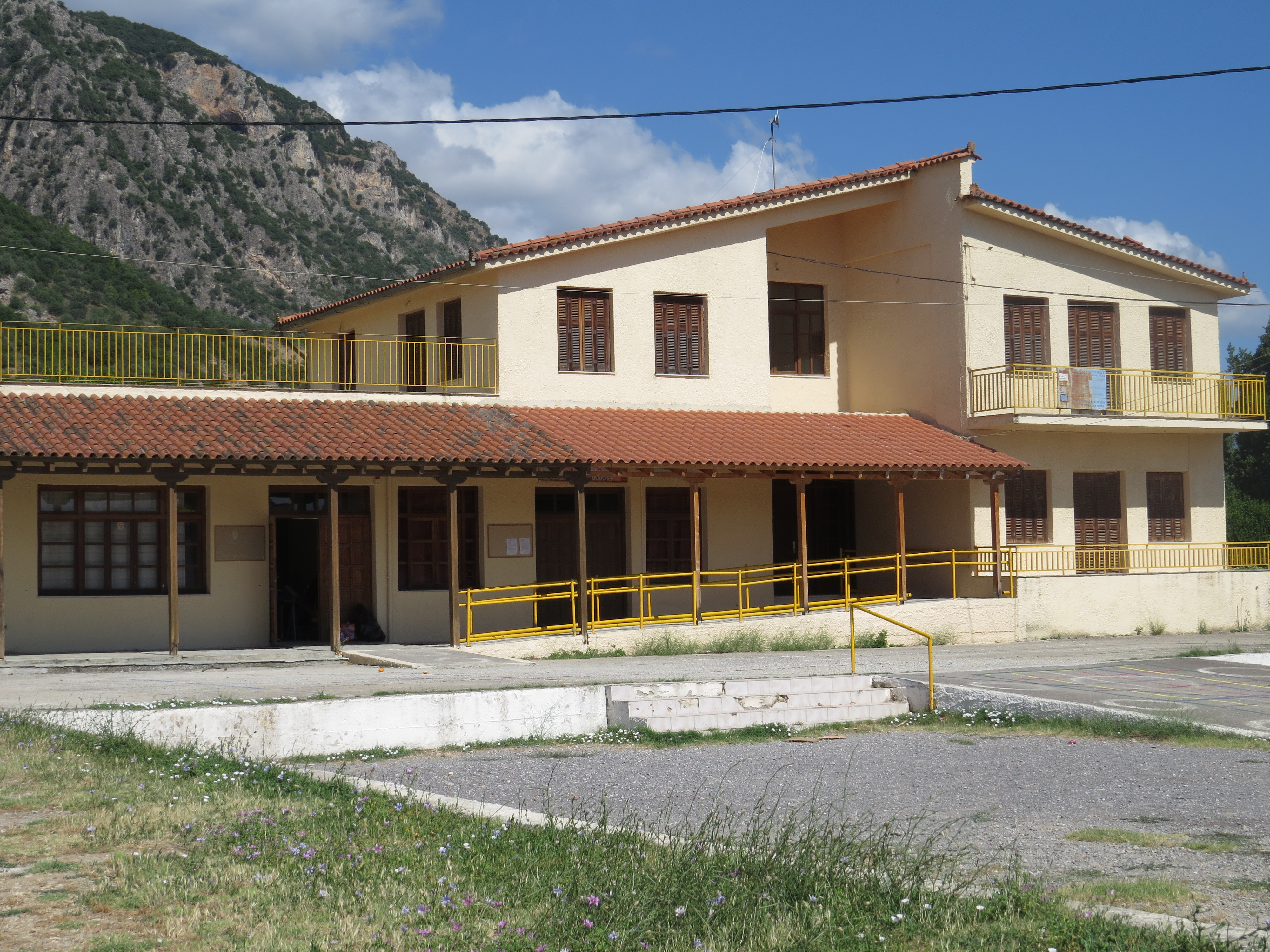
My second cousin, Grigorios Georgios Kostakos (1927-2001) was mayor and provided the means and the incentive to build this structure which is used for town meetings and other events.
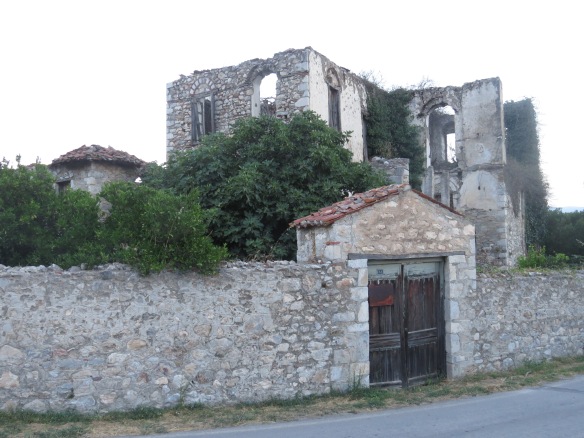
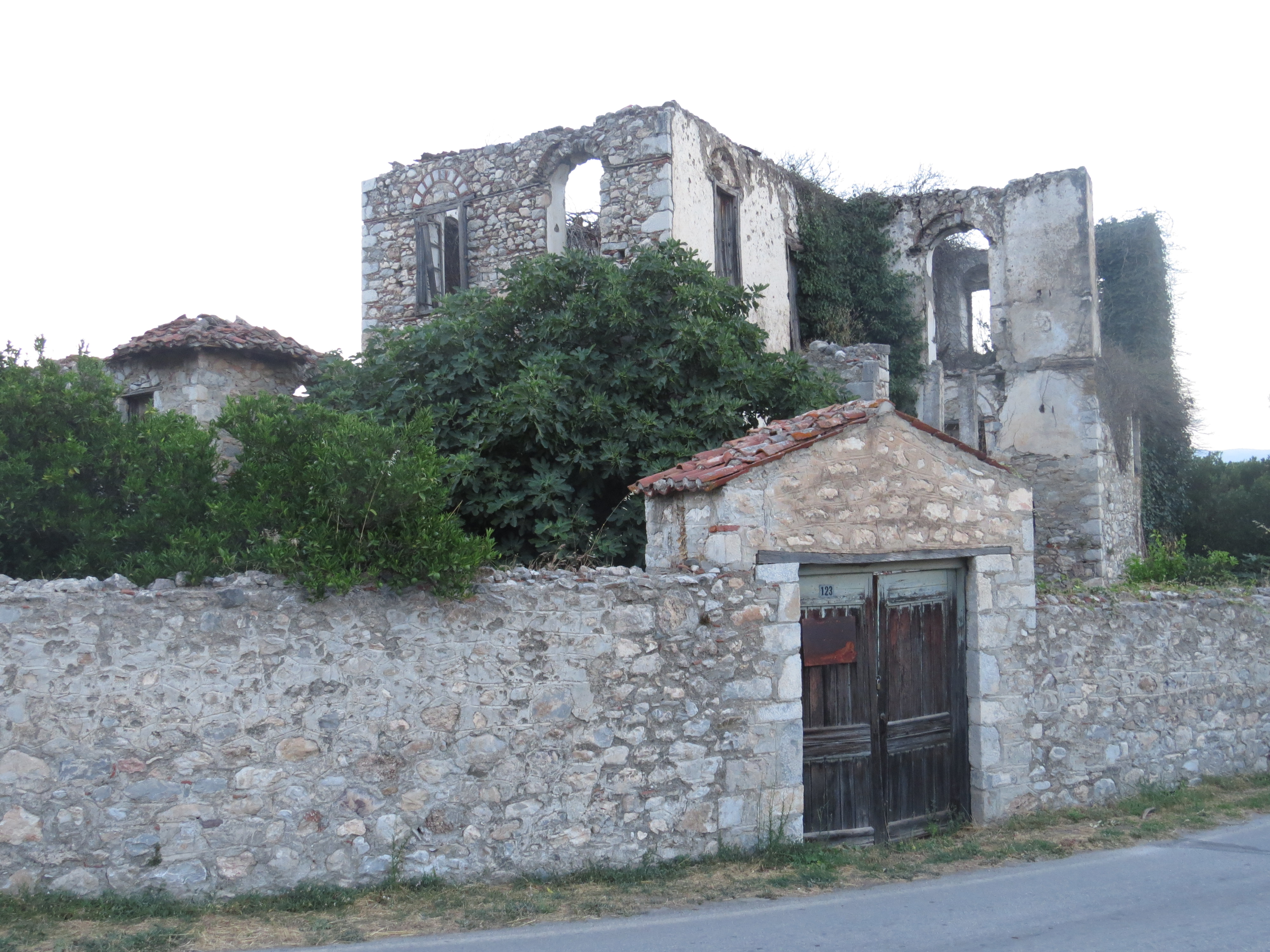
This house, which is adjacent to the Papagiannakos School, was built by the Maltsiniotis family. Its structure is evocative of the towers found in Mani, which is where the family originated. There is speculation that the Papagiannakos family may have been a branch of the Maltsiniotis family, but that has yet to be proven.
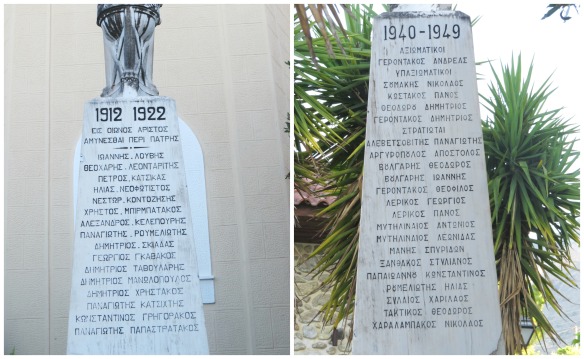
The memorial tower for Agios Ioannis lists several surnames in my family.
Mystras
The ancient city of Mystras, which was the seat of the Byzantine Empire in the Peloponnese, is the ancestral village of my grandmother, Aggeliki Eftaxias. It is built on a side of the Taygetus mountain overlooking Sparta. 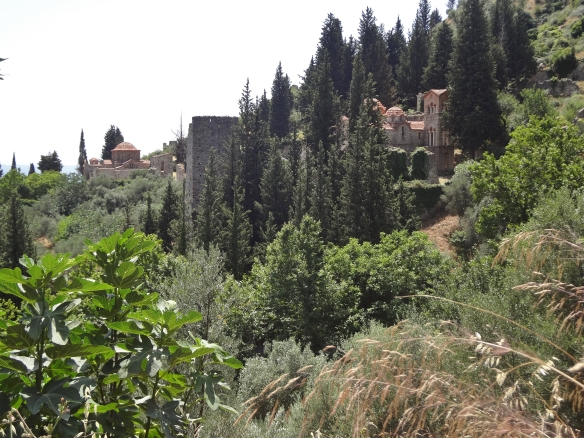
The majestic castle buildings and churches, built in 1249, dominate the landscape and and give the visitor a glimpse into the world of its founder, the prince of Achaia, William of Villehardouin. Mystras was occupied by the Byzantines, the Turks and the Venetians, and was eventually abandoned in 1832.
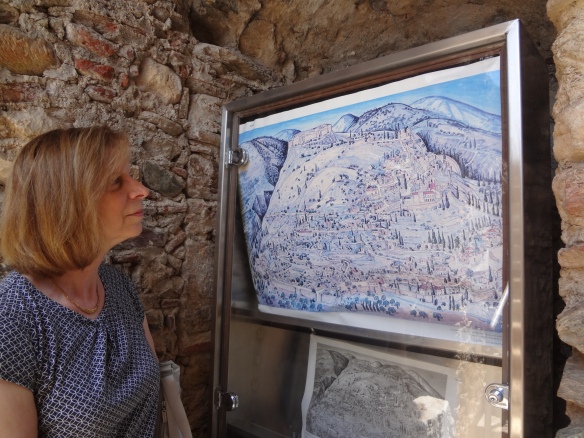
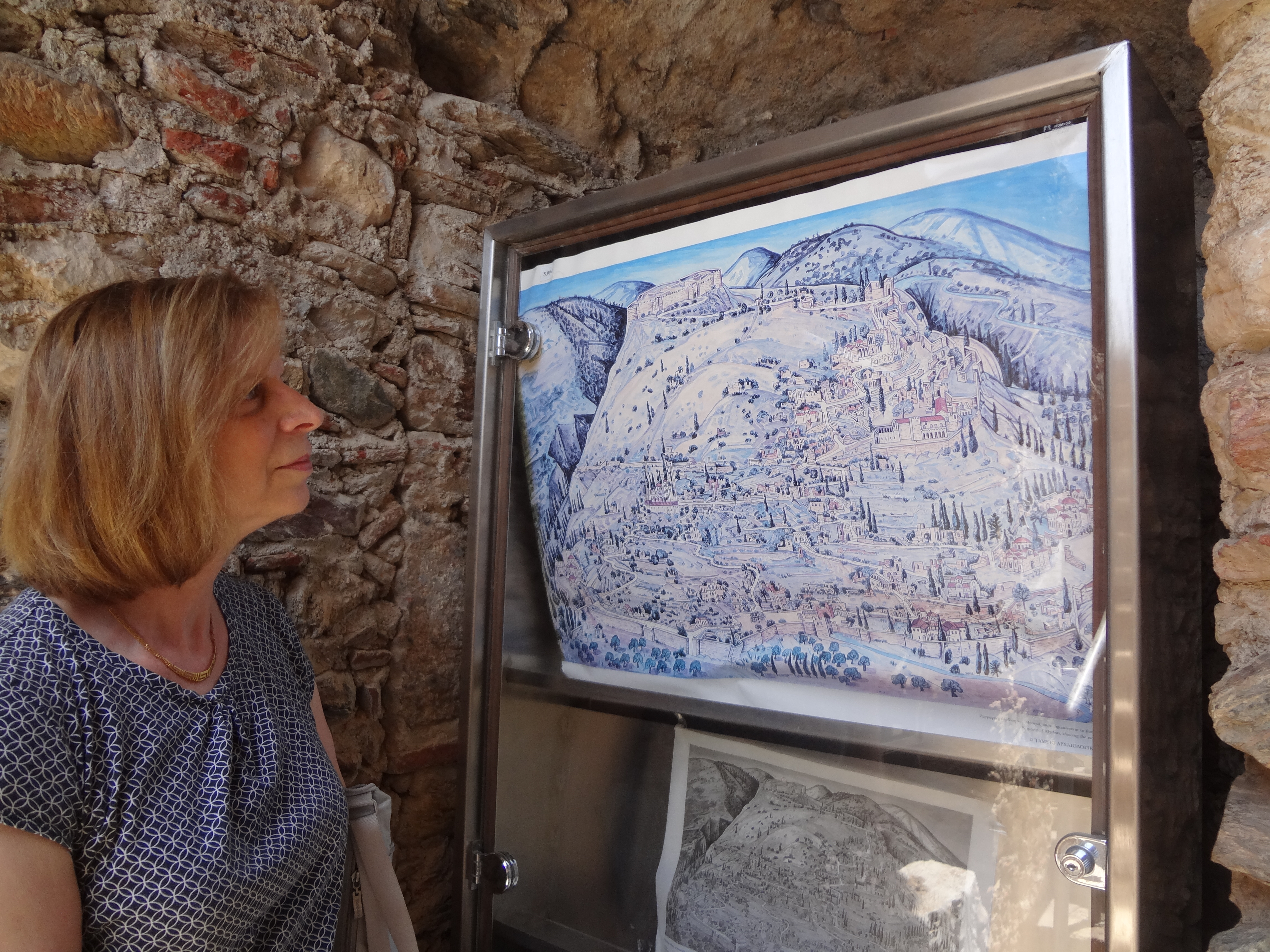
This map, on the wall by the ticket office, shows the layout of the city during its prime years.
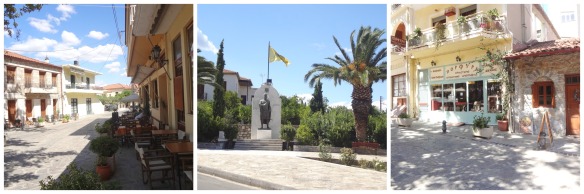
The village of Mystras is charming, with small shops and a mixture of architectural designs. I delighted in spending the night in this wonderful place where my Eftaxias family still lives.
Anavriti
At the peak of a mountain in the Taygetus range, overlooking Sparta, is the village of Anavriti. The “old road,” a narrow, hairpin-turn switchback road, has thankfully been replaced by one that is newly paved and slightly wider. Even so, it was frightening to wind across the face of the mountain at an almost vertical climb.
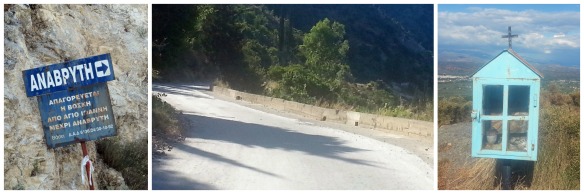 It is easy to see why there are so many “icon boxes” on these twisting roads, which are erected by families to memorialize the spot where a loved one died.
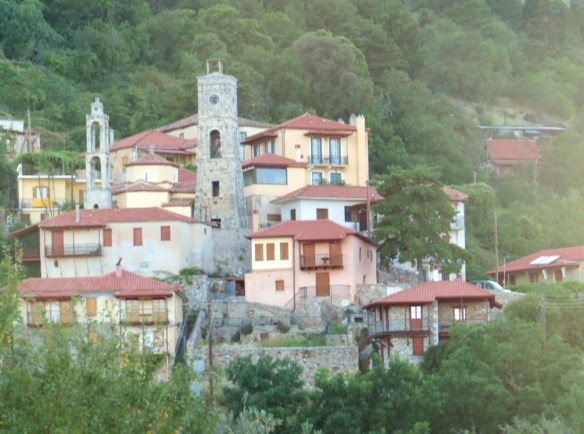
The village is literally perched at the very top of the mountain! How did people ever build on this terrain?
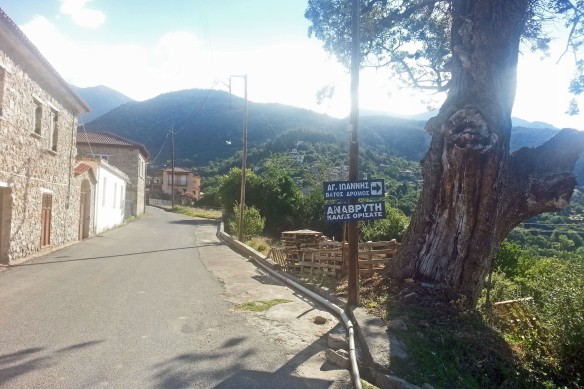
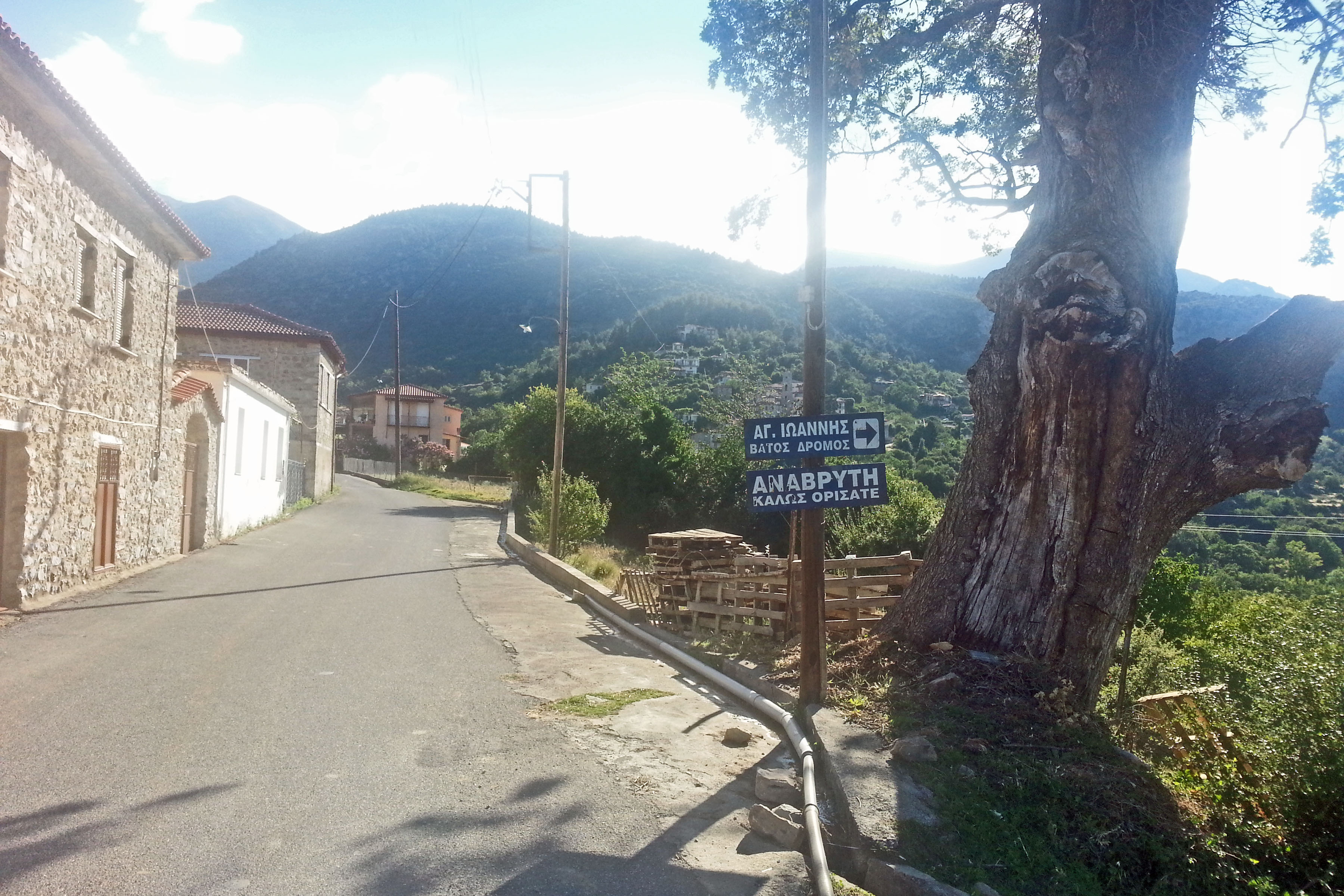
This photo shows the way to a trail leading down the mountain from Anavriti to Agios Ioannis, making it very convenient for the two populations to mingle! I am attempting to tie Kostakos families from Anavriti into my bloodline; also, there are several Anavriti families that married into mine which give me a link to this village.
Vordonia
Slightly north of my villages is the town of Vordonia, home to the Linardakis family.
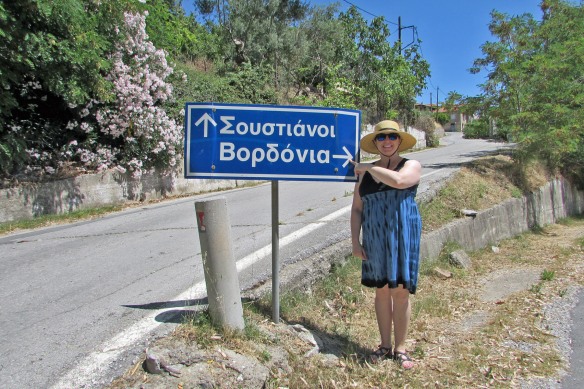
My daughter, Kathy, was thrilled to visit the ancestral home of her paternal grandfather, George Lynard/Linardakis, who immigrated to Washington D.C. when he was a teenager.
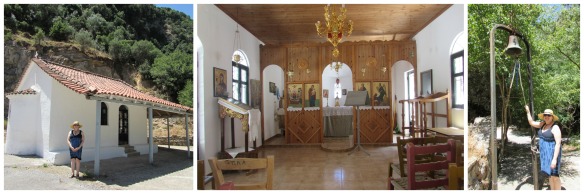
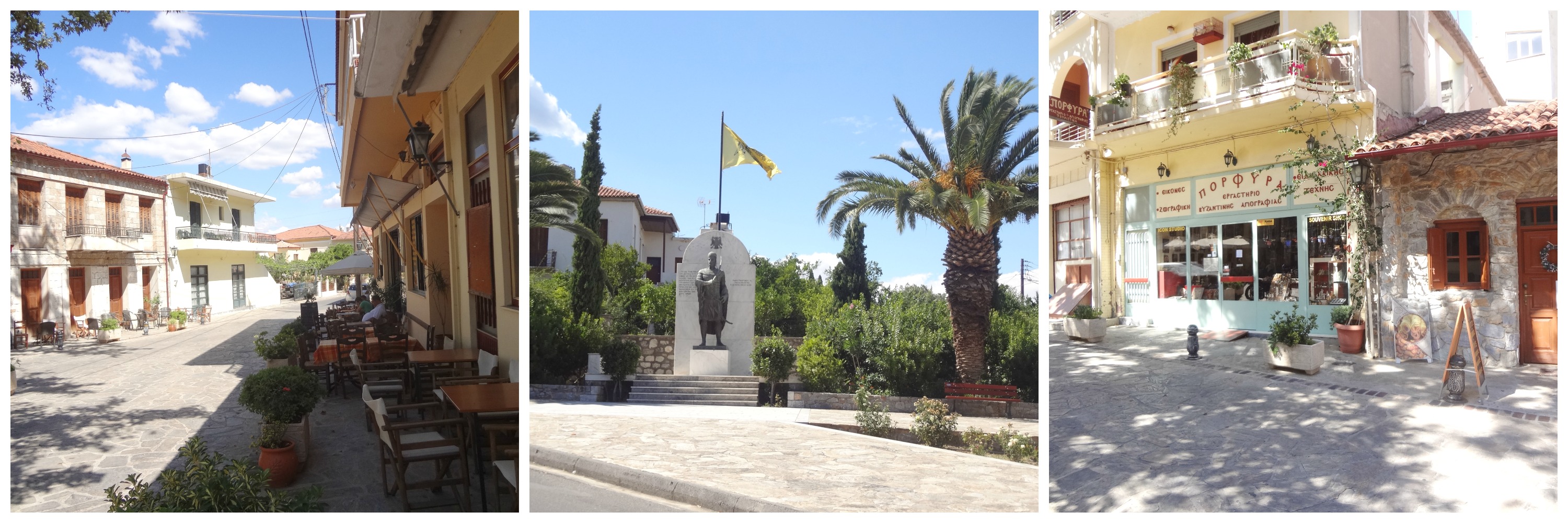
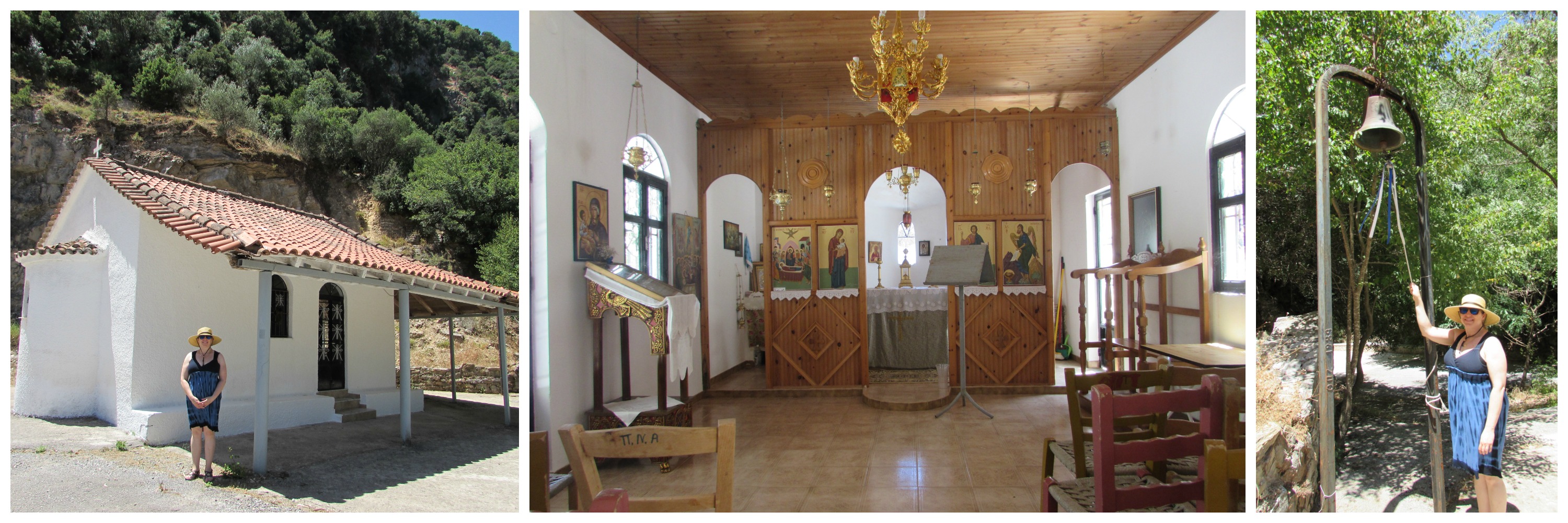
We found a tiny but charming church and imagined that the Linardakis family may have met in a building such as this.
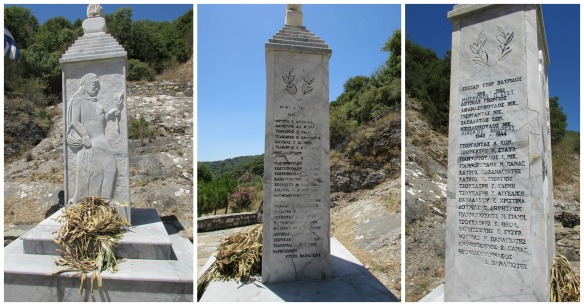
The ornate memorial touched our hearts and reminded us that every life is precious.
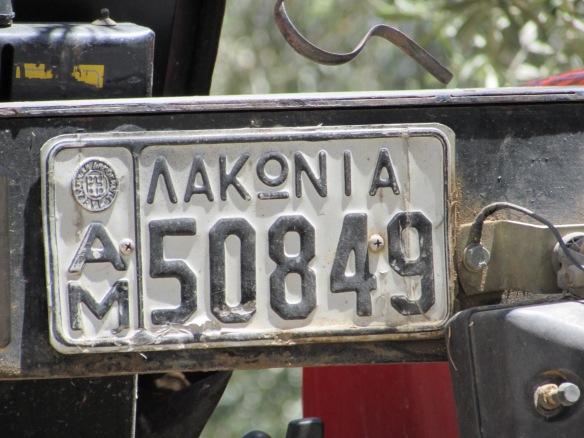 As we drove many miles through many villages, we more clearly understood the difficulties of travel in the days before automobiles. People walked or rode donkeys up and down steep and rugged goat trails, and a simple visit to a neighboring village could have been an all-day trek! As I study the records of villages, I now realize why almost all people married within a local geographic boundary — and, why some never left their village.
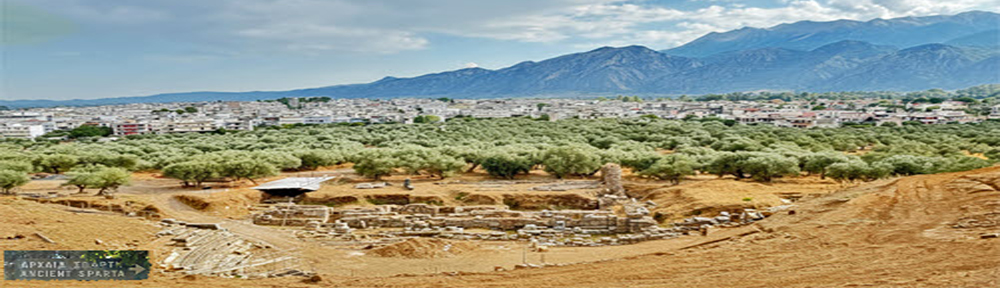










 Spartan Roots (Σπαρτιατικές Ρίζες)