Unknown's avatar

About Spartan Roots

I am of Greek ancestry with roots in villages near Sparta. My paternal grandparents and maternal grandfather were born in Agios Ioannis (St. Johns), and my maternal grandmother was born in Mystras. I love family history research and have been tracing my roots for many years. I was born in Brooklyn, New York and was raised in a predominantly Greek neighborhood close to extended family. I live in the Washington D.C. metropolitan area and work as a volunteer Co-Director of the Washington, D.C. Family History Center and a genealogy aide/project aide at the National Archives in Washington, D.C. I am always updating and adding new information. Please contact me - I would love to hear from you!

RootsTech 2017 & DNA

Along with 20,000 of my “closest friends,” I spent three days at the RootsTech Conference in Salt Lake City, Utah February 12-14. This is my fourth year attending, and I continue to be dazzled at the variety of sessions and topics offered. With the surge of interest in Greek genealogy, I attended sessions on Italian and French ancestry to learn tips for teaching ethnicity research.

Both presenters did not discuss U.S. collections but focused exclusively on the records available online and on-site in their countries. Their lectures covered:

1. the types of records found in civil and ecclesiastical collections and the date range of those collections

2. the vital importance of understanding the geographic boundaries and the country’s history to ascertain which government had control of the records at varying times;

3. the structure of other repositories (e.g., libraries, archives) and the resources found in each.

These classes were of significant value to me as I prepare for two Greek genealogy conferences this year (New York City in April; Salt Lake City in September).

At a vendor’s booth, I was thrilled to find issues of Tracing Your Italian Ancestors and Tracing Your Eastern European Ancestors. Both of these are filled with “how-to” tips such as visiting ancestral villages, strategies for successful research, locating online resources. These articles will be of tremendous help in structuring classes for Greek researchers.

Italian Genealogy

I also attended several sessions on DNA and Genetic Genealogy. This field has become a hot topic in the past two years, as more people learn how to connect with others who descend from a common ancestor. Although I have taken both an autosumnal (or Family Finder) test and a mitochondrial test, I have not followed up on contacting “matches” as my time has been spent on analyzing records I got in Sparta last summer.

This is the ethnicity breakdown of my DNA test and look forward to exploring more. It will also be interesting to see how this DNA “map” changes as more people test in the years to come, and algorithms change to reflect an expanding pool of DNA.

Ethnicity map

In the Society Page!

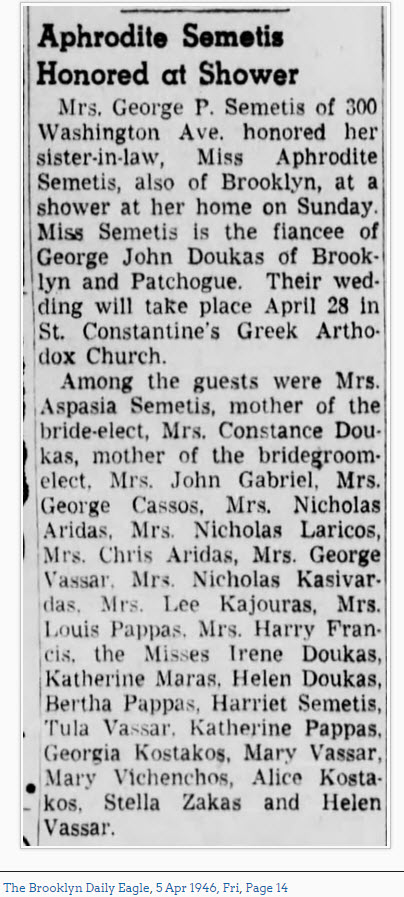
I am thrilled with the Fulton History website — a gem of a resource where Tom Tryniski has single-handedly digitized thousands of pages of New York newspapers! My favorite, of course, is the Brooklyn Daily Eagle because I am finding fascinating tidbits of my Brooklyn-based family. I did a random search on “Kostakos” and was stunned when the following article popped up:

Aphrodite Semetis Honored at Shower, April 5, 1946, Brooklyn Daily Eagle, page 14

Isn’t this a gem? I have spent a couple of days trying to identify the women who attended this shower. The bride-to-be, Aphrodite, is my father’s first cousin. So, I was quite surprised to see the names of my mother, her sister and their mother as this wedding took place seven months before my Mom and Dad married (November 14, 1946): Katherine Pappas is my Mom, her sister is Bertha Pappas, and their mother is my yiayia, Mrs. Louis Pappas.

The rest of the guests are either relatives or friends of the Semetis family: my father’s sisters, (Georgia Kostakos who married Al Doukas and Alice Kostakos); my father’s cousins (Frieda or Aphrodite Semetis, Fofo or Mrs. George Semetis, Harriet Semetis, Aspasia Aridas Semetis). I also identified Mrs. Nicholas Aridas as Helen Londis; Mrs. Chris Aridas as Katherine Caputo. Irene and Helen Doukas are sisters and daughters of James & Bessie Doukas of Brookhaven, Long Island; Stella Zakas is also from Brookhaven (I don’t know if she is a relative or a friend); Mrs. Nicholas Kasivardas is the next-door neighbor of Constance Doukas. I could not identify the rest of the women, who may be friends or relatives of the Doukas family.

I used the 1940 Census as a starting point to find who these people might be, and the Fulton History website to look for newspaper articles for further information. One clue led to another, and it was great fun to track these folks down! I wish my mother was still alive so I could show her that she made the Society page of the newspaper, a fact that would have brought her much laughter and disbelief!

Learning about my collateral lines and extended family brings me a lot of joy. I also see quite clearly that I am part of a much bigger picture — a family that extends beyond what I knew growing up. Most of the people in this article are now in heaven together, associating as they did here on earth. I wonder if there is a Society page in the Heavenly Times?


Research and Remembrances, Part 7

Alpha and Omega

Alpha: Beginnings 

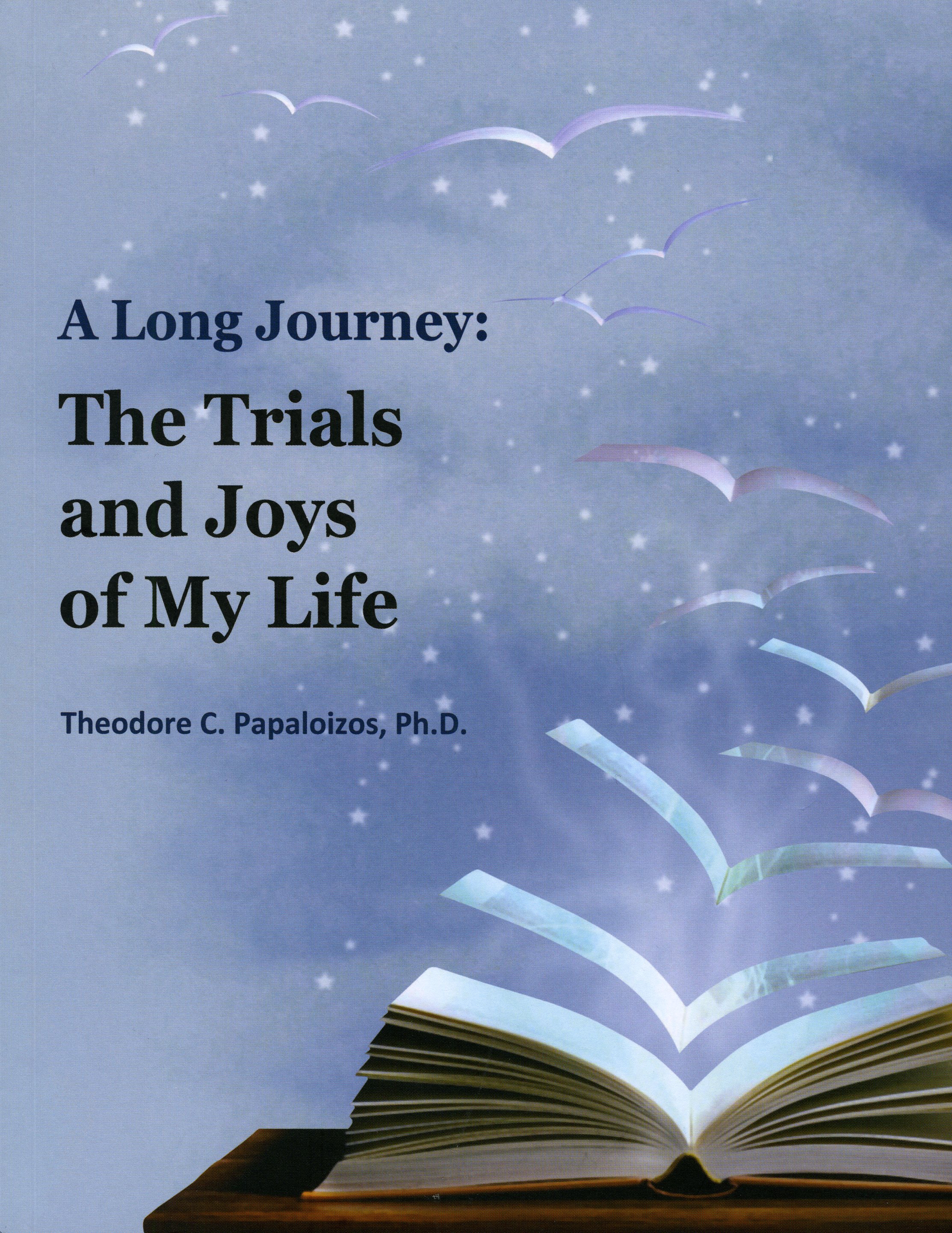
My trip to Greece began with my arrival on the island of Crete where I stayed at the home of my dear friend, Theodore Papaloizos and his family. Theodore’s life has been centered around education, primarily teaching children and adults the Greek language. He has authored hundreds of Greek education books and his company, Papaloizos Publications,  services Greek schools and churches worldwide. For two years, I worked with Theodore as a co-author to write and prepare his autobiography for publication, and we rejoiced when the book was published this summer.

The cover of Theodore Papaloizos' autobiography

Spending a few days in beautiful Crete was a delightful way to segue from American to Greek life and culture. Theodore’s stately and spacious home sits atop a mountain, overlooking a cove, and the peace and beauty of the area washed over me as I relished the view from the veranda.

View from the veranda of the Papaloizos home, Bali, Crete

View from the balcony of the Papaloizos home, Bali, Crete

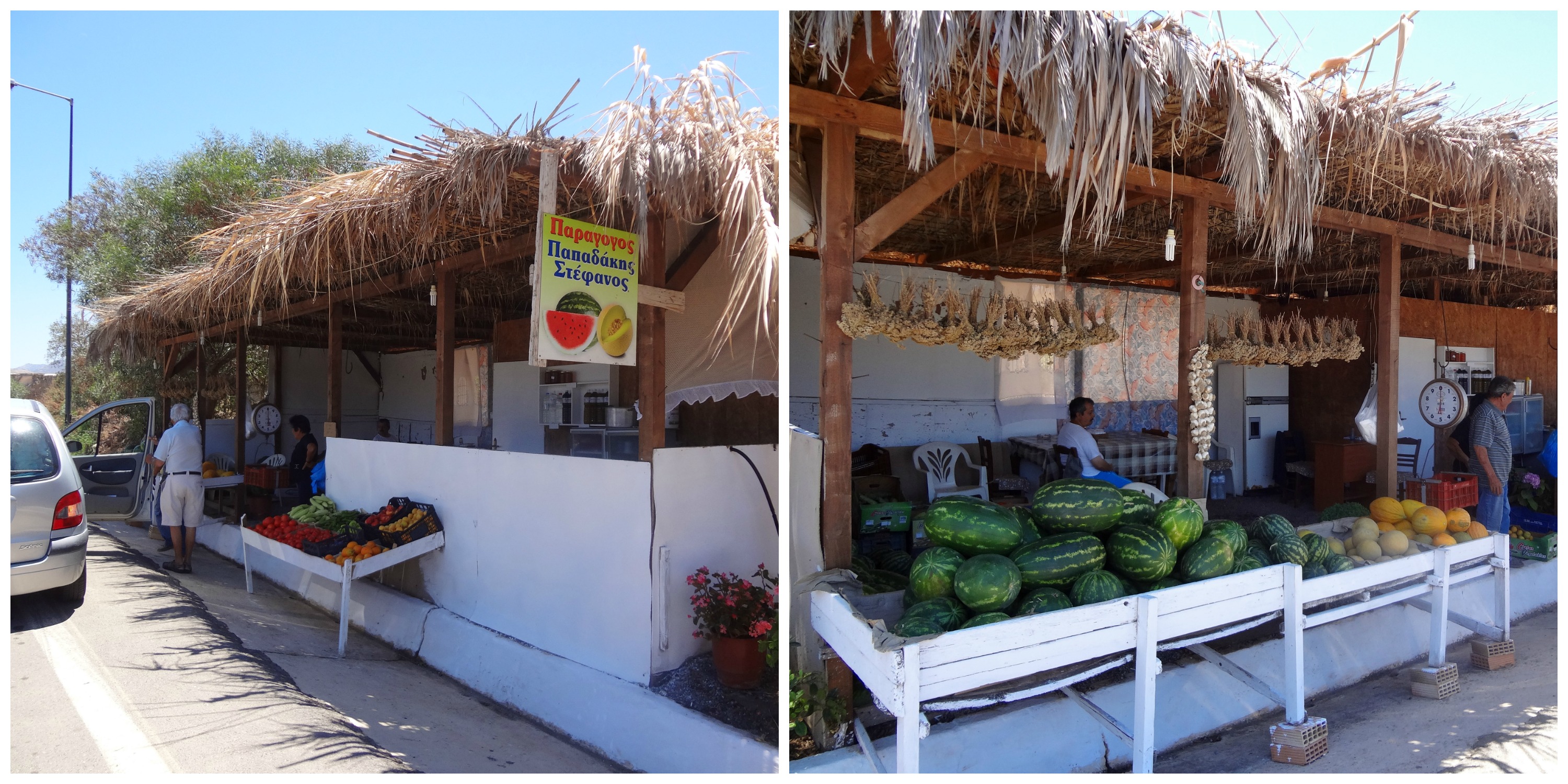
Crete is a lovely island, infused with rich culture and quaint ambiance. I loved the fruit and vegetable stands that line every main road. The produce comes straight from the fields, untouched by conveyor belts, refrigerated trucks, or supermarket coolers. Each stand had a tiny room built into the back which held a bed and a refrigerator — the requisite necessities for family members to stay there during the busy summer months. This eliminates the need to put out and take in the produce every day, and allows the family to sell its goods far into the night.

Farmers Produce Stand, Crete

Farmers Produce Stand, Crete

This was the perfect way to prepare both mentally and physically for the rest of my trip. After three days in Crete, I flew to Athens where I met Kathy, Elizabeth and Christine to begin our personal Greek odyssey. You can follow our travels here: Part 1, Part 2, Part 3, Part 4, Part 5, Part 6

Omega — Endings

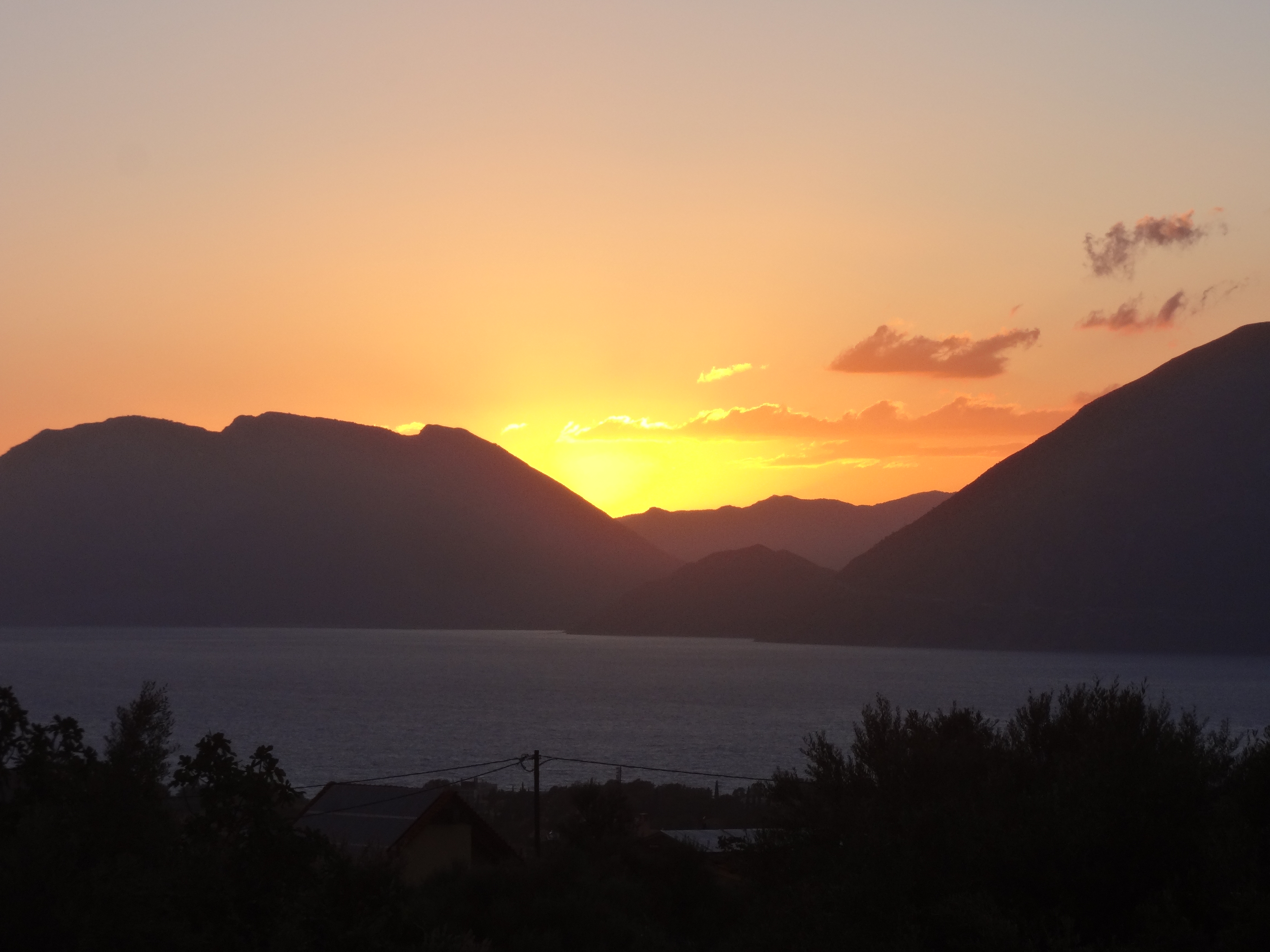
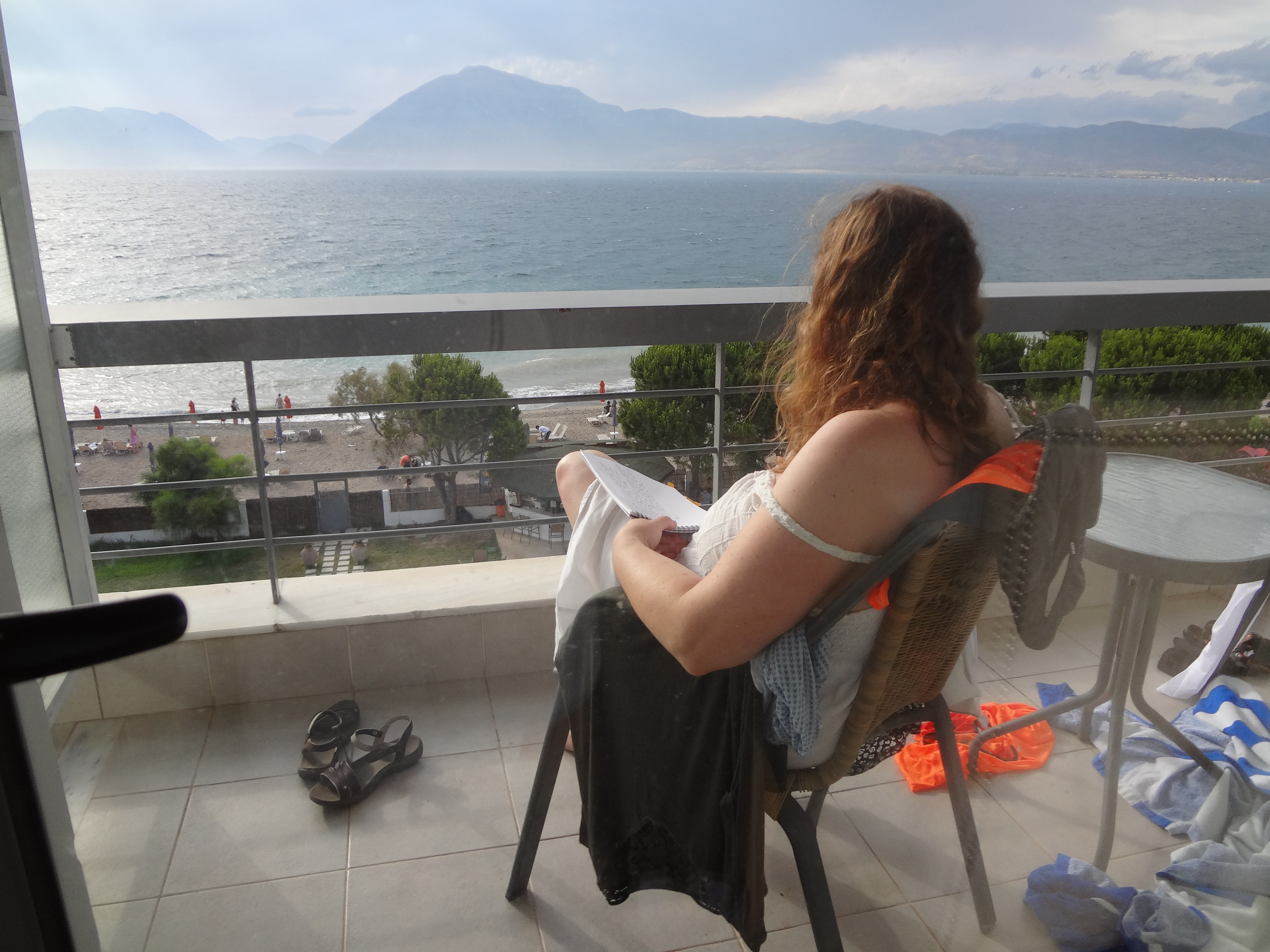
The final days of my journey ended in Patras as the guest of the family of Gregory Kontos, my researcher, friend, and guide. Patras is an ancient port city that commands charming views of the Gulf of Patras. The lovely Kontos home has a stunning view of the water.

View from the veranda of the Kontos home, Patras, Greece

View from the veranda of the Kontos home, Patras, Greece

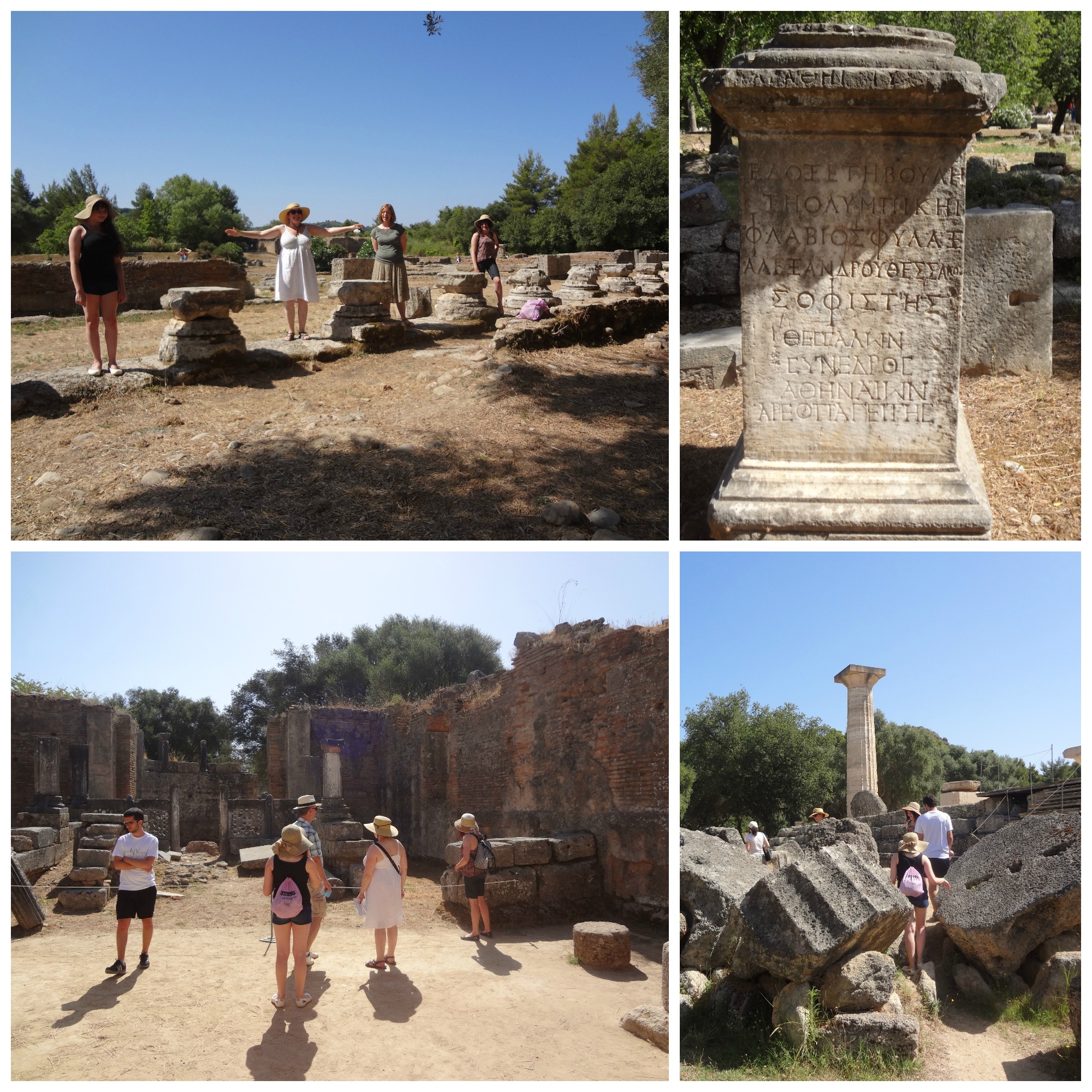
We took a day trip to Ancient Olympia, home of the Olympic Games which began there in 776 BC (yes, over seven hundred years before the birth of Christ!) Gregory’s father, Pavlos, and his mother, Despoina, were perfect teachers (which is their profession) and we learned much more from them than any tour guide could share.

Pavlos and Deospina Kontos are our knowledgeable tour guides, Olympia, Greece

Pavlos and Despoina Kontos are our knowledgeable tour guides at the site of ancient Olympia

There is so much to see and contemplate. Touching the ruins and seeing pre-Biblical Greek letters carved into stone is living ancient history. Your imagination soars when considering the thousands of athletes who competed at this very site: their training, stamina, honor and faith.

Ancient Olympia

Ancient Olympia

Hours pass quickly when viewing the multitude of artifacts in the museum at Olympia. Treasures unearthed through the millennia are amazing to behold; each tells a unique story, many of which are sadly now lost.

Olympia Museum Collage

I was surprised (and thrilled) to see that archaeological digs continue today. A dig is not begun unless there is sufficient funding for the entire project, from start to finish. Archaeologists believe it is safer for ancient ruins and artifacts to remain buried underground, than to unearthed them, if they cannot be immediately preserved in the proper environment.

An archaeological dig underway at Olympia, July 2014

An archaeological dig underway at Olympia, July 2014

The Kontos family also took us to the beautiful city of Nafpatkos on the Greek mainland. To get there, we drove over the Rio-Antirrio or Charilaos Trikoupis bridge, which is the longest fully suspended bridge in the world and a wonder in itself.

Rio-Antirrio ( Charilaos Trikoupis) Bridge, which connects Rio on the Peloponnese to Antirrio on the mainland

Rio-Antirrio ( Charilaos Trikoupis) Bridge, which connects Rio on the Peloponnese to Antirrio on the mainland

Nafpatkos is charming and picturesque, built into the side of a mountain, with a castle at the top and a wall surrounding the city. The town nestles around the harbor, providing residents with access to the Gulf of Corinth and a beautiful setting to enjoy every day.

Nafpatkos,

Nafpatkos on the Gulf of Corinth

Leaving Greece was difficult — much more so than I anticipated when I first arrived. My travels through the Peloponnese left me with feelings of belonging, rootedness, and pride in my heritage. I more fully appreciate the sacrifices of my great-grandmothers who knew, as their children left villages in Sparta for cities in America, that they may not see them again in mortality. I saw firsthand the blending of the old with the new: a woman herding goats while talking on a cell phone; computers in stone-walled homes that were built in the 1850’s; centuries-old buildings now resurrected as modern cafes.

Greeks are rugged, resilient, loyal, and loving people. They are survivors. Despite a history of enemy invasions and occupations, they clung to their faith and resourcefully triumphed. This is their legacy to me, and one which I proudly pass to my posterity.

My daughter, Kathy, to whom the baton is passed.

My daughter, Kathy, to whom the baton is passed.

Research and Remembrances, Part 6

On to Mani!

How can I describe Mani? It is beautiful yet forbidding, spectacular yet humble, historical yet contemporary. It is an amalgam of opposites; a study in contradictions. It is part of my heritage. I am trying to determine which lines in my family migrated from Mani into Sparta. I’ve done a search in Election Rolls, looking for my surnames in areas in Mani. There are many, and unfortunately without corroborating evidence, I can’t determine which people are my direct lines. Church records are such a vital key, but they did not open to me during this trip. Next time!

Gregory and I met our friend, Giannis Michalakakos, in Areopoli where our adventure began. Giannis is from the village of Nifi, and he is an expert on all-things Mani. Giannis keeps a blog, Maniatika, where he chronicles history, genealogy, and culture.

My dear friends, Giannis Michalakakos (left) and Gregory Kontos (right).

My dear friends, Giannis Michalakakos (left) and Gregory Kontos (right).

Areopoli is an amazing town! It’s name means “the city of Ares” who was the god of war. It was here that, on March 17, 1821, Petrobey Mavromichalis united many clans of Mani and began a movement that resulted in the Greek War of Independence from Turkish rule.

Statue of Petrobey Mavromichalis, in the Aeropoli town square

Statue of Petrobey Mavromichalis, in the Aeropoli town square

I have never seen anything like Areopoli — ever! The “tower” architecture of Mani is built into every building: rectangular with thin and narrow windows, always constructed of stone.

This post will be mostly photographs with captions, as one picture is truly worth 1,000 words!

Aeropoli

Courtyard in Areopoli

Alley in Aeropoli

Alley in Areopoli

Dining tables are found outside every cafe and restaurant

Dining tables are found outside every cafe and restaurant

Even Churches have the tower architecture

Even Churches have the tower architecture

This building was erected in 1818, three years before the Greek Independence Revolution began with uprisings in Aeropoli

This building was erected in 1818, three years before the Greek Independence Revolution began with Petrobey Mavromichalis from Areopoli

This is a restaurant , such a perfect mix of old and new.

This restaurant  is a perfect blend of old and new.

Mani-Aeropoli (32)

Trees and flowers add splashes of color to this courtyard in Aeropoli

I’ve never seen a bookstore quite like the one below! It has everything from old newspapers to history books to tourist souvenirs. Giannis knows the owner, who welcomed us warmly and gave me a CD of a helicopter ride over Mani.

 'Adouloti Mani' Bookshop owned by Georgios Dimakogiannis

‘Adouloti Mani’ Bookshop owned by Georgios Dimakogiannis

We spent the night in the Hotel “Areospolis” – charming, quaint and very comfortable.

Hotel Aeropolis

Hotel Areospolis

The next morning we embarked on a road trip unlike any I have ever undertaken — through the narrow, switchback roads that wind around the mountains and through villages. There are times I couldn’t believe that we were actually on a road!

Carol in car

The homes in Mani are stark, isolated and impenetrable. Many are carved into the rugged hillsides, which led me to wonder how they ever were built.

Houses and villages

Houses and villages reveal that people have tamed the forbidding countryside

Our southernmost destination on this trip was Vathia, which Giannis promised was one of the most beautiful places in Mani. He was right! As we drove the winding road into the town, we saw a produce truck. Fruits and vegetables were protected from the blazing sun by a white tarp, and the all-important scale swung back and forth as the truck made its way through the villages.

Produce truck making its rounds through the villages of southern Mani

Produce truck making its rounds through the villages of southern Mani. We drove the same road into Vathia.

Entering Vathia

Entering Vathia

Vathia is

Vathia overlooks the sea, and vegetation punctuates the rocky hillsides.

Vathia tower houses

Vathia tower houses have a seaside view

Our ride out of Vathia towards Kotrona provided us with incredible views of the sea.The aquamarine blue provides a stark contrast to the barren hillsides.

Leaving Vathia, headed towards Kotrona

Leaving Vathia, headed towards Kotrona

Churches are everywhere, both large and small. We had to stoop to enter this one, which was constructed by a family for personal use only.

Interior of a tiny church

Interior of a tiny family church

Of course, what is a trip to Greece without donkeys and goats?

Donkey and goats abound!

Donkey and goats abound!

Gregory and I left Giannis at his home in Nyfi and headed north, up the east coast of

Mani. Kotronas was a beautiful place to stop for lunch.

Kotronas, an idyllic village by the sea

Kotronas, an idyllic village by the sea

A cemetery in the countryside

A cemetery in the countryside

As we drove into the lush farmland of the Spartan plains, I felt as if I had traveled from one distinct world into another. Such variety of places, people and scenery in a one-day car ride!

View of the plains of Sparta from the mountain village of Anavriti

View of the plains of Sparta from the mountain village of Anavriti

This first visit to Mani has left me with a deep-seated desire to return. There is so much to explore and experience! I can now understand why the Turks and Nazis could never overtake this area of Greece. The resilience and resistance of the people who adapted to this harshly beautiful land was no match for the greatest armies of our times. I am so deeply proud to be a descendant of Maniates!

If you would like to read more about this amazing area, this brief essay, “The Deep Mani,” written by Diana Farr Louis, combines history and photos.

Research and Remembrances, Part 5

Ancestral Villages 

A new highway from Corinth south to Sparta bypasses the villages, making the journey speedy and smooth. Except for the road signs in Greek, I could have been in almost any mountainous country. The highway stopped in Tripolis and the last section into Sparta was closed until officials decided how the tolls would be divided among neighboring jurisdictions (I understand it did open shortly after my visit). But I didn’t mind — I was happy to detour onto the winding roads that immersed me into the Grecian countryside. Each village, surrounded by towering mountains, was unique:  the town squares, the narrow streets lined with houses and shops, the churches and fields, reflected the hard work and the independent spirit of its inhabitants.

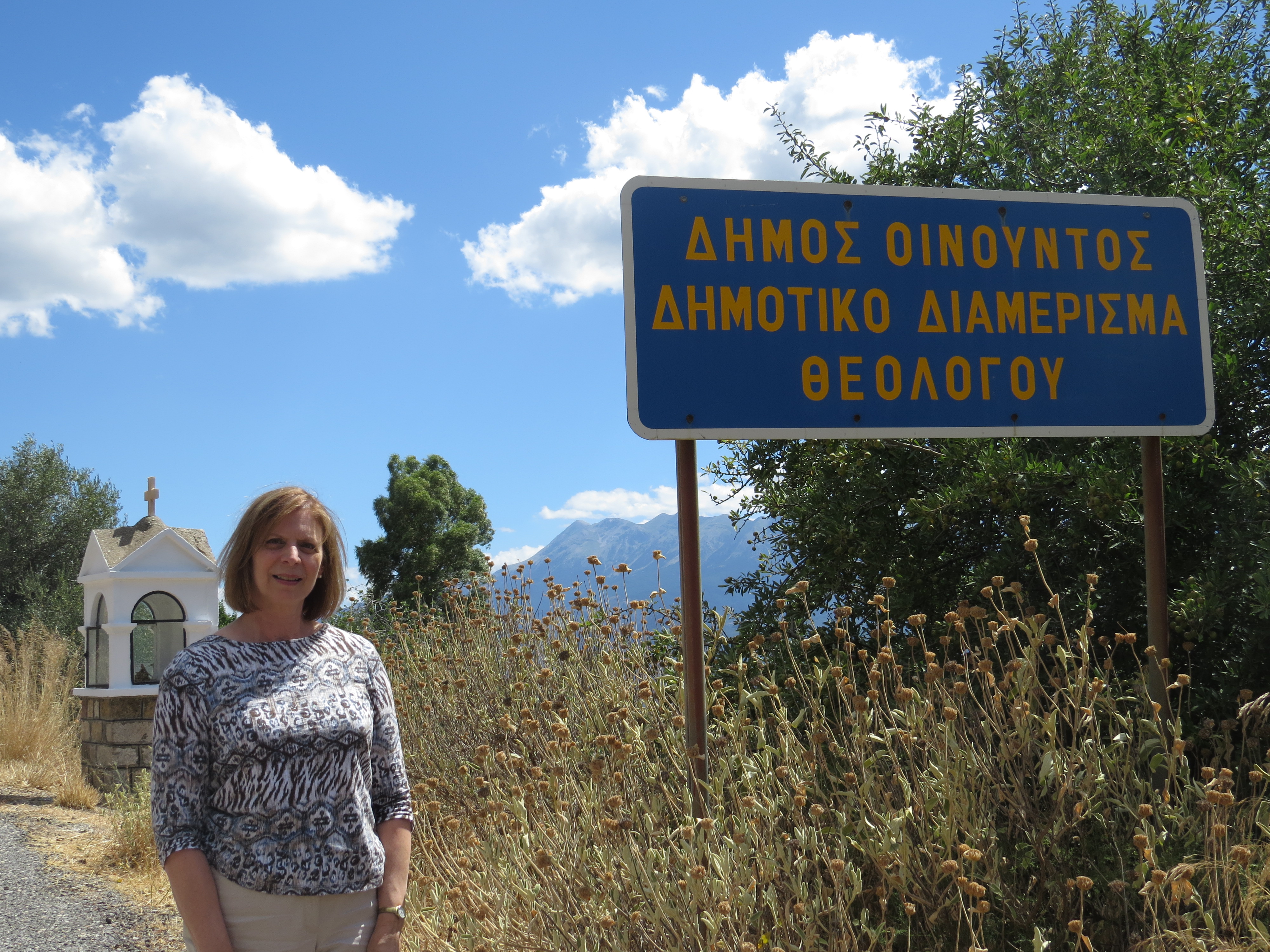
Theologos, Oinountos  
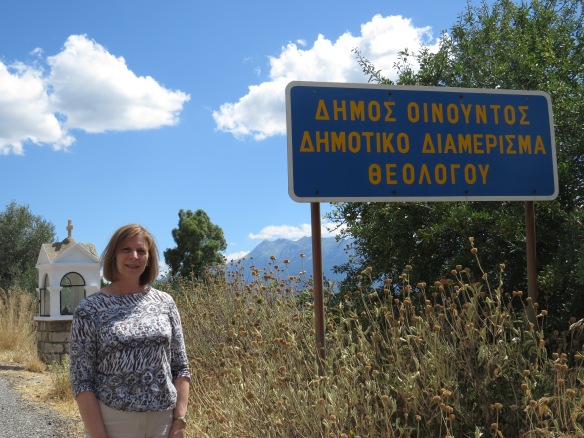
Theologos (19)

I entered Theologos, the village of my maternal great-grandmother, Stathoula Zaharakis, on a quiet afternoon.

Theologos (3)

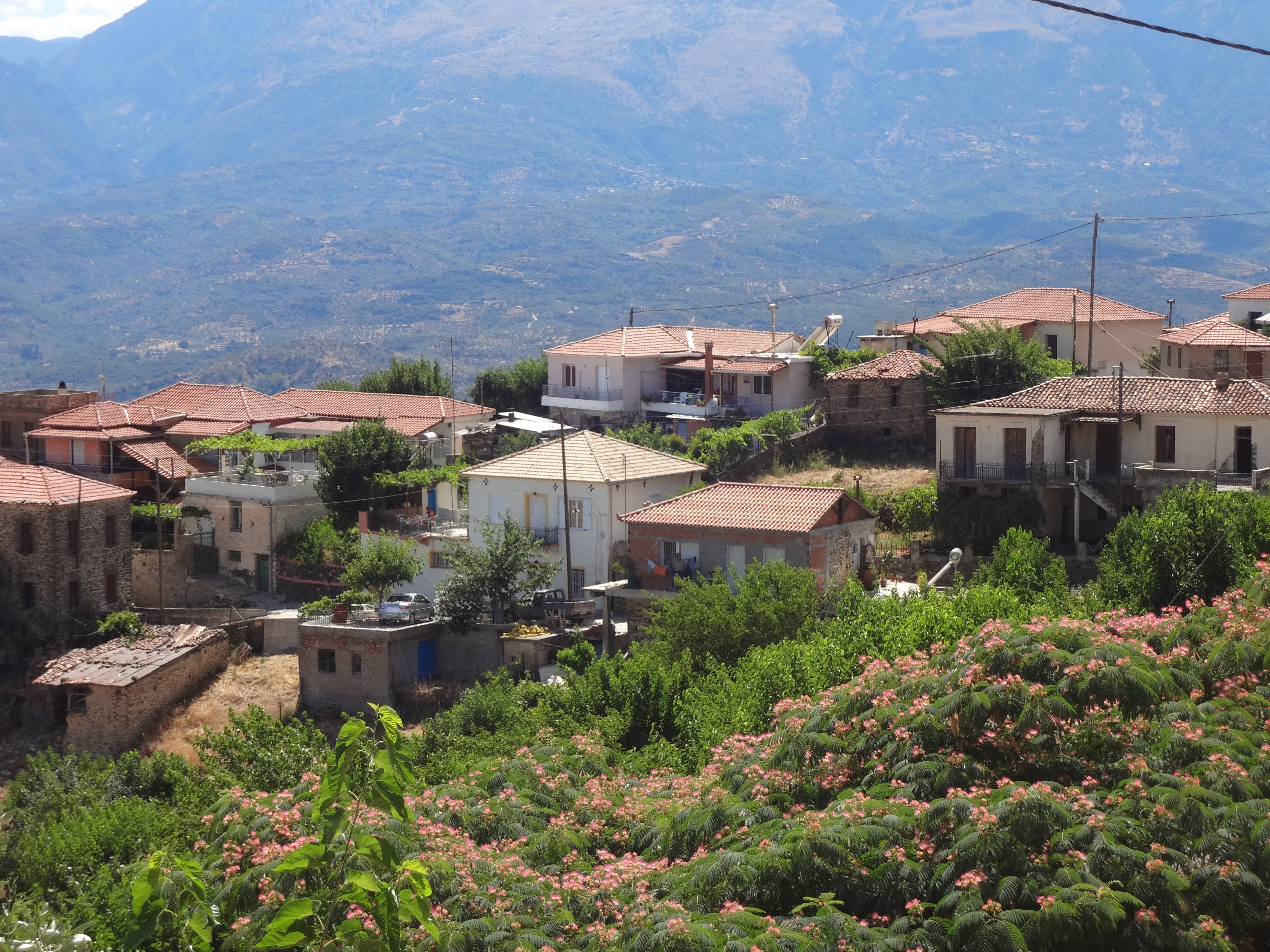
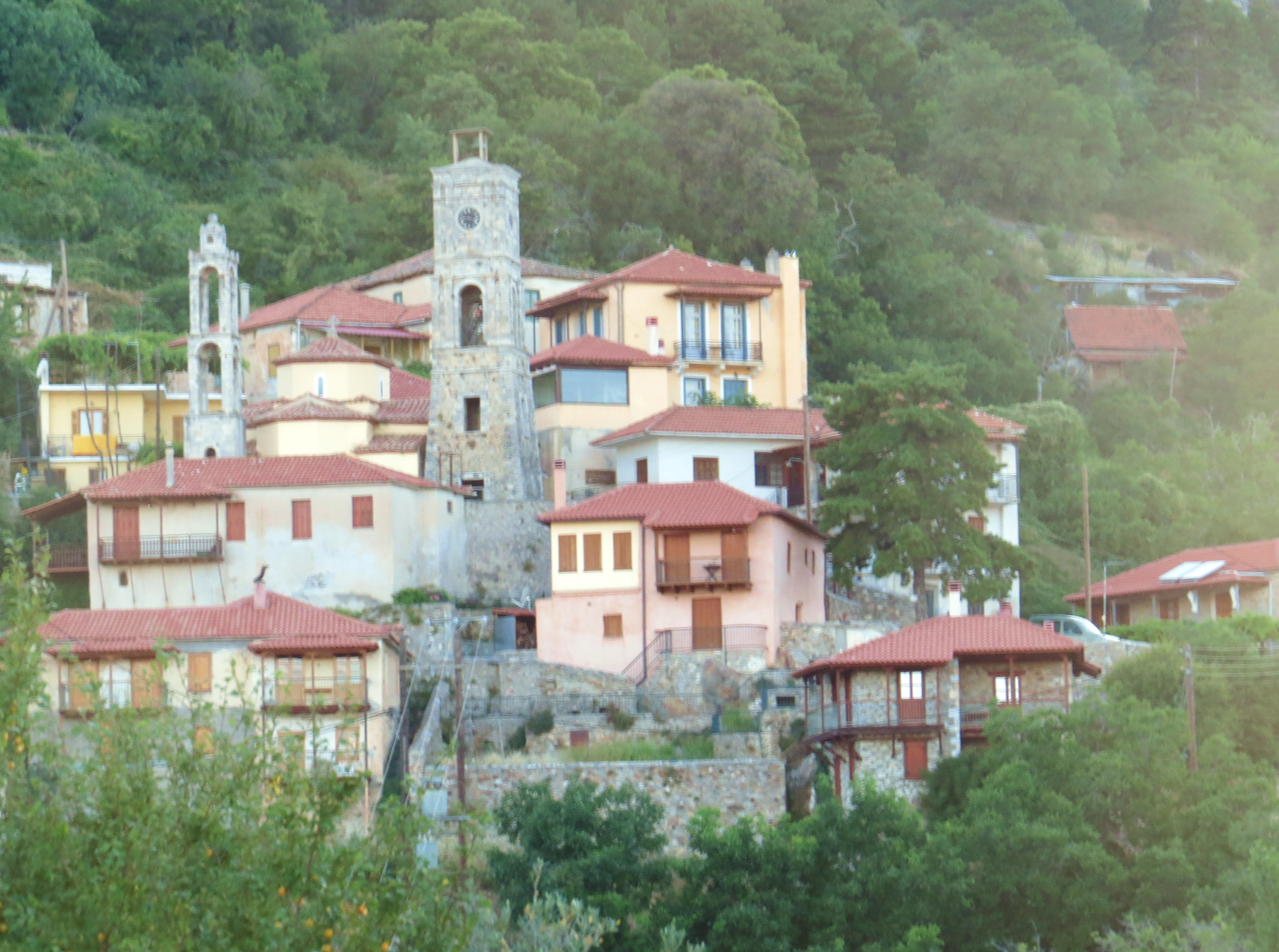
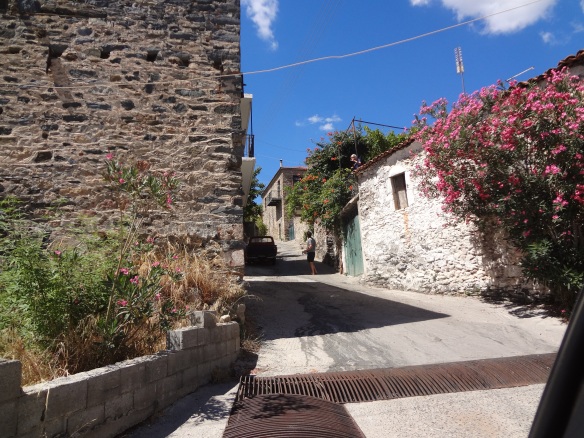
We had traveled a narrow, steep road into this lovely town. Nestled below the towering Parnon mountains, it looked both cozy and inviting.
Theologos (2)

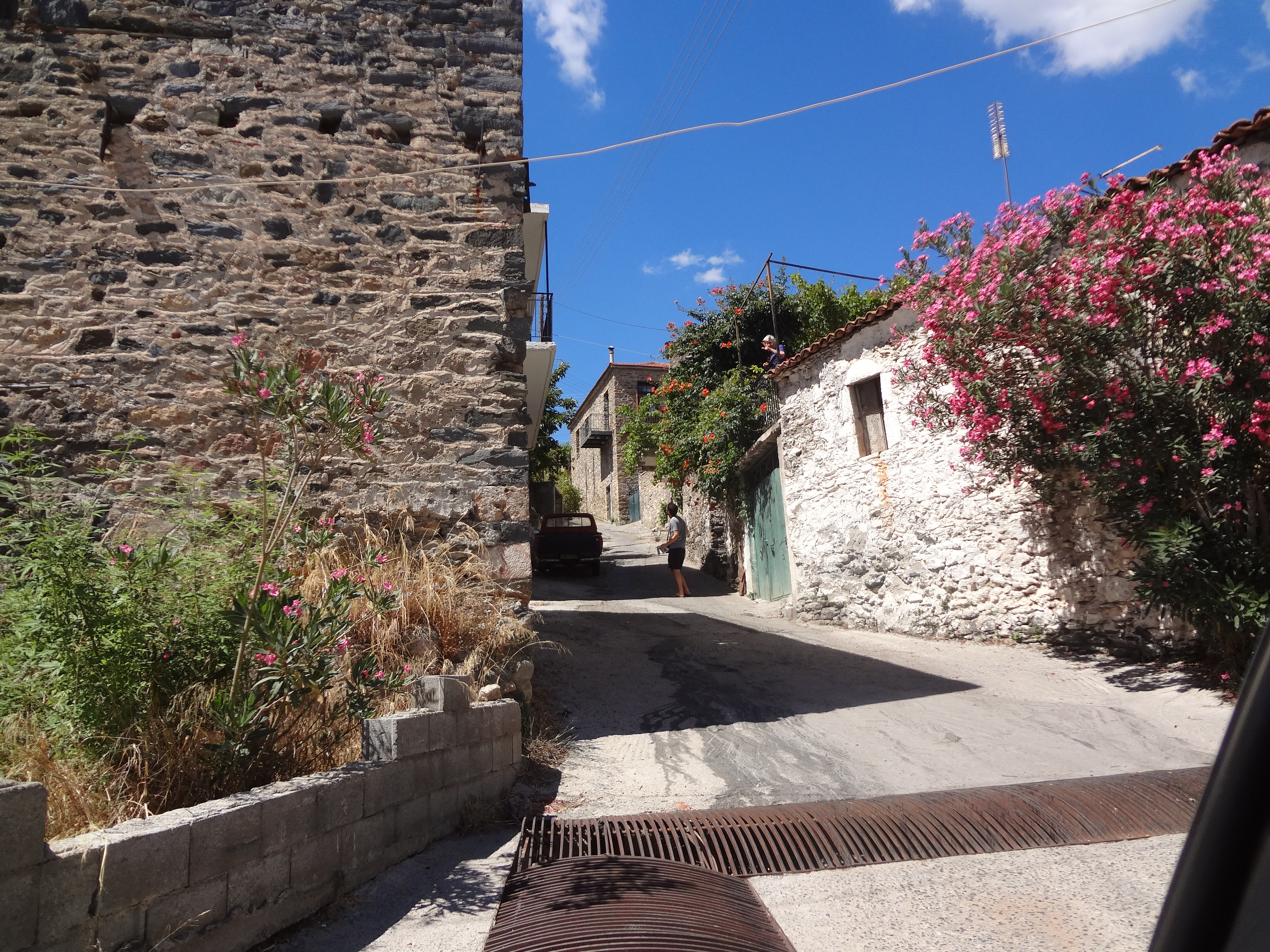
It was siesta time, and the streets were deserted. The peace and tranquility of a beautiful day filled my soul and helped me imagine my ancestors walking the streets.

Theologos (4)

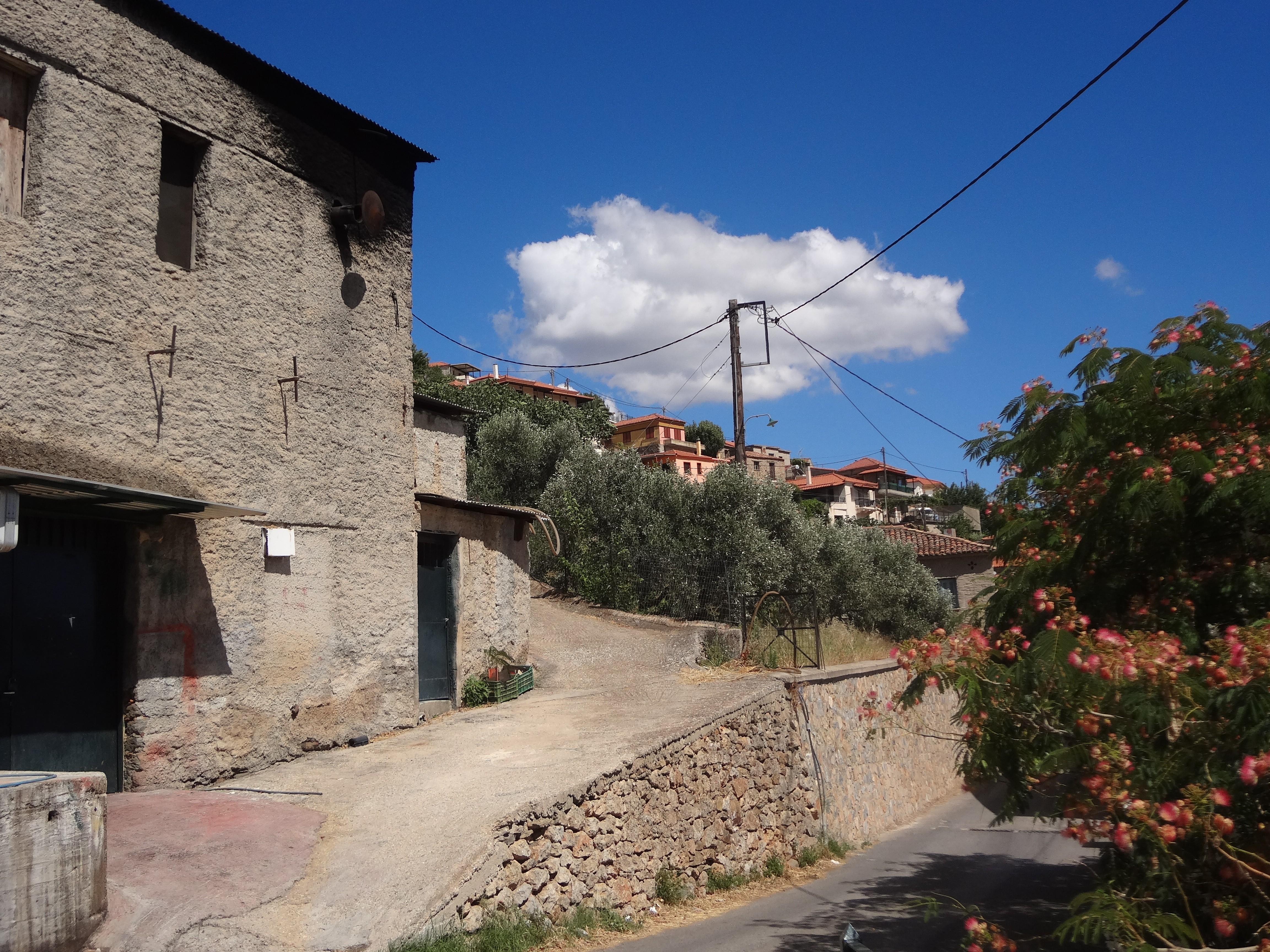
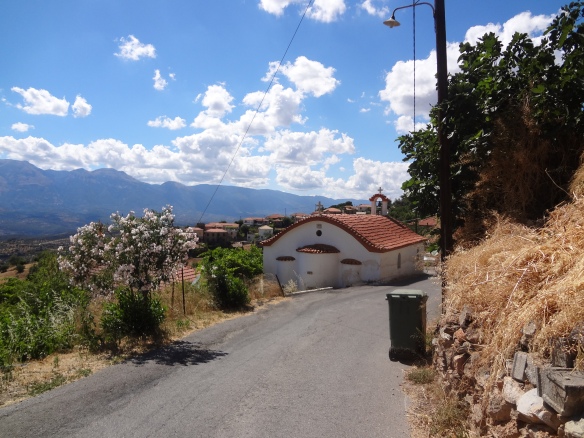
Homes in mountain villages are built on terraces, which enable you to see each one. The flowering bushes and trees provided a beautiful contrast to the stark stone buildings.
Theologos (7)

It is not unusual for even the smallest village to have more than one church. I love the way this small church was built to conform to its surroundings.
Theologos (12)

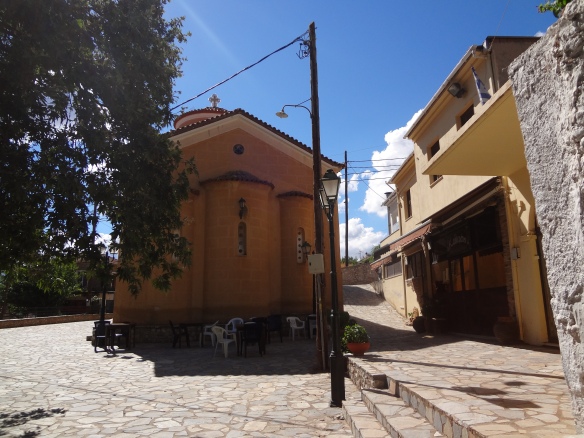
The larger church was built on the west end of the town square.

Theologos (8a)


The original plaque on the front corner of this church reads that it was built in 1879-1880 by the families of Theologos. With my gr-grandmother Stathoula’s birth being in 1870, this means that her parents would have helped build this church and worshiped in it!


Theologos town square  Collage

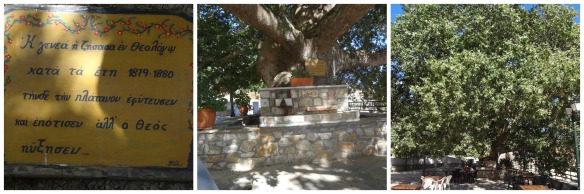
The town square has an enormous tree that provides both a focal point and much-needed shade on a hot day. The plaque reads: “The generation that lived in Theologos during the years 1879-1880 planted this sycamore tree and watered it but God made it grow.” I closed my eyes and imagined by Zaharakis gr-gr grandparents at the tree-planting ceremony – surely they were there! I felt very, very close to them as I stood on the ground where they had lived.

Theologos (21a)

It is heartwarming to see that every village has a monument honoring those who died in the service of their country. This one in the Theologos town square bears the names of:  Dim. H. Mouses, Pan. N. Kefalas, Andr. N. Synolinos, Nikol. K. Kefalas, Bas. P. Sarantopoulos, Dim. N. Manousos, Anar. K. Galatas.

Agios Ioannis

Three of my four grandparents were born in Agios Ioannis (Sparta): Papagiannakos, Kostakos, Aridas/Mihalakakos. This village lies in the fertile valley of the plains of Sparta, overshadowed by the rugged and forbidding Taygetos mountains. My family history continues in this village, as I wrote in an earlier post about visiting my relatives here.
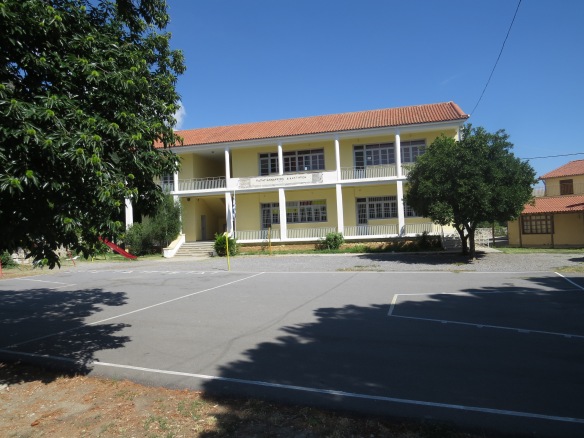
Agios Ioannis (1 Papagiannakos school) (7)

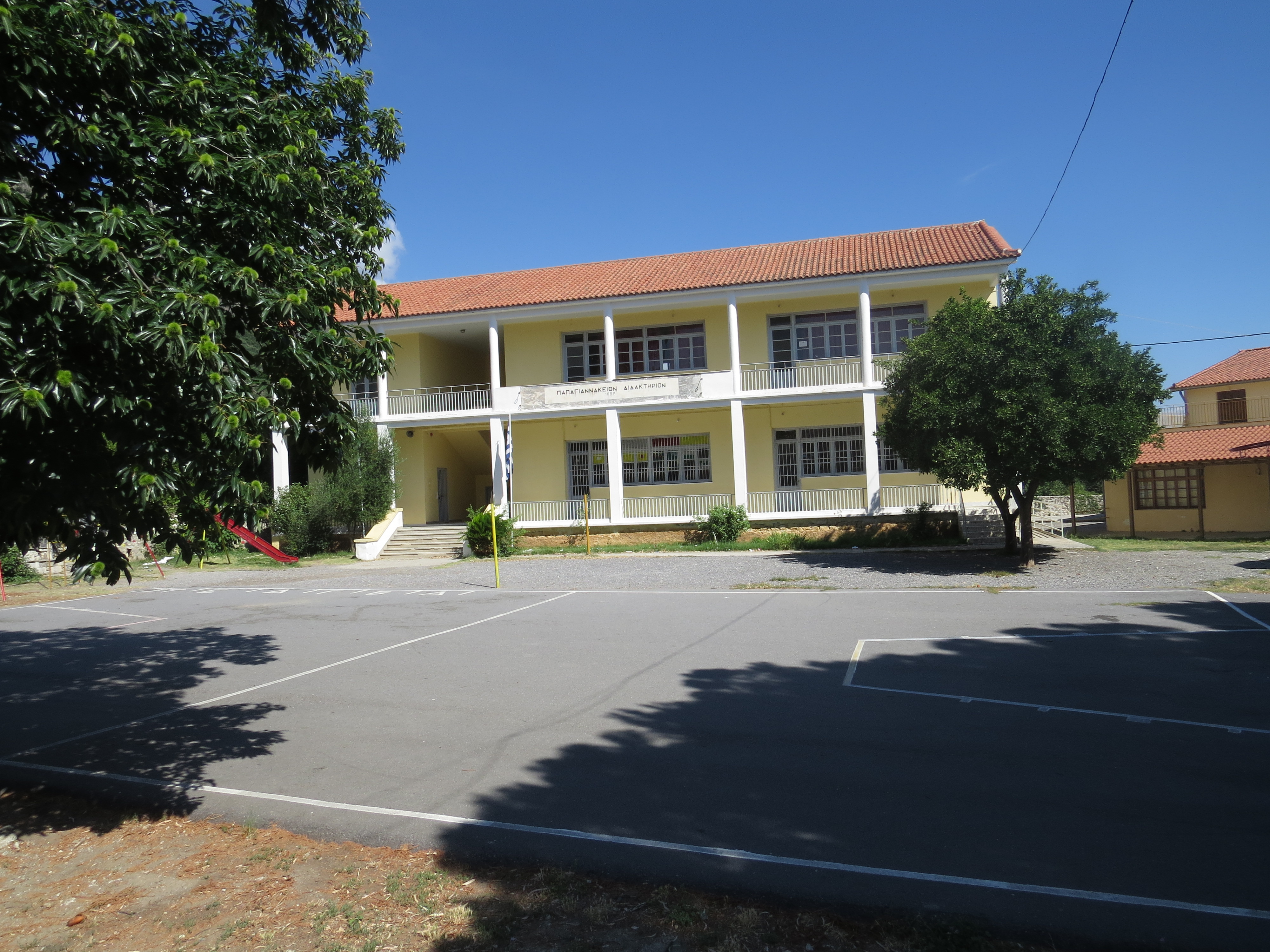
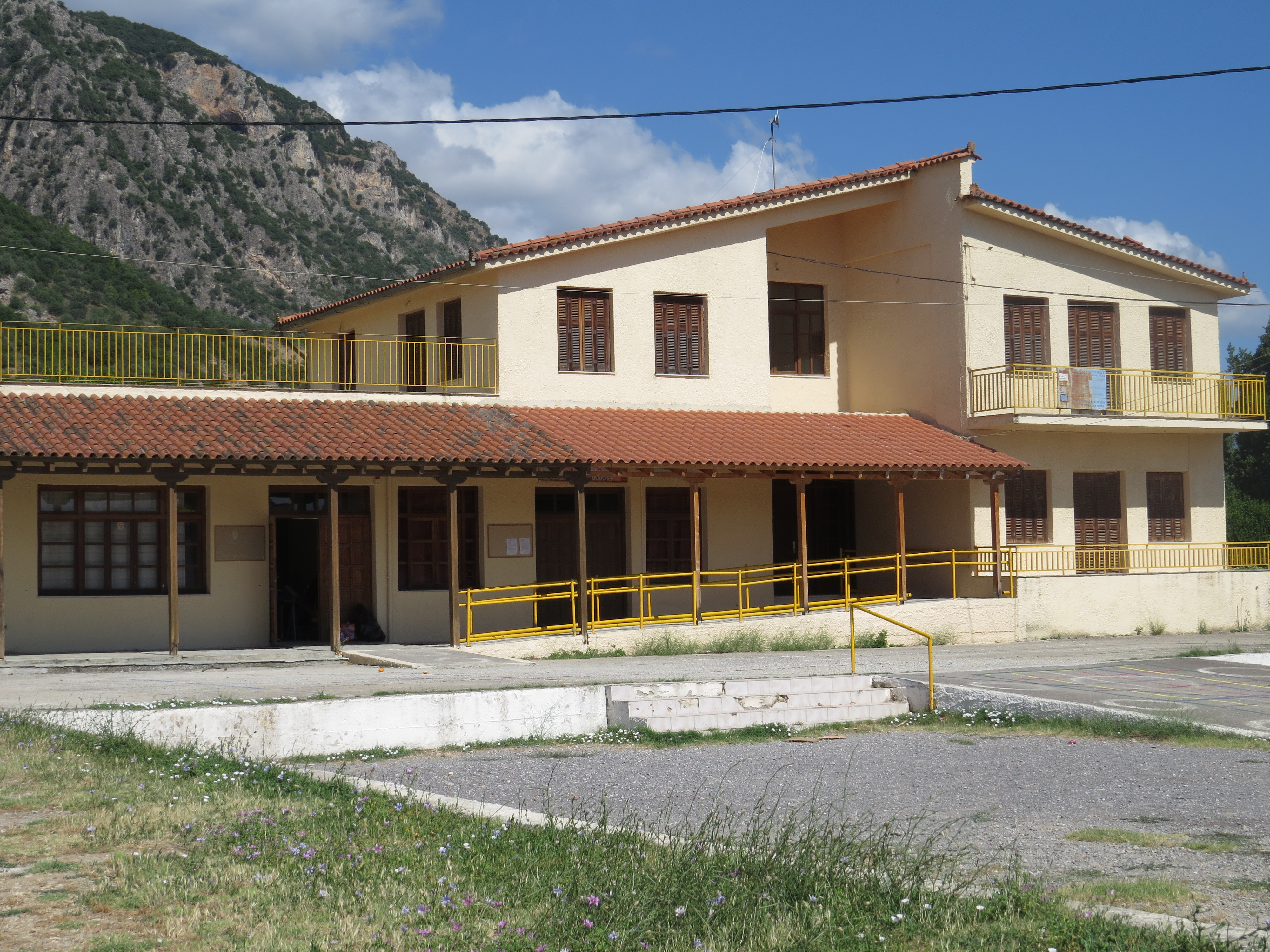
Demetrios Nikolaos Papagiannakos (1897-1945), who emigrated to America and became a most successful restaurateur, built this school in Agios Ioannis which bears his name.

Agios Ioannis (2 building built by Kostakos)

My second cousin, Grigorios Georgios Kostakos (1927-2001) was mayor and provided the means and the incentive to build this structure which is used for town meetings and other events.

Agios Ioannis - Maltsiniotis tower-home (6)

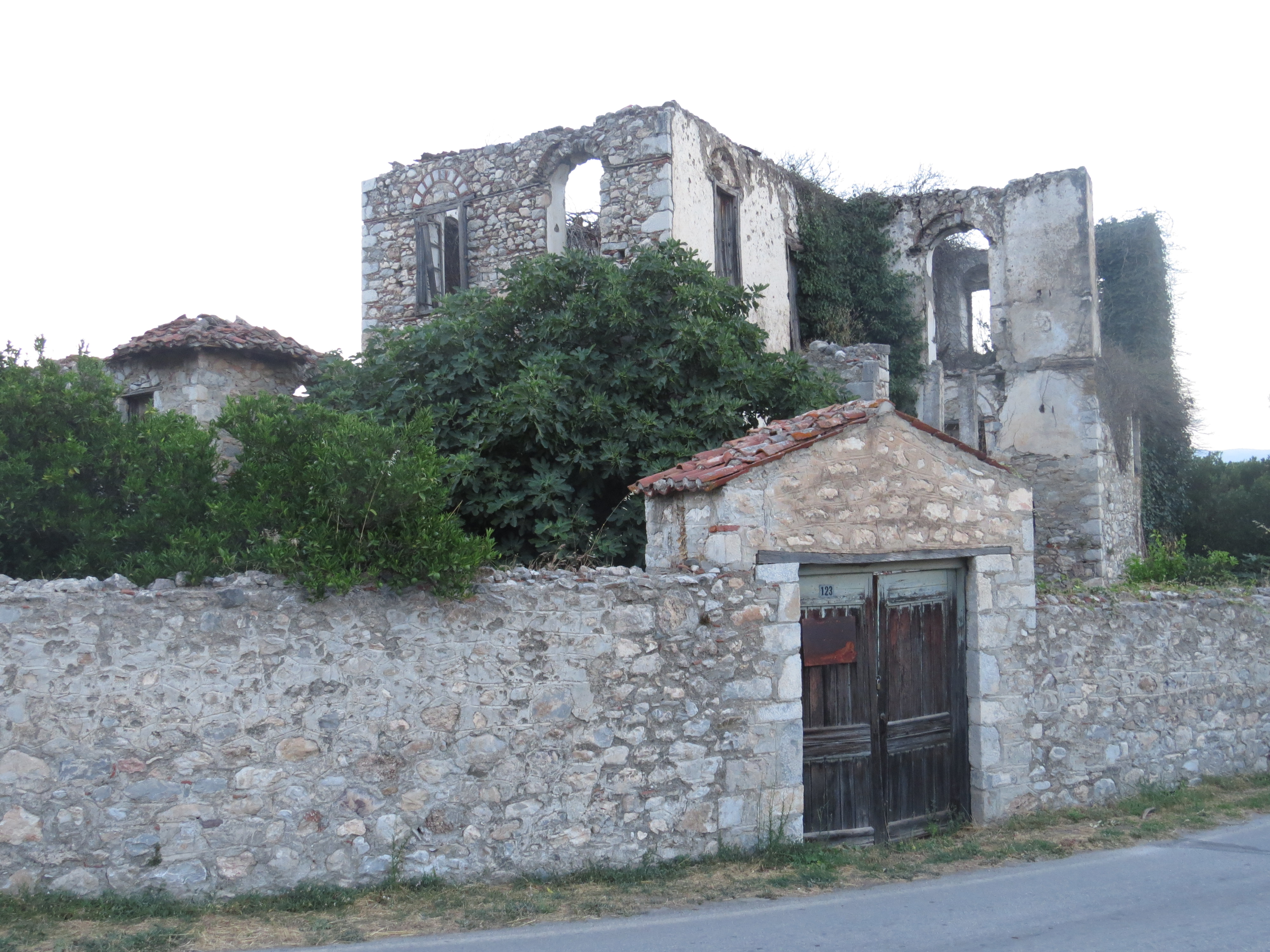
This house, which is adjacent to the Papagiannakos School, was built by the Maltsiniotis family. Its structure is evocative of the towers found in Mani, which is where the family originated. There is speculation that the Papagiannakos family may have been a branch of the Maltsiniotis family, but that has yet to be proven.
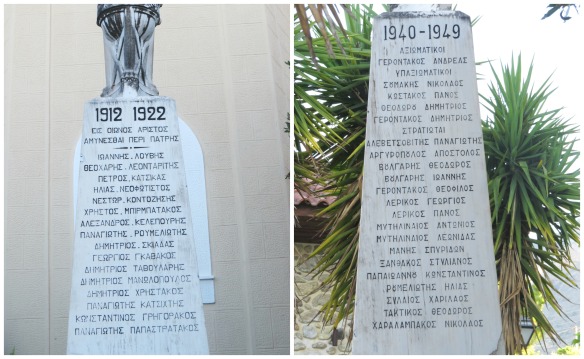
Agios Ioannis monument Collage

The memorial tower for Agios Ioannis lists several surnames in my family.

Mystras  

The ancient city of Mystras, which was the seat of the Byzantine Empire in the Peloponnese, is the ancestral village of my grandmother, Aggeliki Eftaxias. It is built on a side of the Taygetus mountain overlooking Sparta. Mystras (10)
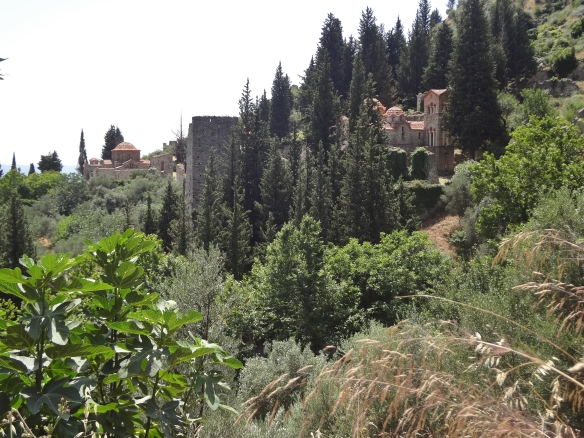
The majestic castle buildings and churches, built in 1249, dominate the landscape and and give the  visitor a glimpse into the world of its founder, the prince of Achaia, William of Villehardouin. Mystras was occupied by the Byzantines, the Turks and the Venetians, and was eventually abandoned in 1832.
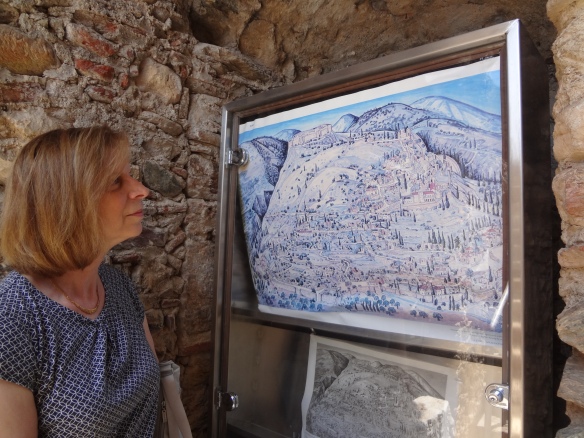
Mystras (22)

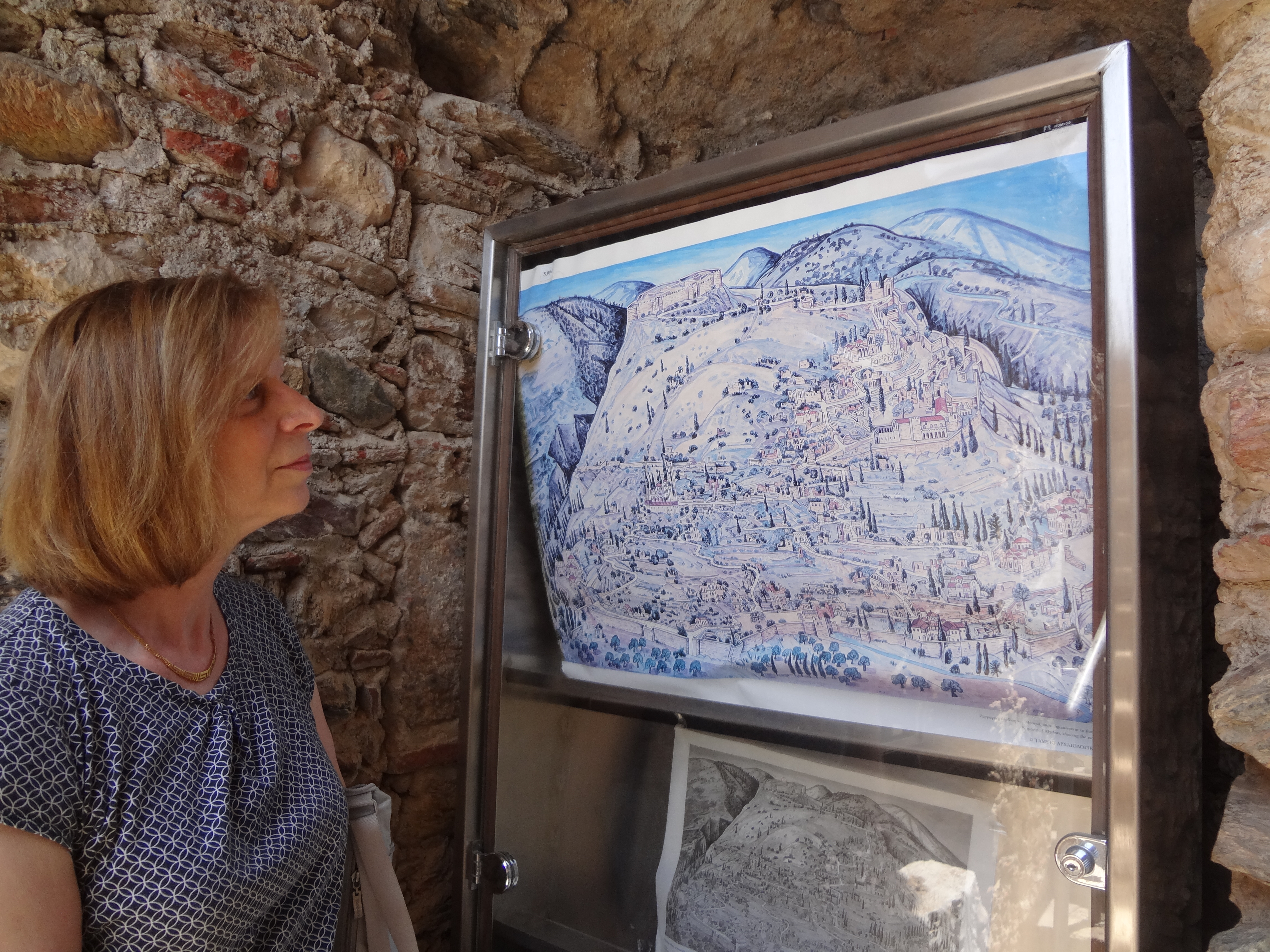
This map, on the wall by the ticket office, shows the layout of the city during its prime years.
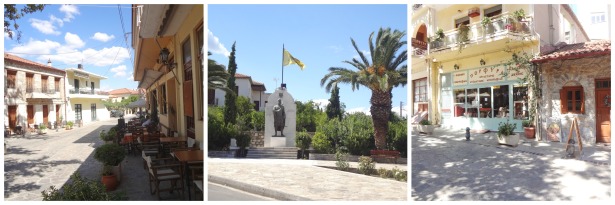
Mystras Collage

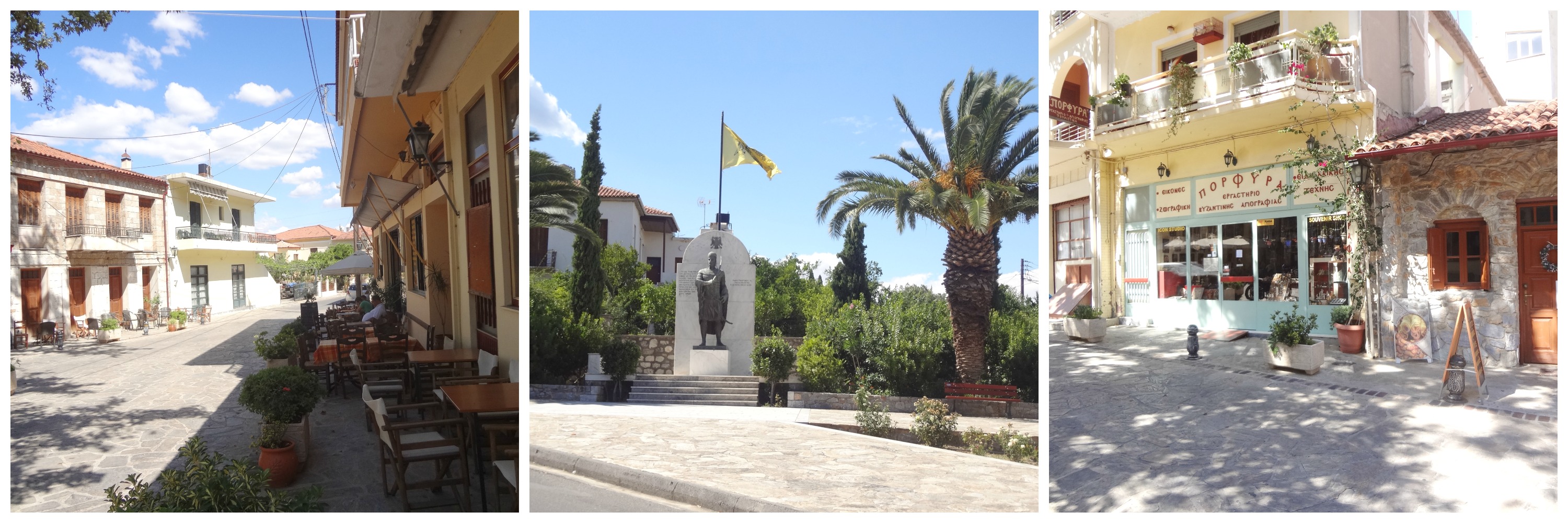
The village of Mystras is charming, with small shops and a mixture of architectural designs. I delighted in spending the night in this wonderful place where my Eftaxias family still lives.

Anavriti 

At the peak of a mountain in the Taygetus range, overlooking Sparta, is the village of Anavriti. The “old road,” a narrow, hairpin-turn switchback road, has thankfully been replaced by one that is newly paved and slightly wider. Even so, it was frightening to wind across the face of the mountain at an almost vertical climb.

Anavriti CollageIt is easy to see why there are so many “icon boxes” on these twisting roads, which are erected by families to memorialize the spot where a loved one died.

Anavriti (11)

The village is literally perched at the very top of the mountain! How did people ever build on this terrain?

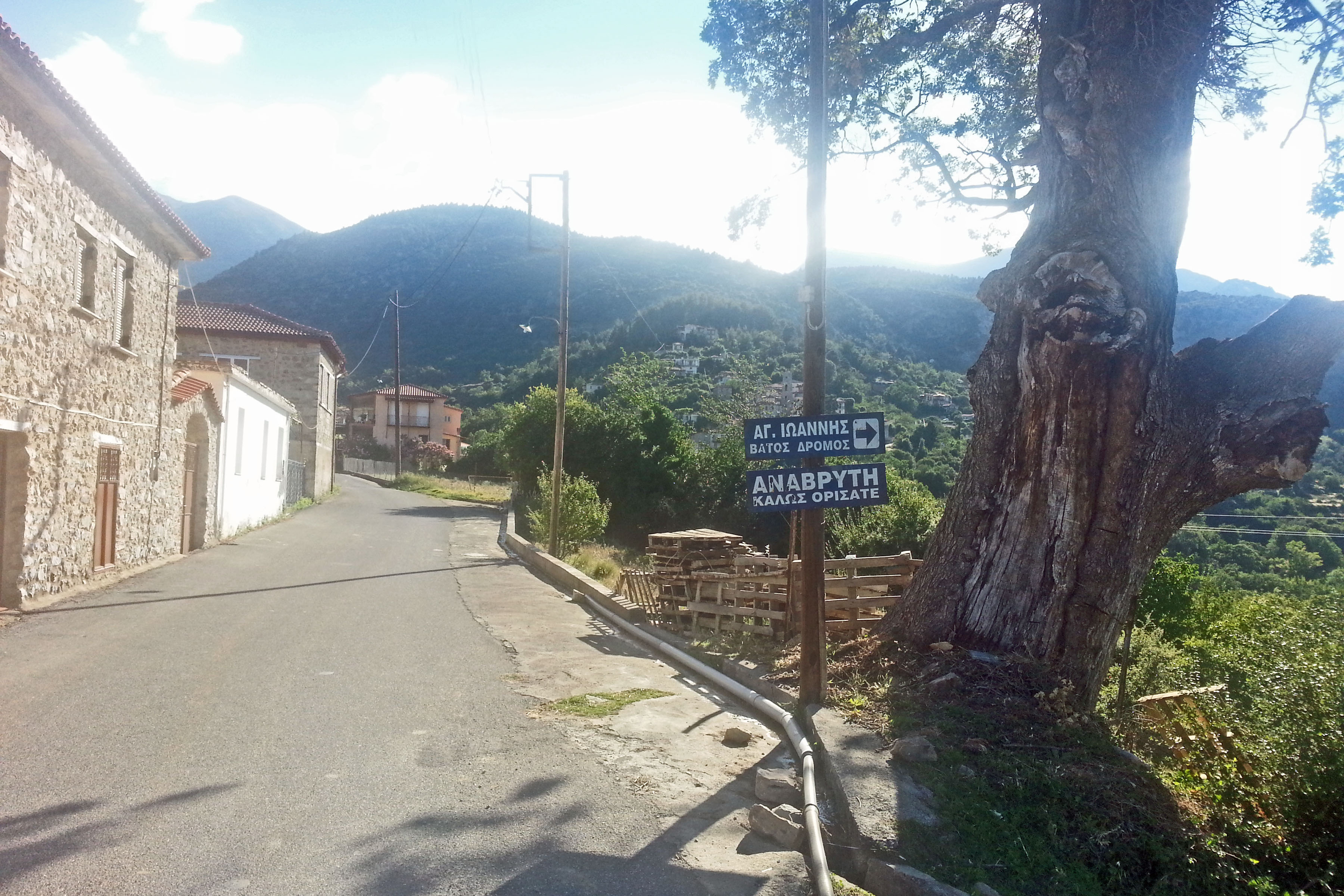
Anavriti (20a)-path to AgIoannis

This photo shows the way to a trail leading down the mountain from Anavriti to Agios Ioannis, making it very convenient for the two populations to mingle! I am attempting to tie Kostakos families from Anavriti into my bloodline; also, there are several Anavriti families that married into mine which give me a link to this village.

Vordonia  

Slightly north of my villages is the town of Vordonia, home to the Linardakis family.

Vordonia (1)

My daughter, Kathy, was thrilled to visit the ancestral home of her paternal grandfather, George Lynard/Linardakis, who immigrated to Washington D.C. when he was a teenager.
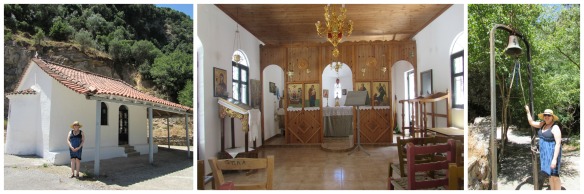
Vordonia Church Collage

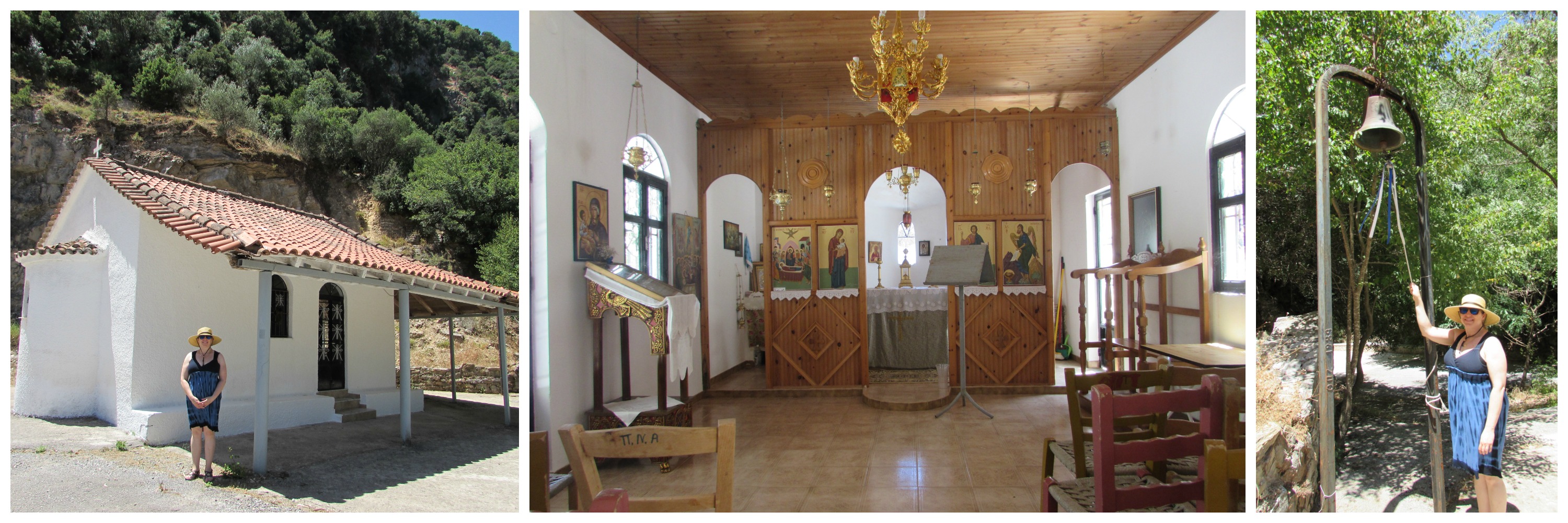
We found a tiny but charming church and imagined that the Linardakis family may have met in a building such as this.

Vordonia Monument Collage

The ornate memorial touched our hearts and reminded us that every life is precious.
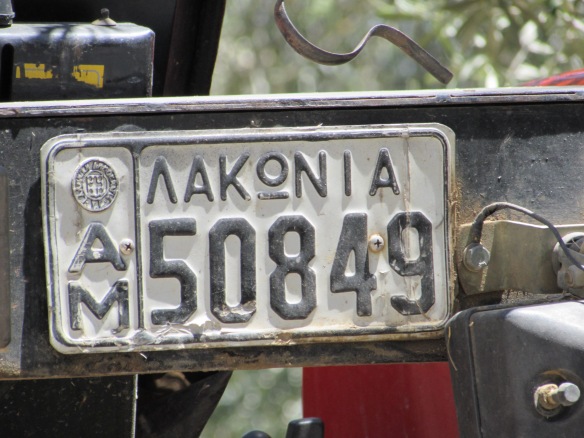
Vordonia (51)As we drove many miles through many villages, we more clearly understood the difficulties of travel in the days before automobiles. People walked or rode donkeys up and down steep and rugged goat trails, and a simple visit to a neighboring village could have been an all-day trek! As I study the records of villages, I now realize why almost all people married within a local geographic boundary — and, why some never left their village.