Unknown's avatar

About Spartan Roots

I am of Greek ancestry with roots in villages near Sparta. My paternal grandparents and maternal grandfather were born in Agios Ioannis (St. Johns), and my maternal grandmother was born in Mystras. I love family history research and have been tracing my roots for many years. I was born in Brooklyn, New York and was raised in a predominantly Greek neighborhood close to extended family. I live in the Washington D.C. metropolitan area and work as a volunteer Co-Director of the Washington, D.C. Family History Center and a genealogy aide/project aide at the National Archives in Washington, D.C. I am always updating and adding new information. Please contact me - I would love to hear from you!

Reading a Town Register and a Male Register

My friend and Greek genealogist, Gregory Kontos, prepared some excellent handouts for the Hellenic Genealogy Conference in Salt Lake City on September 26, 2015.

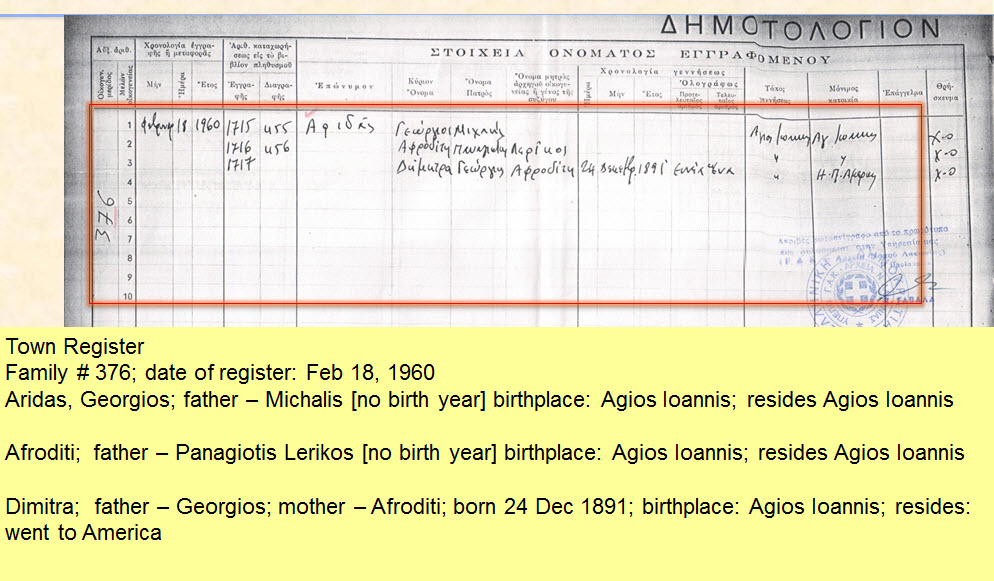
This is a sample of a Dimotologion Koinothtos, or Town Register. It is similar to a U.S. census record as it lists the families in the villages, with parents and children’s names, birthdates, birth places, and other relevant information. These records were created in the 1900’s. The oldest families will have parents born in the late 1800’s, with their children born in the early-mid 1900’s. To my knowledge, there is no such record collection dated earlier than this timeframe, which is unfortunate as we cannot go back to find a father or a mother in this record, when he/she is listed as a child in their parents’ family.

This is page 1 of 2.

Dimotologion 1st page description

Here is an example of the 1st page of the Dimotologion, with an entry translated into English.

Dimotologion extracted 1st page

This is page 2 of a Dimotologion. It gives additional information about each person in the family.

Dimotologion 2nd page description

This is a Mitroon Arrenon, or Male Register. It is a record of every male born in a village. It was kept by the government for military draft purposes, and is considered an official register of birth.

Mitroon Arrenon 1st page description

These two record sets are the backbone of genealogy research in Greece. The regional offices of the General State Archives of Greece (GAK) have books with these record collections for the villages over which they have jurisdiction.

A list of the Regional  GAK offices can be found here: http://www.gak.gr/Cont/cont-py-00.html. The page can be translated into English using Google translate. If you write for information, include whatever you know about the family you are searching. It is especially important to know the spelling of the original surname in Greek (e.g., Papagiannakos, not just Pappas). You must also know the exact village and its location because there are many villages with the same name (e.g., not just Agios Ioannis, but Agios Ioannis Sparta).

2nd Hellenic Genealogy Conference, September 26, 2015, Salt Lake City, Utah

Holy Trinity Cathedrals were the sites of the first and second Hellenic Genealogy Conferences held in the United States:  the first in New York City on April 25, 2015; the second in Salt Lake City on September 26, 2015. I am thrilled to have these opportunities to meet new friends and to be part of a team that teaches the intricacies and nuances of Greek genealogy research. Seventy-four people attended our Salt Lake Conference; some traveling from Florida, California, Oregon, Washington and Canada.

Holy Trinity Cathedral

Father Matthew was delighted to host our Conference and we discussed the importance of families and how genealogy bridges generations, unites families and strengthens children. He stayed with us for the first hour and opened our conference with a beautiful prayer.

Our conference was sponsored by:the Hellenic Cultural Association of Salt Lake CityHellenicGenealogyGeek, and the Ethnic and Mining Museum of Magna, Utah.

Conference organizers were: Dawna Stevens, Georgia Stryker Keilman, and me.

Georgia Stryker Keilman - Dawna Stevens - Carol Petranek Sept 26 2015 SLC Utah

l-r: Georgia Stryker Keilman – Dawna Stevens – Carol Petranek

Conference Agenda

9:00 – 9:15 Welcome: Hellenic Cultural Association

9:15 – 9:45 Keynote Speaker: Dr. Lica Catsakis
Topic: The Evolution of Hellenic Genealogy: Then and Now
Dr. Catsakis, the “pioneer” of Hellenic Genealogy research, will explore the changes in Greek genealogy over the past 30 years. As the author of several Greek genealogy manuals, the Greek specialist at the Family History Library, and former President of SIPEO, she has been in the unique position of observing and guiding this growing movement.

9:45 – 10:15 Georgia Stryker Keilman
Topic: How US Records Can Help You Prepare for Research in Greece
Learn which documents provide pertinent information for Greek research, including Passenger Lists, Social Security Applications, Death Certificates, Obituaries and others.

10:25 – 10:55 Gregory Kontos (via Skype)
Topic: Research in Greece: Using Civil and Church Records
This presentation will cover Civil Records found in Town Halls, records at the General Archives of Greece (GAK) and Church records. Learn about each record collection, what they contain and how to access them. A 10-minute question and answer period will follow.

11:15 – 11:35 Marina Harami (via Skype)
Topic: Resources for Research in Greece: Libraries, Websites, Books, Newspapers
Featuring online and print resources for research in Greece. A 10-minute question and answer period will follow.

12:30 – 1:00 Dr. Lica Catsakis
Topic: Resources for Greek Research at the Family History Library
FamilySearch.org and the Family History Library have Greek microfilms, books, maps, newspapers and additional information not found in other U.S. repositories. Dr. Catsakis has been a long-time volunteer and consultant to the Family History Library, and she will teach which records are available and how to access them.

1:00 – 1:20 Dr. Margarita Dounia (via Skype)
Topic: Why Did They Leave? Greek Emigration in the 1900’s
This presentation will describe the political and economic conditions that influenced the wave of emigration from Greece in the early 1900’s.

1:30 – 1:50 Giannis Michalakakos (via Skype)
Topic: The Revolution of 1821 and Its Impact on Your Ancestors (1821-1900)
After 1821, our ancestors’ lives changed dramatically. This lecture will describe how the the changes in economic conditions, migration patterns, occupations and other matters influenced our ancestral families, and how this impacts your research. A 10-minute question and answer period will follow.

2:00 – 2:30 Dr. Lica Catsakis
Topic: Geographic and Administrative Boundary Changes in Greece
Learn how to find and access records that have been affected by the many geographic and administrative changes in Greece.

2:45 – 3:05 Bob Curtis
Topic: “Using Community Trees to Track Descendants of Greek Immigrants in the U.S.”
“Community trees” are particularly effective for Greek genealogy due to the common practice of Greeks marrying other Greeks in the community. The “Greeks in the Western U.S. Community Tree” was created to link descendants of the 5000 Greek immigrants who came to Utah and surrounding states in the early 1900’s to work in the mines and railroads, and currently includes 9700 descendants. This presentation will describe objectives, methods and contents of the “Greeks in the Western U.S. Community Tree.”

3:05 – 3:20 Dawna Stevens / Carol Kostakos Petranek
Topic: Making Connections: Facebook and Blogs
Greeks around the world are using today’s media to share information, find new cousins, and help each other. This presentation will be an overview of connecting through Facebook and how to create a blog.

3:20 – 3:40 Carol Kostakos Petranek
Topic: Planning a Research Trip to Greece
A trip to Greece is an exciting adventure, and becomes even more meaningful when combined with a research goal. Learn what you need to prepare: items to bring; whom to contact; trip strategies.

3:50 – 5:00 Angie Bush
Topic: DNA as a Tool for Greek Research
This session will provide an overview of DNA tests, surname projects and tips on using DNA to connect with living family members.

Conference handouts and YouTube videos can be accessed at:
https://hellenicgenealogyconference.wordpress.com/hand-outs

Lica Catsakis and Bob Curtis Sept 26 2015

Presenters: Dr. Lica Catsakis and Bob Curtis

Audience 2

Our 3rd conference will be held in Chicago next Spring. The interest and enthusiasm among Greek people to trace their roots and preserve their heritage is exploding. I feel honored to be a part of this exciting movement and anticipate that it will continue to grow exponentially.
 

FamilySearch and Greek Records

I have been helping organize the Hellenic Genealogy Conference which will be held in Salt Lake City, Utah, on September 26 — just a couple of weeks away. I am looking forward to seeing old friends, meeting new ones, and helping people understand the resources available for research.

Among these resources are the Family History Library (also known as the FamilySearch Library). I will be at the Library to work with people, showing them the books, maps, and microfilms at the Library. Besides the website of the General State Archives of GreeceFamilySearch is the only other resource for microfilms of official Greek documents (to my knowledge). Most of these records were filmed in the 1980’s. FamilySearch is in the process of digitizing their microfilm collection, and I hope it not be too much longer before the Greek films are uploaded. When they are online, they will be viewable free of charge.

Recently, I was invited to participate in a genealogy television show and to discuss FamilySearch, its free website and its many resources including the Wiki (here is a link to the page for Greece). Here is a link to that broadcast found on YouTube.


Panagiotis Eliopoulos in Machmoutbei (now Amykles)

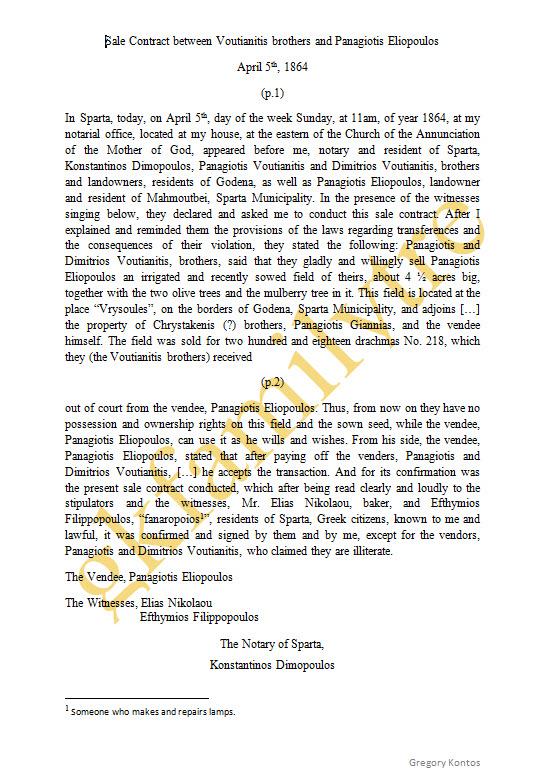
My friend and historian/genealogist, Gregory Kontos, recently translated an interesting document for me. Written in 1864, it is a contract for Panagiotis Eliopoulos to purchase land in Machmoutbei, which is now the town of Amykles, Laconia. I am researching the Eliopoulos name in the Sparta area, as my great-grandmother was Aikaterini Eliopoulou.

Aikaterini and her father, Efstathios, were from the village of Sikaraki located on the outskirts of Agios Ioannis, Sparta. Although the distance between Amykles and Sikaraki is 5 kilometers or a 10-minute car ride today, that was a long donkey ride in the mid 1800’s. However, in my relentless hunt for family, I leave no stones unturned so I am researching the Eliopoulos family in Machmoutbei.

Eliopoulos, Panagiotis Contract April 5th 1864 p.1

Panagiotis Eliopoulos, Contract April 5th 1864 p.1

Eliopoulos, Panagiotis Contract April 5th 1864, p.2

Panagiotis Eliopoulos, Contract April 5th 1864, p.2

Panagiotis Eliopoulos, Sale Contract, April 5th 1864

Contract Translation by Gregory Kontos

There can be hidden clues in these documents. For example, the trees are specifically listed which indicates their value. The contract was read aloud to ensure all understood its terms, and the Voutianitis brothers claimed they were illiterate.

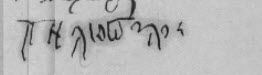
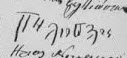
In the Electoral Rolls of Lakedaimonos (Laconia) 1843-1873 (File #22), there is a P. Eliopoulos who signed the rolls as the assistant mayor (παρέδος) of Machmoutbei. When I compared his signature on the election record and this contract signed in Machmoutbei, this indicates that they are the same person and that Panagiotis was literate:

Panagiotis Eliopoulos signature 1864 contract

P. Eliopoulos signature 1864 contract

Panagiotis Eliopoulos signature on electoral rolls

P. Eliopoulos signature on electoral rolls

These documents are a fascinating glimpse into the everyday lives of our ancestors. It is painstaking work to piece together fragments of information from any source, but especially so when researching in Greek records where the handwriting stumps all but the experts. When I get frustrated, I remind myself to be grateful, instead, that these records have survived through the wars and occupations, and that I have friends to help me navigate through them.

Although I do not yet know if Panagiotis Eliopoulos is related to me, I am thrilled to have this document and to bring his life into the 21st century.

Addendum to this post: After looking at another contract for Panagiotis Eliopoulos of Lele, Agios Ioannis (village of my ancestors), Gregory informed me that Panagiotis Eliopoulos of Machmoutbei and Panagiotis Eliopoulos of Lele are two different people. Panagiotis from Machmoutbei  signs the contracts but Panagiotis from Lele is illiterate.

Virtual Trip through Agios Ioannis (Sparta)

My friend, Georgia Stryker Keilman, found a Google car trip through our ancestral village of Agios Ioannis. Her post on her blog, HellenicGenealogyGeek, reads as follows:

Follow this link to view the TRIP THROUGH AGIOS IOANNIS.  This is a car driving through the village’s main road with a 360 degree camera mounted on the top of the car.  You can view this in several different ways: 1) the bottom strip of photographs are highlights from the video;  2)  on the lower right side of the main picture you will see “backward and forward” symbols < > which will allow you to move forward on the road incrementally;  3) you can place your cursor on the road and drag your way forward;  4) on the bottom right side of the main picture is a red and white pointer surrounded by circular arrows which will allow you to look at a 360 degree view from any point on the road.

Georgia’s connection to Agios Ioannis is her ancestor, George Stratigakos (1859-1921). I just love to think that our families must have known each other as this is not a big village, and that our grandfathers must have passed many hours in the local kafenio talking politics and other topics. Here we are, 100 years later, reconnected in a new land. It’s all so exciting!

Georgia’s HellenicGenealogyGeek Facebook page is the go-to place for online Greek genealogy collaboration with over 6,500 members.

Thank you, Georgia, for finding and posting this virtual tour and for all you do to connect Greek researchers online!