Unknown's avatar

About Spartan Roots

I am of Greek ancestry with roots in villages near Sparta. My paternal grandparents and maternal grandfather were born in Agios Ioannis (St. Johns), and my maternal grandmother was born in Mystras. I love family history research and have been tracing my roots for many years. I was born in Brooklyn, New York and was raised in a predominantly Greek neighborhood close to extended family. I live in the Washington D.C. metropolitan area and work as a volunteer Co-Director of the Washington, D.C. Family History Center and a genealogy aide/project aide at the National Archives in Washington, D.C. I am always updating and adding new information. Please contact me - I would love to hear from you!

Double Date

No, this is not a post about two couples going out for dinner or a movie date. It is, however, a description of something important that I learned this past weekend.

On Saturday, at the Greek Genealogy Conference held in Tarpon Springs, Florida, I taught a class entitled, “Using U.S. Records to Begin Greek Research.” In this presentation, I used numerous examples of records that may have information to help  find the original name of an ancestor (such as Papadopoulos, not just Pappas), and also the village of birth (very important, as records in Greece are cataloged by location).

I emphasized the importance of finding every record that could have possibly been created in the U.S. for an ancestor. The reason is that each document may have new or different information. When documents for a direct ancestor are hard to find, look for documents of siblings or other family members, and do your best to locate every piece of paper on which they could possibly be listed.

As an illustration, I used both civil and church marriage records for my maternal grandparents. This is the State of New York Certificate and Record of Marriage for Ilias Papagiannakos and Angelina Eftaxias; note that the date is May 10, 1914:

New York State Certificate and Record of Marriage, Ilias Papagianakos and Angelina Eftaxias

State of New York: Civil Marriage Record Louis Papagianakos and Angelina Eftaxia GROOM: age 32; occupation: oyster dealer; birthplace: Greece; father’s name: Panagiotis; mother’s maiden name: Caterina Eliopoulis BRIDE: age 20; birthplace: Greece; father: Constantinos; mother’s maiden name: Stafia Zaharopoulo. Joined in marriage at 358 West 44th Street, Manhattan on 10th of MAY 1914

This is the Greek Orthodox Marriage Certificate from Holy Trinity Church in New York for the same grandparents. Note that the date of marriage is:  27/10 April, 1914.

pappas-louis-angelina-marriage-certif-001

Greek Orthodox Marriage Record; Holy Trinity Church.   Of Agios Ioannis, Sparta, Ilias Panag. Papagiannakos and of Mistra Aggeliki Kon. Eftaxia married on 27/10 APRIL 1914 Best man: Christos Aridas FATHERS: Panagiotis Papagiannakos KON [Konstandinos] Eftaxias

As I described the differences between the civil and the church marriage records, I mentioned that I was puzzled by the “double date” on the church record. I did not understand the discrepancy between the two dates and what 27/10 April was referring to.

After the presentation, Adamantia Klotsa, Consul General of Greece, approached me and solved the mystery. She explained that the “double date” on the Greek certificate referred to the dates as they were calculated by both the Julian Calendar (27 April) and the Gregorian Calendar (May 10). There is a 13-day difference between the dates in these calendars, and the Greek record reflected both because Greece used the Julian calendar until 1922. With this marriage occurring in 1914, it now makes sense as to the correctness of the date as noted on the Greek Orthodox Marriage Record–the difference between April 27 and May 10 is exactly thirteen days.

Genealogy is never boring–there is always something new to learn!

Andreas Kostakos: Hiding in Plain Sight

How many years does one search to find a record–any record–that proves the existence of a great-grandfather? At what point does a  “reasonable” researcher give up?

As a researcher (the reasonable part is questionable) and an eternal optimist, my answer is: never! Never, never, never give up. Newly found and newly digitized records are becoming available continuously; social media is bringing together people who collaborate and help each other; DNA is expanding the “cousin” pool.

All of these stars aligned in the sky to bring forth documentation for my great-grandfather, Andreas Kostakos.

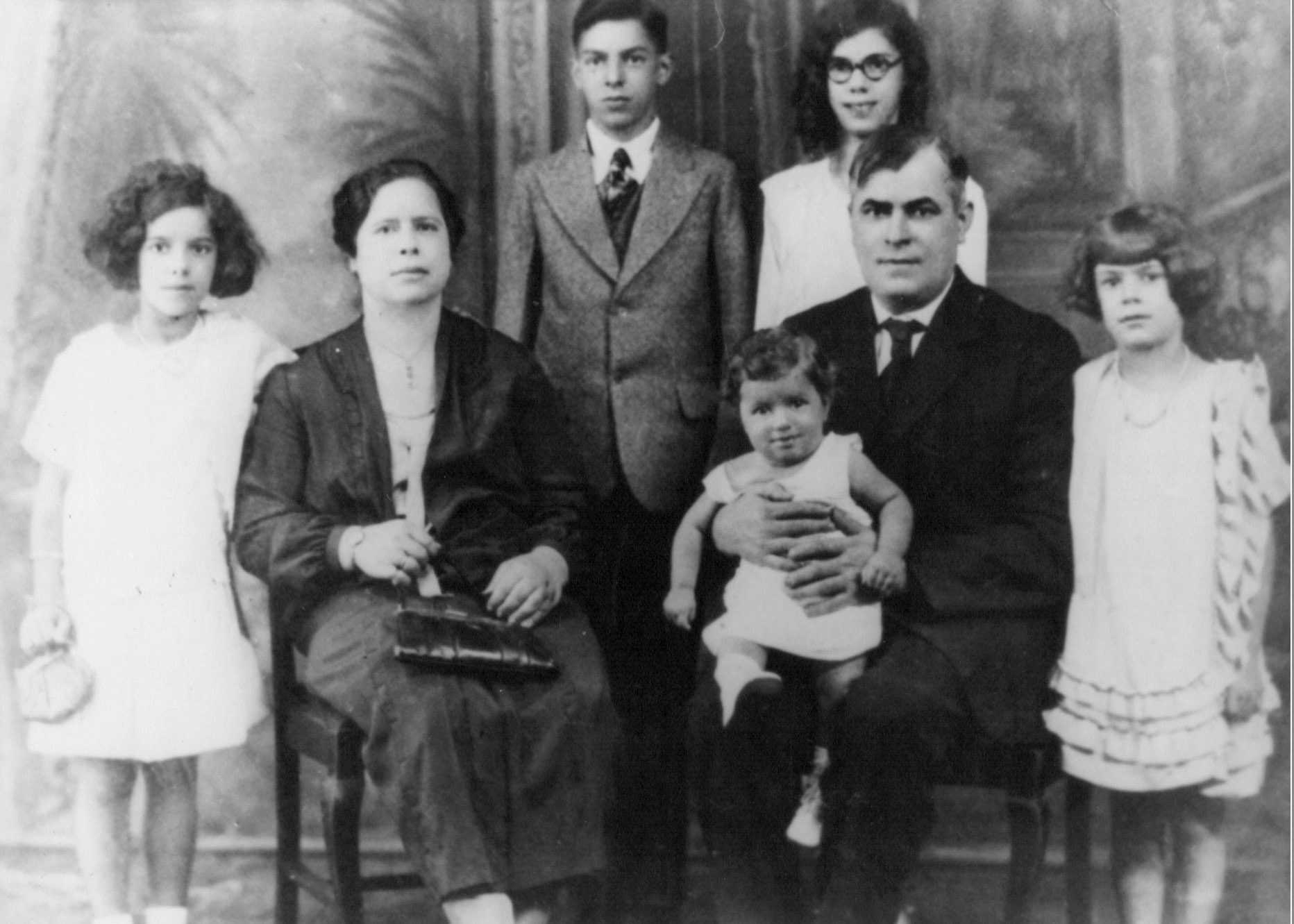
Andreas, I have now learned, was born in 1809 in Agios Ioannis (St. Johns), Sparta, Laconia, Greece. Andreas had two wives, Anastasia–by which he had perhaps six sons, only one of whose descendants we know; and Poletimi Christakos–by which he had five additional children including my grandfather, Ioannis (John). This is the only family photo of my grandfather, Ioannis with my grandmother, Hariklia Aridas Kostakos and their children. My father, Andrew, was the oldest.

l-r standing: Frieda, Andrew, Pauline, Georgia. Seated: Hariklia, Alice, John

Family of Ioannis Andreas Kostakos, about 1930, Brooklyn, New York. l-r standing: Frieda, Andrew (my father), Pauline, Georgia. Seated: Hariklia, Alice, Ioannis.

For years, I have looked for records for Andreas in Agios Ioannis and surrounding villages of Sparta. I sent letters to the Archives in Sparta (excellent support but no Andreas Kostakos found) and the Mayor’s office (no response). Three years ago, my friend and research companion, Gregory Kontos, introduced me to the Election Registers online at the Digital Collection of the Greek Archives. These Registers were created in every village to record the names of men who were at least 21 years old and eligible to vote. The Registers from 1872 are typewritten and easy to read. The older ones, which can date back to 1844, are handwritten and almost indecipherable to a non-native reader.

That collection was my first initiation into trying to read old Greek handwriting. This is not for the faint-hearted, but it is possible. Over the years, I have learned to read some modern Greek writing but the older script is downright intimidating. I never went back to look at the Ladas collection. Until yesterday.

My friend and historian/researcher, Giannis Michalakakos, was working on a genealogy case for a client whose roots were from a village near Sparta. While reviewing the Lada Election Lists for 1844, he saw an entry that he knew was my family. Imagine my shock – joy – disbelief when he called and said that he found the name “Kostakos, And” in Agios Ioannis! My hands were actually trembling when I clicked on this link that took me to the page for file 22, image 99, line 1205: http://arxeiomnimon.gak.gr/browse/resource.html?tab=tab02&id=13499&start=80

General Archives of Greece, Election Material from the Collection of Lada (1844), File 22 - village of Agios Ioannis File 22, Image 99; Line 1205, Year of Record: 1844, Last name: Kostakos; First name: And.; Male; Age 35; How long lived in the village/resident: αυτόχθων aftochon (indigenous) is from Agios Ioannis; Has money or property? Yes; Occupation: landowner.

General Archives of Greece, Election Material from the Collection of Lada (1844), File 22 – village of Agios Ioannis.  File 22, Image 99; Line 1205, Year of Record: 1844, Last name: Kostakos; First name: And.; Male; Age 35; How long lived in the village/resident: αυτόχθων aftochon (indigenous) is from Agios Ioannis; Has money or property? Yes; Occupation: landowner.

On line 1205 is the entry for “And. Kostakos,” age 35:

File 22, Image 99, Line 1205

File 22, Image 99, Line 1205

Giannis and I agreed that “And” was the abbreviation for “Andrew.” His age is listed as 35 in 1844, which puts his birth year at 1809–within two years of a “guess-timate” I had calculated years ago. The 6th column records the length of time the individual was a resident of the village. Andreas is listed as being αυτόχθοω (aftochon) which means “indigenous.” Giannis explained that Andreas, as indigenous, was in Agios Ioannis from the beginning of the existence of the state, i.e., since Greece became an independent nation after the Revolution of 1821.

During my trip to Sparta in 2014, Gregory and I had visited the Greek Orthodox Church Mitropolis of Sparta to research in marriage records. Amazingly, we found, in the Index Book of Marriages, the entry for Andreas and Poletimi who were married on August 20, 1860. This was the first “official” document that proved Andreas actually existed. Unfortunately, it did not give the ages of the couple; thus, the newly-found Election Register has provided definitive information on Andreas’ birth year and birth place.

Mitropolis of Sparta, Index of Marriages, Number 125, Date: August 20, 1860; Andreas Kostakos of Agios Ioannis and Poletimi, daughter of Nikolaos Christakos of Xirokambi, Faridos.

Mitropolis of Sparta, Index of Marriages, Number 125, Date: August 20, 1860; Andreas Kostakos of Agios Ioannis and Poletimi, daughter of Nikolaos Christakos of Xirokambi, Faridos.

But this new record raises a new research challenge:  years ago, my elderly aunt, a descendant of Andreas and Anastasia, told me that Andreas came to the Sparta region from “Pyrgos over the mountains” after the 1821 Revolution to find work (see prior post). That comment had shifted my research focus from Laconia to Messinia, the location of Pyrgos Lefktro–a village which is literally over the Taygetos mountains. My hunt so far has not yielded a Kostakos family; yet, even if I find one I cannot know if the Kostakos is related to me.  Kostakos is a patronymic name (Kost-akos literally means son of Kostas); many surnames evolved from patronymics; and there are untold numbers of men named Kostas/Konstandinos in the southern Peloponnese. I hope that DNA will be the next link to connect me with “lost” branches of my family.

Research results? Many years, many efforts.

Without the help of Giannis and Gregory, my research would remain stalled.

Without the digitization of the Election Lists, my research would remain stalled.

Without social media and DNA connections, my research would remain stalled.

Whenever I become frustrated in this quest, I take a step back and look at the totality of the situation: there was no “Greece” during 400 years of Turkish occupation; in the late 1800’s, a new government was being created; life was predominantly rural; people were largely illiterate; recordkeeping was, at best, rudimentary. In retrospect, it is quite amazing that any records have survived. It is encouraging that some have been digitized and are now online.

I continue to have faith that, if there is a written document to prove the existence of of one of my ancestors, at some point in time–with the help of a friend, with the discovery of a new record collection, through a DNA connection–it will find its way to me.


Louis Pappas & Angelina Eftaxias – A Brief History

October 2, 2016. This brief history is compiled by Carol Kostakos Petranek. It is based on a conversation of November 29, 1985, between Carol Kostakos Petranek and her parents (Catherine Pappas Kostakos & Andrew Kostakos) and her aunt and uncle (Bertha Pappas Pouletsos and Nick Pouletsos).

Around 1900, Ilias Papagiannakos (Louis Pappas) left his village of Agios Ioannis (St. Johns) Sparta, and came to America to begin a new life.  He was also seeking to avoid the draft in Greece which was mandatory for all young men who turned 18. Louis would have traveled steerage class on a steamship, a journey that would have taken about four weeks. He arrived at Ellis Island and migrated to Pennsylvania, finding work in a meat factory that made hot dogs. Louis eventually left Pennsylvania to find better employment opportunities, although it is not known why he chose to settle in Hoboken, New Jersey. He opened a small steak and seafood restaurant with a partner, John.

Although Louis worked hard—7 days a week, 18 hours a day—he never complained. The early 1900’s were a time of depression in Greece and young men left by the thousands to find work overseas.  Life in small villages held no promise for the future.  It was rare for children to go to school. Families were very poor. They owned a little acreage and grew mostly olives which they sold to make olive oil. The only financial help they would receive was if a son in America sent money so the family could purchase more land. Many of the early immigrants were very hard working because they knew what hunger was, and they were motivated to help themselves and their families.

Louis’ wife, Angelina, was born in Mystras, a village in the Taygetos mountains that tower over Sparta and Agios Ioannis. Her father, Konstandinos, was a shepherd and owned an olive grove. He was married twice: first to Anastasia Pavlakos, then to Angelina’s mother, Stathoula Zaharakis. He lived to be almost 100 years old. Angelina’s  mother was from the village of Theologos, Oinountos, Laconia. Sadly, she died in the mid 1950’s while preparing to come to America to visit her daughters.

It was customary for a son who had emigrated to America to work hard, live frugally and save money to bring his sisters over, one by one, to be married.  Greek custom dictated that woman could not marry unless she had a dowry of either livestock, land or money.  This was a burden on the poor families who could not afford dowries. The girls were sent to America, the oldest first, to be married and start a new life.  Angelina’s stepbrother, John Eftaxias, had emigrated to Manhattan in 1907.  He worked and saved money, then sent for his sisters:  Kanela came first, then Katina, then Angelina, and Vasiliki.  Angelina traveled on the S.S. Oceania, sailing from Patras on March 11, 1912 and arriving at Ellis Island on March 29, 1912.

In New York, Angelina worked in a factory, making batteries. She first lived with her sister, Katina, but she was not happy there.  When Angelina came home from work she would do all the wash, housework and child-care.  She complained to her brother, and he arranged for her to live with her other sister, Kanela.


Louis and Angelina were brought together through a “match.” One evening, Angelina came home from the factory. She was tired and dirty, and when she was asked to come and meet someone, she ran into the bedroom to wash and clean up.  That was the first time she met her future husband.  Angelina’s brother, John, thought that Louis would be a suitable husband for her and he agreed to the marriage.  In those days, girls didn’t have much influence over their lives. Marriages were arranged for men and women to survive and raise a family.

After they married on April 27, 1914, Louis and Angelina  moved to Court Street in Hoboken, N.J. where their five children were born:  Peter (1915-1916), Catherine 1917-2011, Panagiota (Bertha) 1918-2007, Nicholas 1919-1995, and Bill 1921-1998 [Angelina’s first child was an unnamed stillborn son]. While Louis worked, Angelina stayed at home to keep house and raise her family. When the children were small they were not allowed inside the restaurant but occasionally, Angelina would take them there for a special treat. Louis would greet them by scooping a handful of oysterettes (crackers) into his apron corner and giving them to his children.  Because Louis worked 18-hour days with no holidays or days off, there was little time for him to interact with his family.  He would see his young children in the mornings; later, when they were older, in the afternoons when they came to the restaurant for dinner. Louis would check his children’s report cards and encourage them to do well in school.  Very rarely did he ever discipline his children—that task was left to Angelina.

During the depression years, times were so hard that Louis had to make a choice:  either close the restaurant and work for someone else or have his wife come and work with him.  Angelina wouldn’t hear of the first alternative — she decided to work with Louis. They fired the cook and she took the cook’s place. It was during this time that the children came to the restaurant every afternoon after school and ate dinner with their parents.  As Bill and Nick grew older, they worked in the restaurant, washing dishes, peeling potatoes and waiting on tables.  In those days, it was unheard of for girls to do such work, so Catherine and Bertha ever worked in the restaurant.  However, they were expected to help out in the home. As the eldest daughter, Catherine became responsible for the house and the children.  The sisters and brothers got along well.  They did not fight but helped each other with school work and housework.

Louis had to sell his first restaurant on Court Street because a movie theater was being built on the property, so he purchased another restaurant on First Street.  The restaurant was long and narrow with tables on one side, and it seated approximately 50 people.  There were no meal “checks” where customers’ orders were written down; rather, Louis would remember what each customer ordered. –he even remembered carry-out orders.  That was one of Louis’ talents — his incredible memory.  During slow times at the restaurant, Angelina would do all her crocheting and embroidery.  She made dozens of tablecloths, blankets and scarves.

During their school years, the Pappas children were kept very busy; they did not know the word “boredom.”  Bertha said, “They [the parents] were smart people in those days.  They kept their children very busy and there was no time to roam around.  No extra time on your hands.”  When the children were about eight years old, they were enrolled in Greek school and attended both American school and Greek school every day.  There were the four Pappas children and five Greek neighbors who rode the ferry from Hoboken into New York City every afternoon to attend Greek school.  The children found the double-decked ferry boats exciting to ride. The first month of their commute, Angelina or another mother would take the children into the city, but then the nine youth were on their own.  They would occasionally run around and be mischievous on the boat, but they would never do anything troublesome for they knew that someone would “snitch” on them.

When they got home from Greek school, the children had homework from both schools. By the time they finished, it was bedtime. On Saturday and Sunday they cleaned the house and washed clothes on a scrub board. There was no extra time for hanging out with friends or roaming the streets; in fact, going out with friends was forbidden. The children would go to movies on Tuesdays (if there was no school) or on Saturdays. There was no dating or social life until the children were in their late teens and early 20’s.  Even when the girls graduated from high school and were working, they were not allowed to date.

During the summers, the children would read and play outside in the streets — baseball, or kick the can.  Sometimes Angelina would take them to Coney Island to go swimming which was always a wonderful and welcomed excusion.  They would also take day trips on the Hudson Day Line ferry to upper New York.  The children were taught to share and had but a few toys — Catherine and Bertha shared one doll and one carriage and the boys had one or two cars each. No one owned a bicycle.  One Christmas when the children were in their teens, their parents purchased a pool table. Even though the parents had very little money, to the best of their ability they provided activities and fun times for their children.

When the children were older, Louis would close the restaurant two days a year — Christmas and New Year’s Day.  On New Year’s Eve, the family would play cards and go to the movies on New Year’s Day.

Louis became ill when the boys were drafted into the Army.  He loved his children so much that he brooded over them constantly.  Nick was drafted first and that caused him much grief, but when Bill was drafted it became his “downfall.”  He had plans for his boys — he wanted to open a big restaurant and have the two boys as partners, then he could gradually ease into retirement.  The draft shattered these plans, and he fell into a deep sadness and depression; his entire outlook changed and he stopped eating.  Within a year, his sickness progressed to the point where he could not work.  Angelina wanted to sell the restaurant, but Louis refused and, instead, gave it away to a young family.  His reasoning was that he successfully raised four children in the restaurant, and when he saw a young father with two children struggling and looking for work, he simply offered the business to him.  Louis contracted pneumonia and went into the hospital.  One week later, he died on May 12, 1944.

Nick came back from the Army to be at the funeral, but Bill, also in the Army, was overseas in England.  The girls were working and living at home with their mother while the boys continued their military service.  The girls supported the household by giving all their salary to their mother, who in turn would give them enough money for lunch and cab fares.  There was no resentment or animosity on the girls’ parts — in fact, there was no question that they would work to support their mother.

Angelina’s daily routine changed after the death of her husband, but she still kept extremely busy.  She would clean house, shop daily (since there were only small iceboxes in the apartments, wash clothes by scrub board and make dinner for the children. Angelina spent visited friends and relatives in Hoboken and went into New York to shop.  After her children married, Angelina found a job cleaning doctor’s dormitories in a hospital in Hackensack, N.J.  Angelina, Bill and Pauline purchased a home in Westwood, N.J. where they lived together for many years. In her later years, Angelina rotated living with her children in Long Island, Maryland and California. She died on October 28, 1972.

Angelina was a very headstrong and independent woman. Her daughters said that she was born ahead of her time.  “If she could read and write and was alive today, she’d certainly be President of something or the head of the ERA movement,” Bertha said.

Bertha and Catherine agree that even though they grew up with a very simple life, they were happy and contented.  Bertha said, “I grew up laughing through everything.”  Catherine said, “Looking back on it now, I believe my mother was l00% right the way she brought us up.  Maybe when we were growing up and especially when we started to work we would gripe, thinking we were held back so strictly because we couldn’t date, but I can now see her reasons for all she did.”

Top: l-r: William Pappas, Catherine Pappas Kostakos with Carol; Bertha Pappas Pouletsos; Angelina; Nick Pappas with John Pouletsos and John Kostakos. Left: Angelina Pappas, 1947. Right: Louis Pappas, about 1943

Top: l-r: William Pappas, Catherine Pappas Kostakos with Carol; Bertha Pappas Pouletsos; Angelina; Nick Pappas with John Pouletsos and John Kostakos. Left: Angelina Pappas, 1947. Right: Louis Pappas, about 1943


Top: l-r: William Pappas, Catherine Pappas Kostakos with Carol; Bertha Pappas Pouletsos; Angelina; Nick Pappas with John Pouletsos and John Kostakos. Left: Angelina Pappas, 1947. Right: Louis Pappas, about 1943


Return to Greece, 2016. Part Nine: Home Again

This is the ninth and last post in a series about my trip to Greece, June 30-July 20, 2016 — an amazing journey of history, family and discovery. Previous posts can be found here.

Coming back to Sparta was like coming back home. Driving north from Mani on the Sparta-Gytheion Road, I passed Xirokambi and Amykles, two villages that have been newly placed on my ancestral map. The Taygetos mountains on the west, dotted with clusters of red-roofed homes, guided me through lush plains and to the now-familiar landmarks on the outskirts of Sparta.

On the Sparta-Gytheion Road, July 2016

On the Sparta-Gytheion Road, July 2016

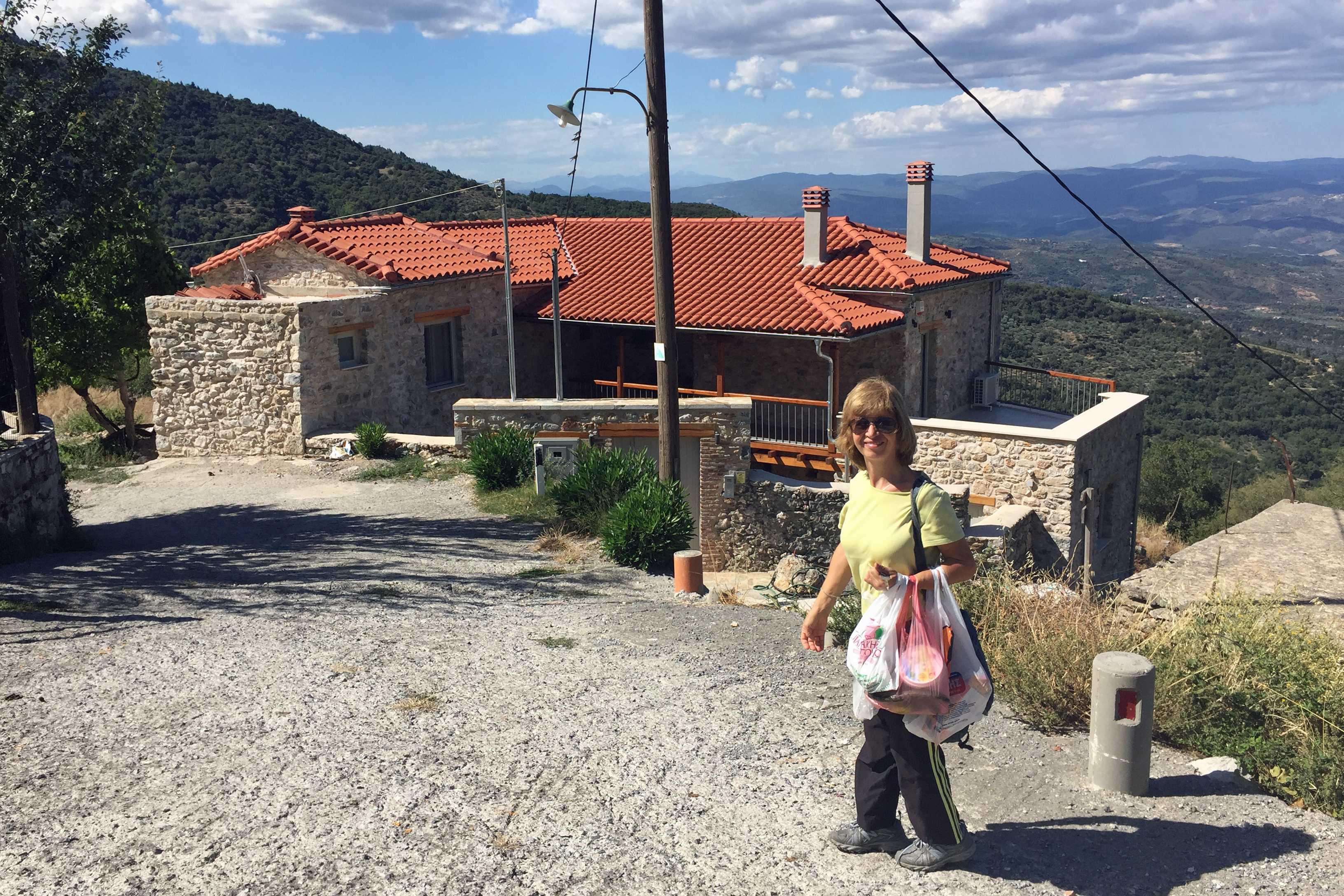
My friend, Joanne Dimis-Dimitrakakis, invited me to spend the night in her newly-renovated home. Named Arxontiko Taygeti, it is a bed and breakfast situated in Barsinikos, almost at the top of a mountain overlooking Sparta and the castle of Mystras. The view is unparalleled and the home is lovely.

View from Arxontiko Taygeti, overlooking Sparta. July 2016

View from Arxontiko Taygeti, overlooking Sparta. July 2016

Arxontiko Taygeti and proud owner Joanne Dimis-Dimitrakakis, July 2016

Arxontiko Taygeti and proud owner Joanne Dimis-Dimitrakakis, July 2016

As I prepared to leave Mystras and Agios Ioannis, I drove one last time through these areas to say a silent goodbye. Their serenity and beauty are like a balm to my soul. The sociality and outdoor lifestyle is so inviting. People are not sequestered in their houses; instead, I see them sitting outside, walking, having coffee at a cafe, strolling in the plataea. This almost-communal nature of village life is sometimes good, sometimes not so good — but one is never isolated or alone.

From Agios Ioannis:

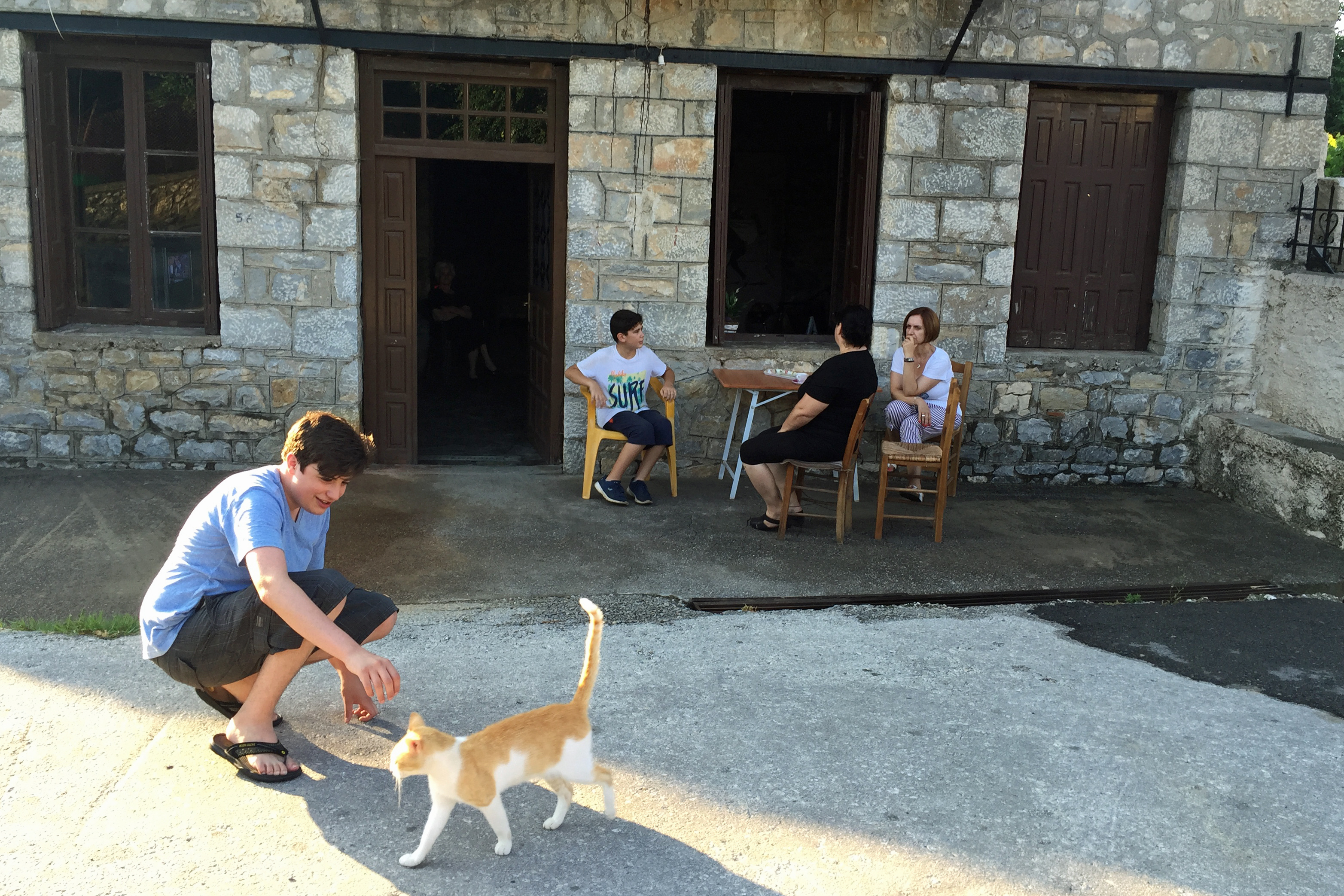
Andrew Soper and neighbors in Agios Ioannis, July 2016

Andrew Soper and neighbors in Agios Ioannis, July 2016

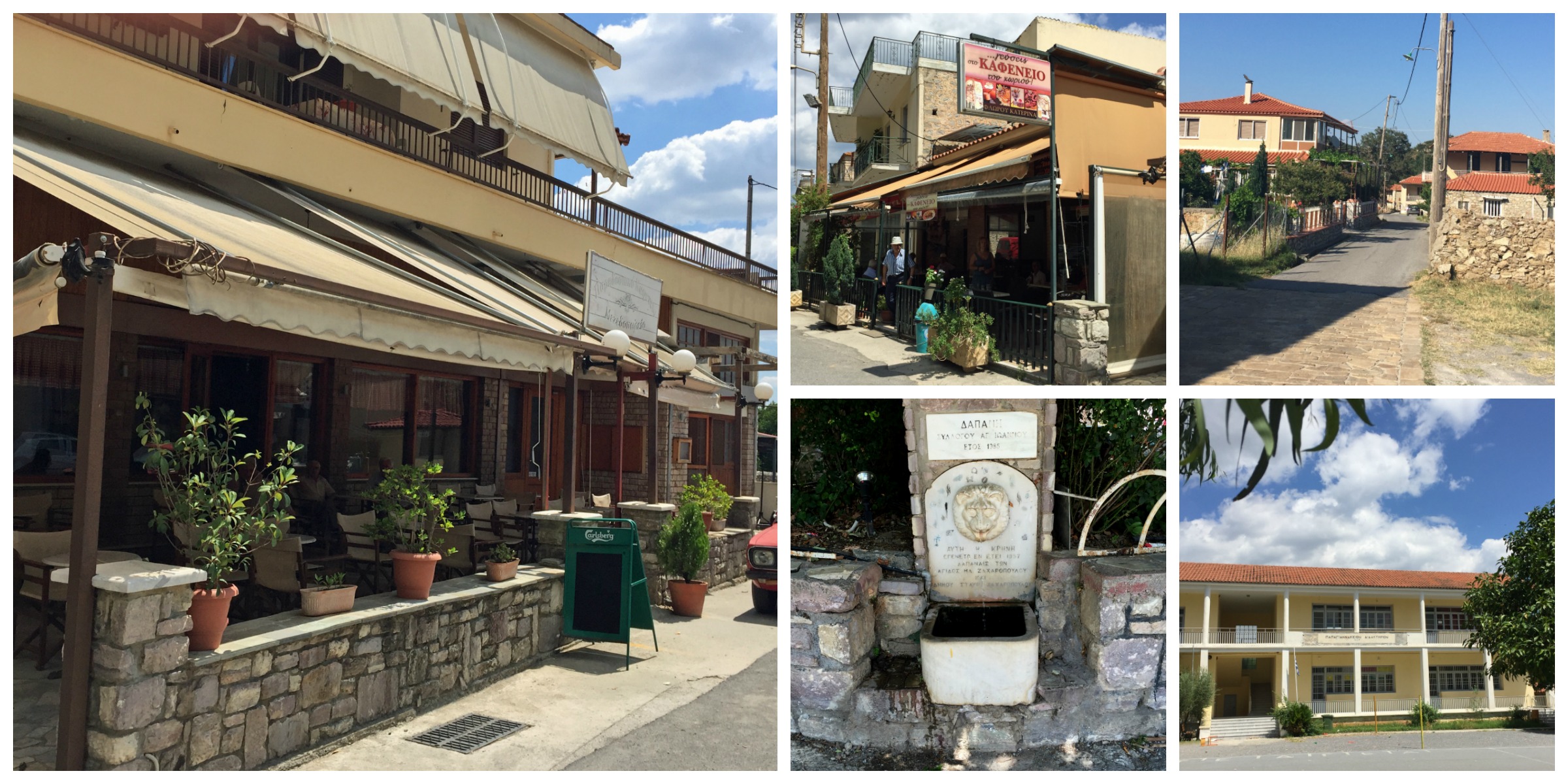
Agios Ioannis, July 2016

Agios Ioannis, July 2016

Agios Ioannis, July 2016

Agios Ioannis, July 2016

From Mystras:

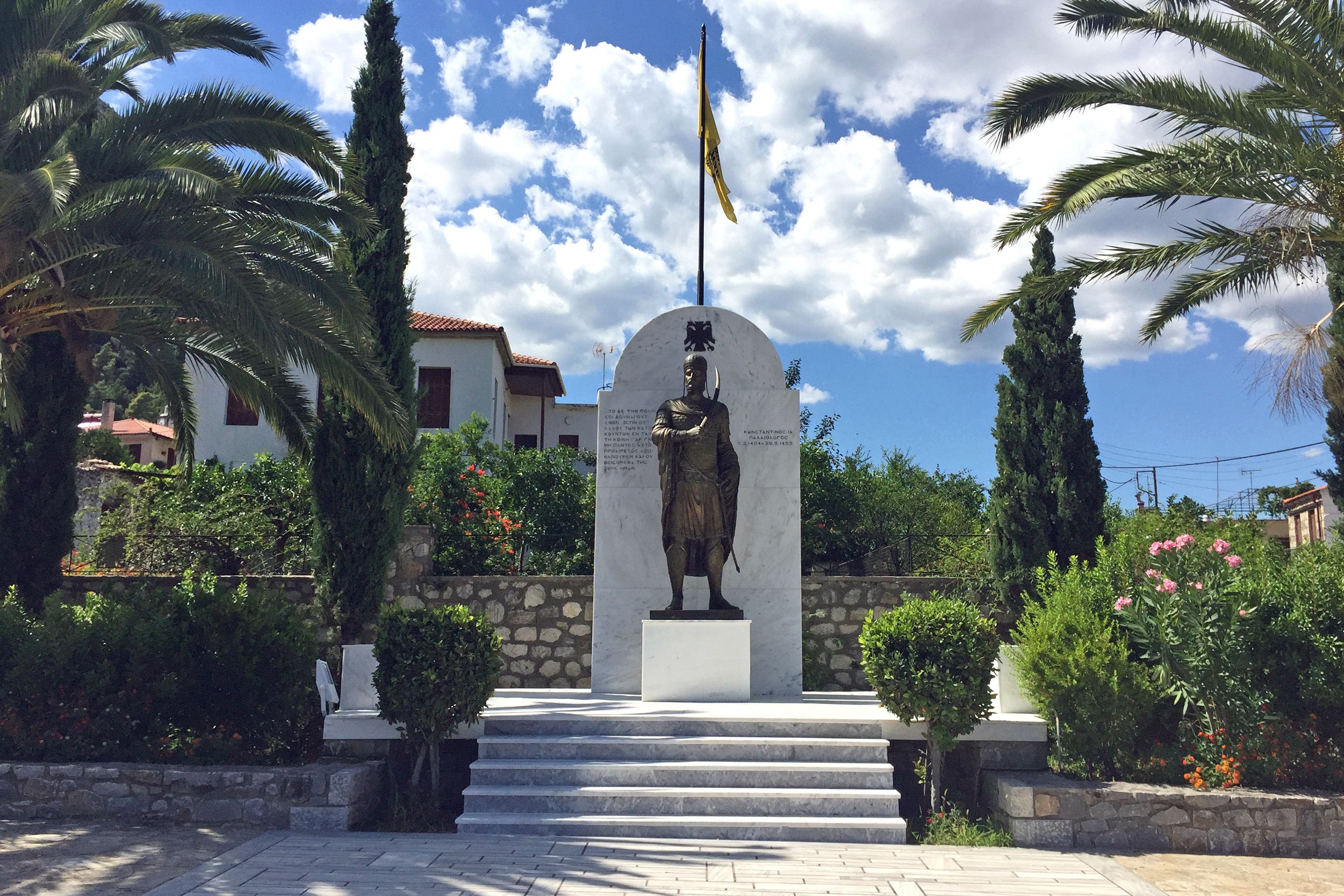
Statue of Konstantine Palailologos, last Byzantine emporer; Mystras, July 2016

Statue of Konstantine Palailologos, last Byzantine emper0r; Mystras, July 2016

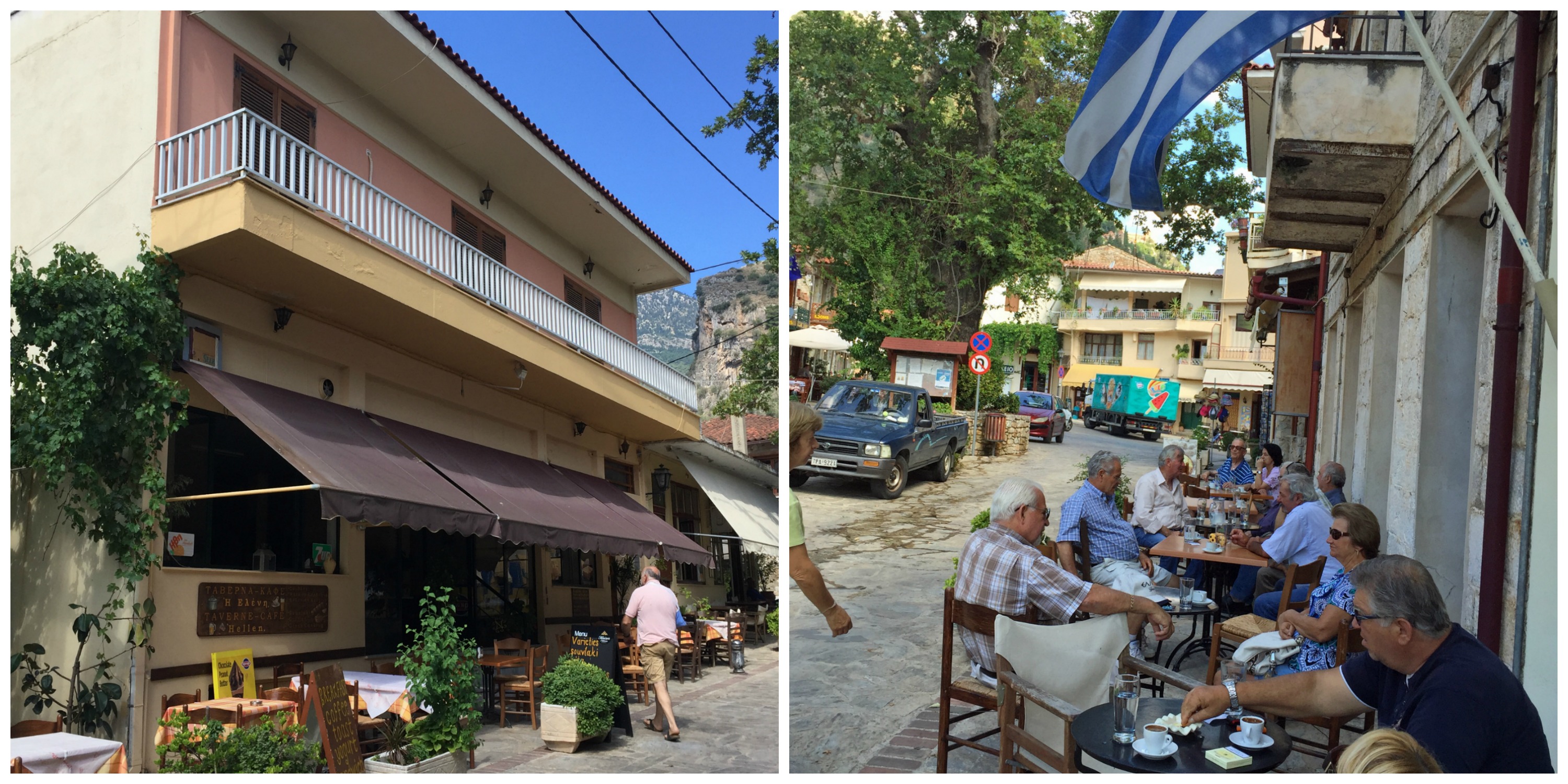
Relaxing at the plataea, Mystras, July 2016

Relaxing at the plataea, Mystras, July 2016

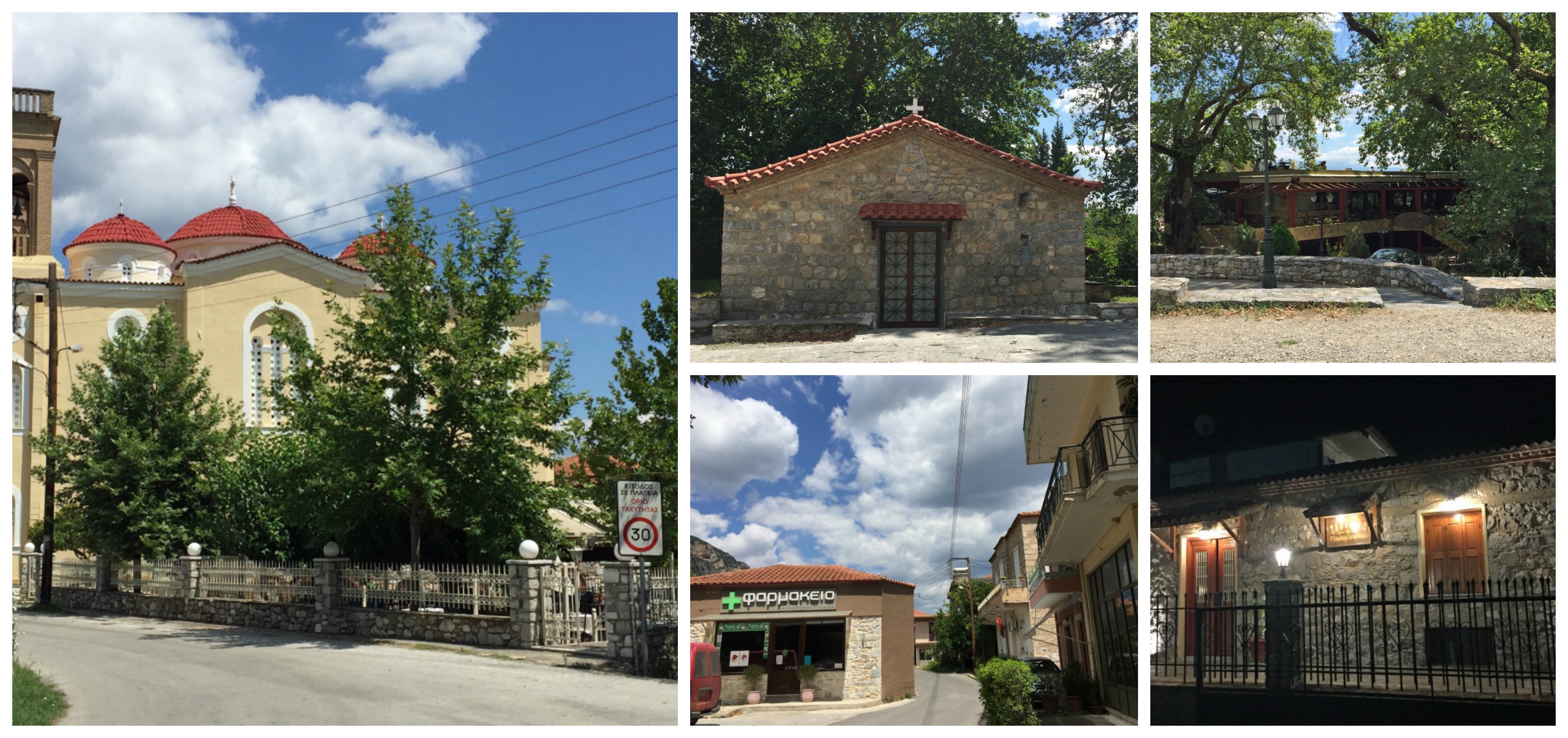
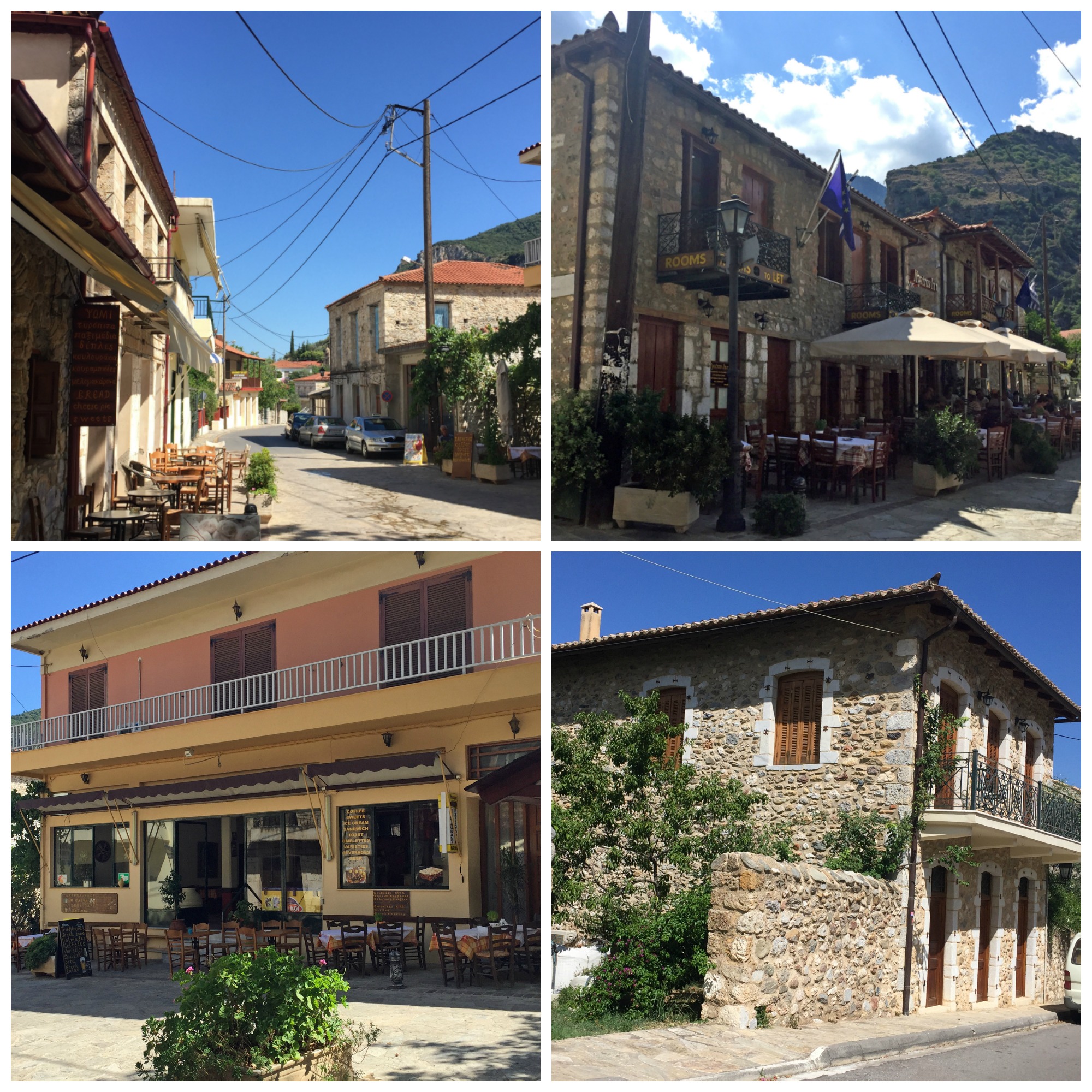
mystras-1-collage

Buildings around the plataea, Mystras, July 2016

Arriving in Athens the day prior to my flight, I also stopped by Giannis’ apartment to say goodbye to his family. At one point during our meal, I put my head down on the table and said that I was very, very sad to leave. I departed with a heavy heart and drove to the airport. Mentally and physically spent, I frittered away the evening and went to sleep early. I knew I was exhausted when I spent the flight home watching three movies and sleeping for a while. Plane time is usually catch-up time for writing, journaling, or reading. But not at the end of this trip.

When I landed at Dulles Airport in the Washington, D.C. suburbs, it felt so odd to be home. I was struck with the marked distinction between the way life is lived in America and in the Peloponnese. One is not better than the other — they are just different, and each speaks to a distinct part of who I am. I left one half of me in Greece. I can’t wait to go back.

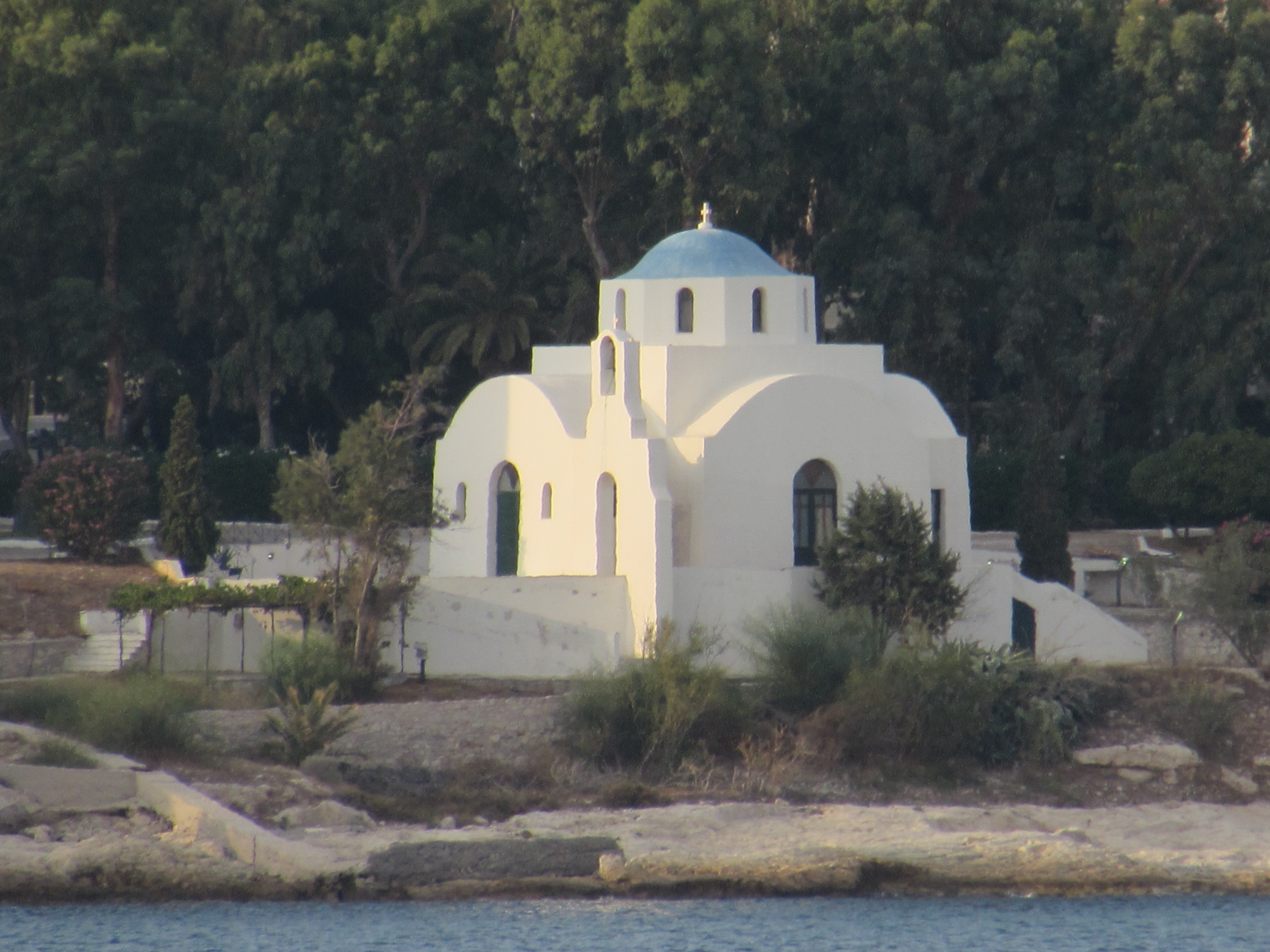
Greek Orthodox Church, as seen from the water approaching Piraeus, July 2016

Greek Orthodox Church, as seen from the water approaching Piraeus, July 2016


.

Return to Greece, 2016. Part 8: Meandering in Mani

This is the eighth post in a series about my trip to Greece, June 30-July 20, 2016 — an amazing journey of history, family and discovery. Previous posts can be found here.

Mani. There’s something about this land that speaks to my soul. From the moment I left two years ago, I couldn’t wait to return. The forbidding mountains, expansive plains, and impenetrable stone structures exemplify resilience, fortitude, and never giving up. It is the land of some of my ancestral families. On my first trip to Greece years ago, a man at the Archives looked at my surnames and exclaimed, “Oh, your families are from Mani!” Then he looked at my husband and said without any humor, “Watch out! She’s a Maniot. She  comes from tough people.”

Since then, I have learned so much about these “tough people.” There’s a reason they are so strong and self-reliant. They have weathered the elements and tamed the forbidding soil. They repelled any potential invaders by using rustic, yet effective methods. The Turks never penetrated or conquered the Mani. Neither did the Nazis. The people hid in caves in the hills until danger passed, then returned to their villages and their simple lives. Although the spirit of independence from Ottoman rule had been simmering for years throughout Greece, the spark that ignited the Revolution was in Mani on March 17, 1821.

By al-Qamar - File:Peloponnese relief map-blank.svg, GFDL, https://commons.wikimedia.org/w/index.php?curid=36370154

By al-Qamar – File:Peloponnese relief map-blank.svg, GFDL, https://commons.wikimedia.org/w/index.php?curid=36370154

There are three regions in Mani:  “exo” or outer; “kato” or lower; “mesa” or inner. As the map clearly shows, the entire region is mountainous and sustains little vegetation except wild olive trees, cactus, and brush. Goats scrape by on the sparse grasses, and an occasional flat valley may support orange trees. Wild herbs such as sage and oregano fill the air with a tantalizing scent. Even during hot summers, cool breezes sweep the mountains.

I fulfilled a dream by driving the beautiful, winding road from Kalamata to Areopoli. My GPS estimated the driving time at 1-1/2 hours, but it took me seven. All I did was stop, take photos, and savor every unique site and beautiful view. Being alone, I was able to absorb the atmosphere and revel in the rugged beauty of the land. I felt so peaceful and happy as I drove. I feel like I belong here.

Driving from Kalamata to Areopoli; the mountains, July 2016

Driving from Kalamata to Areopoli – the mountains. July 2016


kalamata-to-aeropoli-9-07-16

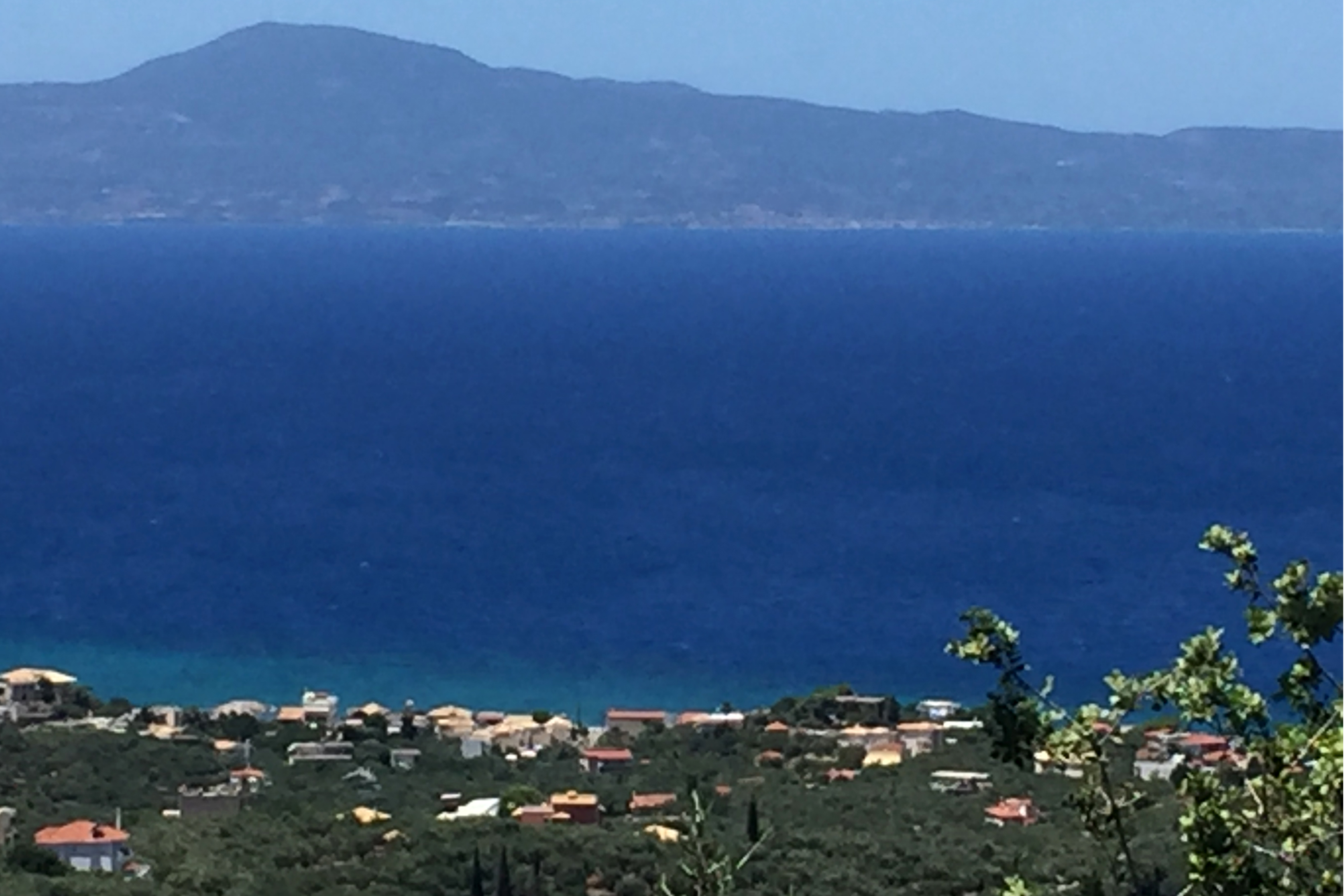
Driving from Kalamata to Areopoli – the sea. July 2016


Kalamats to Areopoli - the buildings. July 2016

Kalamats to Areopoli – the buildings. July 2016

A major item on my Plan A was to visit the village of Pyrgos Lefktro in Messinia. I had been told by an elderly aunt that my great-grandfather, Andreas Kostakos, may have come to Sparta from “Pyrgos over the mountains.” This particular Pyrgos seems to be the most logical place. The village is literally at the top of the mountain. When the mountain road ended, I had to park my car and walk because the village “road” was actually a narrow cobblestone winding path, lined with what seemed like ancient stone homes. It was mid-afternoon when I arrived, so of course, not a soul was to be seen except a stray cat. I wandered all around the town, taking many pictures. I found the church, the cemetery, and even went into the osteofilakio (οστεοφυλάκιο), the ossuary building, and looked at the names on the boxes. I did not see anything that could possibly be Kostakos, but my great-grandfather would have left in the middle 1800’s. If he did come from here, there are no descendants remaining.

At the front of the village was a sign on a tree that read “500 years old”. It would have been in full leaf during my great-grandfather’s time.

500 year old tree, Pyrgos, Messinia. July 2016

500 year old tree, Pyrgos, Messinia. July 2016


Buildings in Pyrgos, which overlooks the sea. July 2016

Buildings in Pyrgos, which overlooks the sea. July 2016

There is a very old museum which was locked; there was no sign as to when it opens. I peered in the windows and was taken aback at the life-size figures in full costume, standing watch over the treasures of the village.

Museum in Pyrgos, Messinia. July 2016

Museum in Pyrgos, Messinia. July 2016

As I was leaving, I did see two elderly women sitting on a veranda. They beckoned me to join them. I asked if they had ever heard the Kostakos name in the village, but their answer was no. I wanted to ask what type of life they had led; what type of work their husbands did; how often they left the village to “go to town” (wherever that was, somewhere down the mountain). They had a hard time hearing me and my vocabulary is limited, so the conversation was limited to pleasantries. One of them blew me a kiss as I said goodbye.

Saying goodbye; Pyrgos, Messinia, July 2016

Saying goodbye; Pyrgos, Messinia, July 2016

Driving back down the mountain, I wondered if I may have come — literally — to the end of the road in trying to learn more about the origins of Andreas Kostakos. But I resolutely pushed that thought from my mind. I guess it’s the fighting Spartan and tough Maniot in me that just refuses to give up!

Continuing on the road to Areopoli, I found a settlement, Tzokeika, that is being reconstructed to portray a traditional Maniot village, including a tower, a church, individual homes and an olive press. How fascinating to walk through the buildings that are under construction! This is a living settlement, with people occupying houses. I spoke with a man who had moved in last year, and he was very enthusiastic about his new home, the beauty of the scenery, and the pleasures of living in a closely knit community.

The settlement of Tza

The settlement of Tzokeika, Messinia, July 2016


Tz

Tzokeika settlement, Messinia, July 2016

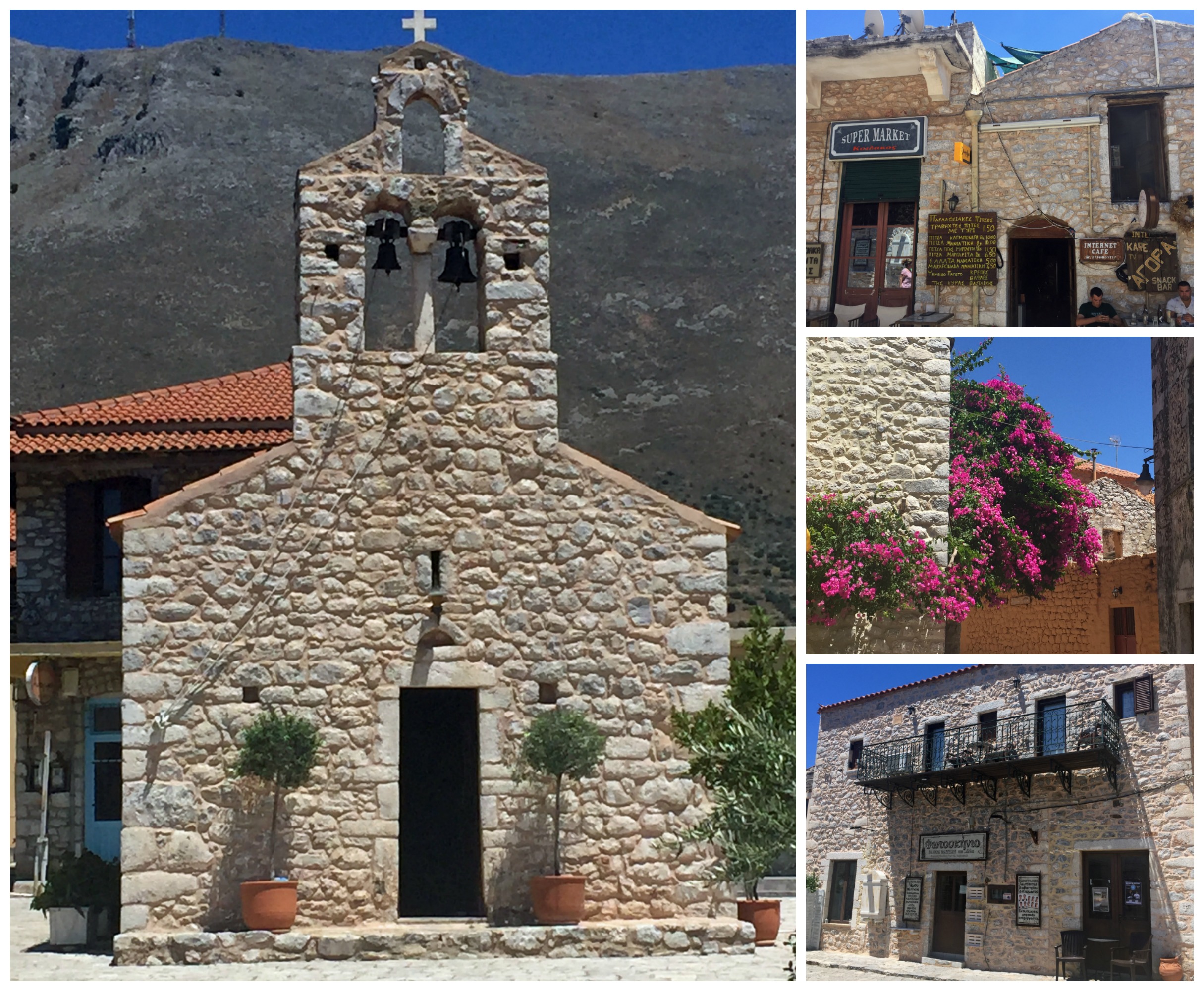
I was in Areopoli, the capital of Mani, by 7:00 p.m. It was Saturday evening and the town was filled to capacity with both locals and tourists. When I went to dinner at 11:00 p.m., I could not find an empty table. I love this village! It eneaeropoli-07-16rgizes me. The ambiance is lively, the buildings are beautifully maintained, and it is the home of a favorite bookstore, Adouloti (owned by Georgios Dimakogiannis). There are dozens of tavernas and cafes, and many unique shops. As are most Maniot villages, Areopoli is pure stone — buildings, roads, walkways. The starkness of the rock is punctuated by brilliantly colored flowers. It is a beautiful study in contrasts. Perched at the edge of the sea, the picturesque town is a visual and sensory delight.

Approaching Areopoli, a village by the sea. July 2016

Approaching Areopoli, a village by the sea. July 2016


Adouloti Mani Bookstore, Areopoli, July 2016

Adouloti Mani Bookstore, Areopoli, July 2016


Areopoli, July 2016

Areopoli, Laconia, July 2016


Areopoli, Laconia, July 2016

Areopoli, Laconia, July 2016

On the way back to Sparta, I stopped at Karavelas to see my friend, Margarita Thomakou, and visit her adopted village. Margarita and I had a delightful visit and a delicious lunch, made by her friend, Pietro. Pietro showed me a book about the history of the village. It is heartwarming to see that many villages in Laconia, even some of the smallest, have these wonderful histories.

Karvelas, Laconia, with Margarita Thomakou and Pietro, July 2016

Karvelas, Laconia, with Margarita Thomakou and Pietro, July 2016

My meanderings in Mani were almost over. The road to Sparta threaded through fertile plains, filled with orange and olive groves. Wild and lovely; fruitful and plentiful, this region of Laconia is truly the breadbasket of Greece.

On the road to Sparta, July 2016

On the road to Sparta, July 2016