Unknown's avatar

About Spartan Roots

I am of Greek ancestry with roots in villages near Sparta. My paternal grandparents and maternal grandfather were born in Agios Ioannis (St. Johns), and my maternal grandmother was born in Mystras. I love family history research and have been tracing my roots for many years. I was born in Brooklyn, New York and was raised in a predominantly Greek neighborhood close to extended family. I live in the Washington D.C. metropolitan area and work as a volunteer Co-Director of the Washington, D.C. Family History Center and a genealogy aide/project aide at the National Archives in Washington, D.C. I am always updating and adding new information. Please contact me - I would love to hear from you!

Amykles Book, Excerpt: Machmoutbei

In 1982, Sarantos P. Antonakos published Amykles, a history book about his native village. Amykles is one of my ancestral villages, too–the birthplace of my 3rd great grandfather, Panagiotis Zarafonitis. I am beyond excited to have found this book in the Central Library of Sparta, and I copied some of the pages relevant to my family. With sincere thanks to Giannis Michalakakos for his translations and history lessons, I am learning much about this beautiful village and the lives of my ancestors. This is the second post with excerpts from the book.

Machmoutbei–what an odd-sounding name! My curiosity was further piqued when this word was found in conjunction with the village of Sklavachori/Amykles during the Ottoman occupation. A bey is the Turkish word for a chieftan, who oversees a certain area of land in a province under Ottoman rule. Thus, Machmout was a Bey who governed an area of Sklavachori/Amykles.

Machmout Bey was one of the richest Ottoman officials who ruled in the Peloponnese. He had married the daughter of a well-known Turkish patriot, also named Machmout Bey, who lived in Corinth and owned land throughout Laconia and Arcadia. From this marriage, our Machmout received a dowry of land in the fertile plains which were watered by the springs of Agios Ioannis, and was located in the area of Sklavachori. Machmout built a tower in this plain, and the area around it became known as Machmoutbei.

In contrast to other beys, Machmout was one of the few who was “beloved” by the Greeks under his dominion. He was esteemed for his charitable behavior towards the native population. His peaceful demeanor and tactful diplomacy enabled him to manage sensitive issues in the region and to maintain good relations with the Greek elders of the community.

One of these elders was Panagiotis Krevvatas, a well-known politician and elder of Mystras who later became a member of the National Council. Many times, Machmout Bey saved his life by protecting Krevvatas from both Turks and other Greeks. During one incident, Krevvatas had left Mystras for “commercial reasons” when in actuality, he had been targeted by Turks for his part in the Orlov Revolt and had fled the area to escape an assassination plot.  Machmout bey gave an order to give Krevvatas every honor and protect his life. Whenever Krevvatas was in the market or other public place, four Albanians mercenaries–two in front of him and two behind–served as his bodyguards.

Besides Krevvatas, Machmout Bey ordered that other Greek elders be protected,   particularly Giannakis Kyrousis and Sarantos Maltziniotis of Agios Ioannis. Kyrousis had married the daughter of Maltziniotis, and both were powerful families in the region. Maltziniotis was the only Greek who had erected a tower which still stands in Agios Ioannis.

Maltziniotis Tower, Agios Ioannis, Sparta. July 2014.

Of special fascination to me is that there is a relationship between my Papagiannakos ancestors and the Maltziniotis family, both of Agios Ioannis. Imagine my shock when I read the name Sarantos Maltziniotis in this book; suddenly, this history became very personal to me!

Why would Machmout Bey care about developing good relations with the native Greeks? A bey who rules in a hostile area is wise to cultivate rapport and build alliance with the region’s strongest families. These relations act as a hedge against conflicts and problems with the native population and may protect the bey against insurrection. Machmout tried to keep balance between the Ottoman Pasha and the local population.

Further information about the life and activities of Machmout Bey were not documented by Antonakos. Tradition states that Machmout was killed by other Turks during a celebration–something that is likely to be true because of his friendly relations with the Greeks. Upon his death, songs were written to honor him, and one that is especially well known is still sung by the elders of the area:

In the tower of Machmoutbei men drink and eat. They bey is killed; his horse is in mourning and his horseshoes are hitting the ground: wake up my master and wake up my bey they are asking for you and the other captains. Why do your arms and silver rifles have rust? [rough translation]

According to another tradition, the assassination of Machmout Bey was planned by the powerful Giatrakos family who were seeking the beautiful women of the Turkish officials.

To read the first post about the village of Sklavochori, click here.
The next post will discuss Machmoutbei and its tower during the Revolution.

Koumousta: The Second Period of Ottoman Conquest 1715-1821

During Ottoman occupation, the region known as Koumousta[1] administratively belonged in the kaza  of Mystras. In each community, male adults elected one or two elders who managed the financial functions of the community, maintained the roads, tried to ease Turkish authority, and assumed other responsibilities. The elders came once a year to the capital of the kaza and elected their representatives (provincial elders) known as kazavatzis. The most well known elder of Mystras was Panagiotis Krevvatas. His will of 1819 bequeaths money to individuals and villages, including Koumousta to which he gave 750 and 200 grosia.

During the period of Ottoman conquest, Koumousta was known as Kato Riza. Generally, this included the villages south of Mystras between the east side of theTaygetos mountains and the Evrotas River. This area included a large section of plains, perfect for farming.

Evrotas River


In the early 1700’s, a series of disasters afflicted the region. The plague of 1719 decimated the population. An uncontrolled rise in food prices, especially wheat and grains, caused massive starvation and death. Crops failed, due to a lack of rain. In 1729, a great earthquake caused the demolition of many houses and the destruction of the roof of St. Konstandinos. Homes in Kato Chora and Plataniou were destroyed by rocks that fell on the roofs. As a result, that part of the area was abandoned and rebuilt, and renamed Panou Chora.

Before the 1821 Revolution, Koumousta’s borders extended south to the area of Vardounia which is located just north of the Mani Peninsula on the eastern slopes of Mt. Taygetos and housed the medieval Vardounia castle. Its citizens were predominantly Albanian Muslim mercenaries, hired by Turks and relocated there by M. Veziri Damad Ali Pasha after the recapture of Morea in 1715. The Ottomans designated Vardounia as a buffer zone to stop Maniots who had been leading raids and looting Ottoman-controlled territory. Thus, Vardounia was like a war zone populated with towers, arms and strategic positions manned by the Albanians.

The Koumoustiates survived by avoiding interactions with the people of Vardounia. They refused to leave the Monastery of Gola unprotected, even though Vardounians visited the monastery and occasionally participated in celebrations. However, tensions would flare. For example, Stratigis Stoumbo faced grave danger when he won a target shooting contest during a post-Easter celebration at the monastery. His life was saved only after he fled the area as a fugitive. Incidentally, the target shooting contest was maintained until the 1950s.

Another example is an incident which occurred after the death of a Muslim in 1795 near the monastery. Retribution followed, and damages to the monastery were huge. Vardounians stole the monastery’s flocks and looted houses. The monks scattered. Some fled to Koumousta and continued their monasteristic life after  building koinovio [shelters].

Zabetina Stathakou of Koumousta remembered people who had lived during Ottoman rule. She related the story of a band of Kelphts who killed Turks at Red Rock (located under the top of Taygetos) and in Kakochioni, and the Turks had buried them in Tourkokivoura. Other Turks had been killed in Spiliakakia and in Avarvaniti.

To avoid potentially dangerous interactions, Greeks preferred to travel to Mystras by taking  switchback roads through mountainous villages. They had an intense sense of insecurity and needed protection whenever they left their village. Going from one area to another required permission from the Vardounians who controlled the passages, or from the authorities of Mystras.

Albanians in Greece, 1833-1875.2

The Russian-Turkish wars of 1767-1774 and 1787-1792 and the relevant Orlov Revolt  (Russian-backed Greek rebellion against Ottoman rule) created great difficulties in the Peloponnese. Serious food shortages ensued, as noted in a document at the National Library of Greece in Code 1378:

“as above written by chief bishop of Holy Lacedaimonos, Mr.  Daniel, 1793 February 10, went wheat to the Morea:  13 grosia plus 18 parades; and corn 12 grosia and 15 parades. This hunger continued approximately until July and the unhappiness that happened in the world is impossible for the hand of man to describe, where people for two months had to eat bread and many ate acorns and small fruit of olive trees. This was written by Kostadopoulo of Lacedaimonos when the abbot was Mr. Dionysios, abbot of Katafigiotissas monastery (near Mystra).”

Albanian mercenaries remained in the Peloponnese for a decade (1770-1780) after the end of the revolt. Charged with restoring order, their governance was one of terror and repression. Slaughtering and persecution of Christians began and many villages were abandoned, such as Kourtsouna, Arna, Gorani, Bolovitsa, Palaiochori, Potamia. Tradition says that Koumousta was burned as a payback for the participation of its citizens in the Orlov Revolt.

At the end of this movement, the Ottoman administration settled Turks in Koumousta, and their presence is verified by documentation that was written after the destruction of the monastery of Gola. The Koumoustiotes expressed anguish at the fate of the monastery and by consensus, entrusted persons to manage its affairs, as noted in this document:

1796 April 25, Trinitza [a very small village in the borders of Mani]

With this document, we express for the Koumoustiotis all the village the acceptance of our bey, Belou bey and Tervisi bey and we beg the Masters Captain Dimitraki and Mr. Andoni and Mr. Theodoro and Mr. Andonako Ligorianos to take responsibility and become home makers of the monastery of Gola. In the monastery and in the fortune of the monasteries in Karydiotika and Vromolygia and the nobility made them to accept it for the mother of Christ and from today they are responsible and we give them this document in their hands in order to remember their honest and decent names in the monastery and help them wherever they like.
We guarantee with our own hands.
Papa-Vasilis, guarantee [elder of Koumousta]
Papa-Dimitrios, guarantee
Belos  bey and Tervis bey, we agree
Giorgakis Komanis, guarantee
Giorgis Konidis, guarantee
Dimitris Xathos, agree
Kiriakos Christakis, guarantee

To address this matter, Chrisantho, the bishop of Lacedaimonos, visited Koumousta in 1805. He appointed the abbot, Dionysios, to take responsibility to resolve this issue and Dimitris Mathaio and George Konidis to take charge of income and expenses. The monks returned to the monastery and began to rebuild it.

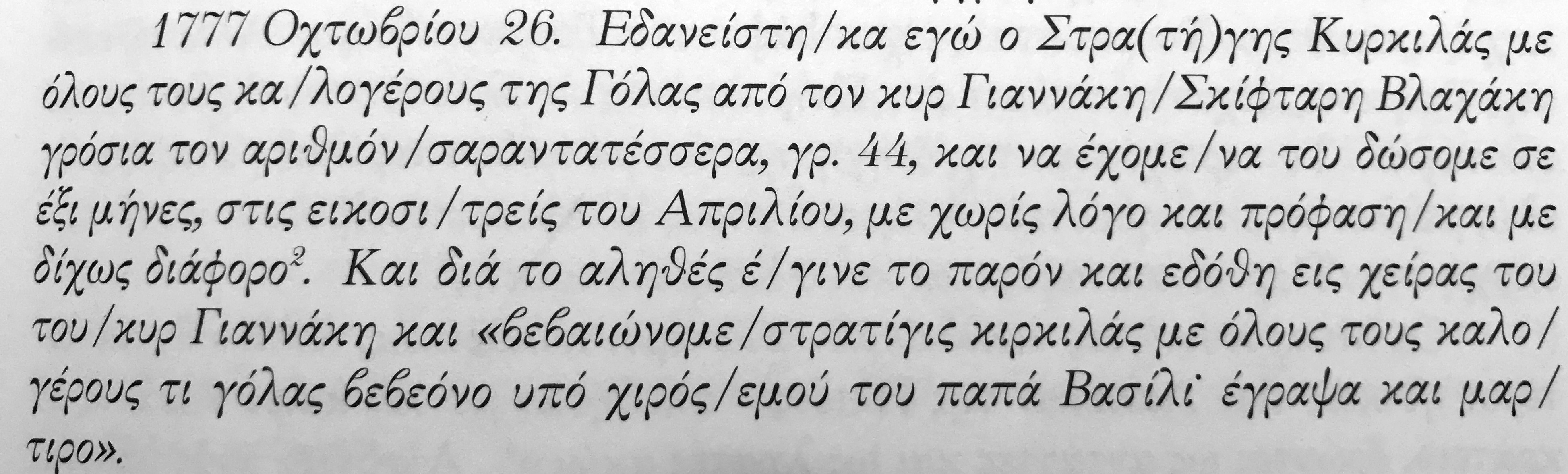
Ottoman authorities erected financial barriers to keep the Greek population in financial slavery. One such practice was to establish a minimal repayment time for term loans, which caused Greeks to lose their property. Such a loan was signed by the monks of the Monastery of Gola in Koumousta as found in the following document:

Koumousta of Lacedaimon, page 35.

Translation: 1777 October 26. I, Stratigis Kyrkilas with other monks of Gola, borrowed from Giannaki Vlachaki, Albanian, 44 grosia, to be repaid in 6 months on the 23 of April, with no reason and excuse / and without differentiation. And with truth, we make this document and we give it in the hands of Mr. Giannaki and we sign, Stratigis Kirkilas with all the monks of Gola. I ensure with my hand, Papa Vasili wrote and agreed. [Papa Vasili was a well known priest of Koumousta.]

Many people of Koumousta were in similar circumstances. In 1775, Zenelagas, a captain of Albanian mercenaries, demanded that the citizens of Paleochori give him 300 grosia as payment for the protection that he offered to them. People signed this document but they could not repay the money. Zenelagas forced many citizens to abandon the village; some went to Mani; some to the islands of the Aegean and others scattered throughout the world. Dimitrakis Skiadas and his mother, Konstandina, left Koumousta and went to Kythera. In 1780, the year that the monk of Zerbitsa, Gerasmimos Markakis of Paleochori, wrote his will, the situation had not changed.

Through the years, the Koumoustiotes kept alive a vivid recollection of the Vardounians. Even today, they give their dogs Vardounian names to indicate a ferocious wildness and, hopefully, to cause terror to thieves.

NOTE: This post is part of a series of translations and extractions of the book, Koumousta of Lacedaimon, authors: Theodore Katsoulakos, Pan. X. Stoumbos, with translation by Giannis Mihalakakos. Previous posts are Economics and Occupations of the Citizens; Christakos Family, Part 1 & Part 2; and The Rizos Clan of Koumousta, Laconia:  Christakos, Koumoustiotis, Kyriakakos.  I am grateful to Dimitris Katsoulakos for permission to cite passages from this book.

__________________________________

[1] Today, Koumousta is known as the village of Pentavli. The region formerly encompassed a wider area which includes  today’s villages of Xirokambi, Faris, Paleochori, Kaminia (Dafni), Kidonitsa, Anthochori, Paleopanagia, Trapezanti, Dipotama, and others.

[2] Attribution:  original uploader was Stupidus Maximus at English Wikipedia – Transferred from en.wikipedia to Commons by Sreejithk2000 using CommonsHelper., Public Domain, https://commons.wikimedia.org/w/index.php?curid=10525371


Amykles Book, Excerpt: Sklavohori

In 1982, Sarantos P. Antonakos published Amykles, a history book about his native village. Amykles is one of my ancestral villages, too–the birthplace of my 3rd great grandfather, Panagiotis Zarafonitis. I am beyond excited to have found this book in the Central Library of Sparta, and I copied some of the pages relevant to my family. With sincere thanks to Giannis Michalakakos for his translations and history lessons, I am learning much about this beautiful village and the lives of my ancestors. This is the first posts of several, with excerpts from the book.

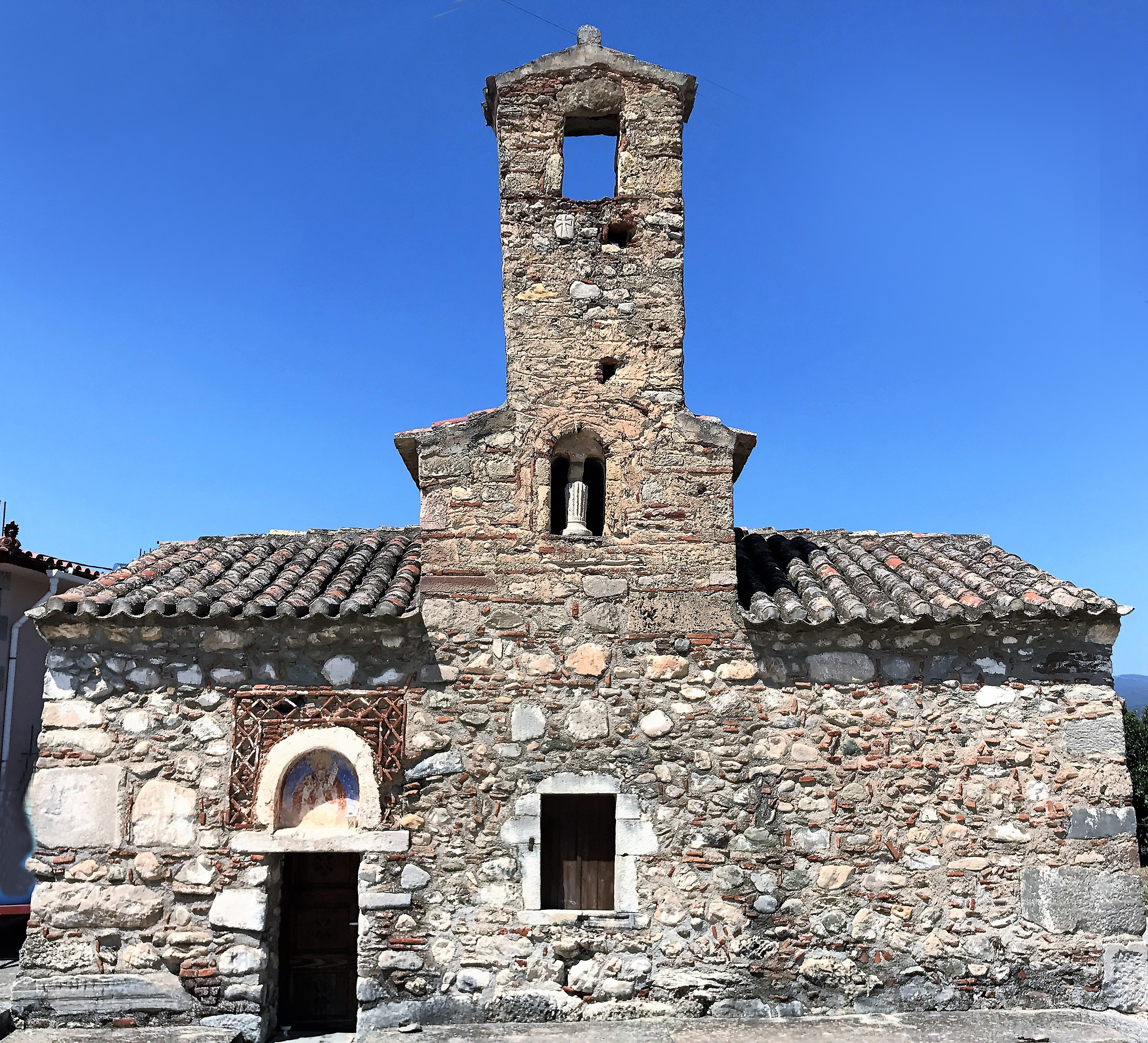
Prophet Ilias Church, built in the late 13th century, Amykles.

In the Preface, Mr. Antonakos writes: Amykles was the salt and the pepper for  the Spartans and for the whole Laconian peninsula, a religious, cultural and commercial center. The people lived here hundreds of years in the middle of a very fertile plain through which the Evrotas River passed and it was from then, until today, the subject of study of hundreds of scientists and researchers.

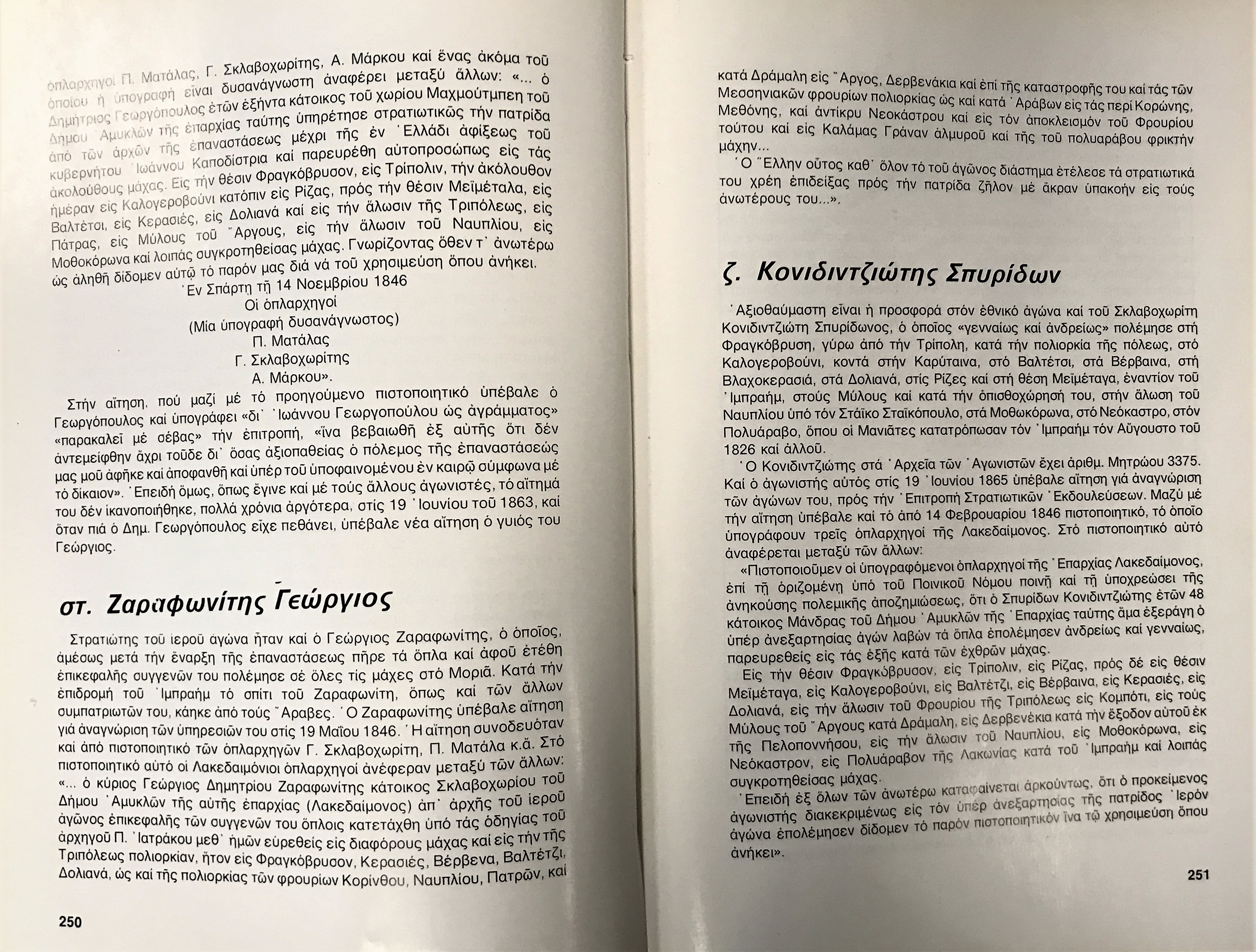
Among several profiles of prominent men in Amykles is a paragraph about Georgios Dimitrios Zarafonitis, a soldier who fought with distinction in the Revolution of 1821.

Antonakos, Sarantos P., Amykles, pp. 250-215; 1982; Athens. Repository: Central Library of Sparta Greece

The translation reads: στ. Zarafonitis George.

          Soldier of the sacred struggle was Georgios Zarafonitis, who, immediately after the start of the revolution took up arms, and after he entered became the head of relatives who fought all the battles in Morea.
During the invasion of Ibrahim Pasha, the house of Zarafonitis was burned to the ground by the Arabs, like many of his fellow countrymen. Zarafonitis sent an application to the state to recognize his services on 19 May 1846 [
he is applying for an Aristeia award]. The application included a certificate from the chieftains G. Sklavohoriti, P. Matalo, etc.
In this certificate, the chieftains of Lacedaimon referred among others “… Mr. George Dimitriou Zarafonitis, citizen of Sklavohori of the municipality Amykles of this province (Lacedaemon) from the beginning of the Holy Fight, in charge of his relatives, put himself under the direction of the chief Panagiotis Giatrakos, and he was with us in different battles like the seige of Tripolis, the battle of Fragoviso, Kerasis, Ververa, Valtezi, Doliana, even in the siege of the fortress Nafplion, Corinth, Patra and when Dramali Pascha came in Argos, Vervenakia and after his disaster in Messinia, fought against Arabs in Coroni, Methoni, and Neokastro, also in Kalamata in Verga of Almyro and in the horrible battle of Polyaravo.
This Greek during all the time of the revolution served military and did his duty with passion and extreme obedience to his superior officers. from his certificate I can assume that he was a very good soldier.”

Unfortunately, a paper trail between this hero of the Revolution and my Panagiotis does not exist. But using “educated deduction” and knowing that families of the same name from the same village are related, I can claim Georgios as part of my ancestral clan.

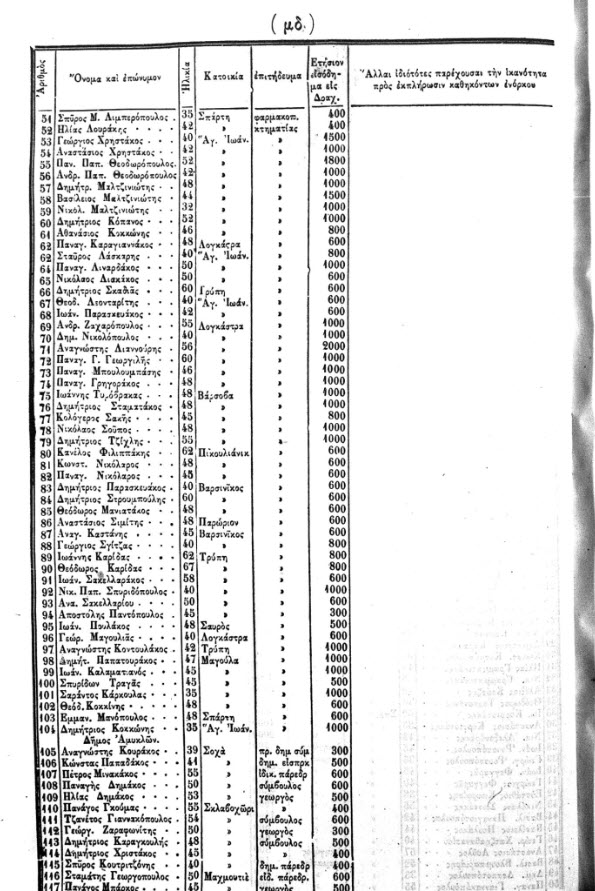
Another reference to Georgios is found in a list of men from Sklavohori who served as Jurors. This was published on 2 November 1894 in ΦΕΚ, the official newspaper of the Government of Greece. In the page below, he is enumerated on line 12; he is age 50 and a resident of Sklavohori (click on image to enlarge).

General Archives of Greece
List of Jurors – 1849
FEK: Official Government Newspaper of Greece
2 November 1894
Line 112 , Georgios Zarafonitis, age 50, of Sklavohori, farmer
FHL: Film #1038847, section-6, image 28; Family History Library, Salt Lake City, Utah

Sklavohori, the home of Panagiotis and Georgios, is the same village as Amykles. As is common in areas of foreign dominion, name changes occurred over the centuries. It is an unusual word, certainly not of Greek origin, and Mr. Antonakos addresses this on page 201, Sklavohori. It is a fascinating study.

a.  Some researchers opine that the name was given when Slavs occupied the area. However, Slavic tribes resided in the region known as Amykles in 750 A.D;  and the name “Sklavohori” is not mentioned in any documentation until 1432 — 700 years after the Slavs departed.

b.  When St. Nikon resided in Lacedaimon from 968 to 998, the village was called Amykles and Amyklion. When the life story of St. Nikon was written in 1142, the region still was known as Amykles; proving that the name change occurred later.

c.  All of the Slavic toponyms in Laconia, which are many, were given when the Slavic tribes settled; this did not happen in Sklavohori.

d.  No villages in the plains of Evrotas (where Amykles is located) have Slavic names. Slavic place names are found in mountain villages, where the Slavic tribes retreated so as to remain inaccessible from those determined to evict them (the Franks, the Byzantines, etc.).

These facts support the theory that the name Sklavohori was given much later than the Slavic occupation of the region. Thus, Mr. Antonakos proposes two other, more plausible, explanations:

a.  The name comes from the word, “slave” or “slavery.”  Feudal rulers enslaved Greek citizens, and gave them land to farm, which was located in the fertile plains of Sparta. A literal translation of the name, Sklav-ohori, would be “village of slaves.”

b.  In the island of Tinos in the Aegean Sea, there a a village named Sklavohori. However, there was never a Slavic presence there. The village was given its name because its citizens had been enslaved.

As I wandered through Amykles/Sklavohori in July, I could not imagine this village of my ancestors once being a den of enslavement. The land is a beautiful and abundant valley nestled under the Taygetos mountains; its citizens are hospitable, filled with the spirit of φιλότιμο (filotimo).

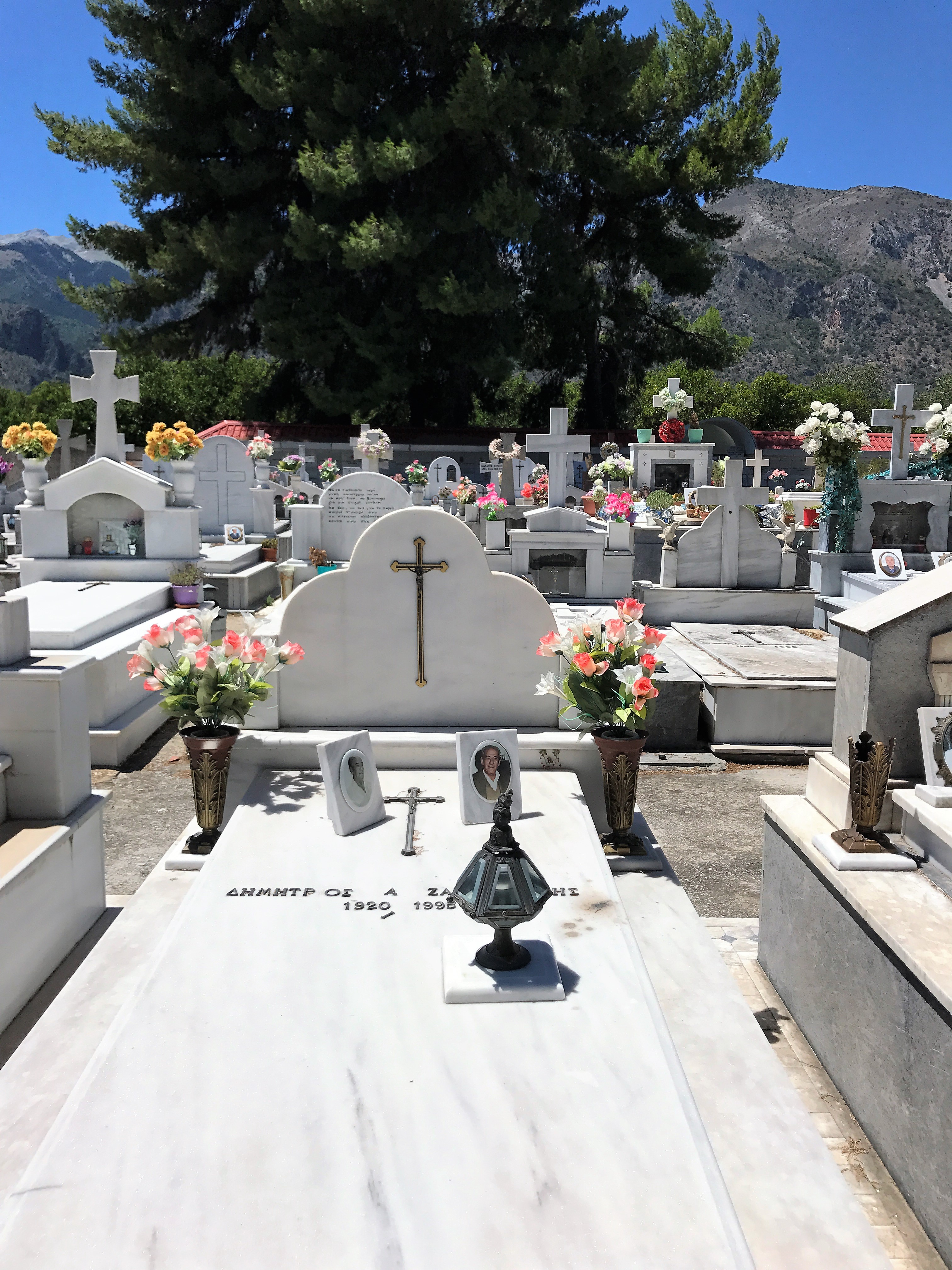
The beautiful cemetery belies the hardships and tragedies that the heroes and citizens of Amykles overcame. My family is among them.

Amykles cemetery, July 2017


Mini-Classes at a Festival!

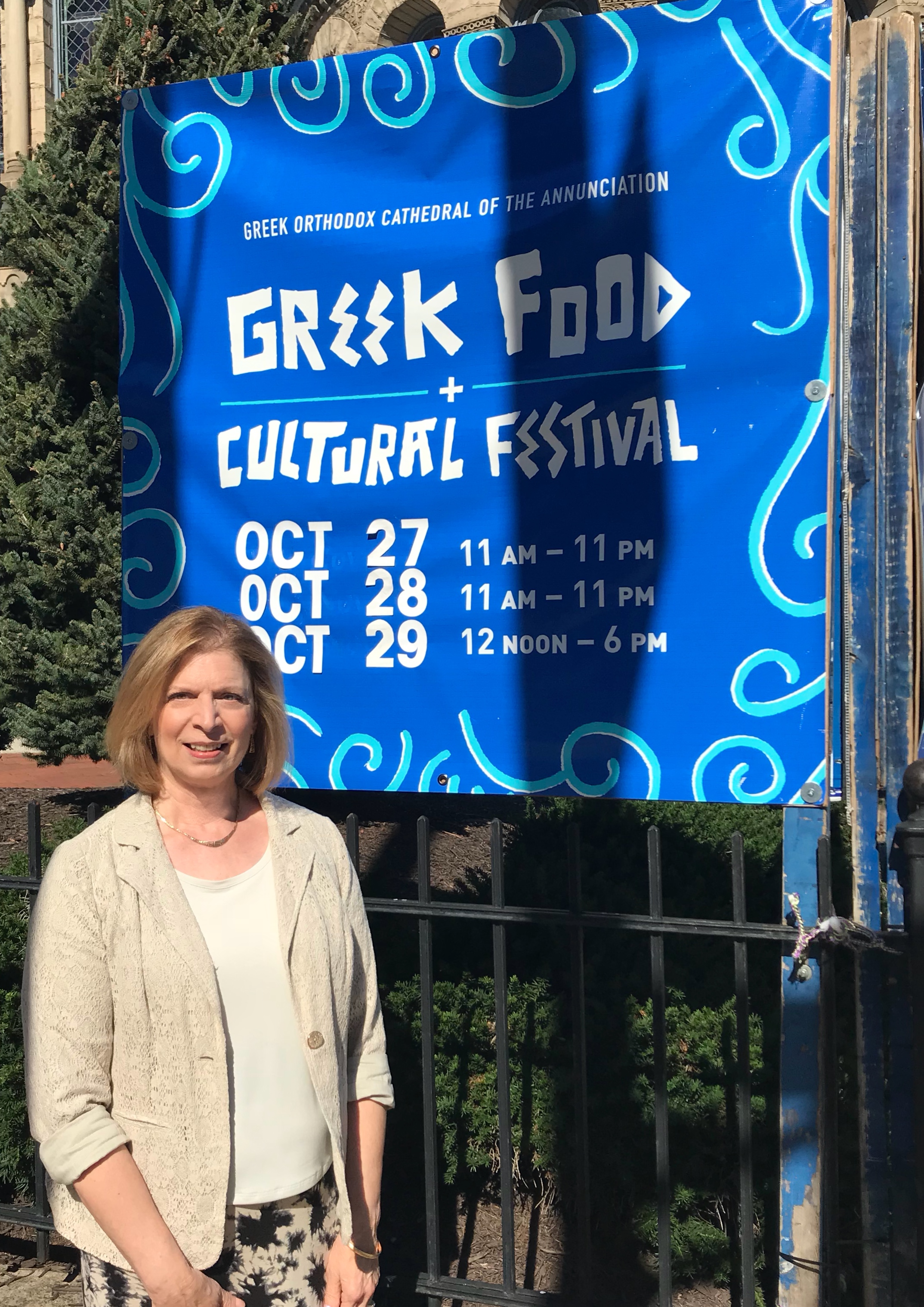
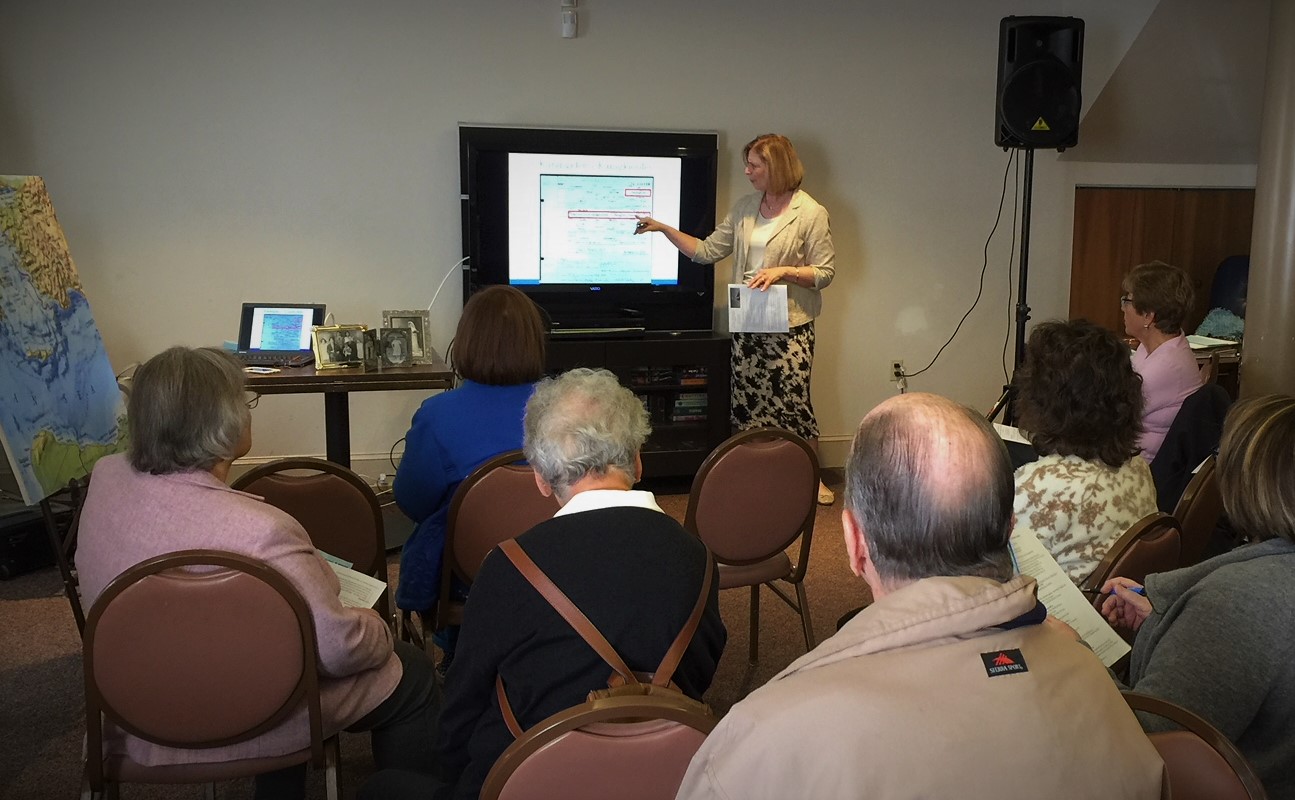
Greek festivals are all about food, dancing, and fun–not the usual venue for genealogy lectures. But, during its Festival last weekend, the Annunciation Cathedral in Baltimore, Maryland offered its visitors and parishioners something different–mini-classes (20-30 minutes) about beginning Greek genealogy. I was honored to be invited to give these presentations.

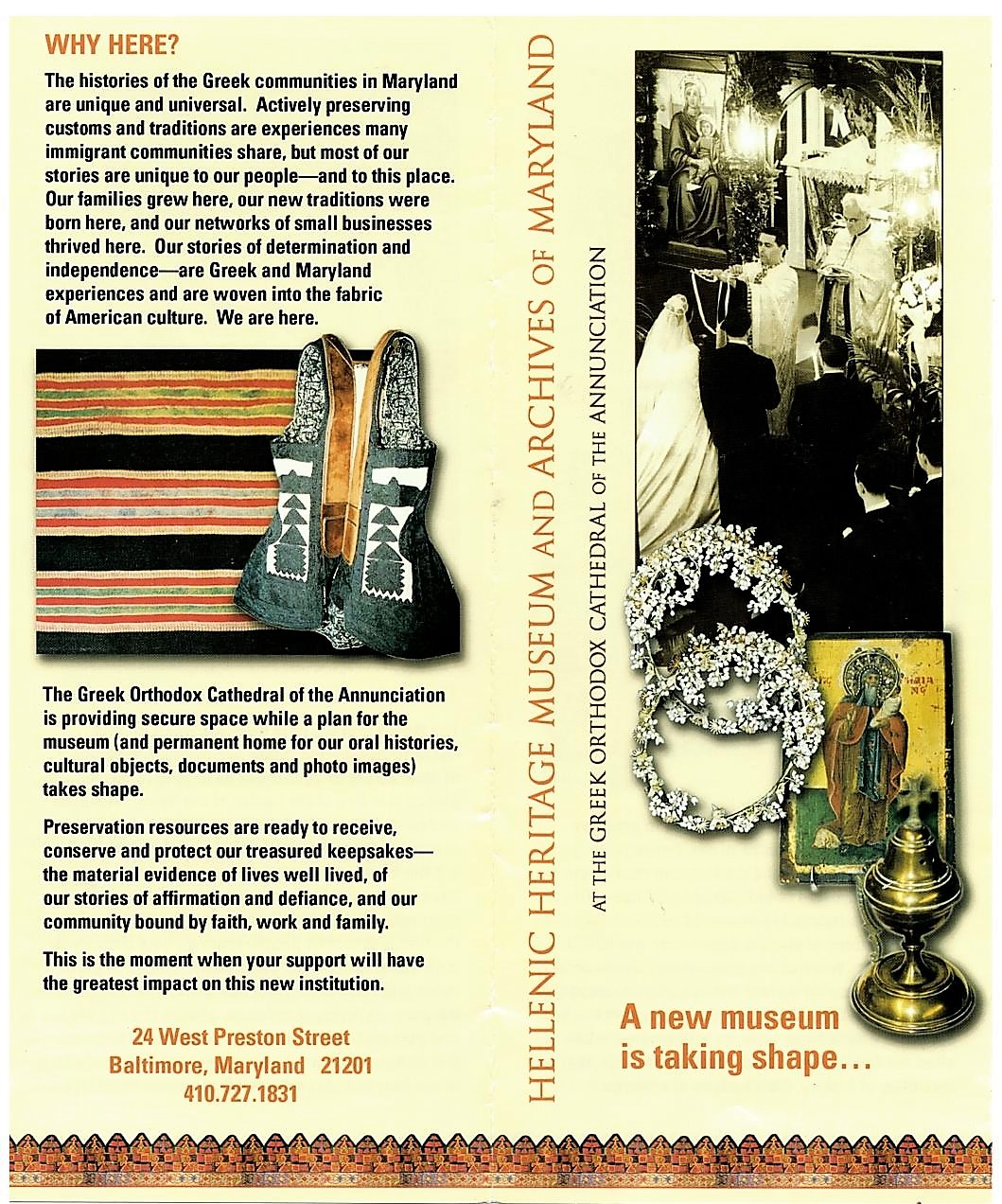
This idea came from the directors of the Hellenic Heritage Museum and Archives of Maryland, an organization working to document and preserve the rich Greek heritage in Baltimore.

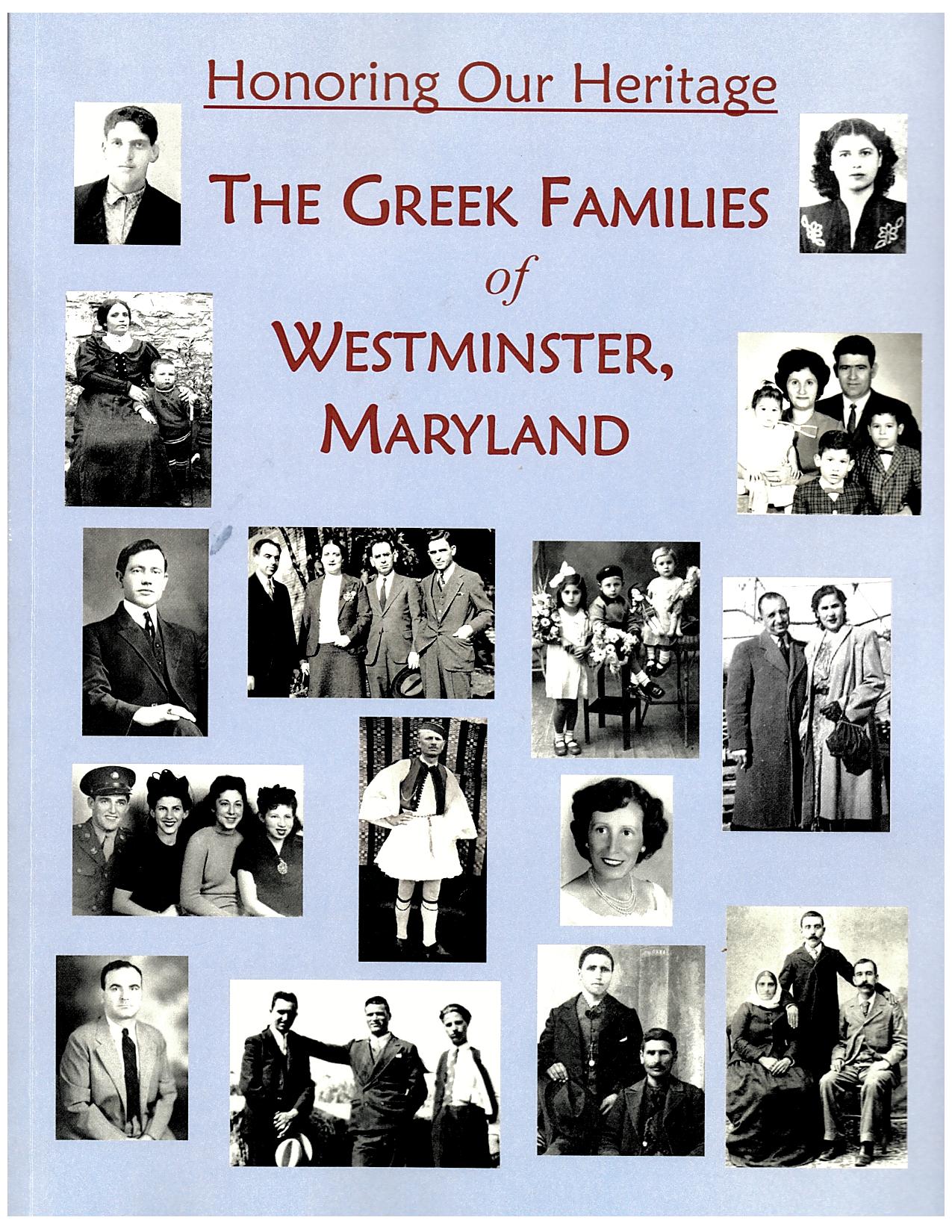
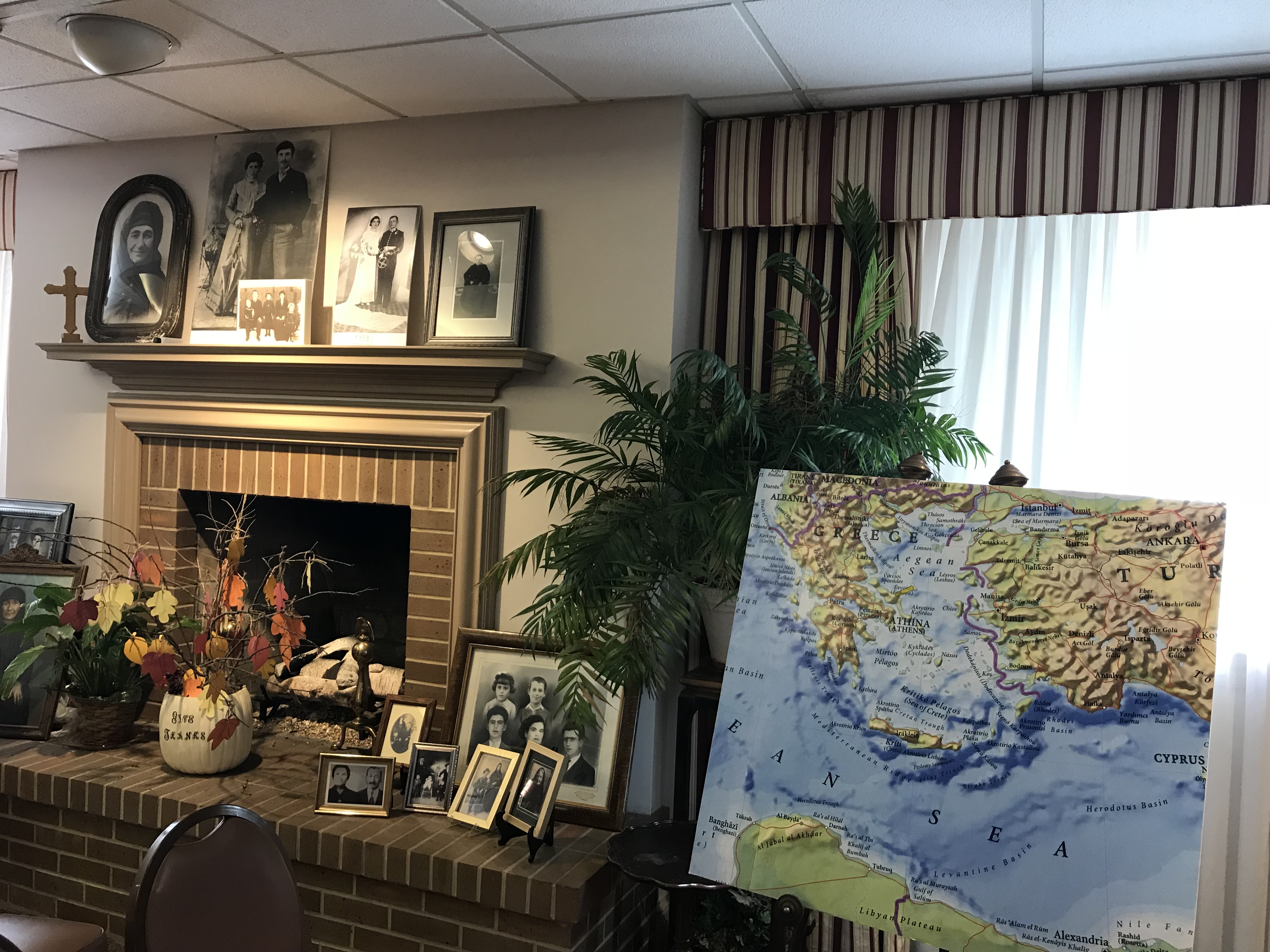
Part of the Museum’s exhibit for the Festival included photos of early Baltimore Greek families; and a brief talk about “Finding Your Yiayia” fit perfectly with the theme. Joining me was Antigoni Ladd of Westminster, Maryland, who spearheaded a project to document the founding families of Westminster:

I had a lot to cover in 30 minutes: U.S. documents that may reveal a family’s original surname and village of origin; what types of documents are found in Greek Archives and Town Halls and how to access them; Orthodox Church records; planning a research trip. During conferences, each of these topics take a full hour. But I talked fast and provided attendees with a two-page handout with links to the most relevant websites. This handout can be downloaded here.

I gave five presentations over three days; about 50 people attended in total. They ranged in age and area of origin. Several had families from Asia Minor; some from the Peloponnese; some from the islands. But all were surprised and delighted to learn that records do exist and are accessible.

These are some of the family photos brought by parishioners to honor their ancestors.

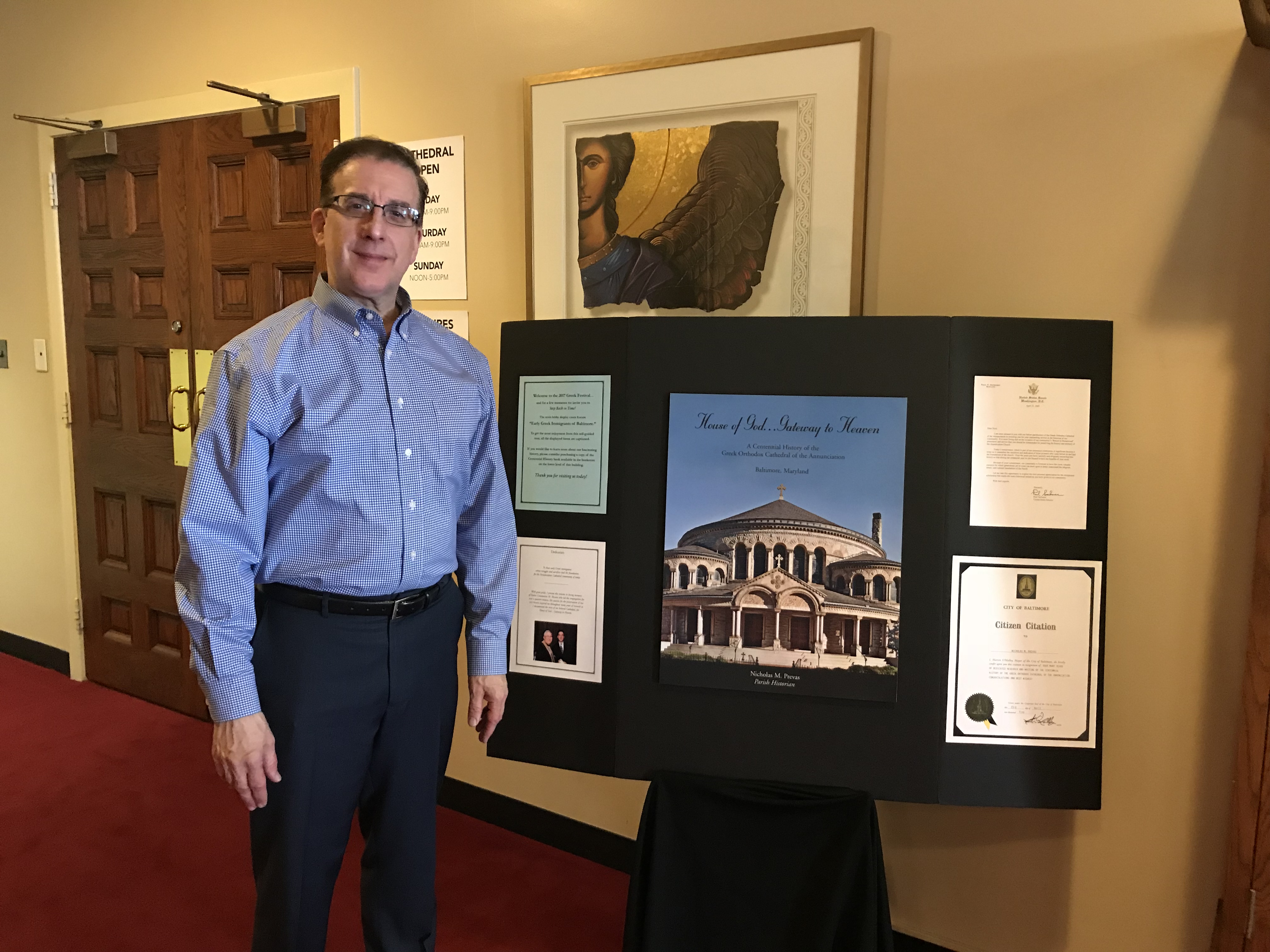
Nicholas Prevas, who has been the official historian of the Annunciation Cathedral since he was 20 years old, wrote two extensive histories of the Cathedral and has been lauded as setting the standard for such works.

Nicholas Prevas with a display featuring his book, House of God…Gateway to Heaven

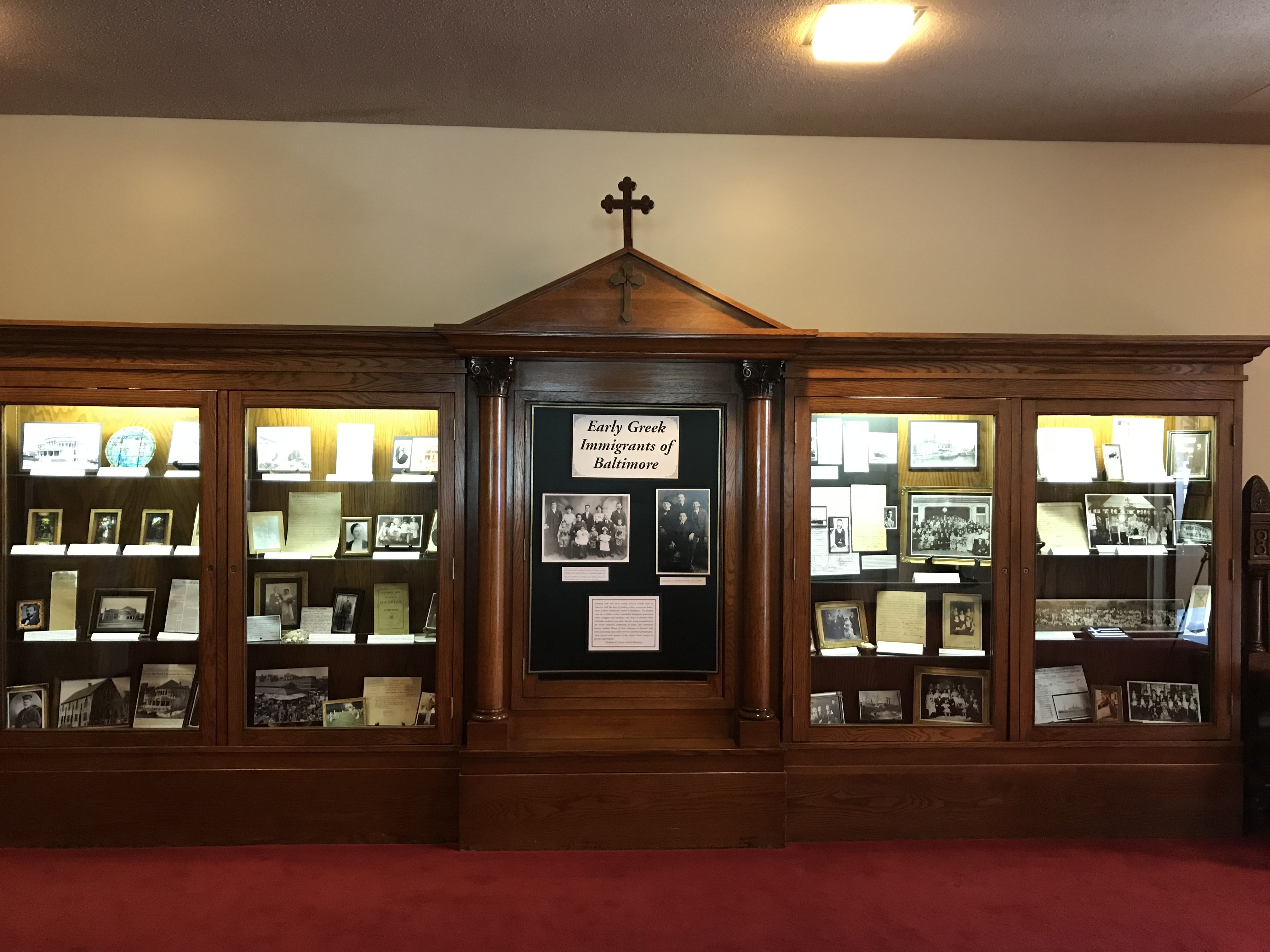
Every year, Nicholas creates an outstanding display of photos and documents to honor Baltimore Greek families. This display is replaced annually with new items and a new theme. These beautiful cases line the hallway leading to the chapel where they are enjoyed by thousands of people throughout the year.

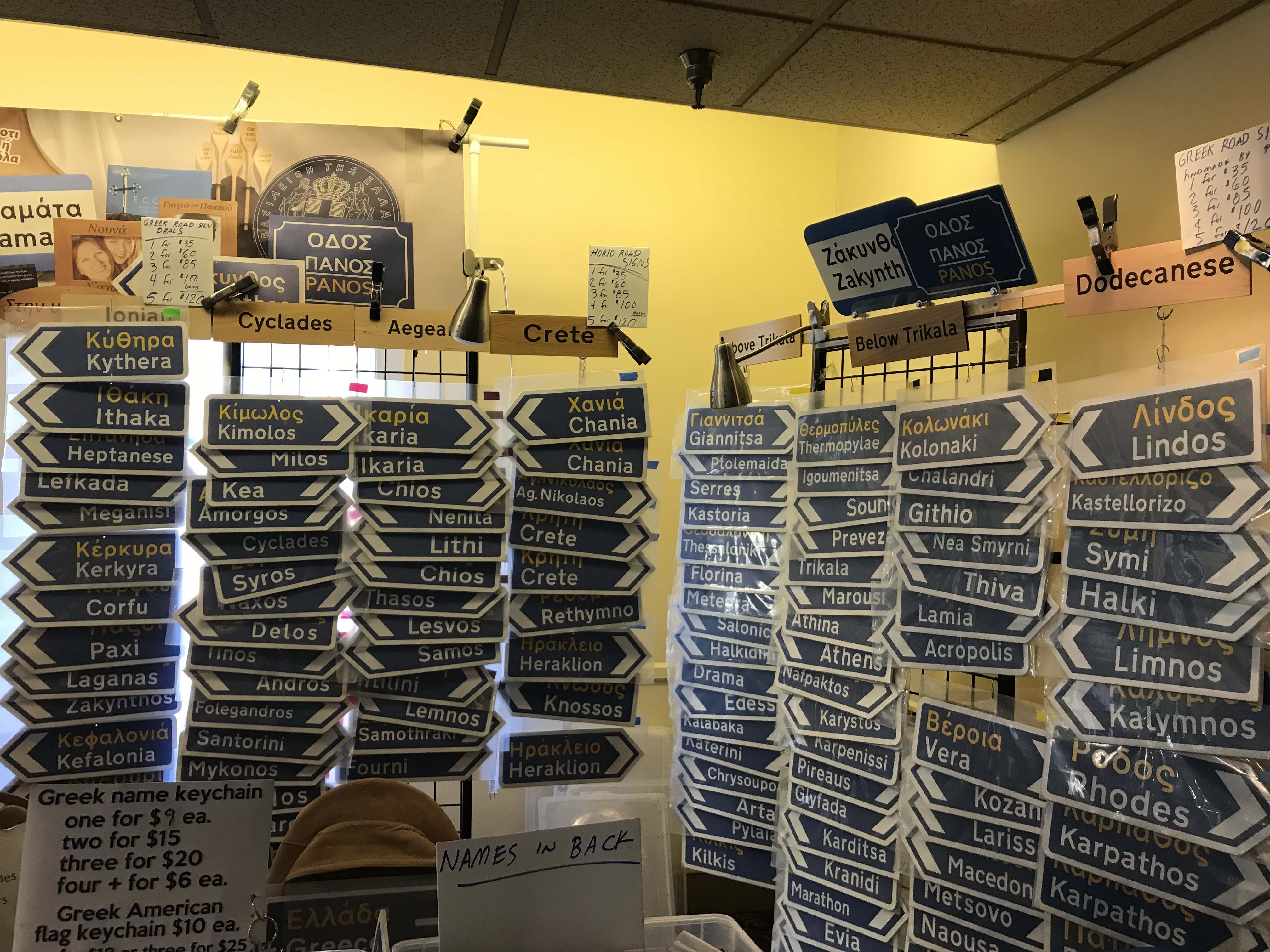
Greek festivals are a source of enjoyment for the entire community. I stood in a food line behind a young man from the neighborhood who said that he waits all year for the food and music. Churches depend on festivals to bring in revenue and to enhance regional relationships. This year, Panos from kantyli.com traveled from Chicago to set up a vendor table with items that were popular and fun.

Greek road signs, created by Panos at kantyli.com

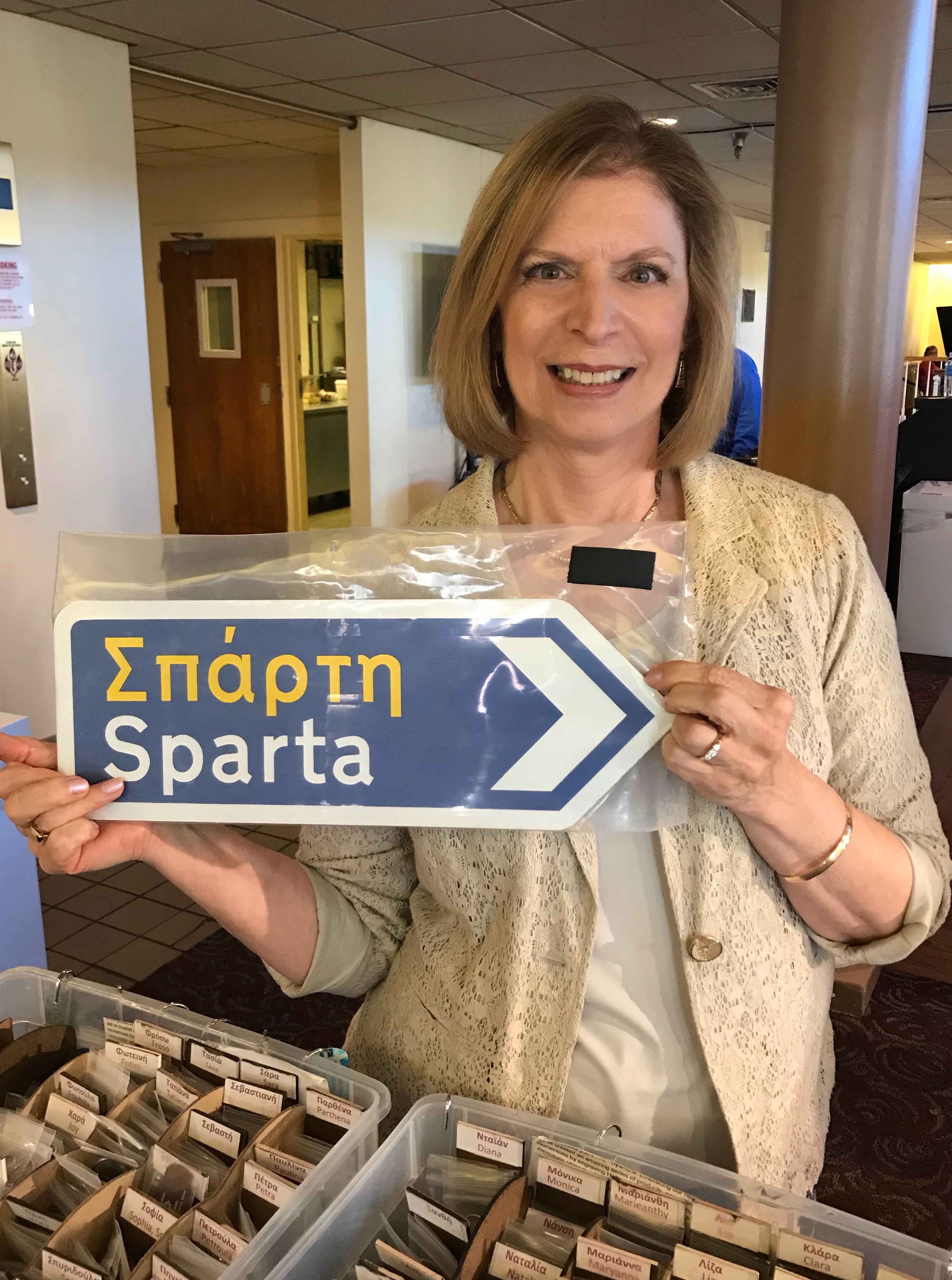
Of course, I had to get one from Sparta! In the box on the table are keychains with names written in Greek.

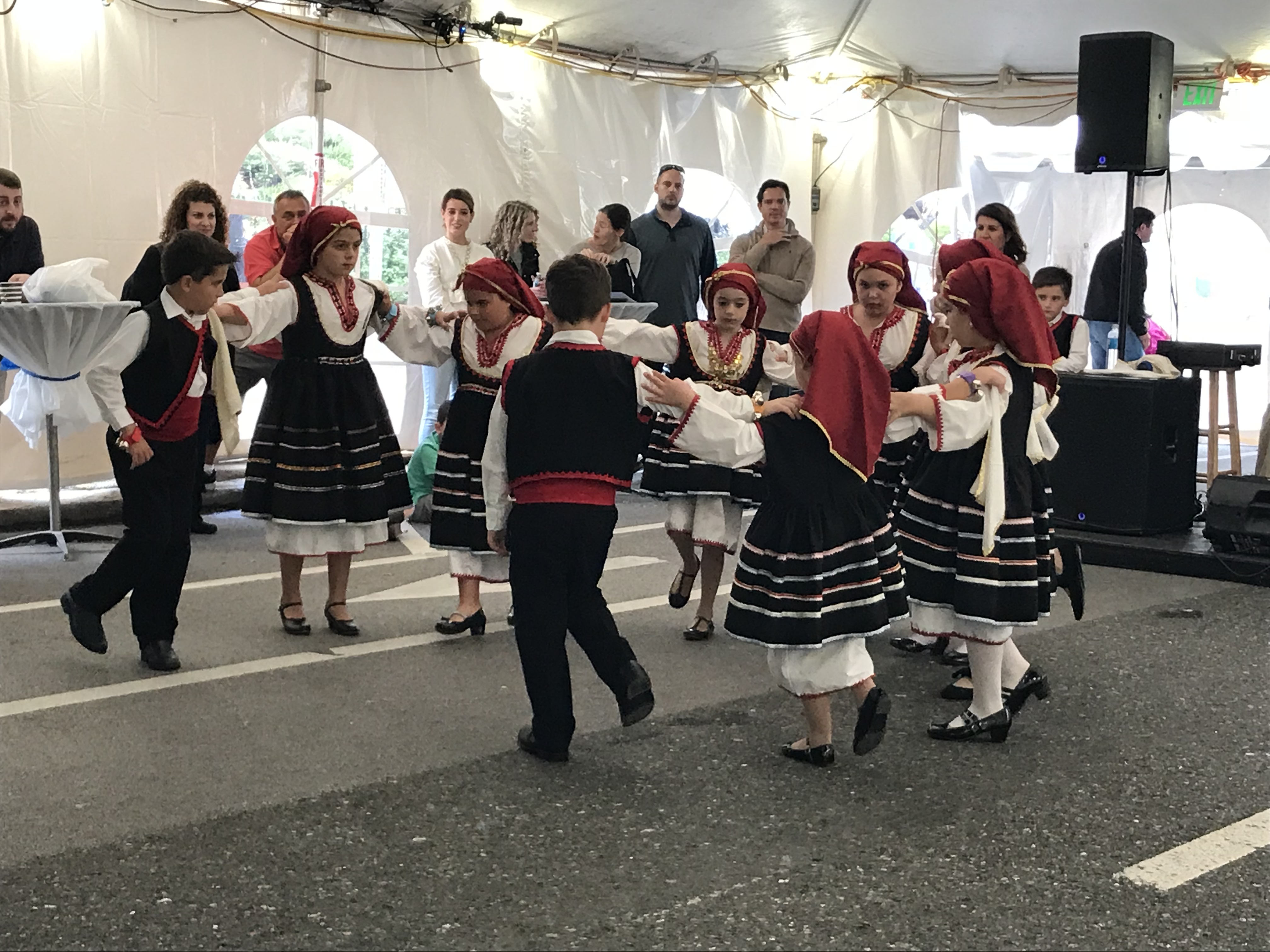
And what is a festival without dancing and music? These brightly costumed children stole the show.

I hope that the idea of holding mini-classes during Festivals catches on. It’s a low-key and easy way to introduce people to the basics, and to broaden their perspectives on family history. The jovial environment and ethnic surroundings provide the perfect backdrop for enhancing a desire to learn more about our heritage.

Dowry Contracts: Pictures of the Past

We have pictures of the past, but not the full image. When I first heard Giannis Michalakakos make this comment, I accepted its veracity–but with reluctance. I want the full image of my ancestors’ lives! A Male Register, Town Register, or Election List may provide a birth year and an occupation. But a Contract reveals so much more. Who purchased land, and from whom and where? Who borrowed money, and from whom and why? Who was the bride, and whom did she marry? What did her family provide for her dowry?

On 11 July 1864, four men gathered at the office of Konstandinos Dimopoulos, notary of Sparta, to execute a dowry contract: Nikolaos Athanasios Kanakakos of Sikaraki (groom), Panagiotis Kavvouris of Agios Ioannis (father of Marigo, the bride), Georgios Stathopoulos of Magoula (witness) and Ilias Kalogerakos of Parori (witness). These men were engaging in an honored tradition that was instituted in ancient times and not officially rescinded in Greece until 1983.
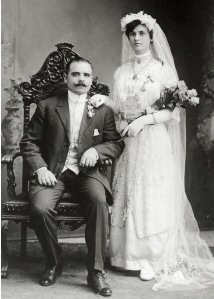
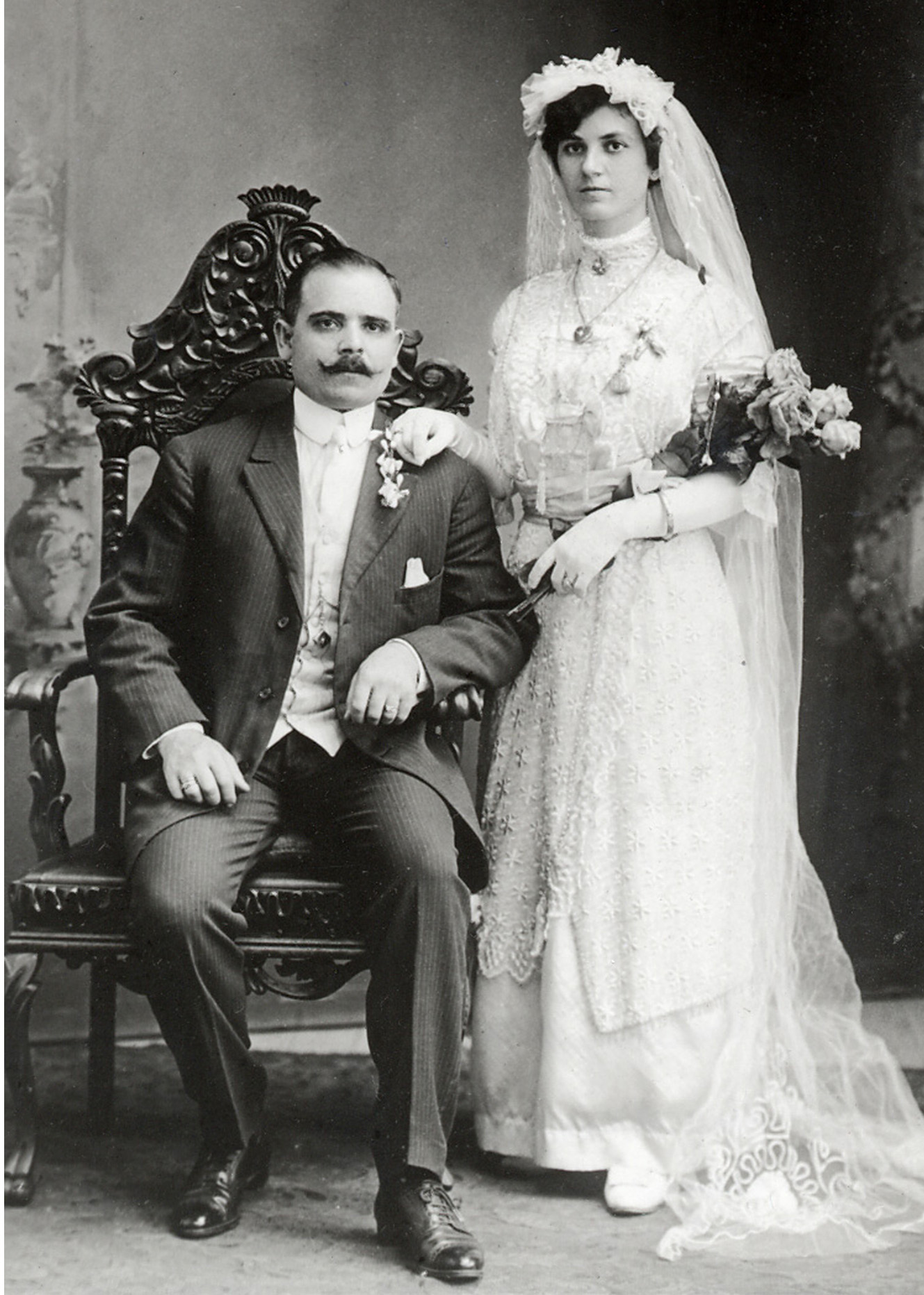
My maternal grandparents, Ilias Papagiannakos and Aggeliki Eftaxias, 1914, New York

A  marriage dowry (prika) was a custom adapted from Eastern cultures. Created by economic need, it was prevalent an era when the roles of men and women were defined by a patriarchal society. Especially in mainland Greece, families generally were poor. Men were farmers, landowners, shepherds; or worked in handcrafts such making baskets, ropes, or leather items. Women were homemakers.

When a new union was formed, both were expected to contribute items needed to establish the home. The bride’s dowry provided household or clothing items, property or animals. The groom provided a house and income for the family. Thus, both bequeathed what they could to secure a foundation for their new marriage.

The Kavvouris-Kanakakos contract is translated below. It is a fascinating picture which helps us better understand the image of life in mid-1800’s Sparta. Commentary and historical information is added with footnotes or brackets, and photographs are representations of the types of items the dowry contains.

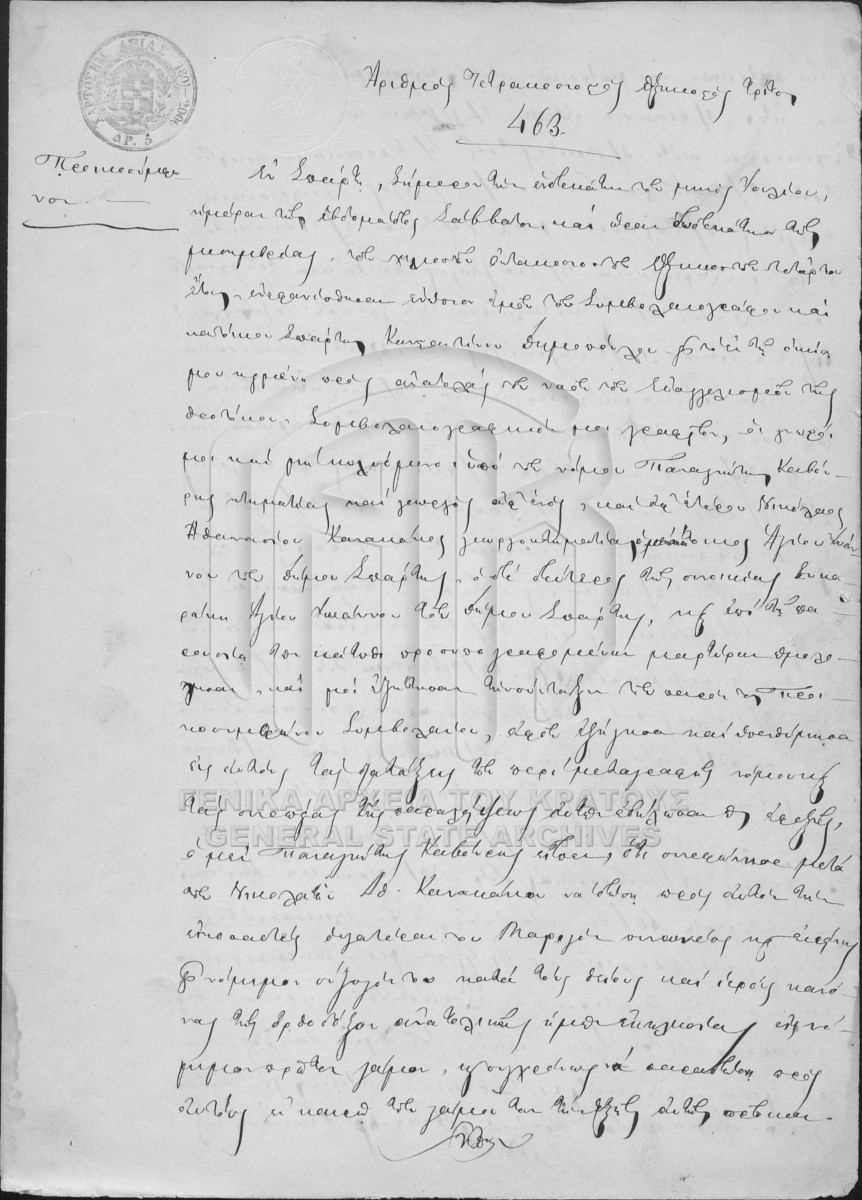
Page 1 of 4, Dowry Contract 463. Panagiotis Kavvouris and Nikolaos Athanasios Kanakakos, Sparta, Greece. July 11, 1864. Source: General Archives of Greece: http://arxeiomnimon.gak.gr/browse/resource.html?tab=tab02&id=197332

Contract 463, 11.7.1864, Dowry and Notary Deed
On this day, 11 July, Saturday, at 12:00 noon of year 1864, came before me, Konstandinos Dimopoulos, notary and citizen of Sparta, to my home and office, being east of the Church of Evangelismo of Theotokos,1  Panagiotis Kavvouris, estate owner and farmer of Agios Ioannis of Sparta on one hand, and on the other Nikolaos Athanasiou Kanakakos, farmer and citizen of the neighborhood, Sikaraki, of Agios Ioannis of the municipality of Sparta; both are familiar to me and of legal status. In my presence and the witnesses, they sign this dowry contract after my explanation of the laws.

Panagioti Kavvouris makes an agreement with Nikolaos Athanasios Kanakakos to give Nikolaos his daughter, Marigo, as his legal wife according to the holy rules of the Orthodox Church. The groom takes from the maternal and paternal legacy: 

1.  Two tall fezes (kind of traditional hat)
2.  Gemenia – women’s head cover
3.  
Three basinas – a bowl for cooking
4.  
Three sets of kreponia – women’s clothing, dark in color
5.  
Twelve madilia – women’s head cover
6.  
One pair of vergetes– earrings, expensive
7.  
One silver cross
8.  
Three silver rings
9.  
One pair of crystal dessert plates
10. 
Six dessert spoons
11. 
One serving dish
12.  
Two men’s vests, decorated with fur
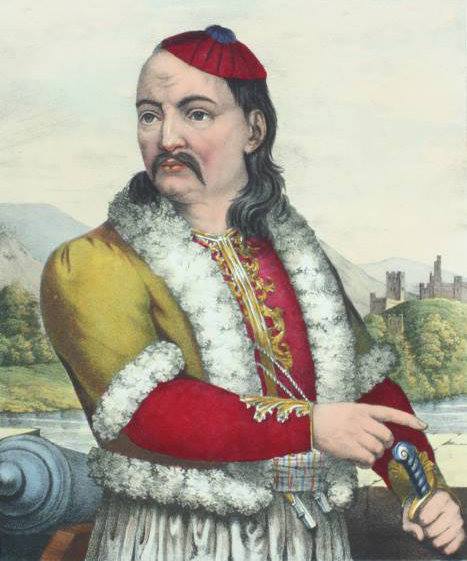
Man’s vest with fur

13. Ten women’s skirts
14. 
Two dresses
15. 
Twenty-five shirts
16. 
Twelve sets of underwear
17. 
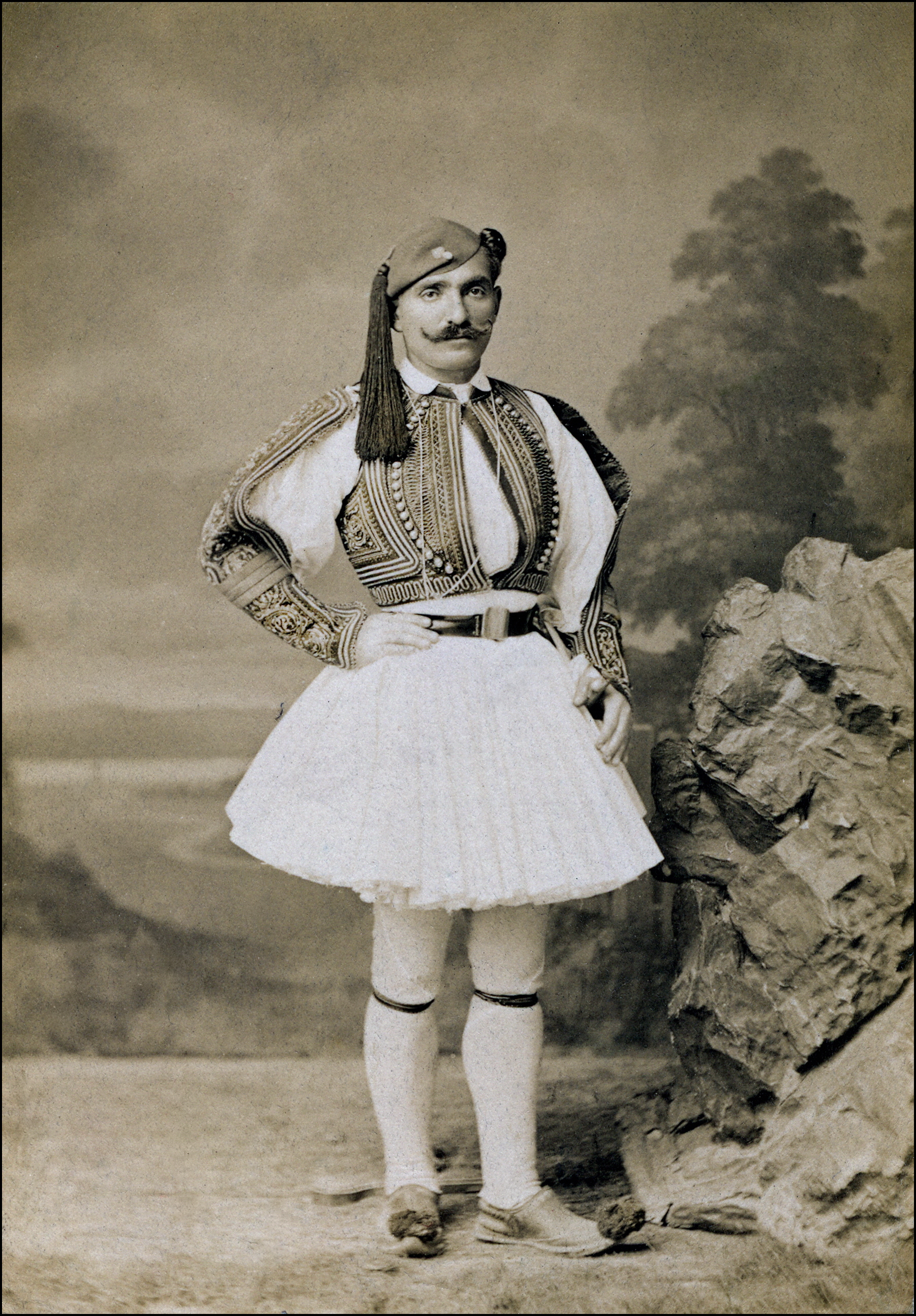
Two men’s fustanella 
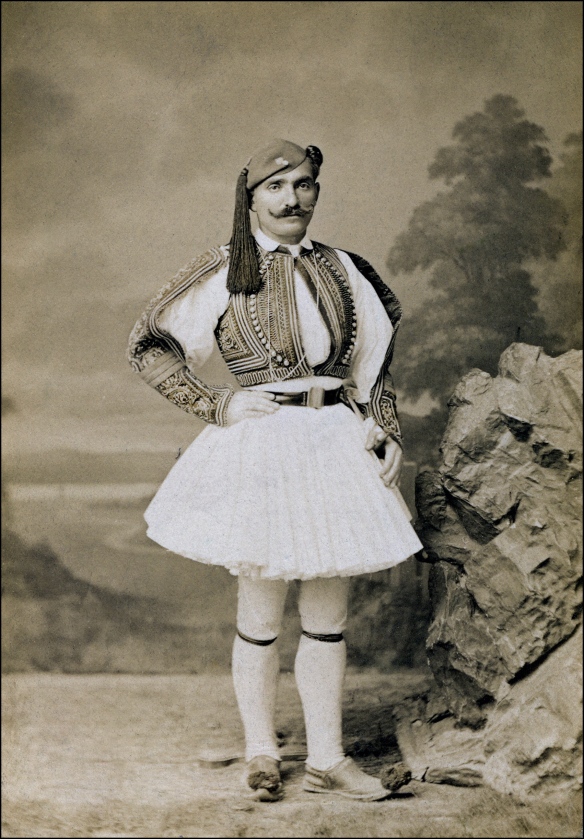
Traditional fustanella; Flickr Creative Commons

18. Two disakia (small packages to hold items)
19.  Two paploma, bed comforters
20.  
Ten soaps
21.  
Two makatia. decorative sofa covers
22.  
Eleven big pillows
23.  
Four small pillows
24.  
Two andromedes (unknown)
25.  
One peskidi (a nice throw cover for the sofa)
26.  T
wo table scarfs/covers for the dining room table
27.  
Two nice scarfs/covers for chair backs and arm rests
28.  
Six fakiolia, small women’s head covers
29.  
Eight mpoiles, a kind of towel
30.  
Twelve spoons, knives and forks
31.  
Twelve plates
32.  
Seven mpouxades, wool cloth which hold liquids when making cheese
33.  
Eight vrakozones, traditional men’s clothing worn below the waist
34.  T
wo casellas, similar to a hope chest which hold clothing and linens
35.  
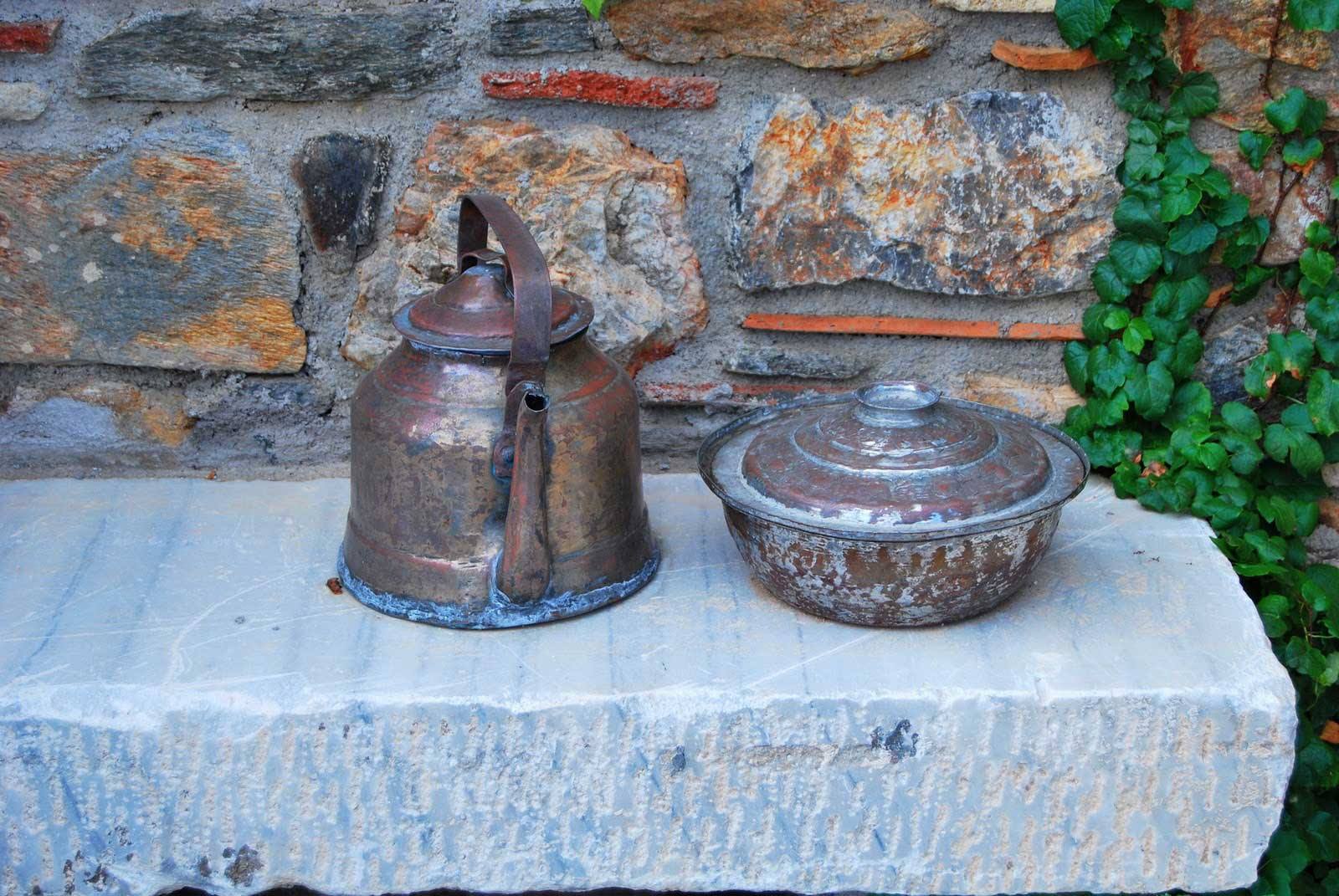
Two kapaki, cooking pots with covers
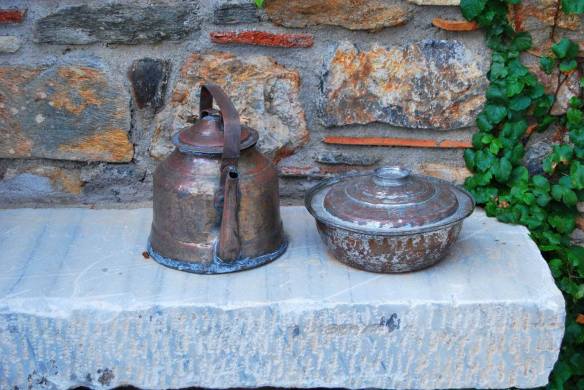
Kapaki, cooking pans with covers


36.  One 
tapsi, circular metal roasting pan used in ovens

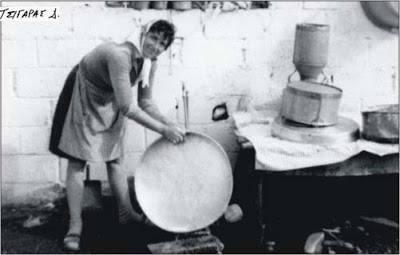
Woman holding a circular tapsi; on the right is a vethoura

37. One harani – metal bucket that can hold one okres (a unit of measure)
38. Two siderostia – iron tripods to hang pots over an open fire
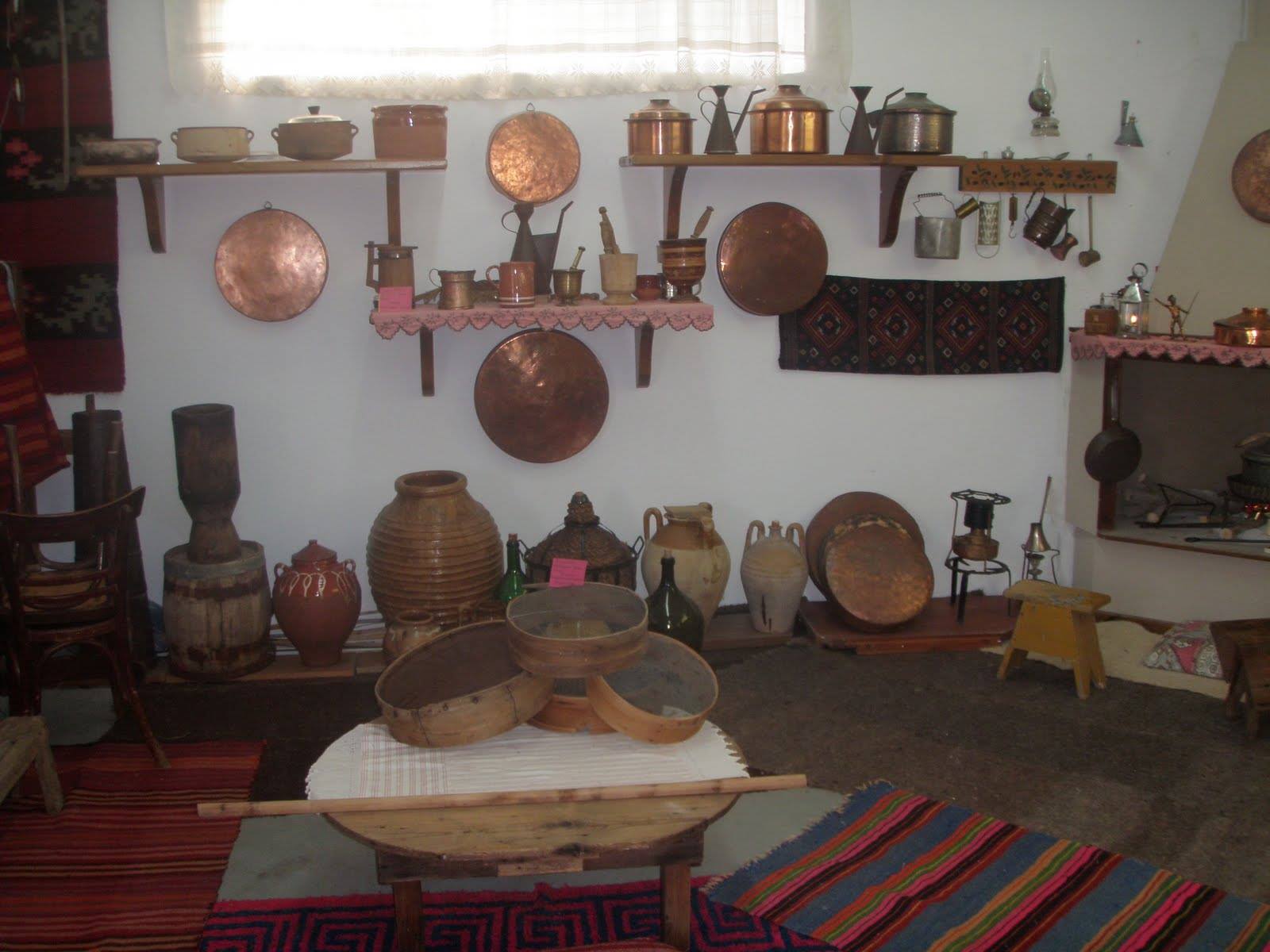
39. One pan
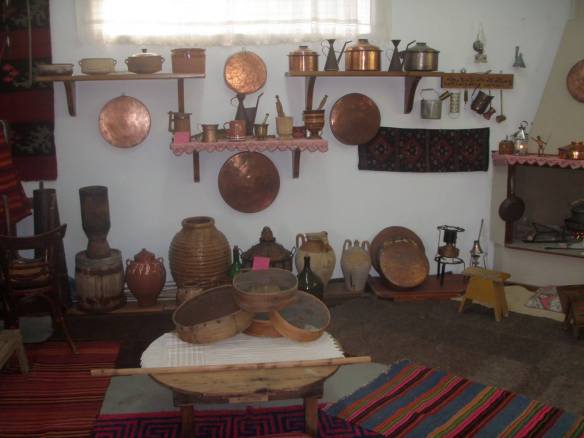
Kitchen items, mid-1800’s, Greece

40. One stremma [unit of measure] with 14 olive trees located in the borders of Agios Ioannis, Sparta. The land is bordered:  on the east with a national estate [land which belongs to the municipality], on the west with Panagioti Kamarados, on the north with Giannis Giannos, in the south with Georgios Bakopoulos.

41. One individual estate, a small field, two stremmata with all it contains [perhaps a small hut] and 7 small trees located in the location Sourakaki of Agios Ioannis, Sparta; it borders:  on the east with a road, on the west with church fields, on the north with the national estate, and on the south with Pangiotis Pachigiannis.

42. Some trees that were planted in the national field in the location Kefalari of Agios Ioannis, Sparta; and borders on the east with Saltaferos [a family in Mystras], on the west with the road, on the north with Panagiotis Kavvouris and on the south with a road.8

43. Twenty barrels containing orange trees that the groom took a few days ago to replant them in his own land.

The total of the dowry and property (moved and unmoveable) is 1,463 drachmas.4

The groom, Nikolaos Athanasios Kanakakos,5 expresses that he accepts Marigo as his legal wife and the dowry given by her father. He understands exactly the dowry that was previously reported and offered to him by Marigo. He also offers Marigo 500 drachmas [bridewealth].6

The two sides additionally, with me the contract maker, evaluate the total value of all things as 1,963 drachmas plus the postcard [the notary’s fee].

To verify this contract and this dowry, the two sides listened to the dowry spoken aloud and clearly, and agreed to it.

Called as witnesses: Georgios Stathopoulos, estate owner and citizen of Magoula and Ilia Kalogerakos, farmer and citizen of Parori of the municipality of Sparta. They are familiar to me, they are Greek citizens without any legal exceptions, and they verify this contact because because neither of the two sides can sign their names.7
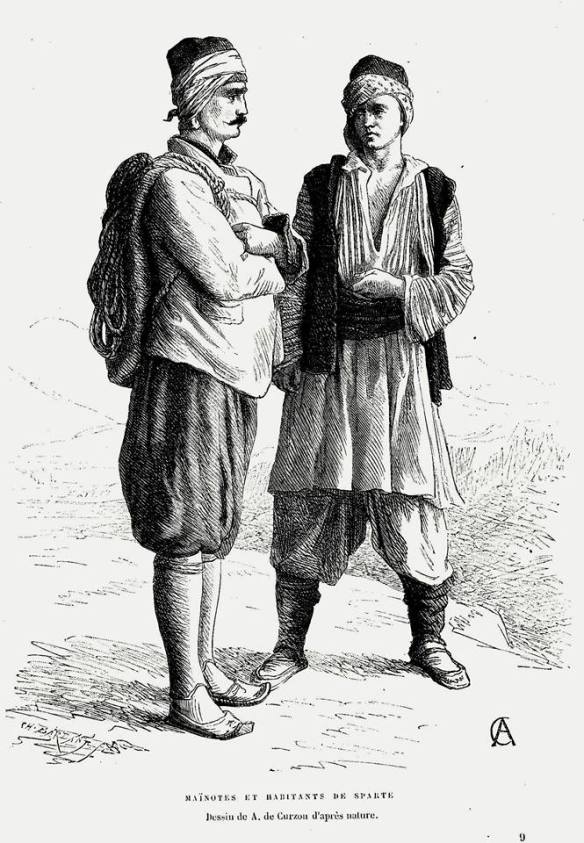
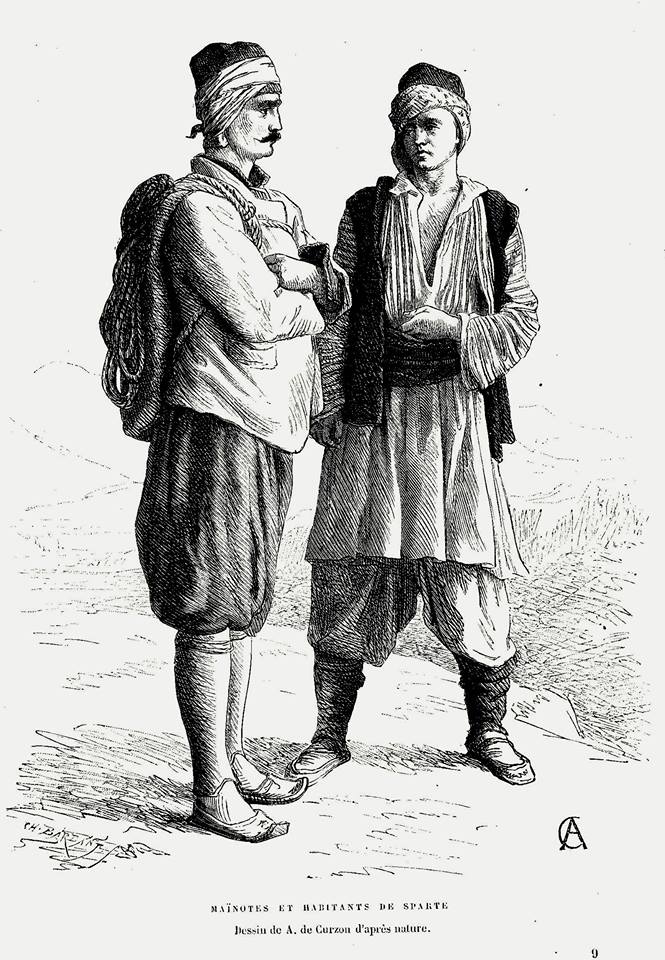
Maniate men in Sparta. Many people from the Mani region, like the Kanakakos family, moved north to Sparta after the Revolution.

I initially became acquainted–and fascinated–with contracts during my first trip to the Sparta Archives in 2014, when I went with Gregory Kontos. This 2015 post describes a contract, translated by Gregory, for the purchase of land by Panagiotis Iliopoulos of Machmoutbei. Each succeeding research trip has yielded new information, as documented recently in Research in the Archives of Sparta.

Contracts are challenging: not many are digitized or online, paper copies are difficult for Archivists to obtain, and the handwriting is akin to hieroglyphics. But with good luck and good friends, they can be accessed and interpreted, enlightening our understanding and giving us a fuller (albeit not full) picture of our ancestors’ lives.

Important note: This post would not have been possible without the assistance of Giannis Michalakakos, teacher, historian, and author of Maniatika blog. Giannis completed all translations, found the photos, and provided the historical content to explain the customs of this era. I am grateful for his friendship and expertise.

____________

1  This exact description of the location of the Dimopoulos home and office is given because Sparta in the mid-1800s had few roads and no street addresses.

Many of descriptive words come from the Ottoman period and are unrecognizable in today’s language; they may be a hybrid mix of Greek, Ottoman and Venetian vocabulary and are no longer in use.

When a meal is prepared using a tapsi, it is also served from it; the family would sit around and eat out of it together. A vethoura, the double pot on the right, is where sheeps’ milk is stored.

This is a sizeable dowry, indicating that the bride’s family had financial means.

5Kanakakos is a big family in Mani; members were officers in the Army and heroes in the Revolution of 1821.

6 As a bride brings a dowry, sometimes, a groom will offer a sum of money or property to the bride’s parents to help establish the new home.

7 Normally, there would be five signatures: the groom, the bride’s father, the two witnesses and the notary. In this contract, only the witnesses and notary signed as the groom and bride’s father were unable to write their names.

8 After marriage, land named in the dowry belongs to the bride’s husband. The property was given by her father to establish her new home. In 1800s Sparta, divorce was unheard of; and men were responsible for providing and maintaining financial security of the family.