Unknown's avatar

About Spartan Roots

I am of Greek ancestry with roots in villages near Sparta. My paternal grandparents and maternal grandfather were born in Agios Ioannis (St. Johns), and my maternal grandmother was born in Mystras. I love family history research and have been tracing my roots for many years. I was born in Brooklyn, New York and was raised in a predominantly Greek neighborhood close to extended family. I live in the Washington D.C. metropolitan area and work as a volunteer Co-Director of the Washington, D.C. Family History Center and a genealogy aide/project aide at the National Archives in Washington, D.C. I am always updating and adding new information. Please contact me - I would love to hear from you!

Journal of Lakonia Studies at the Library of Congress, Part 2

In October 2024, I delivered the first twelve of twenty-three volumes of the Lakonia Studies journals to the Library of Congress. Last week, I delivered volumes thirteen through twenty-three. They are now housed in the European Reading Room under the supervision of Dr. Nevila Pahumi1 who oversees the Greece and Cyprus collections.

Carol Kostakos Petranek delivers Lakonia Studies Journals, September 19, 2025
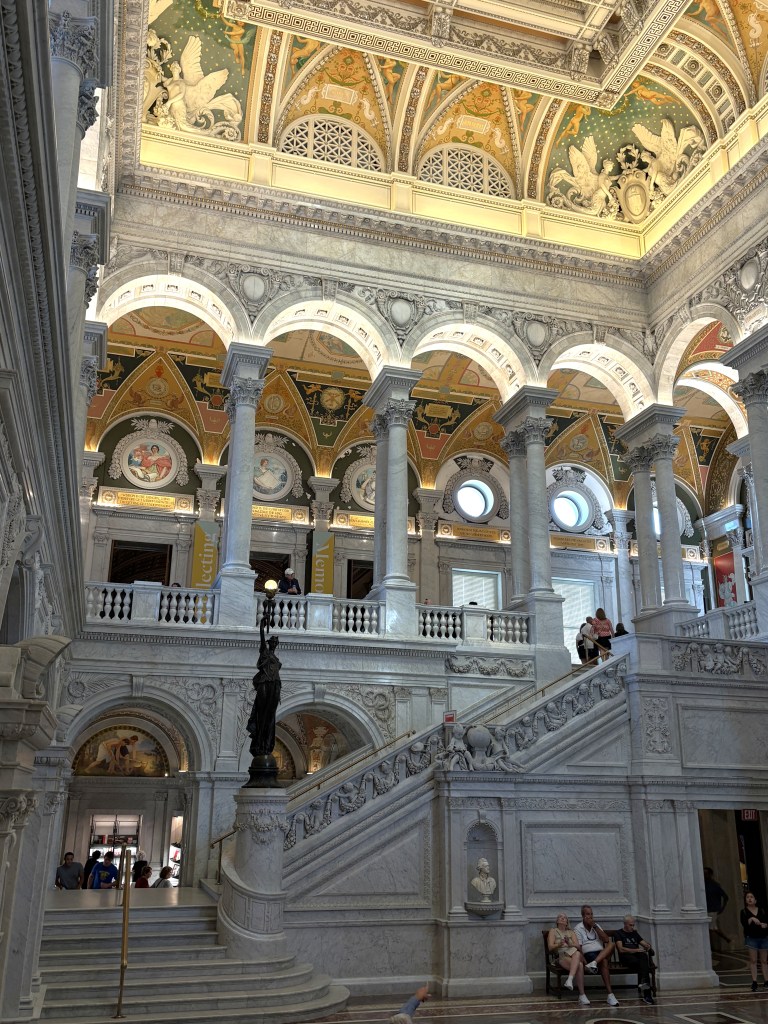
The architectural design of the European Reading Room reflects the classic beauty of the Library

As I explained in this 2024 post, Dr. Pahlumi is most enthusiastic about securing primary sources for the Library’s collections. Historians in their native lands who can walk the grounds, speak with local specialists, and access materials not available outside their countries are the ones who write with first-hand knowledge and accuracy. Their works are eagerly sought by researchers worldwide who visit the Library seeking such materials.

The classical beauty of the Library captivates those who enter

This pdf document lists the Table of Contents for each of the twenty-three volumes of Lakonia Studies2. It is 47 pages–too long to add a typed copy to this post. If there are articles of interest to you, the volume(s) can be purchased from the Lakonia Studies organization for 20 euros per book.

Next year, I will deliver the supplements to the journals. Those books are just as large and comprehensive as the original volumes!

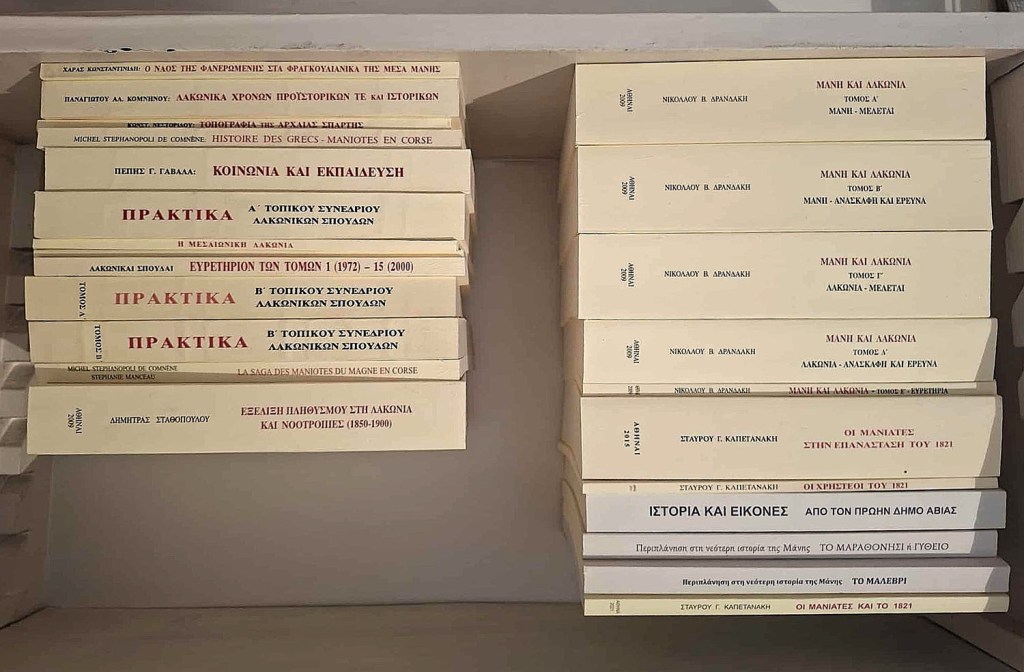
Lakonia Studies Supplements

Contact the organization for more information or to purchase a volume:
e-mail: etlasp@gmail.com.

And if you are in Athens, make an appointment to visit the office and the staff.
63 Charilaou Trikoupi, 4th floor, 104 81, Athens
Office hours: Monday – Wednesday – Friday 11.30 am – 1.00 pm
Telephone: 210-3304422
6936-734920 (Sokrates Kougeas – president)
6974-343619 (Despina Koutsari – general secretary)

These books should be in the hands of researchers worldwide. If you know of an organization, library or repository that would welcome this incredible collection, please contact either the Lakonia Studies organization or me. Our Spartan historians deserve to be referenced and respected for their exclusive and preeminent works.


1Dr. Pahumi is the Reference Librarian for Latin American, Caribbean, and European Division and oversees the Greece and Cyprus collections at the Library of Congress in Washington, D.C.
2The English version was translated using the Greek Genealogy Assistant chatbot which I created in ChatGPT5. My Greek language skills are elementary, and although I reviewed the translations which appear accurate, there may have errors.

A Morning at the Sparta Archives

The brilliant Mediterranean sun flooded the room with light as people trickled into the open, airy office of the General State Archives (GAK) Archives of the Prefecture of Laconia, located in Sparta. We came to meet the staff and learn about the resources available to trace our Spartan ancestry. All had family roots in the ancient nearby village of Amykles and were part of the first-ever Amykles worldwide reunion.

Visitors are welcomed by GAK staff Michalis Sovolos, Director (3rd from left)
and Maria Stellakou (6th from left).

The Archive office moved to this beautiful and spacious location in 2023. It is on the 3rd floor of 61 Gkortsologou, 1/2 block from the Sparta plateia. The Director, Michalis Sovolos, and his staff of three are cheerful, kind, knowledgeable and totally dedicated to assisting researchers.

A beautiful home for the Archives of Lakonia

Attendees gathered in the large meeting area where Michalis and Gregory Kontos, founder of GreekAncestry.net, described the records available for Amykles and the most efficient way to begin the research process.

The staff had pulled various collections for people to access: Amykles school records, newspapers, notary files, and Town Registers (Dimotologion Koinotitos). Research in Greece is challenging. Prior to 2020, there were no records online. Through Gregory’s work, digital collections are now becoming available at GreekAncestry.net and MyHeritage.com.

However, most research must be conducted in person at archive offices and town halls. That is why this visit was so important to these guests. They received personal assistance from the staff and were able to view information not found elsewhere.

Researchers are assisted by Michalis as they review school records for Amykles

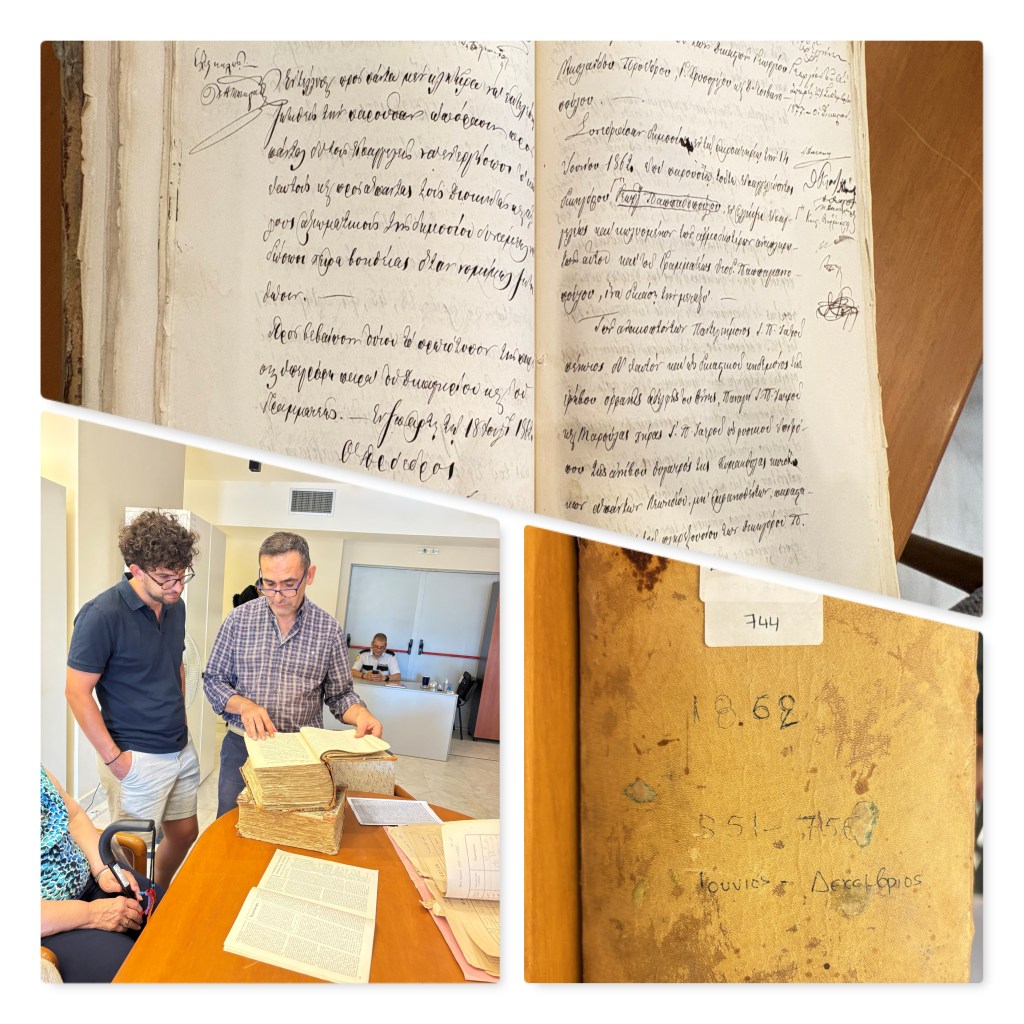
The preeminent yet most elusive key to unlocking Greek family history is notarial files. These are official contracts which document the legal transactions of everyday people: dowries, wills, sales, purchases, loans. The Archives of Lakonia has a vast collection. Michalis showed us a notary book dated 1862.

Greg and Michalis examine an 1862 notary book

Books and documents created over 165 years ago will naturally turn yellow and brittle, and be in need of preservation. I was elated (no exaggeration!) to learn that all of the notarial files of Lakonia are in the process of being digitized and will be available online in the near future.

The digital archive of Lakonia is at this link. Within this are two notary collections with images of original documents:

  1. ΣΥΜΒΟΛΑΙΟΓΡΑΦΟΣ ΜΥΣΤΡΑ [1849-1979] (Notary of Mystras)
  2. ΣΥΜΒΟΛΑΙΟΓΡΑΦΟΣ ΣΠΑΡΤΗΣ ΚΩΝΣΤΑΝΤΙΝΟΣ ΔΗΜΟΠΟΥΛΟΣ [1863 – 1974] Notary of Sparta Konstantinos Dimopoulos.
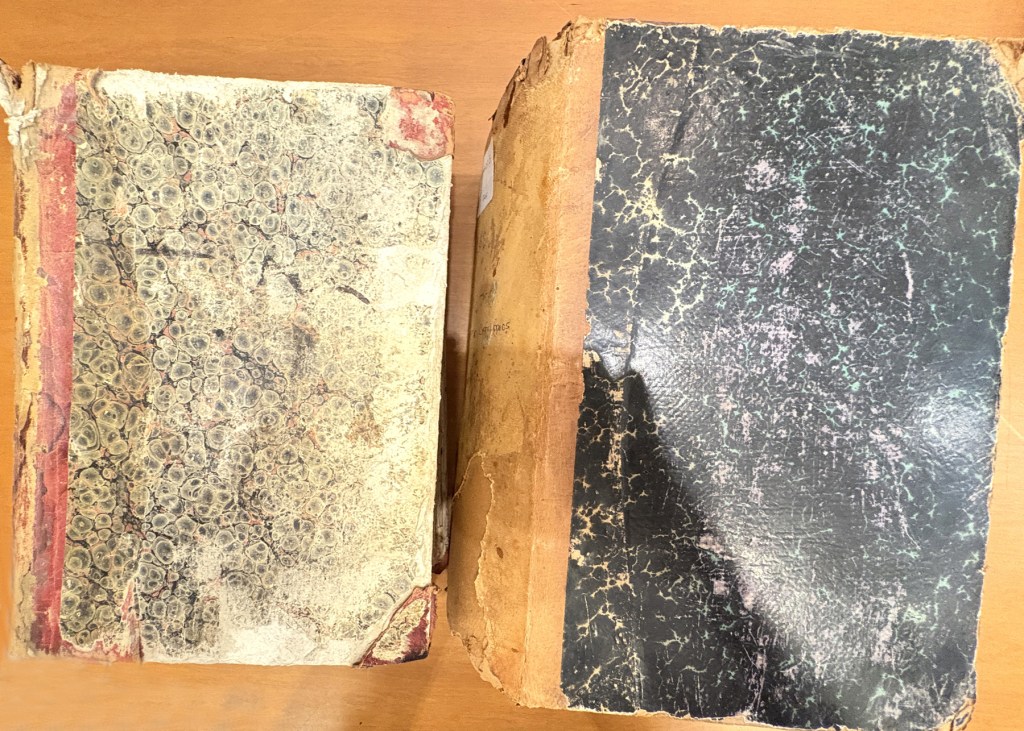
More notary books from the mid-1800s
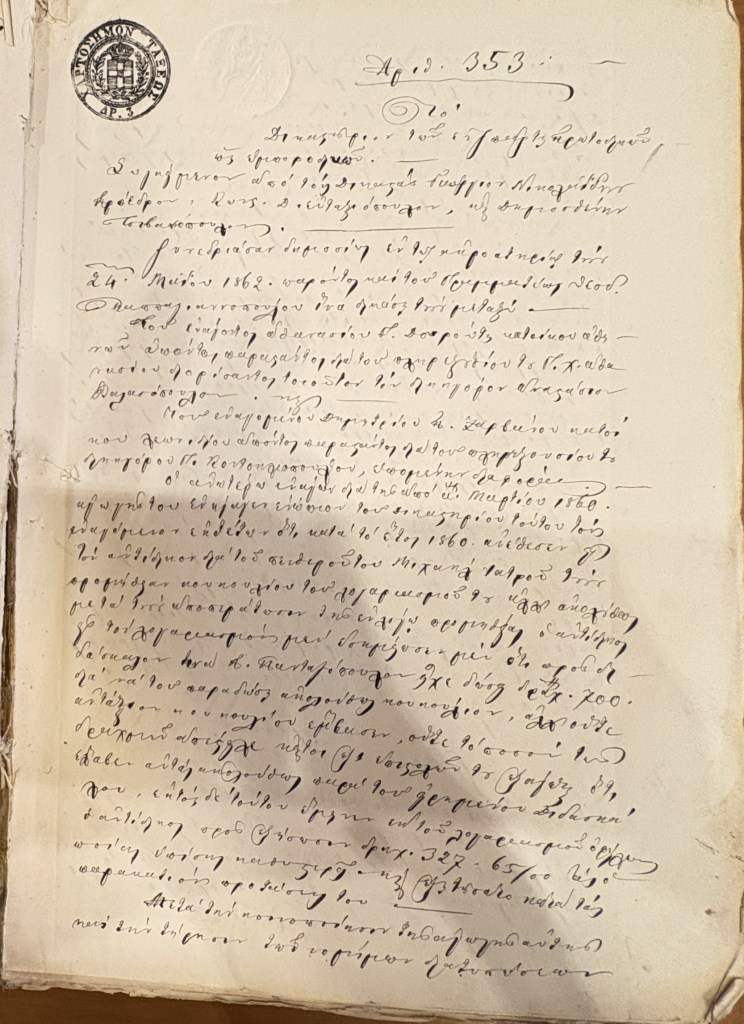
Notary Document, 1862. Unlike most, this handwriting is beautiful and the document is in good condition

I can’t begin to imagine the human manpower it would take to create name indexes for hundreds of thousands of these pages. If artificial intelligence can be trained to read old Greek script, then every-word document searches on notarial records will become a reality. We will be able to find “hidden treasure” — nuggets of currently inaccessible information — about our families. Thankfully, AI technology is rapidly evolving and every-word searches on handwritten documents are now a reality (see FamilySearch Full-Text Search.) All our community needs are more digitized records and Greek language chatbots.

The bottom line is patience, faith and gratitude:
patience to wait as the Archives of Lakonia (and others) arrange for record digitization;
faith that technology will advance to enable record accessibility that we cannot fathom today:
gratitude for what is happening, what we currently do have, and for those who are working diligently to make their records accessible.

My sincerest thanks to Michalis and his staff for hosting our group on August 13, 2025. You are the best! 🙂


Note: the General State Archives are under the Ministry of Education of Greece.

Pellana, Lakonia and Aussie Greeks: Peter Adamis’ Life Work

Nestled at the foot of the mountain leading to the village of Pellana is the simple, unpretentious house of Peter Adamis. Over the years, he modified and improved the dwelling which had been built by his parents over a stable in which Peter and his brother were born. It became his second home.

Home of Peter Adamis, Pellana, Lakonia, 2017

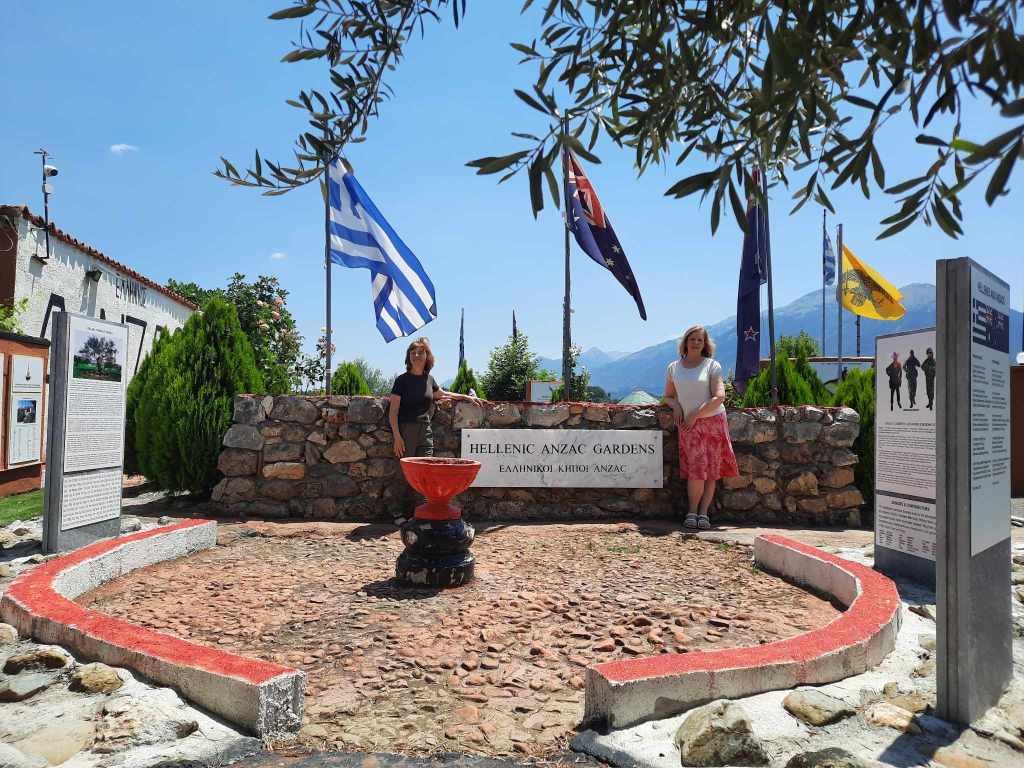
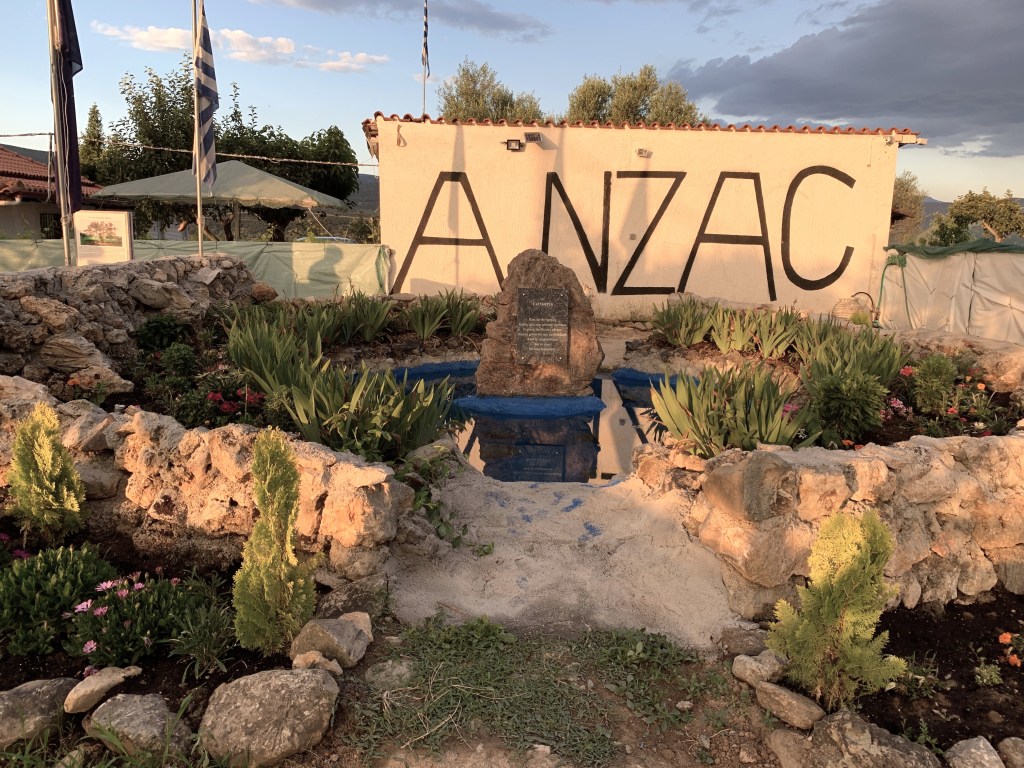
However, nestled on this piece of land are more than just a house and a vegetable garden; it also holds the inspirational and emotional Hellenic ANZAC Memorial Gardens. This stands as a tribute to those of Greek heritage who served in the Australian and New Zealand Army Corps and is a crowning achievement of Peter’s legacy.

Peter in his beloved Hellenic Anzac Gardens Memorial Site, 2019
My cousin, Joanne (left) and me in the Gardens, 2023

The site was conceived by Peter and hand built, rock by rock, by Peter himself and his devoted friends. “This project became a source of purpose and fulfillment, allowing me to honour those who had come before me and to contribute to something greater than myself,” Peter wrote.1 “[It allowed] me to channel my energy into something meaningful. It gave me a sense of purpose and connection to my heritage, as well as a way to honour the legacy of those who had sacrificed for our freedom. This endeavour was not just about creating a monument; it was about building bridges between cultures and fostering understanding.”

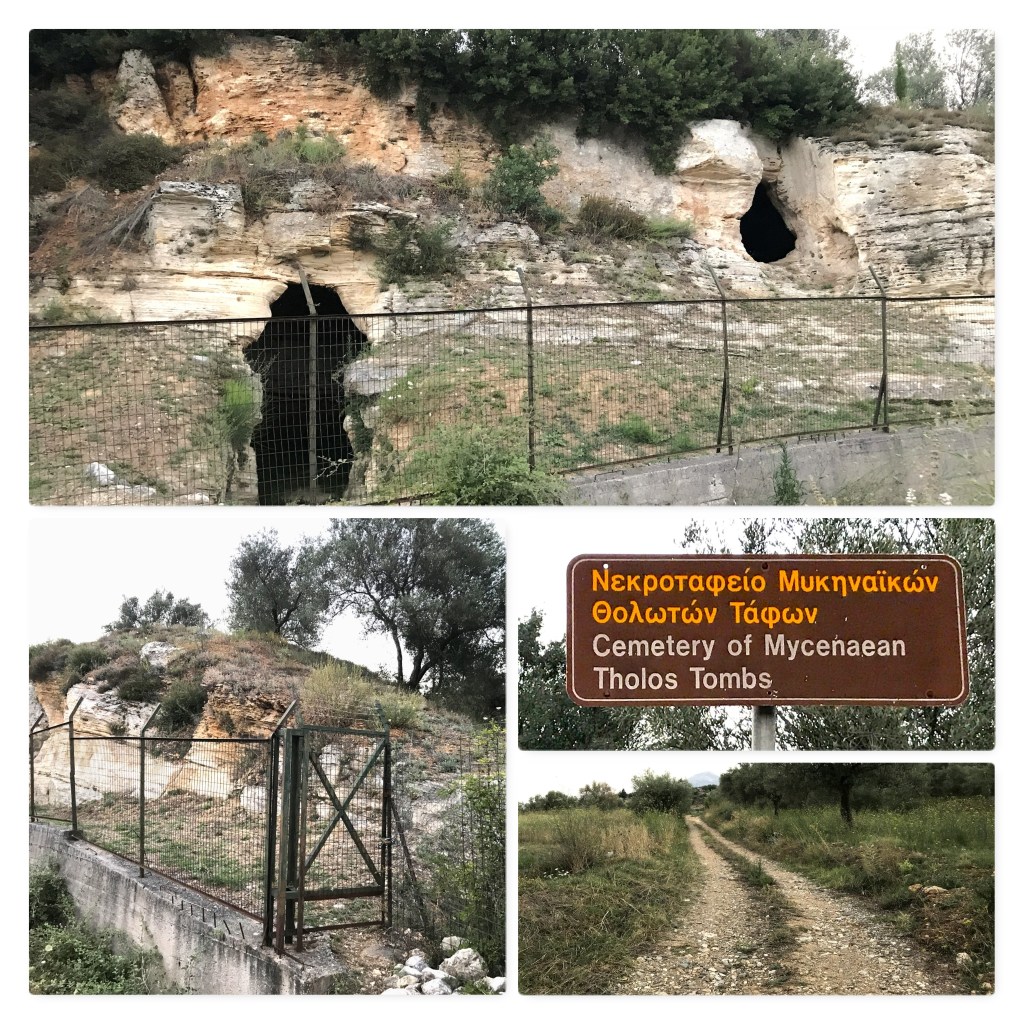
The culture of Pellana has long been a focal point of Peter’s intensive studies. His historical research of Pellana’s consequential place in the Hellenic story is legendary among his friends and local villagers. During my visit in 2017, he took me on a tour of ancient Pellana ruins. With insight and intellectuality that revealed years of research, he shared facts and hypotheses, stories and anecdotes about Mycean tombs, Menelaus and Helen, history and folklore.

Ancient Pellana sites

Born in Pellana and raised in Australia, Peter has melded his two cultures into one remarkable life. He is a prolific and thoughtful writer who has authored over 20 books and many personal narratives. All are hosted on his Abalinx website and available as free pdf downloads. A link to the webpage listing his books is here; click on an image to access the book.

This website hosts Peter’s books, writings, and musings
Explore its rich collections via the dropdown menus at the top

Peter’s years of deep research into the history of Pellana from ancient times to present is now published in Pellana, a book available here.

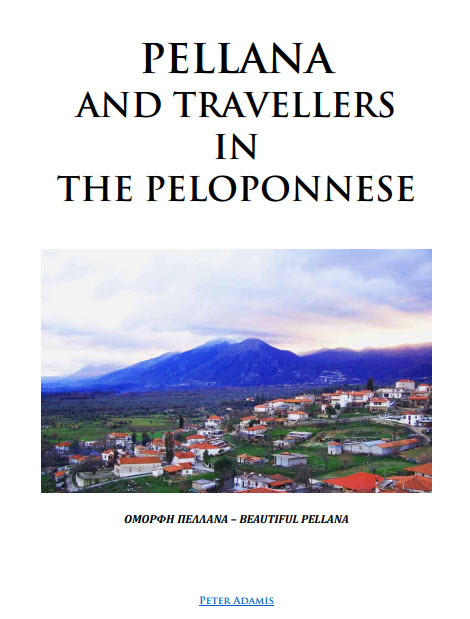
A companion volume, Pellana and Travellers in the Peloponnese, can be downloaded here.

Peter’s historical writings and personal reflections reveal the soul of a man who yearns to “record as much as I can for future generations.”2 For this, and for dedicating this season of his life to lifting and memorializing others, I honor him as a dear friend. We are kindred spirits.

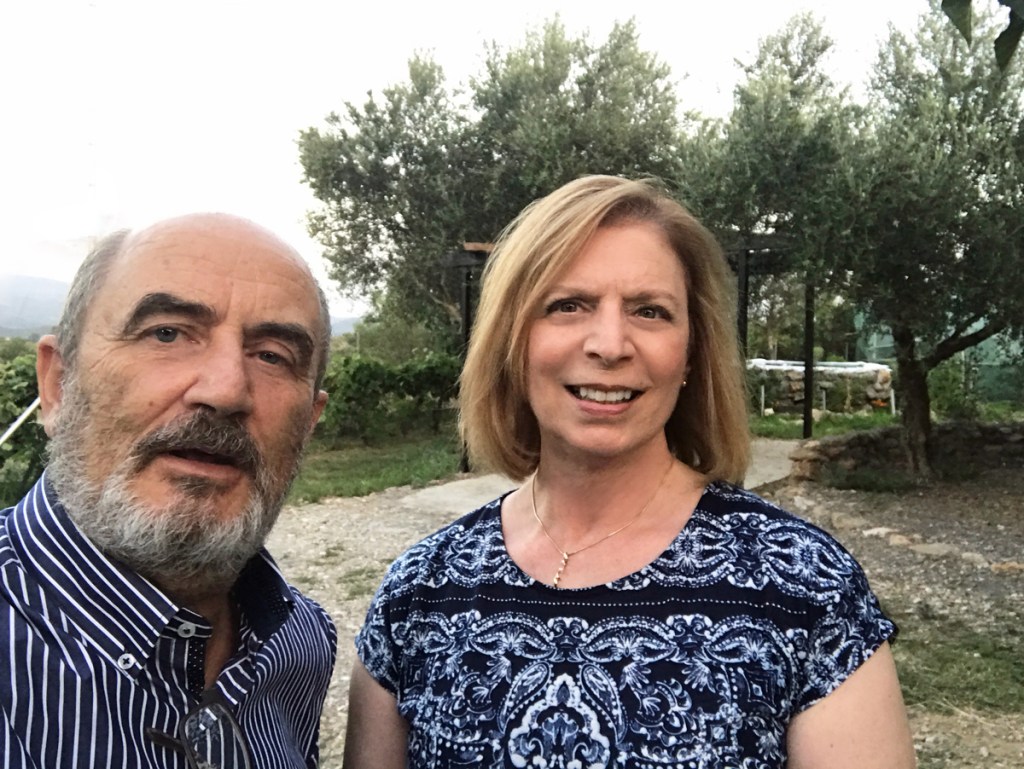
Peter Adamis and Carol Kostakos Petranek, Pellana, 2017

Peter can be contacted through or via email: abalinx1950@gmail.com

1https://abalinx.com/blog/cancer-and-resilience/
2Personal message, Peter Adamis to Carol Kostakos Petranek, September 8, 2025

Mosaics, Ceramics and Metalwork: Three Artists of Sparta

The juxtaposition of old and new is becoming more evident every time I visit Sparta. It is personified in the vibrant and enthusiastic colony of young artists who are exploring contemporary ways to embrace and perpetuate our ancient culture. Sharing their talents with residents and travelers, these artists reveal how personal expression can be intertwined with history to explore new perspectives of the Spartan landscape.

This summer, I introduced my daughter to Despina Chroni of Chous Ceramics, Dimitra Colomvakou of Mosaic Art Greece, and Alexander Papastratigakis of Iron Junk Art. Being with them and around their creations was exhilarating and inspiring for us!

Chous Ceramics
Chous Ceramics and Mosaic Art Greece are next door neighbors at Konstantinou Palaiologou 132. Despina Chroni and her husband, Georgios Zitis, opened their ceramics studio in 2024. Blending their individual styles and perspectives, they create unique pieces that are already winning awards in worldwide competitions. Despina gave us a tour of the Chous workshop and gallery, and explained the process of creating their distinctive pieces.

Despina in her studio

Angles and geometric designs are common in ceramics, but Chous pieces have a singular characteristic–each one has movement. This design feature adds grace and elegance to every creation.

The Chous Gallery

Mosaic Art Greece
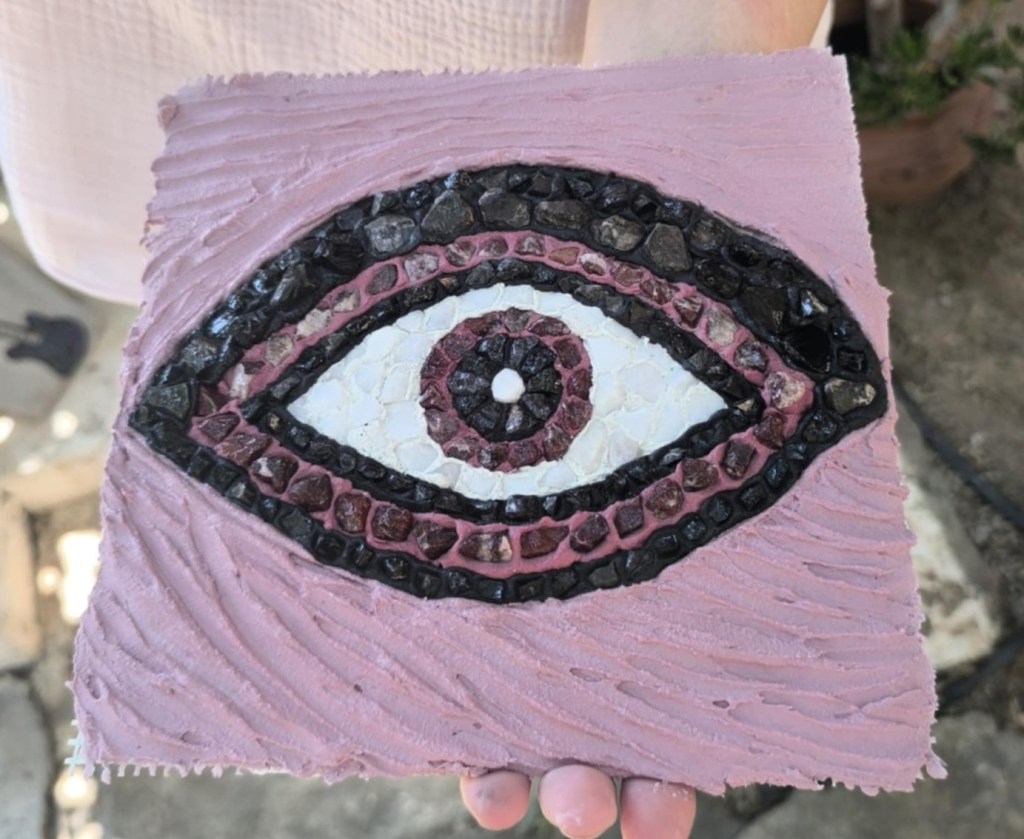
From the time I first met Dimitra Colomvakou in 2019, I was hooked on mosaic creations. Dimitra’s hands-on classes are open to the public; they enable anyone to learn the basics of this art form and to walk away with a truly one-of-a-kind creation. In 2023, I arranged to attend her pebble mosaic workshop. This summer, my daughter also experienced the joy of creating her own design, choosing each pebble and mixing the exact color she desired for the background.

My daughter’s take on the “mati”

Together, we took Dimitra’s class on glass mosaics. We learned how tiny shards of glass and miniscule bits of china (from plates, cups, etc.) can be blend into innovative designs. I loved doing this! Surrounded by piles of colorful glass and patiently tutored by Dimitra, we worked for three hours under the leafy canopy of her outdoor garden workshop, inspired by nature and and our own creative juices.

Dimitra in her garden studio

We were thrilled with our finished pieces! Truly, our own unique designs!

Our glass mosaic pieces; not to be found anywhere else!

Iron Junk Art
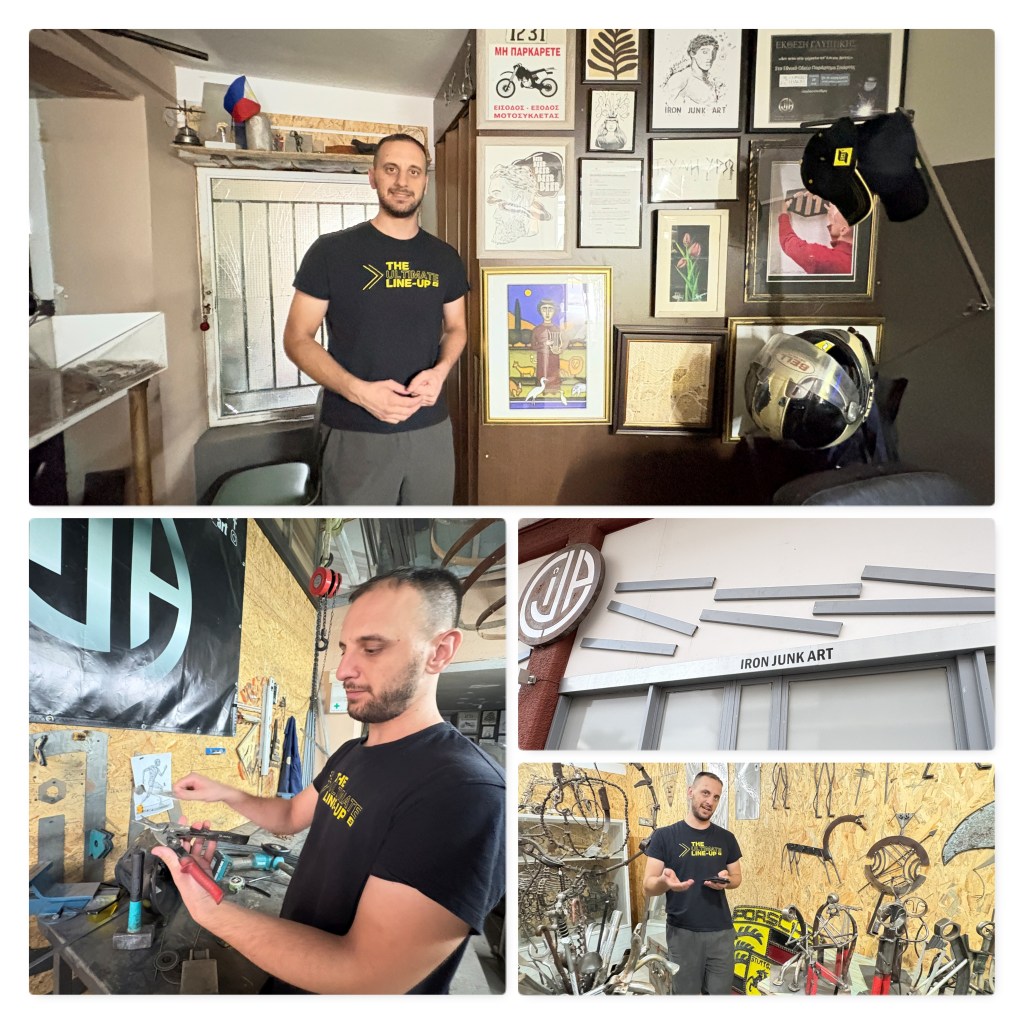
Alexandros Papastratigakis is a man with a vision. Taking bits and pieces of anything metal, he creates statues, forms, and iron sculptures unlike anything I have ever seen. From age 17, he was fascinated with all forms of machinery, especially lathes and welders. When school ended at 2:00 p.m., he headed to a machine shop where he used its welding tools to create art from scraps of metal. Graduating college as an engineer, Alexandros worked in construction and saved money to buy tools and machines. Today, he is the proud business owner of Iron Junk Art located in Sparta at 10 Orthias Artemidos Street.

My daughter and I were amazed with what we saw in Alexandros’ workshop. Bins overflow with chains, nuts, bolts, screws, nails, wires, and metal scraps. Machines and tools fill every bit of space. In this industrial midst, Alexandros focuses on his next creation.

Alexandros Papastratigakis 1
Alexandros Papastratigakis in his studio, Iron Junk Art

Each piece that Alex forms is carefully drafted and meticulously crafted. It’s difficult to describe his creations in words. So the pictures below will speak to his work.

Some of Alex’s pieces

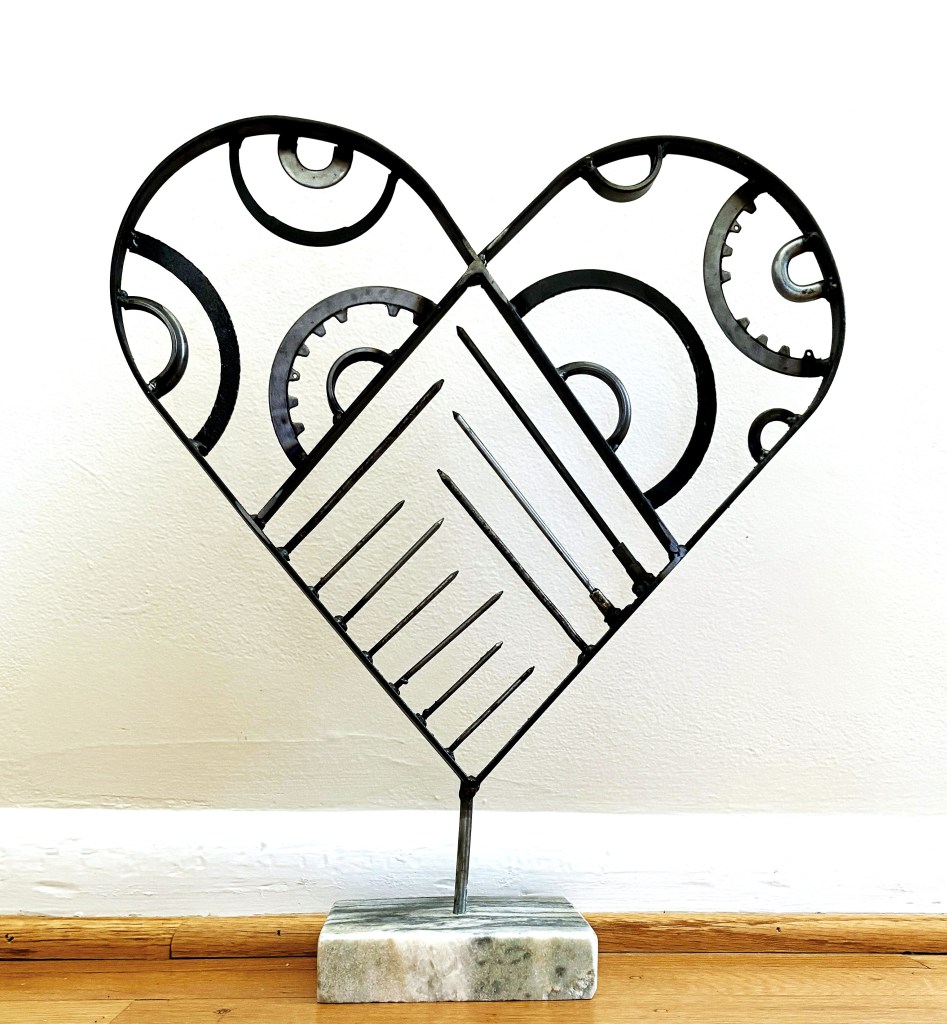
I chose this piece to bring home to my husband, who has a workshop filled with many of the same items found in Alex’s shop. He both admired and appreciated the design and workmanship.

For my husband

These imaginative, ingenious and innovative artists are lifting the cultural landscape of Sparta. They are showing both natives and tourists that this generation of artisans can blend the atmosphere of antiquity with a new breath of creativity. I admire their zestful natures and progressive ideas, and support them with my whole heart.

Koimisi tis Theotokou of Agios Ioannis, Sparta

Once a year on August 15–and only on that day–the doors of the historic church of Agios Ioannis, Sparta, Koimisi tis Theotokou, are opened to commemorate the Dormition of Theotokos. Second only to Easter in the Orthodox Church, this national and religious holiday is a time of joy, not mourning, as it marks the “falling asleep” and taking into heaven of Mary, the mother of Jesus Christ.1

Icon depicting the Dormition of Theotokou. Note the flowers around the perimeter, the red cloth indicating it is the focus of the service, and the candles on the floor.

Known as Dekapentavgoustos (the literal translation is 15 of August), priests conclude two weeks of fasting by conducting a special service. In churches that are named Koimisi tis Theotokou (or Church of the Assumption), the liturgy is conducted there which makes this worship especially meaningful.

Koimisi tis Theotokou of Agios Ioannis with bell tower (upper left)
Note the ancient stones and pillar fragments that were incorporated into the exterior stonework of the church. The small frieze over the window was carefully placed to accentuate its opening.

Marriage and baptism records prove that Koimsis tis Theotokou was the early church of our village, hosting joyous celebrations of life and sorrowful goodbys. It was the center of our ancestors’ world. For many years, I desired to see the inside of this church in Agios Ioannis. This year, that wish came true.

Interior with its whitewashed walls

My family had told me that many years ago, the inside of the church was whitewashed, thus covering the historic frescoes. However, a small antechamber at the back remained untouched which enabled us to see the types of images that had once adorned the walls of the church.

Looking into the antechamber with its frescoes from the main hall of the church

It is my hope that these photos will enable you to picture your predecessors gathering for Sunday liturgies and rites of passage. There was a distinctive spirit present as I gratefully celebrated this special holiday in this special church.

Looking into the church from the antechamber

Although the interior walls are whitewashed, the iconostasis retains its spectacular icons which serve as the focal point of the interior.

Iconostasis
The icons across the top
Closer view of the larger icons
Views of the interior

Looking from the church into the antechamber at the back, we see the frescoes that remained untouched.

Looking into the antechamber
The amazing and historic frescoes in the antechamber

For those of you who may not be able to go to a Byzantine church in Greece for an August 15 holiday, I hope these photos will enable you to feel the essence of this holy house.