Standard genealogical research methodology just doesn’t work for me. As a Spartan Greek, ancestral research is extraordinarily challenging. Using “low-lying fruit” to find my ancestors is impossible. Census records, military registrations, city directories, the Social Security Death Index, tax lists and obituaries simply do not exist in Greek records—either in accessible repositories or online. DNA testing? A great tool, but only if people take a test. Mine don’t.
I’ve sat through hundreds of genealogy lectures, seminars, programs, and RootsTech presentations that present various research techniques. I understand the GPS (Genealogical Proof Standard) but it’s tough to apply when one can’t conduct “reasonably exhaustive research” due to lack of records, or “analyze and correlate” how sources relate when sources are limited or do not exist.
What I could, and did, do was to talk to every living relative and write to Archives and Church Metropolis Offices in Greece. Answers tooks months to receive, and I was thrilled when a record arrived. But clerks are busy and I was limited to one request per letter. I felt stuck and frustrated.
Thankfully, a few years ago four things changed everything:
- I attended several sessions on using negative or indirect evidence to establish relationships. This prompted a paradigm shift or “lightbulb moment,” and steered my mindset from conventional to unconventional. I learned that there are alternate ways to determine relationships when direct evidence does not exist (see, for example, Dr. Thomas W. Jones’ Using Indirect and Negative Evidence to Prove Unrecorded Events and its corresponding handout). Learning the theory transformed my thinking; but without records, there is no evidence—direct, indirect, or negative.
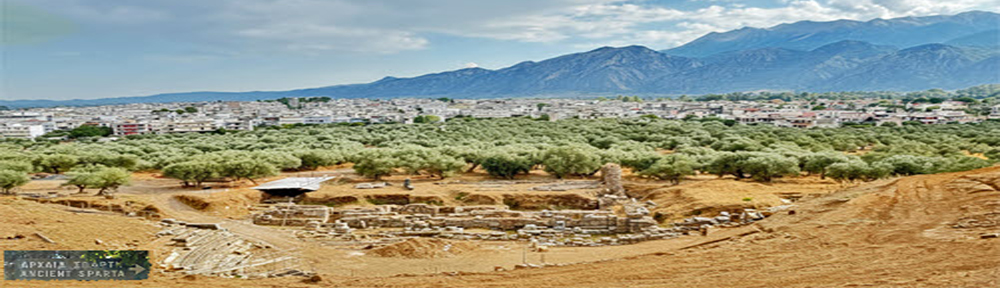
- So…I took a research trip to Sparta in 2016. My colleague, Gregory Kontos, guided me to the Sparta office of the General State Archives of Greece, the Metropolis (diocese) of Lakonia, and the City of Sparta Town Hall. We found which records are available onsite. I made a list and returned every summer to obtain whatever extant records existed for my village(s). I got many! I also suggested to Greg that we offer to preserve, free of charge, the marriage records at the Metropolis of Sparta and the village church books of Lakonia. These projects were approved by the Bishop. Working under Greg’s direction, I spent three summers in Sparta digitizing these records. The collections are now available at MyHeritage; they were among the first accessible Greek records online.

3. In 2020, Greg founded GreekAncestry.net, the first online Greek genealogy website. His mission is to preserve and make available genealogical records in all areas of Greece. He locates relevant collections which his team name indexes and makes them available on his website. His work is an enormous breakthrough in Greek genealogy, not only for me but also for thousands of researchers worldwide.
4. Finally, I stopped wishing that someone would set up social media for my primary village and did this myself: a Facebook group and website for Agios Ioannis, Sparta. Waiting for others was wasting my time; I just did it.
I absolutely recognize that not everyone can travel to their ancestral place of origin to obtain information not available online. That’s where social media can help and why I created the sites for Agios Ioannis. In Europe, village-centered Facebook groups are immensely popular. People have strong ties to their villages and have access to families who live there as well as repositories that exist there. They can translate records, provide contacts for archives and churches, give insights on the history of the area, and ask around for information about your family. Try it! A breakthrough may be waiting for you.
Finally, I have accepted Genealogy Ying-and-Yang: to be both proactive and patient.
Ying: Do all I can to find what’s available, document everything and everyone, and share, share, share.
Yang: Trust that new records will continue to emerge and that technology will make them available.

Well done on your efforts. I’ve been following your journey for awhile and your tips/suggestions are always appreciated. I was very lucky to when I started my research back in the early 2000s. The LDS Church had hundreds of marriage/death records on their site that I pieced together to create a ‘village tree’ for my dad’s village from the early 1800s to the early 1900s. Subsequent research which included visiting the central GAK offices in Psyhiko, Athens in the early 2010s and sifting through the Greek handwriting certainly took some effort. It has helped that I moved to Athens in 2008 and could visit these places often. I still remember the thrill of finding the 1844 electoral list for my dad’s village (old name Bosouna, now Pelagos, Tripoli). Records that now are available online thanks to the efforts of all those involved at Greek ancestry.
George – thank you for your message!
Thank you for giving us all more hope in finding our beloved ancestors. My grandfather is from Molaoi, Laconia, Greece.
Thank you, Ruth, for your kind words!
What a wonderful project. Good for you to jump right in!
Thanks very much!
Carol: Thank you very much for creating records which are accessible, and for explaining best practices. You have helped my wife and I learn a lot about her immediate ancestors: Koutsaris (Trypi), Vasilakos (Magoula), Dimitrakakis (Mystra) and Pikoulas (Logkastra), as well as many relatives from nearby villages, including Agios Ioannis and Pikoulianika. Her family tree now numbers about 800. Thanks again.
Thanks, David — I sent you an email re the Dimitrakakis family 🙂