Have you ever wondered why you cannot find your ancestor’s village on a Google map? Do you need to find the email or phone number of a community to request a record or ask for information? The EETAA website (Greek Society of Local Development and Self Government) has these answers. But, it takes some digging to find them. I hope this guide will help you.
NOTE: There are links to specific pages in this guide to help you navigate. It takes time to maneuver to the exact page you want. When you find your pages, bookmark them for easy access.
First and very important — if you do not read Greek, install a translate extension (such as Google Translate) which will enable you to click on “translate this page” so it can be read in English. As you explore this website, you will use this browser extension. Note: the example below is how it looks on Chrome, it will look different on other browsers i.e. Microsoft Edge, etc.

Second, understand the structure of Greece’s Levels of Administration (as organized under the Kallikratis Plan of 2011). Note that the designations of Nomos and Prefecture were eliminated under the Kallikratis Plan, but these terms continue to be used.
The “official” levels of administration:
Level 1: 7 Administrative Districts (Αποκεντρωμένη Διοίκηση).
Level 2: 13 Regional Units (Περιφέρεια)
Level 3: 325 Municipalities (Dimos – Δήμος). These are further divided into municipal units (Δημοτική ενότητα). The municipal units are then divided into: (1) municipal communities (Δημοτική κοινότητα) and (2) local communities (Τοπική κοινότητα).
The EETAA website is a gateway to contact information for these three levels.
This is the homepage.

Remember, this is a government website with a myriad of information. To dig into what is needed by family historians, focus on the left column. Ignore the top of the column, and scroll down almost to the bottom where you will see the categories described below.
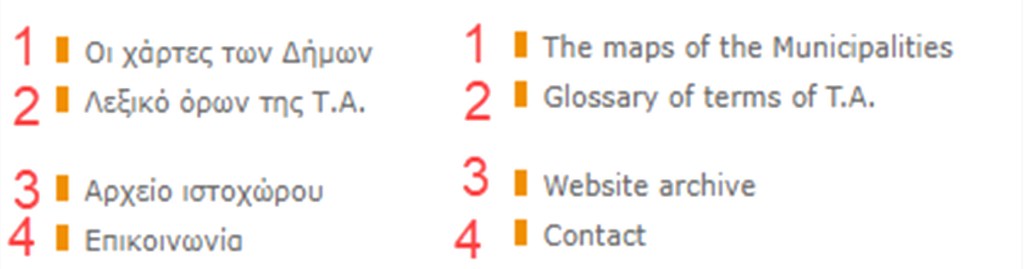
The images below show the categories as they appear in Greek (on the left). I have added the English translation (on the right). I have also inserted numbers which correspond to detailed information and links below the image.
The first category of interest is Local Government Today (Η Αυτοδιοίκηση Σήμερα). This is where you will find contact information for each administrative level.
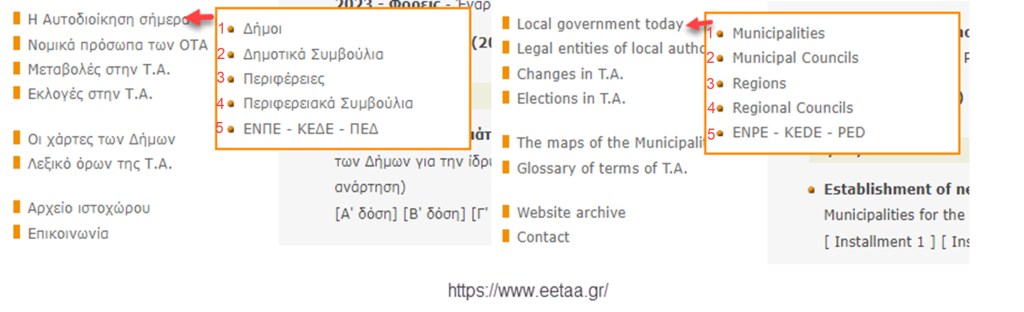
#1: Dimos or Municipalities – contact info; emails, websites. Use page numbers at bottom to jump ahead: https://www.eetaa.gr/foreis/dhmoi.php
#2: Municipal Councils – click on the name of the municipality for names of mayor, deputy mayors, board members and municipal councilors. Use the alpha list at the top to find your area and page numbers at bottom to jump ahead: https://www.eetaa.gr/foreis/ds_select.php
#3: Regional Units – name of governor, address, phone number, email, website. Go to the regional website to drill down into municipal units: https://www.eetaa.gr/foreis/perifereies.php
#4: Regional Councils – click on name of region for names of district governor, deputy governors, regional council members: https://www.eetaa.gr/foreis/ps_select.php
#5: Local government today / ENPE – KEDE – PED. Regions listed with contact information, website and email. Click on the region name for names of officials. https://www.eetaa.gr/foreis/enpe_kede_ped.php
The next links of interest are Changes in T.A.
These show the administrative changes of municipalities and their communities. This is where you can find the history of a municipality or a community, and you will learn what happened to the “old settlements” that no longer exist.
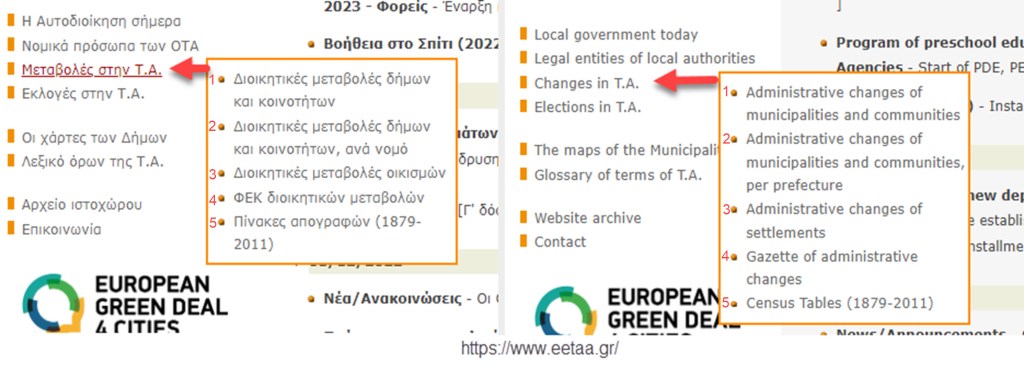
#1. Administrative Changes of Municipalities and Communities: https://www.eetaa.gr/metaboles/dk_metaboles.php
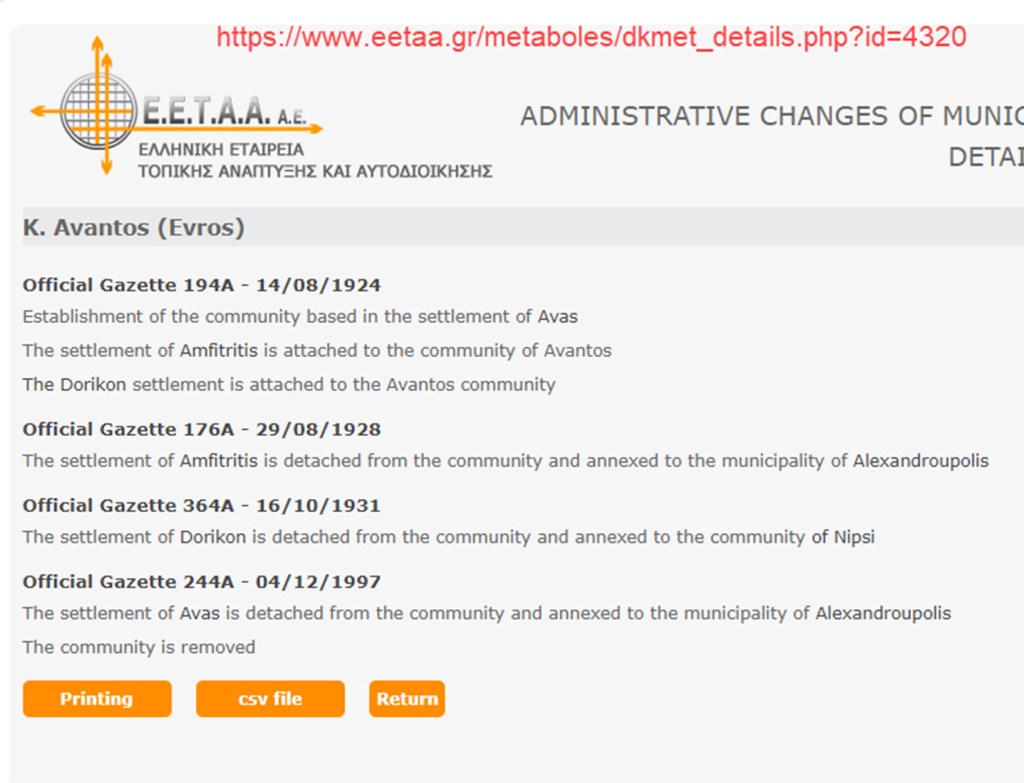
Every municipality and community is listed. Use the alpha list at the top to find your municipality and page numbers at bottom to jump ahead. Click on the name of the municipality or community to see its history. There is a link to the issue of the ΦΕΚ which decreed the change. Click on the ΦΕΚ line to see a digital issue of the newspaper.
Example: Avantos (Evros)
#2. Administrative Changes of Municipalities and Communities by Law: https://www.eetaa.gr/metaboles/nom_metaboles.php
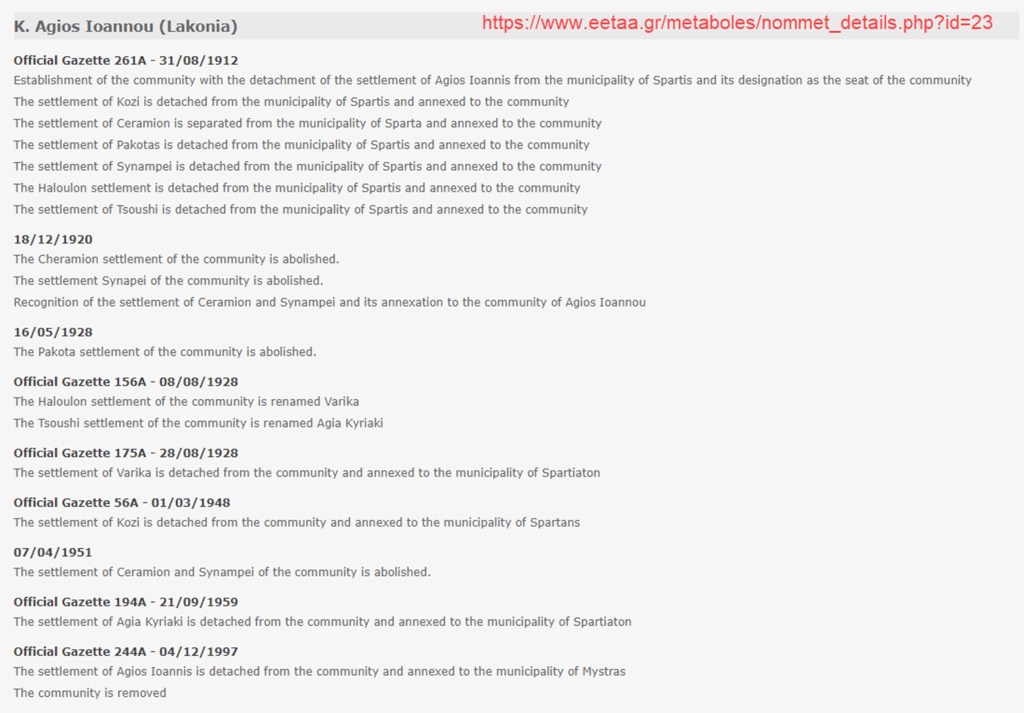
This section gives details on which settlements or neighborhoods were dissolved or incorporated into a larger community. First, find your region (the website uses the outdated word nomos). Click on its name, and the next page lists municipalities and their histories. Scroll until you find one of interest. As of the date of this post, the link to the issue of the ΦΕΚ does not work.
Example: Agios Ioannis Sparta, Lakonia
#3. Administrative Changes of Settlements: https://www.eetaa.gr/metaboles/oik_metaboles.php
Settlements are listed in alphabetical order. Use the alpha list at the top to navigate to a settlement, and the numbers at the bottom to jump ahead. Click on the name of the settlement to access its history and ΦΕΚ links.
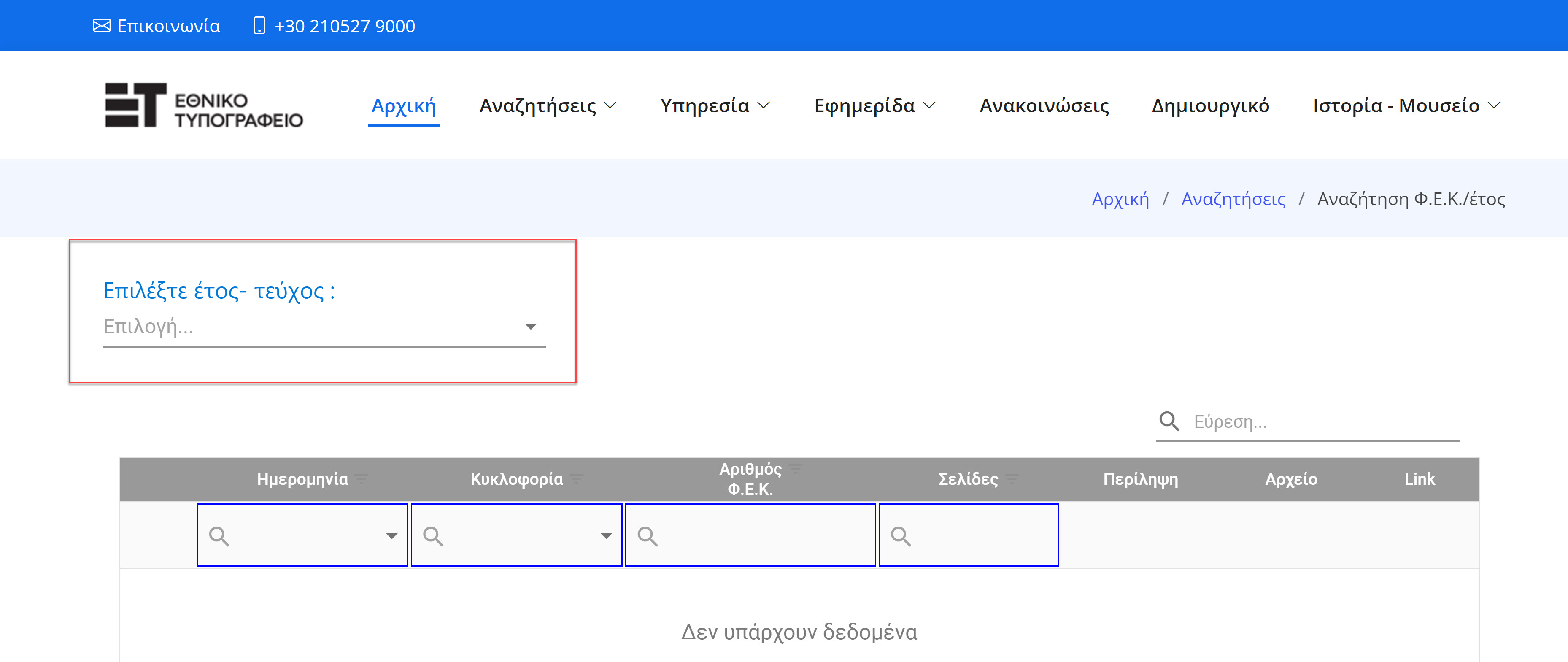
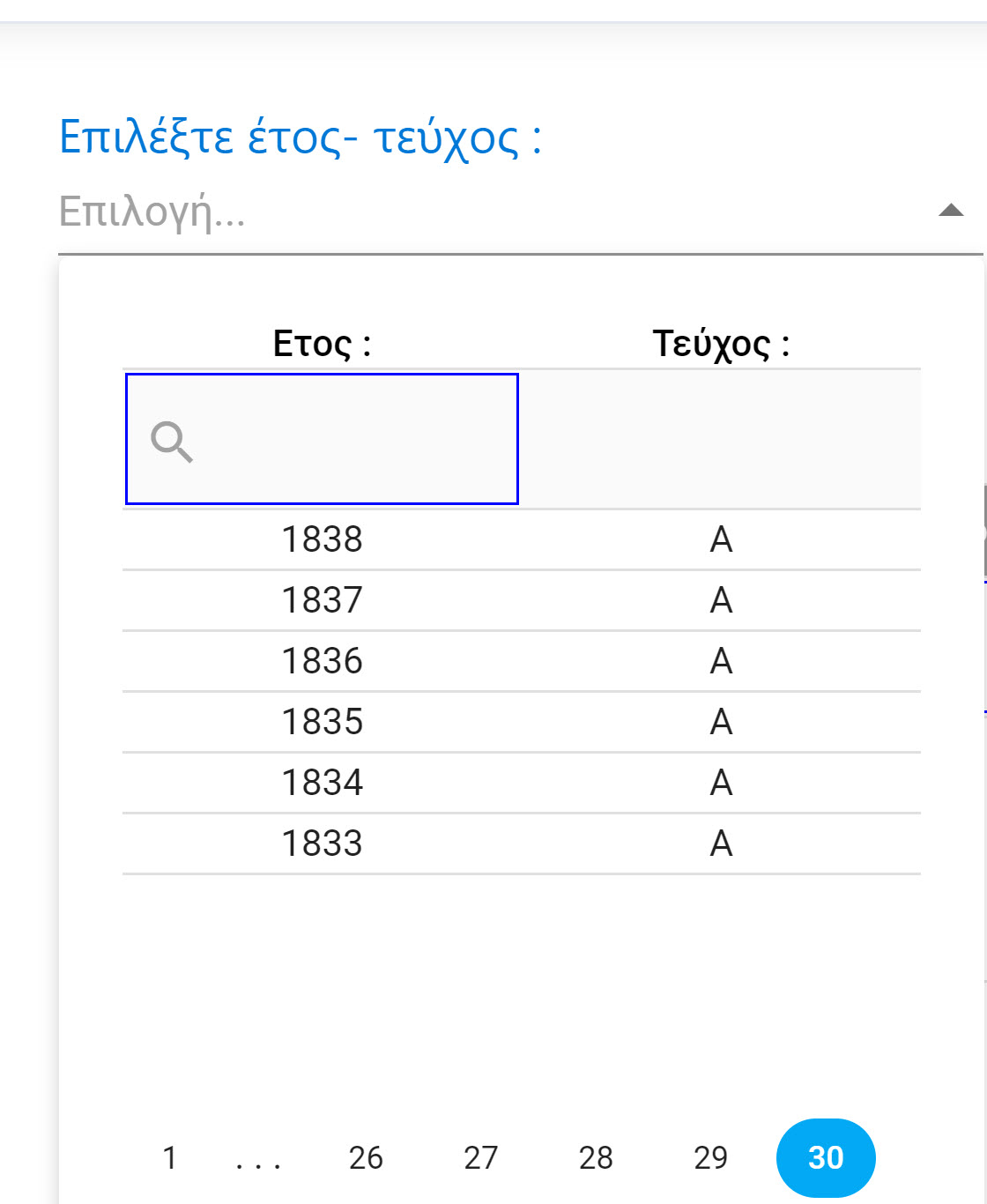
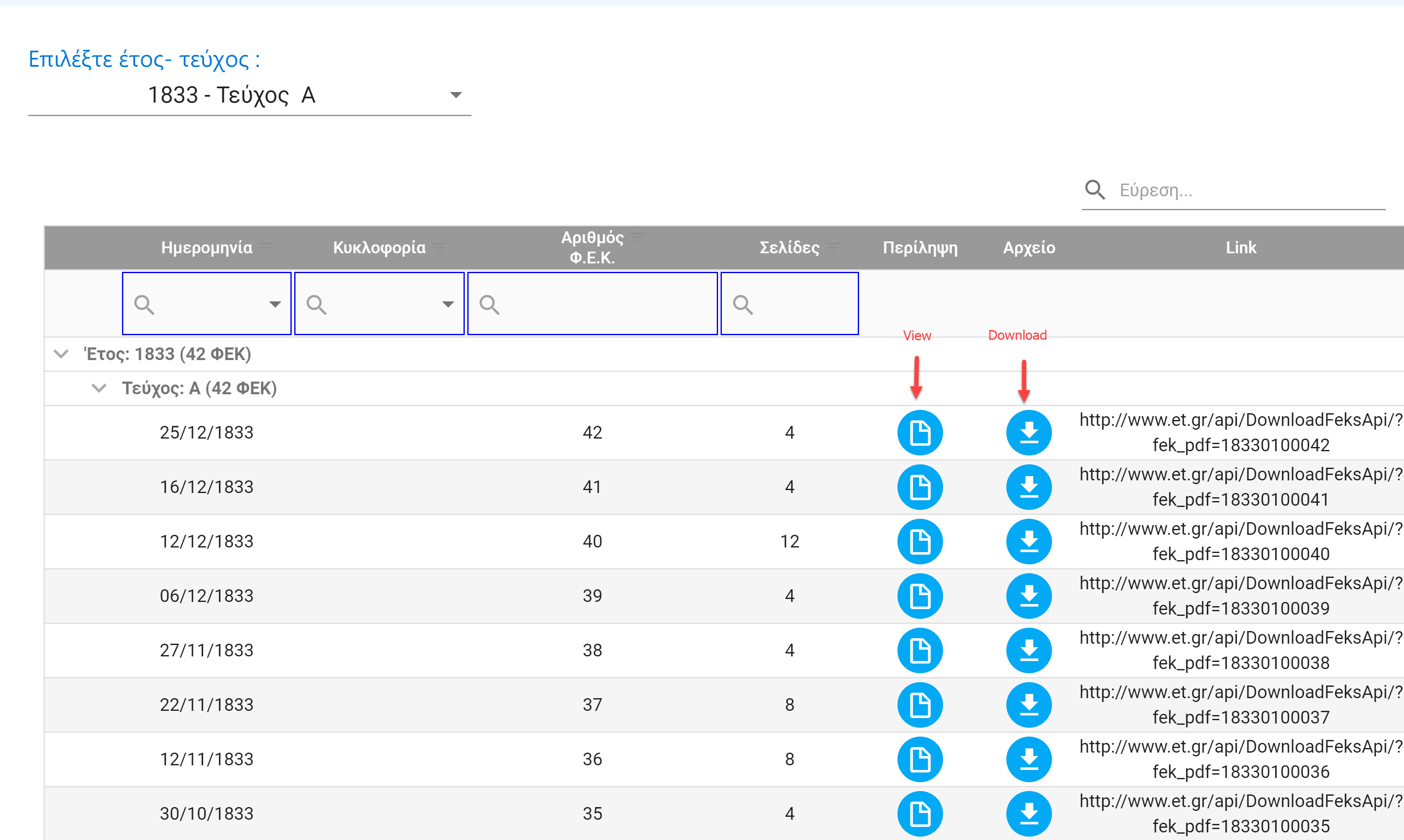
#4. ΦΕΚ issues: https://www.eetaa.gr/metaboles/fek_year.php
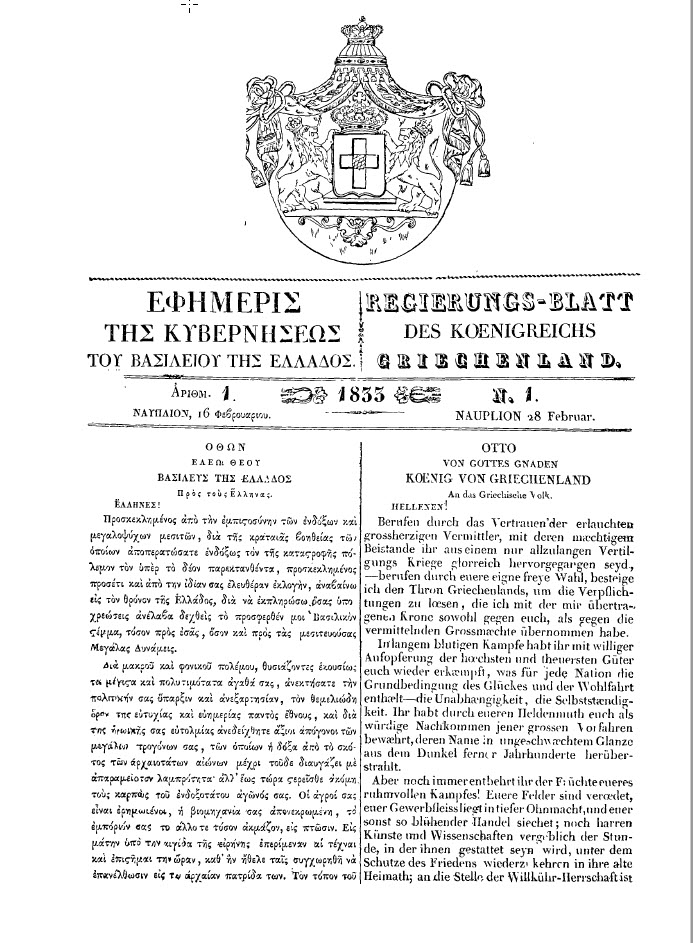
The official government gazette has been published since 1833. Use the drop down menu to find a year of interest and to access digital images.
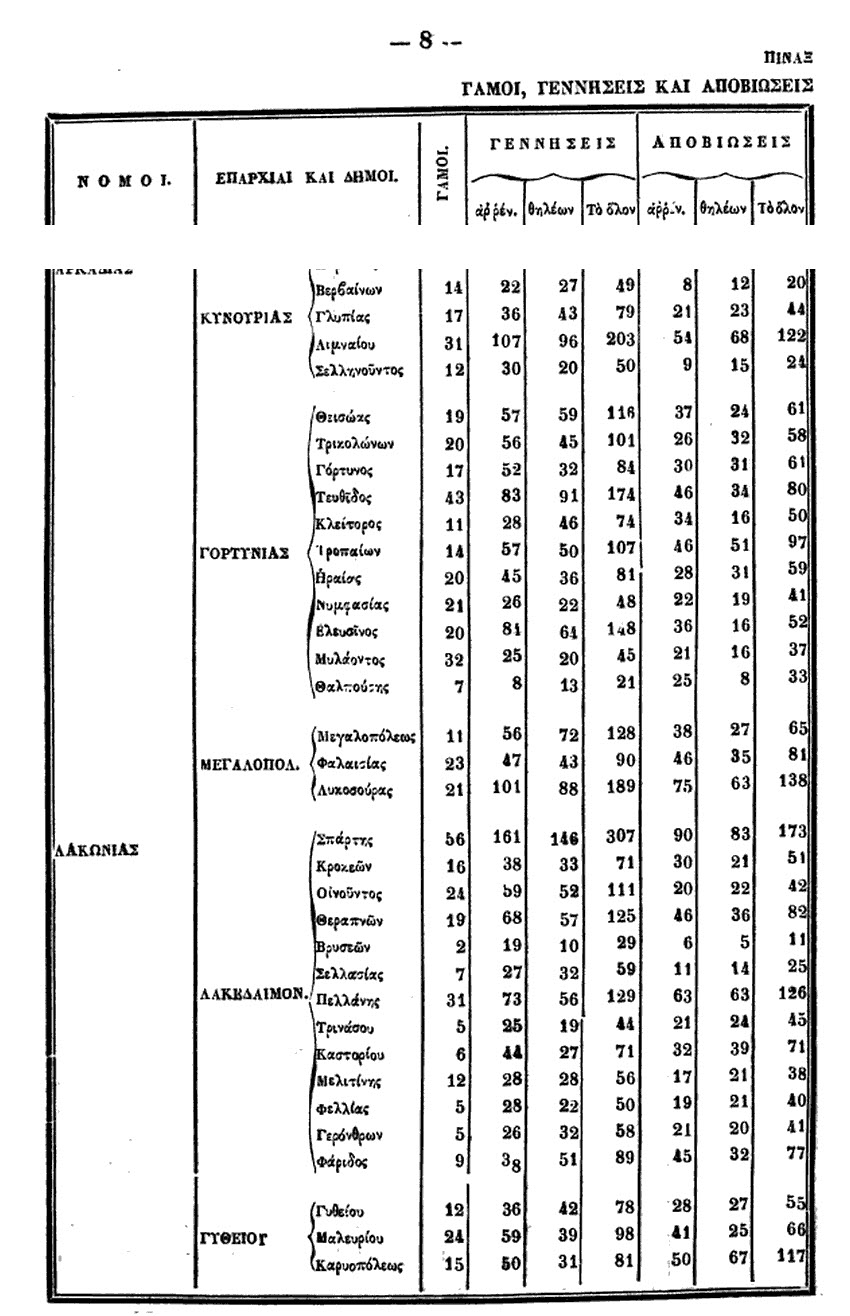
#5. Census Gazette: https://www.eetaa.gr/metaboles/apografes.html
Population censuses do not list names, but they do give the number of inhabitants in municipalities. These statistics can help you track the influx and outflow of people in your village. Digitized copies are viewable for the following years: 1879, 1889, 1896, 1907, 1913, 1920, 1928, 1940, 1951, 1961, 1971, 1981, 1991, 2001, 2011.
This section has regional maps.
#1. Maps of Greece: https://eetaa.maps.arcgis.com/apps/webappviewer/index.html?id=6501bf4632f24f608a20101faaca205c
The map shows administrative boundaries for municipalities, regions and prefectures, etc. Use the zoom tools on the lower left to drill into your area of interest. Use the Legend and Layers icons on the top right of the page to choose exactly what you want to view on the map.
#2. Glossary of Local Government Terms: https://www.eetaa.gr/lexikon/list_words.php?task_id=71
Click on a word to see a translation of its meaning in English, French and German.
#3. Website Archive: https://www.eetaa.gr/index.php?tag=arxeio
#4. Contact: https://www.eetaa.gr/index.php?tag=contact_eetaa
Contact information for the EETAA offices in Athens, Brussels, Central Macedonia and Thessaly.
This is a complex website, and this post has examined only the areas of interest to genealogy researchers. If there is something else that would be helpful to our community, please send an email to Carol Kostakos Petranek at spartanroots1@gmail.com and I will update the post.
Good luck as you dig further into these government resources to help you learn more about your community and to contact those who can provide further information.


 Spartan Roots (Σπαρτιατικές Ρίζες)