The southern Peloponnese is a study of construction by stone.The hardy people of this region took the least of God’s creations and formed uniquely beautiful edifices: churches, homes, buildings, wells, towers. Boxy and square, tall and narrow, the stone buildings of this region belie what may be inside. A perfect example is the Faneromeni Monastery, the first stop on a tour of Mani led by Papa Georgiou of Sparta last Saturday.
Without a road sign, one would never imagine that this unassuming building was a monastery.

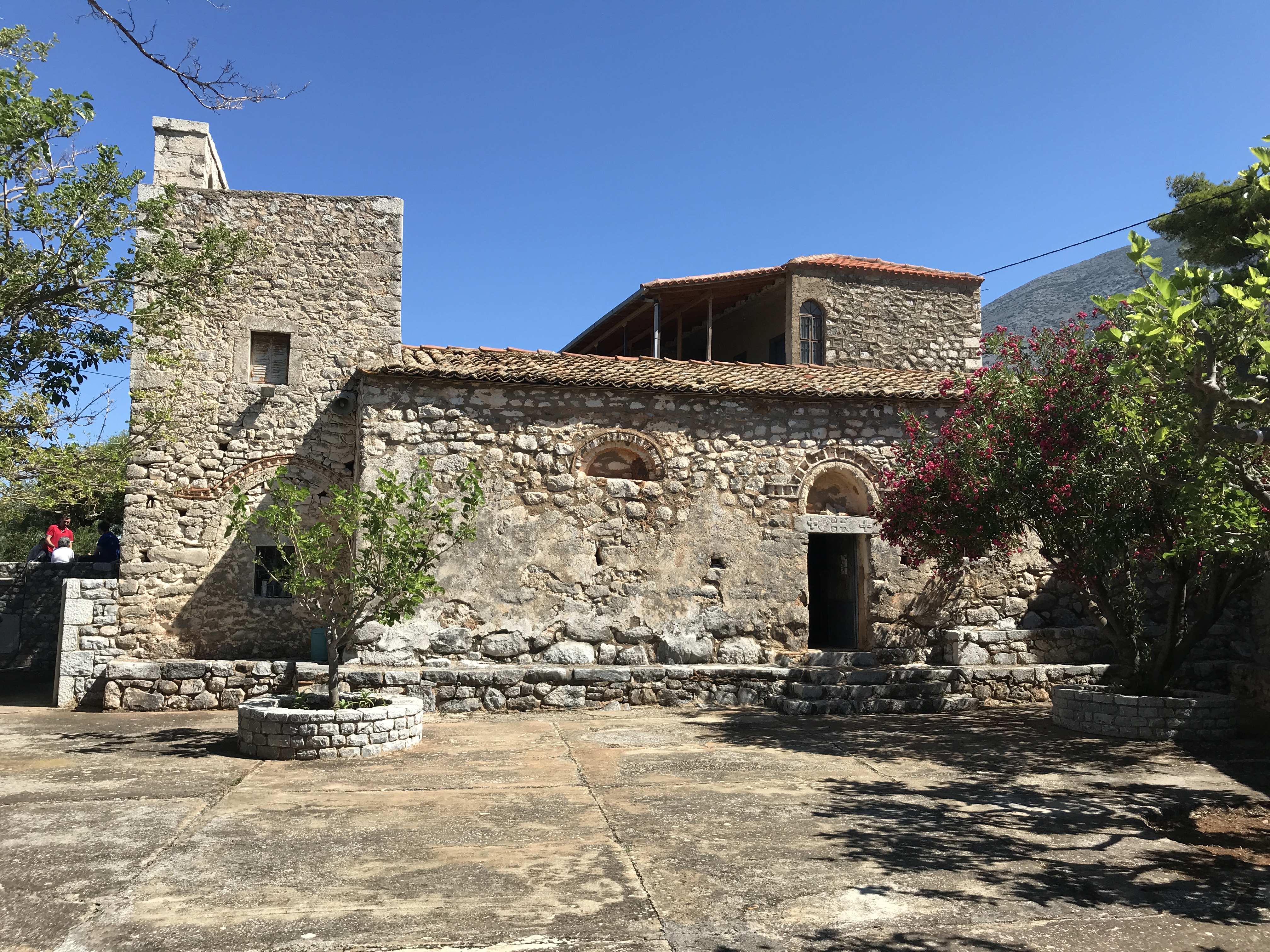
Faneromenis Monastery, Mani
An inscription reveals that it was built in 1079 and dedicated to the Virgin Mary. It was subsequently renovated in 1322-23 by Emperor Andronicus Palaeologus (Andronikos II Palaiologos). After the renovation, additional alterations were made which formed the building as it is seen today. The monastery was inhabited by nuns; the last one died a few years ago.
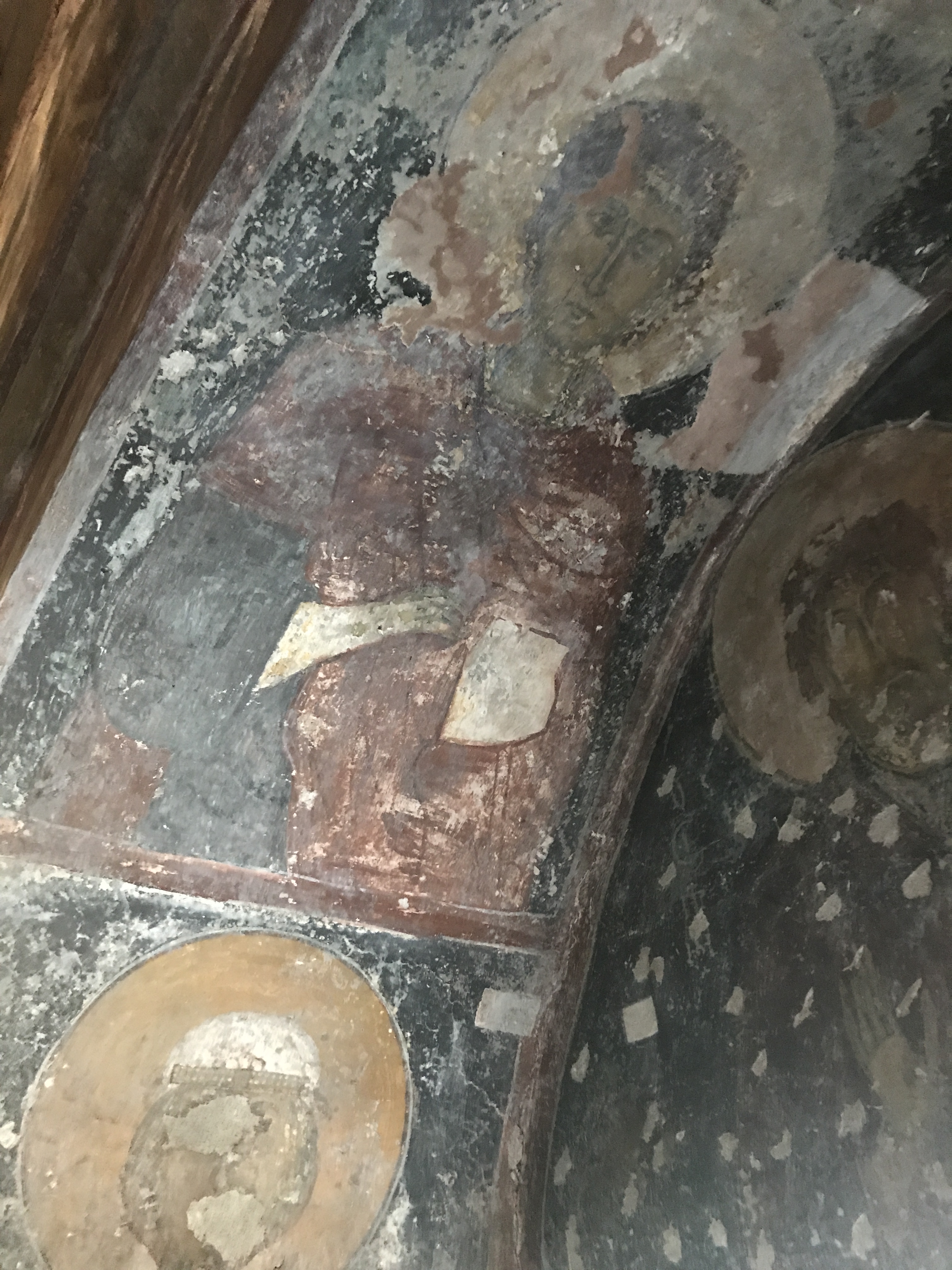
The interior of the church is stunning; the frescoes are captivating.

Interior of monastery church
The frescoes have been preserved from three different periods: 11th century, 1322-23 and early 17th century.
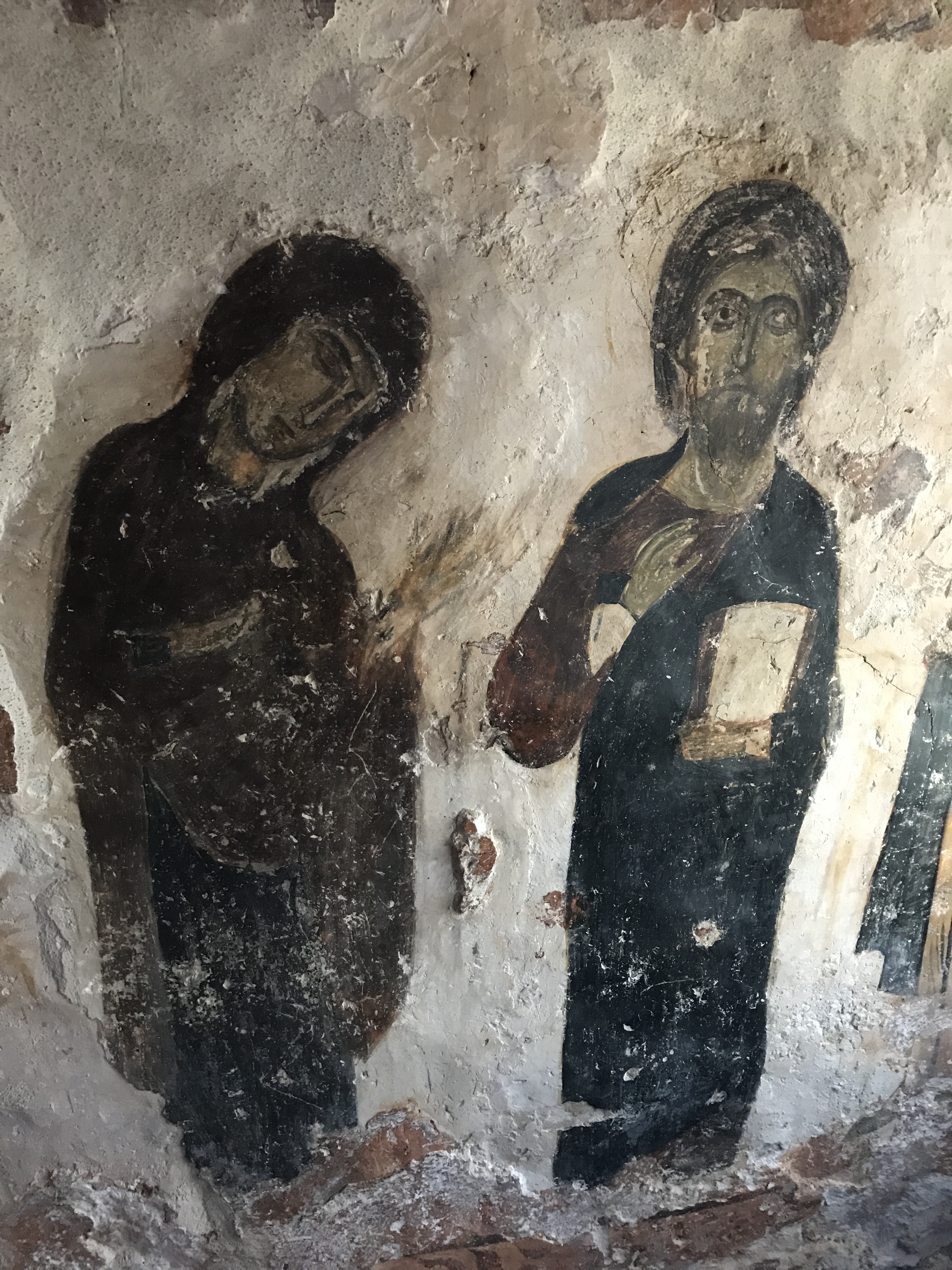
Papa Georgiou, accompanied by Father Konstandinos of Aeropolis, chanted a full liturgy service. Their voices sounded even more poignant when surrounded by the archaic faces on the walls.
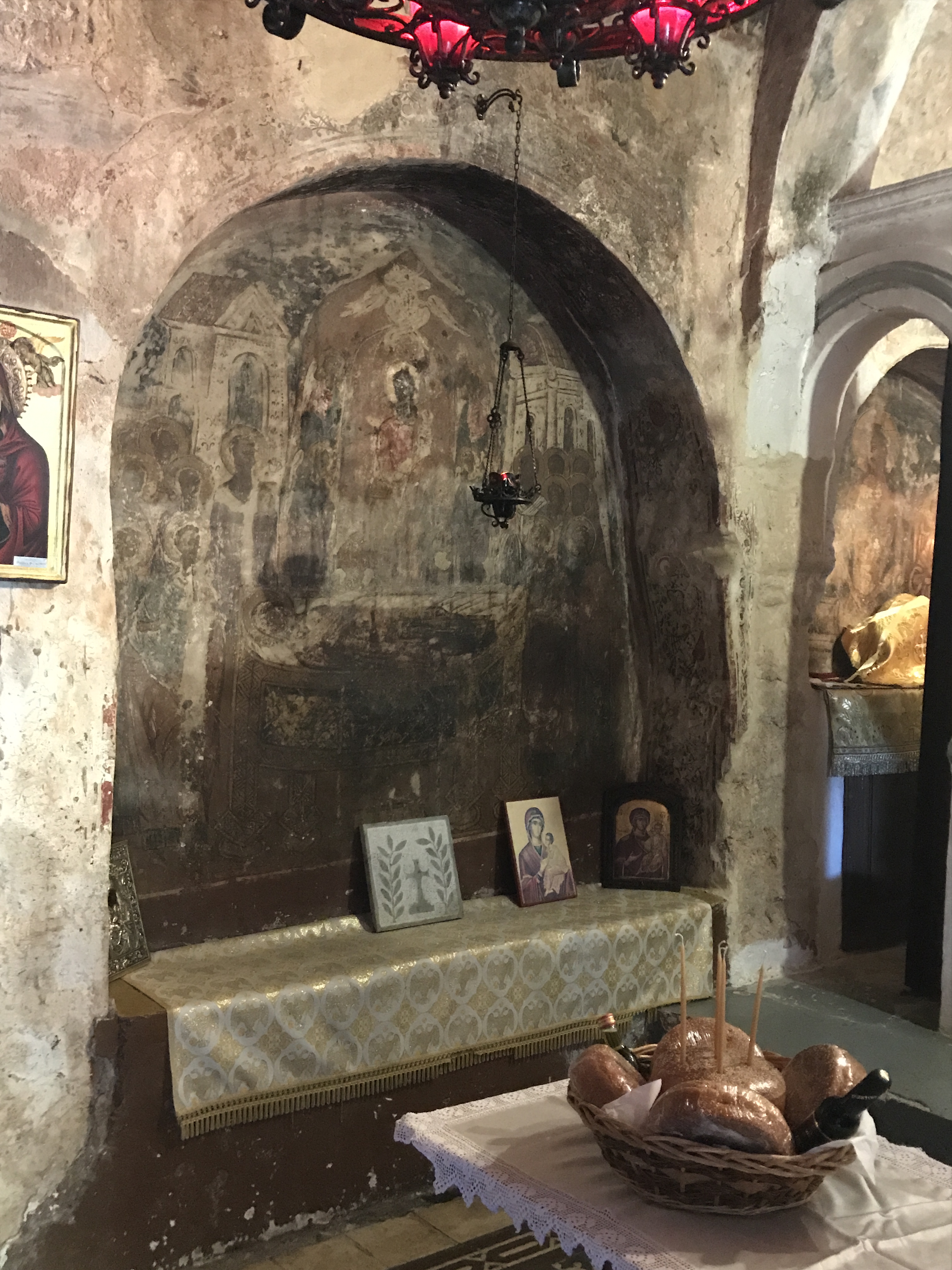
Bread and wine at the conclusion of the liturgy
Having never been inside a monastery, I was curious and explored both inside and out. There is a central courtyard, a kitchen, dining area, and rooms for sleeping.

Looking down into the courtyard
This is the building where the nuns lived. As expected, the interior was “spartan.” But there was a corner cabinet which housed unexpected worldly treasures.
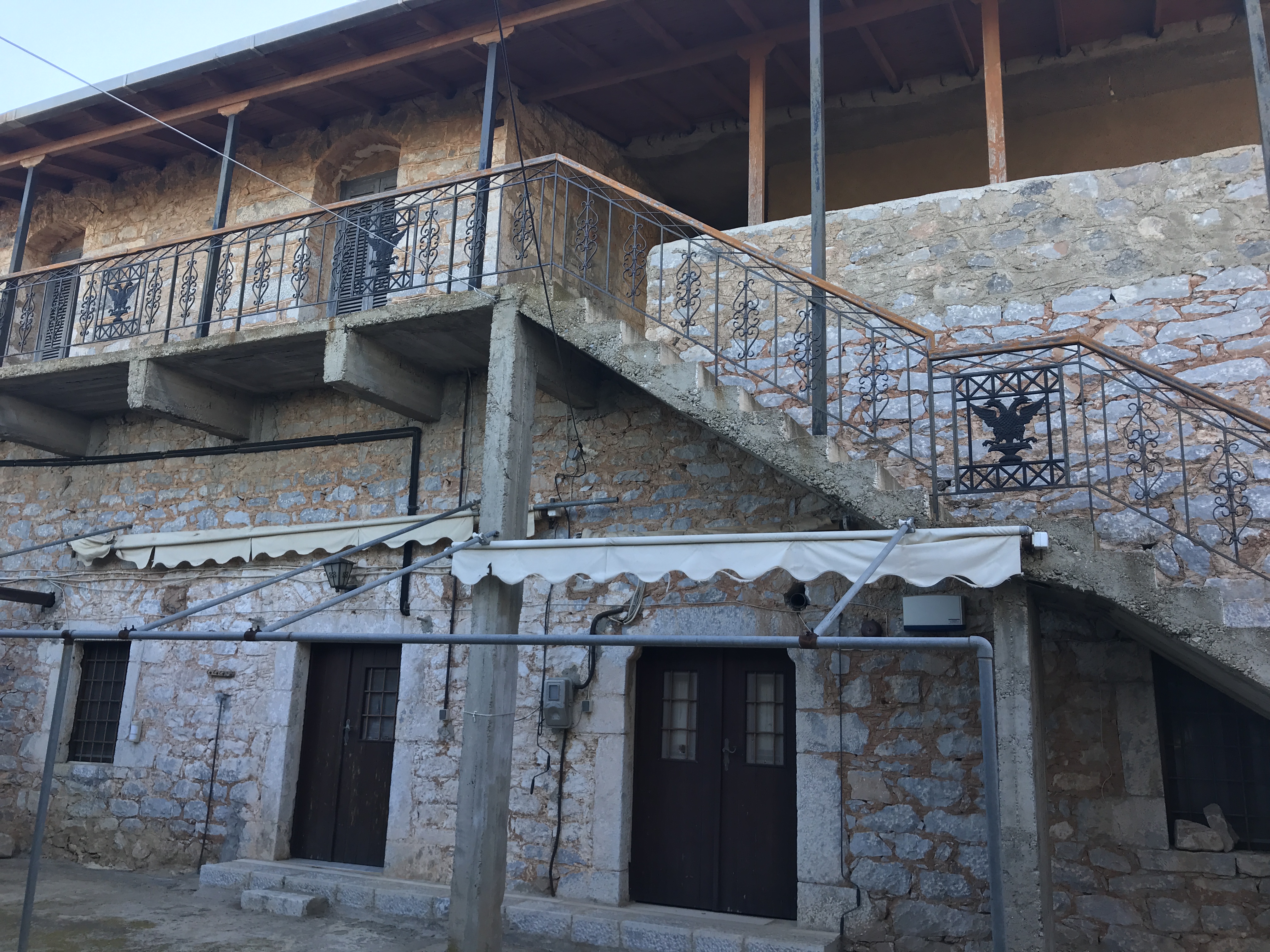
Living quarters, exterior
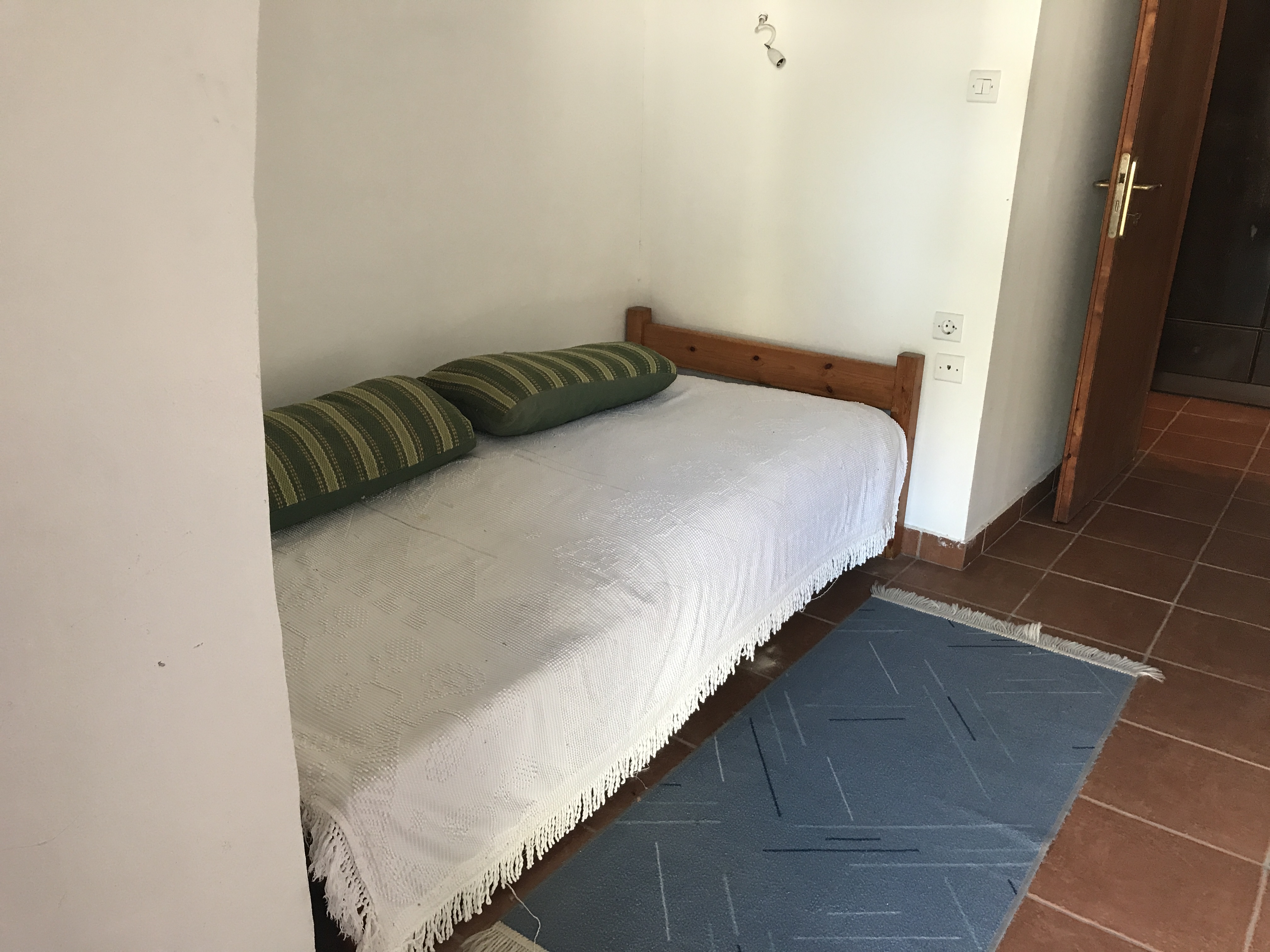
Sleeping area, interior

Worldly treasures
To me, the most amazing surprise of Faneromeni was its cave, situated to the left of the monastery, down a flight of stone steps.
 Following the curve of the hill, I saw the opening, stepped inside and was stunned at what I saw–a mini-sanctuary complete with icons, candles and all required to hold an Orthodox service.
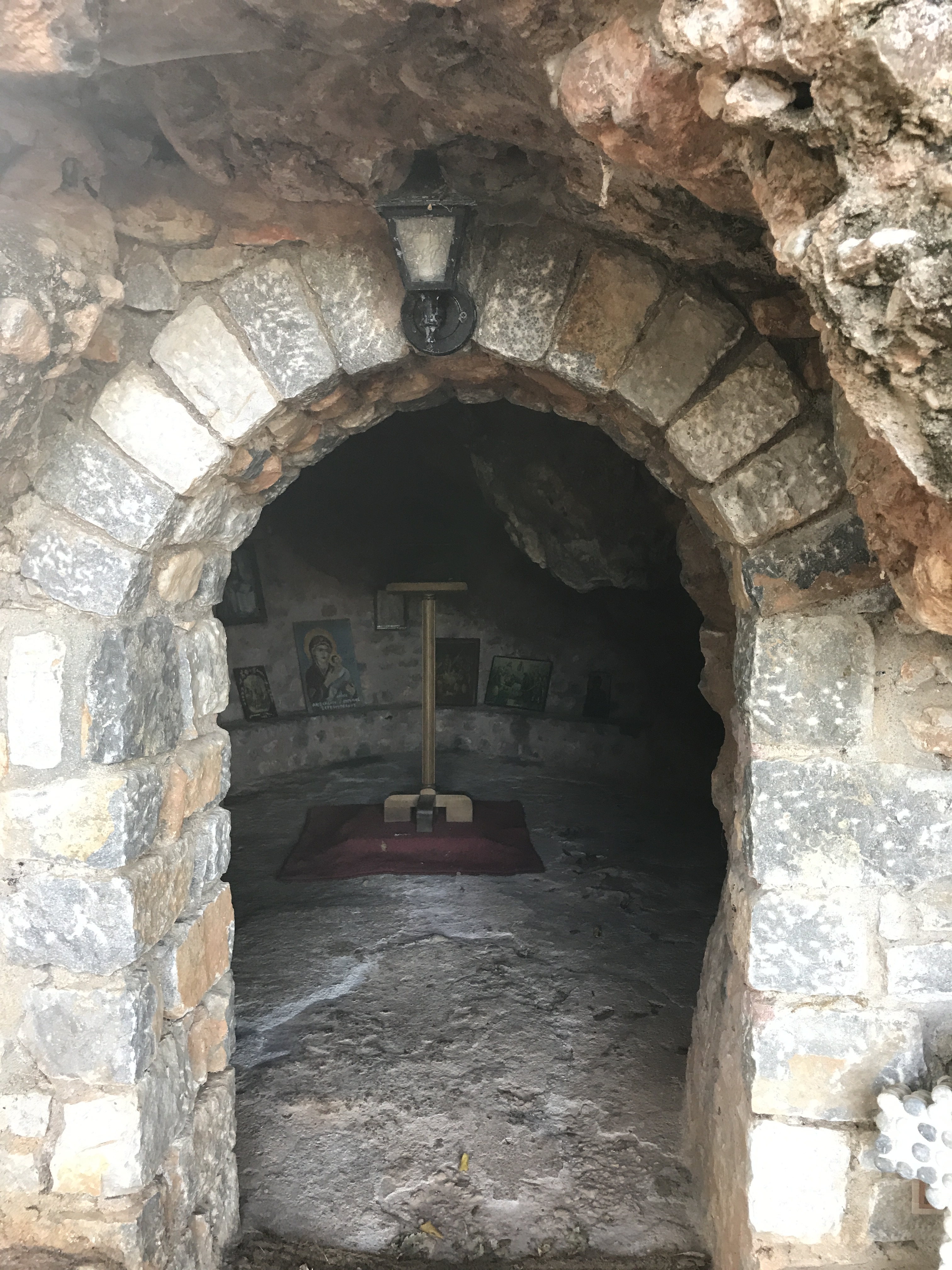
Church cave entrance


I marvel at the ingenuity and faith that created this sacred place! I stood inside for a long time, with so many questions and so many thoughts. It was the Orthodox Church which sustained the Greek peoples through 400 years of Ottoman rule. The astounding number of churches and monasteries in Greece is a testament to this fact.
The monastery grounds overlook the sea and provide a setting of tranquil beauty. It is easy to understand why this particular spot was chosen to house a building dedicated to God.

 Spartan Roots (Σπαρτιατικές Ρίζες)