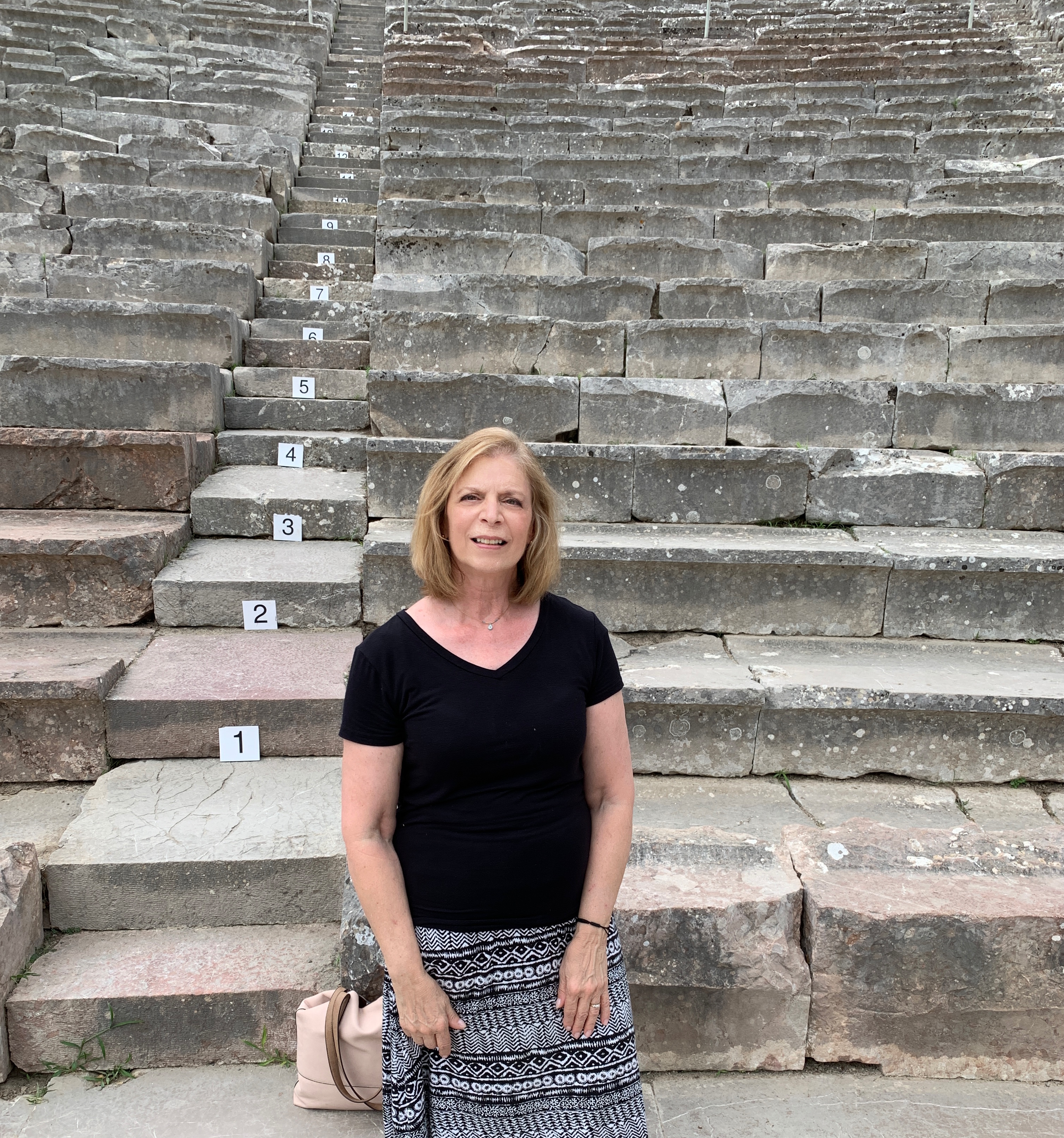
An open-air theater that seats 15,000 people? Where you can sit in the back row and hear a whisper from onstage? This is Epidavros, built in the 4th century B.C. and still used for live performances in July and August.

Photo Credit: By Rvjansen22 – Own work, CC BY-SA 4.0

Theater stage entrance
Although the theater is majestic, it is only one aspect of this impressive site. Its origins lie in Greek mythology as the birthplace Asclepius, the son of Apollo. He was a master physician and the god of healing. Ancient Greeks built a comprehensive health complex here, and remnants of its numerous buildings remain.

Diagram of the Asklepieion of Epidavros
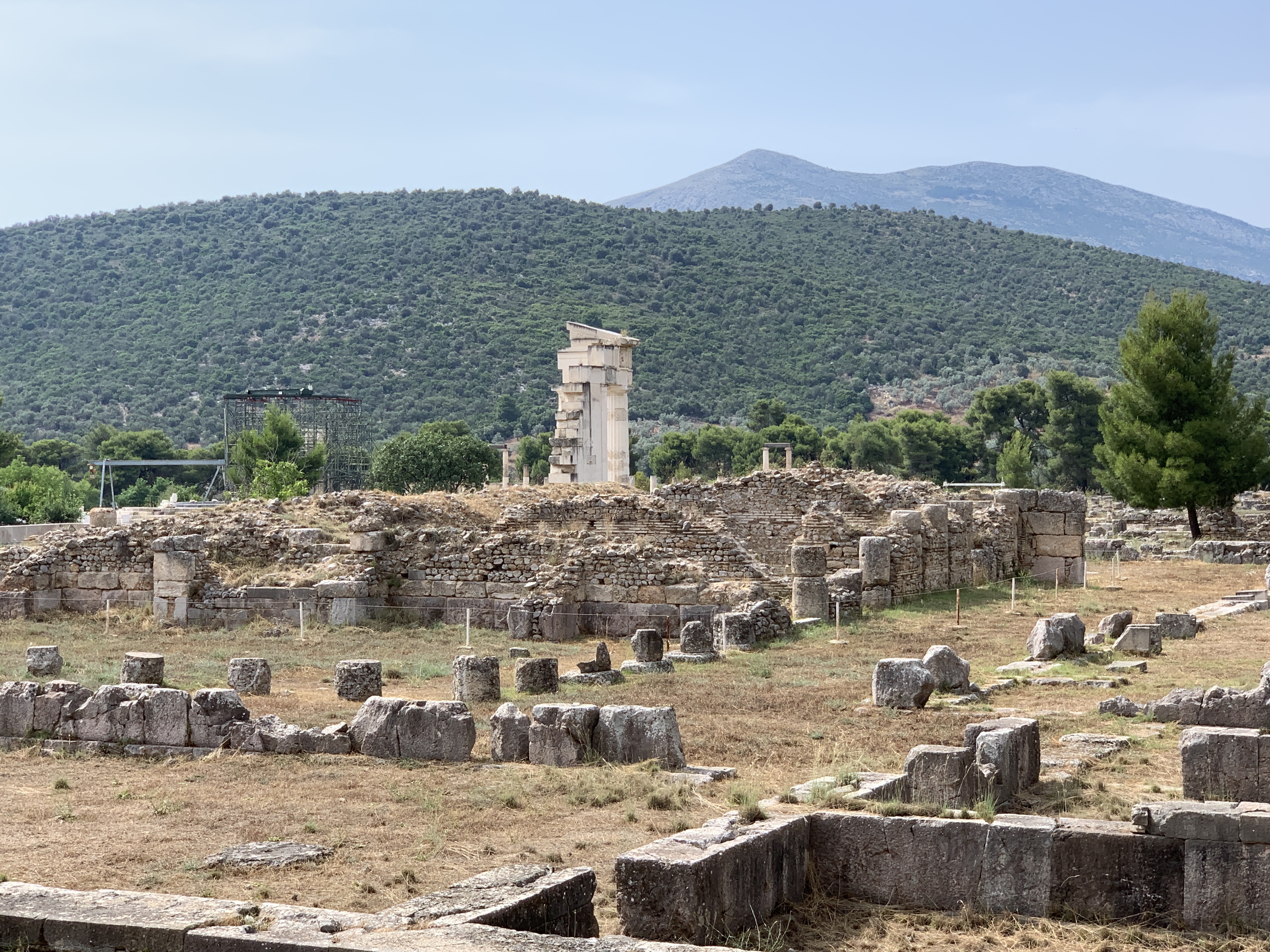
One section of the archaeological site, Epidavros

Remnants of the Abaton (incubation hall), where patients were cured by Askelpios
Archaeological excavations and restoration are being actively undertaken at Epidavros. I can only imagine the painstaking work involved.
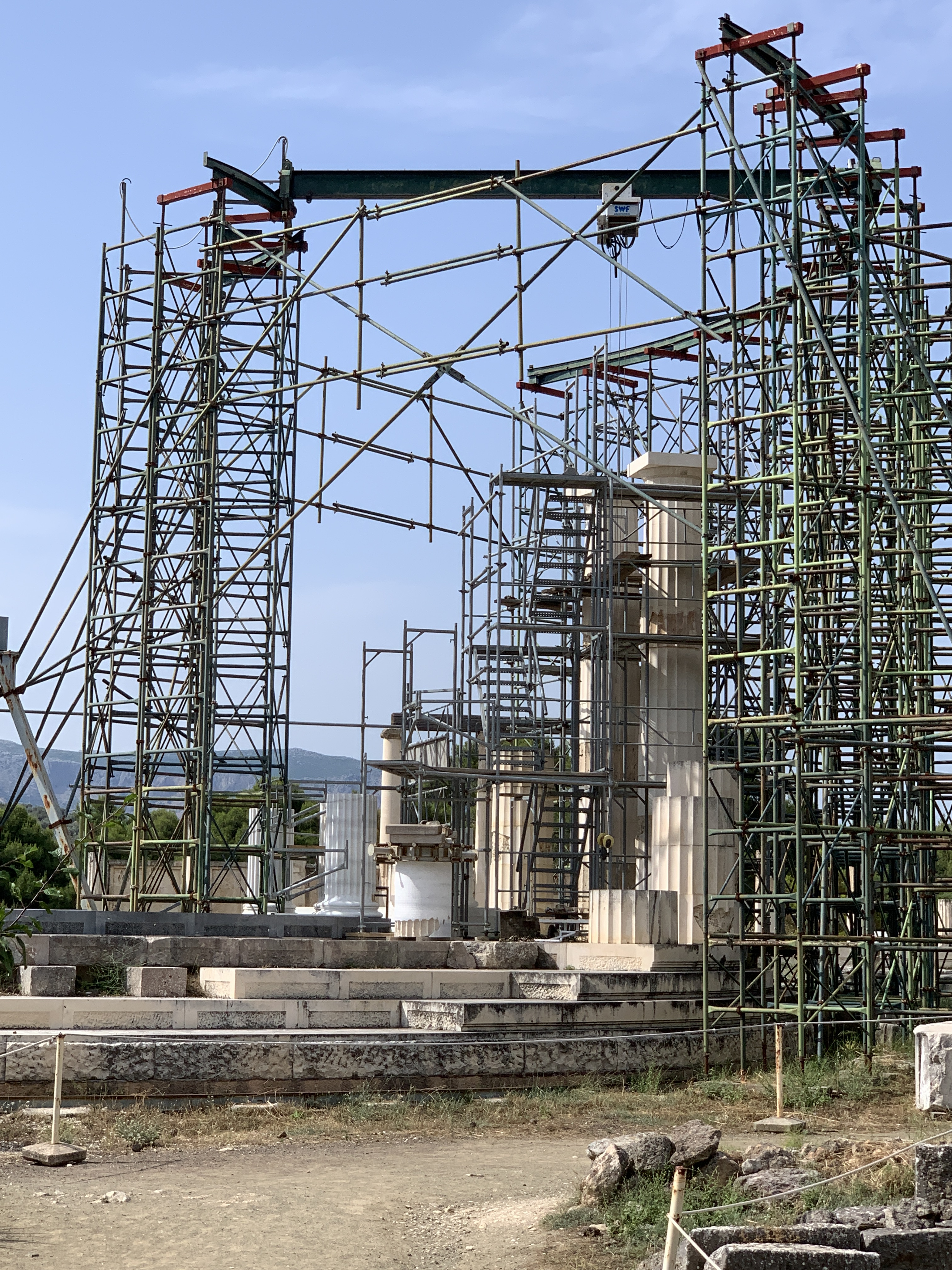
Restoration continues

Pulley system used to lift tons of stone and marble
Since this is an ancient Greek site, surely there is a stadium! Athletic contests in Epidavros dating from 5th century B.C. are in the writings of Plato and Pindar. Today, the stadium is used in limited capacity for school track and field activities.
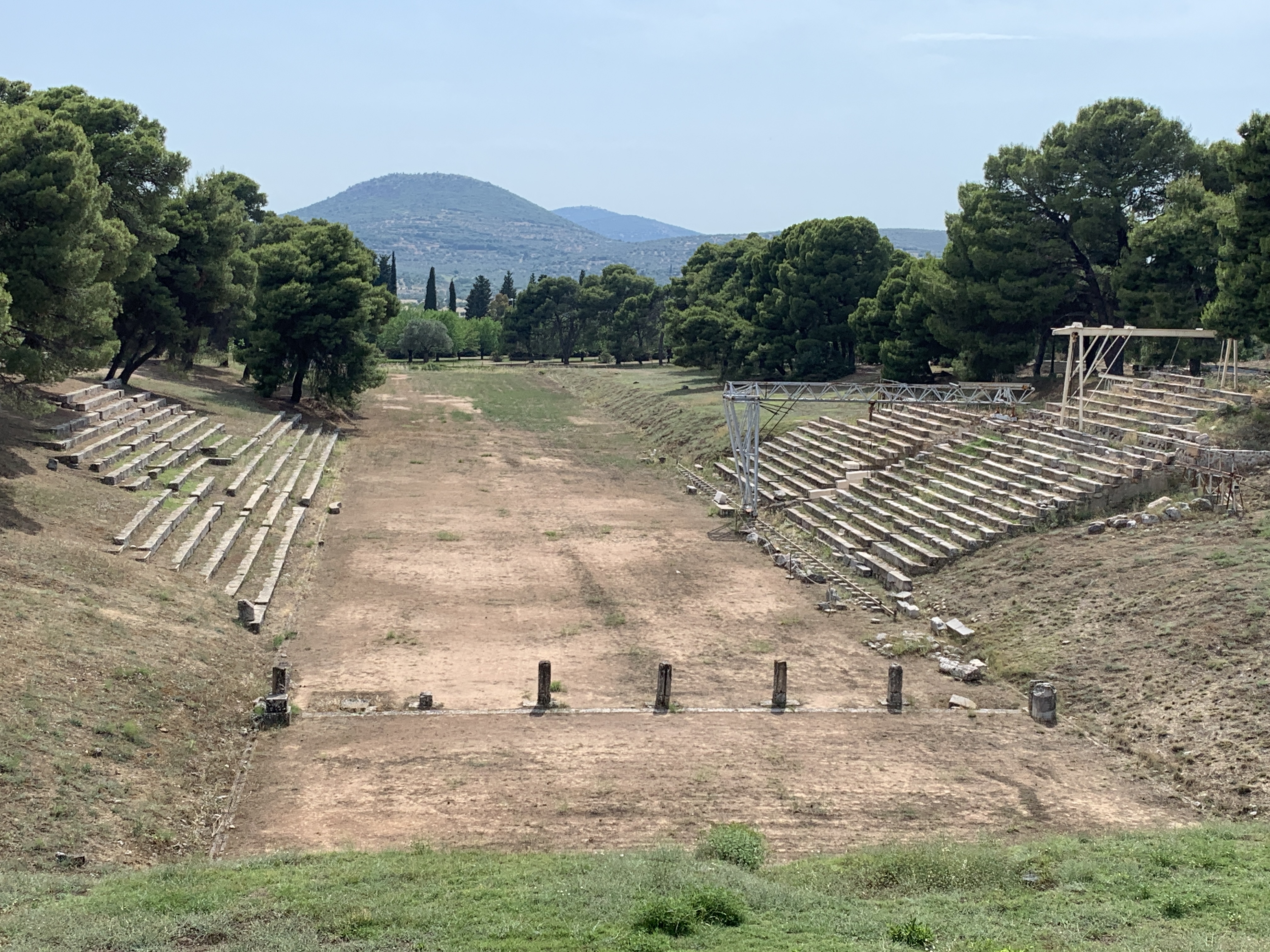
Stadium of Epidavros
And of course, there is a museum. Although this one is small, its treasures rival those at Delphi, Corinth, and other places. I marvel that statues and artifacts over 2,000 years old are not encased; their beauty can be examined from inches away.

Treasures of the past
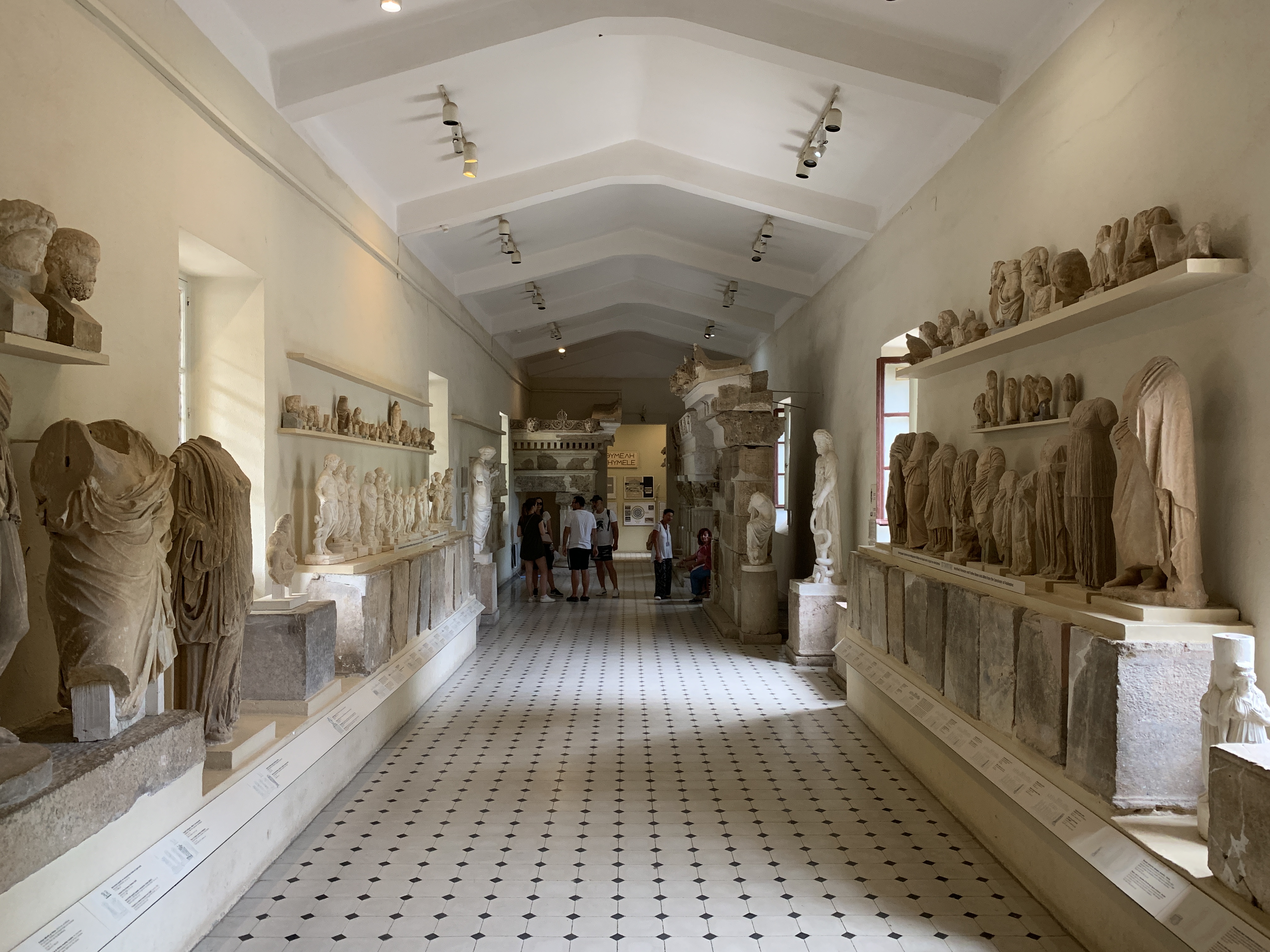
Magnificent statues line the walls of the museum
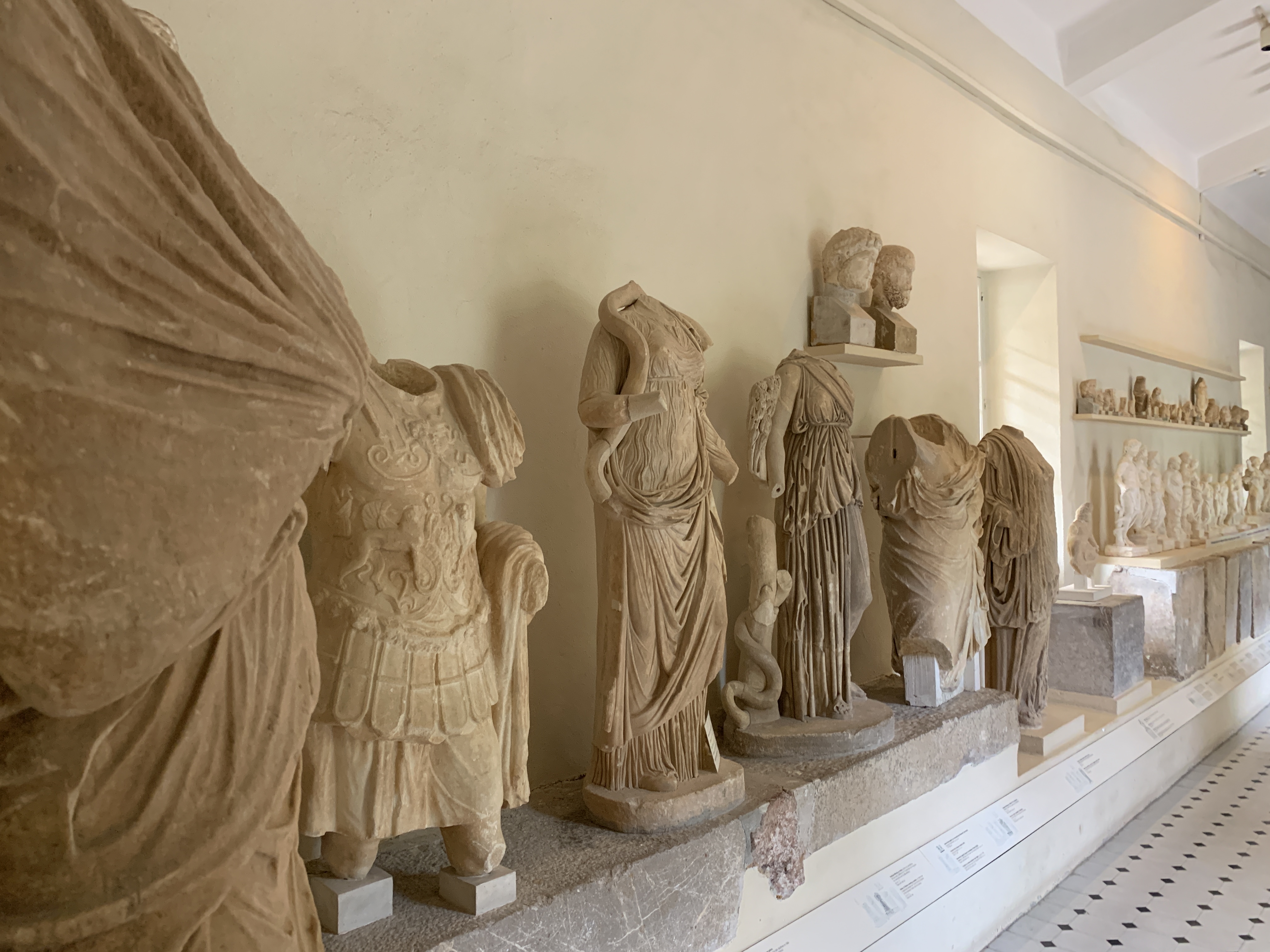
Timeless beauty
Adding to the enchantment of the Epidavros experience is getting there. The road along the coast and over the mountains is a winding ribbon of scenic overpasses and stunning views. Thankfully there are pull-out places to stop and absorb the beauty, and to take picture-postcard photos.
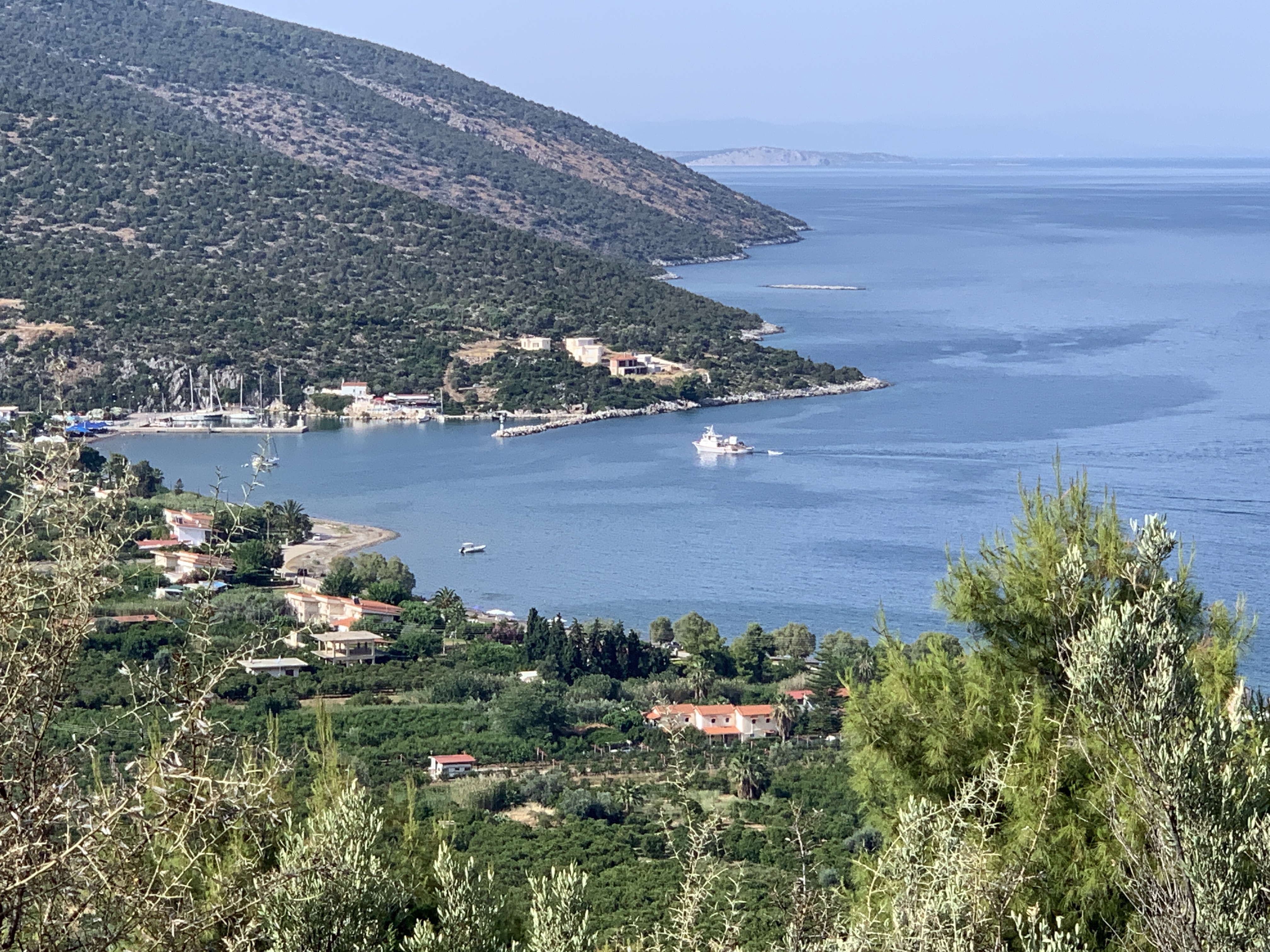
The road to Epidavros

Families flock to the rocky beaches. The water is clear, clean and inviting. Beach shops sell the same wares as the ones in Ocean City, Maryland!

Beach time
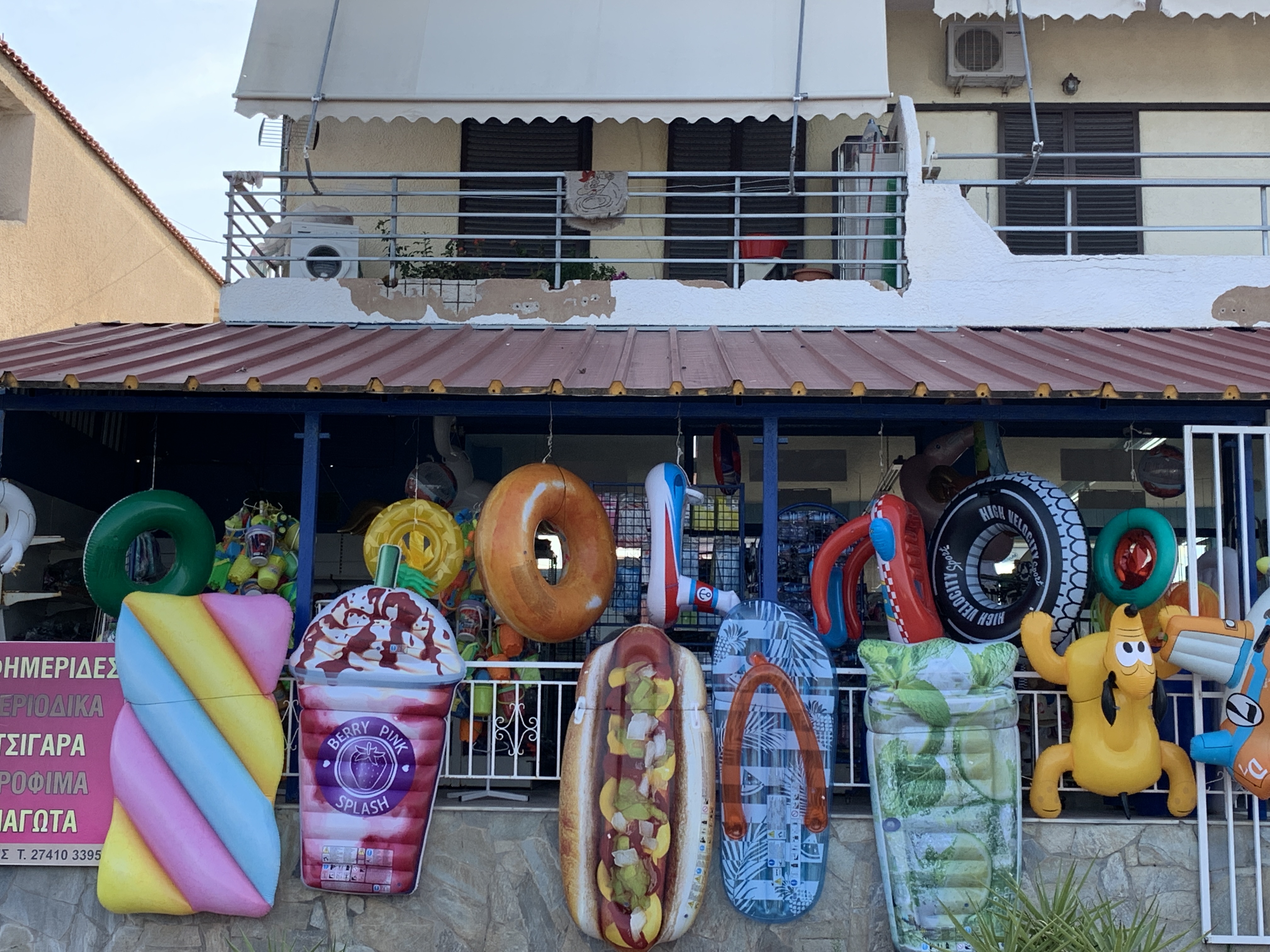
Greece or US? It’s the same!
Now that I’ve explored by day, I am ready for a play at night. Whether tomorrow or 2,000 years ago, the experience will be timeless.

 Spartan Roots (Σπαρτιατικές Ρίζες)