Mystras – 1872 Election Registers

Among the oldest records of genealogical value in the modern Greek state are the Election Registers of 1844 and 1872, which are lists of men eligible to vote. These records are now name indexed and available online (1844 at GreekAncestry.net; 1872-3 at MyHeritage). These Registers are critical for identifying which families resided in specific villages at specific points in time. In 2012, long before these records were name indexed and posted online, Georgia Stryker Keilman undertook the task of translating these registers from many villages in the Peloponnese, and her work can be found here.

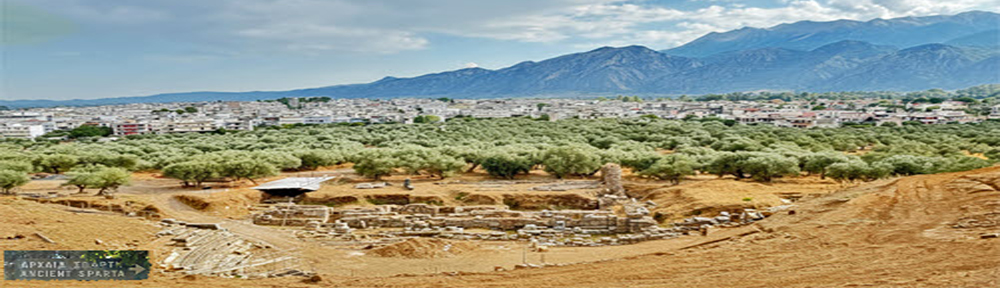
I have Eftaxias ancestors from Mystras, which sent me to the 1872 Election Registers for that village. Mystras had been the seat of Byzantium in the Peloponnese until overtaken by Ottoman Rule. After the Greek Revolution for Independence, the population of Mystras began to decline as people descended from the castle area on the mountain top. Some formed the village of Mystras in the valley while others relocated to the emerging city of modern Sparta.

Mystras, Looking Towards Sparta, ca. 1890-1910. Library of Congress

When the Election Registers of 1872 were created, a man had to be at least 21 years old to vote. The number of men in Mystras on the election list was 268 and their average age was 38 years.

The “new” village of Mystras needed a mix of tradesmen, laborers, landowners and professionals to meet the needs of its population. The chart below, which lists the occupations of the voters, reveals that the village had the requisite composition to support its residents.

occupationnumber
Baker7
Bailiff17
Bricklayer1
Butcher4
Clerk3
Coachman/driver1
Cobbler4
Coffee seller2
Court official1
Doctor2
Farmer27
Farrier1
Gardener10
Gendarme4
Grocer12
Laborer30
Landowner53
Lawyer1
Magistrate2
Mason2
Mayor1
Merchant3
Mule driver7
Unemployed2
Official / Clerk3
Pharmacist1
Police Inspector1
Quilt Maker1
Rag Seller2
Retailer1
Sandal Maker3
Servant7
Shepherd23
Shoemaker1
Soldier7
Student10
Superintendent1
Surgeon1
Tailor4
Trader1
Veteran1
Wine Sales2

Which families are found in the village during this time? This chart lists the names of the voters, their ages and occupations in alphabetical order. Some surnames have “disappeared” over time, but many are found in Mystras today.

1872 Election Register, Mystras

This is the Register in Greek.

1872 Election Register, Mystras, in Greek

My great-grandfather, Konstantinos Eftaxias, is found on line 573. This Register gave me his father’s name, Ioannis, and his occupation as a shepherd. Also listed are Georgios, who were identified in the 1873 Election Register as being the son of Ioannis.

1873: Line 537, Georg. Eftaxias, age 25, father: Ioannis; occupation: student
1873: Line 597, Dimitr. Eftaxias, age 27, no father listed; occupation: shepherd

Although the father of Dimitrios is not listed, further research indicated that there was only one Eftaxias family in Mystras during this period.These Eftaxias examples show the importance of trying to find your ancestors in every available record. 

A Chance(?) Encounter in Lagia

What are the chances that a document which reveals an abstract branch of your family is given to you by a stranger? That’s exactly what happened to me on my recent journey to visit the ghost town of Vathia.

There is only one road that connects Sparta with Mani. Much of it follows the seaside of the Laconian Gulf, traversing through quaint villages and along scenic coastlines.This was the only way for me to reach my destination.

I stayed overnight in a lovely renovated tower house in Kokkala. The sea view was spectacular and the architecture and history of the towers always captivate me. This was the perfect place to stop on this journey, to rest and to soak in the beauty of Mani.

Charming Kokkala

The next morning, I hit the road and with my sights set on Vathia. No stops were planned, and no side trips were considered. My focus was to spend as much time as possible in the ghost village, then return that night to Sparta. But along the way, I got sidetracked. About 1/2 hour south of Kokkala, I rounded a corner and there appeared a charming tower village nestled in the mountains. Lagia.

Approaching Lagia

I hopped out to take photos, thinking that I would just breeze through the village and keep going. But when the road led into the plateia, there was something about the village that enticed me to stop. I parked the car and started walking.

Views from the plateia of Lagia

The streets were deserted and the quiet of the village exuded a sense of tranquility. The imposing stone houses were of traditional Maniate style.

As is customary, the church, Koimisi tis Theotokou, was situated adjacent to the plateia. I went inside.

Koimisi tis Theotokou Church on the plateia
Church interior. I lit a candle for my ancestors (lower right)

My heart was touched when I read a sign that was posted on the small icon stand situated at the entrance. It read:

Welcome to the Holy Temple of our village “Lagia.”
Look around you and visualize freely the hard efforts of our ancestors,
within a rough place with different values, principles and under adverse conditions,
who managed to complete the construction of this gorgeous Church.
This Temple was constructed before 200 years with the full participation of the local men and women, with building materials gathered from the surrounding mountains of the village and carried on their backs and shoulders.
It was built with main purpose the reconciliation and peace between the families of the village, as during that period of time confrontations, conflicts, frictions, disputes, and vendettas dominated the area.
It replaced and gathered under its protection all the local family churches, at about 30 small and picturesque, which were scattered all around between alleys, traditional towers and fields.
Support warmly the effort for the continuation, conservation, preservation, improvement and progression of this harbour of Love, Hope and Faith.

I became emotional, and I still don’t know why these words penetrated so deeply into my soul. Was it was the message of reconciliation and the fervent desire for peace? Was it the unity of 30 disparate church communities? Was it the sacrifices and the physical toil of the people to build this temple? Whatever it was, I was transfixed by Lagia.

Cafenion, at the plateia

I was not ready to leave the village. As I walked around the plateia, I noticed three men sitting at a table at the cafenion. Normally I don’t start conversations with strangers, but something prompted me to do so this time. I said, in my very broken Greek, “You live in a beautiful village.” Their faces lit up, and the questions came: What is your name? Are you Greek? Where are your people from? When I told them that my family was from Sparta, the discussion grew quite animated. They asked for my surnames and as I responded, they commented on each one.

Kostakos? That name is found farther south, in Pakia (I knew that, but it’s a different family with the same patronymic surname).
Papagiannakos? Not in this village.
Eftaxias? That is an old family name found here.

That stopped me. I recalled that some years ago, my Eftaxias cousin in Mystras mentioned that there was a branch of the family in Lagia. Was it true? As my mind debated a possible connection, one of the men said, “We have a book inside that you should see.” He disappeared, then returned and handed me a spiral bound notebook.

The Male Register (Μιτώον Αρρένον) of Lagia, 1839-1888

I couldn’t believe what I was holding. It was the Male Register of Lagia, a list of every man born in the village during the years 1839-1888. I was given permission to photograph it, and I have made it available in a pdf file which can be downloaded here: Male Register of Lagia 1839-1888.

Year 1882, line 124
Eftaxias, Michail, father: Panagiotis, born in Lagia.

My cousin was correct. It was our family that was in this village. There was only one Eftaxias listed; he was found in the year 1882, line 124: Michail Panagiotis Eftaxias born in Lagia.

I am now able to correlate this family with previous but uncorrelated information found: Michalis Eftaxias from Lagia fought in the Revolution of 1821. He had a son named Vrettos, and Vrettos had two sons: Michalis (born 1826) and Panagiotis (born in 1832).1 Panagiotis, named above as the father of Michail, was the right age to be the son of Vrettos. With only one Eftaxias in the village, it had to be the same family. When I returned to Sparta, the Archive office gave me the Town Register for Eftaxias in Lagia which further documented this line.

I know that serendipitous things happen when you travel to the land of your ancestors and follow your instincts. Yet, whenever they do, I marvel that people are prompted to be in certain places, at certain times, to fulfill certain reasons. It is my hope that chance encounters, such as this, will also happen to you.


11875 Election Register of Lagia

Beyond the Basics: 1831 Shepherds’ Tax Registration

In Spartan villages of the 1800’s, the predominant occupations were shepherds, landowners and farmers. A quick look at the Voter Lists of 1872corroborate that the majority of men spent their days planting and harvesting fields, and tending sheep and goats. This is certainly true for my great-grandparents.

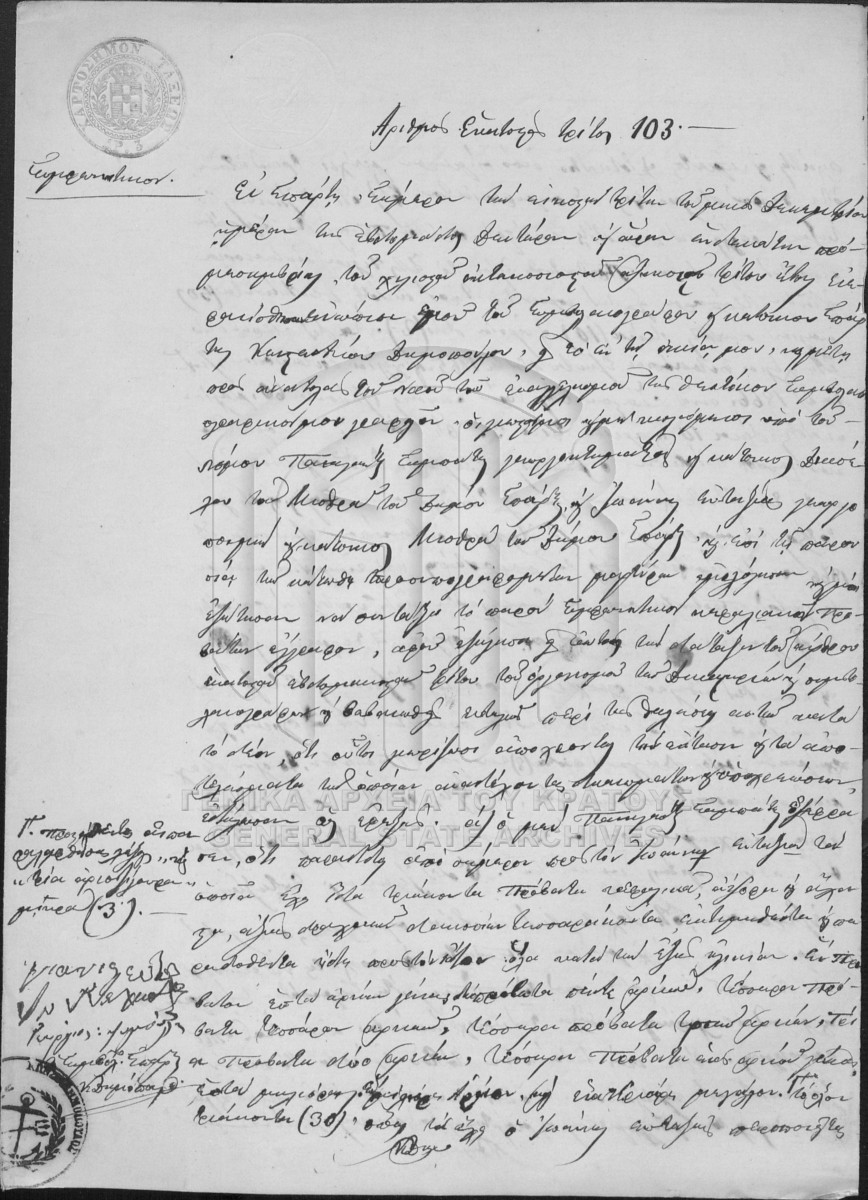
One of my favorite genealogy treasures is a contract between my 2nd great grandfather, Ioannis Eftaxias of Mystras, and Panagiotis Sampatis. Dated December 23, 1863, it documents this transaction:

Panagiotis Sampatis declared that from this day he gives Ioannis Eftaxias 30 valued and already given to him sheep worth of 240 drachmas. They all have the following age: a sheep, two sheep 10 months old, four sheep 8 months old, four sheep 6 months old, three sheep 4 months old, four sheep, seven female sheep,  and a big ram: in total thirty (30). Ioannis Eftaxias will have them and will be taking care of them and will be protecting and using them as of his own from today until three years later, when the agreement will be annulled.  Ioannis Eftaxias has to give Panagiotis Sampatis fifty (50) okas from the cheese producted, ten (10) okas of wool and two (2) sheep from his pasture until year 1864. In the other two following years, 1865 and 1866, [Ioannis Eftaxias has to give Panagiotis] sixty (60) okas of cheese, ten (10) okas of wool and three (3) sheep per year. Also, if Ioannis Eftaxias fails to give Panagiotis the above mentioned in time, he will have to reimburse Panagiotis for the current pasture at the marketplace of Sparta. At the end of the agreement, in December 1866, he (Ioannis) has to return the mentioned sheep in the same quality and at the same age he was given them unless a great godsend catastrophe happens. And if Ioannis Eftaxias fails to return all the sheep he was given, he’ll have to pay eight (8) drachmas for each one of them, in total 240 drachmas; also, at the same time, he’ll pay Panagiotis for the deficit created by the sheep’s delayed return. Ioannis Eftaxias stated that he accepts the agreement above, after getting the mentioned sheep today, and promises to give Panagiotis Sampatis his share[ in time and to fully satisfy his obligations without any excuses.2

Contract, page one:  Panagiotis Sampatis and Ioannis Eftaxias of Mystras, 12/23/1863. Source: General State Archives of Greece, Sparta Office, accessed and translated by Gregory Kontos, July 2014.

(The full contract and translation can be accessed here.)

Knowing that my ancestors were shepherds, I was especially interested in exploring the Shepherd’s Registration dated 1831. I learned of this collection through researcher Konstandinos Koutsodontis, Greek Genealogist, who described the purpose of this census:
Shepherds’ registrations were conducted by the Kapodistrian government for tax purposes and for the boundary delimitation of animal grazing lands. After liberation from Ottoman rule, one of the major concerns of the new government was the reconstruction of finance (Greece had taken huge loans to conduct the War of Independence and had to repay Britain, France and Russia). Taxes were a great source especially when the majority (~80%) of the Greek citizens were farmers and shepherds. Similar shepherd tax censuses were conducted some years later (1834-1840) by the king Othon.
Konstandinos conducted a search for me in 1831 Shepherd’s Registration. Although not all of my villages had these records, they did exist for three, and my ancestral family owned:
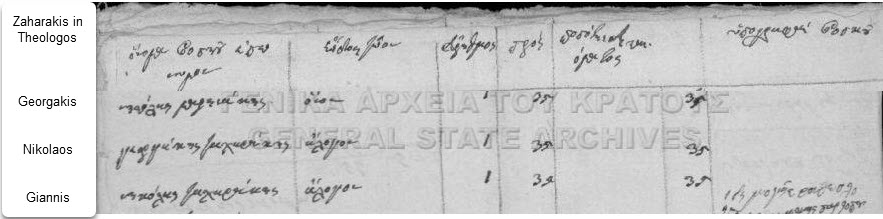
  • Theologos:  Georgakis, Nikolis and Giannis Zaharakis each owned one horse
  • Sklavohori:  Lambros Zarafonitis owned three cows
  • Machmoutbei:  Dimitrios Zarafonitis owned five cows

Zaharakis in 1831 Shepherd’s Registration: Georgakis, Nikolis, Giannis. Source: General State Archives of Greece, Archive of the Financial Committee; accessed and translated by Konstandinos Koutsodontis, March 2020

Konstandinos explained that having a horse or a large number of goats or sheep was an indication of relative financial status. This helps me further understand and respect the standing of my family within their communities.

Because I had assembled the Zaharakis family tree (see post here), I knew exactly who these three men were in 1831. Understanding that most 1800’s villages were small in size, it is not difficult to construct family trees if you have the basic resources:  Voter Lists, Male Registers (Mitroon Arrenon), Town Registers (Dimotologion), Church birth, marriage, death records, school records.

Finding additional “beyond the basics” records entails hiring a professional who can locate and translate the documents. (Even if I knew where to find these documents, there’s no way I could have ever read the Zaharakis names above!) To me, it is well worth the small expense. These additional records add more details to my people and make these long-ago ancestors more “real” to me.
__________

1My sincere gratitude to Georgia Stryker Keilman for translating many 1872 voter lists and posting them on her blog, Hellenic Genealogy Geek.  Lists for Sparta and other villages of Lakedaimona can be found by scrolling to File #25 here.

2My deepest appreciation to Gregory Kontos of GreekAncestry.net for finding this document at the Sparta GAK in 2014, and translating it for me.

Greece 2017. Archives Research: Kalamata

My research trips are super-intensive. This is due in part to my personality, and in part to the limited working hours at Greek repositories. Archives and libraries’ hours of operation are 8:00 a.m. until 2:30 p.m., and unlike shops, they do not reopen after 6:30. None are open on Saturdays, not even the Central Library of Sparta.

So, my weekday work schedule looks like this:
7:00 – wake up
8:00 – be at the repository
2:30 – leave (or get kicked out)
2:30-6:00 – go someplace that is open: a cemetery, an archaeological or historical site, or take a drive through a village. It’s beastly hot in mid-afternoon in July, but I won’t waste three precious hours.
6:00-midnight – change clothes, visit family or friends for dinner which usually begins around 9:00

Honestly, I came home more tired than when I left. But I also came home with tons of new information.

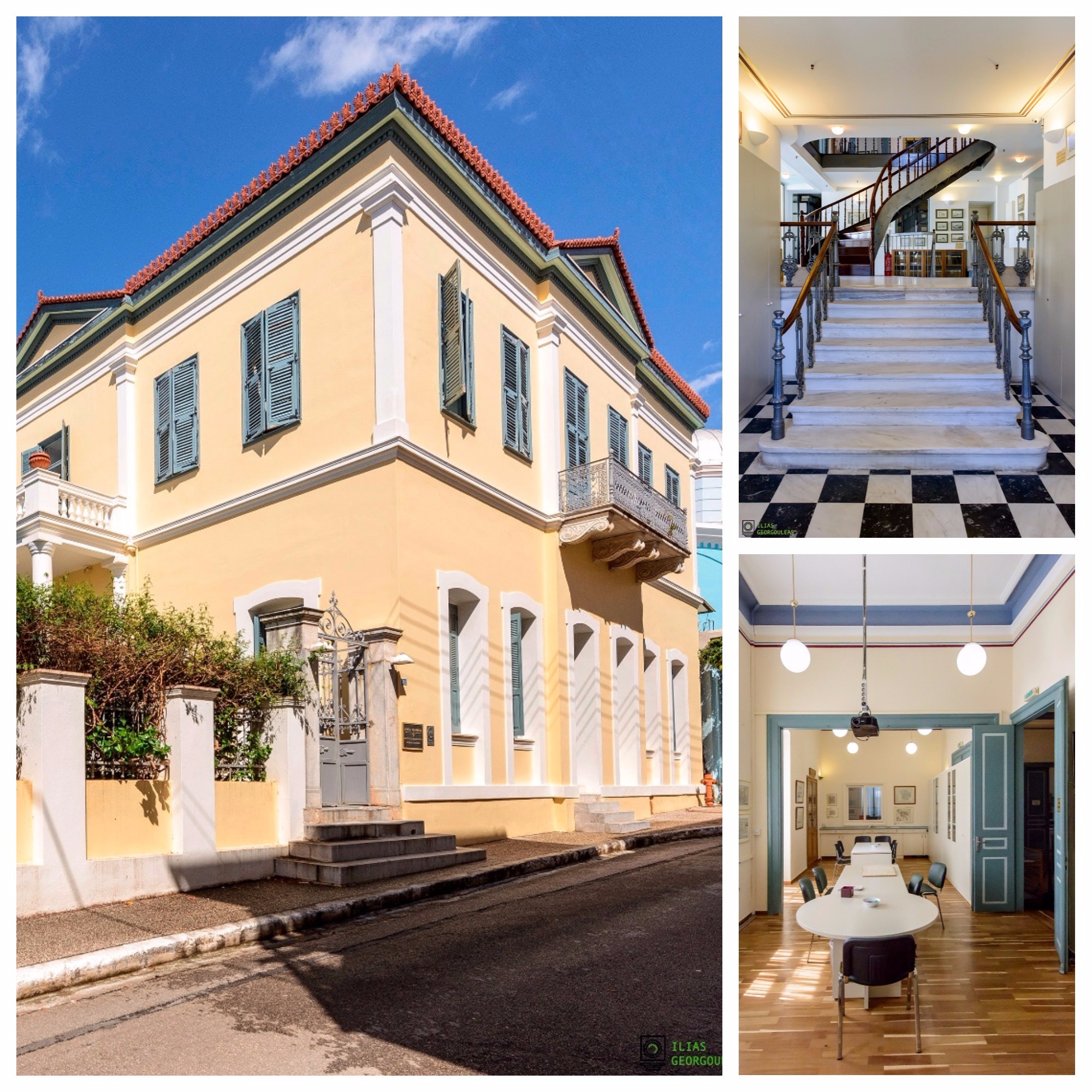
I was anxious to return to the Archives in Kalamata. During my visit of July 2016, the office was moving to a new location and everything was packed in boxes, which made research impossible. I was thrilled to see its new home: a stunning neoclassical building constructed in the 1880’s and rebuilt after the earthquake of 1986.

General Archives of Greece, Kalamata, Messinia

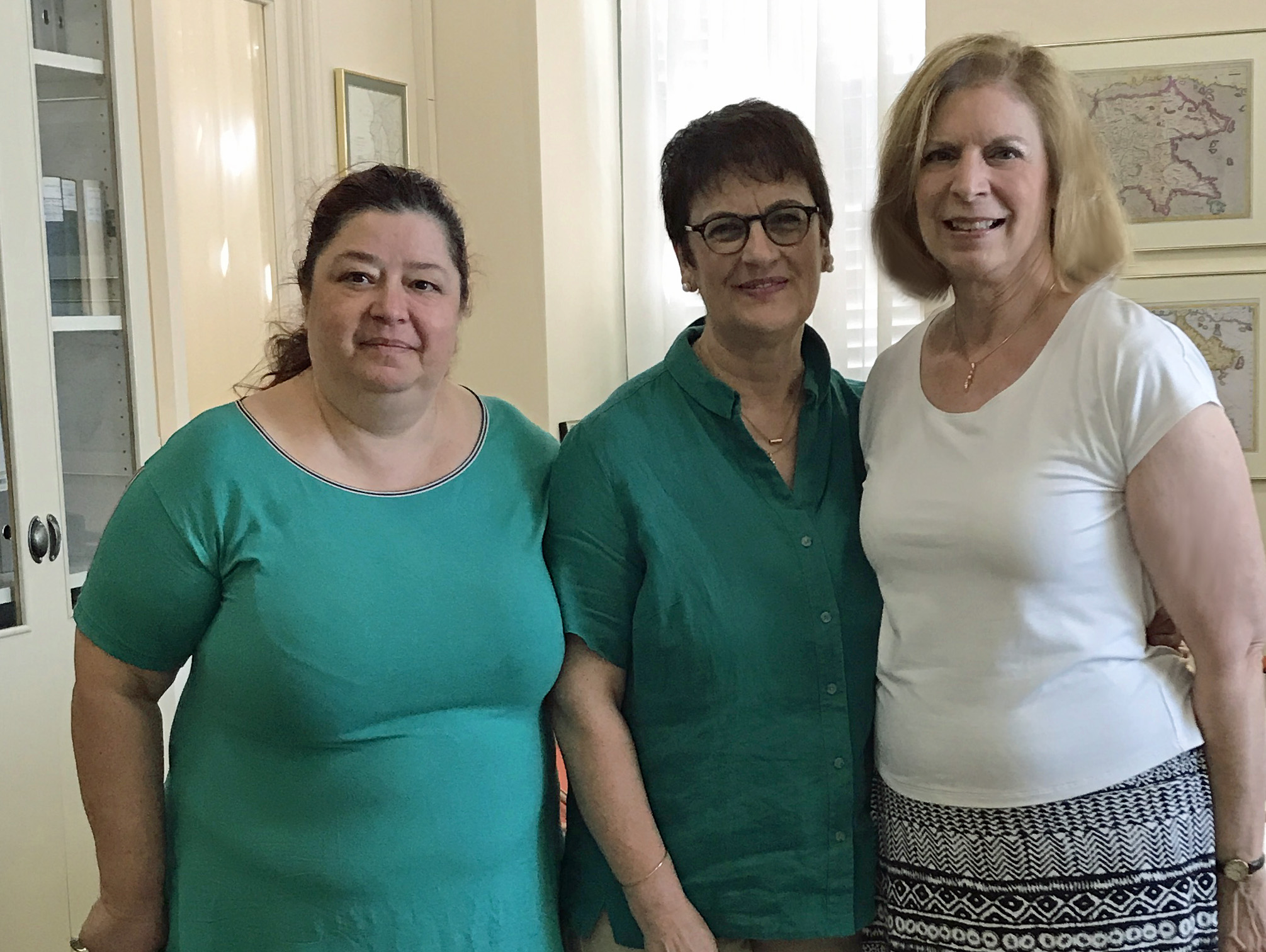
I am ever grateful for the help and kindness of my friend, Giota Siora, who met me in Kalamata and escorted me to the Archives. Giota knows the archivist, Anastasia Milioni, who was eager to assist us in any way possible. My goal was to search for information about two families with possible early ties to the Kalamata region: Eftaxias (prior to relocating to Mystras) and Zaharakis (prior to relocating to Theologos).

GAK, Kalamata: Giota Siora; Anastasia Milioni, Archivist; Carol Kostakos Petranek, July 2017

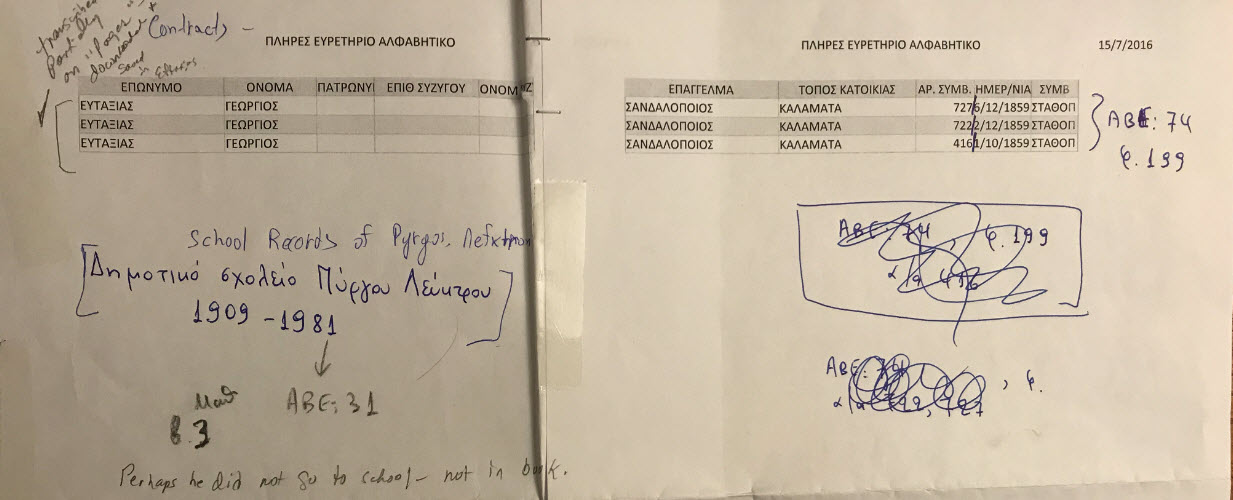
In 2016, Mrs. Milioni had given me a print-out of contracts with the Eftaxias name. There were three for Georgios Eftaxias who was in Kalamata in 1859.

Eftaxias contracts, 1859. General Archives of Greece, Kalamata, Messinia

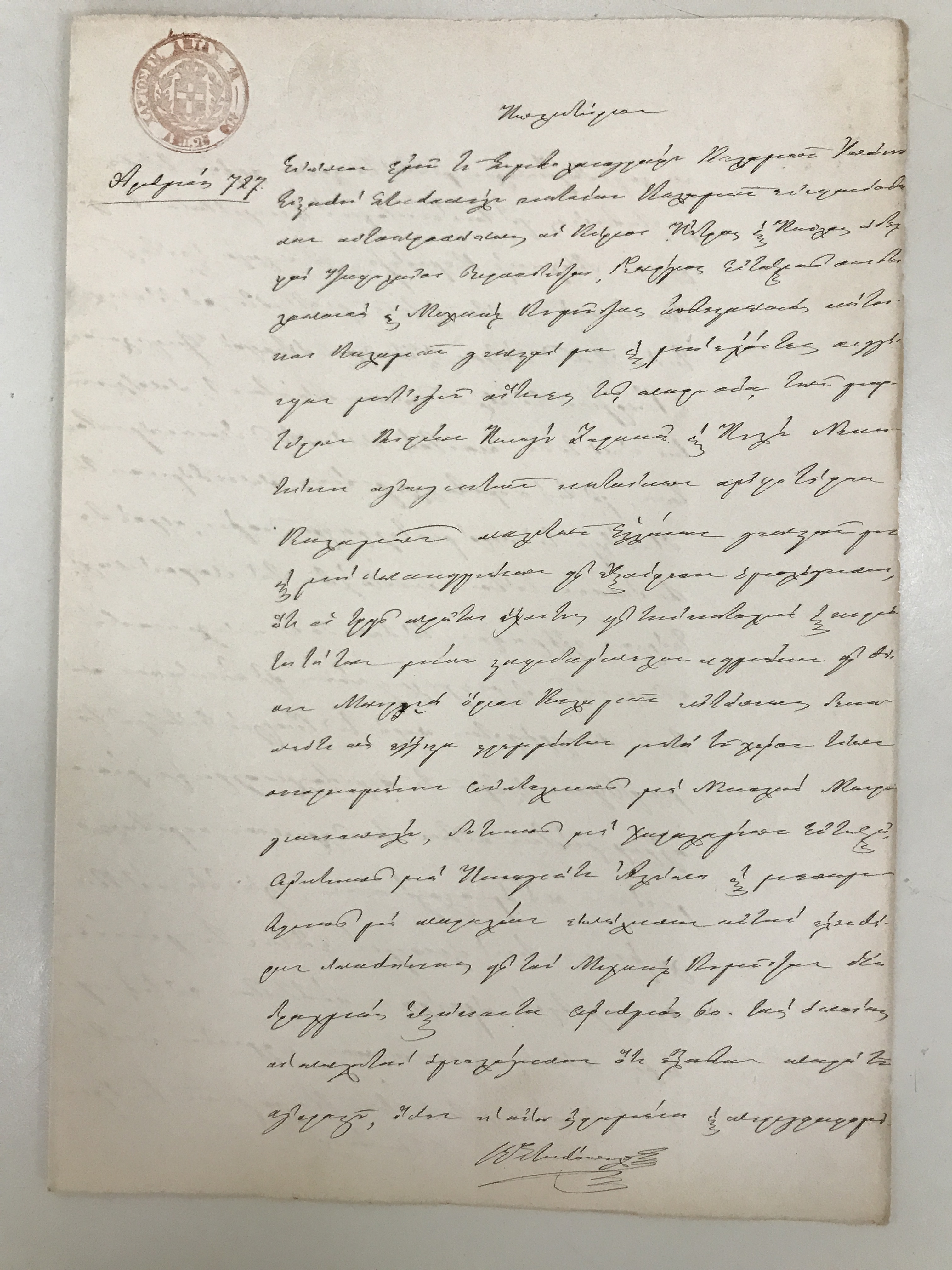
After the contracts were retrieved, Giota amazed me with her ability to read the documents. They were not written in typical old Greek script, but in a specific type of calligraphy used by lawyers and high government officials in the 1800’s.

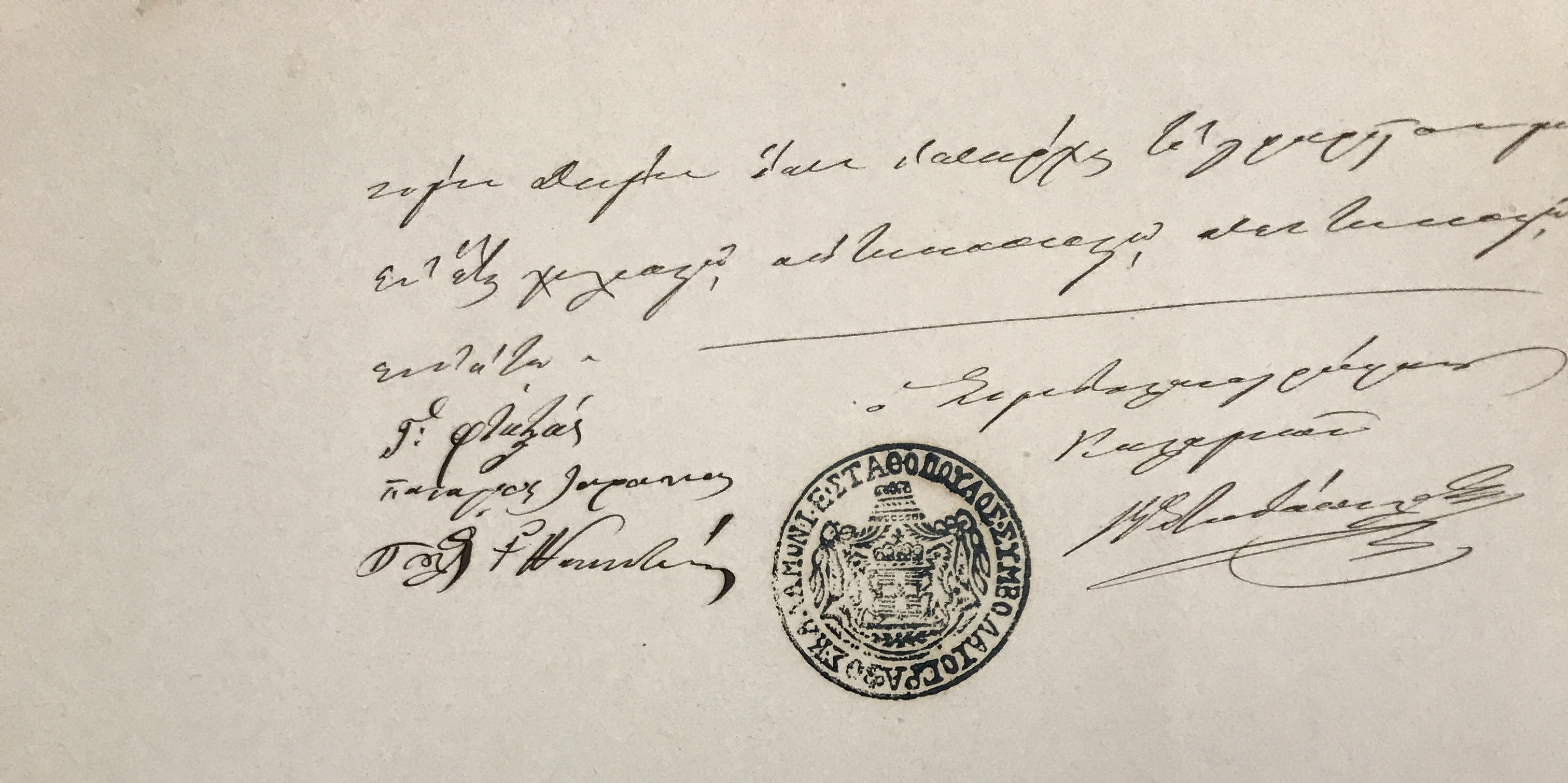
Below are page one and the signature page of Contract 727 for Georgios Eftaxias, along with a synopsis by Giota.

Eftaxias, Georgios; Contract 727 p.1. Kalamata, Messinia. July 2017

Eftaxias, Georgios; Contract 727 p.3 – signatures.. Kalamata, Messinia. July 2017

Contract 727 Georgios Eftaxias in Kalamata 1859
Final payment on land purchase
Georgios Eftaxias bought a field at Mavria (on the border of Messinia and Laconia). He paid 60 drachmas on the balance due. He bought the land from Michail Koumoutsas who was a lime maker. One of the owners of land bordering his is Haralambos Eftaxias.

With three contracts for Georgios Eftaxias, I now have proof that a family was in Kalamata. But is this my family? Possibly yes, possibly no.

  • I have an Eftaxias “DNA cousin,” Peter, who was born in a village adjacent to Mystras. His father said that their Eftaxias family came from Kalamata. This is definitely his family. Since we have a genetic connection, this is one point on the “yes” side.
  • The very name, Eftaxias, has ecclesiastical connotations. Gregory Kontos sent me this definition: the one that is in charge of the good order of the church:   good=ευ order=τάξη. So, this could be an example of families who had worked in a church and adopted the position title as a surname. This is one point on the “no” side.

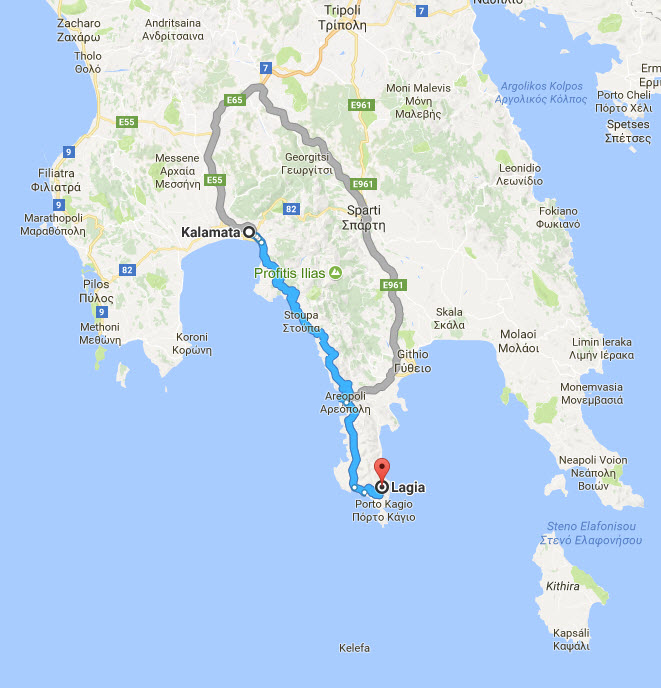
Another twist:  the Election Lists of 1875 show a Michalis Eftaxias who was born around 1800, fought in the Revolution, and lived in Lagia. That is 117 km from Kalamata, a 39-hour walk! Is it possible these two families are related? Not impossible, but perhaps improbable. This could be an example of the second bullet–someone working in a church, taking the ευταξη title as a surname.

So, the definite answer to my question is, “I don’t know.”

Lagia to Kalamata is 117 kilometers

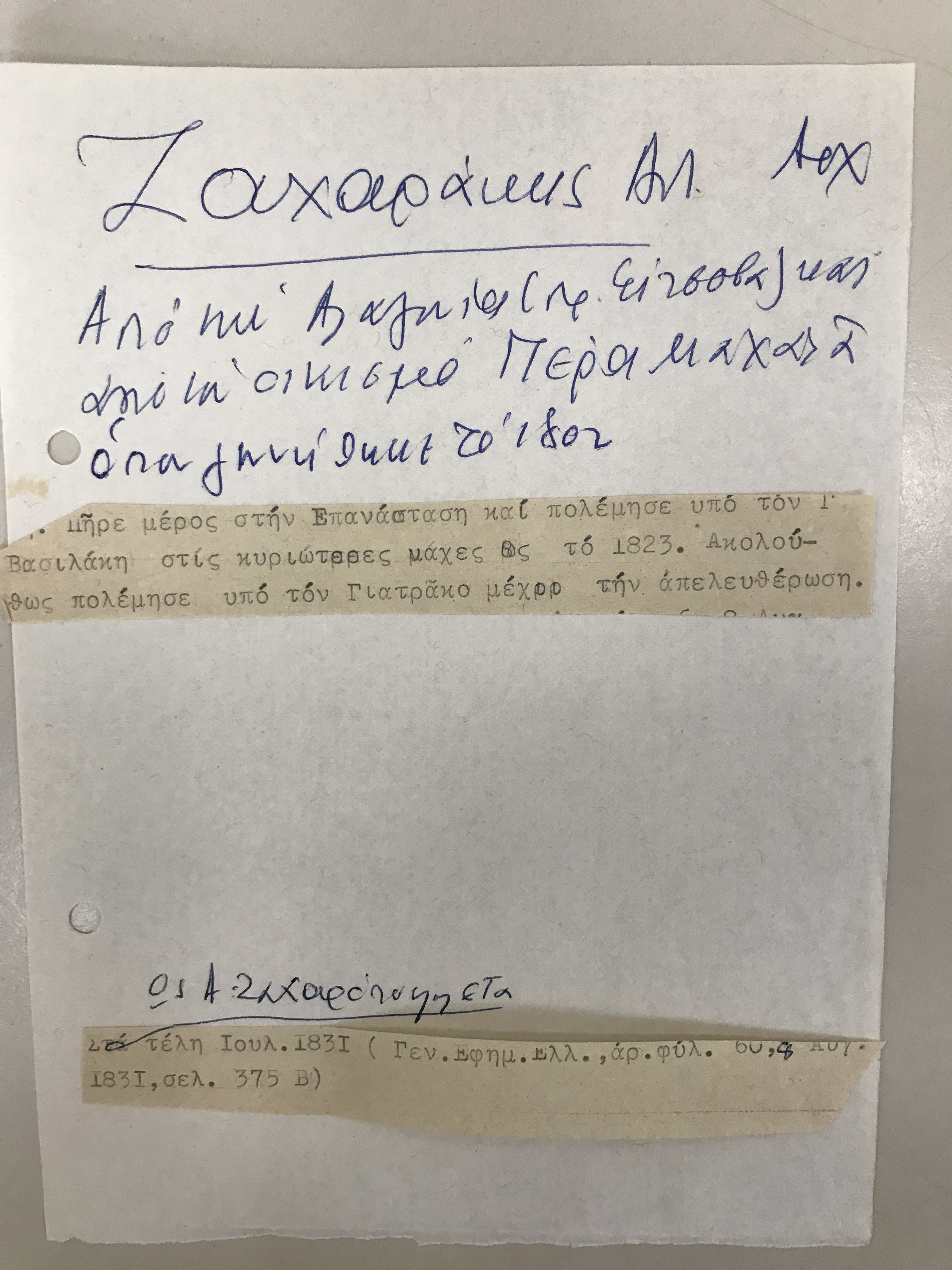
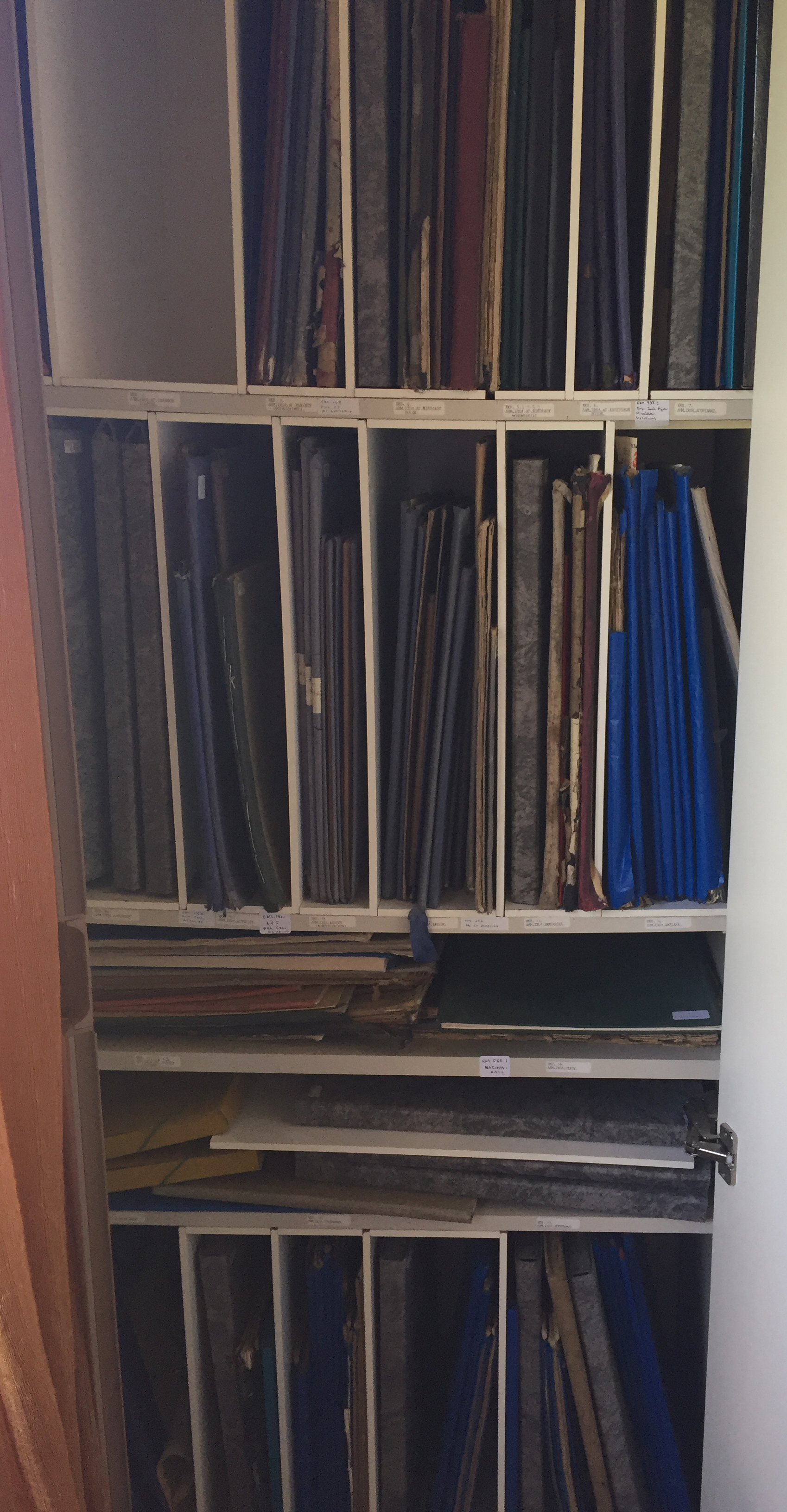
The Archives in Kalamata has a one-of-a-kind collection created by Μίμη Iλ. Φερέτος (Dimitris or Mimi Il. Feretos).  Giannis Michalakakos described Mr. Feretos as a journalist and writer who gathered information on fighters of the 1821 Revolution. In the early 1900’s, he interviewed people who had fought (or whose relatives fought) in the War of Independence. Mr. Feretos created a surname index which include brief notes and reference sources to find the original documentation. The GAK in Kalamata has a bookcase filled with Mr. Feretos’ notebooks. They are arranged in alphabetical order, and Giota easily found the Eftaxias and Zaharakis surnames.

This is a copy of one of the Feretos pages for Zaharakis. I found it fascinating to see how Mr. Feretos compiled and annotated information, long before the computer age.

Zaharakis surname, notes from the files of Mimis Il. Feretos, GAK Kalamata, July 2017

A simple translation of this document, with my thanks to Giannis: M. Zaharakis, born in Sitsova [now known as Alagonia on the border of Messinia and Laconia]. He fought in the Revolution under George Vasilakos, in the main battles until 1823. Afterwards, he fought in the war under the Giatrakos family. In some documents, he is referred to as Zaharopoulos.

This document reveals two important things: first, M. Zaharakis is not my family; he was born in a region far from Theologos at a time when my Zaharakis are found in documents in Theologos. Second, M. Zaharakis was also known as Zaharopoulos. This is a critical piece of information because there is a long-standing (and frustrating!) pattern of Greeks changing their names. Having written proof that Zaharakis and Zaharopoulos in Kalamata are the same family, saves years and tears for the serious researcher.

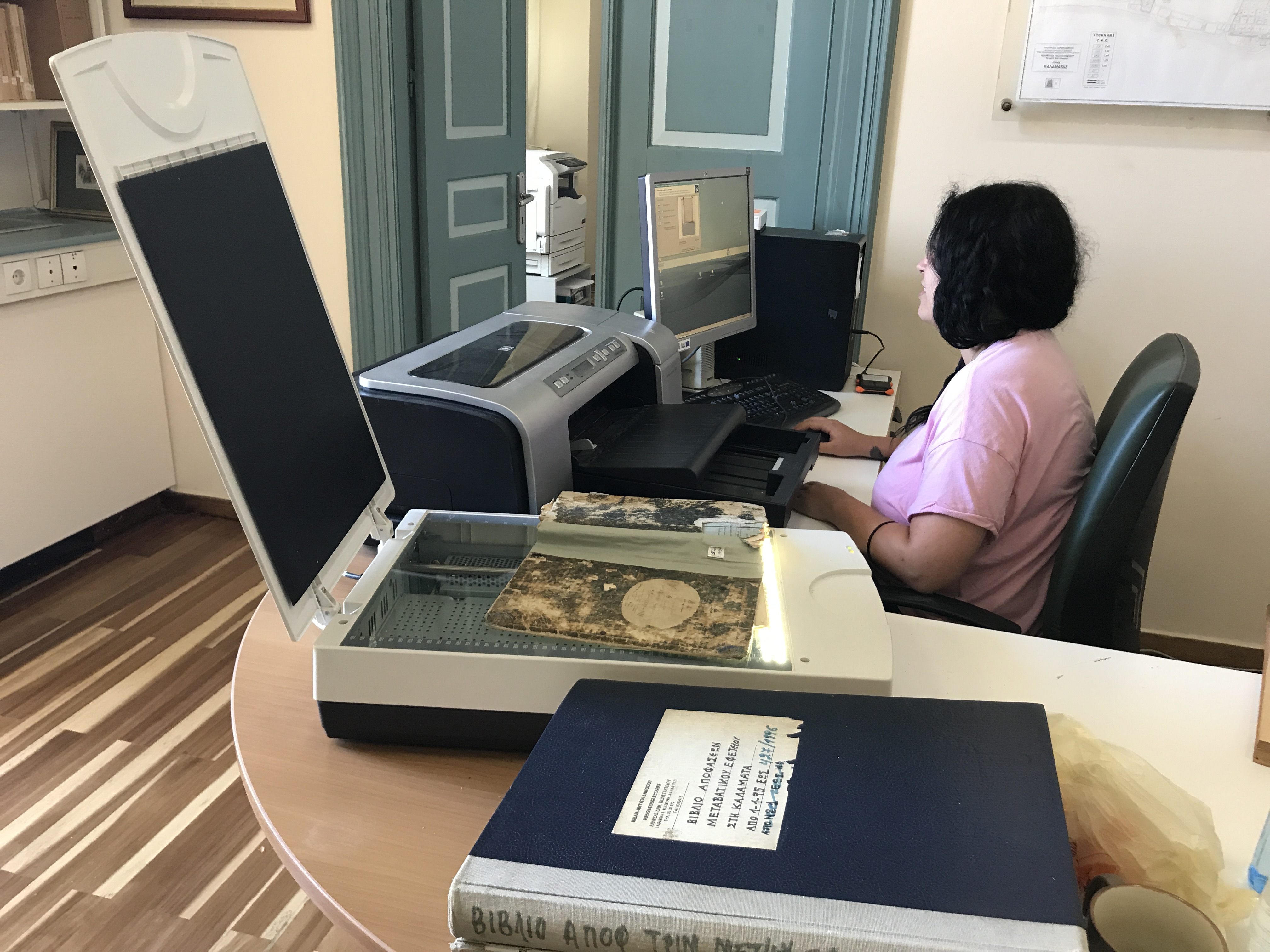
For anyone researching in Messinia, the Archives in Kalamata is an essential repository. The staff is actively digitizing as much of its collection as possible. They are friendly, helpful and supportive in every way.

Digitization underway at the Messinia Archives in Kalamata

Here are links to access the Archives website; its online digital collections; and its YouTube channel.This link is especially helpful, as it shows the collections in the Archives.

Was my research trip to Kalamata a success? Yes! I did not find the definitive information I was seeking to link my families in Laconia to the ones in Kalamata. However, I explored a new Archive, discovered the Feretos collection, found documentation to prove (and disprove) some of my theories. I visited the Kalamata Museum, filled with incredible antiquities and artifacts. Most importantly, I spent a delightful day with Giota, who inspires me with her continual desire to help and teach. Thank you, my friend!


Return to Greece, 2016. Part Seven: Digging Deeper

This is the seventh post in a series about my trip to Greece, June 30-July 20, 2016 — an amazing journey of history, family and discovery. Previous posts can be found here.

The most important lesson I learned when traveling in Greece is:  never arrive anywhere between 1:00 and 4:00 in the afternoon. That rule makes scheduling easy — repositories in the morning; solo time in the afternoon; family time in the evening; dinner at 9 or 10:00 p.m. I had to tweak this a bit to squeeze in all I needed to do.
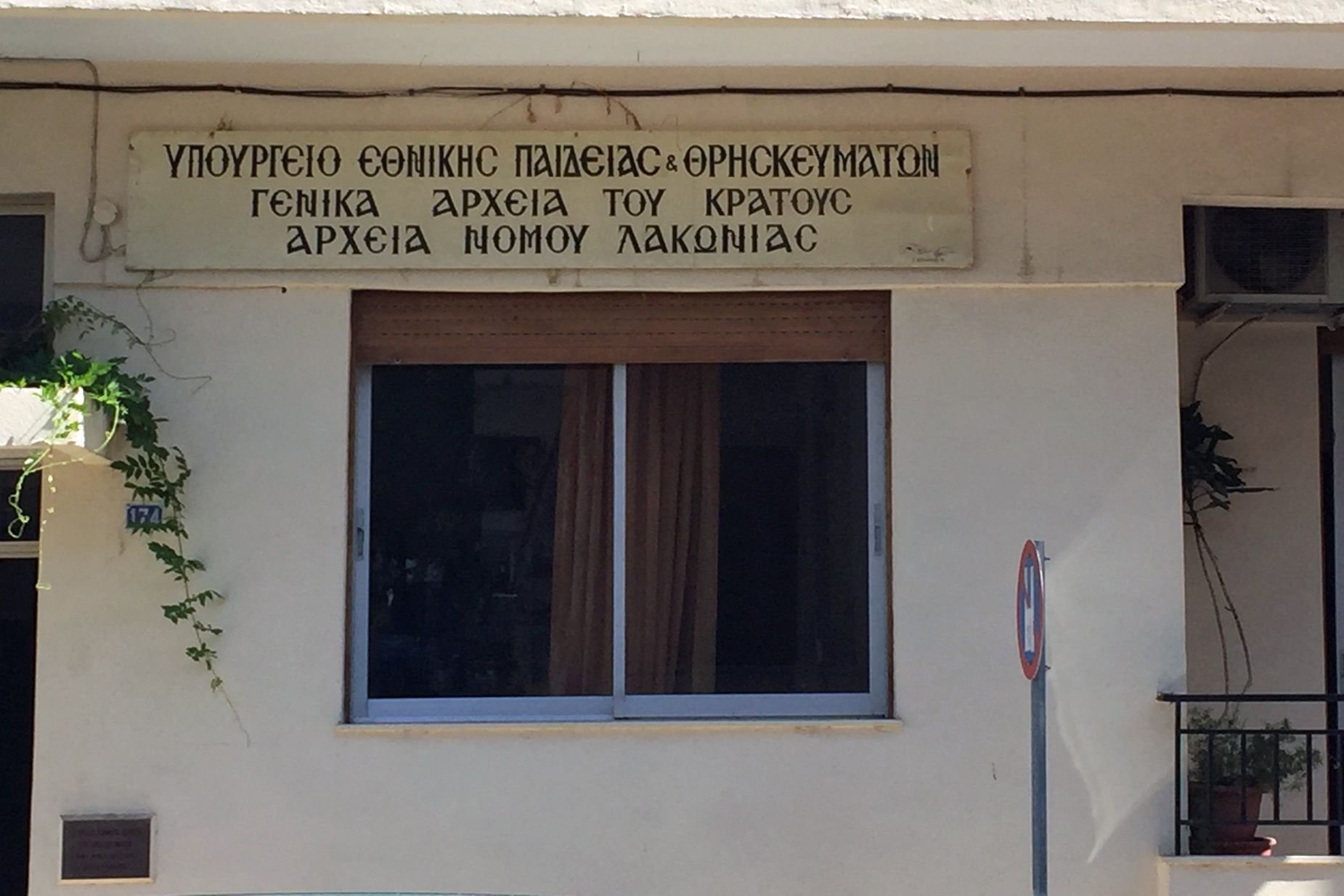
General Archives of Greece, Sparta office, July 2016

General Archives of Greece, Sparta office, July 2016

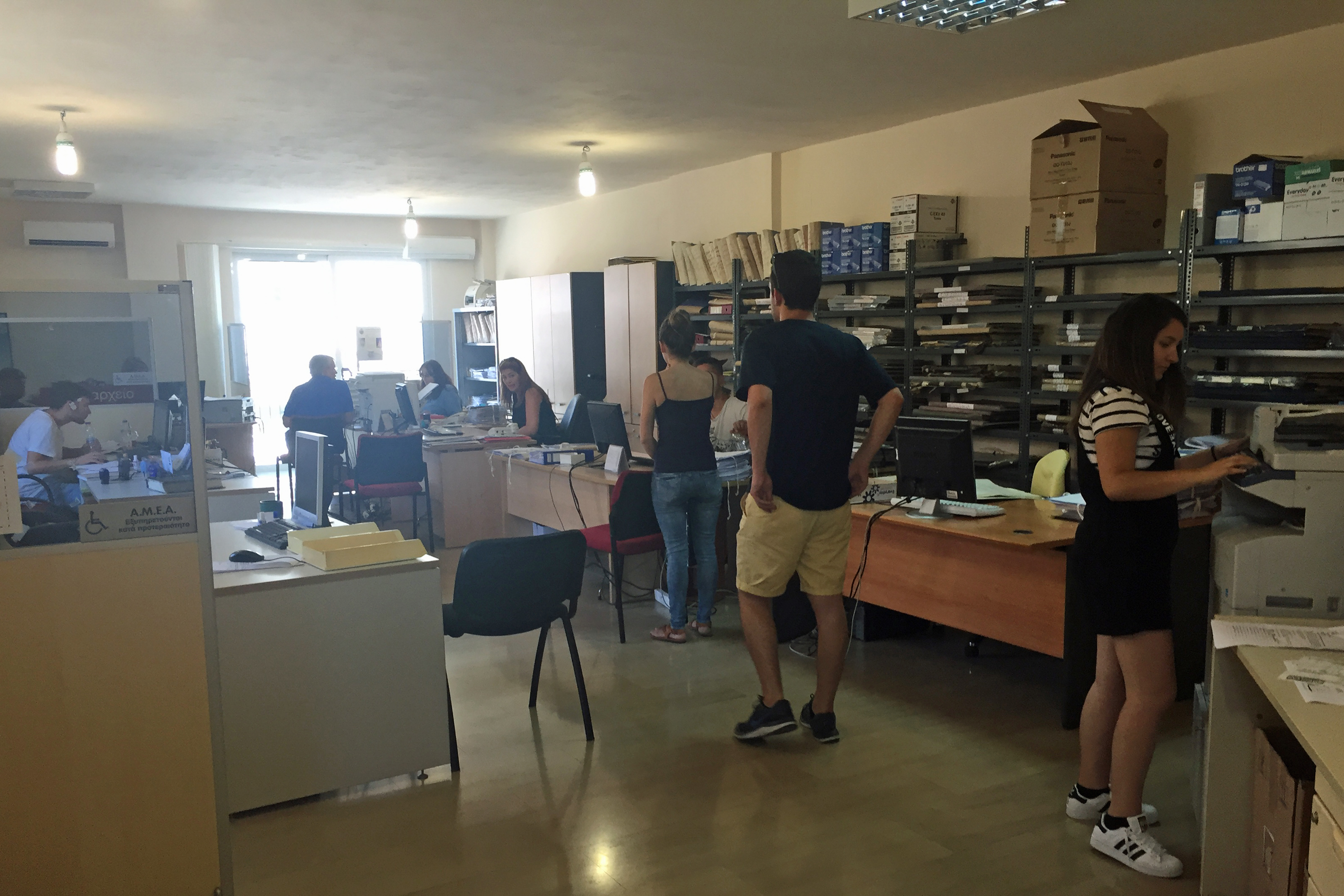
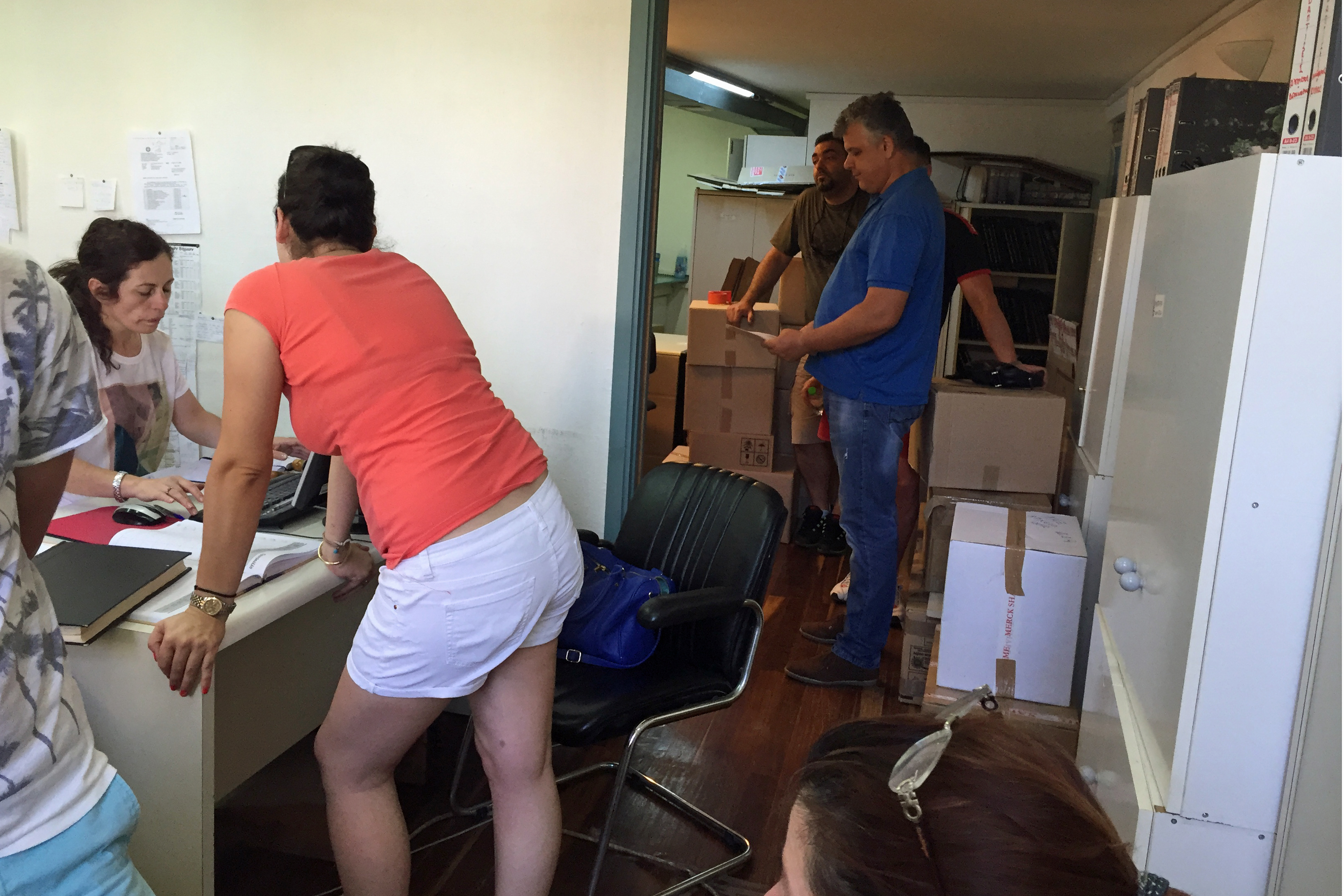
Archives in the mornings — there’s no better way to start the day! The Sparta Office is a treasure chest filled with nuggets of genealogical gems:  documents, books, records. When I arrive, I learn that my archivist friends are on overload: Mrs. Pepi Gavala and her assistants, Michail Sovolos and Maria Stellakou. They explained that many government offices are now closing or consolidating, and sending their records to the Archives. Boxes lined the hallway, waiting for these good people to catalog and store them. Mindful of their workload, I settled in the main room and begin to dig for gold.
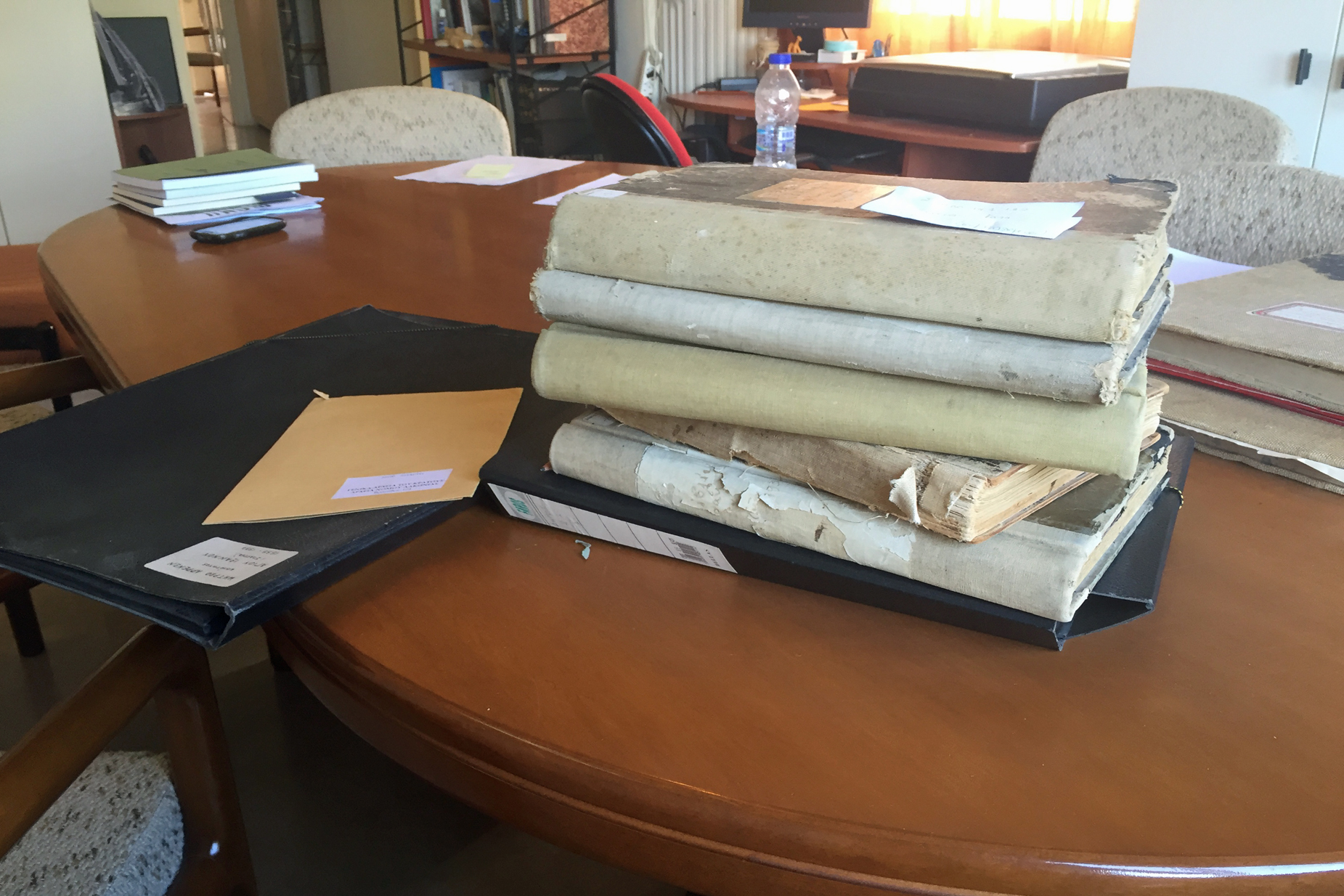
Research room, Sparta Office of the General Archives of Greece, July 2016

Research room, Sparta Office of the General Archives of Greece, July 2016

During my visit in 2014, I had obtained digital copies of the basic records for my family:  Male Registers (Mitroon Arrenon) and Family Registers (Dimotologion). I dug into these collections again for my newly-found surnames, and then for a few friends who had requested lookups. I asked Michalis for School Records from Agios Ioannis, and he brought me several books. I was very surprised to see that some of them had only girls’ names! As a Greek researcher quickly learns, there are few official records naming women. These truly are a treasure, as I can now begin to construct entire families, not just males. The school records for Agios Ioannis range from around 1900-1940; the exact tmeframe I need for my grandparents’ era. I stayed until 3:00 closing time, digitizing pages that listed my surnames. What a great find!
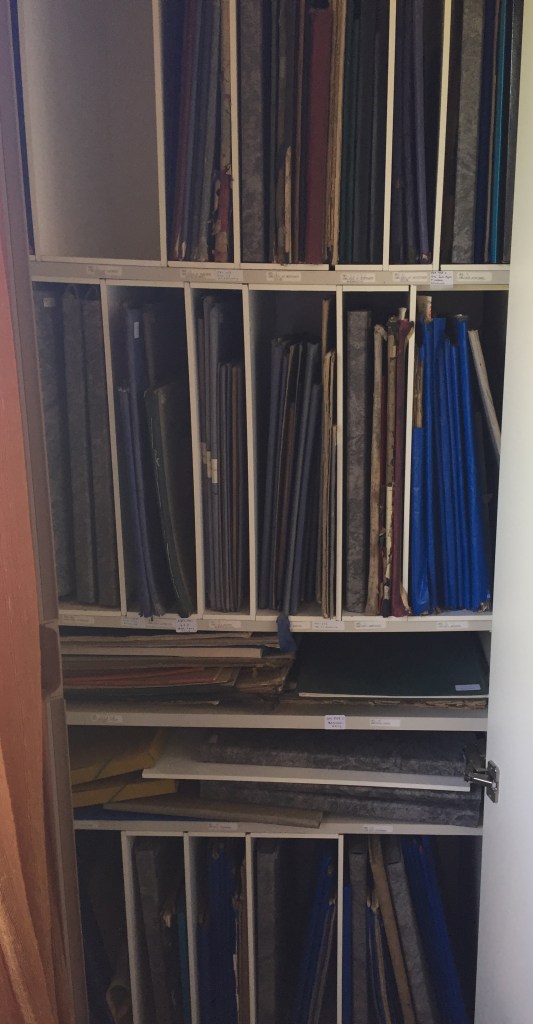
School Record Books, Agios Ioannis, Sparta Archives office, July 2016

School Record Books, Sparta Archives office, July 2016
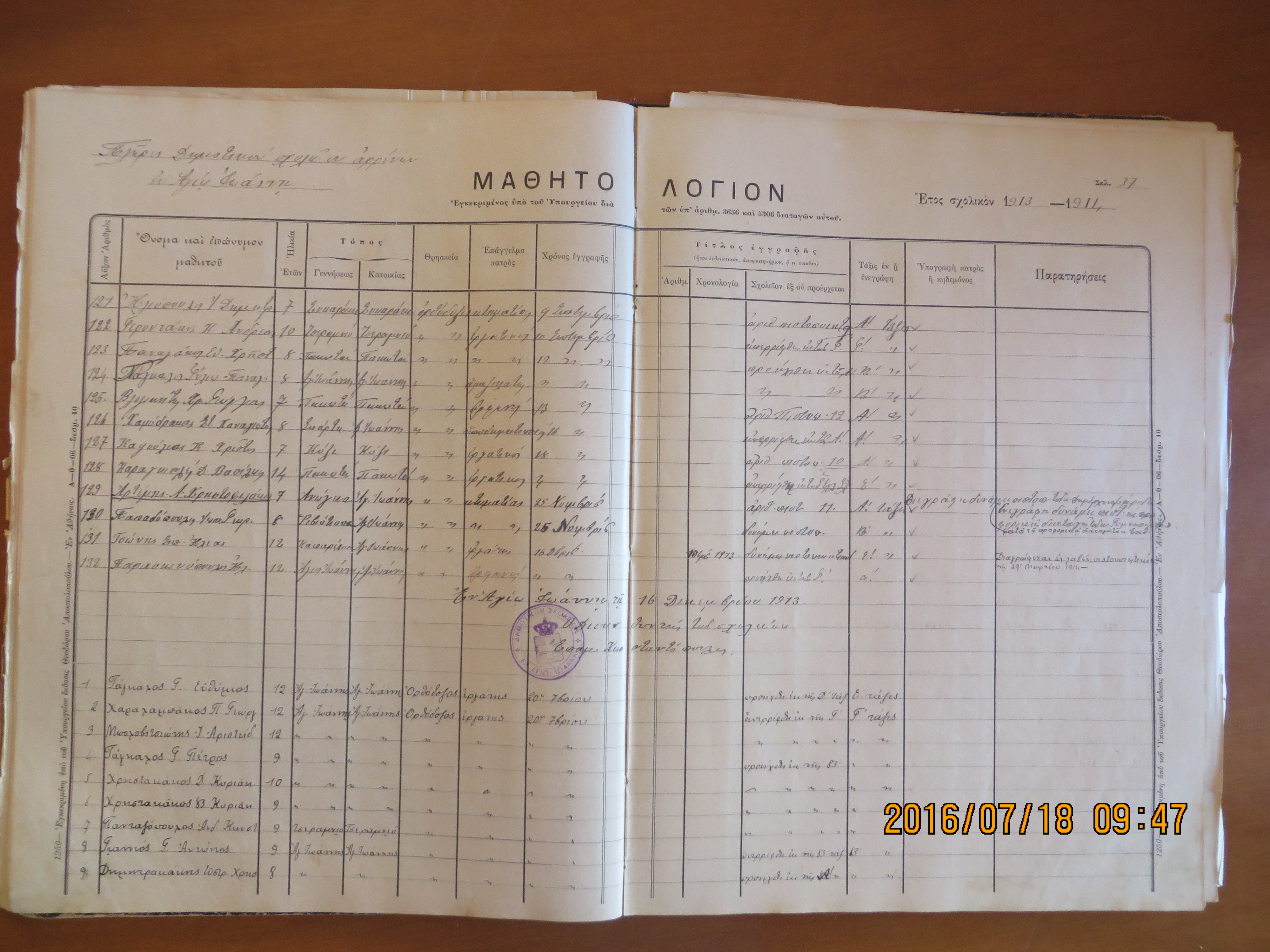
Example of a School Record for Agios Ioannis, GAK Sparta Office, July 2016

Example of a School Record for Agios Ioannis, GAK Sparta Office, July 2016

Gregory Kontos arrived in the early afternoon to join me for three days of research. It was hot, hot, hot! And every repository was closed, closed, closed. So we filled the empty 1:00-4:00 p.m. timeframe by going to a place that never closes — the cemetery. Up and down the rows we walked, Gregory reading surnames off the headstones while I snapped photos of the ones that were a “yes.” The sun was scorching this July mid-day and there was no breeze, but we persevered until every name on every grave was read. Then it was time to enter the osteofilakio (οστεοφυλάκιο), the ossuary building.
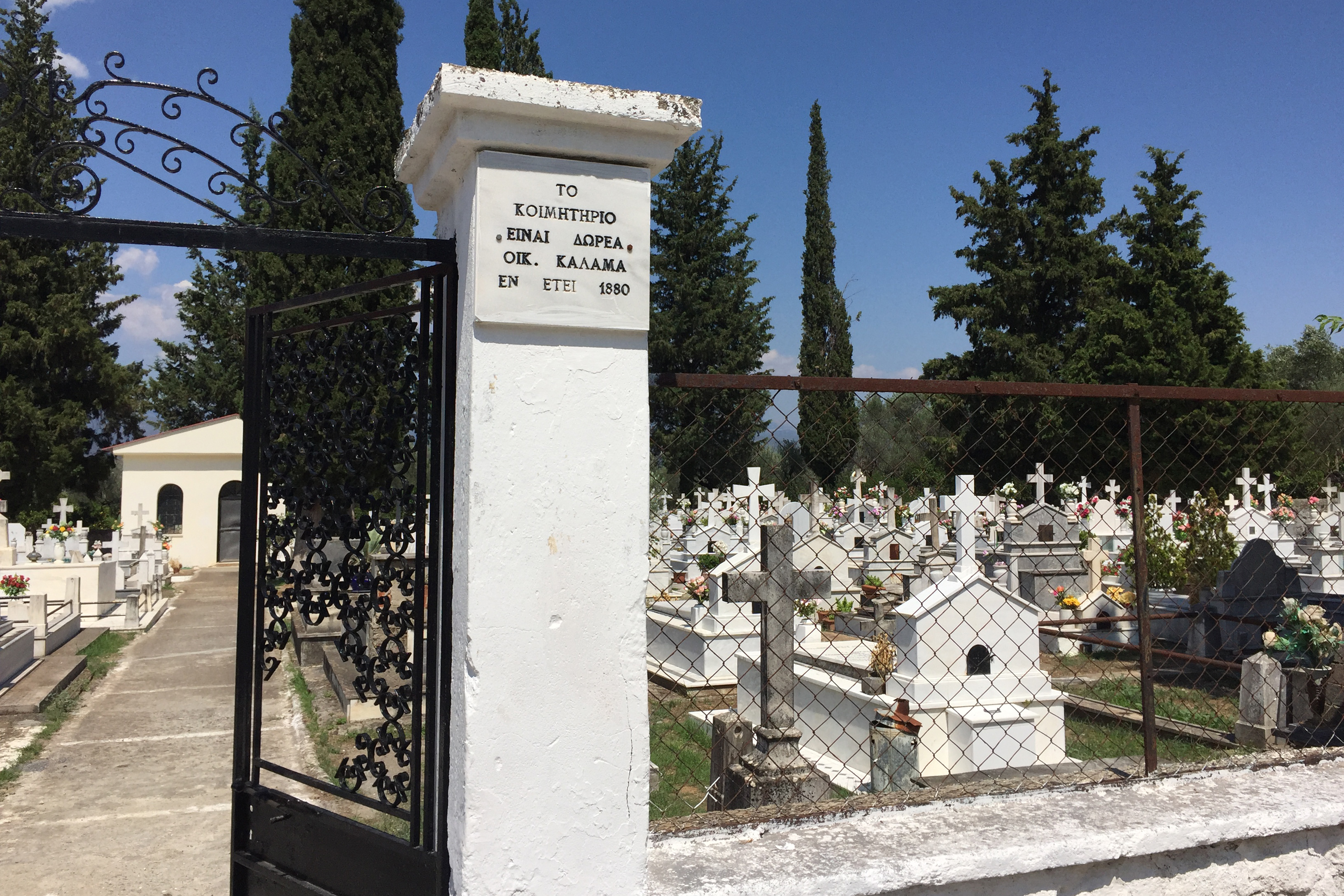
One of two cemeteries in Agios Ioannis, Sparta, July 2016

One of two cemeteries in Agios Ioannis, Sparta, July 2016

There is limited cemetery space in Greece; therefore, families “rent” a burial plot for three years after which the bones are exhumed and placed in an ossuary. Walking into the osteofilakio is an almost sacred experience. Boxes on shelves line the walls; each inscribed with a family name and holding the bones of the deceased. Icons, photos, flowers, candles and small bottles of oil are carefully arranged around the boxes. A spirit of peace permeates the building. This is holy ground.
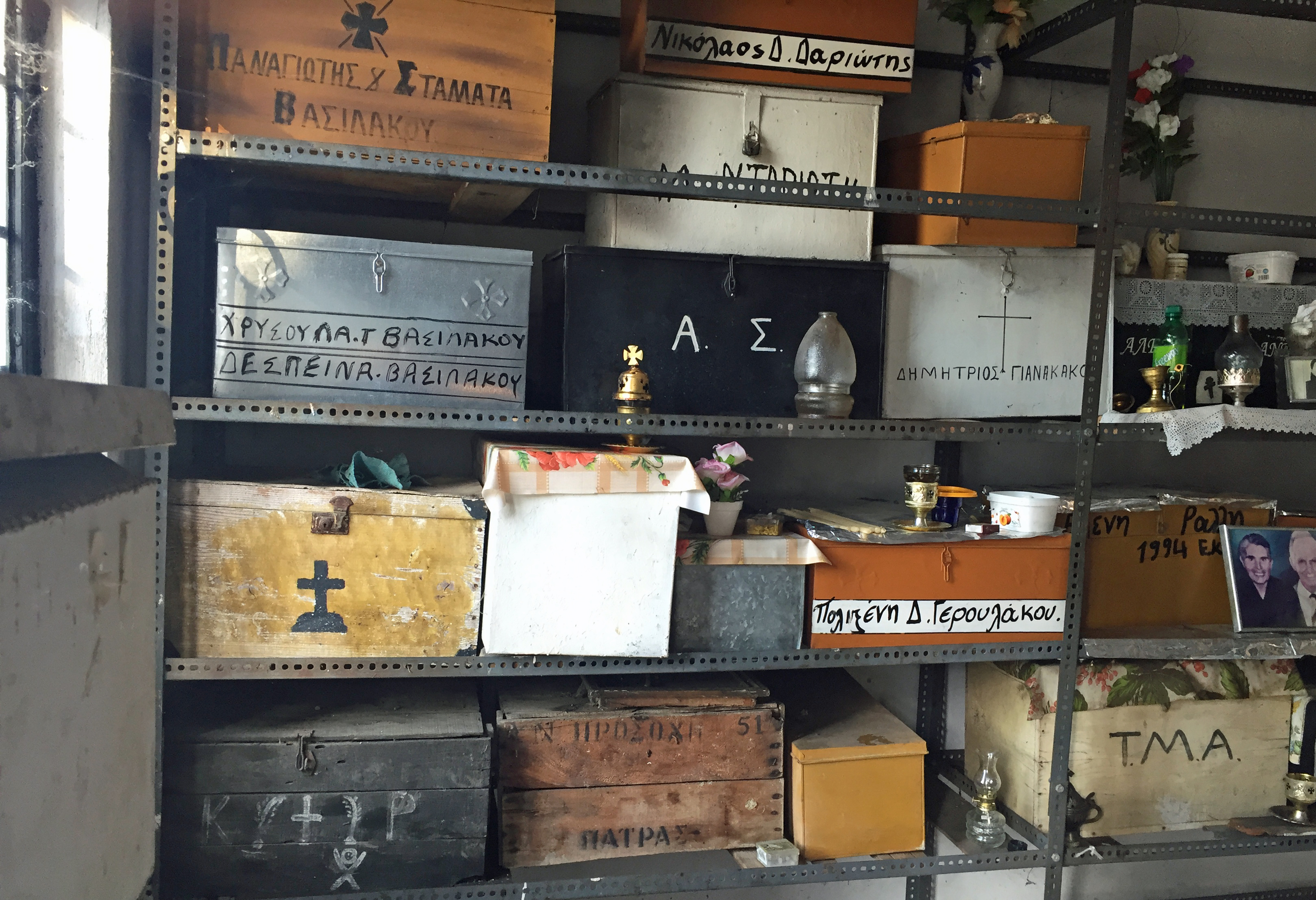
Ossuary house, Agios Ioannis Cemetery, July 2016

Ossuary house, Agios Ioannis Cemetery, July 2016

It was not until we left the cemetery and began driving towards town that we realized there are two cemeteries in Agios Ioannis. We returned the following afternoon and searched the second one. Next time I make a research plan, I have to make sure that I thoroughly vet all locations of potential resources.

Gregory and I had a full schedule for 1-1/2 days in Sparta: the Archives, two cemeteries, the Mitropolis, the Central Library, Amykles, and the Dimarheion (Town Hall). And of course, dinners with my family who have embraced him as one of us.

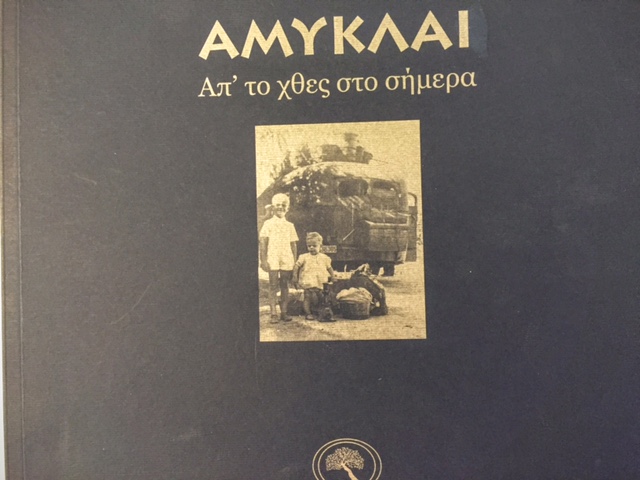
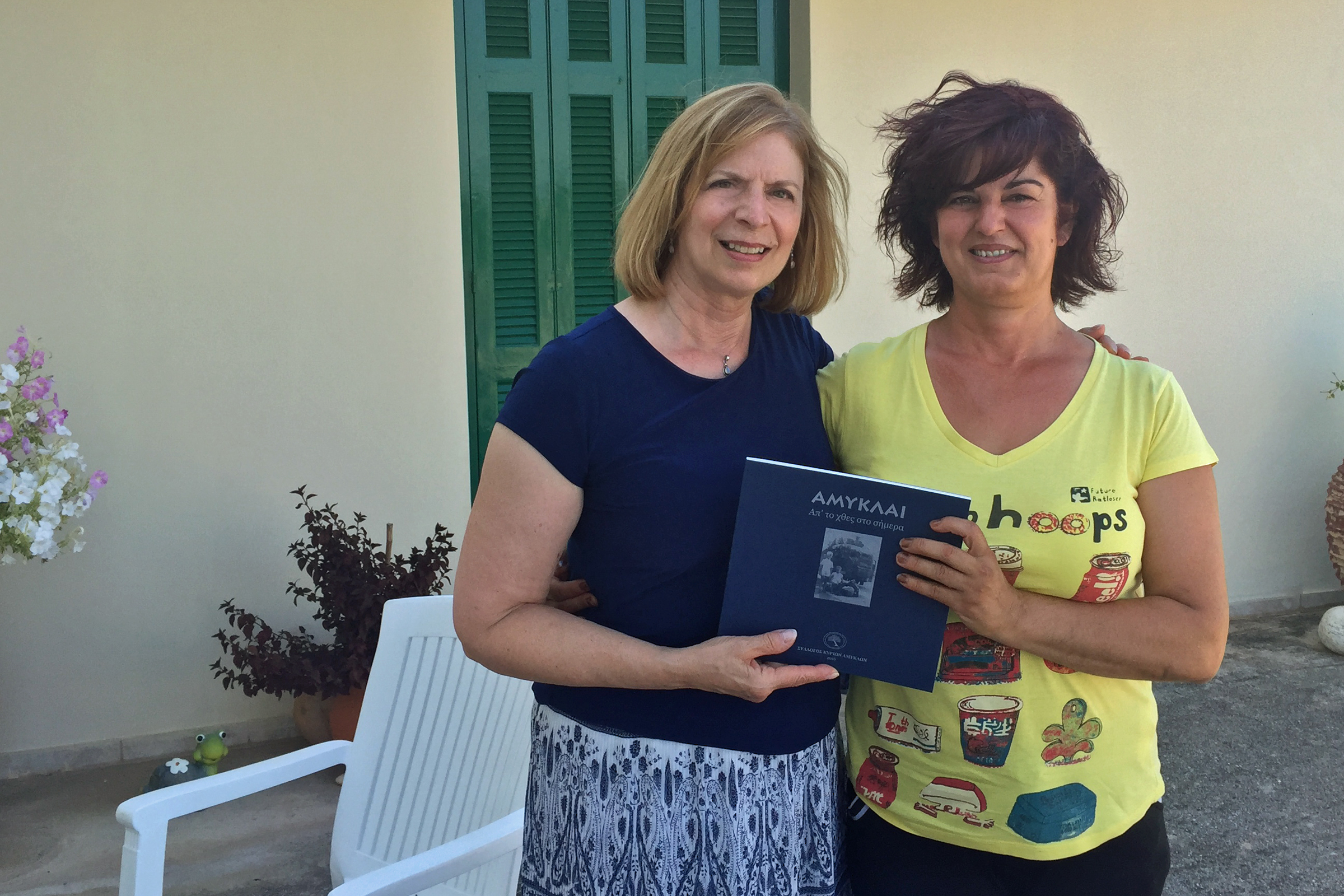
Prior to leaving for this trip, I had spotted a Facebook post about a newly published book about families from the village of Amykles. Since this is the birthplace of my Eliopoulos and Zarafonetis great-grandparents, I was very excited to meet Kaliopi Zarafonetis, the driving force behind this project. amykles-book-2 Gregory and I connected with Kaliopi in Amykles where she described the book’s genesis. There had been a village event which featured a display of old photographs. Everyone was surprised at the extent of the collection, but Kaliopi had the foresight to realize that these treasures would be lost if they were not preserved. Thus began her initiative to create the book. I was thrilled to see page after page of Eliopoulos and Zarafonetis families, most of which are most likely connected to mine. One of my great surprises was to learn that my cousin in Agios Ioannis had married a woman whose grandmother was a Zarafonetis from Amykles – a double connection!

Carol Kostakos Petranek and Kaliopi Zarafonetis, Amykles, July 2016

Carol Kostakos Petranek and Kaliopi Zarafonetis, Amykles, July 2016

On to the repositories. I was on the hunt for death records for specific members of my family. My cousin, an attorney for the government in Sparta, had contacted a colleague in the Town Hall and we obtained the certificate for a member of the Linardakis family of Vordonia. I was surprised to learn that death records for Agios Ioannis are in the Town Hall of Magoula, not Sparta! Unfortunately, I did not make it there but it is the first item on Plan A for the next trip.

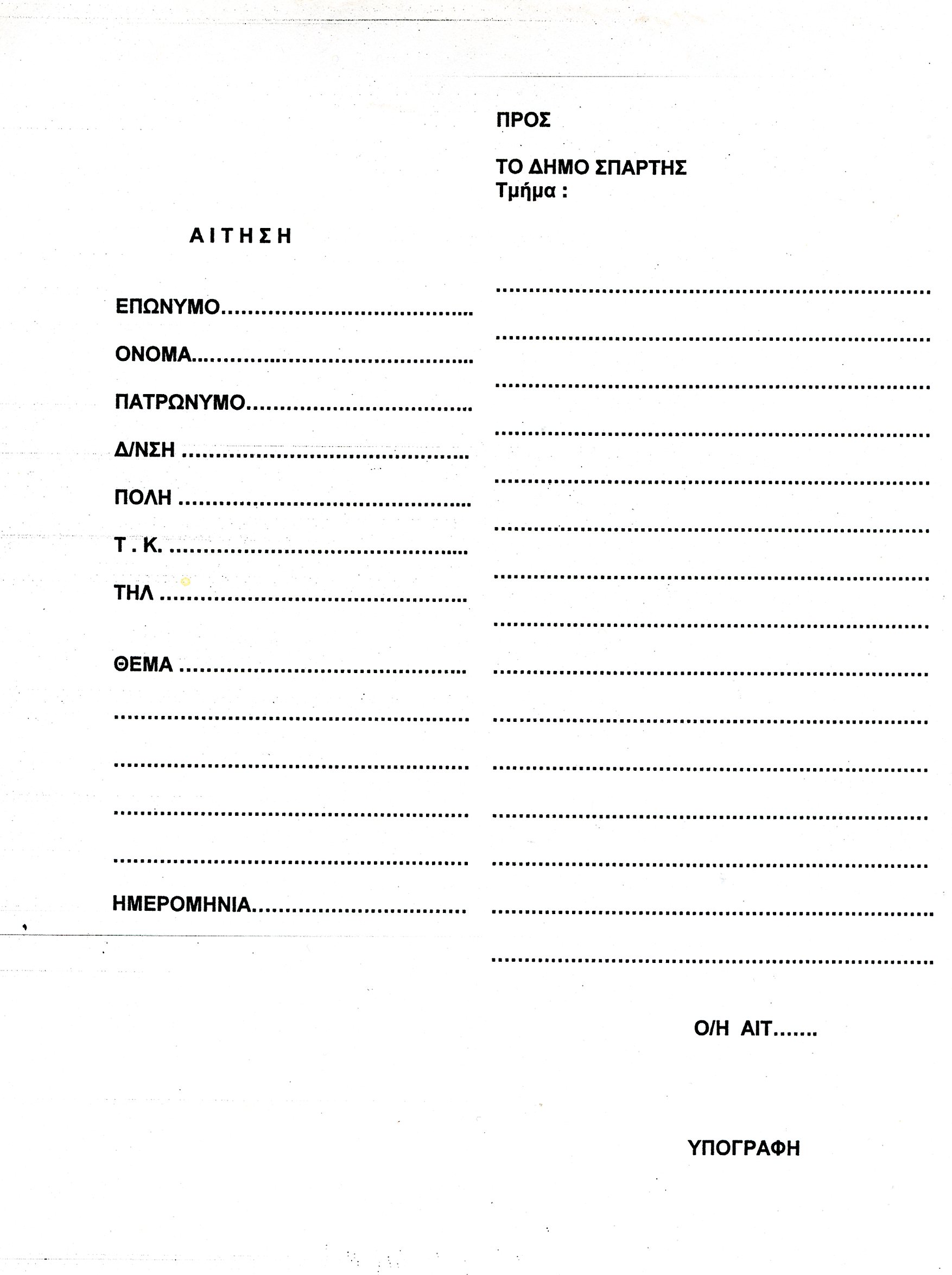
The Sparta Dimarheion has books of Male Registers and Town or Family Registers, as seen on the shelves in the photo below. However, clerks are busy handling daily government functions and research requests are often put aside. I did pick up a form to use for future mail-in requests.

Sparta Dimarheion (Town Hall), July 2016

Sparta Dimarheion (Town Hall), July 2016

Record Request Form, Sparta Dimarheion, July 2016

Record Request Form, Sparta Dimarheion, July 2016

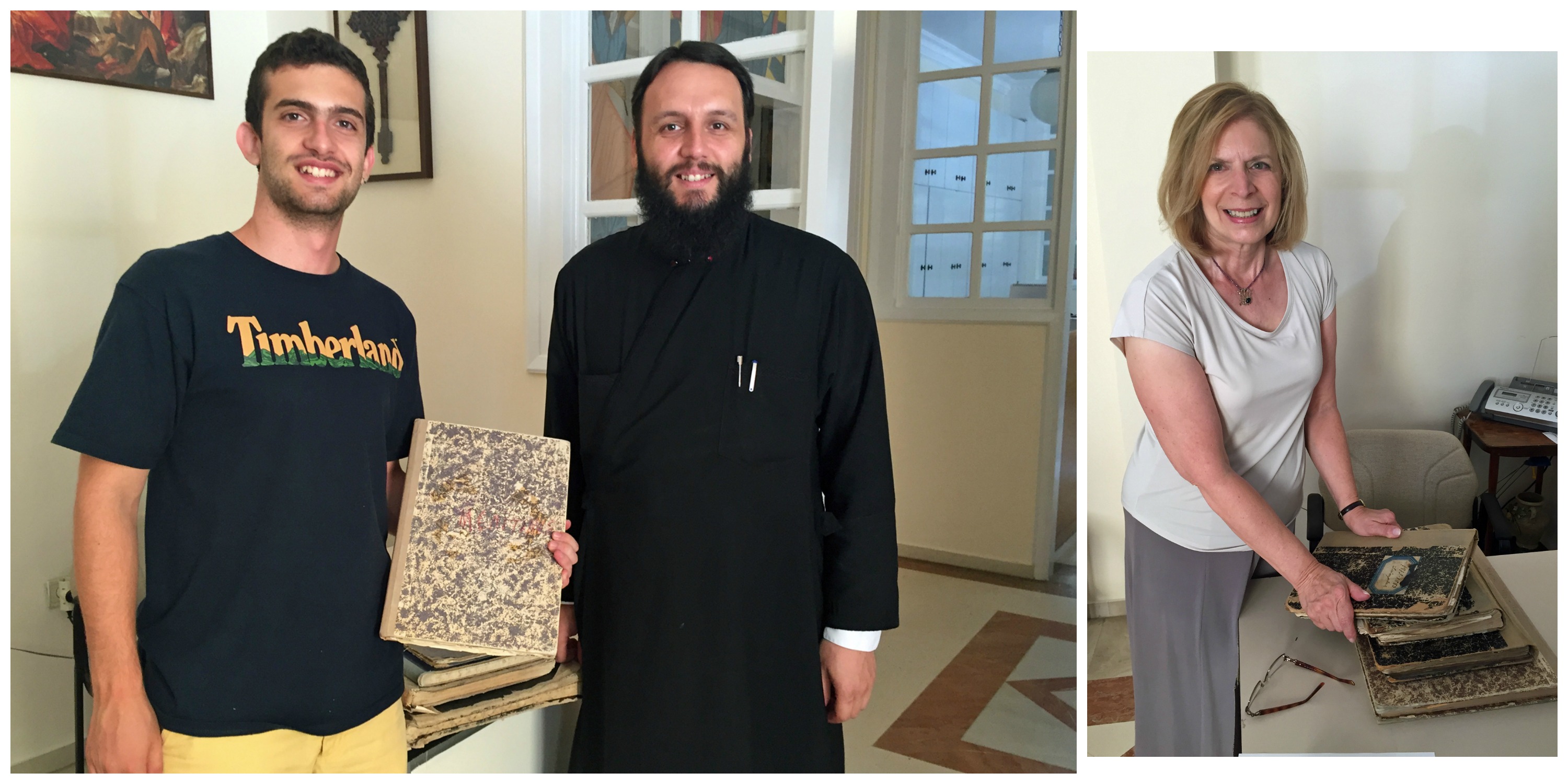
Our task at the Mitropolis in Sparta was to obtain specific pages of the Marriage Books for a friend. Although Gregory and I had been there in 2014, I was unsure if we would be granted access to the books again. My concerns were  unfounded. We were warmly greeted by a priest who brought us whatever we requested. When Gregory mentioned that the books were fragile and should be preserved, the priest replied that there had been discussions with the European Union about digitizing the records, but the talks had not come to fruition.

We were warmly greeted by a kind priest at the Mitropolis; Gregory Kontos and Carol Kostakos Petranek, Sparta, July 2016

A kind priest helped us at the Mitropolis; Gregory Kontos and Carol Kostakos Petranek, Sparta, July 2016

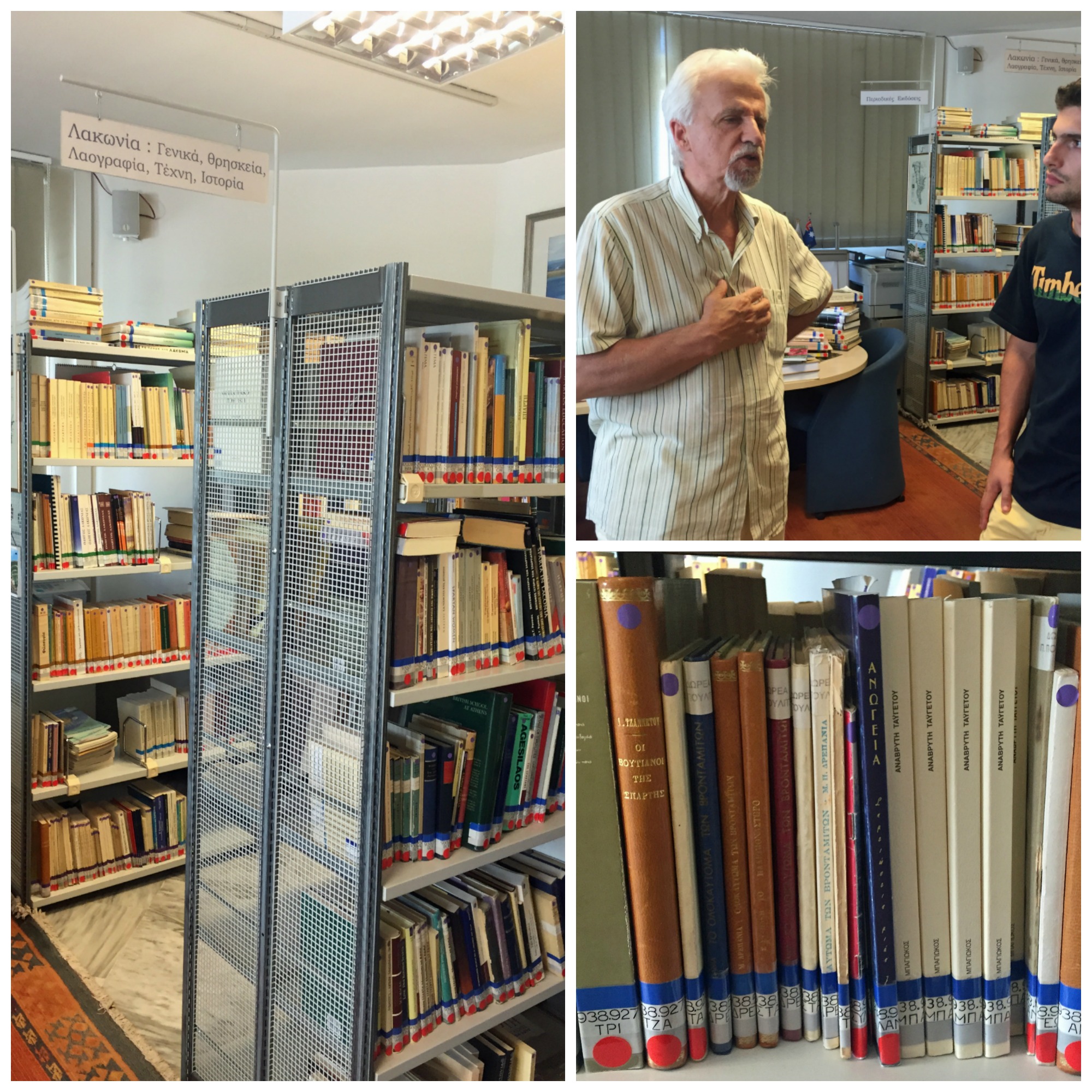
Then it was on to the Central Library of Sparta, located around the corner from the Mitropolis. This time our search was for history books of villages in Laconia, usually written by teachers during summer months. Giannis Michalakakos gave me the name of his colleague, Konstandinos Tzanetakos, who is a librarian there. We found Konstandinos in the section for Laconian history and he showed us the shelves that held many village histories.

The Laconia History section of the Central Library of Sparta; with Konstandinos Tzanetakos and Gregory Kontos; July 2016

The Laconia History section of the Central Library of Sparta; with Konstandinos Tzanetakos and Gregory Kontos; July 2016

There were books for lots of Laconian villages, but none for Agios Ioannis. Giannis explained this was because Agios Ioannis had begun as a settlement beneath the towering Mystras castle, and that any noteworthy event had occurred in Mystras and not in its valley. I had harbored a secret hope that I would find something, but my friend was right. Anyone looking for a history book can call or email the library to see if there is a book for their village and if so, obtain the name, author and publisher. Most likely, our friends at the Laconia bookstores, Laconia Odos in Skala and Adouloti in Aeropolis, can then locate the book for purchase.

Our tasks in Sparta were completed, so Gregory and I headed to the west coast of Laconia to visit the Archives in Kalamata. Why there? I was hoping to find a clue — any clue — as to whether my Kostakos or Eftaxias family may have been in the Kalamata region before they headed northeast to Spartan villages. I had been told that my great-grandfather, Andreas Kostakos, could have come from Pyrgos (see previous post).

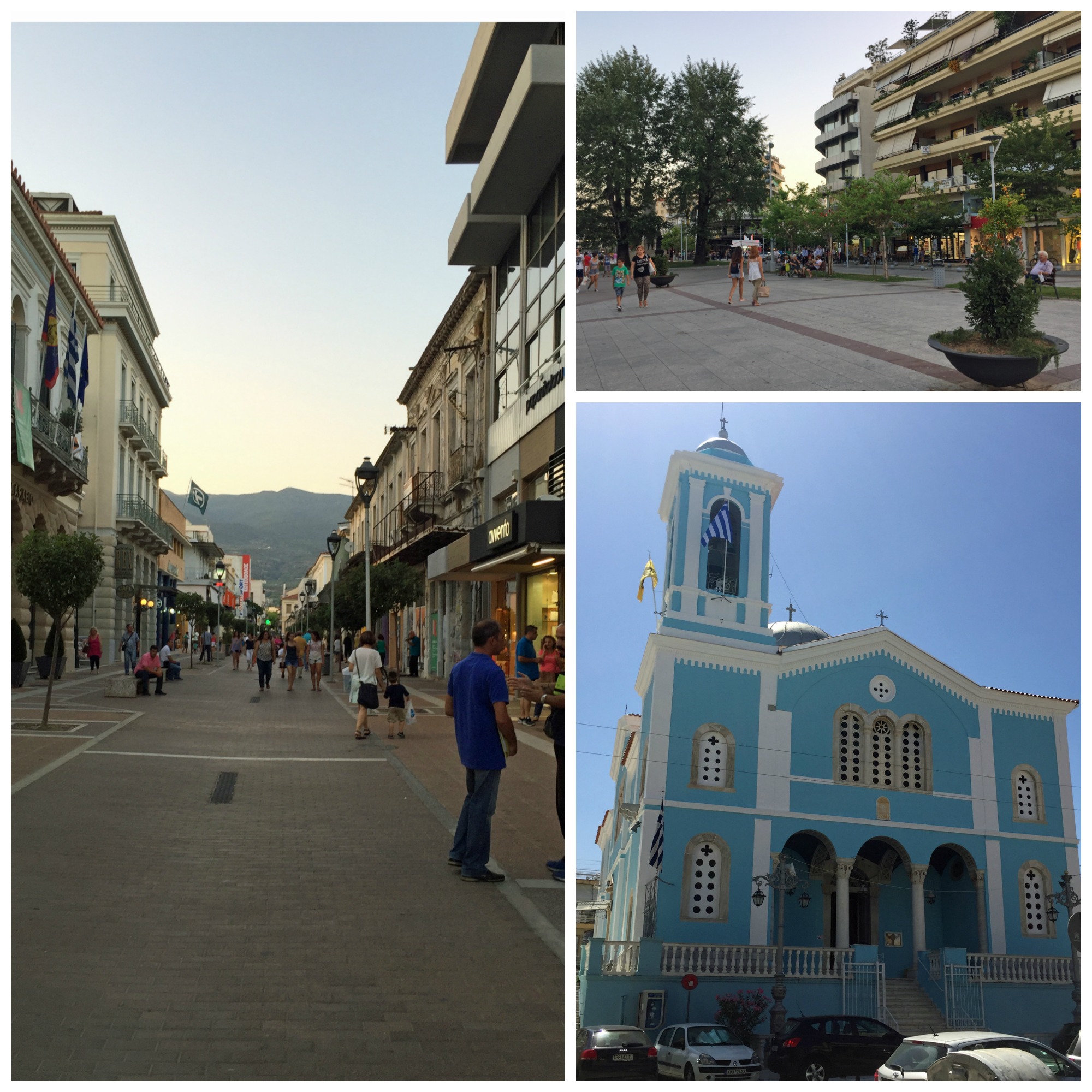
This was my first visit to Kalamata, a charming city by the sea.

The city of Kalamata, Messinia, July 2016

The city of Kalamata, Messinia, July 2016

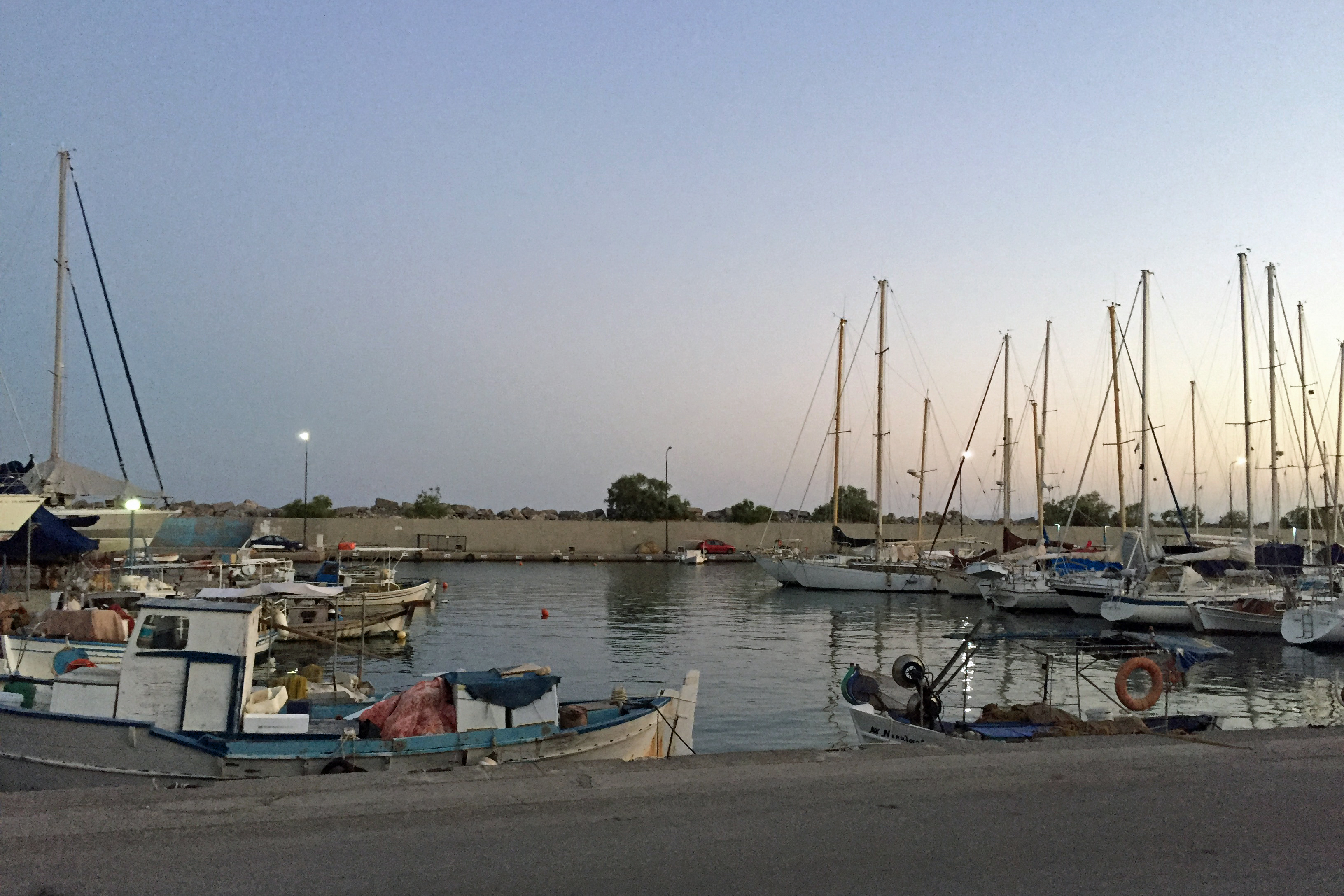
Waterfront, Kalamata, July 2016

Waterfront, Kalamata, July 2016

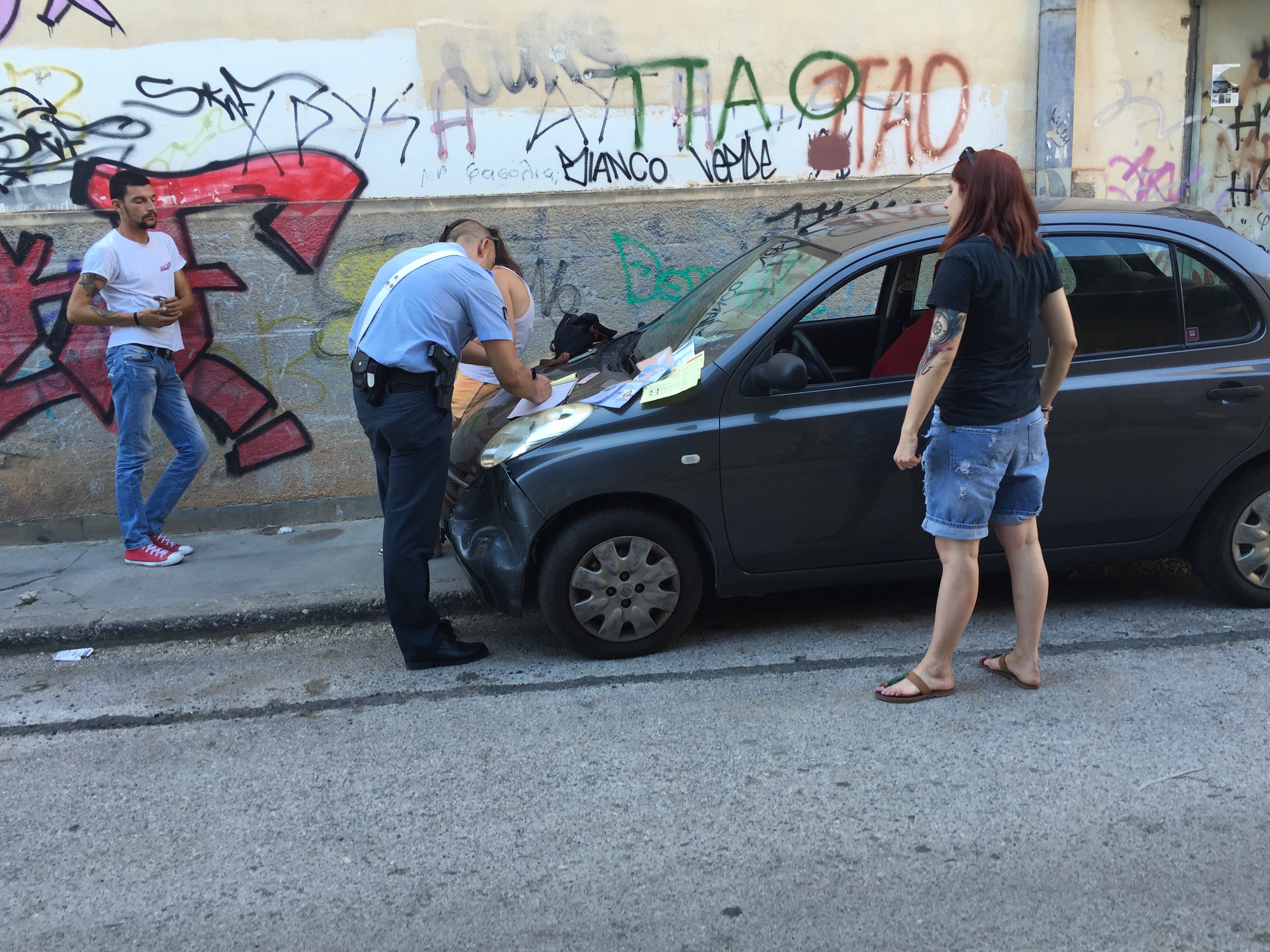
However, traffic in the city is a nightmare! The streets are one-way, very narrow, and very crowded. And horror of horrors — this is where I had my first car accident in Greece. It was a fender-bender at an intersection, and because we were moving so slowly, damage was minimal and no one was injured. But, I quickly realized the complexities of such a situation in a country where my language skills are not optimal. Calling the police and the car-rental agency, and talking with the other drivers could have been truly awful. Luckily, a passenger in the other car spoke perfect English and handled everything with grace and good humor. I was so grateful! Somehow I found my way back to the hotel and parked my car. I refused to let this mishap unnerve me, and I also refused to move the car until the day I left!
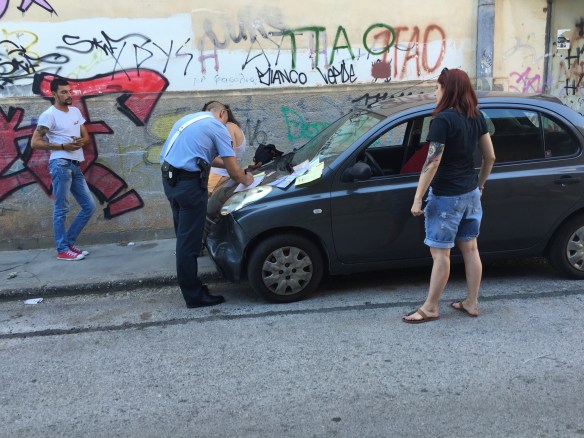
Accident! This is the car that hit mine in Kalamata, July 2016

Accident! This is the car that hit mine in Kalamata, July 2016

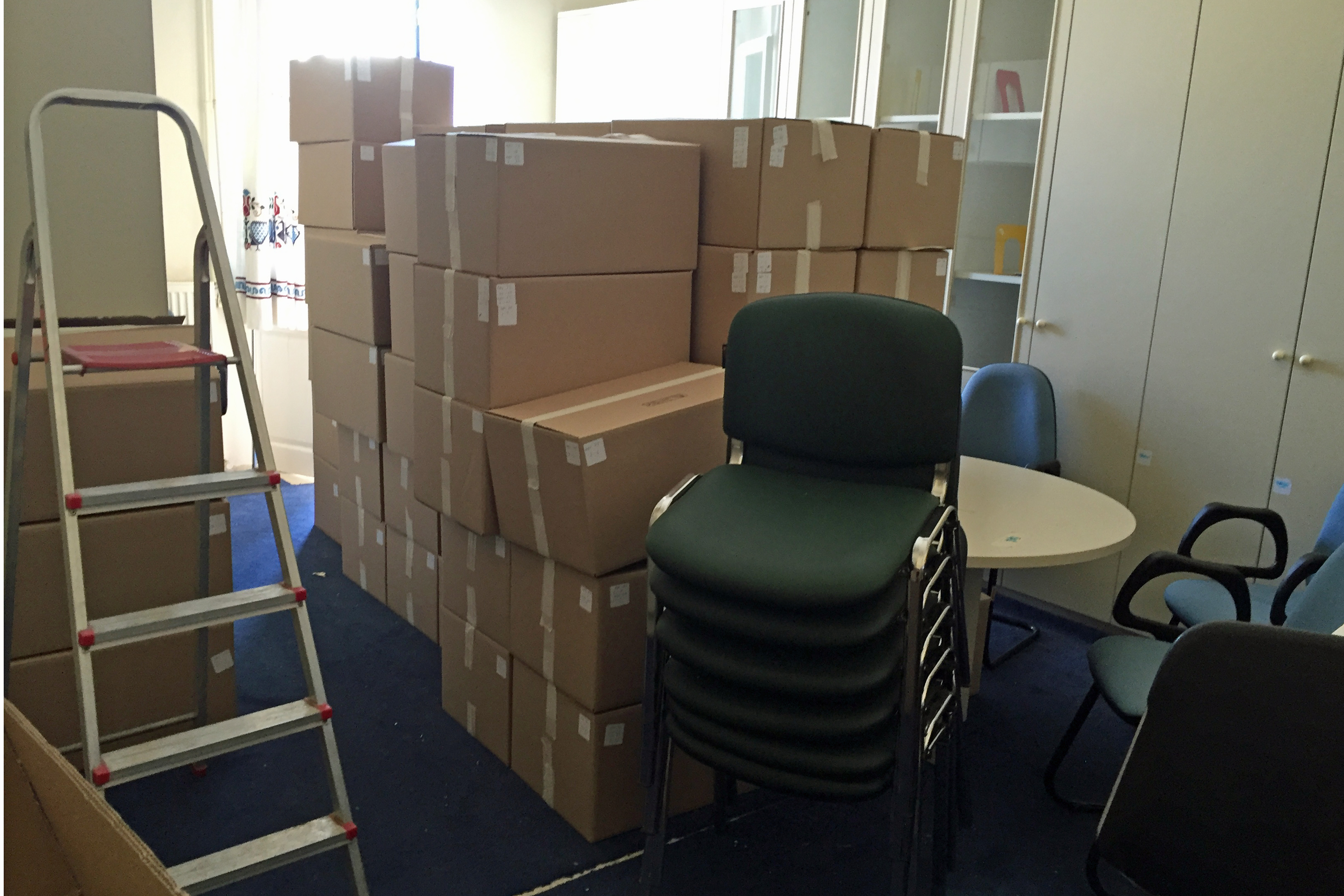
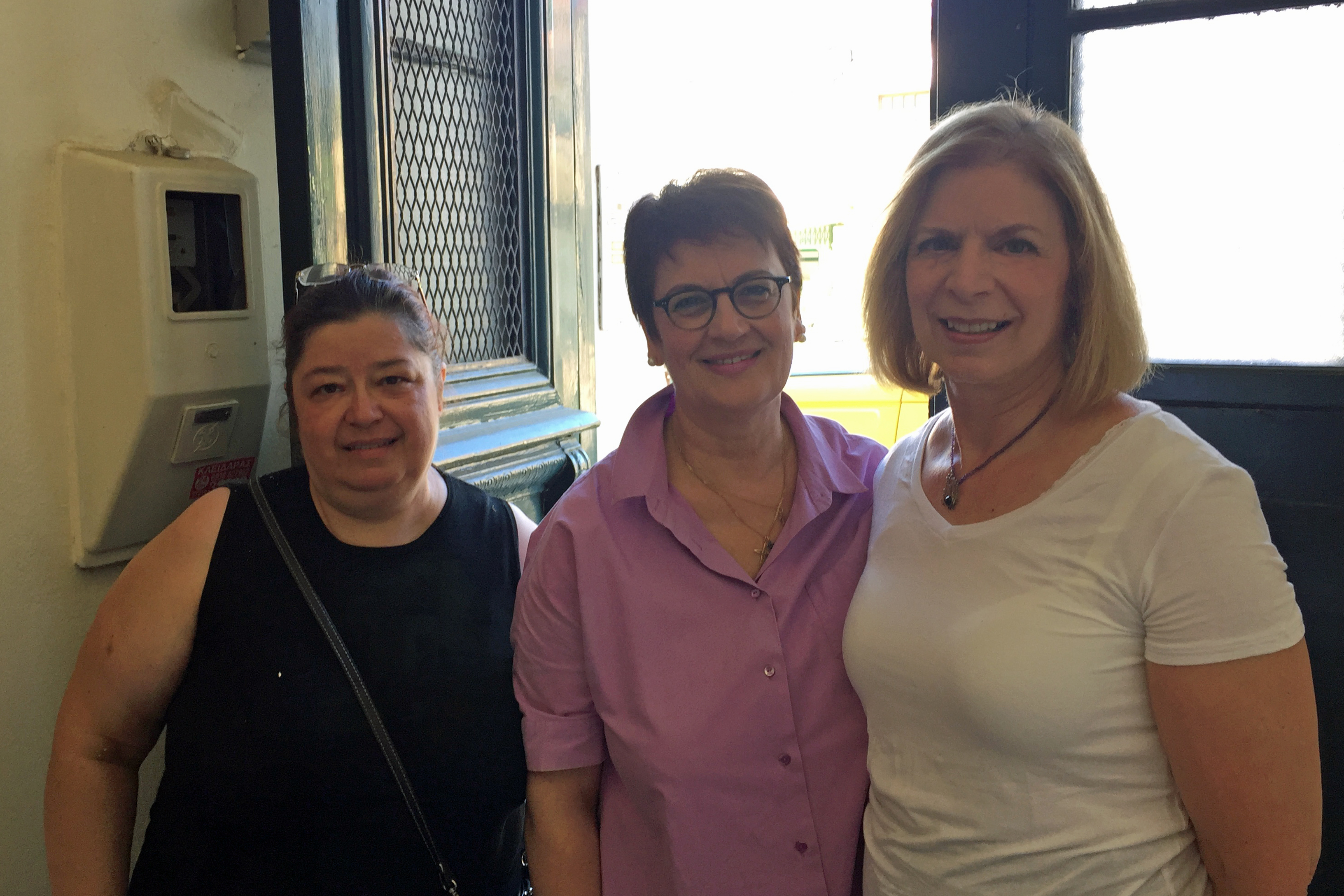
Gregory and I were very happy to meet in person our friend, Giota Siora. Giota is a Facebook friend on HellenicGenealogyGeek. Despite working full-time, she spends many hours online helping people with their research. For her devotion, she is greatly appreciated and respected.  Giota met us at the Kalamata Archives and introduced us to the Archivist, Anastasia Milioni, who also happens to be the wife of the mayor. This Archive has an extensive record collection for the Messinia Prefecture, including records of churches, land, houses, elementary schools, newspapers, military. The collection was greatly enhanced when Mrs. Milioni responded to a request from the GAK Central Office to ask local services to send their records to the Archives. Unfortunately, we were unable to do any research as the Archives is in the process of moving to a new location. Books were packed in boxes, and the office was essentially empty.

The Kalamata Archives is headed for a new home, July 2016
The Kalamata Archives is headed for a new home, July 2016

kalamata-archives-giota-siora-anastasia-milioni-archivist-carol

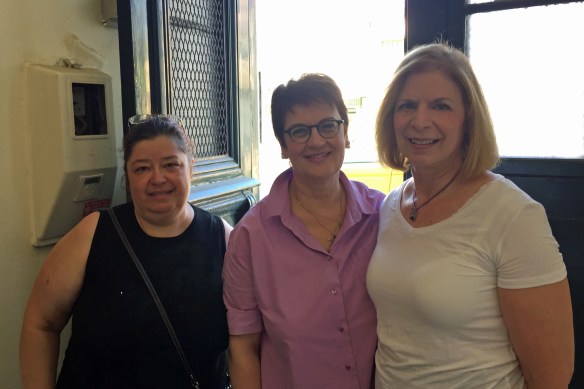
Giota Siora, Anastasia Milioni, Carol Kostakos Petranek, Kalamata Archives, July 216

When I inquired about possible records for the Eftaxias and Kostakos names, Mrs. Milioni did a computer search and found a few documents which look very promising. Two especially stood out:  a contract naming a Kostakos family in Anavriti, which could confirm oral tradition that the family had lived there prior to Agios Ioannis; and a contract for an Eftaxias family in Kalamata. After the office move, I will contact Mrs. Milioni and ask her to access these for me. I continue to be impressed with the kindness and professionalism of the Archivists in both Laconia and Messinia. They truly desire to be of help and will set aside whatever they are doing to be of assistance to researchers.

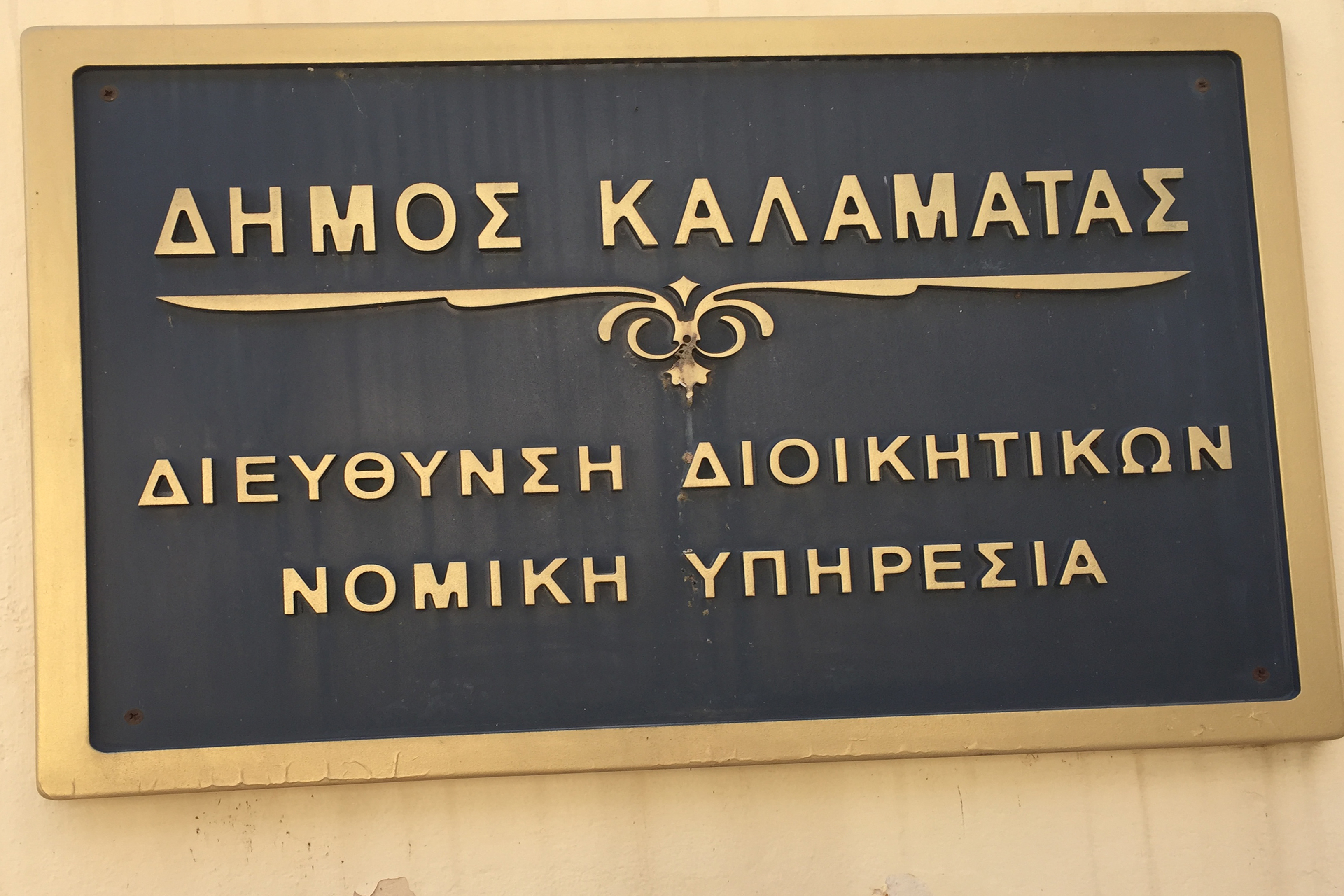
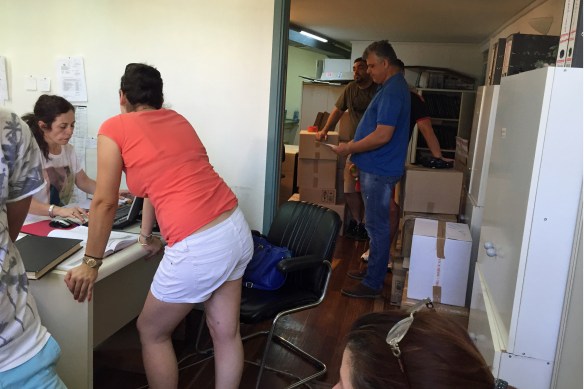
Giota suggested that we walk to the Dimarheion, or Town Hall, on the chance that we kalamata-dimarheion-signmight access records there. Visiting this municipal office, I was again reminded that clerks are extremely busy handling daily matters. Someone walking in and asking for records that are 150 years old are, at best, a distraction and at worst, an annoyance. This is especially true when there are six people standing in line, vying for a clerk’s attention. I was also reminded that the municipality has records only for its specific area of jurisdiction (unlike the Archives which has records for the entire prefecture).  Since I was looking for Pyrgos, a village not in the Kalamata jurisdiction, the clerk was not able to be of assistance. The lesson of that day was:  location is everything!
Dimarheion, Kalamata, July 2016

Town people waiting patiently for help on a Friday afternoon at the Dimarheion. The line stretched outside the door. Kalamata, July 2016

Every hour of my research trips are filled to the max. Sometimes “the force” is with me and I have amazing success; sometimes not, and the disappointment becomes a “learning experience.”  Nothing is lost; everything is gained. I love the ride!