Greece 2019 – Pieces of Athens

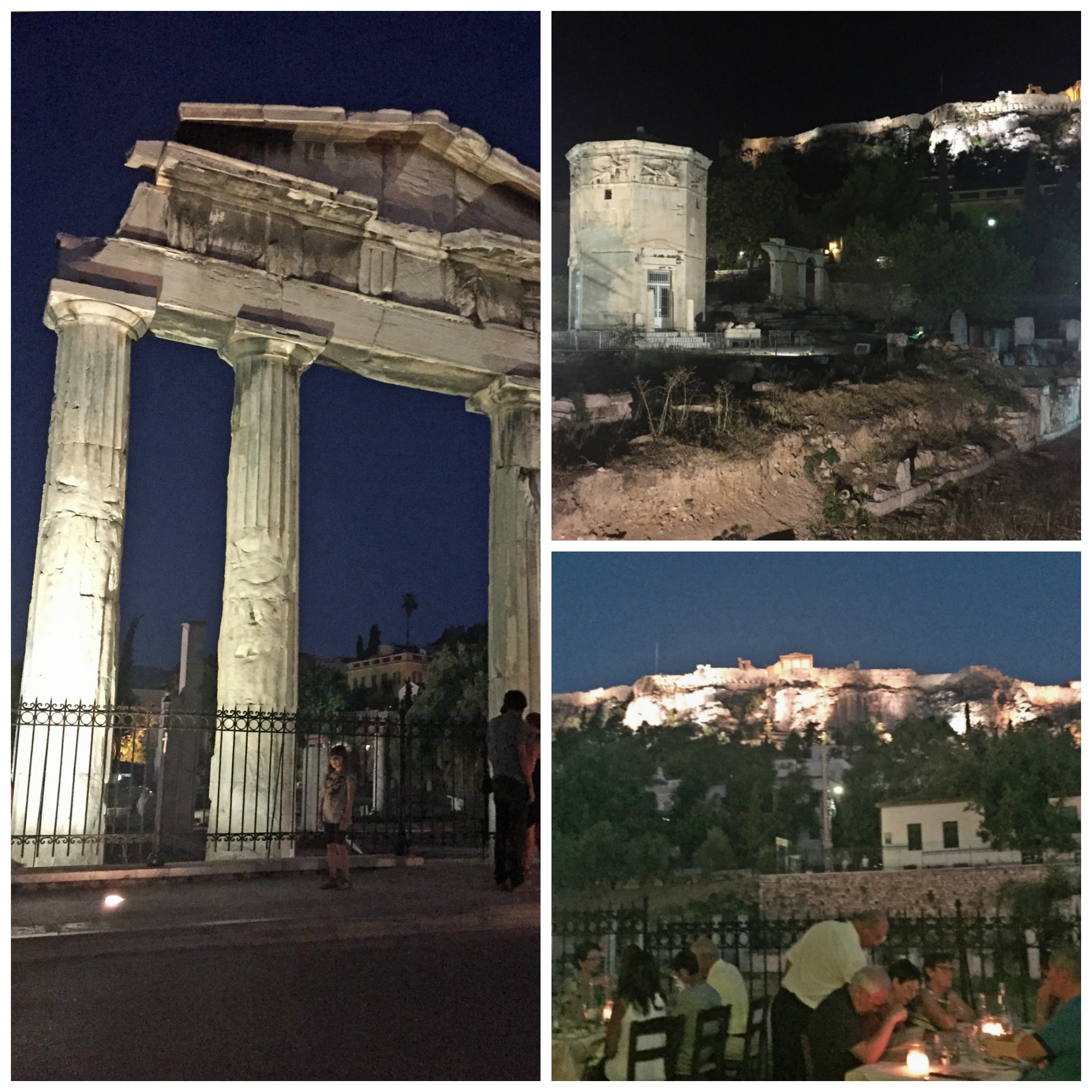
What can I say about Athens? It is an antithesis of itself:  noisy and crowded yet glorious and beautiful; a place to be visited and treasured for its architecture, history and contributions to civilization.  Sadly, Athens is tattooed with graffiti on almost every available space of concrete. Although distracting, it doesn’t detract from the energy and ambiance of the city. A few photos of this city on a hill:

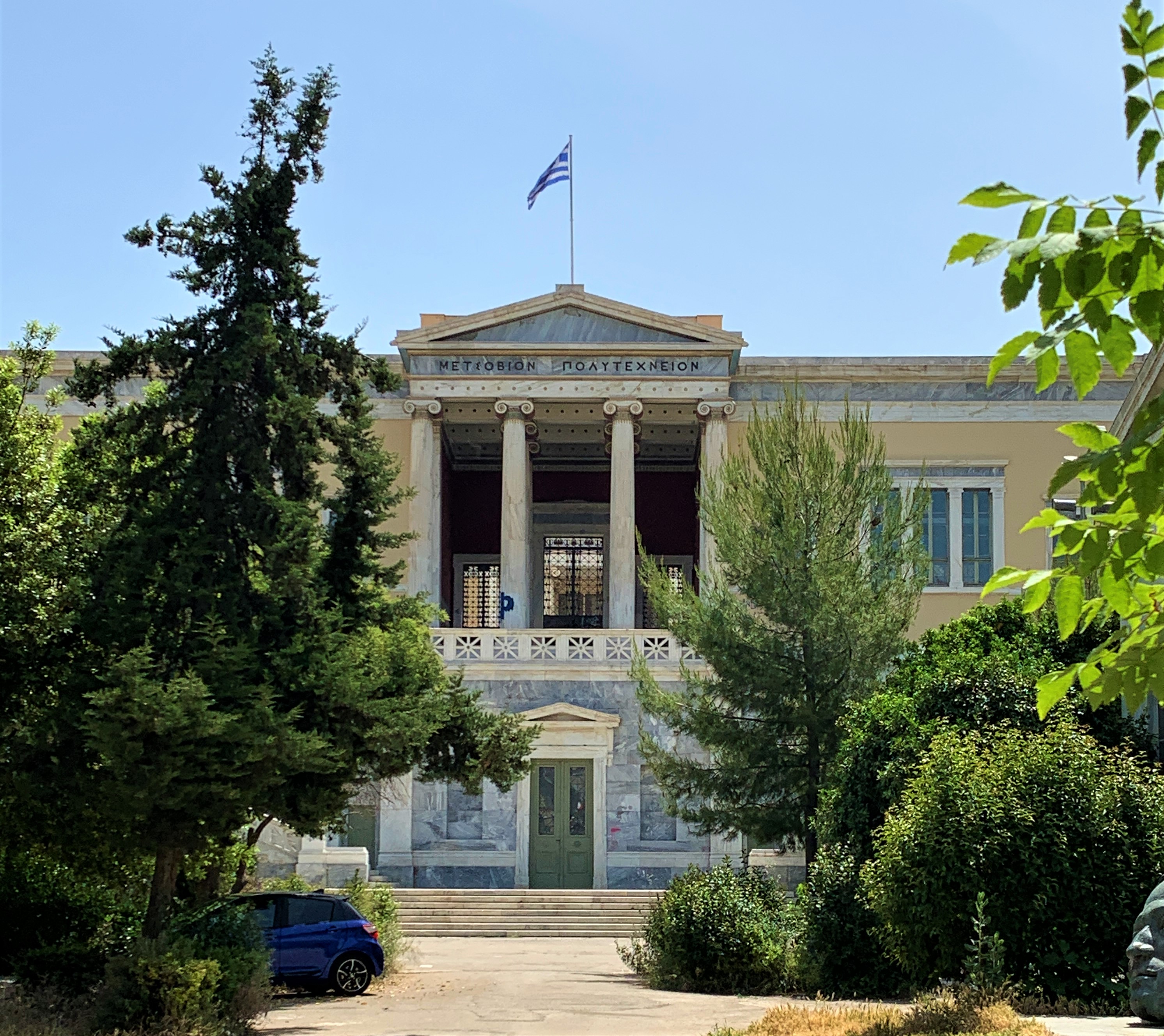
National Technical University of Athens

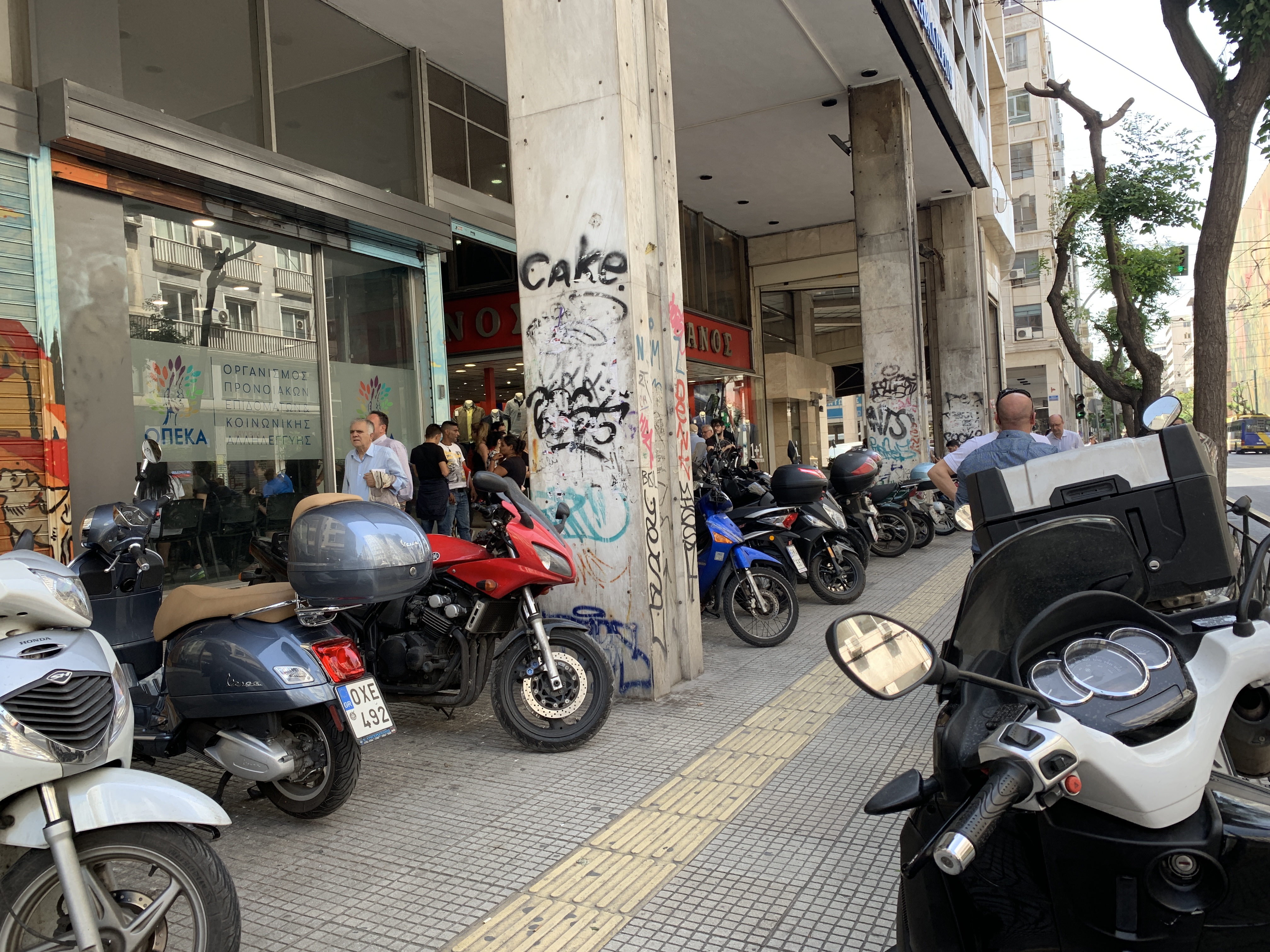
The primary–and dangerous–means of transportation!

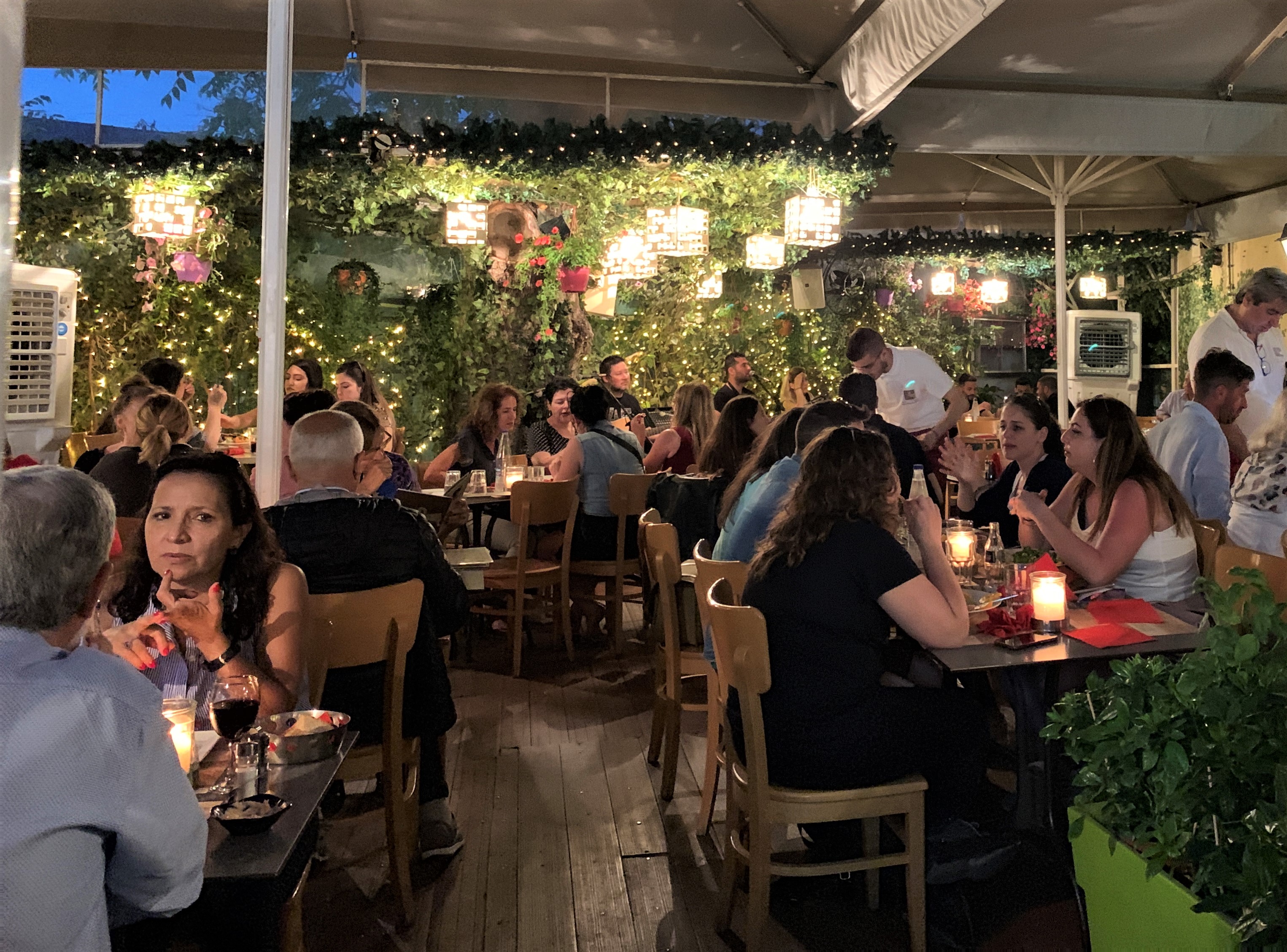
Dining at night is always outside

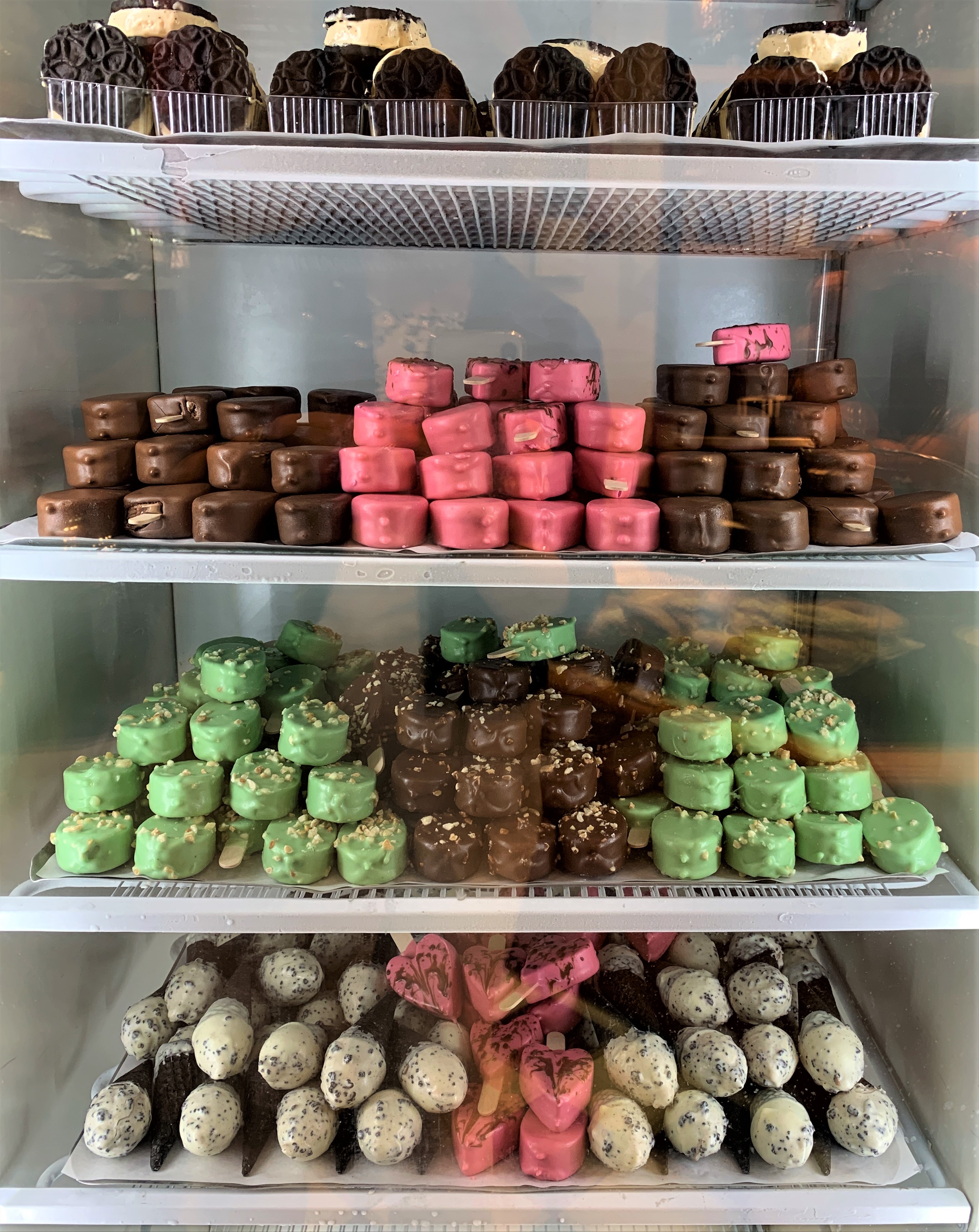
These mini ice cream treats are found everywhere in Greece. Just a couple of bites to satisfy!

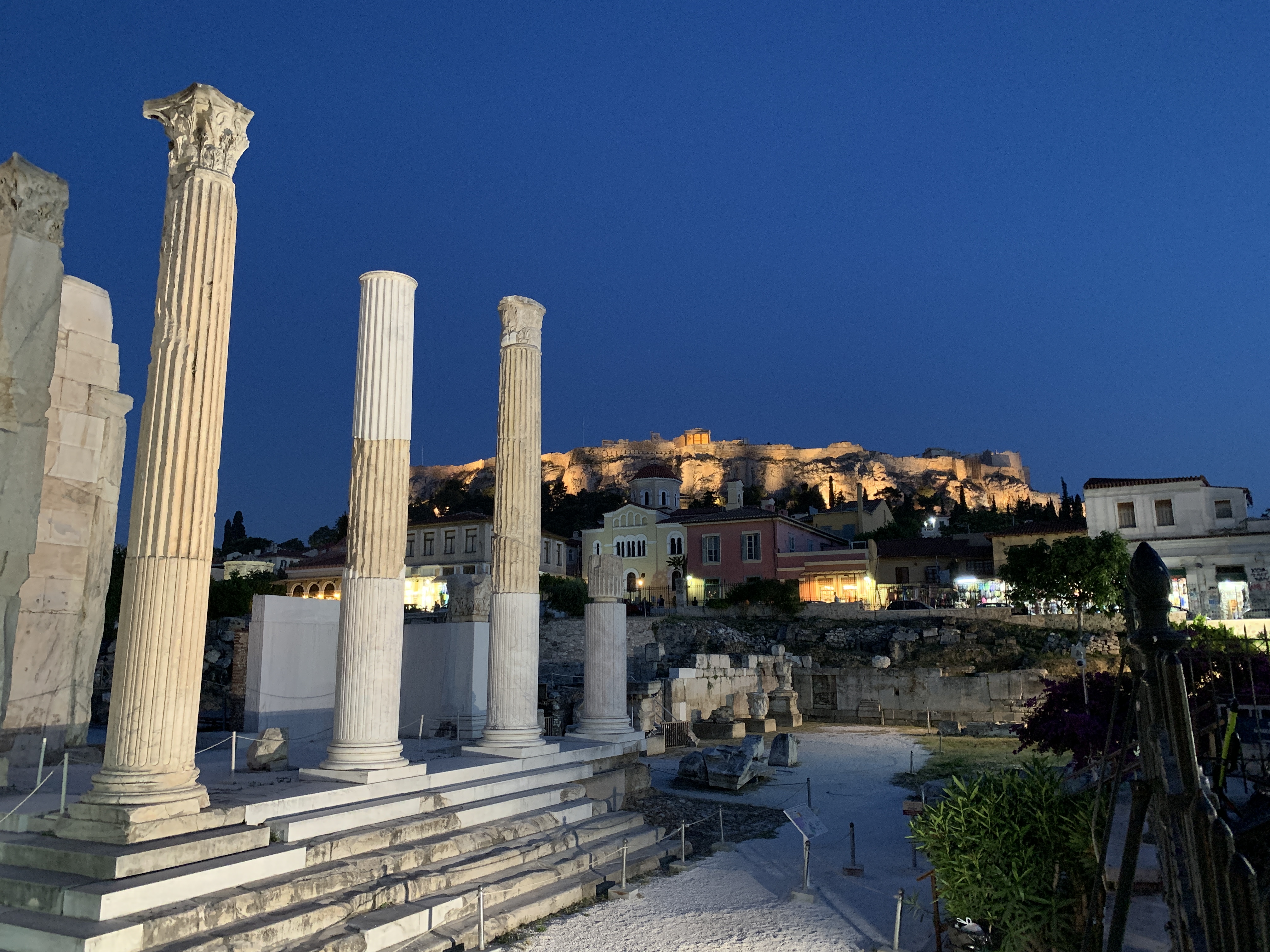
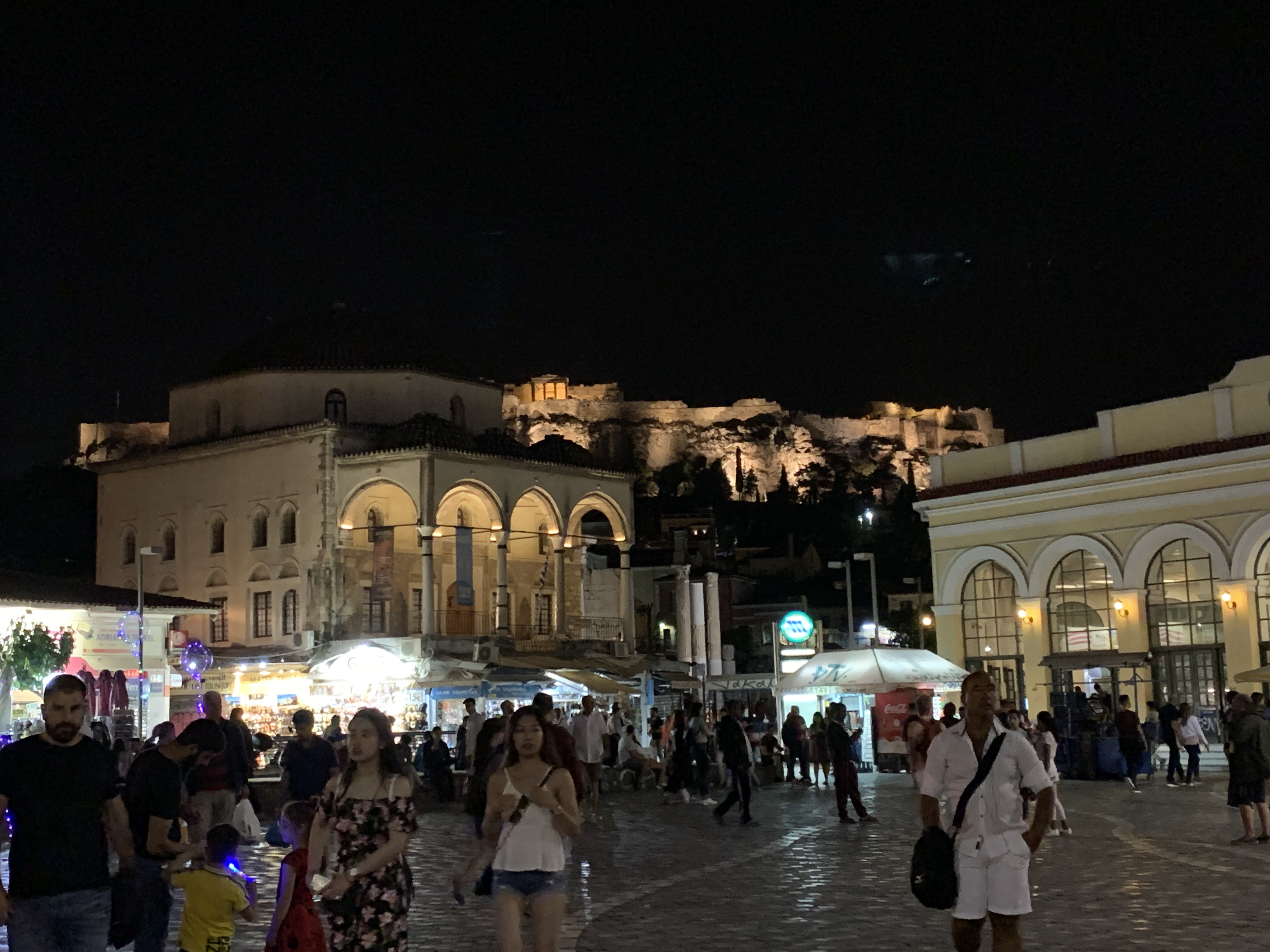
The Acropolis shines throughout Athens

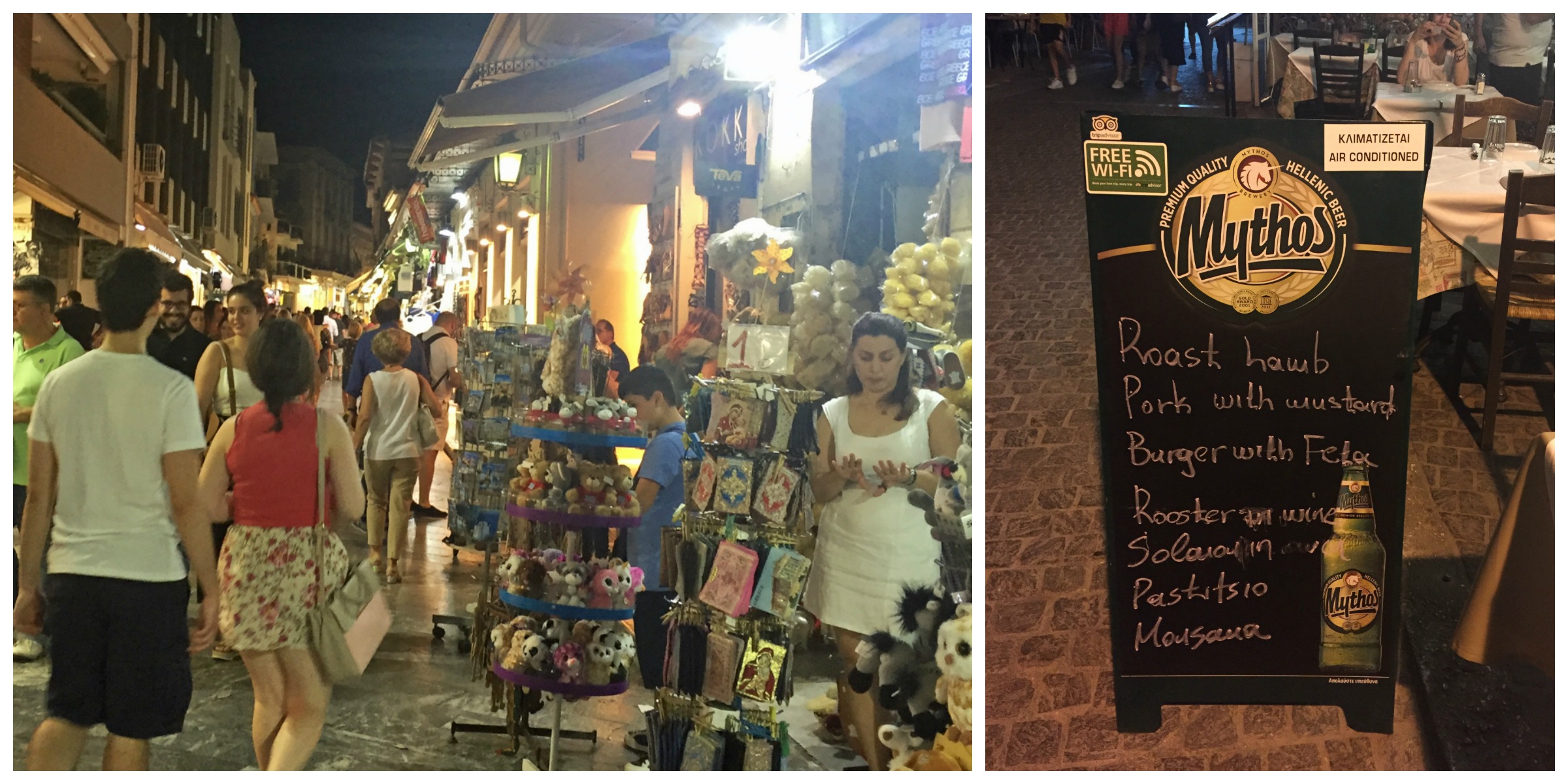
Monastiraki Square, one of the hubs of Athens

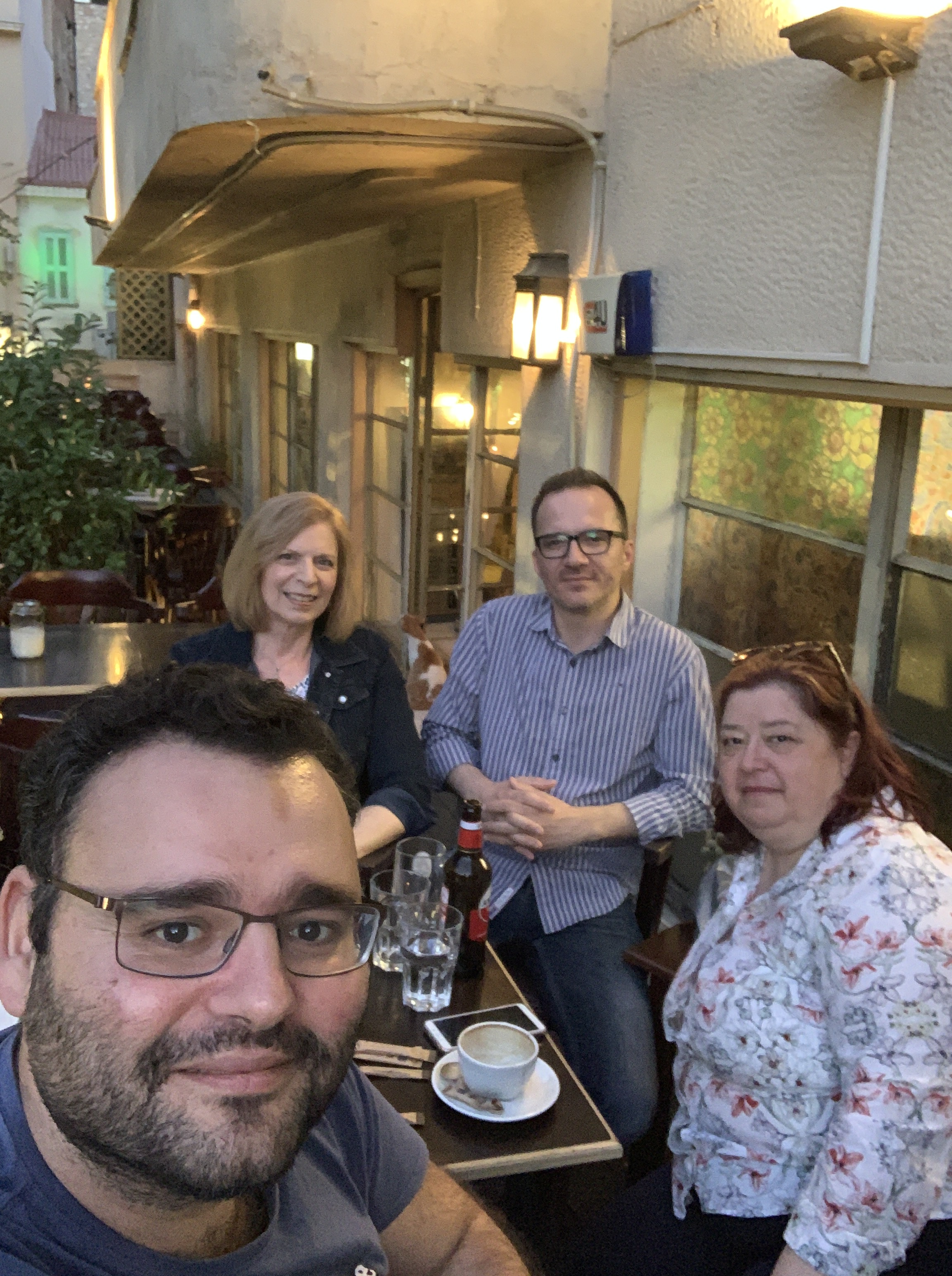
Enjoying the night with friends:  Giannis, Konstantinos, Giota


Greece 2019 – Back to the Motherland

My work preserving church records in Sparta continues this summer. I returned to digitize birth, marriage and death books in 151 churches in Laconia. These vital records are of unparalleled importance to family historians, especially when there are limited resources available to researchers.

Taking Off! At Dulles Airport near Washington, D.C. May 26, 2019

Last summer, I did not get to Hydra, Delphi and the National Archaeological Museum in Athens. This year, I am taking a few days to see these before I travel to Sparta and begin work. I started with the National Archaeological Museum in Athens.


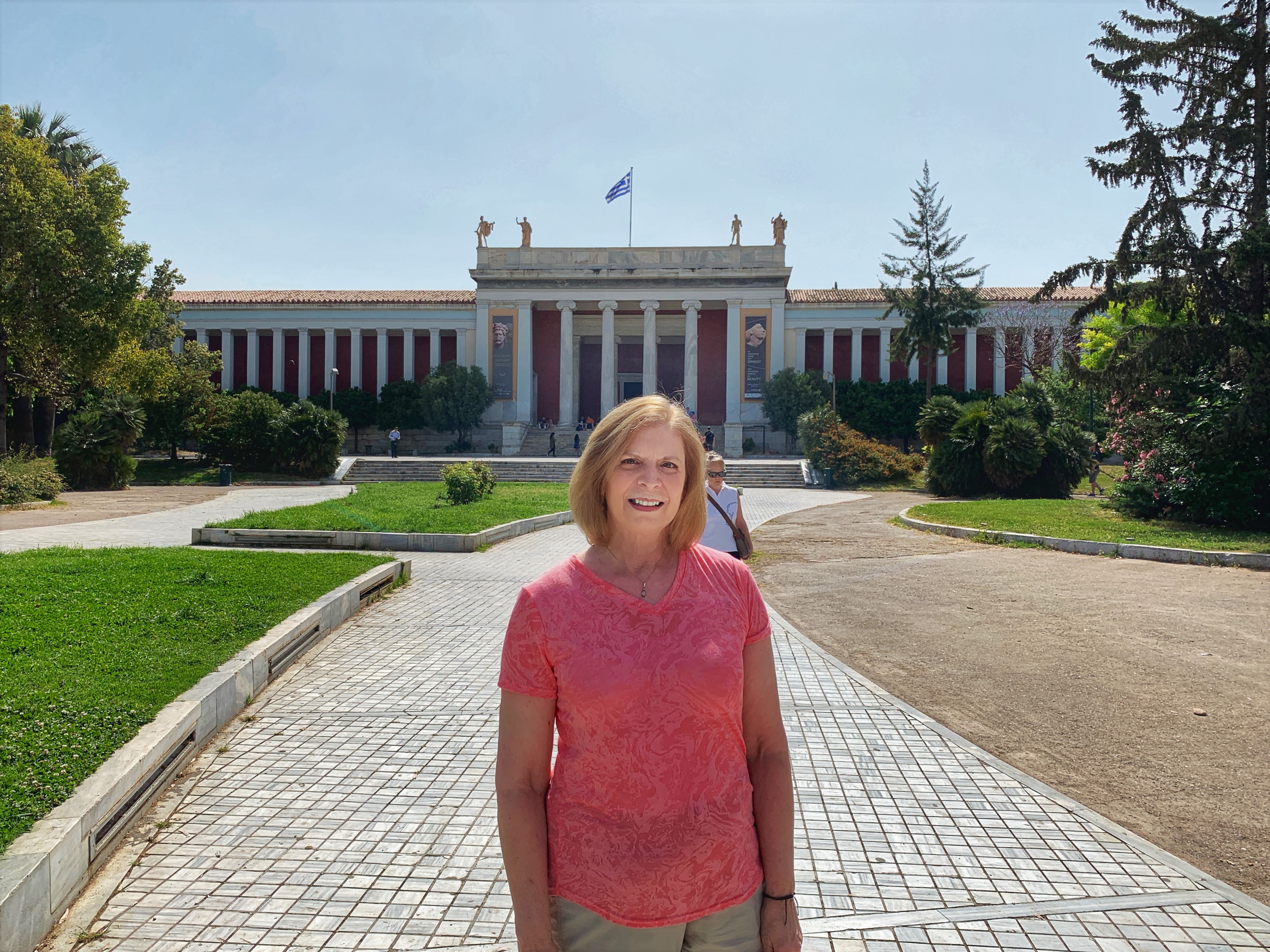
In front of the National Archaeological Museum, Athens

Its treasures, some dating back to prehistoric times, are awe-inspiring. The craftsmanship, intelligence and foresight of the sculptors and artists cross the span of time, and testify that brilliance did not begin in the 20th century. These photos are some of my favorites.

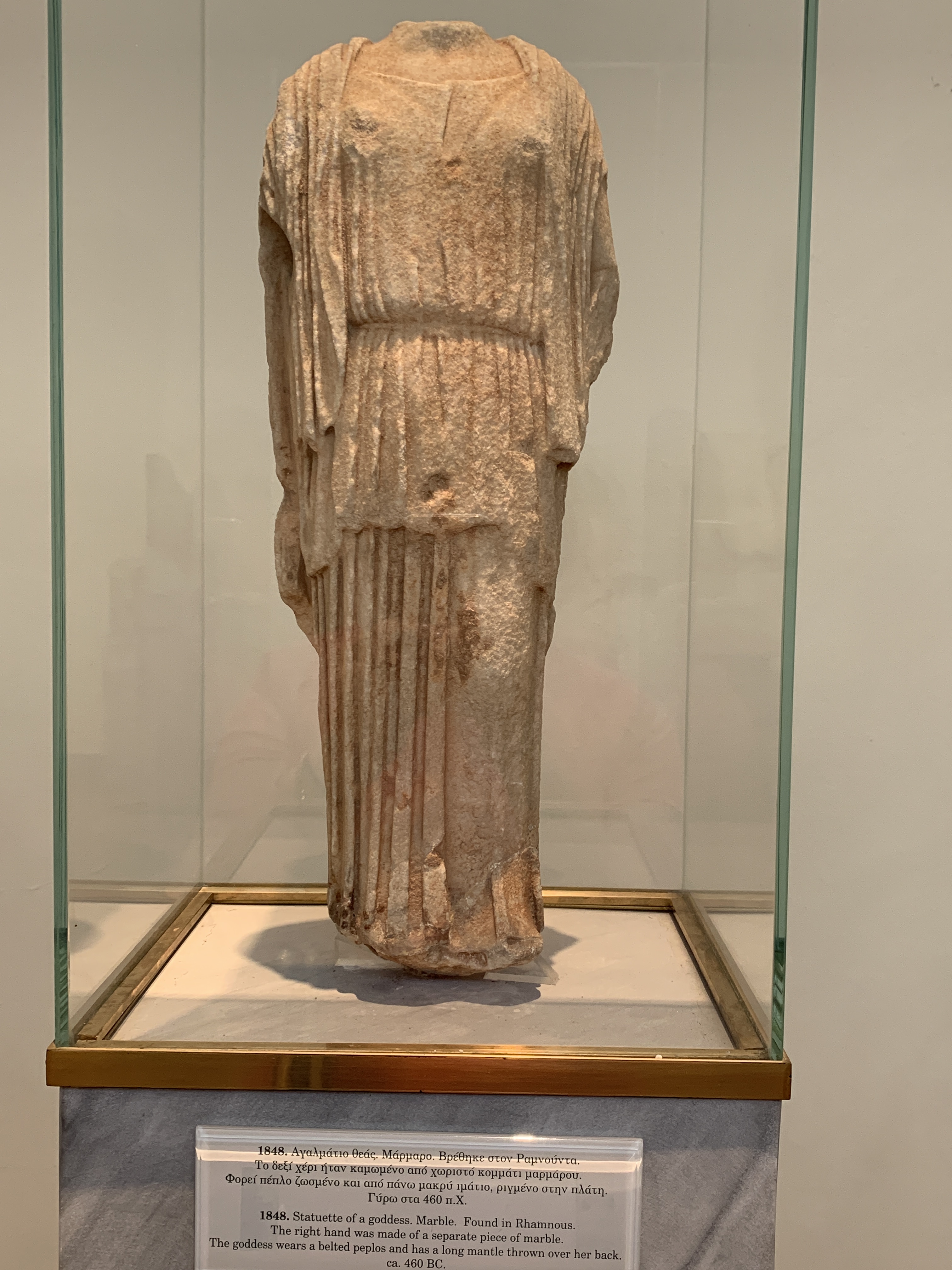
Goddess, 460 BC

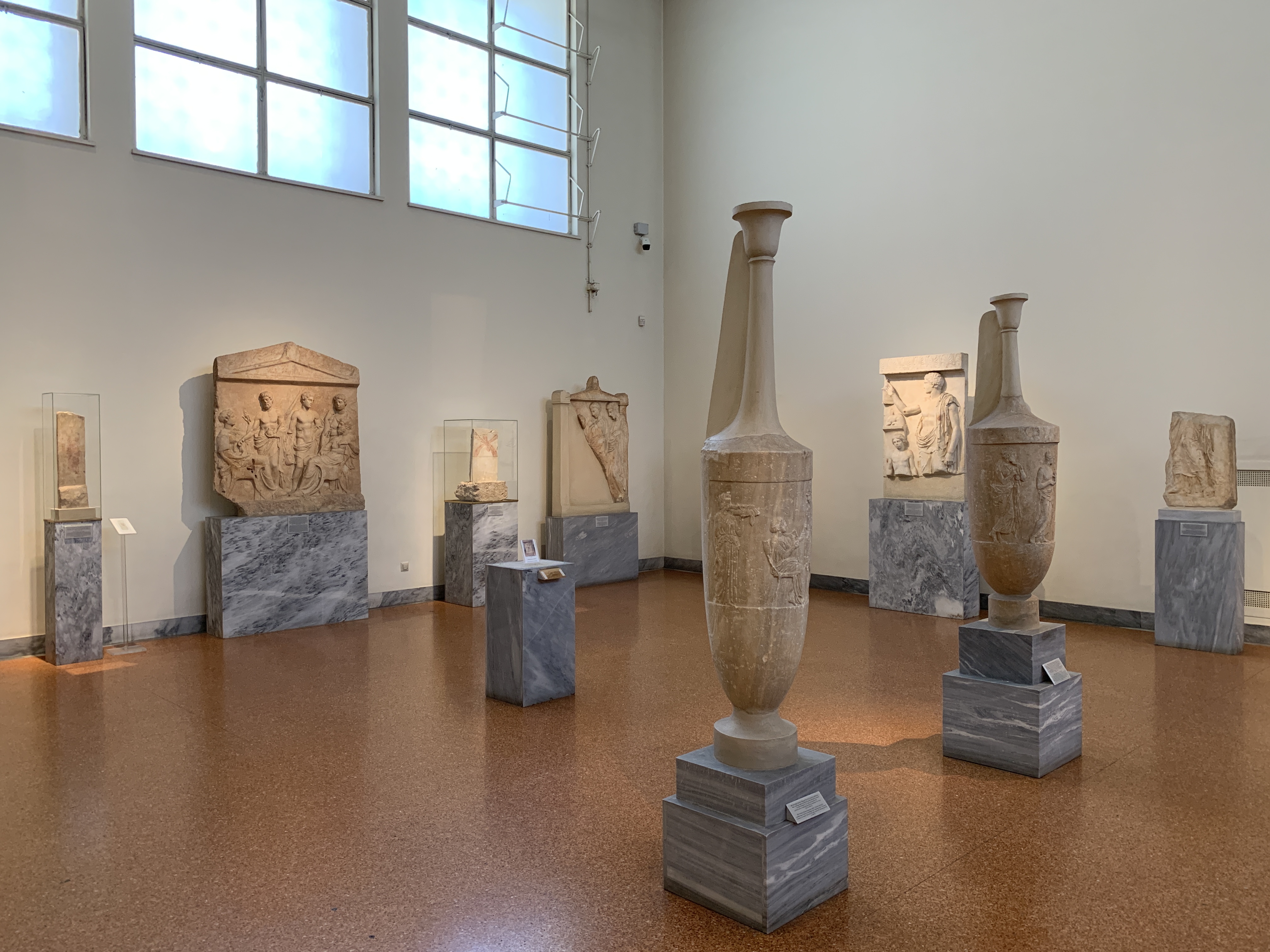
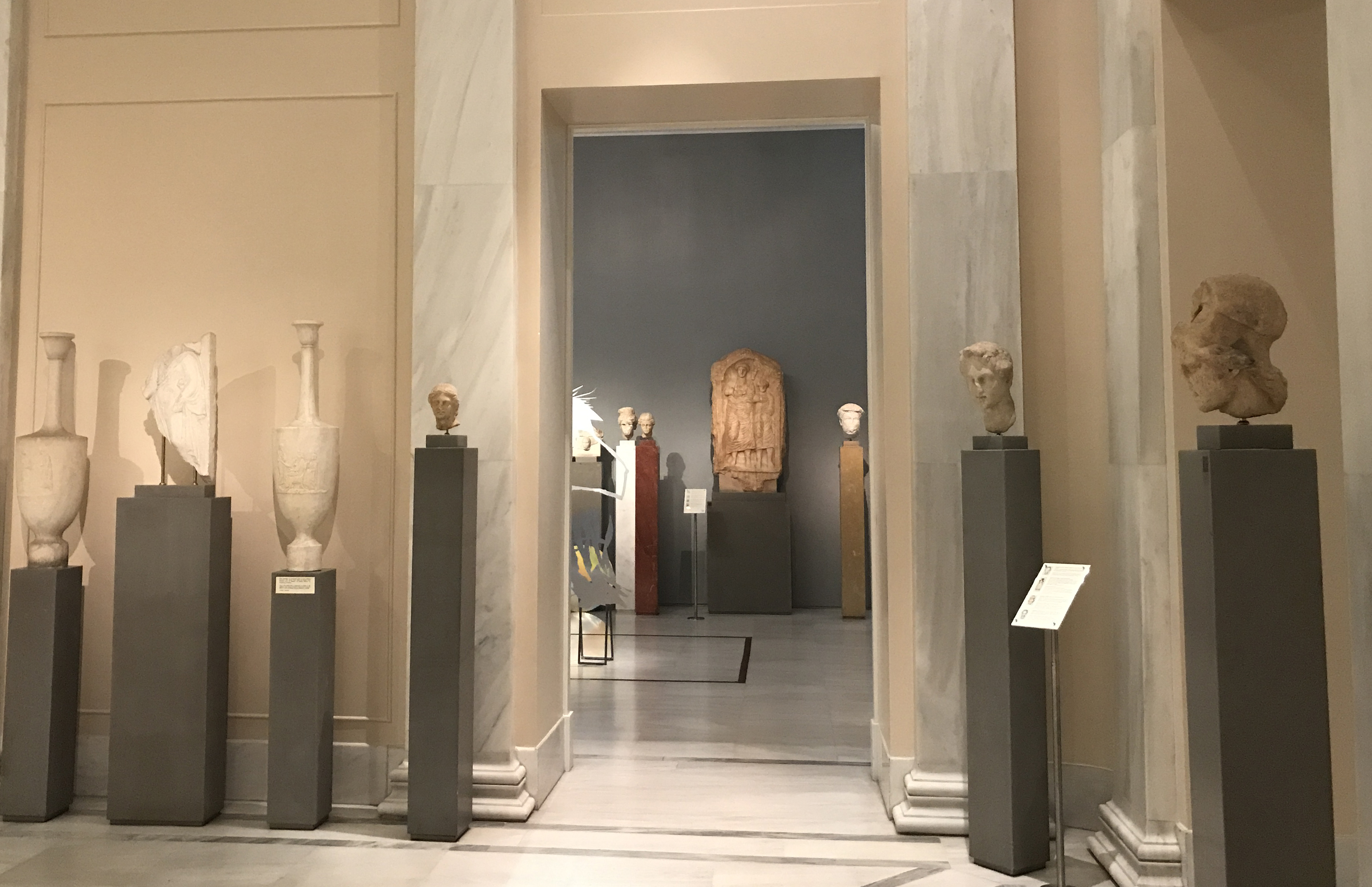
Funeral monuments and lethykos, Attica region, 420 BC

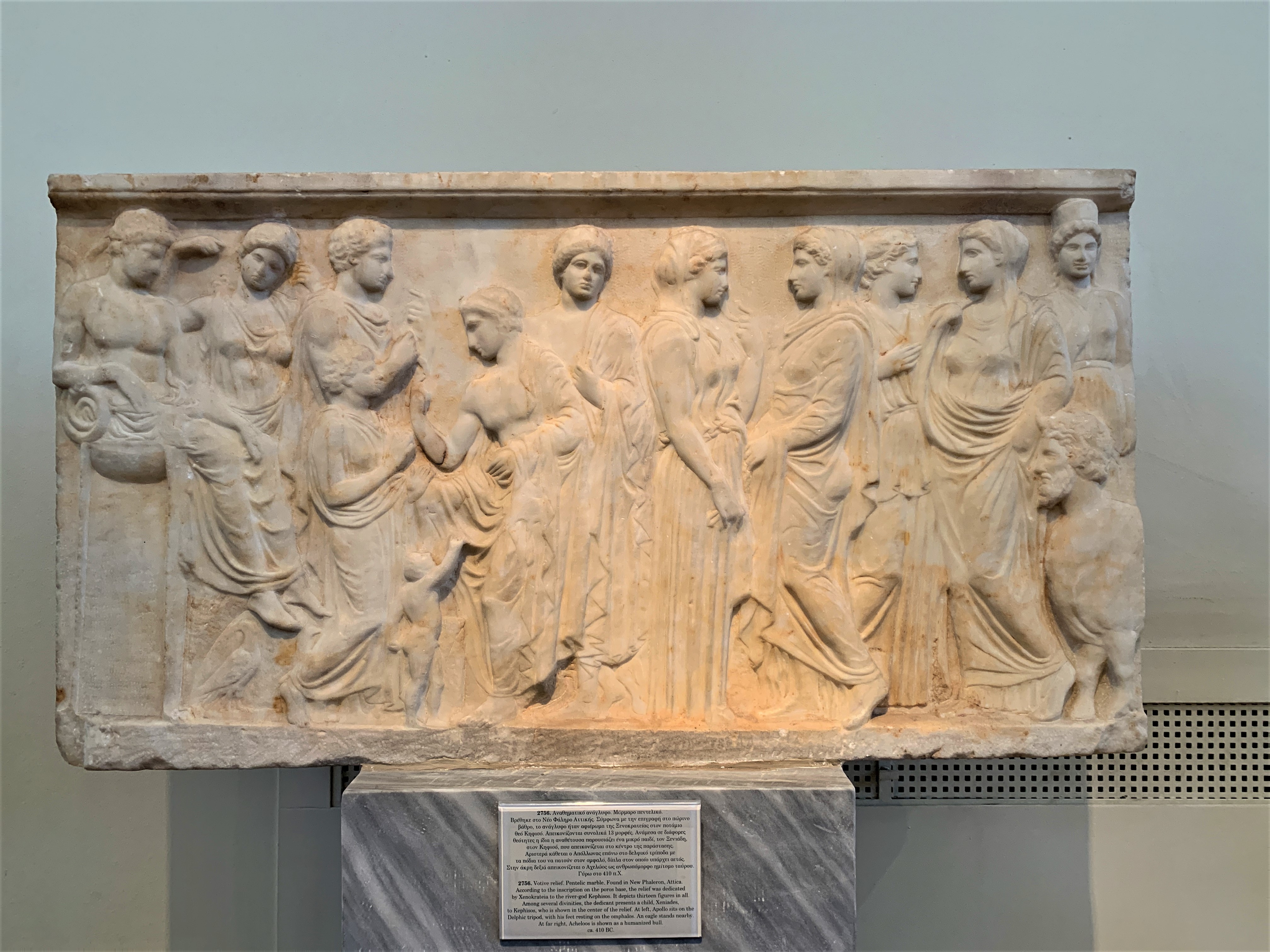
Votive relief, Attica region, 410 BC

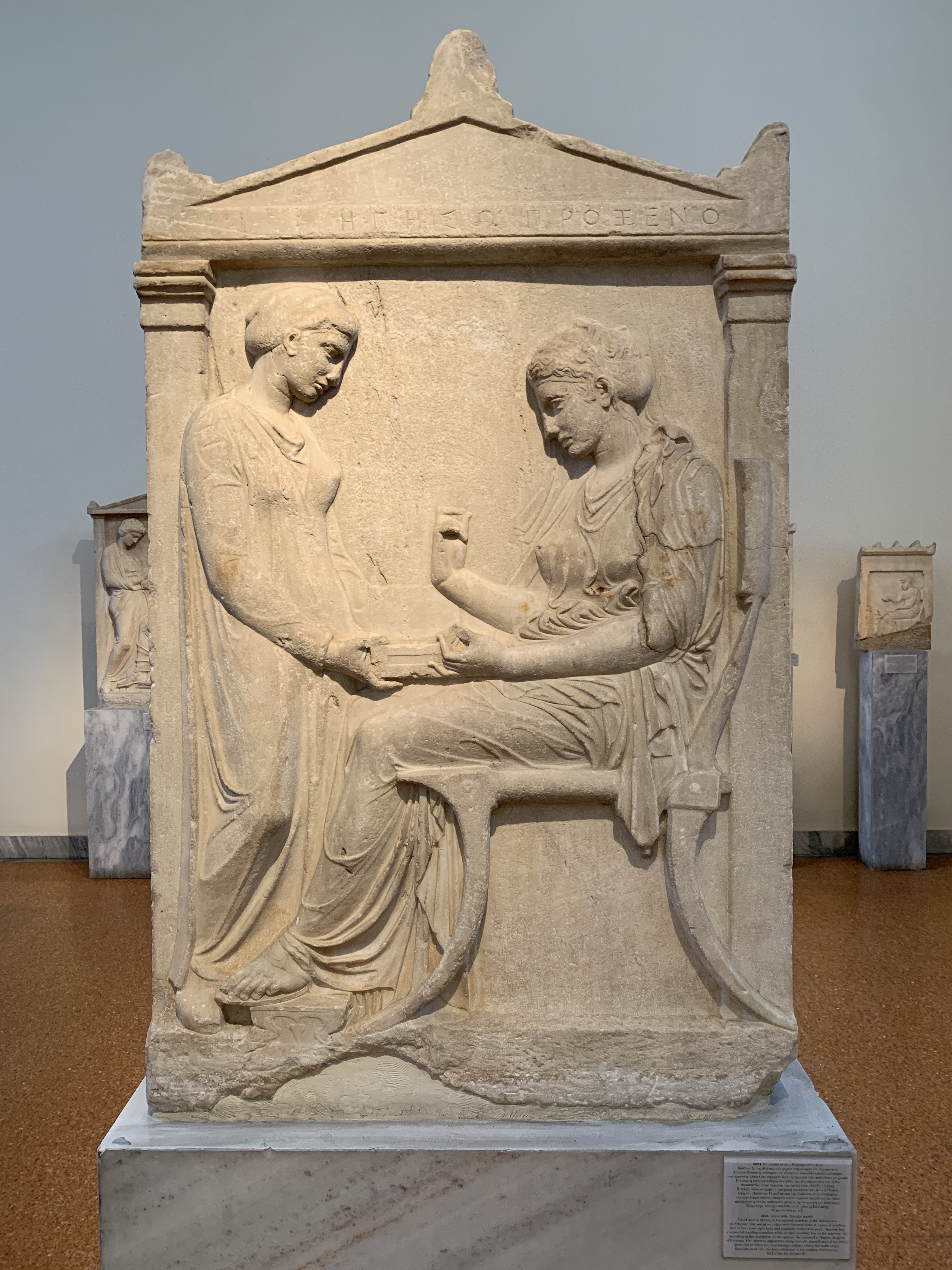
Athenian lady with attendant holding jewelry box, 5th century BC, Athens

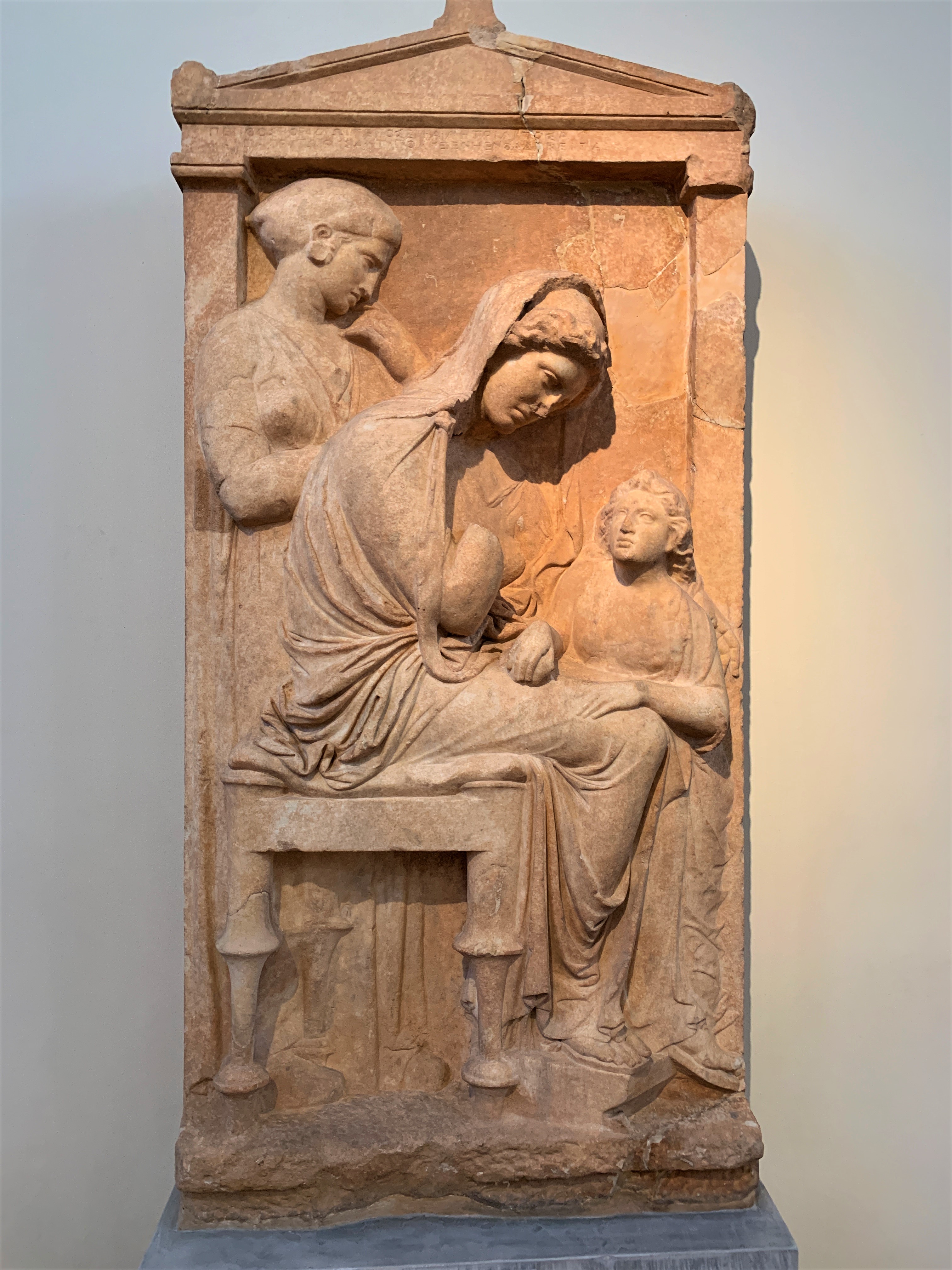
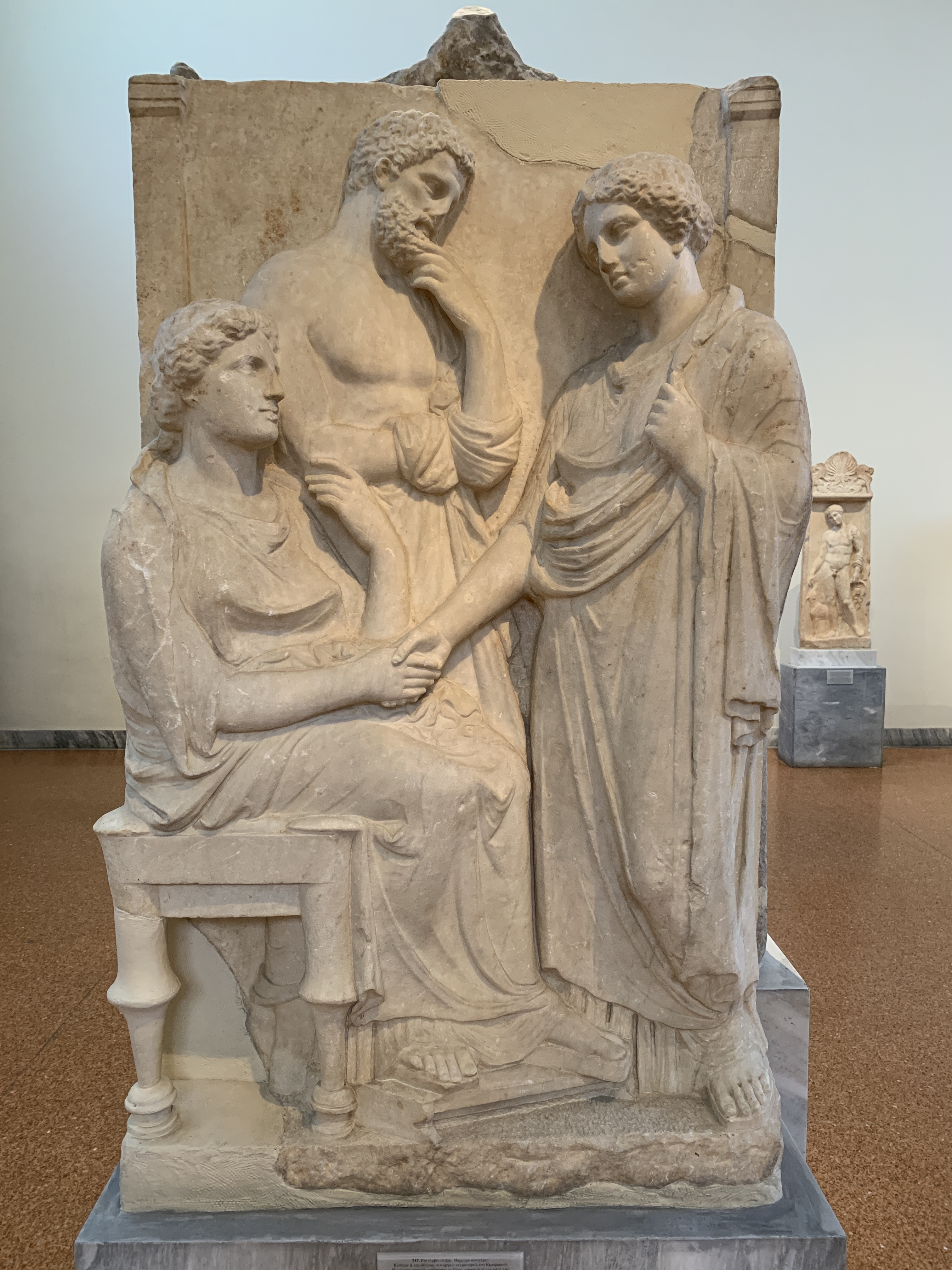
Mother embraces her young boy, 425 BC. Although she is carved in marble, her face is filled with expression

Woman bids her daughter goodbye, Kerameikos cemetery, Athens, 425 BC

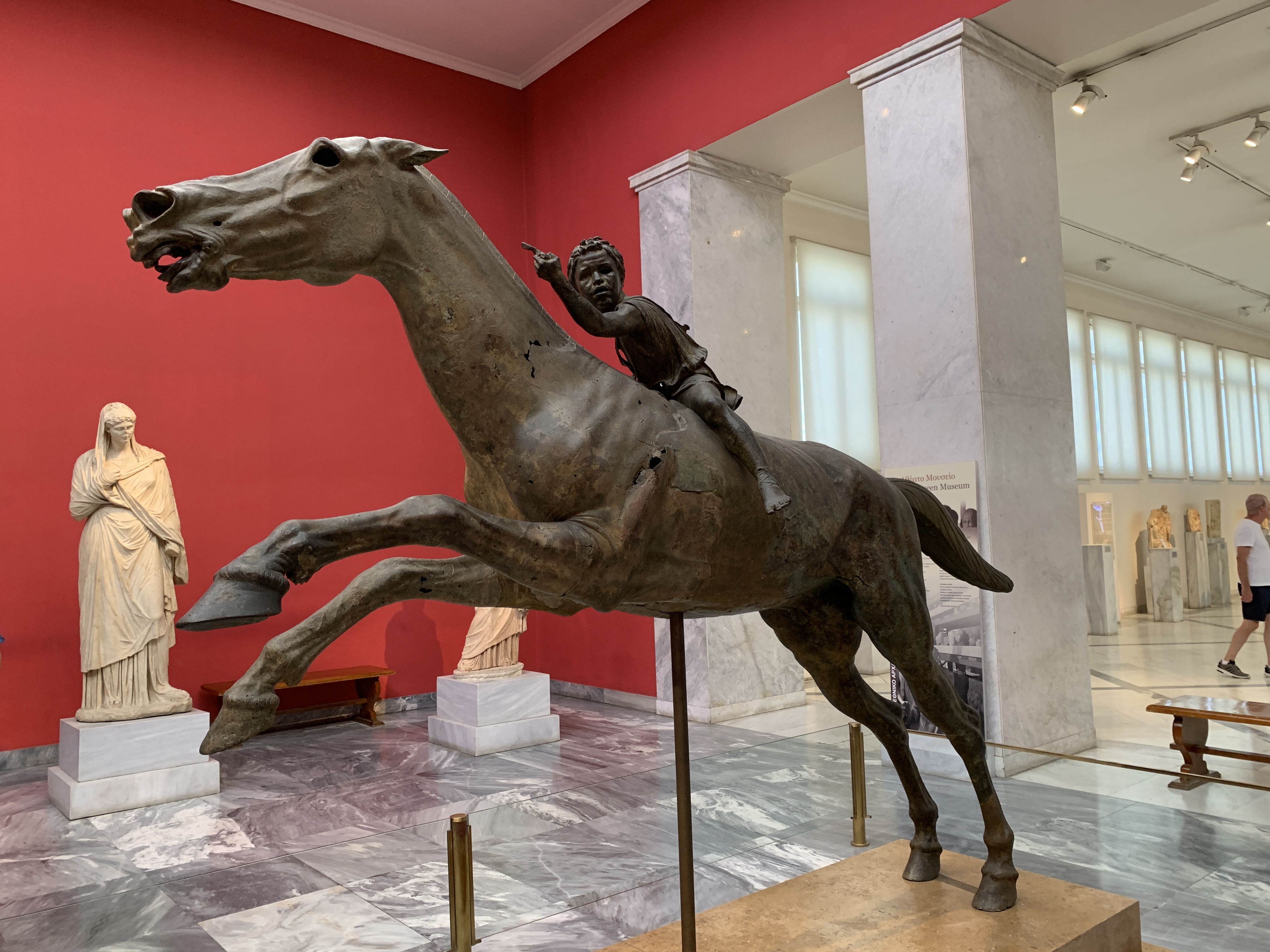
Bronze horse and jockey, 140 BC Euboea

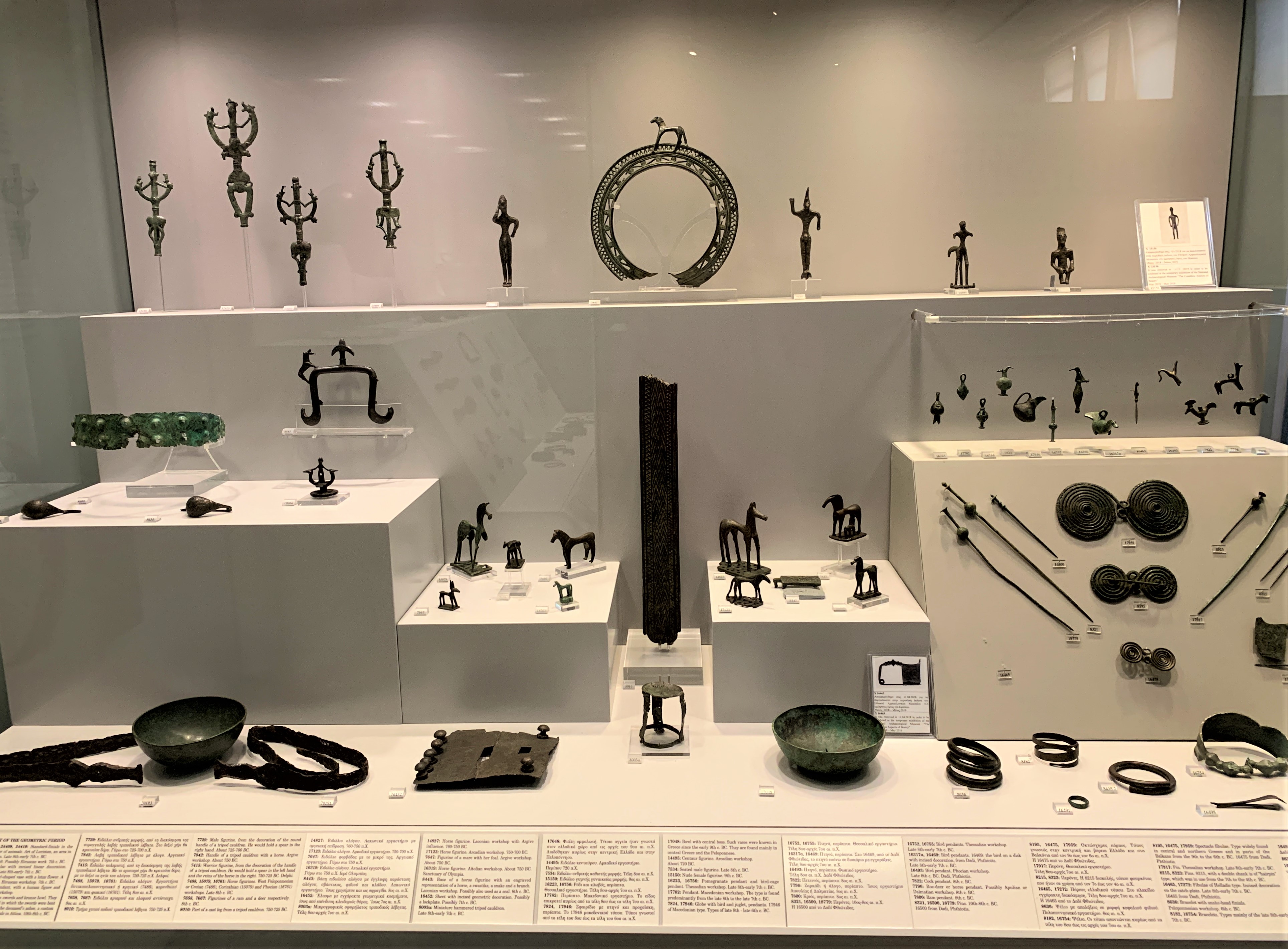
Bronze and iron metal works, 7th century BC

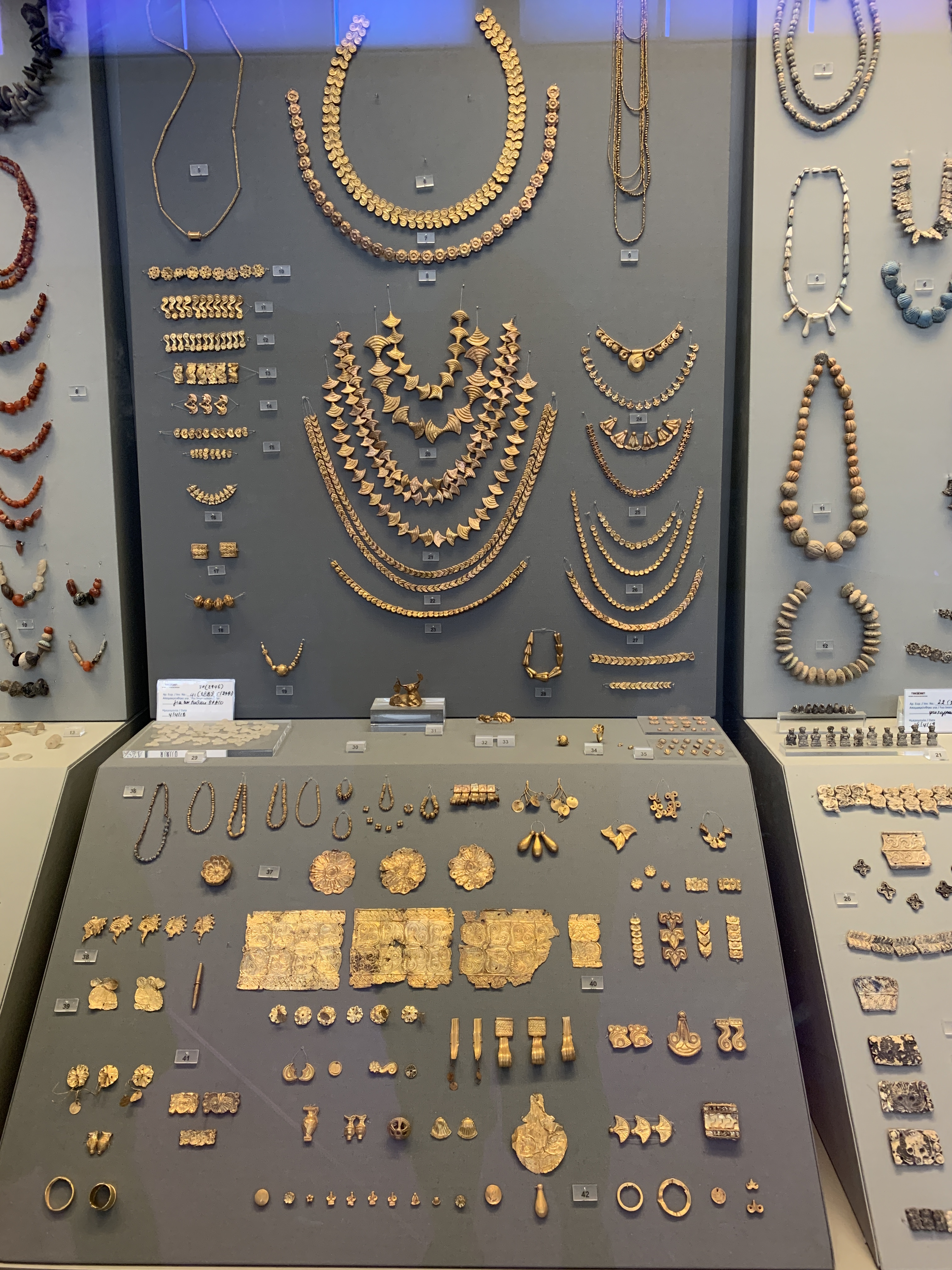
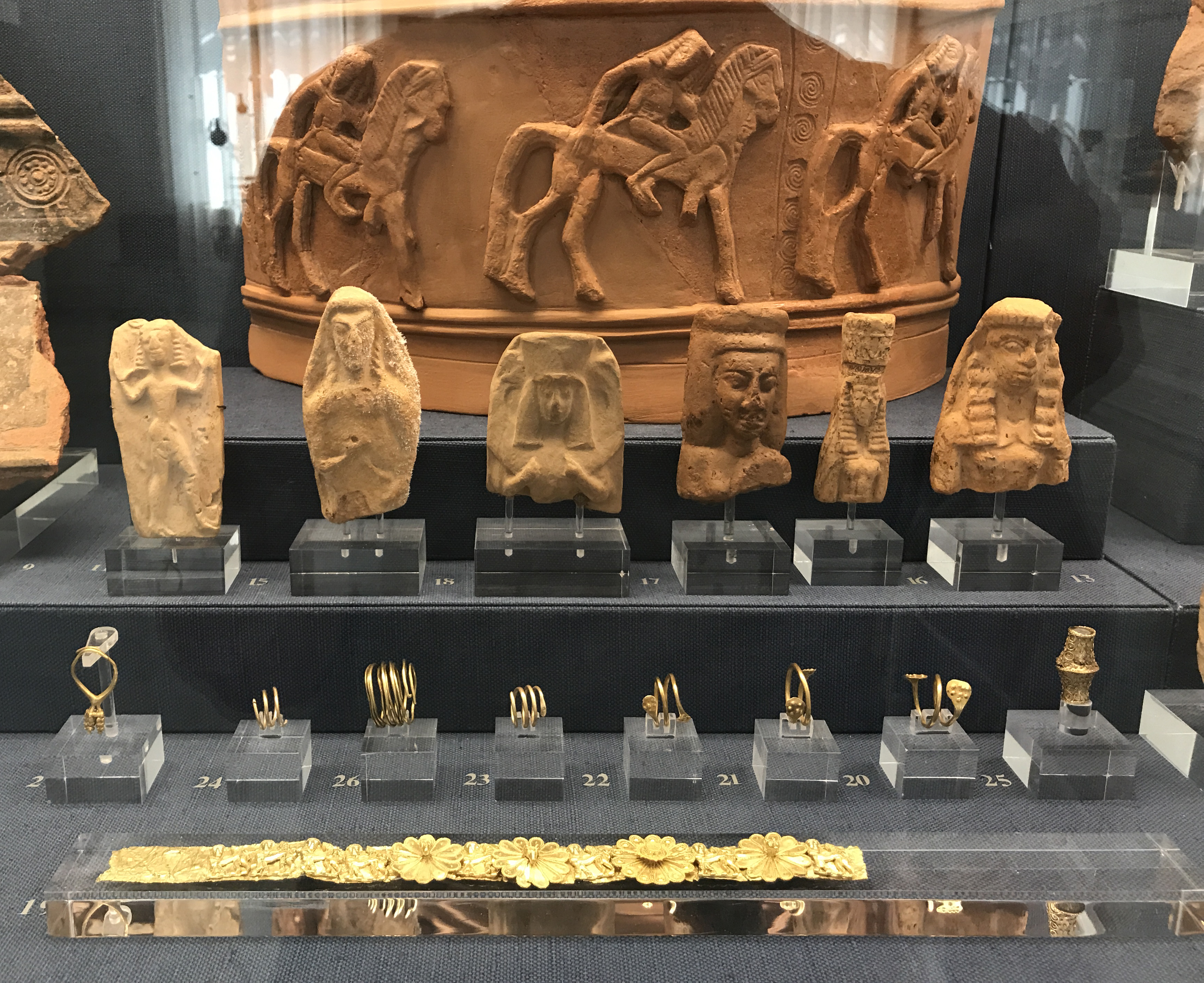
Gold jewelry from Mycenae tombs, undated (about 14-13th century BC)

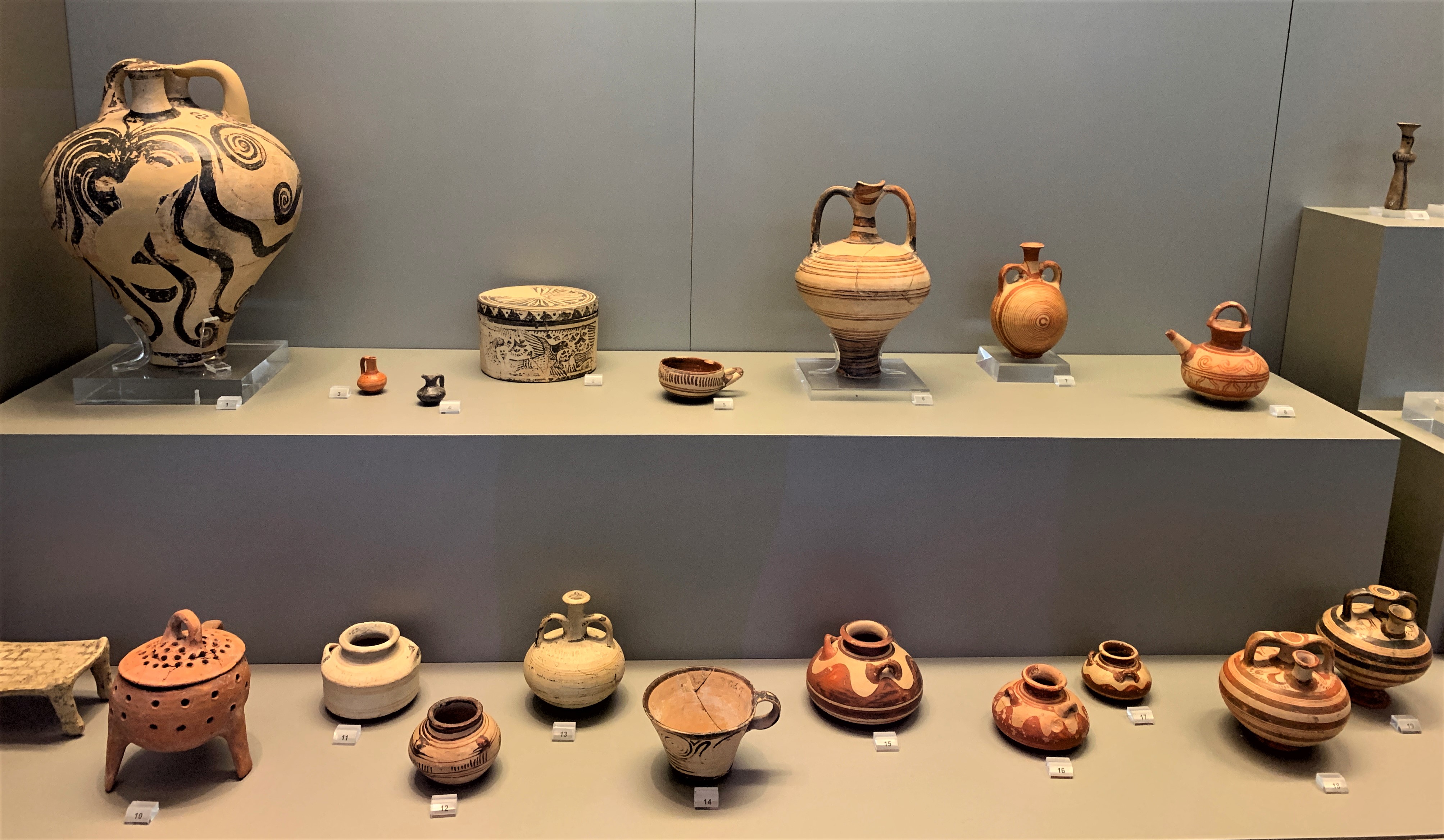
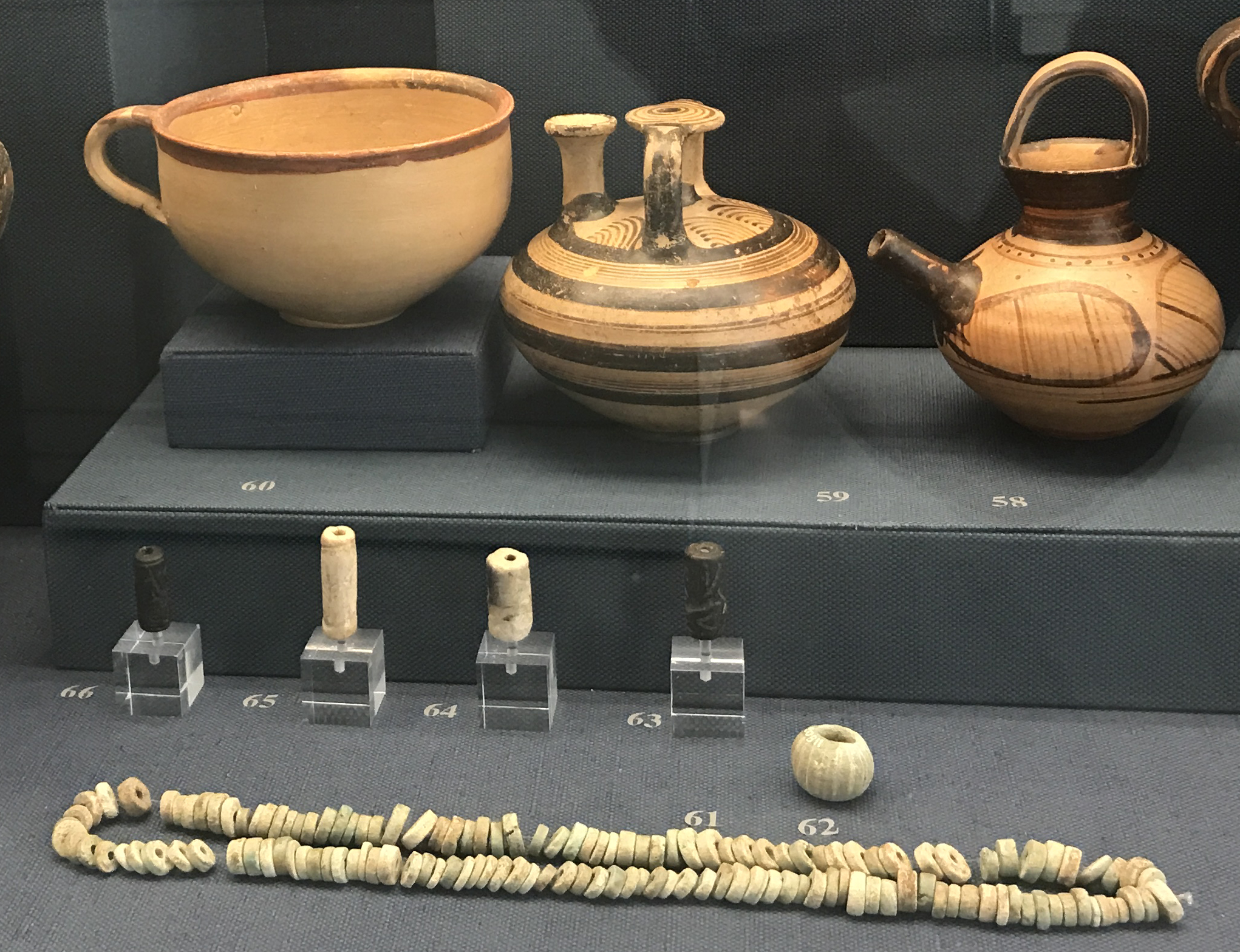
Clay vases from tombs of Mycenae, 14-13 century


Treasures in the Benaki Museum

After four trips to Greece in the past five years, I finally made it to the Benaki Museum!  There are actually several buildings scattered throughout Athens, including museums of modern art, Islamic art, and toys. I visited the “main” building, which houses artifacts representative of Greek culture. It totally exceeded my expectations.

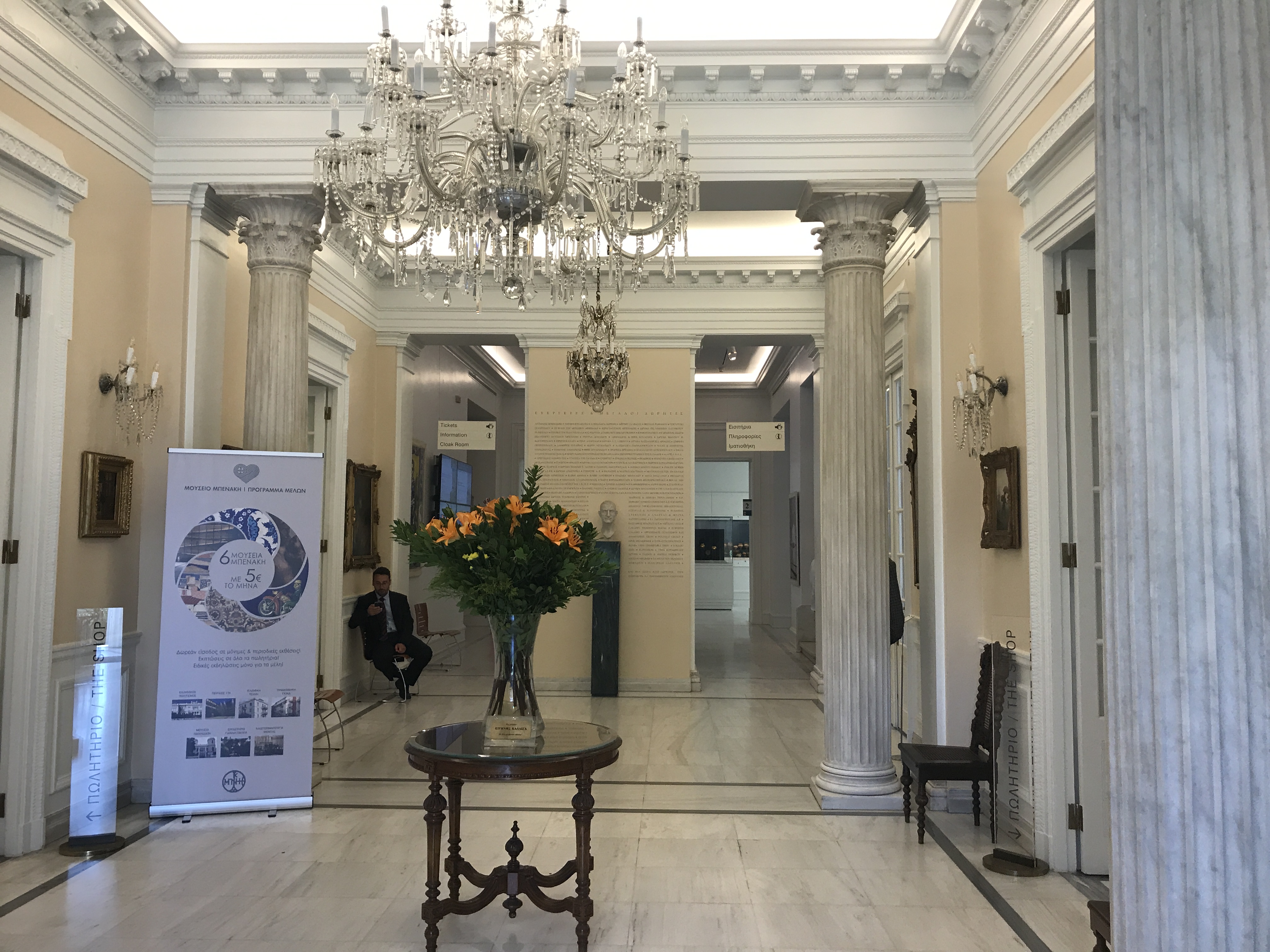
Entry of the Benaki Museum of Greek Culture

I spent five happy hours gazing, reading and learning about the collections spanning from the Neolithic period (6500) to the 1821 War of Independence. Although some people may tire of looking at pottery, jewelry and items unearthed during archaeological digs in Greece, I don’t. Each shard, figurine, jewel or stone is unique and fascinating. Fashioned by hands of the past, they depict a world unknown to me. They expand my imagination and add to my collective earth-life experience; for when I exit the building, I know a little more than when I arrived.

I hope that these photos and descriptive captions will help you envision the world of your Hellenic ancestors, whether they lived 3,000 or 300 years ago. If you click on the photos, they will expand in another window.

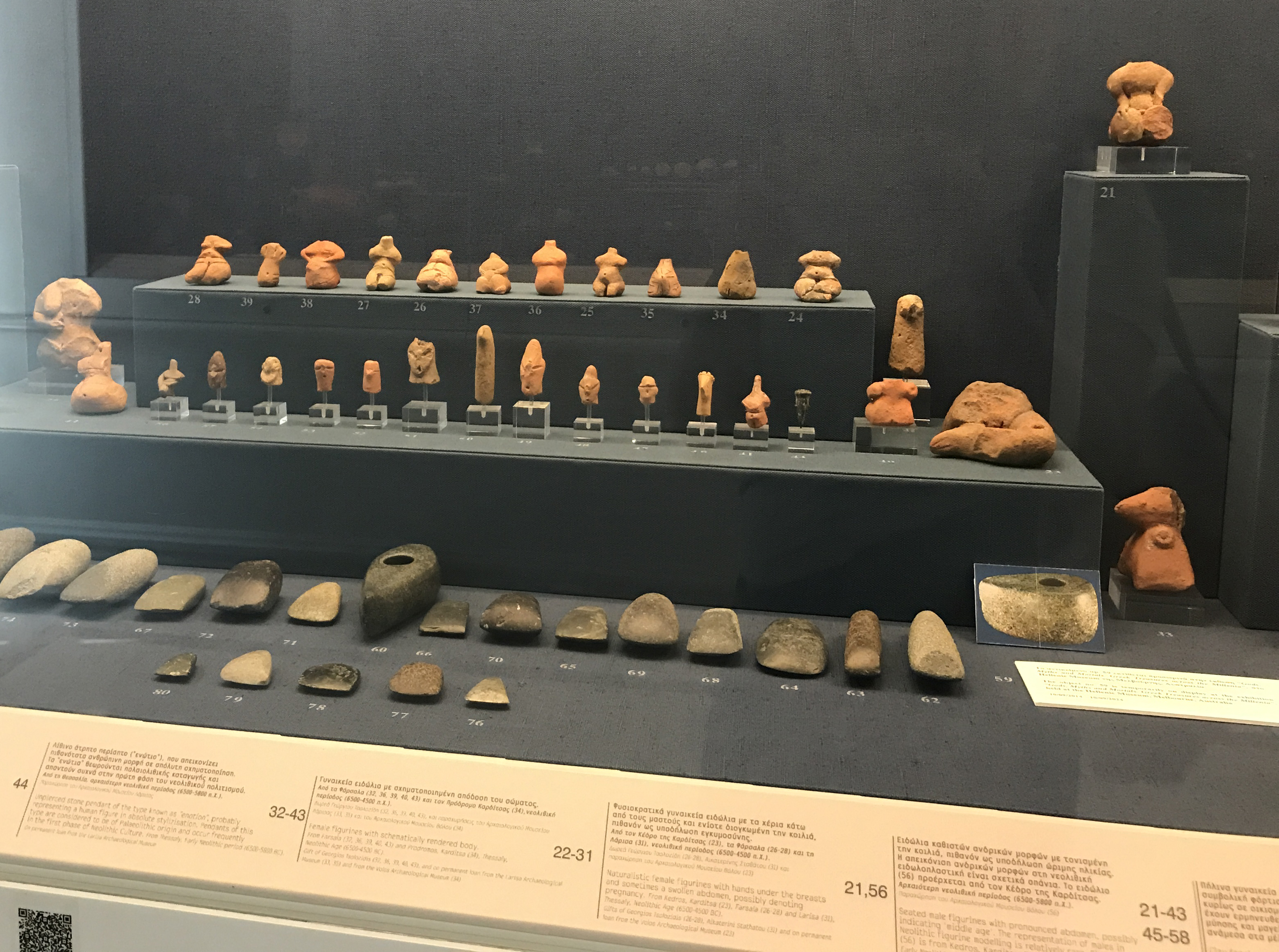
Artifacts from the Neolithic period, 6500.

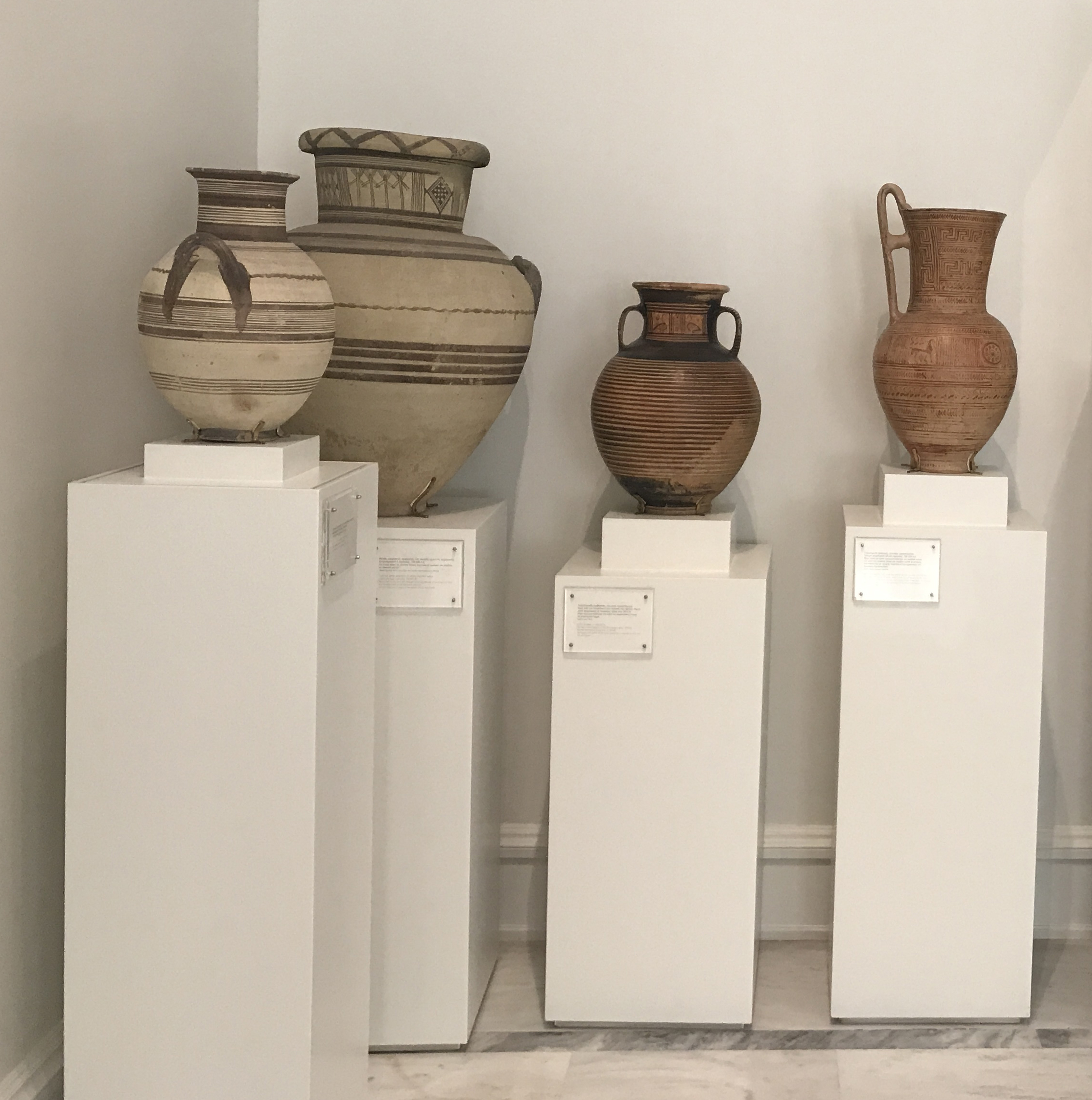
Vases, 709 BC

Faience necklace beads and pottery, 1400 BC. (faience is glazed ceramic ware, in particular decorated tin-glazed earthenware)

Items from 9th century BC; in the front are gold hair rings, used to tame ringlets of hair

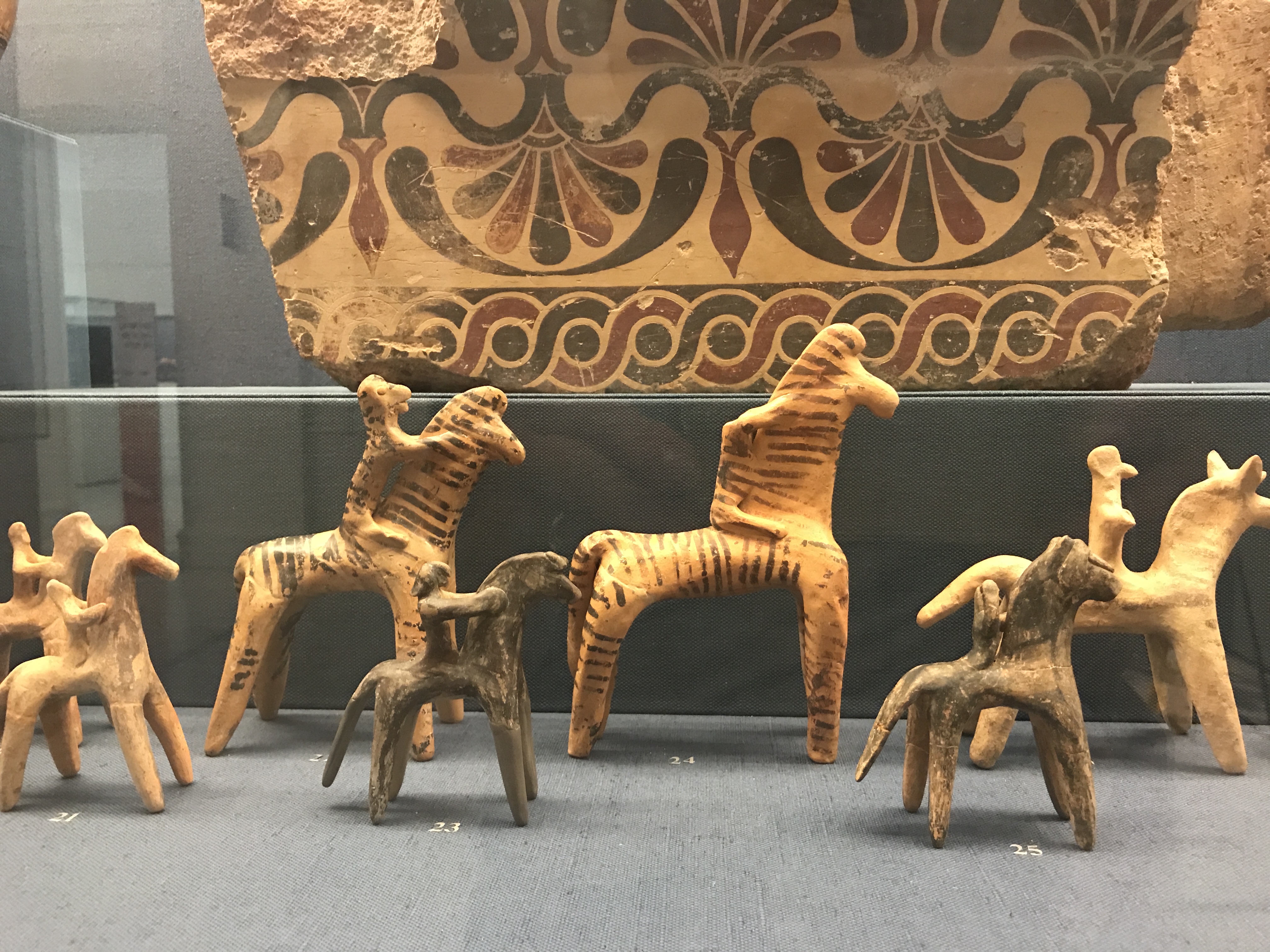
Figures on horses, 600 BC

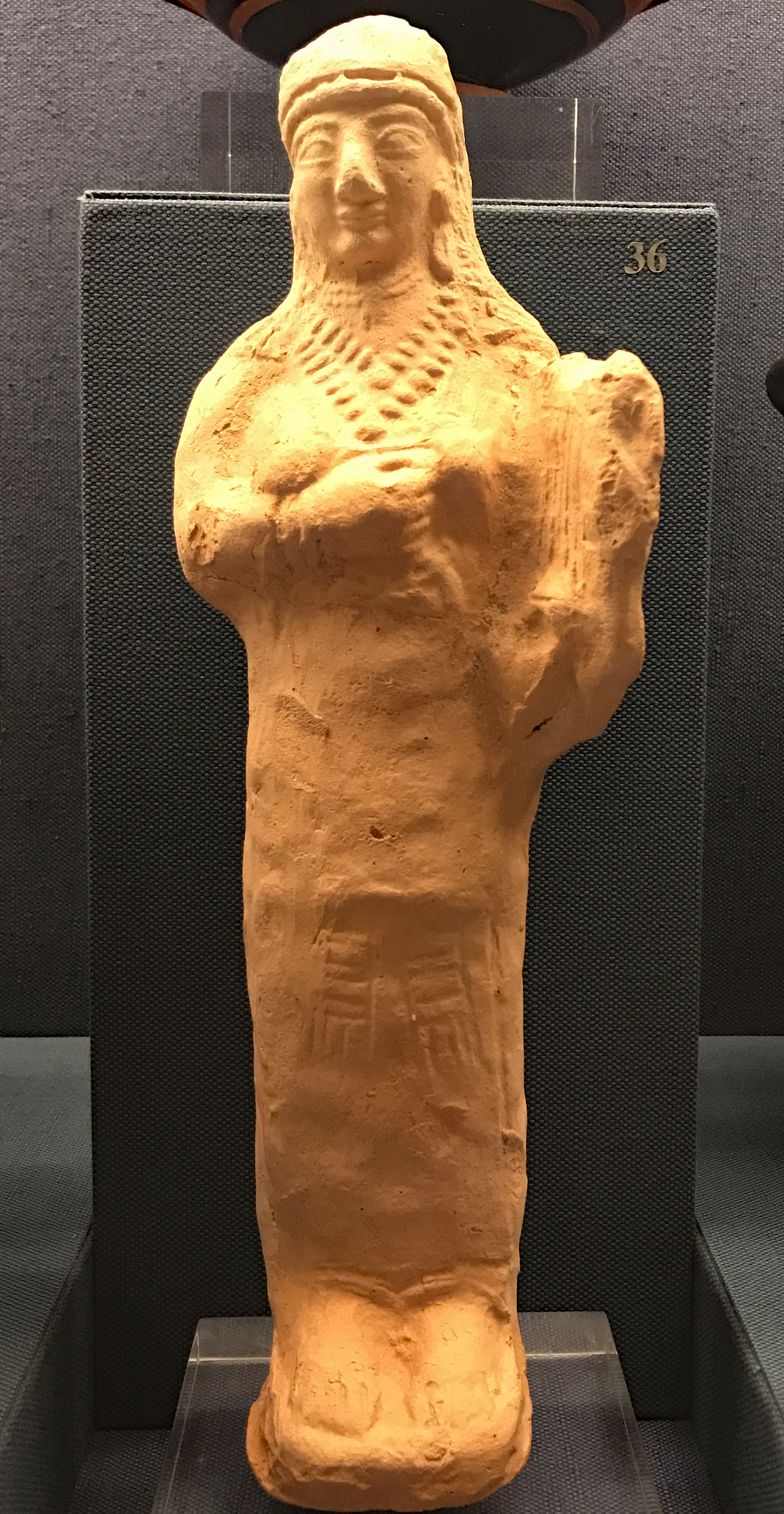
Terracotta female, most likely a priestess, holding a lyre. 6th century BC

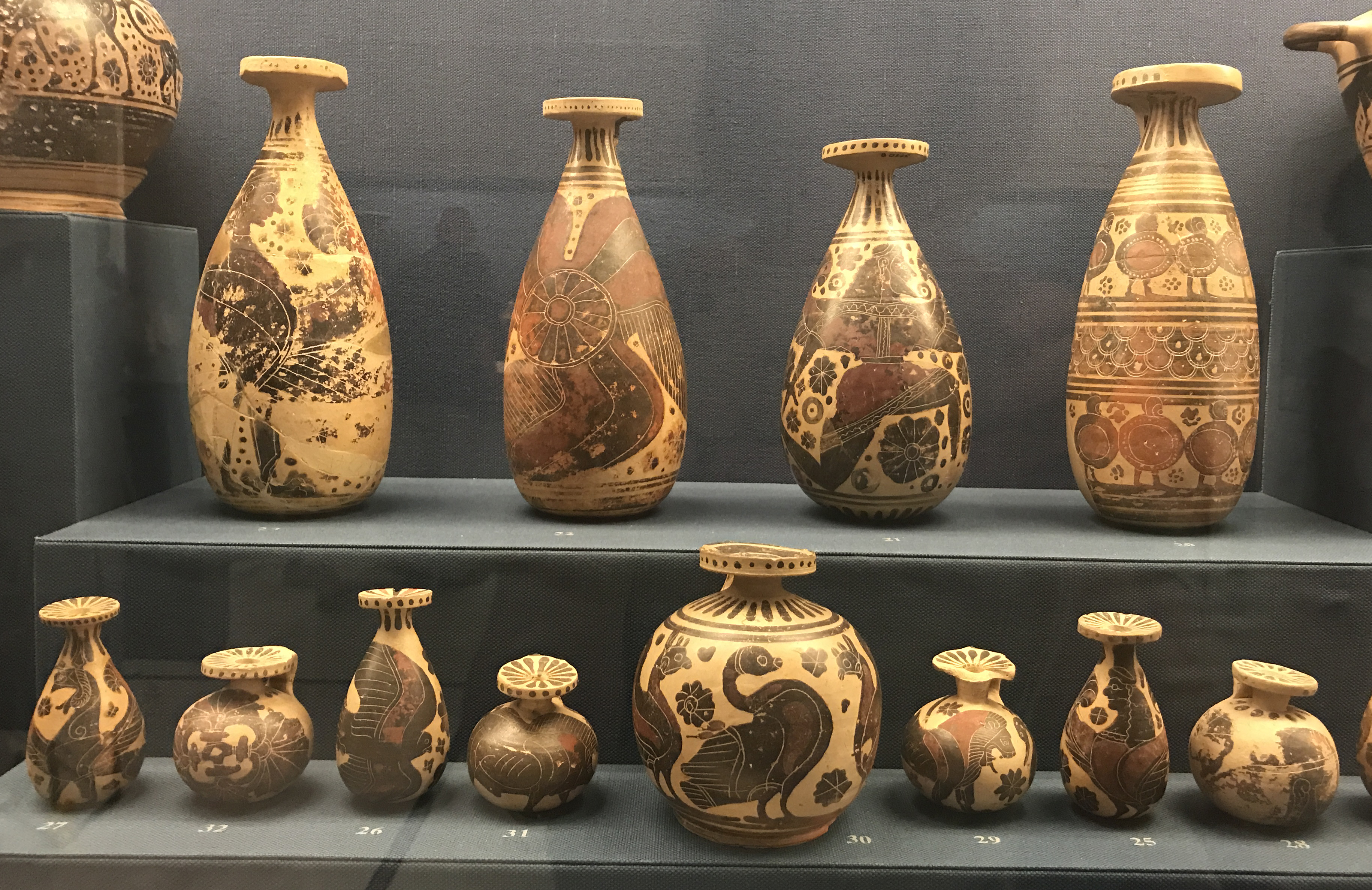
Tiny alabaster painted vases, 650 BC

Marble grave stele (monument or marker), mid-4th century BC

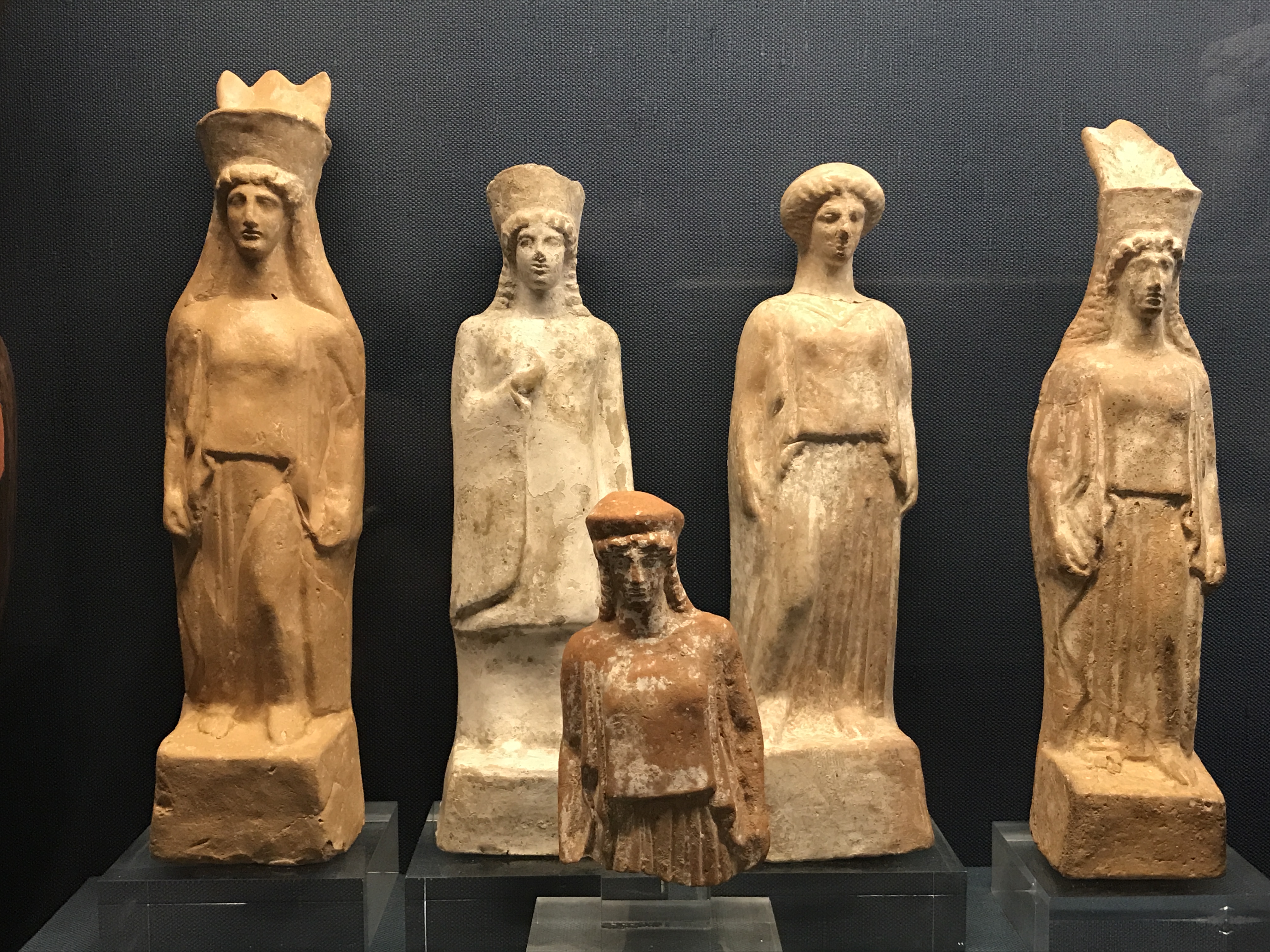
Terracotta female deities, 450 BC

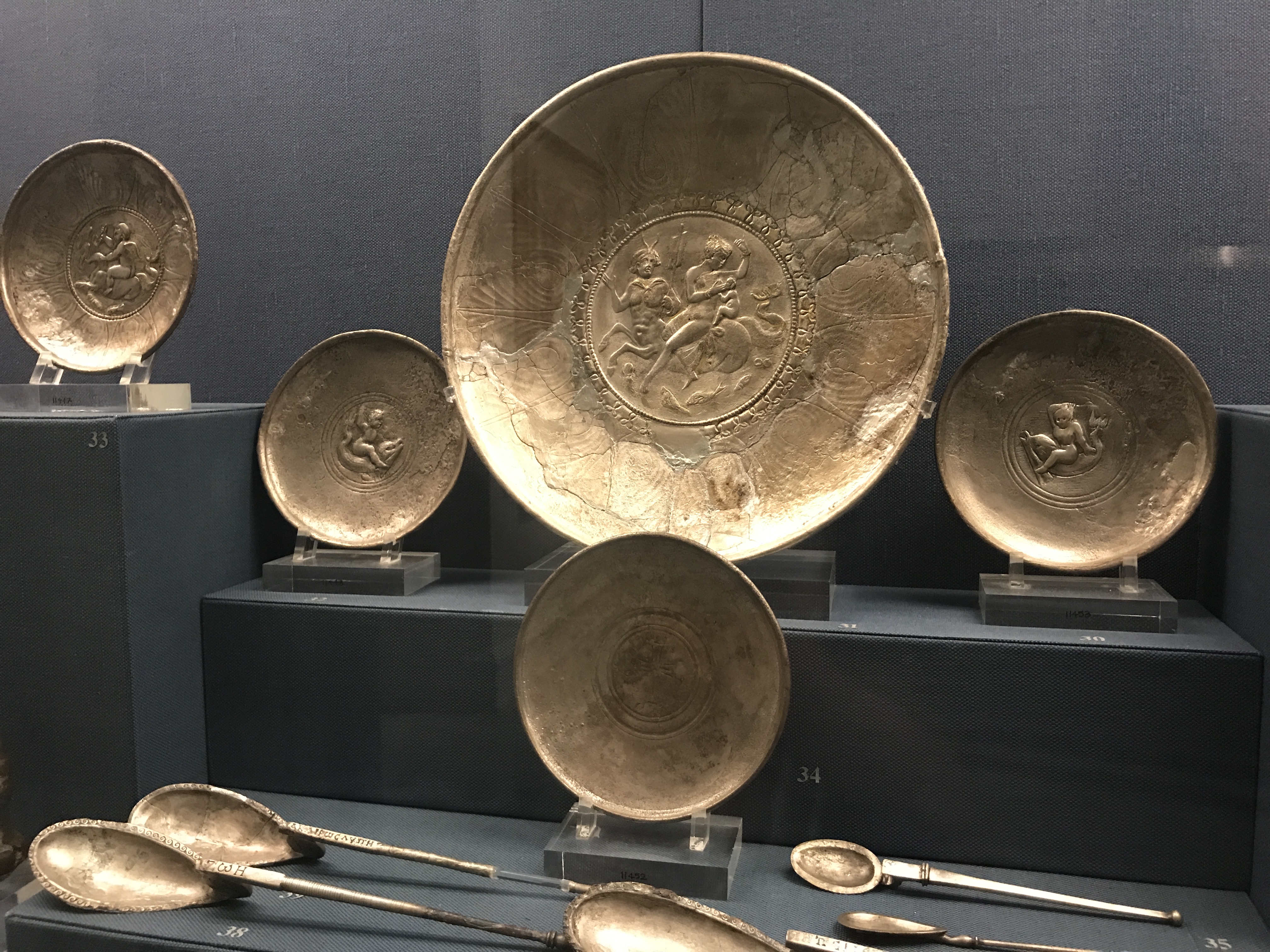
Silver luxurious vessels, 6th-7th century

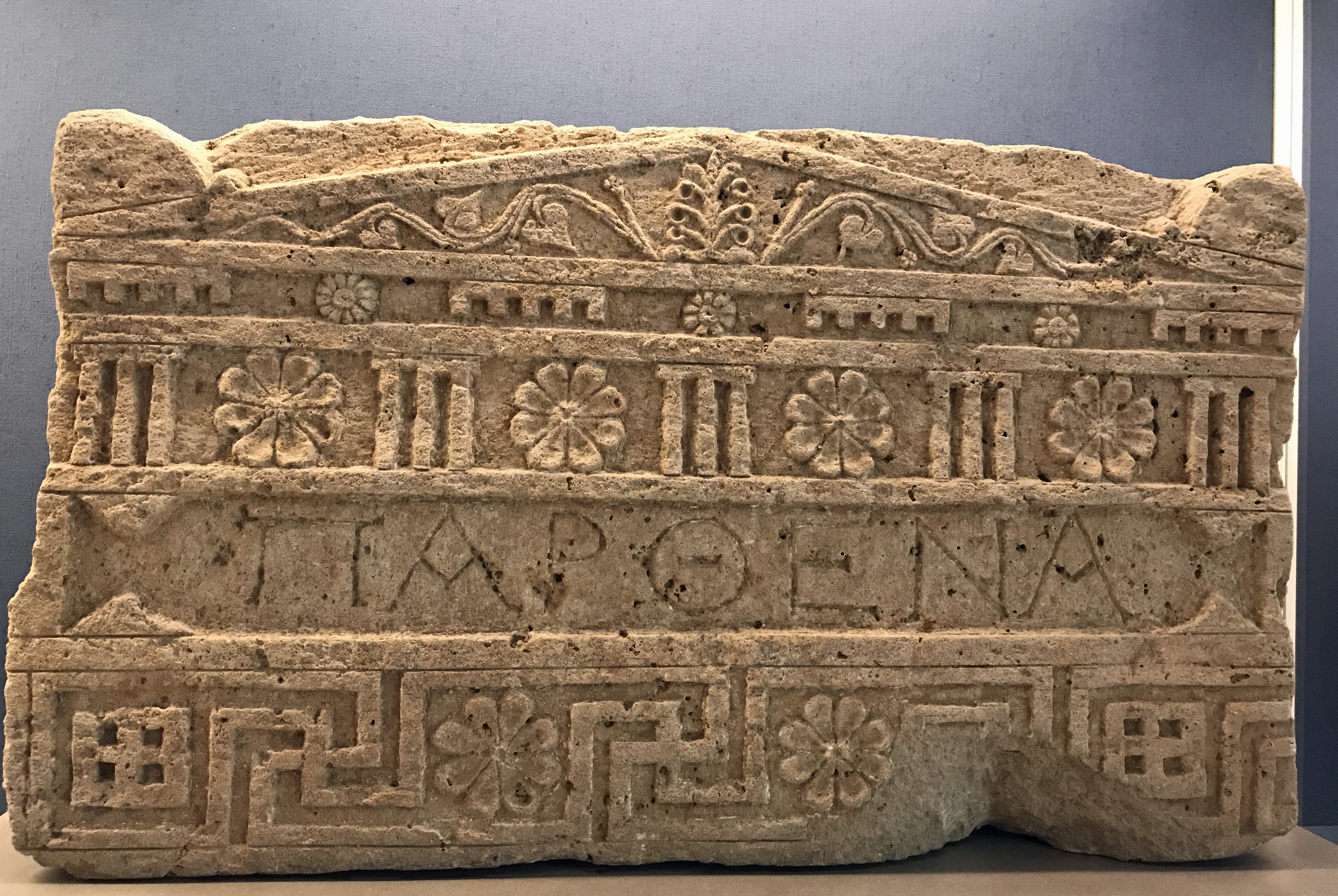
Grave markers found at Thebes which marked the location of graves, 3rd century BC

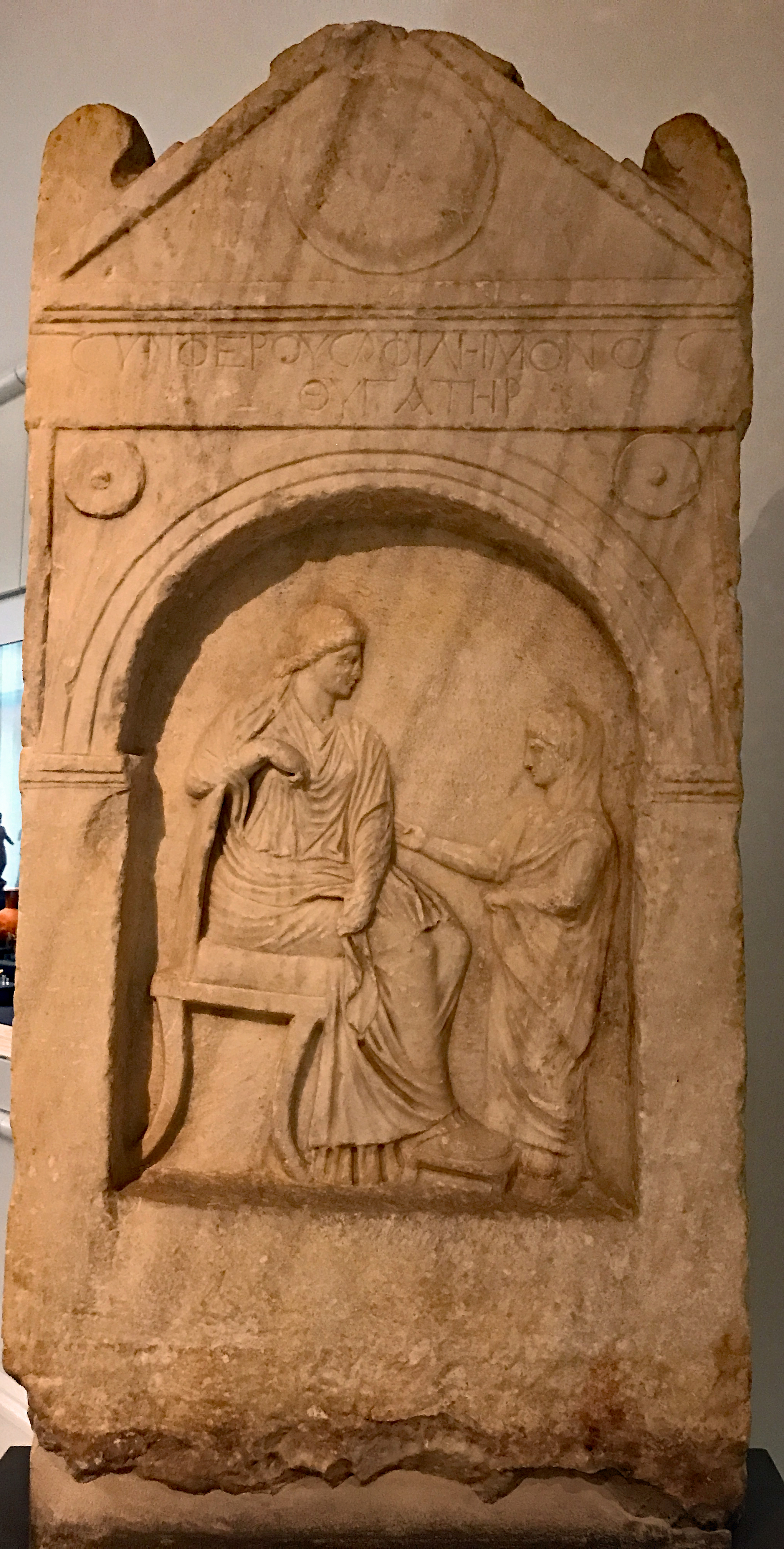
Inscribed grave stele of a farewell scene, 14 AD

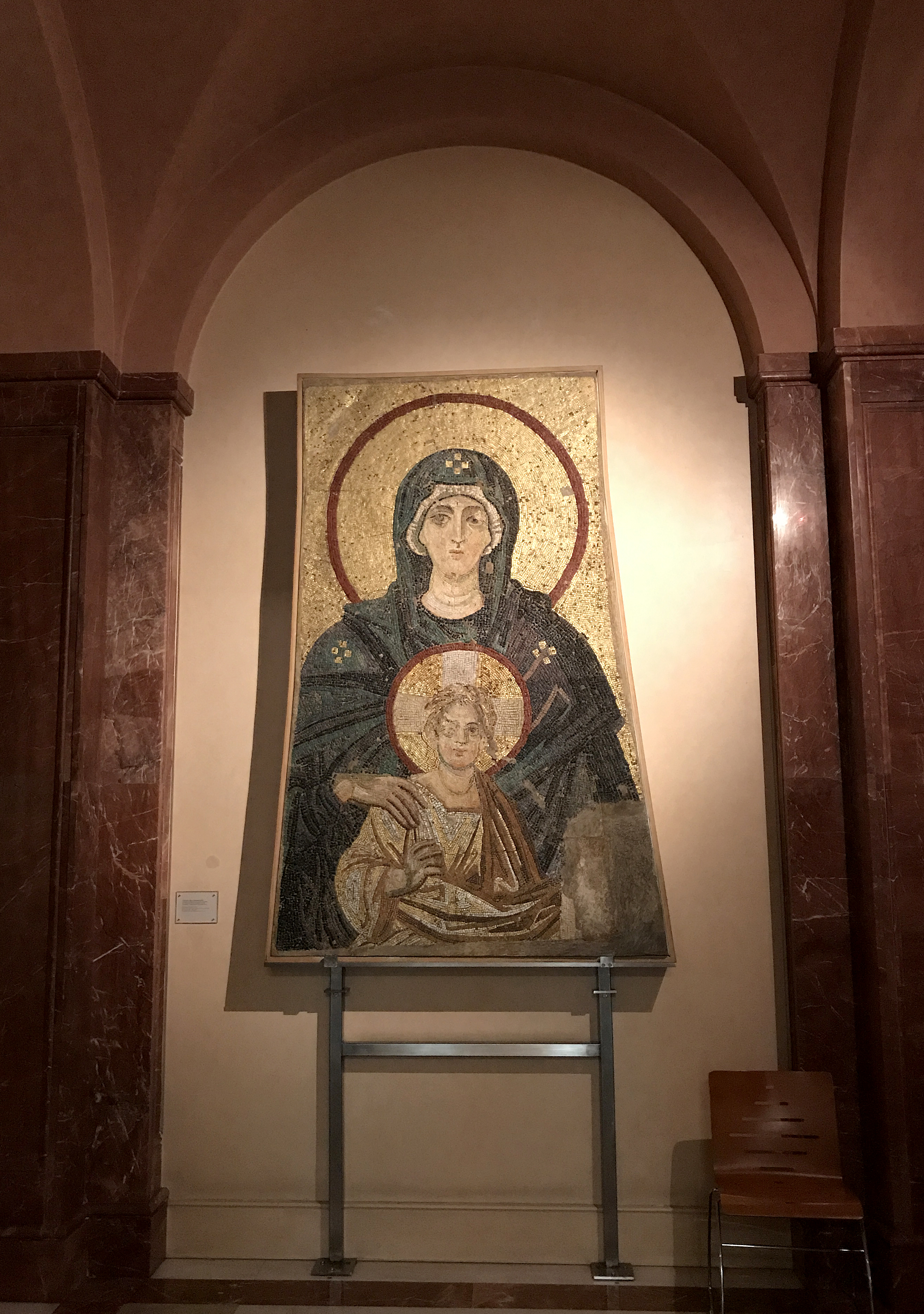
Mosaic of Christ and Mary from Hagia Sofia Church, Constantinople, dated 867

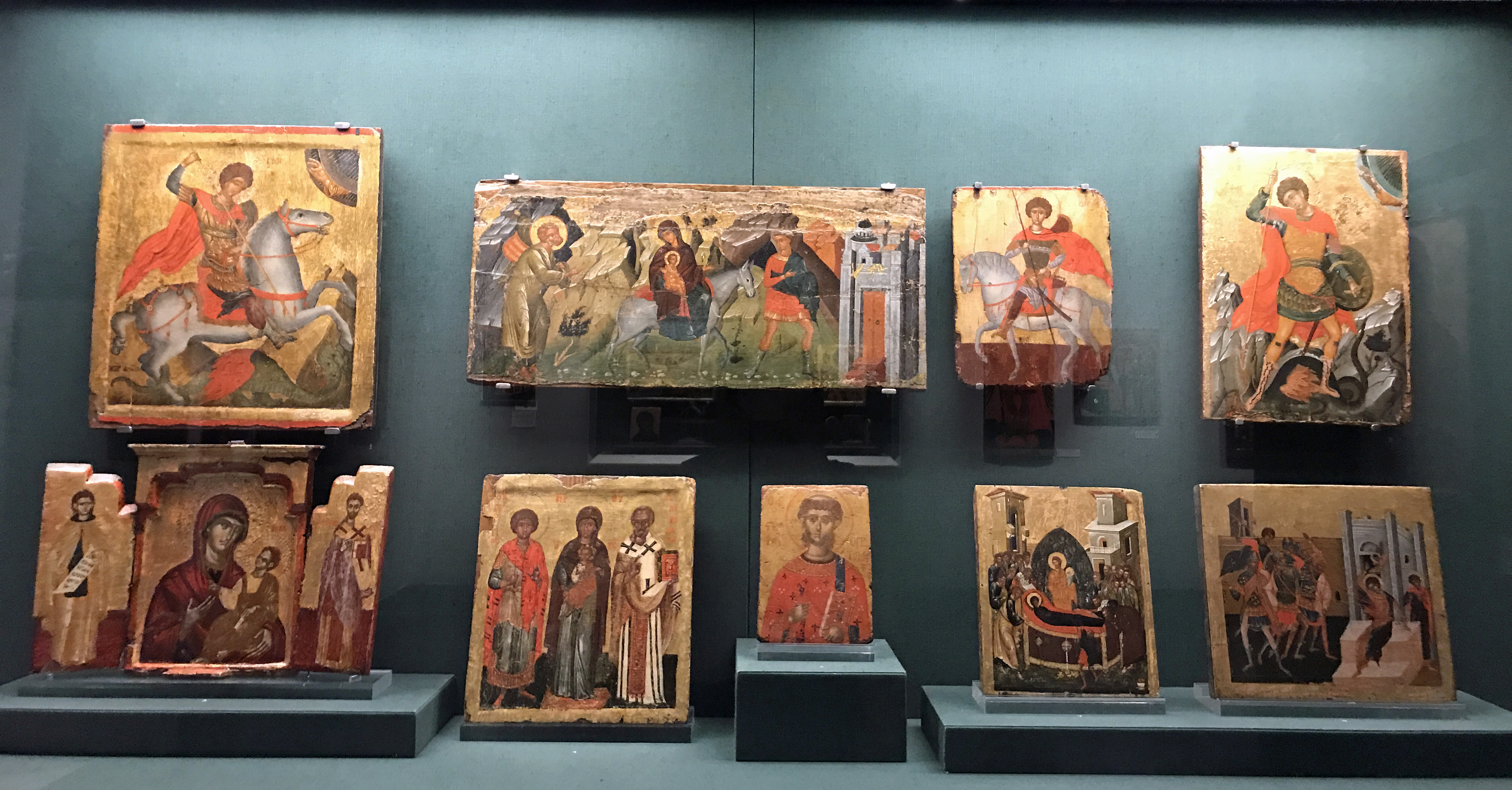
Icons created on the island of Crete, 14th century

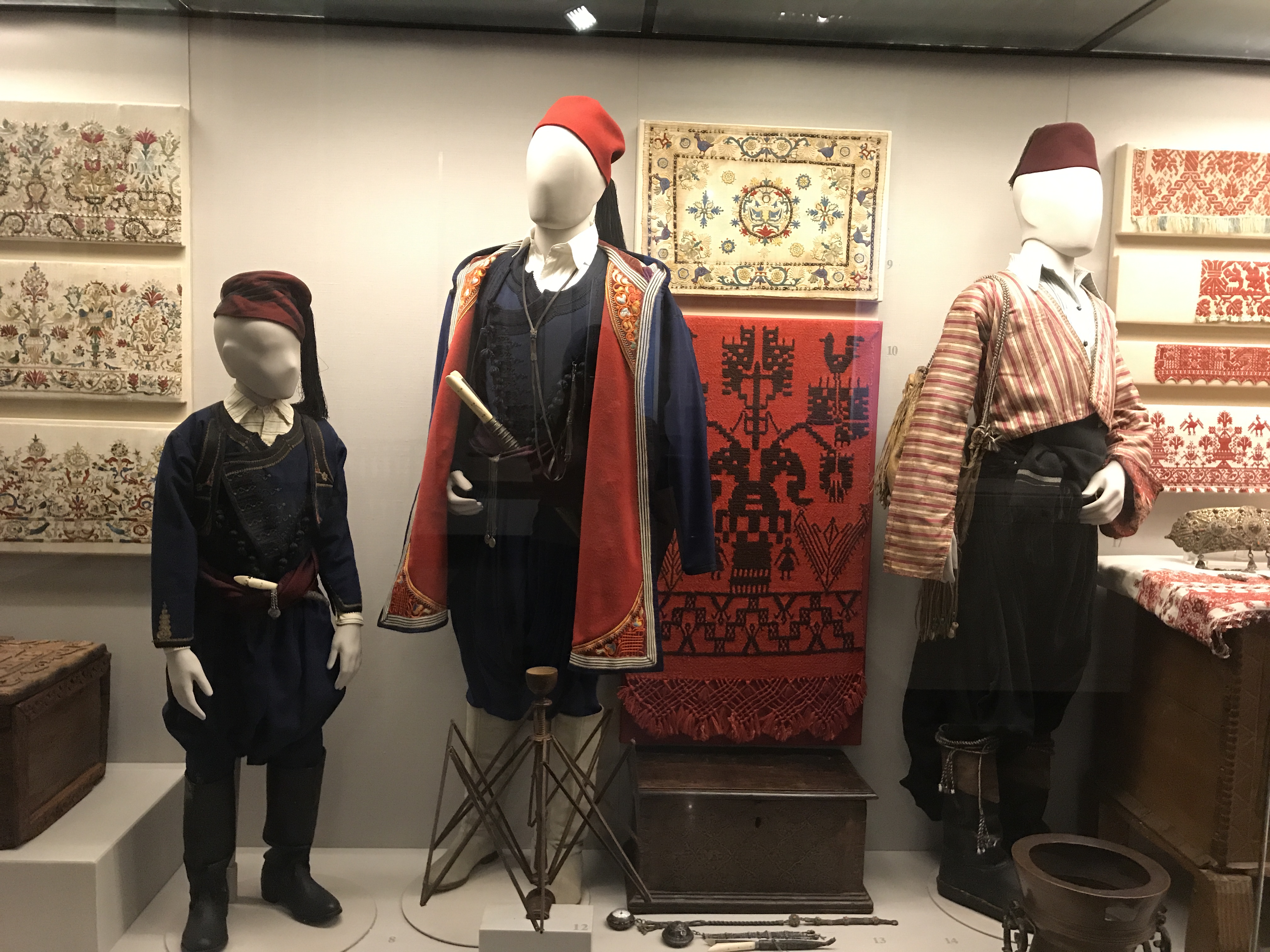
Costumes from various Greek islands

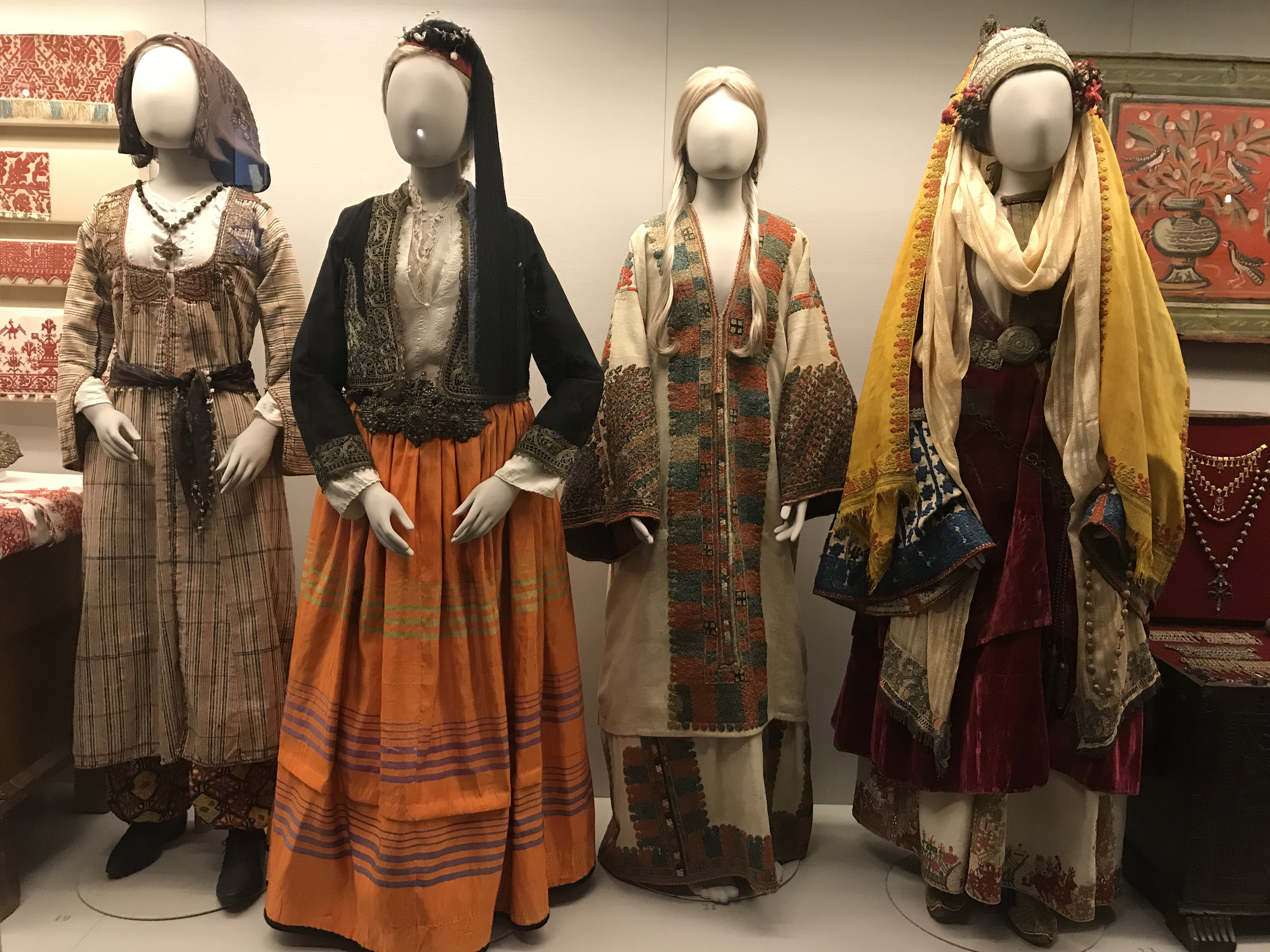
Costumes from various Greek islands

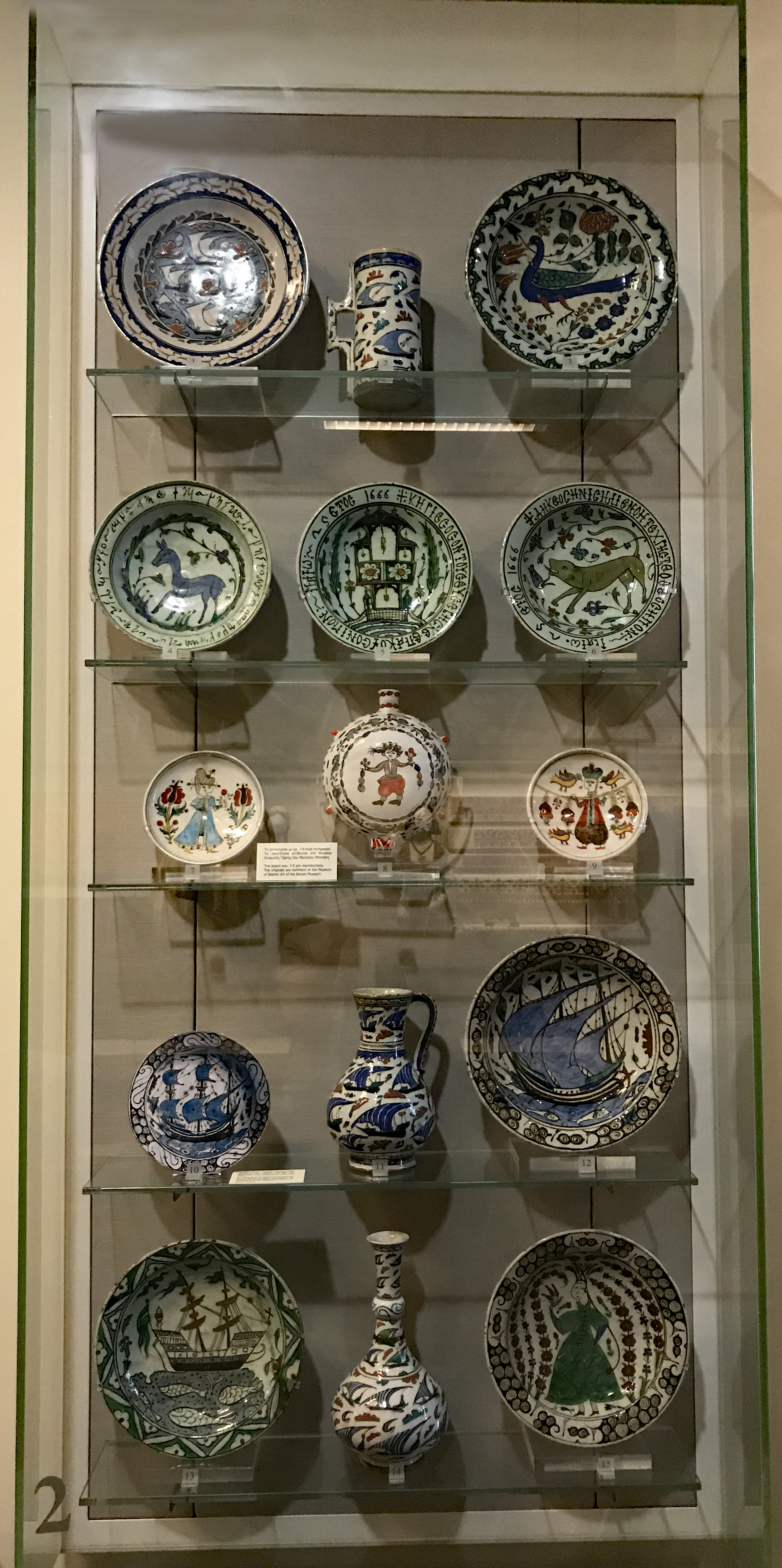
Pottery dishes, various dates

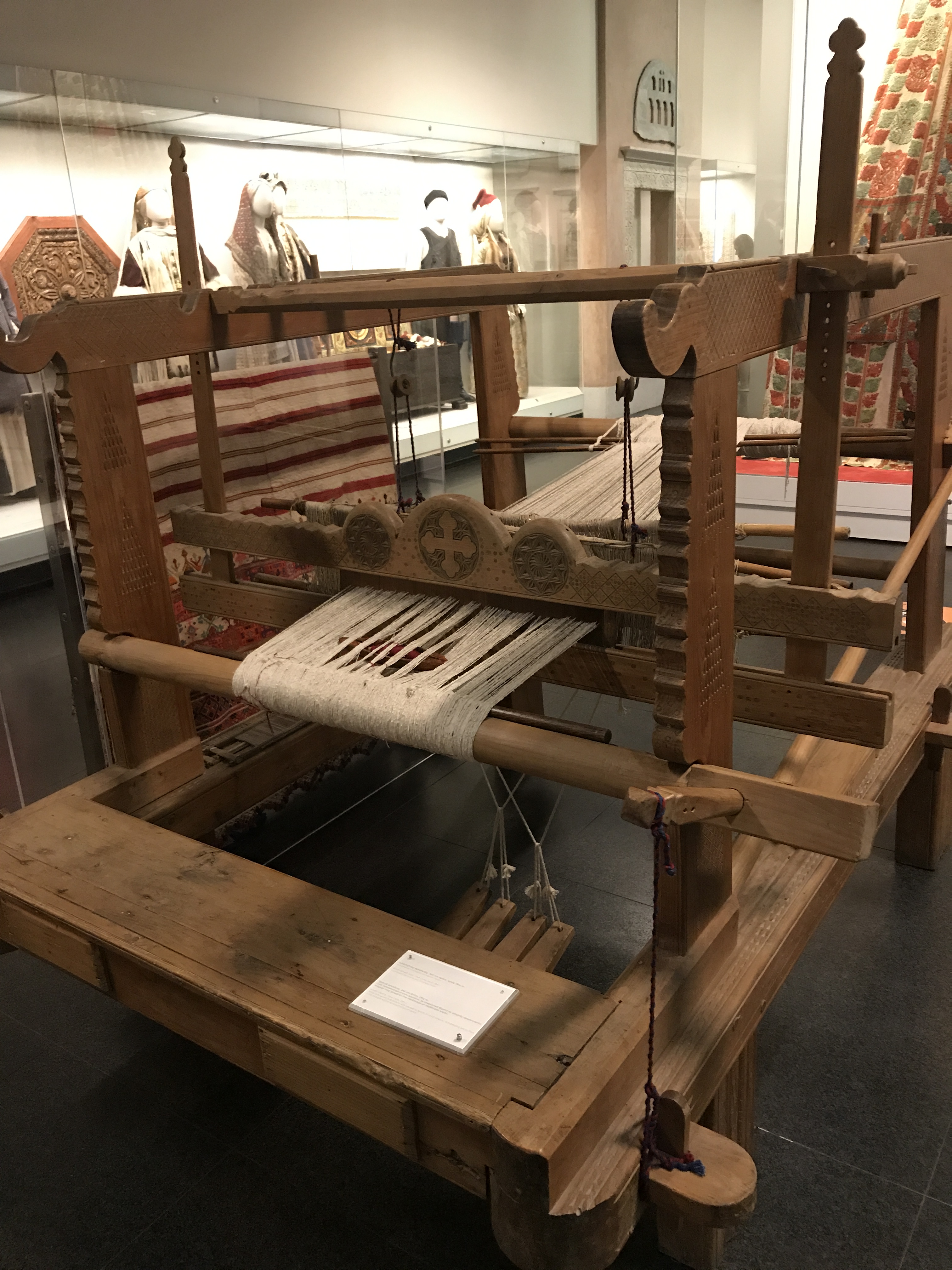
Carved wood loom from Crete, early 19th century

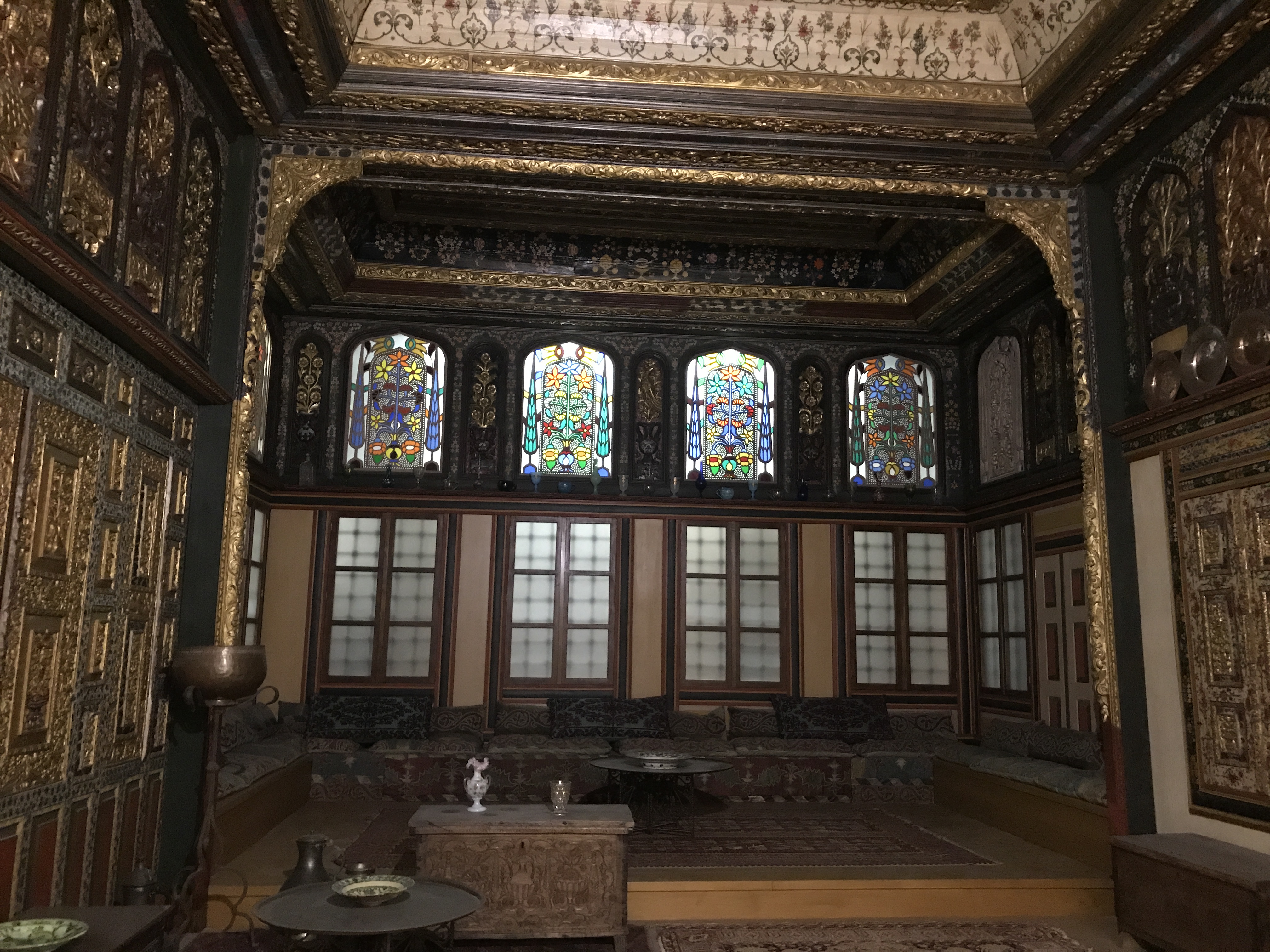
Reception hall from mansion on Hydra, 1800

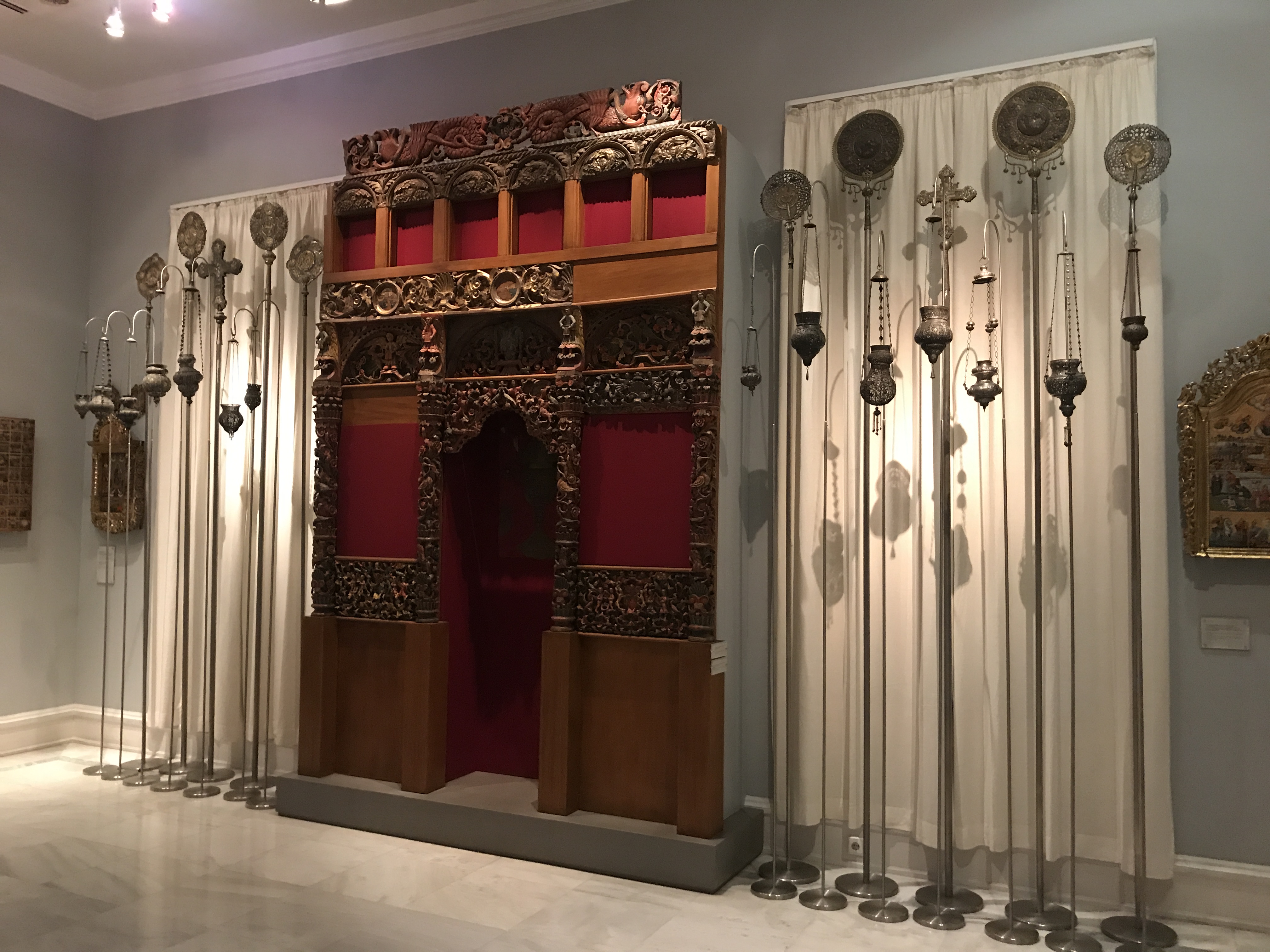
Greek Orthodox Church censors and iconostasis, 1830

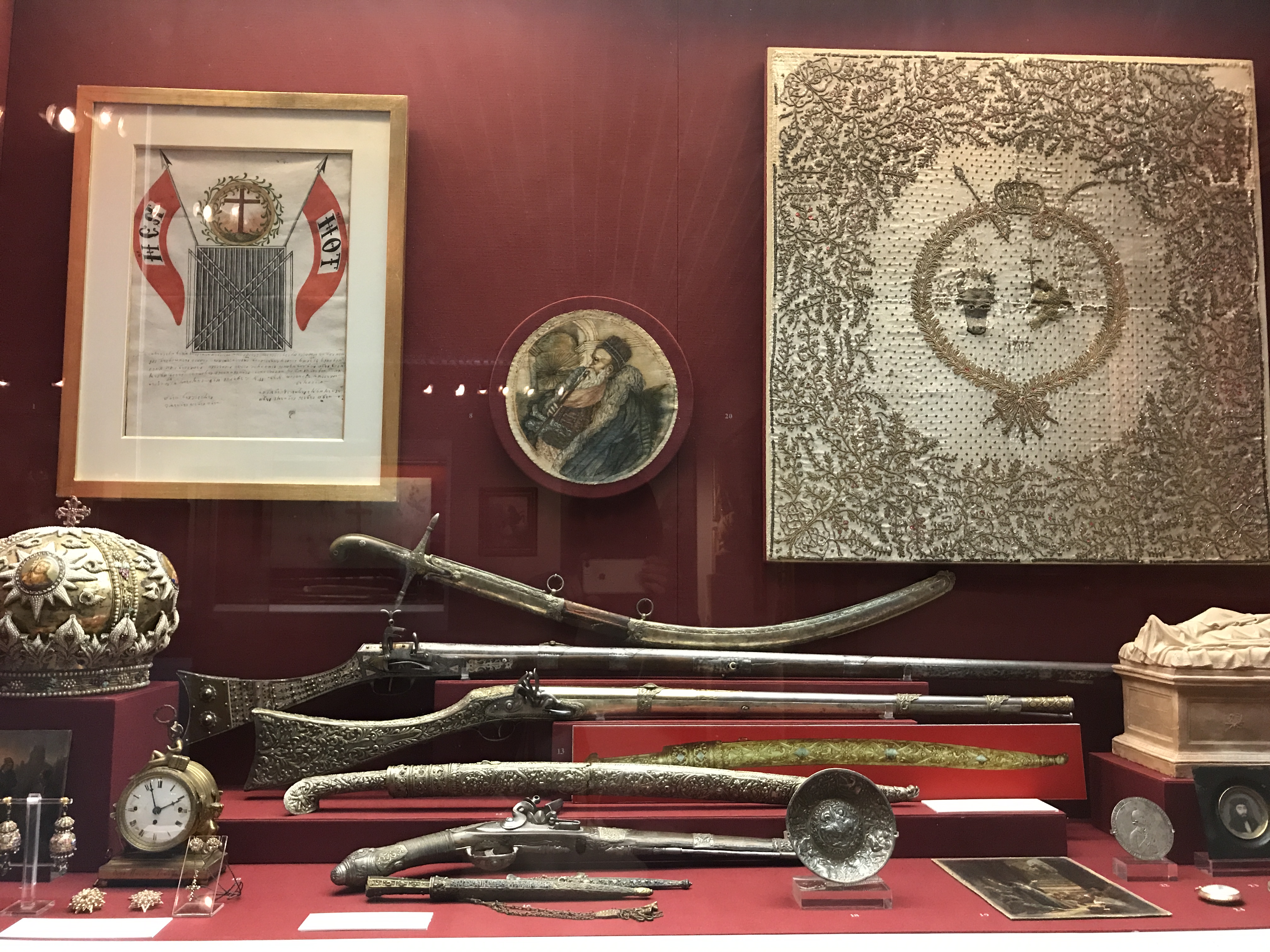
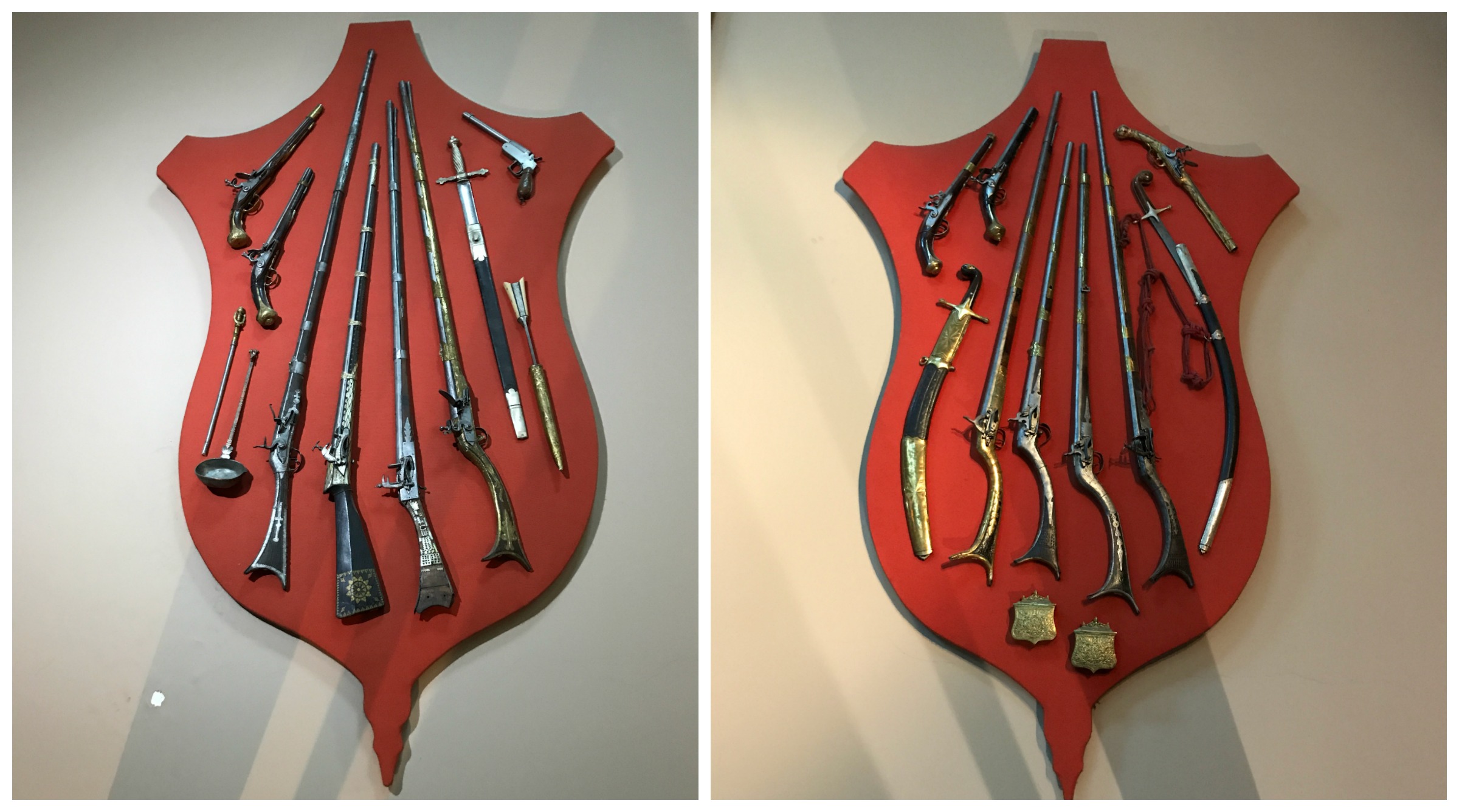
1821 War of Independence weapons and artifacts

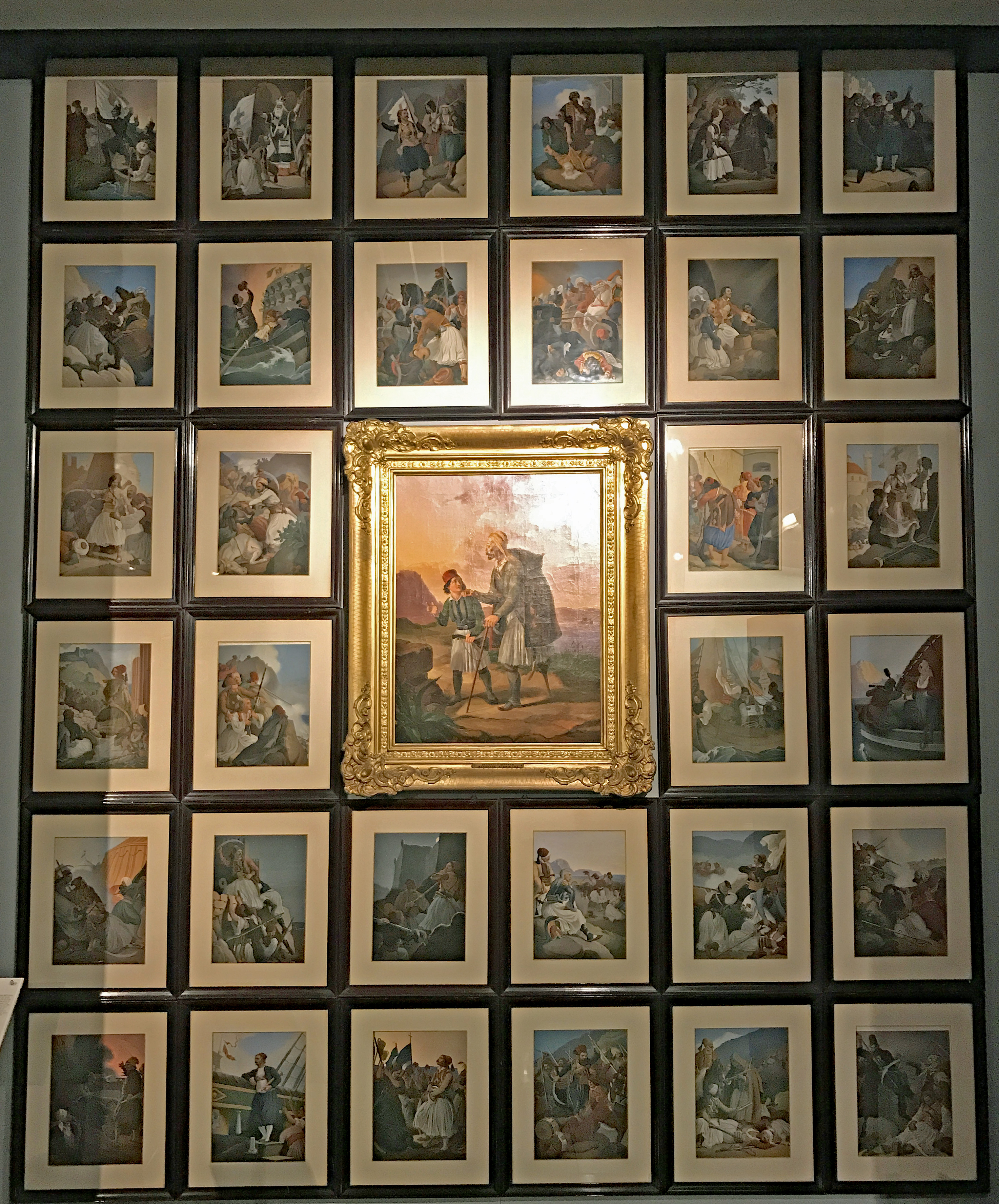
The liberation of Greece, 32 lithographs, post-1821

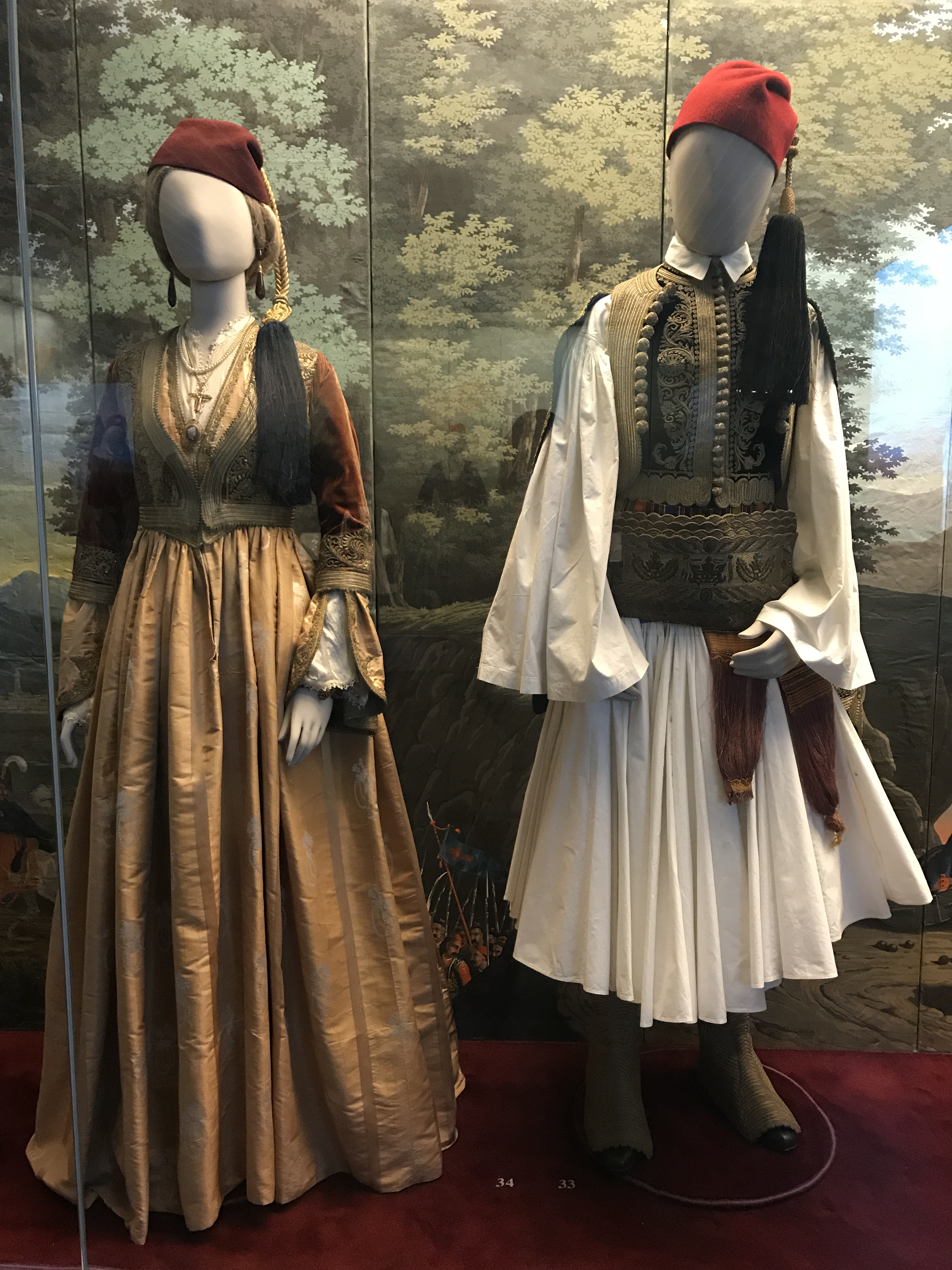
Costume of an urban Greek woman and Mavromichalis, a leader of the people of Mani in the early 19th century

The core collection of the Benaki Museum comes from the holdings of  Antonios Benakis (1873-1954) a member of one of the leading families in Greece. He was born in Alexandria, Egypt  and eventually settled in Athens in 1926. His lifetime of acquisitions has educated and enlightened thousand of people. I am grateful for the time I had to explore this fascinating museum.

Greece 2017. Part Two: Athens & The War Museum

No matter how many times I come to Athens, I am enthralled with the city–its beauty, vibrancy, and timelessness. Athens is the epitome of classicism and the locus of history. It pulsates with an energy that is thrilling and contagious. No one leaves without being changed.

Ruins dot the neighborhoods and surprise you at every turn. The city is built upon layers of antiquity. Excavations for renovations or new buildings provide continuing sources of artifacts. When I asked a friend why the smaller pieces are not safely placed in museums, she commented that there are too many archaeological relics everywhere to preserve; thus, many are left exposed and unattended.
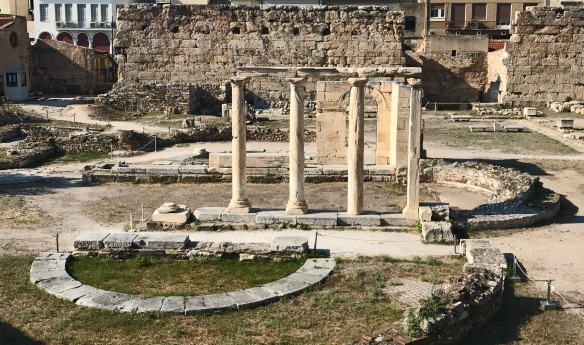
Ruins in an Athens residential neighborhood

The Acropolis towers over Athens, a constant reminder of where you are and with whom you are mingling.  Although Greeks can be divisive in their politics, they are united in their pride. Even the unschooled know their country’s history and innumerable contributions to democracy, literature, art and science.
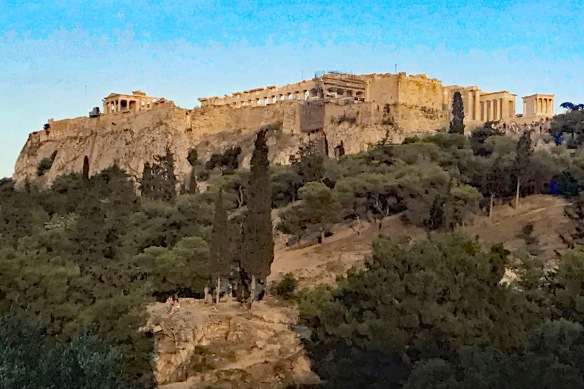
Acropolis, Athens

Nestled under the Acropolis, both the Plaka and Monastiraki Square are hubs of vendors, craftspeople, shops and cafes. There is a surprise at every turn of the winding streets. From dawn to midnight, natives and tourists mingle to barter over trinkets, food, works of art; and to eat and drink in innumerable venues.
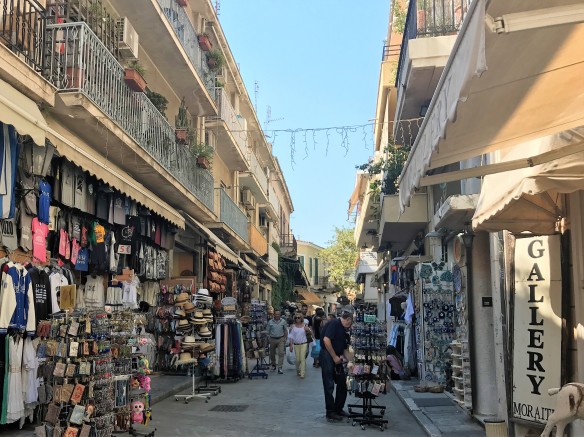
The Plaka, Athens

Knowing my love of history, my friend, Giannis, wanted me to experience the past from a different perspective. He took me to the War Museum of Athens, established in 1964 to honor those who fought for freedom from ancient times to post World War II. He promised that I would learn much about history; and, although “war is not my thing,” he was right. The past opened before me in manner unparalleled. Photos, paintings, statues and exhibits portrayed a country under continuous invasion and occupation, with everyday people struggling to maintain their lives and safeguard their families. I have never seen so many guns, rifles, swords, and other tools of destruction in one place!

After I recovered from the shock of seeing thousands of weapons, I focused on the displays in each room. Many of us had ancestors who fought during the Revolution of 1821. Some received Aristeia awards which are earned by soldiers for exemplary actions in battle. Aristeia comes from the word άριστος (aristos) which is defined as “excellent.” In Greek warfare, an aristeia (αριστείο) is an award of great prestige and distinction. I was thrilled to see these medals on display.
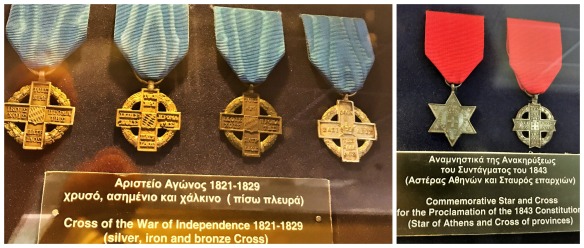
Awards: (left) Aristeia for the Revolution of 1821; (right) 1843 Constitution

One family story that I am trying to verify is a link between my Papagiannakos and the Maltsiniotis families. In 1887, the Maltsiniotis brothers established an armaments company which was later merged into Pyrkal, one of the oldest defense companies in Greece. Imagine my shock when Giannis pointed out these displays that were clearly marked with the Maltsiniotis name!
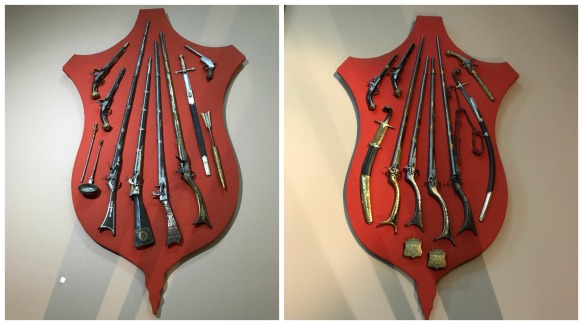
Maltsiniotis armaments

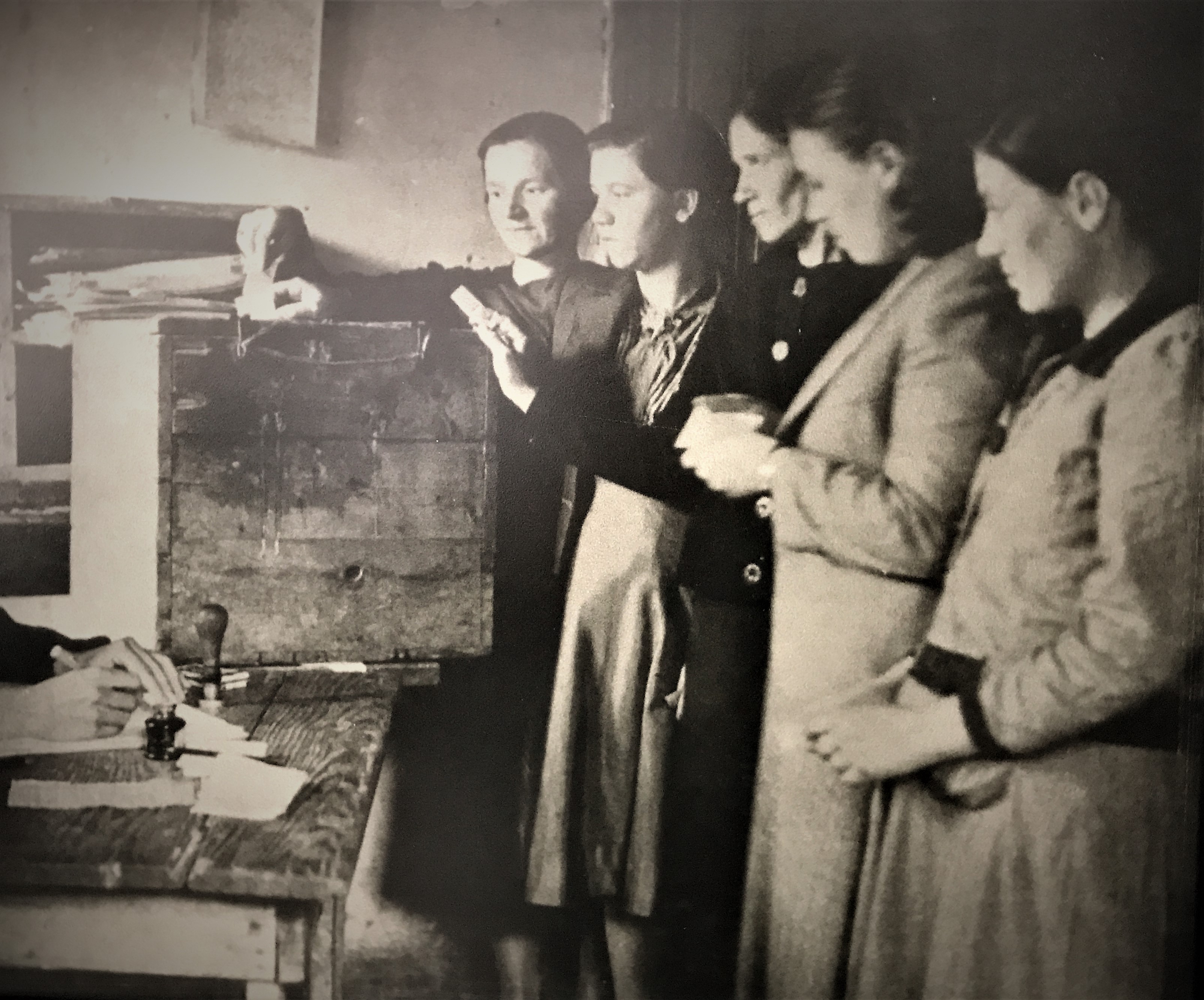
One photograph, thankfully unrelated to war, caught my feminist attention. In 1952, shortly after the end of the Greek Civil War (1949), women gained the right to vote. This picture captured that historic moment, and I felt the triumph of the “silent majority” who were silent no longer.
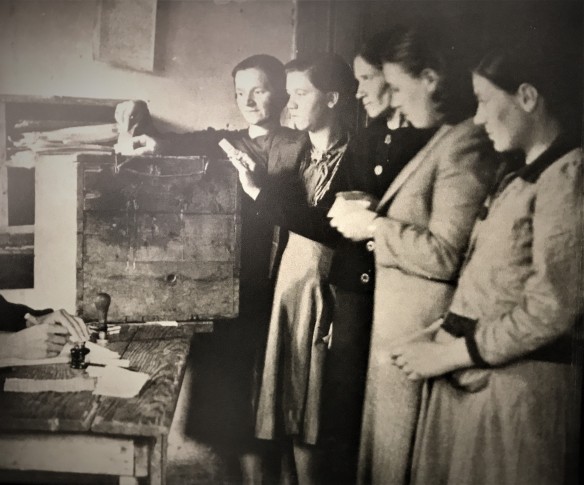
Women voting for the first time in 1952

When men left to fight, women emerged as fierce protectors of the homeland. I am enthralled with the story behind the painting of this strong Maniate woman, holding a scythe in her right hand. During the 1821 Revolution, there was an invasion in Diro, Mani (in the southern Peloponnese). The men were gone, fighting in the battle of Verga, and the women and children were left to tend the fields. When 1,500 Ottoman soldiers attempted to conquer Diro, church bells rang to rally the citizens. Women ran from their fields with scythes in hands. They fought off the invaders and forced them to retreat back to the sea, thus stopping the armies of Ibrahim and preventing an invasion. I love how this woman’s eyes shine with fervor and determination. No one was going to take her land!
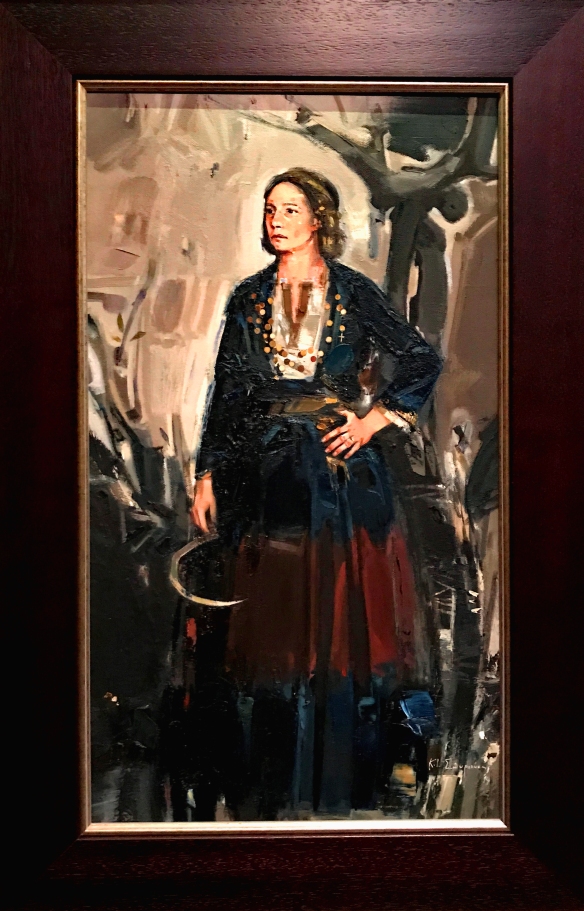
Woman of Mani, 1821 Revolution

This is the plaque further describing this amazing story of heroism.
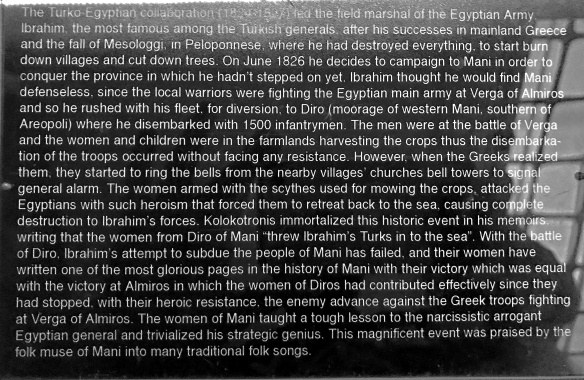
Plaque describing the Maniate women halting the invasion of Ibrahim, June 1826

As I walked each room of the War Museum and studied the myriad of displays, I was reminded that this is but one small country which has been through countless wars and invasions. Hundreds of photographs and paintings depict faces haunted and places destroyed. How senseless war is!

Every visit to Athens is a new lesson in history and culture. I am ever grateful to friends and family who ensure that I will leave with a renewed appreciation and understanding of my ancestral land.


Return to Greece, 2016. Part Two: Acropolis Museum & Plaka

This is the second post in a series about my trip to Greece, June 30-July 20, 2016 — an amazing journey of history, family and discovery. Previous posts can be found here.

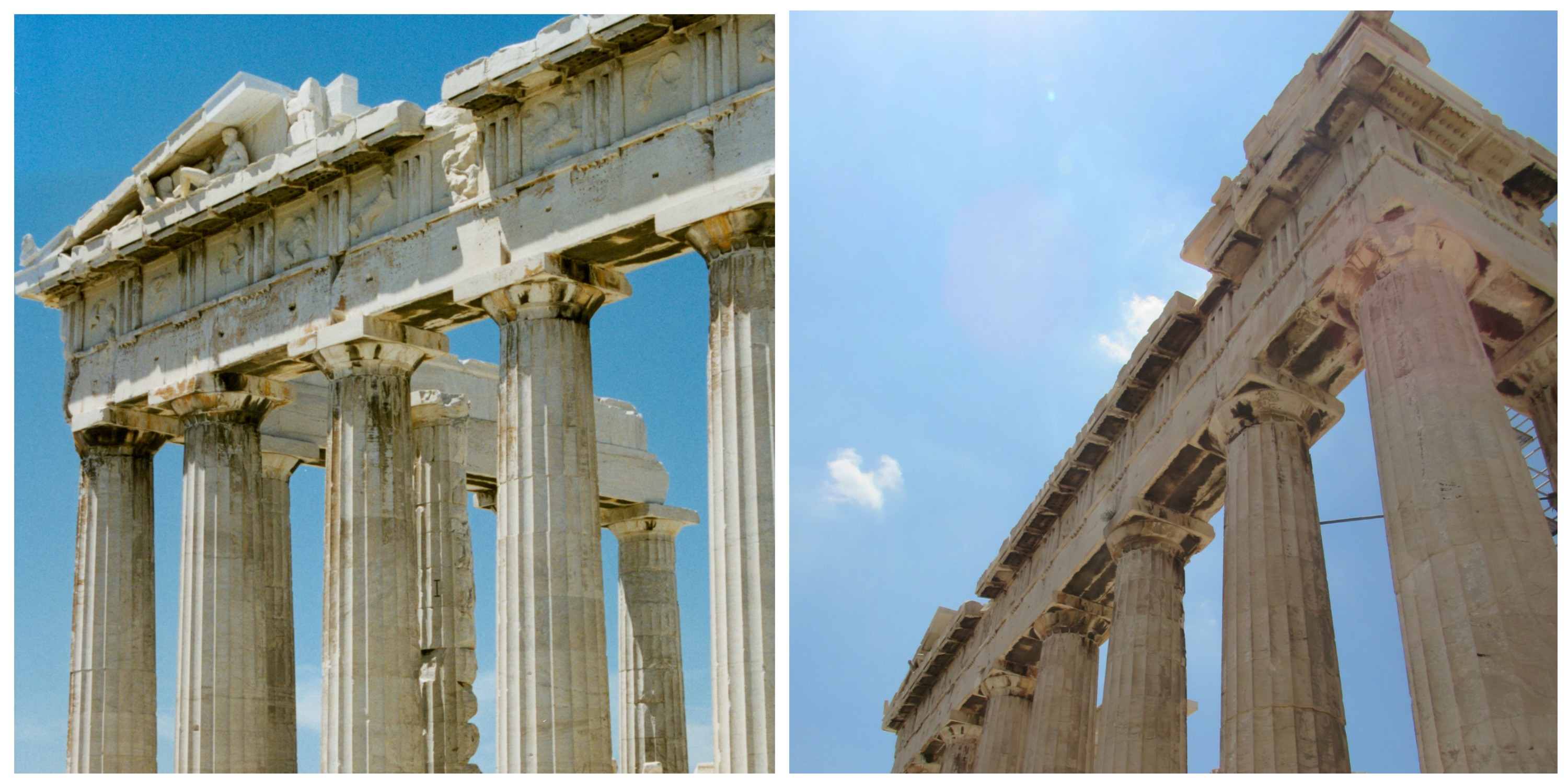
The Acropolis Museum is the beautiful new home of the artifacts, friezes, statues and archaeological treasures that graced the Acropolis’ magnificent edifices. During my first trip to Greece in the 1996, fragments of the friezes graced the top of the Parthenon, enabling me to visualize its magnificence during its days of glory. Now, only the columns remain.

left: Parthenon, 1996; right: Parthenon 2016

left: Parthenon, 1996; right: Parthenon 2016

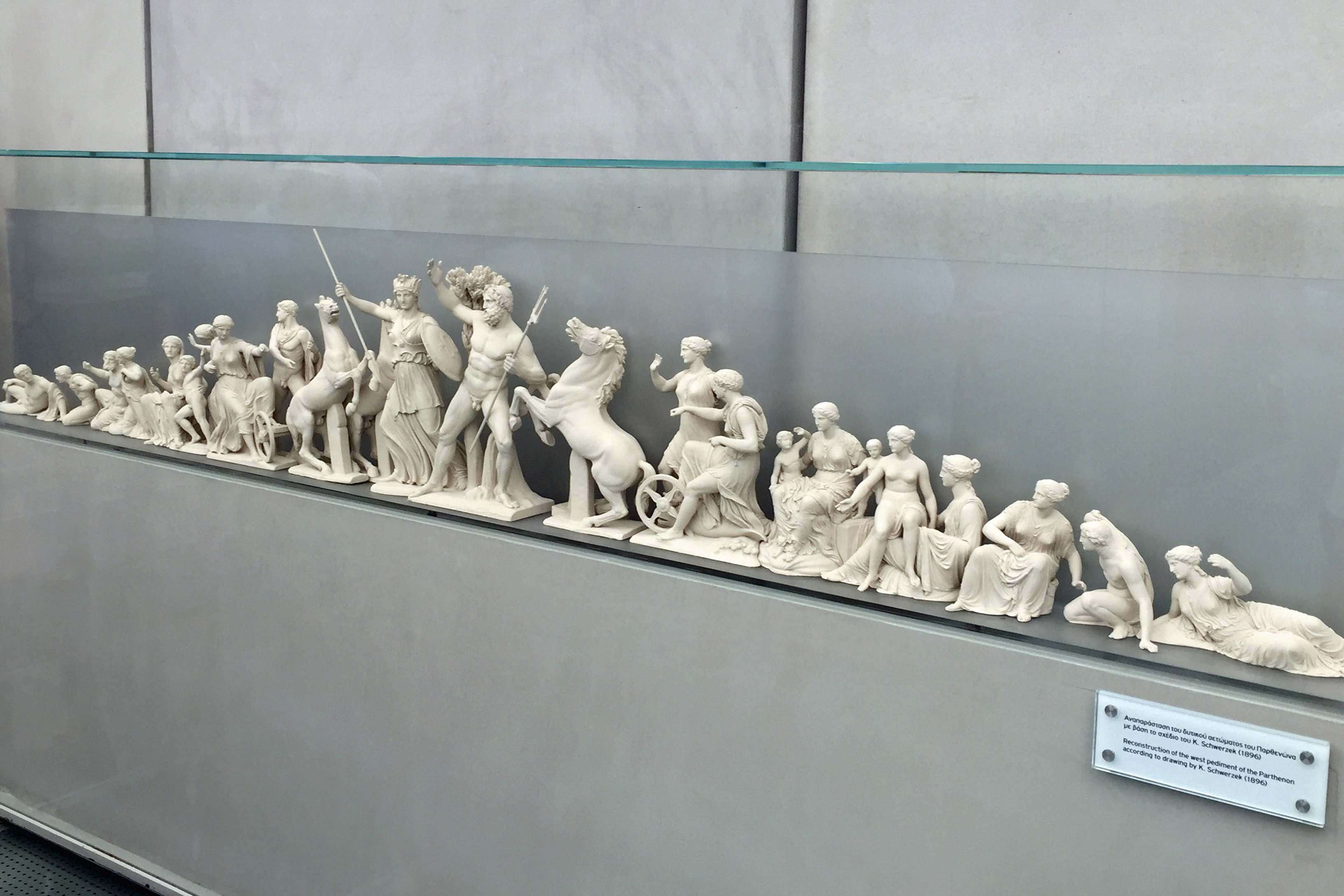
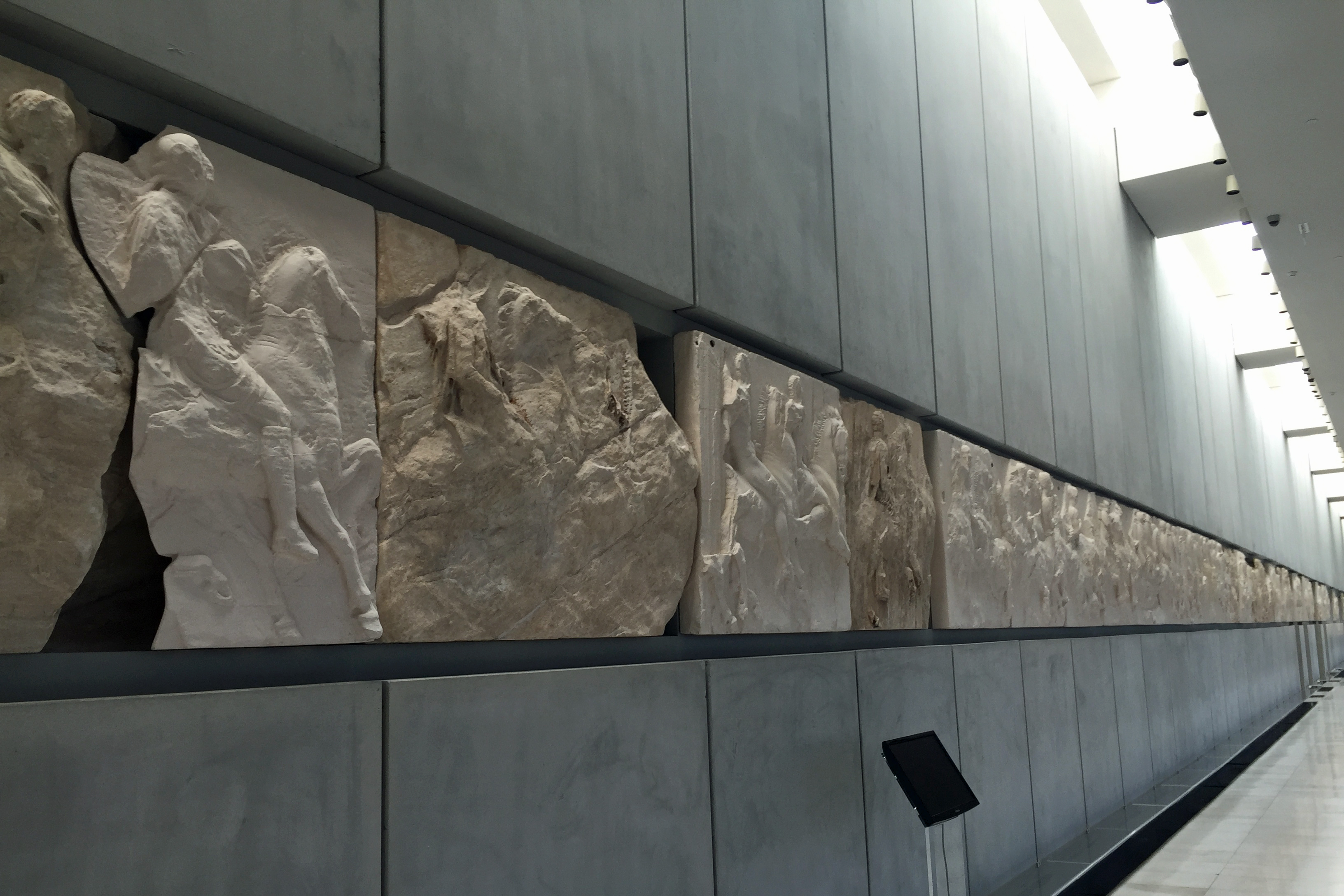
The Museum has 50 meters of the original frieze, with 80 meters in the British Museum. How sad that so many pieces remain outside Greece!

Frieze, replica. July 2016

Frieze, replica. Acropolis Museum, July 2016

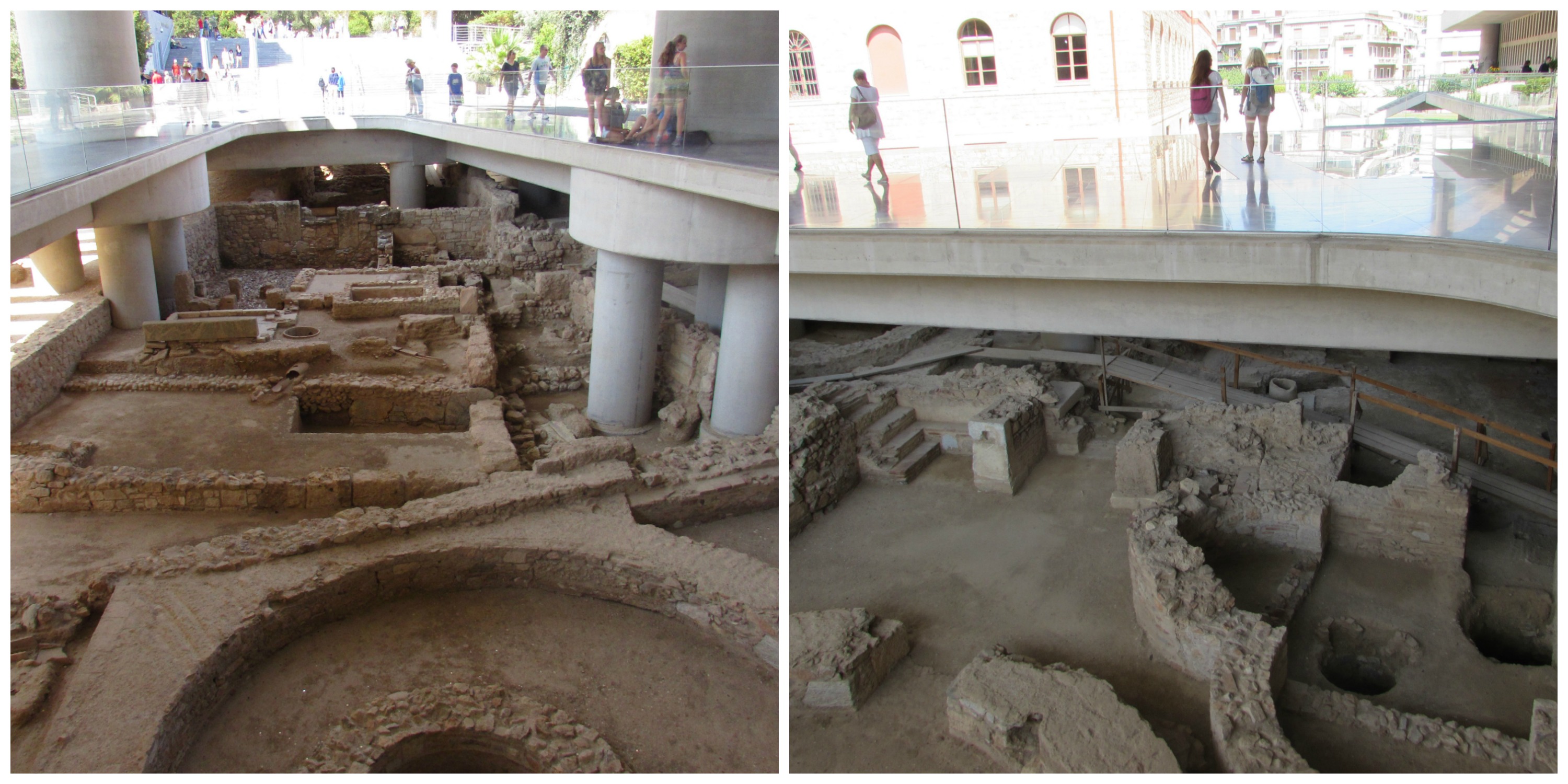
Just walking up to the Museum is an archaeological wonderland. A clear glass pathway reveals the treasures beneath; remnants of everyday life, millennia ago, have been meticulously preserved. It made me wonder how man could build on top of the historical cache below.
Under the Acropolis Museum, July 2016

Under the Acropolis Museum, July 2016

Wandering through the halls and viewing the displays is a historical feast. The photos below are but a sampling of the riches within. Photography is not allowed in most sections of the Museum, so our pictures are very limited. However, the Museum’s website has many magnificent photos:  http://www.theacropolismuseum.gr/en.

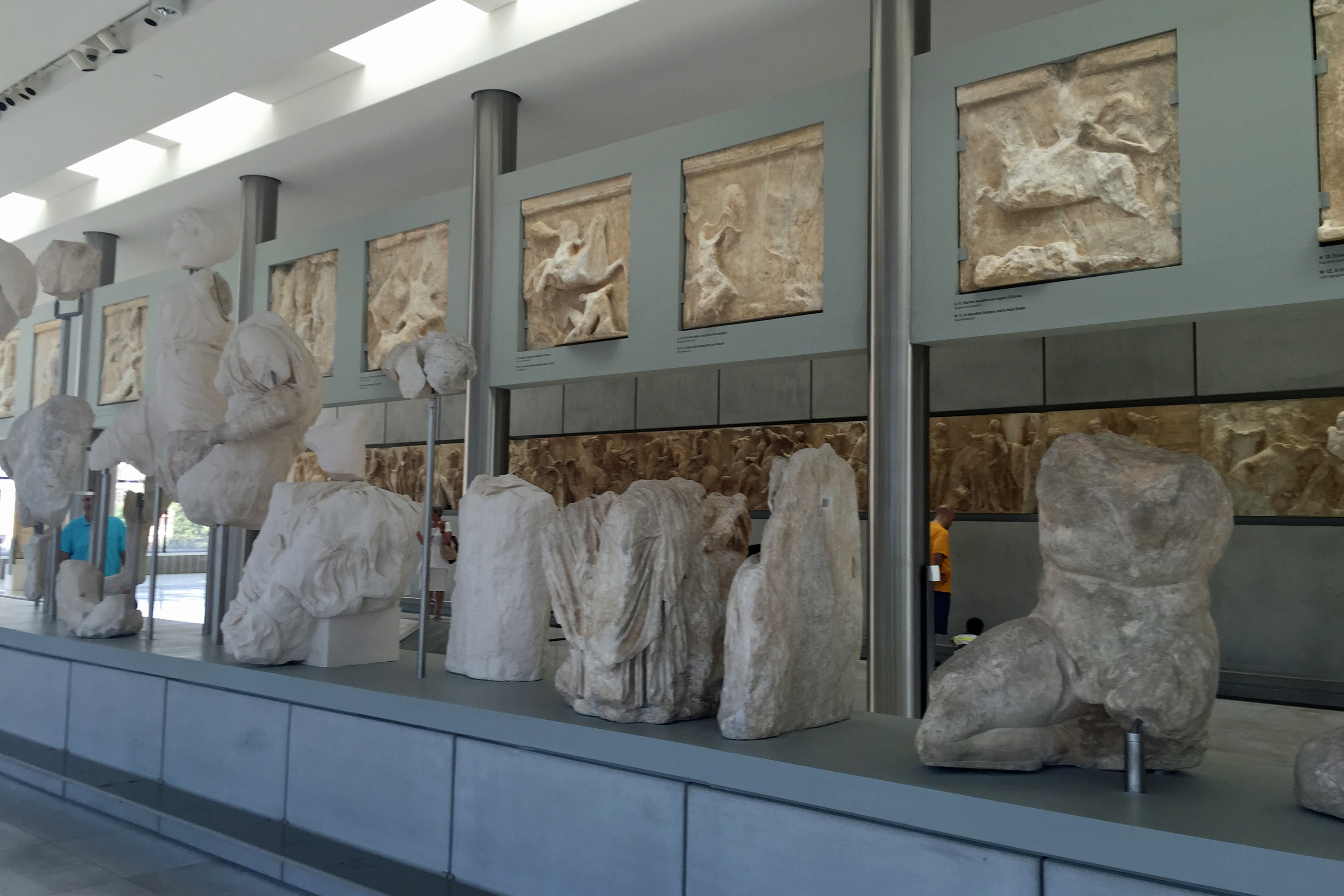
The Metopes and artifacts, July 2016

Artifacts, July 2016

The Metopes, depicting battle scenes; July 2016

The Metopes, depicting battle scenes; July 2016


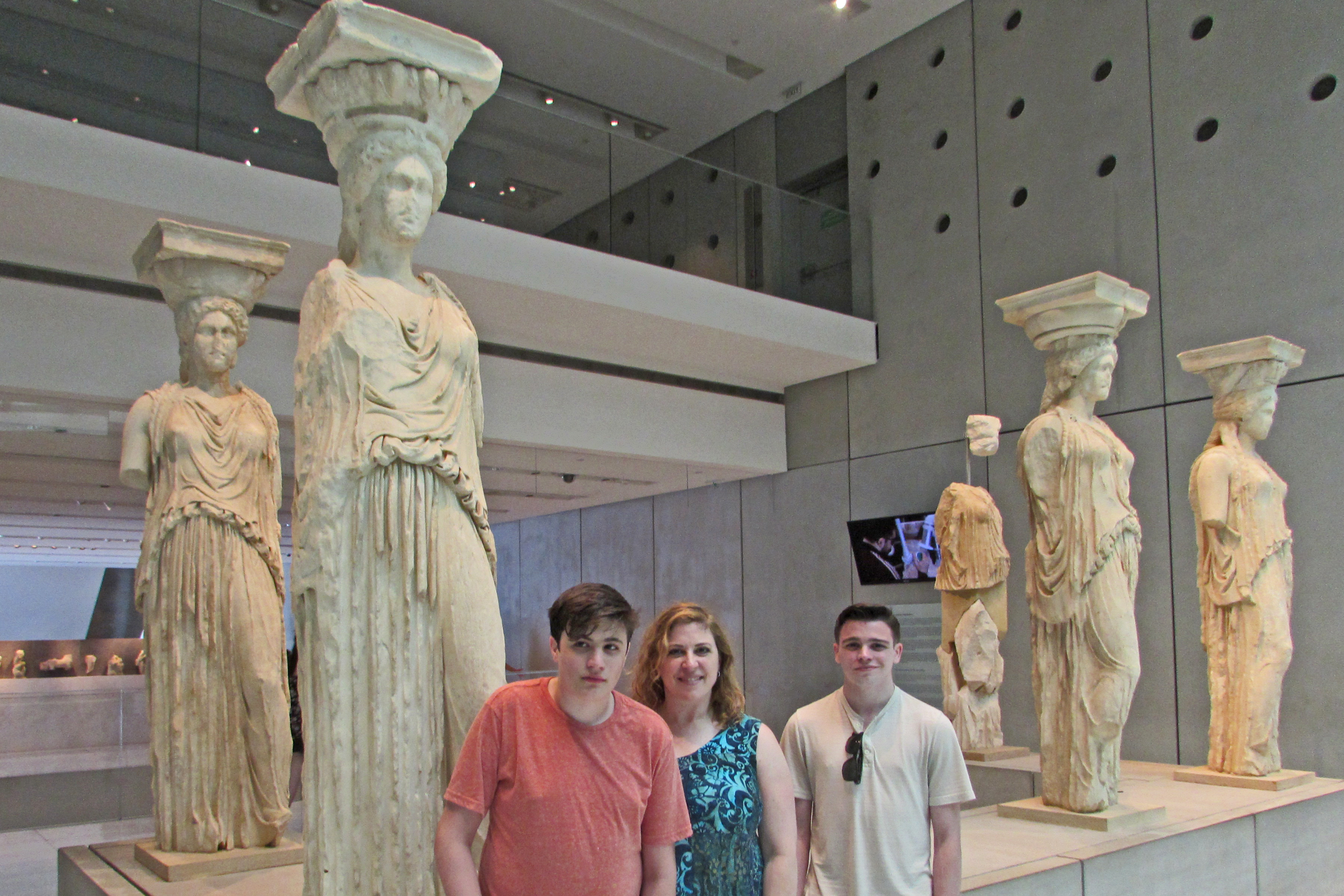
Andrew Soper, Kathy Lynard, Ben Soper in front of the Karyatides, July 2016

Andrew Soper, Kathy Lynard, Ben Soper in front of the Karyatides, July 2016


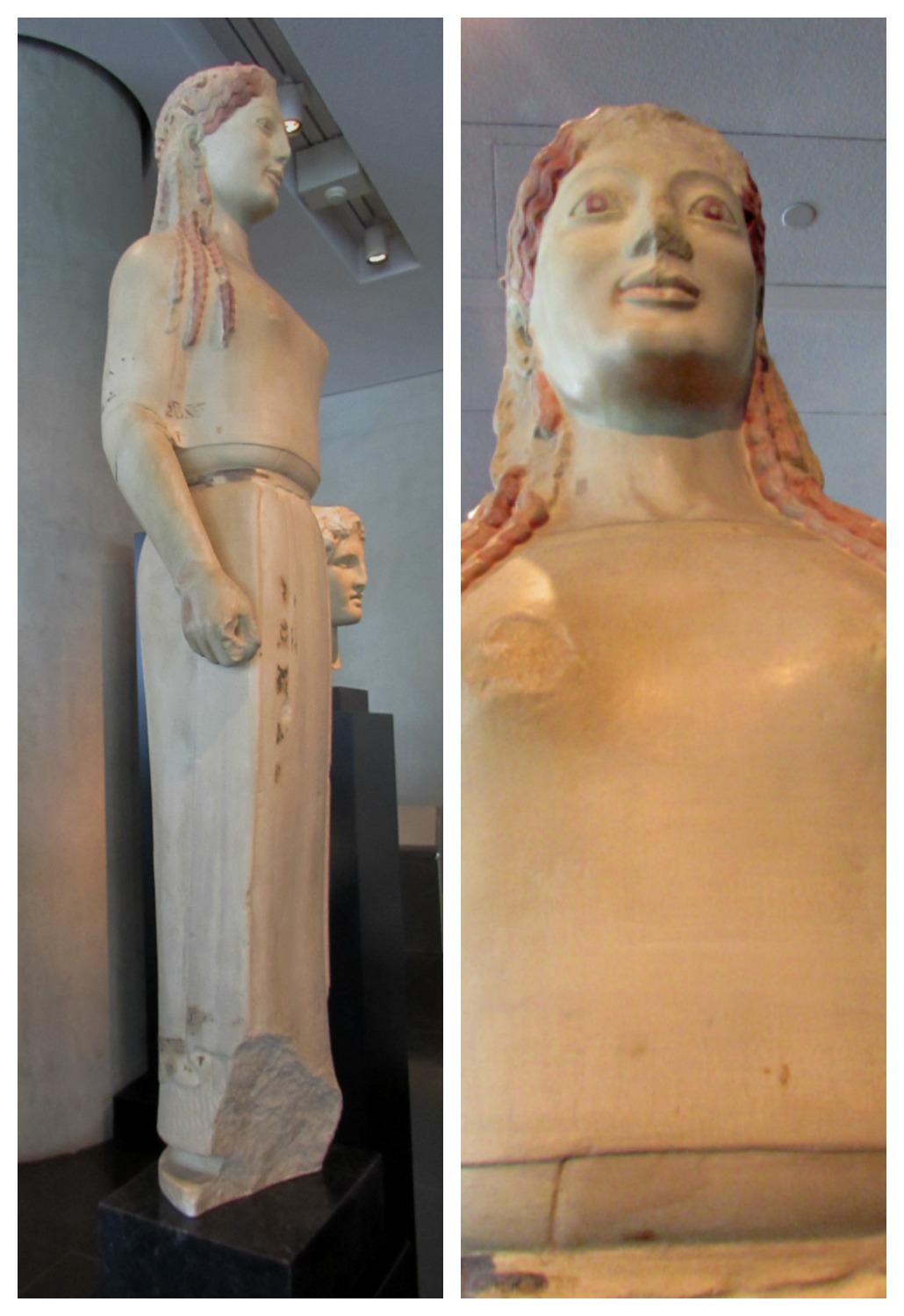
Ancient beauty, July 2016

Ancient beauty, July 2016

Windows encasing the museum provide astounding views of the area around the Acropolis, known as the Plaka. Waiting until the cool of evening to explore the Plaka is a wise move in July! The area is filled with hundreds of shops and tavernas. Both tourists and locals throng the area long into the night; shops don’t close until midnight and the tavernas stay open long after. You can buy anything from trinkets to precious jewelry to replicas of ancient artifacts. Accenting the streets are yet more monuments–a constant reminder of where you are and what this city has been, as well as what it is today.

A constant reminder of where you are! Plaka, July 2016

A constant reminder of where you are! Plaka, July 2016

Plaka, July 2016

Plaka, July 2016