Visiting the Villages: Zarafona

When a family moves from one village to another, the natives of their new “horio” may refer to them as the people from [name of their former village]. That is exactly what happened to my third great-grandfather, Panagiotis Zarafonitis. Sometime in the mid-1800s, he left his mountain village of Zarafona and settled in the fertile plains of Sparta, specifically the village of Sklavochori (now part of Amykles).

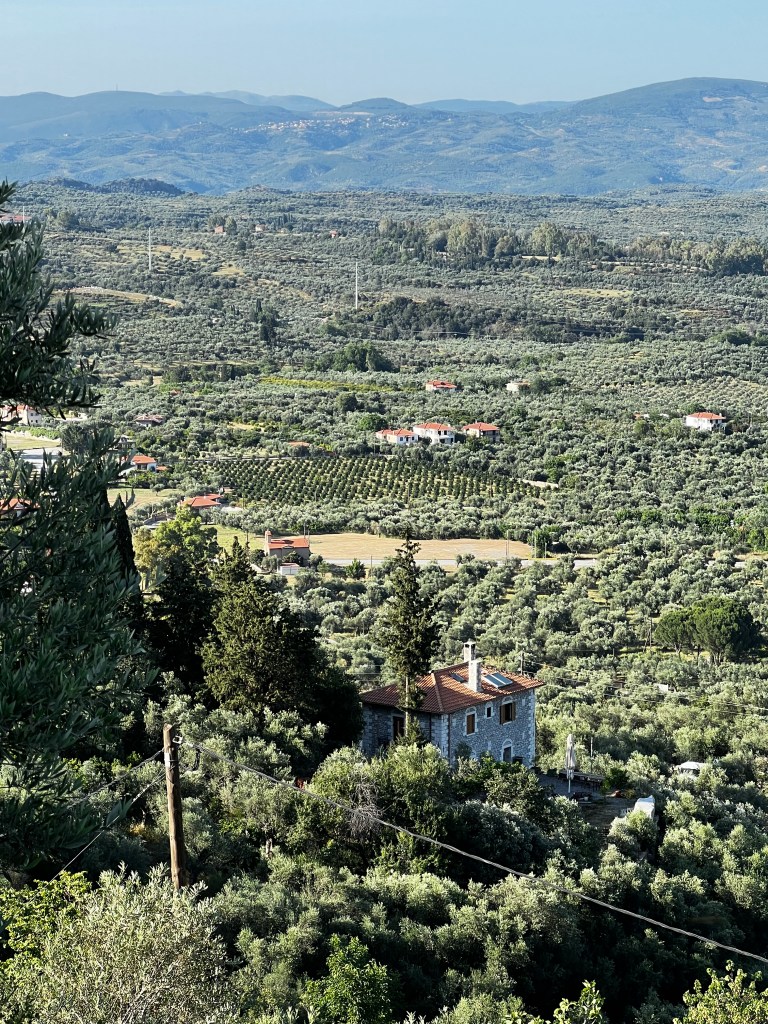
One of several mountain paths that the Zarafonitis family could have walked to settle in the valley.

He became known as Zarafonitis, the man from Zarafona. His original surname is unknown. The Zarafonitis family of Amykles claims that there were two Zarafona families who settled in Amykles: Mazis and Tountas. Another comment was that the Maltezos family of Zarafona also came to Amykles. Because the migration most likely occurred after the Revolution of 1821 ended, around 1830–before records were created by the modern Greek state–the name will have to remain a mystery.

The village of Zarafona

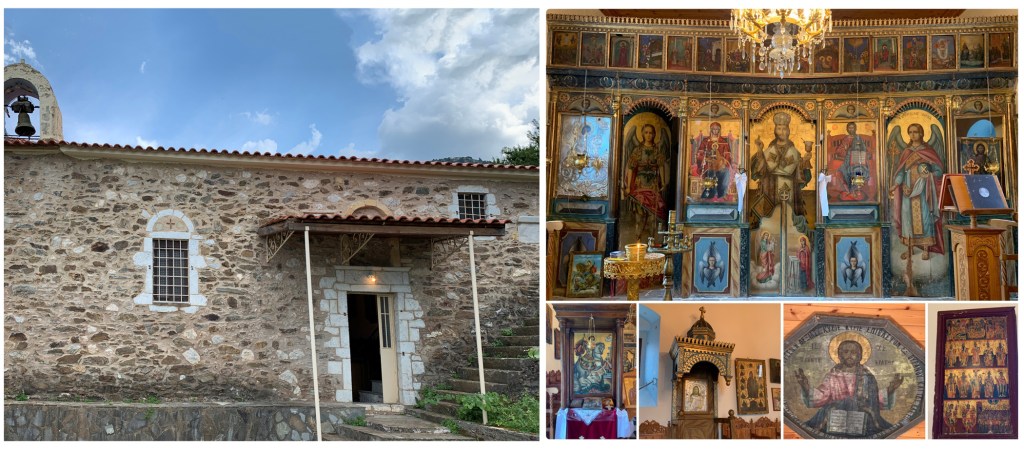
Zarafona, also known as Kallithea, is most likely ancient and surely pre-dates Byzantium. Its church, Enniamera tis Panagias / Εννιάμερα της Παναγίας (Nine Days of the Virgin Mary) was built in the 10th century.

The Byzantine Church of Zarafona

The village has a castle which towers at the top of a mountain. “According to an inscription found on the west external wall, the castle was constructed in the period that the Despotate of Moreas was governed by Theodoros II Paleologos (1407-1448). Therefore it was a construction of the first half of the 15th century, part of the effort of the Byzantines to confront the Ottoman threat.”1 The short video below shows both the castle and the surrounding countryside.

Castle of Zarafona; photo from Kastrologos

With the castle as a fortress, one can conclude that the Zarafonites were activey engaged in thwarting the Ottoman incursion into their territory. It’s rather thrilling to imagine Panagiotis Zarafonitis and others in active opposition to this threat, and their jubilation when the Ottomans were defeated.

It makes sense that, after their freedom was secured, Panagiotis did exactly as so many others — go down from the mountain to settle in the fertile valley.2 I know he was there by 1849, the approximate year of the birth of my second great grandmother, Giannoula, in Sklavochori.3

Park adjacent to the plateia

Zarafona is an agricultural community. Crops such as olives, citrus fruits, vegetables, and grapes are cultivated. The region has a long history of wine production. The village is peaceful and the neat gardens and livestock give it a homey atmosphere.
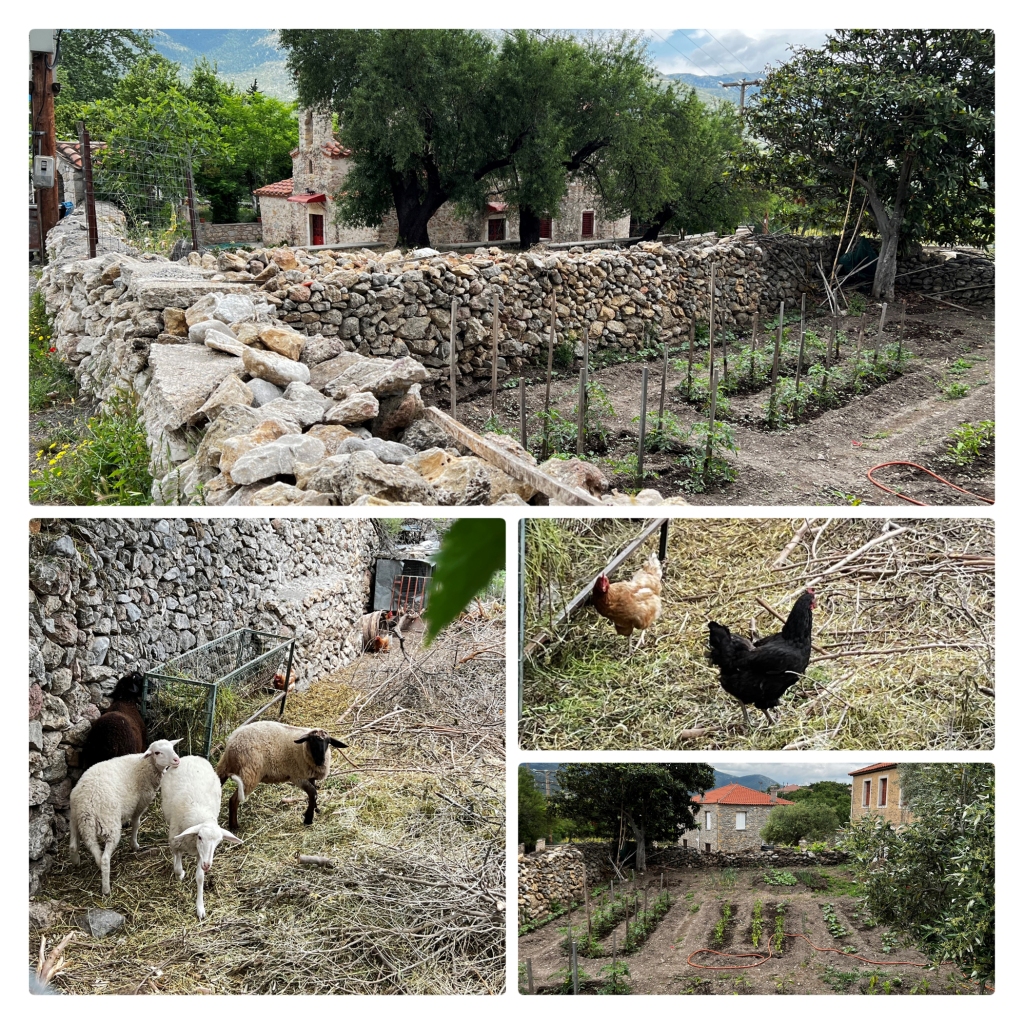
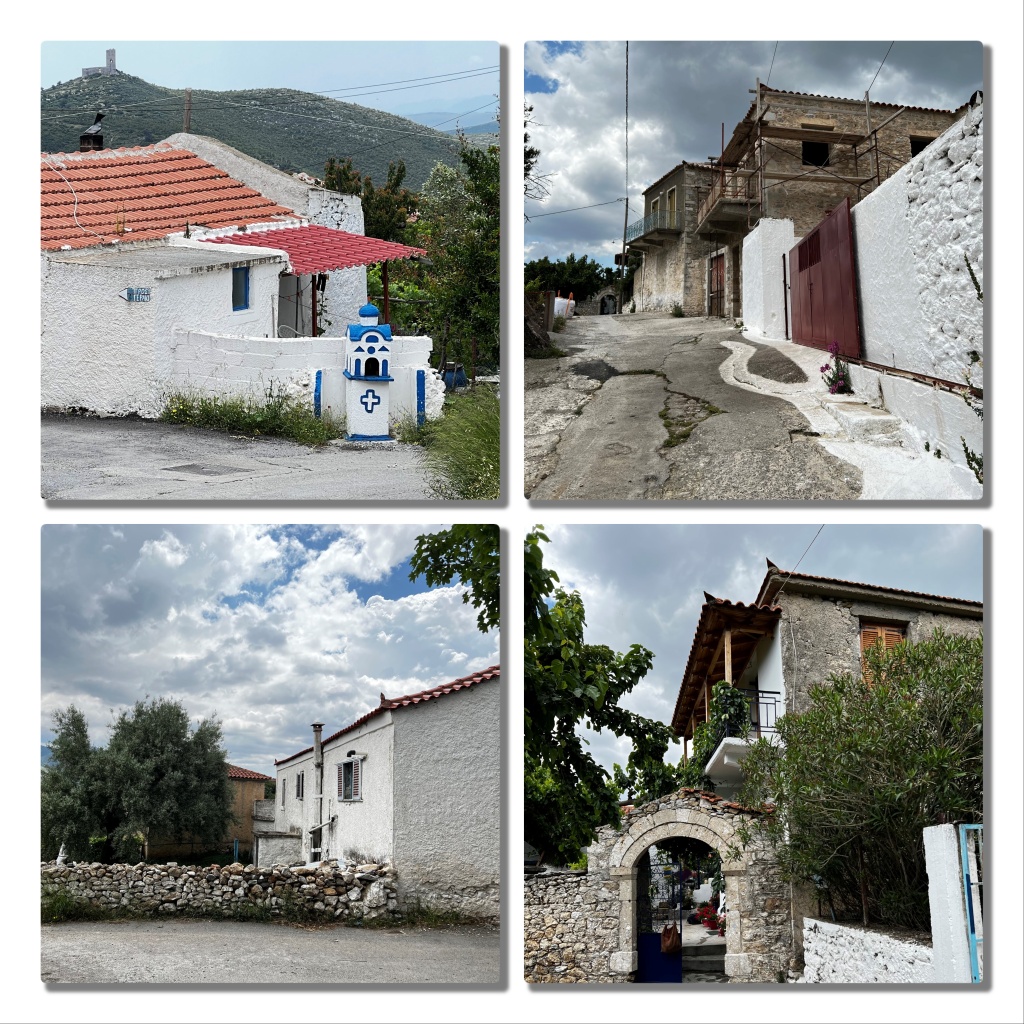
Sheep, chickens and gardens make Zarafona feel comfortable and homey
Traditional stone houses; some whitewashed and some natural stone. All neatly maintained
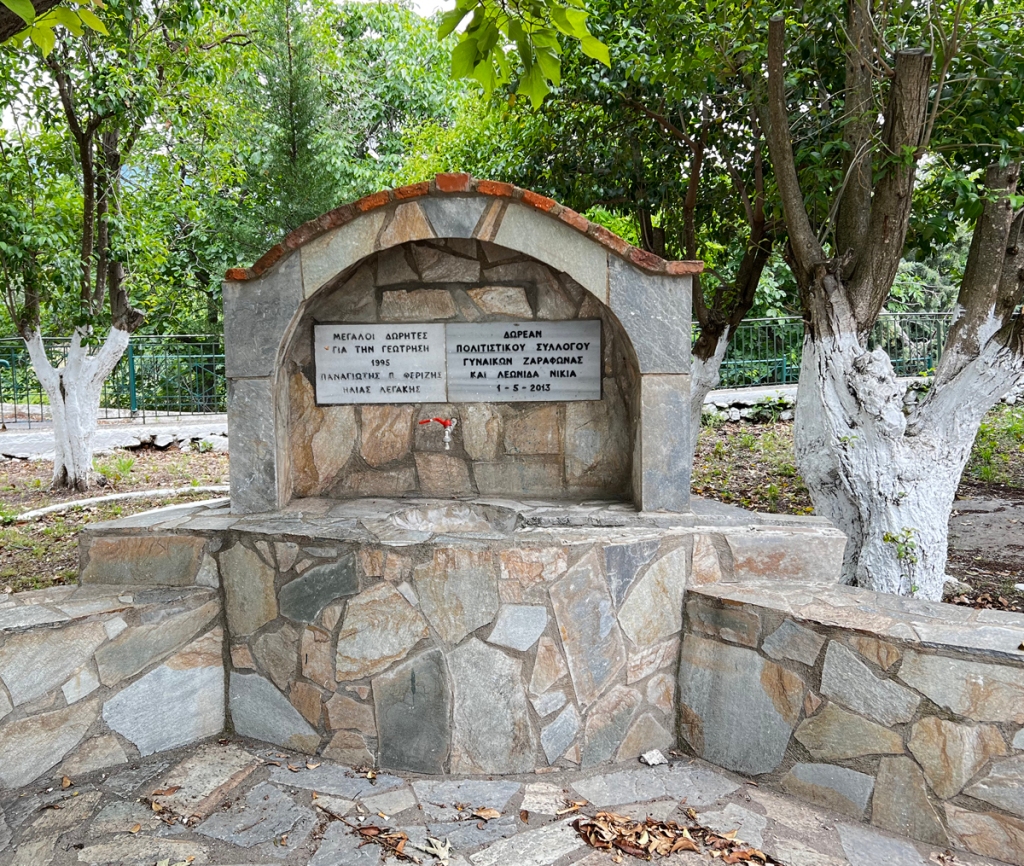
There are two signs on this well.
Left: Major donors for drilling, 1995; Panagiotis P. Ferizis; Ilias Legakis
Right: Gift from the Zarafona Women’s Syllogos and Leonida Nikia, 1-5-2013
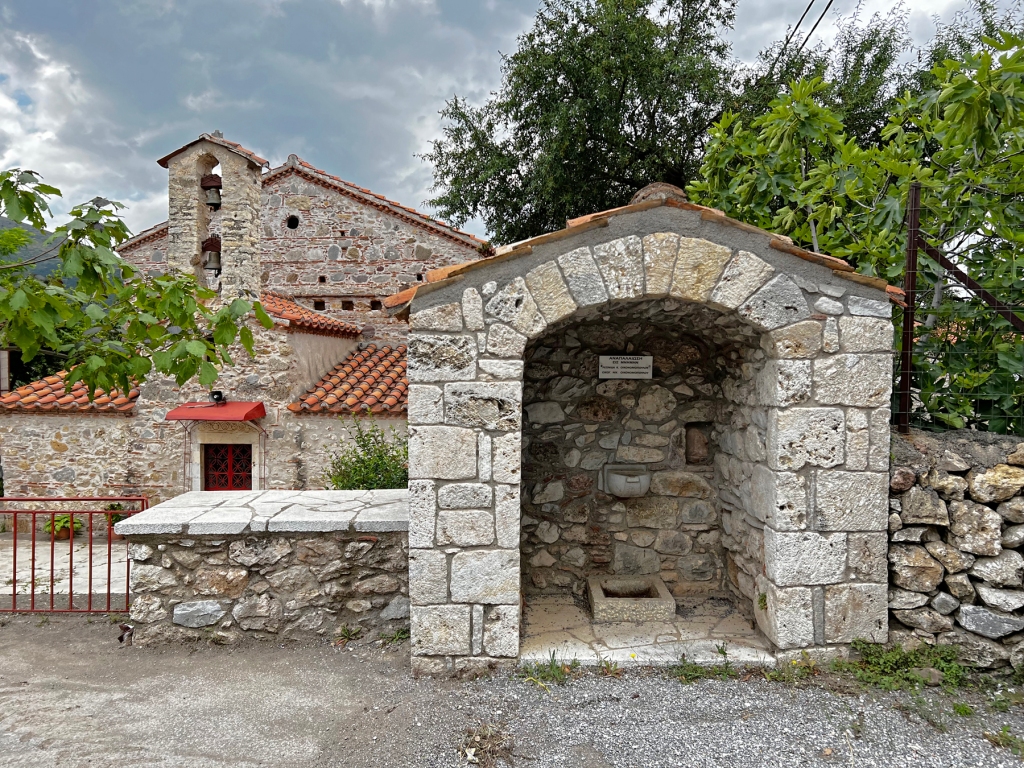
Another well, adjacent to the church, in memory of Leonida K. and [?] Nik. Oikonomopoulos
War Memorial
1912-1940: S.K. Voudouris; P I. Ferizis ;I. D. Chrysikos; I. V. Maltezos; P. G. Maltezos; G. N. Voudouris; I. P. Giakas; P. Ch. Farlekas; K. D. Stamatopoulos; N. Th. Oikonomopoulos; I. H. Douvris; Ef. Lochagos; N. G. Ferizis; S. P. Maltezos; P. V. Flogos; I. P. Manousopoulos
1940-1949: P. D. Karakitsos; G. I. Plagakis; Chr. P. Katranis; D. I. Nikias; E. P. Oikonomopoulos; P. G. Danas; I. G. Koumoutzis; G. Th. Vlachos; I. P. Oikonomakis; H. I. Danas

I thank Yanni Lambrinakos for taking me to see this village. His knowledge of the area and its people have helped me better understand this branch of my ancestral roots.


1Source: Kastrologos
2For migration patterns after the Revolution, see this post.
3Giannoula’s marriage record to Dimitrios Nikolaos Zacharakis on April 18, 1869 states her residence as Sklavochori. I estimate her birth at 20 years prior to marriage.
Metropolis of Sparta, Marriage Index Book
Book: Sparta, 1866-1872; Year: 1869; Entries: 88-94
Entry  #89
License Date: April 18, 1869
Marriage Date: not given
Groom:  Dimitrios Zacharakis, no father listed; residence: Theologos
Bride:  Giannoula Zarafonitou; father: P., residence: Sklavochori
Church Name:  not given
First marriage for both bride and groom
Photographed at the Metropolis of Sparta in Sparta, Greece by Carol Kostakos Petranek, July 2017

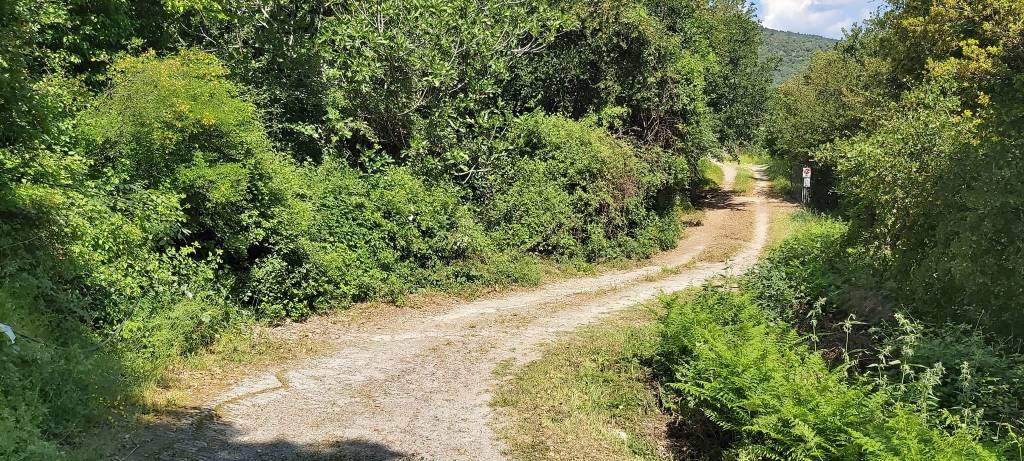
  

The Road to Barsinikos/Taygeti

“Do you know how the first roads in the mountains were built before explosives were used?” my cousin, Panos. asked. “They loaded a donkey with a heavy pack, then watched where it walked up the mountain. Where it went, they cleared a path.” Over time, these passages widened to become dirt roads.

To those of us living in countries where governments construct and maintain roads, it comes as quite a surprise to learn that this is not always the case in parts of rural Greece. For many villages situated on mountainsides, roads are financed and constructed by local communities. Especially in the early years of the 20th century, villagers often provided the manual labor: they moved rocks and removed tree stumps, cleared the roadbed, and leveled and smoothed the ground.

Well into the later years of the 20th century, the roads to many Spartan villagers were primitive, at best. If there was pavement, it was worn and littered with rocks. When I was in Agios Ioannis, Sparta, in 1996, I wanted to visit Anavryti, situated at the top of a mountain. My husband and I got in our rental car and started up the narrow, rocky, switchback road. We had barely started the upward climb when we saw a dump truck coming down towards us. With no space for both vehicles, we put the car in reverse. Backing down a winding mountain road was terrifying!

The road to Anavryti as seen from Agios Ioannis

That panicked moment was my first experience with the mountain roads of Sparta. Now, I love driving them. Ascending the Taygetos and Parnon ranges, magnificent vistas appear. I hit the brakes, put the car in park, and get out to take photos. The steeper the climb, the lovelier the view.

Looking down to Sparta from the road to Barsinikos

Joanne Dimitrakakis, a native of Barsinikos/Taygeti, owns and operates a beautiful guesthouse, Arxoniko Taygeti, high upon a towering mountain of Taygetos.

Arxontiko Taygeti, guest house of Joanne Dimitrakakis

To get there, one must traverse the road to Barsinikos which winds back and forth, ever ascending upwards. The beauty of the road changes with the seasons.

Before 1975, there was no car road from Mystras to Barsinikos; all that existed was a dirt trail. Three men from the village, who had emigrated to America, returned to their ancestral home and concluded there should be a road to Barsinikos. In August 1975 they organized a syllogos (committee) based in Mystras. A board with officers was elected, and the newly elected members wrote a constitution and decided on the formal name of the committee: Progressive Syllogos Taygeti Mystras.

The primary goals of the syllogos were:

  1. To collect money to open the car road from Mystras to the village of Taygeti/Barsinikos
  2. To improve the village and the surrounding environment of Taygeti
  3. Maintain the full cooperation of the community officers until the end of the project
  4. Plan and execute any other work in conjunction with the scope of the project

It was decided that the work would begin on September 2, 1975. The plan was approved by the committee.

The syllogos arranged the practical and procedural matters for road construction. Their discussions included the types of machinery needed, such as two bulldozers and an air compressor, and the workers to be hired. Preserving the natural landscape and the village was always a top priority. The syllogos received the full cooperation of the community leaders for both the road project and whatever additional projects would arise.

The syllogos was responsible for accepting and tracking donations received for the construction project. Money came from organizations and individuals in many countries including Greece, America and as far as Australia. Donations ranged from 1,000 to 67,000 drachmas. In total, almost 315,000 drachmas were initially collected in one month (by October 1975). Fundraising events at panegyris (village festivals) and other activities such as raffles, brought in additional money.

The path of the road was decided and land was donated by those whose property was to be accessed. If a landowner refused to allow passage, the road had to be routed around his property. Thus, the final product has some interesting twists and turns.

The construction took 2-1/2 years, and the road opened in 1977. The syllogos had enough funds left over and people kept donating money, so other projects were completed. Specifically, all the churches in and around the village were repaired and restored: Agios Nikolaos, Agios Dimitris, Agios Georgios, Koimisi tis Theotokou, Metamorphosis of Sotirios, Prophet Ilias, and the monastery of Zoodohos Pigi its the surrounding buildings. In addition, the school in Barsinikos, which had closed in 1968 due to lack of students, was restored with plans to use it as a museum.

Agios Georgios after its restoration. It is the primary church in Barsinikos

Unfortunately, further details of the road project do not exist. It would be so interesting to know how the work progressed, the problems that arose and how they were resolved. But for now, we can thank the syllogos for giving us a car road to access the villages and the natural beauty of this section of Taygetos mountains. Today, the road continues to be maintained by the local government.

Bulldozer clearing the road on June 14, 2023

I so appreciate the memories and assistance of Joanne Dimitrakakis in writing this post. (I love that we are distantly related through our Dimitrakakis families!)

The War Monument of Agios Ioannis, Sparta

My ancestral village, Agios Ioannis Sparta, has the distinction of being the first village in all of Lakonia to erect a Ηρώο (war monument), in 1930. These memorials are found in every village in Greece, usually at the plateia or near the church. They memorialize the men who were killed while fighting to defend our country.

I wrote a detailed post about this for the Agios Ioannis website, which can be found here. Photos of the monument and transcriptions of the fallen are included.

No written history of Agios Ioannis exists, and sharing facts such as this help to raise awareness of the village. I am proud!

Monastery of the Holy Forty Martyrs

Today, June 4, is the celebration of Pentecost, an important holiday in the Christian religion and a great feast in the Orthodox Church. It is celebrated fifty days after Easter and gets its name from that number (pente / πέντε). It commemorates the day the Holy Spirit descended on the apostles in Jerusalem, after which they were able to speak in tongues.

This morning my cousins took me to church services to one of the most important Byzantine monasteries in Lakonia, the Monastery of the Holy 40 Martyrs (Ιερα Μονη Αγιων Τεσσαρακοντα Μαρτυρων). The monastery takes its name from The Forty Martyrs of Sebaste. They were Roman soldiers who, in the year 320, were killed for not renouncing their Christian faith.1 Located by the village of Chrysafa, about 5 miles from Sparta, the Monastery is near the top of a mountain, surrounded by fields and olive trees. The original monastery was in a natural cave, initially founded in 1305 and situated northeast of its present location. It was moved to its present location in the 17th century.

Over time, stone buildings were constructed and the complex grew to meet the needs of an increasing number of monks and priests.

The Metropolis of Sparta designates the interior frescoes as “a miracle of Byzantine painting reaching the limits of high art.1” Painted against stone, their colors have remained vibrant throughout the centuries. Tiny windows filter the light to make the interior ethereal.

During the Ottoman dominion of Greece, the sultan issued a decree which granted the Monastery special privileges and kept it from Muslim desecration. Also, the Monastery possessed a document, Achtanames (testament) of Mohammed, which granted the clergy freedom to practice the Orthodox religion, exempted them from taxes and military duty, and ordered the Muslims to shield them from those who would do harm.2 It was an extraordinary document which ensured the preservation of the Monastery and the protection of its monks and priests.

The importance of the Orthodox Church in Greece cannot be understated. It is not simply a religion, but is a significant source of Greek identity–especially during periods of foreign occupation. Through thousands of years, it has been a driving force in preserving Greek culture, language and history. Its libraries hold manuscript codices and documents of historical value. It operates schools and seminaries, and provides social services such as hospitals, orphanages, and charitable organizations.

The Church played a pivotal role in the Greek Revolution of 1821. It fostered patriotism and unity among the citizens, as well as providing them moral support and spiritual guidance. Priests not only encouraged the fight for liberation, but also fought side-by-side with revolutionaries. Monasteries and churches became hospitals or military headquarters, and sources of income to meet the needs of the armies.

To understand Greeks, we must understand their country’s ties to the Church, its significance in the history of the country, and its role in the everyday lives of its people.


1Orthodox Wiki
2Source of historical information: Metropolis of Sparta and Momenvasia