Greece 2019 – Saturday in Mani

Digitizing the village church books of Laconia is both a privilege and a huge task. Having time on weekends to enjoy the sun and beauty of the land is both a delight and a necessity.  Yesterday, I drove to the port town of Gytheio, 45 minutes south of Sparta, to visit friends, Dina and Christina.

Along the waterfront of Gytheio

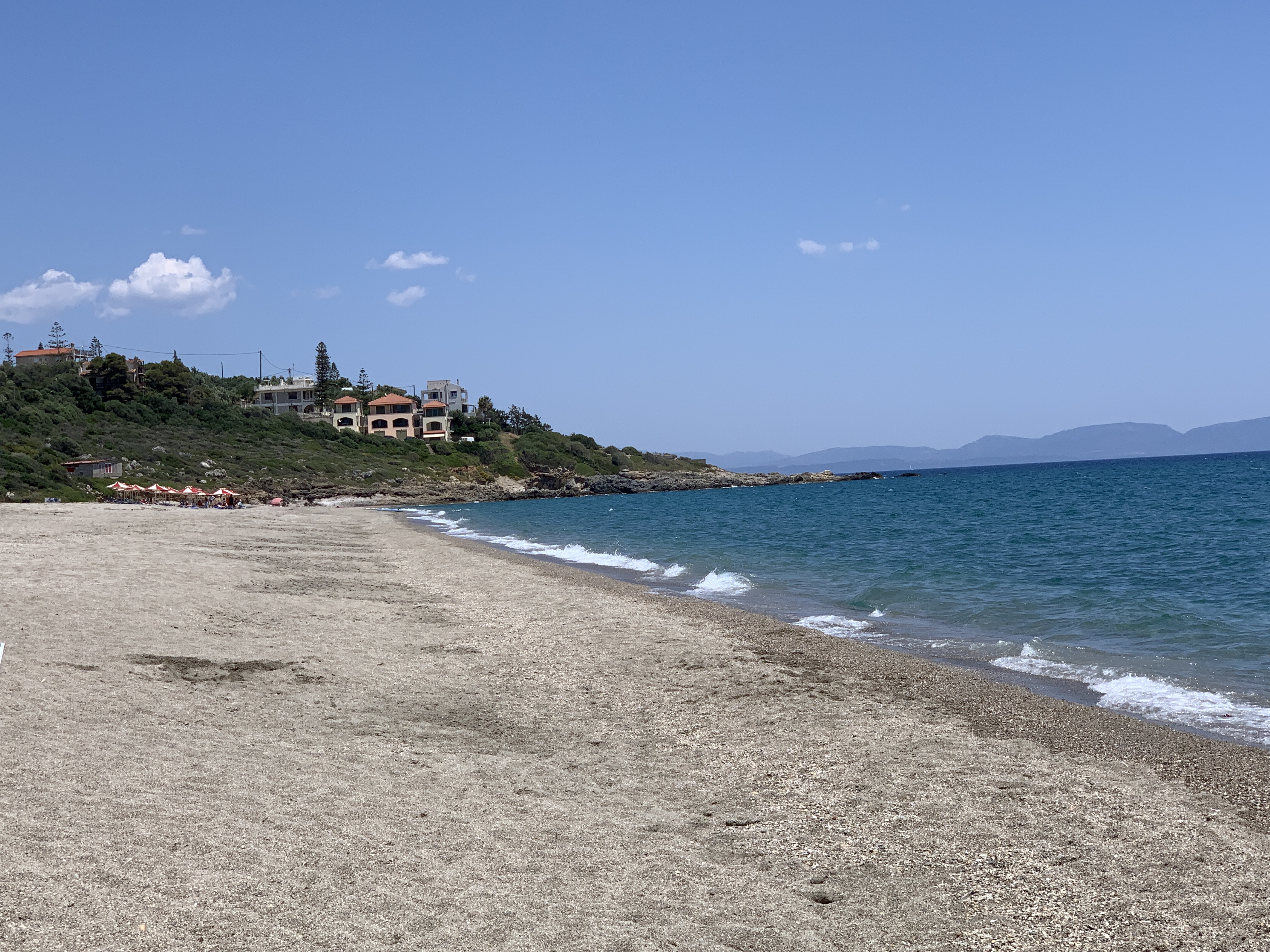
Mavrovouni Beach is adjacent to the town where locals and tourists can relax. There are many cottages, guest houses and hotels. The aquamarine water is perfectly clear.  I came here several times last year, as well, just to unwind and breathe clear air.

Mavrovouni Beach

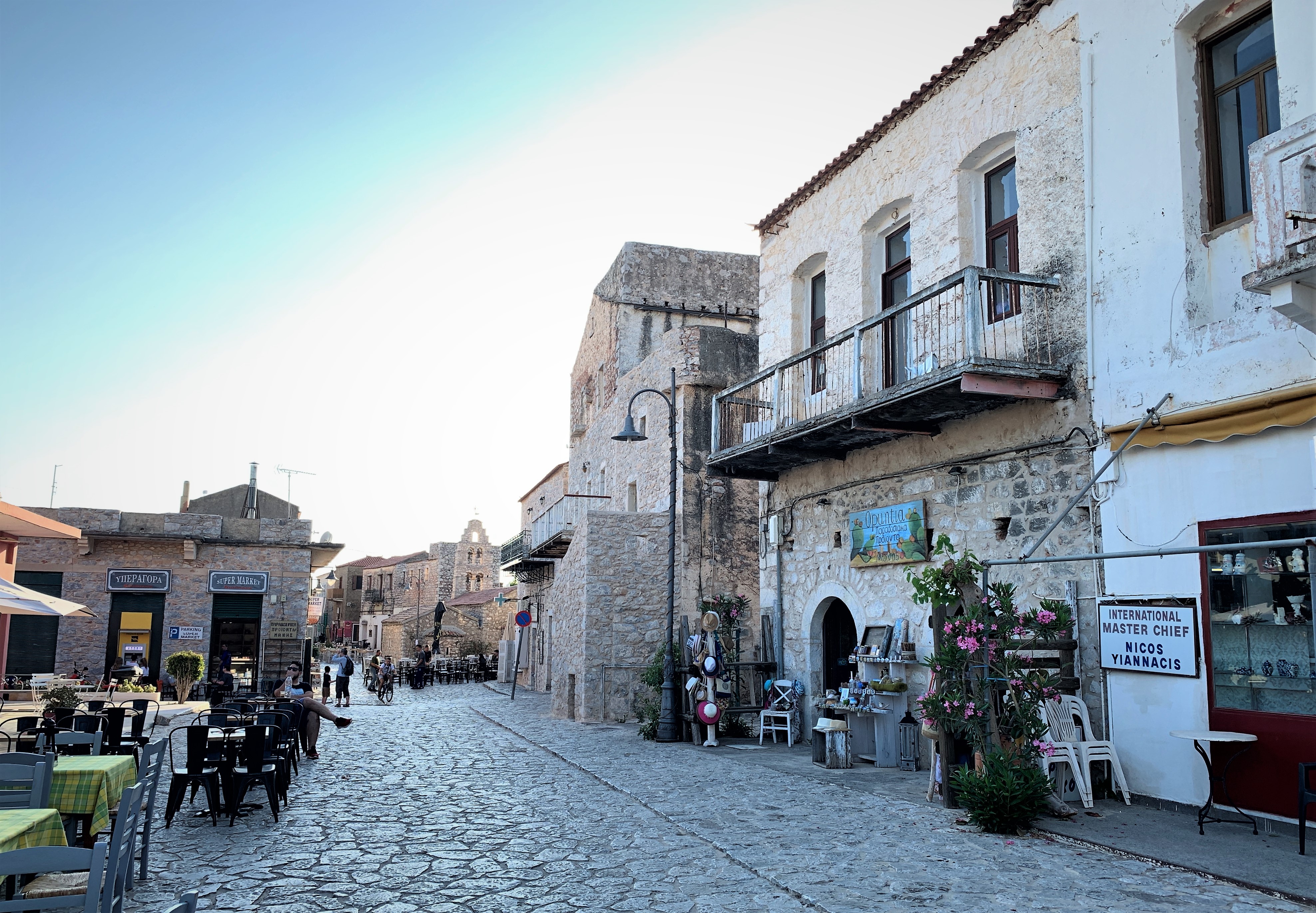
After a relaxing afternoon, the three of us drove to Aeropoli and Limeni in the Mani region of southern Laconia. There is no place like Aeropoli, a village of stone, with its distinctive Maniate tower architecture and gloried history. The Greek Independence Revolution began here on March 17, 1821. Today, it lures people with its unique character and charm. For me, it is a must to spend time here every summer.

A street in Aeropoli, Mani

Storefront on the main street, Aeropoli, Mani

Market in Aeropoli, Mani

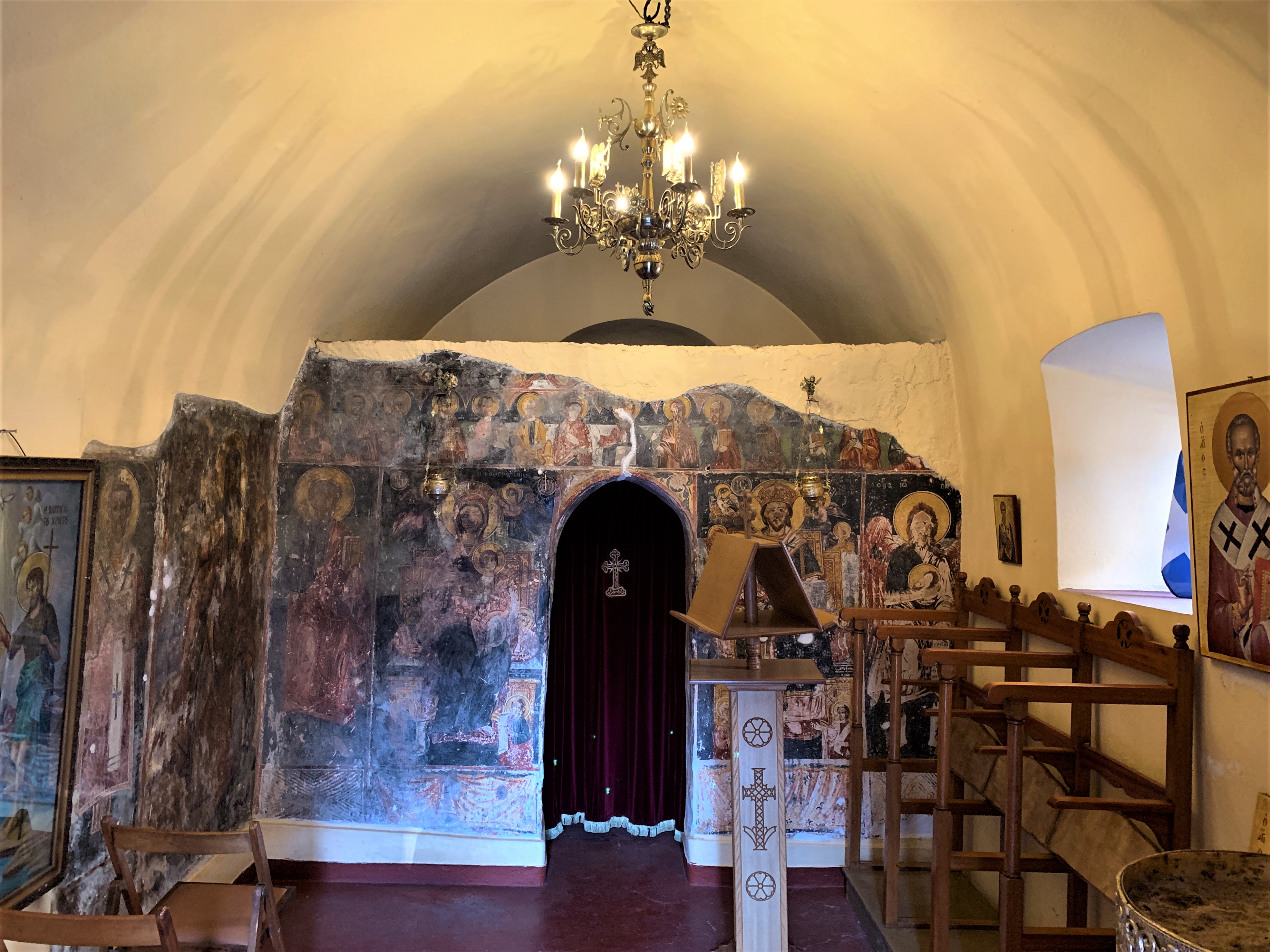
Frescoe inside one of the oldest churches in Aeropoli

The drive from Aeropoli to Limeni is less than 10 minutes. The winding road around the mountains provides spectacular views of the sea below.

The road to Limeni

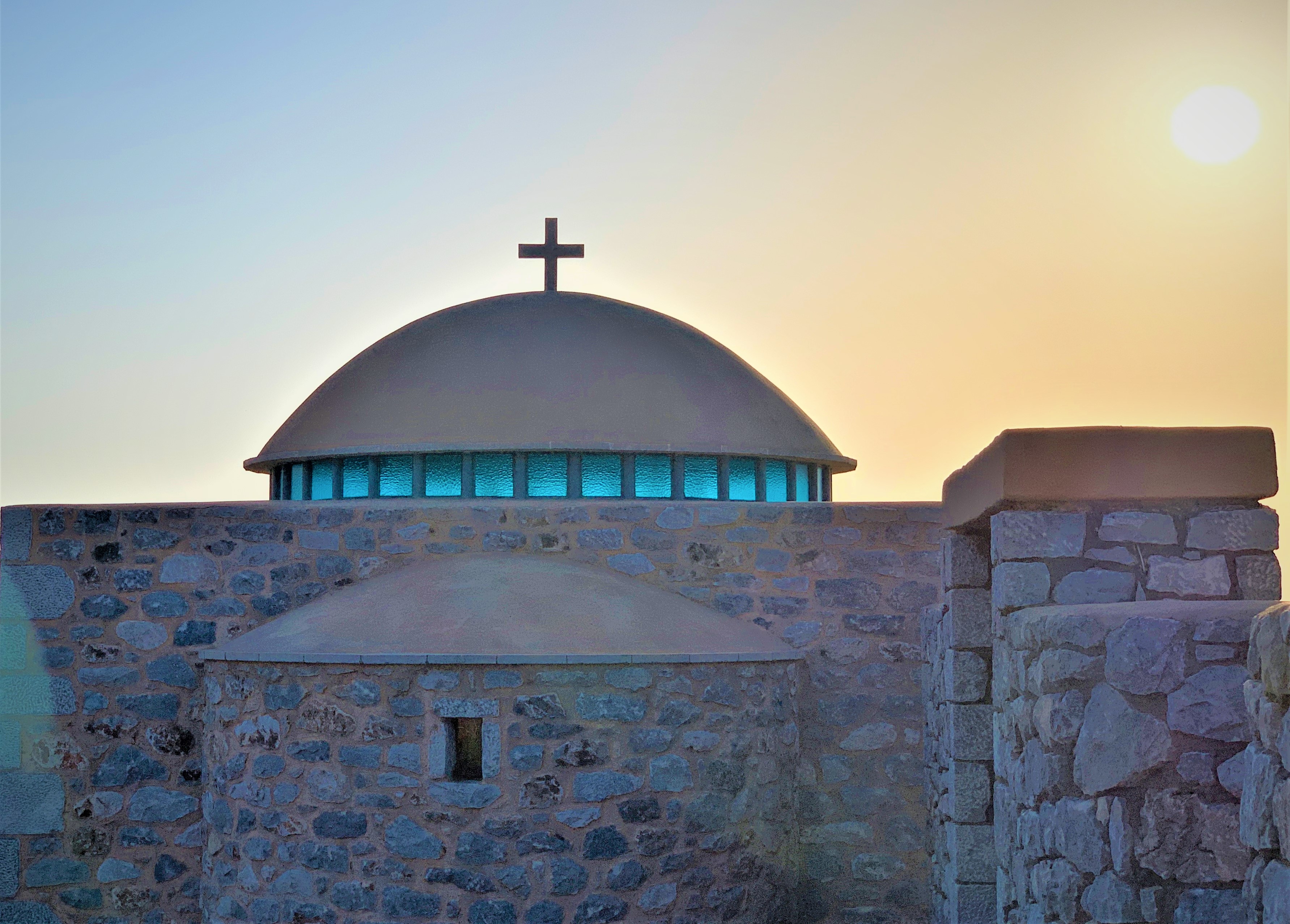
This church is a point of interest on the road, but last night the slant of the sun was low and for the first time, I noticed that the windows around the dome are blue! This illumination produced an ethereal light in the sacred building.

The fading sun illuminates the blue windows and creates an ethereal and heavenly light around the dome

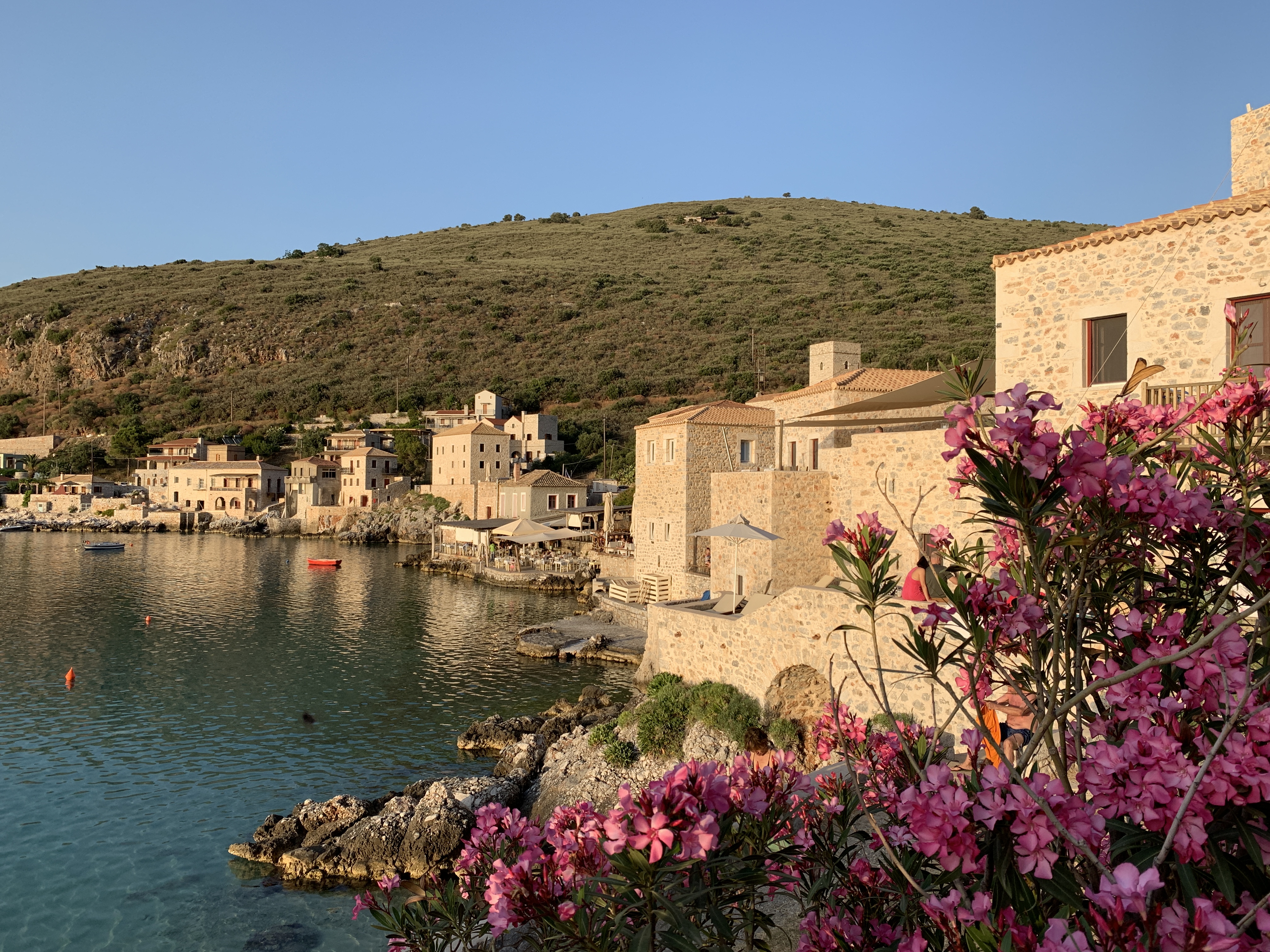
We reached Limeni at sunset. This is one of the loveliest places in Mani at anytime of day, but especially so when night is about to fall. The glow of the fading sun casts a golden light upon the stone buildings, producing a glow which is breathtaking.

Entering Limeni

Evening in Limeni

Homes nestled around the harbor

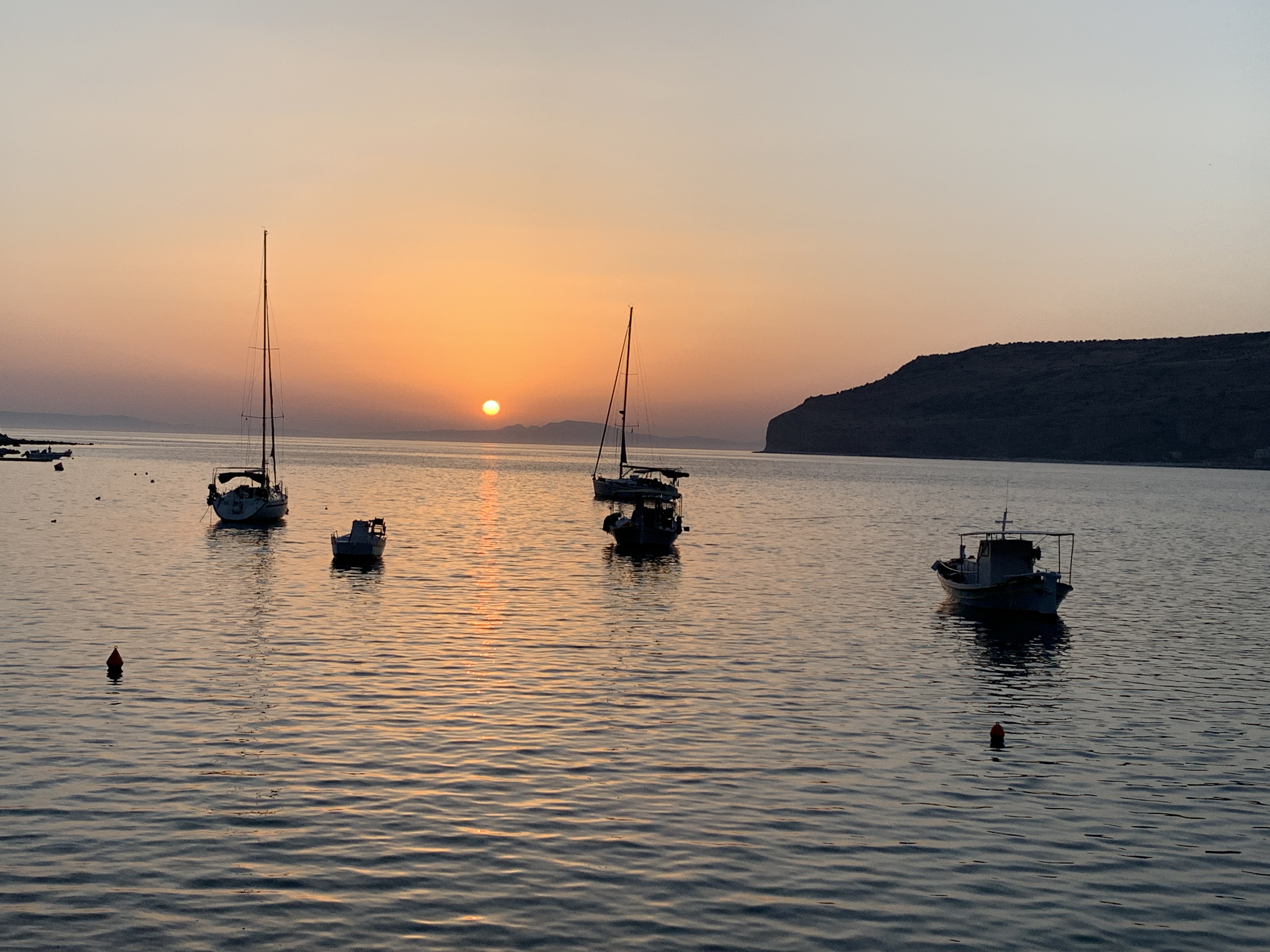
The rugged precipices of Mani are counterbalanced by the softness of sunset. The mountains and seas are enveloped in gold as another day passes and the beauty of the land waits to be rediscovered tomorrow.

Goodnight, Limeni

Greece 2019 – Delphi, Center of the Classical World

During the classical period of Greece (5th-4th centuries BC) Delphi was considered a most important religious center as well as the center of the world. The latter was designated by Zeus who, according to mythology, released two eagles into the sky. When their paths crossed at Delphi, the spot was marked by an oval rock known as the omphalos (navel of the earth).

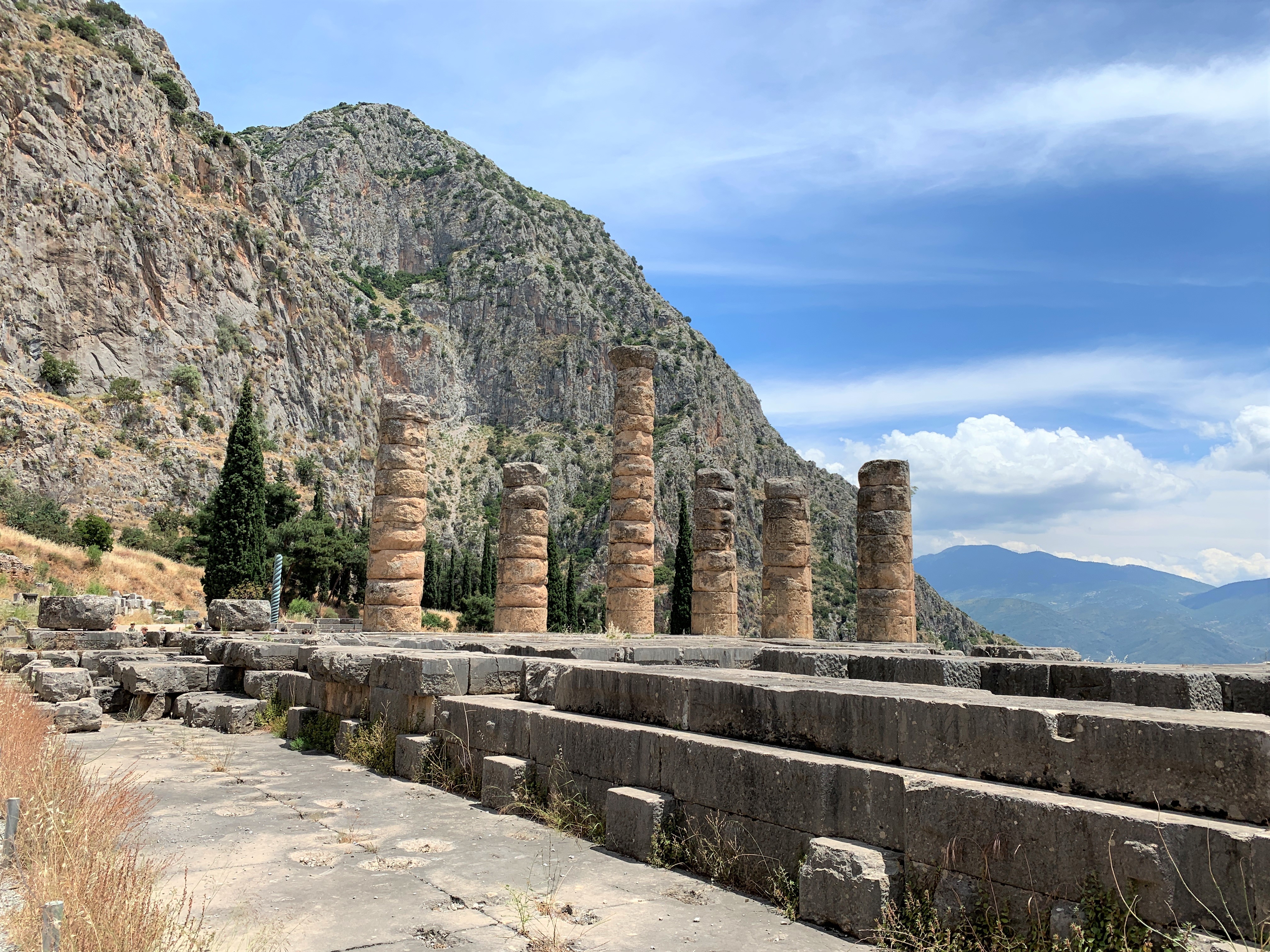
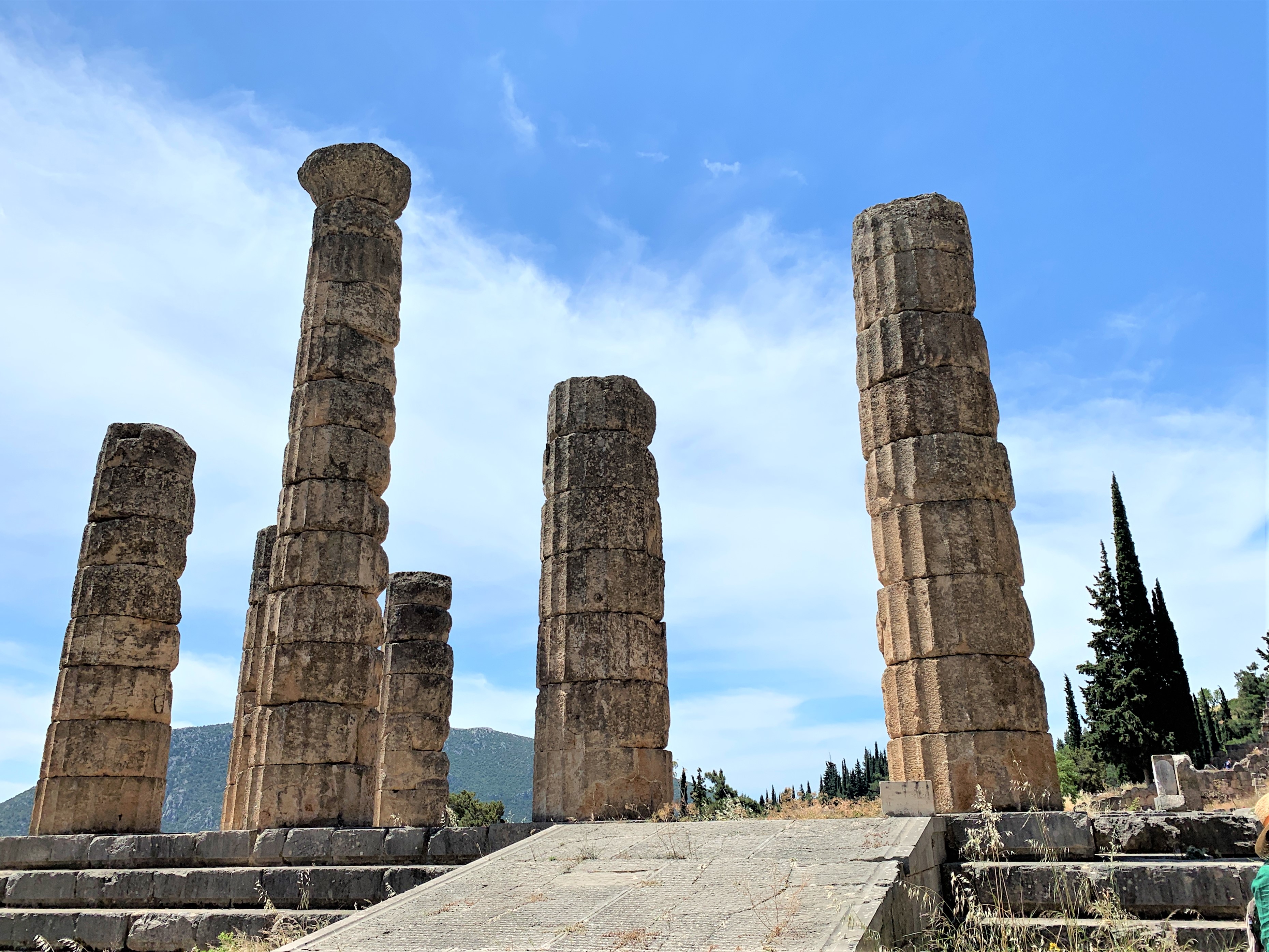
Remaining towers of the Temple of Apollo

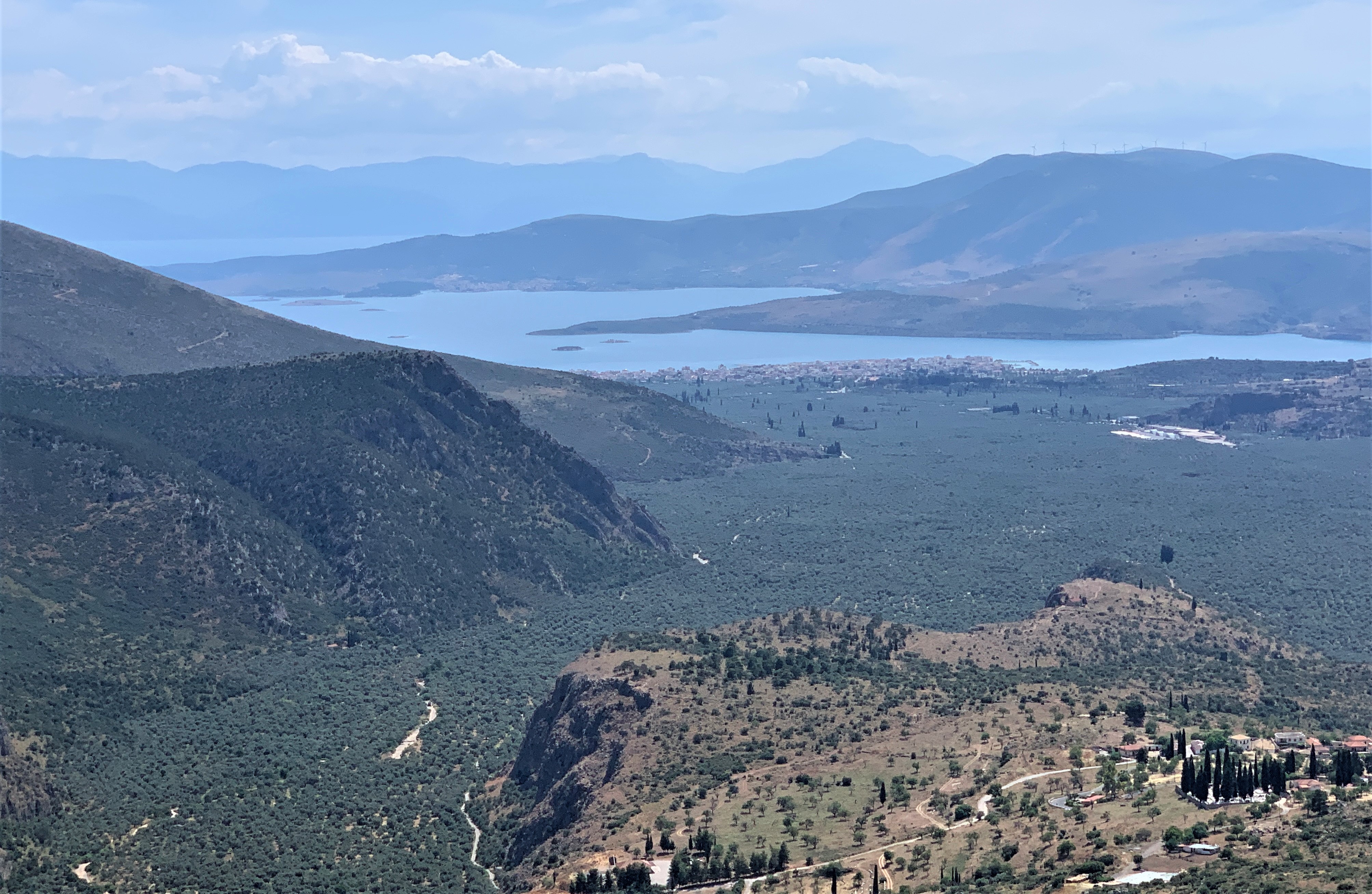
The site is atop Mt. Parnassus and oversees the Pleistos valley. A port on the Adriatic Sea, far below, was the maritime gateway to Delphi. It was here that pilgrims, goods and animals arrived by sea. The sacred site was for them–and remains–a long, hard and hot climb.

Far below Delphi, the Adriatic Sea is the maritime gateway

Delphi is dedicated to Apollo, whose imposing temple was its nexus. The oracle of Delphi was Pythia, High Priestess of the Temple of Apollo. Thousands of people made religious pilgrimages to seek answers to their most vexing issues. Rulers also consulted the oracle before making big decisions, such as engaging in war.

A closer view of the Temple pillars

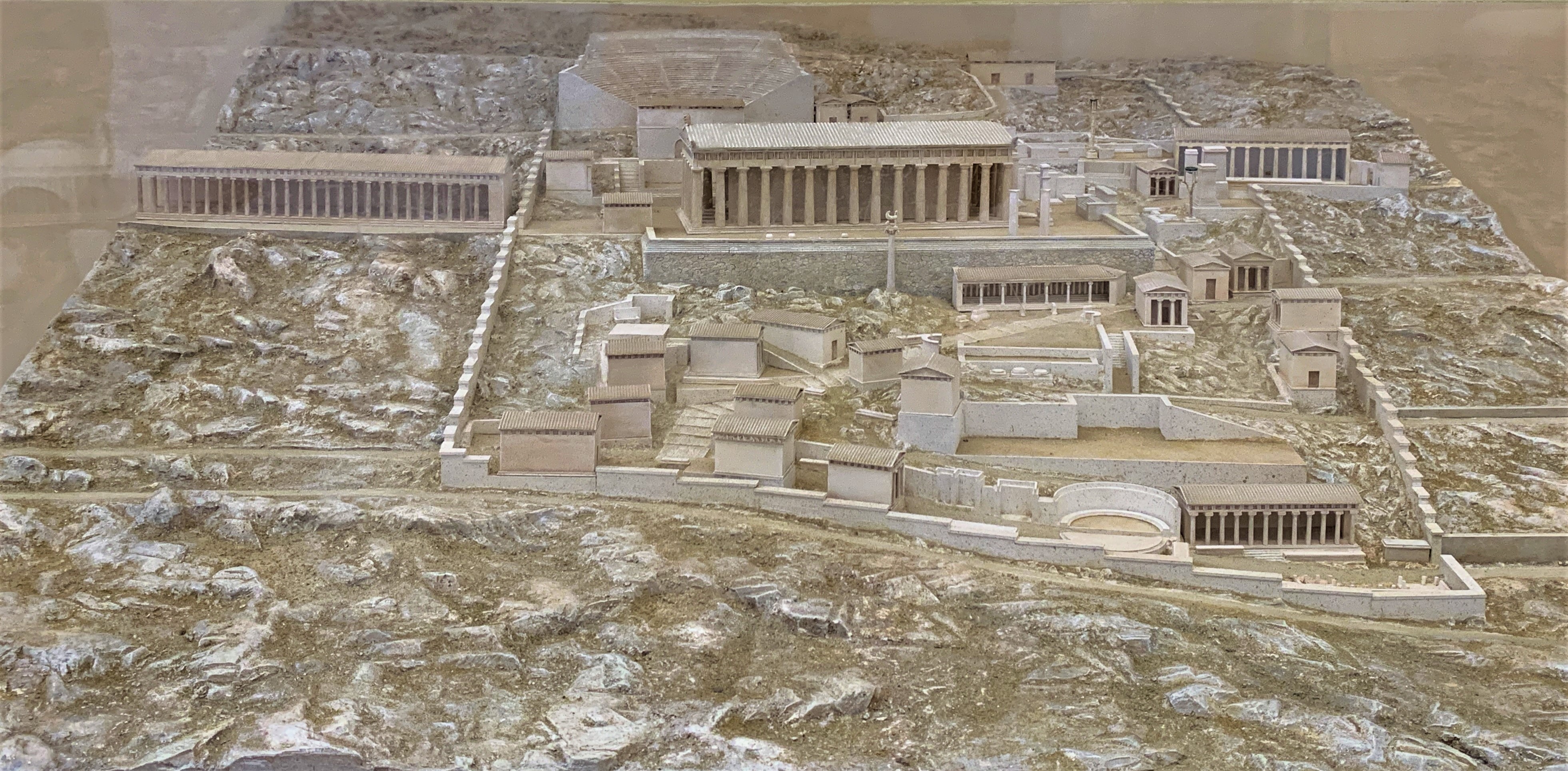
Delphi’s glory is gone. What remains are ruins of stone foundations and marble pillars. It takes artists’ renderings and thoughtful imagination to piece together this archaeological wonder. Games, religious rituals, music, festivals, athletic competitions, oracle consultations and meeting opportunities all combined to make this site a most important one in classical Athens.

Model of Delphi in its glory, 5th-4th century BC

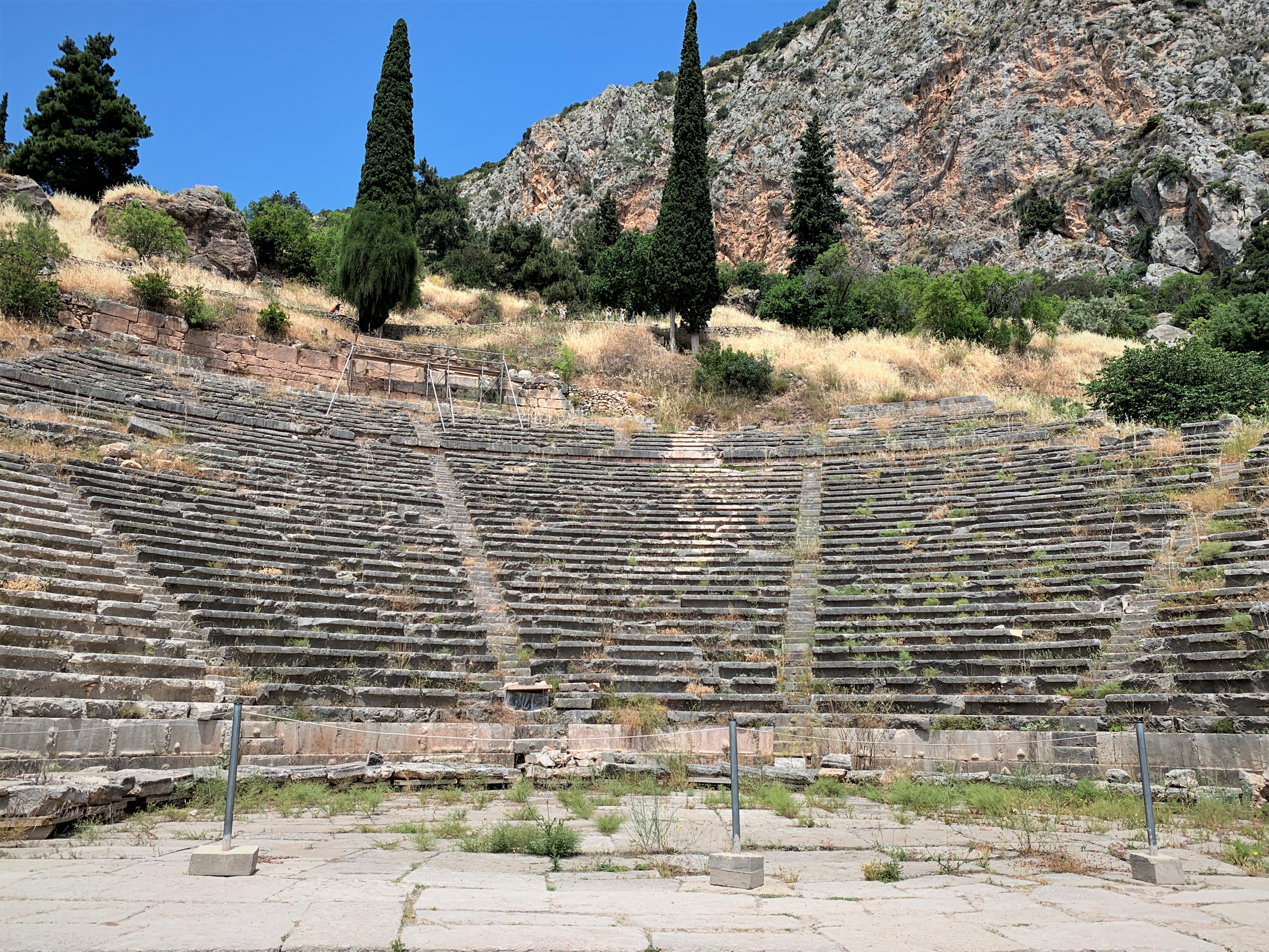
Today, the semi-circular stone theater remains. It seated 5,000 and was the location of vocal and musical contests associated with the Pythian Games

Theater of Delphi

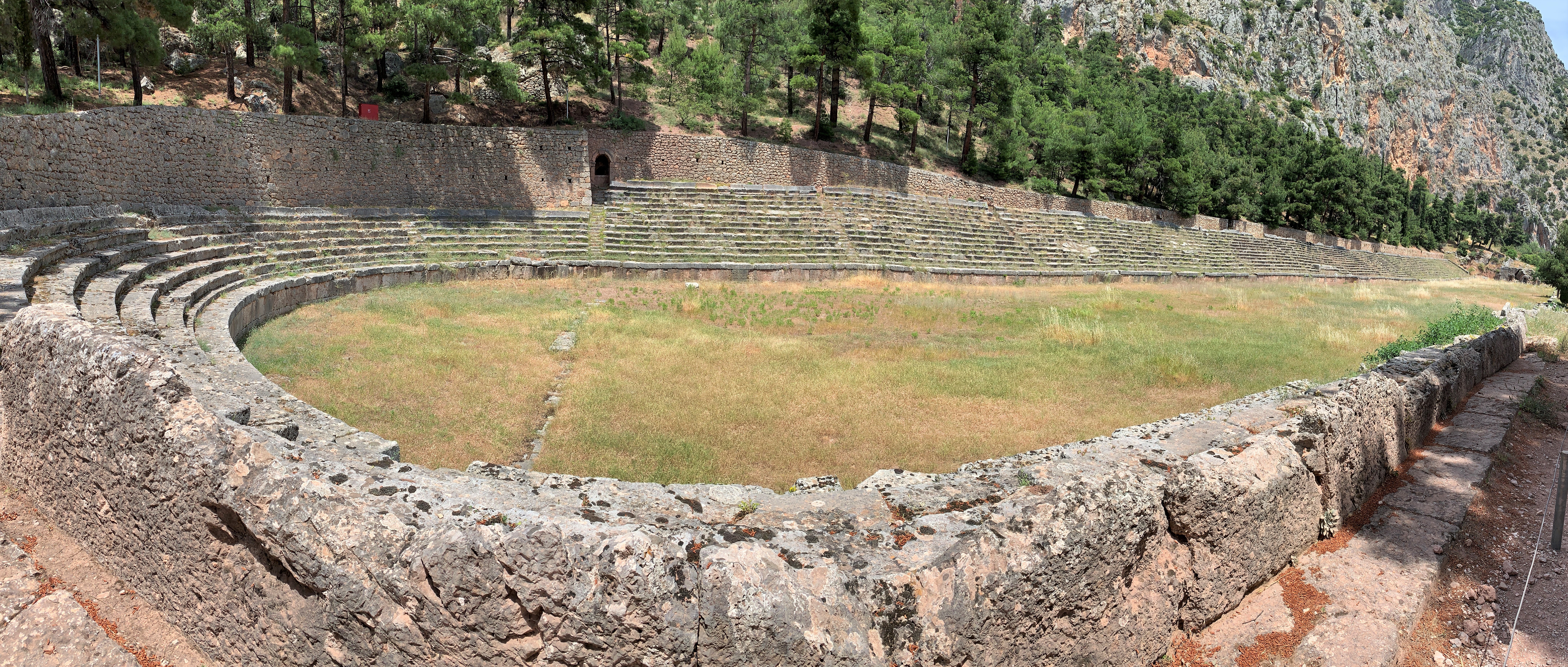
The Pythian Games, athletic competitions, were held at the Stadium every four years in honor of Apollo. The stadium is at the highest point of the site and is an oblong shape. Only naked men participated to ensure that women could not compete or even watch the contests.

The Stadium at Delphi

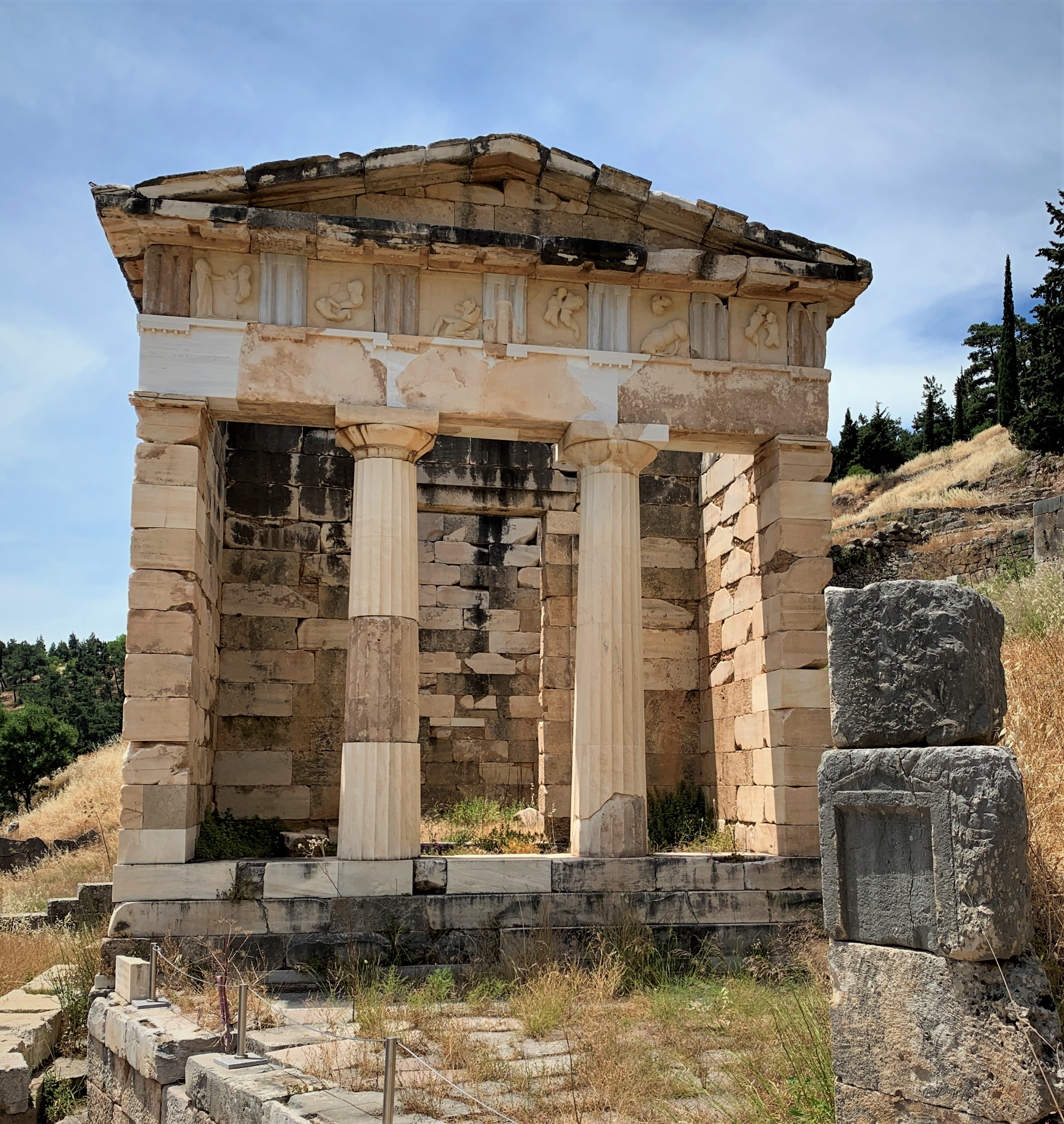
Among the many official buildings were treasuries, where citizens of various parts of Greece deposited precious offerings. Different cities had their own treasury, but today only the Athenian building still stands.

Athenian Treasury, the only remaining building in Delphi

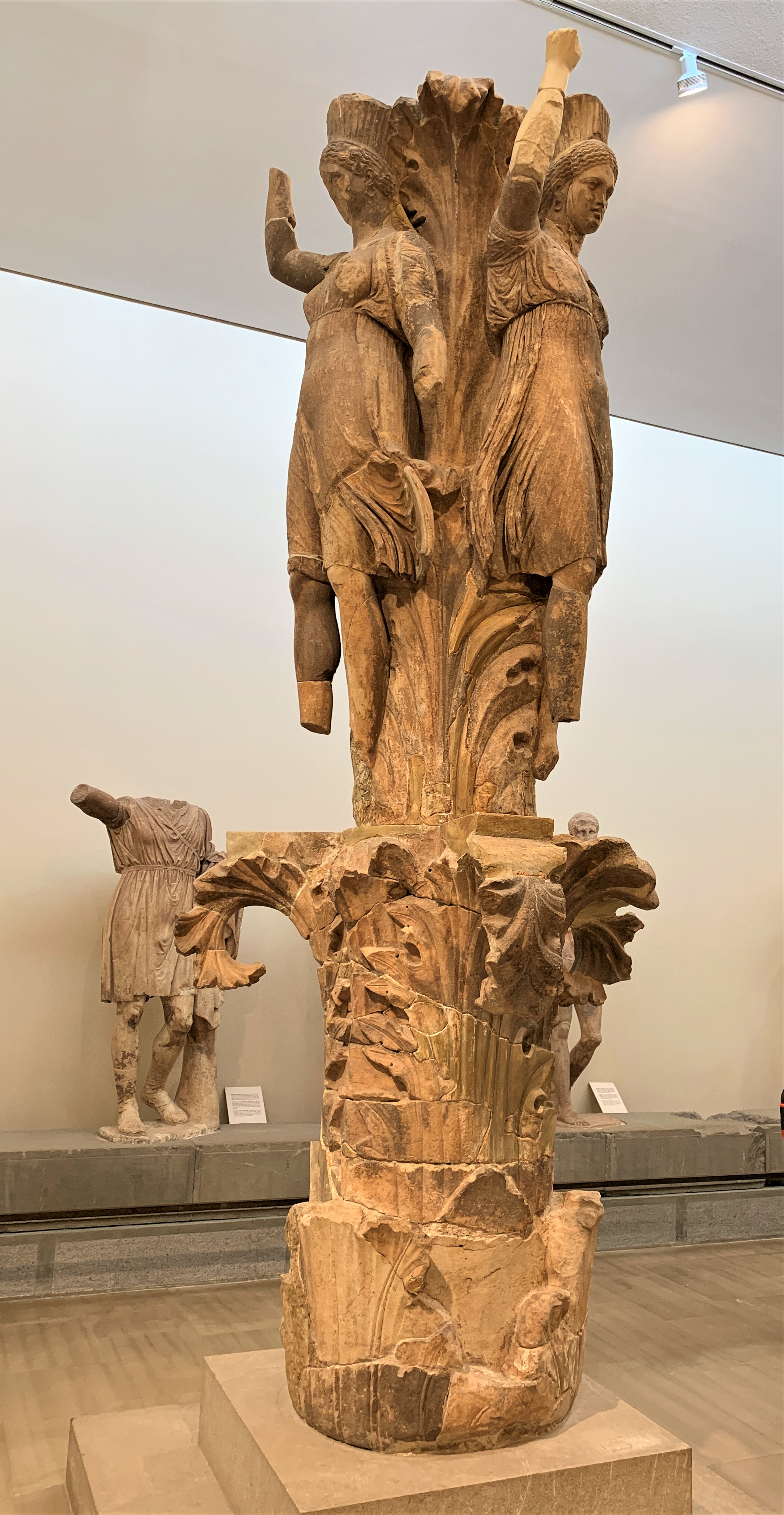
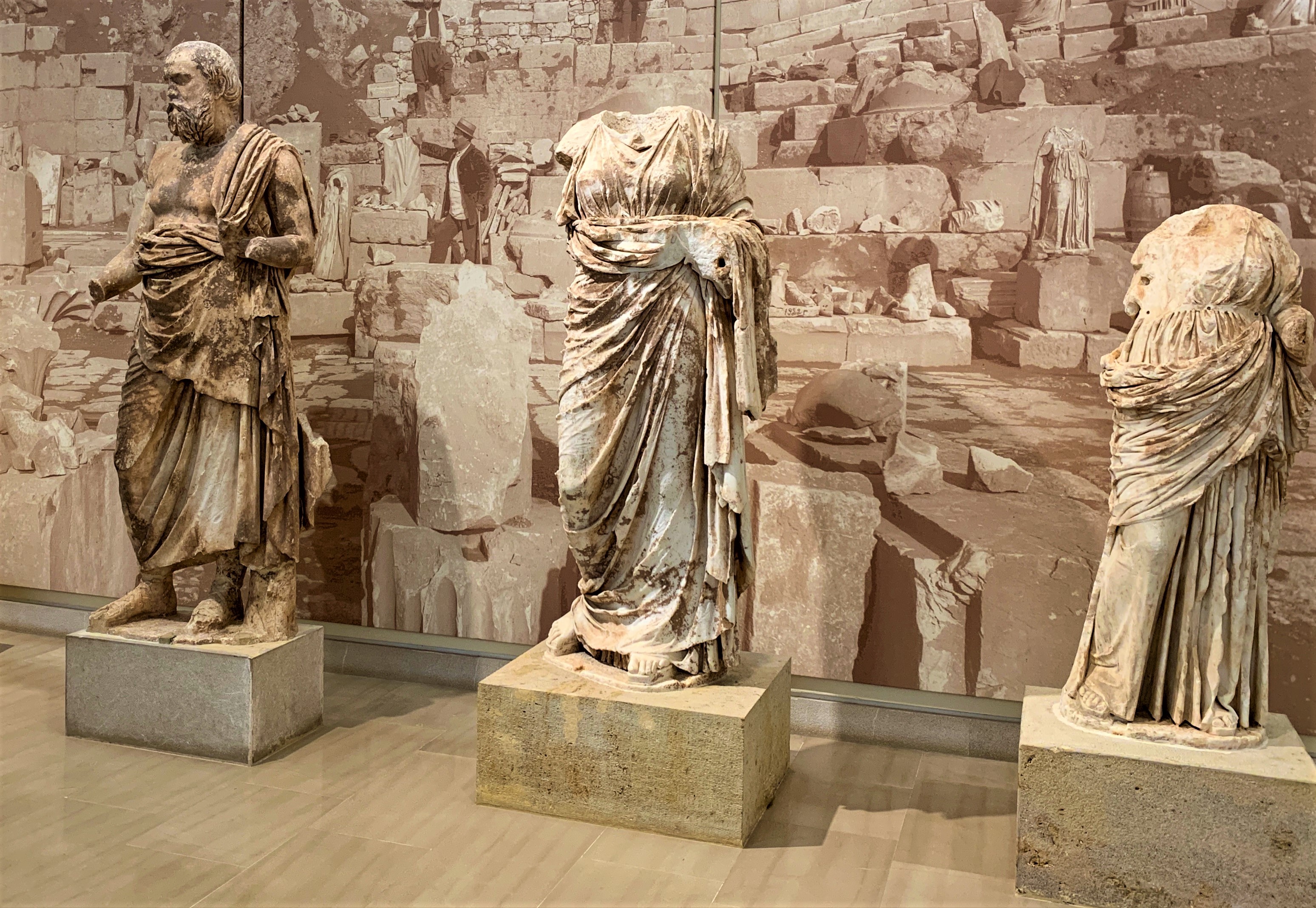
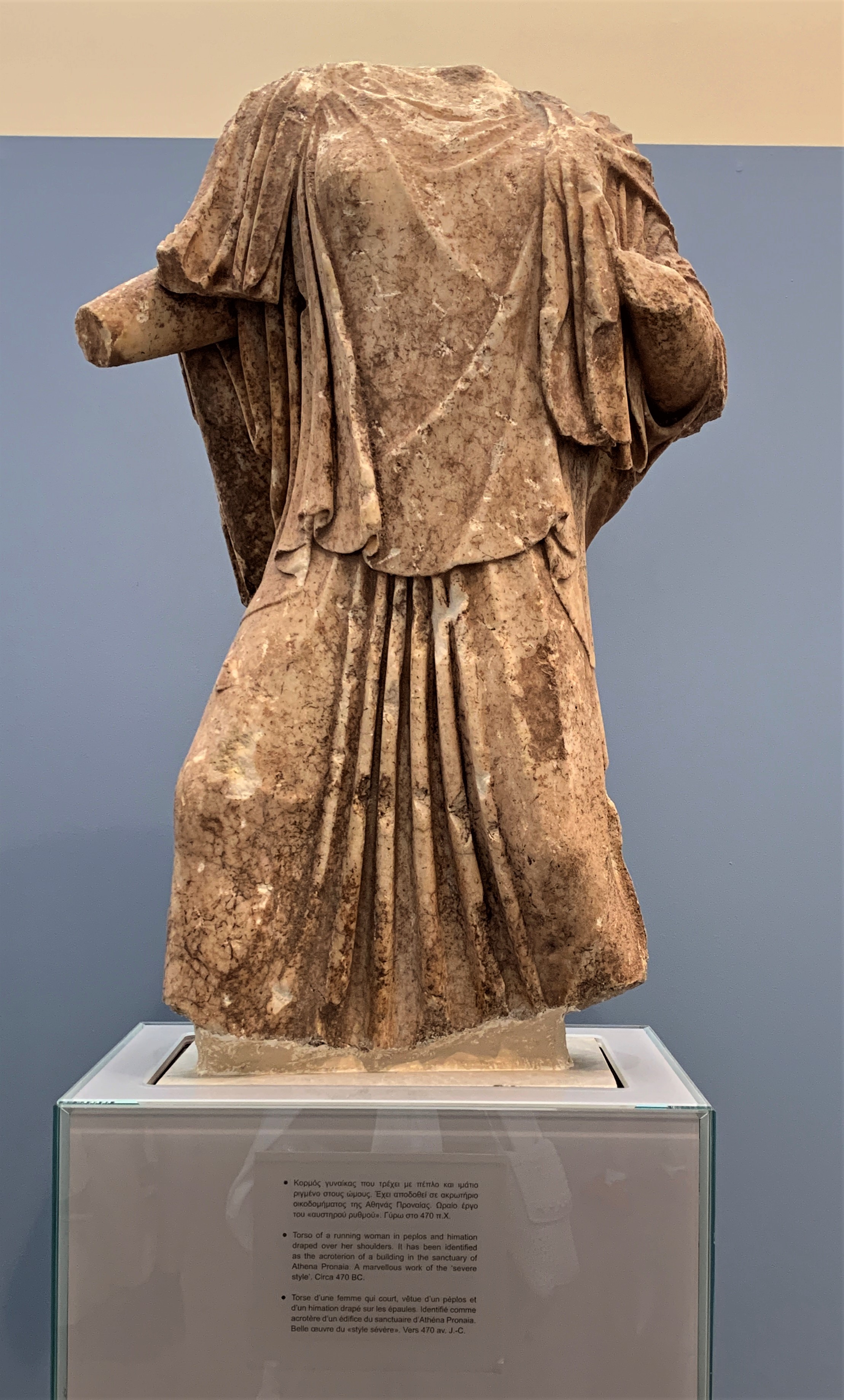
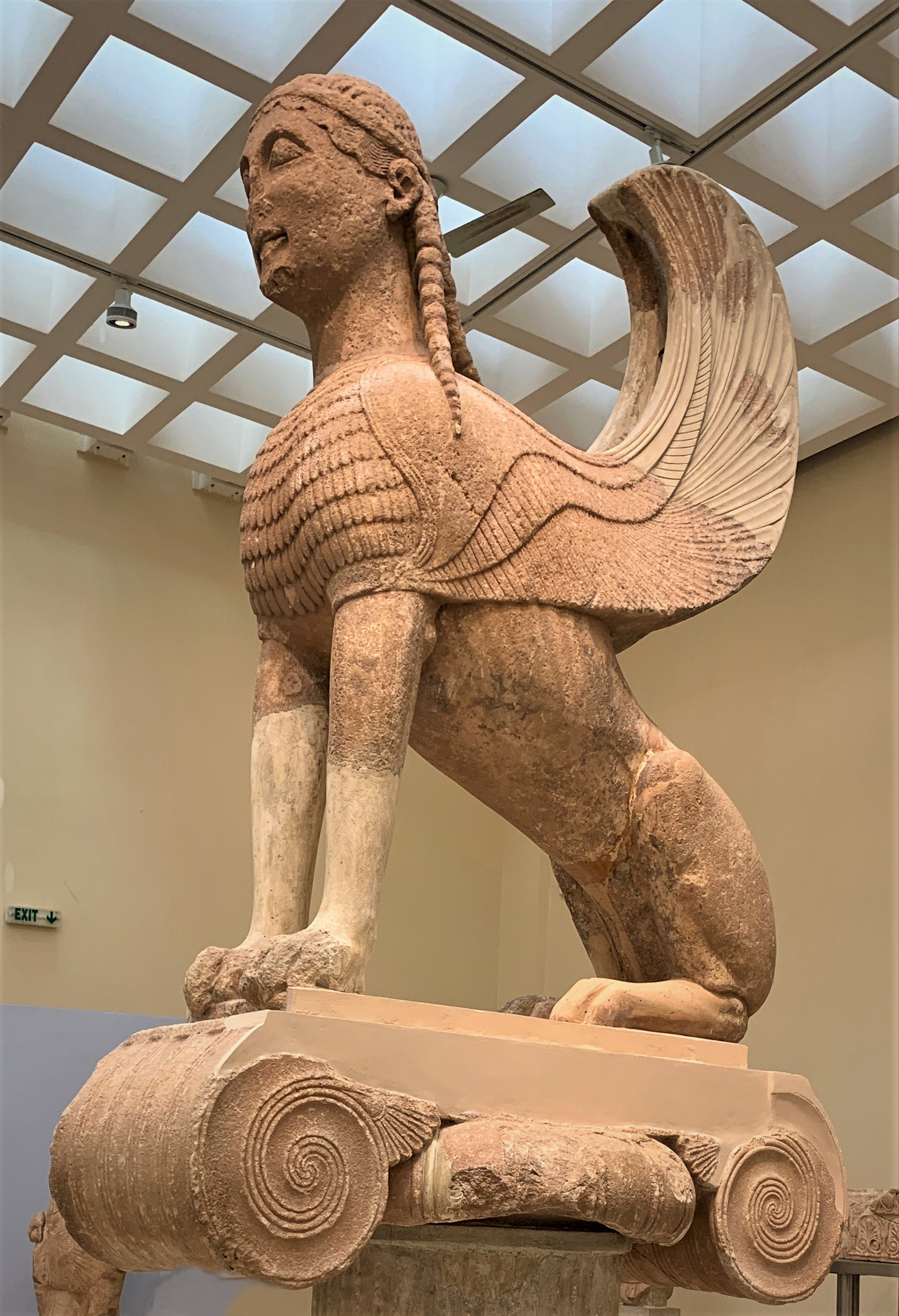
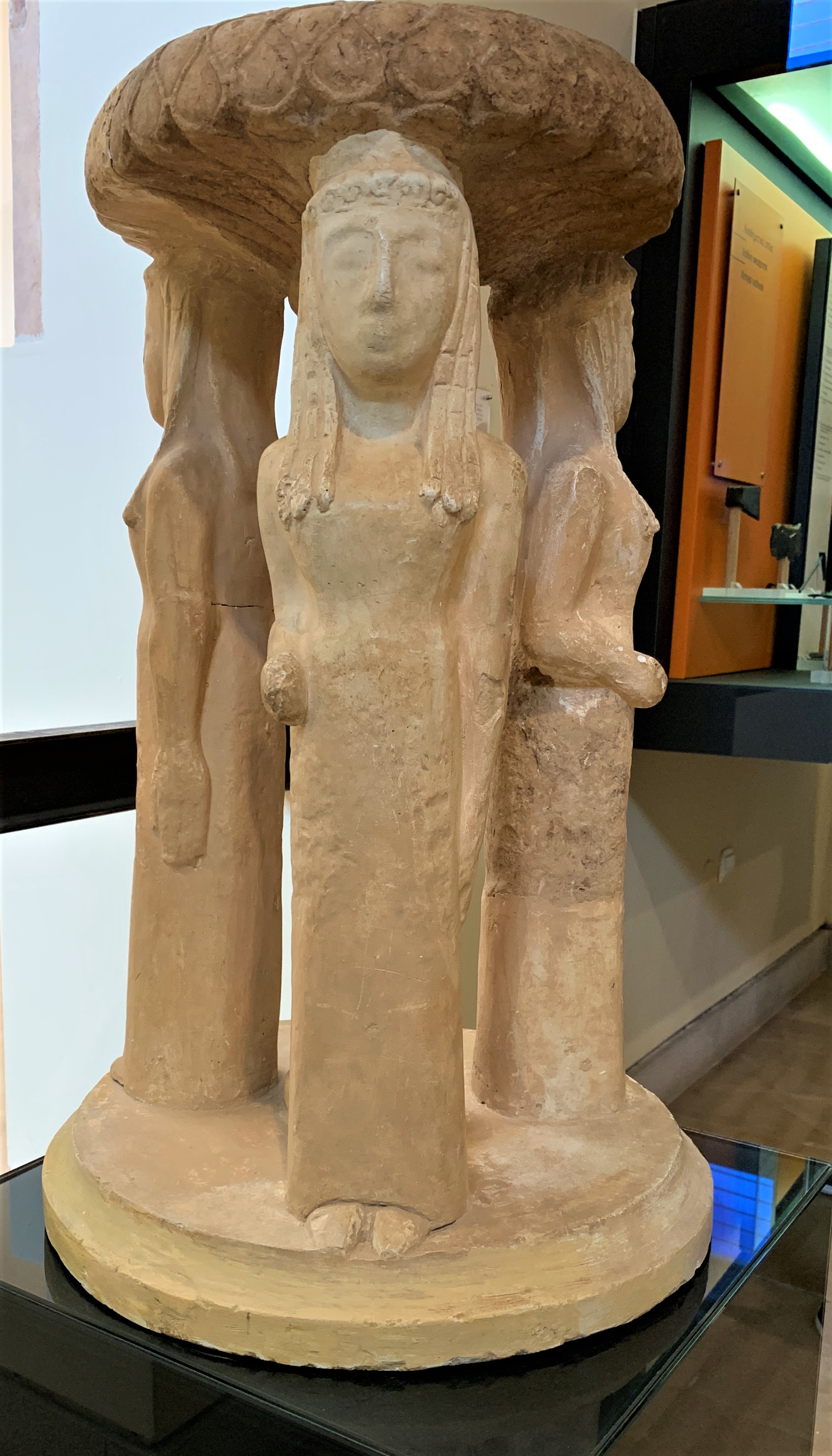
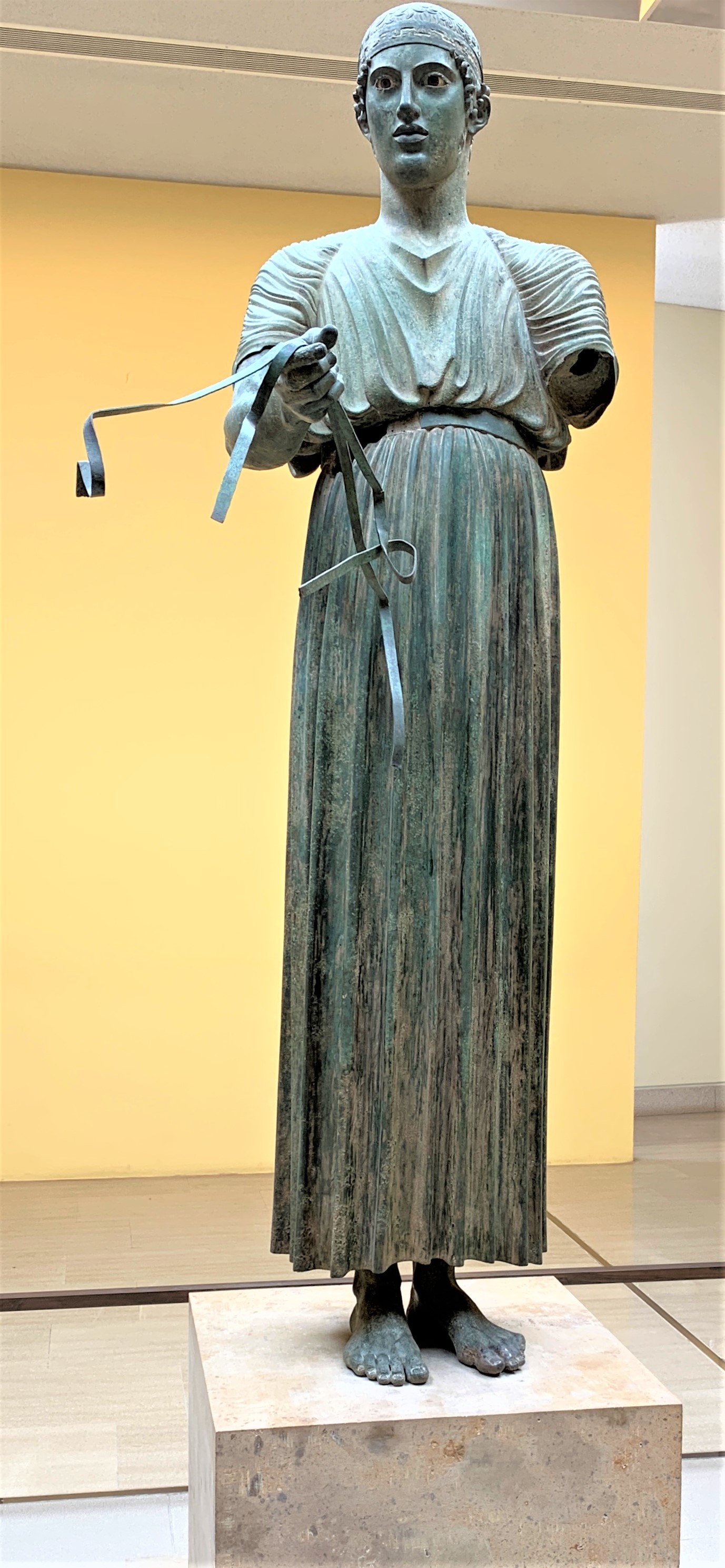
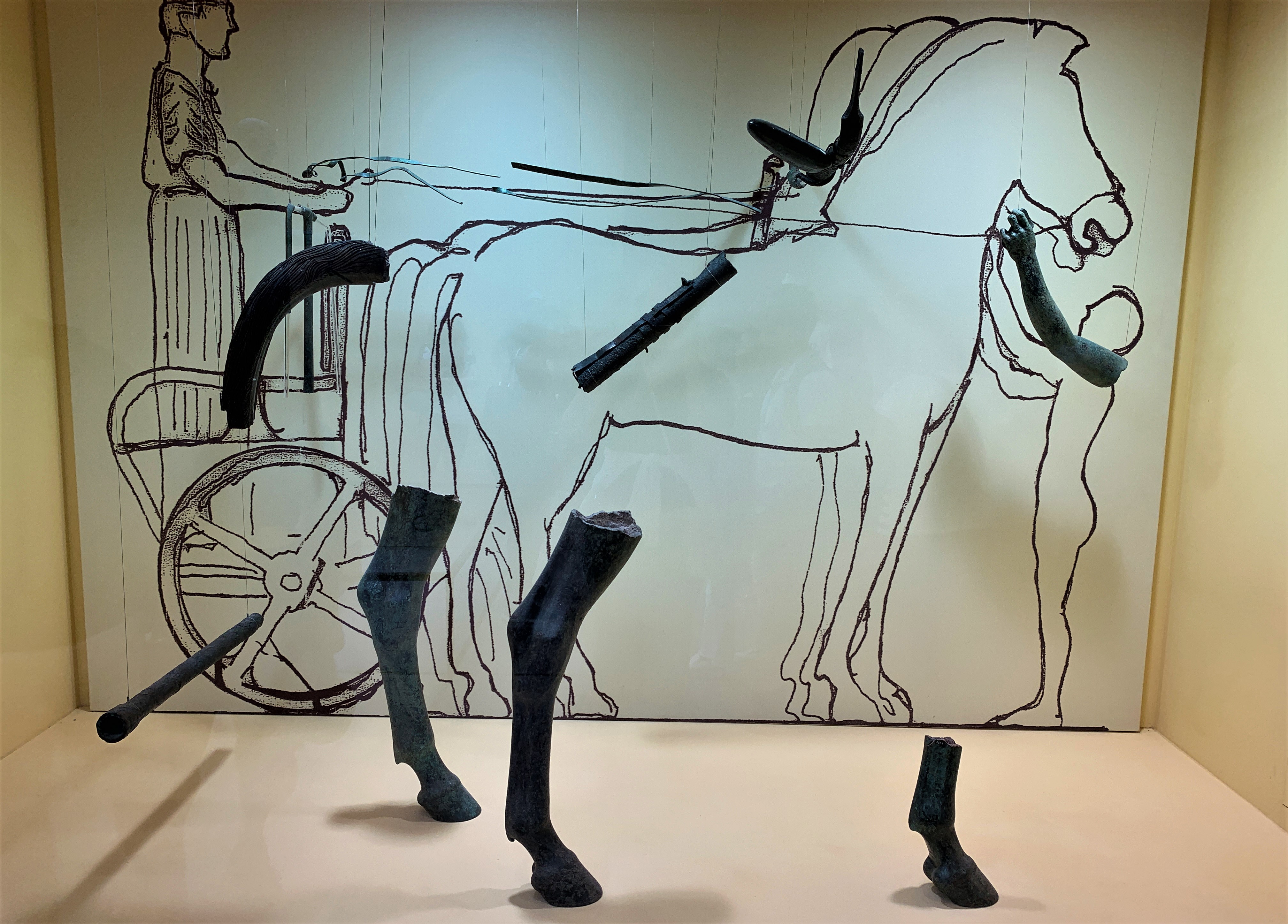
Delphi was home to hundreds of statues which have long disappeared–some taken by Nero, some destroyed by vandals, and some disappearing with the forces of time and nature. A few remained and are housed in the adjacent archaeological museum. They are spectacular. Here are but a few:

The charioteer, famous bronze statue, with its accompanying artist’s rendering of the original

Although only a few bronze pieces were recovered, artists were able to reconstruct the original statue

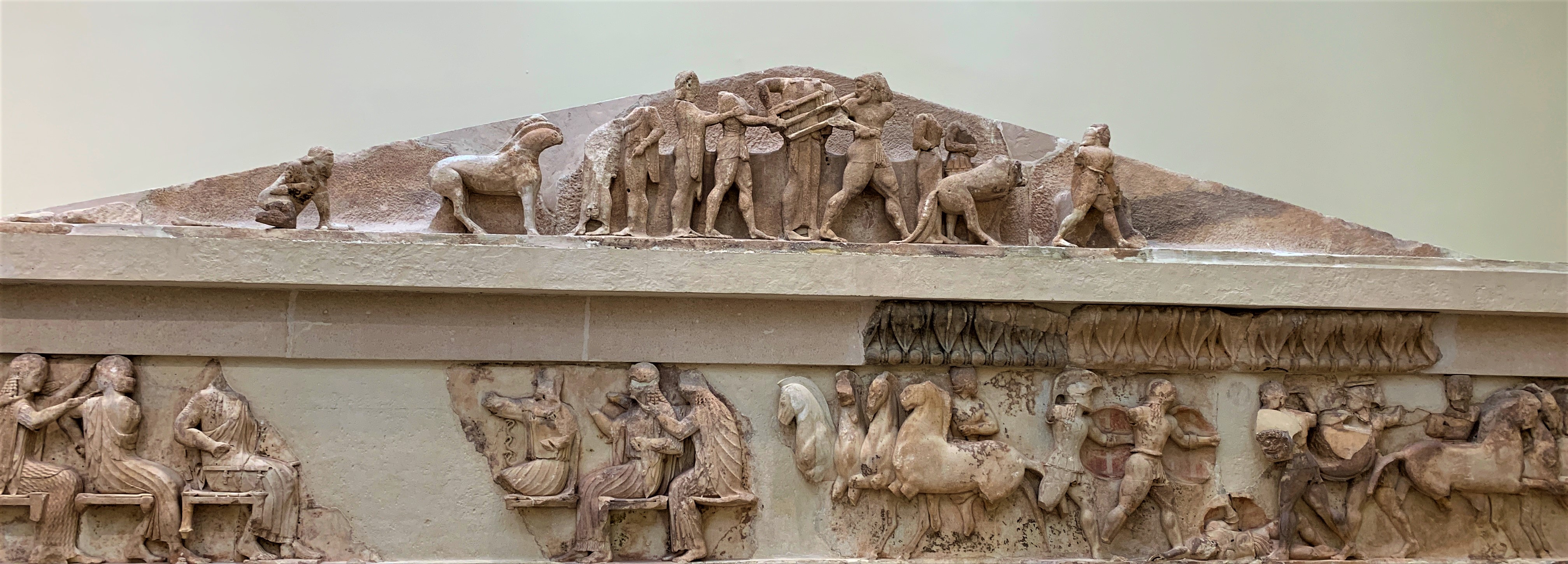
The museum also has pieces of the building friezes and pediments which added beauty and symbolism to the buildings.

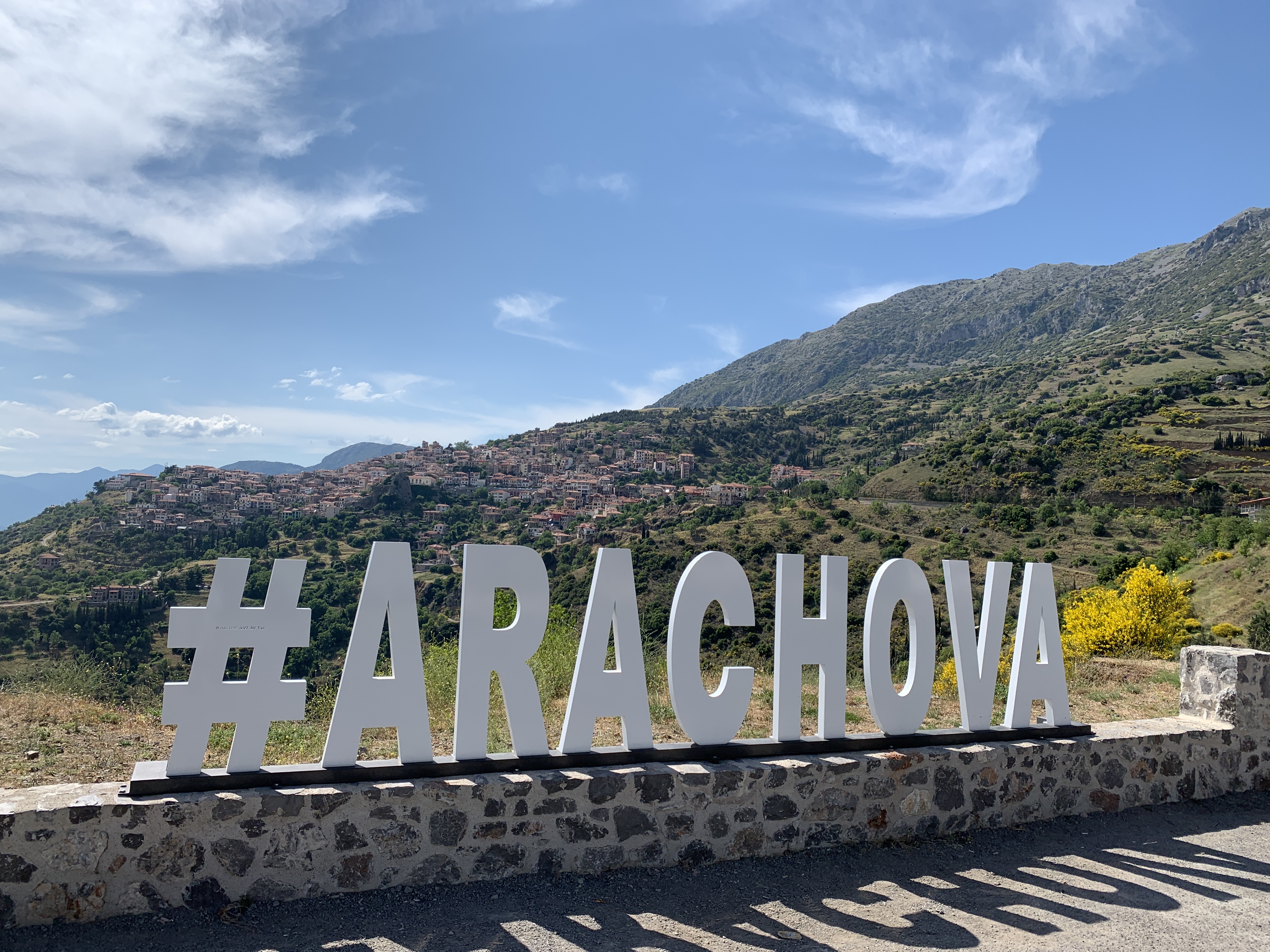
Neighboring villages of Delphi and Arachova are quaint locales with shops and homes. In the winter, tourists are replaced with skiers who come to the slopes of Mt. Parnassus. The villages, like so many in Greece, nestle in the hillsides and have breathtaking views.

Obviously the citizens of Arachova have entered the hashtag age

My visit to Delphi was via a one-day bus tour. It is about three hours from Athens, so I spent six hours on a bus and three hours at the site. I felt a bit rushed, as I would have liked much more time in the archaeological museum. The displays and statuary there are what brought Delphi to life for me.

Greece 2019 – Ωραία Ήδρα (Beautiful Ηydra)

In today’s world, the concept of a society without vehicles seems surreal. Yet, that is what the citizens of Hydra have chosen. Transportation on the island is by foot, donkey or boat. The only motorized vehicles are sanitation and fire trucks. This was something that I, an American woman wedded to her car, had to experience. The boat ride from Piraeus was about two hours, with a quick stop at the island of Poros where people crowded on the decks to take photos. A few minutes later, the harbor of Hydra came into view.
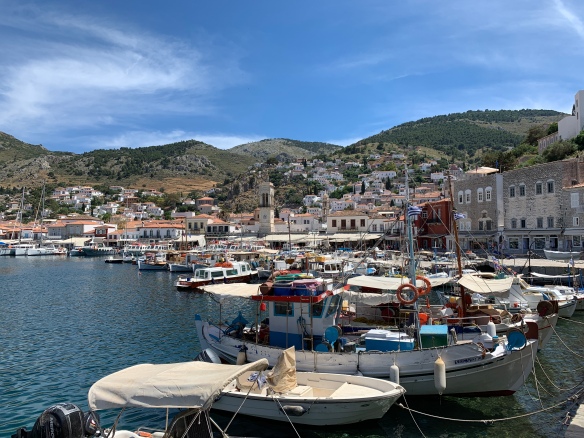
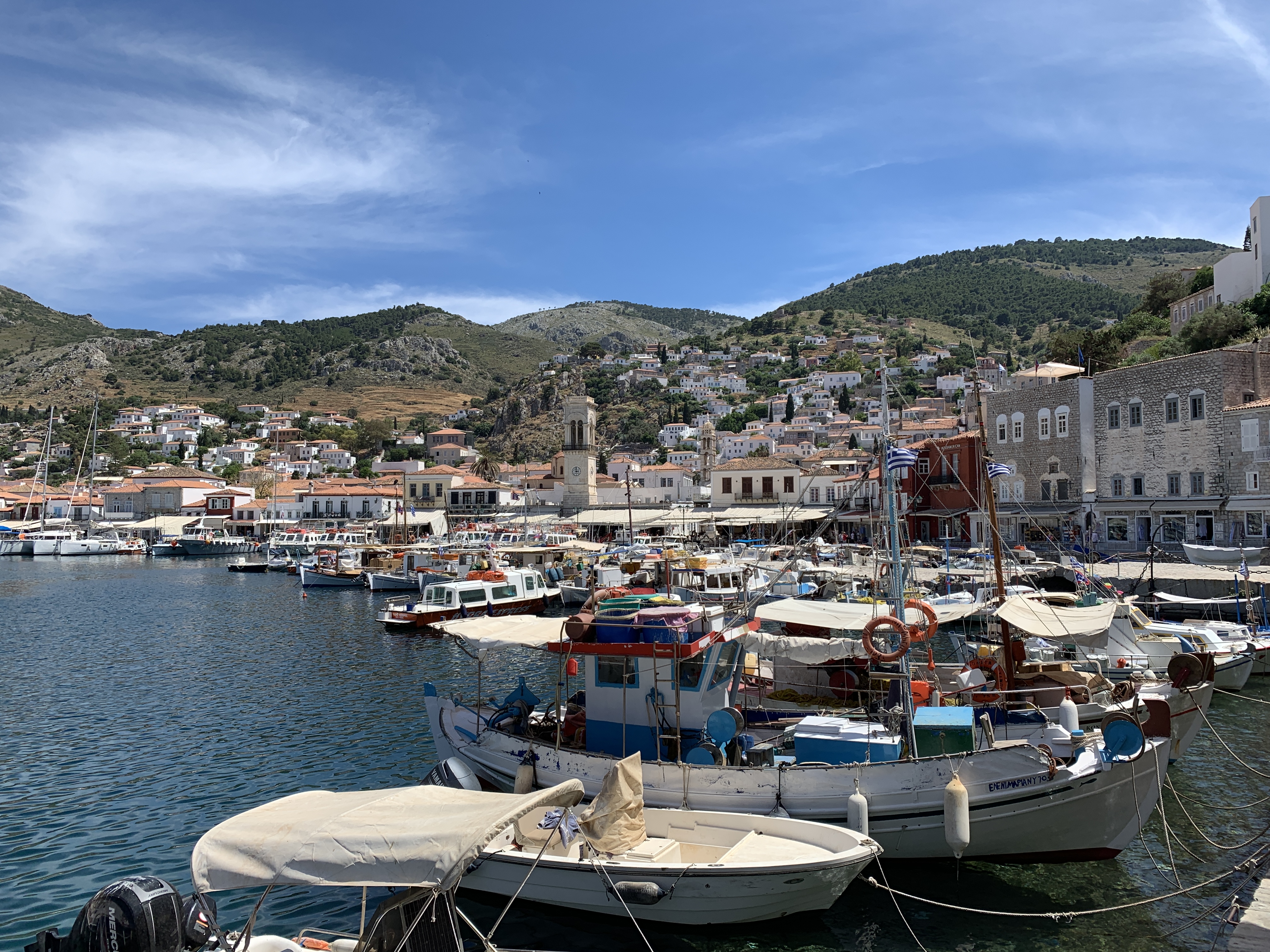
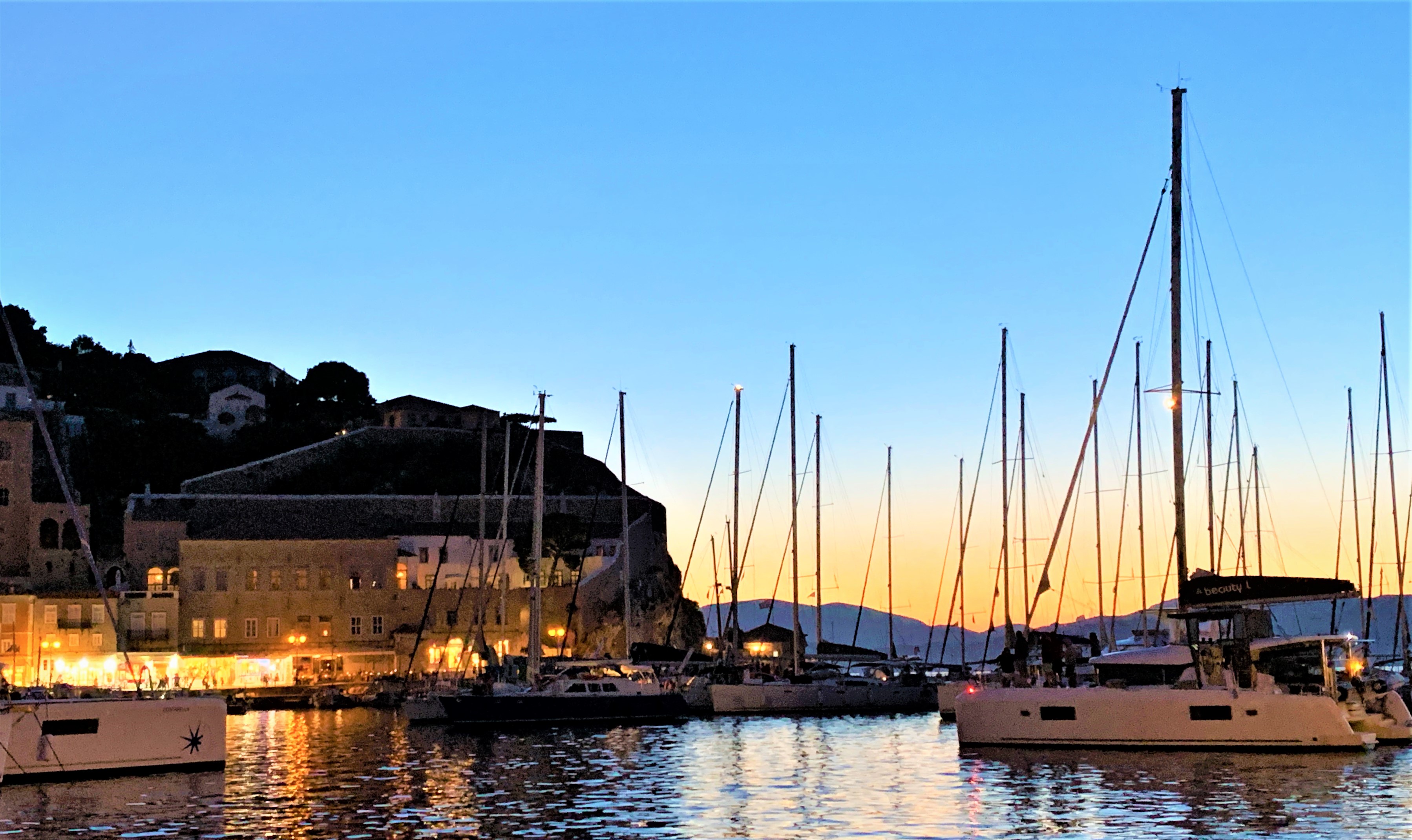
Hydra Harbor

It is a u-shaped cove, protected by mountains which block the trade winds and keep the harbor waters fairly calm. Whitewashed buildings cling to the hills, providing sharp contrast to the rocks, vegetation, sea and sky. It is quaint and picturesque.
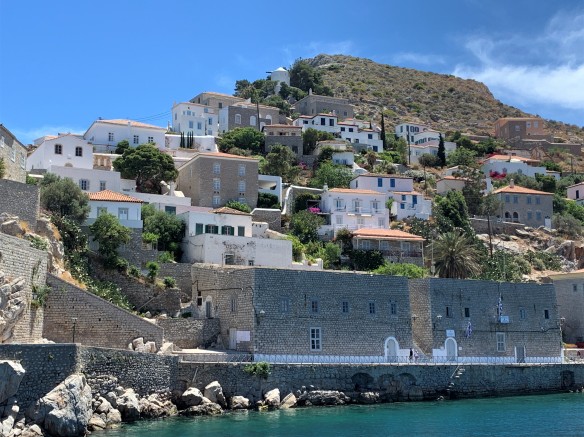
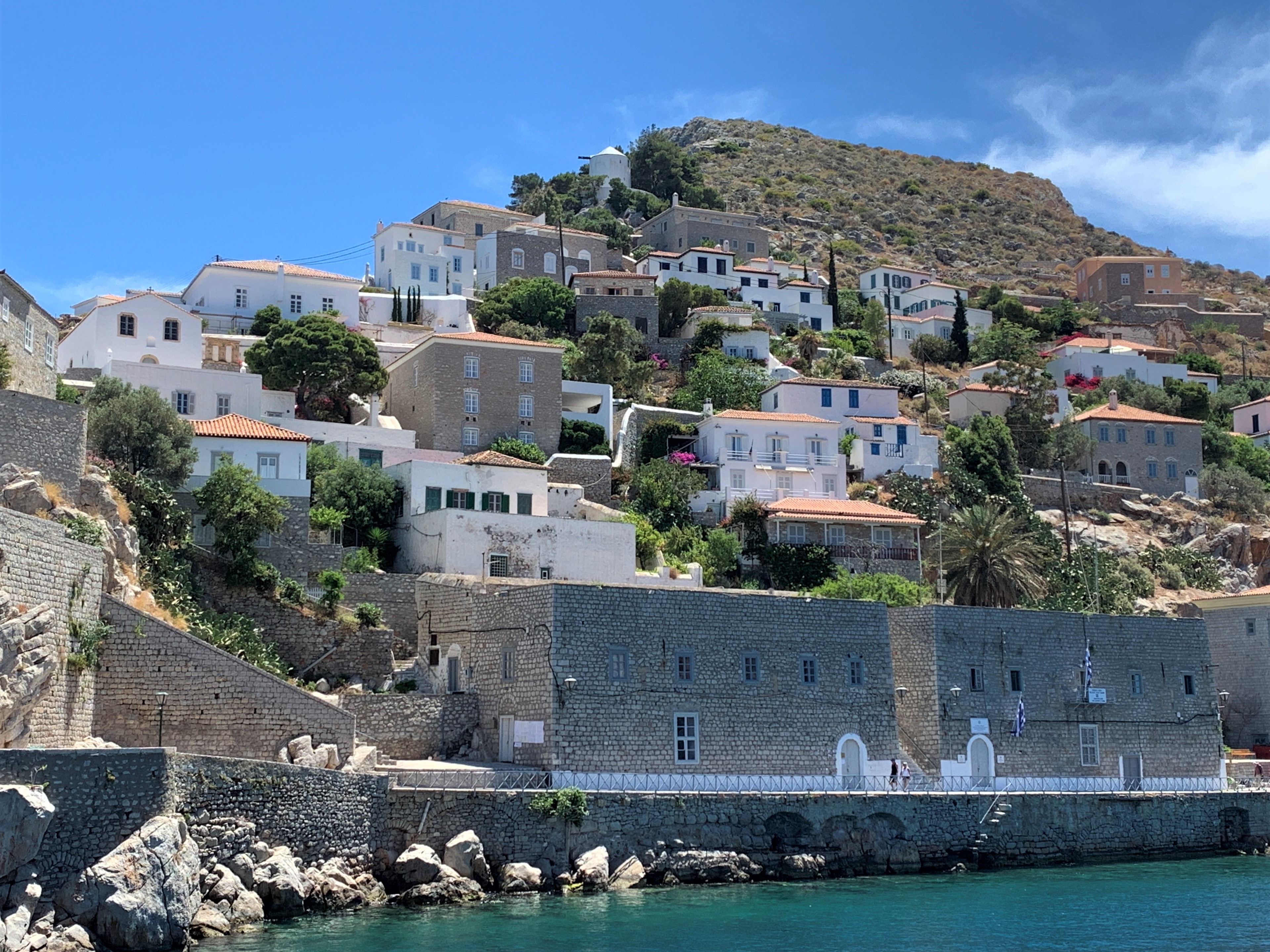
Around the harbor

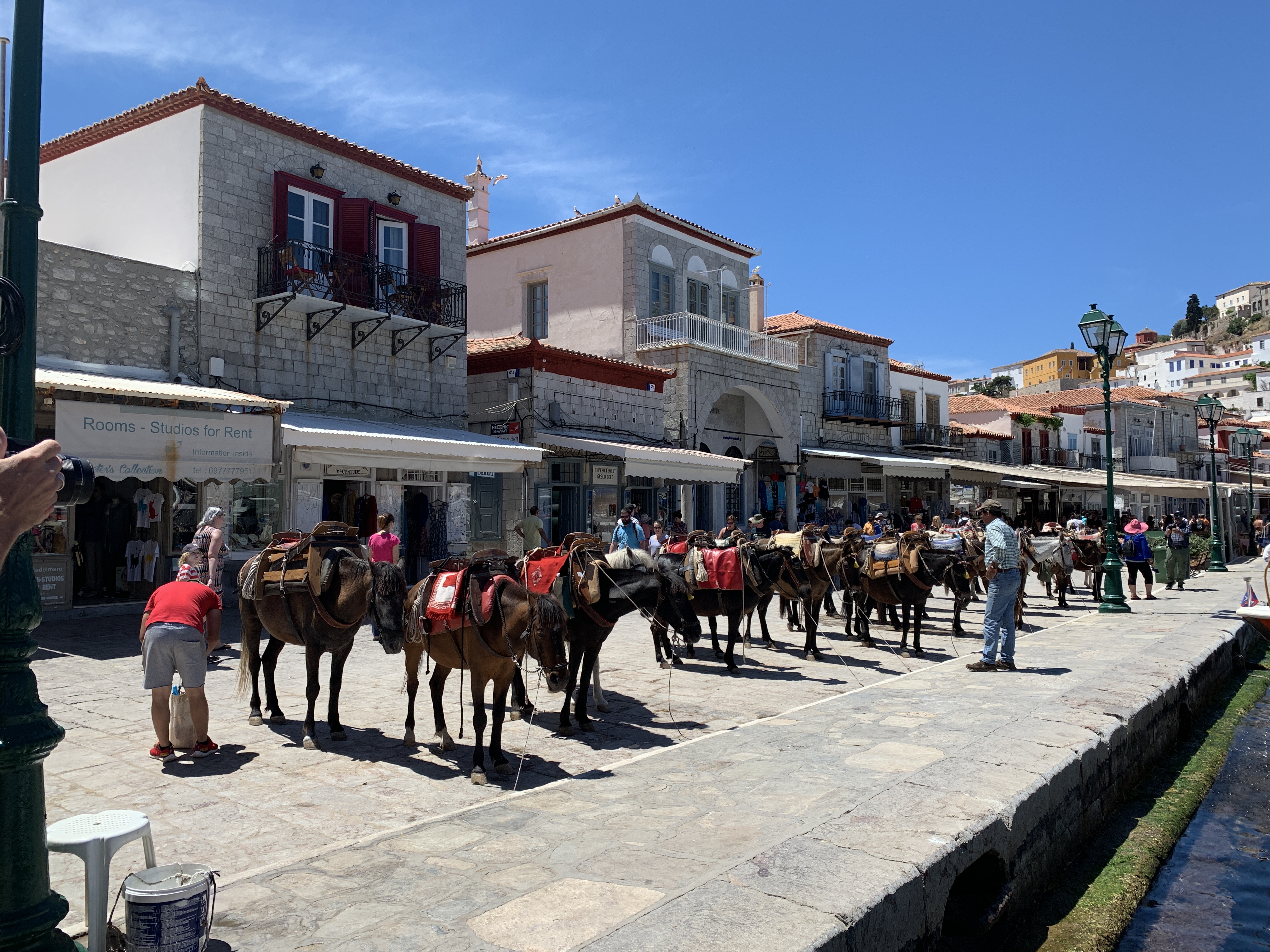
Immediately upon disembarking, I saw donkeys waiting in a queue, similar to cabs in the city. Some are fitted with saddles, waiting for hardy tourists to mount with luggage strapped to the sides.
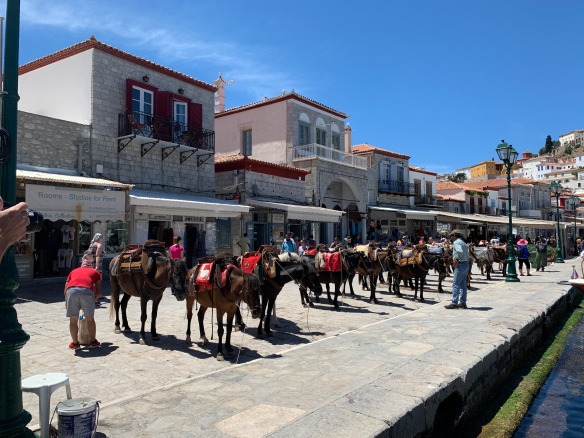
The donkey queue

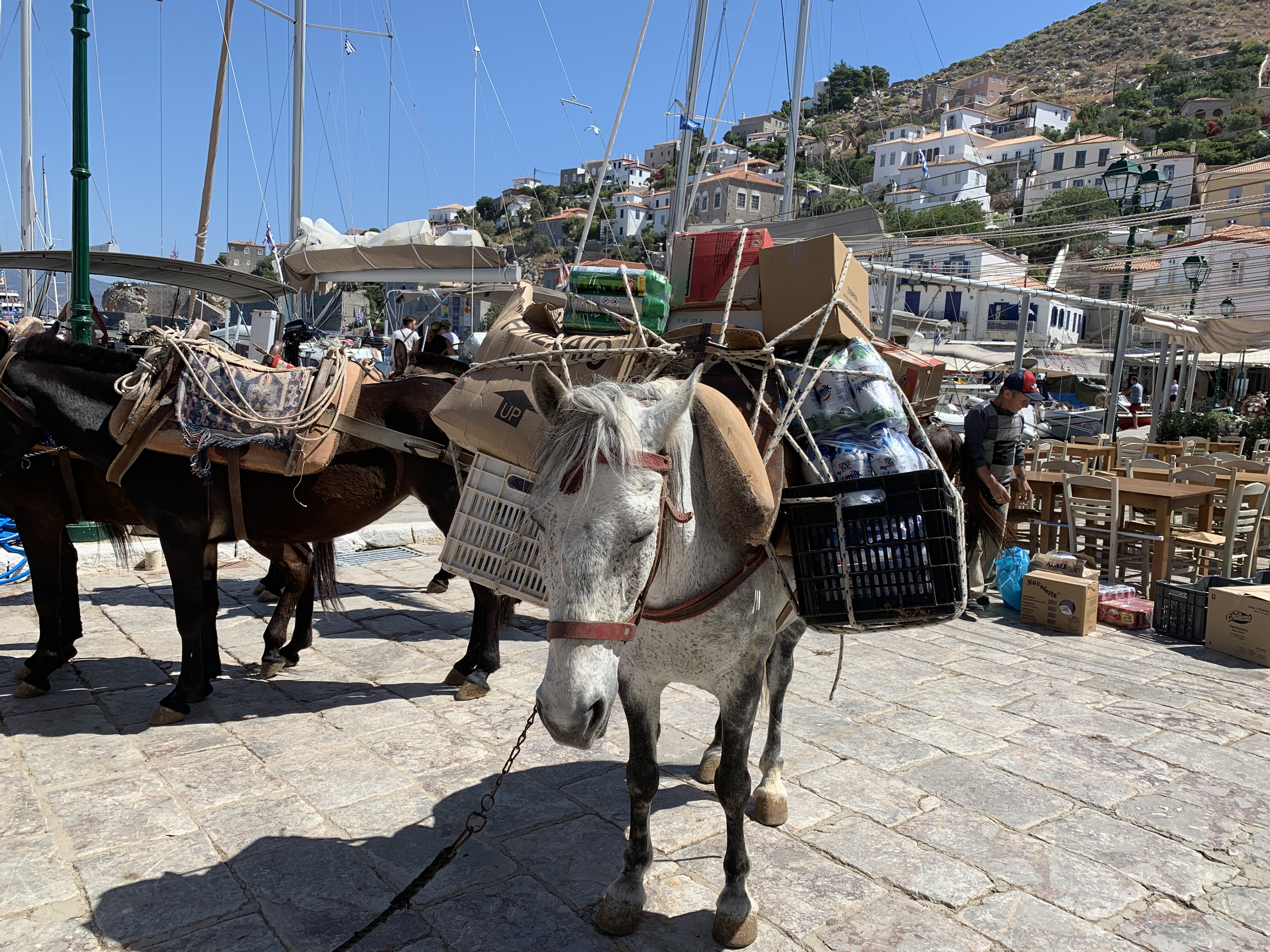
All have faded, woven blankets to protect their backs from the parcels and equipment they will carry. Some are decorated with colorful beads, bells or a combination. These docile animals are the lifeblood of the island, bringing items from the harbor to the hinterlands.
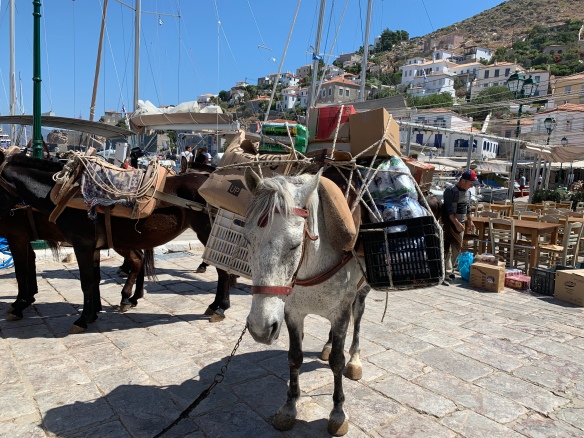
Ready for work!

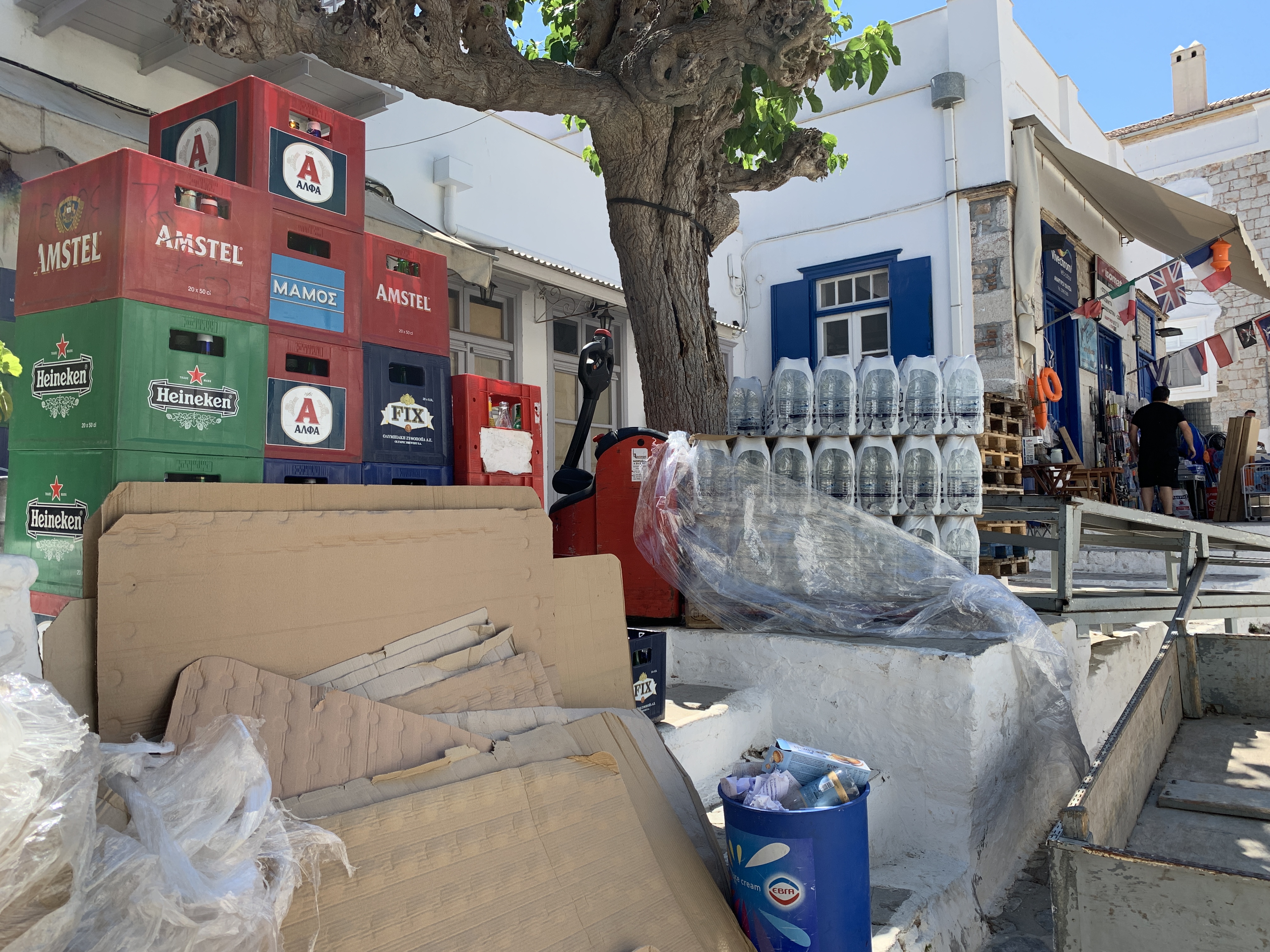
It’s hard to fathom that every item consumed must be ferried onto the island and hauled to homes and stores—appliances, clothing, souvenirs, pallets of bottled water, food—everything. And, in turn, every piece of trash must be ferried out. The sheer volume of commerce required by today’s society is handled the same as it has been for hundreds of years.
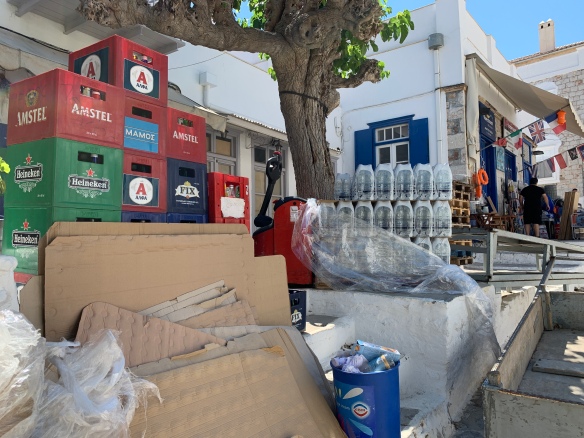
Every item is imported by ship and distributed by donkey and/or handcart

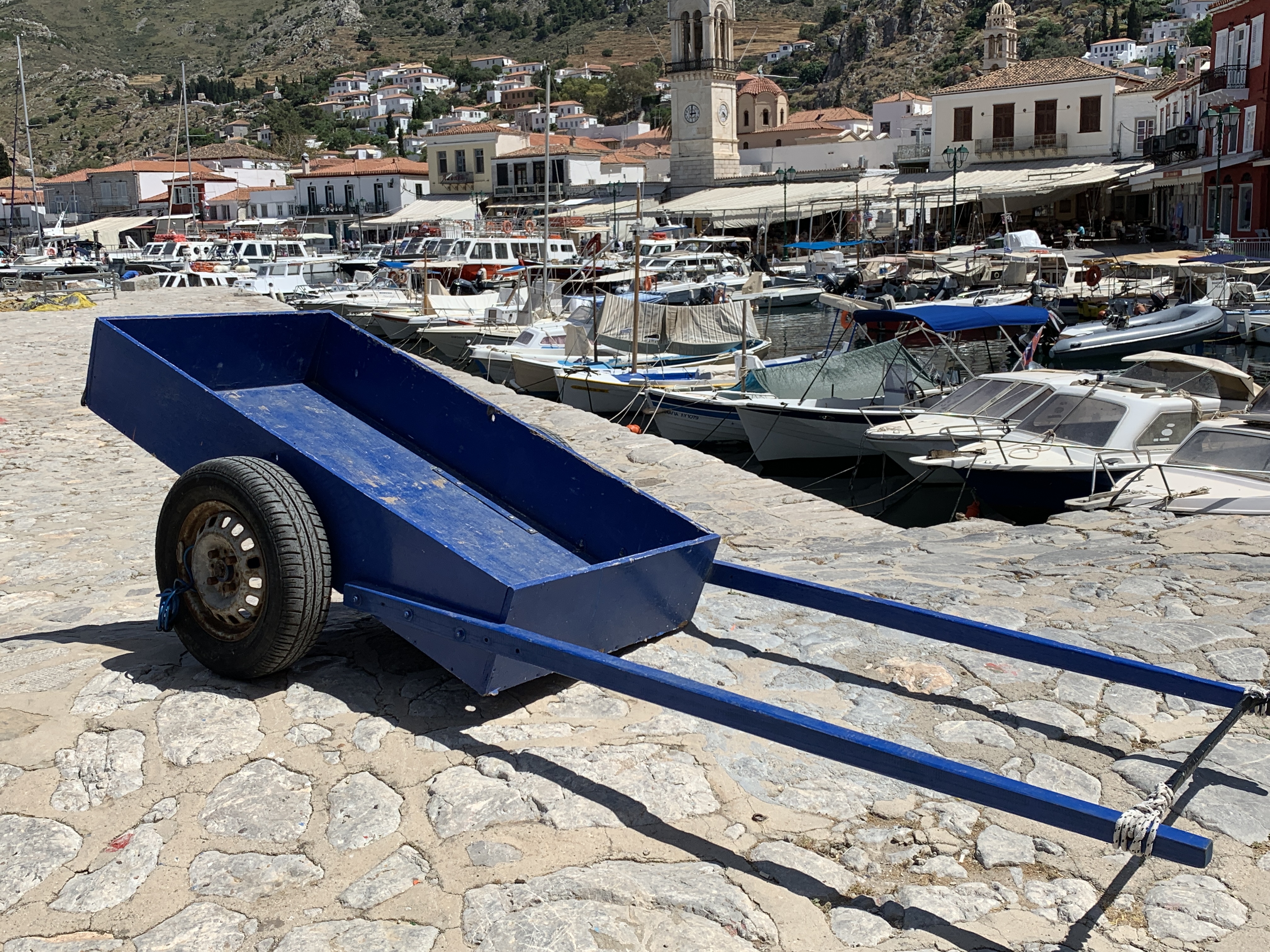
Men work hard, too. They load goods on these handcarts and I saw as many as three men push and pull a full cart up a steep path. This one sits empty, waiting on the dock for a load of cargo.
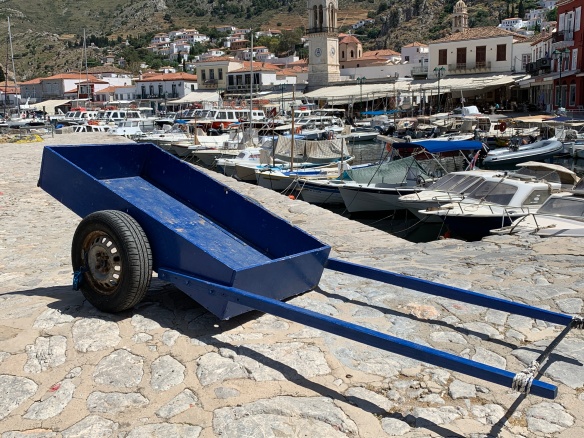
Hydra handcart

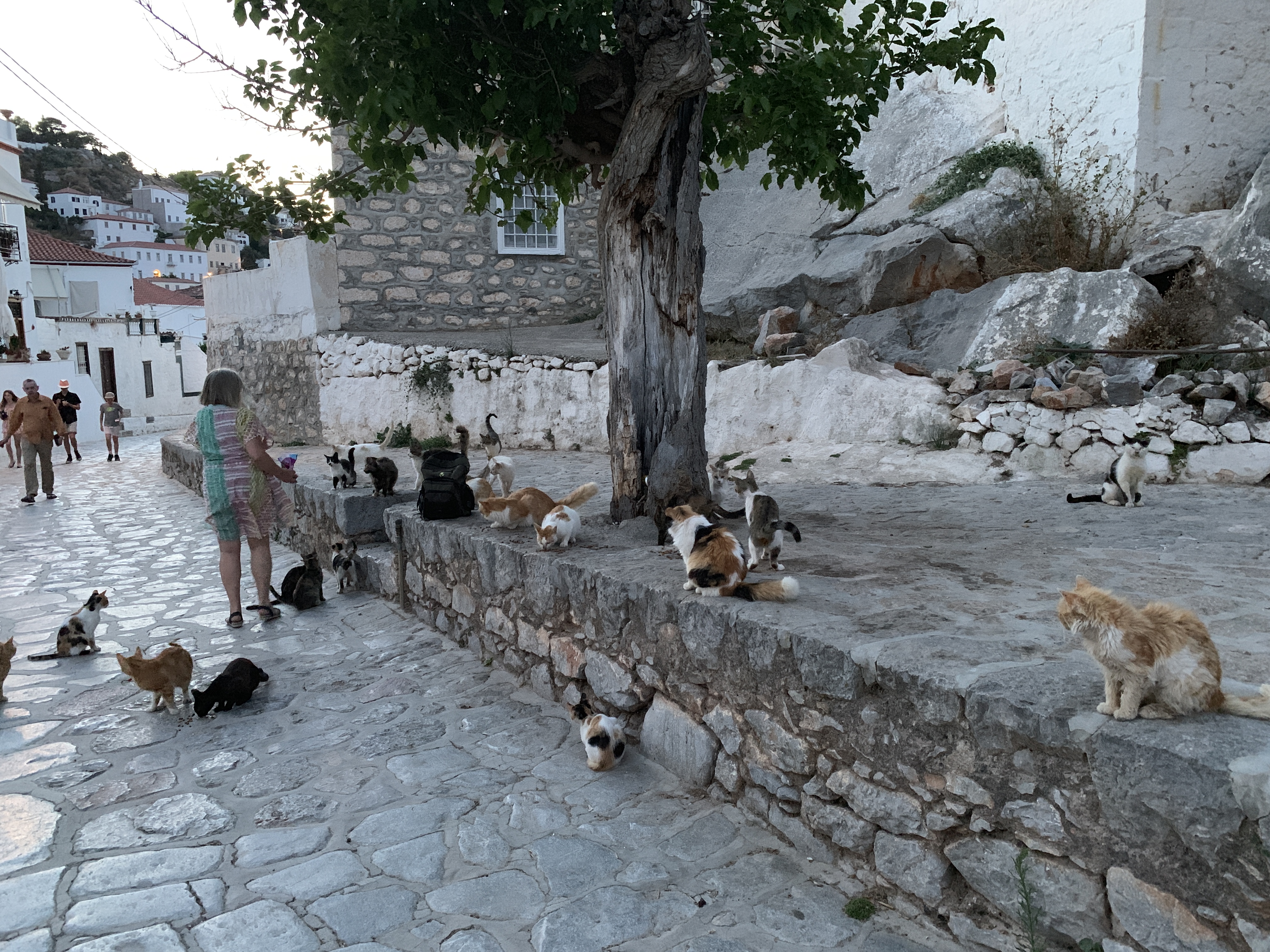
Except for Mandraki Bay, Hydra does not have sandy beaches but it does have cats. Lots of them! The owner of the guest house where I stayed warned me to keep any outside doors closed, or I may have purring roommates.
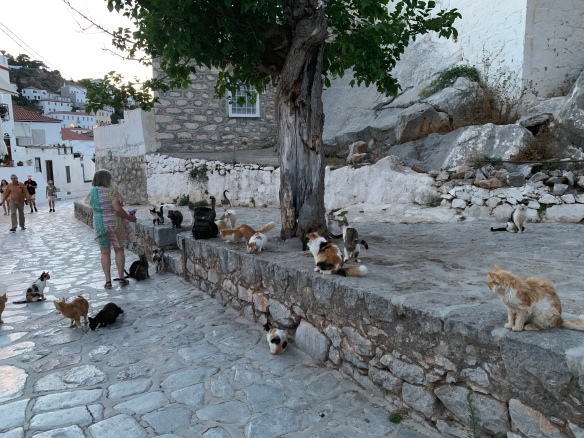
A few of the feline population of Hydra

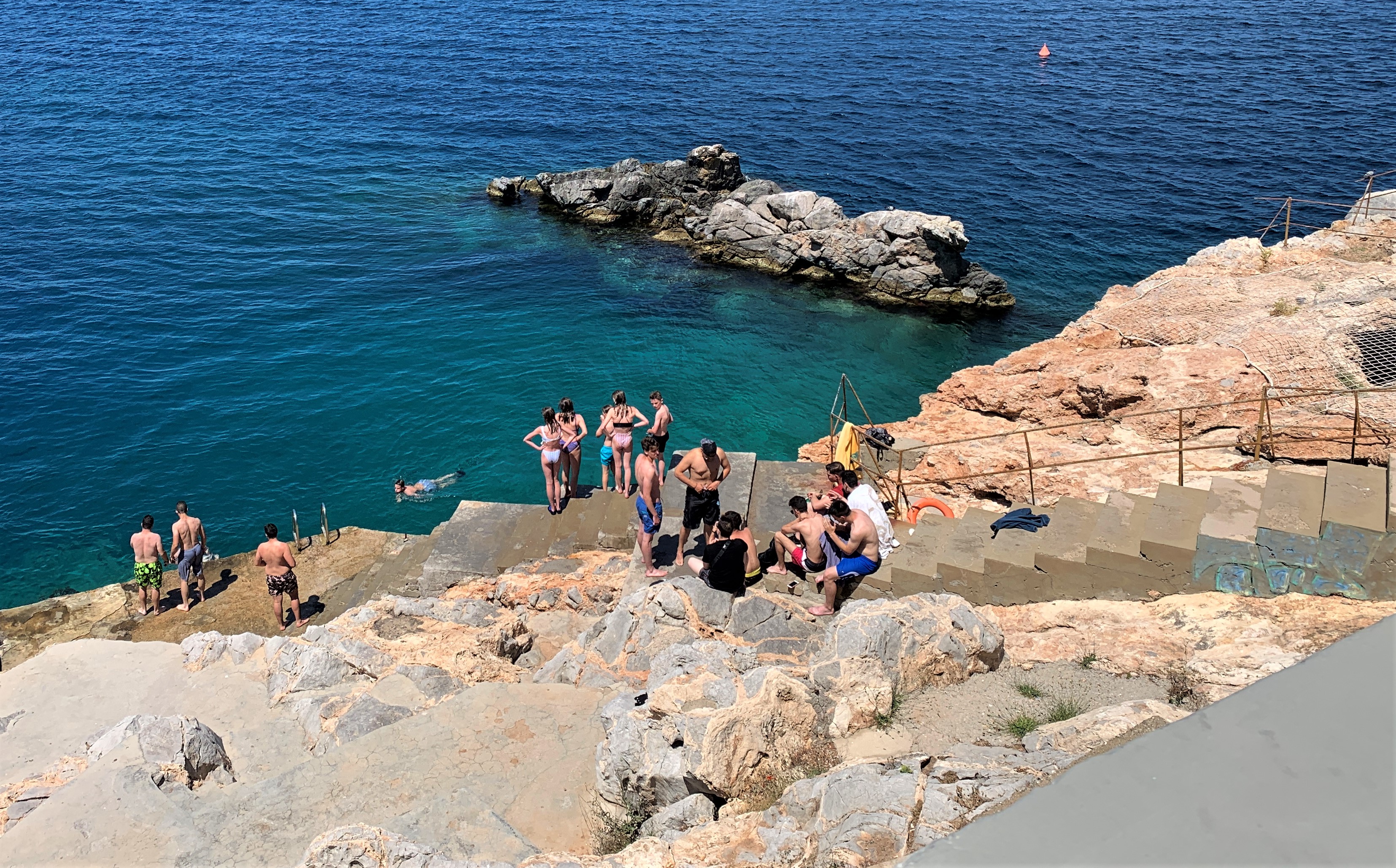
Because there is only one sandy beach on the island, natives have used domestic materials to create unique swimming habitats. This one is formed by laying large, flat rocks into the side of a cliff to shape a platform, complete with a ladder to climb out of the water (the ladder is on the lower left side of the photo).
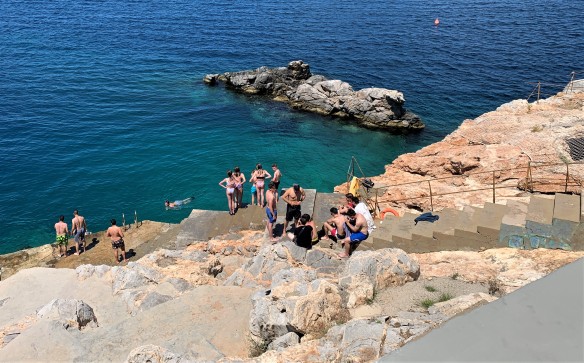
Swimming in Hydra

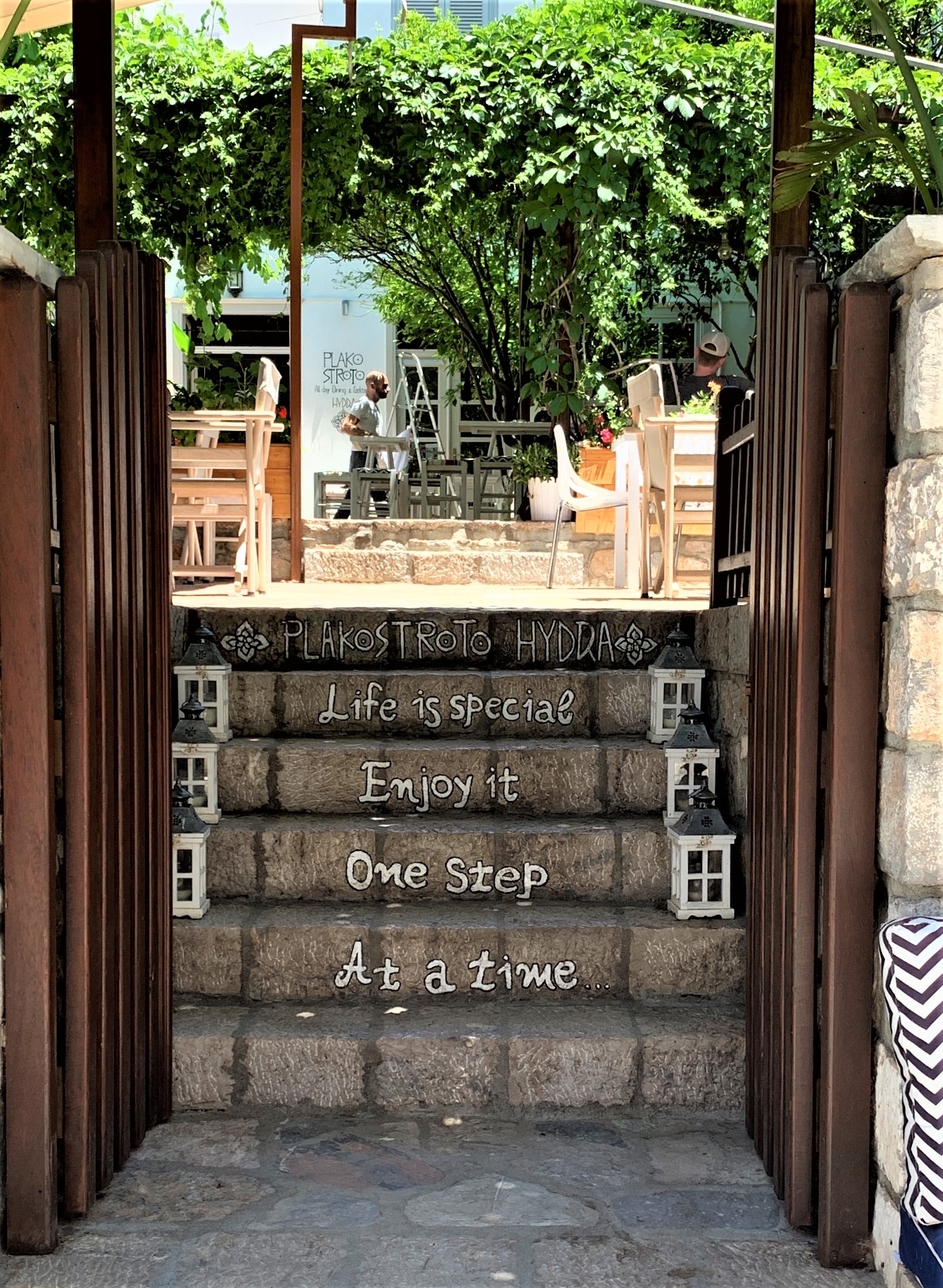
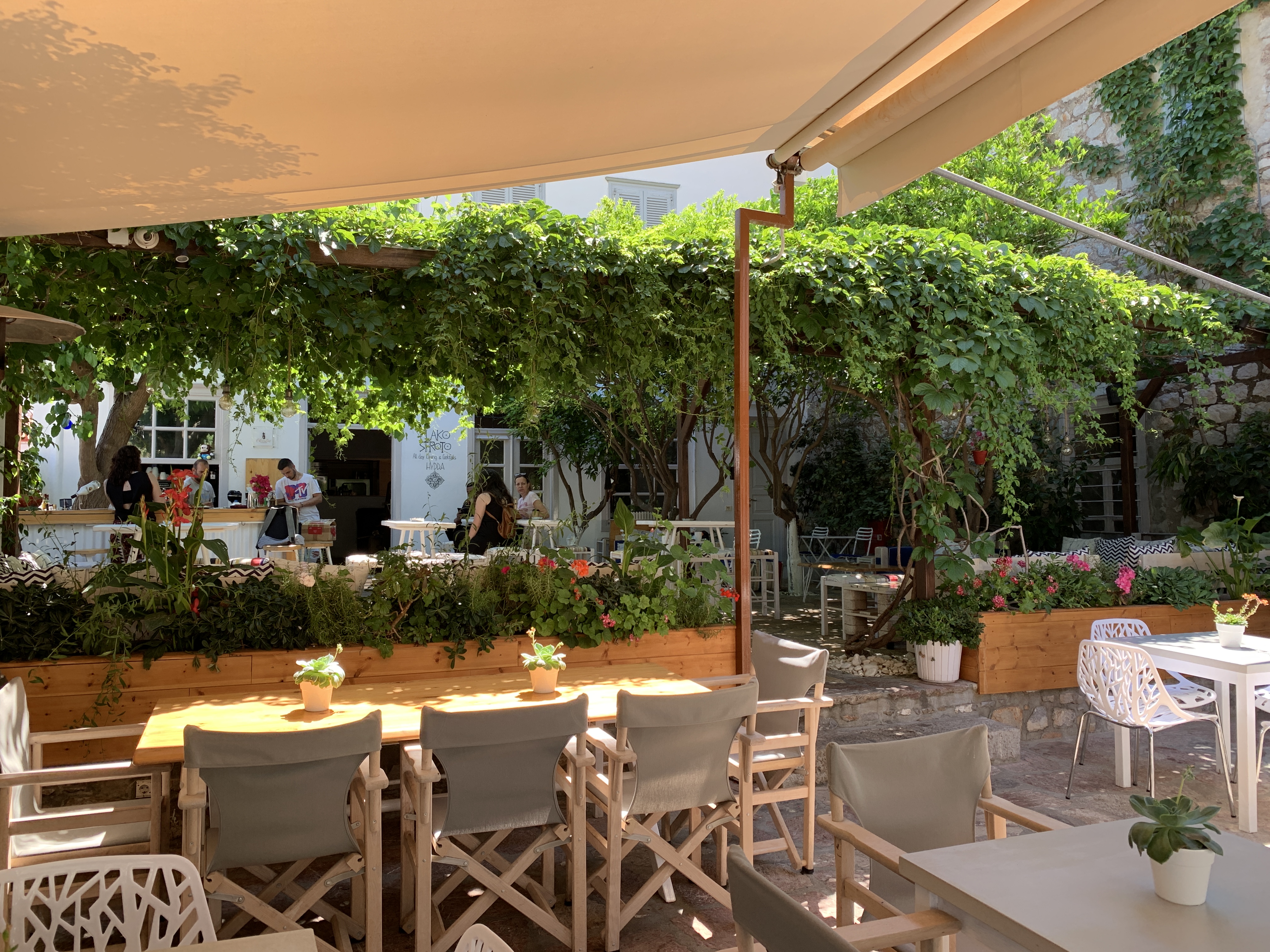
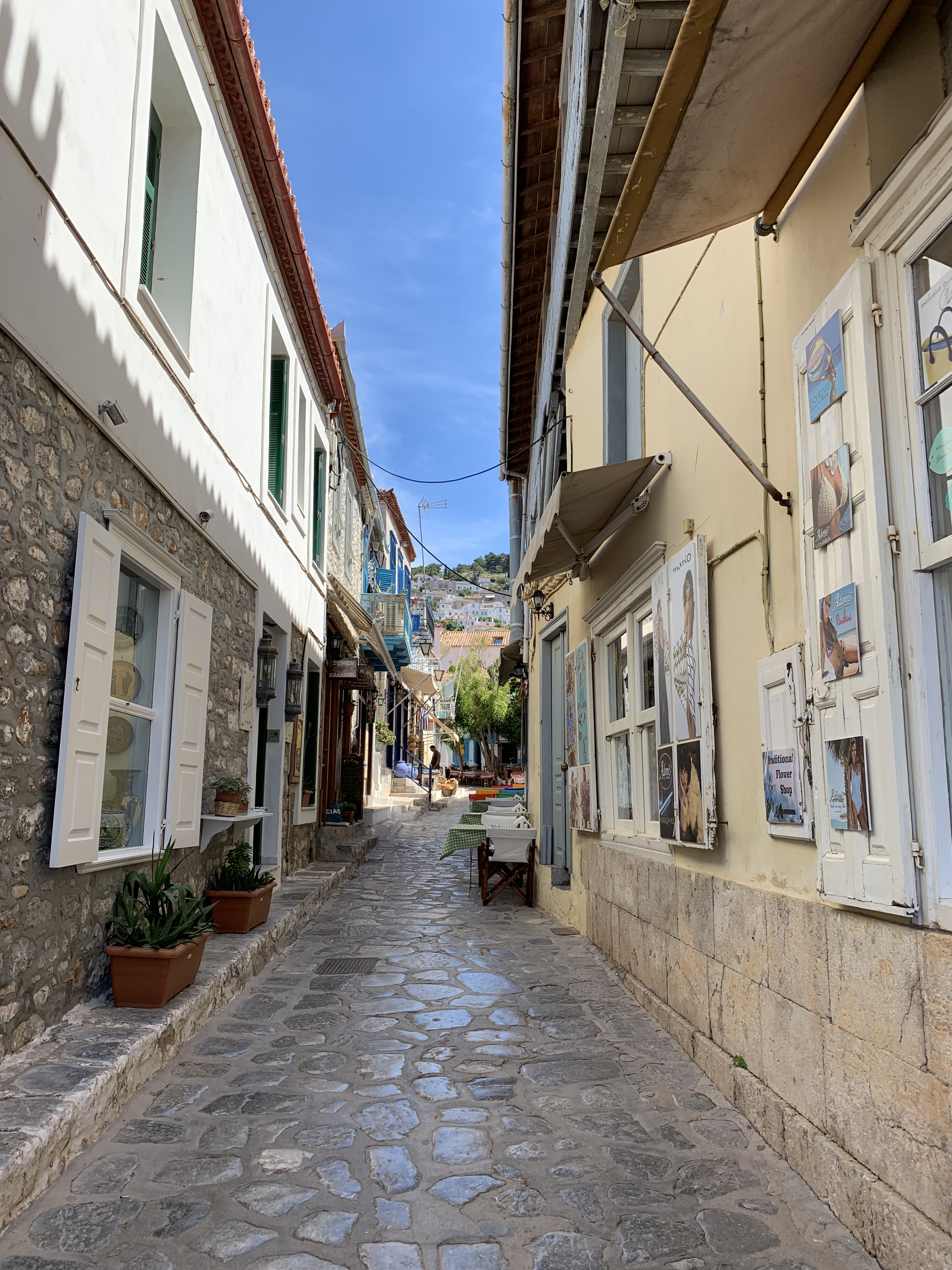
Winding streets and intriguing nooks provide many places to explore outside the harbor: shops, markets, courtyards, and shady bistros. The words painted on the steps of this cafe capture the essence of Hydra.
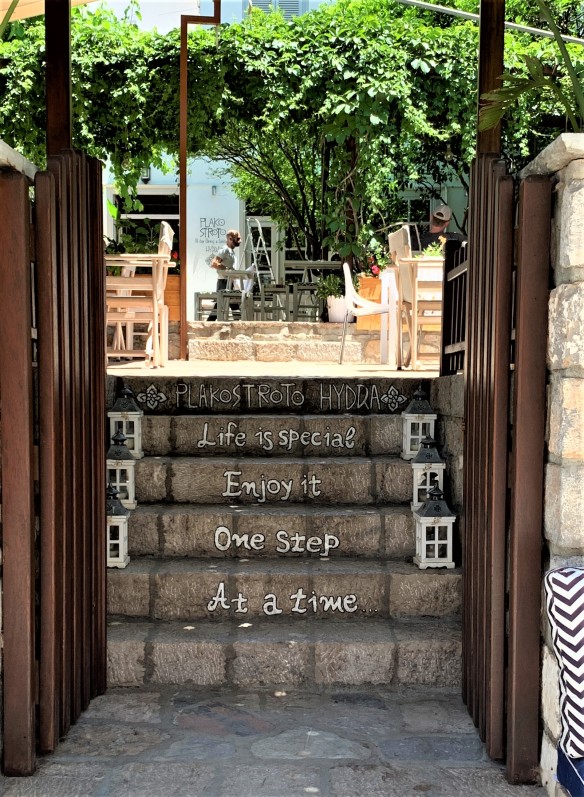
Life is special; enjoy it one step at a time
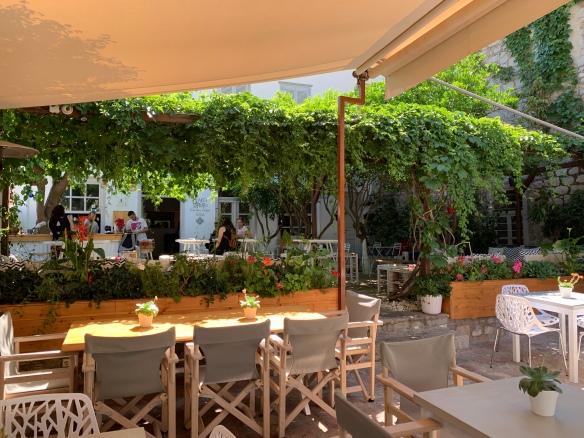
A charming bistro, tucked away in an alley
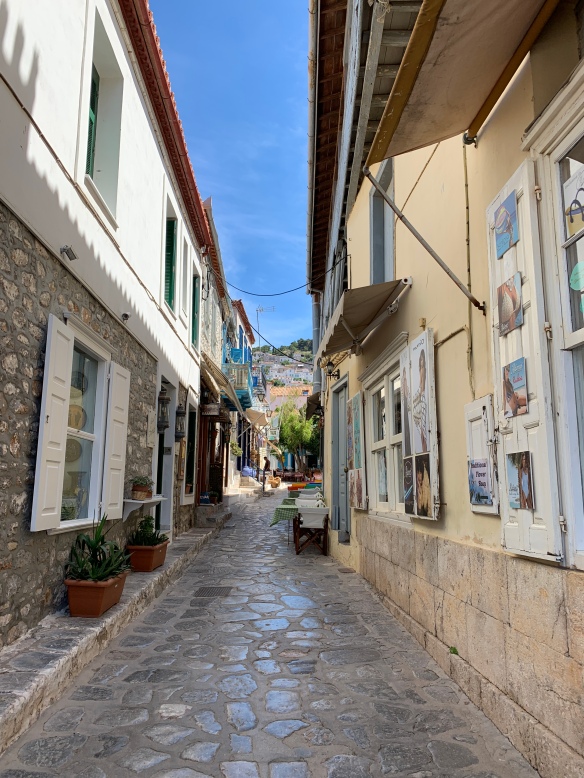
A picturesque alley with only one shopper in mid-day

Hydra’s Historical Archives Museum is filled with artifacts, maps and documents detailing the evolution of the island. Sponge diving and its maritime forces were historically the pride of the island. Walls are lined with portraits of “firebrands”—sailors who used fire to destroy Ottoman fleets during the Revolution of 1821. Their methodology was daring: they filled “fireships” with gunpowder and strung fuses with hooks to the end of the boat. The firebrands would ram an enemy ship, drop hooks onto its deck, light the fuse, and escape in small dinghies while the gunpowder exploded the enemy ships. These men were the heart of the Greek navy during the Revolution.

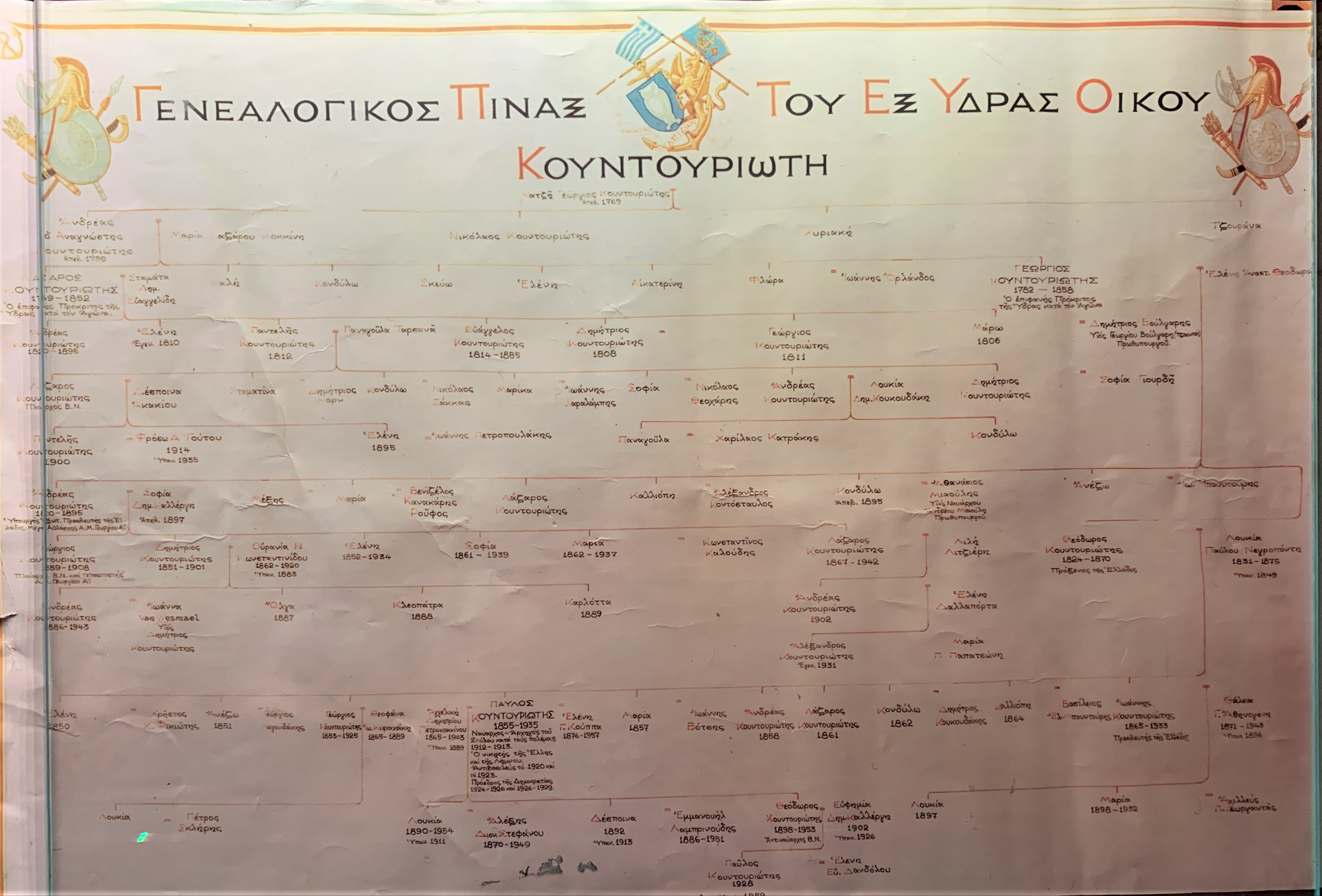
There are displays of costumes, weapons of Hydriot independence fighters, woodcarvings and maps. Although photos are not permitted, I had to take this one.
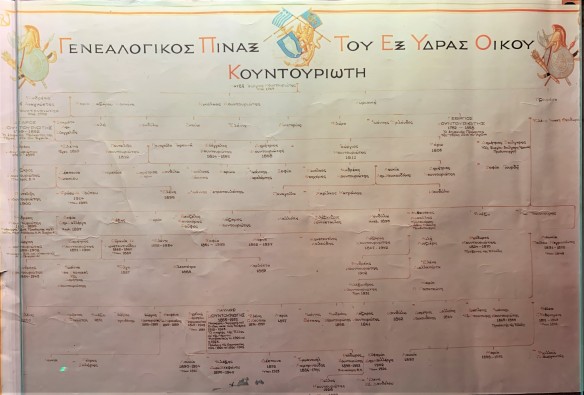
Genealogy Chart in the Historical Archives Museum of Hydra for one of its most renown families. Oldest member, Chatzi Georgios Kountouriotis, died 1769.

This family tree is of one of Hydra’s most renown families. Its oldest member, Chatzi Georgios Kountouriotis, died in 1769. I studied the chart and two things caught my attention:  specific dates of the earliest generations are missing, and Chatzi’s date was one of death, not birth. I felt a mixture of satisfaction and disappointment in seeing that even Greek families of prominence face the same obstacle–Ottoman rule. We are all stuck in the late 1700’s-mid 1800’s!

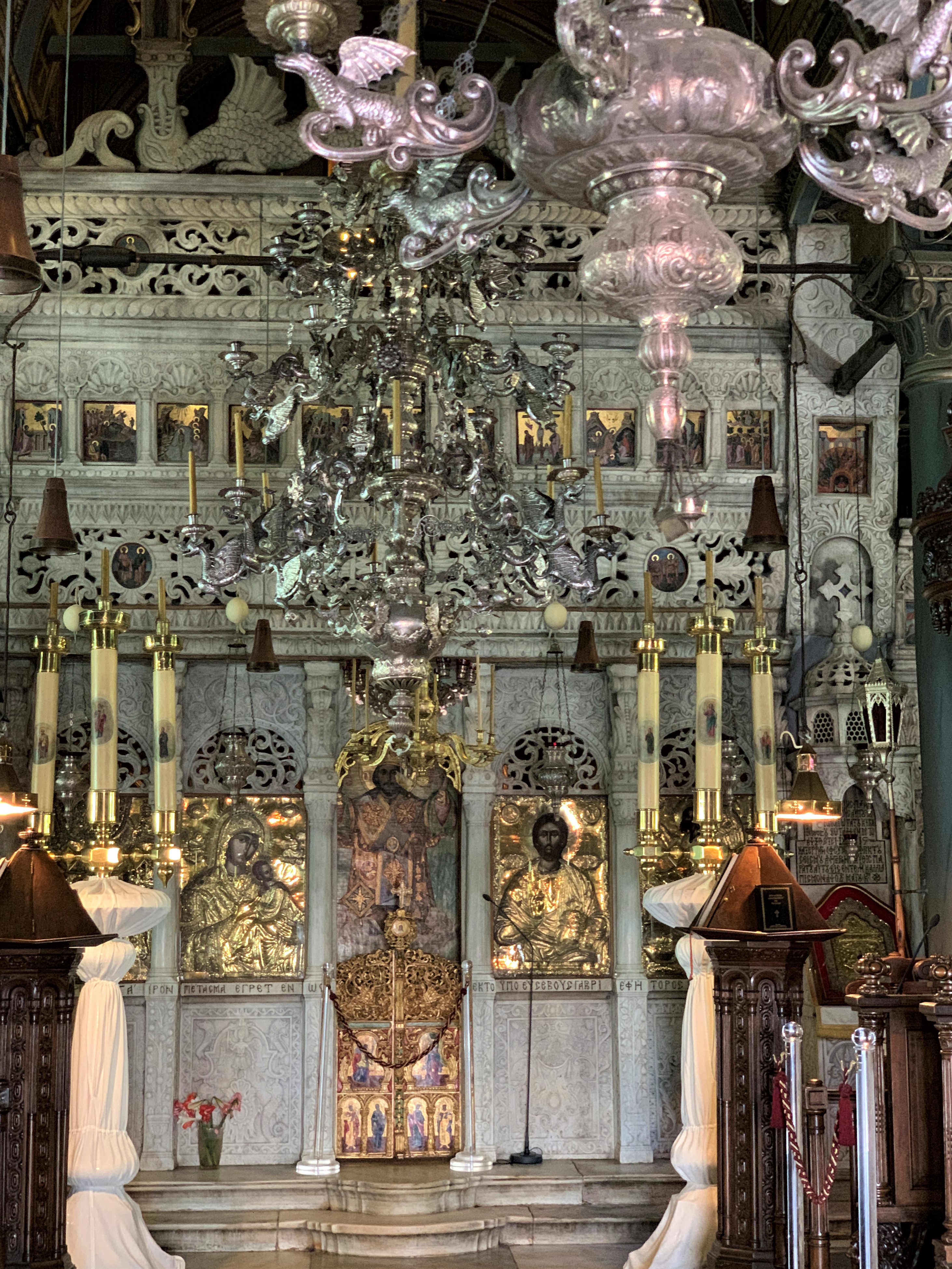
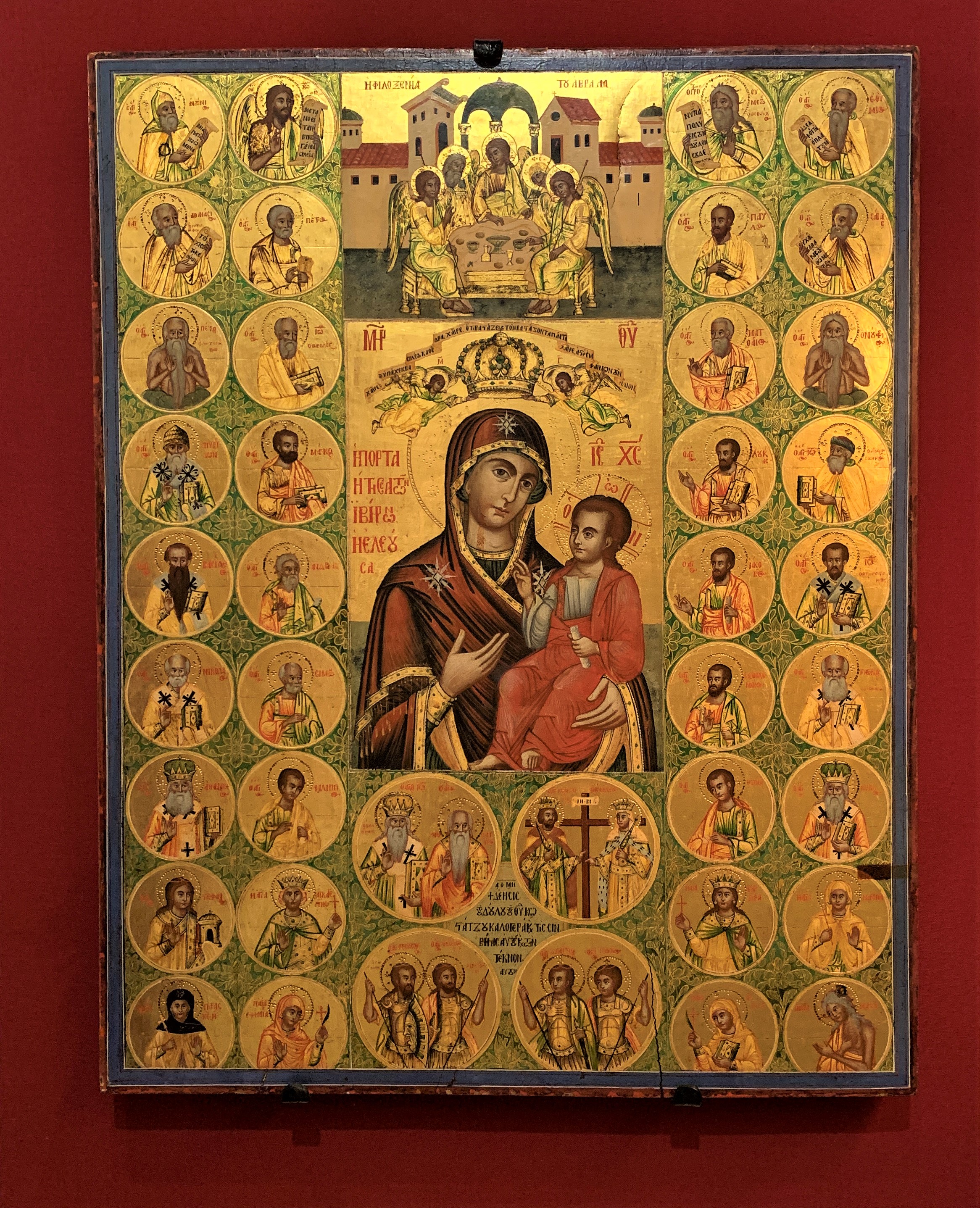
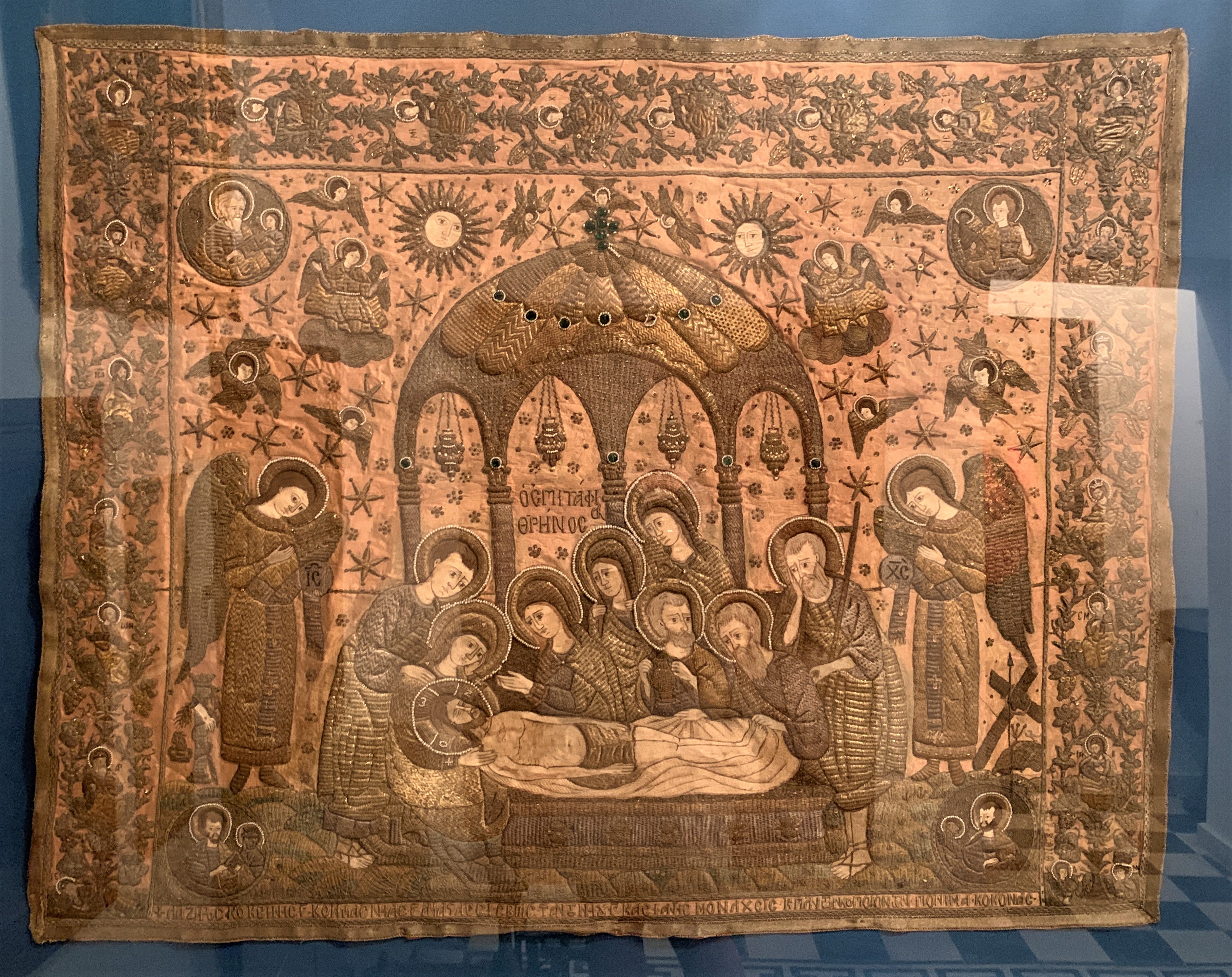
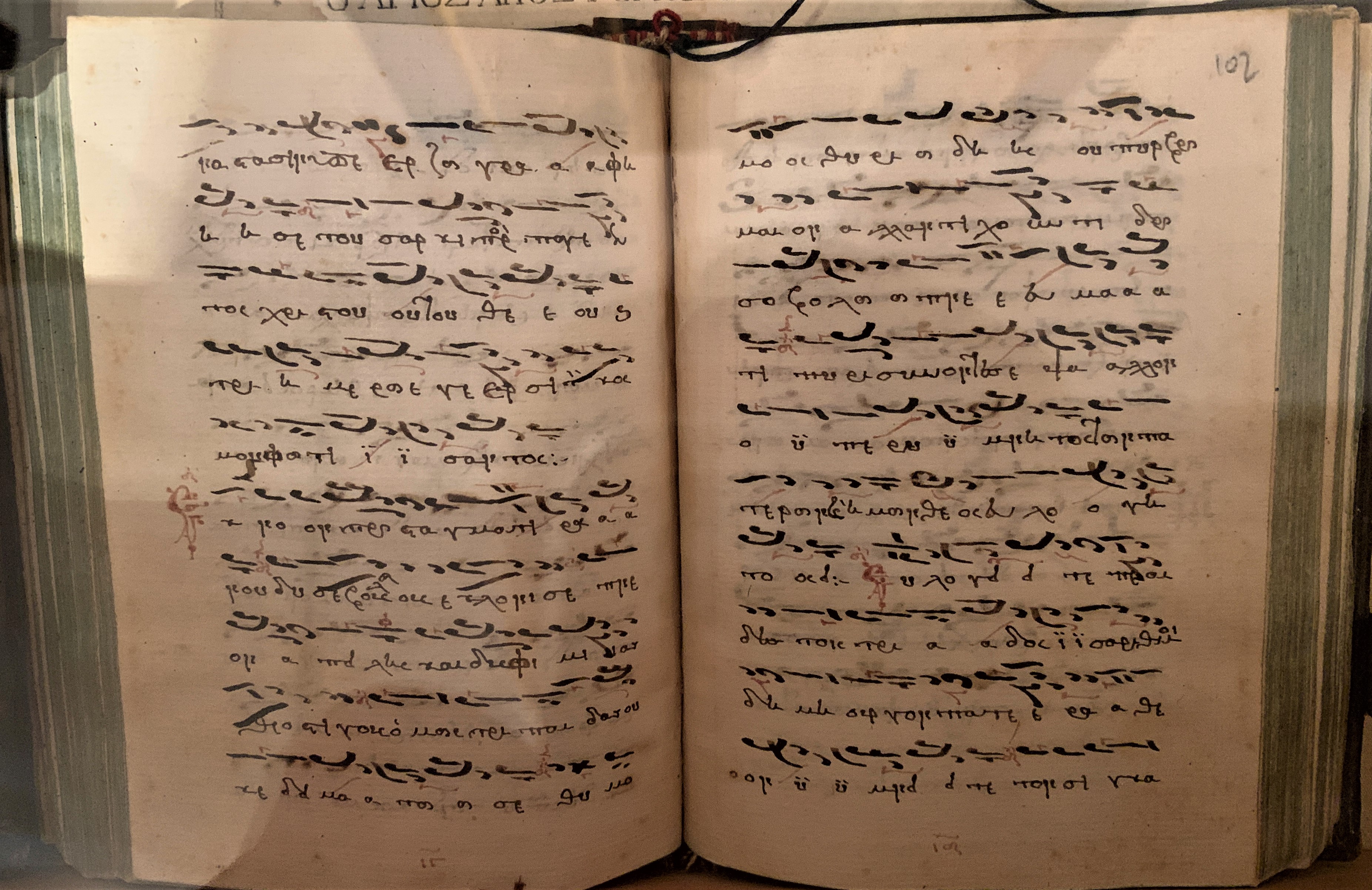
My final stop before returning to Athens was the the former Monastery of the Dormition. Today, it serves as the ecclesiastical Mitropolis of Hydra. Its church interior is magnificent; its bell tower chimes the hour, and its museum gives a glimpse of Orthodox treasures of the island. Some of its artifacts date to the late 1700’s.
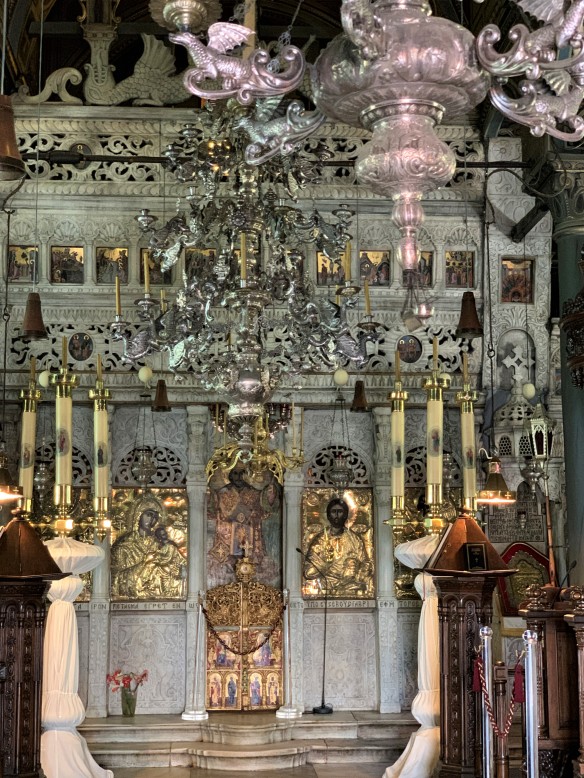
Church interior
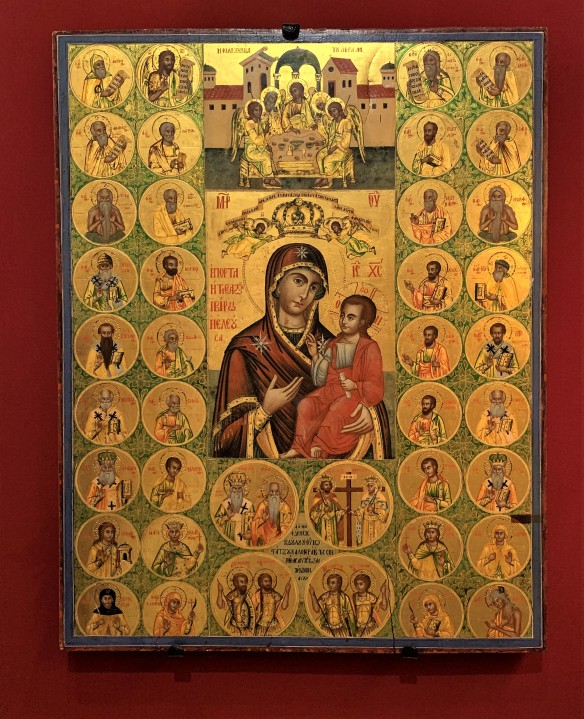
Icon, dated 1748
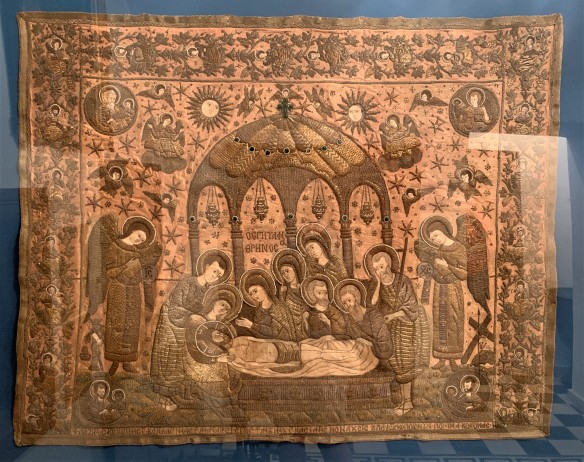
Gold embroidered epitaphios, 1808
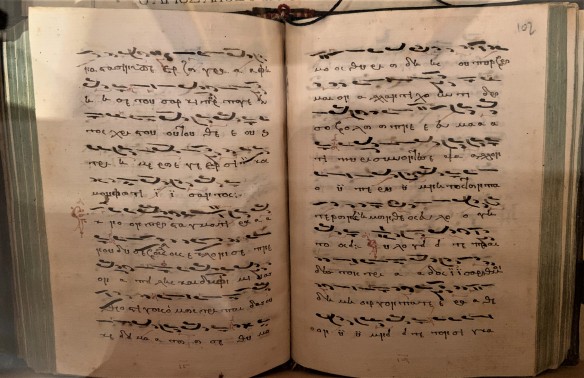
Orthodox holy book from the Venetian period (mid 1700s)

My stay on Hydra was exactly 24 hours. If I had one more day, I would take a boat ride around the island and explore areas outside the harbor town. But that will have to wait for another trip.
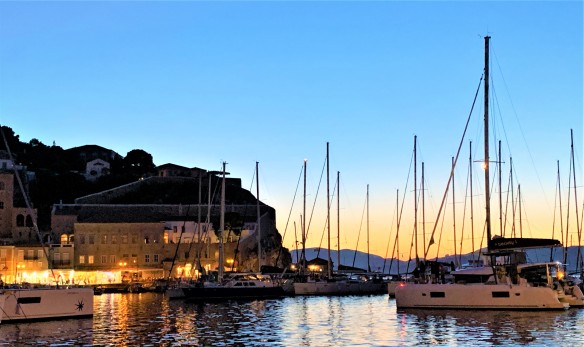
Sunset


Greece 2019 – Pieces of Athens

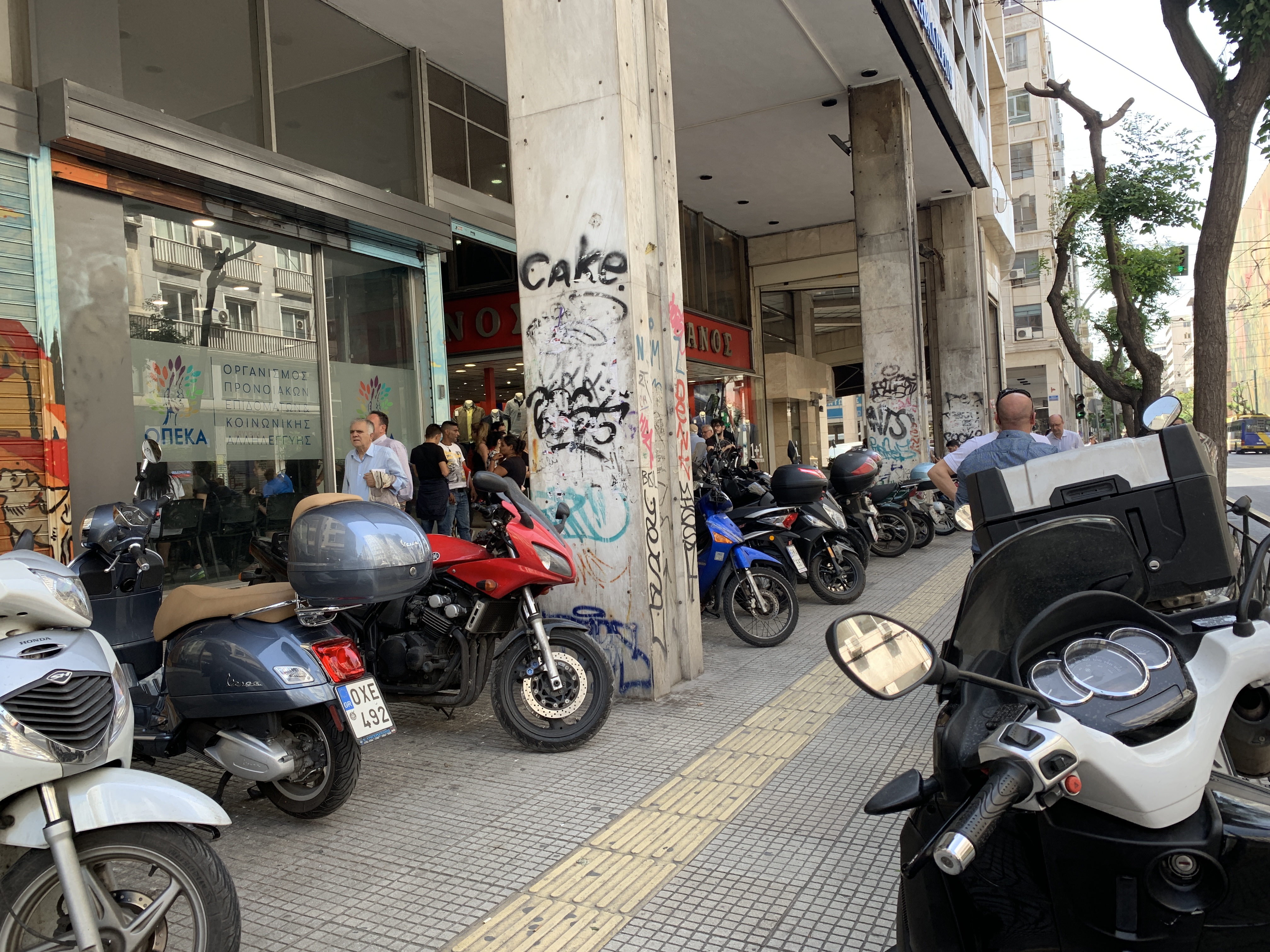
What can I say about Athens? It is an antithesis of itself:  noisy and crowded yet glorious and beautiful; a place to be visited and treasured for its architecture, history and contributions to civilization.  Sadly, Athens is tattooed with graffiti on almost every available space of concrete. Although distracting, it doesn’t detract from the energy and ambiance of the city. A few photos of this city on a hill:
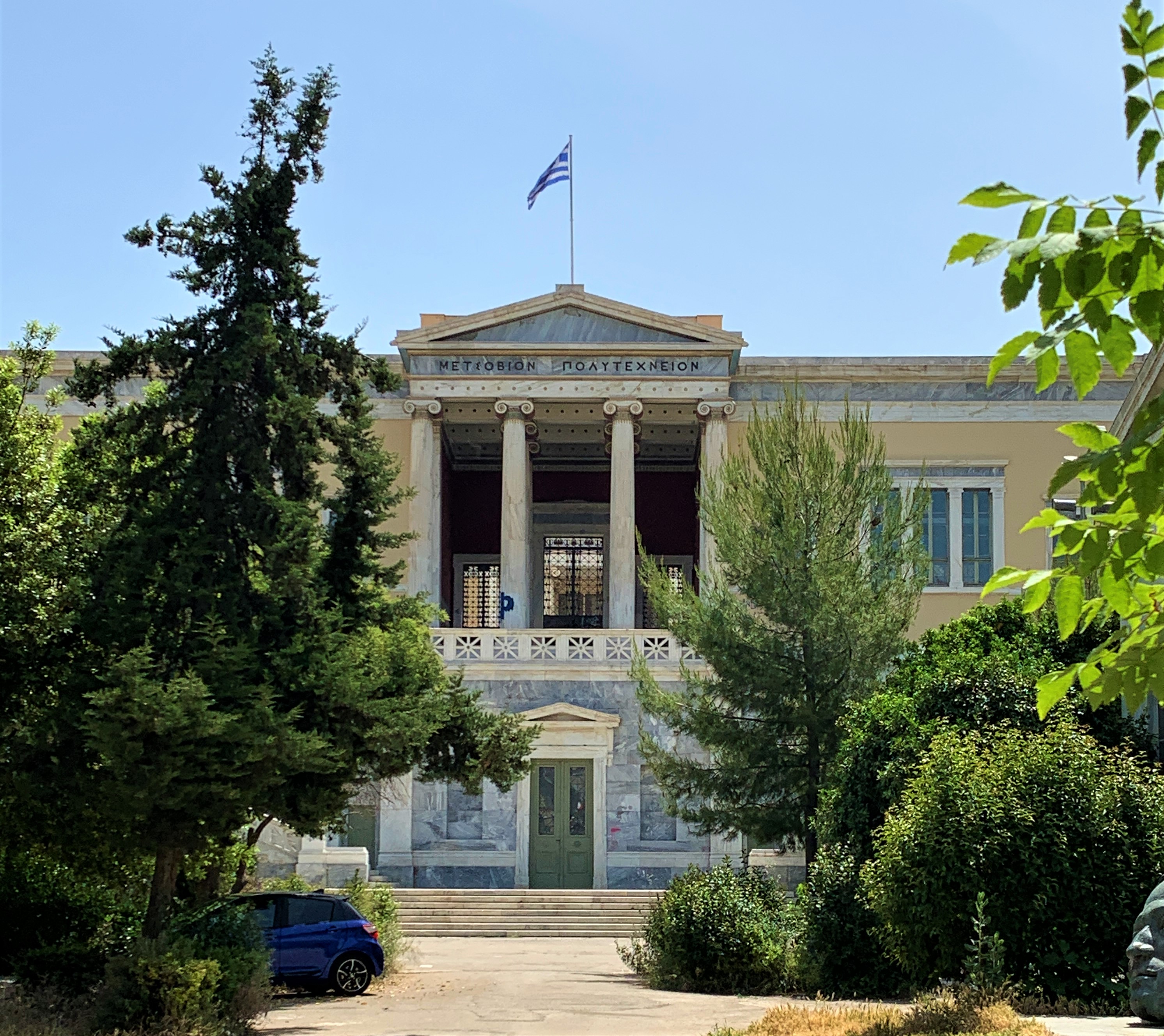
National Technical University of Athens

The primary–and dangerous–means of transportation!

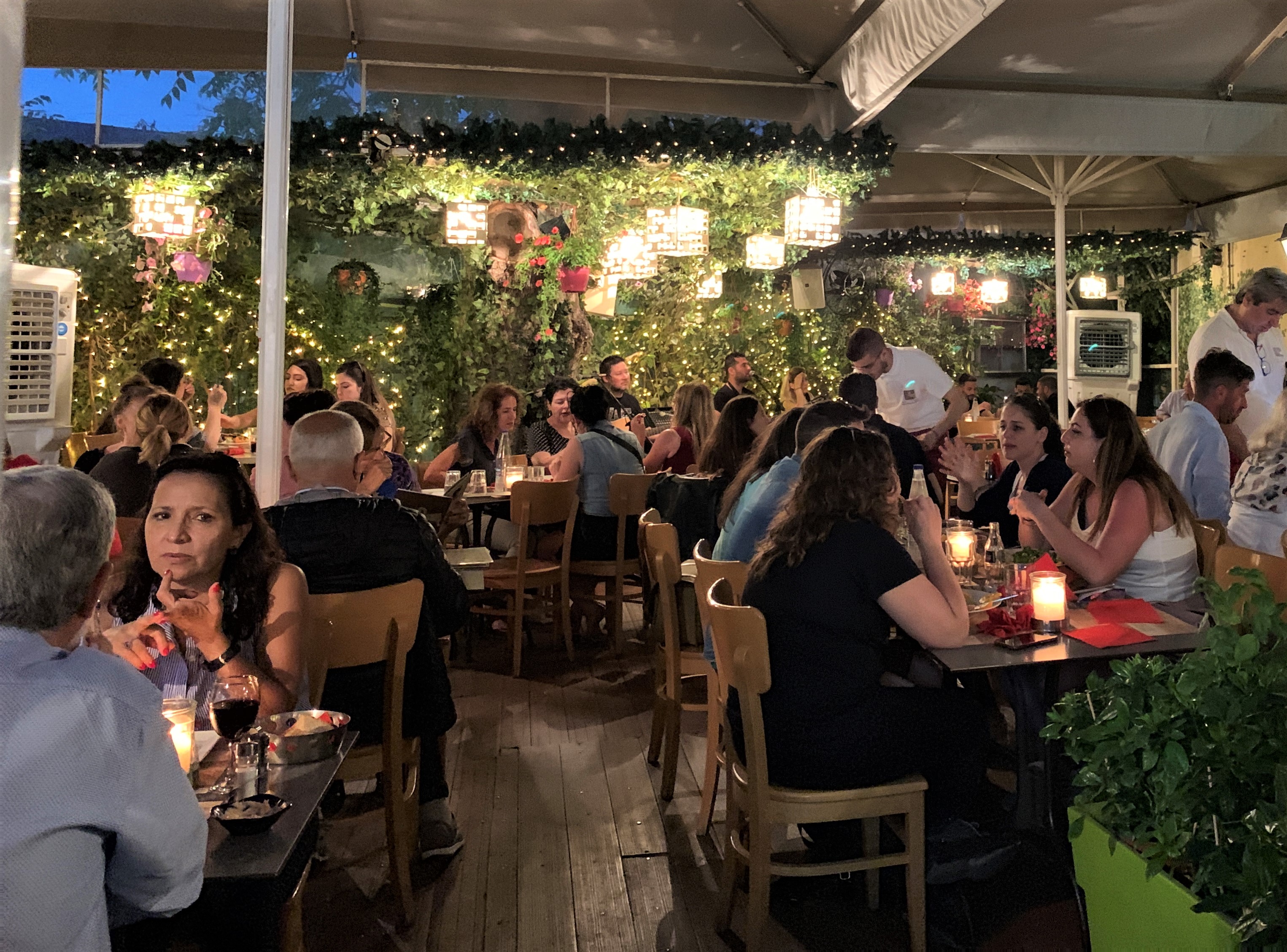
Dining at night is always outside

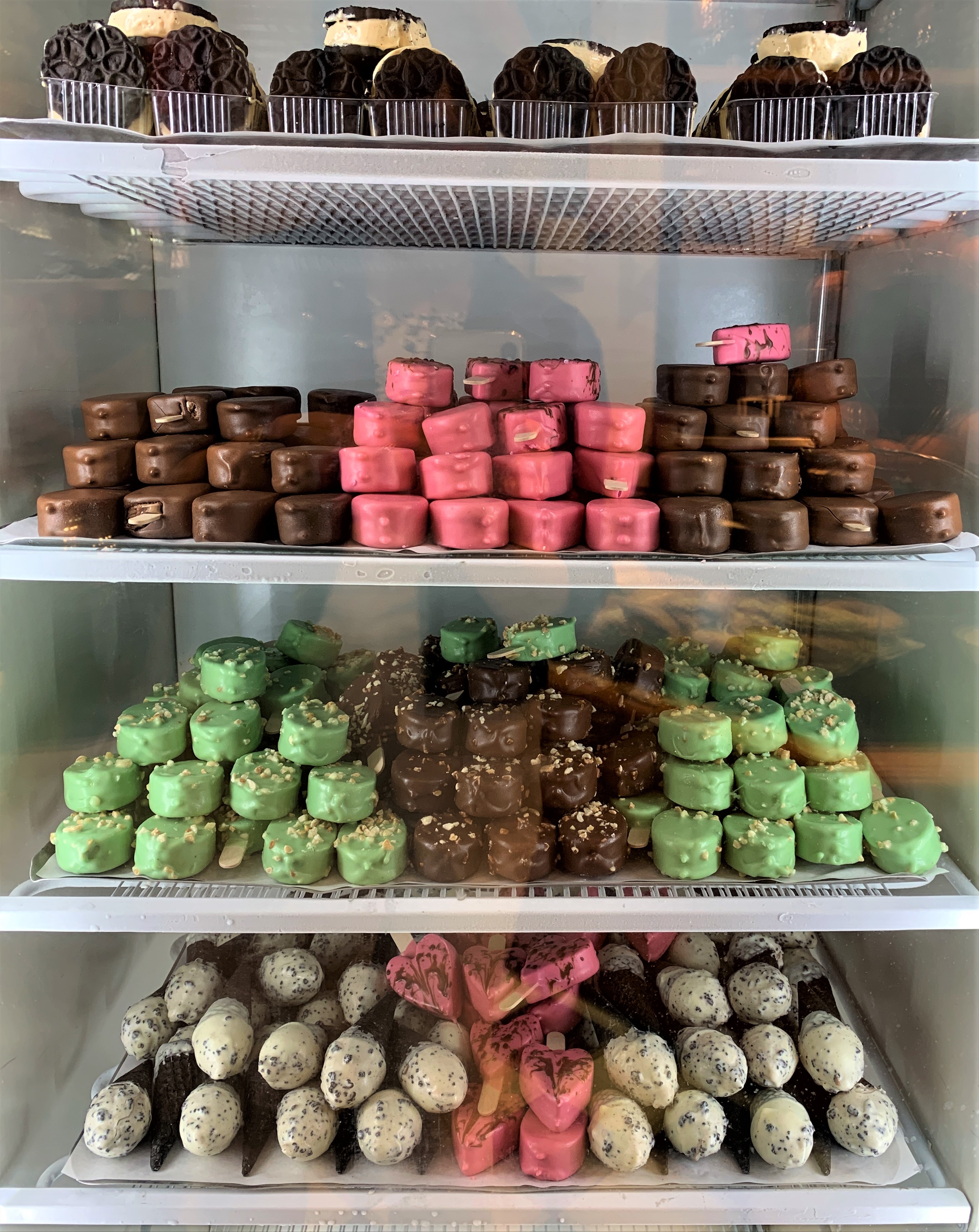
These mini ice cream treats are found everywhere in Greece. Just a couple of bites to satisfy!

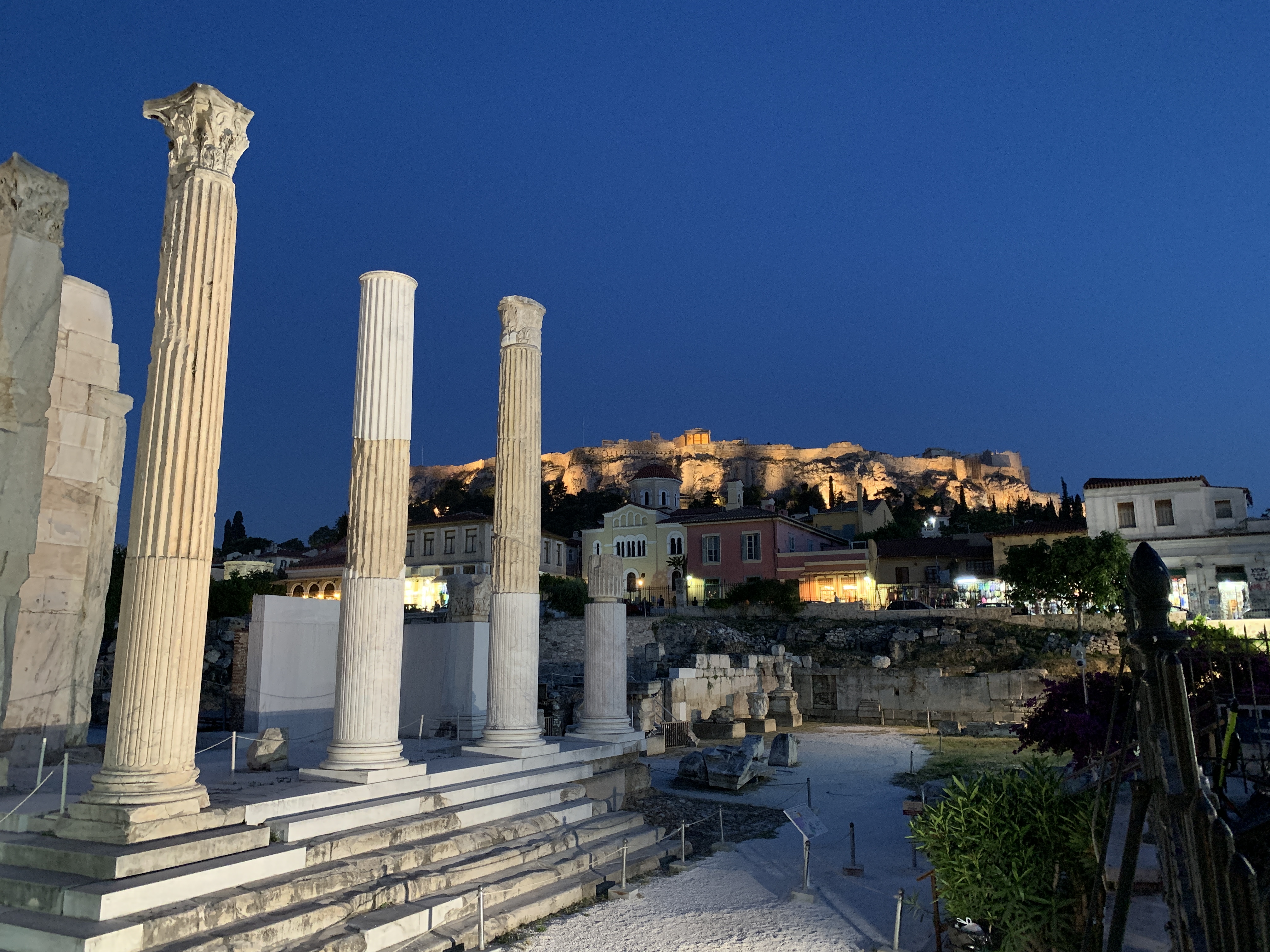
The Acropolis shines throughout Athens

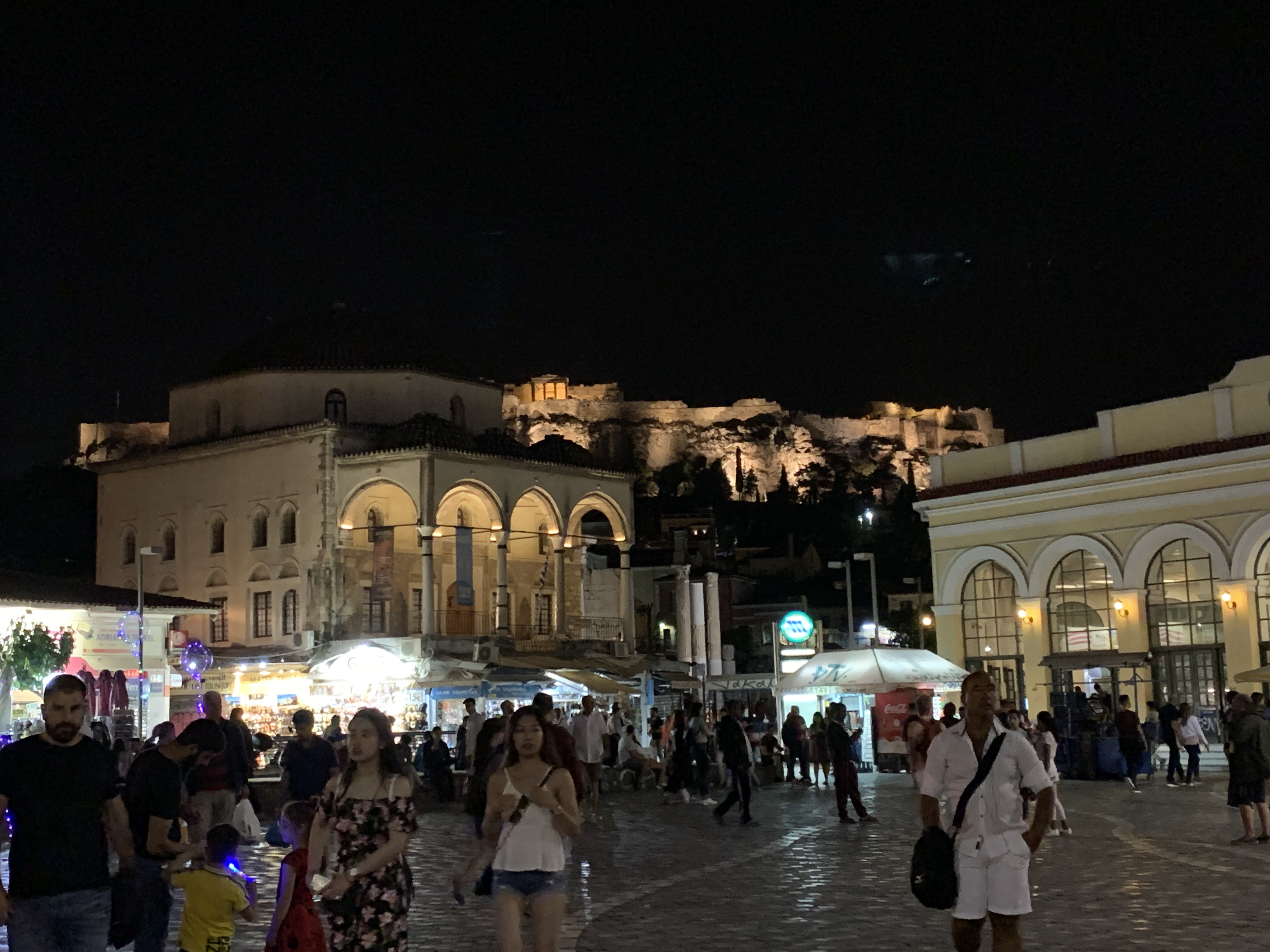
Monastiraki Square, one of the hubs of Athens

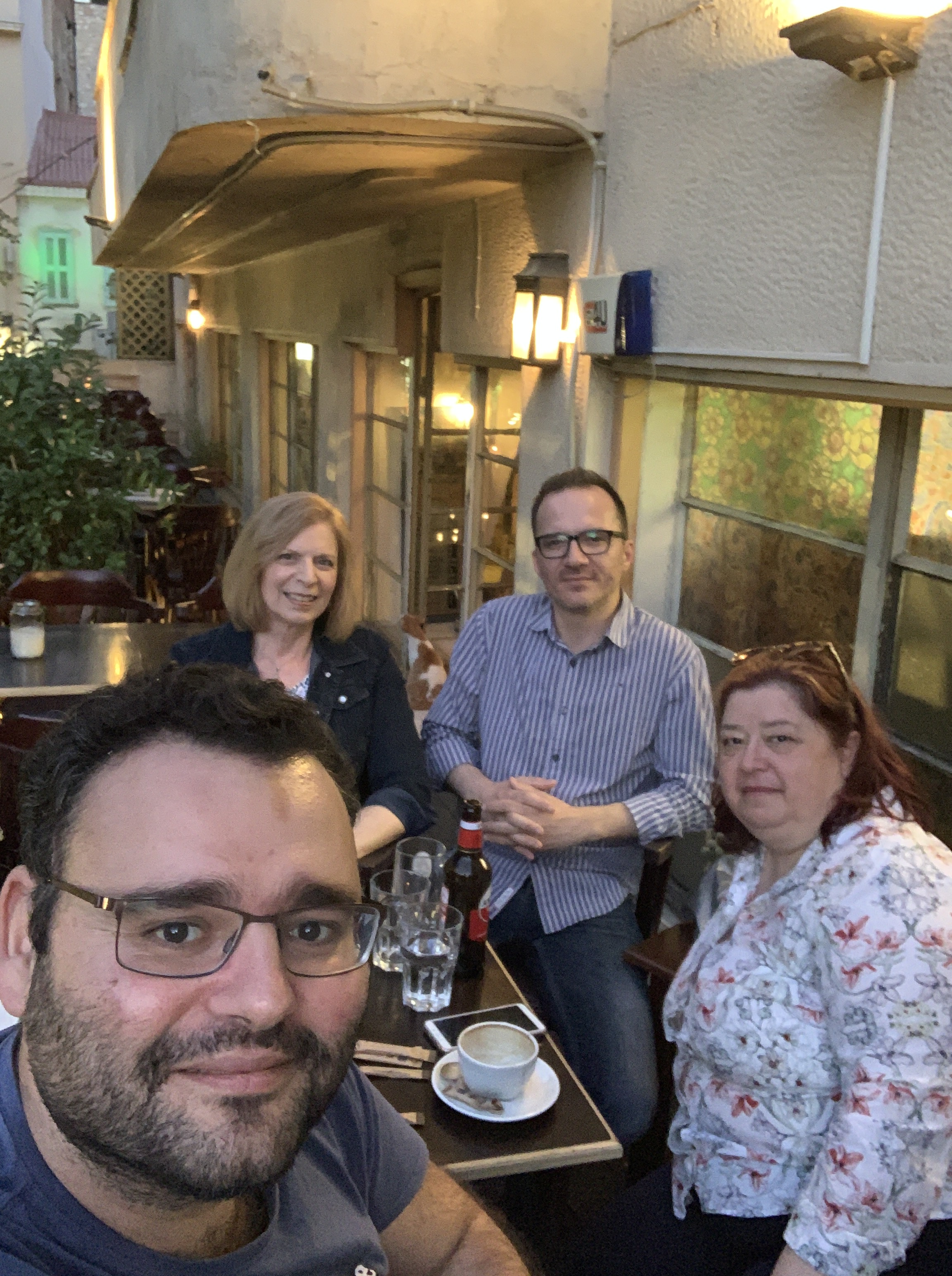
Enjoying the night with friends:  Giannis, Konstantinos, Giota


Greece 2019 – Back to the Motherland

My work preserving church records in Sparta continues this summer. I returned to digitize birth, marriage and death books in 151 churches in Laconia. These vital records are of unparalleled importance to family historians, especially when there are limited resources available to researchers.

Taking Off! At Dulles Airport near Washington, D.C. May 26, 2019

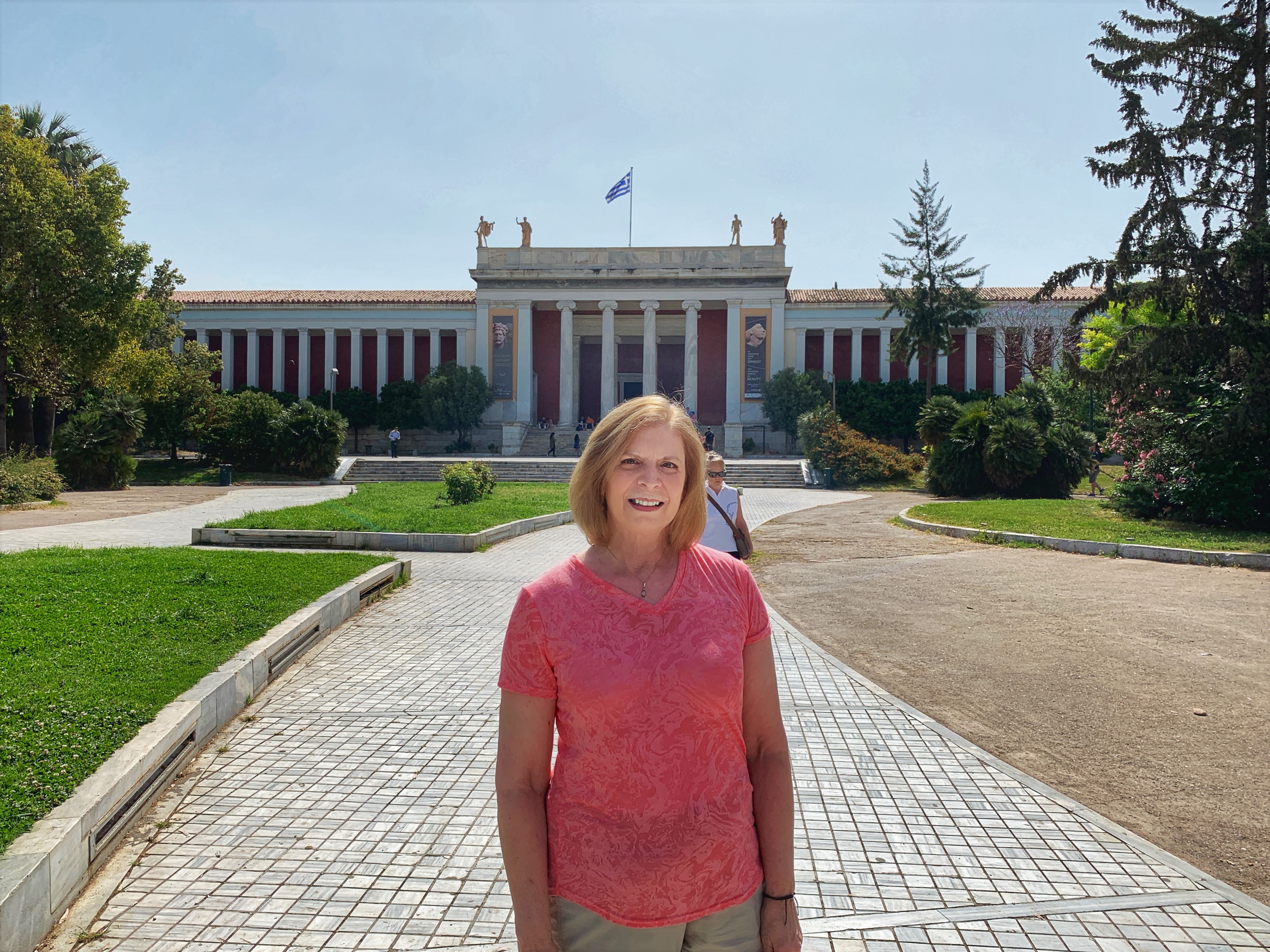
Last summer, I did not get to Hydra, Delphi and the National Archaeological Museum in Athens. This year, I am taking a few days to see these before I travel to Sparta and begin work. I started with the National Archaeological Museum in Athens.


In front of the National Archaeological Museum, Athens

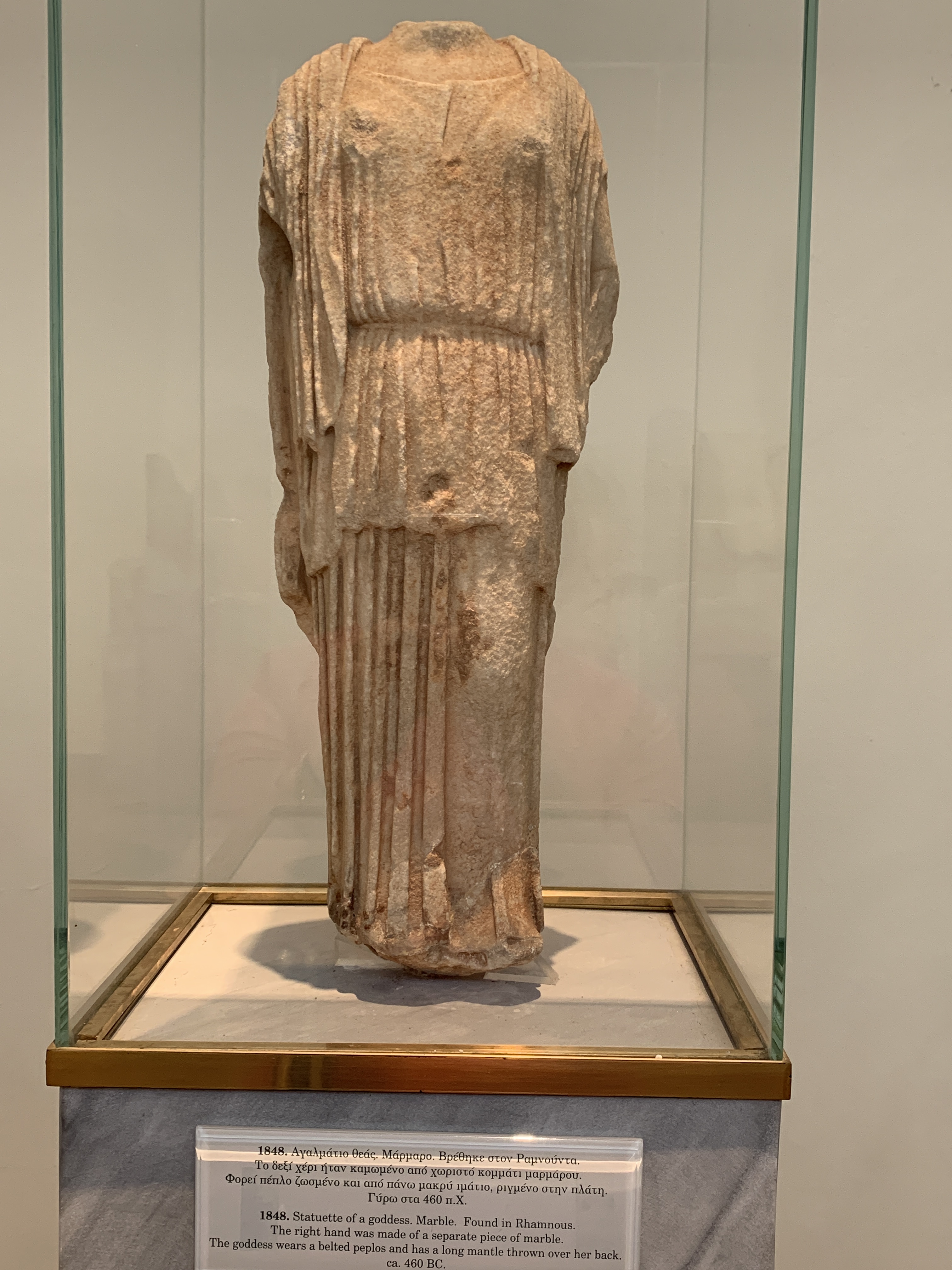
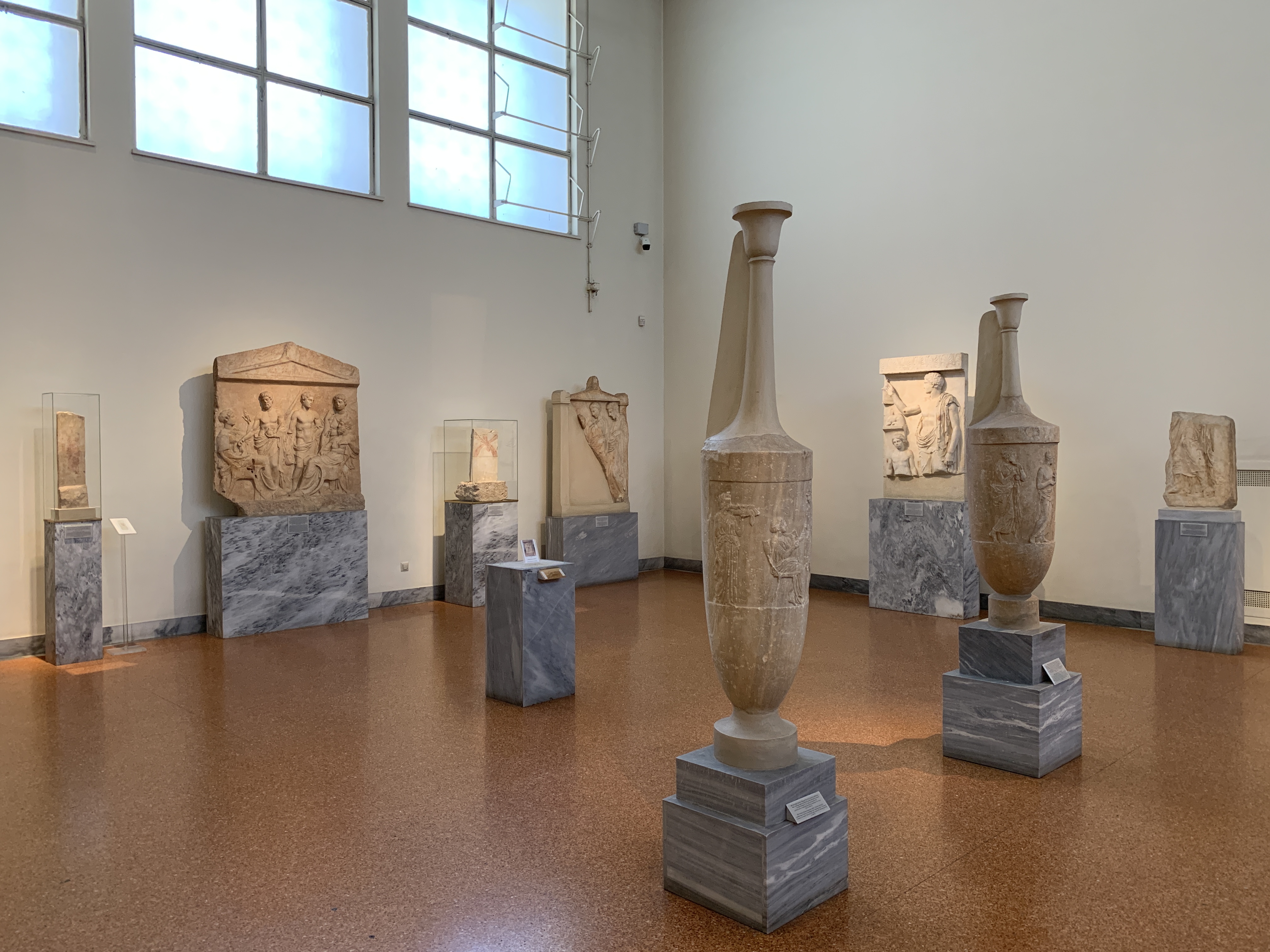
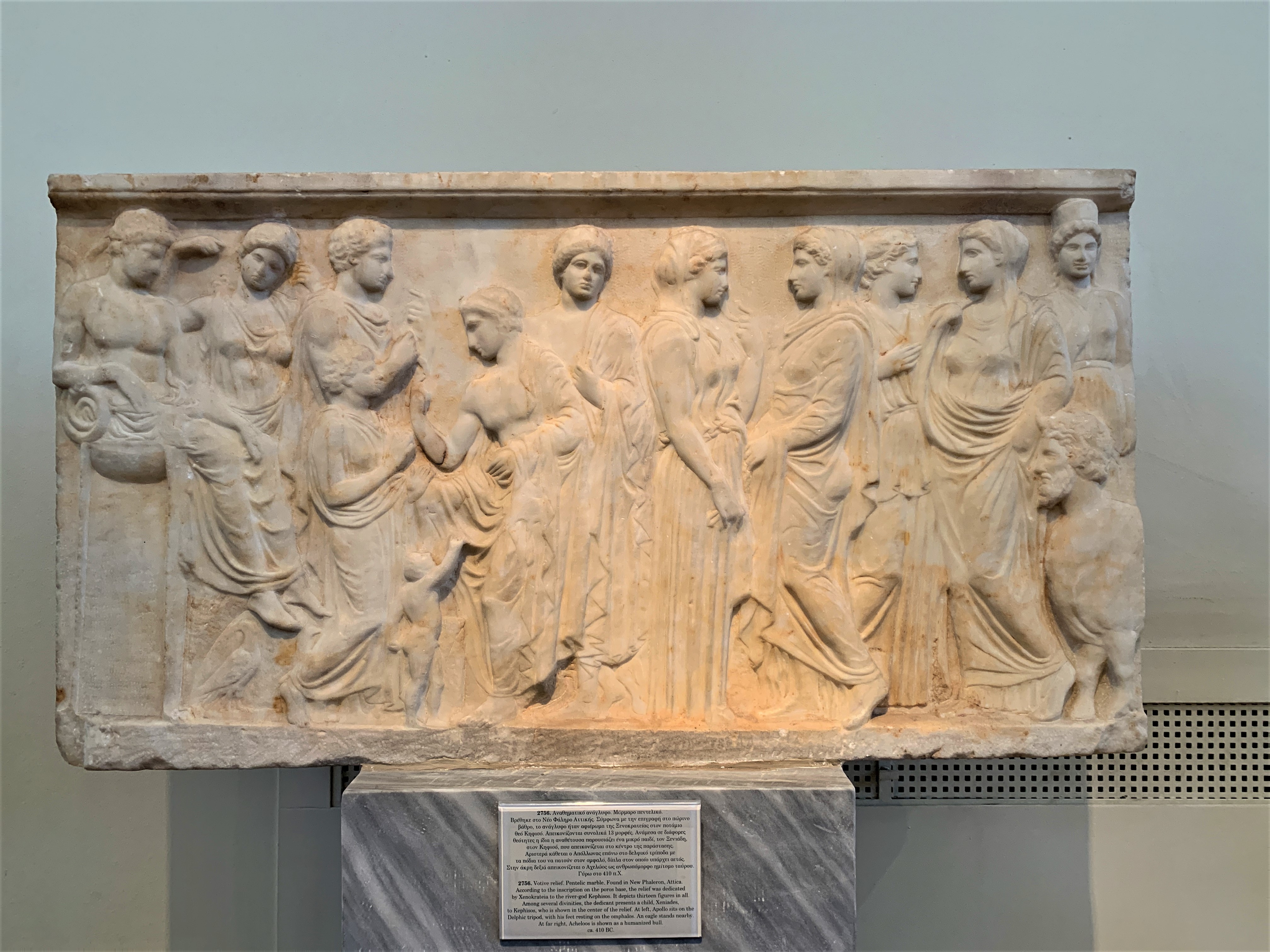
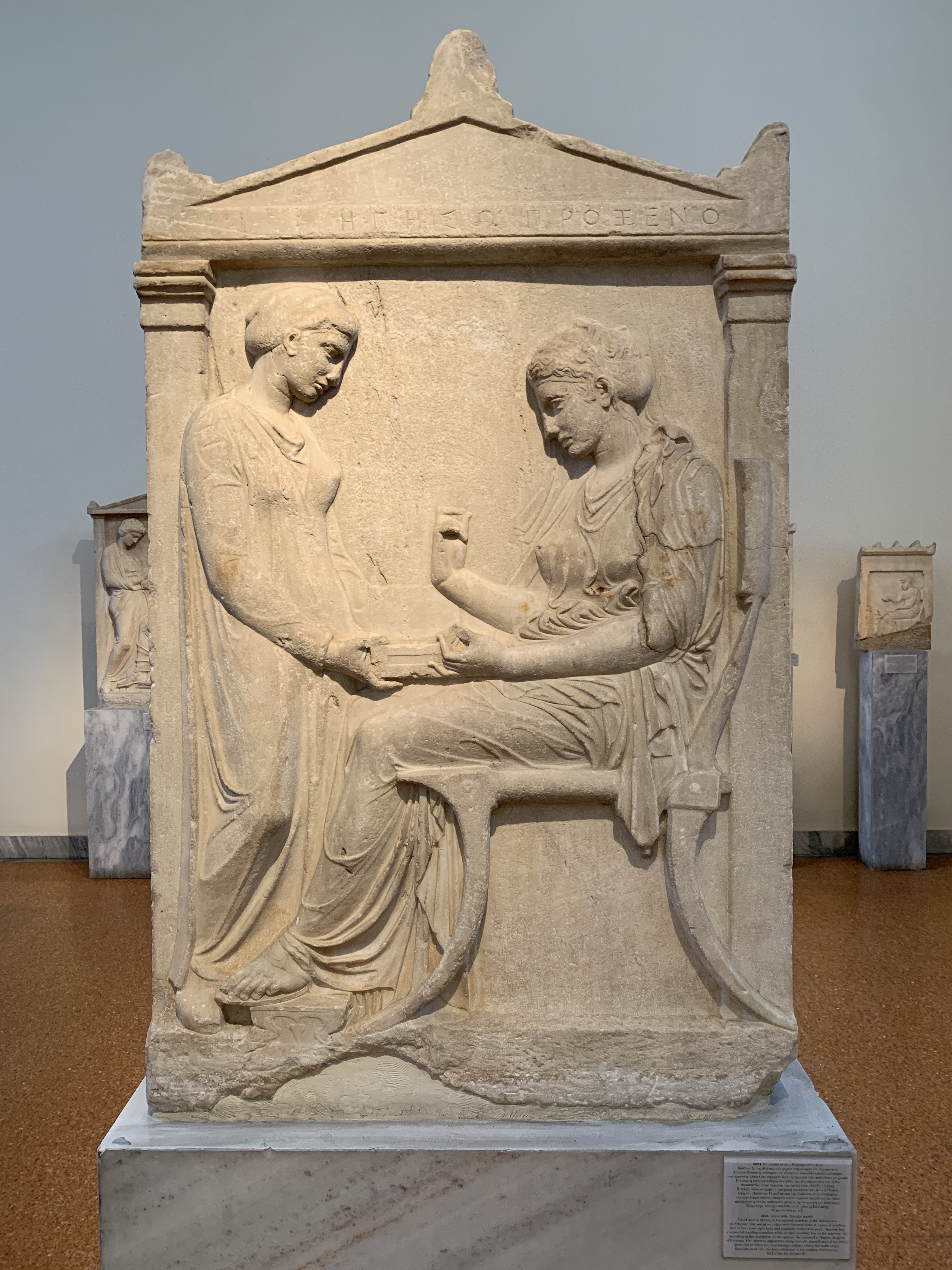
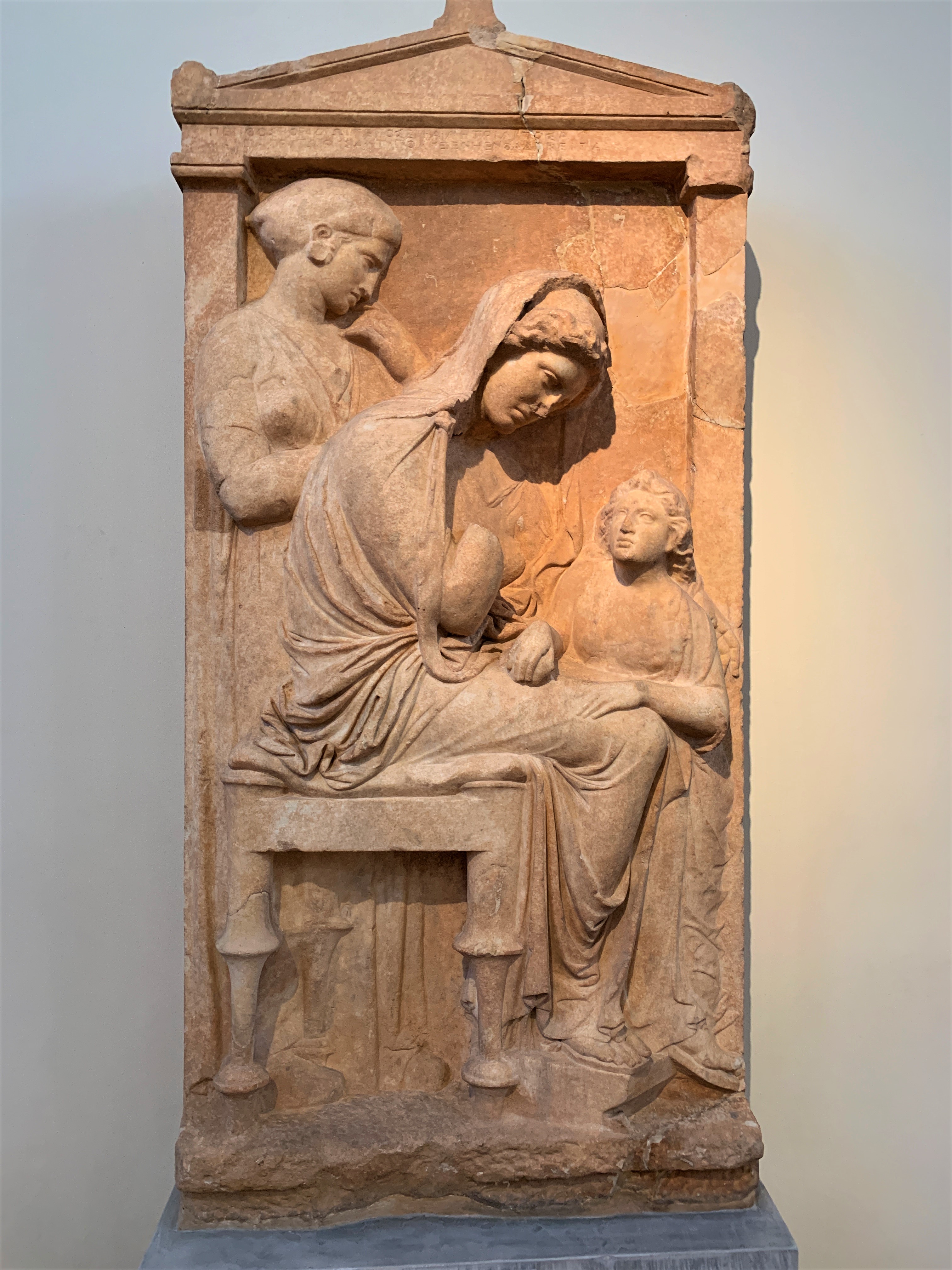
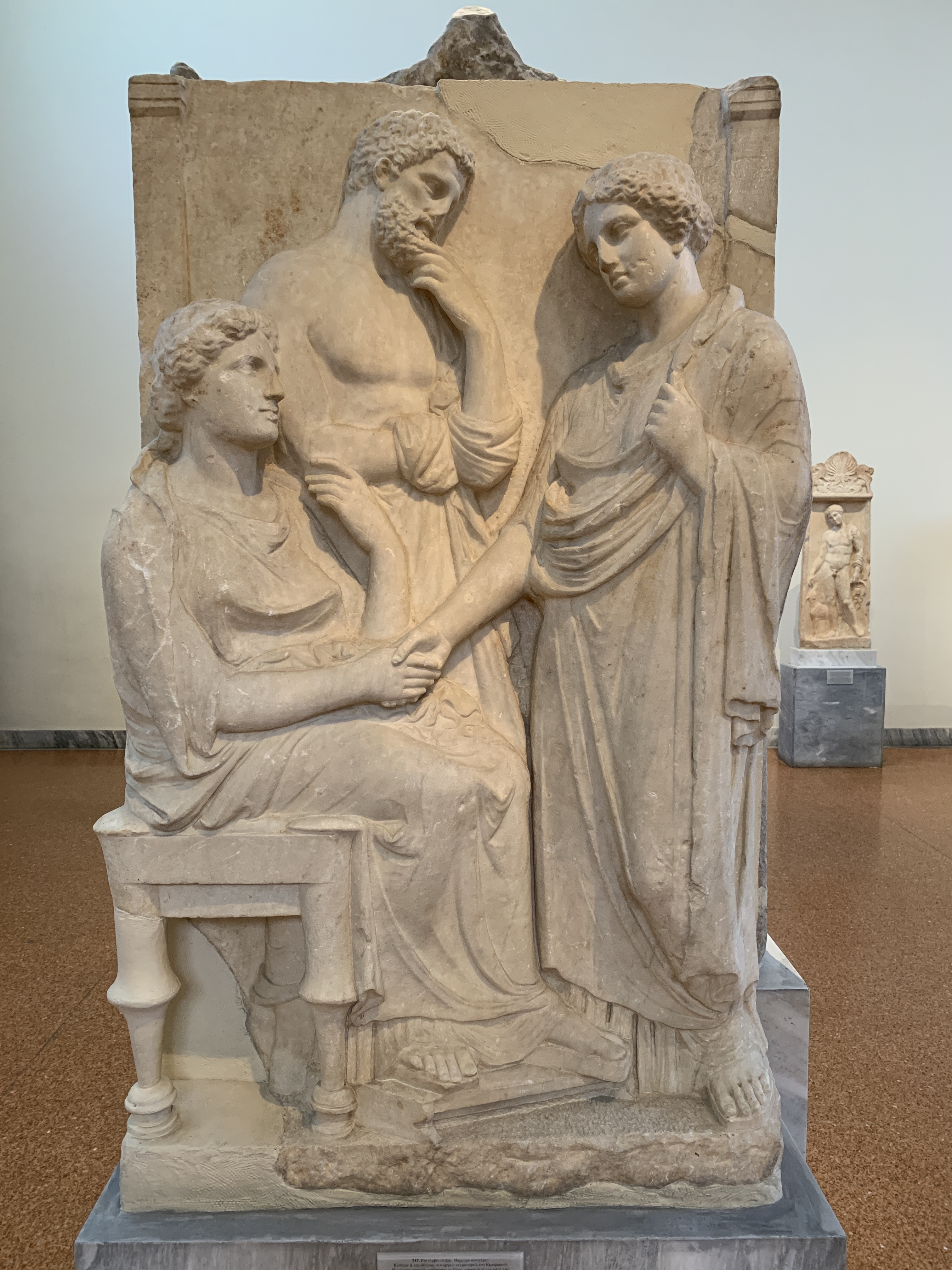
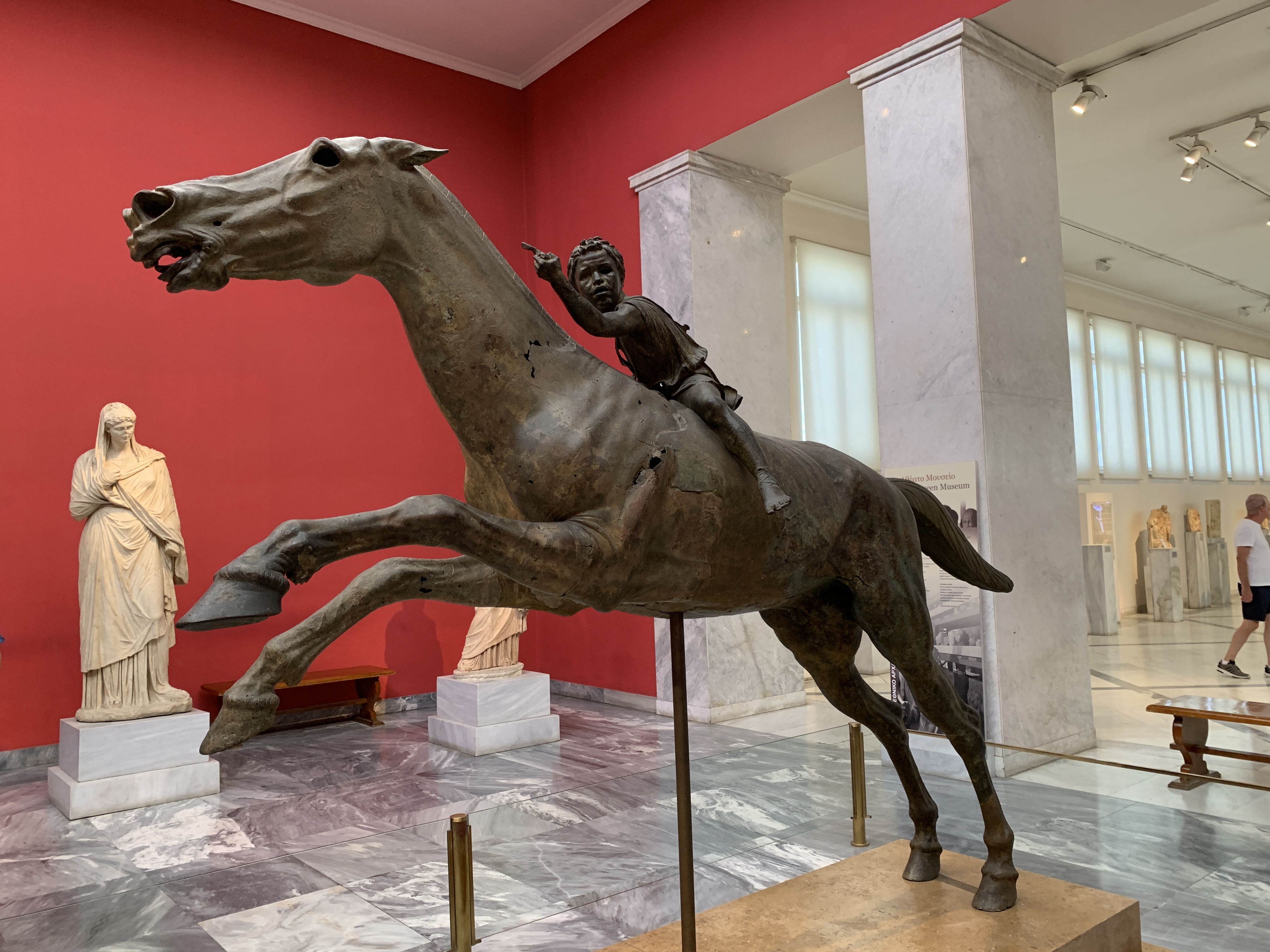
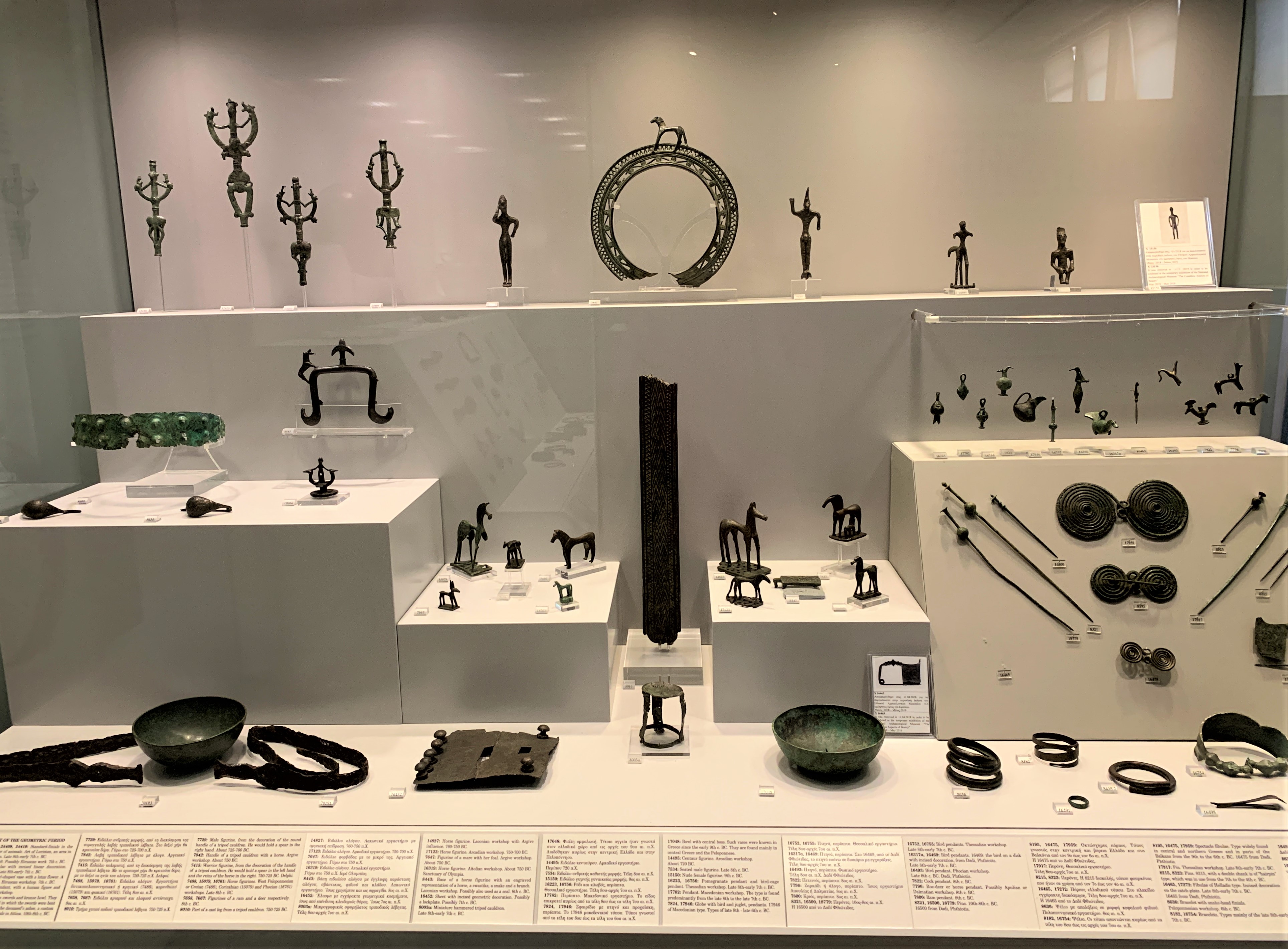
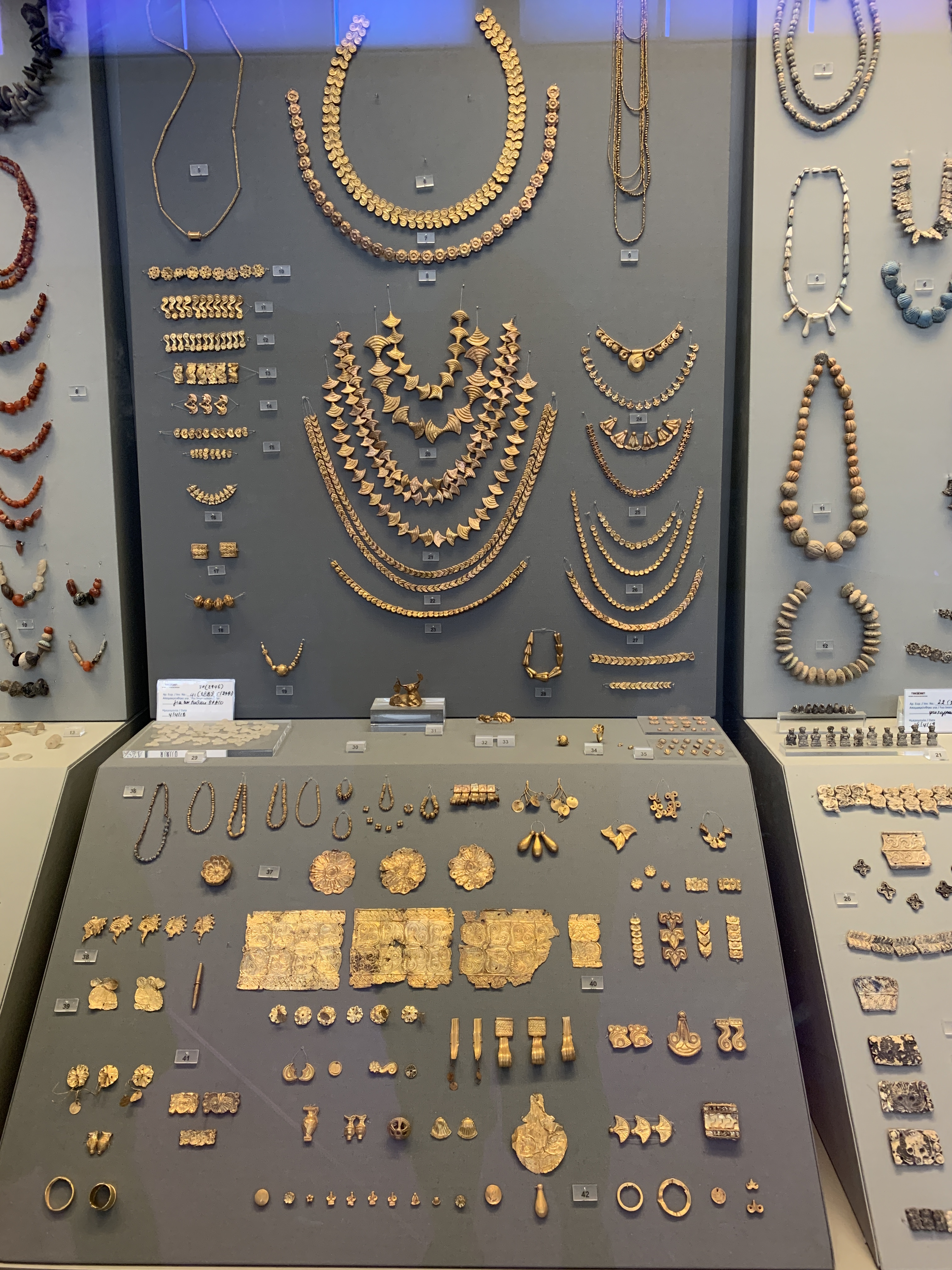
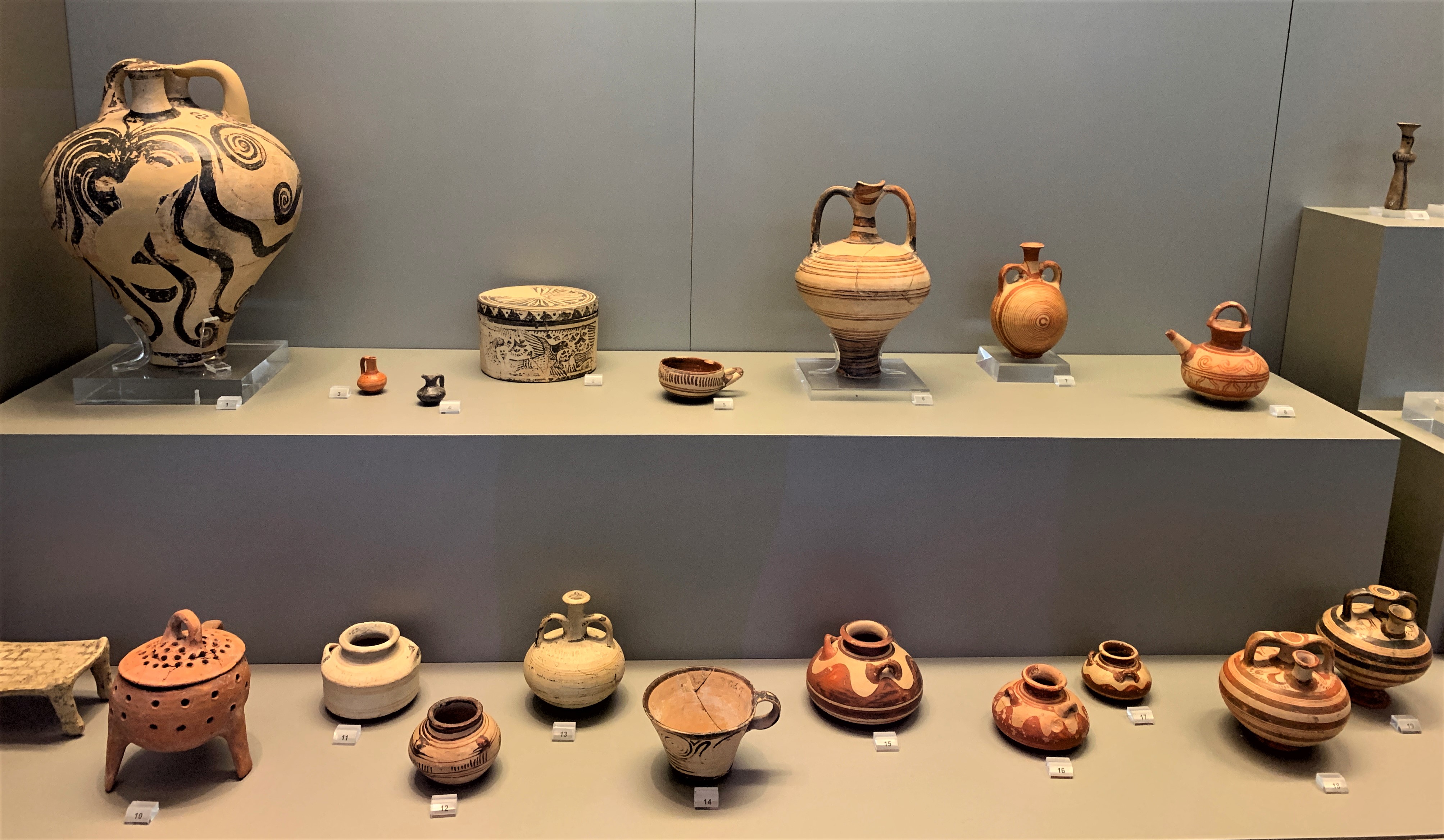
Its treasures, some dating back to prehistoric times, are awe-inspiring. The craftsmanship, intelligence and foresight of the sculptors and artists cross the span of time, and testify that brilliance did not begin in the 20th century. These photos are some of my favorites.

Goddess, 460 BC

Funeral monuments and lethykos, Attica region, 420 BC

Votive relief, Attica region, 410 BC

Athenian lady with attendant holding jewelry box, 5th century BC, Athens

Mother embraces her young boy, 425 BC. Although she is carved in marble, her face is filled with expression

Woman bids her daughter goodbye, Kerameikos cemetery, Athens, 425 BC

Bronze horse and jockey, 140 BC Euboea

Bronze and iron metal works, 7th century BC

Gold jewelry from Mycenae tombs, undated (about 14-13th century BC)

Clay vases from tombs of Mycenae, 14-13 century