Going to America: November 11, 1913

The concept of “chain migration” was firmly established during the great wave of immigration in the early 1900s. In a post which I wrote for the website of my village, Agios Ioannis, Sparta, many villagers traveled together on the S.S. Themistokles from Piraeus to Ellis Island.

Among the emigrants were my paternal grandmother, Harikleia Arida. Please read the post here.

The Baron of Second Avenue: Nicholas Calamaras of Anavryti

When our Greek ancestors left their rural villages to escape poverty and pursue opportunities in America, they entered strange and bewildering new worlds in cities such as Chicago and New York. Those who left first, the “pioneers,” paved the way to assist their compatriots who followed. They learned rudimentary English, found employment and housing, and determined how to navigate legal systems and political alliances. They became the primary “links” in the ever-evolving chain of migration.

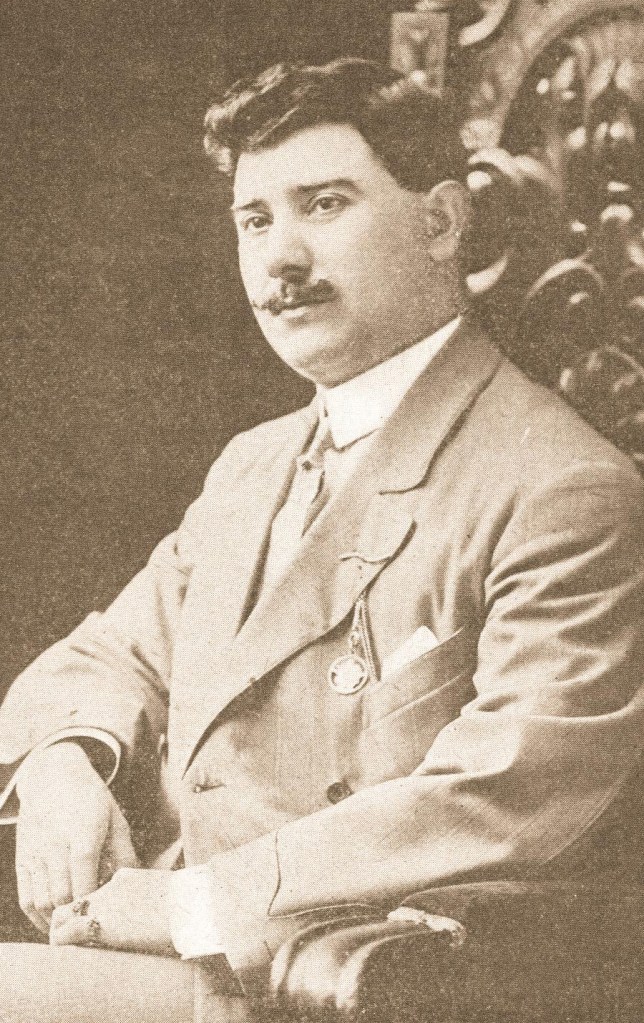
One such pioneer was Nicholas Calamaras. He and three brothers were among the earliest men to emigrate from the mountaintop Spartan village of Anavryti. In 1895, they made their way to Bordeaux, France, and from there to New York City. Through ingenuity and industriousness, they accumulated enough money to start their own businesses, send money home, and bring family members to the U.S.

Nicholas Calamaras

Nicholas, however, went one step further. In 1914, he founded and funded an organization to assist newcomers in the bustling New York Greek community: The Greek-American League.

There were many such organizations formed wherever Greeks settled. All aided newcomers by forming the nexus of the immigrant community: organizing a church to practice their Orthodox faith, learning English, catching up on news of their villages, arranging marriages for their sisters/daughters/nieces. However, the Greek-American League – which Nicholas led for 20 years – took one major leap forward: it represented its members in the political arena.

While operating his tiny candy shop in Manhattan, Nicholas was a tireless advocate for the Greek community, extending his influence to local, state and even national politics. Between 1912 and 1934, he worked to support political candidates favorable to Greek issues: law enforcement, business permits, employment, immigration, deportations, export permits, and more. Purporting to represent hundreds of thousands of individuals, churches, businesses and publications, he wielded political power that demanded respect. Although Nicholas did not hold public office, his influence was acknowledged by politicians both locally and nationally until his death in 1939.

Nicholas’ story and the work of The Greek American League would have been lost to history had it not been for two generations of family members who retained his papers. Recently, Dean Calamaras discovered the collection and and set about to catalog and interpret the documents. His work has culminated in the historically important book, The Baron of Second Avenue: Nicholas Calamaras and the Archive of the Greek-American League, A Glimpse into the Greek Immigration Experience in New York.

This book is the first account of the activities of the Greek-American League. It displays the full contents of Nicholas’ archive – correspondence and legal papers 1912-1934, sorted by category, and the writer’s description of their social, historical and political context. Thus, the primary source information in this volume is priceless. Also included are: an annotated Index to all those documents, a separate index of over 100 Greek names appearing in documents, and a selection of pictures highlighting Nicholas’ life and achievements.

Although available on Amazon and at selected bookstores, this paperback book is most economically purchased on the author’s web site: www.calamarasbooks.com for $34.95 + $6.70 shipping.

This volume has enlightened my understanding of the impact of immigrants within their communities, and the power that can be wielded when they are organized and led by a person who is both indominatable and charitable. It is a fascinating read.

I am grateful to Dean for sharing his publication journey with me, and for giving me permission to write this post and print the list of surnames which appear in this book.

Alphabetical Index of Greek Surnames Cited In Documents
of the Greek-American League

Alexandrou K
Anagnostopoulos Argyrios
Anagnostopulos Sp
Antovick John
Apostolou John
Arapis John
Bellios Tom
Bilitsis P
Bilitsis Takis
Braun Thom
Calamaras George
Calamaras P
Calamaras Peter
Calamaras Speros N
Caparell Peter
Carrusula G
Catsanos N
Catsanos Nick
Chrisomalis Char
Chrisomalis P Theo
Chrisomalis William
Christin Em
Chrysomallis James Euth
Chrissomalis Ch
Chryssomallis Char S
Chryssomallis St
Clidas Thomas
Cokkalis Apostol
Cominos Nicholas
Constantino Jamis
Coumantaros NS
Couvaris Theros
Cumantaros George
Darmis John
Demas Demetreos
Dourakos Basiliki
Economakis Christ
Eleftherion Dimitrios
Eliopoulos Sotirio
Farmakis Jim
Fellouris John
Felluris John
Gamanos Calias
Ganos Milt
Garner Takis
Garnier Peter
Gavaris George
Georgiadis P
Gerakaris Louis
Ghotos Jack
Golesteano SM
Gregorakos John
Gregoriades GI
Gregory Steve
Kolias N
Laskas Em
Lelos Athanasios & son
Leras J
Macrides Christoforos
Macrides Margou
Macrides Mike
Macrides Timocles
Makridou Marionga
Mangel Gus
Manos Steve
Memar Ern
Mesologites CG
Michaelidis Bill
Morfogenis Bessie
Morghan Nick
Nastas John
Panafiotis
Papanastasiou
Pappadopoulos Apostollos
Pappadopoulos Nicholas
Pappanastatiou D
Pappas Nick
Pappas Steve
Pappas Thom
Pappatheodoru John
Paranikas Con
Pelitsis P.
Pottaris Bill
Rockas S
Rompos John
Scopas Tom
Spiropoulos Pan
Stamoulis Mathew P
Stefanides ID
Stelakos Panag Theo
Stratos Steve
Thebner Emanuel
Tinger Ch
Toskos Ioan
Touris SA
Tragas Louis
Triantafillakos Thom
Tsirikos James
Tsirikos Louis
Tsirikos Theodore
Varvalides Theo.
Vasiliadis C
Vasilades C
Vouros
Windisch Charles A
Zannos Arris
Zesefianos Panteles

From Sparta to Chicago: A Case Study of Families Intertwined

by: Georgia Stryker Keilman and Carol Kostakos Petranek

Greeks, like most ethnic groups, engaged in “chain migration” upon leaving their homelands. A man or a family would follow others who left their village and settle near—or even with—them in their new country. By associating at church, work, or in Greek organizations, immigrant families would form tightly knit groups, celebrating namedays, holidays and other traditions together. An important component of these immigrant communities was to bring young couples together to form new families. Whether by formal matchmaking or simple introductions, it was ensured that the next generation was able to meet and marry compatriots.

Georgia Stryker Keilman’s immigrant grandmother, Georgia Bebetsos and her three brothers, Sam, James and Tom were all living at 355 Chicago Avenue (Source: 1920 Census). This address was located just outside of the old “Greek Delta” area of Chicago where thousands of Greek immigrants settled. While recently reviewing the record again Georgia realized that she knew of marriages between members of some of the families living in the buildings at 353 and 355 Chicago Avenue.

Families in 1920 census; color-coded to show intermarriages

Was there a previous connection between these families? 

The families were from various villages in the Sparta area and one from the Arcadia Region.

               Bebetsos – Theologos
               Magoulias – Loggastra
               Dounias – Soustiani
               Pleotis – Arcadia Region

Georgia noticed that the 1920 Census documented that all the men in these families were working in the restaurant business; 1 assistant manager of a restaurant, 4 waiters, and 1 cook.

Could that be the connection?

Georgia researched the World War I Draft Registration forms or Naturalization applications to identify where they worked in 1917.

NameHome AddressEmployer
George P. Dounias?Charles Pappas, 344 W. Chicago Ave
John Magoulias344 W. Chicago Aven/a – assume same as above
James Bebetsos744 W. Division StChas. Papas, 744 W. Division St
Thomas Bebetsos2510 Blue Island AveCharles Pappas, 2510 Blue Island Ave
George Magoulias161 Hill StreetMitchell Bros, 316 W. Division St
Angelo Pleotis859 Sedgwick CtHotel Green Mills Garden, Broadway & Lawrence

Notice that the first 4 people shown in the chart are associated with an employer named Charles Pappas. Also, they list their residence as the same address as their employment.  We are assuming that they lived in rooms above the restaurant.

For example, in the 1920 Census, Charles Pappas was living at 744 W. Division Street.  His occupation was proprietor of a restaurant.  He was living with his wife and son, two brothers who were working as waiters and two roomers who were working as a waiter and a dishwasher.  It is most likely that the restaurant was on the ground floor with apartments above.

Also note that the 344 W. Chicago Avenue address referenced in the above chart is about 1 block from the apartments at 353 and 355 W. Chicago Avenue. If the men referenced in the 1920 Census at this address were working for Charles Pappas at the 344 W. Chicago Avenue address, they could have walked to work.

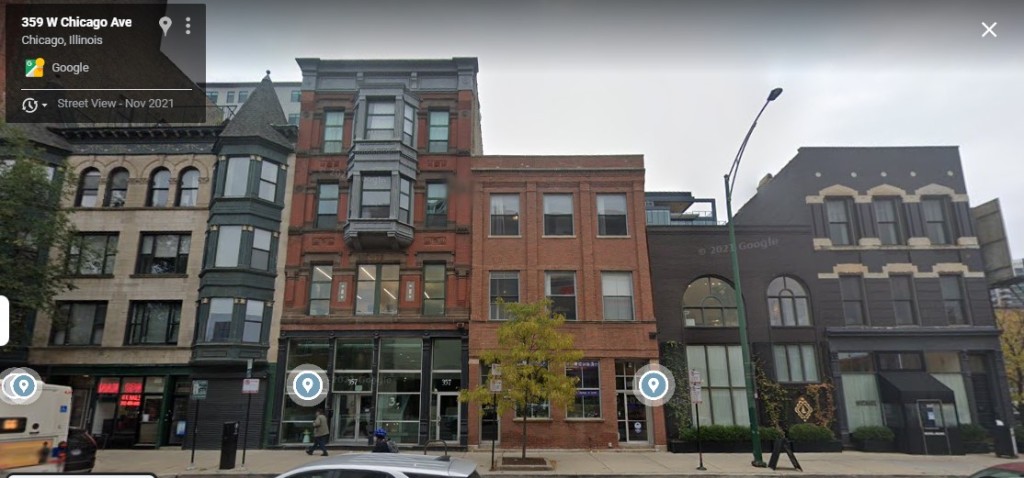
 Although the 353-355 W. Chicago Ave. apartments were demolished, some buildings from that era are still standing across the street. Below is a photo which shows that many of the buildings in this area had a “store front” on the bottom floor and apartments above.  The idea that the waiters, etc. could be living above the restaurant is a reasonable conclusion.

359 West Chicago Avenue, 2022 Google map

Naturally, questions arose:
• How did these people from neighboring villages end up in the same building?
• What are the connections? Or, who instigated the connections?
• The men who lived in the same buildings worked in restaurants. How did they know each other? What was Charles Pappas’ connection to them?
• How did these couples, living in the same building, become introduced and get married?
• How did so many apartments become available at the same time to provide housing for all these people?

We can hypothesize answers based on our understanding of the Greek immigrant community:  chain migration; connections through the church and associations; matchmaking; business owners hiring fellow compatriots. But the details, which add to the richness of the human story, remain unknown. How important it is to get our family stories documented by those who know the specific facts!

In our 21st century society, it may seem like an anomaly to have this level of intertwining among unrelated people. But as we study the village records of our families, it is readily apparent that such connections were not only common, but were the very fabric of village life. Our ancestors were simply duplicating these intricate, woven relationships in their new lands.

Lakonian Emigration

This summer in Areopoli, Mani, I visited the one-of-a-kind Adouloti Mani bookstore. The owner, Georgios Dimakogiannis, is also a publisher and his store is a treasure for anyone seeking information about the southern Peloponnese and Mani in particular.

In his magazine, Adouloti Mani – Laconia Odos, Issue 3, 2019, was an article about emigration from Lakonia in the early 1900’s. That was the experience of all four of my Spartan grandparents, and I wanted very much to read the story. I tackled the translation using a dictionary and online translators. It is by no means exact and it is somewhat redacted, but it certainly illuminated for me the realities of their experience. I scanned the original article and it can be accessed here. If you read Greek, you may prefer to read that untouched version which also has additional photos.


Lakonian Emigration

by Donald-George McPhail  (author, researcher, historian)
published in Adouloti Mani – Laconia Odos, Issue 3, 2019

From 1896 to 1921, more than 400,000 inhabitants emigrated from Greece. The legend of America as the “land of promise” and as a refuge for emigrants around the world  undoubtedly permeated Laconia. The years of misery that plagued the predominantly rural population—agricultural disasters, government mismanagement, uncertainty and insecurity, frequent military drafts, and grief over the loss of the war in Thessaly–caused thousands of Greeks to board foreign ships and emigrate. They left haunted by poverty, with the sorrows of their homeland in their hearts, and trusted that things will change in the New World. They believed that in this way they would pay off their homes, marry off  their sisters, and help their parents, their families, and their villages. They hoped that in a few years they would return rich, honored and equipped for a better life.

Emigration was also due to the fact that the demand for labor was greater in America and the wages paid were much higher than in the immigrant’s home country. The Greeks who immigrated to overseas countries had no qualifications other than physical fitness. They were illiterate, naive and innocent deprived people who had no awareness of their power, nor of course their rights.

Greek Immigration to the USA

  1. First Immigration: 1873-1899; 15,000
  2. The Great Wave: 1900-1917; 450,000
  3. The Last Exodus: 1918-1924; 70,000
  4. The Era of Restrictions: 1925-1946; 30,000


Preparation for Departure

The trials of the poor and destitute migrants, who cared little for amenities they had never tasted, began long before the trip. Most were unaware of the great difficulties that awaited them in the New World, which hundreds of immigration brokers presented as the Promised Land.  The trip required a lot of money, and the loan agents were looking for security. So, among the emigrants  were many small farmers with mortgaged land.  Even for the very poor and the landless, there was a way. They were bound by employment contracts and so they paid off their fares, as slaves literally, by working in the railways or mines.

Usually the departures of the ocean liners, especially the Greek ones, were festive. The decks were packed by immigrants who waved their handkerchiefs to those who led them, along with the curious crowds who thronged the pier. The band of the municipality played, the ship’s whistles blew, and flags decorated the ship and pier. Last greetings were exchanged with those poor immigrants who had left their hometown and had lived for a few hours in Gythio and Kalamata.

Before 1907, the Greek transatlantic wave to America was overseen by foreign steamer companies until the establishment of the first Greek passenger line. The ports of departure were Piraeus and Patras. Subsequent Greek ocean liners were generally poor, small, slow-moving, and badly traveled trips without even the minimum comforts of a boat.

Life on Board

Judging by the horrible living conditions during the journey on the ships, especially those from 1907 to 1937, immigrants were considered as “cargo.” The third-class steerage areas beneath the main deck were packed with rows of iron or wooden double beds. Passengers were literally on top of each other in desperately narrow spaces. From the very first day, the crowds, the exuding fumes of vomit, the smell of passenger bodies and the lack of elementary cleanliness caused the atmosphere to be suffocating.

The bunks were filled with straw or seaweed. There were no chairs, stools, or  tables. Luggage, clothes, utensils and all belongings had to somehow fit  between the narrow beds. Separation of women passengers was impossible. In their quest for isolation, women hung clothes around their beds to create a rudimentary curtain. The women had the opportunity to dress before eating breakfast and leaving their compartments. They could not arrive late or there would be no food available. Usually, they were not as harassed by their male passengers as by the crew men.

Upon boarding, each passenger was given a spoon, a fork and a tin cup. When breakfast was announced, everyone crowded into an open area as there was no dedicated dining room except for a space with a few tables and benches where women and children would usually sit. The men had to go through the serving area and then find some place to eat, or go out on the windswept open deck.

For ventilation, the law provided for two small “windshields” for every fifty passengers. These “windshields” ended up on the main deck, which was usually a short distance from the surface of the sea, causing third-class passengers to be sprayed with frozen ocean water.

Baths were taken on open decks between seats and compartments.  Showers were in small iron “cabins” and the water was seawater. Needless to say, passengers rarely used them. They were used for washing dishes and clothes, without soap or towels and with cold salty water.

The ticket issuing agencies described the food as healthy and nutritious.  In reality, however, it was so poorly cooked that many found it inedible. The only exception to the whole trip was the last meal before arrival, a supper that could smell like delicacies such as fried potatoes.  The farewell dinner dinner was intended to give pleasure to the next day’s arrival and inspection by the health authorities.

Various states had been slow to adopt provisions for the proper transport of passengers, resulting in steamboat companies exploiting the unfortunate immigrants. An American law stipulated that each passenger could have no less than 2.83 cubic meters. Two children under eight years were counted for one passenger. If this space was not available, the ship’s master had to pay a $50 fine per passenger, but there was never any control by authorities and no relevant fines were imposed.
Arrival

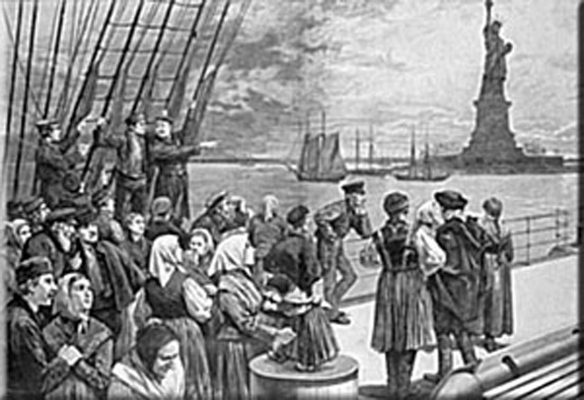
When the ship anchored in America, a fleet of small boats encircled the ocean liner. Men from the Immigration and the Public Health Services boarded the ship and quickly passed through the first and second class cabins, giving a cursory inspection of the passengers in those seats. They then went down to the “fragrant” compartments where the third-class passengers were to examine each traveler. This was the most time-consuming part of their job. When the Public Health people reboarded their boat to go to other vessels, the ship raised the anchor and  slowly headed to the port of New York Harbor, traveling through the fumes of the tugboat towing it.

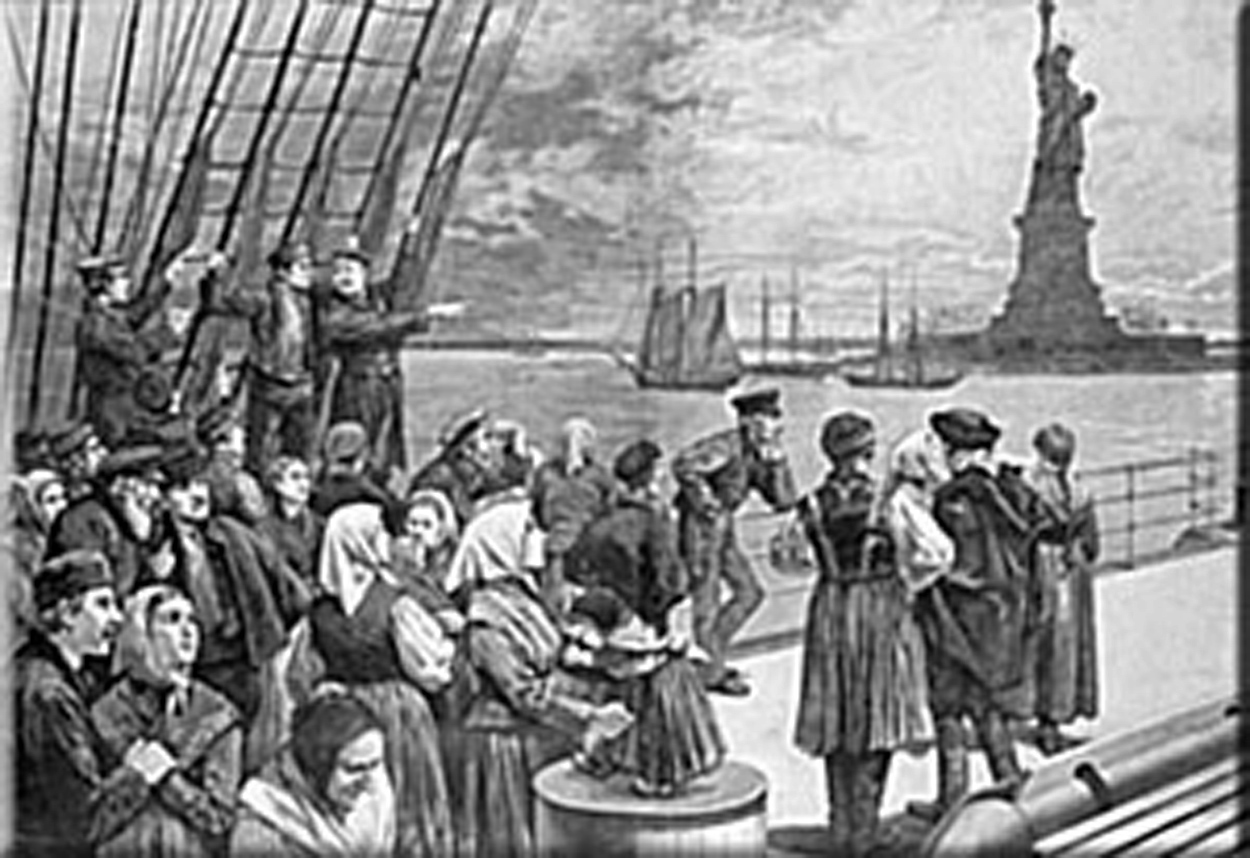
Upon  arrival, the immigrants’ day was just beginning. After an endless wait on the ship for the checks to be completed, they began to finally descend the staircase of the ship, loaded with their luggage. So overloaded, they headed to the Aliens Service boats waiting for them to take them to the famous Ellis Island known to the Greek immigrants as “Castigari” (from Castle Garden).

Ellis Island
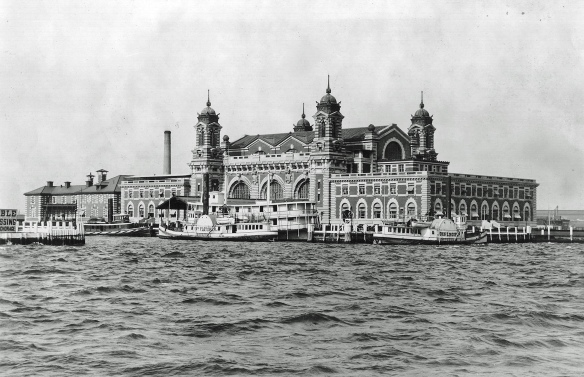
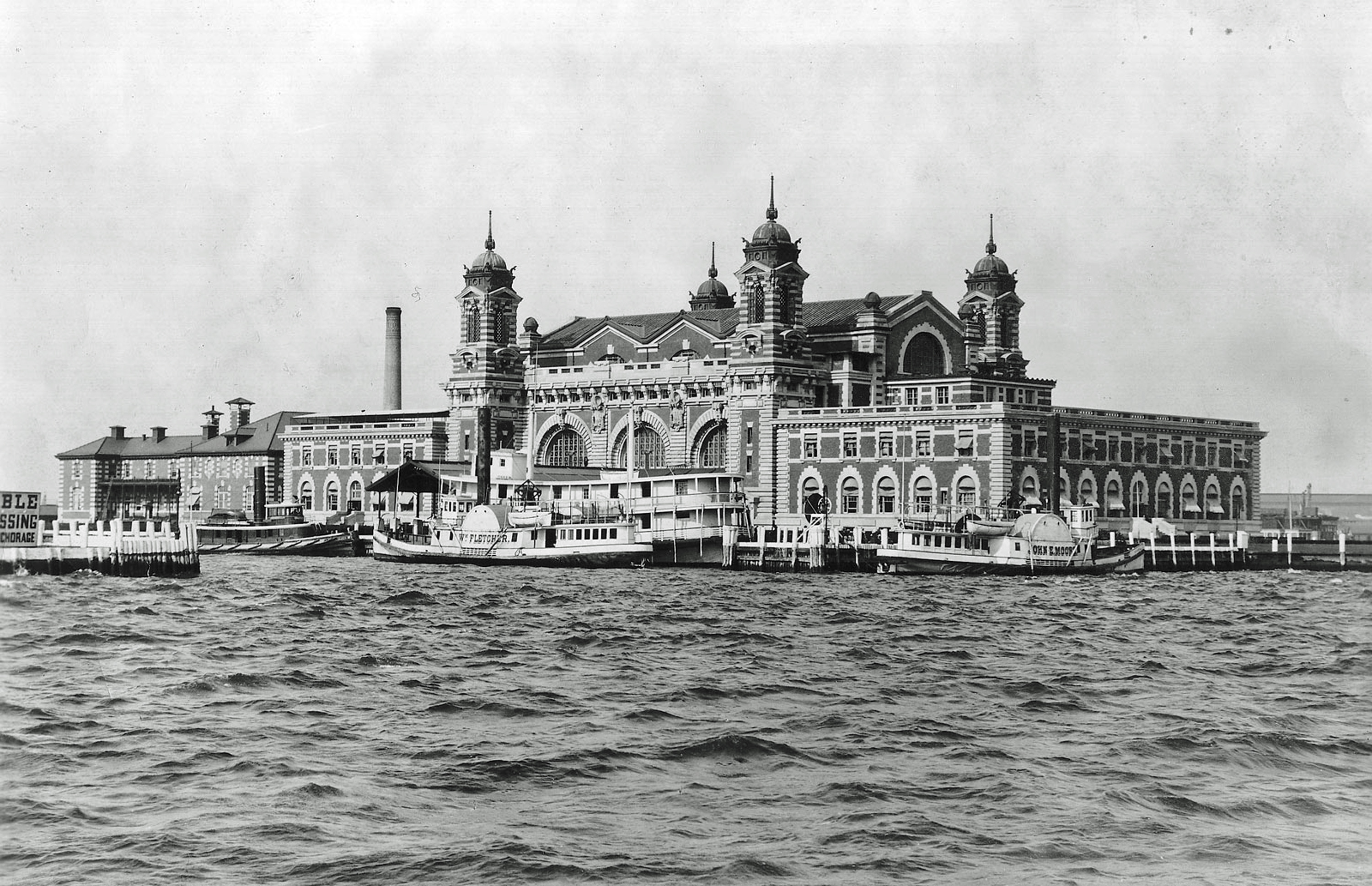
Ellis Island, off Manhattan, was the main hub for immigrants arriving in America from the late 19th and the first half of the 20th centuries. There, immigrants were put to the final test, undergoing medical examinations to approve their entry into the United States.  There was tight control for medical conditions that were contagious. Most passed the check and then forgot the hassles of traveling. But if someone was ill or unbalanced he was obliged to return to the port and surrender to the steamship company for repatriation. These unfortunates were sent back to their homeland at company expense, a fact which made steamship companies careful when selecting passengers.

When stringent requirements for trachoma and other contagious diseases were understood, health authorities in Greece examined travelers and checked for trachoma because eye disease would prevent entrance into America. Ophthalmologists in Greece were stationed in Ageranos, Mani and elsewhere in Laconia where prospective immigrants went to make sure they had no contagious conditions or, if they did, to make them well.

Dispersion

The immigrants, after endless suffering, were finally admitted onto the new Promised Land where other adventures began for them. Most newcomers, at least in the early years, stayed in New York and New Jersey. There were small hotels and small shops owned by Greeks, who welcomed them when they were unloaded from the boats that brought them to the south of Manhattan from the Ellis Island. The city was expensive and most had less than thirty dollars in their pockets, so they were in a hurry to continue their journey.

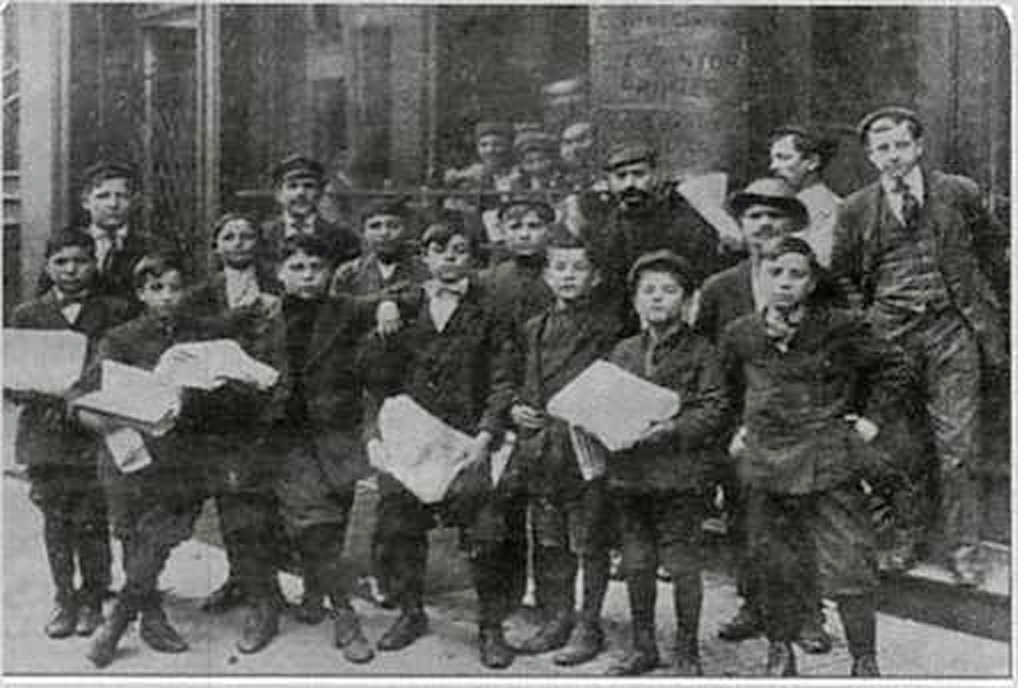
The Greeks who progressed in America were mostly employed in textiles, heavy industry, coal mines and railroads. They often worked for twelve hours and lived in unhealthy homes, cramped in small rooms. Life for Greeks working in the mines and on the railroads was especially difficult. They lived in tents or wooden huts and their diet was very poor. The savage exploitation of underage children, who worked as “blackboots” [the shoeshine business operated by  compatriots] prompted the intervention of American and Greek consular officers.

I don’t think there is a Lakonian that doesn’t have a relative, even a remote one, in America. At the beginning of the previous century, thousands with the hope for a better tomorrow left for the distant continent.

On the Internet, the Ellis Island archives are available, the small island in New York in which all immigrants were registered. While researching for immigrants to America, I worked with this website and found information about Ligerian residents who immigrated to America between 1892 and 1924. For those who don’t know, Ligereas (Λυγερέας) is the smallest local district of the municipality of Gythio and is my wife’s village. I found details of the Ligerian immigrants where their disembarkation was recorded at Ellis Island, a few hours before they were “sucked” into the new land. I found over 190 residents in 32 arrivals reports which contained valuable information that even today’s descendants did not know.

[END OF ARTICLE]

Photo Credits:  All photos are from Mr. McPhail’s original article.
Note:  Mr. McPhail is half Scot, half Greek and he married a Greek lady from Mani. He never went back to England he raised his family ​in Greece. His full name in Greek is written as Ντόναλντ-Γεώργιος Μακφαίηλ. (Many thanks to Marina Haramis for this information)
 

Crossing the Atlantic: The “Nea Hellas”

Prior to airplane travel in the 1950’s, cross-Atlantic journeys were by passenger ship. There were several which transported my ancestors from Greece to America. Some of those trips were their inaugural immigration travel; others were for return trips to visit family.

The Nea Hellas (Νέα Έλλας) was a popular vessel as it traveled directly from Piraeus to New York, unlike other ships which stopped at multiple ports. Its maiden voyage was May 19, 1939. With six decks, first, second (“tourist”) and third-class cabins and restaurants, it provided a comfortable one-week crossing for 800 passengers and 200 crew.

I was truly excited to see this article on the usa.greekreporter website which describes the history of Nea Hellas, with photos and the video below.

This ship transported some members of my Aridas family on their visits to Sparta

  • My grandmother, Harikleia Aridas Kostakos and her daughter, Afroditi, had traveled from Brooklyn, N.Y.  to Agios Ioannis, Sparta in 1939. The Nea Hellas brought them home on March 16, 1940. It was among the last ships to leave Piraeus before Hitler’s invasion of Greece and the deadly attack on that harbor on April 7, 1941.
  • My godfather, Peter George Aridas (Harikleia’s half brother) journeyed from Piraeas to Brooklyn on the Nea Hellas in June, 1953.
  • This March 15, 1950 newspaper article announcing the trip of my second cousin, Effrosyni Aridas Revelos:
    The Middletown [Ohio] Journal, News of Society
    Mrs. Nick Revelos of Harrison St. is in New York where she will leave Friday for Sparta, Greece.  She will leave on the tourist ship Nea Hellas which is arranged for by the Ahepans and Daughters of Penelope for members to tour the old country.  Mrs. Revelos will visit her family Mr. and Mrs. Michael Mihalakakos of St. John, Sparta Greece.  She will be gone for three months.  Bill Revelos will take the same trip and visit his family.

Our ancestors’ stories can be more fully told with the myriad of articles, photos and videos so easily available today. These resources enable us to almost visualize our ancestors’ experiences, enriching our lives and our understanding of theirs.

The USA Greek Reporter article can be found here: https://usa.greekreporter.com/2019/01/29/nea-hellas-the-historic-ship-that-brought-thousands-of-greeks-to-the-us/

Additional information about the Nea Hellas and peoples’ memories of this ship can be found on this website: Memories of the Nea Hellas.