by Stavros Theof. Kalkanis
published in The Faris Newsletter No 68, July 2018
NOTE: In Greek villages, empirical (self-taught) or folk doctors treated all types of medical conditions during the 1800’s up to modern times. Doctors passed down their remedies to other practitioners and members of their families. Many cures are still practiced in rural homes. The author is from a family of physicians which stretch back to his 3rd great-grandfather who was a folk doctor during the Greek Revolution of 1821.
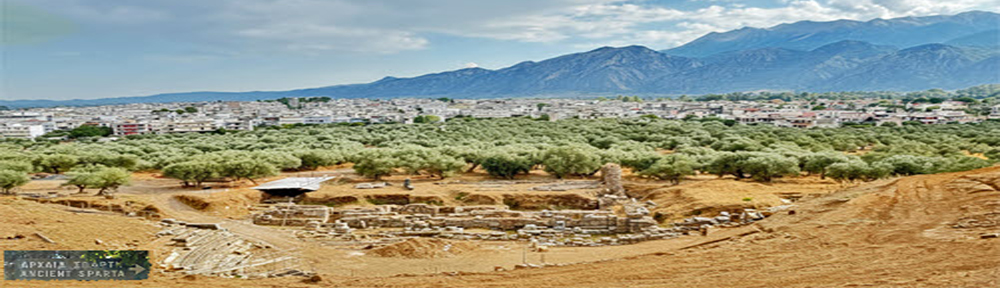
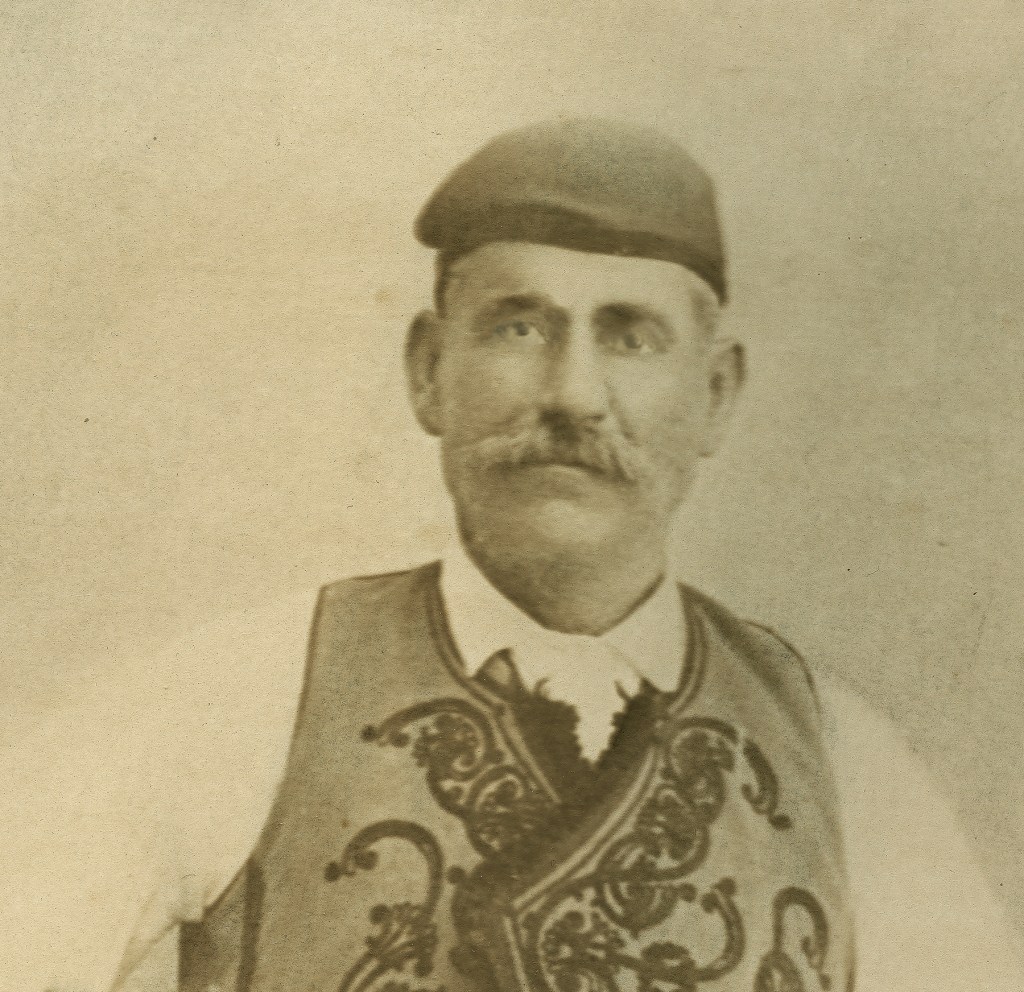
Our family’s oral tradition also refers to empirical (self-taught) doctors among its members, both before and during the Revolution of 1821. Vasileios (Vasos) Nikitas Kalkanis (1903–1983) passed on to my father and brother the information that our great-great-great-grandfather Georgios Kalkanis, who was the elder if Gorani during the Revolution, took care of the wounds of his fellow villagers using empirical knowledge and practices he had learned from his father. A century later, in the villages of Kato Riza, his namesake and my grandfather, Georgios Christofilou Kalkanis (1858–1950), served as a graduate of the University of Athens School of Medicine.

The actions of the empirical doctor G. Kalkanis appear to have been particularly notable during the battles of our compatriots (in the period 1825–1826) against Ibrahim’s army, which was operating in Taygetos to destroy our villages and subjugate their inhabitants in his effort to reach Mani. It is recorded that Ibrahim “burned to the ground” all the homes in Goranous, Kourtsouna, and Koumousta (as well as in other villages), forcing the residents of the whole region to take refuge in the mountains of Taygetos.
At that time, wounded fighters, residents of our villages who supported our villages and protected their inhabitants and civilians, needed immediate care for their injuries from sharp weapons, firearms, and even cannons.
Of course, in our villages,– but also more widely in southern Lakedaimona and even throughout the southern Peloponnese—five brothers of the Giatrakos family were particularly active and known as empirical doctors (in addition to being warriors and chieftains). Descendants of the Italian Medici family who initially settled in Mani, they Hellenized their surname and, with towers in their possession immediately after the declaration of the Revolution, played a significant role in revolutionary and post-revolutionary Greece. Their ability to provide medical surgical care to the wounded led many warriors to join their ranks. In nearly every Greek camp set up near a battle zone, the Giatrakos brothers would organize a makeshift “hospital.”
From their archives – their records – it appears that they “treated” many wounded with severe injuries and amputations for many weeks, removing fragmented bones from their wounds. Panagiotis Giatrakos had even traveled to Italy a few years before the Revolution and brought with him knowledge from the University of Padua, as well as medical supplies and techniques, anticipating that they would be needed in the impending revolution. Later, his brother Ilias created a Medical School and Hospital in Mystras.
At the same time, many empirical doctors throughout the revolutionary country were trying with minimal means to care for the wounded and provide therapeutic care in houses and monasteries, or onsite, in the countryside. In the area of Mystras, even two Muslim empirical doctors, Hasanakos and Drizakos Gioupis, who remained in the country, participated in the effort. Of course, most of the empirical doctors did not have degrees, except for a few who were trained mainly in Italian universities. Many empirical doctors who did not have degrees were provided after the Revolution with licenses from the Prefectures of the newly established State (since 1835 with royal decrees) to “practice minor surgery.”
But with what tools, practices, or materials did these empirical doctors/surgeons provide care to the wounded of the Struggle before the groundbreaking discoveries and changes that took place in the second half of the 19th century and defined modern medical science? I have often wondered about this because of the tradition that includes practical doctors in my family and because I am a doctor. In this essay, I will focus on injuries and not the milder ailments treated by these doctors or by the mothers and grandmothers of every family. The most common of these illnesses were pustules, fevers, runny noses, moles, obstructions, pimples, calluses, sores, abdominal pains and even evil eye.
Common treatments for these ailments included rubs or antisepsis with raki, wine, and vinegar (which contain alcohol); warming drinks like “kaftoura” (made of red wine, peppers, and cinnamon); dry or wet cupping; bloodletting or leech therapy; enemas; opium (from poppies); moldy bread; poultices from flaxseed—and also censing with flowers from the Epitaph, lighting the Easter candle, sprinkling with Holy Water… In our villages, cleaning earwax was done with a wise and simple method: one end of a horsehair was placed in the ear, and drops of hot wax were dripped along the length of the hair. When the wax hardened inside the ear and stuck to the wax plug, they pulled the hair along with the wax and the ear plug.
Injuries or wounds from swords and scimitars or bullets that tore the soft tissues of the body seem to have been treated at the time of ’21—and before or shortly after—with poultices or “blastria” (plasters). These were therapeutic dressings made of cloth or unwashed sheep wool soaked with ointments (balms) made from everyday easily available materials, that had been recognized through centuries of experience—even by Hippocrates. It is characteristic that in texts of the “Hippocratic Collection” “many dirty wounds mixed with wine and oil” are recommended (!) The fatty coating of the “dirty” sheep’s hair seems to replace the lanolin of modern medical science and pharmaceutical technology.
The basic materials used in the plasters were wine or raki and vinegar, oil, and egg white. The first were used to clean/wash the wound and to stop bleeding. In more serious cases, they cauterized it with a red-hot iron or hot tar. They filled the wound with ointments from the above materials or soaked cotton, cloth, or linen threads with them to form the wax, which they used for the bandages. The wax was also smeared with melted wax, which is why they often spoke of “cerates” (wax ointments). Wax ointments are mentioned in many “giatrosofia” (written instructions from experienced doctors) and of course refer to the “waxed plasters” of the Hippocratic texts and to the Italian word “tsiroto” which is a reborrowing.
The wounds were not sewn up so that the pus could drain, but they were cleaned daily and the plaster changed. The above antiseptic and healing materials were found in homes or monasteries, but the healing of the wounds required weeks or even months of care. It is noted that often, due to lack of dressings, or following ancient Greek medical practices, the empirical doctors and the companions of the wounded put herbs or grasses (the so-called “flesh herbs”) on the wounds. These herbs, known from tradition for their anti-hemorrhagic, analgesic and healing properties, were referred to by Homer as “odynifata” or “pain-killing roots”, and were described in detail by Hippocrates and Dioscorides.
But wounds caused by scimitars, hatchets or axes usually involved bone fractures in the skull, limbs, or the chest. Many wounds, especially in the limbs, resulted in amputation followed by cauterization. The horror is described by the fighter and historian Fotakos, who shudders even at the memory of the “shattering” and the “grinding of bones” in the battles and amputations.
In these cases, crushed tile or crushed marble, and even ash, were added to the ingredients of the ointments, perhaps to create a cohesive material between the broken bones, while the limbs – arms or legs – were also immobilized with reeds and boards. During healing, empirical surgeons often remove small, shattered bones from the wound, during the long rehabilitation of fractures and the closure of wounds. Of course, they continued to use mainly unwashed sheep’s hair as bandages.
Τhe ingredients in the ointments included crushed ceramic or marble—and even ash—perhaps to create a cohesive material between broken bones. Immobilization of limbs—arms or legs—was done using reeds and planks. During healing, empirical surgeons often remove small shattered bones from the wound, during the long recovery of fractures and wound closure. Of course, they continued to use unwashed sheep wool as bandages.
Great contributions to the medical aid and nursing care of the wounded residents and fighters in our region—both during the Struggle and in the time of the “klephts” (after the Orlov Revolt)—were provided by the Monastery of Golas, despite the hardships and destructions—even the desolation—that it suffered through the years. In its centuries-old tradition, the Monastery of Golas—when it had not suffered destructions by the Turks—offered solace, assistance, and care, because besides its facilities and necessary materials for treating injuries (lacking in the poor homes and inaccessible to the “klephts”), it also had a monk with empirical medical knowledge and knowledge of healing herbs. It should be noted that the in the Monastery of the Zoodochos Pigi Kastriou, near Kastori, there was—and has been preserved—a special “Recipe Book” with recipes for prescriptions/formulas for remedies and healing herbs.
In conclusion and with due respect, I note that the experienced doctors/surgeons of the Struggle of 1821, in our region and throughout the then revolutionary country, though overlooked by historiography, are acknowledged by history. They applied life-saving medical methods still unknown to the science of Medicine, contributing to the care and survival of thousands of wounded.
I (Carol Kostakos Petranek) am honored to receive permission from the Katsoulakos family to translate and share articles from The Faris. Translation verification and corrections have been made by GreekAncestry.net. This is the twenty-third article of the ongoing series. Previous articles can be viewed here.







 Spartan Roots (Σπαρτιατικές Ρίζες)