This is the seventh post in a series about my trip to Greece, June 30-July 20, 2016 — an amazing journey of history, family and discovery. Previous posts can be found here.
The most important lesson I learned when traveling in Greece is: never arrive anywhere between 1:00 and 4:00 in the afternoon. That rule makes scheduling easy — repositories in the morning; solo time in the afternoon; family time in the evening; dinner at 9 or 10:00 p.m. I had to tweak this a bit to squeeze in all I needed to do.
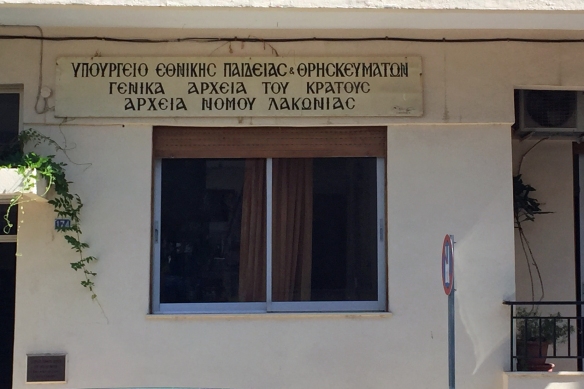
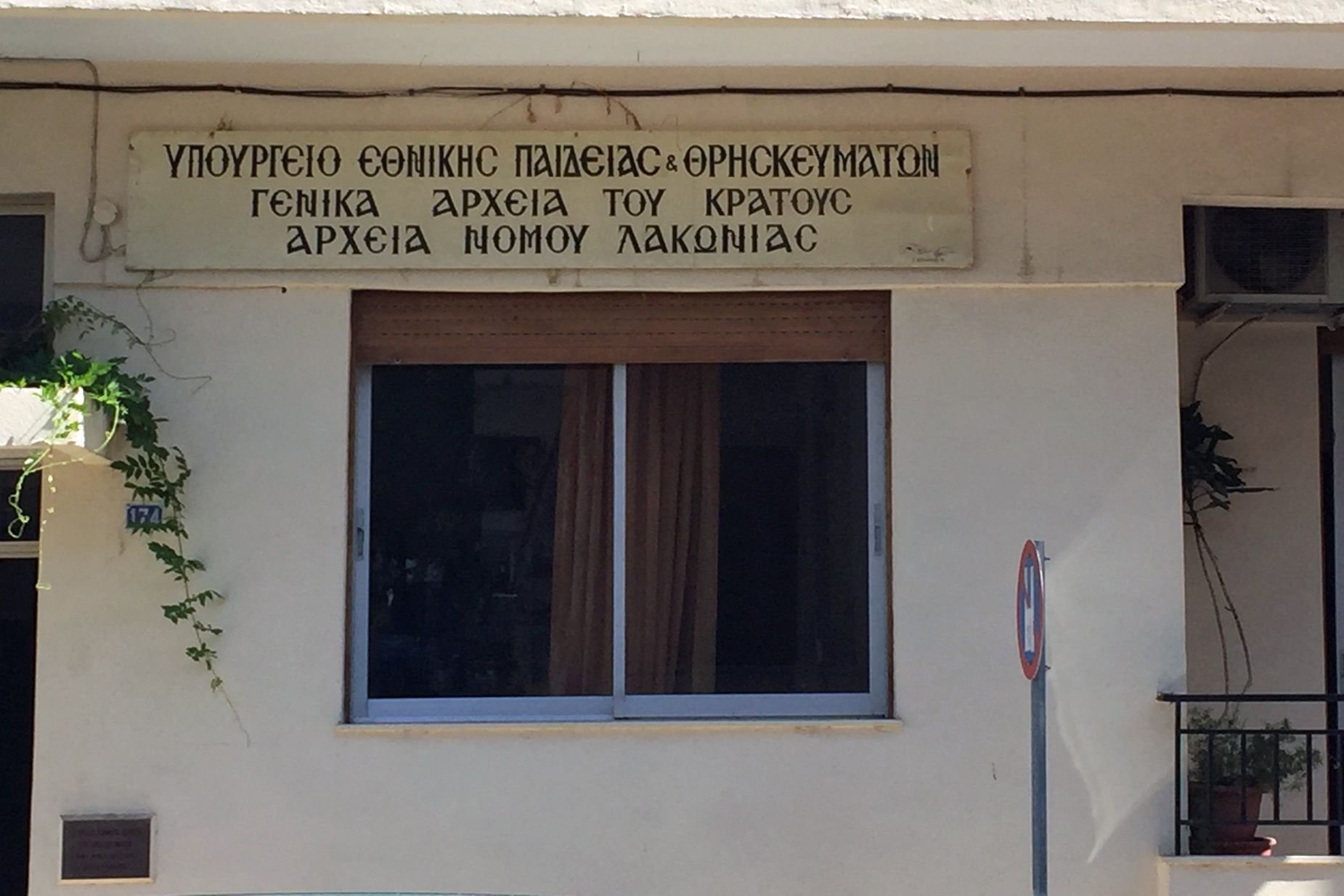
General Archives of Greece, Sparta office, July 2016
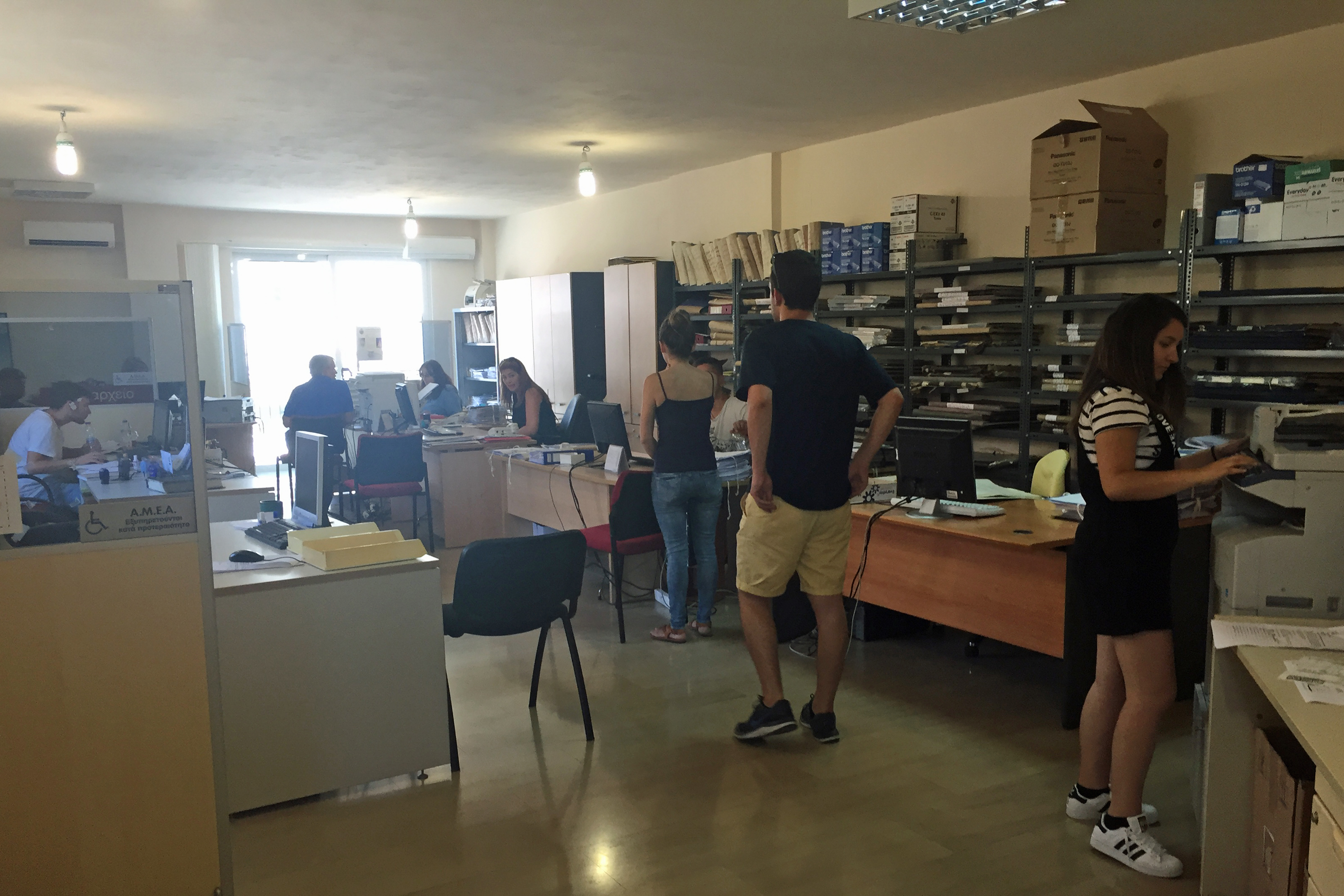
Archives in the mornings — there’s no better way to start the day! The Sparta Office is a treasure chest filled with nuggets of genealogical gems: documents, books, records. When I arrive, I learn that my archivist friends are on overload: Mrs. Pepi Gavala and her assistants, Michail Sovolos and Maria Stellakou. They explained that many government offices are now closing or consolidating, and sending their records to the Archives. Boxes lined the hallway, waiting for these good people to catalog and store them. Mindful of their workload, I settled in the main room and begin to dig for gold.
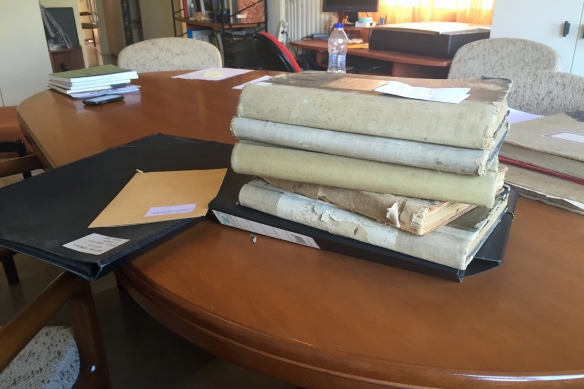
Research room, Sparta Office of the General Archives of Greece, July 2016
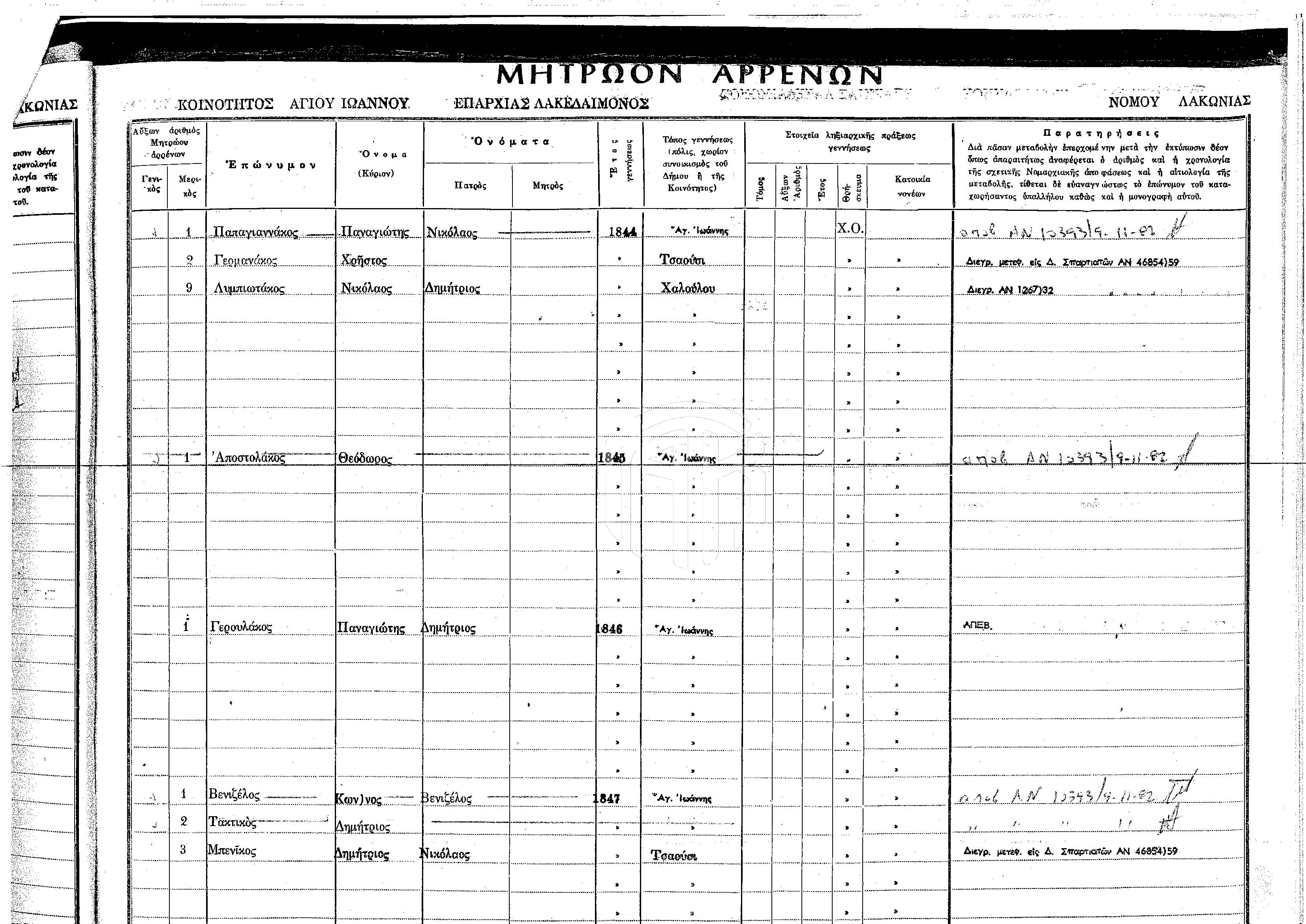
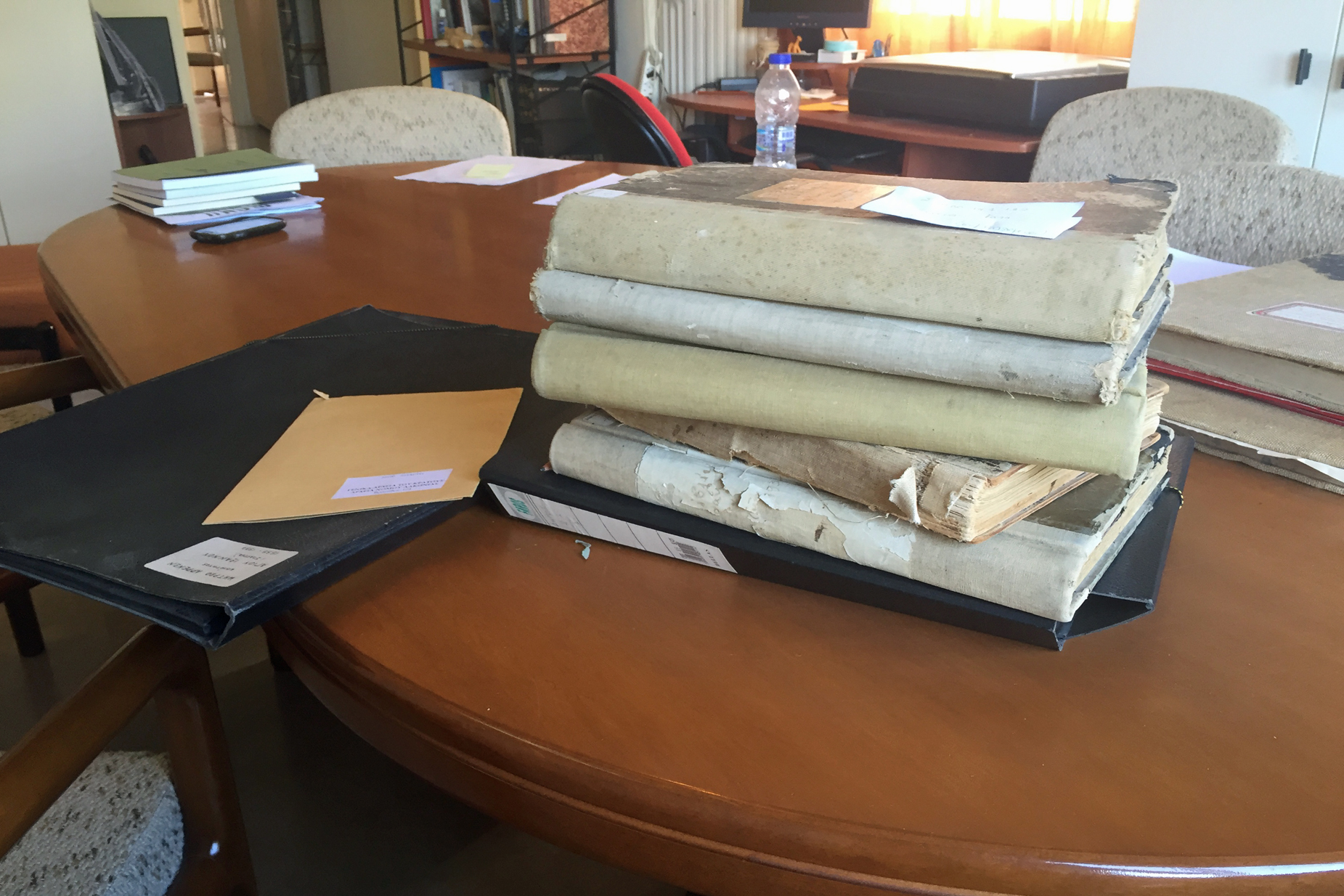
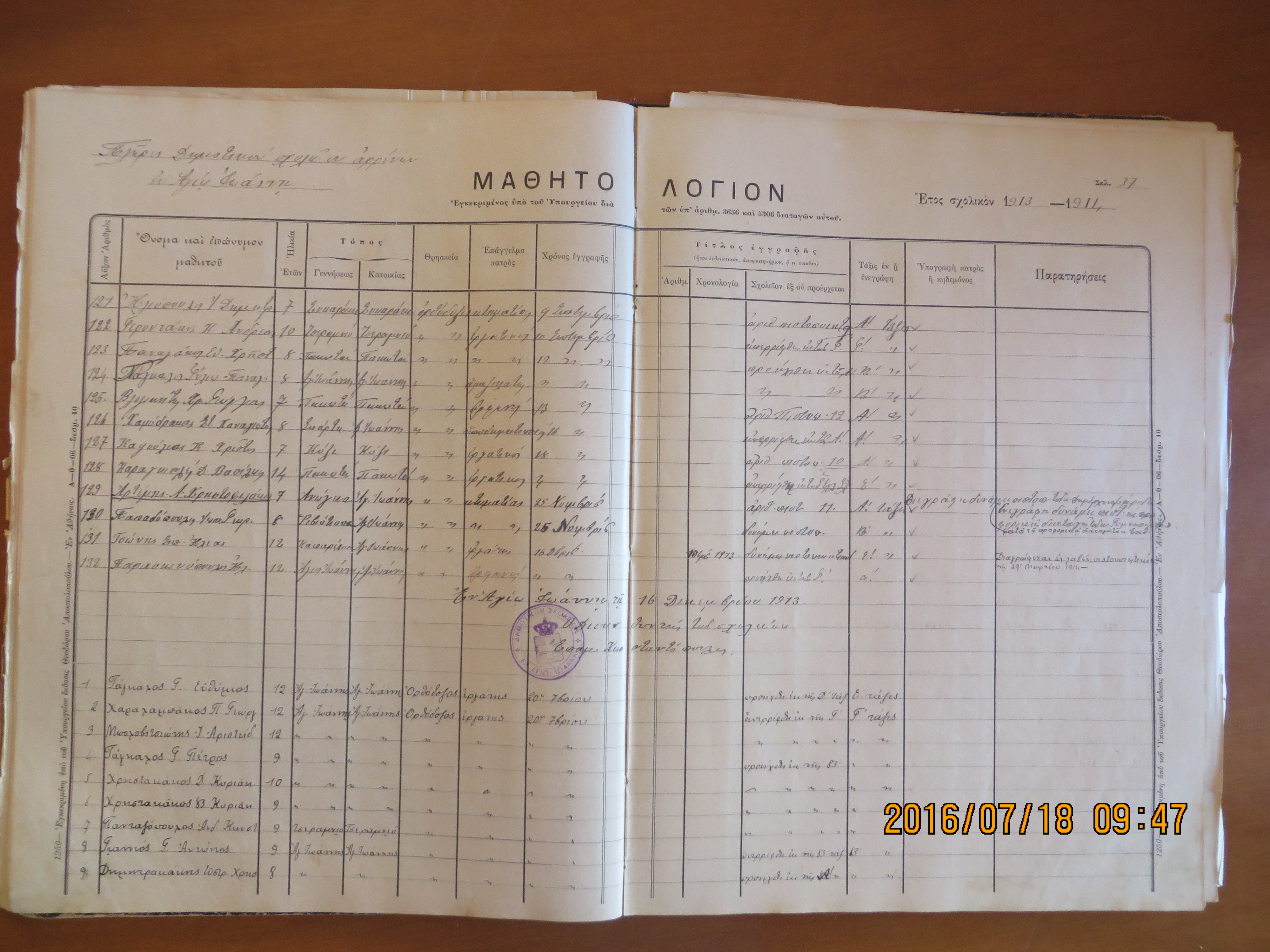
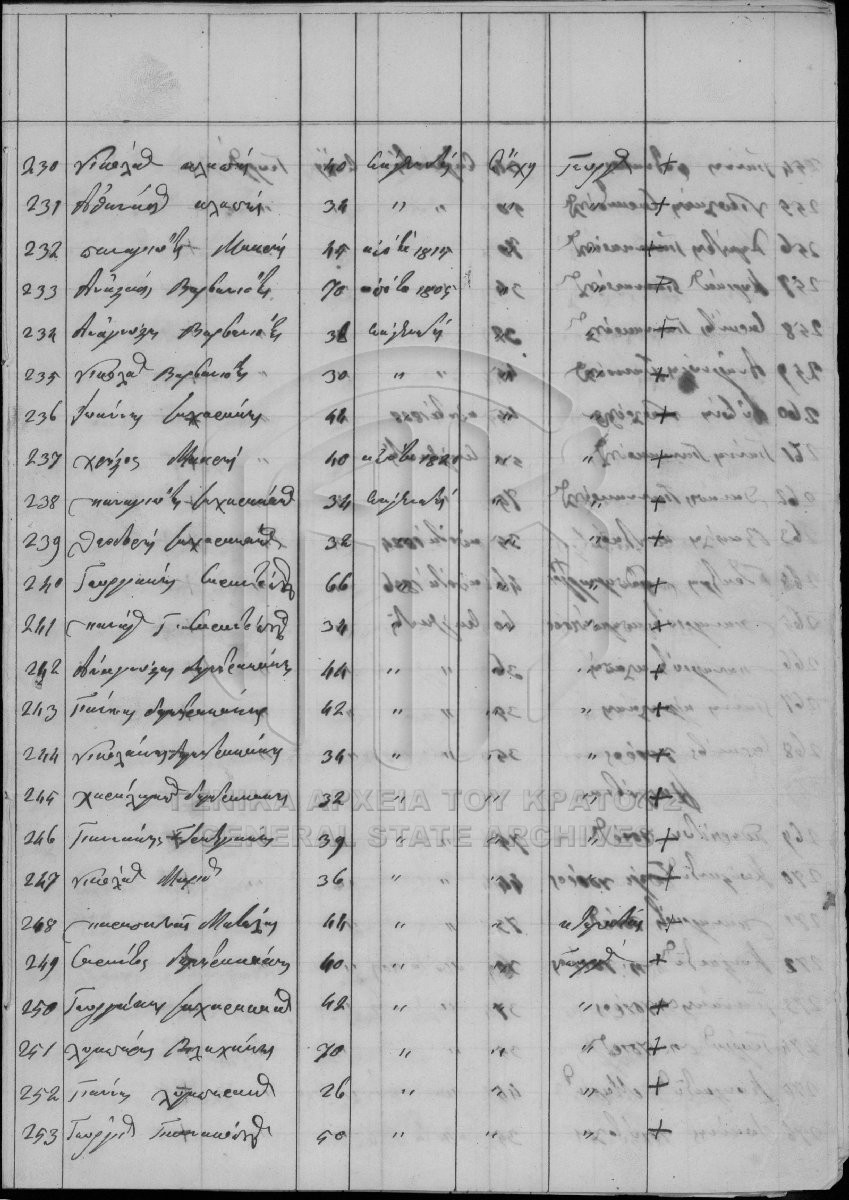
During my visit in 2014, I had obtained digital copies of the basic records for my family: Male Registers (Mitroon Arrenon) and Family Registers (Dimotologion). I dug into these collections again for my newly-found surnames, and then for a few friends who had requested lookups. I asked Michalis for School Records from Agios Ioannis, and he brought me several books. I was very surprised to see that some of them had only girls’ names! As a Greek researcher quickly learns, there are few official records naming women. These truly are a treasure, as I can now begin to construct entire families, not just males. The school records for Agios Ioannis range from around 1900-1940; the exact tmeframe I need for my grandparents’ era. I stayed until 3:00 closing time, digitizing pages that listed my surnames. What a great find!
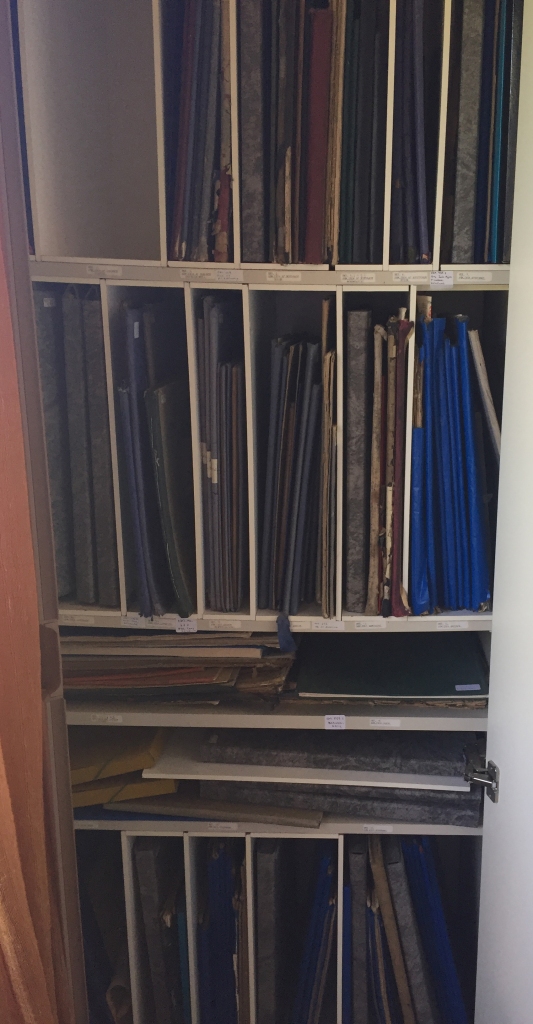
School Record Books, Sparta Archives office, July 2016
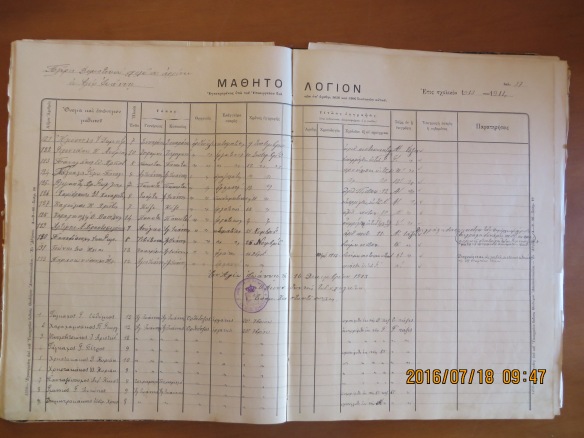
Example of a School Record for Agios Ioannis, GAK Sparta Office, July 2016
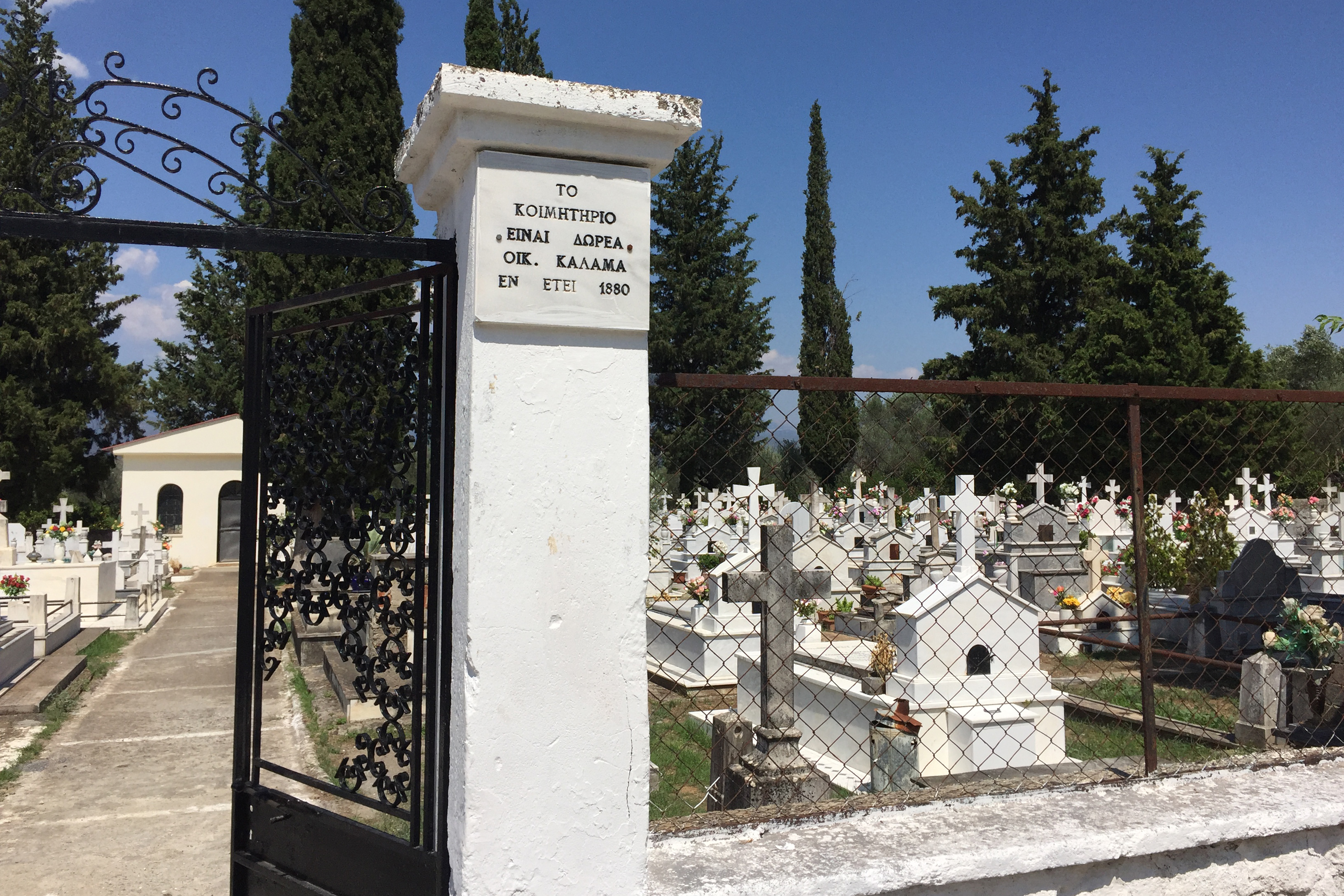
Gregory Kontos arrived in the early afternoon to join me for three days of research. It was hot, hot, hot! And every repository was closed, closed, closed. So we filled the empty 1:00-4:00 p.m. timeframe by going to a place that never closes — the cemetery. Up and down the rows we walked, Gregory reading surnames off the headstones while I snapped photos of the ones that were a “yes.” The sun was scorching this July mid-day and there was no breeze, but we persevered until every name on every grave was read. Then it was time to enter the osteofilakio (οστεοφυλάκιο), the ossuary building.
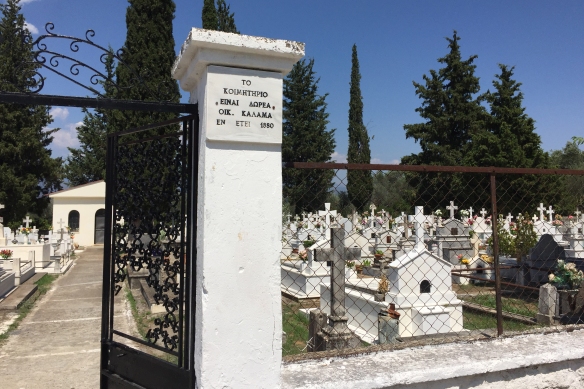
One of two cemeteries in Agios Ioannis, Sparta, July 2016
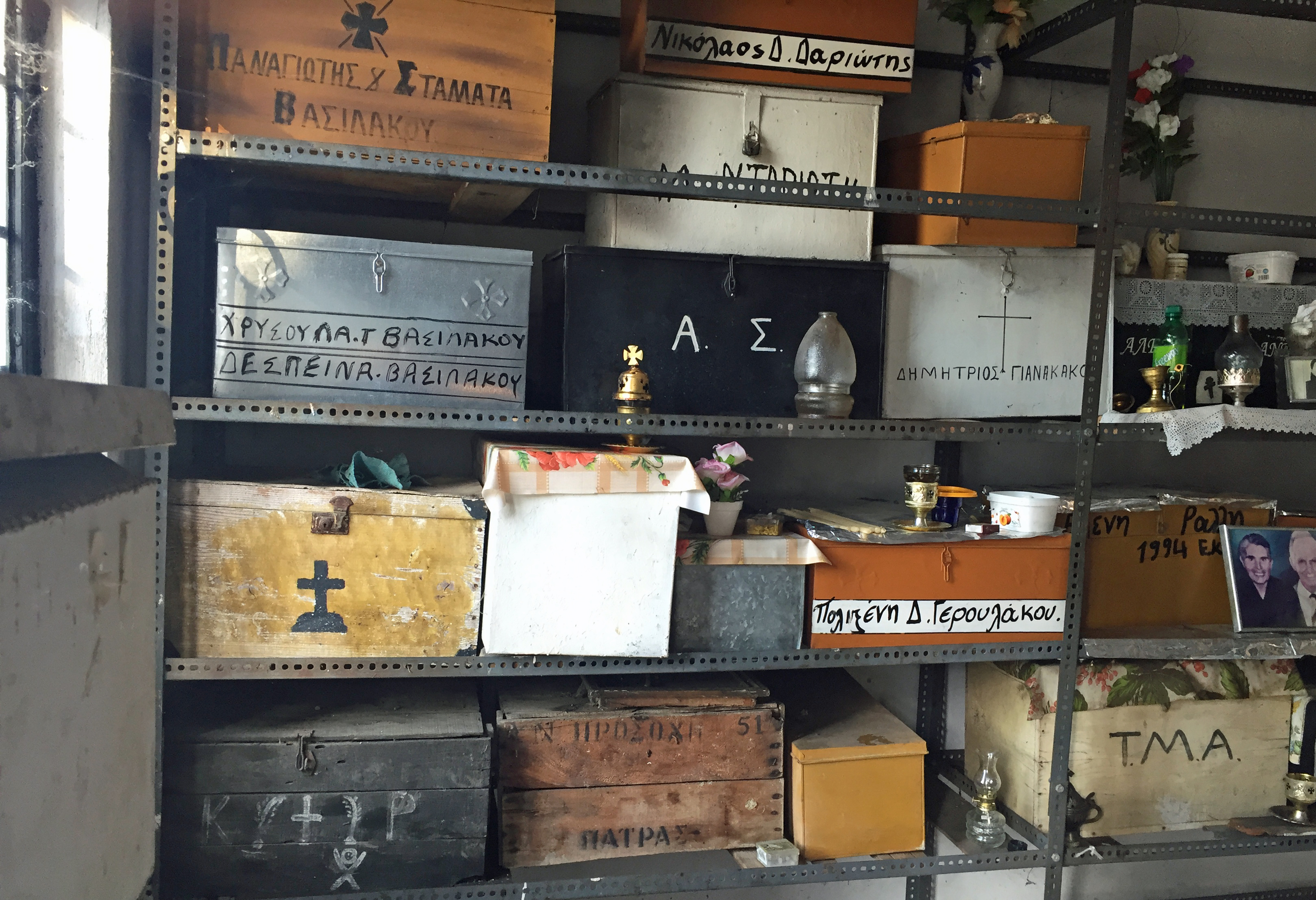
There is limited cemetery space in Greece; therefore, families “rent” a burial plot for three years after which the bones are exhumed and placed in an ossuary. Walking into the osteofilakio is an almost sacred experience. Boxes on shelves line the walls; each inscribed with a family name and holding the bones of the deceased. Icons, photos, flowers, candles and small bottles of oil are carefully arranged around the boxes. A spirit of peace permeates the building. This is holy ground.
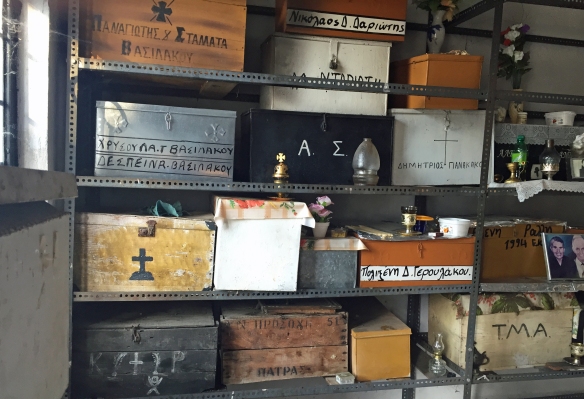
Ossuary house, Agios Ioannis Cemetery, July 2016
It was not until we left the cemetery and began driving towards town that we realized there are two cemeteries in Agios Ioannis. We returned the following afternoon and searched the second one. Next time I make a research plan, I have to make sure that I thoroughly vet all locations of potential resources.
Gregory and I had a full schedule for 1-1/2 days in Sparta: the Archives, two cemeteries, the Mitropolis, the Central Library, Amykles, and the Dimarheion (Town Hall). And of course, dinners with my family who have embraced him as one of us.
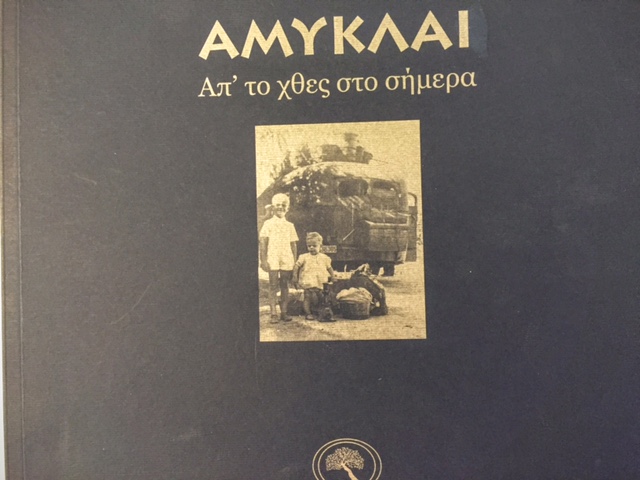
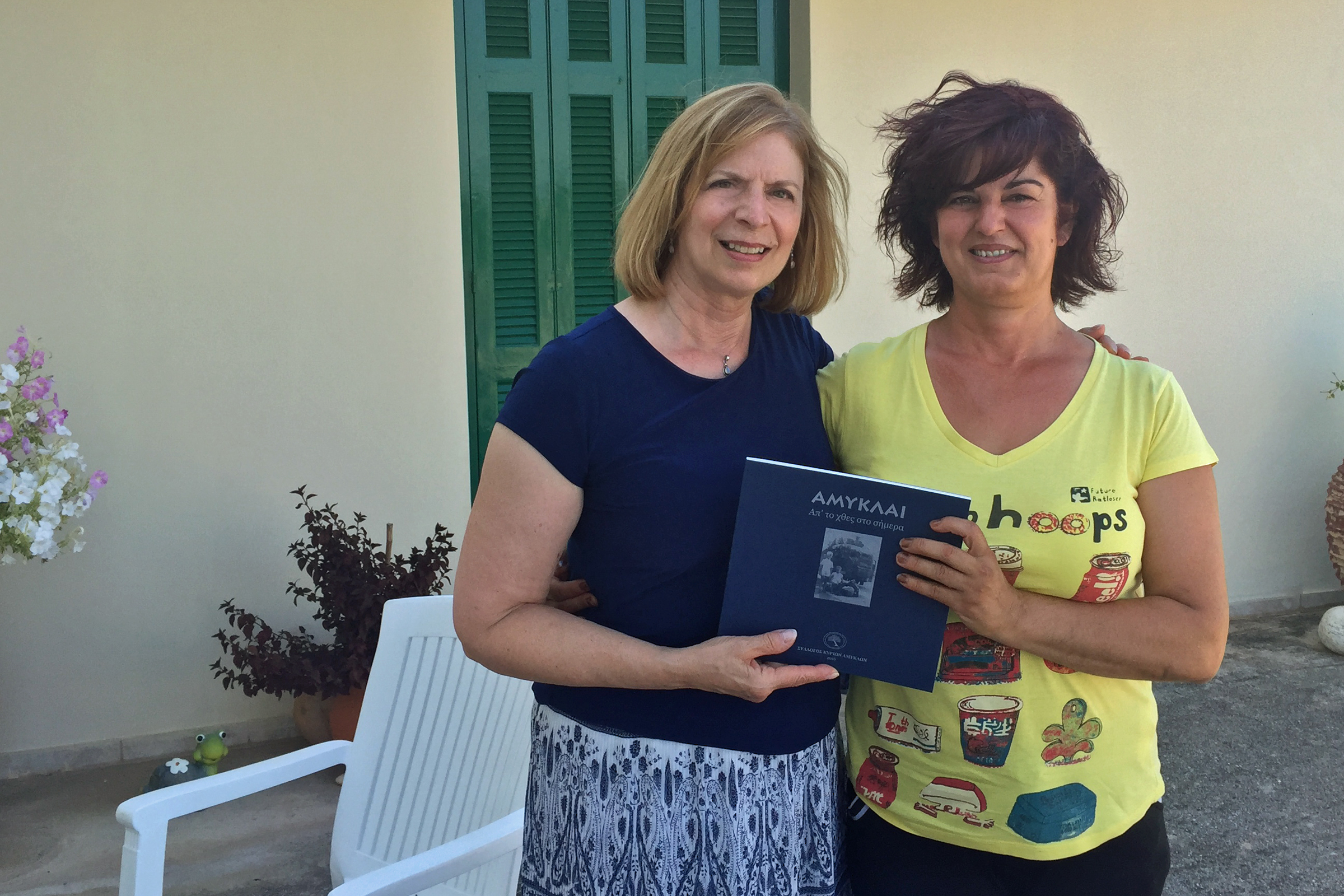
Prior to leaving for this trip, I had spotted a Facebook post about a newly published book about families from the village of Amykles. Since this is the birthplace of my Eliopoulos and Zarafonetis great-grandparents, I was very excited to meet Kaliopi Zarafonetis, the driving force behind this project. 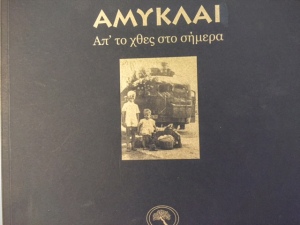 Gregory and I connected with Kaliopi in Amykles where she described the book’s genesis. There had been a village event which featured a display of old photographs. Everyone was surprised at the extent of the collection, but Kaliopi had the foresight to realize that these treasures would be lost if they were not preserved. Thus began her initiative to create the book. I was thrilled to see page after page of Eliopoulos and Zarafonetis families, most of which are most likely connected to mine. One of my great surprises was to learn that my cousin in Agios Ioannis had married a woman whose grandmother was a Zarafonetis from Amykles – a double connection!
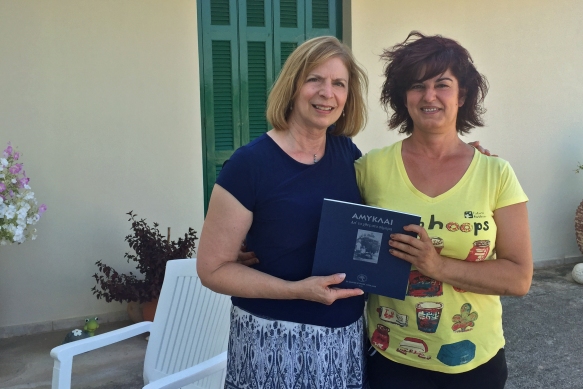
Carol Kostakos Petranek and Kaliopi Zarafonetis, Amykles, July 2016
On to the repositories. I was on the hunt for death records for specific members of my family. My cousin, an attorney for the government in Sparta, had contacted a colleague in the Town Hall and we obtained the certificate for a member of the Linardakis family of Vordonia. I was surprised to learn that death records for Agios Ioannis are in the Town Hall of Magoula, not Sparta! Unfortunately, I did not make it there but it is the first item on Plan A for the next trip.
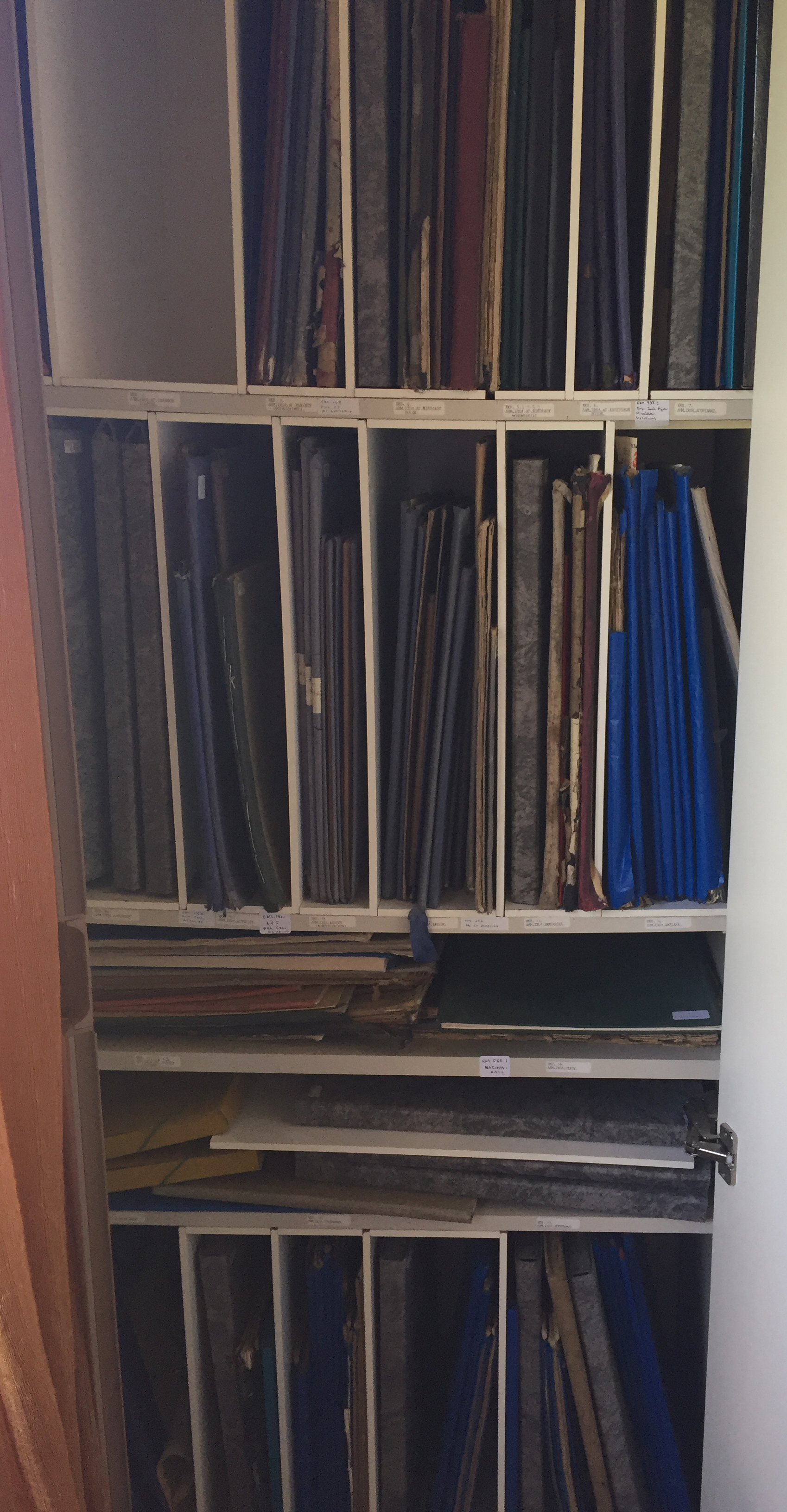
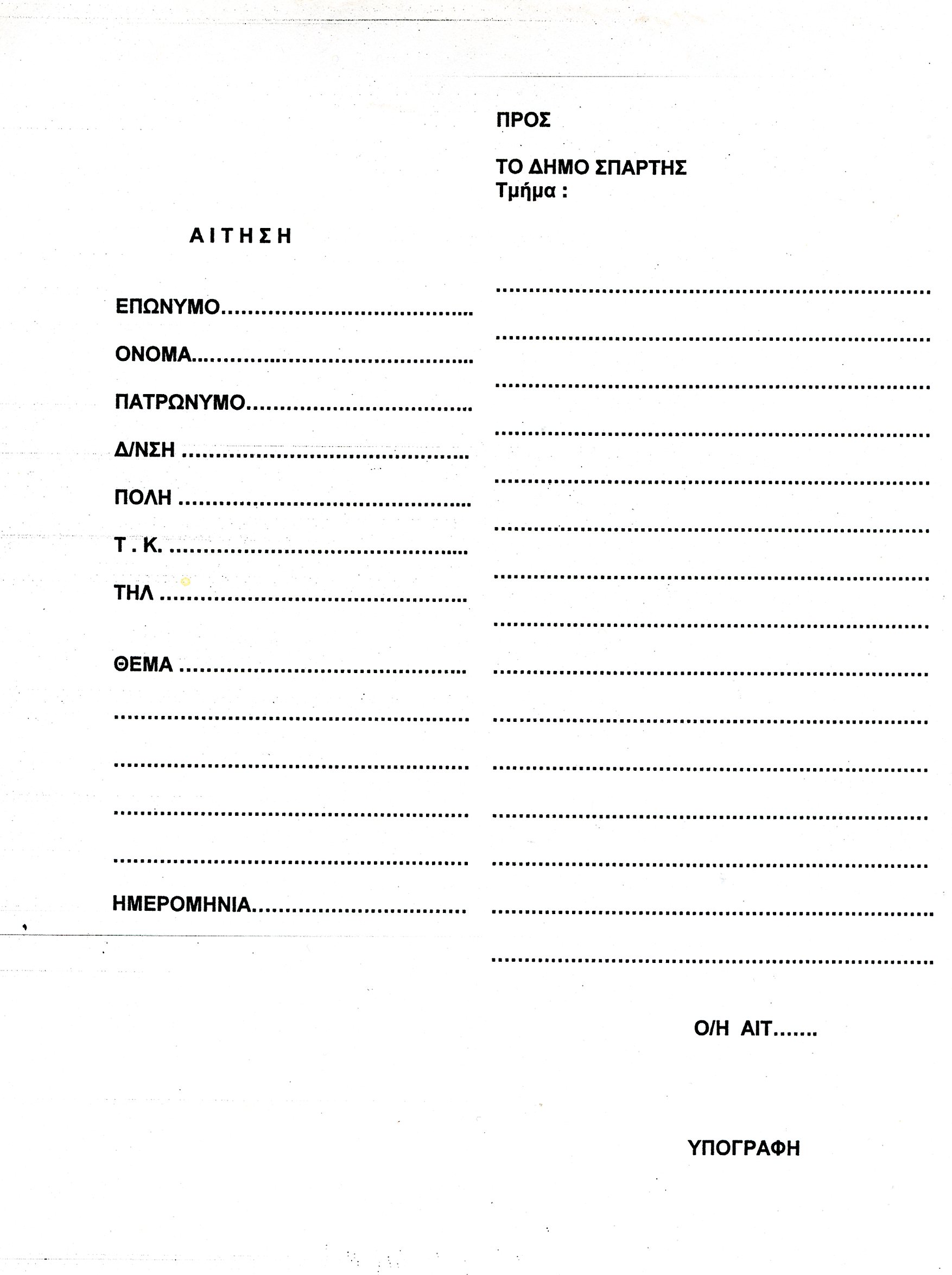
The Sparta Dimarheion has books of Male Registers and Town or Family Registers, as seen on the shelves in the photo below. However, clerks are busy handling daily government functions and research requests are often put aside. I did pick up a form to use for future mail-in requests.
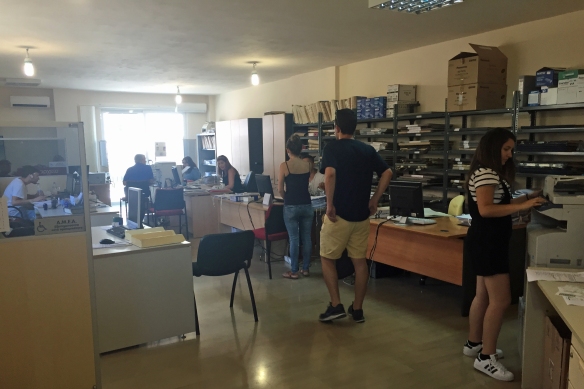
Sparta Dimarheion (Town Hall), July 2016
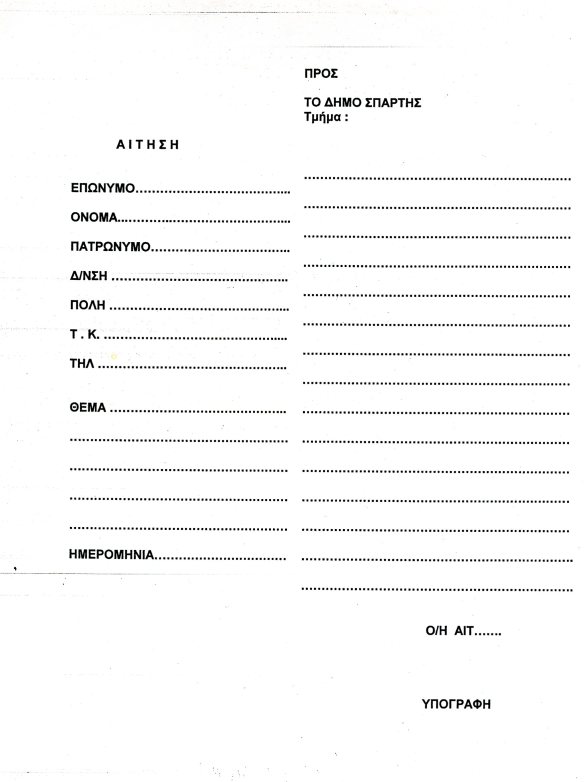
Record Request Form, Sparta Dimarheion, July 2016
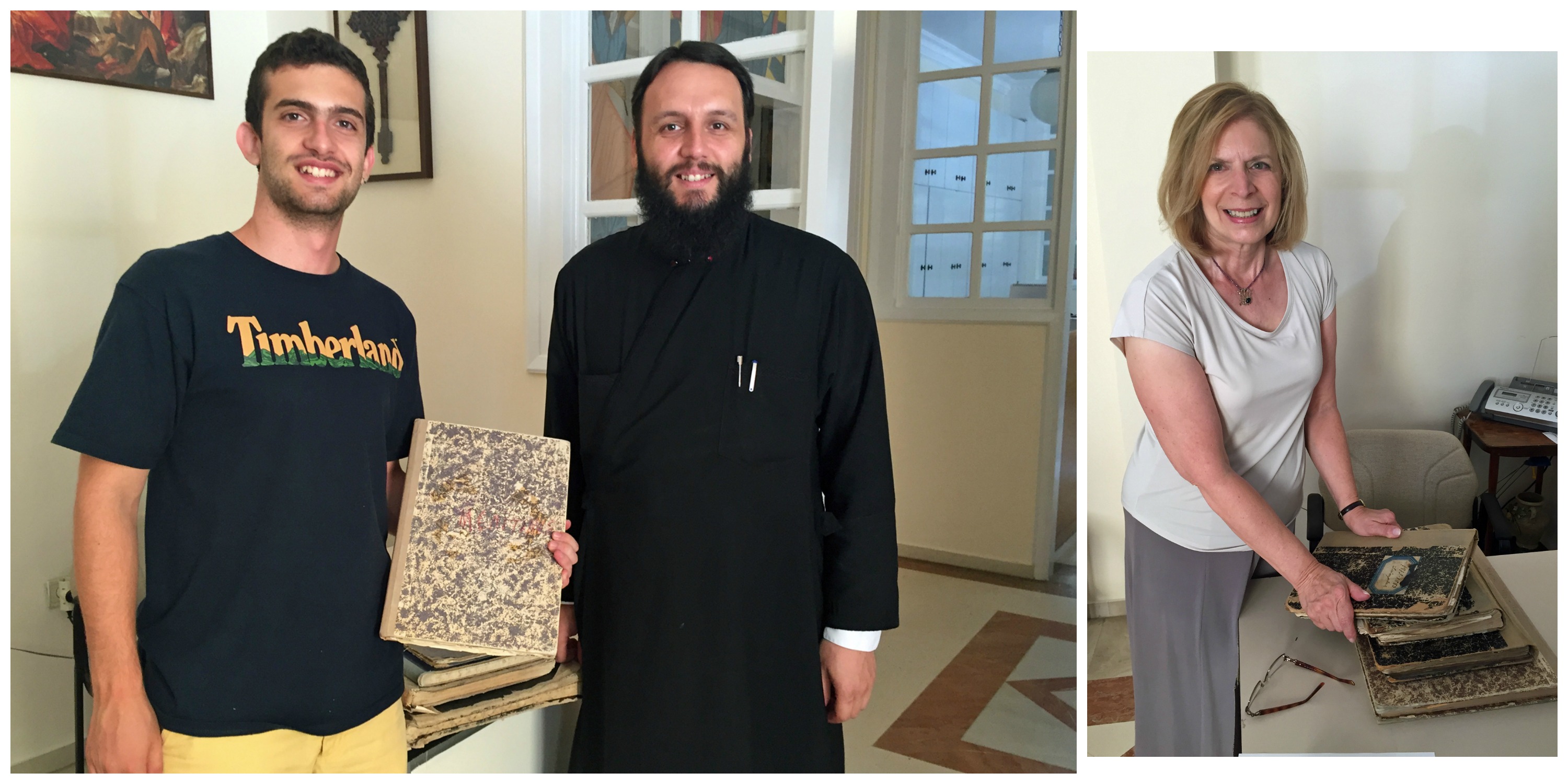
Our task at the Mitropolis in Sparta was to obtain specific pages of the Marriage Books for a friend. Although Gregory and I had been there in 2014, I was unsure if we would be granted access to the books again. My concerns were unfounded. We were warmly greeted by a priest who brought us whatever we requested. When Gregory mentioned that the books were fragile and should be preserved, the priest replied that there had been discussions with the European Union about digitizing the records, but the talks had not come to fruition.
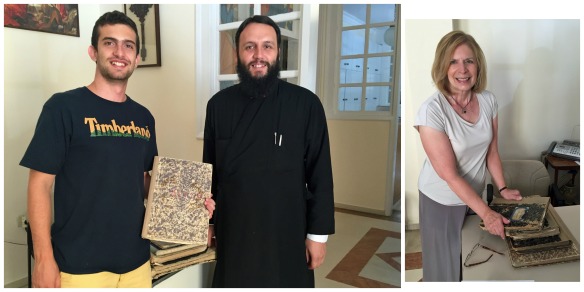
A kind priest helped us at the Mitropolis; Gregory Kontos and Carol Kostakos Petranek, Sparta, July 2016
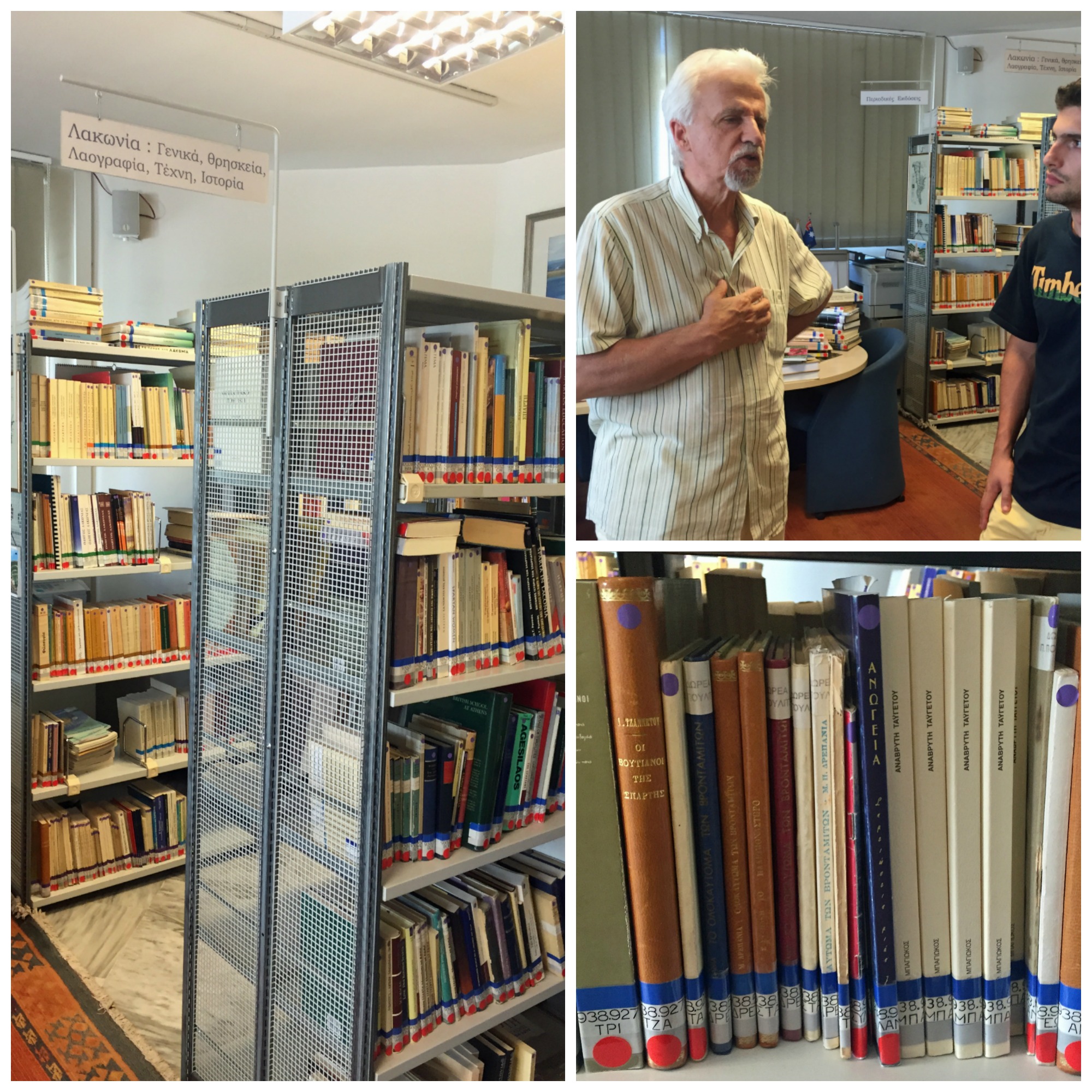
Then it was on to the Central Library of Sparta, located around the corner from the Mitropolis. This time our search was for history books of villages in Laconia, usually written by teachers during summer months. Giannis Michalakakos gave me the name of his colleague, Konstandinos Tzanetakos, who is a librarian there. We found Konstandinos in the section for Laconian history and he showed us the shelves that held many village histories.
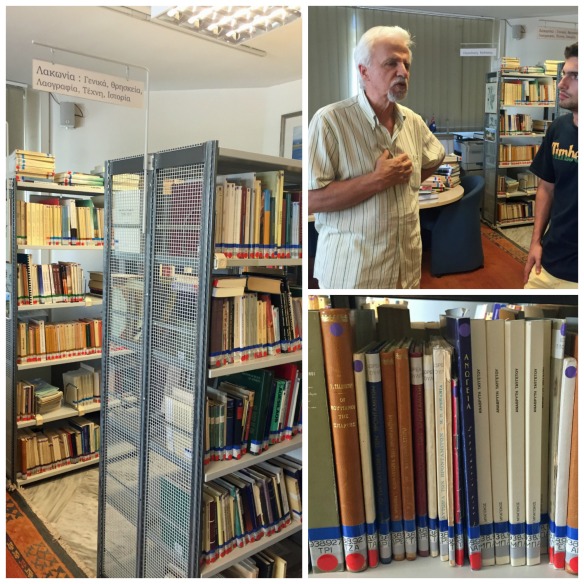
The Laconia History section of the Central Library of Sparta; with Konstandinos Tzanetakos and Gregory Kontos; July 2016
There were books for lots of Laconian villages, but none for Agios Ioannis. Giannis explained this was because Agios Ioannis had begun as a settlement beneath the towering Mystras castle, and that any noteworthy event had occurred in Mystras and not in its valley. I had harbored a secret hope that I would find something, but my friend was right. Anyone looking for a history book can call or email the library to see if there is a book for their village and if so, obtain the name, author and publisher. Most likely, our friends at the Laconia bookstores, Laconia Odos in Skala and Adouloti in Aeropolis, can then locate the book for purchase.
Our tasks in Sparta were completed, so Gregory and I headed to the west coast of Laconia to visit the Archives in Kalamata. Why there? I was hoping to find a clue — any clue — as to whether my Kostakos or Eftaxias family may have been in the Kalamata region before they headed northeast to Spartan villages. I had been told that my great-grandfather, Andreas Kostakos, could have come from Pyrgos (see previous post).
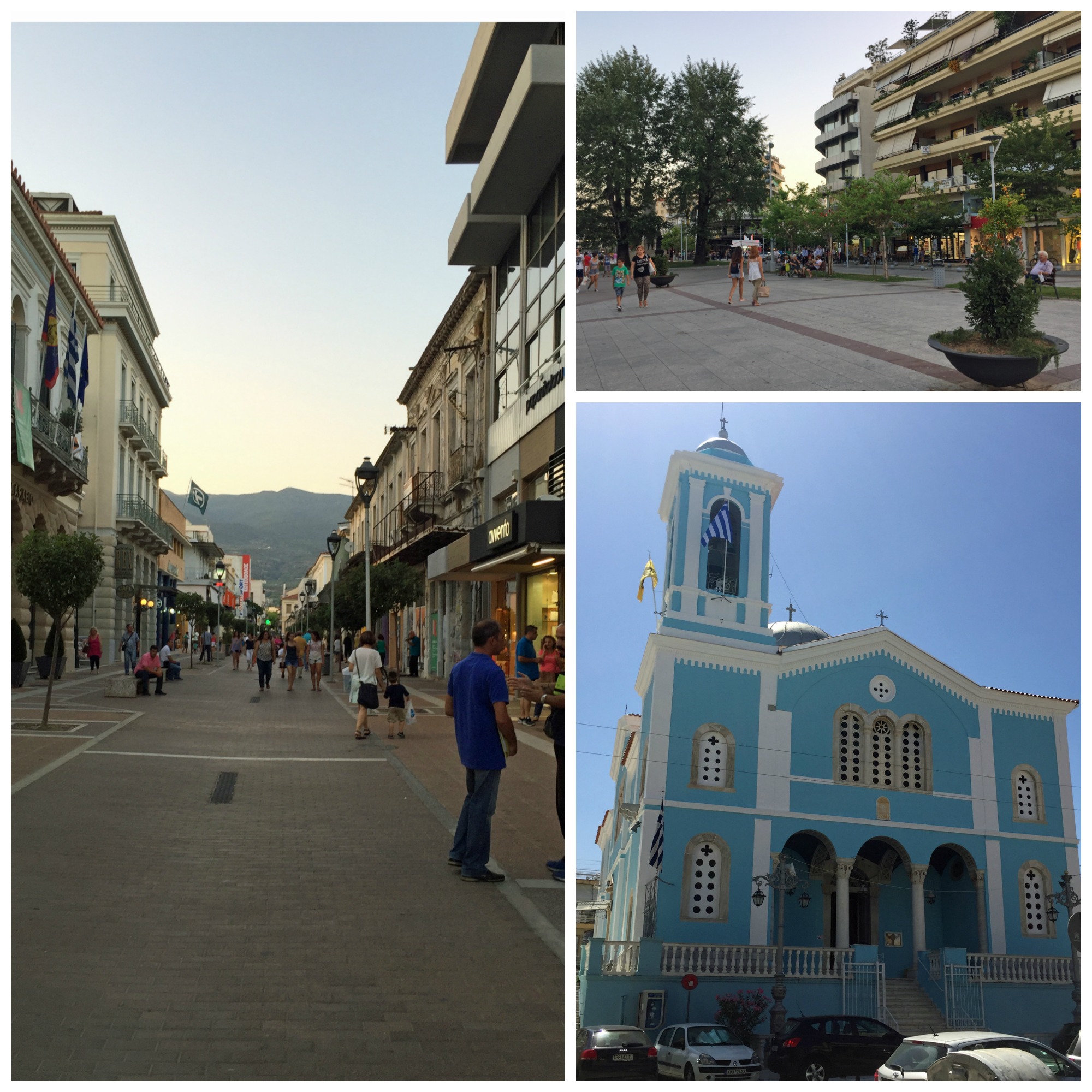
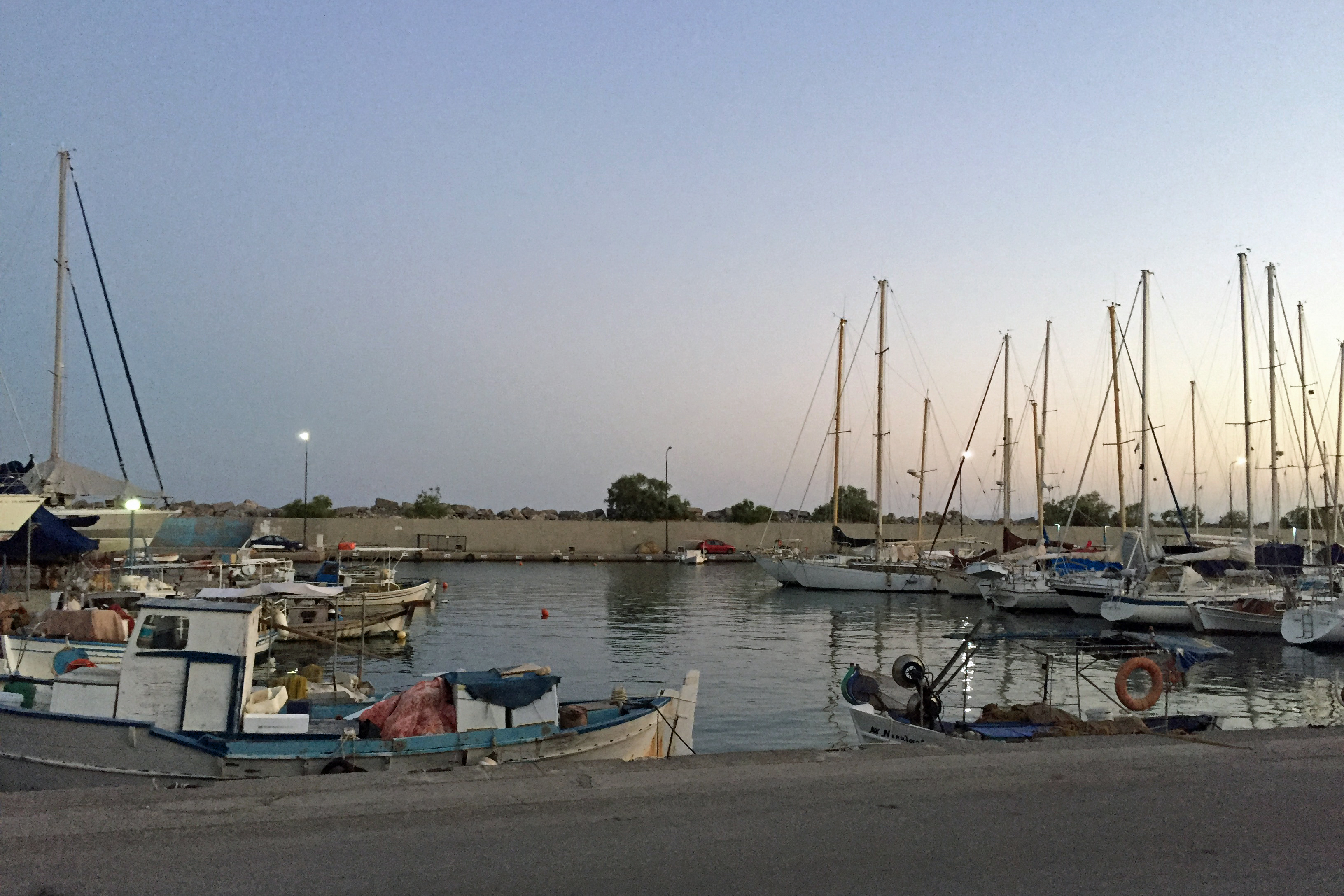
This was my first visit to Kalamata, a charming city by the sea.
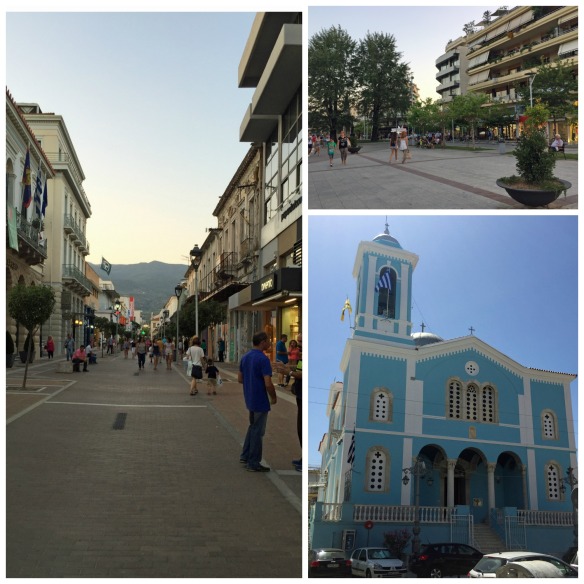
The city of Kalamata, Messinia, July 2016
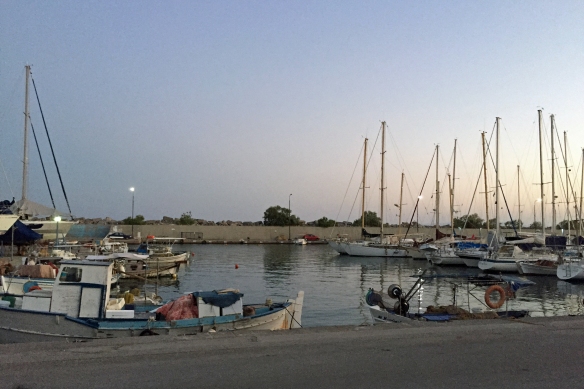
Waterfront, Kalamata, July 2016
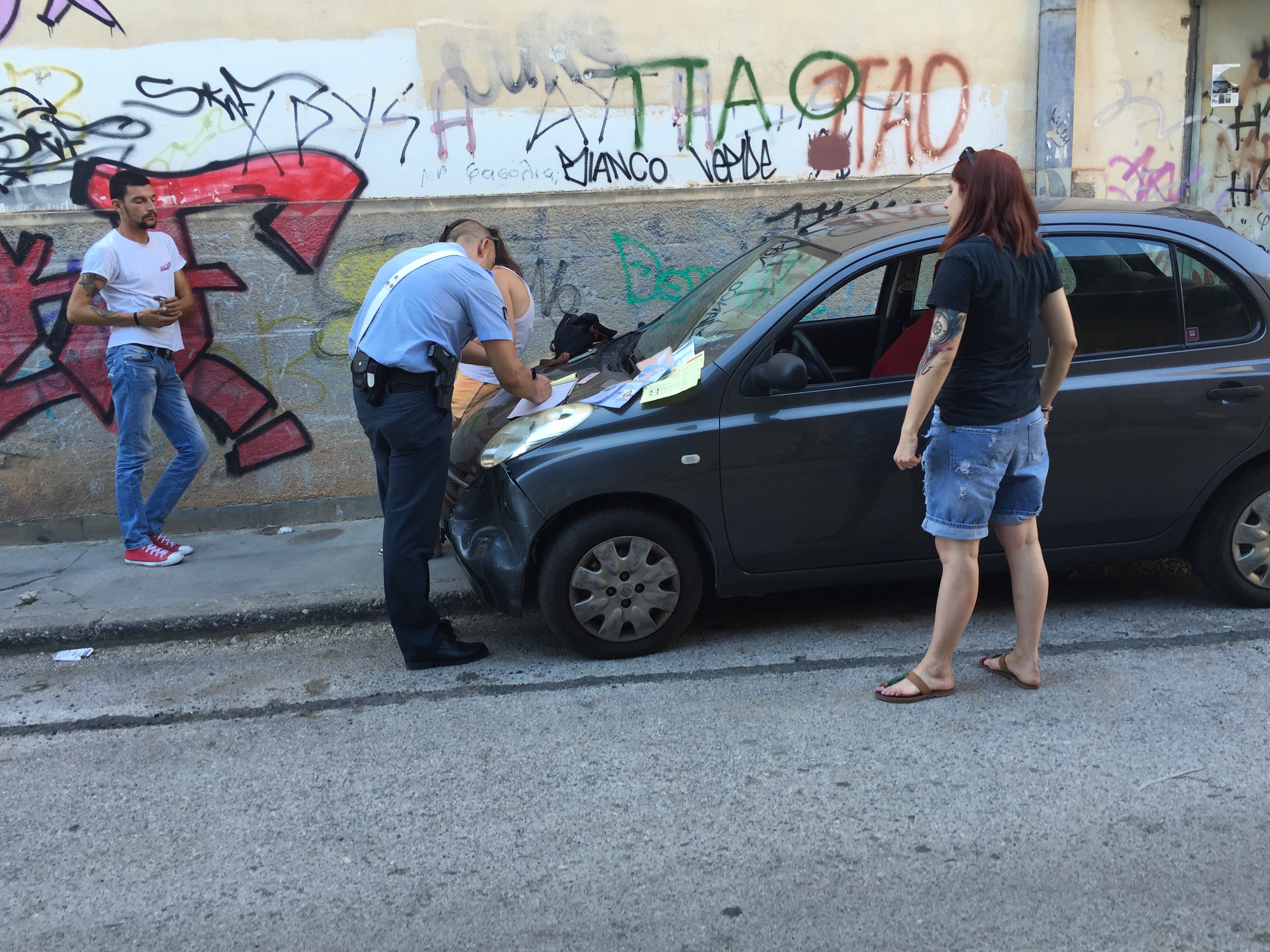
However, traffic in the city is a nightmare! The streets are one-way, very narrow, and very crowded. And horror of horrors — this is where I had my first car accident in Greece. It was a fender-bender at an intersection, and because we were moving so slowly, damage was minimal and no one was injured. But, I quickly realized the complexities of such a situation in a country where my language skills are not optimal. Calling the police and the car-rental agency, and talking with the other drivers could have been truly awful. Luckily, a passenger in the other car spoke perfect English and handled everything with grace and good humor. I was so grateful! Somehow I found my way back to the hotel and parked my car. I refused to let this mishap unnerve me, and I also refused to move the car until the day I left!
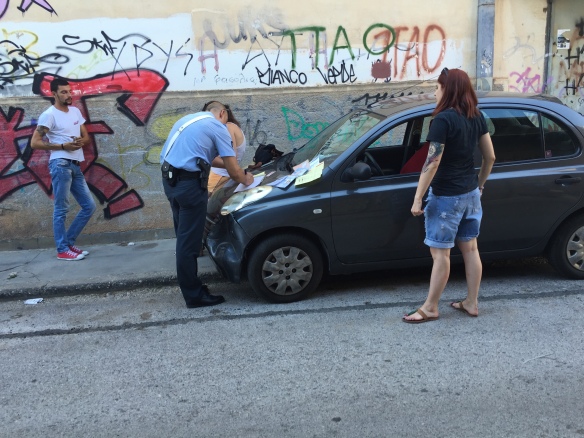
Accident! This is the car that hit mine in Kalamata, July 2016
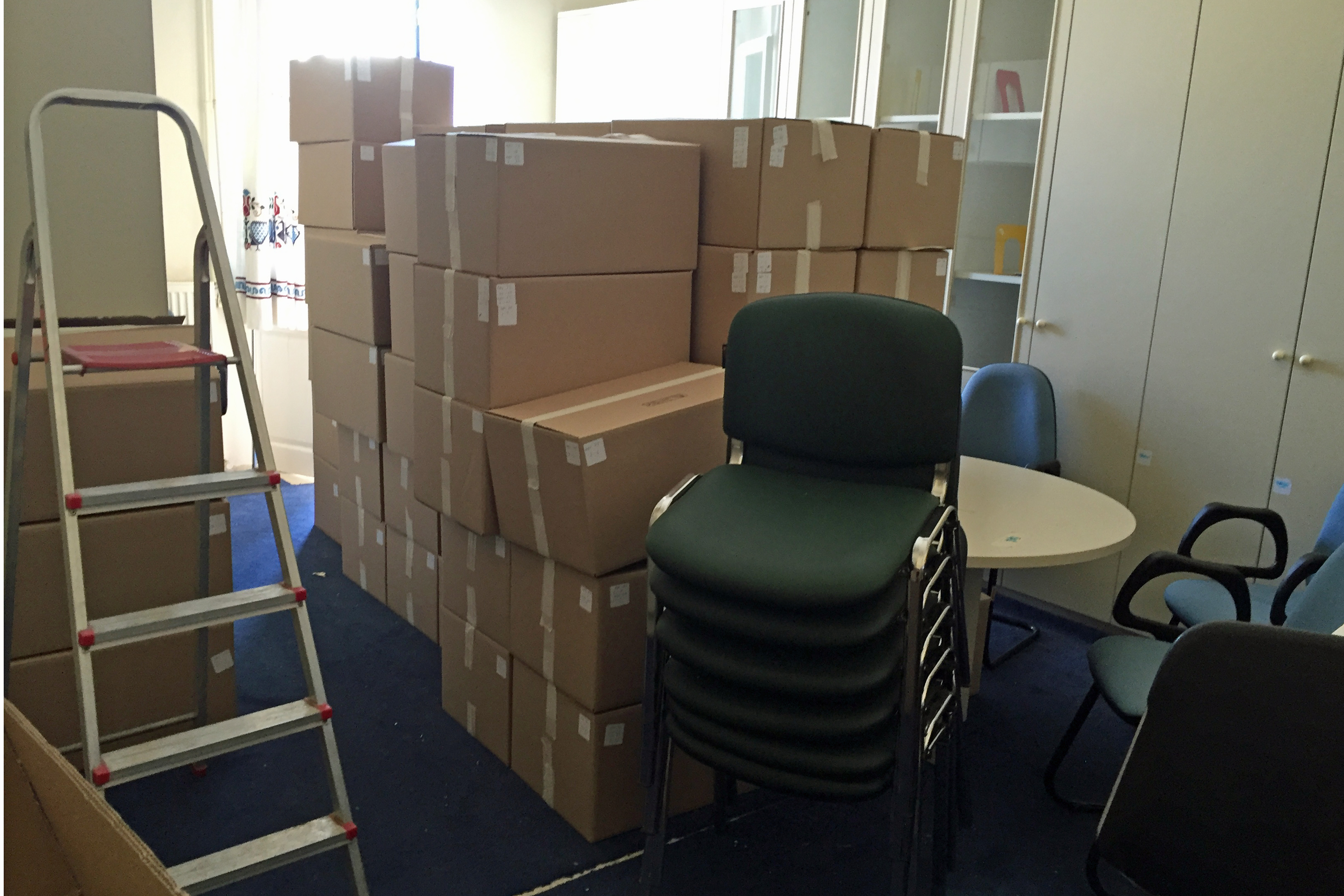
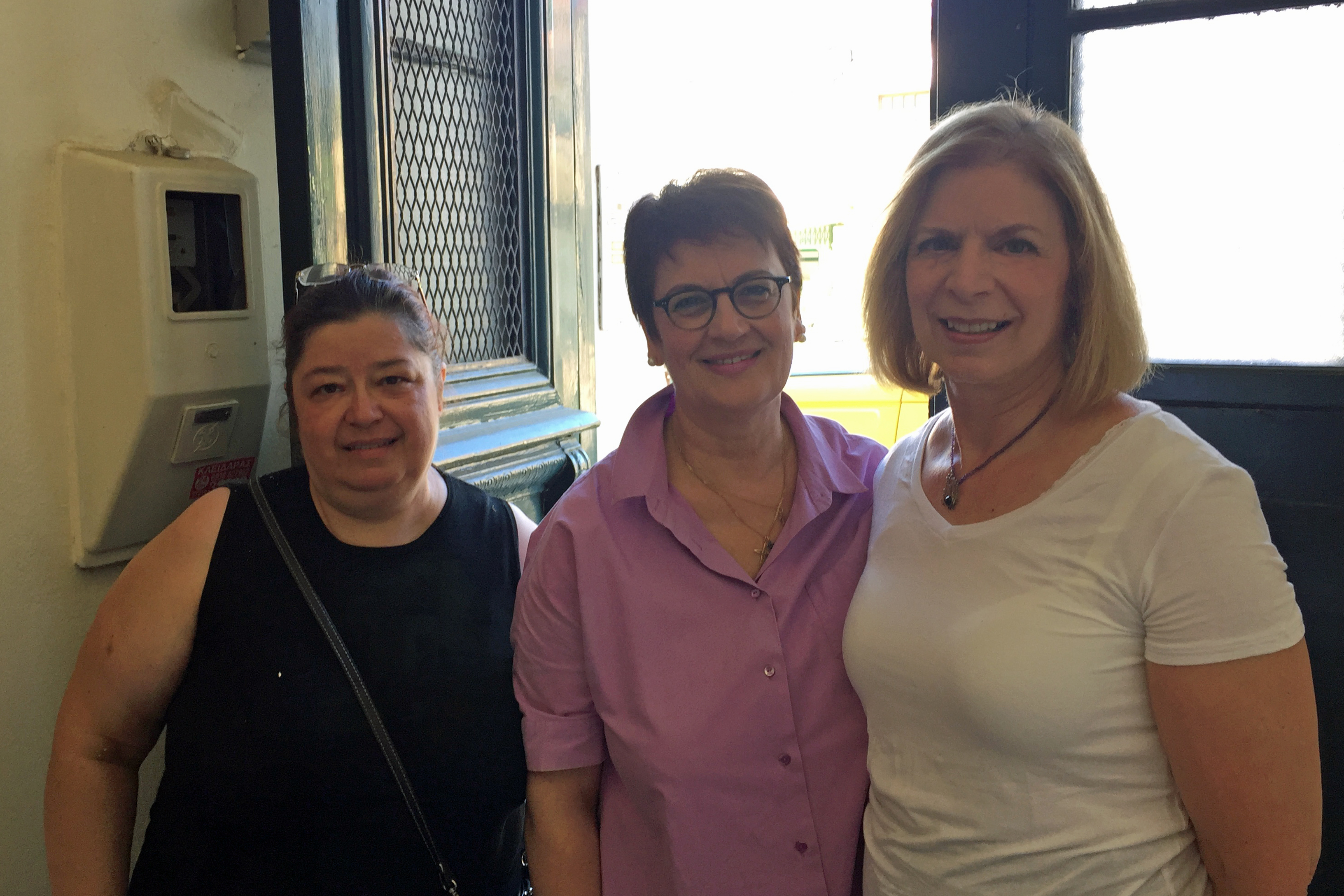
Gregory and I were very happy to meet in person our friend, Giota Siora. Giota is a Facebook friend on HellenicGenealogyGeek. Despite working full-time, she spends many hours online helping people with their research. For her devotion, she is greatly appreciated and respected. Giota met us at the Kalamata Archives and introduced us to the Archivist, Anastasia Milioni, who also happens to be the wife of the mayor. This Archive has an extensive record collection for the Messinia Prefecture, including records of churches, land, houses, elementary schools, newspapers, military. The collection was greatly enhanced when Mrs. Milioni responded to a request from the GAK Central Office to ask local services to send their records to the Archives. Unfortunately, we were unable to do any research as the Archives is in the process of moving to a new location. Books were packed in boxes, and the office was essentially empty.
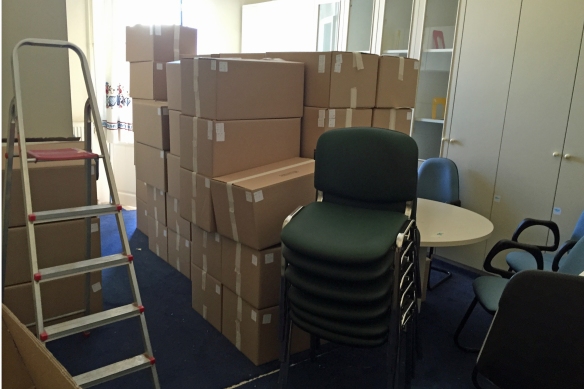
The Kalamata Archives is headed for a new home, July 2016
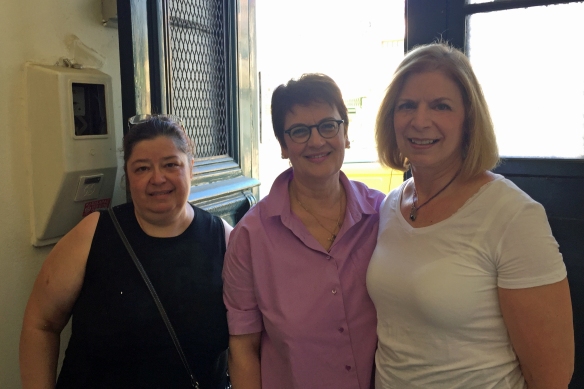
Giota Siora, Anastasia Milioni, Carol Kostakos Petranek, Kalamata Archives, July 216
When I inquired about possible records for the Eftaxias and Kostakos names, Mrs. Milioni did a computer search and found a few documents which look very promising. Two especially stood out: a contract naming a Kostakos family in Anavriti, which could confirm oral tradition that the family had lived there prior to Agios Ioannis; and a contract for an Eftaxias family in Kalamata. After the office move, I will contact Mrs. Milioni and ask her to access these for me. I continue to be impressed with the kindness and professionalism of the Archivists in both Laconia and Messinia. They truly desire to be of help and will set aside whatever they are doing to be of assistance to researchers.
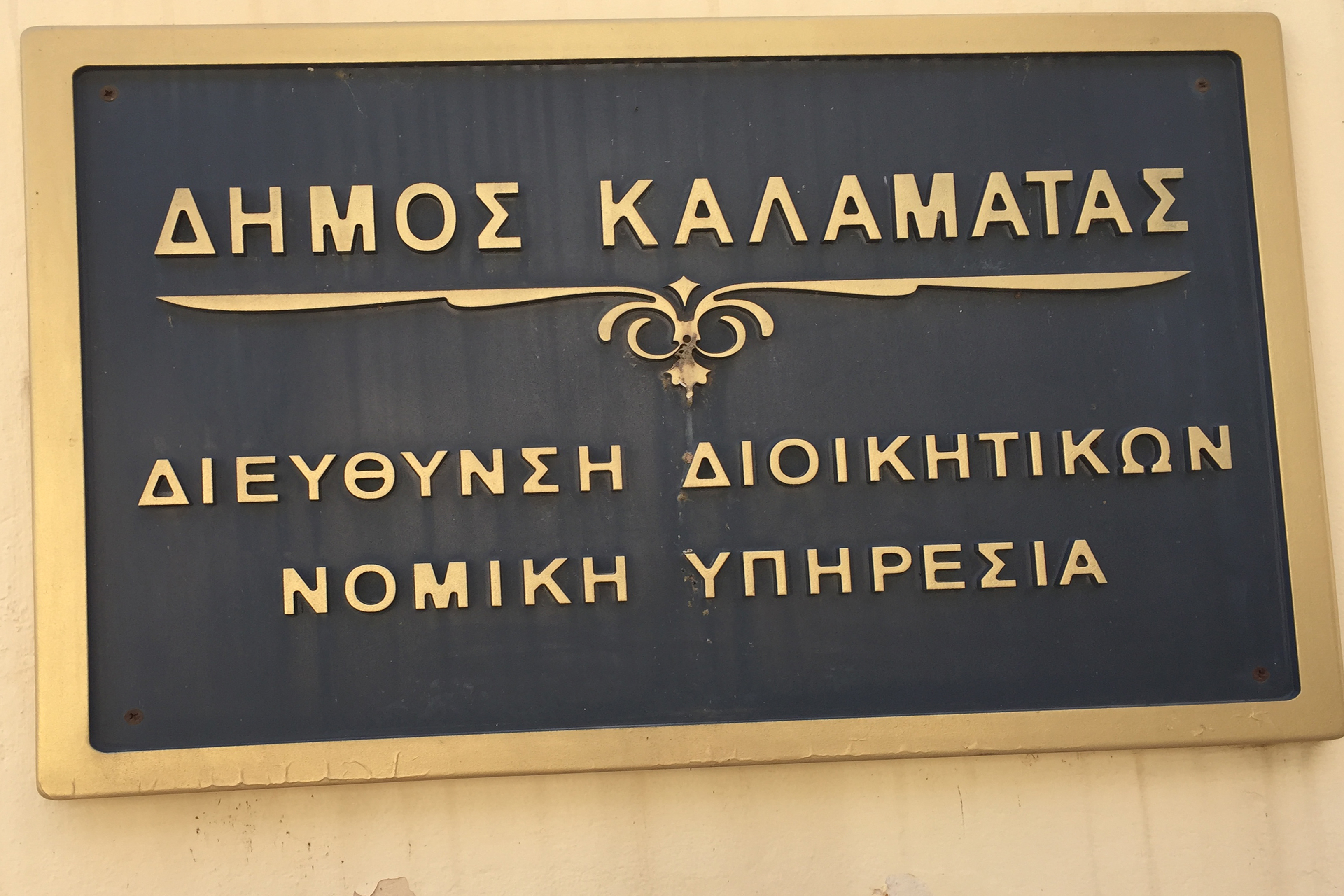
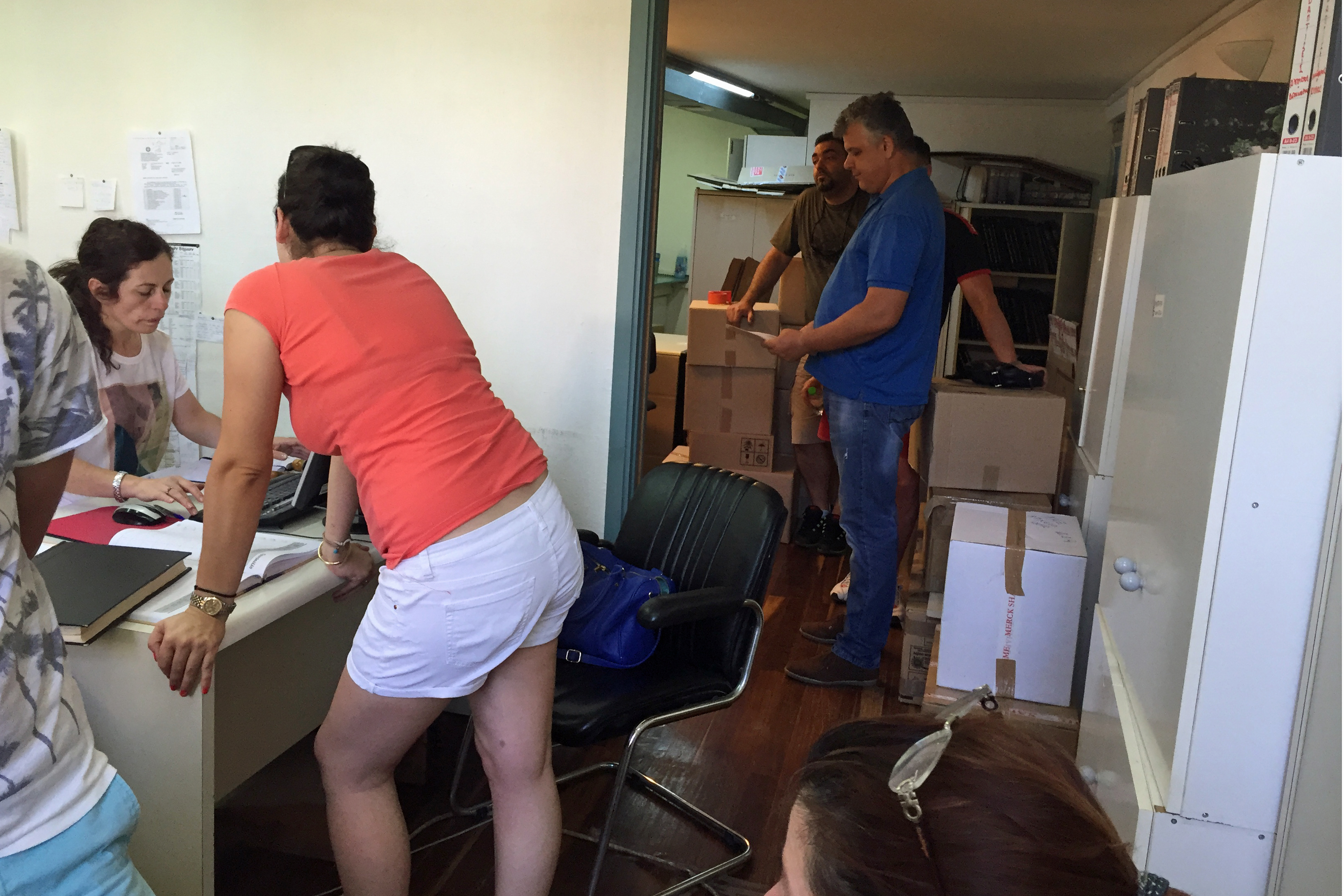
Giota suggested that we walk to the Dimarheion, or Town Hall, on the chance that we  might access records there. Visiting this municipal office, I was again reminded that clerks are extremely busy handling daily matters. Someone walking in and asking for records that are 150 years old are, at best, a distraction and at worst, an annoyance. This is especially true when there are six people standing in line, vying for a clerk’s attention. I was also reminded that the municipality has records only for its specific area of jurisdiction (unlike the Archives which has records for the entire prefecture). Since I was looking for Pyrgos, a village not in the Kalamata jurisdiction, the clerk was not able to be of assistance. The lesson of that day was: location is everything!
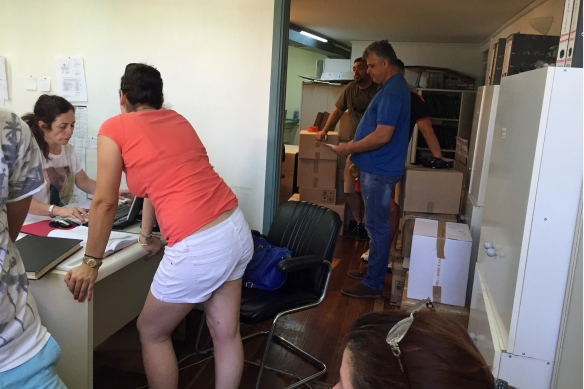
Town people waiting patiently for help on a Friday afternoon at the Dimarheion. The line stretched outside the door. Kalamata, July 2016
Every hour of my research trips are filled to the max. Sometimes “the force” is with me and I have amazing success; sometimes not, and the disappointment becomes a “learning experience.” Nothing is lost; everything is gained. I love the ride!







 Spartan Roots (Σπαρτιατικές Ρίζες)