Unknown's avatar

About Spartan Roots

I am of Greek ancestry with roots in villages near Sparta. My paternal grandparents and maternal grandfather were born in Agios Ioannis (St. Johns), and my maternal grandmother was born in Mystras. I love family history research and have been tracing my roots for many years. I was born in Brooklyn, New York and was raised in a predominantly Greek neighborhood close to extended family. I live in the Washington D.C. metropolitan area and work as a volunteer Co-Director of the Washington, D.C. Family History Center and a genealogy aide/project aide at the National Archives in Washington, D.C. I am always updating and adding new information. Please contact me - I would love to hear from you!

Mystras–Old and New

Mystras holds a special place in my heart–it is the village of my maternal grandmother’s family, Eftaxias. It is a Byzantine city which holds a long and glorious place in the history of Greece. Mystras was founded in the 13th century after the Crusades and conquest of Constantinople. The Frank prince, Villehardouin, ruled the Peloponnese and built a mighty and forbidding stone fortress at the top of the mountain Mytzithras (Mystras).
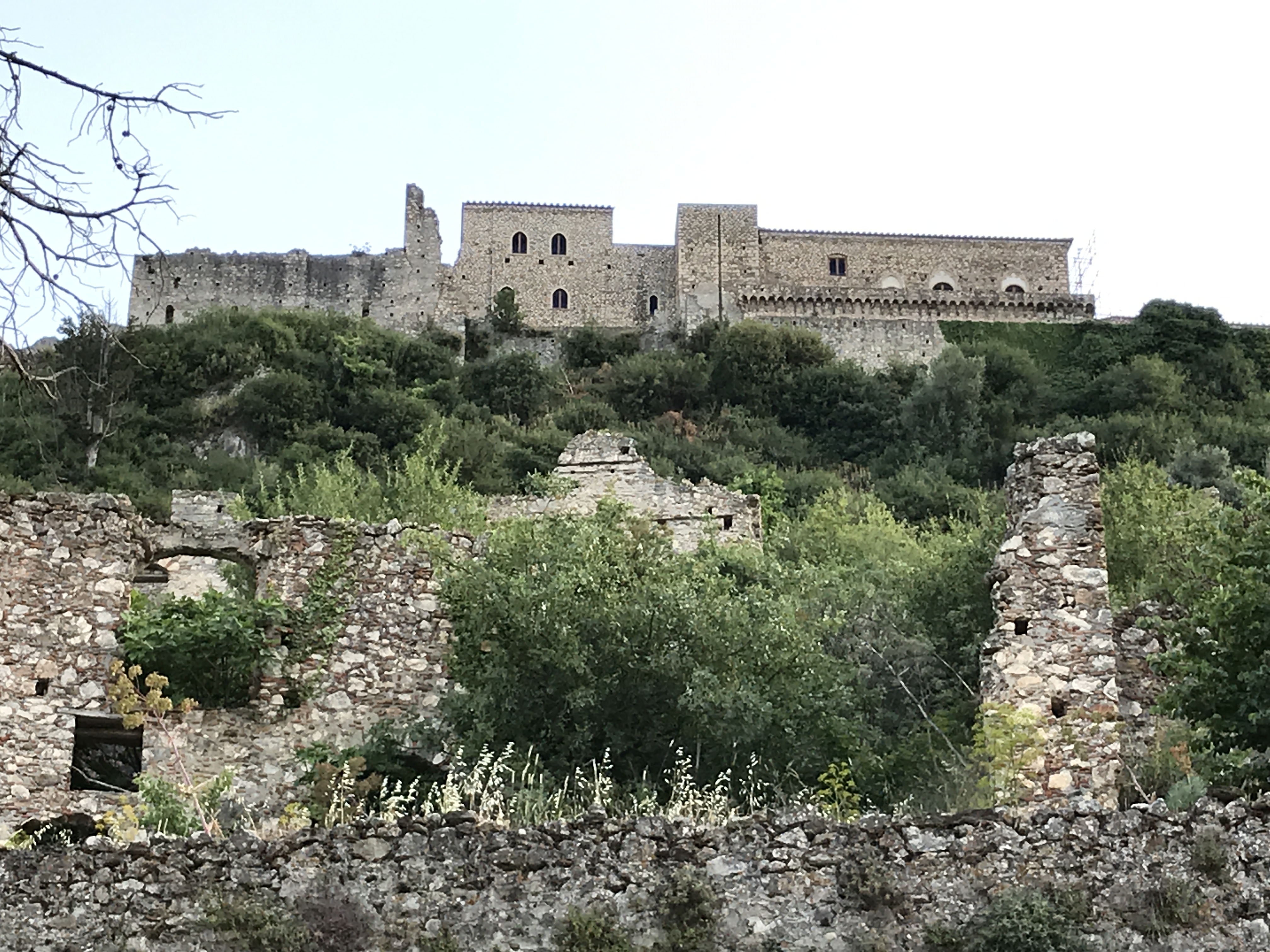
The mighty Mystras fortress rules the Taygetos mountains and overlooks the valley of Sparta

However, after his capture in battle by Byzantine emperor Paleologos, Villehardouin exchanged the castles of Monemvasia and Mystras for his freedom. Mystras became an important military center, and from the mid-1300’s to the mid-1400’s it served as the capital of the Morea (now Peloponnese).

With continuous threats of foreign invaders, people sought security and began building homes within the stone walls of Mystras. The first wall was named Chora and the second one Kato Chora. The cathedral of Sparta was also taken to Mystras.1
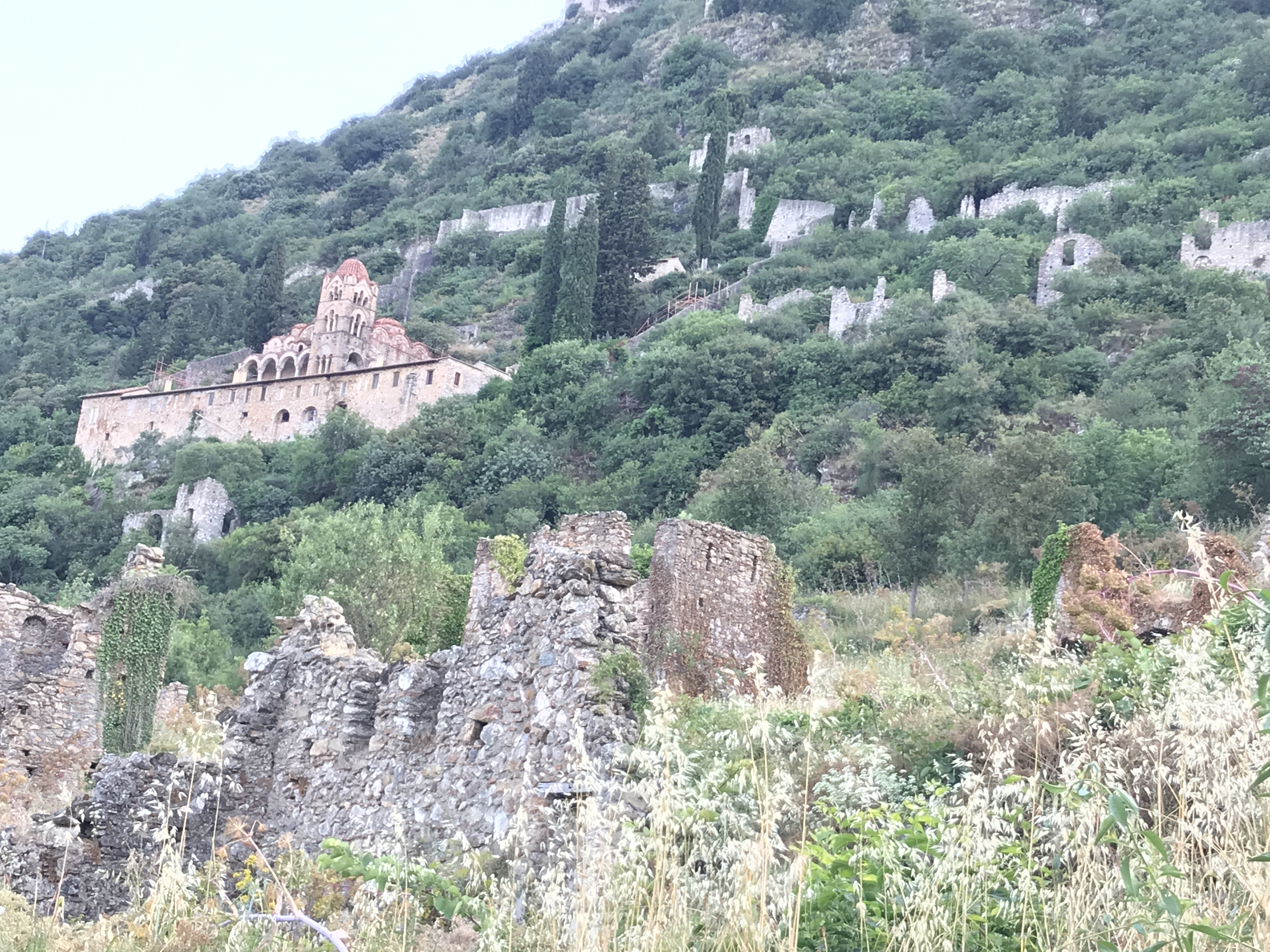
The Cathedral of Mystras

Through subsequent years until 1825, Mystras was subjected to invasions by Franks, Slavs, Turks and Albanians. Albanian Turks massacred the population and destroyed the site in 1825. After the War of Independence in 1831, King Otto established the new city of Sparta and people began to resettle there. As late as the 1950’s, a few families remained in Mystras until the government annexed the land.

Today, historic Mystras is a focal point for visitors who relish the opportunity to explore antiquity.

But Mystras is also a story of the new generation. Tomorrow, the Greek Orthodox Archbishop of the U.S. will dedicate the newly completed and palatial Mystras Grand Palace Resort and Spa. Government leaders and dignitaries will converge to celebrate this venue which will draw visitors world-wide. Its majesty and decor perfectly complement the ancient edifices and exude a spirit of “new beginnings.”
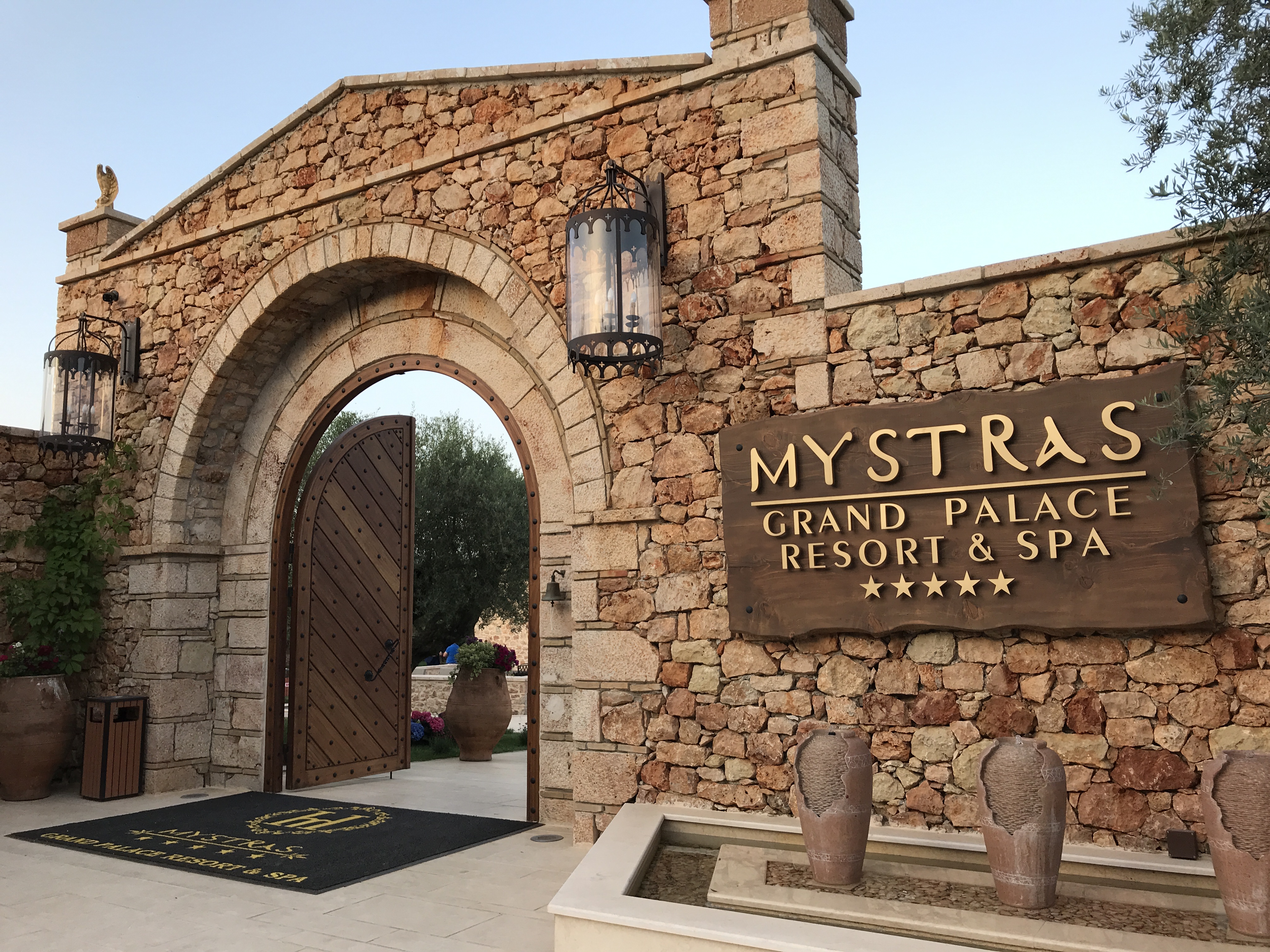
Mystras Grand Resort and Spa

Estate grounds
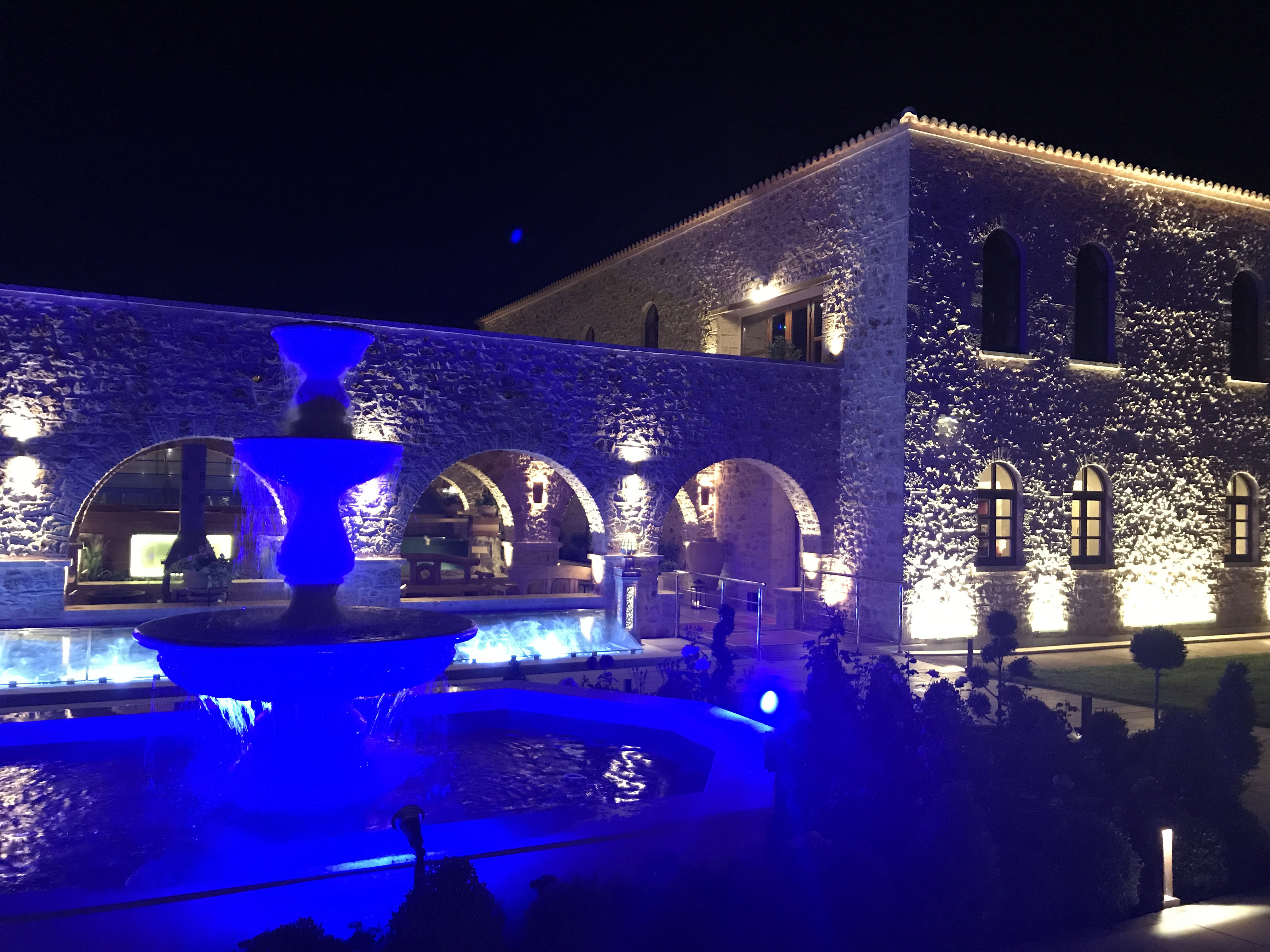
Splendid at night, too!

As Greece recovers from its current economic crisis, entrepreneurs and visionaries will converge to combine the old with the new, building bridges from ancient to modern in this majestic land.

1 Source: www.greeka.com

One Day in Lesvos

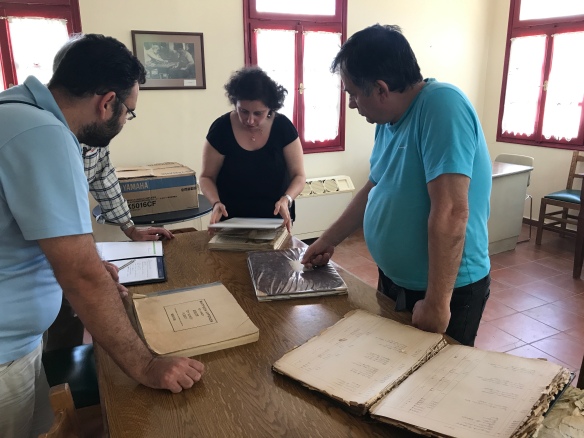
This trip to Greece took an unexpected and delightful twist when my friend, Bill Burgi, asked if I would meet him in Mytilene. He had volunteered to review the genealogical records kept by the Greek Orthodox Mitropolis of Lesvos and the Town Hall of his mother’s village of Agiasos for potential preservation purposes. I was excited to have this opportunity, and invited my research colleague, Giannis Michalalakos, to join us.

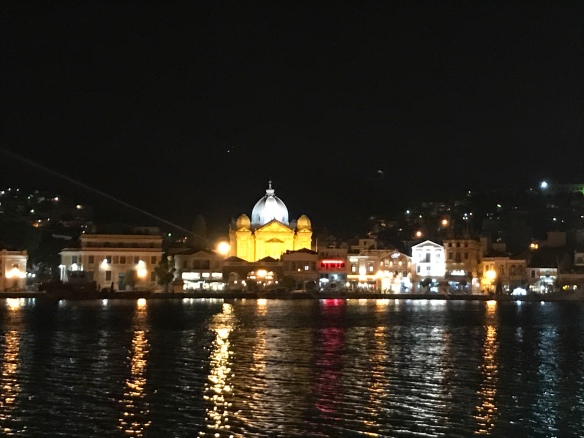
My flight to Athens landed at 10:30 a.m. on Monday (the 21st) and at 8:30 that night, I returned to the airport with Giannis to head to Lesvos. One hour later, we were enthralled to be on this island. Even the darkness could not hide the beauty of the harbor.

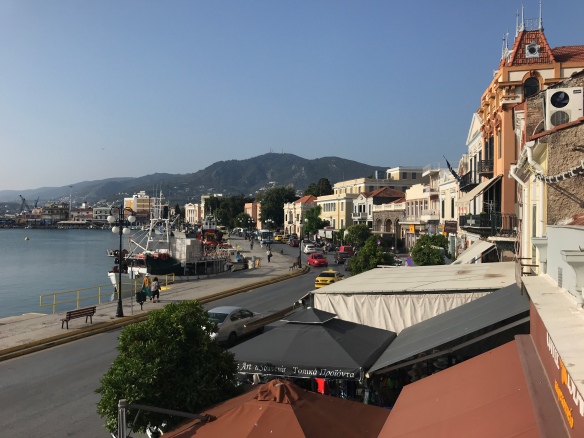
The next morning, I awoke to a city of splendor.

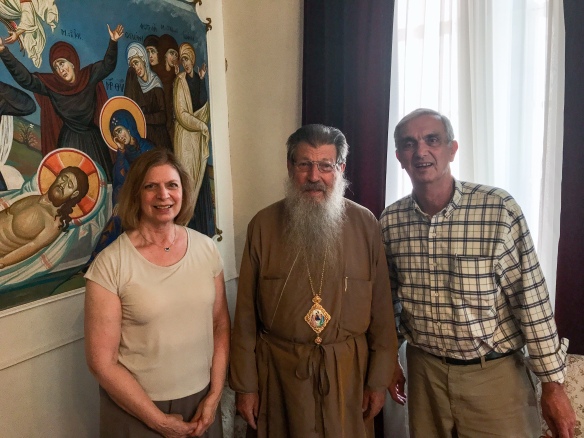
My desire to explore was over ridden by our appointment with Archbishop Frantzi, a man whose eyes and demeanor radiated pure kindness. Despotebthe refugee situation on a continuing crisis level, he maintains a sense of compassionate responsibility to those who have lost everything. I felt that he was a man of his times, placed in this position by God to help those whose needs are overwhelming. He told us that he was leaving the following morning for Bosnia on a humanitarian trip. Bringing food, clothing, and various supplies, he will be working with others to see what can be done for the refugees in that country as well.

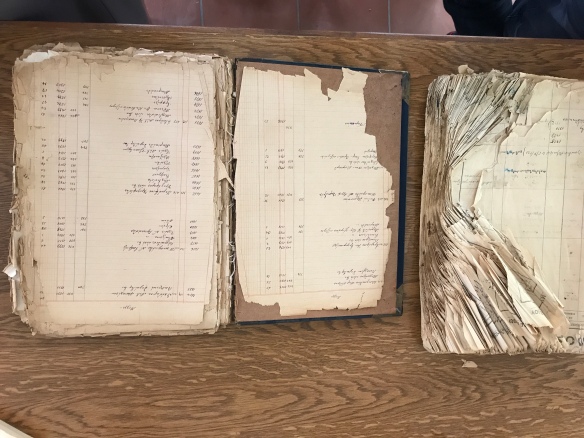
Bishop Frantzi has been concerned about the state of the records in the metropolis, and one of his clerks had begun to scan pages of the most recent books. These books are big, heavy, and very difficult to position on a flatbed scanner. We hope to be able to help the Bishop preserve his precious documents.

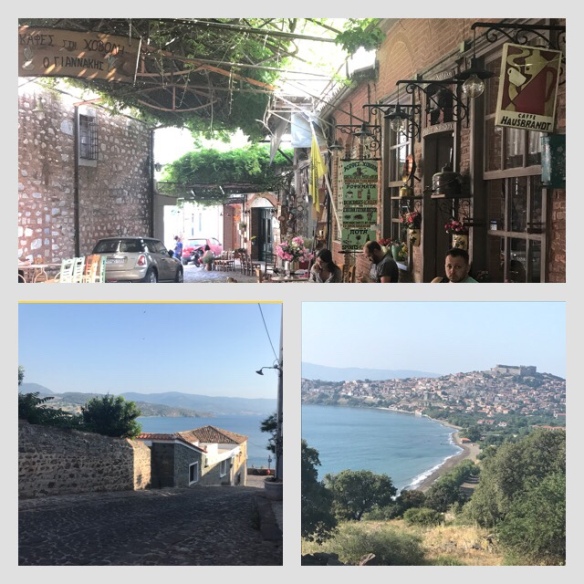
We then headed to Agiasos, a lovely village nestled in the mountains an hour from Mytilene. We drove through terraces of olive trees–some extremely old and others newly planted. We later learned that Mytilene’s olive oil ranks among the best in Greece.

In Agiasos, we had lunch and walked the streets of Bill’s mother’s family. The town is a mix of old and new, as is evident throughout Greece. Families whose ancestors left the village are now returning to restore and renovate their family, or non-familial, homes. It is one indicator of the start of a new beginning for Greece.

We visited the Dimarheion, and spoke with the clerks about records preservation. Their enthusiasm was so encouraging, and we could see how desperately this work was needed.

Although it can be discouraging to see the state of these records, it is certainly encouraging to see that people are now realizing the importance of archival preservation.

It was late afternoon, yet we decided to drive to Mythmna, a village for its ambience, nightlife, and beautiful views of the sea. Each part of Greece has its own unique beauty. Although we are drawn to our ancestral village, it is delightful to explore and experience other areas.

I hope that keepers of the records throughout this beautiful and ancient land will soon realize that there are resources readily available to assist them in preserving the documents of their history and their people. It is a daunting task, but one that must be undertaken–and soon.

Off to Sparta!

I am on my way to Sparta, Greece where I will spend two months at the Greek Orthodox Mitropolis of Sparta, preserving and digitizing old and fragile marriage records. These documents range from the late 1800s to the mid-1900s. I have researched in the index boooks for these marriages in previous years. The books are abbreviated compilations of documents sent to the Bishop by the priests of all the villages around Sparta.

The index books list the marriage license date, the name of the bride and the groom, the church where the wedding was to take place, the best man, and the name of the priest. The marriage documentation which I will be preserving this summer has much more information. There are letters from the priest in the village requesting permission from the bishop for the couple to marry, a letter from the bishop back to the priest granting that permission, and often other documents. I have seen dowry contracts, male registers, and other records in these collections.

Although the index books are marvelous to view, the marriage documentation will provide much more information of great value to researchers.

I am very grateful that my colleague, Gregory Kontos, has diligently sought permission from the bishop to get these records preserved. Bishop Efstathios has given his consent and his blessing to this project. Years ago, he himself organized these documents, carefully sorting them into boxes categorized by year. He is pleased that his work will be preserved. He is a meticulous archivist and is proud of his record collections.

I will post regularly about this trip, my work and experiences. It is my hope that others who are researching in Greece will be encouraged in knowing that things are happening in Greece to bring records out of the Archives and churches and onto the internet for the benefit of those who are seeking to learn about their family.

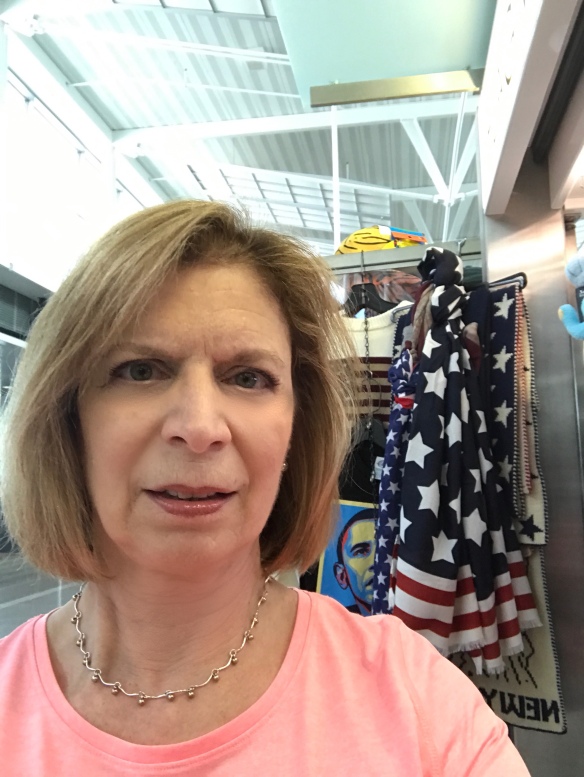
This is a selfie taken at Dulles Airport outside Washington DC where my journey begins. Thank you for being with me on this adventure!

Portland, Oregon Greek Genealogy Conference

On Saturday, April 21, 2018, I was excited to be the speaker at an all-day Greek Genealogy conference in Portland, Oregon. Sponsored by the Hellenic-American Cultural Center and Museum of Portland, this was held at the Holy Trinity Cathedral, Fr. Elias Stephanopoulos Center. For those in the U.S. who know of the broadcast journalist, George Stephanopoulos, his uncle is the one for whom this Hellenic Center is named. In the early 1900’s, Greeks traveled across the U.S. and settled in Portland to work on the railroad. The present-day community is strong and closely knit. Many are descendants of the early Greek immigrants.

The hall was filled with about 80 enthusiastic people who were ready to dive into the “how-to’s” of research. From 9:00-5:00, we studied five major topics:

Session 1 – Getting Started
Session 2 – Using US Records to Prepare for Research in Greece
Session 3 – Passenger Ship, Naturalization, Alien Registrations
Session 4 – Civil Records in Greece, online
Session 5 – Church and Civil Repositories in Greece; Researching in Greece

The handouts for this conference can be found at the Hellenic Genealogy Conferences website here: Portland.  I uploaded many supplementary documents — please download and use all of these materials, and email me if I can be of help (spartanroots1 at gmail.com)

Portland Greek Genealogy Conference, April 21, 2018

I was so pleased when several people approached me to share what they were doing as researchers. Their stories were fascinating, and I invited them to share with the group.

l-r: Gus Chamales, Carol Kostakos Petranek, Chris Zervas, Portland, April 21 2018

Gus Chamales had become interested in the World War II military service of one of his church parishioners, and has expanded that to research the history not only of this person, but of his entire company. This interest is growing to conducting research on many more Greek-Americans who have served in the military.

Chris Zervas began researching his family in a small village outside of Corinth. He soon found his work expanding to include neighboring villages. Chris is engaged in what professionals call a “one-place study” as his research now includes every resident in his village and neighboring ones. His family tree currently contains 24,000 names and continues to grow!

The Hellenic Museum occupies a large room in the upper level of the Stephanopoulos Center. Its holdings are true treasures of the quality one would see in a museum in Athens. I could have spent several hours reading the inscriptions and examining every artifact, but I had to rush through during a 30-minute lunch break. I was told that the Archbishop said this was the most beautiful Greek museum in America. Here are just a few of the many photos I took.

No Greek event is complete without dinner and Greek dancing! I now have many new friends in Portland.

If your community would like to sponsor a Hellenic genealogy conference, let me know. It is fun to learn together — and, you may meet a new cousin!


Greek Genealogy Webinar, April 11 & 18

I am honored to have presented a two-part webinar on Greek Genealogy, hosted by professional genealogist and my friend, DearMYRTLE. Please join me as we explore ways to further your family history research in Greece.

Session 1 was held on Wednesday, April 11, 2018
Topic: Finding Your Original Surname & Village of Origin
The link to the archived webinar can be accessed on YouTube here.

Session 2 was held on Wednesday, April 18, 2018
Topic: Church and Civil Records in Greece.
The link to the archived webinar and supplementary links can be accessed here.

There are handouts and supplementary materials for both sessions which are captured on a Google spreadsheet. That link can be found here. I suggest that you download the spreadsheet so you can have access to the many resources contained therein.

I hope these webinars will be of help to you!