“Do you know how the first roads in the mountains were built before explosives were used?” my cousin, Panos. asked. “They loaded a donkey with a heavy pack, then watched where it walked up the mountain. Where it went, they cleared a path.” Over time, these passages widened to become dirt roads.
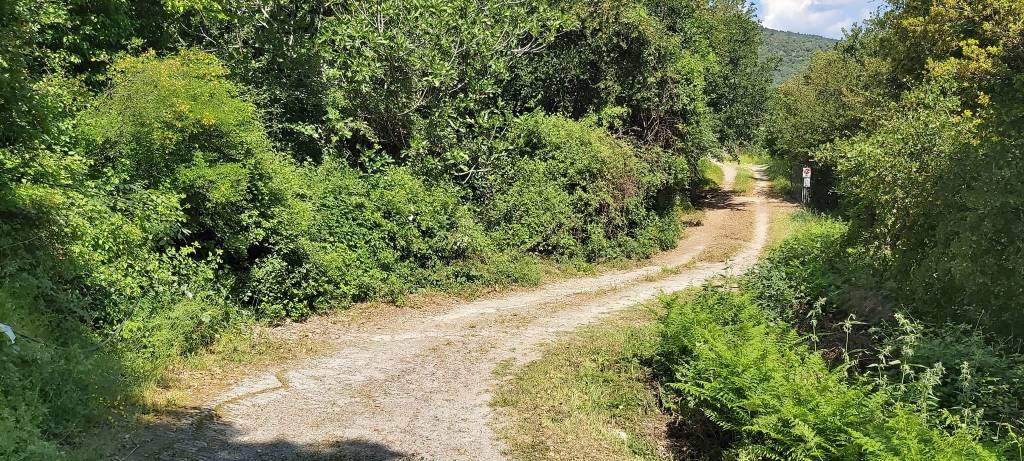
To those of us living in countries where governments construct and maintain roads, it comes as quite a surprise to learn that this is not always the case in parts of rural Greece. For many villages situated on mountainsides, roads are financed and constructed by local communities. Especially in the early years of the 20th century, villagers often provided the manual labor: they moved rocks and removed tree stumps, cleared the roadbed, and leveled and smoothed the ground.
Well into the later years of the 20th century, the roads to many Spartan villagers were primitive, at best. If there was pavement, it was worn and littered with rocks. When I was in Agios Ioannis, Sparta, in 1996, I wanted to visit Anavryti, situated at the top of a mountain. My husband and I got in our rental car and started up the narrow, rocky, switchback road. We had barely started the upward climb when we saw a dump truck coming down towards us. With no space for both vehicles, we put the car in reverse. Backing down a winding mountain road was terrifying!

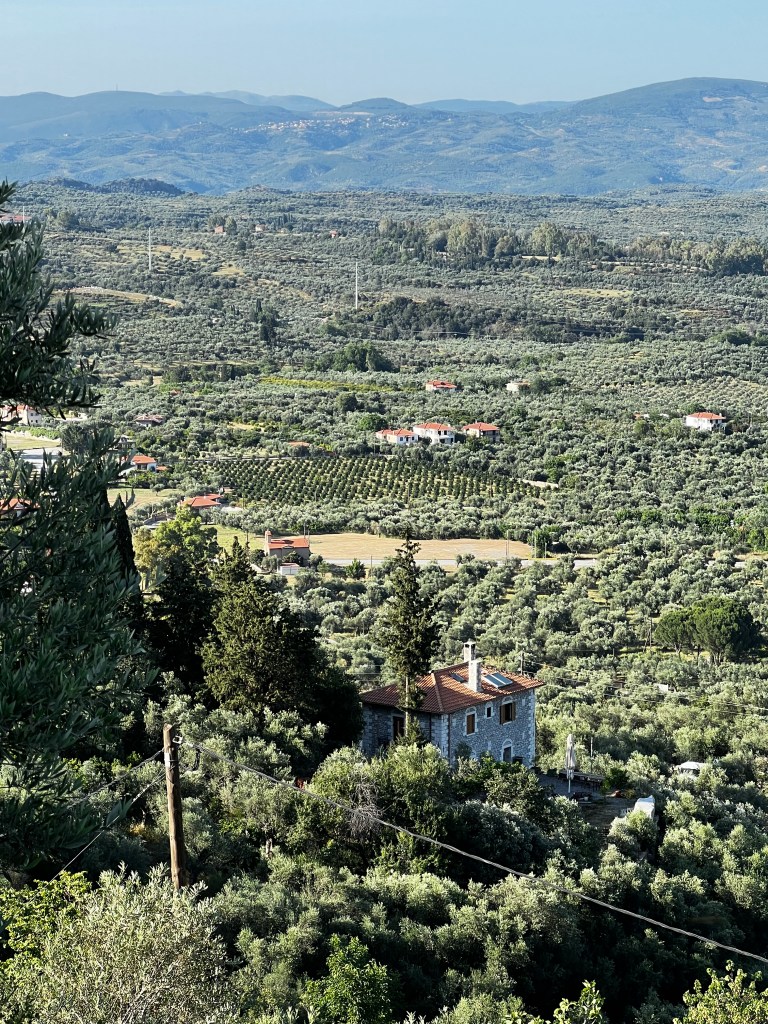
That panicked moment was my first experience with the mountain roads of Sparta. Now, I love driving them. Ascending the Taygetos and Parnon ranges, magnificent vistas appear. I hit the brakes, put the car in park, and get out to take photos. The steeper the climb, the lovelier the view.

Joanne Dimitrakakis, a native of Barsinikos/Taygeti, owns and operates a beautiful guesthouse, Arxoniko Taygeti, high upon a towering mountain of Taygetos.

To get there, one must traverse the road to Barsinikos which winds back and forth, ever ascending upwards. The beauty of the road changes with the seasons.

Before 1975, there was no car road from Mystras to Barsinikos; all that existed was a dirt trail. Three men from the village, who had emigrated to America, returned to their ancestral home and concluded there should be a road to Barsinikos. In August 1975 they organized a syllogos (committee) based in Mystras. A board with officers was elected, and the newly elected members wrote a constitution and decided on the formal name of the committee: Progressive Syllogos Taygeti Mystras.

The primary goals of the syllogos were:
- To collect money to open the car road from Mystras to the village of Taygeti/Barsinikos
- To improve the village and the surrounding environment of Taygeti
- Maintain the full cooperation of the community officers until the end of the project
- Plan and execute any other work in conjunction with the scope of the project
It was decided that the work would begin on September 2, 1975. The plan was approved by the committee.
The syllogos arranged the practical and procedural matters for road construction. Their discussions included the types of machinery needed, such as two bulldozers and an air compressor, and the workers to be hired. Preserving the natural landscape and the village was always a top priority. The syllogos received the full cooperation of the community leaders for both the road project and whatever additional projects would arise.
The syllogos was responsible for accepting and tracking donations received for the construction project. Money came from organizations and individuals in many countries including Greece, America and as far as Australia. Donations ranged from 1,000 to 67,000 drachmas. In total, almost 315,000 drachmas were initially collected in one month (by October 1975). Fundraising events at panegyris (village festivals) and other activities such as raffles, brought in additional money.
The path of the road was decided and land was donated by those whose property was to be accessed. If a landowner refused to allow passage, the road had to be routed around his property. Thus, the final product has some interesting twists and turns.
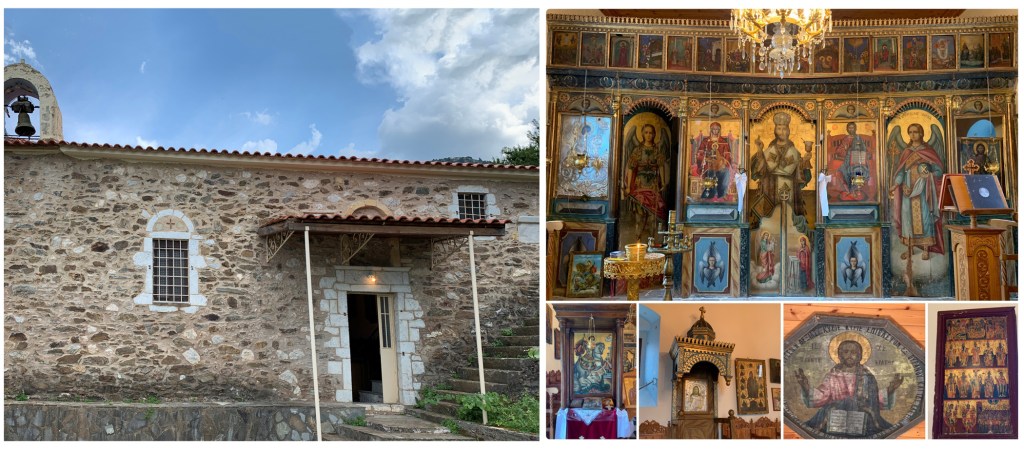
The construction took 2-1/2 years, and the road opened in 1977. The syllogos had enough funds left over and people kept donating money, so other projects were completed. Specifically, all the churches in and around the village were repaired and restored: Agios Nikolaos, Agios Dimitris, Agios Georgios, Koimisi tis Theotokou, Metamorphosis of Sotirios, Prophet Ilias, and the monastery of Zoodohos Pigi its the surrounding buildings. In addition, the school in Barsinikos, which had closed in 1968 due to lack of students, was restored with plans to use it as a museum.
Unfortunately, further details of the road project do not exist. It would be so interesting to know how the work progressed, the problems that arose and how they were resolved. But for now, we can thank the syllogos for giving us a car road to access the villages and the natural beauty of this section of Taygetos mountains. Today, the road continues to be maintained by the local government.

I so appreciate the memories and assistance of Joanne Dimitrakakis in writing this post. (I love that we are distantly related through our Dimitrakakis families!)

 Spartan Roots (Σπαρτιατικές Ρίζες)
Wonderful article. Do we know the names
of the people who started the committee?
Thank you for your message – obviously, it would have been people from Barsinikos but their names are not available.
Thanks for replying to my message
Important unknown
Hellenic-History that is
Little known