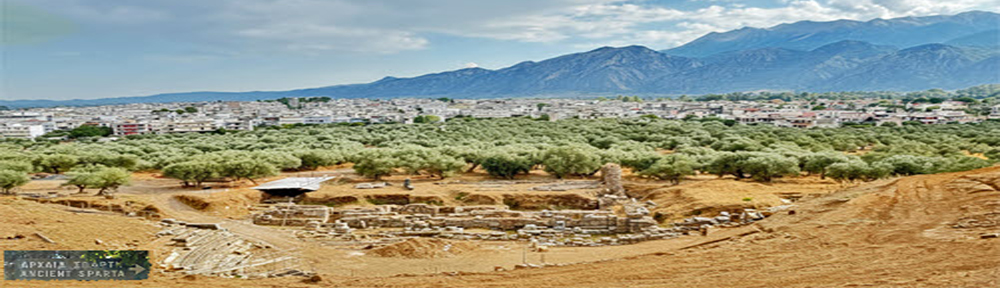
Today is a national religious holiday in Greece known as Holy Spirit Monday which marks the end of the Easter cycle. Except for cafes and tavernas, all businesses are closed. Since I could not work, I drove to Nyfi in the Mani peninsula to visit my friend Giannis and his parents.

To Mani
I always, always love being in Mani. Although the land has been occupied (and has remained unconquered) for centuries, it appears to be wild and untamed. It speaks of strength, independence, determination, and fortitude—characteristics of the people who have made it their home. The –akos suffixes of my ancestors’ names are indicative of Maniate origins. Whenever I set foot in Mani, my soul senses roots. I wish I could trace my ancestors back to here, but I can’t get out of Sparta!
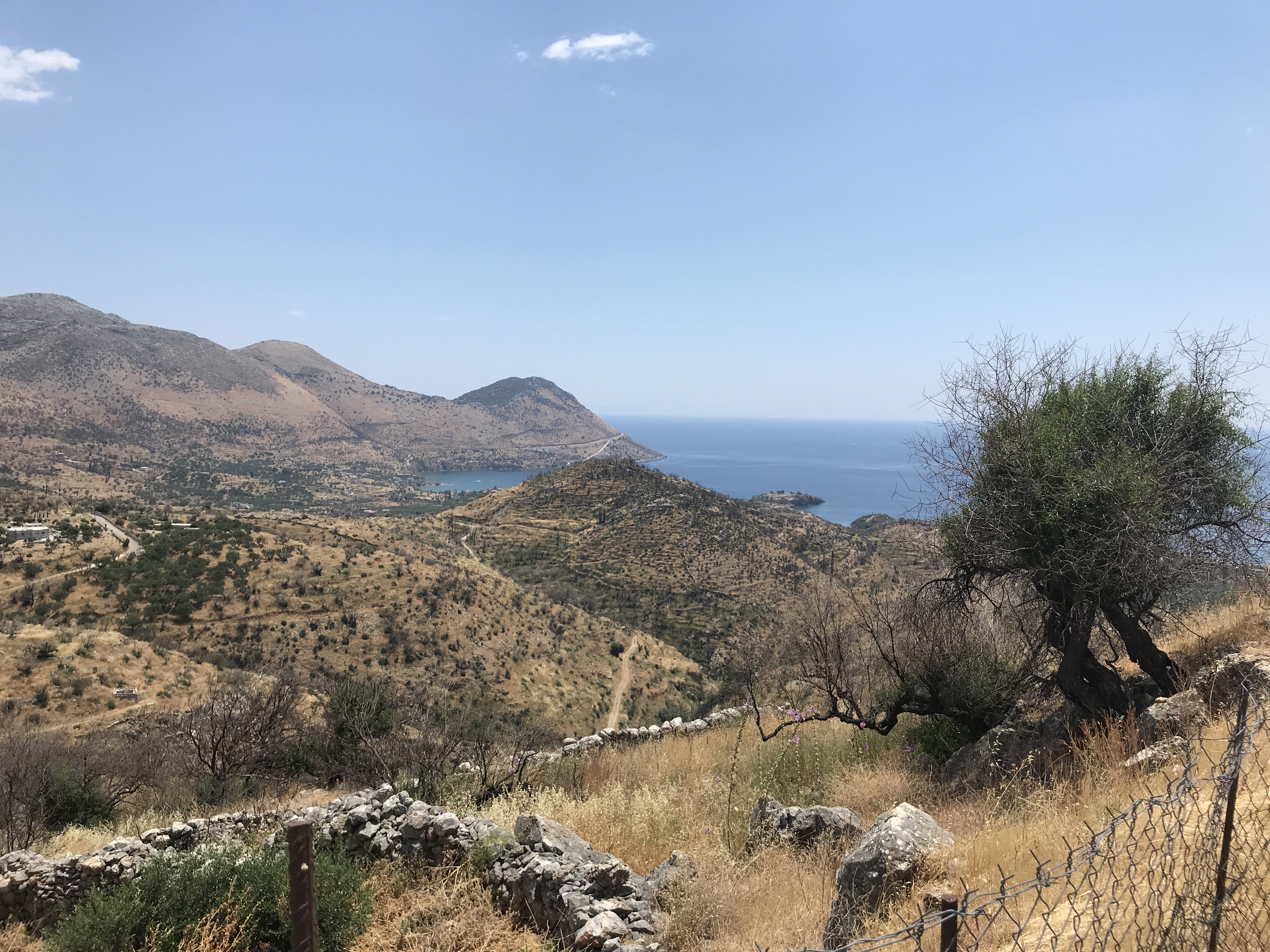
Rugged Mani
Narrow roads twist in hairpin turns around towering mountains. Hundreds of feet below, the aquamarine sea shimmers. Around each corner appears an unexpected and often spectacular view.
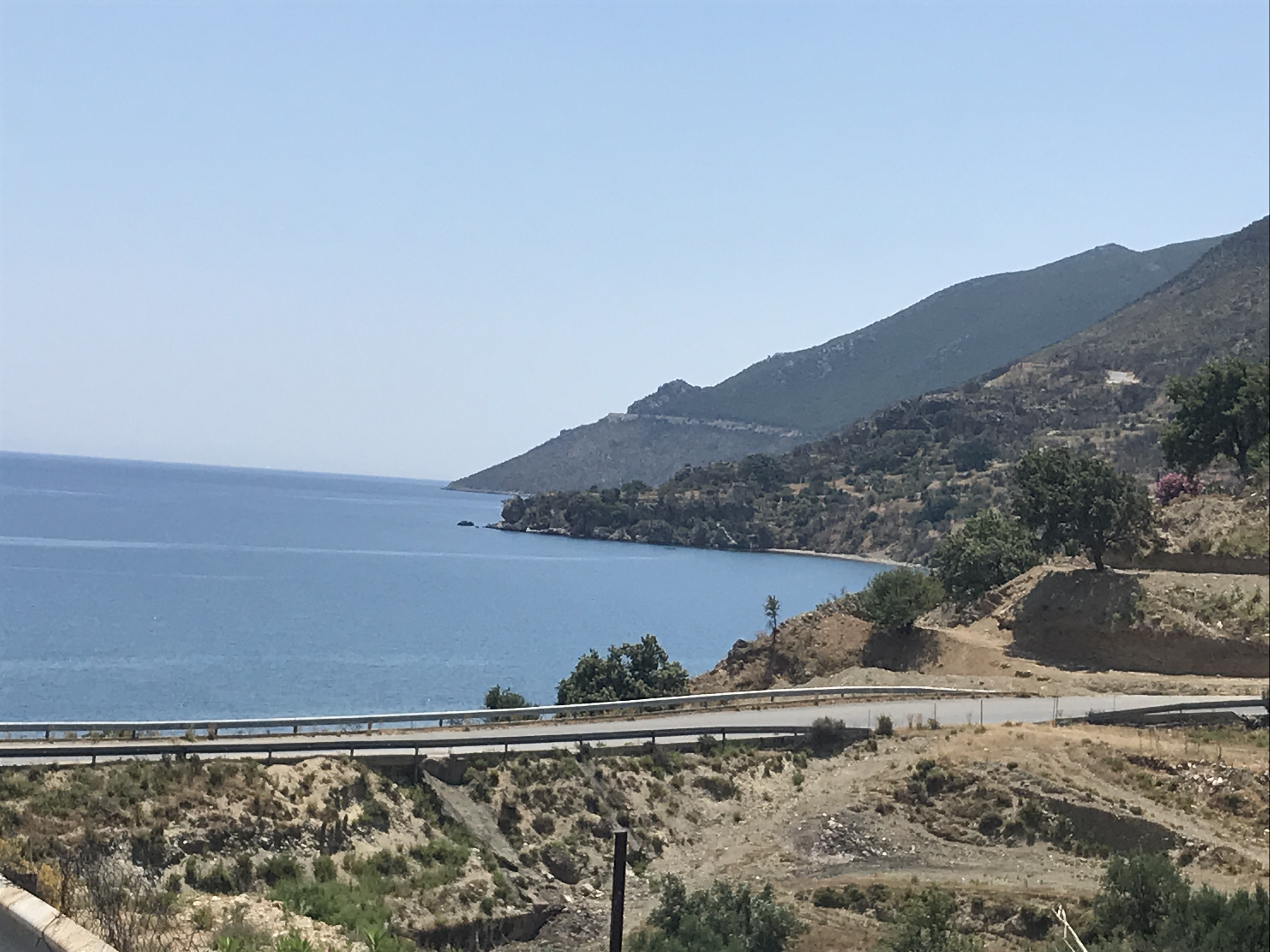
Twists and turns, and gorgeous views
These zigzag roads are evocative of the twists and turns of life—sometimes the road veers into a corner where no sunlight is visible, and you wonder how long you must remain in darkness. Suddenly, you bank a curve and the brilliance of the sun reflecting on the sea sends your spirit soaring. Always, the light slices through the darkness, and hope and joy return. Here, the ying and yang of nature coexist perfectly.

Into the light
Sometimes the unexpected is a “door to nowhere.” Although this is the entry to a field, the land hugs the side of a mountain and counters any definition of farmland.
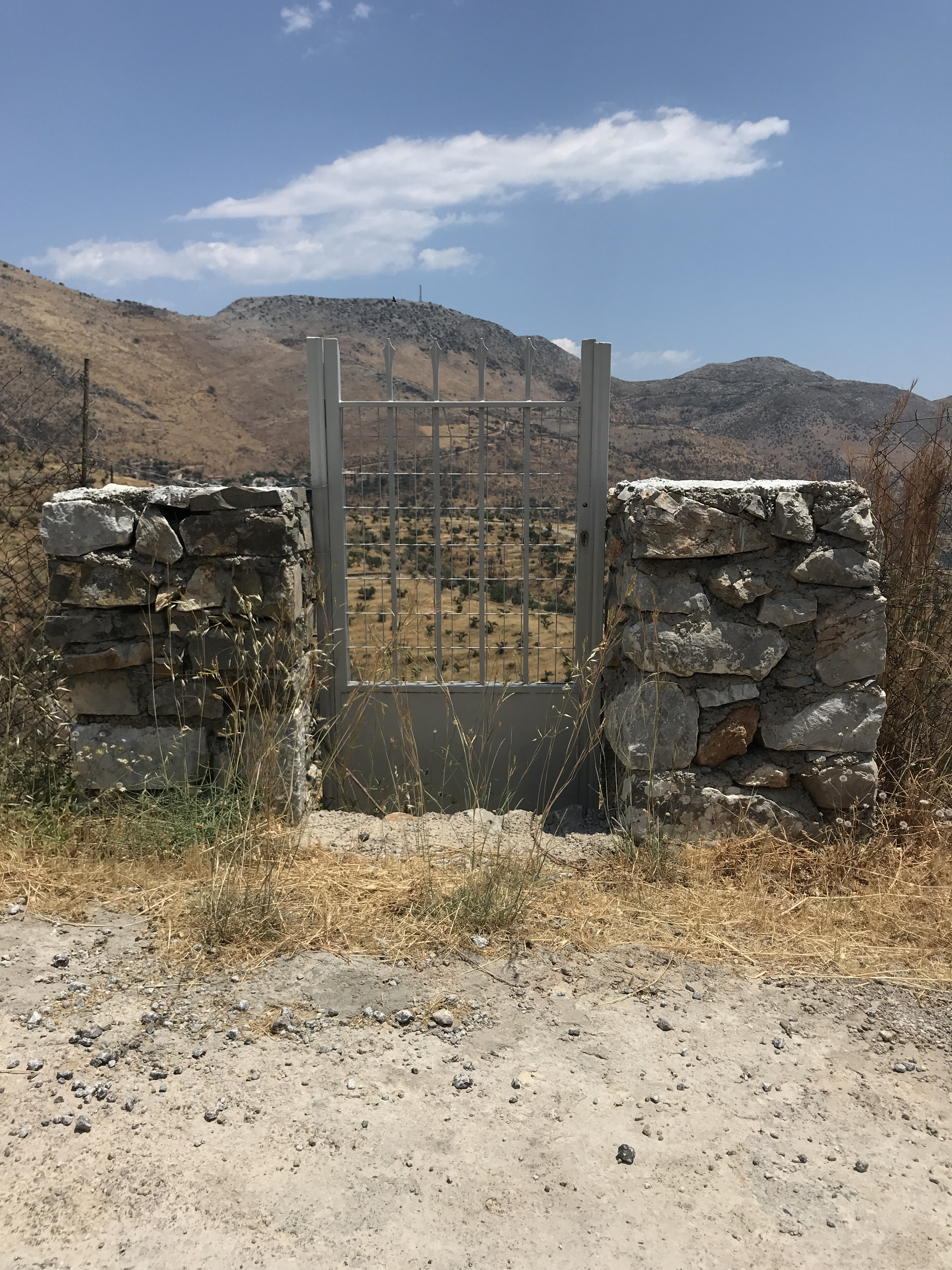
The door to nowhere
Maniate homes are built of stone and are as rugged as their people. These structures can withstand any tempest or force of nature.
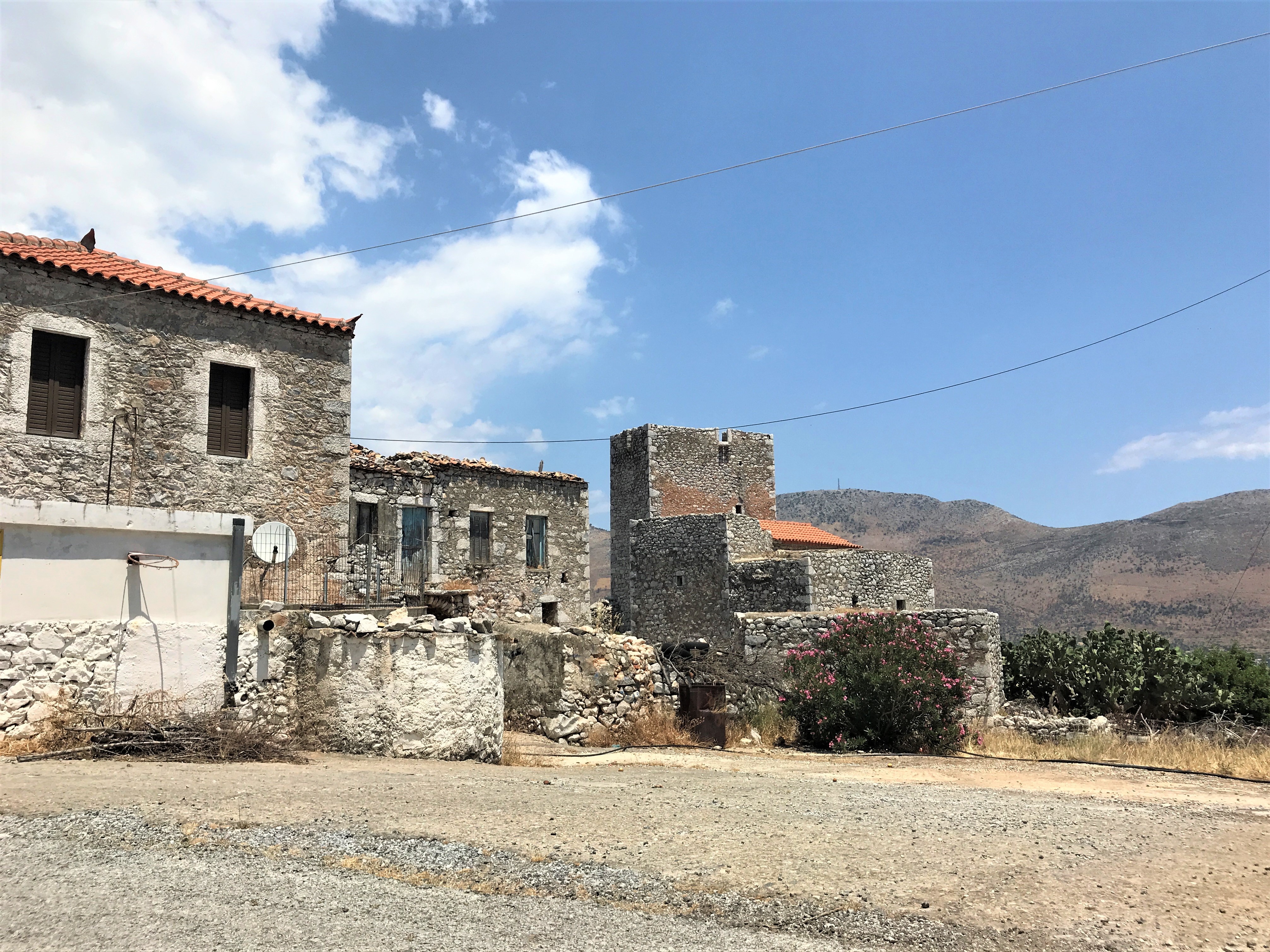
House of stone
Churches everywhere! These small churches are built by families to commemorate a saint who is special to the family, or to give thanks to God. Giannis told me that this church was erected on the spot where two young people fell off the cliff–and survived!
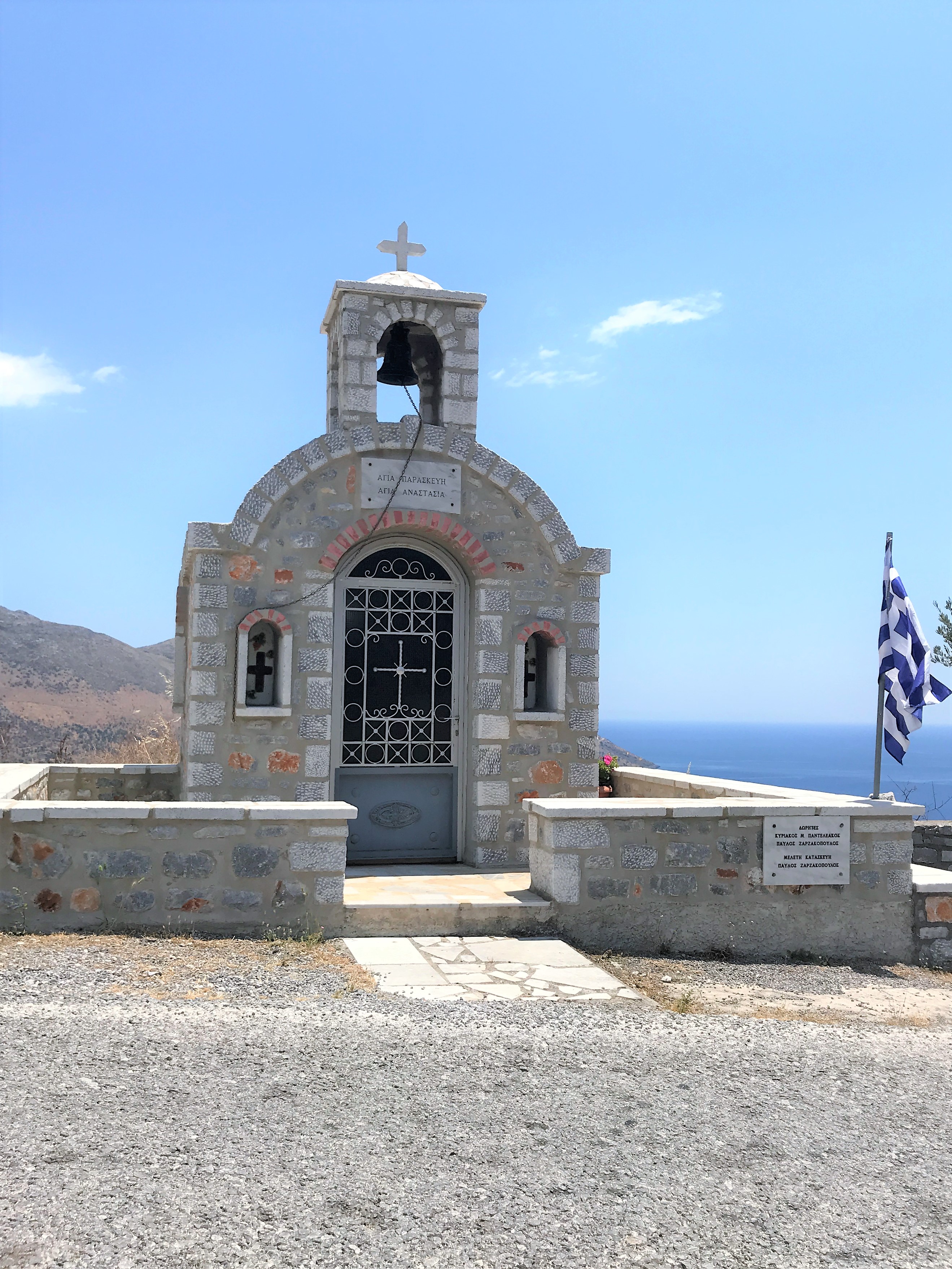
Thanks to God for saving two children
Mani is known for its towers–fortresses built by families long ago. These edifices stand as sentinels against any threat by invading forces or pirates. They signify security and strength. They are unlike any other buildings in Greece.

Abandoned and partially destroyed tower
Nyfi, home of towers and the Michalakakos family
Before I returned to Sparta, Giannis had me drive a tiny narrow road down a mountainside to the “port” of Alipa. Actually, it is a cove, but it is called a port because this is where ships from Gytheio brought goods to this area until 1980, when a road was built connecting the two towns. Descending the road, there is no indication of life anywhere. Then the magic of Mani happens–suddenly, crystal water and brilliant sunshine appear. You have arrived in a special place of light and beauty. A small taverna anchors the end of the road. One church sits on the left, and another on the right, flanking the “port” and a few houses.

Secluded port of Alipa
The serenity of the environment lured me into a state of non-activity. I was perfectly content to sit, gaze and chat–and this is certainly not me!
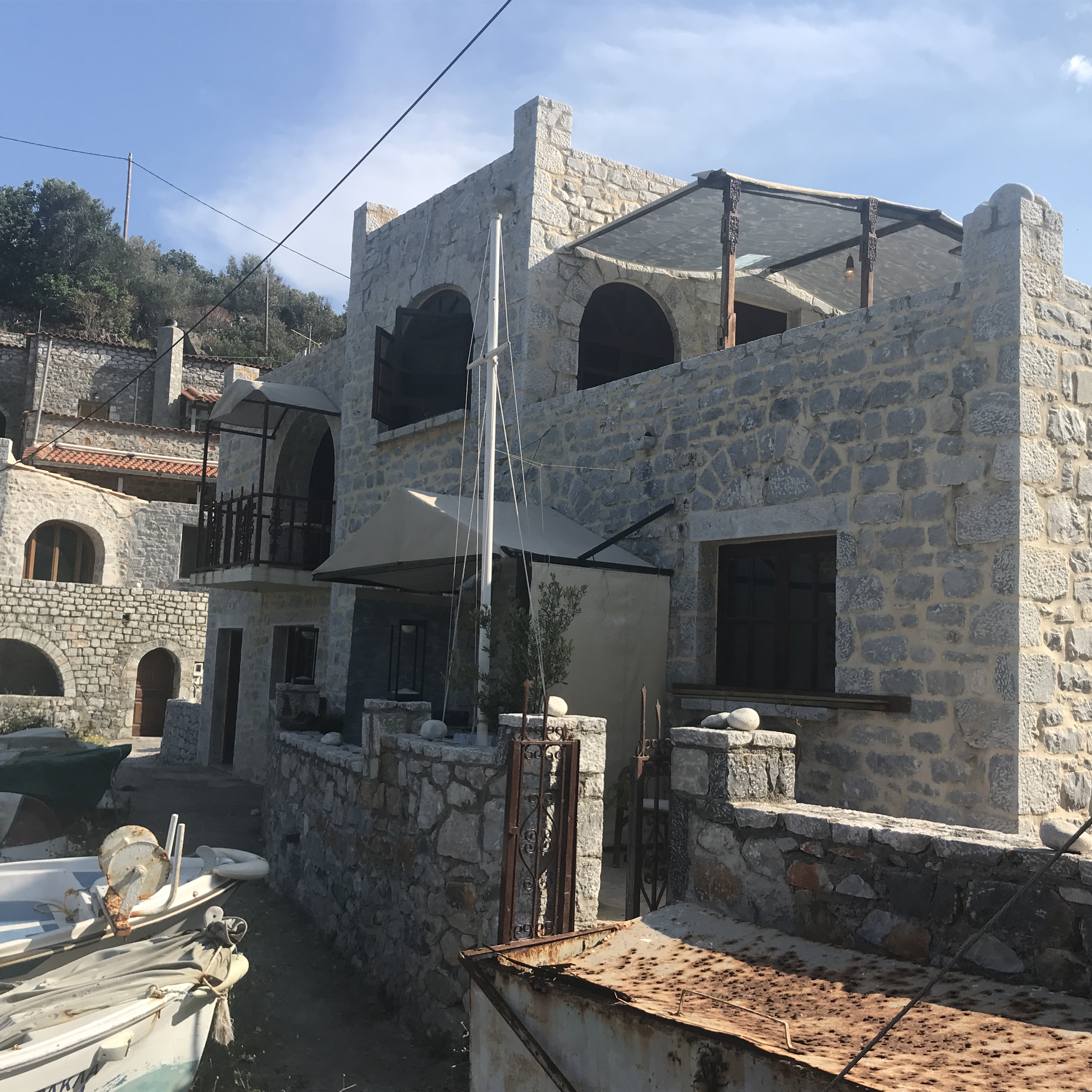
Guest house in Alipa
As difficult as it is to leave Mani, it will always be here–unspoiled in all its glory–when I return.

 Spartan Roots (Σπαρτιατικές Ρίζες)
Wondering if you’ve visited either Kosmas or Vrondomas (spelling?) – they are about 30-45 min from Sparta. My mother’s family lived there (Mom was born in Kosmas – her parents were teachers & worked in various towns/villages). Her maiden name, Drepanias, wasn’t her “real” last name but that’s the only she’s only ever known. I learned not too long ago that one of her ancestors was named Drepanias because he was from a village Drepana (or Drepania) – which I haven’t really researched where that is. Anyway my grandfather, Manolis Drepania(s) wrote several books (published & in the library in Athens, I’ve been told) – one of them is about Vrondomas and another one about the monastery not far from there that the Germans (or Italians or Turks?) burned with people in it that were hiding there. Are you familiar with that story? Would you happen to have heard of my grandfather? (I will check but I think he’s formally Emmanuel but I’ve always heard him referred to as Manoli). Thanks for your very important work! I am hoping to benefit by it – I think some of my relatives’ documents may be stored there too!
Hello and thank you for writing. I have not visited either village personally but do know of them. Your grandfather’s book is in the Laconia section of the Central Library of Sparta! You will see it towards the bottom of this list. https://wordpress.com/post/spartanroots.wordpress.com/2057